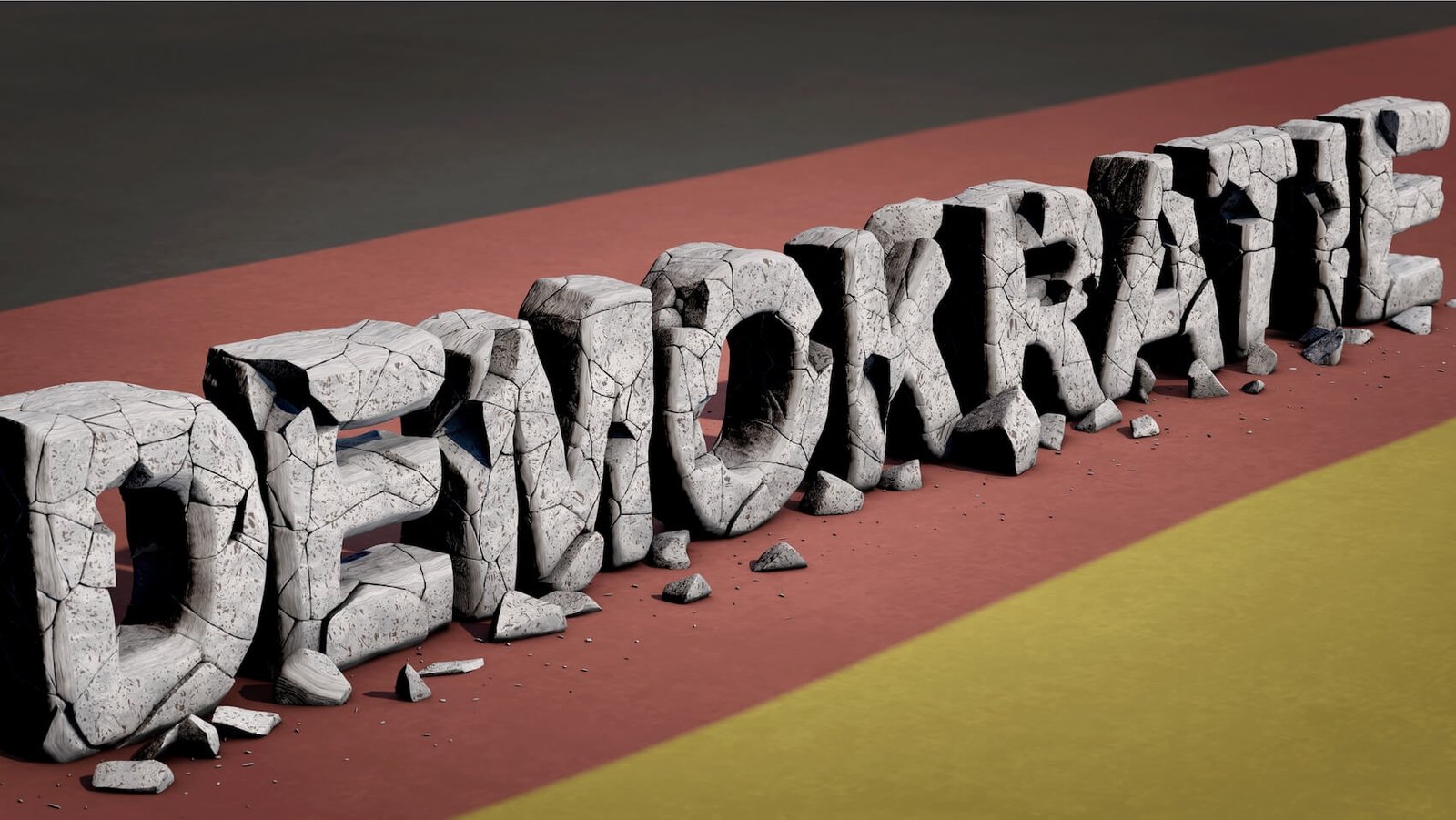
In this incisive opening to a multi-part series, ECPS intern Lianne Nota interrogates one of the most taken-for-granted concepts in populism studies: “the people.” Moving beyond conventional definitions that treat the category as self-evident, she foregrounds racialization as a critical—yet often neglected—dimension in its construction. By shifting the analytical lens from race as a fixed attribute to racialization as a dynamic process of boundary-making, the study offers a conceptually rigorous and empirically grounded intervention. Focusing on the Dutch case, Nota situates populist discourse within broader debates on “new racism,” identity, and political representation. The series promises to advance the field by systematically examining how both right- and left-wing populist actors construct “the people” through implicit and explicit forms of differentiation.
By Lianne Nota*
Populism is everywhere in contemporary politics, from Europe to the Americas. At its core lies a simple but powerful idea: ‘the people’ should be at the center of politics (Canovan 1999). But who exactly are ‘the people’ and how are they constructed?
This question is more complicated than it seems. In much of academic literature, populism is understood as a ‘thin ideology’ that divides society into two camps: the ‘pure’ people and the ‘corrupt’ elite (Mudde & Kaltwasser, 2017). While this understanding captures something important, it often takes ‘the people’ for granted, overlooking the essentially contested and flexible nature of that category.
This four-part article series explores a crucial but often overlooked dimension of the construction of ‘the people’: racialization.
Beyond Race: Why Racialization Matters
While much has already been written on the people-centeredness of populism, this article series aims to focus the discussion on the construction of the populist ‘people’ through racialization. Using racialization as a concept instead of race, this series aims to avoid reifying race and emphasizes the inherent social constructedness of race (Small, 1994).
As such, racialization refers above all to a process through which differences between groups are constructed, whether cultural or biological. This understanding of racialization draws on the understanding that, nowadays, ‘new racism’ often uses culture and religion as proxies for race to create orders that resemble racial hierarchies, even in the absence of any explicit biological references (MacMaster, 2001). In addition, racialization often serves to subordinate a specific group (Woodbrige et al., 2025). This article series therefore uses racialization to refer to the discursive process of boundary-making by which (political) subjects are constituted and morally differentiated through the attribution of racial meanings, whether those are explicitly biological or not.
What Has Already Been Said?
Existing research on race and populism reflects the assumption that right-wing populism is inherently exclusionary while left-wing populism is inherently inclusionary (Mudde & Kaltwasser, 2013). As such, the relationship between race and right-wing populism has been addressed by numerous scholars (Krzyżanowski, 2018; Krzyżanowski, 2020; Thorleifsson, 2021; Mondon & Winteri, 2020), while the relationship between race and left-wing populism has been largely overlooked.
Following existing literature, this series does not make any assumptions about the conduciveness of either right- or left-wing populism to racialization. Instead, it asks the open-ended question: how do different populist actors construct ‘the people’ and to what extent does racialization play a role in that process?
Case Study: The Netherlands
To explore this question, we turn to the Netherlands, a country with a long history of both left- and right-wing populism. Interestingly, Dutch political discourse often avoids explicit references to race, favoring terms like ‘ethnicity’ or ‘culture’ (Essed & Trienekens, 2008). This makes the Netherlands a particularly interesting case study for studying how racialization can operate indirectly through seemingly neutral language.
What This Series Will Show
In the upcoming articles, we will work towards answering the puzzle of how Dutch populist actors construct ‘the people’ and, if so, how racialization plays a part in that process. Drawing on a series of Dutch parliamentary debates held in 2015 during the height of the refugee crisis, this series compares how/if Partij voor de Vrijheid (PVV), a right-wing populist party, and Socialistische Partij (SP), a left-wing populist party, constructed ‘the people’ in racialized terms. The findings suggest that, while both parties mobilized a populist divide between ‘the people’ and ‘the elite,’ they differed significantly in how they constructed ‘the people,’ and only one party constructed the ‘people’ in racialized terms.
Let’s dive into existing literature on the role of race in populist politics first.
Where Is Race in Populism Studies?
We have already asked a deceptively simple question: who are ‘the people’ in populist politics? Surprisingly, within mainstream populist research, this question is not often framed in terms of race or racialization. To illustrate, let us take a look at the major handbooks on populism in scholarly literature. For example, the Oxford Handbook of Populism, contains no chapter on race, racism, or racialization, despite dedicating large parts of the book to ‘issue-centred’ discussions surrounding populism (Kaltwasser et al., 2017). Similarly, the Research Handbook on Populism and the Palgrave Handbook of Populism also do not systematically address race as a core issue in populist politics (Oswald, 2022). This relative silence suggests that race, racism, and racialization have not been regarded as central elements of populism within mainstream (theoretical) debates.
When research on the relationship between race and populism does exist, it mostly focuses on right-wing populist parties and movements.For example, Krzyżanowski (2018, 2020) argues that racist and xenophobic ideas have become normalized in Poland as a result of anti-refugee and anti-immigration rhetoric introduced by the Polish PiS party, a right-wing populist and nationalist party. This kind of research shows that culture and religion are often used as proxies for race to create orders that resemble racial hierarchies, even in the absence of any explicit biological references. This kind of cultural racism is sometimes called ‘new racism,’ to distinguish it from the biological racism that characterized the pre-1945 era (MacMaster, 2001). While this body of work has been crucial in drawing more attention to the role of race and racialization in populist ideology, it has also contributed to a relative neglect of how similar processes might (or might not) unfold beyond right-wing populist parties.
Two notable exceptions in this regard are worth mentioning. A study by Chazel and Dain (2021) found that left-wing populist movements may also draw on notions like ‘the homeland,’ albeit in more inclusive ways than their right-wing counterparts do. Drawing on narratives about belonging and national identity always engages in some exercise of boundary-making, introducing the possibility for racialization. In their study of Hugo Chávez’s political rhetoric, this leads Barreto and Maldonado (2025) to conclude that left-wing populism can also include racial rhetoric.
Therefore, rather than assuming a priori that left-wing populism is immune to racialization, this article series critically examines the role racialization plays in left-wing populism and whether this role differs from how racialization operates in right-wing populism. The next article turns to how we can study racialization empirically by outlining a discourse-analytical approach to this process.
(*) Lianne Nota is an ECPS intern and Research Master’s student in International Relations at the University of Groningen, with a focus on identity, populism, ontological security, and the ethics of global affairs. These article series is based on her paper “Constructing ‘The People’: The Role of Racialization in Dutch Populist Discourse”that she wrote for her specialization phase at RUG.
References
Barreto, A. A., & Maldonado, D. (2025). Race and populism on the left: Political rhetoric in Hugo Chávez’s Venezuela. Latin American and Caribbean Ethnic Studies, 20(3), 387–402. https://doi.org/10.1080/17442222.2024.2393506
Chazel, L., & Dain, V. (2021). “Left-Wing Populism and Nationalism: A Comparative Analysis of the Patriotic Narratives of Podemos and France insoumise.” Journal for the Study of Radicalism, 15(2), 73–94. https://www-jstor-org.focus.lib.kth.se/stable/48642382
Krzyżanowski, M. (2018). Discursive Shifts in Ethno-Nationalist Politics: On Politicization and Mediatization of the “Refugee Crisis” in Poland. Journal of Immigrant & Refugee Studies, 16(1–2), 76–96. https://doi.org/10.1080/15562948.2017.1317897
Krzyżanowski, M. (2020). Discursive shifts and the normalisation of racism: Imaginaries of immigration, moral panics and the discourse of contemporary right-wing populism. Social Semiotics, 30(4), 503–527. https://doi.org/10.1080/10350330.2020.1766199
Mondon, A., & Winter, A. (2019). Whiteness, populism and the racialisation of the working class in the United Kingdom and the United States. Identities, 26(5), 510–528. https://doi.org/10.1080/1070289X.2018.1552440
Mudde, C., & Kaltwasser, C. R. (2013). Exclusionary vs. Inclusionary Populism: Comparing Contemporary Europe and Latin America. Government and Opposition, 48(2), 147–174. https://doi.org/10.1017/gov.2012.11
Woodbridge, E., Vanhouche, A.-S., & Lechkar, I. (2025). The racialization of radicalization and terrorism: Belgian political language on Muslims and Islam. Ethnicities, 25(5), 701–723. https://doi.org/10.1177/14687968251329926
In this ECPS interview, Associate Professor Ajay Gudavarthy analyzes India’s 2026 state elections as a critical moment in the consolidation of Hindutva populism, neoliberal governance, and majoritarian politics. He argues that the BJP’s electoral successes cannot be understood merely as victories of cultural nationalism, but as part of a broader “hegemonic project” that fuses welfare delivery, infrastructural populism, caste reconfiguration, emotional polarization, and centralized state power. For Assoc. Prof. Gudavarthy, the opposition’s crisis is not only electoral or organizational, but also ideological: it has failed to offer a compelling alternative to both majoritarianism and neoliberalism. As India moves toward 2029, he warns that “India’s opposition cannot break majoritarianism without breaking neoliberal consensus.”
India’s 2026 state elections have dramatically reshaped the country’s political landscape while intensifying debates over populism, democratic erosion, federalism, and the future of constitutional pluralism under Narendra Modi’s Bharatiya Janata Party (BJP). The BJP’s historic breakthrough in West Bengal, consolidation in Assam, the continuing erosion of Left politics, and the disruptive rise of Vijay’s Tamilaga Vettri Kazhagam (TVK) in Tamil Nadu together reveal a transformed political order increasingly structured by emotional polarization, welfare nationalism, charismatic leadership, cultural majoritarianism, and institutional centralization. At the same time, controversies surrounding voter-roll revisions, anti-Muslim rhetoric, bureaucratic exclusion, digital mobilization, and the growing fusion of state power with majoritarian narratives have deepened anxieties about the trajectory of India’s democracy and the resilience of its federal constitutional framework.
To examine these developments, the European Center for Populism Studies (ECPS) spoke with Associate Professor Ajay Gudavarthy of the Centre for Political Studies at Jawaharlal Nehru University (JNU), one of India’s leading scholars of populism, political emotions, democratic transformation, and contemporary Hindutva politics. Across a wide-ranging conversation, Assoc. Prof. Gudavarthy situates the BJP’s electoral successes within what he describes as a broader “hegemonic project” that combines neoliberal governance, infrastructural populism, cultural nationalism, and emotive majoritarian mobilization.
For Assoc. Prof. Gudavarthy, the significance of the 2026 elections lies not simply in the BJP’s electoral victories, but in the deeper social and ideological reconfiguration underpinning them. He argues that “market integration, modernity, and modern technology do not necessarily dilute traditional religious or caste identities. On the contrary, they can strengthen them further by nationalizing them and making them even more emotive.” In this sense, contemporary Hindutva emerges not merely as a nationalist ideology, but as a comprehensive populist assemblage linking “big development, big growth, majoritarian imagination, and a theocratic centralized state” with charismatic leadership and welfare delivery.
A central theme running throughout the interview is Assoc. Prof. Gudavarthy’s insistence that the BJP’s dominance cannot be understood apart from the persistence of neoliberal consensus in India. According to him, the opposition’s crisis is not only organizational or electoral, but also ideological and cultural. “The opposition cannot effectively challenge majoritarian consensus without simultaneously confronting neoliberal consensus,” he argues. “The crucial question as India approaches 2029 is whether the opposition will be able to articulate a radical social democratic agenda capable of breaking neoliberal consensus and, through that, also disrupting the majoritarian political imagination.”
Assoc. Prof. Gudavarthy further contends that the BJP has successfully transformed cultural nationalism into a hegemonic social condition by combining aspirational development with affective politics centered on belonging, civilizational memory, and anxieties surrounding immigration, identity, and social insecurity. Drawing on thinkers such as Antonio Gramsci, Michel Foucault, Zygmunt Bauman, David Goodhart, and Partha Chatterjee, he explains how populist politics in India increasingly operates through what he calls the convergence of “right-wing populism and subaltern pragmatism.”
At the same time, Assoc. Prof. Gudavarthy cautions against reducing the current conjuncture to irreversible authoritarian consolidation. While he acknowledges that the BJP has succeeded in constructing “a comprehensive hegemonic project built around a powerful cultural narrative,” he also identifies growing “social, political, and constitutional excesses” as potential openings for democratic resistance.
This interview offers a theoretically rich and empirically grounded exploration of how populism, neoliberalism, emotions, welfare politics, and majoritarian nationalism are reshaping democratic politics in contemporary India—and what these transformations may mean for the future of democracy as the country moves toward 2029.
In this ECPS interview, Associate Professor Ajay Gudavarthy analyzes India’s 2026 state elections as a critical moment in the consolidation of Hindutva populism, neoliberal governance, and majoritarian politics. He argues that the BJP’s electoral successes cannot be understood merely as victories of cultural nationalism, but as part of a broader “hegemonic project” that fuses welfare delivery, infrastructural populism, caste reconfiguration, emotional polarization, and centralized state power. For Assoc. Prof. Gudavarthy, the opposition’s crisis is not only electoral or organizational, but also ideological: it has failed to offer a compelling alternative to both majoritarianism and neoliberalism. As India moves toward 2029, he warns that “India’s opposition cannot break majoritarianism without breaking neoliberal consensus.”
India’s 2026 state elections have dramatically reshaped the country’s political landscape while intensifying debates over populism, democratic erosion, federalism, and the future of constitutional pluralism under Narendra Modi’s Bharatiya Janata Party (BJP). The BJP’s historic breakthrough in West Bengal, consolidation in Assam, the continuing erosion of Left politics, and the disruptive rise of Vijay’s Tamilaga Vettri Kazhagam (TVK) in Tamil Nadu together reveal a transformed political order increasingly structured by emotional polarization, welfare nationalism, charismatic leadership, cultural majoritarianism, and institutional centralization. At the same time, controversies surrounding voter-roll revisions, anti-Muslim rhetoric, bureaucratic exclusion, digital mobilization, and the growing fusion of state power with majoritarian narratives have deepened anxieties about the trajectory of India’s democracy and the resilience of its federal constitutional framework.
To examine these developments, the European Center for Populism Studies (ECPS) spoke with Associate Professor Ajay Gudavarthy of the Centre for Political Studies at Jawaharlal Nehru University (JNU), one of India’s leading scholars of populism, political emotions, democratic transformation, and contemporary Hindutva politics. Across a wide-ranging conversation, Assoc. Prof. Gudavarthy situates the BJP’s electoral successes within what he describes as a broader “hegemonic project” that combines neoliberal governance, infrastructural populism, cultural nationalism, and emotive majoritarian mobilization.
For Assoc. Prof. Gudavarthy, the significance of the 2026 elections lies not simply in the BJP’s electoral victories, but in the deeper social and ideological reconfiguration underpinning them. He argues that “market integration, modernity, and modern technology do not necessarily dilute traditional religious or caste identities. On the contrary, they can strengthen them further by nationalizing them and making them even more emotive.” In this sense, contemporary Hindutva emerges not merely as a nationalist ideology, but as a comprehensive populist assemblage linking “big development, big growth, majoritarian imagination, and a theocratic centralized state” with charismatic leadership and welfare delivery.
A central theme running throughout the interview is Assoc. Prof. Gudavarthy’s insistence that the BJP’s dominance cannot be understood apart from the persistence of neoliberal consensus in India. According to him, the opposition’s crisis is not only organizational or electoral, but also ideological and cultural. “The opposition cannot effectively challenge majoritarian consensus without simultaneously confronting neoliberal consensus,” he argues. “The crucial question as India approaches 2029 is whether the opposition will be able to articulate a radical social democratic agenda capable of breaking neoliberal consensus and, through that, also disrupting the majoritarian political imagination.”
Assoc. Prof. Gudavarthy further contends that the BJP has successfully transformed cultural nationalism into a hegemonic social condition by combining aspirational development with affective politics centered on belonging, civilizational memory, and anxieties surrounding immigration, identity, and social insecurity. Drawing on thinkers such as Antonio Gramsci, Michel Foucault, Zygmunt Bauman, David Goodhart, and Partha Chatterjee, he explains how populist politics in India increasingly operates through what he calls the convergence of “right-wing populism and subaltern pragmatism.”
At the same time, Assoc. Prof. Gudavarthy cautions against reducing the current conjuncture to irreversible authoritarian consolidation. While he acknowledges that the BJP has succeeded in constructing “a comprehensive hegemonic project built around a powerful cultural narrative,” he also identifies growing “social, political, and constitutional excesses” as potential openings for democratic resistance.
This interview offers a theoretically rich and empirically grounded exploration of how populism, neoliberalism, emotions, welfare politics, and majoritarian nationalism are reshaping democratic politics in contemporary India—and what these transformations may mean for the future of democracy as the country moves toward 2029.
Here is the edited version of our interview with Associate Professor Ajay Gudavarthy, revised slightly to improve clarity and flow.
Bengal’s Parallel History of Right-Wing Mobilization
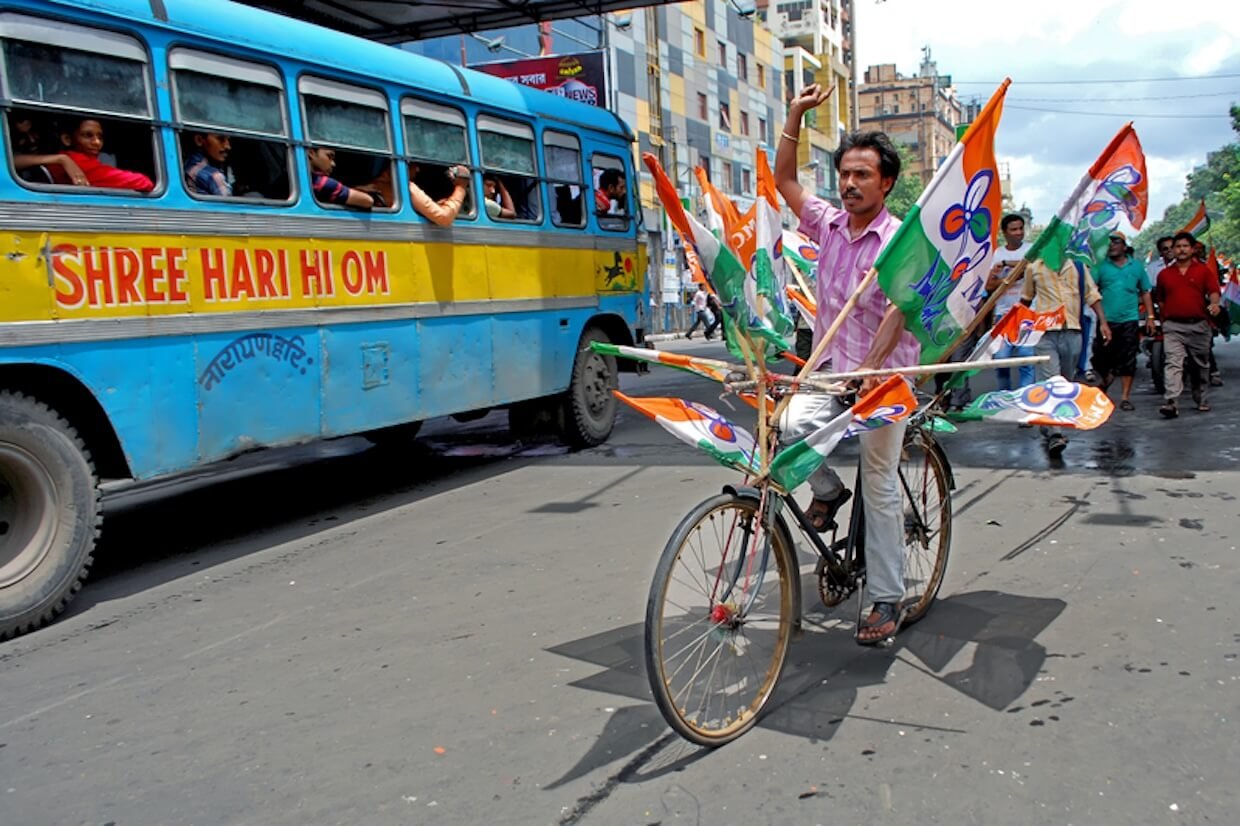
Cyclists participate in a political procession on the streets of Kolkata, West Bengal, India. Photo: Arindam Chowdhury | Dreamstime.
Professor Gudavarthy, welcome. In your work, you conceptualize contemporary Hindutva as a form of populist hegemony that fuses neoliberal governance, cultural nationalism, and emotive majoritarianism. To what extent does the BJP’s breakthrough in West Bengal represent the consolidation of such a hegemonic formation in a region historically shaped by anti-colonial cosmopolitanism, Left politics, and subaltern mobilization?
Assoc. Prof. Ajay Gudavarthy: Bengal is not marked only by anti-colonial cosmopolitanism and subaltern politics; it has also had a parallel history shaped by Partition in 1950. It is interesting to note that the term Hindutva itself was coined by Chandranath Basu in the 19th century. Later, in the 20th century, Savarkar—who became the principal ideologue of the BJP and the RSS, the right-wing cultural organization in India—transformed it into a political ideology.
In fact, in 1951, the Jansangh, the predecessor of the Bharatiya Janata Party (BJP), was founded by Shyama Prasad Mukherjee, who himself came from Bengal. His primary concern during Partition was the condition of Hindu refugees arriving from Bangladesh. It is also significant that after the BJP’s victory in Bengal, Narendra Modi invoked the memory and political legacy of Shyama Prasad Mukherjee.
In that sense, Bengal always had a parallel history of right-wing mobilization, which under the current regime has been transformed into a populist mobilization combining emotive majoritarianism with a narrative of Muslim appeasement allegedly practiced by Mamata Banerjee and the Trinamool Congress.
At the same time, one also witnesses the terminal decline of the Left and of working-class and peasant mobilization around social and egalitarian issues in Bengal. The Left itself has increasingly operated within the broader neoliberal consensus, which has contributed to this shift. In parallel, sections of the middle class have moved toward the BJP because of its aspirational narrative centered on growth and development—big growth, big development.
As a result, one sees a broader Hindu consolidation, with sections of the middle class and the bhadralok (gentleman, Bengali for the new class of ‘gentlefolk’) moving toward the BJP, alongside shifts among Dalit and subaltern groups as well. Altogether, this has produced a comprehensive social reconfiguration, accompanied by the electoral malpractices that became visible in the recent Assembly elections.
Caste, Purity, and the Imagined Infiltrator
You have argued that contemporary right-wing populism in India thrives through the simultaneous production of “hierarchical fraternity” and “polarized differences.” How do the 2026 elections—particularly in West Bengal and Assam—demonstrate the ability of the BJP to forge cross-class Hindu consolidation while intensifying the political marginalization of Muslims and migrant populations?
Assoc. Prof. Ajay Gudavarthy: What the BJP does, if you look at its broader political strategy, is to construct a sense of cultural unity in response to growing social conflicts. If you look at states such as Assam and Bengal, there is undoubtedly a new kind of Hindu consolidation emerging behind the BJP, built around the trumped-up narrative of “Muslim infiltrators” coming from Bangladesh. This imagined figure of the immigrant creates deep anxieties among the local Hindu population.
In this context, I would recall the writings of cultural sociologist Zygmunt Bauman, who argued that Europe also went through a similar phase of anxiety surrounding immigrants. He makes the interesting observation that immigrants generate anxiety because they remind the well-off indigenous or local population that they, too, could end up in a similarly precarious position—without basic rights, legal protection, or social security. This is precisely the kind of anxiety that the BJP and the RSS have successfully cultivated among the Hindu majority: the fear that large-scale “infiltration” will produce a citizenship crisis, intensify competition over resources, and create multiple related insecurities.
At the same time, the Indian context differs from the European one because the narrative of infiltration intersects with caste mobilization and caste consciousness, both of which are rooted in the purity-pollution model. India already possesses a dominant collective subconscious structured around notions of purity and pollution. In other words, the hierarchical order of the caste system has historically produced multiple forms of exclusion. The infiltrator thus becomes the new “other,” identified with the polluted outsider, in contrast to the pure, authentic, local, indigenous population.
Nationalized Markets, Nationalized Hindutva
Volunteers of Rashtriya Swayamsevak Sangh (RSS) on Vijyadashmi festival, a large gathering or annual meeting during Ramanavami a Hindu festival in Ghaziabad, Uttar Pradesh on October 19, 2018. Photo: Pradeep Gaurs.
In your theorization of populism, the “authentic people” are not merely electorally aggregated but affectively produced through narratives of injury, humiliation, and civilizational recovery. How did the BJP’s Bengal campaign operationalize this politics of authenticity, especially through the rhetoric of “infiltration,” women’s insecurity, corruption, and anti-elite resentment?
Assoc. Prof. Ajay Gudavarthy: Part of the issue surrounding “infiltration” I have already explained. But the broader theoretical point I would make is that, in post-neoliberal and post-globalization India, market integration and the expansion of market forces at the national level have been unfolding in parallel with the discourse of nationalist Hinduization.
People who are becoming increasingly integrated into the market through technology and expanding economic opportunities are also—somehow, and this requires careful theorization—developing a collective consciousness centered on a pan-national Hindu identity. In other words, the emergence of a pan-national standardized market is becoming coterminous with a pan-national ethnic, theocratic, and majoritarian identity.
The important question, then, is why the spread of markets and the greater integration of social groups into market structures—which standardize social aspirations, social status, and forms of social integration—also contribute to the consolidation of a majoritarian imagination. This is something we need to theorize further.
Market integration, modernity, and modern technology do not necessarily dilute traditional religious or caste identities. On the contrary, they can strengthen them further by nationalizing them and making them even more emotive.
How Populism Links Growth, Identity, and Memory
You have written extensively about the role of emotions—fear, anxiety, resentment, betrayal, shame, and moral injury—in sustaining the contemporary Right. Which affective registers do you believe were most politically consequential in these elections, and how were they transformed into durable electoral consent rather than episodic outrage?
Assoc. Prof. Ajay Gudavarthy: I have long argued in my writings on populism that anti-secular discourse, which we often understand primarily as exclusionary and majoritarian, also overlaps with an anti-elitist discourse and mode of political mobilization.Today, parties associated with secularism, cosmopolitanism, and multiculturalism are increasingly perceived as elitist formations. This creates an important conjuncture that we need to decode more carefully: why secularism in many post-colonial societies has come to signify an elitist discourse.
A useful reference here is David Goodhart’s The Road to Somewhere, where he distinguishes between the “Anywheres” and the “Somewheres.” Goodhart argues that contemporary societies are increasingly divided between a small cosmopolitan class of “Anywheres” and a much larger provincial population of “Somewheres” seeking to recover their local roots and cultural belonging.
Something similar is unfolding in states such as Bengal and Assam. The more Bengal seeks integration with the market, globalization, and economic opportunity, the more it simultaneously searches for its local roots and civilizational identity. At the same time, it is also turning backward, politically and emotionally, by reviving memories of Partition.
This relationship between the global and the local is both a fascinating and crucial dynamic in populist mobilization. Populist politics simultaneously advances a hyper-modernist discourse centered on corporate economy, infrastructure, and high growth, while also mobilizing localized identities, cultural idioms, ethnic belonging, purity, and authenticity. These two tendencies do not contradict one another; rather, they reinforce each other.
That is precisely what Bengal has witnessed. Bengal has not experienced particularly high economic growth. After three decades of communist and Left rule, Bengal—and Kolkata in particular—remains one of the cheapest urban spaces in the world. It has retained a pro-poor social structure: street food is inexpensive, and housing and real estate remain relatively affordable.
At the same time, however, there emerged an aspirational middle class—the bhadralok and caste Hindus—who became dissatisfied with this image of Kolkata because it lacked swanky malls, large highways, and visible symbols of affluence and modernization.
As a result, the aspirational desire for greater market integration has also produced a stronger attraction toward authentic mobilization and identity-based politics. This parallel and mutually reinforcing process has been extremely beneficial for BJP mobilization because the party simultaneously invokes an authentic Hindu identity and a corporatized global economy.
Constitutional Discourse Needs Cultural Symbolism
Narendra Modi files his nomination papers from the Vadodara Lok Sabha seat in Gujarat amid tight security and supporter turnout. Photo: Nisarg Lakhmani | Dreamstime.
In “Politics, Ethics and Emotions in ‘New India’,” you suggest that liberal-democratic frameworks often fail to adequately engage the emotional foundations of political belonging. Do the opposition’s defeats in West Bengal and elsewhere reveal not merely an organizational crisis, but a deeper inability to articulate a compelling emotional and ethical counter-public to Hindutva nationalism?
Assoc. Prof. Ajay Gudavarthy: Absolutely, there is no doubt about it. In some of my recent writings, I have argued that the current moment in India is fundamentally shaped by a conflict between a constitutional discourse and a cultural discourse.The constitutional discourse speaks the language of constitutional morality, justice, egalitarianism, and inclusion. The cultural discourse, by contrast, revolves around cultural nationalism, belonging, civilizational memory, and the politics of the past.This is the central conflict unfolding in contemporary India. My argument has been that constitutional discourse, despite its progressive and inclusive character, often lacks the emotional and affective depth that cultural and civilizational narratives are capable of generating.
Therefore, I am not suggesting that one should abandon constitutional discourse. Rather, the challenge is to connect constitutional discourse to cultural narratives. There has to be a cultural symbolism attached to constitutional discourse. Otherwise, what we are witnessing today is that the BJP and the RSS are successfully projecting constitutional discourse as an elite discourse. Consequently, BJP mobilization begins to appear as a form of subaltern backlash, which in turn contributes to democratic backsliding.
This is the conundrum we need to overcome. Secular, progressive, Left, and social democratic parties remain particularly weak when it comes to articulating compelling cultural narratives. After 15 years of populist rule in India, I would still hesitate to say that opposition parties possess a credible cultural narrative of their own. What might such a narrative look like? Can opposition forces draw upon myths, mythologies, historical memory, and broader cultural resources in order to reinforce constitutional discourse? I believe India’s long civilizational history offers ample resources for doing so.
If one turns to a historian like Romila Thapar, she argues that India’s collective subconscious is fundamentally shaped by dissent. Beginning with Buddhism, continuing through the Bhakti movement, and extending to Bhagat Singh—what I call the “three Bs”: Buddhism, the Bhakti movement, and Bhagat Singh—Indian history contains multiple traditions deeply rooted in dissent. So, why have opposition parties failed to construct a parallel historical and cultural narrative capable of demonstrating that constitutional discourse is not merely a modernist framework borrowed from outside, but something that also emerges organically from India’s own historical experience? India possesses a long history of struggle, subaltern culture, and subaltern mobilization. I think opposition parties have completely failed to establish that connection.
Voter Deletions as a Tool of Political Exclusion
How should we interpret the controversy surrounding the deletion of millions of names from electoral rolls in West Bengal? Does this episode signal a transition from electoral majoritarianism toward what might be called a procedural or administrative majoritarianism, where democratic legitimacy is increasingly mediated through bureaucratic exclusion?
Assoc. Prof. Ajay Gudavarthy: Absolutely, there is no doubt about it. If you look at the Bengal results, the data that emerged afterward made it extremely clear that 27 lakh (100K) voters had been deleted from the electoral rolls. The difference between the BJP, the winning party, and the TMC was 15 lakhs. Most of the 27 lakh deleted voters were Muslims. That, effectively, is the margin. Had the TMC received those remaining 27 lakh votes—which were essentially Muslim votes—it would have won the election.
So electoral roll manipulation and voter deletions are undoubtedly a key part of the BJP’s strategy. That is not to say the BJP won only because of exclusions, because the party still secured around 35–40% of the vote on its own. The crucial factor, however, was the remaining 5% edge. Both parties had roughly 40%, but it was this additional 5% advantage, produced through what I would call illegal and illegitimate electoral deletions, that ultimately determined the difference between victory and defeat.
Having said that, I should also add that the opposition has failed to transform electoral deletions into an issue of mass mobilization. Opposition parties are claiming that 27 lakh voters were removed, but one can legitimately ask: why have they been unable to bring those affected onto the streets? Why have there been no large-scale popular demonstrations around these exclusions?
This raises a deeper question: can electoral malpractice become an issue of popular mobilization? Can it be transformed into a mass political issue? As I have argued, issues such as electoral malpractice and electoral deletions through special intensive revision have largely remained confined to political parties themselves. The BJP has successfully converted elections into an intra-elite issue.
As a result, it appears as though political parties are merely fighting among themselves, while the everyday concerns of ordinary people remain absent from public debate. None of the political parties are seriously talking about joblessness, unemployment, inflation, and other bread-and-butter issues affecting common people.
What the BJP has done very effectively is to confine opposition parties within an administrative and procedural domain, while simultaneously offering a powerful cultural narrative and, at another level, delivering welfare policies more effectively on the ground. Consequently, the BJP appears to be the party most connected to the masses and to mass mobilization, whereas the opposition remains preoccupied with its own survival and with issues such as electoral malpractice, the role of the Chief Election Commission, and constitutional violations.
These are not perceived as mass issues. And the opposition has failed to understand that, even if it wants to mobilize people around such concerns, it must connect them to the concrete realities of everyday life. The opposition is once again failing to establish that connection between macro-level administrative issues and the micro realities of ordinary people’s lives.
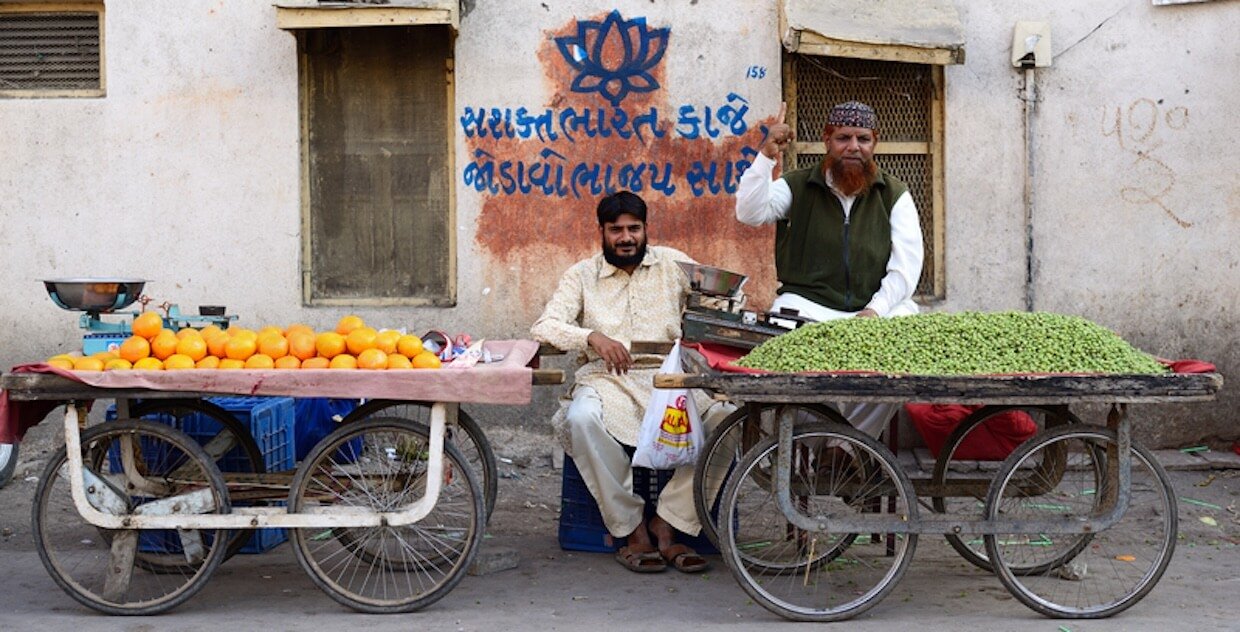
Muslim fruit vendors sell produce from handcarts on a street in Junagadh, Gujarat, India, on January 18, 2015. Photo: Rafał Cichawa | Dreamstime.
How Neoliberal Transactionalism Weakens Federal Resistance
In your engagement with populism and authenticity, you note that populist regimes often combine claims of democratic immediacy with institutional centralization. How do these election outcomes reshape the balance between India’s federal structure and the BJP’s increasingly unitary imagination of sovereignty and governance?
Assoc. Prof. Ajay Gudavarthy: This is a very important question because Indian electoral autocracy has had its most direct impact on India’s federal structure.One of the key reasons India remained an open, functional, and inclusive democracy for so long was precisely because of its federal framework. India is constitutionally described as a union of states—federal in structure, though with unitary features. As a result, states historically enjoyed a considerable degree of autonomy, including substantial financial devolution from the center.
Since the BJP came to power, however, it has systematically altered state-center relations. The party has initiated a process of extreme centralization, increasingly making states financially dependent on the center. At the same time, I would also stress another important question: despite this steady erosion of state autonomy and the expansion of patronage networks controlled by the center, why is there so little public anger within the states themselves? Thirty or forty years ago, if the center had overridden state autonomy in this manner, there would have been widespread public unrest. People would have taken to the streets over issues such as the imposition of Hindi, disputes over financial devolution, or the blocking of economic opportunities.
To understand this transformation, we need to return to the neoliberal reforms India underwent in the 1990s. In my recent writings, I have argued that neoliberalism is not merely an economic phenomenon; it is also a cultural phenomenon. Neoliberalism reshapes consciousness itself. It transforms how people understand social and political processes. Increasingly, citizens are encouraged to think in transactional terms, in terms of quid pro quo (something for something) relationships. This is where the BJP has been particularly effective. It argues that states should align politically with the center. If the BJP governs both the center and the state, then the state will receive greater funding. If a state refuses alignment, funding is restricted.
Indeed, opposition-ruled states across India have experienced such financial restrictions. One can constitutionally critique this practice by asking how the BJP can withhold programs such as MNREGA (The Mahatma Gandhi National Rural Employment Guarantee Act), one of India’s largest rural employment welfare schemes. In many non-BJP states, such funds have been curtailed or delayed, despite the fact that such actions are constitutionally questionable.
Yet once again, the deeper question remains: why has this not generated large-scale protests against the center or the BJP? I would argue that this shift reflects a broader transformation in social behavior. People increasingly think in transactional terms and therefore come to believe that it is more beneficial for states to align with the center in order to secure resources and financial support. Wherever the BJP governs both the center and the state, those states tend to receive greater funding. And, at least for now, many people appear willing to accept this arrangement. Confronting the center or mobilizing mass protest is no longer widely seen as an effective way to secure economic benefits.
This points to a much deeper transformation in the social character of the Indian state itself. India was once a more centrist polity, but today it has increasingly moved toward a model shaped by corporate global capitalism. The older tensions between regional elites and the national bourgeois elite have significantly weakened. There are many economic and political-economic reasons behind this transformation, and one cannot go into all of them here. But broadly speaking, I would argue that it is the neoliberal and transactional character of contemporary social behavior that is enabling the BJP to erode the federal structure with relatively little resistance.
Subaltern Pragmatism and the Decline of Dissent
The BJP’s victory in West Bengal appears symbolically significant because Bengal historically represented an intellectual and political counterweight to Hindu nationalism. Do you see this result as marking the exhaustion of older secular-progressive political cultures, or their inability to adapt to the changing grammar of contemporary populist mobilization?
Assoc. Prof. Ajay Gudavarthy: Absolutely. As I mentioned earlier, the opposition is struggling to develop a new social and cultural imagination.Today, the central conflict in India is increasingly between the Constitution on one hand and culture on the other. In the post-neoliberal period, there have been no significant new developments on the cultural front. Questions of dignity and equality, for instance, are increasingly being tied to consumption and aspirational lifestyles.I would, therefore, argue that a certain form of subaltern pragmatism has emerged, and that post-neoliberal populist mobilization in India is closely linked to this pragmatism. This convergence between right-wing populism and subaltern pragmatism is something we need to explore more seriously, because it has effectively pushed opposition parties into a political cul-de-sac.
Today, I would even argue that protest itself has become a site of privilege in India. By and large, people increasingly perceive those who protest as privileged individuals—people who possess the social grounding and security necessary to take to the streets and confront power. In everyday life, however, protest is no longer widely viewed as the natural response, despite India’s long history of dissent. In the post-neoliberal era, this political imagination has undergone a profound transformation: while elites continue to engage in protest politics, subaltern groups are increasingly turning toward what might be described as contextual negotiations.
This is what the postcolonial scholar Partha Chatterjee refers to in Politics of the Governed as “contextual negotiations.” Although Chatterjee himself does not fully elaborate on the long-term consequences of this process, I would argue that one major consequence of these pragmatic and contextual forms of subaltern politics has been the rise of unchecked theocratic majoritarianism.
People are no longer engaging with larger political questions. As a result, there is now a profound vacuum in political imagination. What opposition parties urgently need to do is find ways to connect larger questions—democracy, constitutionalism, equality, and justice—to the everyday lived realities of ordinary people. Otherwise, these ideas risk becoming little more than slogans of the privileged and the elite.
From Citizenship Rights to Hindu Developmentalism
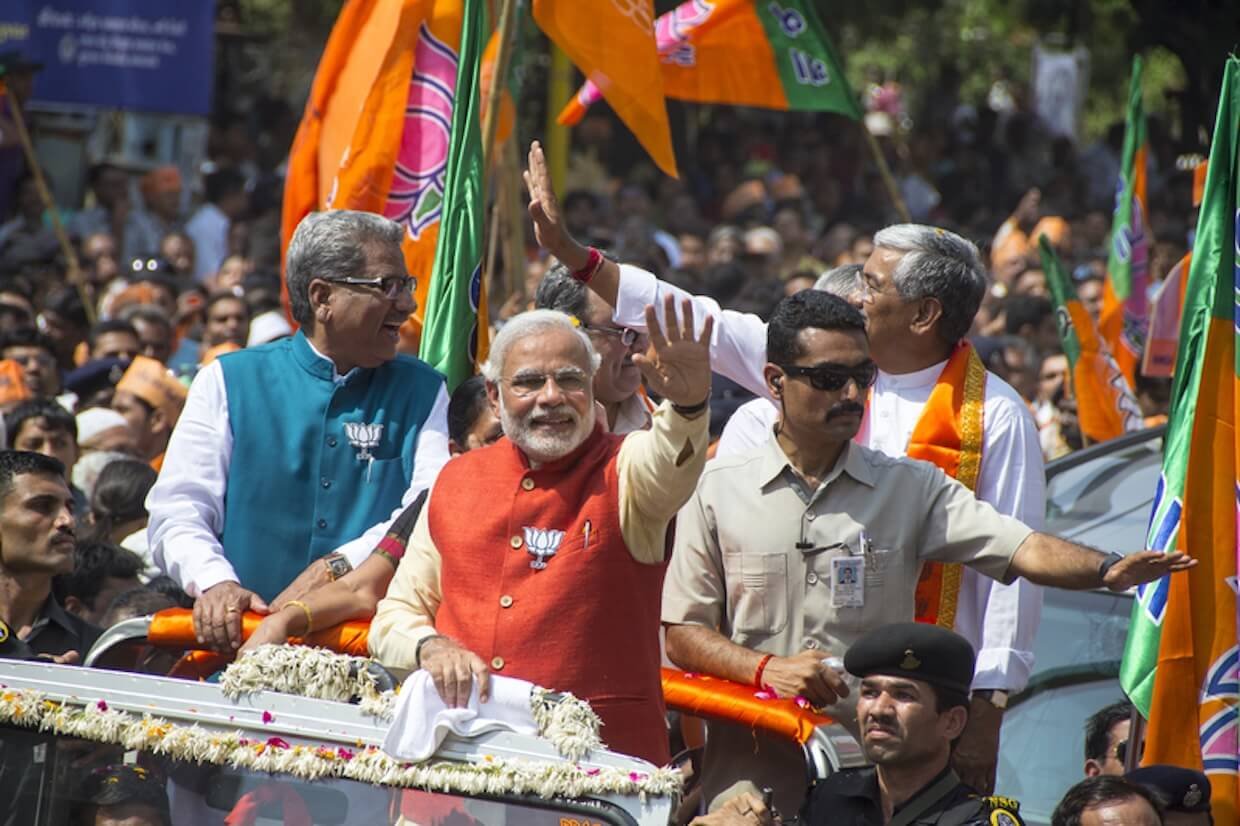
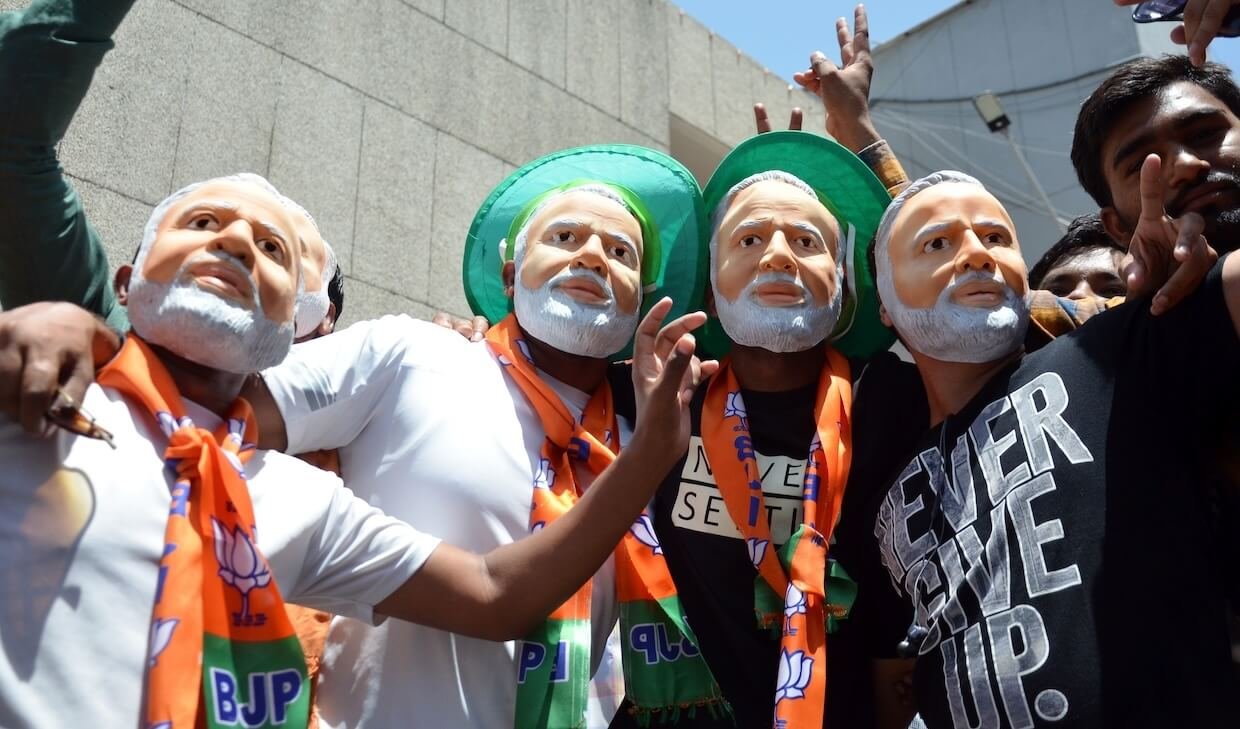
BJP supporters celebrate Narendra Modi’s victory during the 2019 assembly elections in Bhopal, India. Photo: Dreamstime.
In your writings, you distinguish between earlier developmental populisms and the contemporary fusion of welfare politics with authoritarian mobilization. How does the BJP’s model of welfare delivery—framed through personalized leadership, direct transfers, and symbolic nationalism—reshape the relationship between citizenship, dependency, and political loyalty?
Assoc. Prof. Ajay Gudavarthy: That is a very important question. Some scholars in India have described the BJP’s approach to welfare as a form of “new welfarism.” The central thrust of this model lies in infrastructural development—what is often referred to in the literature as infrastructural populism.One important example is the way the BJP constructs major highways and transport corridors. These roads are frequently designed to connect significant pilgrimage and religious centers. For instance, when large infrastructural quadrangles are developed, they often link multiple major pilgrimage sites across India. In this way, infrastructural development becomes deeply intertwined with cultural and religious symbolism.
This has been one of the BJP’s major political masterstrokes: linking infrastructural development to cultural meaning and attaching what Michel Foucault might describe as a cultural heterotopia to physical space. Infrastructure is no longer merely functional. Roads, highways, and high-speed developmental projects increasingly acquire cultural and, more specifically, religious meanings. The BJP then connects these religious meanings to broader narratives of religious majoritarianism and cultural unity. As a consequence, the discourse of welfare and development gradually shifts away from citizenship. Citizens are no longer positioned as rights-bearing subjects demanding development. Instead, development itself becomes linked to a culturally defined nationalist Hindu identity.
Part of what this process does is displace the discourse of rights. It weakens the normative language of constitutional morality, inclusion, and equality. In that sense, the BJP is engaged in a very deep symbolic political project, and it is executing it with remarkable effectiveness, which helps explain its repeated electoral successes. What makes this political imagination so powerful is its comprehensiveness: large-scale development, rapid economic growth, majoritarian cultural identity, a centralized theocratic state, and a personality cult all come together as a single political package. I would describe this as a populist assemblage. Precisely because this assemblage is so comprehensive, it leaves very little political space for the opposition to articulate an alternative vision. That is why the opposition urgently needs to construct what, in Gramscian terms, would be a counter-hegemonic cultural narrative capable of disrupting this assemblage.
Post-Ideological Populism in Tamil Nadu
Tamil Nadu’s election introduced a different populist phenomenon through Vijay’s TVK, rooted less in overt majoritarianism than in celebrity-mediated anti-establishment politics. How should scholars conceptualize this development: as a post-ideological populism, a digitally mediated “Gen-Z populism,” or a reconfiguration of Dravidian political idioms under neoliberal conditions?
Assoc. Prof. Ajay Gudavarthy: That is, again, a wonderful question. The rise of Mr. Vijay and TVK in Tamil Nadu has been one of the biggest surprises of the recent elections. And I think your framing is quite accurate: should this phenomenon be understood as a form of post-ideological populism, or as a reconfiguration of Dravidian political idioms under contemporary conditions?I would argue that it is actually a combination of both.
Support for Mr. Vijay appears to have come primarily from three social groups: women, Gen-Z voters attracted by his celebrity status and star power, and Dalits, who remain at the bottom of India’s caste hierarchy. This development has to be understood within the broader transformation of Indian politics. Both the BJP and newer political formations such as TVK are emerging by strategically engaging with existing social structures within Indian society. Many earlier progressive and secular movements—including the Dravidian movements that emerged in the 1950s and 1960s—eventually became associated with the interests of dominant caste groups, especially dominant OBC (The Other Backward Class) castes, whether in North India or South India.
One of the BJP’s major political strategies has been its ability to penetrate smaller caste groups, mobilize them politically, and isolate older progressive parties that once represented broader social coalitions. In North India, for instance, many backward-caste parties have gradually become identified with only one or two dominant sub-castes. The BJP has then consolidated the remaining sub-castes against these dominant groups. So, this is a highly complex political process. What parties like the BJP—and now TVK in the South—are doing is constructing a new social configuration by mobilizing new social groups within a broadly post-ideological framework.
The important question, however, is why these parties keep their social agendas deliberately vague, even while mobilizing new constituencies. Under Mr. Vijay, TVK did not announce any major social or ideological program. Although there are now suggestions that it may evolve into a welfare-oriented party, there is still little clarity. The party did not position itself as explicitly social democratic or ideologically committed in any conventional sense. Instead, it deliberately kept people guessing.
In that sense, TVK functioned as a kind of empty political category—mobilizing older social structures while simultaneously creating space for Gen-Z voters to enter politics through the appeal of celebrity culture and star power.
Authoritarianism as a Middle-Class Phenomenon
Your work often situates Indian populism within a broader global conjuncture of authoritarian-democratic transformations. How do the 2026 state election results compare with analogous developments elsewhere—such as Erdoğan’s Turkey, Orbán’s Hungary, Bolsonaro’s Brazil, or Trump-era America—in terms of institutional capture, emotional polarization, and the remaking of “the people”?
Assoc. Prof. Ajay Gudavarthy: This is a very important comparison. I have myself worked comparatively on movements such as Occupy Wall Street in the United States, the Free Fare Movement in Brazil, the autonomy movement in Egypt, and the anti-corruption movement in India roughly a decade ago.One of the central conclusions I arrived at was that, by and large, authoritarianism across these different contexts has been strongly supported by the middle class. In that sense, authoritarianism today is fundamentally a middle-class phenomenon. Historically, if one goes back to the 1950s, the middle class served as the social base of democracy and the welfare state. But we have now moved into a phase where authoritarianism itself is increasingly emerging through middle-class consensus.
The more important question, however, concerns the subaltern classes: why are subaltern groups often indifferent to authoritarianism, and how exactly are they responding to it? One of the most interesting findings from my own field surveys was that what appears to middle-class, social democratic, or progressive observers as authoritarianism is often perceived very differently on the ground. For many people, it appears not as authoritarianism, but as being authoritative. This distinction between authoritarianism and being authoritative is conceptually very important for understanding populist mobilization. When people describe leaders as authoritative, they often mean that such leaders possess a stronger grip over governance and are therefore capable of delivering outcomes more decisively and effectively.
What progressive critics may interpret as authoritarianism is therefore experienced differently by subaltern groups, particularly under conditions of growing economic insecurity and social anxiety. In such contexts, people increasingly look toward paternalistic leadership. That is one of the reasons we are witnessing a broader convergence between paternalism and libertarian neoliberalism. And this combination is precisely what seems to be operating across many of these different political contexts.
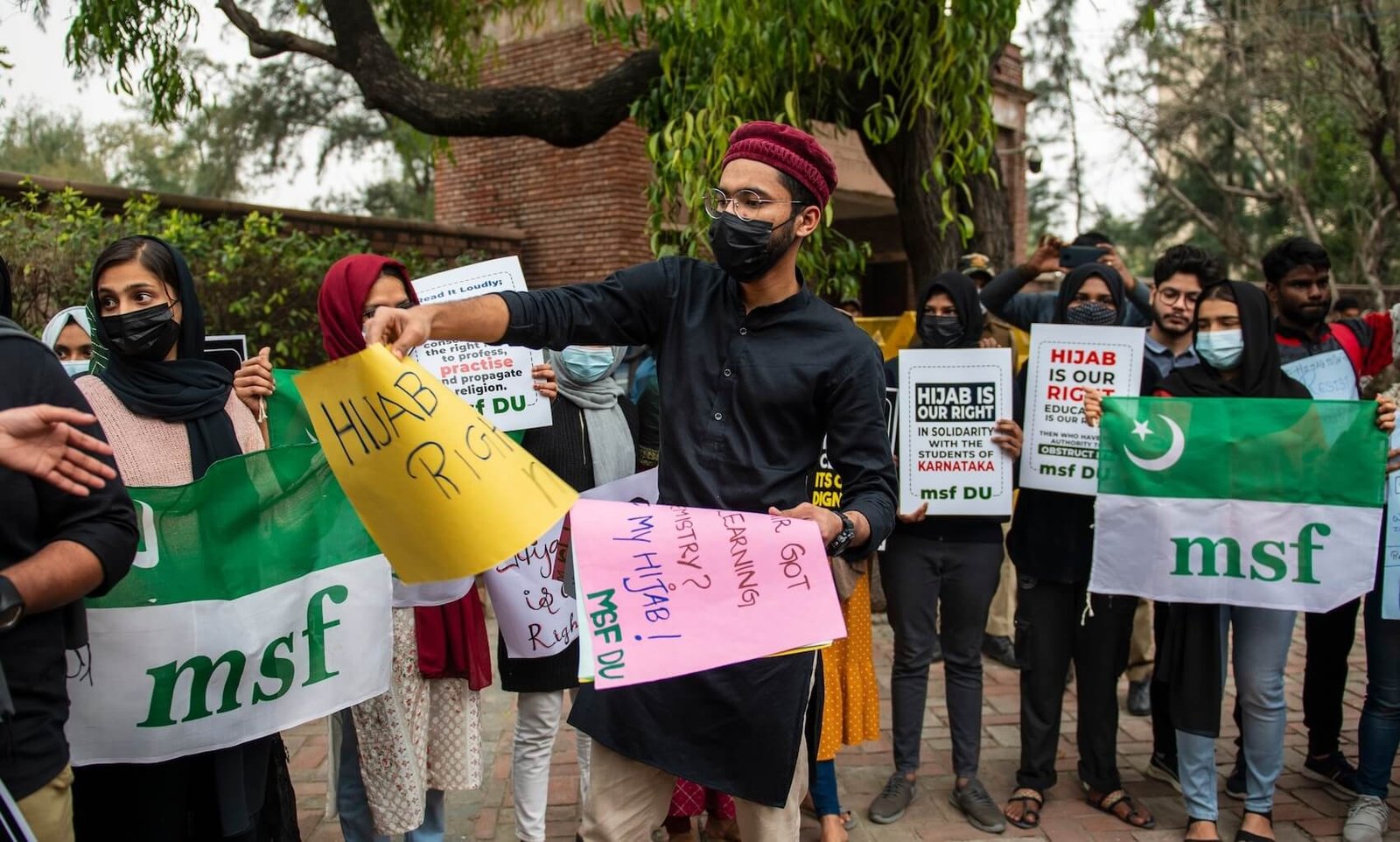
Members of the All India Muslim Students Federation (MSF) protest against the Karnataka Government’s Hijab ban in educational institutions, at Delhi University, New Delhi, India, on February 9, 2022. Photo: Pradeep Gaurs.
And finally, Prof. Gudavarthy, do these elections indicate the emergence of what Antonio Gramsci might call a “new historic bloc” under Hindutva—one capable of integrating welfare beneficiaries, aspirational middle classes, sections of subaltern castes, and corporate power into a relatively stable majoritarian order—or do you see unresolved contradictions that could still destabilize this project in the lead-up to 2029?
Assoc. Prof. Ajay Gudavarthy: That is a wonderful question with which to conclude our conversation. As Antonio Gramsci argued, hegemony is fundamentally a social condition. It is not something simply imposed from above. Rather, hegemony emerges when social conditions are created in such a way that people are organically drawn to give their consent. That, essentially, is what Gramsci means by hegemony. And I think that, to a considerable extent, the BJP has succeeded in constructing precisely such a hegemonic order.
Through its reconfiguration of caste contradictions and social conflicts, the BJP has advanced a cultural narrative of unity while simultaneously rendering social groups and individuals vulnerable to incorporation within that project of cultural unity. In that sense, there is indeed a comprehensive hegemonic project built around a powerful cultural narrative. At the same time, however, I would caution against assuming that this process is irreversible. The BJP’s majoritarian consensus is also producing social, political, and constitutional excesses. And that, in fact, remains the principal opening available to the opposition if it seeks to challenge and disrupt this majoritarian populist consensus.
A second and equally important point is that the opposition cannot effectively challenge majoritarian consensus without simultaneously confronting neoliberal consensus. The opposition will have to articulate a genuine alternative social agenda—free education, education as a public good, universal healthcare as a public good, the right to work, and full employment. These could become transformative political demands. But the problem, as we can clearly see, is that the opposition in India still largely operates within the ideological terrain of neoliberalism. Despite remaining out of power for nearly fifteen years, it has yet to formulate a coherent and compelling alternative.
So, the crucial question as India approaches 2029 is whether the opposition will be able to articulate a radical social democratic agenda capable of breaking neoliberal consensus and, through that, also disrupting the majoritarian political imagination. That is the real counter-hegemonic project the opposition needs to construct. It cannot challenge majoritarian consolidation without also challenging neoliberal consensus.
At present, however, the opposition is attempting to resist majoritarianism primarily through constitutional discourse alone, and not even through a sufficiently compelling cultural narrative. What is required instead is a simultaneous effort to challenge majoritarianism through a counter-cultural project, a renewed constitutional discourse, and a decisive break with neoliberal consensus. That will remain one of the most important political questions to watch as India moves toward 2029.
In this ECPS interview, Professor Alexandre Lefebvre of The University of Sydney argues that liberalism’s crisis is not merely institutional but also ethical and existential. Against populist and post-liberal portrayals of liberalism as morally hollow, elitist, and radically individualistic, Professor Lefebvre insists that liberalism historically rested on “freedom and generosity, liberty and liberality.” Yet neoliberalism, he argues, “forgot one half of this tradition,” narrowing liberalism into a doctrine of individual freedom, market rationality, and procedural neutrality. For Professor Lefebvre, liberal renewal requires recovering liberalism as a “way of life” grounded in fairness, reciprocity, moral self-reflection, and generosity. His remedy is clear: liberals must become “more generous with their resources and more generous in the attention they give to others.”
At a moment when liberal democracy is confronting intensifying pressures—from populist radical-right mobilization and democratic backsliding to widening distrust in institutions and deepening social fragmentation—the future of liberalism has become one of the defining political and philosophical questions of our time. Across much of the contemporary world, liberalism is increasingly portrayed as morally exhausted, technocratic, elitist, and detached from the existential concerns of ordinary citizens. In political discourse, it is frequently reduced either to market orthodoxy or procedural neutrality, stripped of any deeper ethical or cultural substance. Against this backdrop, the work of Professor Alexandre Lefebvreoffers a strikingly different interpretation of the liberal tradition.
In this wide-ranging interview with the European Center for Populism Studies (ECPS), Professor Lefebvre—Professor of Politics and Philosophy and Chair of Discipline, Philosophy at the Faculty of Arts and Social Sciences at The University of Sydney—argues that liberalism cannot survive as a purely procedural doctrine. Rather, it must recover its ethical, existential, and even spiritual dimensions if it is to respond effectively to the global rise of illiberalism and populism. Central to his argument is the claim that liberalism historically contained not only a commitment to freedom, but also to generosity. As he puts it, liberalism originally rested on “two fundamental values at its core,” namely “freedom and generosity, liberty and liberality.” Yet, according to Professor Lefebvre, neoliberalism emerged when liberal societies “forgot one half of this tradition” and elevated freedom while neglecting generosity, solidarity, and fairness.
Throughout the interview, Professor Lefebvre challenges widespread assumptions about liberalism’s moral emptiness. While acknowledging that many populist critiques rely on “an unfair and highly reductive interpretation of what liberalism actually stands for,” he nevertheless argues that liberals themselves have often “invited this criticism by effectively performing the role of the caricature.” Liberalism’s retreat into technocracy, proceduralism, and elite self-management, he contends, has weakened its emotional and moral appeal while intensifying public perceptions of inequality and exclusion. “Liberalism,” he warns, “has to rediscover generosity and solidarity through institutions rooted in justice and fairness.”
Drawing on thinkers ranging from John Rawls and Henri Bergson to Aristotle and John Stuart Mill, Professor Lefebvre develops a conception of liberalism not simply as a political arrangement, but as a “way of life” shaping everyday practices, relationships, and moral sensibilities. He argues that liberal democracies are facing not merely an institutional crisis, but “an existential crisis” rooted in the erosion of meaning, belonging, and ethical orientation.
Perhaps most strikingly, Professor Lefebvre insists that the renewal of liberal democracy depends less on technocratic management than on moral reconstruction. Liberalism, he argues, must once again become capable of inspiring attachment, solidarity, and self-reflection without succumbing to authoritarian perfectionism. In his concluding remarks, he summarizes this challenge with remarkable clarity: “If I had two wishes for liberalism, they would be these: that liberals become more generous with their resources and more generous in the attention they give to others.”
In this ECPS interview, Dr. Javier Pérez Sandoval examines how democratic erosion is increasingly shaped by forces operating beyond conventional accounts of executive aggrandizement and electoral backsliding. Drawing on his research on global illiberalism, state erosion, populism, political violence, and subnational authoritarianism, Dr. Sandoval argues that the international democratic environment has become less supportive of opposition forces and more permissive of illiberal practices. He warns that while populist leaders may be defeated electorally, the institutional damage they leave behind is far harder to reverse. The interview also explores Mexico’s “ballots, bots, and bullets” dynamic, where digital manipulation and criminal violence reshape democratic competition from below, while declining trust undermines democratic recovery at both domestic and international levels.
The accelerating crisis of liberal democracy is no longer confined to domestic arenas of polarization, institutional decay, or electoral contestation. Increasingly, democratic erosion unfolds within an international environment that has itself become more permissive of authoritarianism, more tolerant of illiberal governance, and less capable of sustaining democratic norms across borders. In this context, the European Center for Populism Studies (ECPS) spoke with Dr. Javier Pérez Sandoval, Postdoctoral Research Associate in Democracy at the Kellogg Institute for International Studies at the University of Notre Dame, whose research explores the intersections of global illiberalism, populism, state capacity, political violence, democratic resilience, and subnational authoritarianism. Across a wide-ranging conversation, Dr. Pérez Sandoval offers a rich analysis of how contemporary democracies are being reshaped not only from above by executive aggrandizement, but also from below through institutional hollowing, criminal governance, digital manipulation, and declining public trust.
At the center of the interview is Dr. Sandoval’s argument that the international democratic order itself has undergone a profound transformation. Drawing on his recent Journal of Democracy article, he argues that the post-Cold War assumption that “linkages to the West” would provide a reliable democratic impetus has weakened considerably. As democratic turbulence intensifies within the United States and Europe themselves, “it is no longer certain that these linkages to the international arena, and specifically to Western democracies, provide robust support for democratic forces around the globe.” In their place, long-established autocracies have become “increasingly organized and much more sophisticated in how they operate internationally,” contributing to what he repeatedly describes as the “normalization of illiberal practices” both domestically and internationally.
This transformation, Dr. Sandoval argues, has profound consequences for democratic oppositions operating in hybrid regimes and eroding democracies alike. Global illiberalism raises the costs of resistance, fragments opposition coalitions, and produces what he terms a “credibility gap,” in which democratic actors may sacrifice long-term democratic commitments for short-term electoral viability. The result is an increasingly zero-sum international environment in which “policy preferences and regime preferences are becoming increasingly aligned.”
The interview also explores Dr. Sandoval’s influential work on state erosion and populist governance. In his collaborative research with Andrés Mejía Costa, he distinguishes democratic backsliding from the “hollowing out” of state institutions through mechanisms such as the dismantling of bureaucracies, the rearrangement of state agencies, fiscal centralization, and judicial reconfiguration. While populist leaders may be removed electorally, the institutional damage they leave behind is far more enduring. As he warns, “state erosion and state damage are much harder to undo.”
Particularly striking is Dr. Sandoval’s discussion of democratic trust in both domestic and international contexts. Reflecting on transatlantic relations, he observes that “a partner that was once regarded as reliable may suddenly appear far less trustworthy,” adding that “even when a government leaves office or is voted out, the damage to trust may already have been done.” This erosion of institutional confidence, he argues, extends from citizens’ relationships with the state to alliances such as those between the United States, NATO, and Europe. Hence the interview’s central warning: the erosion of trust often outlasts electoral change itself.
The conversation further examines Mexico as a paradigmatic case of democratic vulnerability under conditions of criminal governance, digital misinformation, and political violence. Discussing the country’s 2024 elections—described through the now familiar formula of “ballots, bots, and bullets”—Dr. Sandoval analyzes how criminal organizations increasingly shape electoral competition and democratic participation. He warns that when political elites are effectively “vetted by criminal organizations,” the minimal democratic principles of electoral contestation and elite rotation become fundamentally distorted.
Yet despite the gravity of these developments, Dr. Sandoval does not embrace fatalism. Instead, he repeatedly returns to the importance of democratic diagnosis, documentation, institutional rebuilding, and civic cooperation. Democratic resilience, he argues, begins with the ability “to diagnose and call things what they are,” and with the willingness of democratic actors to unite around minimal democratic thresholds rather than maximalist ideological positions. In sum, this interview presents a sobering but deeply illuminating reflection on the contemporary condition of democracy—and on the difficult but necessary work required to defend it.
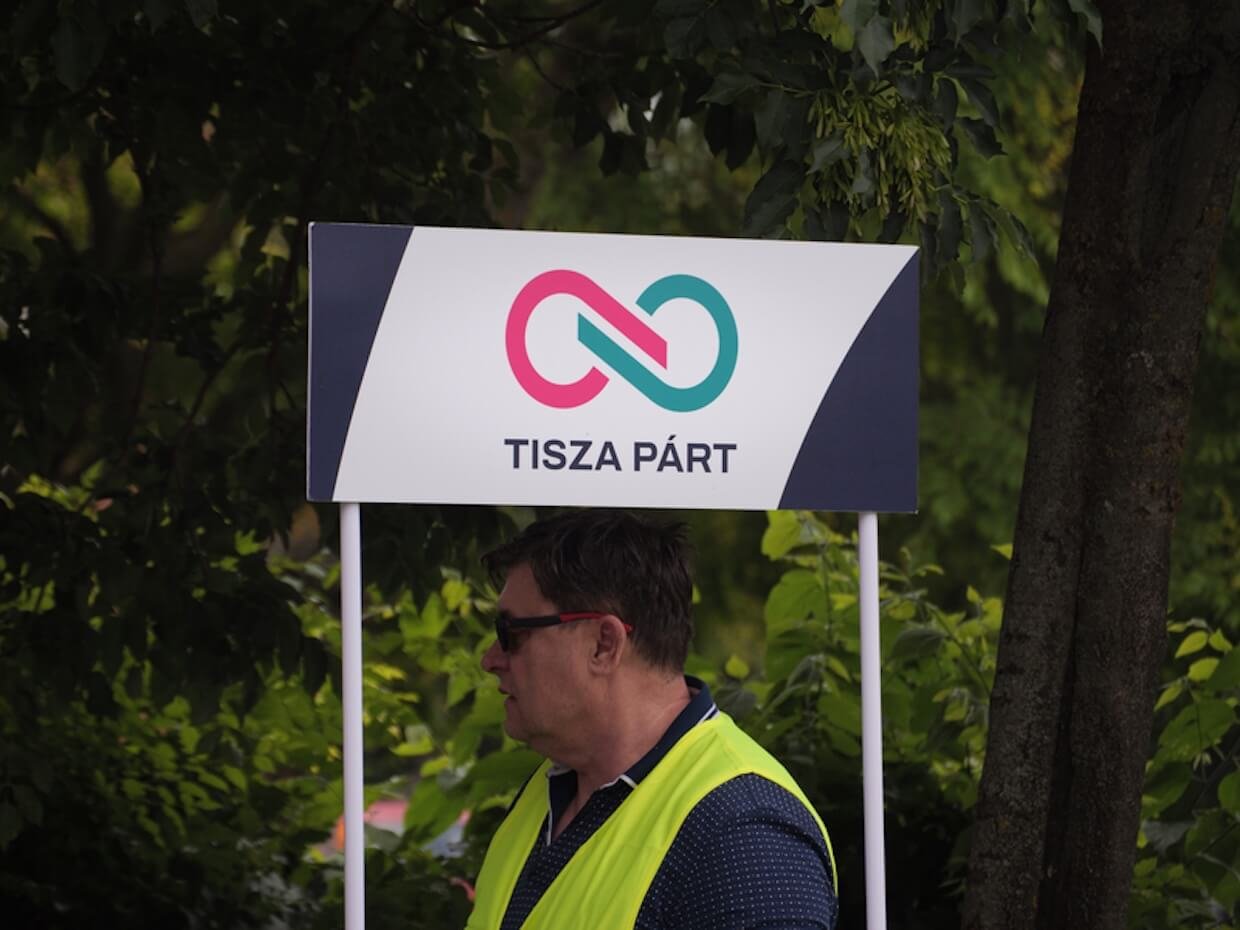
In this ECPS interview, Associate Professor Péter Krekó examines Hungary’s uncertain political transition after Viktor Orbán’s electoral defeat and the rise of Péter Magyar’s TISZA party. Drawing on his work on “informational autocracy,” disinformation, conspiracy theories, and populism in power, Assoc. Prof. Krekó argues that Orbán’s centralized media and propaganda machinery has suffered a striking collapse, opening possibilities for democratic renewal. Yet he warns against premature optimism. Hungary may move toward a more pluralistic and critical information space, but concentrated power, weak parliamentary alternatives, and one-sided polarization create “dangers of re-autocratization and of abuse of power.” For Assoc. Prof. Krekó, Hungary’s future depends on institutional reform, media pluralism, civic vigilance, and political self-restraint.
The electoral defeat of Viktor Orbán’s Fidesz government after sixteen years in power has generated intense debate over whether Hungary is witnessing a genuine democratic rupture or merely a reconfiguration of illiberal governance under new political leadership. For more than a decade, Hungary stood at the center of global discussions on democratic backsliding, populist governance, and informational manipulation, becoming what many scholars described as a laboratory of contemporary illiberalism. Among the leading analysts of this transformation is Péter Krekó, an Associate Professor at the Department of Social Psychology; the Research Laboratory for Disinformation & Artificial Intelligence at Eötvös Loránd University and director of the think tank Political Capital Institute, whose work on disinformation, conspiracy theories, and “informational autocracy” has significantly shaped scholarly understanding of the Orbán regime.
In this wide-ranging interview with the European Center for Populism Studies (ECPS), Assoc. Prof. Krekó examines the political and psychological foundations of Hungary’s illiberal system, the apparent collapse of Orbán’s informational machinery, and the uncertain prospects for democratic renewal under Péter Magyar and the TISZA party. Drawing on his interdisciplinary expertise as both a political scientist and social psychologist, Assoc. Prof. Krekó situates Hungary’s transition within broader debates on populism, post-truth politics, democratic resilience, and authoritarian adaptation.
At the center of the discussion is Assoc. Prof. Krekó’s application of the concept of “informational autocracy,” originally developed by Sergei Guriev and Daniel Treisman, to the Hungarian case. According to Assoc. Prof. Krekó, Orbán’s rule depended less on overt repression than on the construction of “the most centralized and politicized mediaenvironment in the entire European Union,” where nearly 500 media outlets operated within a politically controlled ecosystem reproducing state-sponsored narratives and disinformation. Yet despite these asymmetrical conditions, Orbán’s “highly professional media and disinformation machinery” ultimately “was unable to spread its narratives effectively or shape public opinion in the way it once had.”
At the same time, Assoc. Prof. Krekó warns against premature democratic triumphalism. Although he believes there is “some basis for optimism” that Hungary may move toward “a more diverse, more pluralistic, and, in many respects, more critical information space,” he repeatedly emphasizes the structural dangers accompanying overwhelming electoral victories and concentrated political authority. As reflected in the headline of this interview, Assoc. Prof. Krekó cautions that “there are dangers of re-autocratization and of abuse of power in Hungary,” particularly in a political landscape where “only the right exists in parliament” and where polarization may evolve into what he describes as “one-sided tribalism.”
The interview further explores the enduring effects of disinformation and conspiracy narratives on collective memory, the fragility of democratic norms after prolonged informational manipulation, and the challenge of depolarizing political cultures shaped by Manichean populism. Hungary, Assoc. Prof. Krekó argues, has been “a major experimental laboratory of post-truth politics,” and may now become “a major experimental laboratory of post-post-truth politics as well.”Whether the country ultimately evolves into “a model for re-democratization” or drifts toward new forms of hybrid rule remains uncertain.
Throughout the conversation, Assoc. Prof. Krekó offers a nuanced and cautious analysis that avoids both fatalism and romanticization. Instead, he frames Hungary’s transition as an open-ended political experiment whose outcome will depend not only on institutional reforms, but also on political self-restraint, media pluralism, civic vigilance, and the willingness of both elites and citizens to defend democratic norms consistently, regardless of partisan loyalties.
This commentary examines Hungary’s 2026 political rupture through the paradox of Péter Magyar: a former Fidesz insider now positioned as the possible dismantler of Orbánism. Rather than romanticizing the defeat of Viktor Orbán as automatic democratic restoration, Professor İbrahim Öztürk situates Hungary alongside the US, Brazil, and Poland to show that authoritarian-populist systems often survive electoral defeat through media ecosystems, patronage networks, institutional residues, and polarized identities. Magyar’s supermajority creates a rare “Cincinnatus moment”: he can either rebuild pluralist institutions or reproduce Orbán’s majoritarian methods under a pro-European vocabulary. The commentary argues that Hungary’s democratic opening is real but fragile, and that its future depends on institutional restraint, EU conditionality, civic vigilance, and genuine democratic reconstruction.
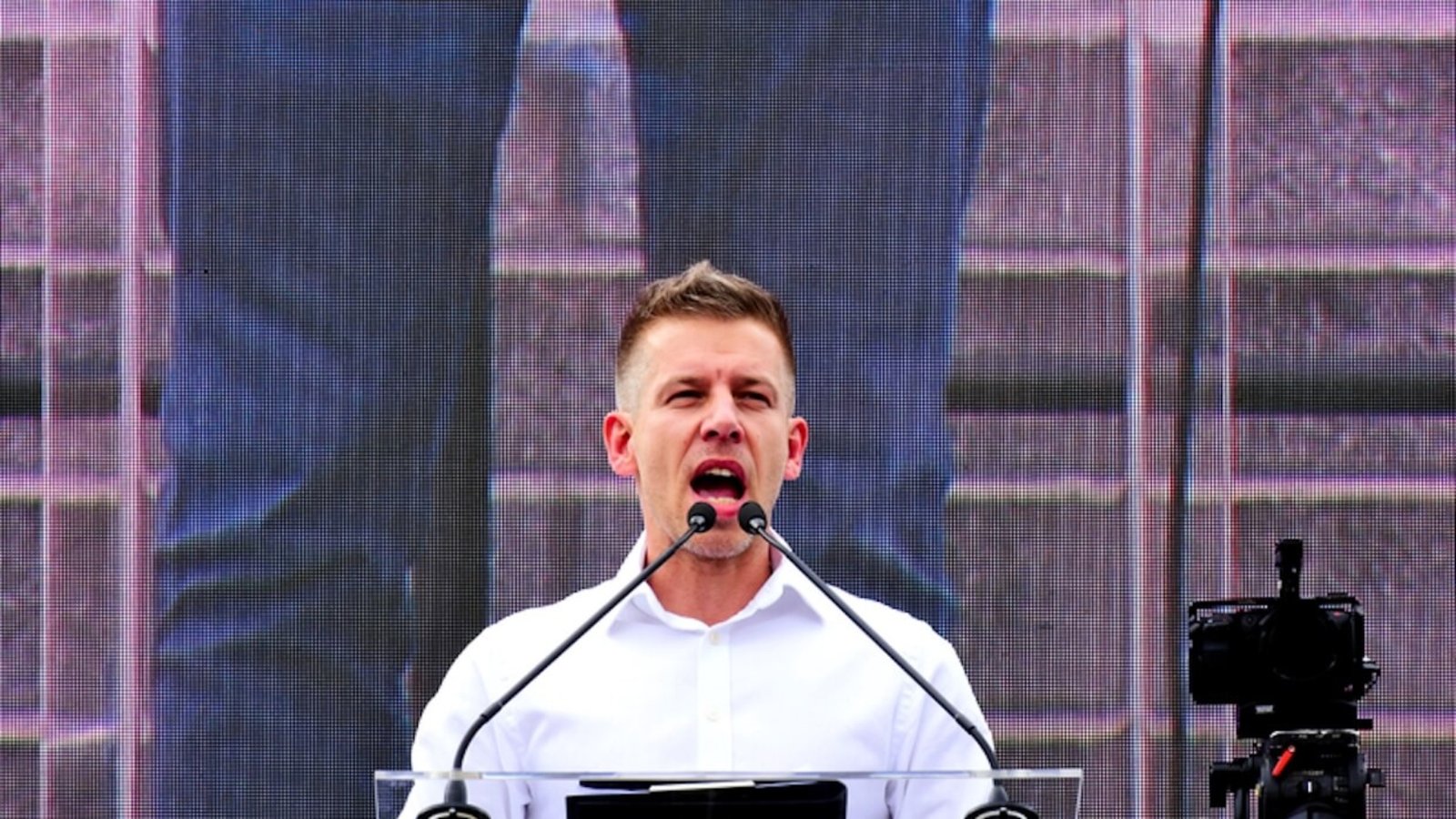
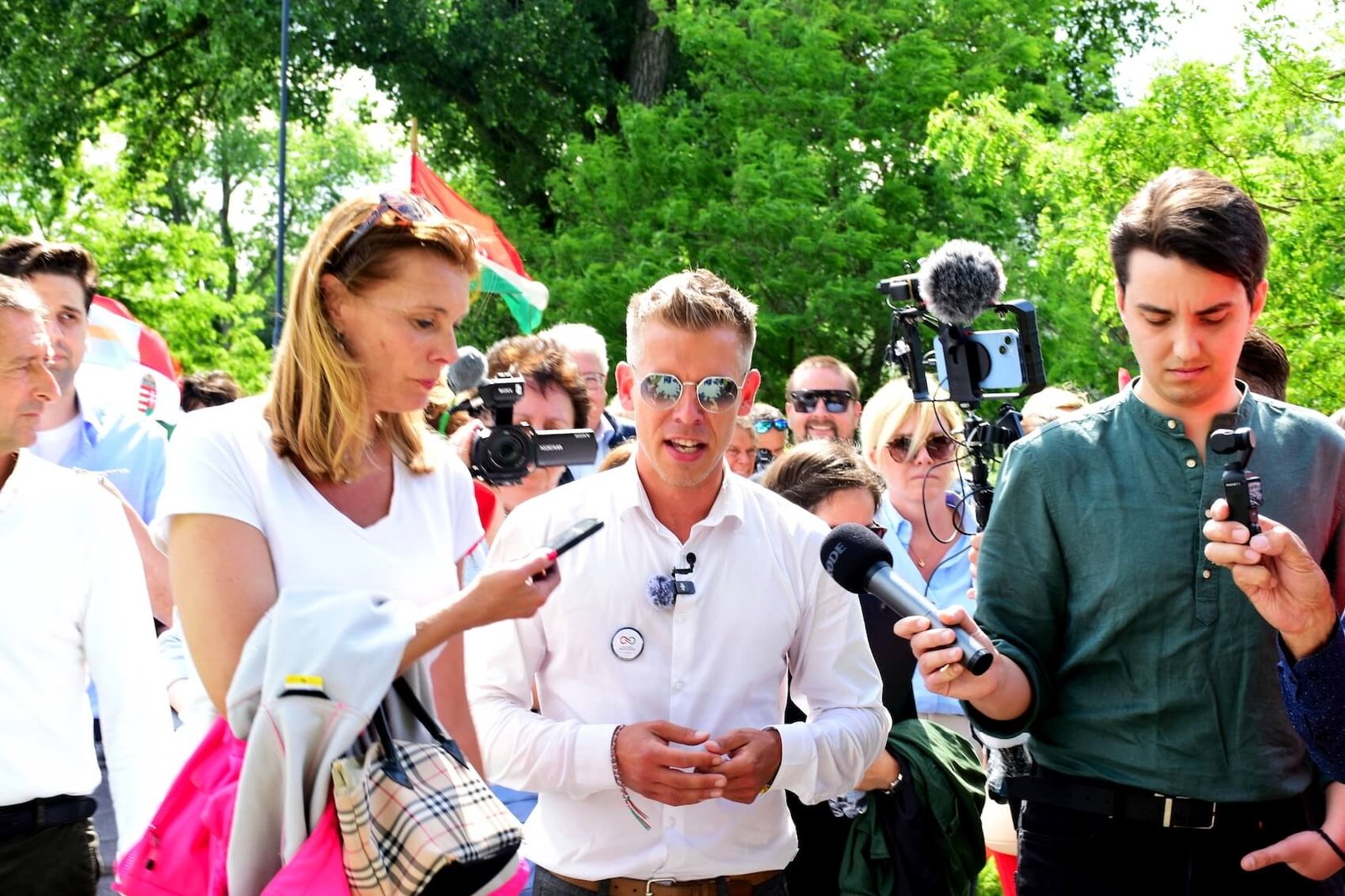
Péter Magyar’s Tisza Party ended Orbán’s sixteen-year rule in the April 12, 2026, parliamentary election and, after the final count, secured 141 of the 199 seats in Hungary’s National Assembly—comfortably above the two-thirds threshold required for constitutional change. As a result, Viktor Orbán’s regime, carefully constructed since 2010 and ideologically legitimized under the banner of “illiberal democracy,” has for the first time been seriously shaken by a figure produced within its own political architecture. Such a political rupture cannot be reduced to an ordinary electoral defeat or a conventional alternation of power.
Although Hungary is relatively small in population, economic weight, and geopolitical scale, Orbán’s era in power has become one of the most visible laboratories of authoritarian populism in Europe. Even more damaging than Hungary’s domestic democratic regression was the corrosive perception it created: Hungary is in permanent conflict with Brussels over the rule of law, media freedom, migration, Ukraine, Russia, and EU funds. In 2022, the European Parliament declared that Hungary could no longer be considered a full democracy, describing it instead as an “electoral autocracy” resulting from the government’s deliberate and systematic efforts to undermine European values. As a result, the message was that the European Union could no longer serve as a reliable democratic anchor, even for its own members.
Yet Péter Magyar’s rise should not be romanticized as a straightforward victory of democratic opposition. Tisza’s electoral landslide undoubtedly reflected accumulated fatigue with Orbánism: economic stagnation, perceptions of endemic corruption, deteriorating relations with Europe, and growing frustration with the cartel-like fusion of party, state, media, and oligarchic capital. But the bearer of this anti-Orbán moment is not a pristine liberal democrat emerging from civil society. Magyar is a product of the Fidesz world itself: someone who knows the regime’s language, networks, reflexes, vulnerabilities, and internal codes.
Hungary’s paradox lies precisely here. The first actor capable of breaking the Orbán system did not come from outside it but from within. The possibility of dismantling a hybrid-authoritarian regime has emerged not through a “clean” outsider but through an insider who understands the machinery of power because he was once close to it. This is both promising and dangerous. It is promising because authoritarian systems often fracture when insiders defect. It is dangerous because those who know how such systems work may also be tempted to reproduce their techniques under a new moral vocabulary.
For this reason, Hungary should be read not merely as a national case of regime change but as a broader laboratory for understanding the contemporary democratic crisis. As emphasized at the ECPS Fifth Annual International Symposium on “Reforming and Safeguarding Liberal Democracy: Systemic Crises, Populism, and Democratic Resilience,” (Hereafter, ECPS Symposium), the crisis of democracy today cannot be understood through a single discipline, region, or causal factor. It is political, institutional, ideological, economic, technological, and geopolitical. The ECPS symposium report likewise frames the contemporary crisis of liberal democracy in terms of systemic pressures, populist mobilization, institutional erosion, and democratic resilience. Hungary concentrates all of these dynamics into a single case: electoral competition, media capture, judicial dependence, party-state fusion, EU conditionality, nationalist-populist discourse, and the unresolved problem of post-authoritarian reconstruction.
The Orbán Regime: From State Capture to Party-State Fusion
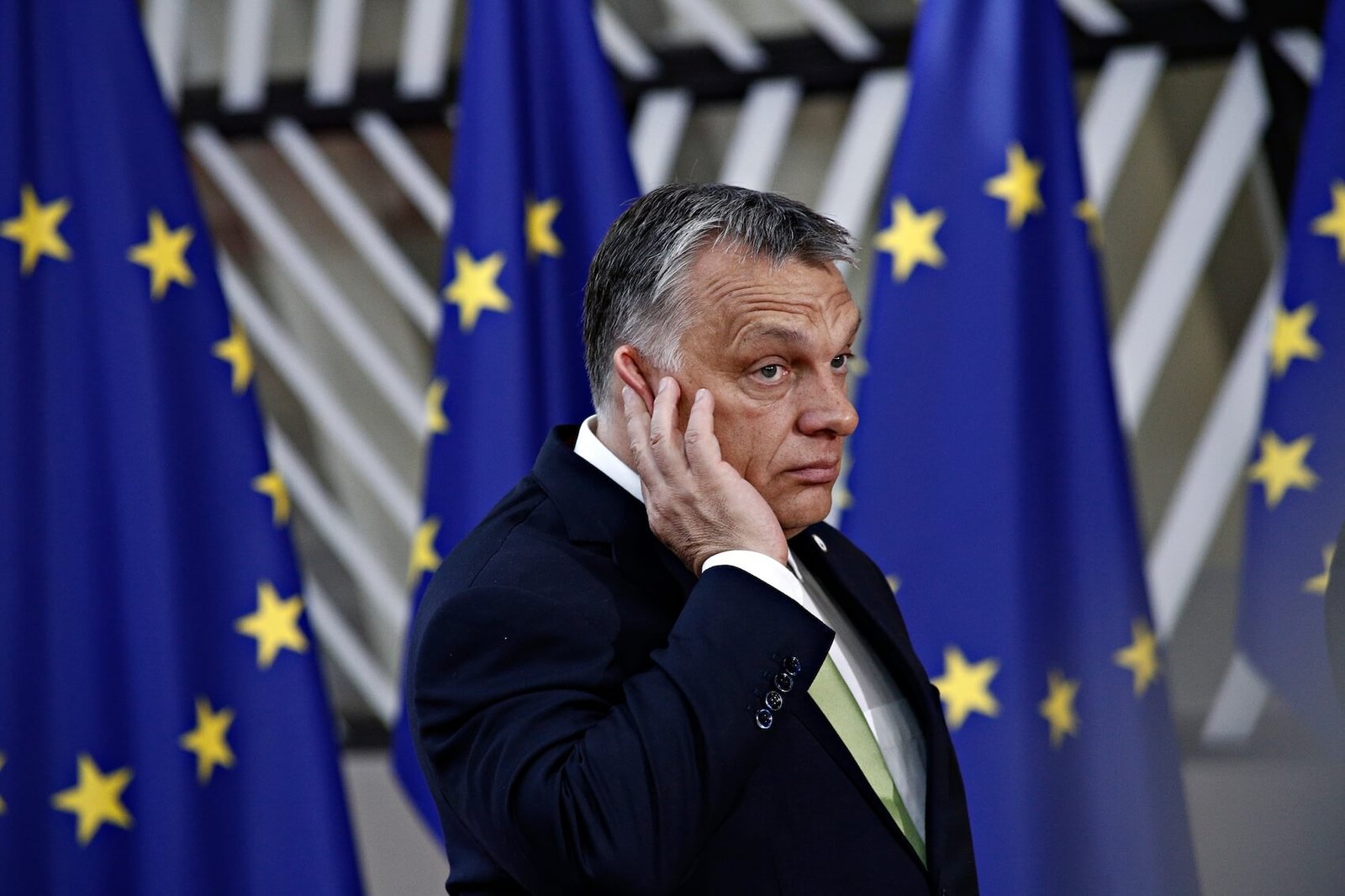
Former Hungarian Prime Minister Viktor Orban.
Understanding Magyar’s challenge requires understanding the nature of the regime he inherits. Orbán’s Hungary was not a classical military dictatorship. Elections continued. Opposition parties were not formally banned. Courts existed. Parliament functioned. Civil society survived, though under pressure. Yet the substantive capacity of these institutions to promote fair competition, constrain power, protect the rule of law from political influence, and sustain pluralism was steadily weakened.
Hungary became one of the most instructive examples of contemporary authoritarianization. Elections took place, but the electoral field was tilted. Media existed, but large parts of it were controlled by government-friendly capital and state resources. Courts remained, but key appointments increasingly reflected political loyalty. Universities, foundations, media councils, prosecution offices, regulatory bodies, and constitutional institutions continued to exist formally, but their internal logic was increasingly subordinated to the party-state.
The House of Commons Library notes that Orbán held power from 2010 until 2026 and was widely criticized by domestic opponents and international bodies for moving Hungary in an authoritarian direction. It also recalls Orbán’s own 2014 declaration that his government was building an “illiberal” state and emphasizes that Fidesz’s long-standing two-thirds majority enabled far-reaching constitutional changes that repeatedly brought Hungary into conflict with the EU.
This illustrates one of the broader mechanisms highlighted at the ECPS symposium: democratic erosion does not proceed only through electoral manipulation. It advances through the transformation of political language, the weakening of judicial authority, the loss of neutrality in public institutions, the narrowing of media pluralism, and the reshaping of civic imagination. Orbánism, in this sense, was never merely a governing style. It was an attempt to reorganize the state, society, and public reason around a durable nationalist-populist order.
This architecture was also designed to survive electoral defeat. Long-term appointments in the prosecution service, constitutional court, media authorities, university foundations, public companies, and regulatory bodies created a state structure capable of resisting a new government. In such a system, winning an election does not mean automatically taking control of the state. It opens the first gate; the deeper struggle begins inside the bureaucracy, the judiciary, public finance, and media infrastructure.
Magyar’s victory is therefore not an endpoint but the beginning of a difficult transition. Orbán may have lost office, but the institutional residues of Orbánism—its economic networks, media ecology, bureaucratic habits, legal traps, and cultural reflexes—are likely to persist. The crucial question is whether Magyar will dismantle these structures or make them more usable for himself. Before focusing directly on Magyar, a comparative perspective would provide further insight into the personality, ideology, and experience of the leadership that might lead to the transformation of power.
Comparative Lessons: Trump, Lula, Tusk, and the Difficult Art of Defeating Authoritarian Populists
Hungary can only be properly understood through comparative and historical analysis. As the ECPS Symposium emphasized, populism and democratic backsliding do not take identical forms everywhere. Yet across cases, recurring mechanisms can be identified: humiliation, polarization, institutional weakening, executive aggrandizement, cultural backlash, strategic disinformation, and the political exploitation of uncertainty. Reading Hungary alongside the United States, Brazil, and Poland helps clarify not only how authoritarian-populist incumbents can be defeated, but also why democratic restoration remains fragile after electoral victory.
In the ideal world of democratic theory, one might expect a principled, pluralistic, and untainted civil-society leader to rise against an “authoritarizing” regime. Real politics rarely works that way. Where media space has been captured, opposition actors have been criminalized, electoral rules tilted, and public resources converted into partisan instruments, a “clean” outsider may never effectively reach the electorate. The European Parliament’s 2022 finding that Hungary had become a “hybrid regime of electoral autocracy” captures precisely this kind of distorted competitive environment.
Hungary’s 2022 opposition experiment around Péter Márki-Zay is instructive in this respect. The Guardian describedMárki-Zay as a conservative outsider backed by a broad opposition alliance to challenge Orbán. Yet he was rapidly damaged by Orbán’s media and propaganda apparatus. The lesson was blunt: in a captured information environment, a plausible candidate is not enough. The opposition must also find a way to penetrate the regime’s communicative architecture.
Magyar’s rise did precisely that, though not because it was the product of a carefully designed opposition strategy. It resembled an unexpected explosion from within the regime’s own crisis. His “surprise candidate” effect rested on two sources of credibility. First, insider testimony carries a distinctive political force. Corruption allegations repeated for years by Hungary’s opposition had limited impact on Fidesz voters; similar accusations voiced by a former insider produced a different kind of rupture. Second, Magyar escaped the exhaustion associated with the traditional opposition. He appeared outside its record of fragmentation, ideological baggage, and repeated failure.
This suggests a broader pattern: authoritarian-populist regimes are rarely defeated by pristine figures alone. Success often requires three conditions: a broad democratic front, a credible figure capable of puncturing the incumbent’s information monopoly, and a pragmatic promise of transition that reduces voter fear.
The US: The Return of Trump and the Failure of Liberal Restoration
Trump supporters marched toward Capitol Hill on January 6, 2021, in Washington, D.C., USA. Photo: Dreamstime / Bgrocker
The United States offers the most important first comparison because it shows that defeating an authoritarian-populist leader at the ballot box does not necessarily defeat the political formation he has created. Donald Trump lost the presidency in 2020, but Trumpism did not disappear. It survived as a mass political identity, a media ecosystem, a party-capturing force, and a movement built around resentment, grievance, distrust of institutions, and the claim that the system had been stolen by hostile elites.
The trauma of January 6, 2021, seemed at the time to mark a possible rupture. The Final Reportof the House Select Committee to Investigate the January 6th Attack described a sustained effort to overturn the 2020 election result and placed Trump at the center of that campaign. Yet the institutional reckoning remained incomplete. The Republican Party did not decisively break with Trump; conservative media did not abandon the stolen-election narrative; and the broader social grievances that sustained Trumpism were neither politically absorbed nor materially addressed.
This is why Trump’s return in 2024 is so analytically important. The National Archives’ official Electoral Collegeresults recorded Trump’s victory over Kamala Harris by 312 electoral votes to 226, while AP described his victory as a remarkable political comeback rooted in appeals to frustrated voters. His second inauguration as the 47th president on January 20, 2025, confirmed not merely a Republican electoral victory but the return of a populist movement that many had prematurely assumed would be exhausted after 2020.
The American case, therefore, reveals a central post-populist trap. Joe Biden’s presidency defeated Trump electorally in 2020, restored a measure of institutional normality, and defended NATO, administrative professionalism, and democratic procedure. But it did not fundamentally transform the socioeconomic, cultural, and institutional conditions that had produced Trumpism in the first place: regional decline, working-class insecurity, border anxiety, distrust of expertise, racial and cultural backlash, media fragmentation, and the perception that liberal institutions served insulated elites rather than ordinary citizens.
In this sense, Trump’s comeback was not only a personal return. It was the revenge of an unresolved political formation. The Brennan Center’s analysis of Project 2025 warned that the conservative governing blueprint associated with Trump’s return aimed at a major expansion of executive power. The Carnegie Endowment’s comparative analysis of US democratic backsliding similarly situates the second Trump presidency within a wider global pattern of democratic erosion, comparing developments in the United States with cases such as Hungary, India, Poland, and Turkey.
Trump’s comeback shows that authoritarian populism is not merely a government; it is an ecosystem. It can survive defeat through party capture, alternative media, loyal courts, donor networks, grievance politics, and a disciplined narrative of betrayal. Unless the post-populist government delivers visible reform and democratic renewal, the defeated populist can return as the voice of unfinished revenge.
The American case also sharpens the central dilemma of reform. If democratic successors move too cautiously, they appear weak and irrelevant. If they move too aggressively, they may be accused of weaponizing institutions and confirming the populist claim of elite persecution. Biden’s difficulty was precisely this: restoring procedural normality was not enough to rebuild democratic confidence. Voters who experience insecurity, disorder, or decline do not reward the process alone. They demand protection, direction, and visible change.
Brazil: Lula’s Broad Coalition and the Survival of Bolsonarism
Luiz Inacio Lula da Silva walks among supporters on Augusta Street at São Paulo on the eve of the brazillian election on October 1, 2022. Photo: Yuri Murakami.
Brazil’s 2022 election offers a second powerful comparison. Luiz Inácio Lula da Silva was not a new or immaculate candidate. He was a former two-term president, a deeply polarizing figure, and someone who had been imprisoned on corruption charges later annulled on procedural and judicial impartiality grounds. Yet he proved to be the most effective candidate against Jair Bolsonaro, a radical right-wing populist who attacked institutions, questioned the electoral system, and polarized society. AP described Lula’s victory as an extremely tight election that marked an about-face after four years of far-right politics.
Lula’s success rested on strategic coalition-building rather than ideological purity. By choosing Geraldo Alckmin, a former center-right rival, as his running mate, he reassured markets, moderates, conservative voters, and institutional actors. The contest was thereby reframed not as a conventional left-right struggle, but as a choice between Bolsonaro’s destabilizing authoritarian populism and democratic normalization.
Lula also benefited from powerful social memory. For millions of poorer voters, workers, trade unionists, northeastern Brazilians, and beneficiaries of earlier social programs, he was associated not merely with ideology but with concrete improvements in living standards. Just as importantly, Brazil’s electoral institutions held firm against Bolsonaro’s efforts to delegitimize the result. Bolsonaro delayed full acceptance, but the institutional outcome held; The Guardian reportedthat Bolsonaro broke his silence without conceding, while his chief of staff indicated that the transition process would begin.
As I argued in an earlier article,Lula’s return should not be read merely as the return of the left. It represented a broad coalition for democratic normalization: workers, poorer voters, environmental constituencies, institutional actors, moderates, and democracy-minded conservatives converging around a minimum democratic agenda. In a former commentary at the ECPS, I further argued that the decisive question in confronting authoritarian populists is not simply whether the incumbent has produced economic crisis, corruption, or institutional decay. It is whether the opposition can construct a credible, governable, and inclusive alternative in the eyes of voters.
The lesson for Hungary is clear. Authoritarian-populist regimes are not always defeated by flawless candidates. Sometimes they are defeated by figures who can reassure broad social blocs, understand how the state works, and pierce the regime’s information monopoly. Lula did this through historical legitimacy and social memory. Magyar has done it through insider credibility. Yet the difference is equally important: Lula was the carrier of a long political movement, party tradition, and social program; Magyar still leads a movement largely organized around his person, with limited ideological and institutional depth.
Lula’s example, therefore, offers both hope and a warning. It shows that authoritarian populists can be defeated at the ballot box and that broad democratic fronts still matter. But it also shows that defeating authoritarian populism does not automatically eliminate its social base, media networks, economic interests, or institutional residues. Bolsonaro lost, but Bolsonarism survived. AP’s reporton Brazil’s Congress overriding Lula’s veto of a bill reducing Bolsonaro’s coup-related sentence demonstrates the Bolsonaro camp’s continuing institutional and political resilience.
Poland: Democratic Restoration in a Minefield
President-elect Karol Nawrocki campaigning ahead of Poland’s 2025 presidential election in Łódź, Poland, on April 27, 2024. Photo: Tomasz Warszewski.
Poland offers a third instructive case, but it should not be read as a simple story of populist defeat followed by democratic restoration. The last five years reveal a more uneven trajectory: PiS retained the presidency in 2020, lost its ability to govern in 2023, continued to shape the reform environment through institutional legacies, and regained strategic leverage through the 2025 presidential election.
The starting point matters. Poland’s presidential archive records that Andrzej Duda was re-elected in 2020 with 51.03 percent of the vote, keeping the presidency in the hands of a PiS-aligned figure and preserving a powerful veto point inside the Polish political system. This mattered greatly after the 2023 parliamentary election. Although PiS won the largest share of the vote, Freedom House notes that it secured only 194 Sejm seats, while Civic Coalition, Third Way, and The Left won a combined 248 seats and formed a governing majority. Freedom House also emphasizes that turnout reached 74.3 percent, the highest since 1989, signaling not only anti-PiS mobilization but also a powerful democratic re-engagement by Polish society.
Donald Tusk’s return to power in December 2023, therefore, ended eight years of PiS-led nationalist-populist rule, but it did not amount to a clean institutional break. Tusk was not a new civil-society outsider; he was a former prime minister and former president of the European Council. His strength lay not in novelty but in governability, experience, international credibility, and coalition-building.
The Polish case shows that opposition forces do not always need to merge into a single ideological bloc. Tusk’s Civic Coalition, Third Way, and The Left preserved distinct identities while mobilizing different constituencies: urban liberals, moderate conservatives, agrarian centrists, young voters, women, and citizens concerned with the rule of law. This flexible democratic majority proved more effective than forced ideological homogenization. For Hungary, this is a crucial point: defeating authoritarian populism may require not a single purified opposition identity, but a broad, strategically plural coalition capable of reassuring different social blocs.
Yet Poland also reveals the fragility of democratic restoration after victory. Tusk’s government moved quickly to repair relations with the EU. The European Commission’s February 2024 decision paved the way for Poland to access up to €137 billion in EU funding, citing rule-of-law reforms and immediate steps toward strengthening judicial independence. But the domestic process of institutional repair proved far more difficult. President Duda, still aligned with PiS, remained able to block key reforms and frustrate the government’s efforts to reverse the institutional legacy of the previous era.
The public media crisis illustrated the dilemma sharply. Tusk’s government argued that it was restoring impartiality after years of PiS control over state media. Critics, however, claimed that the government was stretching legal procedures. AP reported that Duda vetoed a spending bill that included 3 billion zlotys for public media, turning media reform into an early constitutional and political confrontation. Poland thus became a real-time laboratory of the central post-populist dilemma: how can a new democratic government undo politicized institutions without itself appearing to politicize them further?
The 2025 presidential election then exposed the limits of Tusk’s restoration project. Le Monde reported that Karol Nawrocki, backed by PiS, narrowly defeated Tusk’s ally Rafał Trzaskowski by 50.89 percent to 49.11 percent. This did not remove Tusk from government, but it weakened his coalition politically and gave the populist right a renewed institutional platform. AP’s assessmentof Nawrocki’s victory underlined that Tusk’s multiparty coalition now faced serious questions about its capacity to survive and pursue reform under a president with veto power. In the Financial Times, Jarosław Kuisz similarly argued that Nawrocki’s win reflected not only PiS’s resilience but also Tusk’s own errors, poor management of expectations, and the danger of liberal complacency after electoral victory.
Poland, therefore, offers Hungary both encouragement and warning. It shows that nationalist-populist governments can be removed from office despite media bias, state resources, polarization, and institutional asymmetry. But it also shows that electoral victory does not dissolve the old regime’s social base, cultural influence, presidential veto points, or judicial and media legacies. Democratic restoration survives only if it produces tangible results, preserves public trust, and neutralizes the populist claim that “nothing has changed.”
For Hungary, the comparison is sobering. If Magyar wins the state but fails to deliver visible institutional and social repair, Fidesz may retain or rebuild its political force from outside government, much as PiS did after 2023. Conversely, if Magyar moves too aggressively against captured institutions, he may reproduce the very majoritarian logic he claims to overcome. Poland’s last five years, therefore, sharpen the central lesson of this article: defeating authoritarian populism is only the first stage; the harder task is governing the transition without either paralysis or overreach.
Europe’s Wider Crisis of Liberal-Democratic Governability
Row of EU Flags in front of the European Union Commission building in Brussels. Photo: VanderWolf Images.
This problem is not confined to countries emerging directly from authoritarian-populist rule. The faltering performance of Emmanuel Macron’s Renaissance-led centrist presidency in France, Keir Starmer’s Labor government in the United Kingdom, and Friedrich Merz’s CDU/CSU–SPD grand coalition in Germany suggests that Europe faces a broader crisis of liberal-democratic governability. In Britain, YouGov’s April 2026 voting-intention poll showed Reform UK leading on 26 percent, ahead of both Conservatives and Labor. In Germany, PolitPro’s poll trend showed the AfD ahead of the CDU/CSU in early May 2026. In France, The Guardian’sassessmentof the 2027 race framed the crowded anti–National Rally field as a potential gift to Jordan Bardella and the far right.
The difficulty is no longer simply that authoritarian-populist actors are hard to defeat, or that their institutional legacies are hard to dismantle once defeated. The deeper problem is that liberal-centrist governments, even when they reach office, often fail to address the underlying structures that generate resentment: stagnant living standards, insecure work, housing shortages, deindustrialization, bureaucratic sclerosis, regional abandonment, elite insulation, and the perception that public authority no longer protects ordinary citizens. The Draghi report on European competitiveness makes a related structural point: Europe faces slowing productivity, demographic challenges, rising energy costs, global competition, and the need for unprecedented investment, yet EU decision-making remains slow, fragmented, and difficult to coordinate at scale.
They promise competent management after populist chaos, but competence without transformation quickly becomes another name for managed decline. This is why defeated or marginalized populists often regain momentum: they can present liberal restoration as the return of the same establishment that produced the crisis in the first place. In this sense, the post-populist trap is circular. Populists are difficult to defeat; their legacies are difficult to undo; and when their successors fail to deliver visible reform, they help rebuild the emotional and political conditions for the next populist surge.
These Cases Suggest Three Lessons for Hungary
First, authoritarian-populist regimes are often defeated not by morally pure outsiders but by pragmatic figures capable of building broad alliances. Trump’s return shows what happens when a defeated populist movement is not structurally dislodged; Lula shows how broad democratic normalization can defeat an incumbent populist; Tusk shows the value and limits of experienced coalition-building; and Magyar represents the risky but potentially effective figure of the regime insider turned challenger. Their legitimacy does not derive from purity, but from their ability to connect with constituencies that traditional opposition forces could not reach.
Second, electoral victory requires breaking information blockades. Lula did so through social memory and organized constituencies; Tusk through the mobilization of plural opposition; and Magyar through the credibility of insider defection. Trump’s return, however, shows the reverse side of the same lesson: if the populist media ecosystem and grievance machine remain intact after defeat, they can convert loss into martyrdom and return to power with even greater determination.
Third, the defeat of an authoritarian-populist leader is not the end of authoritarian-populist politics. Trump lost in 2020 but returned in 2024. Bolsonaro lost, but Bolsonarism survived. PiS left the government but remained institutionally and socially powerful. Hungary is likely to face a similar pattern: Orbán’s defeat will not automatically dissolve Orbánism.
The synthesis is therefore sobering. Democratic breakthroughs in hybrid regimes often emerge from morally ambiguous conditions: insider defections, imperfect candidates, broad but uneasy coalitions, and pragmatic compromises. These are not defects of democratic transition; they are often its real-world preconditions. But they also explain why transition moments are so unstable. The very actors capable of defeating an authoritarian-populist regime may lack the ideological clarity, institutional depth, or self-limiting discipline needed to rebuild democracy.
This comparative frame helps assess Magyar more realistically. His lack of purity does not doom him. On the contrary, his insider background may have enabled him to break Fidesz’s information monopoly in a way Hungary’s traditional opposition could not. But the same background makes skepticism legitimate. The democratic meaning of his victory will not be determined by the fact that Orbán lost, nor by Magyar’s current pro-European language. It will be determined by what follows: whether he dismantles authoritarian infrastructures or repurposes them; whether he builds institutions or concentrates authority; whether he transforms anti-Orbán momentum into democratic pluralism or into a new form of leader-centered politics.
In that sense, the comparative lesson is clear: elections can open the door to democratic renewal, but they do not walk through it on their own. The decisive struggle begins after victory, when the new leadership must choose between restoration and replacement, between institutionalization and personalization, between dismantling authoritarianism and inheriting its tools.
Magyar’s ‘Cincinnatus Moment’: Three Possible Paths After Orbán
Tisza Party volunteer collecting signatures in Mosonmagyaróvár, Hungary on June 5, 2024 during a nationwide campaign tour ahead of the European Parliament elections. Photo: Sarkadi Roland / Dreamstime.
Péter Magyar’s premiership begins with a classical democratic dilemma: can a leader who receives extraordinary power to rescue damaged institutions later restrain himself and return authority to those very institutions? This is the Cincinnatus question. In the Roman republican myth, Cincinnatus accepts emergency authority to save the republic but relinquishes it once the crisis is over. The moral force of the story lies not in the acquisition of power, but in the discipline to give it up.
Magyar now faces a comparable test. Tisza’s parliamentary supermajority gives him the capacity to reverse key Orbán-era legal arrangements, pursue anti-corruption measures, and redesign Hungary’s constitutional order. After the final count, Tisza secured 141 of the 199 parliamentary seats, giving Magyar a two-thirds majority capable of effecting constitutional change. Yet the same majority could become a vehicle for new majoritarian dominance if used without restraint. The central question, therefore, is not simply whether Magyar can defeat Orbánism, but whether he can dismantle it without reproducing its political logic.
This question is sharpened by Magyar’s origins. He is not an idealistic liberal democrat who emerged from outside Orbán’s system. He came from the center, not the margins, of the Fidesz universe. His former marriage to Judit Varga, Orbán’s former justice minister, his connections to governing elites, and his proximity to state-linked positions place him in a different category from Hungary’s traditional opposition figures. Magyar has been characterized as a figure once inspired by Orbán who broke with the ruling bloc after the 2024 pardon scandal and rapidly became the leader of the pro-European, center-right Tisza movement.
That scandal was the decisive rupture. The 2024 presidential pardon controversy involving a child-abuse cover-up forced President Katalin Novák’s resignation and ended Varga’s frontline political career. The Guardian describedNovák’s resignation as an unusual and serious setback for Orbán’s ruling party. The episode pierced Fidesz’s moral armor: a political project that had long justified itself through the language of family, Christianity, national protection, and conservative values suddenly appeared hypocritical even to parts of its own milieu. It also gave Magyar the opening to convert insider knowledge into political rupture.
A past inside the ruling bloc does not automatically disqualify a politician from contributing to democratic transformation. Many regime transitions begin when elites within the regime defect, split, or turn against one another. Internal rupture is often the beginning of authoritarian collapse. Yet Magyar’s trajectory still requires caution. His break appears to have been driven less by a long-standing ideological conversion to liberal democracy than by Fidesz’s handling of its own crisis, especially the political sacrifice of Varga. Put differently, Magyar did not leave when the system functioned smoothly for him; he left when its costs reached his own inner circle.
This does not make him illegitimate. It does, however, clarify the risk. Personal grievance, whistleblowing, and revenge can destabilize authoritarian power in the short run. They cannot, by themselves, supply the patience, restraint, institutional imagination, and legal discipline required for democratic reconstruction.
Magyar’s strength and weakness are therefore inseparable: he understands the Orbán system from within. He knows its corruption networks, propaganda techniques, loyalty chains, legal engineering, and bureaucratic traps. This knowledge allowed him to make visible what Hungary’s traditional opposition had long diagnosed but struggled to communicate persuasively. Yet it also raises the transition’s most important second-order question: will Magyar dismantle the machinery of Orbánism, or merely redirect it toward new ends?
The ideological thinness of Tisza makes this question more urgent. Magyar’s current rhetoric centers on European standards, transparency, judicial independence, media freedom, anti-corruption, and the rule of law. A recent Al Jazeera reportshowsthat he vowed to overhaul state media and urged the pro-Orbán president to resign, while Euronews reported that he promised to join the European Public Prosecutor’s Office to investigate the misuse of EU funds. These commitments are essential to Hungary’s democratic renewal. The harder question is whether they are deeply internalized principles or simply the most effective instruments for defeating Orbánism.
Democratic language does not always produce democratic character. As the Turkish case under Recep Tayyip Erdoğan illustrates, movements that rise against old authoritarian or oligarchic orders may deploy democracy as a language of transition, only to build their own centralized power structures once in office. When charismatic leadership, weak party institutionalization, and a “mission to dismantle the system” converge, democratic restoration can slide into a new personalist regime.
Tisza’s rapid ascent deepens this danger. The party gathered anti-Orbán energy with extraordinary speed, but it remains ideologically and institutionally shallow. A block from the LSE’s Zsófia Barta and Jan Rovny argue that Tisza’s victory opens a historic opportunity while leaving major questions about how the party will govern after such a rapid rise. Magyar’s political image can be read as a promise of a “corruption-free Fidesz,” a cleaner center-right alternative, or a pro-European Hungarian nationalism. That may be enough to defeat Orbánism electorally; it is not enough to reconstruct democracy.
Hungary needs more than a change of rulers. It requires the separation of state from ruling party, media from political capital, courts from partisan loyalty, public procurement from oligarchic networks, and national identity from executive domination. The European Parliament’s 2022 assessment that Hungary had become a “hybrid regime of electoral autocracy” points to the depth of institutional distortion Magyar must now confront.
The danger is that institutional repair may require pressure on institutions already hollowed out by partisan capture. A post-Orbán government cannot simply leave Fidesz-era appointees untouched if they are positioned to obstruct reform from day one. Yet if it intervenes too aggressively, democratic restoration may begin to resemble a political purge. Le Monde reported that Magyar said his government would legislate to remove President Tamás Sulyok if he did not resign—an episode that captures the tension between institutional repair and institutional pressure. The task is not merely to act decisively, but to transform emergency authority into durable constitutional restraint.
Three broad paths now stand before Magyar.
The first is democratic restoration. On this path, Magyar uses his supermajority to rebuild the rule of law, restore judicial independence, pluralize the media, make public procurement transparent, dismantle oligarchic networks, and redesign the constitutional order along pluralist lines. He investigates the abuses of the old regime without turning accountability into revenge. Most importantly, he transfers political energy away from his own leadership and into institutions capable of constraining future governments, including his own. In this scenario, Magyar becomes a transitional leader rather than a new founding father. The Center for European Reform describes Orbán’s departure as a unique but time-limited opportunity to restore democracy and strengthen Europe, capturing both the promise and urgency of this path.
The second is controlled center-right normalization. Here, the crudest forms of Orbán-era corruption and propaganda are reduced; relations with the EU improve; some frozen funds are released; economic management becomes more predictable; and Hungary moves away from open confrontation with Brussels. Yet the deeper structures of centralized power remain largely intact. The media becomes less brutal but not genuinely pluralistic; public procurement becomes less scandalous but not fully transparent; courts become less openly politicized but not truly independent. Hungary exits hard Orbánism without achieving deep democratization. Magyar’s talkswith Ursula von der Leyen over frozen EU funds illustrate both the opportunity and risk of this scenario: EU relations may normalize quickly while domestic transformation remains shallower than the rhetoric suggests.
The third is a new leader-centered regime. In this scenario, Magyar begins by promising to dismantle Orbánism but gradually recentralizes authority around himself. Fidesz loyalists are replaced by Tisza loyalists. Media pluralism gives way to a new communication apparatus. Judicial independence is invoked rhetorically while new forms of political influence emerge. Anti-corruption becomes selective. The language changes from illiberal nationalism to Europeanized renewal, but the political technology remains familiar: personalization of power, control over institutions, and the fusion of national destiny with the leader’s project. TheGuardian’s reporton Orbán-linked wealth networks shows why dismantling the old order will require confronting entrenched economic power; the danger is that such confrontation becomes selective redistribution rather than genuine institutional cleansing.
It is too early to know which path Magyar will follow. His promises are encouraging, and Hungary now has a rare opportunity to reverse democratic decline. Yet his past, personal style, ideological ambiguity, and Tisza’s institutional thinness demand caution. The real test is not whether Magyar speaks the language of Europe, transparency, and the rule of law. The test is whether he can build institutions strong enough to limit himself.
As the ECPS Symposium states, democratic erosion is not destiny, but democratic resilience is neither automatic nor linear. It survives in institutions that resist capture, civil societies that continue to mobilize, scholarship that clarifies rather than obscures, and public debate that refuses fear, simplification, and authoritarian temptation.
Magyar’s Cincinnatus moment has therefore arrived. The question is not whether he can use power to defeat the remnants of Orbánism. The question is whether; after using that power, he will have the discipline to limit it.
Lessons for Europe: Institutions, Not Personalities
Flags of Hungary and the European Union displayed together in Budapest. Hungary has been an EU member since 2004. Photo: Jerome Cid / Dreamstime
Magyar’s victory creates a major opportunity for the European Union. Orbán’s government had spent years in conflict with Brussels over the rule of law, media freedom, migration, Ukraine, Russia, and EU funds. Magyar’s post-election talks with European Commission President Ursula von der Leyen focused on the release of frozen EU funds, including recovery funds blocked over rule-of-law concerns. Magyar described the talks as constructive, while the Commission emphasized anti-corruption and rule-of-law measures.
But the EU must be careful. If Brussels rushes to declare that “Hungary has returned to democracy,” it will repeat an old mistake: personalizing democratization and losing leverage over institutional reform. The EU’s priority should not be Magyar as a personality but Hungary as a constitutional order. Pro-European rhetoric should not be enough. The release of funds should remain tied to concrete, measurable, reversible reforms: judicial independence, public procurement transparency, anti-corruption enforcement, media pluralism, and institutional accountability.
This approach reflects a broader lesson from the ECPS symposium: in difficult times, serious scholarship and public debate are not luxuries; they are components of democratic defense. Europe’s engagement with Hungary should be grounded not in sympathy, geopolitical relief, or the emotional satisfaction of Orbán’s defeat, but in institutional verification. Otherwise, the language of “return to democracy” may become another illusion, substituting rhetoric for reform.
Hungary’s democratization will not be completed by Orbán’s defeat. The real question is how much of Orbán’s system can be dismantled and what kind of constitutional architecture replaces it. Europe’s approach to Magyar should therefore be neither romantic embrace nor cynical distance. The right posture is conditional support and institutional scrutiny.
Conclusion
Hungary’s historical threshold lies between the ideal and the possible. Péter Magyar is not a Scandinavian-style institutional democrat: calm, ideologically coherent, and unburdened by proximity to the old order. He is better understood as a pragmatic, charismatic, partly populist transition figure who knows the authoritarian system from the inside and can use its vulnerabilities against it.
This does not diminish his significance. But it makes his sanctification dangerous. Magyar is an opportunity, not a guarantee. He may accelerate the collapse of the Orbán system; he may not become the architect of liberal-democratic reconstruction. Hungary’s real test did not end on election night. It began there. The ballot box has weakened an authoritarian regime, but power networks, media monopolies, oligarchic interests, and judicial-bureaucratic linkages remain entrenched. Magyar’s historical role will be judged by whether he dismantles these structures and limits his own power.
If he uses his two-thirds majority not for a new majoritarian domination but to distribute power, autonomize institutions, and place law above politics, Hungary may enter a genuinely new democratic phase. If he reproduces Orbán’s methods under a different moral justification, Hungary’s story will become not democratic restoration but elite replacement.
Hungary, therefore, reveals both the fragility and the possibility of democratic politics. As argued in the closing reflections of the ECPS Fifth Annual International Symposium, democratic erosion is not destiny, but democratic resilience becomes durable only when institutions, civil society, critical scholarship, and public debate work together. Magyar’s historical test lies here: will he transform anti-Orbán momentum into a personal power project, or into a pluralist, accountable, institutionalized democratic order?
This is why Hungary’s hope is also its danger. The insider who can break an authoritarian system may also reproduce its reflexes in a new form. The central question for Europe, Hungarian society, and Magyar himself is therefore this: will this victory mark the end of Orbánism, or the birth of a more refined, more acceptable post-Orbán version of it?
In this ECPS interview, Professor Alexandre Lefebvre of The University of Sydney argues that liberalism’s crisis is not merely institutional but also ethical and existential. Against populist and post-liberal portrayals of liberalism as morally hollow, elitist, and radically individualistic, Professor Lefebvre insists that liberalism historically rested on “freedom and generosity, liberty and liberality.” Yet neoliberalism, he argues, “forgot one half of this tradition,” narrowing liberalism into a doctrine of individual freedom, market rationality, and procedural neutrality. For Professor Lefebvre, liberal renewal requires recovering liberalism as a “way of life” grounded in fairness, reciprocity, moral self-reflection, and generosity. His remedy is clear: liberals must become “more generous with their resources and more generous in the attention they give to others.”
At a moment when liberal democracy is confronting intensifying pressures—from populist radical-right mobilization and democratic backsliding to widening distrust in institutions and deepening social fragmentation—the future of liberalism has become one of the defining political and philosophical questions of our time. Across much of the contemporary world, liberalism is increasingly portrayed as morally exhausted, technocratic, elitist, and detached from the existential concerns of ordinary citizens. In political discourse, it is frequently reduced either to market orthodoxy or procedural neutrality, stripped of any deeper ethical or cultural substance. Against this backdrop, the work of Professor Alexandre Lefebvreoffers a strikingly different interpretation of the liberal tradition.
In this wide-ranging interview with the European Center for Populism Studies (ECPS), Professor Lefebvre—Professor of Politics and Philosophy and Chair of Discipline, Philosophy at the Faculty of Arts and Social Sciences at The University of Sydney—argues that liberalism cannot survive as a purely procedural doctrine. Rather, it must recover its ethical, existential, and even spiritual dimensions if it is to respond effectively to the global rise of illiberalism and populism. Central to his argument is the claim that liberalism historically contained not only a commitment to freedom, but also to generosity. As he puts it, liberalism originally rested on “two fundamental values at its core,” namely “freedom and generosity, liberty and liberality.” Yet, according to Professor Lefebvre, neoliberalism emerged when liberal societies “forgot one half of this tradition” and elevated freedom while neglecting generosity, solidarity, and fairness.
Throughout the interview, Professor Lefebvre challenges widespread assumptions about liberalism’s moral emptiness. While acknowledging that many populist critiques rely on “an unfair and highly reductive interpretation of what liberalism actually stands for,” he nevertheless argues that liberals themselves have often “invited this criticism by effectively performing the role of the caricature.” Liberalism’s retreat into technocracy, proceduralism, and elite self-management, he contends, has weakened its emotional and moral appeal while intensifying public perceptions of inequality and exclusion. “Liberalism,” he warns, “has to rediscover generosity and solidarity through institutions rooted in justice and fairness.”
Drawing on thinkers ranging from John Rawls and Henri Bergson to Aristotle and John Stuart Mill, Professor Lefebvre develops a conception of liberalism not simply as a political arrangement, but as a “way of life” shaping everyday practices, relationships, and moral sensibilities. He argues that liberal democracies are facing not merely an institutional crisis, but “an existential crisis” rooted in the erosion of meaning, belonging, and ethical orientation.
Perhaps most strikingly, Professor Lefebvre insists that the renewal of liberal democracy depends less on technocratic management than on moral reconstruction. Liberalism, he argues, must once again become capable of inspiring attachment, solidarity, and self-reflection without succumbing to authoritarian perfectionism. In his concluding remarks, he summarizes this challenge with remarkable clarity: “If I had two wishes for liberalism, they would be these: that liberals become more generous with their resources and more generous in the attention they give to others.”
Here is the edited version of our interview with Professor Alexandre Lefebvre, revised slightly to improve clarity and flow.
Liberalism Beyond Markets
Photo: Edgars Sermulis / Dreamstime.
Professor Lefebvre, welcome. You emphasize the plurality of liberal traditions rather than a singular doctrine. How would you analytically distinguish ethical or perfectionist liberalism from neoliberalism, particularly in terms of their respective conceptions of freedom, subjectivity, and the role of the state? What conceptual clarifications are necessary to remedy the persistent conflation between them?
Professor Alexandre Lefebvre: That is a great—and very large—question. As I understand liberalism, it has two fundamental values at its core, and this goes back to the original meaning of the word “liberal,” which is a very old Latin term. It refers not only to being a free person, but also to being a generous person. Throughout the 19th century, and at various moments in the 20th century, these two dimensions were understood together as part of a shared ethical vision of what it meant to be both free and generous.So, when I speak of a robust ethical conception of liberalism, I am referring not only to freedom and liberty, but also to generosity and liberality.
The way I understand neoliberalism—and many strands of liberalism as they evolved during the 20th century—is that they forgot one half of this tradition and increasingly amplified the importance of freedom or liberty while neglecting the generosity aspect. They created institutions and mindsets designed to ensure that individuals would be free from constraint, reflecting a predominantly negative conception of liberty, especially in relation to market activity and marketplace freedoms. In my view, this development gave rise to neoliberalism. So, I would still place neoliberalism within the broader liberal family, but it seems to me to represent a narrowing of the tradition—a forgetting of half of what liberalism originally was.
Reclaiming Liberalism’s Ethical Mission
To what extent should neoliberalism be understood as a historical mutation internal to liberalism rather than an external distortion, especially given its reconfiguration of liberal values around market rationality and responsibilization—and how might liberal theory critically reclaim or disentangle itself from this legacy?
Professor Alexandre Lefebvre: That is a very good question. The history of the 20th century can be understood as a fascinating reworking of liberalism, marked by different episodes that all sought to make liberalism somewhat narrower. To answer your question about neoliberalism, however, I first need to make two short stops along the way.
The term “classical liberalism” is familiar to all of us, but when you stop to think about it, it is actually a rather strange expression. The people who invented liberalism in the 19th century did not describe themselves as “classical”; they were simply liberals. It would be like an original gangster referring to themselves as an “original gangster”—they are just gangsters, right? The same logic applies to liberalism.
What happened was that a “classical liberal” tradition was constructed in the early 20th century because certain liberals of that period— Ludwig von Mises, Milton Friedman, and Gary Becker, the proto-neoliberals—were deeply concerned about the socialistic, redistributive, and justice-oriented dimensions of liberalism. As a result, they narrowed the tradition, transforming liberalism into a doctrine centered primarily on individual freedom. That tradition then underwent multiple mutations throughout the 20th century, eventually yielding the form of neoliberalism that emerged in the late 20th and early 21st centuries.
What liberalism needs today—and this connects directly to the way you framed the introduction, namely that liberalism is currently on the defensive in the face of democratic backsliding and a range of political challengers—is to become both more robust and more attractive. Part of that involves reclaiming its ethical mission and once again presenting itself as an aspirational ethical doctrine. Another part involves recovering its more justice-oriented material dimension – “socialist” is probably too strong a word, but something closer to that tradition.
In these respects, liberalism could begin to offer something stronger and far more compelling than the version of neoliberalism currently on the table. Because I do not think neoliberalism is particularly well positioned to withstand the kinds of challenges we are seeing today, from populism to resurgent nationalism and related movements.
Why Neoliberalism Failed
Tea Party protest rally in Boston, Massachusetts. The demonstration, attended by roughly 5,000 people, took place near the historic site of the original Boston Tea Party. Photo: Dreamstime.
Illiberal populist actors frequently portray liberalism as morally hollow, elitist, and culturally corrosive. To what extent is this misrecognition rooted in liberalism’s own failure to articulate its ethical and existential dimensions—and how might liberalism reconstruct its normative language to counter such distortions?
Professor Alexandre Lefebvre: A book that made a major impact about a decade ago—and that, in many ways, helped launch the post-liberal movement—is Why Liberalism Failed by Patrick Deneen. But, for me at least, the book might have been more accurately titled “Why Neoliberalism Failed,” because what it primarily attacks is the idea that liberal subjectivity consists solely of an individualistic, atomized self-seeking to detach itself—or “him or herself,” or “itself,” as Deneen would put it—from all forms of particular attachment.
So, I do think that many post-liberal critiques rely on an ungenerous and somewhat strawman version of liberalism that fails to capture the richness and complexity of the tradition. That is one side of the story.
On the other hand, the critique is also partially correct. I wrote a book called Liberalism as a Way of Life, and while half of that book is a celebration of liberalism, the other half is a critique of how liberals themselves are often very poor practitioners of liberalism. Too often, they abandon its more demanding ethical, political, and economic aspirations and settle instead for something closer to neoliberalism.
So, when conservatives criticize liberalism as individualistic and morally thin, that criticism is, on the one hand, an unfair characterization of the broader liberal tradition. But on the other hand, it may also reflect, quite accurately, what liberalism has unfortunately become in many contemporary contexts.
The Betrayal of Fairness
How has the reduction of liberalism to procedural neutrality and technocratic governance contributed to its vulnerability to populist critique, particularly from the radical right—and what institutional or intellectual reforms could overcome this narrowing?
Professor Alexandre Lefebvre: What I find particularly devastating is that, if liberalism wants to pride itself on expertise, procedure, and economic management, it cannot continue to present itself as the party of fairness and opportunity while managing resources and opportunities in ways that disproportionately benefit elites.That is precisely what has so often happened with liberalism today. In the narrowing you describe; there is also a kind of class politics at work in which elites effectively self-deal.
What has contributed to this narrowing of liberalism is not simply a retreat into technocracy, but also a deeply toxic combination in which liberalism has come to signify many things. One of those meanings—particularly in the United States—is progressivism and a political movement ostensibly committed to fairness. Yet, at the same time, our societies have rarely been as unequal and structurally imbalanced as they are today.
So, on the one hand, you have a liberalism retreating into neutrality and proceduralism that fails to inspire much emotional attachment. On the other hand, you have a systemic betrayal of its promise of fairness, which generates enormous emotional energy—though in negative and rage-filled forms—because people come to feel that liberalism has betrayed the very principles through which it legitimizes itself as a political movement.
In that sense, liberalism—and liberals—need to put their money where their mouth is and genuinely live up to their commitment to fairness. At the same time, liberalism must move beyond mere proceduralism, not in order to impose a singular conception of the good life on citizens, but rather to articulate much more clearly what liberalism, morally speaking, actually stands for. Because, at the end of the day, I believe liberalism remains a powerful moral vision—one that is still capable of inspiring and attracting people.
Living Down to the Caricature
Could we say that contemporary populism thrives not only on opposition to liberal institutions but also on a caricature of liberalism as radically individualistic and morally empty—and how can liberalism rearticulate its moral substance without collapsing into moralism or exclusion?
Professor Alexandre Lefebvre: This goes back to what I was saying earlier with respect to Patrick Deneen. On the one hand, I do think this is an unfair and highly reductive interpretation of what liberalism actually stands for. But, on the other hand, liberals themselves have, in some ways, invited this criticism by effectively performing the role of the caricature.So, in that respect, the critique is simultaneously unfair and fair. It is therefore up to liberals to reconstruct the doctrine in such a way that these kinds of criticisms appear clearly caricatural rather than persuasive. We cannot continue to live down to them.
Liberal Values in Everyday Life
Photo: Dreamstime.
Your work reinterprets liberalism as an ethical practice oriented toward self-transformation, openness, and moral cultivation. How might this reconceptualization reshape contemporary debates about liberal democracy—and what practical steps are required to embed this vision in political and social life?
Professor Alexandre Lefebvre: That is a difficult question. The central premise of my work is that liberalism today is no longer merely a political doctrine. Rather, many of its core values and commitments have filtered deeply into the broader culture of liberal democracies. Liberal norms are not simply political principles that govern how citizens interact with one another; they now shape a wide range of institutions, from the media and universities to workplaces and everyday social life. More importantly, liberalism has come to influence how we understand ourselves and how we relate to others at a very ordinary and intimate level.
For example, it shapes how we approach romance, friendship, parenting, collegiality, and countless other dimensions of everyday life. In that sense, liberalism and liberal ideals have thoroughly colonized—if one wants to use a somewhat provocative term—the background culture of liberal democratic societies.
The aim of my book, then, was to encourage readers to recognize just how deeply liberal they already are, and at the same time to underscore the stakes involved in the current global backlash against liberalism. For me, this is not simply a matter of political displacement; it is an existential crisis, particularly for people whose values and ways of life are profoundly shaped by liberal ideals.
So, what liberalism needs to do first is to make both itself and liberals more self-conscious about the depth of their attachment to that tradition. That awareness can provide people with a clearer sense of orientation and something genuinely worth defending.
Beyond Justice as Fairness
How does your existential reading of liberalism challenge dominant Rawlsian interpretations that prioritize justice as fairness over questions of personal moral development—and can this tension be resolved without undermining liberal pluralism?
Professor Alexandre Lefebvre: That is a great question, though also a very complicated one, because John Rawls himself changed his mind on these issues over time. The framing of your question seems to point especially to the later Rawls, particularly the work from Political Liberalismonward, where he became very clear that liberalism should be understood as a political doctrine and institutional framework rather than a comprehensive moral vision concerned with defining the good life.However, Rawls’s earlier work—especially A Theory of Justice—contains a remarkably rich moral psychology that addresses not only what it means to be a liberal citizen, but also what it means to be a liberal person.For me, then, the central challenge for liberalism is how to recover that richer vision of the liberal person without liberalism itself becoming illiberal. And that is the crucial point.
Liberalism’s rivals—whether traditionalist, religious, conservative, or otherwise—generally have no principled objection to using the state and political power to promote and privilege particular ways of life. There is no deep internal resistance within those traditions to that kind of orientation. Liberals, however, by virtue of our own doctrine, are deeply hesitant about using state power to impose any singular ethical vision of the good life, precisely because we believe individuals must be free to determine such matters for themselves.
So, liberalism finds itself in a very difficult predicament. On the one hand, it must reaffirm and articulate its ethical vision. On the other hand, it must avoid imposing that vision from above, because doing so would ultimately be nothing short of illiberal.
Liberalism’s Personal and Spiritual Renewal
What are the implications of conceiving liberalism as a form of ethical cultivation for addressing contemporary crises of meaning, belonging, and political alienation—and what institutional or cultural mechanisms could sustain such cultivation?
Professor Alexandre Lefebvre: At its core, liberalism is grounded in a set of values that, in my book, I identify as freedom, fairness, and reciprocity. One could also add values such as tolerance or even, if one wanted to push in that direction, irony and a sense of self-distance. For me, these qualities together constitute something like the liberal personality.
Now, I do not think this vision will appeal to everyone. Conservatives, traditionalists, or people with strong religious commitments may find other values far more meaningful and fulfilling than liberal ones. So, I am certainly not presenting liberalism as a one-size-fits-all solution. Rather, what I am trying to do is encourage readers who are already sympathetic to liberalism to recognize the depth of their own liberal commitments and to recommit themselves to those values more seriously.
This is something I want to make absolutely clear: my book is not an attempt to persuade non-liberals—whether conservatives or others—to become liberals. That may well be a worthwhile project, but it is not my project. My aim is instead to encourage liberals themselves to take their own values more seriously and, through that process, to rejuvenate liberalism not only at the institutional level, but also at the personal and even, in some respects, the spiritual level.
Liberalism’s Double Game
Do you see John Rawls’s project as incomplete in its account of moral psychology and the formation of liberal subjects, and if so, how might it be reconstructed to address democratic fragility and polarization today?
Professor Alexandre Lefebvre: That is an interesting question, especially because Rawls himself eventually became critical of aspects of his own earlier moral psychology. In many ways, the later Rawls began arguing against the earlier Rawls. To put it in the terms of your question, what concerned the later Rawls was not that the moral psychology and ethical vision developed in his earlier work were incomplete, but rather that they were too complete.
He came to believe that he had articulated a highly specific—and perhaps even somewhat prescriptive—account of what it means to live well as a liberal. As a consequence, he sought to reduce liberalism’s dependence on any singular conception of the good life in order to create more space for pluralism.
So, what can liberalism do in response to this tension? I think it has to play a kind of double game. On the one hand, liberalism must acknowledge that it does possess a rich and relatively comprehensive moral psychology. On the other hand, it must remain sufficiently open and porous to allow for alternative ways of life and different forms of human flourishing, while also resisting the temptation to impose its own moral psychology through liberal institutions.
Comprehensive but Not Coercive
Photo: Michal Suszycki / Dreamstime.
Can liberalism incorporate a more substantive account of the good life without compromising its commitment to neutrality and pluralism—and how might this balance be normatively and institutionally secured?
Professor Alexandre Lefebvre: What you are pointing to here is the idea that liberalism itself contains a vision of the good life and a conception of ethical fullness. Those who hold this view—and I would count myself among them—are often described as comprehensive liberals. Now, comprehensive liberals can go one step further and become what the literature calls perfectionist liberals, meaning liberals who are willing to use state power to promote their preferred way of life.
Liberalism can incorporate a more substantive vision of the good life, but we have to distinguish carefully the level at which this takes place. If we are speaking about personal life and the broader social and civic sphere, then liberals can certainly promote their values and way of life quite robustly, including through institutions. But liberals must remain very cautious about advancing those values through the direct use of state power. Liberalism has always been deeply uneasy with that possibility, and for two distinct reasons.
Interestingly, those reasons vary depending on which phase of the liberal tradition we are discussing. Early liberals resisted the state promotion of any singular way of life because they elevated freedom above all other values. For example, John Stuart Mill viewed individuality, while Immanuel Kant emphasized autonomy, as central to human flourishing. From that perspective, it would be entirely contrary to the liberal ethical vision for the state to impose or privilege one conception of the good life over others.
Later liberals, however, arrived at a similar conclusion through a somewhat different line of reasoning. They argued that because democratic societies are composed of political equals, all citizens are co-holders of political power. Consequently, for the state to use that shared political power to advance one particular way of life would be unjustifiable to the citizenry as a whole, and therefore illiberal.
So, my broader point is that the liberal tradition has long contained a deep resistance to paternalism and perfectionism when it comes to the state-led promotion of any particular ethical way of life.
Populism and Virtue Politics
To what extent do contemporary patterns of democratic backsliding reflect not merely institutional erosion but a deeper normative exhaustion within liberal societies—and what resources within liberal thought might counter this decline?
Professor Alexandre Lefebvre: This question is actually at the center of my new research project. I am currently studying illiberal political movements and actors by traveling to countries that are either openly non-liberal or increasingly moving in a post-liberal direction, in order to understand the moral sources that animate these political movements.
I recently spent two months in Hungary working with the government of Viktor Orbán, and in December I will travel to China. Next year, I will continue to India, along with several other countries. What strikes me is that, despite their many differences, these political systems and movements share one important feature: a willingness to use state power to promote a substantive vision of the good life.
Naturally, the content of that vision differs from one context to another. In Hungary, for example, Orbán and the Fidesz government use the state to advance a conception of the good life centered on family, national loyalty, and religious faith. In China, I expect to encounter a very different moral framework, one emphasizing harmony, filial piety, respect for hierarchy, and related values. Yet, despite these differences, all of these regimes are participating in a broader attempt to revive what may be the oldest tendency in political thought and institutional design: the idea that the state should promote a particular conception of the good life.
You can already see this in the opening pages of Aristotle’s Politics. Aristotle asks a fundamentally Aristotelian question: why do we have political communities at all? He considers answers that contemporary liberals might regard as self-evident—security, trade, or the protection of individual rights—but ultimately argues that the true purpose of political life is to cultivate and sustain a particular vision of human flourishing grounded in ethical life.
What I am suggesting, then, is that liberals often assume—or perhaps hope—that the neutral, pluralist state represents the natural or default condition of politics. That assumption is mistaken. The liberal, neutral, inclusive, pluralist state is historically very recent, perhaps only about 200 years old. It emerged out of difficult historical experiences, including the Reformation and the wars of religion. But to imagine that this arrangement is somehow the natural resting point of political life is historically inaccurate.
What we are witnessing today, particularly through the rise of populism, may therefore be understood as the return of a much older tradition of political thought—one centered on ideas such as the common good, the good life, teleology, perfectionism, or virtue politics. In many respects, that is the deeper political tradition to which contemporary politics is now returning.
Liberalism’s Difficult Position
How can liberal democracies respond to illiberal and populist challenges without reverting to defensive technocracy or mimicking the affective and identity-based strategies of their opponents—and what alternative modes of democratic engagement might be envisioned?
Professor Alexandre Lefebvre: Liberalism currently finds itself in a very difficult position. It possesses a moral core, but it cannot promote that moral core in the same way that its teleological rivals do. Liberalism therefore has to find ways of demonstrating its moral attractiveness without succumbing to the temptation to advance itself through the direct use of institutional political power.As for concrete strategies, however, that is probably a question better addressed to constitutional theorists. I will leave it there for now, because I do not yet have a fully developed answer to that question.
Liberalism’s Self-Correcting Resources
A rear view of people with placards and posters on global strike for climate change. Photo: Dreamstime.
At the global level, how should we interpret the crisis of liberalism in light of its entanglements with colonialism, exclusion, and geopolitical hierarchy—and what normative or institutional transformations are needed to restore its legitimacy?
Professor Alexandre Lefebvre: Liberalism has, of course, a long and deeply troubling entanglement with colonial projects. Indeed, even some of the most celebrated liberal thinkers were implicated in them. In the 19th century, for example, two of the most important and influential liberals were John Stuart Mill and Alexis de Tocqueville. Neither was merely sympathetic to colonialism in an abstract sense; both were directly involved in administering aspects of the European colonial project. Mill served as secretary to the East India Company, while Tocqueville, during his brief tenure as France’s foreign minister, was involved in the administration of colonial rule in North Africa.
So, liberalism undeniably possesses deep colonial roots, and these should not be dismissed as historical anomalies. They were tied to an early liberal belief that people could only enjoy freedom once they had attained certain “civilizational” standards or qualifications.
At the same time, however, I do not think that liberalism’s historical entanglement with colonial violence and exclusion means that it is permanently condemned to reproduce those legacies. In fact, I would argue that liberalism contains within itself the intellectual and moral resources necessary to criticize and reject its own colonial past on explicitly liberal grounds. So, at the level of political and moral theory, my view is that although liberalism may have emerged in close connection with colonialism, it is not irredeemably bound to that history.
Bergson, Rawls, and Liberal Spirituality
Your Bergsonian account suggests that human rights must break with “closed moralities” rather than extend them. Could this insight help explain why liberal democracies struggle to counter exclusionary populism—and how might human rights be re-grounded to overcome this limitation?
Professor Alexandre Lefebvre: That is a difficult question. One of the central themes connecting my earlier work on human rights with my later work on liberalism is the idea that what we often regard as merely political or legal institutions are, in fact, also moral and even spiritual doctrines. In my earlier work, this concerned human rights; in my later work, it concerns liberalism. In both cases, my argument is that these are not simply systems concerned with rights, judges, constitutions, or institutional arrangements. They also contain implicit visions of what it means to live well, decently, and aspirationally.
Henri Bergson, one of the major French philosophers of the early 20th century, turned in his later work toward questions of politics and morality and developed a fascinating conception of human rights. Bergson himself was closely connected to the intellectual milieu surrounding the creation of the League of Nations, and he understood human rights in a rather unusual way. For him, the true purpose of human rights was not simply to protect vulnerable populations or defend individuals from harm. Rather, he saw them as institutions designed to initiate human beings into a form of universal love—a mode of attachment and affection capable of breaking beyond closed communities. In that sense, our obligations and affections would no longer remain confined to people like ourselves, to family members, friends, or fellow citizens, but would instead become universal in scope.
In my own work on liberalism, I have tried to pursue a similar line of thought. Bergson himself regarded this vision as a secularized form of a Christian doctrine. He understood human rights as a secular recreation of the Christian ideal of universal or agapeic love. Likewise, when I examine liberalism, I see a doctrine whose roots lie partly in Christianity, especially in early Protestant and Reformed traditions. These institutions may appear secular, legal, and political on the surface, but they remain deeply shaped by a Christian moral inheritance and continue to carry many of its ethical orientations.
My own reading of John Rawls is that, at the deepest level, he was someone who had lost his Christianity but nevertheless wanted to preserve an ethical vision that emerged from it. In that sense, Rawls attempted to construct a liberal political philosophy capable of recovering or redeeming aspects of Christianity within a secular framework.
So, when I speak about “closure,” whether in relation to human rights or liberalism, I am implicitly drawing on this hidden or cryptic Christian inheritance. And although I am myself secular and not Christian, I nevertheless believe that this inheritance remains internal to the functioning of these institutions even today, in the 21st century.
Resources, Attention, and Justice
Illustration by Lightspring.
And finally, Prof. Lefebvre, if liberalism is to be revitalized as a transformative ethical practice rather than a purely procedural doctrine, what combination of institutional reform, civic education, and cultural rearticulation is required—and where do you ultimately locate the most promising remedy for liberalism’s current crisis?
Professor Alexandre Lefebvre: If I could wave a magic wand, I would do two things. And that magic wand takes us directly back to the point I made at the beginning: liberalism is grounded in two core ethical ideas—freedom and generosity, liberty and liberality. My sense is that liberalism has largely forgotten the generosity and liberality side of its own tradition, and my imaginary intervention would be aimed at recovering precisely that dimension.
The first thing I would do to restore the liberal ethos of generosity would be to pursue comprehensive tax reform, especially reforms oriented toward fairness. I am pleased to see that my own country is beginning to move in that direction. I am both Canadian and Australian, but in Australia, at least, new measures are currently being introduced to address intergenerational justice more seriously. This is absolutely essential if liberalism is to regain vitality, because people—particularly younger generations—need to see why these institutions are worth believing in and investing in. In other words, liberalism has to rediscover generosity and solidarity through institutions rooted in justice and fairness.
The second thing I would do is encourage liberals to become more generous not only materially, but also in the way they extend attention and judgment toward others. One of the most damaging tendencies within liberalism today is its inclination toward condescension—the habit of scolding others and assuming that liberals possess a monopoly on correct opinion. First of all, we do not. And second, in a democratic culture that values equality and encourages people to speak for themselves, nothing is more corrosive to public support than appearing as a self-righteous know-it-all intent on prescribing the one correct way to live.
So, if I had two wishes for liberalism, they would be these: that liberals become more generous with their resources and more generous in the attention they give to others.
In this ECPS interview, Dr. Javier Pérez Sandoval examines how democratic erosion is increasingly shaped by forces operating beyond conventional accounts of executive aggrandizement and electoral backsliding. Drawing on his research on global illiberalism, state erosion, populism, political violence, and subnational authoritarianism, Dr. Sandoval argues that the international democratic environment has become less supportive of opposition forces and more permissive of illiberal practices. He warns that while populist leaders may be defeated electorally, the institutional damage they leave behind is far harder to reverse. The interview also explores Mexico’s “ballots, bots, and bullets” dynamic, where digital manipulation and criminal violence reshape democratic competition from below, while declining trust undermines democratic recovery at both domestic and international levels.
The accelerating crisis of liberal democracy is no longer confined to domestic arenas of polarization, institutional decay, or electoral contestation. Increasingly, democratic erosion unfolds within an international environment that has itself become more permissive of authoritarianism, more tolerant of illiberal governance, and less capable of sustaining democratic norms across borders. In this context, the European Center for Populism Studies (ECPS) spoke with Dr. Javier Pérez Sandoval, Postdoctoral Research Associate in Democracy at the Kellogg Institute for International Studies at the University of Notre Dame, whose research explores the intersections of global illiberalism, populism, state capacity, political violence, democratic resilience, and subnational authoritarianism. Across a wide-ranging conversation, Dr. Pérez Sandoval offers a rich analysis of how contemporary democracies are being reshaped not only from above by executive aggrandizement, but also from below through institutional hollowing, criminal governance, digital manipulation, and declining public trust.
At the center of the interview is Dr. Sandoval’s argument that the international democratic order itself has undergone a profound transformation. Drawing on his recent Journal of Democracy article, he argues that the post-Cold War assumption that “linkages to the West” would provide a reliable democratic impetus has weakened considerably. As democratic turbulence intensifies within the United States and Europe themselves, “it is no longer certain that these linkages to the international arena, and specifically to Western democracies, provide robust support for democratic forces around the globe.” In their place, long-established autocracies have become “increasingly organized and much more sophisticated in how they operate internationally,” contributing to what he repeatedly describes as the “normalization of illiberal practices” both domestically and internationally.
This transformation, Dr. Sandoval argues, has profound consequences for democratic oppositions operating in hybrid regimes and eroding democracies alike. Global illiberalism raises the costs of resistance, fragments opposition coalitions, and produces what he terms a “credibility gap,” in which democratic actors may sacrifice long-term democratic commitments for short-term electoral viability. The result is an increasingly zero-sum international environment in which “policy preferences and regime preferences are becoming increasingly aligned.”
The interview also explores Dr. Sandoval’s influential work on state erosion and populist governance. In his collaborative research with Andrés Mejía Costa, he distinguishes democratic backsliding from the “hollowing out” of state institutions through mechanisms such as the dismantling of bureaucracies, the rearrangement of state agencies, fiscal centralization, and judicial reconfiguration. While populist leaders may be removed electorally, the institutional damage they leave behind is far more enduring. As he warns, “state erosion and state damage are much harder to undo.”
Particularly striking is Dr. Sandoval’s discussion of democratic trust in both domestic and international contexts. Reflecting on transatlantic relations, he observes that “a partner that was once regarded as reliable may suddenly appear far less trustworthy,” adding that “even when a government leaves office or is voted out, the damage to trust may already have been done.” This erosion of institutional confidence, he argues, extends from citizens’ relationships with the state to alliances such as those between the United States, NATO, and Europe. Hence the interview’s central warning: the erosion of trust often outlasts electoral change itself.
The conversation further examines Mexico as a paradigmatic case of democratic vulnerability under conditions of criminal governance, digital misinformation, and political violence. Discussing the country’s 2024 elections—described through the now familiar formula of “ballots, bots, and bullets”—Dr. Sandoval analyzes how criminal organizations increasingly shape electoral competition and democratic participation. He warns that when political elites are effectively “vetted by criminal organizations,” the minimal democratic principles of electoral contestation and elite rotation become fundamentally distorted.
Yet despite the gravity of these developments, Dr. Sandoval does not embrace fatalism. Instead, he repeatedly returns to the importance of democratic diagnosis, documentation, institutional rebuilding, and civic cooperation. Democratic resilience, he argues, begins with the ability “to diagnose and call things what they are,” and with the willingness of democratic actors to unite around minimal democratic thresholds rather than maximalist ideological positions. In sum, this interview presents a sobering but deeply illuminating reflection on the contemporary condition of democracy—and on the difficult but necessary work required to defend it.
Here is the edited version of our interview with Dr. Javier Pérez Sandoval, revised slightly to improve clarity and flow.
The International Arena No Longer Guarantees Democratic Support
US President Donald Trump and Hungarian Prime Minister Viktor Orbán arrive for a working dinner at the NATO Summit in Brussels, Belgium on July 11, 2018. Photo: Gints Ivuskans / Dreamstime.
Dr. Javier Pérez Sandoval, welcome. In your most recent Journal of Democracy article, you argue that global illiberalism reshapes the strategic environment in which democracies operate. How should we conceptualize the transition from a democracy-promoting international order to one that is increasingly permissive—or even enabling—of authoritarian practices?
Dr. Javier Pérez Sandoval: That is one of the big questions we have to face and answer, and one that we try to address in the paper. In thinking about this question, my first response is to suggest that we have to acknowledge that it is happening. Sometimes the international environment appears distant or somehow separate from domestic politics. There is already enough happening within domestic politics, and the international environment can seem either too far removed or very static.
The first task in conceptualizing, theorizing, and properly understanding what is happening is to look closely at the changes that have taken place over the last decade or 15 years. In the paper, we suggest that there are at least three key ways in which the international environment has changed. Critically, the point of departure is an idea that was very prominent in the 1990s and early 2000s—namely, the concept developed by Levitsky and Way regarding linkages to the West. The assumption was that the international environment possessed a pro-democratic “flavor,” so to speak, and that one could rely on the international arena to provide a democratic impetus. But given the pressures we now see in the US and Europe, along with their own domestic democratic turmoil, that dynamic has certainly weakened.
So, the argument we present in the paper is that it is no longer certain that these linkages to the international arena, and specifically to Western democracies, provide robust support for democratic forces around the globe.
The second point, very evidently, is that long-established autocracies have become increasingly organized and much more sophisticated in how they operate internationally. They have strengthened their presence within international organizations and become far more adept at navigating the international system.
Ultimately, what this suggests is a certain normalization of illiberal practices. I would not necessarily describe these as openly anti-democratic practices, because I still think the democratic narrative retains the upper hand. You can see this even in the way illiberal and populist leaders continue to adopt the democratic umbrella rhetorically.
So, in narrative terms, democracy still has the upper hand, but there is nonetheless a growing normalization of illiberal practices, both domestically and internationally. That would be my two-part answer to the question.
Global Illiberalism Raises the Costs of Resistance
You highlight that global illiberalism constrains opposition actors by raising the costs of resistance and reducing external support. How do these shifting international conditions alter the prospects for democratic resilience in hybrid regimes?
Dr. Javier Pérez Sandoval: This is an interesting question, especially the last part. Because, when we were writing this piece, we were thinking primarily about eroding democracies—democracies facing autocratizing pressures. But the setup of hybrid regimes makes me think that we perhaps have to refine our thinking about what the starting position is for forces that are trying to strengthen democracy domestically. Even so, I would say that the three key areas or domains in which we highlight increasing costs are still applicable to hybrid regimes. There is the very obvious issue of material and financial support, which might become harder to secure.
But on top of that, we also add the domain of symbolic support. In the paper, we argue that this creates a sense of the narrowing of the international space, in which politics increasingly becomes a kind of zero-sum game. Opposition forces have to compete for international alignment, or they are immediately sidelined by it. And so there is this zero-sum logic that is becoming increasingly present in the international arena when it comes to democratic support.
The immediate consequence of this is the fragmentation of oppositions. Whether you are in an eroding democracy, in a consolidating democracy that is eroding, or in a hybrid regime, this situation fosters the fragmentation of opposition forces. Rather than cooperating and presenting a united democratic front, what happens instead is that these forces begin to fragment and fall apart.
The third cost—which is perhaps the trickiest one because it requires a great deal of strategic thinking—is what we label the credibility gap. This is the idea that some opposition forces will prioritize short-term electoral viability and, in order to achieve that, may compromise their democratic credentials. But what does that imply for democracy-promoting actors in the future if their democratic credentials can later be questioned? It creates a dilemma and a misalignment of incentives between short-term electoral goals and long-term democratic promotion.
It also highlights that, between this fragmentation, the narrowing and zero-sum nature of the international space, and the credibility gap, we may be observing a situation in which both policy preferences and regime preferences are becoming increasingly aligned. Whereas perhaps in the past you would not have compromised your regime preferences if you wanted to support or campaign on a right-wing ideological platform—or a left-wing ideological platform—today, choosing one or the other may also limit what you are then able to stand for in terms of the regime-level question.
Illiberal Practices Now Outlive Their Leaders
Labour Day celebrations at Old Town Square in Prague on May 1, 2017, featuring a banner depicting democracy as a leaf eaten by caterpillars labeled Putin, Kaczyński, Orbán, Babiš, Trump, and Fico. Photo: Jolanta Wojcicka.
Your work suggests that illiberal regimes increasingly learn from one another. How significant is this transnational diffusion of strategies for the consolidation of populist and authoritarian rule?
Dr. Javier Pérez Sandoval: That is a big question, and the first thing I would say is to return to this idea of normalization. So, not only is there perhaps a learning of strategies, but there is also a normalization of what, in other contexts and historical periods, would have been considered highly abnormal behavior, non-standard behavior, or sometimes even openly illegal behavior. In that sense, this undermines not only the domestic rule of law, but international law itself.
We are seeing—people often describe it as a return to inward-looking politics, a turn toward domestic issues at the expense of international ones—but I also think we are witnessing a very evident shift toward, for lack of a better word, realpolitik, where law, and especially the normative dimension of law, is increasingly sidelined in the face of economic interests and power politics.
The normalization of those practices and values is perhaps one of the most pressing and long-term dangers that we face. Because insofar as this process is generated and reinforced through diffusion, it creates a mechanism through which these practices survive and outlive current leaders. So, this is not only a conjunctural issue, but also a question of duration: how long are we going to remain in this process? How long will it last? I think that is the key danger and the key issue we should continue to watch closely.
State Erosion Is Harder to Undo Than Electoral Defeat
In “Why Populists Hollow Out Their States,” you argue that populists systematically erode state capacity. How does this process differ from more familiar accounts of democratic backsliding focused on executive aggrandizement and institutional capture?
Dr. Javier Pérez Sandoval: That is another piece that I had the fortune to write with Andrés Mejía Costa, and you are putting your finger on perhaps the most challenging empirical question we face. Ultimately, this asks us to distinguish between what the political regime is and what the state itself is.And sometimes—indeed, often—these things coexist, and they can be difficult to pull apart. Perhaps the best way to think about it is that you can have measures that erode democracy without necessarily hampering the state, and measures that hamper the state without necessarily damaging democracy. So, I will try to give examples of both in order to answer your question.
One measure that might damage the state without necessarily damaging democracy has to do with one of the examples we discuss in the paper: the centralization of spending. If you centralize public spending, you might not necessarily damage the liberal or electoral aspects of democracy, but you may still facilitate executive aggrandizement in the long term, or hamper accountability and the ability of subnational actors, for example, to exercise budgetary authority. So, there is an aspect in which the state clearly changes, while the regime itself may remain relatively constant and not immediately erode.
Another example is the current debate in the United States over gerrymandering and redistricting. These practices have immediate electoral and democratic consequences, but they do not necessarily have immediate consequences for the state itself. So, there are aspects in which we can analytically tease apart these elements.
In the paper, we present at least four ideas—or four mechanisms—through which we can clearly observe forms of state erosion that differ from democratic backsliding alone. These are the dismantling of bureaucracies, the rearrangement of state agencies, the centralization of spending, and the last one—which is perhaps the closest to democratic backsliding—the dismantling or reconfiguration of the judiciary. Those four mechanisms are the key ideas we present in the piece in order to offer a clearer empirical distinction between democratic backsliding and state erosion.
And I would add that the ultimate concern in the piece is that we see both processes as going hand in hand: the process of state erosion and the process of democratic erosion. Our key concern is that while you can push back against the regime question—you can remove illiberal or populist leaders through elections—state erosion and state damage are much harder to undo.
So, our concern is that by damaging certain state institutions and state capacities, democratic recovery becomes much more difficult in the long term. I think that is perhaps one additional distinction that I would emphasize.
Rebuilding Trust Is Harder Than Removing Populist
Luís Inácio Lula da Silva and former President Bolsonaro participate in the debate over Brazil in Sao Paulo on October 16, 2022. Photo: Isaac Fontana.
You emphasize that state erosion can occur rapidly, whereas state-building is slow and cumulative. What does this asymmetry imply for the long-term prospects of democratic recovery after populist rule?
Dr. Javier Pérez Sandoval:You are really putting your finger on the issue. As you said, from what we know from the literature on state-building and state capacity, it takes generations to build autonomous and capable institutions that are able to deliver public goods and services.And there seems to be a profound asymmetry between how long it takes to build and accumulate those capabilities and how quickly they can be dismantled.
One key area in which I see this tension emerging very clearly concerns not only public service delivery but also trust—both among citizens and among international allies and partners. Take, for example, the domestic arena. After a populist leaves office, a pro-democratic government may come in and attempt to rebuild institutions. But if citizens have already come to perceive that the state, and the services it provides, can be easily politicized and quickly stripped away, they may become much more wary of relying on or engaging with the state in the future.
In the international arena, you can perhaps see something similar in the relationships between, for example, the United States, NATO, and Europe. A partner that was once regarded as reliable may suddenly appear far less trustworthy. Even when a government leaves office or is voted out, the damage to trust may already have been done, and I do not think it can be rebuilt so easily. So, there is definitely an underlying tension there. Rebuilding that trust will require commitment on both sides: domestically, from incoming governments trying to reconstruct institutions, and from citizens willing to trust again and reengage politically and publicly. And the same can be said at the international level.
When Reform Becomes a Pretext for Capture
Your analysis suggests that populist leaders often justify institutional weakening through anti-corruption and austerity narratives. How do these discursive strategies help legitimize policies that ultimately undermine democratic governance?
Dr. Javier Pérez Sandoval: The key answer to that is that they do work. In most instances, if you look at the trajectories through which populist leaders not only get elected but also manage to get away with these measures, what you usually find behind them is a narrative—a campaign in which, with some degree of truth, the institutions being attacked or dismantled are already widely perceived as corrupt, deficient, problematic, or incapable of fulfilling the duties for which they were originally created.
You see this, for example, in Mexico, across Latin America, but even in the United States, where there are attacks on key institutions based on their past performance, or their perceived performance. Those institutions are then dismantled or significantly weakened, and only afterward do people suddenly realize that, despite their deficiencies, they were still performing important functions.
Here, I cannot help but refer to the Mexican case and the recent reform of the judiciary. We all know that Mexico has extremely high levels of impunity. Only around 2 percent of criminal cases ever receive a judicial sentence. So, there are very high levels of impunity, and the central banner of the campaign became: “Well, we need to reform the judiciary.”
But under that pretense, what ultimately happened was the takeover of the judiciary. The long-term consequence then becomes: how do you reverse that damage? I try to put myself in the position of an incoming government—a non-Morena government, a pro-democratic government—and the question they will likely face is whether they, too, should reform the judiciary under the pretext of restoring democracy. But by doing so, do they then expose themselves to criticism for also trying to reform the judiciary in order to capture it?
So again, trying to connect the dots between the issues raised in the first paper on opposition forces and the issues raised in the second paper on the state, this creates extremely complex scenarios in which the decisions made by democratic forces will be crucial in determining both how quickly and how successfully we are able to recover from certain conditions and situations.
Social Spending Can Become an Electoral Instrument
Volunteers donate food to help homeless and hungry people. Photo: Todsaporn Bunmuen / Dreamstime.
Drawing on the Mexican case, how should we interpret the reallocation of state resources—such as shifts toward social spending at the expense of institutional capacity—in terms of democratic quality and state effectiveness?
Dr. Javier Pérez Sandoval: I was once asked whether any and all re-budgeting was necessarily a sign of hollowing out or state erosion. The answer to that is no. In principle, if you were to ask me that question, let’s say in a vacuum—do we think that simply repurposing spending toward welfare and social spending is necessarily a problematic sign for democratic governance? My answer would be no. It is in the context of everything else that is happening, particularly in the Mexican case, where my answer would have to be: Actually, we might need to be worried about it.
Precisely because one of the key things, for example, is that in the Mexican case they are re-shifting the budget and implementing all of these austerity measures, but coincidentally—and I say this ironically—for purposes that are very beneficial to the incumbent government. So, if you redesign social policy in a way that provides beneficiaries with direct, non-conditional cash transfers, the expectation is that you will reap the electoral benefits from those transfers. And not only that, but you are also opposing any sort of strong or robust fiscal reform that would actually expand the size of the pie. By engaging in this kind of budgetary shifting, you are therefore taking resources away from other potentially relevant state activities.
So, again, in and of itself, it is not necessarily the case that any one of these measures would be problematic, but we always have to situate the analysis within its broader context.
When Elections Face Bots, Bullets, and Criminal Power
In the context of Mexico’s 2024 elections, characterized by “ballots, bots, and bullets,” how do digital misinformation and political-criminal violence interact to reshape electoral competition and citizen participation?
Dr. Javier Pérez Sandoval: This is what keeps me up at night, and one of the reasons is precisely because I have the Mexican case very close to home. I am from Mexico, so it feels very immediate to me. But more broadly, Mexico is perhaps a paradigmatic extreme case of the growing relationship between criminal governance, democracy, and the increasing growth and permeability of digital life.
So, I will say two things. First, they have completely reshaped electoral competition, at least in the Mexican case. I can also think of the Brazilian case, particularly at the local level, where it is now pretty hard to win an election if, A, you are not at least on good terms with criminal organizations, and B, you do not have a strong online presence.
There is also the fact that it is hard to collect evidence to ascertain this with 100 percent certainty, but criminal organizations themselves have become quite embedded not only in local politics, but also in terms of their technological reach. The domain of their activities no longer pertains only to drug trafficking. So, it is hard for me to see exactly where the influence ends, if that makes any sense. It is one thing to think about the traditional vision of drug-trafficking organizations as groups simply in charge of moving drugs from point A to point B, and that is basically all they do. Now, however, we are talking about really complex systems of criminal governance.
I recently read a paper that even referred to criminal hybrid regimes, in which state institutions and criminal organizations are conceptualized as fused. And again, in the Mexican case, the now former governor of Sinaloa—who recently stepped away from office—has been accused of having close ties with a criminal organization.
So, absolutely, there has been a reshaping of what elections might allow you to do in a democracy. The question then becomes: how do we protect the electoral mechanism from such complex and disruptive forces as, online misinformation, and criminal organizations? There are ample opportunity and space to learn in terms of candidate selection and campaign monitoring.
Violence Hollows Out Democracy from Below
Mexican soldiers rehearse ahead of the September 16 Independence Day parade in Mexico City. Photo: Alejandro Muñoz / Dreamstime.
Given the documented 401 attacks on political actors during the recent electoral cycle, to what extent does violence function as an alternative mechanism of political selection, effectively hollowing out democracy from below?
Dr. Javier Pérez Sandoval: This completely redefines the situation, and you are right to point out that this is not necessarily the kind of executive-led aggrandizement from the top down that we usually conceive of, but rather more of a bottom-up—I do not want to call it grassroots—dynamic. But it completely distorts what the minimal definition of democracy entails, namely the rotation of elites and electoral contestation. So, if the only elites rotating through the system are those effectively vetted by criminal organizations, and if, from their very inception, they already possess what we might call a very lax commitment to the rule of law, then I do not see a very bright future for liberal democracies at the local, subnational, or national level, in Mexico or elsewhere where this might be happening.
Local Politics as a Space of Experimentation and Democratic Defense
To what extent do populist and far-right actors exploit subnational arenas—such as regional governments or municipalities—as laboratories for illiberal experimentation and institutional erosion?
Dr. Javier Pérez Sandoval: This is an interesting question, and you will get different answers depending on the case and who you ask. Subnational arenas, or subnational units, have been described both as laboratories of authoritarianism—where exactly the kind of dynamics you mention take place, with parties and politicians experimenting, learning, and seeing what they can get away with—and as arenas of resistance, in which politicians and parties resist and withstand autocratizing pressures from above.
In that sense, it ultimately becomes a matter of the preferences of the actors in power and what they are actually able to push for. The subnational arena allows for experimentation in either direction. It can function in an autocratizing way: actors can learn what the legal framework allows them to do, how they might reshuffle certain budgets, which agencies are absolutely necessary, and which messages resonate with the electorate, and which do not. This can actually catapult actors to the national stage. But it can also serve as a space of resistance—a space in which we learn how to contest autocratization from above.
So, I would try to balance the picture and say that there is evidence for both dynamics. My hope is that we are building enough research and collecting enough evidence regarding best practices in both scenarios: on the one hand, to identify these dynamics early and recognize that certain types of practices tend to lead to autocratizing outcomes; and, on the other hand, to replicate successful efforts toward rebuilding and resisting in defense of democracy.
Trust Is the Long-Term Challenge of Democratic Recovery
Your work suggests that declining state capacity undermines citizens’ trust and fuels disengagement. How does this dynamic contribute to a vicious cycle in which democratic dissatisfaction further empowers populist or authoritarian actors?
Dr. Javier Pérez Sandoval: I’ll connect that question to your previous question by saying that there is research showing that the democratic features of the subnational unit in which you live shape citizens’ perceptions of how democratic their country is, and also shape trust in the state, government, and public institutions. In that sense, this broader process of declining state capacity and democratic erosion at multiple levels also affects how we see and relate to the state, the government, and public institutions across different levels.
Trying to connect the two dots, there may still be opportunities, particularly in the subnational arena, where efforts of resistance can serve as bastions for democratic preferences. We may observe national autocratizing trends and the normalization of certain radical ideologies or political preferences, but perhaps the local sphere can still remain a space in which a minimal threshold of democratic practices, norms, and behaviors endures. And that, in turn, can become a baseline from which we can begin rebuilding again from the bottom up.
So, there is this recognition that, as I mentioned earlier, the key issue in the long term is trust. How do you rebuild trust for the future? My hope—and I say this very openly—is that by identifying these very local good practices and efforts, we can find a baseline from which to begin building back up again.
Democratic Defense Begins with Naming the Problem
Illustration: Design Rage.
And finally, considering the combined pressures of global illiberalism, state hollowing, digital manipulation, and political violence, what would a viable strategy for democratic resilience look like in the contemporary era?
Dr. Javier Pérez Sandoval: If I nail this question, I probably need to ask for a raise, because this is perhaps the question being asked in a lot of quote-unquote war rooms for the opposition. The broader question is: How do we successfully defend democracy? And there are multiple answers to this. Perhaps I am thinking of two things. One is a very personal answer, in terms of the way I try to approach it myself. The other is a more practical way of thinking about it from the perspective of an opposition movement or political actor.
The way that I try to do it personally is through documenting—trying to track what is happening to democracy in Mexico, in Latin America, and more generally; trying to document, gather, and collect evidence of where democracy is declining and where democracy is able to make a stand and resist. So, if I were to answer that question from my own experience—”how do I see myself as defending democracy?”—that would be my answer: documenting where it erodes, and also documenting where it resists, not only in a cross-country comparative way, but also within countries, through a subnational lens and perspective.
But beyond that and perhaps trying to extrapolate from that experience more broadly, the first thing would also be to document and agree on the diagnosis. Sometimes—I was watching some depositions in the US Congress where some members of the current administration could not even identify a very blatant non-constitutional act as such. We have become so politicized, and partisanship has seemingly trumped everything, that we cannot even agree on what a plain and clear reading of the Constitution is.
So, simply agreeing on the diagnosis, documenting it, and being able to call things by their proper names would already be a great first step. And then, moving forward, it would also be a crucial first step toward finding a common dialogue.
This is one of the calls that we make in the paper on illiberalism and democracy with Maryhen Jiménez and Timothy J. Power. One of the things that history teaches is that democratic defense and democratic oppositions are more likely to coalesce—and therefore more likely to succeed—when they agree on a minimal threshold. Agreeing on a maximalist position or a very high ceiling is always a difficult strategy. But agreeing on the minimal conditions that we can all defend and stand for is a much more feasible strategy and a more realistic act across different contexts.
But unfortunately, we are still in a situation where there is a precondition for that, which is simply the capacity to diagnose and call things what they are. And agreeing on that language today seems even harder than it was in the past. So, if anything, I hope that my work, and the work of my colleagues—and of the Center, for example, in this space—helps us create that common language to diagnose problems and then move forward.
Hungary’s democratic transition after Viktor Orbán may begin where his regime was once strongest: the centralized media and propaganda machine that sustained sixteen years of illiberal rule. In this ECPS interview, Assoc. Prof. Péter Krekó argues that Orbán’s highly professional disinformation apparatus has suffered a striking collapse, opening new possibilities for democratic renewal, media pluralism, and a more critical public sphere. At the same time, he warns that concentrated political power, polarization, and the dangers of re-autocratization remain serious challenges. Drawing on his expertise in political psychology, populism, and informational autocracy, Assoc. Prof. Krekó examines Hungary’s transformation within broader debates on post-truth politics, democratic resilience, and authoritarian adaptation—asking whether Hungary can evolve from a model of illiberalism into a model of democratic recovery.
The collapse of Viktor Orbán’s Fidesz government after sixteen years in power has shaken one of Europe’s most influential illiberal regimes and raised a defining question: can Hungary’s democratic renewal begin where Orbán’s system was strongest—its centralized media and propaganda machine? For more than a decade, Hungary served as a laboratory of democratic backsliding, populist governance, and state-sponsored informational manipulation. Yet, as Assoc. Prof. Péter Krekó argues in this ECPS interview, Orbán’s once highly professional disinformation apparatus has suffered a striking failure, losing its capacity to shape public opinion as effectively as before.
Assoc. Prof. Krekó—Associate Professor at Eötvös Loránd University, Director of the Political Capital Institute, and Senior Budapest Open Society Fellow at the CEU Institute for Advanced Study—examines how this collapse opens new possibilities for pluralism, democratic reconstruction, and a more critical public sphere. At the same time, he warns that democratic renewal is not guaranteed. Concentrated power, one-sided tribalism, and the risk of re-autocratization remain serious dangers.
Drawing on his interdisciplinary expertise as both a political scientist and social psychologist, Assoc. Prof. Krekó situates Hungary’s transformation within broader debates on populism, post-truth politics, democratic resilience, and authoritarian adaptation. He argues that Orbán’s system relied not primarily on overt repression, but on the creation of what became “the most centralized and politicized media environment in the entire European Union,” where hundreds of media outlets operated within a politically controlled ecosystem reproducing state-sponsored narratives, fear campaigns, and disinformation.
Yet despite these highly asymmetrical conditions, the Orbán regime’s informational dominance appears to have reached its limits. As Assoc. Prof. Krekó explains, the very machinery that once enabled Fidesz to consolidate power ultimately failed to maintain public trust and political legitimacy. The interview therefore examines not only the weakening of Orbán’s media empire, but also the broader unraveling of the patronage networks, ideological loyalties, and communicative structures that sustained Hungary’s illiberal order for more than a decade.
At the same time, Assoc. Prof. Krekó repeatedly cautions against simplistic narratives of democratic restoration. While Orbán’s centralized propaganda system may be collapsing, the institutional and psychological legacies of illiberalism remain deeply embedded within Hungarian political culture. The conversation explores the persistence of conspiracy narratives, anti-immigration attitudes, and pro-Russian disinformation, as well as the dangers that can emerge when overwhelming electoral legitimacy becomes concentrated in the hands of a new political force.
Importantly, the interview also highlights the possibility that Hungary could evolve from a model of informational autocracy into a model of democratic recovery. Assoc. Prof. Krekó reflects on the prospects for rebuilding media pluralism, depolarizing public discourse, strengthening democratic norms, and resisting the temptation to reproduce the very forms of centralized power that characterized Orbánism.
Ultimately, this conversation presents Hungary not merely as a case of authoritarian decline, but as a crucial test case for understanding whether democracies damaged by prolonged informational manipulation can successfully reconstruct pluralistic political life. Whether Hungary becomes a model for democratic renewal—or drifts toward new forms of hybrid governance—remains uncertain. But as Assoc. Prof. Krekó suggests throughout this interview, the striking collapse of Orbán’s centralized media and propaganda machine has opened political possibilities that only a few years ago appeared unimaginable.
Here is the edited version of our interview with Associate Professor Péter Krekó, revised slightly to improve clarity and flow.
Orbán’s Informational Autocracy Meets Its Limits
Viktor Orbán, Hungary’s Prime Minister, arrives for a meeting with European Union leaders in Brussels, Belgium, on June 22, 2017. Photo: Alexandros Michailidis.
Professor Krekó, welcome. In your work, you conceptualize Hungary as an informational autocracy, where media control and narrative manipulation underpin regime stability. To what extent does Magyar’s electoral victory represent a structural rupture in this system, rather than merely an elite turnover?
Associate Professor Péter Krekó: Thank you very much. It’s a brilliant question. Just as a disclaimer at the outset, the term “informational autocracy,” or “spin dictatorship,” was coined by Sergei Guriev and Daniel Treisman. I merely applied it to Hungary and wrote an article on the subject. So, unfortunately, the term itself is not my brainchild. Nevertheless, I think it is a very important concept, and when it comes to understanding the nature of the Orbán regime, it is definitely helpful.
What has happened in Hungary challenges some of our traditional concepts for describing certain kinds of non-liberal—and indeed non-democratic—regimes. In many respects, the Hungarian regime under Viktor Orbán was a non-democratic system, but that did not mean it was impossible to defeat through elections.
Regarding your question about informational autocracy and systemic rupture, Viktor Orbán never systematically used violence during his rule. There was no imprisonment of political opponents, no imprisonment of journalists, and no violent crackdown on opposition protests. However, he developed an extremely centralized media system. Hungary had the most centralized and politicized media environment in the entire European Union, with more than 400 media outlets concentrated in a pro-government foundation called KESMA (Central European Press and Media Foundation), all under political control. In a country of only 8 million voters, this represented a massive media conglomerate. Combined with the so-called public media and additional aligned outlets, there were nearly 500 media organizations altogether, practically all parroting the same narratives, spreading politically controlled and state-sponsored disinformation.
The manipulation and spinning of information through television, billboards, and social media became the regime’s most important tool for reproducing its legitimacy. Yet Péter Magyar was still able to challenge this informational autocracy. One key rule of informational autocracies is that the side with greater resources generally enjoys greater support. Viktor Orbán possessed enormous resources in terms of media ownership and money spent on political advertising. Although the most recent elections were somewhat affected by social media self-regulation, in earlier elections the government could deploy far more billboards and advertising resources than its opponents.
In the 2022 elections, for example, the governmental side was able to display eight times as many billboards in public spaces as the opposition. So, while the competition appeared formally fair, in reality it was highly unequal. Despite this highly asymmetric and unfair environment, Péter Magyar was nevertheless able to challenge the government.
What we saw in the latest elections was that the highly professional media and disinformation machinery constructed by Orbán and his cronies was ultimately unable to spread its narratives effectively or shape public opinion in the way it once had.
Dismantling Informational Autocracy Requires More Than Victory
Peter Magyar, a popular opposition politician of celebrity status meeting the press at the site of a soccer arena and miniature train station in Viktor Orban’s village in Felcsut, Hungary. on May 24, 2024. Photo: Blue Corner Studio.
Given the deep institutional embedding of Orbán’s system—including media capture and electoral engineering—how reversible is this model in practice, even with a constitutional supermajority?
Associate Professor Péter Krekó: This is a great question. I would argue that it will be possible to dismantle this informational autocracy through a set of measures. First of all, of course, you have to somehow guarantee the plurality of the media environment. Second, you have to reform the state-sponsored media and its editorial standards, because it has effectively functioned as the cheapest pro-government propaganda imaginable. Third, you have to break up the information monopolies, even in the public domain, because many media mergers on the pro-government side were made legal and possible by the authorities, whereas attempts by independent media outlets to merge often faced institutional obstacles. Fourth, you also have to re-regulate the issue of state advertisements. In Hungary, state advertising became a major tool for financing pro-government media, with 95 percent of state advertisements going to pro-government outlets. In addition, substantial investment in media literacy education is necessary, alongside efforts to address hybrid threats. So, this is a multi-sectoral issue that requires a complex response.
I am hopeful that the new government, understanding that this monopolized and highly over-politicized media system primarily served Viktor Orbán’s interests, will recognize that it is not necessarily in their own interest to maintain it. In that sense, I remain cautiously optimistic. At the same time, however, there are also clear dangers ahead.
When you are in government, you are typically less interested in maintaining a diverse and critical information space than when you are in opposition. I do not need to elaborate on that because it is obvious. But with a constitutional majority, a very large parliamentary group full of political novices appointed by Péter Magyar himself, and no real parliamentary alternative outside the right side of the political spectrum, there are clear risks.
In Hungary today, you have the center-right TISZA party, the far-right Fidesz party, and the extreme-right Mi Hazánk party. So, you have one party from the European People’s Party, one from the Patriots group, and one from the European Sovereignists. In other words, only the right exists in parliament. The alternatives being articulated therefore emerge almost exclusively from one side of the political spectrum, often with authoritarian leanings.
Therefore, I think there are dangers ahead—dangers of re-autocratization and of abuse of power. Again, we have to wait and see. The TISZA movement has a much more diverse, younger, and more pro-democratic voter base than Fidesz had, and that gives some reason for optimism. It suggests that they may genuinely wish to dismantle the information monopoly and move toward a form of informational democracy rather than informational autocracy. But again, we have to wait and see.
We can also note that some competent ministers have been appointed, which is another reason for cautious hope. Moreover, the TISZA government is not entirely homogeneous; it includes many civic actors and some liberal public figures as well. So, we will see, but I think there is at least some basis for optimism that the information monopoly will be broken and that Hungary may move toward a more diverse, more pluralistic, and, in many respects, more critical information space.
Orbán’s Networks Are Collapsing Before Our Eyes
Local office of the Fidesz party in Szeged, southern Hungary. Photo: Jerome Cid / Dreamstime.
How should we theorize the resilience of illiberal governance when formal power changes hands but informal networks of patronage and influence remain intact? Moreover, to what extent might segments of the electorate remain psychologically invested in Orbánism, even after its electoral defeat?
Associate Professor Péter Krekó: Again, a brilliant question, and I think we will see the answer in the next few months. When it comes to patronage systems and the hidden networks that Fidesz has built up, they have been extremely important. But as we can see at the moment, the Orbán regime and the remnants of Orbán’s networks and patronage system are collapsing as we speak. Former government spin doctors, for example, have come out and criticized the Orbán regime, while also acknowledging that they themselves were victims of this system.
We can also see leading politicians beginning to criticize Fidesz’s internal affairs, while intellectuals who had been close to Fidesz—mostly for pragmatic reasons—seem to be abandoning it. Generally speaking, the fabric of the Fidesz network appears to be unraveling. Perhaps the reason is that Fidesz became a highly pragmatic and cynical organization driven primarily by nepotistic corruption, while ideology became secondary. And if you lack a strong ideological foundation and suddenly find yourself in opposition, with no more resources to distribute, many former loyalists will inevitably turn against you. That is exactly what we are witnessing in Hungary at the moment.
So, I would say this is definitely a systemic transformation, and Viktor Orbán’s chances of returning to power have diminished almost to zero in the recent period. It is fascinating because no one really expected such an abrupt collapse of Fidesz’s networks, yet it is happening before our very own eyes. In that sense, dismantling the system may prove easier than many anticipated.
At the same time, this also gives even more power to the TISZA Party and Péter Magyar, because their main opponent—Fidesz, now moving into opposition—is collapsing and weakening dramatically.
Coming back to your second question—how loyal Orbán’s core supporters will remain—this is something we still have to see. I would expect Fidesz to become a party with around 20 percent of the vote, or roughly one million votes in a country of eight million voters. Thus, it would become a party with significantly lower support than before, perhaps a medium-sized party. It may even shrink further.
The major challenge, connecting your previous question to this one, is how much Fidesz will be able to preserve voter loyalty if it no longer controls the public media. Many older Fidesz voters, according to research, remained loyal because they consumed only public media. And the public media essentially functioned as a mouthpiece for the Hungarian government and Fidesz, spreading anti-Ukrainian, anti-Brussels, and anti-Western propaganda, alongside a great deal of disinformation.
If those same voters continue watching public television, but public television becomes more independent—or perhaps even more pro-TISZA—then their attitudes may also begin to change. Hungary has been a major experimental laboratory of post-truth politics, and it is now going to become a major experimental laboratory of post-post-truth politics as well in the coming period. What the outcome will be is very difficult to predict at the moment.
Can Hungary Unlearn Illiberalism?
Tisza Party volunteer collecting signatures in Mosonmagyaróvár, Hungary on June 5, 2024 during a nationwide campaign tour ahead of the European Parliament elections. Photo: Sarkadi Roland / Dreamstime.
Your research shows that authoritarian environments can distort perceptions of democratic quality, making illiberal systems appear more democratic than they are; in this context, how might such cognitive biases shape public reactions to reform efforts under Magyar, and to what extent can a new government effectively recalibrate citizens’ understandings of democracy after prolonged exposure to manipulated informational environments?
Associate Professor Péter Krekó: This is again a very good question, but a difficult one—because, on the one hand, we can say that the voter base of the TISZA Party seems to be somewhat more aware of what democracy really means, and this kind of democratic consciousness appears to be at a higher level in that voter camp than it was among Fidesz voters. Within Fidesz, we could observe a strange combination of authoritarian attitudes among voters and a simultaneous denial of authoritarian malpractices.
On the one hand, the argument was that the Hungarian system was absolutely democratic—nothing to see here. In fact, this is the message they continue to repeat: “We could be defeated in elections, therefore the whole regime was democratic.” Any suggestion of authoritarianism was dismissed as far-fetched.
On the other hand, Fidesz clearly had authoritarian instincts. It wanted, for example, to crack down much more brutally on the independent media, NGOs, and think tanks than it ultimately could, but it was constrained by fears of public backlash before the election. So, there was an interesting duality in that respect. Perhaps this is something we can observe in other hybrid regimes as well. On the one hand, such regimes are willing to use authoritarian tactics; on the other hand, they insist that their systems are fully democratic.
Here again, we face both certain dangers and certain opportunities. One opportunity is that Hungary replaced Viktor Orbán’s party with the highest electoral turnout ever recorded in post-transitional Hungarian political history. Turnout reached almost 80 percent, which is nearly 10 percent higher than ever before. Previously, the highest turnout had been 72 percent. During the transition from socialism to democracy in 1989–1990, turnout was only 64 percent, so the level of political enthusiasm this time was significantly greater.
Of course, polarization was also much higher than before, but political engagement—as well as resistance to and rejection of the authoritarian practices of the Fidesz government among opposition voters—was extremely strong. The opposition gained 53 percent of the vote, which is a very substantial majority in raw electoral terms, and this was then translated into a constitutional majority.
This rejection of authoritarian practices opens up avenues for some form of re-democratization—at the level of institutions, public life, and perhaps, in the medium and long term, toward a more pluralistic party system, which would certainly be welcome in Hungary. The Hungarian political and electoral system is highly majoritarian, and it typically produces constitutional majorities, which I personally think is unhealthy.
So, I do believe there is a path toward re-democratization, but again, we have to see what Péter Magyar’s actual goals are. He is not yet in office, so at this stage we can only speculate. He certainly employs a great deal of democratic rhetoric, and if we take that seriously, then he is probably aware that creating a new authoritarian regime would not only be extremely difficult, but also contrary to his own interests.
At the same time, given that he currently possesses almost absolute political power, along with the capacity to redraw the constitutional system, there is always the danger of abusing such a high level of legitimacy. I would not say that we should automatically assume Hungary will simply return to another hybrid regime similar to Orbán’s. But I do think that if TISZA and Péter Magyar lose popularity over time, there is a possibility that he could misuse his overwhelming parliamentary majority, assuming he is able to keep the party united.
So, we will see. My hope is that Hungary, after serving as a model of illiberalism for sixteen years, might instead become a model for re-democratization. But at the moment, I would say that remains somewhat wishful thinking, because we truly have to wait and see. As political scientists, we understand that whenever someone possesses too much power, there is always the danger that they may use that power not only to democratize the system, but also to entrench themselves within it.
Hungary’s Post-Truth Legacy Will Not Disappear Overnight
Viktor Orbán campaign poster ahead of Hungary’s 2026 elections. Photo: Bettina Wagner / Dreamstime.
You argue that misinformation has a “lingering effect” and that even debunked narratives continue to shape attitudes. In a post-authoritarian transition, how can democratic actors overcome the durability of Orbán-era narratives embedded in collective memory?
Associate Professor Péter Krekó: This is one of the biggest challenges we face at the moment, mostly because, in some areas, we can clearly see the damage done to people’s hearts and minds by the Orbán propaganda machinery. State-sponsored disinformation has shaped public attitudes in many domains. To give just a few examples: Islamophobic and anti-immigration attitudes were already strong before the 2014–2015 migration crisis, but they were amplified even further by the Orbán regime. According to international polls, Hungary is one of the most prejudiced countries even within Central and Eastern Europe (CEE), which is already a relatively contaminated region in that respect.
The question is how much public opinion can be shifted toward a more open and nuanced position on immigration, and why this is necessary. No European countries are able to reproduce themselves demographically. Without immigration, European societies would eventually die out, to put it bluntly. And yet, the narratives coming from Péter Magyar and the TISZA Party still remain close to the idea of zero migration, much like their predecessors. So, in that domain, I definitely hope there will be a shift toward a more nuanced and complex approach—one where you do not simply say that everyone is welcome, but where you acknowledge that our economy and society require a certain level of immigration and that immigrants must be properly integrated. Any modern society has a far more diverse population than what we typically observe in Hungary.
The other major issue is Russian disinformation—anti-Ukrainian narratives and this highly hypocritical “peace narrative,” according to which Brussels and the West supposedly want to wage war against Russia, while Ukraine, together with Brussels, is portrayed as the warmonger rather than the Russian Federation itself. Over the last few years, many conspiracy theories have also been spread about foreign powers allegedly conspiring against Hungary, while the victim mentality that nationalist politics typically exploits has become very strong within Hungarian public discourse.
So, I would point especially to these two examples: anti-immigration attitudes and pro-Russian conspiracy theories, both of which have had a long-lasting impact on Hungarian society. Undoing this damage requires, on the one hand, political will. The new government, for example, should speak in a more nuanced way about immigration. But on the other hand, it also requires institutional responses—particularly regarding public media, media pluralism, public education, and so on.
Education itself has become increasingly politicized and ideological in recent years, somewhat following the Turkish model. There have even been attempts to make elementary and public education more ideologically indoctrinating. So, it also requires a certain degree of courage to remove some of the harmful nationalist narratives that are now deeply ingrained in the Hungarian curriculum.
Pre-bunking as a Democratic Defense
Tisza leader Péter Magyar begins a symbolic “one million steps” march to Nagyvárad, Romania, addressing reporters with supporters in Budapest, Hungary on May 14, 2025. Photo: Istvan Balogh / Dreamstime.
In your work on countering conspiracy theories, you highlight the epistemic, moral, and democratic dilemmas of debunking, including the risk of reactance and backfire effects. How should a Magyar-led government design interventions against disinformation without reinforcing polarization or appearing to curtail pluralism?
Associate Professor Péter Krekó: I would say that the party now coming to government, as well as Péter Magyar, the leading figure of this movement, has already used certain anti-disinformation techniques during the campaign in a very clever way. What do I mean by that? First of all, they relied heavily on pre-bunking and preemptive communication while campaigning against Viktor Orbán before the elections.
For example, they warned in advance that Russian disinformation could spread fake stories about Péter Magyar’s private life, that kompromat (compromising) materials might emerge, and that deepfake videos related to his personal life could appear. They also cautioned voters that the other side might falsely claim that TISZA intended to introduce measures such as pension cuts—things they had never promised and never intended to implement. In other words, they prepared their supporters in advance for the kind of disinformation they expected from their opponents.
One important consequence of this strategy was that governmental disinformation and Russian influence proved highly ineffective during the elections. We could clearly see that the government’s narratives no longer resonated with the public in the way they once had. And I do think—and this is also my hope—that these tools can continue to be used in the future, not only against foreign disinformation but also, to some extent, against domestic disinformation. In the political domain, they handled the disinformation challenge very skillfully.
Of course, once you are in government, you need a much broader toolkit for combating disinformation, including forms of misinformation that affect everyday life—pseudoscience, miracle cures, and COVID- and vaccine-related disinformation, all of which spread extensively during the pandemic in Hungary. There is even an anti-vaccine party, Mi Hazánk, which has been extremely vocal in opposing mandatory vaccinations, including long-established vaccines against diseases such as rubella and polio.
Governments therefore also need to confront geopolitical disinformation originating abroad. For that, institutional responses are necessary. Media literacy education, for example, could incorporate pre-bunking and other new tools designed to teach people about disinformation and strengthen their critical thinking skills when consuming information.
I also believe there is a need for some kind of hybrid threat center capable of addressing the geopolitical disinformation Hungary is facing. During the last elections, for example, Vladimir Putin made serious attempts to influence the outcome through military intelligence services, foreign security networks, and the so-called Social Design Agency—a social media company running dark online PR campaigns using bots, trolls, and disinformation.
Ultimately, these efforts were unsuccessful. But I think they failed partly because European countries helped expose some of Russia’s plans, and also because TISZA used preemptive communication and pre-bunking very effectively during the campaign. Hopefully, these practices can now be incorporated into a broader anti-disinformation strategy.
The Risk of Reproducing Elite Privilege
To what extent does Magyar’s background as a former insider complicate the narrative of democratic rupture and renewal, and in light of recent accusations surrounding his nomination of his brother-in-law as justice minister, how might such decisions affect the legitimacy of a government that claims to restore the rule of law, potentially reproducing patterns of elite privilege associated with the previous regime?
Associate Professor Péter Krekó: Thank you for this question, because I think it is extremely important for two reasons. First of all, yes, there is always a danger of abusing power, and there is also the danger of falling into clientelistic and, in some respects, nepotistic practices that were widespread under the previous government and are becoming increasingly common around the world. We can even look at the United States as an example.
So, that danger certainly exists. At the same time, I do not think that the mere fact that Péter Magyar was once a regime insider automatically makes him a born or socialized autocrat. I am also a social psychologist, so I tend to believe that human beings—not only groups, but individuals as well—can change over time depending on the environment and circumstances surrounding them.
Over the last two years, Péter Magyar has spent a great deal of time among voters, traveling throughout the country, and he has clearly become more socially sensitive. His program has also become much more left-leaning in terms of policy proposals than it was before. At the same time, he has also become somewhat more liberal—even if he remains fundamentally a conservative politician—and somewhat more democratic in the way he talks about institutional reforms and the restoration of autonomy within society.
So, I think he has changed considerably over the last two years, and everyone working closely with him, including his chief campaign manager, has said that he is probably no longer the same person he was two years ago. We have to give people the opportunity to change. So yes, he has changed significantly, and I do not believe that being a former regime insider is necessarily a problem in itself. However, the huge majority he gained in the elections definitely creates certain risks in that respect.
But there is another danger here, and this is the danger of political tribalism—political tribalism that overrides universal norms in politics and turns every principle into something particular and instrumental for gaining and maintaining political power.
What do I mean by that? I genuinely hope that opposition voters, opposition opinion leaders, and the independent media will remain just as strict regarding nepotism, abuses of power, possible corruption, and similar issues under the future government as they were under the previous one. Because there is a danger that, after sixteen years of Orbánism and widespread frustration with it, some voters may begin to believe that any tool is acceptable if it helps dismantle the remnants of the Orbán regime. That is a very dangerous way of thinking.
I sincerely hope that this transition in Hungary will not become a shift from one hybrid regime to another hybrid regime, but rather a transition from a hybrid regime toward a more democratic one. But for that to happen, you need not only self-restraint from politicians in power, but also voters who are willing to punish leaders if they depart from a democratic path.
Again, after sixteen years of increasingly authoritarian rule, this is going to be a huge experiment. I would not be able to predict exactly what will happen. We have to wait and see, but we must maintain the same critical attitude toward the new government that we had toward the previous one, in the sense that the same rules and the same norms must continue to apply.
The Loss of a Role Model for the International Far Right
From Left: Hungary PM Viktor Orban, Poland PM Beata Szydlo, Czech PM Bohuslav Sobotka and Slovakia PM Robert Fico pose prior their meeting in Prague on February 15, 2016.
Given your argument that Orbán’s model has served as a “teacher” for other illiberal regimes, what are the implications of its apparent collapse for transnational populist networks, and does his electoral defeat signal a broader vulnerability in populist radical-right regimes or rather an exceptional case that such movements may reinterpret as a temporary setback and adapt to—particularly in the realm of narrative and identity politics?
Associate Professor Péter Krekó: The main challenge here is that we are witnessing two contrasting tendencies simultaneously. On the one hand, especially within the European Union, we can clearly observe the rise of illiberal, highly nativist populist parties on the right. Across the last three European Parliamentary elections, populist radical-right parties have steadily expanded their representation in the European Parliament.
We also see upcoming national elections in several countries where these forces are currently leading the polls. In France, for example, Rassemblement National (RN) is ahead. In Germany, the AfD is leading. In Austria, the FPÖ is also leading. So, in many important Western European countries, populist right-wing forces with illiberal tendencies are clearly gaining support. The United Kingdom is not an exception either, where the Reform Party is also leading in the polls.
So, this is one very visible broader trend within Europe. What are the main drivers behind it? There is a growing anti-establishment mood, declining public morale linked to economic stagnation, and immigration continuing to remain a major political issue throughout the European Union. At the same time, there are exporters of illiberalism—such as the United States, Russia, to some extent China, and several other countries as well.
And yet, despite this broader zeitgeist, Viktor Orbán was defeated in the Hungarian election. My most important point here is that perhaps we sometimes overestimate the importance of global political trends and zeitgeists. Domestic issues may ultimately be much more decisive in determining the outcome of national elections.
Viktor Orbán was defeated despite being openly supported by Donald Trump, Vladimir Putin, Xi Jinping, and Benjamin Netanyahu. In the end, it was a sovereign decision made by Hungarian voters. And, in many European elections—and elections elsewhere in the world as well—we may increasingly discover that excessive support from foreign ideological allies can backfire just as much as it can help.
For example, when Donald Trump attempted to intervene politically in Canada, the liberal candidate won. Something similar happened in Australia. In Hungary, J.D. Vance visited the country shortly before the election, but this did not help Viktor Orbán at all.
So, the soft power and sharp power of authoritarian actors—including Trump, but also Orbán himself—may now be diminishing. Viktor Orbán will most likely lose his position as an international role model, and he will no longer be able to use Hungarian state resources to spread his ideology and political influence abroad.
In that sense, this represents both the loss of a symbolic role model and the loss of a financial and ideological resource for the international far right. However, I do not think we can automatically conclude from this that, for example, Marine Le Pen’s party in France is now less likely to win elections. Ultimately, elections are still decided largely by domestic concerns and the priorities of national electorates.
And I think we, as political scientists—myself included, since I am very much part of this field—sometimes place too much emphasis on global tendencies. Of course, such tendencies do exist, but there are also many important exceptions. Hungary was definitely one such exception. But perhaps it is an exception that could itself become a broader rule in the future.
The Danger of One-Sided Tribalism
Peter Magyar, a popular opposition politician of celebrity status meeting the press at the site of a soccer arena and miniature train station in Viktor Orban’s village in Felcsut, Hungary. on May 24, 2024. Photo: Blue Corner Studio.
And finally, Prof. Krekó, in your work on populism in power, you show how populist governance fosters Manichean, tribal political identities that resist compromise. What are the prospects for depolarizing such “tribalized” political cultures after a regime change, and what institutional or discursive tools might facilitate this transition?
Associate Professor Péter Krekó: Thank you again for this question. Many important and fascinating research topics are emerging through this discussion, so it is truly inspirational.
When it comes to polarization and tribalism, you generally need two sides to sustain it. In Hungary, however, I believe the biggest danger in the future may not be symmetrical polarization—where you have a very strong governmental camp and a very strong opposition camp constructing competing realities—but rather one-sided polarization, in which TISZA becomes so dominant in shaping the public narrative that, as we discussed earlier, its supporters may gradually become willing to tolerate democratic transgressions if they are not vigilant enough, simply because they remain focused on fighting the legacy of Fidesz, even if Fidesz itself becomes significantly weaker than before.
So, there is clearly a danger of one-sided tribalism and polarization. At the same time, we cannot exclude the possibility that a new political force may emerge, or that the Mi Hazánk Party—the extreme-right party I mentioned earlier—could become stronger. Polarization therefore depends partly on the direction in which both the political system and the party system evolve. And since these dynamics are changing as we speak, they remain very difficult to predict.
What I would particularly emphasize, however, is the importance of political voluntarism. If you want to weaken polarization and tribalism, you need political will. You have to stop relying on hate rhetoric against your opponents. You have to invest in messages that are more unifying than divisive. And you also have to strengthen the political center.
I actually think that all the preconditions for such a process are currently present. This is a historic opportunity for depolarization—for rebuilding not only the political center, but also the social center, because the center has almost disappeared in vertical economic terms as well. The middle class has weakened considerably in recent years. So, since the democratic transition, there has never been a better opportunity to reconstruct this center.
I can only hope that the new government and Péter Magyar will take advantage of this historic opportunity. But doing so requires self-restraint in the exercise of executive power, and it also requires restraint in the use of campaign strategies and political rhetoric toward opponents. Whether Péter Magyar and the TISZA Party will actually be capable of exercising such restraint remains an open question. Let us hope so.