In an interview with the ECPS, Professor Nic Cheeseman dissects the global resurgence of authoritarian populism and the uneven pathways of democratic backsliding. Warning against the “temporal fallacy,” he argues that crises unfolding simultaneously do not share a single cause—from Europe’s far-right surge to West Africa’s coups. Professor Cheeseman spotlights the twin pillars of democratic defense: resilient institutions and organized civic resistance. “In countries where institutions are weak, mass mobilization becomes absolutely critical—often the only mechanism left to stop populist or authoritarian leaders from consolidating power,” he says. Citing Ghana, Kenya, and Zambia, he urges context-specific democracy support that amplifies local strengths over one-size-fits-all templates.
Interview by Selcuk Gultasli
Giving an interview to the European Center for Populism Studies (ECPS), Dr. Nic Cheeseman, Professor of Democracy at the University of Birmingham, and the Director of the Centre for Elections, Democracy, Accountability and Representation (CEDAR), offers a comprehensive analysis of the global resurgence of authoritarian populism, democratic backsliding, and the vital role of civic resistance in fragile democracies. As a signatory of the June 13, 2025, anti-fascist declaration, Professor Cheeseman warns against the normalization of exclusionary, illiberal politics and highlights the need to rethink strategies for safeguarding democracy in the 21st century.
Professor Cheeseman emphasizes that democratic decline is not uniform but highly context-specific, urging caution against what he calls the “temporal fallacy”—the assumption that simultaneous crises share common causes. While far-right populism is reshaping politics in Europe, democratic erosion elsewhere often follows different patterns, such as military coups in West Africa or institutional capture in Latin America. “What we’re seeing is a highly complex set of processes pushing countries away from democracy, but these processes do not necessarily share a common underlying theme,” he explains.
A central theme of the interview is Professor Cheeseman’s analysis of the relationship between institutional resilience and mass mobilization in resisting authoritarianism. Drawing on Afrobarometer data and recent case studies, he underscores that strong institutions remain the first line of defense against creeping autocracy. However, in contexts where institutional capacity is weak, civic resistance becomes decisive: “In countries where institutions are weak, mass mobilization becomes absolutely critical—often the only mechanism left to stop populist or authoritarian leaders from consolidating power,” Professor Cheeseman asserts.
This argument resonates particularly in African contexts, where frustration with democratic performance—stemming from economic hardships, governance failures, and elite corruption—has fueled coups and populist takeovers. Yet, Professor Cheeseman points to inspiring counterexamples like Kenya, Ghana, and Zambia, where citizens have mobilized successfully to safeguard democratic norms. In Zambia, for instance, “hundreds of thousands of citizens turned out to vote, even believing the election wouldn’t be fully free and fair, because they knew collective action could bring political change—and it did.”
Professor Cheeseman also critiques “one-size-fits-all” democratization strategies, urging international actors to develop context-specific approaches grounded in local realities, civic strengths, and the dynamics of populist narratives.
Overall, the interview highlights Professor Cheeseman’s central thesis: defending democracy requires a dual strategy of institutional strengthening and societal mobilization. Where one falters, the other must rise.

Here is the transcript of our interview with Professor Nic Cheeseman, edited lightly for readability.
Beware the ‘Temporal Fallacy’: Mapping the Varied Paths of Authoritarian Populism
Professor Cheeseman, thank you very much for joining our interview series. Let me start right away with the first question: As a signatory of the June 13, 2025, anti-fascist declaration, how do you interpret the resurgence of authoritarianism and illiberal populism globally? Do contemporary far-right movements represent a new form of “neo-fascism,” or are they better understood as populist-authoritarian hybrids adapted to 21st-century democracies?
Professor Nic Cheeseman: That’s a big question to start with. I’ll begin by reiterating something I often emphasize when discussing the recent phase of global politics and the authoritarian trend: we must be cautious of what I call the temporal fallacy. The temporal fallacy is the assumption that, because many developments are occurring simultaneously, they must be driven by the same underlying causes. For example, if we examine the challenges to democracy worldwide and the rise of authoritarian leaders, we see that some of these leaders fit into a proto-populist, right-wing, exclusionary politics mold.
We can observe the rise of the far-right across Europe, and, of course, we should note that right now, as we speak, far-right candidates or parties are leading in opinion polls in France, Germany, and the United Kingdom—something unprecedented in my lifetime. However, this trend applies only to a certain set of countries. In other contexts, democratic decline has occurred for very different reasons. For example, in West Africa, we’ve seen junta leaders seize power with little connection to right-wing populism. In some cases, there’s instead a pan-African, almost leftist form of old-school populism, modeled more on figures like Ghana’s Jerry Rawlings than on Europe’s fascist traditions. Similarly, in parts of Latin America and elsewhere, we observe yet different dynamics. Overall, what we’re seeing is a highly complex set of processes pushing countries away from democracy, but these processes do not necessarily share a common underlying theme.
So, in that sense, even if we were to agree that some of these cases provide a strong parallel to the fascist movements of the 1930s–1940s, we would, of course, be talking about only a small subset of them. And that brings us to the question of why sign a letter against the rise of fascism. I think what we wanted to do in the letter—and obviously, I can only speak for myself, not for the other signatories—was to raise a warning flag and say: we are beginning to see the early signs of something that increasingly resembles the kind of outright hostility toward other cultures and migrants that we have witnessed before in history.
At present, I think it’s fair to say that we are not yet at that scale. But what we are seeing—and this is what truly concerns me—is that both from senior political figures, like Nigel Farage or Donald Trump, and from below, through social media and conversations among people who share similar views, we now have an almost full legitimization of exclusionary, racist, and hostile discourse happening simultaneously from the top and the bottom. Social media is emboldening people, and the rhetoric of leaders is emboldening people. These two dynamics, unfolding together, mean that things people would not have dared to say 10 or 20 years ago, they now feel confident expressing publicly, believing that others will support them.
Now, the final point I want to make is that we must be very careful not to assume that the values and prejudices we’re hearing today are somehow new. In many cases, people are simply feeling emboldened to express views they have held for a long time. One mistake we must avoid is interpreting these new expressions as evidence that we had previously solved these issues and that they have suddenly reemerged. My sense is that we never effectively addressed many of these underlying problems; instead, they were allowed to fester beneath the surface. What’s different now is that these prejudices are being emboldened and amplified in this particular moment. So, we face a dual challenge: how to confront the current manifestation of exclusionary politics and why we failed to tackle the root causes and reduce these prejudices more effectively over the last 20 to 30 years.
Frustration with Democracy Fuels Support for Military Intervention

Drawing on your work in “War and Democracy” in 2018, to what extent do rising authoritarian movements exploit institutional weaknesses and democratic fatigue, particularly in post-colonial states? How might these dynamics explain the erosion of liberal norms both in Africa and globally?
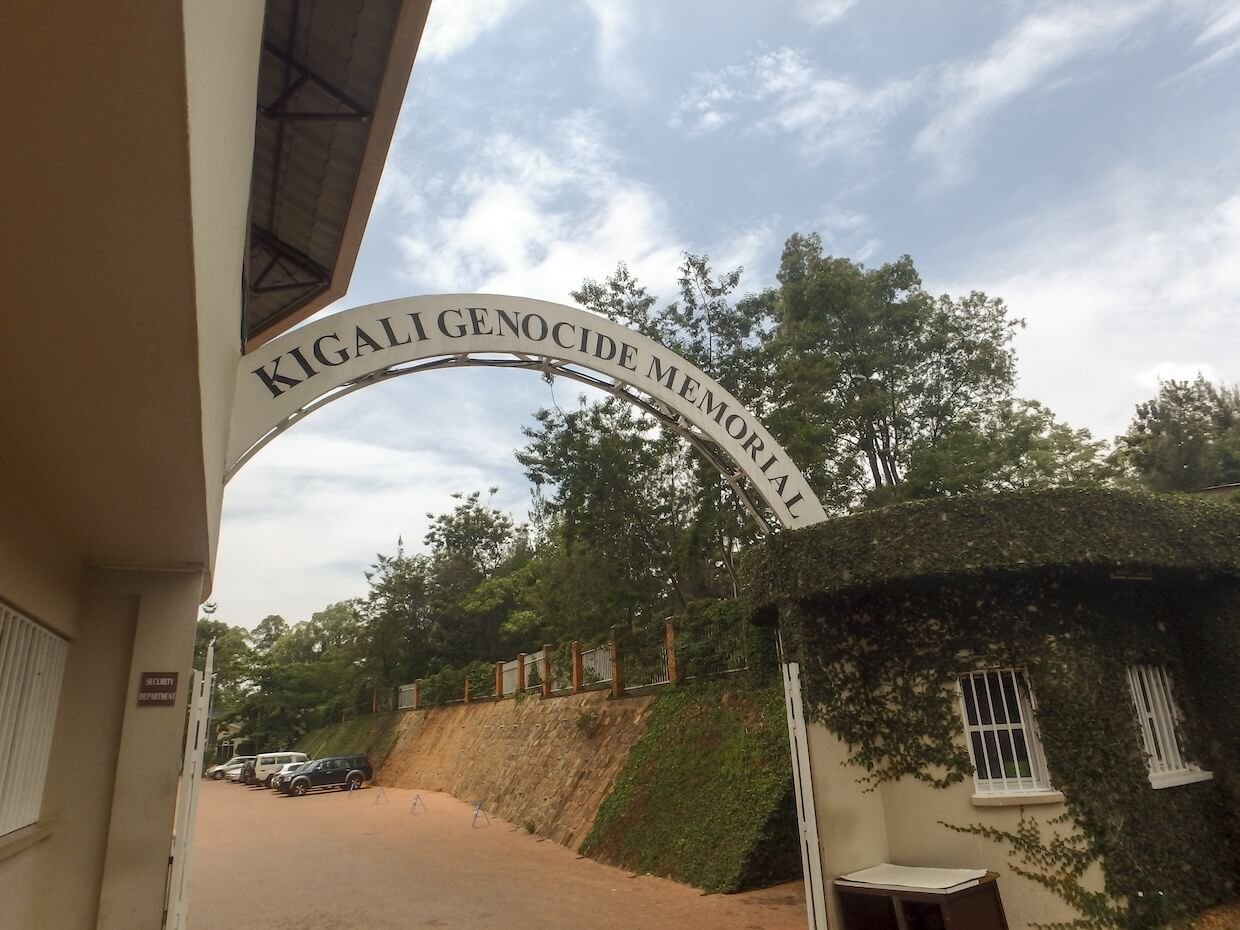
Professor Nic Cheeseman: I think frustration with democracy is a really important factor in many parts of the world. Some people believe that they once had a good-quality democracy and that it was taken away, while others feel that democracy was strong but ultimately failed them. For example, in the United States, many might feel that, on the one hand, they have been told they live in a functioning democracy, but on the other hand, they have seen class mobility decline and their ability to achieve a better life than their parents diminish—leading, in a sense, to the erosion of belief in the American dream. Alternatively, we can look at societies in Africa that have never truly been granted democracy. In that article, we discussed countries like Uganda and Rwanda, where we have essentially seen prolonged periods of authoritarian rule.
Now, today, for example, in Uganda, we have a system that is called a multi-party electoral system; it is described as a democracy by the government, but the opposition has never been allowed to win. We know that the game is systematically stacked against the opposition. There was even a survey that found a majority of Ugandan people did not believe that power could be changed through the ballot box. So, when you reach a situation where most voters don’t believe they can actually remove the government through elections, that creates a very dangerous dynamic. It gives people an incentive to start contemplating and supporting alternative ways of changing power—for example, through armed force. And if we were to ask what conditions led to the coups in West Africa, one of the key factors was that citizens had become frustrated and fed up with democracy, no longer believing that it would deliver, and no longer necessarily believing that democratic systems or electoral processes would enable them to elect better leaders in the future. Under those conditions, support for the military and for military intervention becomes something that people are more willing to contemplate.
So, if we look at the Afrobarometer data, for example—survey data across West Africa—one of the things it shows us is that most people are still against military rule. However, even those who oppose military rule in principle are sometimes willing to say that the military has a right to intervene if civilian-led leaders have abused their power. In other words, what people are telling us is: we don’t want the military to govern, but if civilian leaders undermine their own legitimacy, perhaps the military is necessary to provide a clean break and a new opportunity to rebuild the system. I think some of that frustration with the performance of democracy—in terms of its failure to shield people from economic hardships, provide meaningful jobs, and offer a sense that people’s lives have worth and value—is also at the heart of some of the challenges facing democracy in Europe and North America, today.
When Populism Meets Ethnic Exclusion, the Risk of Proto-Fascism Rises
In your article “Ethnopopulism in Africa” in 2015, you describe how African leaders fuse populist economic narratives with ethnic mobilization. How do you assess the risks of ethnopopulism evolving into proto-fascist politics in fragile democracies, particularly where leaders invoke existential threats to justify state violence?
Professor Nic Cheeseman: I think the threat is really significant. But we have to be very careful about approaching this on a case-by-case basis. For example, we wrote that article with certain parts of sub-Saharan Africa in mind, where, on the one hand, you see leaders trying to mobilize in a more populist fashion using economic issues, but on the other hand, mobilizing along ethnic lines because they also recognize the need to carry their ethnic community with them. This results in piecing together a complex constituency that is, at times, inherently contradictory. If you want to deliver broad populist goals and improve the lives of citizens and the average person, you’re appealing to everyone—the common man. But if you then make an ethnic appeal and promise to deliver primarily to your own ethnic community, you narrow your focus to just that constituency. In that sense, it creates an internally contradictory approach.
And what we tried to address in that article is when this approach holds together and when it doesn’t. We essentially pointed out that it is more likely to hold together when a leader’s own ethnic community—perhaps due to historical experiences or socialization into certain values and ideas—is more inclined toward populism and actually shares populist values. This could involve supporting strong state intervention in the economy to deliver rapid change or desiring a “big man” leader and being willing to sacrifice democratic checks and balances to achieve those goals.
So, there’s a kind of tension there that can be overcome, and leaders can use it effectively. But, where those identifications are different, where the ethnic constituency of a leader wants something very different from what perhaps the common person on the street wants, or when there’s a real tension and polarization around ethnic identity, it can be extremely difficult to make them consistent, and actually, a lot of these strategies don’t end up winning power. They collapse under the weight of their own internal contradictions.
Now, where I think this becomes really dangerous—and we see this clearly in other parts of the world, including parts of Europe and Asia—is when you get that combination of a populist leader mobilizing around ethnicity, an exclusionary version of ethnicity, and using the demonization of either external countries or internal minorities as a way to unify their support base. When that happens, you get a particularly troubling form of proto-fascist mobilization. On the one hand, you are deliberately using that community as the glue holding your coalition together, making it impossible to abandon this strategy since it sustains the regime. On the other hand, the populist nature of this mobilization further erodes checks and balances, making it easier for human rights abuses to occur and putting the targeted community in particular danger. That’s where this exclusionary form of politics risks boiling over into something far more violent and repressive. That said, it’s important to remember that this pattern is not universal: some right-wing populists in power have not yet led to severe attacks on minorities, while others clearly have. There is, in other words, significant variation.
One of the things that’s quite interesting to me at the moment is looking at where we see leaders like this who seem genuinely interested in reshaping multiple levels of society, versus those who don’t. In Italy, for example, it seems to me that the government isn’t particularly interested in controlling what academics think or say, nor does it appear heavily involved in censoring universities or seeking to control society down to the grassroots. I could be wrong, but from talking to friends, that seems to be the case. By contrast, in the United States, you have a government that is actively waging war with some of its own universities—trying to impose forms of censorship, remove certain issues from the agenda, and push its own values onto it.
So, one of the things I think we need to reflect on more carefully is the question: why? Why do we have some movements and leaders who focus primarily on marginalizing communities within an exclusionary narrative, while others are far more invested in intervening directly to reshape society, including academia, universities, and cultural institutions? And why do we have some leaders who seem more focused on controlling the commanding heights of the state without necessarily pursuing deeper social transformation? What drives these different kinds of regimes, and what distinct consequences do they produce for their own societies?
Populists Rise on Anti-Corruption Rhetoric but Often Deepen Clientelism and Corruption
In your 2016 article “Patrons, Parties, and Political Linkages, and the Birth of Competitive-Authoritarianism in Africa,” you highlight the role of clientelist networks in shaping political behavior. How do you see clientelism interacting with populism to facilitate creeping authoritarianism, especially when leaders frame loyalty to the state as loyalty to “the people”?
Professor Nic Cheeseman: It’s a very good question and I think there are two different parts to it. I mean, one is that, in a sense, classic populist leaders face a challenge when it comes to clientelism. Because, of course, if you’re arguing that people should support you because you embody the will of the people, you should be arguing, in a sense, that they should vote for you because they recognize you as the embodiment of the will of the people, and because of your agenda, platform, and personality. And that slightly cuts against the idea that you should, of course, mobilize people through clientelistic models, either by offering them very specific services in order to assist them. For example, the kind of model that we understand in the United States, where we see the government historically delivering specific localized services—for example, for the House of Representatives and so on—in return for votes, or, in sub-Saharan Africa, where we might expect there to be a relationship between leaders and their own ethnic community, exchanging resources in that way. And that, kind of, cuts against the logic of populist mobilization if we think about classic populist thought.
But of course, in reality, we know that these two things have often gone hand in hand, and clientelistic machines have often been the underpinnings of populists who use this kind of rhetoric but actually rely on clientelism to stay in power. Moreover, one of the things that we don’t think about enough is what happens to corruption when populists win power. So, for example, we know that one of the ways that populists mobilize support is that they claim that the state is corrupt. They claim the political elite is corrupt. They make great hay out of any corruption scandals.
Trump, of course, did this. It’s been a current theme in American politics: drain the swamp, reduce the corruption in the government. It’s true more broadly that people have a suspicion about government being corrupt and being inefficient, and so populists have understood that and play on that as a key part of their message. Of course, corruption is a particularly valuable message if you’re a populist leader. Because what you can say to people is: the system is so corrupt, it’s endemic, and it’s pervasive, and therefore, the only way we can deal with it is by electing someone who’s an outsider. And therefore, you have to elect me because I’m the outsider populist. None of those people in the system can be trusted to actually deal with it. So, you get corruption and anti-corruption as one of the key mobilizing messages of populists.
But, of course, when populists are in power, they then often prove to be just as corrupt, or even more corrupt, than the people they’ve replaced. One reason for that, of course, is that populists tend to remove checks and balances, they weaken institutions, they rule in a more spontaneous way, and often in a more individual and personalized way that undermines systems of accounting and systems of audit. Therefore, what you often see is the same populists who get elected on anti-corruption messages then commit greater corruption, partly for personal aggrandizement and wealth, partly to drive the clientelistic networks that were also part of your question. When they leave power, they actually also leave the states and the government more vulnerable to corruption in the future, precisely because they’ve weakened the institutions that were designed to prevent corruption.
So, in some countries, we’ve even seen more corruption when the populist leader has left power and someone else has come in who has been more corrupt-minded but then faces a situation with far fewer constraints. So, corruption and clientelism are fundamental to populism and the rise of populist leaders, both in terms of the mobilization of voters and getting into power, and then in terms of how they sustain power and the legacy they have for political systems.
Mass Mobilization: The Last Defense Against Authoritarianism
Based on your research on Kenya’s 2022 elections, to what extent can constitutional reforms and decentralization act as safeguards against authoritarian populism? Or do populist leaders inevitably find ways to co-opt democratic institutions?
Professor Nic Cheeseman: I think this depends a lot on how strong the institutions are before a populist leader comes to power, and it also depends on the balance of power. To what extent does the populist leaders get a parliament that is loyal to them? And there are two dimensions to that. One is the extent to which MPs, as part of the populist leader’s party or aligned with them, are elected so that they get an easy ride with Parliament. The other is how easy it is for them to buy over MPs in the context of weak legislatures and weak party systems. So, I think this varies significantly across different places. It seems so far that European countries that have experienced populism—with the exception, obviously, of Hungary—have managed to withstand it to some extent.
Partly because electoral commissions have remained credible, we’ve actually seen democratic institutions withstand some of the challenges, leading to cases of democratic bounce-back. For example, we might think of Poland, where an authoritarian-minded government took power and was later defeated. Similarly, we might expect a more significant prospect of the current government in Italy losing power in the future than in other contexts where institutions have been much weaker and more compromised from the start. Of course, that’s not to say that Italian political institutions are free of corruption or particularly strong.
But if we compare them, for example, to some countries in sub-Saharan Africa that I work on—where legislatures have historically been extremely weak, and presidents have used corruption and patronage to demobilize scrutiny and opposition within the legislature—we see very quickly that institutions there are often far less able to operate as effective checks and balances. And in the cases of the coups we’ve discussed, we often see Parliament dissolved, political parties banned, and constitutions suspended, leaving political institutions with no real capacity on their own to constrain the new government.
So, it’s a very mixed picture, and one that gives us important things to consider when it comes to democratic resilience. Some states are going to have much greater resilience than others because of the institutional strengths they possess.
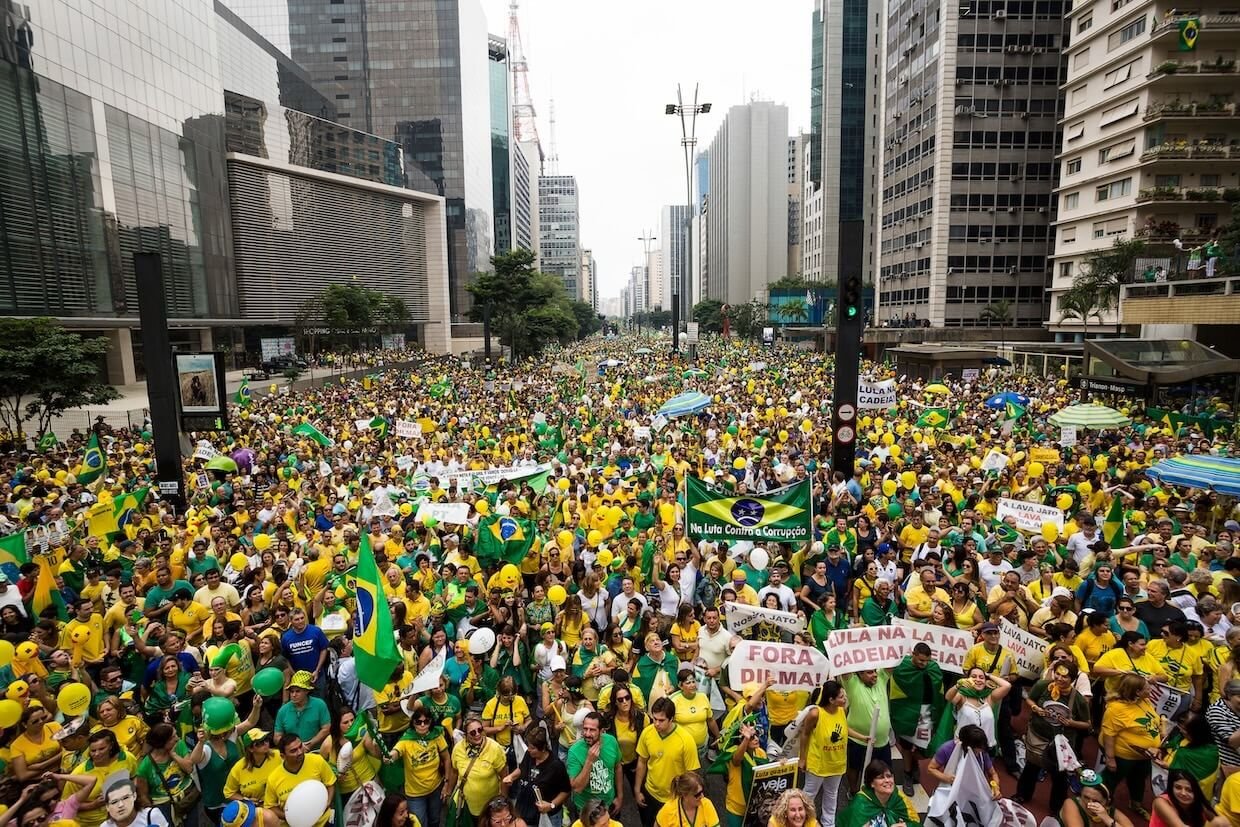
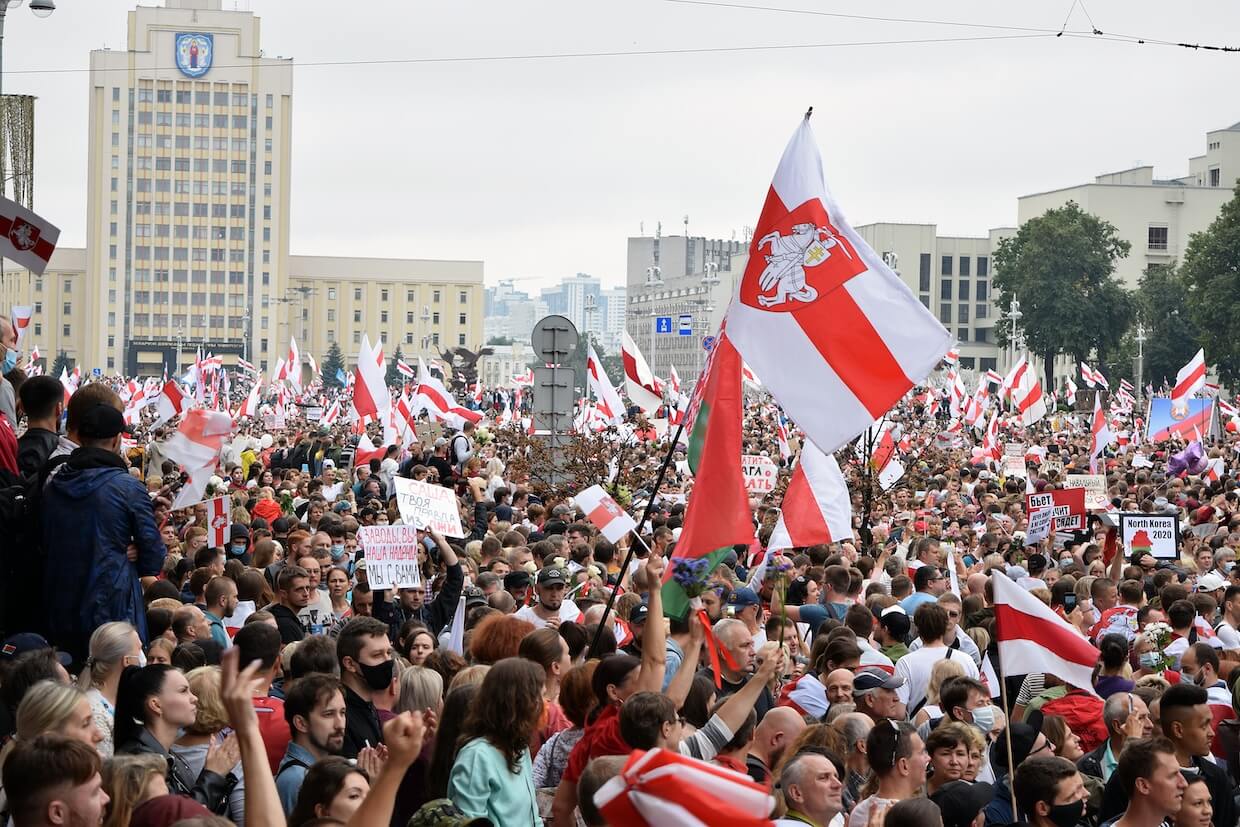
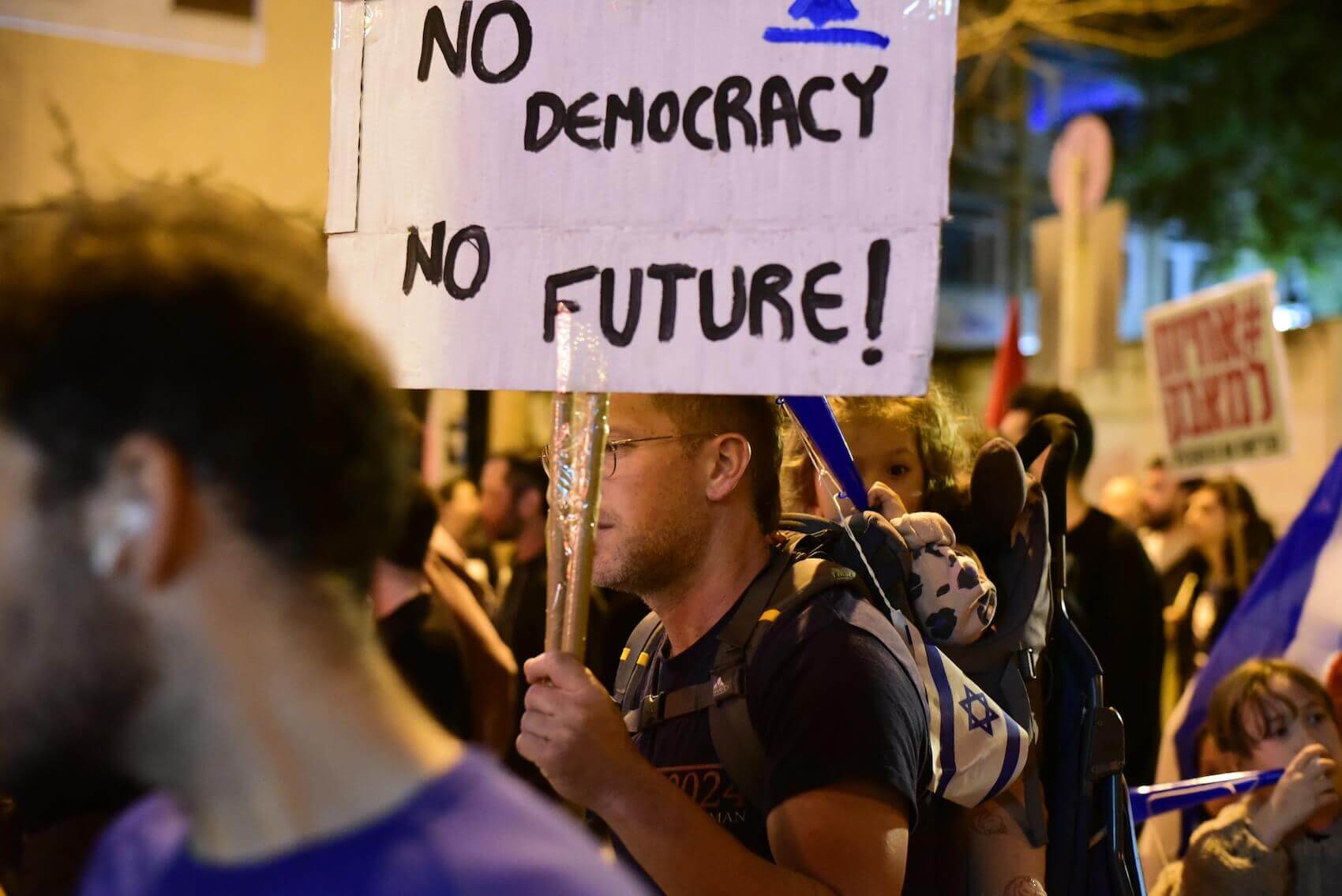
The other thing that’s important to say briefly about this is that we need to think about both democratic resilience—that is, the extent to which institutions can cope with a shock, deal with a non-democratic leader, constrain them, and ensure the rule of law is followed—and resistance, meaning citizens on the streets, civil society mobilization, and people protesting against the government. Particularly in countries where institutions are weak, it is often this form of civil society mobilization and mass protest that prevents authoritarian takeovers. So, I think it’s really interesting to look at this combination. In some countries, institutions hold power; in others, institutions cannot, but mass mobilization can. And in that context, mass mobilization becomes absolutely critical, because it is almost the only mechanism left to stop populist or authoritarian leaders from consolidating their hold on power.
Democracy Can’t Be Saved with One-Size-Fits-All Solutions
In your co-authored 2018 article “Ten Challenges in Democracy Support,” you warn against “one-size-fits-all” democratization models. How should international actors adapt their strategies when confronting populist movements with explicitly anti-democratic tendencies?
Professor Nic Cheeseman: One of the things I’ve done with some colleagues at CEDA—the Center for Elections, Democracy, Accountability, and Representation at the University of Birmingham—is to think through the different pathways of autocratization. We’ve identified at least four or five ways in which states can become more authoritarian. One is executive aggrandizement, where the incumbent leader expands their power and weakens checks and balances. Another is military interventions—violent takeovers, such as the Taliban retaking power or coups. A third involves state capture, with pervasive corruption corroding the system, though not necessarily led by a single political figure. Finally, there’s populist takeover, where outsider, anti-system candidates win power and then subvert democratic institutions. Understanding these pathways is essential for assessing the biggest threats to democracy and determining how best to build democratic resilience and support systems that uphold democratic norms.
Those strategies or pathways that I outlined are, of course, often overlapping, so they’re not mutually exclusive. For example, you could have executive aggrandizement occurring alongside state capture. But thinking about them carefully is important because it helps identify the biggest challenge in a given context. For instance, if you believe the primary threat in a particular country is a military coup, then the strategy should focus on coup-proofing: How can we professionalize the military? How can we deter it from seizing power through force? Conversely, if the main threat is executive aggrandizement, the priority becomes strengthening checks and balances—ensuring that legislatures and judiciaries are robust enough to hold the president accountable.
So, the potential solutions, or where you might emphasize investment, depend on assessing the specific threat. One of the risks, however, is that as a global community, we keep repeating the same approaches—supporting elections, legislatures, and civil liberties—without recognizing the need to be more problem-driven, focused, and context-specific. Within the policy community, everyone acknowledges that every reform and program should be tailored to context. But in practice, this is very difficult to achieve. It’s easy to say, “let’s adapt to context,” but much harder to determine what that context actually is and how best to respond to it. Thinking carefully about the most likely pathway of autocratization—and how to insulate against it—is, I believe, one way to encourage a more distinctive and effective approach in different settings.
Of course, you also need to consider other factors, such as identifying the main strengths of the democracy movement in a given country. In which areas is it powerful, and in which areas is it weak? How can we harness these strengths to build a truly effective coalition? That, again, depends on fully understanding which forces on the ground are most influential. In some countries, these might be trade unions, while in many parts of the world, trade unions have been so weakened that they can no longer play this role. In other contexts, religious organizations or other forms of civil society might serve as the driving forces. Ultimately, developing a clear understanding of the local context is critical for identifying the biggest threats and designing the best solutions.
Negative Messaging Can Strengthen Populist Narratives
In your 2024 article “Opening the Door to Anti-System Leaders,” you show how anti-corruption campaigns can paradoxically empower populist outsiders who then undermine democratic institutions. How do you interpret this dynamic in the broader resurgence of authoritarian populism, and are there parallels in Kenya, Zambia, or Tanzania?
Professor Nic Cheeseman: This is one of the things that, in some ways, is the most depressing: some of the things we try to do for good can end up having negative effects. It’s worth taking a step back for a moment from our specific research on corruption to explain why this happens and why it’s so important more broadly. One of the things researchers have started to find is that public awareness messaging—things like “don’t smoke, it’s bad for you,” “don’t drink and drive,” or “follow COVID rules”—can sometimes do more harm than good. One reason, we think, is that by telling people that lots of others are not doing something, you may subconsciously make them think that behavior is more acceptable, easier to get away with, and more socially legitimate.
For example, if I say to you, “lots of people are not following COVID regulations, so COVID is escalating, and we need to follow these regulations,” part of what you may be thinking, perhaps subconsciously, is: “well, if lots of people are not following COVID regulations, then maybe I shouldn’t either, because the norm is not to follow them.” And you might also think, “I won’t get in that much trouble, because loads of other people are already not following them.”
What you need to be really careful about when putting out messages is avoiding language that exacerbates or reinforces people’s sense that the behavior you’re warning against is pervasive, widespread, and normal. This is especially true when it comes to corruption. If you create an advert or message that makes people believe the country is even more corrupt than they already thought, or if you make them focus too heavily on the extent of corruption, you risk encouraging a sense of helplessness and powerlessness. That, in turn, can make people feel they should simply “go with the flow” rather than resist.
We’ve conducted research in a number of countries—Albania, Nigeria, and others—on what happens when this kind of messaging is used, where the focus is on how bad things are, employing what we call a “negative message.” In general, these messages not only fail to encourage people to do what you want—whether following COVID rules, quitting smoking, or, in our case, fighting corruption—but they also often have backlash effects. What we frequently observe is a backfiring effect, where people who receive these messages actually become more willing to engage in corruption rather than less. We believe this happens because such messaging fosters apathy rather than activism and reinforces people’s pre-existing skepticism about the state.
So, what this means is that anti-corruption messages themselves can unintentionally create the very foundations that populists exploit. For example, if anti-corruption messaging makes people more concerned about the extent of corruption but also more apathetic about their ability to change it—feeding a sense that the situation is hopeless—then people may become more willing to accept populist alternatives. In the paper you’re referencing, that’s exactly what we show: people who were exposed to some of these messages—which were intended to encourage anti-corruption activity—actually demonstrated increased support for populist values and attitudes. That’s an unintended and unwanted side effect.
So, we have to be very careful with how we fight, not just in anti-corruption campaigns but across many other areas. If we rely too heavily on negative messaging that focuses on how bad problems are, we may not only fail to achieve positive outcomes but also risk creating backfiring effects—making people more willing to tolerate corruption and other harmful behaviors.
For example, we’ve found associations between negative messaging and declining support for paying taxes, as well as reduced support for other critical elements of the social contract. I think this has significant implications for how we fight back against authoritarianism and sustain democracy. Messages like “everywhere is authoritarian” are ineffective because they reinforce the perception that authoritarianism is pervasive and widely tolerated. Instead, we need to craft messages that highlight how many citizens actually believe in the values we care about—how many support fighting corruption, how many believe their country would be better if it were less corrupt, and how many value democracy. These kinds of positive messages can mobilize people and build solidarity. Negative messaging, however, is really dangerous, and we need to avoid it.
Africa Offers Inspirational Lessons in Democratic Resilience

As a follow-up to our discussion on democratic backsliding and a final question, is there, in your view, any notable example of successful democratization across the African continent that offers inspiration amid the rising threats of resurgent fascism, populist mobilization, and authoritarian consolidation? What lessons can ailing democracies—both within Africa and globally—draw from such cases?
Professor Nic Cheeseman: There are a number of really inspirational cases. Ghana, for instance, springs to mind. It is a country that experienced a series of coups and instability in the 1970s and 80s, followed by a period under military leader Jerry Rawlings, and then managed to emerge in the 1990s with a solid constitution that institutionalized a separation of powers. Rawlings then stepped down when his two-term limit came up, leading to a peaceful transfer of power. Since then, there have been a succession of such transfers. Now, that’s not to say Ghana’s democracy is fully consolidated. In some ways, we need to move away from the idea that democracy can ever be fully consolidated and recognize that, in a sense, it is always under threat, always being challenged. But one of the most striking things about Ghana is that it successfully made the transition from military to democratic rule, and the military has returned to the barracks and stayed out of politics ever since. In terms of one of the biggest trends in West Africa, the Ghanaian experience is a particularly valuable one to learn from.
I also think we have really interesting examples elsewhere. For example, two countries very close to my heart—Zambia and Kenya. Kenya, on the one hand, is in the middle of a very intense period right now. On one side, you have a government trying to push through very unpopular economic policies, and on the other, there is mass citizen engagement against them—mass protests led largely by youths—alongside significant human rights abuses and violations in the government’s attempts to repress those protests. And so, again, I’m not for a second saying that Kenya has “got it sorted” or reached a point where democracy is fully protected and safe. But if you think about where Kenya was 40 years ago—as a one-party state dominated by Daniel arap Moi—or then move forward to 2007, when Kenya suffered serious ethnic violence after a controversial election, the progress is striking.
In response to that flawed 2007 election and the violence that followed, Kenya built a new constitution that was more inclusive, devolved power to 47 counties, and created a Supreme Court that not only exists but was one of the first courts in the world to nullify the election of a sitting president on the basis that the election didn’t meet the necessary standards. The fact that Kenya has gone through all of that—and that, in some ways, the multi-party system today could be said to be more robust than it was 20 years ago, with a stronger constitution—means that Kenya has the potential to ride out the current challenges, struggle through them, and move forward by instituting new reforms.
And I think it’s that process that gives me inspiration. It’s not easy. People have fought for it every step of the way. People have risked their lives; many have died, trying to push forward democracy, to build a more accountable and effective system, and to resist authoritarian leaders. But at the same time, that process of struggle has actually generated a situation where, over time, the institutions have become stronger. And while they still need to be strengthened considerably from here on, Kenya is in a much better position than it was—despite all the challenges the country faced in the early 1990s, coming out of its period of strongman rule.
And the same, very briefly, to an extent, applies in Zambia. Zambia, too, is struggling with the question of democracy, the government’s commitment to it, and the challenge of making progressive reforms. But at the last election, Zambia actually managed to remove an authoritarian—or increasingly authoritarian-minded—leader, President Edgar Lungu, and witnessed a peaceful transfer of power as hundreds of thousands of Zambians went out to vote. They did so even though many did not believe the election would be completely free and fair, because they believed that if they came out together in their hundreds of thousands, they could bring about political change—and they did, by voting for a change of government.
It’s also worth keeping in mind, especially for those skeptical about the feasibility of democracy in Africa, that only two countries globally moved toward greater democracy during the COVID-19 pandemic, according to major democracy ratings indices. And those two countries were Malawi and Zambia—both in Africa. So, I do think Africa provides some genuinely inspirational examples where the struggle for democracy is very much ongoing. These are countries that have not lapsed into pure authoritarianism; their institutions are gradually becoming stronger, and citizens are consistently mobilizing to safeguard their rights and liberties.
And that, I think, is a good model for other countries in different parts of the world that are now beginning to face their own democratic difficulties.