Date
May 22, 2024 (in person) / May 23, 2024 (virtual)
Organizing Institutions
European Center for Populism Studies (ECPS), Belgium
European Studies Centre (ESC), University of Oxford, UK
Oxford Democracy Network, University of Oxford, UK
Organizers
Dr. Othon Anastasakis (Director of the European Studies Centre, University of Oxford).
Sumeyye Kocaman (DPhil Researcher in Asian and Middle Eastern Studies, University of Oxford and Executive Editor of Populism & Politics).
George Hadjipavli (DPhil Candidate in Area Studies and Research Associate at Southeast European Studies at Oxford).
Hosts
Dr. Othon Anastasakis (Director of the European Studies Centre).
Irina von Wiese (Honorary President of the ECPS).
Venue
European Studies Centre, 70 Woodstock Rd, Oxford OX2 6HR
Populism & Politics (P&P) is a digital journal dedicated to advancing the study and understanding of populism-related phenomena and populist challenges in historical and contemporary contexts.
Migration, with its multifaceted socio-economic and political implications on voting behavior, stands at the nexus of the factors that have fueled the demand for populism in Europe and beyond. As the 2024 European Parliamentary elections approach, comprehending the trends in voting behavior and the role of immigration-related populism necessitates an interdisciplinary approach.
The central theme of the workshop revolves around elections and anti-immigration populism in the European context. This two-day workshop will be held in hybrid format and will bring leading scholars and researchers in the field of populism and migration to discuss the interplay between populism and migration and their socio-economic and political repercussions.
Some of the papers that will be presented at the workshop will be looking at:
-Populism, Fast and Slow – A Dual Thinking Approach to Populist Attitudes.
-Recalibration, Not Austerity: The Interplay of Populism, Neoliberalism, and Welfare States in the Struggle for Liberal Values.
-Voting for Populist Radical Right Parties amongst Minority and Majority Groups in France, Germany and the Netherlands.
-The Moral Panic Button (MPB) and the Road to the 2022 Election in Hungary.
-Migration Challenge and Populist Responses: A Comparative Analysis of Parliamentary Elections in Hungary and Turkey.
-Diasporas Intertwined: The Role of Kin-State Minorities in the Hungarian State’s Diaspora Engagement.
-Nationalist Myths and The Emergence of Anti-Immigration Discourses.
-Gendering Conflict: A Comparative Study of How Palestinian Civilians and Arab European Refugees Are Portrayed within Europe Parliamentarian Narratives.
-Scandinavian Countries and the Rise of Extremism.
-The Victory Party at the Crossroads of Asylum Policies and Populist Discourse in Turkey.
-The Populist Origins of Migration Politics in the Federal Republic of Germany, 1973-1983.
-European Populism and Dimensions of Euroscepticism.
-Emigration and Political Party Membership in Central and Eastern Europe: Evidence from a Difference-in-Differences Design.
Editorial Team for Special Issue of Populism & Politics (P&P) on Migration
Dr. Azize Sargin (Director for External Relations, ECPS).
Dr. Jafia Naftali Camara (British Academy Research Fellow, University of Cambridge).
Dr. Ilhom Khalimzoda (Postdoctoral Researcher, University of Jyväskylä, Finland).
Hannah Geddes (PhD Candidate in Management, University of St. Andrews).
Timor Landherr (PhD Candidate in Politics and International Relations, Queen Mary University, London).
Iuliana Nyerges (MPhil Candidate, Politics and International Relations, Balliol College, University of Oxford).
Maria Christofidis (MPhil Candidate, Philosophy, Mansfield College, University of Oxford).
DAY ONE
Date/Time: May 22, 2024 / 08:30-17:00 (UK Time)
To register for in-person sessions in Oxford please email by May 14, 2024: skocaman@populismstudies.org.
Register for Zoom: https://us02web.zoom.us/meeting/register/tZUrceCurDovH9w3vFc7saBUSHBggbs7zDe4
Opening Remarks
08:45-09:00 (UK Time)
Dr. Othon Anastasakis (Director of the European Studies Centre).
Irina von Wiese (Honorary President of the ECPS).
Panel 1 – Supply and Demand Sides of Populism: Political Psychology, Neoliberalism and Xenophobia
Date/Time: May 22, 2024 / 09:00-10:45 (UK Time)
Venue: European Studies Centre, 70 Woodstock Rd, Oxford OX2 6HR
Chair
Irina von Wiese (Honorary President of the ECPS).
Discussant
Dr. William L. Allen (British Academy Postdoctoral Fellow, Department of Politics and International Relations, and Nuffield College, University of Oxford).
Papers
“Populism, Fast and Slow – A Dual Thinking Approach to Populist Attitudes,” by Dr. Filipa Figueira (Lecturer at the School of Slavonic and East European Studies at University College London) & George Hajipavli (DPhil Candidate in Area Studies and Research Associate at Southeast European Studies at Oxford).
“Recalibration, Not Austerity: The Interplay of Populism, Neoliberalism, and Welfare States in the Struggle for Liberal Values,” by Jellen Olivares-Jirsell (PhD Candidate in Politics at Kingston University).
“In-group Love Explains Voting for Populist Radical Right Parties amongst Minority and Majority Groups in France, Germany and the Netherlands,” by Dr. Sanne van Oosten (Postdoctoral Researcher, Equal Strength, COMPAS, University of Oxford).
Panel 2: Hungary: A Case Study for Migration, Elections and Diaspora
Date/Time: May 22, 2024 / 11:00-13:00 (UK Time)
Venue: European Studies Centre, 70 Woodstock Rd, Oxford OX2 6HR
Register: https://us02web.zoom.us/meeting/register/tZUrceCurDovH9w3vFc7saBUSHBggbs7zDe4
Chair
Dr. Othon Anastasakis (Director, European Studies Centre, Oxford University).
Discussant
Dr. Márton Gerő (Assistant Professor of Sociology at the Faculty of Social Sciences of Eötvös Loránd University).
Papers
“You Don’t Even Have to Press It Anymore” – The Moral Panic Button (MPB) and the Road to the 2022 Election in Hungary,” by Dr. Márton Gerő (Assistant Professor of Sociology at the Faculty of Social Sciences of Eötvös Loránd University) & Dr.Endre Sik (Research Professor at the Institute of Sociology – Centre for Social Sciences of the Hungarian Academy of Sciences Centre of Excellence).
“Migration Challenge and Populist Responses. A Comparative Analysis of Parliamentary Elections in Hungary and Turkey,” by Dr. Tamas Dudlak (Researcher at the Contemporary Arab World Center, ELTE Eötvös Loránd University).
“Diasporas Intertwined: The Role of Kin-State Minorities in the Hungarian State’s Diaspora Engagement,” by Judit Molnar (DPhil Candidate in Anthropology at the University of Oxford).
Panel 3 – Anti-Migrant Perceptions and Populist Reactions Across Europe
Date/Time: May 22, 2024 / 14:30-16:30 (UK Time)
Venue: European Studies Centre, 70 Woodstock Rd, Oxford OX2 6HR
Register: https://us02web.zoom.us/meeting/register/tZUrceCurDovH9w3vFc7saBUSHBggbs7zDe4
Chair
Rob McNeill (Deputy Director of Migration Observatory, Compas Researcher, University of Oxford).
Discussants
Jafia Naftali Camara (British Academy Research Fellow, University of Cambridge).
Hannah Geddes (PhD Candidate in Management, University of St. Andrews).
Papers
“Nationalist Myths and The Emergence of Anti-Immigration Discourses,” by Luca Venga (Post-graduate Student at St. Antony’s College, University of Oxford).
“Scandinavian Countries and the Rise of Extremism,” by Priscilla Otero Guerra (Postgraduate Student at the University of Oxford).
“Gendering Conflict: A Comparative Study of How Palestinian Civilians and Arab European Refugees Are Portrayed within Europe Parliamentarian Narratives,” by Arunima Cheruvathoor (MPhil in Global and Area Studies at the University of Oxford).
“Digital Engagement and Political Voices: A Comparative Analysis of Skilled Immigrant Women in Ottawa and Stockholm,” by Ayshan Mammadzada (PMP, PhD Candidate at uOttawa).
Concluding Remarks
Time: 16:30-17:00 (UK Time)
Venue: European Studies Centre, 70 Woodstock Rd, Oxford OX2 6HR
Register: https://us02web.zoom.us/meeting/register/tZUrceCurDovH9w3vFc7saBUSHBggbs7zDe4
Dr. Othon Anastasakis (Director of the European Studies Centre, University of Oxford).
Rob McNeill (Deputy Director of Migration Observatory, Compas Researcher, University of Oxford).
DAY TWO
Panel 4 – Intersection of Populist Politics, Far Right and Asylum Policies
Date/Time: May 23, 2024 / 09:00-11:00 (UK Time)
Venue: European Center for Populism Studies (Virtual)
Register: https://us02web.zoom.us/meeting/register/tZUrceCurDovH9w3vFc7saBUSHBggbs7zDe4
Co-chairs
Dr. Ilkhom Khalimzoda (Postdoctoral Researcher at the Department of Language and Communication Studies, University of Jyväskylä, Finland).
Dr. Sanne van Oosten (Postdoctoral Researcher, EqualStrength, COMPAS, University of Oxford).
Discussants
Dr. Simon Watmough (Postdoctoral researcher at the University of Leipzig in Germany and a non-resident research fellow at ECPS).
Dr. Tamas Dudlak (Researcher at the Contemporary Arab World Center, ELTE Eötvös Loránd University).
Hannah Geddes (PhD Candidate in Management, University of St. Andrews).
Papers
“The Victory Party at the Crossroads of Asylum Policies and Populist Discourse in Turkey,” by Dr. Ezgi Irgil (Postdoctoral Research Fellow within the Global Politics and Security Programme at the Swedish Institute of International Affairs – UI) & Dr. Zeynep Sahin Mencutek (Senior Researcher at Bonn International Centre for Conflict Studies).
“Populist Politics Kills Asylum Policies: How Populist Discourses About Migration in Bulgaria Invent the ‘Refugee Crisis’,” by Dr. Ildiko Otova (Assistant Professor in International Migration at New Bulgarian University) & Dr. Evelina Staykova (Associate professor in Political Science at New Bulgarian University).
“‘The More Refugees, the More Votes’: The Role of Migration on the AfD Growth,” by Dr. Avdi Smajljaj (Assistant Professor and lecturer at the Department of Political Sciences and International Relations, Epoka University, Tirana, Albania).
“Between Gastfreundschaft and Überfremdung: The Populist Origins of Migration Politics in the Federal Republic of Germany, 1973-1983,” by Simon Ahrens (MPhil in Development Studies, University of Oxford).
Panel 5 – The Influence of Populist Anti-Immigration Narratives on European Self
Date/Time: May 23, 2024 / 12:30-14:30 (UK Time)
Venue: European Center for Populism Studies (Virtual)
Register: https://us02web.zoom.us/meeting/register/tZUrceCurDovH9w3vFc7saBUSHBggbs7zDe4
Co-Chairs
Dr. Avdi Smajljaj (Assistant Professor and lecturer at the Department of Political Sciences and International Relations, Epoka University, Tirana, Albania).
Dr. Marieke van Houte (Assistant Professor for Anthropology and Development Studies, Radboud University).
Papers
“Refugees and the Eurosceptics: Understanding the Shifts in the Political Landscape of Europe,” by Dr. Amrita Purkayastha (Assistant Professor at Bangalore, India).
“Populist Discourse and European Identity: A Poststructuralist Analysis,” by Nazmul Hasan (PhD Candidate in the Department of Philosophy and Comparative Religion, Visva-Bharati University, Santiniketan, West Bengal, India).
“Nationalism and Anti-Immigration Sentimentalism in Europe,” by Sulagna Pal (PhD Research Scholar, Department of Philosophy, University of Delhi, India).
“A Critique of Eurocentric Conceptualisations of Social Cohesion in Academia, Refugee Policy, and Refugee Settings,” by Basma Doukhi (PhD Candidate in Migration Studies at the University of Kent).
Panel 6 – Diverse Aspects of Anti-Migrant Populism in Europe
Date/Time: May 23, 2024 / 15:00-17:00 (UK Time)
Venue: European Center for Populism Studies (Virtual)
Register: https://us02web.zoom.us/meeting/register/tZUrceCurDovH9w3vFc7saBUSHBggbs7zDe4
Co-Chairs
Dr. Tamirace Fakhoury (Associate Professor of International Politics and Conflict, Fletcher School, Tufts University).
Dr. Zeynep Sahin-Mencutek (Senior Researcher at Bonn International Centre for Conflict Studies).
Discussants
Dr. Jafia Naftali Camara (British Academy Research Fellow, University of Cambridge).
Dr. Azize Sargin (Director for External Relations, ECPS).
Papers
“Enemies Inside: European Populism and Dimensions of Euroscepticism,” by Dr. Ana Paula Tostes (Senior Fellow at the Brazilian Center of International Relations and Professor at the State University of Rio de Janeiro).
“Emigration and Political Party Membership in Central and Eastern Europe: Evidence from a Difference-in-Differences Design,” by Melle Scholten (PhD Candidate at the University of Virginia).
“Digital Engagement and Political Voices: A Comparative Analysis of Skilled Immigrant Women in Ottawa and Stockholm,” by Ayshan Mammadzada (PMP, PhD Candidate at uOttawa).
“The Role of Populism in Redefining Citizenship and Social Inclusion for Migrants in Europe,” by Dr. Edouard Epiphane Yogo (Lecturer-Researcher in Political Science at the University of Yaoundé, Cameroon).
Concluding Remarks & Thanks
Time: 17:00-17:30 (UK Time)
Dr. Azize Sargin (Director for External Relations, ECPS).
Sumeyye Kocaman (DPhil Researcher in Asian and Middle East Studies and Executive Editor of Populism & Politics).
Abstracts and Brief Biographies
Panel 1
Supply and Demand Sides of Populism: Political Psychology, Neoliberalism, and Social Media
Populism, Fast and Slow – A Dual Thinking Approach to Populist Attitudes
Filipa Figueira (The School of Slavonic and East European Studies at University College London).
George Hajipavli (Southeast European Studies at Oxford).
This article applies the concept of dual thinking to understand the psychological mechanisms driving demand for populism. Dual thinking theories posit that human thinking can take two forms: Type 1 – fast, intuitive, and emotional, and Type 2 – slow, considered, and elaborate. Through a behavioral experiment, we examine whether, when prompted to adopt Type 1 thinking, respondents display greater attraction to populism than when prompted to adopt Type 2 thinking.
Following Reinhard’s typology, we test four types of populism that adhere to the minimalist definition of populism as ‘the people’ versus ‘the others.’ These are populism as a reaction to a) the psychological inability to adapt to rapid change (‘the people versus the transnational elite driving globalization’); b) the perceived overreach of the ‘administrative’ state and the corrupt and arrogant elite (e.g., the out-of-touch elite ‘Remainers’); c) an experience or fear of decline (e.g., Trump’s ‘Make America Great Again’), and d) a threat to their identity through immigration (‘the people versus the immigrants’). This approach further enables us to test for correlation between the various populist groups as posited in theory. This is of additional utility given the topic of the workshop, as it will enable us to gauge both whether psychological mechanisms are applicable to migration-driven populism, and whether migration-driven populism is a unique phenomenon or forms part of a broader cluster of populist dynamics. In our experiments, we control for alternative explanations to populist party support, such as cross-national cultural differentials, factors pertinent to migration (perceptions of and exposure to migratory flows), personality types, the role of ideology, trust in political institutions, standard socio-economic and demographic controls, and the ‘need for chaos’ variable.
By considering the link between intuitive thinking and attraction to populism, our findings carry significant implications for our understanding of the psychological processes behind the phenomenon of populism. Overall, this novel approach will significantly inform our understanding of the mechanism behind migration-driven populism, and how it relates to broader anti-establishment and populist attitudes. Consequently, gaining a better understanding of the psychological processes behind the phenomenon will enable us to counter migration-driven populism through carefully tailored approaches with the help of mass and social media ahead of a critical election year.
Filipa Figueira is a Lecturer at the School of Slavonic and East European Studies (SSEES) at University College London (UCL). Her main areas of expertise are the European Union and public policy. She is particularly interested in bounded rationality and the effectiveness of EU policymaking, EU governance and the allocation of policy competencies between the EU and the national level, and populism/Brexit. Her interdisciplinary research aims to offer novel combinations of political and economic theoretical frameworks. She is also a Senior Adjunct Researcher at the Vrije Universiteit Brussel (VUB), within the Brussels School of Governance (BSoG), and a Senior Member of the SSEES-based Centre for New Economic Transitions (CNET). She has contributed to many high-impact journals, such as European Review, British Politics, the Journal of European Public Policy, and the European Journal of Government and Economics.
George Hajipavli is a Research Associate at Southeast European Studies at Oxford (SEESOX) based in St Antony’s College, Oxford. George’s research interests primarily lie in area studies and political sociology. He has recently written on public opinion, such as the electoral attitudes underpinning the paradoxical relationship between the Communist Party of the Russian Federation and the Russian Orthodox Church, and the determinants of Orthodox Church support in contemporary Russia, with a particular emphasis on the aspect of communist legacies and the secularization thesis. He has presented at conferences, such as the annual conferences of the University Association for Contemporary European Studies (UACES), the World Association of Public Opinion Research (WAPOR), and the British Association of Slavonic and East European Studies (BASEES). His interest in the present topic derives from his curiosity about the psychological determinants of public opinion and his doctoral research on the impact of religious identities on political outcomes. George enjoys complementing his academic research with his prior experiences in policymaking, which included stints in the European Parliament, and the Cypriot House of Representatives.
Recalibration, not Austerity: The Interplay of Populism, Neoliberalism, and Welfare States in the Struggle for Liberal Values
Jellen Olivares-Jirsell (Kingston University).
This paper challenges the idea that the effectiveness of welfare states should be measured solely based on their universality of provision. The author argues that focusing on universality conceals issues with the workings of welfare states. The paper also suggests that welfare states are undergoing recalibration, not retrenchment and that abandoning the aim for universality is essential to protect those who need it the most. Overall, the paper highlights the importance of welfare states in protecting vulnerable populations and argues for a more nuanced approach to measuring their effectiveness.
Keywords: Populism, recalibration, welfare states, workfare, austerity, producerism.
Jellen Olivares-Jirsell is a doctoral candidate in Politics at Kingston University, UK. Before joining Swansea University (Wales) as a Research Assistant, she was engaged in research projects at the Technical University of Munich (Germany) and Malmo University (Sweden). Scholarly contributions include publications in Global Affairs and Populism journals. Her research interests encompass politics, norms, and ideologies, focusing on populism, neoliberalism, welfare states, trust, liberalism, and polarization.
In-group Love Explains Voting for Populist Radical Right Parties amongst Minority and Majority Groups in France, Germany and the Netherlands
Dr. Sanne van Oosten (Postdoctoral Researcher, EqualStrength, COMPAS, University of Oxford).
Populist Radical Right Parties’ (PRRP) politicians and supporters often claim ethnic minorities vote for their parties, possibly in an effort to legitimize their parties’ policy positions. In mainland Europe, where gathering quantitative data on ethnic minorities poses challenges, it is very difficult to disprove such statements. Do ethnic minorities and majorities tend to vote for PRRP and what dimensions of ethnocentrism explain their (lack of) support? I surveyed voters in France, Germany and the Netherlands and ask them about their propensity to vote for Rassemblement National (RN) in France, Alternative für Deutschland (AfD) in Germany, and Partij voor de Vrijheid (PVV) in the Netherlands. Thanks to a novel oversampling method, I can compare ethnic minority and majority groups. The findings clearly state that ethnic minority voters are very unlikely to vote for PRRP, with the exception of Dutch Hindustani Surinamese voters and German voters with a migration background in the Former Soviet Union. Besides these two exceptions, the French Maghrebi, French Black and French Turkish, German Turkish, Dutch Turkish, Dutch Moroccan and Dutch non-Hindustani Surinamese voters are very unlikely to vote for PRRP. Ethnic majorities are much more likely to vote for PRRP. I find in-group love explains their support to a much larger extent than out-group hate. Though immigration attitudes predict PRRP voting in all three countries, in-group love explanations explain PRRP voting much more. In France, PRRP voting is driven the most by a preference for putting French interests first. In Germany, it is a preference for not mixing with other groups. In the Netherlands, it is the feeling of not being accepted as belonging in the Netherlands that predicts voting the most. These indicators of in-group love explain PRRP voting amongst majority groups much more than immigration attitudes, attitudes towards Islam, gender equality, LGB rights, green policies, or economic redistribution. Feeling close or distant towards ethnic in- or out-groups does not predict PRRP voting in any of the cases. These findings contribute to our understanding of PRRP voting in Europe.
Dr. Sanne van Oosten is a political scientist interested in the impact of anti-Muslim racism in politics and society. She is an expert on anti-Muslim narratives and policies in post-9/11 societal debates, the political representation of Muslim politicians in European parliaments, the electoral implications of anti-Muslim discrimination, and voter discrimination against Muslim politicians. Dr. van Ossten is completing her PhD in political science at the University of Amsterdam, where she taught and researched the role of Muslims in politics. Her current research focuses on discrimination against minorities by employers, landlords, and childcare facilitators and the resultant impact on the well-being and identification of these minorities. This research is part of the Horizon 2020 project EqualStrength. Her work has been published in journals such as Legislative Studies, Electoral Studies, and Acta Politica. https://www.compas.ox.ac.uk/people/sanne-van-oosten
Panel 2
Hungary: A Case Study for Migration, Elections, and Diaspora
‘You Don’t Even Have to Press It Anymore’ – The Moral Panic Button (MPB) and the Road to the 2022 Election in Hungary
Márton Gerő (Assistant Professor of Sociology at the Faculty of Social Sciences of Eötvös Loránd University).
Endre Sik (Research Professor at the Institute of Sociology – Centre for Social Sciences of the Hungarian Academy of Sciences Centre of Excellence).
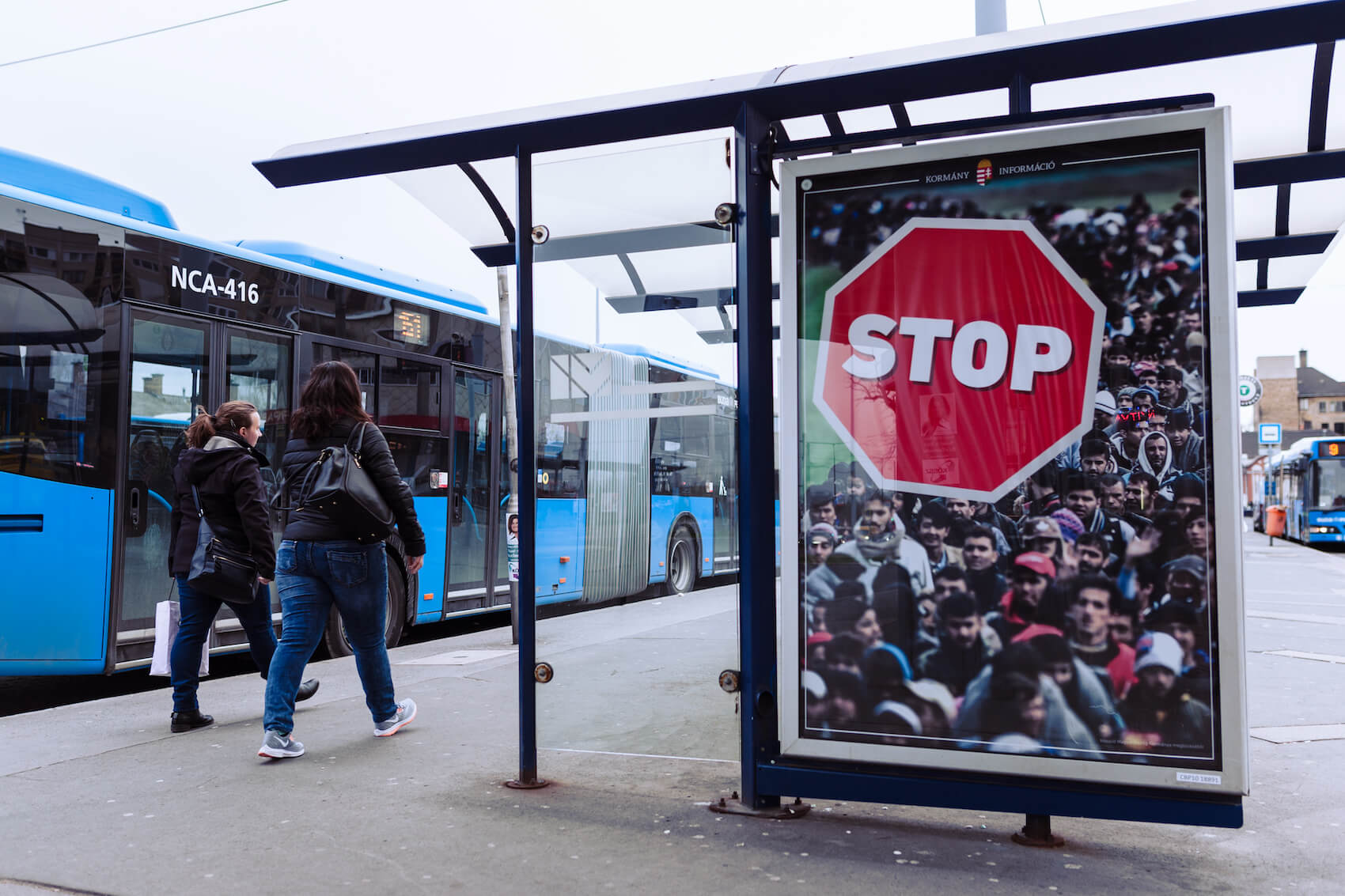
In this paper, we aim to show how the moral panic button contributed to the incumbent party, Orbán Viktor’s Fidesz, a landslide electoral victory in Hungary in 2022. The moral panic button is a concept based on Stanley Cohen’s idea of ‘moral panic.’ However, instead of a single event, the moral panic button is viewed as a governance technology typical of populist and autocratzing governments. The moral panic button aims to increase the cohesion of the voter base, applying a mode of political communication based on threats and enemy images. In Hungary, the moral panic button was triggered by portraying immigration and immigrants as an existential threat to the ‘Hungarian Nation’ following the Charlie Hebdo attack in January 2015. Since then, it has served as a central issue for the propaganda machine of Fidesz.
This paper will show how the Fidesz electoral bloc was “made.” We use the data from four population surveys conducted between 2017 and 2021 to demonstrate how the Fidesz propaganda machine secured the number of voters needed to win the 2022 elections almost independently of the current campaign themes and messages. A central theme in our surveys is the portrayal of terrorism and immigration as an existential threat and immigrants as enemies, along with other threats and enemies (as George Soros, the European Union’s Bureaucrats, or the opposition). In this analysis, we use binomial regression analysis to examine how strongly agreement or disagreement with the variables associated with framing the moral panic button affects the likelihood of belonging to the Fidesz, or oppositional constituency.
The analysis will show the importance of the moral panic button as the leading tool for creating and maintaining the Fidesz bloc, leading to the increasing polarization of society. First, the constant maintenance of moral panic helps to develop and ‘maintain’ a constituency based on loyalty and identification with the leader. Second, the Fidesz world is created amorphous in terms of social background but homogeneous in terms of political behavior, whose members primarily – if not exclusively – enforce the aspects of belonging to the camp in their political identity and behavior.
Endre Sik is a Research Professor at the Institute of Sociology – Centre for Social Sciences (TK) of the Hungarian Academy of Sciences Centre of Excellence (MTA), and professor emeritus at Eötvös Loránd University, Budapest. He has a Ph.D. (1985) and a Doctor of Sciences (2006) in Sociology from the MTA. He was also Deputy Chair of the Committee of Sociology at MTA and President of the Hungarian Sociological Association. He has lectured at the University of Toronto, Notre Dame University, the Central European University in Prague, and the Global Camps of Human Rights in Venice. He is a member of IMISCOE’s Maria Baganha Committee. He is the head of research of several projects funded by TK and the Hungarian Scientific Research Fund. He has participated in EU-funded projects such as CEASEVAL, STYLE, Concordia Discourse, Euborderegions, and Workcare Synergy. His interests include migration, xenophobia, border studies, network and content analysis, and economic sociology.
Márton Gerő is a Research Fellow at the Institute of Sociology, Centre for Social Sciences (TK) of the Hungarian Academy of Sciences Centre of Excellence (MTA). He is also an Assistant Professor of Sociology at the Faculty of Social Sciences of Eötvös Loránd University. His main research interests include civil society, social movements, and political integration processes. He has published in the Journal of Civil Society, Central and East European Politics and Society and Czech Political Science Review. Currently, he is developing a postdoctoral project on ‘Civil Society, enemy images and redistribution: The interplay between structural factors and political action in the process of de-democratization (NKFIH – 132768) and serves as a principal investigator of the project titled ‘(De-) democratization and the trajectories of civil society’ at TK.
Migration Challenge and Populist Responses. A Comparative Analysis of Parliamentary Elections in Hungary and Turkey
Tamas Dudlak (The Contemporary Arab World Center, ELTE Eötvös Loránd University).
Over the last decade, there has been a growing interest in issues related to illiberal governance systems, primarily referring to Hungary and Turkey. Beyond superficial comparisons, however, the similarities of the trajectories and policies followed by the lengthy political career of Viktor Orbán and Recep Tayyip Erdogan and their respective political systems generally have not gained much academic attention. Similarly, investigations are missing from the literature to understand the relationship between the Hungarian and Turkish migration policy. To fill this gap, this research assesses the circumstances and motivations that shaped the Fidesz and the AKP governments’ policies and discourse on immigration during the last electoral campaigns (in 2022 and 2023, respectively).
While Hungary and Turkey are relatively distant countries, their cases are comparable as they constitute stable populist regimes in the periphery of the European Union and have intensive and direct contact with significant migration and trafficking routes. They are situated next to unstable regions (such as the Balkans and Ukraine in the case of Hungary and Iraq, Syria, Iran, and Afghanistan in the case of Turkey) and accept refugees in large numbers.
Although populism can be defined as a political practice, a discursive strategy, or an ideology in ‘mainstream’ research, it is primarily associated with a country’s domestic politics. Populism’s connection to migration policy is still undertheorized in social sciences. Exceptionally rare is research that examines how populism can be connected to the political and discursive practices of different Middle Eastern actors. Despite a growing literature on populism, illiberalism, and authoritarian tendencies in the ‘Western periphery,’ there is a lack of context-sensitive analysis of how Erdogan and Orbán use migration discourse to seek alternative identity formations in their political pursuit of the Syrian and Ukrainian refugee crises. This circumstance prompts the researcher to utilize a new, migration-specific reading of the existing primary and secondary sources.
Generally, or theoretically, this paper seeks the reference points (the narrative background) of the two governments in migration-related issues. In this respect, I am particularly interested in the governmental framing of securitization, sovereignty, humanitarianism, and bordering. The goal of this article is to understand how migration policies have been formulated in Hungary and Turkey during the last parliamentary elections, what are the current circumstances that shape the outcome of governmental decisions (political practice), and discourses (political theory) on how to deal with the mass movement of peoples in these countries.
The underlying narratives are examined by discourse and content analysis. For this purpose, I focus on the official statements and speeches of the two leaders. The analysis seeks to understand the logic of cooperation and similarities between illiberal populist regimes. All in all, explaining the differences and similarities might shed light on the workings of these populist systems and theorize how illiberal populist governments design their migration policies and how their ideological background (internal constraints) and Europeanization (external constraints) limit or extend their political maneuverability.
Tamas Dudlak is a Doctor of International Relations based in Budapest, Hungary and affiliated with the ELTE Eötvös Loránd University of Budapest as a researcher in the Contemporary Arab World Center. He previously received degrees in History, Arabic, and Turkish and studied geopolitics. His main research interest lies in the Middle East; he analyses contemporary Turkish politics from a comparative perspective. He focuses on the similarities and differences betweenTurkey and Hungary in various fields, such as migration policies, the characteristics of the populist regimes, electoral strategies of the incumbents and the oppositions, and the role of religion and civilizational discourse as the underlying ideologies of the Hungarian and Turkish governments.
Diasporas Intertwined: The Role of Kin-State Minorities in the Hungarian State’s Diaspora Engagement
Judit Molnar (The University of Oxford).
“Fidesz received 94% of the votes of Hungarians living outside the borders,” reported the InfoStart online portal after the 2022 elections in Hungary. The statistics might come as highly surprising, looking at the character of recent emigration from the country. As a response to the autocratic and populist government, which growingly infringes on the principles of democracy, migrants have been documented to increasingly ‘vote with their feet’ (Somin, 2011; Meardi, 2012; Triandafyllidou & Gropas, 2014), with politically motivated emigration slowly and steadily replacing the economic emigration of Hungarians first triggered by the 2008 economic crisis. Hallmarked by events like the expulsion of forward-thinking educational institutions like the Central European University, the aggressive campaign to push women into traditional childbearing roles, and the severe limitations placed on the LGBTQ+ community, many people have opted for a more liberal atmosphere when deciding to start a new life outside the country.
Therefore, it is important to understand who these voters are. According to Brubaker (1996), there are two types of diasporas: those that emerge by people crossing boundaries and those that are formed by boundaries crossing people. When the treaty of Trianon detached two thirds of Hungary’s territory in 1921, many ethnically Hungarian people found themselves outside the borders overnight. According to Waterbury (2010), the loss was especially acute as some of the lost territories were perceived as the cradle of Hungarian civilization and their inhabitants the carriers of the most authentic form of Hungarian culture. Trianon has stayed framed as a national trauma by Hungarian politics and motivated by an ethnic approach to the nation, since 1989, a plethora of schemes have been set up to tie the Hungarian population of these territories to Hungary. The experience of being removed from Hungary despite a strong consciousness as Hungarians made this group keen to embrace the state’s call and to support the Fidesz’s nationalist agenda.
In Fidesz’s discourse, kin-state minorities are the exemplary communities of national consciousness and the kind of ideal citizens that all emigrants should aspire to become. While historically, emigrants’ treatment by the Hungarian state went from “fascist criminals, class enemies, and useless, work-shy rabble” (Kunz 1985:102) in 50s and 60s to traitors who placed their well-being above that of the homeland after 1989 (Herner-Kovács, 2014), kin-state minorities have stayed framed as loyal victim communities. Therefore, ever since diaspora outreach schemes aimed at emigrants were first devised by Hungarian state in 2010 in the hope of reconnecting them to the homeland to tap them for brain gain, remittance and political lobby potential, kin-state minorities have been involved as key players. For example, 60-70% of the facilitators sent to diasporas through the Kőrösi programme, the flagship scheme of diaspora engagement, have been from pre-Trianon territories of Hungary. Their role is to reconnect emigrant communities to Hungary by organizing emigrants around a shared Hungarian culture and language and boosting the preservation of traditions even though some have never lived in Hungary.
In my paper, I would like to explore how these two remarkably different experiences of ethnic identity and connectedness to the homeland are bridged by Hungarian populist discourse in the country’s attempt to govern its diasporas across borders and reconstruct the long-lost historic nation. Furthermore, relying on the framework of state-led transnationalism, I set out to investigate how such narratives impact the dynamics of the Hungarian emigrant diaspora and, ultimately, whether trying to fit the emigrant population into the kin-state minority mold can be productive to align emigrant citizens with Fidesz’s ideology. To answer these questions, I will rely on the ethnographic data from my recently completed one-year fieldwork in London, the United Kingdom, and reflections on similar research projects in Ireland and Argentina.
Judit Molnar is a DPhil candidate of Anthropology at the University of Oxford, with an interest in migration, diasporas, transnationalism, and the anthropology of the state. Her doctoral research investigates the correlations between home-state ideologies and the cultivation of diaspora subjectivity through ethnographic case studies of Hungarian and Venezuelan migrant communities in London. Prior to coming to Oxford, Molnar worked for the Hungarian State Secretary for Nation Policy as a cultural facilitator delegate to the Hungarian diaspora in Argentina and completed a traineeship at the Cabinet of Education, Culture, Youth and Sport of the European Commission. She holds an MLitt in Cultural Studies from the University of St Andrews and an MA in Anthropology from the University of Vienna.
Panel 3
Anti-Migrant Perceptions and Populist Reactions Across Europe
Nationalist Myths and The Emergence of Anti-Immigration Discourses
Luca Venga (St. Antony’s College, University of Oxford).
The fall of the Berlin Wall lulled a majority of Europeans into thinking they had consigned nationalism and war to the dustbin of history. The ascent of the EU seemed to have ushered in an era of rational, peaceful dialogue based on universal values and on tolerance for differences. Nationalism, tainted by the World Wars, had been discredited as a serious political philosophy, becoming little more than a fringe view or a touristic attraction.
But autocratic tensions, Brexit, and the return of war on the continent have demonstrated that nationalism is more alive than ever, and it is already reshaping our societies and our institutions. Nationalist narratives, above all else, have caused a discernible shift in attitudes towards migrants, contributing to the rise of anti-immigration sentiment across the continent and stoking the fires of xenophobia and racism.
This paper critically examines the dynamic interplay between the creation and reinterpretation of nationalist myths and the emergence of anti-immigration discourses within the European context. By analyzing the construction of invented histories, contemporary retellings and ahistorical myths, this study elucidates the processes through which these discourses have shaped public perceptions and policy responses toward immigration.
Drawing on a comprehensive review of historical and contemporary literature, this paper underscores how ambitious and unscrupulous politicians have utilized certain actors (think tanks, political parties, media organizations) to deliberately construct and revise nationalist myths. This re-writing of history has allowed them to present themselves as scions of holy dynasties, saviors of the fatherlands, or redeemers and avengers.
In their quest to gain the favor of public opinion by reasserting a sense of collective identity and cultural superiority predicated on the exclusion of ‘The Other,’ however, these political figures have caused old and new cleavages to spread across societal divides, contributing to a climate of polarization and intolerance.
Through the selective commemoration of historical events, figures, and symbols, nationalist narratives have fostered a sense of cultural exceptionalism and entitlement, positioning the foreign as a threat to the national fabric. This narrative framing has, most evidently, caused a reduction of the options available when confronting the question of immigration, as certain courses of action have become politically radioactive.
My essay will then delve deeply into the multifaceted ways in which the reinterpretation of nationalist myths has been instrumental in shaping the rhetoric of exclusion and securitization within public discourse and policy-making processes. The selective deployment of historical narratives to construct narratives of victimhood, cultural purity, and national resurgence has facilitated the normalization of anti-immigration rhetoric but needs to be understood in the context of economic uncertainty, cultural anxieties, and the impacts of globalization. Thus, this study will also touch upon the ways in which nationalist myths have been harnessed as a reactionary response to socioeconomic insecurities and the fast pace of change that has invested most societies.
In conclusion, this study provides a comprehensive analysis of the intricate nexus between the construction and reinterpretation of nationalist myths and the rise of anti-immigration sentiments in Europe. This will be achieved by illuminating the ways in which nationalist narratives have shaped public attitudes and policy responses toward immigration, while also considering the myriad other forces that shape and mold public opinion. Finally, this research proposes as a partial solution the recuperation and galvanization of a different set of myths, which are based on inclusion, on cross-cultural contamination, and on the richness of human experience, as a way to bring about closer integration and stem the rising, worldwide tide of intolerance that will truly and finally reject nationalism.
Luca Venga is a postgraduate student at St. Antony’s College, Oxford. He have lived in Italy, the United States and Germany, before moving to England where he obtained his Bachelor’s degree in Politics and International Relations from the University of Manchester with a comparative thesis on the relative strengths and weaknesses of various multilateral institutions. Having always been extremely interested in Latin America, its cultures and its people, he decided to expand his knowledge and enrich his understanding of this wonderful region through the MPhil in Latin American studies at the University of Oxford. At Oxford he has had the chance to explore a variety of themes and trends that span the continent, while designing and carrying out his own independent research geared towards the completion of a 30,000-word thesis. This original contribution to the scholarly literature has been enriched by a multi-month period of fieldwork in Mexico, during which he collected dozens of hours of interviews and ethnographic observation.
Venga is particularly interested in questions of nationalism, political participation, authority and security, and he is committed to exploring these issues through a variety of means, both within and beyond academia. He collaborated with Italian think-tank IARI (Istituto Analisi Relazioni Internazionali) as Editor in Chief of the Latin American Desk, publishing a number of accessible articles in collaboration with other scholars. More recently, he has joined AKE International as part of a team focusing on political and personal risk in Latin America, providing detailed and relevant analyses to business leaders, policymakers and other stakeholders. An avid reader, sports enthusiast, and traveler, he is always looking forward to the next adventure, such as rowing for his college or beginning a Portuguese language course.
Scandinavian Countries and the Rise of Extremism
Priscilla Otero Guerra (University of Oxford).
This article examines the impact populist parties have had on health policies and health social issues of the Scandinavian countries (Sweden, Norway, and Finland). This is important, given the rise of immigration in the past decade. How do populist attitudes shape health policies? Does health governance change significantly? I highlight the importance of government support for globalization regarding health, interconnecting the Nordic Model to populist parties, ideology, and practice. Health governance, a crucial topic in the politics of migration, is at the intersection of the welfare state and capitalism; thus, the right and left support nationalist and populist attitudes that shape health politics.
Scandinavian countries have a robust history of nationalism. The Nordic region is familiar with political extremism in its right-wing strains. The countries selected and discussed in this paper have historically supported political institutions with ideologies that have espoused the natural genetic superiority of individuals of Nordic descent. So much so that presently, the region has been experiencing a robust rise in far-right political support in the past decade. Since 2016, several of these far-right organizations have been documented by international human rights groups to be of substantial Nazi influence. The establishment of the Nordic paramilitary group Nordic Strength of Sweden in 2019 of the cross-country Nordic Resistance Movement is a nationalist reflection of the most extreme ideas against inward non-Nordic migration.
To understand the rise of far-right extremism, we need to unfold sentimental and practical roots for the domestic support for populist political parties. Populism is not a novel occurrence in Scandinavia. The working classes have traditionally supported political beliefs that are of populist dimensions. The success of socialist policies is a common characteristic of the region. Left-oriented policies would not have been established if not for the organization of the working classes against the perceived economic elites.
The Nordic Model combines features of capitalism with social benefits. Immigration, populism, and political parties with ideologies that are pro-welfare have traditionally been supported. Globalization was once supported in the region, and support for globalist policies has been drastically declining. There is a sharp contrast in the region’s support of left-supportive policies as decreased disgruntled members of the working classes change their political orientations. As exemplified in The Battle Over Working-Class Voters (2021) by Sanna Salo and Jens Rydgre, generations of capitalism have created a sentiment of discord and dissatisfaction.
To conclude, this article attempts to document and analyze the evolution of the working classes of Scandinavian countries. Whilst the working classes once supported left ideologies, the rise of immigration from non-Nordic countries has increased support for anti-globalist, nationalist, and anti-immigration policies tied to nationalist nativist rhetoric.
Priscilla Otero Guerra is a postgraduate student at the University of Oxford. She is a member of St. Antony’s College, Oxford and is interested in state-society relations, political violence, geopolitics, and the politics of development. Her research interests include political regimes, state capacity, political parties, and socio-political determinants of development. Priscilla’s additional interests in political/economic history and philosophy navigate topics that intersect comparative and international affairs disciplines, analyzing liberties, policies, and strategies. She obtained her bachelor’s degree in political science and philosophy from Gustavus Adolphus College with high honors and distinctions. Her regions of specialization include the United States, Latin America, and Europe. Priscilla is working on a book on philosophy of mind and a project on Latin American affairs.
Gendering Conflict: A Comparative Study of How Palestinian Civilians and Arab European Refugees Are Portrayed Within Europe Parliamentarian Narratives
Arunima Cheruvathoor (Global and Area Studies at the University of Oxford).
The Israel-Palestine issue has emerged as central to the geopolitical foci of candidates contesting the 2024 European Parliament Elections. Historically, the representatives of the 27 states in the Parliament have struggled to find a common stance on the decades-long issue. The five major political groups within the Parliament articulate distinct objectives they seek to advance concerning the treatment of Palestinians and more recently, schisms in geopolitical ‘goal’ alignment were noted in the responses given by parliamentarians in the face of the increasing violence in Gaza since October 7, 2023. More intriguingly, the discourses on the treatment of Palestinian civilians, with its multiple variations in the European Parliament, have been non-uniform in many respects except one: the construction and simultaneous imposition of an assumed (and indeed, uninterrogated) gendered performance upon Palestinian female civilians, who are framed solely as victims, within the European Parliamentarians’ narratives.
This paper utilizes Van Dijk’s (2005) methodology of Critical Discourse Analysis (CDA) to examine statements and press releases issued by political groups within the European Parliament and Members of the European Parliament (MEPs) from October 7, 2023. The primary aim of this paper is to discern the conceptualizations of Palestinian female subjectivities within these discourses, whilst simultaneously comparing it to the discoursal subject-positions of (other, non-Palestinian) Arab female refugees in Europe. Contributing to the existing academic literature on the gendered conceptualizations of Arab refugees in Europe within European state discourses (building upon the works of Yuval-Davis, 2007; Abu-Lughod, 2015; Spijkerboer, 2017 and others), this paper highlights and timely addresses an academic lacuna by delving into the intricate ways in which the recent discourses of MEPs and political groups construct Palestinian female subjectivities—which has largely been academically unexplored— and how these discoursal constructs intersect with the prevailing gendered conceptualizations of Arab refugees in Europe within parliamentarian narratives.
Building upon the works of decolonial scholars such as Dipesh Chakrabarty (2000), Saba Mahmood (2005), and Gayatri Spivak (2009 and 2023), among others, this paper excavates how within the heterogeneous opinions of MEPs, the uninterrogated and continually evoked gendered Palestinian identities, has resulted in the surfacing of the female Palestinian body as a discoursal vacuum upon which expected performances of victimhood are interpellated, framing her solely in terms of her perceived vulnerability. Postulating that the uninterrogated conceptions of Palestinian gendered citizenship within parliamentarian discourses simultaneously parallels the discoursal subject-positions of Arab refugees in Europe, this paper forwards the argument that largely, Arab women are seen solely as victims that need to be saved by European state intervention, ultimately diminishing Arab women’s self-expression, who are then framed solely as victims of (masculine) state and non-state actions. Furthermore, this paper will evidence how, within discourses of the European Parliament, narrative-building on the Israel-Palestine conflict actively utilizes controlled constructs of Palestinian female identity to secure consensus on geo-political intervention whilst perpetuating similarly constructed (and uninterrogated) gendered conceptualizations of Arab refugees in Europe within discourses about the refugee crises in the European Union.
Arunima Cheruvathoor is a young researcher with a Master of Philosophy in Global and Area Studies (2023) from the Oxford School of Global and Area Studies, University of Oxford. She also has a Bachelor of Arts (Honors) in Political Science (2021) and a diploma in Conflict Transformation and Peacebuilding (2021) from Lady Shri Ram College for Women, University of Delhi. Her MPhil thesis, titled ‘Masculinization of Politics: Gendering India and China’ used Van Dijik’s methodological framework of Critical Discourse Analysis to examine the construction of female identities within the nationalist narratives of Chinese General Secretary Xi Jinping and Indian Prime Minister Narendra Modi, based on a constructed database of 577 Mandarin, English, and Hindi videos, as well as several keynote speeches and press releases by the political leaders. She has previously worked with think-tanks, government organizations, and NGOs in India, Bangladesh and the United Kingdom. Her area of academic expertise is the interpellation of nationalism and gender in elite political discourses. She continues writing academically whilst currently employed as a Program Officer for the Rhodes Trust, whilst also working as a Project Assistant for Dr Jane Gingrich.
Digital Engagement and Political Voices: A Comparative Analysis of Skilled Immigrant Women in Ottawa and Stockholm
Ayshan Mammadzada (The University of Ottawa).
This study delves into how digital platforms are vital for skilled immigrant women in Ottawa, Canada, and Stockholm, Sweden, to engage in political discourse and counter populist narratives. Ottawa and Stockholm are chosen for their unique positions in the global landscape of immigration and digital innovation and their encounters with populist movements.
Ottawa, as Canada’s capital, is not only the political heart of the country but also a burgeoning tech hub. It boasts a significant number of tech firms and start-ups, contributing to a vibrant digital economy. The city’s immigration policy is one of the most progressive, with Canada welcoming over 300,000 immigrants annually, fostering a multicultural environment where skilled immigrants play a crucial role in the socio-economic fabric. Despite this openness, Canada has not been immune to the global rise of populism, with increasing debates on immigration policy and national identity affecting political discourse.
Stockholm, on the other hand, stands as a beacon of innovation in Europe, home to numerous tech unicorns such as Spotify and Skype. Sweden’s immigration policy has been notably generous, particularly in response to the Syrian refugee crisis, positioning Stockholm as a key destination for skilled and asylum-seeking immigrants alike. However, like Ottawa, Stockholm has witnessed the growth of populist sentiments that challenged the country’s immigration stance and contributed to a polarized political climate.
The selection of Ottawa and Stockholm for this study is rooted in their similarities as progressive, tech-savvy cities with robust immigrant populations, and their differences in handling the challenges posed by populist politics. Both cities offer a rich context for exploring how skilled immigrant women leverage digital platforms for political engagement. For example, initiatives like Ottawa’s Digital Inclusion Strategy aim to bridge the digital divide, a crucial step for ensuring equitable access to digital platforms for political activism. Similarly, Stockholm’s innovative public-private partnerships in digital infrastructure provide fertile ground for political engagement among immigrants.
By employing a mixed-methods approach, this research aims to uncover the strategies skilled immigrant women in these cities use to navigate digital platforms for political activism, their challenges, and their successes. This includes examining the role of social media campaigns, digital forums, and online communities in shaping political participation and countering populist narratives.
The expected outcomes include a deeper understanding of digital engagement’s role in empowering skilled immigrant women politically, offering insights into the broader implications for democratic participation and policymaking in the face of rising populism. This comparative analysis between Ottawa and Stockholm will highlight effective practices and potential barriers to digital political engagement, providing a blueprint for leveraging technology to enhance democratic inclusion and resilience against populist challenges.
In conclusion, Ottawa and Stockholm serve as compelling case studies for examining the intersections of immigration, digital engagement, and political activism. This research not only contributes to the academic discourse on digital democracy and immigration but also offers practical insights for policymakers, activists, and community organizers aiming to foster inclusive political environments.
Ayshan Mammadzada is a PhD candidate in Geography, specializing in Canadian Studies at the University of Ottawa. Her thesis examines the resilience of skilled immigrants in Ottawa: the role of gender, occupation, and place of settlement. She serves as a Data, Research, and Policy Analyst at the Ottawa Local Immigration Partnership, working on improving immigrant integration and policy development. With over 12 years of experience in different sectors of Canada, the USA, China, Turkey, Azerbaijan, and Georgia, she also worked as a consultant at immigrant-based companies to localize their businesses. Fluent in Azerbaijani and English, proficient in Russian and Turkish, and with reading knowledge in French learning, her research reflects her interdisciplinary and international background. Addressing the challenges skilled immigrants face and contributing to creating more equitable and inclusive societies motivates her research on immigration.
Panel 4
Intersection of Populist Politics, Far Right and Asylum Policies
The Victory Party at the Crossroads of Asylum Policies and Populist Discourse in Turkey
Ezgi Irgil (Postdoctoral Research Fellow within the Global Politics and Security Programme at the Swedish Institute of International Affairs).
Zeynep Sahin Mencutek (Ph.D., Senior Researcher at Bonn International Centre for Conflict Studies).
This paper delves into the intricate interplay between immigration-related populism and political dynamics in Turkey, specifically focusing on the Victory Party. Established in 2021, the party became quite vocal during the 2023 national election campaign as a purely anti-immigrant and populist political party. Although the party’s share of the vote remained tiny, it propelled the anti-refugee narrative and pushed other parties to embrace more radical discourses and seek alliances with them in the second round of the 2023 election. Given this context, the study scrutinises the multifaceted relationship between asylum policies and populist rhetoric aiming to influence public opinion. By analysing the discourse surrounding refugees, the research seeks to unravel the complex web of influences that shape public sentiment and anti-immigrant and pro-repatriation discourse in Turkey’s political agenda through the rise of the Victory Party.
Existing studies that analyse immigration-related populism and political parties focus either on the national level refugee politics in countries hosting larger numbers like Egypt, Pakistan, Colombia, Lebanon (Ahmad, 2017; Fakhoury, 2021; Freier & Parent, 2019; Nassar & Stel 2019; Norman, 2019, 2020; Tsourapas, 2017), or the populist political parties’ influence in domestic politics that adopt anti-immigrant discourse in the Western contexts (Dennison & Geddes, 2019; Hameleers, 2019; Norris, 2019; Stetka et al., 2021; Wodak, 2019). Yet, what has been overlooked is the domestic political impact of refugee rentierism as an issue through anti-immigrant political party discourse and how it is used to influence the domestic political agenda through populist rhetoric in a country with a protracted refugee situation. Thus, in this paper, we ask: how does a newly emerged populist party influence the domestic political agenda and discourse in Turkey? What does this interplay tell us about the refugee rentierism’s dynamics in domestic politics?
To answer this question, we use discourse analysis of the media speeches (or broader media coverage) of the party leader, focusing on the period after the foundation of the Victory Party and until the elections (2021-2023). Thus, we demonstrate the extent to which factors contribute to shaping the political agendas of various parties, with a spotlight on the strategies employed by analysing the Victory Party within the context of refugee rentierism and how this rentierism manifests itself as an outcome in domestic politics. We argue that the Victory Party uses the issue of refugee commodification in domestic politics through populist discourses to obtain and create a platform for anti-refugee political strategies as a means to extract votes regardless of if the party secure seats in the parliament or not. Hence, we further argue that the Victory Party uses refugee commodification as a bargaining chip within domestic politics, either using the existing one or creating a new one, through three ways: (1) by becoming an agenda-setter on populist narratives and debates over refugees, (2) by enabling other political parties to adopt anti-refugee rhetoric and shape other political parties’ agendas on the refugee issue, and (3) by making use of the institutional context in anti-refugee rhetoric.
Overall, the findings aim to contribute to a nuanced understanding of the complex dynamics shaping immigration-related policies and their implications on political strategies in migration studies and populism studies, which may be generalisable to the cases in similar contexts. Although refugee commodification/rentierism is often addressed in relation to foreign policy and aid, the study indicates its relevance in domestic politics, particularly with election times, further elaborating the link between refugee rentierism and domestic politics.
Ezgi Irgil is a Postdoctoral Research Fellow within the Global Politics and Security Programme at the Swedish Institute of International Affairs (UI). Her work lies at the intersection of politics and forced migration, particularly focusing on migration diplomacy and migration management in the Middle East and the European Union and everyday politics of forced migration. She is a member of EuroMeSCo Euro-Mediterranean Research, Dialogue, Advocacy Network and IN2PREV Project’s Frontline Practitioners Network. She received her PhD in Political Science from the University of Gothenburg, Sweden, her MA in International Affairs from the George Washington University, Washington, DC, and her BA in Political Science and International Relations from Boğaziçi University, Istanbul, Turkey.
Zeynep Sahin Mencutek is currently Senior Researcher at Bonn International Centre for Conflict Studies (BICC). She co-leads a Horizon Europe project, called GAPs on migrant returns and return policies with Uppsala University. She is also Research Affiliate with Canadian Excellence Research Chair in Migration and Integration, Toronto Metropolitan University and conducts joint research on the thematic area of Governance of Migration in a Globalizing World. She held the prestigious Alexander von Humboldt Research Fellowship for Experienced Researchers (June 2020–May 2021) and an international fellowship at the Centre for Global Cooperation Research in Duisburg (2019–2020). She also served as Senior Researcher for the Horizon 2020 project RESPOND: Multilevel Governance of Mass Migration in Europe and Beyond. Previously, she worked as an Assistant Professor in Turkey, and in 2018, she achieved the rank of Docent in international relations.
Dr. Mencutek received her PhD in politics and international relations from the University of Southern California in 2011. Her research interests include politics of migration, migration governance, diaspora studies and return migration. She has published in a wide variety of international peer-reviewed journals in the area of migration, such as the Journal of Refugee Studies and Comparative Migration Studies, as well as journals in the area of international politics, including Geopolitics, Journal of Global Security Studies, and International Studies Review. Besides dozens of book chapters, she published a monograph, Refugee Governance, State and Politics in the Middle East (Routledge 2018). Sherecently co-authored a book, Syrian Refugees in Turkey (IMISCOE Series, 2023).
Populist Politics Kills Asylum Policies: How Populist Discourses About Migration in Bulgaria Invent the ‘Refugee Crisis’
Dr. Ildiko Otova (Assistant Professor in International Migration at New Bulgarian University).
Dr. Evelina Staykova (Associate professor in Political Science at New Bulgarian University).
Migration is a highly politicized phenomenon. It is one of the favourite topics of populists who create crises with their discourses about it, which they instrumentalise for their own gain. The Bulgarian case is particularly interesting. A country of immigrants, with an acute demographic problem, whose politicians (re)discover immigrants and turn them into the most convenient other. The lack of experience with “visible” immigrant communities and the (mis)presentation of immigration processes as a national catastrophe in the poorest of the EU member states, against the background of dominant populist discourses, lead to negative public attitudes towards asylum seekers. Political anti-immigrant discourse is translated into policies or lack thereof, creating a crisis in both cases. This article focuses on one of the most vivid periods not only in the Bulgarian migration experience but also in the European one, which goes down in history as the ‘Long Summer of Migration’ (Kasparek & Spear, 2015). The analysis illustrates the politicization of migration in Bulgaria during this particular period. This process was internalized at the time but was a turning point in policymaking and public opinion for a long period.
Ildiko Otova is an Assistant Professor of international migration at New Bulgarian University. Dr Otova holds a PhD in Political science from the New Bulgarian University and is a laureate of the Mozer Scholarship for Excellence in Political Science and Civil Courage. Her main academic and scientific interests are migration and refugee issues, integration, urban policies, (е)citizenship, far right and populism, and current forms of antisemitism. ORCID ID: 0000-0002-3620-3067
Evelina Staykova is Associate Professor in political sciences at New Bulgarian University. She is head of the Department of Political Sciences and coordinator of CERMES (Centre for Refugees, Migration and Ethnic Studies). Her teaching and research interests include migration and urban studies, citizenship and e-democracy, populism, and far-right extremism. Dr. Staykova is experienced in coordinating and participating in various national and international projects on the quality of democracy, integration of migrants and refugees, development of city policies, populist strategies, and counter-movements. Her last projects are “MATILDE – Migration Impact Assessment to Enhance Integration and Local Development in European Rural and Mountain Regions” (Horizon 2020), “ReCriRe – Representations of the Crisis and Crisis of Representation” (Horizon 2020); “CEASEVAL – Evaluation of the common European asylum system under pressure and recommendations for further development” (Horizon 2020). She has publications in English, French, Russian and Bulgarian languages. Her last book is Migration and Populism in Bulgaria. Routledge, 2022. ORCID ID: 0000-0001-9155-3169
The More Refugees, the More Votes’: The Role of Migration on the AfD Growth
Avdi Smajljaj (Assistant Professor and lecturer at the Department of Political Sciences and International Relations, Epoka University, Tirana, Albania).
Recently there has been an increased likelihood of significant neo-Nazi leaning of the electorate in Germany. This is best proved by the continuous increase of the number of votes Alternative für Deutschland / Alternative for Germany (AfD) is getting, not just in Eastern Germany but country wide. The growth of AfD is being consistently driven by migration waves, especially the one in 2015 and later. AfD started against the Euro as a single-issue political party, to switch to an anti-migration and Eurosceptic political party after the Euro crisis was managed successfully. The paper will look at migration’s role in the development and expansion of the AfD. How does AfD use migration as a tool for increasing electoral support? What is the AfD approach toward migration? And how does the AfD populist party impact the party politics and democracy in Germany and broader at the EU level?
Avdi Smajljaj is an Assistant Professor and a lecturer at the Department of Political Sciences and International Relations, Epoka University, Tirana, Albania. His research interests include political parties, electoral systems, EU integration, public policy, political theory, democracy, and democratization. His latest publications evaluated populism in the Balkans.
Between Gastfreundschaft and Überfremdung: The Populist Origins of Migration Politics in the Federal Republic of Germany, 1973-1983.
Simon Ahrens (The University of Oxford).
This paper offers a rare historical account of the interplay between populist politics and migration in Germany. It traces how national identity discourses among political parties in West Germany shaped an increasingly populist immigration and foreigner policy between 1973 and 1983. After World War II, West Germany became one of the world’s largest migrant-receiving countries. In addition to ethnic German war refugees, expellees and East German refugees, the government recruited fourteen million guest workers between 1955 and 1973, predominantly from Italy, Turkey, Spain, Greece, and Yugoslavia. This labour migration was meant to ameliorate the recovering economy’s labour shortages temporarily. Yet it inadvertently laid the groundwork for the permanent settlement of three million guest workers and their families.
Drawing on Critical International Relations theory, this paper argues that guest worker immigration blurred West Germany’s national boundaries of belonging. Most political parties denied the young Federal Republic’s status as a country of immigration. They mobilised populist narratives to construct guest workers as a foreign ‘Other’ in relation to an ethnically defined national ‘Self’. From the guest worker recruitment stop in 1973 to the federal elections of 1983, national identity discourses turned immigration policy vis-a-vis the ‘new ethnic minorities’ into a political battlefield on which the future of the nation-state was negotiated. Controversial parliamentary debates on sovereignty and citizenship initially neglected and then aggressively politicised and securitised the national membership of guest workers.
Existing research has emphasised the economic outcomes of West German guest worker policies rather than their populist origins. By highlighting party-political debates on immigration, this paper fills this gap. It explores how and why particular concepts of nationhood affected policymaking once the permanent settlement of guest workers dominated German ‘high politics’ after 1973. Through a discourse analysis of immigration and foreigner laws, party programmes, and parliamentary speeches, I identify three critical junctures of emerging populist migration politics: the recruitment stop in 1973, the Kuehn Memorandum in 1979, and the federal elections in 1983. These critical junctures, in turn, expose three hegemonic national identity discourses, which powerfully shaped immigration and foreigner policies: economic, humanitarian, and ethnocentric.
The recruitment stops of guest workers in 1973 marked a transition from economic ‘cost-benefit’ discourses on immigration to political portrayals of the immigrant ‘Other’ as a harbinger of social instability. A humanitarian discourse of Gastfreundschaft (hospitality) in the SPD-sponsored Kuehn Memorandum of 1979 demanded the liberalisation of immigration policy by emphasising foreigners’ post-national membership rights. The backlash of an ethnocentric discourse reinvigorated the ethno-culturalist identity politics of Überfremdung (foreign infiltration) during the federal election campaign of 1983. As permanent multiculturalism became inevitable, the CDU/CSU-led government framed guest workers as a security threat from within the nation. Post-war debates on immigration signalled a partial restoration of Germany’s ethnocentric past rather than a comprehensive introduction of a new national identity oriented at the country’s multicultural future.
The nexus between national identity discourses and immigration policy between 1973 and 1983 had a long-term impact on populist migration politics in Germany. Despite political recognitions of Germany’s status as a country of immigration and changes to citizenship and migration laws in the early 2000s, decades of reform hesitancy by conservative governments entrenched ethnocentric conceptions of nationhood and rendered them vulnerable to populist mobilization. Since the European refugee ‘crisis’ of 2015, the increasingly popular Alternative für Deutschland (AfD) has rooted its anti-immigration rhetoric in the alleged erosion of German sovereignty during the guest worker period. To make sense of this resurging ethnocentrism ahead of the European Parliament elections in 2024, this paper provides a starting point for more systematic research on historical constructions of the ‘foreigner problem’ in Germany and beyond.
Simon Ahrens has recently graduated with an MPhil in Development Studies (Distinction) from the University of Oxford as a Clarendon Scholar. In his thesis, he conducted fieldwork in Botswana’s Ministry of Education. Using elite interviews and document analysis, he explored how civil servants reflect on nationhood, particularly the construction of official nationalisms through curriculum development and language policymaking in education.
Panel 5
The Influence of Populist Anti-Immigration Narratives on European Self
Refugees and the Eurosceptics: Understanding the Shifts in the Political Landscape of Europe
Amrita Purkayastha (Assistant Professor at Bangalore, India).
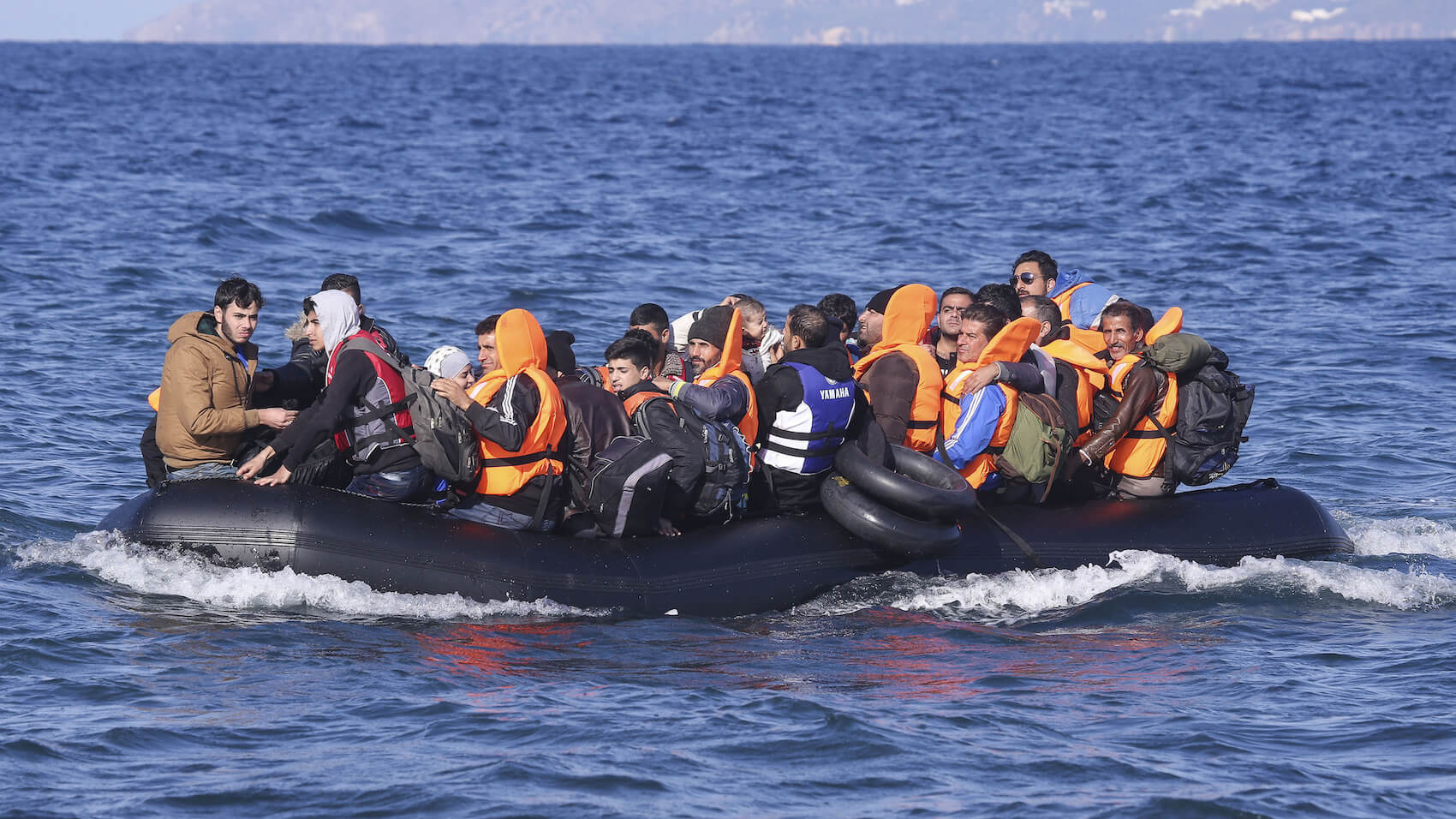
Europe has experienced an extraordinary inflow of refugees since 2015, which raised many questions regarding the inefficiency of the region as a whole in tackling the crisis and changing the region’s political consciousness. There were debates among countries that polarized the region regarding accepting refugees as it would allocate sufficient resources to the new entrants. Although the pressure of the influx of refugees has lessened over the years, the region has been polarized into three zones- the liberal countries of Western Europe, the moderate countries of the Mediterranean region and the erstwhile communist countries of Eastern Europe.
A visible securitization of the region proves the tensions created due to the large influx of refugees in the region. The tensions and xenophobic tendencies against the arrival of refugees can be reflected in the sudden rise of right-wing populist parties throughout the European region. The sudden surge has led to a shift in the choices and perceptions of the voters in many countries, including both Eastern and Western Europe. Eurosceptic right-wing parties indulge in negative, uncivil campaigns that result in fearmongering among people towards a particular issue or a community. The issue of refugees from Middle Eastern and North African countries in the last decade has been the biggest issue dividing the Eurosceptic and Europhile parties and electoral campaigns, especially by the far-right parties. While each of these parties has different policies and their electoral campaigns vary, the prime issue in their agenda remains the influx of refugees having a different ethnicity from the Middle Eastern and North African countries, which has resulted in the loss of homogenous stability in Europe.
Many people have been echoing the populist opinions and extreme ideas of the right-wingers regarding the influx of refugees. Reference can be provided to the infamous speeches of the Hungarian and Dutch leaders who openly spoke about their fear of refugees altering the homogenous structure of Europe. Political parties have played a pivotal role in provoking the citizens against the reception of refugees in Europe. In this scenario, the research wants to highlight the rise of Euroscepticism among the member countries fueled by the right-wing parties. It will further try to analyze the effect of Euroscepticism on the youth of these countries and how far it affects the elective behavior of these young voters. Additionally, the research wants to examine the changes that have taken place in the political landscape of Europe.
Amrita Purkayastha is an Assistant Professor at Bangalore, India and an independent researcher. Her research interest includes areas like refugee laws, migration, and European regional affairs. After completing her doctorate degree from Jawaharlal Nehru University, Amrita is currently working as a freelance “Academic Writer” for two companies. Previously, she worked as a content writer and translator before starting her present jobs. She has three peer-reviewed publications centering on different issues of refugees around the world.
Populist Discourse and European Identity: A Poststructuralist Analysis
Nazmul Hasan (Visva-Bharati University, Santiniketan, West Bengal, India).
Discourse theory emerged in the late 1970s as a response to the challenges of mainstream theory following critiques of structuralist language, culture, and the crisis of Marxism amid the rise of neoliberal and neoconservative ideologies. Discourse theory didn’t aim to provide a new fixed theoretical framework but offered a flexible analytical perspective. It focused on the rules and meanings shaping social, political, and cultural identity construction.
There is a recognition of the social nature of identity, particularly within modernity, where human identity is inherently social. This entails an understanding of identity as socially constructed. From a discourse theory perspective, the issue of identity is not about actively constructing it. The rejection of the obviousness and essentialism of social identities brings attention to the political dimension of identity formation, emphasizing its reliance on contingent hegemonic struggles and processes of inclusion or exclusion. It also reveals that the ongoing political construction of social identities never leads to a closed, self-contained, and absolute identity. According to Ernesto Laclau, understanding this process is the psychoanalytic category of identification. This concept explicitly posits a lack at the root of any identity with something such as a political ideology or ethnic group because there is an inherent and insurmountable lack of identity. The act of identification arises from a fundamental absence or incompleteness in one’s sense of self. This psychoanalytic perspective helps shed light on the dynamics of identity construction in both personal and political realms.
Exploring Freud’s insights on identification and group formation can contribute to understanding questions related to collective identity. Freud suggests that the cohesive power of groups, as seen in examples like the church and the army, is rooted in symbolic meaning and discourse and the libidinal organization of groups. In collective identification, individuals are bound by libidinal ties to both the leader and other group members.
Lacan builds on Freud’s focus on the affective side of identification, redirecting it to the paths of enjoyment (jouissance). In Lacan’s framework, jouissance, an excessive and charged satisfaction bordering on pain, aligns with Freud’s concept of libido. Lacan reconceptualizes sexual energy in terms of jouissance, distinguishing between the symbolic (representation and discourse) and the real (jouissance), the subject of representation is associated with unconscious desire, while the subject of affect or the ‘enjoyment subject’ is linked to jouissance. So, identification operates on both discursive structural or representation and jouissance.
Ole Waever employs poststructuralist discourse theory to analyze how major European powers, particularly Germany and France, construct distinct ‘we’ – identities. This construction involves integrating notions of ‘state’, ‘nation’, and ‘Europe’ into their self-defining narratives. Yannis Stavrakakis supplements discourse theory with Lacanian insights to delve into the contemporary paradoxes and dilemmas surrounding constructing a European identity.
This article explores what contributes to the appeal of identity construction, why people collectively identify with specific formations and the implications of such identification. The goal is to pave the way for a more sophisticated discussion of identity formation, particularly in the context of European identity. The article emphasizes the incorporation of psychoanalytic considerations, particularly the problem of enjoyment, to enrich the discourse-theoretical account of identification. This includes not only formal or discursive but also substantive or affective identification conditions, termed as ‘obscene dimension’.
Nazmul Hasan has a post-graduate degree in Philosophy. He is a doctoral researcher in the Department of Philosophy and Comparative Religion, Visva-Bharati University, Santiniketan, West Bengal, India. His area of research interest is mainly political philosophy. His current research project is titled Populist Reason: A Philosophical Enquiry. He published papers on political activism, democracy, and populism in India.
Nationalism and Anti-Immigration Sentimentalism in Europe
Sulagna Pal (PhD Research Scholar, Department of Philosophy, University of Delhi, India).
This study attempts to demonstrate how trajectories of nationalism and anti-immigration sentimentalism in Europe are seen through the philosophical ideas of Johann Gottfried Herder, Rabindranath Tagore, David Miller, Kieran Oberman and others. While Herder’s idea of nationalism was rooted in cultural, linguistic and ethnic identities, Tagore was keen on challenging what he called ‘narrow-centric’ nationalism and racism. Tagore’s cosmopolitan and universal humanistic values sought to transcend narrow parochial boundaries in favour of a broader understanding of humanity. His legendary short story Kabuliwala, written in 1892, depicts the life of a migrant from Afghanistan who chose to live in Calcutta for social and economic reasons (Eggel et al., 2007; Panjabi et al., 2023). This study suggests that Herder’s ‘brotherhood of humanity,’ Tagore’s pro-migration Kabuliwala narrative and Oberman’s classical liberal principles of freedom of movement and anti-coercion might help combat the growing anti-immigration sentimentalism in Europe in nuanced ways.
Keywords: Anti-Immigration, David Miller, Johann Gottfried Herder, Kieran Oberman, Kabuliwala, Nationalism, Rabindranath Tagore
Sulagna Pal is a PhD candidate in the Philosophy Department of the University of Delhi. She worked as an Assistant Professor of Philosophy at Janki Devi Memorial College, University of Delhi, from July 2017 to March 2023. She has an M.Phil. in Philosophy in Environmental Ethics from Delhi University in 2016. Following are her areas of interest: Ethics, Meta-Ethics, Normative Ethics, Applied Ethics, Buddhism, and Philosophy of Religion. She was a part of the International Conference of Philosophy, held in the Philosophy Department, University of Ljubljana, Slovenia, EU, in 2013, funded by a Travel and Maintenance Grant from the Indian Council of Social Science Research, New Delhi. She was part of a Buddhist Conference held in Sri Lanka in 2013. She has many papers published in various journals and a book on the gendered body and environmental pluralism published by the Lambert Academic Publishing House, Germany.
A Critique of Eurocentric Conceptualizations of Social Cohesion in Academia, Refugee Policy, and Refugee Settings
Basma Doukhi (The University of Kent).
This paper applies a postcolonial approach to contest Eurocentric ways of thinking and approaches the contemporary phenomenon of mass displacement, tracing the origins of this thinking to history, power, and colonization (Said, 1993). This approach allows for a critical understanding of social cohesion as a Western construct, which can be challenged by examining the concept’s application in diverse contexts (Lemberg-Pedersen et al., 2022). Mainstream social cohesion is a politically and socially contested concept that has been deployed by scholars, policymakers, and practitioners to define, and can be operationalized in two distinct discourses. The first is an academic and theoretical discourse which has emerged in sociology and social psychology fields (Norton & de Haan, 2013). The second is a policy-oriented discourse, which offers a Western top-down and problem-driven perspective to examine solutions to diverse challenges undermining social cohesion (Norton & de Haan, 2013). Bernard (2000: 2-3) commented on social cohesion’s deployment within these two discourses by defining it as a ‘quasi-concept’ or ‘concept of convenience’ that is “flexible enough to allow the meanderings and necessities of political action from day to day.” This flexibility has allowed the promotion of social cohesion as an agenda within these discourses leading to “…a move away from multiculturalism to a social cohesion agenda” (Gozdecka et al., 2014: 56).
This paper is a critical review that contests Western conceptualizations of social cohesion across Western and English-speaking policy and academic contexts including North America and Europe (Jenson, 1998; Markus, 2010; de Berry & Roberts, 2018; Ozcurumez & Hoxha, 2020). It argues that the concept, as presented in the discourses above, is rooted in Western sociology and follows a Western framework (Ozcurumez & Hoxha, 2020). Reviewing literature, it shows how limited knowledge about social cohesion’s application is limited and undermined in refugee contexts and argues how understanding the practices of community from the perspectives of displaced people, beyond achieving social cohesion as defined in Western academic and policy discourses, should be a priority (Delhey et al., 2018).
Discussions and understanding of social cohesion by refugees in a refugee setting have been under-researched (Delhey et al., 2018, Fiddian- Qasmiyeh et al., 2022). Instead, social cohesion has become an elastic term co-opted into a buzzword for the institutions of the Global North within academic and policy discourses, rather than as a concept to understand the lived experiences of the people at the forefront (Seyidov, 2021). Looking beyond these discourses, the paper examines possible context-aware alternative conceptualizations of the concept, such as ”harmonization,’ that have been explored by researchers on refugee integration in Türkiye (Hoffmann & Samuk 2016: 10). Exploring Türkiye highlights how this Western understanding of social cohesion has contributed to limited applicability, measurements, relevance, and vagueness in low and middle-income countries (Gray Meral & Both, 2021) and to new forced displacement and migration, conflict-affected and refugee contexts (Ozcurumez & Hoxha, 2020; Finn, 2017; de Berry & Roberts, 2018), ‘risk[ing] the effectiveness of the word – and the outcome – altogether’ (Mookherjee & Easton-Calabria, 2017).
Basma Doukhi is a Ph.D. Candidate in Migration Studies at the University of Kent. She is a Palestinian academic, human rights activist, and humanitarian practitioner. She worked for more than fourteen years in humanitarian and development with displaced people with UN agencies and international NGOs in the MENA and the UK. Basma was raised and lived in Al Rashideh Palestinian Refugee Camp in the South of Lebanon and is currently based in Canterbury, UK. Basma obtained a Chevening Scholarship to pursue a master’s degree in the Development and Emergency Practice at Oxford Brookes University, and She is recently pursuing her PhD in Migration Studies at the University of Kent as the first Palestinian refugee woman specialized in this topic from the camps in the MENA. Her Ph.D. explores the role of Refugee-Led Organizations in providing protection and assistance for displaced communities in Turkey. She published the first chapter, under the title, “The Moment We Arrived to Saida [City in the South of Lebanon] in the Afternoon, We Became Refugees’ – (Kanafani, 2015: 75) ” about the resilience and power of Palestinian Refugee women in the camps of Lebanon. Basma is also a Dabke dancer and a founder of Roouh social enterprise, which is a platform for female refugee artisans to tell their stories in their own words through their craft, and it is addressed to UK audiences to listen to these stories in the way that they want to be told.
Panel 6
Diverse Aspects of Anti-Migrant Populism in Europe
Enemies Inside: European Populism and Dimensions of Euroscepticism
Ana Paula Tostes (Senior Fellow at the Brazilian Center of International Relations and Professor at the State University of Rio de Janeiro).
Despite the apparently undeniable impact of regional integration on domestic politics, national societies and the European party systems, scholars have engaged in lengthy debates on the levels, limits, and importance of such an impact (e.g. Kitschelt, 1992; Gabel, 2000; Mair, 2005, 2007; Poguntke & Scarrow, 1996). Taggart (1998), Marks et al. (2002) and Marks et al. (2006) found evidence that national political parties’ position on the regional integration process in Europe is a variable that explains voter preferences. Along the same lines, Stefano Bartolini (2007) sustained that no other issue in “post-war electoral history” has had the same broad and standardizing effects across the European party system as the regional integration process. The authors examine voter preferences in national elections based on the level of support for regional integration. In a disaggregated manner, the authors rate the ideological and party positions according to the level of support for integration in the economic and political spheres. The emergence of issues related to identity, sovereignty, safety, etc. – that is, “non-material” issues in ideological positions on both the right and the left – proved to be variables that influence the preferences of European voters.
Since the early 2000s, it became remarkable that criticisms of economic integration that strongly opposed economic integration, such as the far-left political parties, did not see significant popularity among voters. Criticisms of the liberal model for a single market did not create obvious costs or harm for citizens distant from the integration process and did not perceive any economic losses. On the contrary, throughout the 1990s, countries most affected by the 2008 financial crisis benefitted from the transfers of European resources from the European Structural Funds. A similar situation happened after the COVID-19 pandemic, resulting in an unprecedented economic contraction in 2020.
In the two cases, the EU’s response to transfer benefits, policies, and funds was fast, forceful, and well-coordinated at all levels.
We cannot say the same about the social and political integration contestants once the migration crises appeared as a yeast to make intolerance grow in the region, on the one hand, and populism on the other. In the context of the European migration crisis that began in 2015, it is possible to notice a considerable increase in the politicization of the issue of defending national identity and culture, especially by new far-right political parties (Hutter & Kriesi, 2019; Halikioupolou & Vlandas, 2020).
Despite the ambiguities of populism (Judis, 2016; Müller, 2016; Kaltwasser, 2012), we seek to analyze the dimensions and consequences of Euroscepticism by classifying populist political parties and examining electoral data. For this article, we use the national electoral results for extremist political parties over the period when the European new extreme right emerged in the 1980s to 2022.
By identifying differences between countries and in the range of ideological positions from the right to the left in the EU-15, it will be possible to conclude the EU crises’ impacts on support for new populist ideologies. We use data on electoral support and the analysis of far-right and far-left parties, their political platforms, and strategies as our object of investigation to gain a better perspective on the current state of Euroscepticism in the region. Finally, we hope to confirm that even though the dimensions of diffuse or specific Euroscepticism (Kopecky & Mudde, 2002) may be complementary at times, we see that the difference between the two is reproduced in the Eurosceptic ideological positions defended by the left and those defended by the right.
Ana Paula Tostes is Jean Monnet Chair (Project: 101127443 EUgac) and Professor at the Graduate Program in Political Science at the Institute of Social and Political Studies of the State University of Rio de Janeiro (IESP-UERJ) and Senior Fellow at the Brazilian Center of International Relations (CEBRI). She holds a PhD in Political Science (IUPERJ, currently IESP) and Postdoc at University of São Paulo (USP). She was a visiting researcher (2016-2017) at the Free University of Berlin (FUB) and Professor at Michigan State University (MSU). Currently holds Productivity Scholarships from FAPERJ (Prociência/UERJ) and CNPq (n.316785/2021-0), and she is coordinator of Program for International Cooperation (PROBRAL CAPES/DAAD Edital n. 9/2023) between IESP/UERJ and the German Institute for Global Studies and Area Studies (GIGA), Hamburg, Germany.
Emigration and Political Party Membership in Central and Eastern Europe: Evidence from a Difference-in-Differences Design
Melle Scholten (The University of Virginia).
How does large-scale emigration affect politics in the peripheral states of the European Union? While a large amount of literature looks at the political consequences of immigration in the more affluent Western and Northern member states, comparatively few scholars have taken up the mantle of examining the political effects of large-scale emigration in Central and Eastern Europe. Since emigration ranks higher among the concerns of non-migrants in these countries than immigration, this question is not without import. It could potentially help explain democratic backsliding in the Union. From a political economy perspective, high levels of emigration, concentrated in the younger, more progressive parts of society, change the makeup of the electorate. This project investigates how emigration, and its associated economic and political consequences affect policymaking and politics in CEE countries. Evidence is provided from panel data and a generalized difference-in-differences estimator. The findings presented here matter for the future of democracy in what is arguably the international organization most concerned with promoting democracy among its members. They also contribute to the study of the political economy of the Single Market and intra-European migration.
Melle Scholten is a PhD candidate at the University of Virginia (UVA). His research projects examine international and comparative political economy, primarily focusing on the effects of migration and remittances on migrant-sending societies, employing quantitative methods and causal inference.
The Role of Populism in Redefining Citizenship and Social Inclusion for Migrants in Europe
Dr. Edouard Epiphane Yogo (Lecturer-Researcher in Political Science at the University of Yaoundé, Cameroon).
This research critically examines how populism in Europe impacts the redefinition of citizenship and social inclusion for migrants, considering the rise of populist movements and their influence on political discourse, policies, and societal attitudes. The study aims to unravel the intricate ways in which populist ideologies shape the treatment of migrants in European societies, focusing on citizenship redefinition and social inclusion challenges. The literature review explores historical and theoretical aspects of populism in Europe, emphasizing how populist leaders leverage anti-immigrant sentiments to frame migrants as threats to national identity. The mixed-methods approach integrates qualitative interviews with policymakers, activists, and migrants, providing rich insights into subjective experiences. Quantitative data from national surveys complements qualitative findings, offering a broader understanding of trends.
The research delves into citizenship redefinition, analyzing changes in laws and rhetoric under populist influence, especially regarding jus soli and jus sanguinis principles. Social inclusion challenges are scrutinized, considering populist narratives portraying migrants as cultural threats and their impact on public perceptions, media representations, and policy measures affecting integration in education, employment, and healthcare.
Case studies from select European countries showcase variations in populist influence on citizenship and social inclusion policies, considering historical context, economic conditions, and populist movement strength. The research concludes with policy implications, recommending strategies to address challenges posed by populism to migrant populations. The study aims to contribute valuable insights for policymakers, scholars, and advocates working towards a more inclusive and equitable European society amid populist challenges.
Edouard Epiphane Yogo is a lecturer-researcher at the University of Yaoundé, holding a PhD in political science. A specialist in international relations and strategic studies, he has authored over thirty publications, including ten books. His expertise covers security, defense, and geopolitics, with a particular interest in issues related to state fragility, violent extremism, and terroris