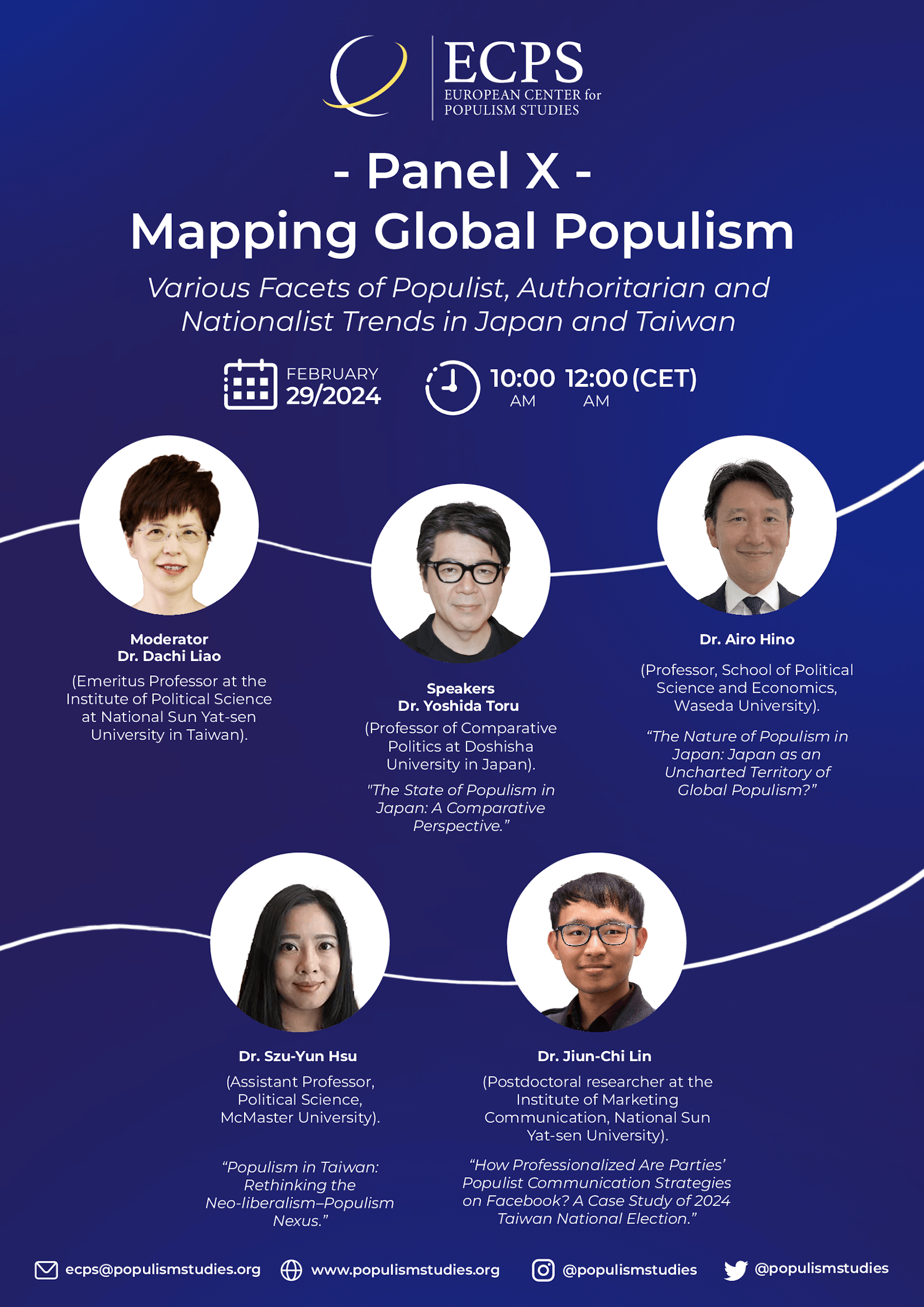
(Emeritus Professor at the Institute of Political Science at National Sun Yat-sen University in Taiwan).
Speakers
“The State of Populism in Japan: A Comparative Perspective,”byDr. Toru Yoshida (Full Professor of Comparative Politics at Doshisha University in Japan).
“The Nature of Populism in Japan: Japan As an Uncharted Territory of Global Populism?” byDr. Airo Hino (Professor, School of Political Science and Economics, Waseda University)
“Populism in Taiwan: Rethinking the Neo-liberalism–Populism Nexus,” by Dr. Szu-Yun Hsu (Assistant Professor, Political Science, McMaster University).
“How Professionalized Are Parties’ Populist Communication Strategies on Facebook? A Case Study of 2024 Taiwan National Election,”byDr. Jiun-Chi Lin (Postdoctoral researcher at the Institute of Marketing Communication, National Sun Yat-sen University).
Dr. Dachi Liao is a Distinguished Professor and leading authority in the field of Comparative Politics, specializing in Comparative Legislatures, Politics, and Information at National Sun Yat-sen University, Taiwan. With an illustrious career, she has served as the Director of the Department of Political Science at Sun Yat-sen University for multiple terms. Her global academic influence extends to prestigious institutions such as the Hoover Institution, Stanford University, and the Department of Political Science, University of Michigan, US, where she has held positions as a Visiting Professor.
In addition to her academic leadership, Professor Liao has played a significant role in shaping Taiwan’s political science landscape. She served as the President of Taiwan Political Science Association and contributed to the development of political education as the Director of the Continuing Education Center at Sun Yat-sen University.
Professor Liao’s comprehensive expertise, spanning research, education, and evaluation, reflects her commitment to advancing political science and shaping the next generation of scholars.
The State of Populism in Japan: A Comparative Perspective
Dr. Toru Yoshida is full professor of comparative politics at Doshisha University in Japan. Specialist on political science, French politics and comparative politics. After served at The Japan External Trade Organization, he owned his master and Ph.D degree at the Tokyo University (social science). He was Visiting Professor at Sciences Po Paris and now associate researcher at Fondation France-Japon (FFJ) EHESS in France. His English publication includes “Populism in Japan: actors or institutions?” in D. B. Subedi et al.(eds.) The Routledge Handbook of Populism in the Asia Pacific, Routledge, 2023; “Parliaments in an age of populism” in C. Benoit & O. Rozenberg, Handbook of Parliamentary Studies, Edward Elgar Publishing, 2020; “Populism Made in Japan: A new species?” in Asian Journal of Comparative Politics, 4(3),2019.
Abstract: While the research on contemporary populism has advanced our understanding for its definition and commonalities, its diversity across countries, regions, and time appears to be insufficiently understood. This may be due in part that Western-centred understandings of populism were on the centre. In this contribution, we take the contemporary Japanese populism as a case study and argue that it arises not only from cultural but also from institutional factors. It concludes that the type of populism can be change through various reasons. We believe that the case study will contribute to research on “the varieties of populism.”
The Nature of Populism in Japan: Japan As an Uncharted Territory of Global Populism?
Dr. Airo Hino is Professor of Political Science at School of Political Science and Economics, Waseda University in Tokyo, Japan. He received his Ph.D from the University of Essex in 2006. After having been a recipient of the Flemish Government Scholarship and worked at the Katholieke Universiteit Leuven and having worked as a FRS postdoc fellow at Université catholique de Louvain, he worked for Tokyo Metropolitan University as Associate Professor and joined Waseda University in 2010. His research on party systems, electoral systems, and voting behaviour has been published in journals such as the Journal of Politics, Comparative Political Studies, International Journal of Public Opinion Research, and Government and Opposition. He is the author of New Challenger Parties in Western Europe: A Comparative Analysis(Routledge, 2012), and a co-author of “How populist attitudes scales fail to capture support for populists in power” (published in Plos One in 2021). He is currently running two JSPS-funded projects on populist attitudinal scales and the database of populist discourse in Japan.
Abstract: The extent to which the phenomenon of populism is found in Japan’s politics is a contested topic on which scholars have asserted positions ranging from claims that it simply does not exist in Japan, to opposing claims that Japan’s most powerful and influential recent prime ministers have been populists. Some of this contestation arises from different definitions of “populism” that were developed in parallel in Japanese and Western literature, both of which also further differ from the vernacular usage of the term in Japanese political and media discourses. With this observation in mind, this talk aims to give a reflection on the notion that “Japan is immune to populism” and to show that Japan has experienced its own populism much earlier than the global trend. The implications that one can draw is that such experiences have prevented the surge of full-fledged populism as seen elsewhere in the world and have made the phenomena subtle.
Populism in Taiwan: Rethinking the Neo-liberalism–Populism Nexus
Dr. Szu-Yun Hsu is Assistant Professor of Political Science at McMaster University, Canada. Her scholarly interests include neoliberalism, international political economy, geopolitics and geoeconomics, with a regional focus on East Asia. Her research tackles issues from trade politics, populism, nationalism, democratization, to developmental state transformation. Dr. Hsu’s latest publication with the Journal of Contemporary Asia, Populism in Taiwan: Rethinking the Populism–neo-liberalism Nexus, employs Gramscian hegemony theory in analyzing the intrinsic dynamics between neoliberalization, social class relations, and populist politics in post-democratization Taiwan.
How Professionalized Are Parties’ Populist Communication Strategies on Facebook? A Case Study of 2024 Taiwan National Election
Dr. Jiun-Chi Lin is postdoctoral researcher at the Institute of Marketing Communication, National Sun Yat-sen University. He received his doctoral double-degree diplomas at the National Sun Yat-sen University (NSYSU, Taiwan) and the Catholic University of Leuven (KU Leuven) in 2022. His research mainly touches upon political communication, internet politics, populism, comparative politics, European politics, and digital methods. Comparing similar and discrepant populist communication patterns in various social contexts, his PhD dissertation examines how political actors in Taiwan and Germany employ populist frameworks on Facebook over campaign periods. His PhD thesis has led to several awards, including the 2022 Best Doctoral Dissertation (Taiwan Political Science Association, TPSA) and the Prize for Excellent Doctoral Dissertation (NSYSU). Dr. Jiun-Chi Lin is also a member of Early Career Researchers Network (ECRN) of the ECPS.
Abstract: On January 13, 2024, Taiwan voters selected their new government in the latest national election (Presidential and Legislative elections). According to the results, William Lai (DPP) wins the majority of votes (5.58 million votes). DPP successfully retains the presidency after President Ing-wen Tsai’s two terms between 2016 and 2024. However, none of the major parties (DPP & KMT) obtain over half of the ballots in the national parliament. TPP (Taiwan People’s Party) is the only small party that maintains its parliamentary seats with eight legislators recommended by the party. It is expected that TPP will exert more political leverage in the future. In contrast, their counterpart NPP (New Power Party), another small party in the current parliament, fails to maintain its political influences in the national parliament. This election gained high international attraction because it is seen as a leading signal that influences the direction of Cross-strait relations. Nevertheless, manipulating China’s threats did not overwhelmingly dominate political debates over the campaign. Instead, political parties had more room to manipulate domestic issues (e.g., housing, corruption). In particular, opposition parties have mainly appealed to anti-elite resentment and voters’ feelings of relative deprivation. It, hence, gives us a chance to scrutinize relationships between party campaign strategies and populist communication. While scholars are concerned about the future of democracy under the grip of authoritarian populism, the recent development of Taiwan’s populism has nothing to do with authoritarianism, rather democratic competition. This presentation aims to guide the audience to understand current Taiwan’s populism from a communication perspective. Following the notion of professionalization of populist communication (Lin, d’Haenens & Liao, 2022), I attempt to outline the populist features of parties’ campaign narratives on Facebook.
Emphasizing that populist parties act as platforms for citizens with more critical perspectives, Professor Ann-Cathrine Jungar argues that these parties can serve as correctives for democracies, amplifying voices underrepresented in mainstream politics, even though not all their proposals may receive universal endorsement. While acknowledging that some supporters of populist parties may hold xenophobic views, she highlights the importance of distinguishing between exclusionary and inclusionary populism. Dr. Jungar notes that populist radical right parties typically fall into the exclusionary category due to their critical stance towards liberal democracy.
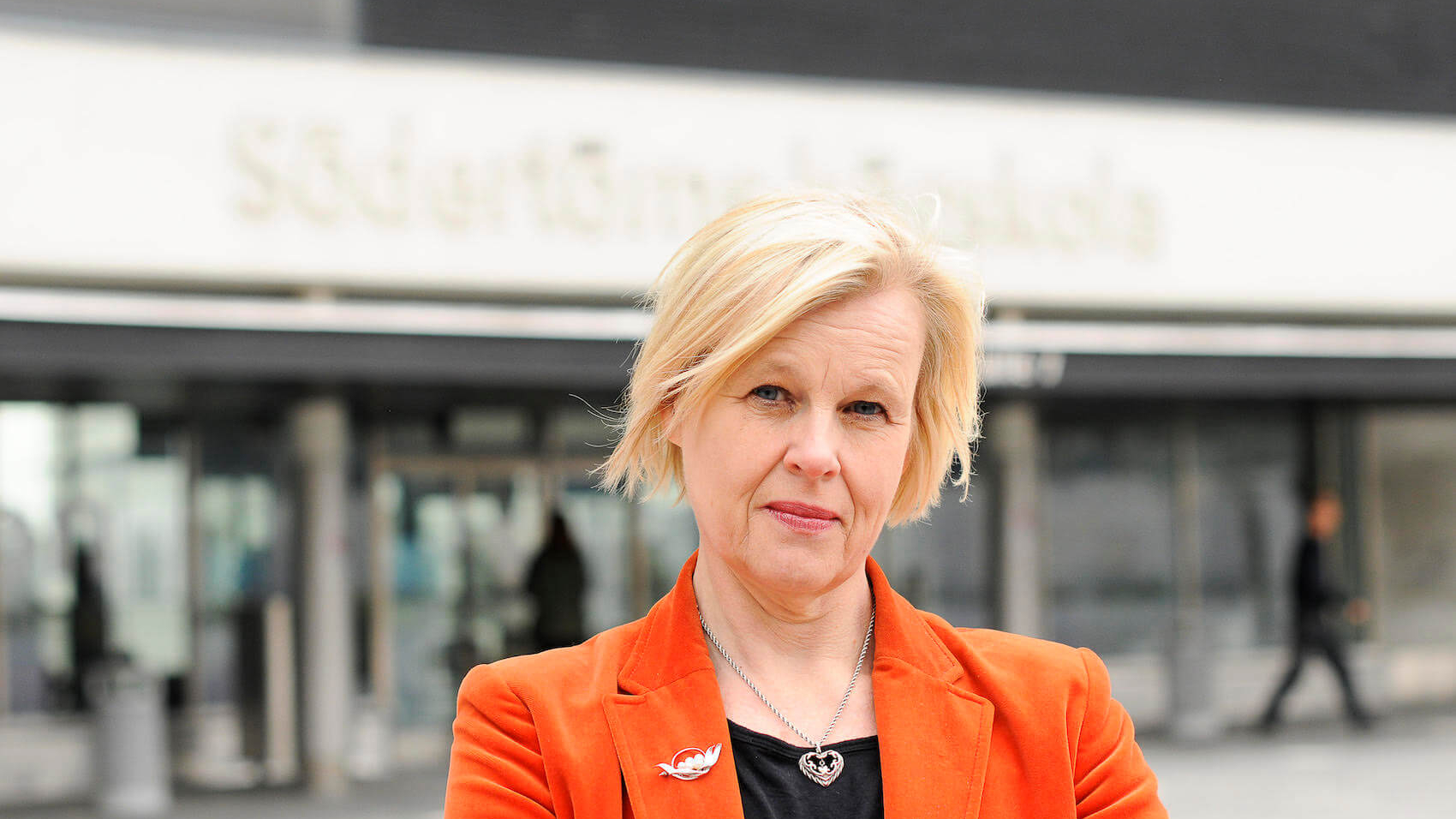
In an exclusive interview with the European Center for Populism Studies (ECPS), Dr. Ann-Cathrine Jungar, Associate Professor of Political Science at Södertörn University in Stockholm, explores the intricate dynamics of populism in the Nordic region, focusing on Sweden and the rise of the Sweden Democrats. Dr. Jungar delves into the nuanced nature of populism, distinguishing between exclusionary and inclusionary forms, and highlighting the role populist parties play in amplifying the voices of citizens with critical perspectives.
Dr. Jungar argues that while populist parties, such as the Sweden Democrats, may garner support from individuals with xenophobic views, their voter base is diverse, and these parties can act as correctives in mainstream politics. She emphasizes the importance of understanding the distinctions between different populist movements, particularly in the context of radical right parties that often adopt a critical stance towards liberal democracy.
The interview addresses the specific case of the Sweden Democrats and their journey from isolation to becoming a significant force in Swedish politics. Dr. Jungar provides insights into the failures of the “cordon sanitaire” strategy, examining the complexities of government formation, shifting party dynamics, and the impact of the 2015 migration crisis on mainstream parties’ positions.
Furthermore, Dr. Jungar reflects on her upcoming book, which focuses on the Nordic radical right, tracing the historical development of populist movements in the region. She explores the ideological shifts within these parties, their approach to migration, and the impact of changing voter perspectives on the political landscape.
The discussion extends to the Finns Party in Finland, analyzing its performance in the presidential elections and its evolving positions on NATO membership and foreign policy. Dr. Jungar provides a nuanced assessment, considering the party’s role in Finnish politics and the implications of its leader’s background marked by hate speech convictions.
Dr. Jungar also shares her perspective on the global decline of democracy and the potential challenges facing Sweden’s democratic system. While acknowledging concerns about the populist right, she assesses the current state of democracy in Sweden, highlighting the enduring support for democratic values in the Nordic states.
The interview concludes with a discussion on the influence of right-wing radical parties in the European Parliament, anticipating their impact on decision-making processes and collaborations. Dr. Jungar also offers insights into the potential challenges arising from global political collaboration among right-wing radical parties, particularly in the context of the potential return of Donald Trump to power.
Drawing a comparison between radical Islamism and Islamist populism, Professor Samina Yasmeen emphasized the parallel communication styles utilized by both radical and populist Islamists, highlighting their reliance on simplicity and Islamic references to connect with the populace. However, she pointed out that while radical Islamists aim for a fundamental alteration of the state, populist Islamists, exemplified by figures such as Imran Khan, prioritize the establishment of a “well-governed state.”
In an exclusive interview with the European Center for Populism Studies (ECPS), Professor Samina Yasmeen, the Director of the Centre for Muslim States and Societies at the University of Western Australia, delves into the complex landscape of Pakistani politics, exploring the roots of populism and its intersection with Islamism.
While a coalition consisting of the Pakistan Muslim League-Nawaz (PML-N) and the Pakistan People’s Party (PPP) has agreed to form the next government of Pakistan, thereby preventing the party of former Prime Minister Imran Khan from assuming power despite garnering the most votes in the election, Professor Yasmeen has pointed out that populist Islamism shares certain techniques with radical Islamism in many respects. When asked to differentiate between radical Islamism and Islamist populism, Professor Yasmeen highlighted the parallel communication styles employed by radical and populist Islamists, underscoring their use of simplicity and Islamic references to resonate with the populace. According to her, while radical Islamists seek a fundamental alteration of the state, populist Islamists, exemplified by figures such as Imran Khan, prioritize the establishment of a well-governed state.
Professor Yasmeen begins by shedding light on the historical antecedence and foundational underpinnings of populism in Pakistan, emphasizing the significant influence of the public’s inclination towards charismatic personalities. She attributes the prevalence of populism to the prevailing low level of literacy, creating a susceptibility to external influences and reinforcing the importance of oral transmission in shaping political narratives.
Drawing on historical examples, particularly the emergence of Zulfikar Ali Bhutto’s Pakistan People’s Party in the 1960s, Yasmeen underscores the role of illiteracy and emotional connections in fueling populist movements. She then transitions to the contemporary political landscape, highlighting the disillusionment of a population that feels unheard and a deep connection between populist leaders like Imran Khan and the public.
The interview further delves into the strategies employed by Islamist parties to resonate with the public, with a particular focus on Imran Khan’s use of religious narratives and references. Yasmeen explores the influence of Imran Khan’s populist agenda on elections and his unprecedented success without military backing, analyzing the impact of his narrative on public sentiment.
Discussing the challenges posed by Islamist populism to democratic values, Professor Yasmeen raises concerns about the potential for closed-mindedness and a lack of critical thinking among supporters. She highlights the importance of guiding populist appeal towards constructive messages and fostering a genuine democratic spirit to ensure long-term stability.
Finally, the interview touches on the impact of Islamist populism on the rights and representation of religious minorities in Pakistan. Professor Yasmeen acknowledges the indirect consequences of Islamization, contributing to an atmosphere that may alienate minority communities. She emphasizes the need for a nuanced understanding of the complex relationship between Islamization, democracy, and minority rights.
In addressing the external influence of Indian Prime Minister Narendra Modi’s anti-Islam stance on Islamist populism in Pakistan, Professor Yasmeen notes the shaping of negative perceptions about India’s Hindu-centric policies but emphasizes the overarching focus on internal challenges within Pakistan.
Throughout the interview, Professor Samina Yasmeen provides a comprehensive analysis of the intricate interplay between populism, Islamism, and democratic values in the context of Pakistani politics, offering valuable insights into the historical, contemporary, and geopolitical dimensions of these complex dynamics.
Here is the transcription of the interview with Professor Samina Yasmeen with some edits.
Illiteracy Coupled with Emotional Responses Fuels Populism in Pakistan
What is the historical antecedence and foundational underpinnings of populism in Pakistan, and what are the principal factors contributing to the discerned state of political immaturity?
Samina Yasmeen: First of all, populism in Pakistan is significantly influenced by the public’s inclination to gravitate towards certain personalities and follow them. As these individuals gain recognition for offering something appealing, they evolve into populist leaders garnering widespread followership. However, a crucial factor contributing to this phenomenon, especially in contemporary Pakistan, is the prevailing low level of literacy.
In a society where a purported 40% of the population is considered literate but may possess only basic reading and writing skills, susceptibility to external influences becomes pronounced. The oral transmission of ideas gains prominence in such a scenario. This tendency is further exacerbated when populist leaders strategically align themselves with the public’s perspective, utilizing easily understandable terminologies. While their aim may be to engage in meaningful discussions and influence public opinion, the outcome often creates an environment where imagery, emotive rhetoric, and opinion-based communication take precedence over fact-based discourse. In essence, the conditions created by the combination of limited literacy and effective communication strategies make populism a viable and prevalent phenomenon in Pakistan.
Acknowledging this, populism often arises due to circumstances where individuals feel compelled to rally around a specific personality, and concurrently, other influential figures are willing to endorse this inclination. A pertinent example from the 1960s is Zulfikar Ali Bhutto’s establishment of Pakistan’s People’s Party. Despite his falling out with President Ayub Khan, Bhutto maintained a favorable relationship with the military. As the demand for an independent East Pakistan grew, the military sided with Bhutto, enabling him to mobilize support from specific factions.
Bhutto adeptly engaged with these factions, securing their support, and effectively conveyed his ideas. The question arises: why did people embrace his narrative? The answer involves the role of illiteracy or insufficient literacy, coupled with an emotional element. In situations where individuals feel unheard or perceive institutions as unresponsive to criticism, populist leaders become iconic voices for their sentiments. This emotional connection transcends literacy barriers, contributing to the emergence and popularity of populist figures.
So, delving into history, Zulfiqar Ali Bhutto’s rallies were monumental, capturing the essence of people deeply swayed and influenced by his ideas. The scale was such that attendees, moved by these ideals, willingly donated their jewelry and resources. This phenomenon continues in contemporary Pakistan, where Imran Khan operates within a similar context, fostering a profound connection with the populace.
In the present, we witness a population that believes their voices have been disregarded, their basic needs unmet, and an acute sense that a populist leader provides a voice to their sentiments. Concurrently, both within Pakistan and abroad, there are groups that not only accept this idea but actively support endeavors, such as those of Pakistan Tehreek-e-Insaf (PTI). Their aim is to ensure that the articulated demands resonate widely and gain popular traction.
Imran Khan Is Perceived as a Genuine Islamist
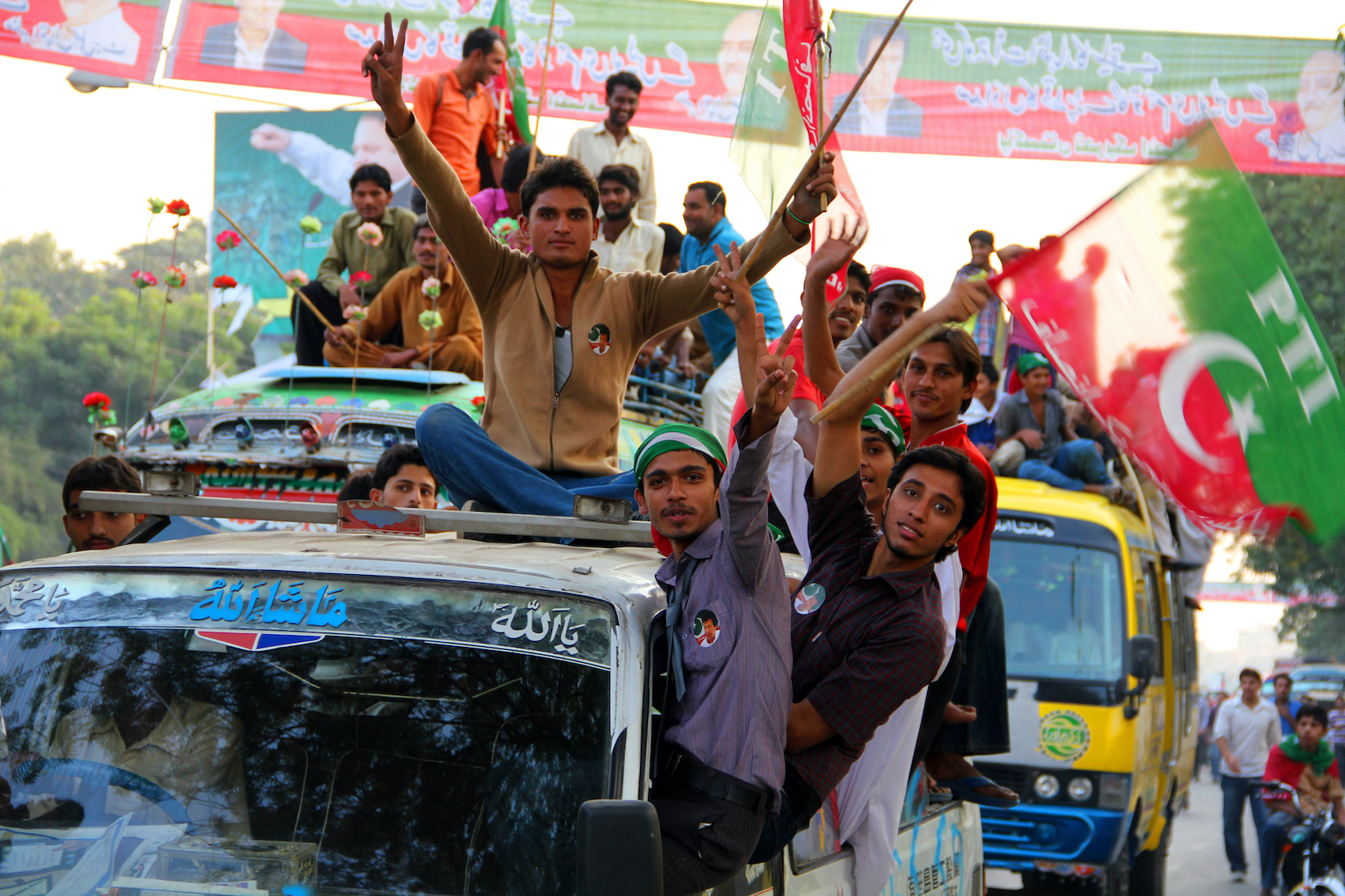
Enthusiastic Youth going towards the venue Minar-e-Pakistan to attend Imran Khan’s political rally on October 30, 2011 in Lahore, Pakistan. Photo: Jahanzaib Naiyyer
How would you define and differentiate between Islamism (or radical Islamism) and Islamist populism in the context of Pakistani politics? Are there specific characteristics that distinguish Islamist populism in Pakistan from broader Islamist movements?
Samina Yasmeen: If I can delve deeper into the realm of Islamist populism in Pakistan, as it aligns with my area of expertise, it’s essential to recognize its longstanding history. This trajectory can be traced back to the very foundation of Pakistan, rooted in the demand for a state created for Muslims. The very name “Pakistan,” meaning “the land of the pure,” embodies an inherent Islamic connotation, derived from combining the initial alphabets of different expected provinces.
Initially, the demand for Pakistan reflected elements of Islamism, and one could argue whether it leaned towards a more progressive or conservative interpretation. However, once Pakistan was established, Islamist groups that actively supported its creation began to assert their vision of Islam, aiming to translate it into reality. This marked the emergence of Islamism in the country.
In its early stages, figures like Maulana Maududi utilized Islamic knowledge to conceptualize and define the idea of an Islamic state. However, as time progressed, particularly in the 1970s and 1980s, Islamism in Pakistan underwent a transformation, evolving into a more radical form. In my perspective, these shifts present intriguing parallels that merit closer examination.
Radical Islamists pursue a distinct agenda, aiming to alter the fundamental nature of the state and reshape the global landscape, with the ultimate goal of establishing an Islamic state in Pakistan. In contrast, populist Islamists in Pakistan, exemplified by groups like PTI or figures like Imran Khan, may not share the same explicit agenda, but their approach bears striking similarities.
Both radical and populist Islamists employ a communication style characterized by simplicity, utilizing straightforward language and expressions. They draw upon Islamic ideas, often quoting verses from the Quran or Hadith, repeating them persistently until acceptance solidifies among the populace. This rhetoric is then seamlessly connected to the everyday lives of the people.
Taking the example of groups like Jamat-ud-Dawa or Lashkar-e-Taiba, their initial foray into public discourse involved picking up Quranic verses and Hadith, conveying what Islam expects, including engagement in jihad. Gradually, this narrative expanded to assert that Pakistan’s existing condition is a consequence of its adherence to a Westernized system, weaving in Islamic references and principles to fortify their arguments. This typifies the approach of a radical Islamist.
Populist Islamists employ a similar strategy, though distinct from radical Islamists, using concise phrases that emphasize their Islamic identity. Unlike the extensive repetition of Quranic verses or Hadith, they rely on smaller phrases to continuously reinforce their connection to Islamic principles.
An illustrative example is found in Imran Khan’s communication style. He often begins by invoking the phrase “Iyyake nabudu ve iyyake nastain.” While this phrase, translating to “We worship You, and we seek Your guidance,” is a recognizable part of Sura Fatiha, the repetition of it in his speeches fosters an association between this specific section of Sura Fatiha and Imran Khan’s persona or worldview. This technique effectively serves to remind people of his Islamic orientation.
This practice serves to convey a powerful message: Imran Khan is perceived as a genuine Islamist, a devout Muslim who not only relies on his personal capacity but also recognizes a higher power, seeking guidance from it. This strategic use of religious phrases, such as beginning speeches with “Iyyake nabudu ve iyyake nastain,” effectively contributes to the framework of populist Islamism in Pakistan.
In this particular context, where people widely identify themselves with the notion of an Islamic or Muslim state, despite the presence of non-Muslims, the majority of the populace interprets such gestures positively. When Imran Khan consistently incorporates phrases like “Iyyake nabudu ve iyyake nastain” into his discourse, it reinforces the perception that he is the right kind of Muslim leader they seek for the country. This alignment with Islamic expressions enhances his credibility and resonance among the population, contributing to the narrative of populist Islamism.
I believe that if you examine the trajectory of my thoughts, you’ll find that populist Islamism in Pakistan shares certain techniques with radical Islamism in many respects. However, the ultimate objectives differ; it’s not centered on jihad but rather the establishment of a well-governed state. One could argue that even jihadists, to some extent, discuss the concept of a ‘good state,’ although their perspective differs from that of populist Islamists. While there is a similarity in their approaches, the outcomes are distinct.
Many Islamist parties in Pakistan claim to represent the voice and will of the people. What populist appeals or strategies do these parties employ to resonate with the public, and how do they incorporate religious narratives into their populist discourse? Do you believe that these dynamics played a role in Imran Khan’s electoral success, despite his imprisonment and recent charges on four accounts?
Samina Yasmeen: I believe what I’ve been discussing aligns precisely with your inquiry. Throughout Pakistan’s history, Islamist parties, not only in the present but also in the past, have consistently employed a technique rooted in Islamic principles. They often draw upon Islamic injunctions, referencing the Quran or Hadith, to position themselves as capable of articulating the issues in Pakistan, the role religion can play, and how they can bring about change. This approach is evident across all Islamist parties, whether they are extremely conservative, moderately conservative, or even those that may not be considered conservative. This includes the somewhat progressive populist movement, such as the Islamist Pakistan Tehreek-e-Insaf (PTI).
The reference to justice in the very name of PTI, Pakistan Tehreek-e-Insaf, underscores the party’s departure from Western democratic ideals and its alignment with Islamic concepts of justice. This nomenclature serves as a starting point, capturing the attention of the populace and signaling that the party operates within the framework of Islamic justice rather than Western democratic principles.
Furthermore, I highlighted earlier how Imran Khan’s use of “Iyyake nabudu ve iyyake nastain” becomes a key element in communicating the party’s identity. This Quranic reference serves as the cornerstone of any discussion initiated by the populist leader. However, it’s essential to note that this is not where the ideological framework concludes.
Examining Imran Khan’s tenure as Prime Minister and his actions afterward, particularly during his time in office, sheds light on his distinctive approach. His emphasis on the vision of establishing a Riyasat-e Medina, akin to the initial Islamic state in Medina, served to differentiate him from his predecessors. Imran Khan stood apart from leaders like Zulfikar Ali Bhutto, who aspired to create an Islamic Socialist state, and General Zia Ul-Haq, whose vision of an Islamic state leaned towards conservatism and didn’t universally ensure justice.
Imran Khan, on the other hand, articulated a desire for a Riyasat-e Medina in Pakistan—a model that reflected the principles of justice, equality, and international standing inherent in the Islamic foundation of the nation. During his term as Prime Minister, his frequent references to Riyasat-e Medina, in my evaluation, significantly contributed to his identity as a populist leader and populist Prime Minister. And then, he is ousted from power.
A noteworthy shift lies in Imran Khan’s consistent use of Quranic references and his pursuit of Riyasat-e Medina. Those collaborating with external or internal forces are perceived as steering Pakistan away from this righteous path. During this process, Khan not only invokes Quranic verses but also underscores how Islam functioned in South Asia, emphasizing its historical dominance through the Mughal Empire. The empire’s decline, attributed to internal dissent and hypocrisy, becomes a poignant lesson.
Imran Khan builds on the entirety of South Asian and Islamic history, with a crucial focus on the history of the Islamic state in Medina. This highlights a general pattern among Islamists, but when it comes to figures like Imran Khan and PTI, the process is the same. While there are similarities, the distinctive element lies in the communication of these parallels, notably utilizing social media more extensively.
Imran Khan Has Cultivated an Image Akin to a Cult Personality
Tehreek-e-Insaf (PTI) Chairman, Imran Khan addresses to public meeting held at Shahi Bagh in Peshawar, Pakistan on May 27, 2015. Photo: Awais Khan
You characterize Imran Khan as a populist leader. What impact did his populist agenda have on the elections and his success? Meanwhile, Imran Khan’s electoral triumph marks a significant milestone in Pakistani politics. It represents the first instance in the nation’s history where a politician secured victory without the backing of the influential military. How would you interpret and explain this unprecedented development?
Samina Yasmeen: When I say Imran Khan is a populist leader, it’s not a novel assertion. What I want to emphasize is that Khan’s image as someone worthy of emulation didn’t originate with his tenure as the Prime Minister but began when he assumed the role of captain for Pakistan’s cricket team. The foundation solidified with the significant achievement of winning the Cricket World Cup in 1992, a moment of immense pride for a cricket-centric nation like Pakistan.
The charismatic aura around Imran Khan was not solely a result of his cricketing prowess; it extended to his personal life. His appeal transcended boundaries, evident in Lady Diana’s visit to Pakistan on his account and his marriage to Jemima Goldsmith, a wealthy Western, British woman. Imran Khan’s ability to engage with international figures on equal footing further contributed to this enduring image. This notion was ingrained long before his political career took off.
Upon entering the political arena, it’s crucial to acknowledge that initially, Imran Khan did not enjoy widespread popularity as a politician. In fact, there was a time when he secured only one seat in the Parliament. However, a significant shift occurred when the institutions that either gave rise to PTI or supported its inception began backing him.
Imran Khan’s appeal gained momentum as he received support from influential backers, including individuals associated with the military and retired officials. These entities saw PTI as a potential third force, distinct from the established political parties like PMLN, PML, and PPP, which were perceived as failing to address the people’s needs. Imran Khan’s emergence on the political stage marked a turning point, and he gradually garnered traction as a populist leader.
Credit must be given to Imran Khan for the 2013 elections when PTI garnered enough votes to form a government. During this period, he introduced commendable ideas, such as the health card, although there were some implementation issues. Overall, the concepts resonated with the impoverished, creating a perception that he genuinely cared about their well-being.
However, in 2018, when he began implementing these ideas, the party faced challenges due to a lack of sufficient capacity and experience in managing the economy. Consequently, a noticeable downward trend emerged. While it could be argued that pre-existing factors contributed to this decline, it worsened during his tenure.
What intrigues me is the rapid surge in Imran Khan’s popularity and his ability to assert himself as a populist leader the moment the possibility of a vote of no confidence became evident. This phenomenon can be attributed to a combination of factors I initially outlined. In Pakistan, where rising prices prevail and a pervasive sense of being unheard is felt, people began perceiving Imran Khan as their chosen representative, even in their discontent. There’s a prevailing sentiment that decisions about political structures are made externally, outside the democratic space.
Imran Khan effectively capitalized on this sentiment through his narrative. As mentioned earlier, he employed terminology, introduced ideas, and communicated in a way that resonated with ordinary people, especially the youth. While this approach may have temporarily fueled a collective expression of frustration, there is concern that, in the long term, it may impede Pakistan’s progress by not encouraging increased productivity or responsibility. Imran Khan’s success in channeling and amplifying public anger underscores the reality that a leader can emerge when there is widespread discontent, and someone can effectively articulate that discontent. So, Imran Khan’s populist appeal surged after his removal from office due to his narrative.
Another crucial aspect, from my perspective, is that the previous PMLN government and the military might not have fully grasped the extent to which granting Imran Khan an open platform would bolster his ability to mobilize support. They permitted him to conduct rallies consistently, allowing him to reach a wide audience. The PTI’s adept use of social media further amplified his message, disseminating it through both digital channels and oral transmissions. This strategic communication approach played a significant role in transforming Imran Khan into a larger-than-life personality.
Even during his incarceration, he, as you pointed out, successfully altered the political landscape contrary to the preferences of the military or the establishment. Initially, many, including myself, anticipated a coalition government, with the primary choices being PMLN and PPP. Other parties, including PTI, were expected to secure only a few seats. However, the allocation of multiple electoral symbols to PTI suggested that it might not form a cohesive party. There was a prevailing belief that PTI wouldn’t come to power, especially given the numerous legal cases and verdicts delivered just days before the elections. These legal developments sent a clear message that Imran Khan was not welcome in the political arena.
Now, consider this perspective from both the younger generation and those who are not young. What does it signify? Economic conditions worsened further during the 16 months of the PML-N government, leading to widespread suffering. Imran Khan’s narrative, asserting that those who removed him collaborated with external powers and certain sections of the military, resonated strongly with the public. This narrative shaped a perception that Imran was on the right side, while the other side was on the wrong.
Imran Khan has cultivated an image of someone worthy of followership, akin to a cult personality. People genuinely like and trust him. It may be challenging to rationalize, but the upheaval from the pre-election structure to the current state can be explained by the deep trust people have in Imran Khan. Some express this trust to the extent of stating, “if he asks us to lay down our lives, we’ll do that.”
However, the significant support for Imran Khan’s PTI, securing numerous independent seats, should not be solely interpreted as unequivocal approval for Imran Khan. It also reflects a protest vote, fueled by dissatisfaction with the crackdown initiated after the events of May 9th last year. While there have been stories circulating, their accuracy may be questionable, suggesting that law enforcement agencies, particularly the military, have targeted anyone associated with PTI. The image of widespread suppression has influenced public sentiment.
Additionally, there is discontent with PML-N, as people question the perpetuation of dynastic politics. These three factors—unwavering support for Imran, resentment towards military intervention, and frustration with Nawaz Sharif and the PPP for adhering to dynastic politics—all contributed to PTI-supported candidates securing a prominent position. It is evident that Imran Khan’s message, rather than just PTI’s messaging, holds value and resonates with a significant portion of the electorate.
Lack of Critical Thinking and Close-Mindedness Pose a Threat to Democracy
To what extent does Islamist populism, predominantly but not exclusively embodied by Imran Khan, present challenges to democratic values and institutions in Pakistan? Can you identify instances where Islamist populist movements have either bolstered or undermined the democratic process?
Samina Yasmeen: Allow me to refocus on Pakistan, a subject that has consumed much of my attention in recent months. My insights lean towards a more nuanced contribution, honing in on specific aspects rather than broad generalizations. It’s conceivable that others may possess a more comprehensive understanding of the broader context.
Imran Khan’s adept use of populist narratives stands out prominently. His resonance with a significant portion of the youth, as well as individuals beyond the younger demographic, underscores a genuine yearning for a transformative leader who can navigate Pakistan through its current challenges. This widespread acceptance grants him considerable influence. However, the concern lies in whether this influence could potentially undermine democratic norms, as I previously mentioned.
He possesses a certain appeal, which has manifested in various forms over time. However, it is crucial to guide this appeal towards a constructive message for your followers. Encourage them to proclaim, “We are dedicated to the betterment of Pakistan. Our struggle is for a fair and just nation, but achieving this requires every capable citizen to fulfill their responsibilities and strive to be the most productive human beings possible.” Without conveying this message, the risk is promoting mere anger and reactionary responses to perceived adversaries, “the other.” From my perspective, the impact is notably positive when this guidance is provided.
The negative impact that I anticipate in facing these challenges is the tendency to shift the younger generation into a space where they become unwilling to consider alternative arguments. This phenomenon mirrors the divisive political landscape observed in the United States, exemplified by the contrast between Donald Trump and the Democratic representatives. Similarly, I believe that this environment, fostered by certain leaders, encourages the denigration of others, sometimes in ways that are quite embarrassing. Furthermore, there is a lack of responsibility for steering Pakistan in the right direction, beyond merely opposing whatever is in place.
This challenge lies in the fact that it fails to cultivate a genuine democratic spirit; instead, it fosters anger that contributes to long-term instability rather than stability. When I inquire about the reasons behind supporting Imran Khan, the responses often lack a solid rationale, as individuals seem to echo ideas fed to them directly through social media or oral transmission. They unquestioningly adopt these beliefs without critically examining them. This lack of critical thinking and openness to alternative explanations poses a threat to democracy.
In conversations with supporters, the explanations for backing Imran Khan often lack depth, with many simply stating, “because he says so.” However, probing further reveals a dearth of substantive reasoning. It appears that individuals adopt ideas disseminated by Imran Khan without allowing room for independent thought. When a society closes itself off to considering alternative perspectives and collaborating for the greater good, the democratic foundation weakens. This closed-mindedness poses a significant challenge to the democratic fabric of the nation.
On a positive note, the substantial recognition from the public, for whatever reasons, serves as a clear message to the military and all those involved in building structures that cater only to a specific group. It serves as a wakeup call, emphasizing the importance of involving the public in decision-making processes.
Acknowledging that Imran Khan himself has benefited from this system, it’s crucial to accept it and move forward. Despite this, with the aid of his populist narrative, he has successfully created space for 90 plus candidates to be elected independently, even in the absence of a unifying symbol. This doesn’t necessarily weaken democracy but prompts a reflection on whether those constructing these structures bear a responsibility to consider perspectives beyond their own.
The challenge is to question if it’s time for those shaping the nation’s future to engage with the public and broaden their understanding of what Pakistan truly needs. This, in essence, conveys a positive message for democracy.
Islamization Has Become Ingrained in Pakistan’s Identity
Considering Pakistan’s diverse religious landscape, how do Islamist populist movements impact the rights and representation of religious minorities? Are there notable instances where the rise of Islamist populism has influenced policies related to minority communities?
Samina Yasmeen: In my perspective, the impact is not direct, especially when focusing on figures like Imran Khan. However, the broader trend of Islamism or Islamisation in Pakistan, prevalent since its inception and particularly intensified since the 1970s, has created an atmosphere that promotes the notion of Pakistan as a Muslim or Islamic state, sometimes to the exclusion of the minority communities you mentioned. The consequence is a situation where the identity of “we, the Pakistanis” is articulated, inadvertently excludes non-Muslims. This dynamic contributes to a sense among non-Muslims that they are not fully part of the national fabric or project. Thus, one notable negative consequence of Islamization lies in its potential to alienate minority communities.
However, there is other problem associated with Islamization in a country with a low level of literacy. The understanding of “what do Islamic teachings really mean?” becomes subject to the interpretations provided by those articulating them. Essentially, the meanings of religious texts are not derived from their inherent essence but rather from what the communicators or prevailing narratives convey. As observed by me and echoed by many scholars, this trend has led to a reluctance to acknowledge the rights of minorities. Additionally, it has introduced elements of irrationality into religious practices. Anyone can assert, “This is unIslamic, and it shouldn’t be done.” Consequently, if you are a Muslim, you might face threats; however, even simple words or expressions from non-Muslims can be labeled as blasphemous, leading to instances of mob lynching without due consideration, resulting in loss of life. This represents a profoundly negative threat to Pakistan.
Once again, I want to clarify that I’m not implying that all Islamists occupy a particular mindset. The Council for Islamic Ideology, responsible for examining legislation referred to them, has, on occasions, used Islamic teachings to foster a more inclusive environment for minorities. Similarly, various governments, including Imran Khan’s administration, deserve credit for their efforts in engaging with minority communities. However, it’s crucial to differentiate between these positive steps and the overarching space in which Islamization has become ingrained in Pakistan’s identity. This dominant space has the potential to create challenges for non-Muslim minorities, and it requires attention. Perhaps, using his populist narrative, Imran Khan can play a role in raising awareness about this issue among the public.
Pakistan Lost Ground to India Even in Muslim Countries
Indian PM Narendra Modi has recently opened a Hindu temple on the ruins of Babri Masjid and he is pursuing an anti-Muslim rhetoric according to his critics. How has Modi’s anti-Islam stance impacted Islamist Populism in Pakistan?
Samina Yasmeen: It has had a significant impact in shaping the perception of India among Pakistanis, reinforcing the notion that it is predominantly a Hindu state despite its sizable Muslim population. There’s a growing recognition that Prime Minister Modi is intent on erasing the Muslim identity from Indian history, a sentiment particularly evident when media outlets report any critical developments related to Modi.
However, the question arises: does this influence Islamist sentiments within Pakistan? The answer is uncertain. While Iran might exploit these developments, especially after the revocation of Article 370 and the removal of special status in Kashmir, along with the controversial events surrounding the Babri Masjid and the construction of a temple, the focus of the Pakistani system seems more directed inward. The current internal challenges have led to a limited external reaction, with the emphasis on India doing what is expected of Modi rather than a forceful response.
A noteworthy development is Prime Minister Modi’s inauguration of the largest Hindu temple in the United Arab Emirates, marking India’s apparent ability to extend its influence beyond the subcontinent into the Middle East, even in religious spheres. This creates a perception that India has the capability to project its influence globally, whereas Pakistan, despite being a Muslim state, seems to have lost its historical standing in the Middle East. The weakening of Pakistan’s presence and status in Middle Eastern countries may be attributed to India’s economic prowess and its ability to translate that into religious influence beyond its borders.
Nevertheless, the colossal internal challenges faced by Pakistan currently take precedence. External developments may momentarily capture attention, but they don’t linger on the radar for long, given the magnitude of domestic issues.
Emphasizing that populist parties act as platforms for citizens with more critical perspectives, Professor Ann-Cathrine Jungar argues that these parties can serve as correctives for democracies, amplifying voices underrepresented in mainstream politics, even though not all their proposals may receive universal endorsement. While acknowledging that some supporters of populist parties may hold xenophobic views, she highlights the importance of distinguishing between exclusionary and inclusionary populism. Dr. Jungar notes that populist radical right parties typically fall into the exclusionary category due to their critical stance towards liberal democracy.
In an exclusive interview with the European Center for Populism Studies (ECPS), Dr. Ann-Cathrine Jungar, Associate Professor of Political Science at Södertörn University in Stockholm, explores the intricate dynamics of populism in the Nordic region, focusing on Sweden and the rise of the Sweden Democrats. Dr. Jungar delves into the nuanced nature of populism, distinguishing between exclusionary and inclusionary forms, and highlighting the role populist parties play in amplifying the voices of citizens with critical perspectives.
Dr. Jungar argues that while populist parties, such as the Sweden Democrats, may garner support from individuals with xenophobic views, their voter base is diverse, and these parties can act as correctives in mainstream politics. She emphasizes the importance of understanding the distinctions between different populist movements, particularly in the context of radical right parties that often adopt a critical stance towards liberal democracy.
The interview addresses the specific case of the Sweden Democrats and their journey from isolation to becoming a significant force in Swedish politics. Dr. Jungar provides insights into the failures of the “cordon sanitaire” strategy, examining the complexities of government formation, shifting party dynamics, and the impact of the 2015 migration crisis on mainstream parties’ positions.
Furthermore, Dr. Jungar reflects on her upcoming book, which focuses on the Nordic radical right, tracing the historical development of populist movements in the region. She explores the ideological shifts within these parties, their approach to migration, and the impact of changing voter perspectives on the political landscape.
The discussion extends to the Finns Party in Finland, analyzing its performance in the presidential elections and its evolving positions on NATO membership and foreign policy. Dr. Jungar provides a nuanced assessment, considering the party’s role in Finnish politics and the implications of its leader’s background marked by hate speech convictions.
Dr. Jungar also shares her perspective on the global decline of democracy and the potential challenges facing Sweden’s democratic system. While acknowledging concerns about the populist right, she assesses the current state of democracy in Sweden, highlighting the enduring support for democratic values in the Nordic states.
The interview concludes with a discussion on the influence of right-wing radical parties in the European Parliament, anticipating their impact on decision-making processes and collaborations. Dr. Jungar also offers insights into the potential challenges arising from global political collaboration among right-wing radical parties, particularly in the context of the potential return of Donald Trump to power.
Here is the transcription of the interview with Professor Ann-Cathrine Jungar with some edits.
Mainstream Parties Have Adapted to the Sweden Democrats’ Positions
Why did the “cordon sanitaire” fail regarding the Sweden Democrats, whereas it was successful in the initial years of SD’s formation?
Ann-Cathrine Jungar: The isolation was implemented when the Sweden Democrats achieved electoral success in 2010. The Prime Minister and conservative politicians firmly declared that the Sweden Democrats should not influence policymaking, especially on migration. Other parties followed suit at that time. Then, the party secured 5.7 percent of the vote despite not being a relevant party for government formation, the previous majority conservative government, with a parliamentary majority from 2006 to 2010, could still control the plurality of seats and form a viable minority government. In Scandinavia we have had a lot of minority governments, and the isolation was not costly during this period.
However, in 2014 and 2018, the process of government formation became increasingly complex, signaling the gradual dissolution of isolation. The heightened intricacy in the creation of the government marked a shift, making the isolation less sustainable. In 2014, the SD garnered almost 13 percent of the votes, followed by a rise to 17 percent in 2018. By 2022, it had become the second-largest party, trailing only the Social Democratic party.
Unless the right-wing parties—the Conservative party, Moderates, the Liberals, and the Christian Democrats—were willing to collaborate with the Social Democrats, a noteworthy departure from the prevailing bloc politics, creating a viable government would be challenging. Swedish politics traditionally revolved around blocs, with the right pitted against the left concerning socio-economic policies. For a functional government, a cross-block coalition would have been necessary, introducing a complex dynamic. However, such a coalition would have been politically costly, as it would require substantial compromises on various issues and risked backlash from voters engaged in inter-party competition.
Ultimately, research indicates that isolationist pacts tend to unravel when center-right parties, particularly those desiring cabinet positions, grow weary of remaining in opposition and are unwilling to engage in cross-block coalitions. In the case of Sweden, this dynamic has presented a challenging situation, especially considering the strength of the pact against the Sweden Democrats. This pact was robustly formulated, with other parties characterizing the Sweden Democrats as having extremist roots, initially being a neo-Nazi party associated with skinheads. Over time, the Sweden Democrats underwent transformation, but the persistence of radical immigration policies further strained their compatibility with other parties’ stances on migration.
Following the 2015 migration crisis, mainstream parties, including the Social Democrats and the Conservatives, underwent significant shifts in their immigration policies, adopting a more restrictive stance. Notably, it was the Social Democrats, in coalition with the Green party, that implemented border controls in 2015. This marked a departure from the previous system of permanent residence permits, replaced instead by temporary measures along with various restrictions. Over time, these measures were extended and evolved into more stringent legislation within the Swedish context.
The second argument lacks substantial merit, as other parties adjusted to SD positions, albeit without embracing radicalism or employing the same level of nationalist rhetoric regarding the importance of a nationally homogeneous population. Instead, they began framing their immigration policies in a similar vein. Concerns about criminality attributed to immigration and threats against specific welfare institutions, rather than the broader welfare state, became common narratives. This aligning of perspectives with the Sweden Democrats indicates a mainstreaming of their policies and framing on migration.
However, exceptions exist within the left-wing spectrum, specifically with the Green Party and the Left Party, which have not fully embraced or adapted to this discourse. Consequently, the pact’s failure or demise can be attributed to the increasing cost of excluding the radical right party. In such cases, the pragmatic approach became one of inclusion, thus influencing the dynamics of the political equation.
As for the second aspect, the isolation did achieve success in keeping the Sweden Democrats out of the direct governance, but they now play a crucial support role and wielding significant influence. Regrettably, this isolation did not hinder the party’s electoral growth, and it even provided an opportunity for strategic positioning and potential blackmailing. During this period of adaptation, the Sweden Democrats managed to establish themselves as the primary voice on migration policy.
Post-2010, a discernible pattern emerged where other parties shifted towards more liberal positions on immigration policies, prompted by the isolation strategy. Remarkably, the Sweden Democrats remained the sole party advocating for more restrictive integration policies. In recent years, a diverse array of immigration policy positions has emerged among Swedish parties. The efficacy of the isolation strategy remains ambiguous – it neither unequivocally succeeded nor failed. Nevertheless, the Sweden Democrats currently possess issue ownership on matters related to migration. Voters perceive them as the most credible party on migration policies and, notably, criminal policies intertwined with immigration-related concerns.
Populist Parties Have Undergone Transformations That Mirror Trends
Sweden Democrats’ Square Meeting in Umeå. Jimmie Åkesson speaks to the people on the city square where opposition left-wingers have formed a chain and protest in Umeå, Sweden on August 14, 2018. Photo: Shutterstock.
How do you explain the success of populist parties in the ‘North’ namely the Danish People’s Party, Sweden Democrats, the (true) Finns and the Progress Party of Norway?
Ann-Cathrine Jungar: I am currently finalizing a book set to be published by Routledge later this year, focusing on the Nordic radical right. The introductory section of the book highlights the longstanding presence of populist movements in the Nordic region. The initial wave included agrarian populist parties in Finland, as well as tax-based protest parties like the Progress Parties in Norway and Denmark, where the populism was predominantly linked to socioeconomic issues.
The narrative then shifts to the emergence of the second generation of populist parties, notably the Sweden Democrats, founded in 1988. This generation witnessed the transformation of old populist parties, such as the agrarian populist party in Finland evolving into the Finns Party, and the Danish Progress Party giving rise to splinter groups in 1995, all of which adopted Euroscepticism. Importantly, the Danish People’s Party incorporated an anti-immigration stance from its inception, while the Finns Party adopted this position a bit later.
The pivotal moment for the Finns Party occurred in 2008-2009 when they secured their first seats in the European Parliament. Subsequently, in 2011, they experienced a significant electoral triumph, quintupling their vote share from 4% to an impressive 19%.
The Progress Party also shifted its focus to immigration in 1990. These parties have undergone transformations that mirror trends seen in other European political entities, where migration and the EU became pivotal issues. While they have always maintained populist tendencies, a distinguishing factor in Nordic parties is the presence of proportional representation systems. Although Sweden has a higher electoral threshold at 4% compared to other Nordic countries, this alone does not explain the delayed parliamentary breakthrough of the Sweden Democrats.
The ideological legacy of the Sweden Democrats, originating in extremist environments, played a significant role in hindering their legitimacy as a viable party for voters. In contrast, other parties had a reputational shield, often citing their populist nature, and could point to historical precedents such as the predecessor of the Finns Party being in government in the 1980s, and the Progress Parties having different historical roots, which facilitated their electoral breakthroughs.
Examining the Nordic countries’ approach to migration, particularly Sweden, known for hosting one of the highest numbers of migrants, reveals a responsive electorate. The labor migration of the sixties and seventies, along with subsequent forms of migration in Denmark and Norway, shaped the voters’ perspectives. Additionally, growing distrust towards mainstream parties has contributed to the changing political landscape in the region.
Party identification has witnessed a decline, particularly notable in the Swedish case where traditional strong ties between labor voters and the Social Democratic Party weakened significantly over the last 10-15 years, contributing to the breakthrough of other political factions. While there may not be anything inherently unique about the Nordic countries regarding why this shift occurred, there are distinctive characteristics in how these successful parties operate and how they differ from other radical right parties in Europe, especially in their approach to the welfare state.
Despite their general support for the welfare state, observed through various welfare surveys, these Nordic radical right parties frame immigration as a potential threat to the universal Nordic welfare state, which is based on residence. Simultaneously, they have incorporated certain Nordic characteristics into their identity, emphasizing gender equality in terms of socioeconomic factors such as parental childcare and female employment. However, they maintain opposition, to some extent, to LGBTQ rights, not only concerning female and homo-nationalist issues but also encompassing more comprehensive topics like supporting same-sex marriage and adoption rights for gay individuals.
These stances highlight a paradox where these parties, rooted in more secular beliefs prevalent in the Nordic region, particularly in Sweden and Norway, express less acceptance in Finland and Denmark. The latter two countries exhibit comparatively more conservative attitudes in these areas compared to the former.
What is your assessment of the Finns Party’s performance in Finnish Presidential Elections? How has it performed in the elections compared to other populist parties in the ‘North’?
Ann-Cathrine Jungar: Except for Iceland, Finland is the sole Nordic country with a presidential system featuring two rounds of voting. In the recent elections, Jussi Halla-aho
secured 19% of the votes, an outcome that was largely anticipated. Despite the Finns Party’s shift toward accepting NATO membership, a change prompted by the Russian invasion of Ukraine, they remain staunchly opposed to Putin. Unlike certain right-wing parties in Austria, Germany, or France, there is no disagreement on foreign policy and how Finland should respond.
However, as a radical right-wing party aligned with a more nationalist faction, the Finns Party has assumed a prominent role, particularly after the leader, with a background marked by hate speech convictions. This may raise concerns about his suitability as a representative for the entire country.
In the Finnish context, it holds significance for all parties to field their own presidential candidates to assert visibility and convey their policies, particularly in preparation for municipal and national elections. Notably, the Finns Party had a vigorous campaign during the parliamentary elections last year, targeting a younger demographic. Their leader utilized platforms like TikTok, emphasizing a strong presence on social media, especially among the youth branch of True Finns, to engage with and appeal to the younger population.
Populism Poses Potential Threat to Democracy
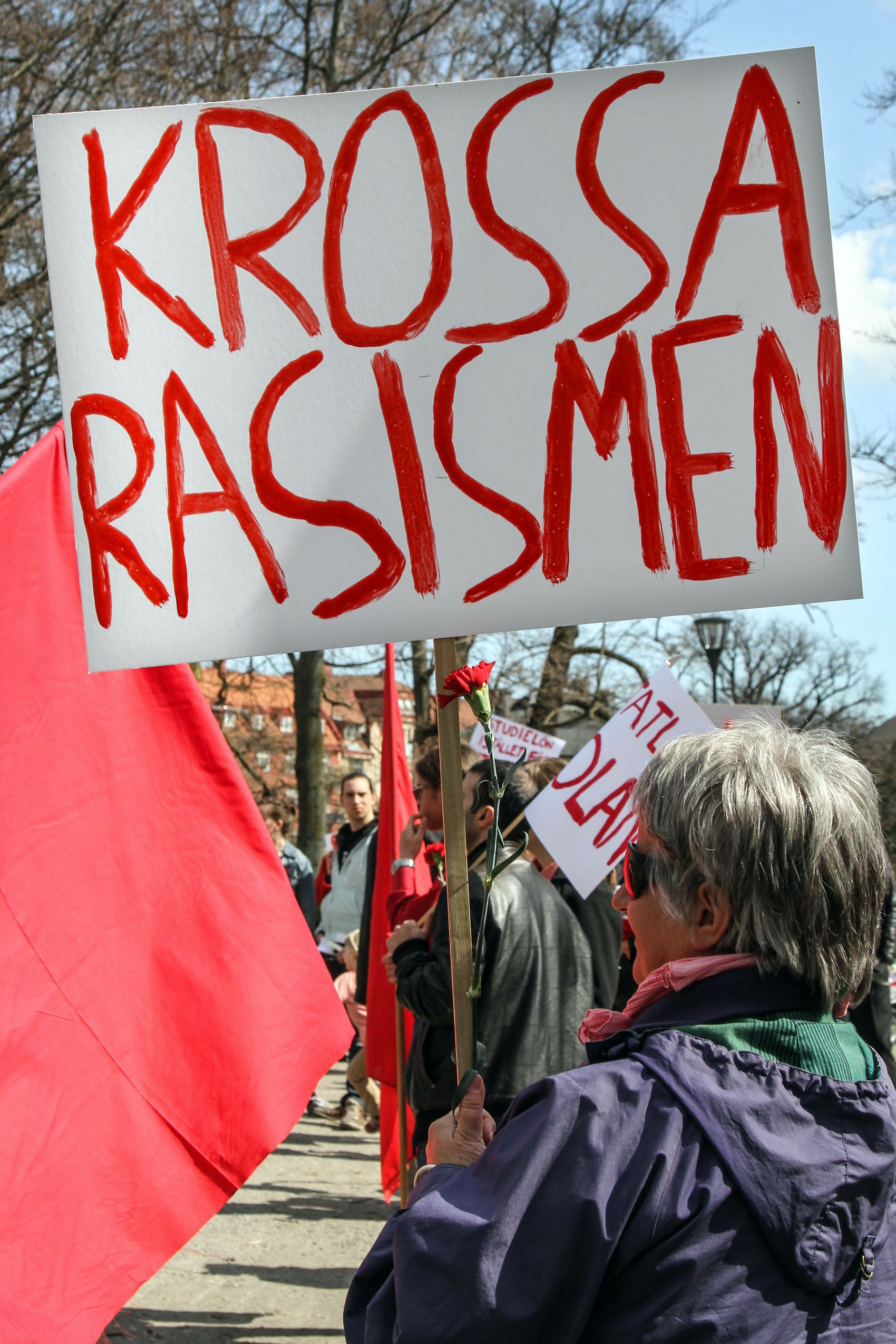
Krossa rasismen (fight racism) message on sign during demonstration in Orebro city, Sweden on May 1, 2013.
In your 2023 article for Svenska Dagbladet, you note the global decline of democracy and delve into the potential challenges facing Sweden’s democratic system. What key factors do you identify as having the most significant impact on democracy in Sweden? Additionally, how would you evaluate the risk of a democratic breakdown in Sweden in comparison to the global landscape?
Ann-Cathrine Jungar: Populism poses a potential threat to democracy, contingent on the strength of democratic institutions within each country. In the case of Sweden, I don’t perceive an immediate threat to democracy due to the Sweden Democrats’ (SD) role as a support party. While their proposed legislation, particularly concerning migration, may not align seamlessly with constitutional law, regulations, or international agreements Sweden has endorsed, the SD does not exhibit an inherently anti-democratic stance. This contrasts with situations in the United States where representatives for Trump or elements of the alt-right have actively questioned the legitimacy of democracy.
For instance, the SD’s emphasis on saving public funds by targeting public broadcasting companies raises questions about its impact on democracy. While acknowledging the importance of public television and radio in Sweden, the SD’s focus on cost-cutting may not necessarily jeopardize the core functions of public broadcasting. Their engagement in cultural politics, particularly concerning what type of cultural politics should be pursued, is another aspect. They express concern about supporting cultural politics aligned with the state or Swedish identity. Whether this stance is inherently democratic or not remains a question open to debate.
Of course, the Sweden Democrats are anti-liberal, challenging left-wing liberal ideas, particularly in media and traditions. However, I don’t perceive an immediate threat to Sweden’s well-functioning state. Instances of threats towards politicians are more prevalent among extreme right groups and movements in Sweden that resort to violence, seeking an alternative system to replace the democratic one.
While debates circulate about safeguarding certain aspects, such as the ease with which the Constitution in Sweden can be changed, there are various checks and balances within the system. The political landscape also features a broad range of policy alternatives, potentially contributing to what may be termed as polarization. Whether this polarization poses a democratic threat remains uncertain, but it is crucial to acknowledge the enduring support for democracy in the Nordic states, including Sweden.
Notably, trust in societies, historically high in the Nordic states and Sweden, is on the decline. This decreasing trust may be associated with the complex situations surrounding criminality and ongoing war around. However, it remains challenging to pinpoint a specific radical right party as the sole threat to democracy and communities in such a nuanced context.
Given your research focus on right-wing radical parties, how do you assess the influence of parties such as the Sweden Democrats on the core tenets of democracy, particularly in relation to their stances on migration, integration, and law enforcement? How have SD’s role in Swedish politics and their positions affected the political landscape in Sweden?
Ann-Cathrine Jungar: As mentioned earlier, this is the new mainstream and this perspective has become pervasive, with other parties aligning themselves closely, if not entirely, with these positions. The shift in adaptation began after the refugee crisis in 2015, with the government responding to 160,000 asylum seekers arriving in Sweden by the autumn of that year. In response, a temporary law was promptly formulated, leading to modifications in policy positions on migration, integration, and criminal policy by various parties, all trending towards more restrictive measures.
Initially, Denmark held the most restrictive positions among the Nordic countries, but now there is a striking similarity in immigration policies across the region. In collaboration with research colleague Jonas Hinnfors, I’ve authored a report covering the restrictive turn in immigration policies in the Nordic region over the last two decades. There is a prevailing perception among political parties that adopting more liberal migration policies, particularly on integration, might act as a pull factor. Consequently, there has been a race to the bottom, resulting in a convergence of migration policies across the Nordic countries.
The narrative framing immigration as a problem, tied to concerns about criminality and threats to welfare states, has become a pervasive theme in the Nordic countries. The Social Democratic Party, recognizing a perceived failure in their immigration policies, released a report before Christmas acknowledging a mistake in formulating policies that were deemed too liberal. In a recent debate, party leader Magdalena Andersson asserted that the Social Democratic Party has always been in favor of restrictive and responsible immigration policies. While similar debates have occurred cyclically in the past, such as during the collapse of Yugoslavia, the present discourse reflects a broader consensus on the necessity for adopting more restrictive immigration policies.
The underlying issue often cited is labor migration, where Sweden has a surplus of unemployed labor for various reasons. Efforts to balance this situation include adjusting asylum-seeking and family reunification policies and introducing more stringent integration requirements such as language tests, kids have to go kindergarten and societal education. There is a growing consensus among political parties on these issues, with only the left-wing party, the Green Party, and the Center Party maintaining more liberal positions. The rest have shifted in the direction of greater restrictions.
Populist Radical Right Parties Are Commonly Exclusionary
In the Svenska Dagbladet article, you discuss right-wing populist parties portraying themselves as democracy saviors. What is your perspective on this claim? Are there instances where such parties have genuinely strengthened democracy? Populism is often negatively charged. How do you see the interplay between populism and democracy, and can populism serve as a democratic reset?
Ann-Cathrine Jungar: This debate revolves around whether populism, illiberalism, prejudice against migration, and hate speech from radical right-wing parties pose a potential threat to democracy, potentially infringing on basic human rights and questioning certain democratic institutions. These parties often adopt a critical stance towards liberal democracy, promoting their own interpretation of the democratic process. It is important to distinguish between exclusionary and inclusionary populism, with radical right parties commonly falling into the exclusionary category.
In the Nordic countries, particularly Finland and Sweden, where my expertise lies, radical right-wing parties have served as a platform for citizens expressing anti-immigration attitudes. This dynamic has played a role in enhancing political representation, addressing a gap in political discourse and providing a voice for those whose perspectives were not adequately addressed by mainstream parties.
For example, before the emergence of the Finns Party, there was no political entity distinctly voicing skeptical positions during the European Monetary Union (EMU) discussions. In the case of Finland, when the country joined the EMU, there was a five-party coalition, all favoring membership without much criticism—a process largely driven by elites. Populism has stimulated debate and mobilized issues that were not adequately addressed by mainstream parties. The parties in question have responded to a demand for skepticism, particularly during events like the euro crisis and the migration crisis, providing a platform for citizens with more critical views.
While acknowledging that some voters for these parties may hold xenophobic views, it’s essential to recognize that their support base is diverse. Studies on support for democracy, political satisfaction, and perceived influence on political decisions reveal that voters dissatisfied and less trusting of democracy and politicians often find increased support when these parties enter parliament or play a role in supporting the government. In this sense, these parties can act as correctives, amplifying voices that feel underrepresented in mainstream politics, even though not all their proposals may be universally endorsed.
Dynamics of the European Parliament Will Undergo a Change
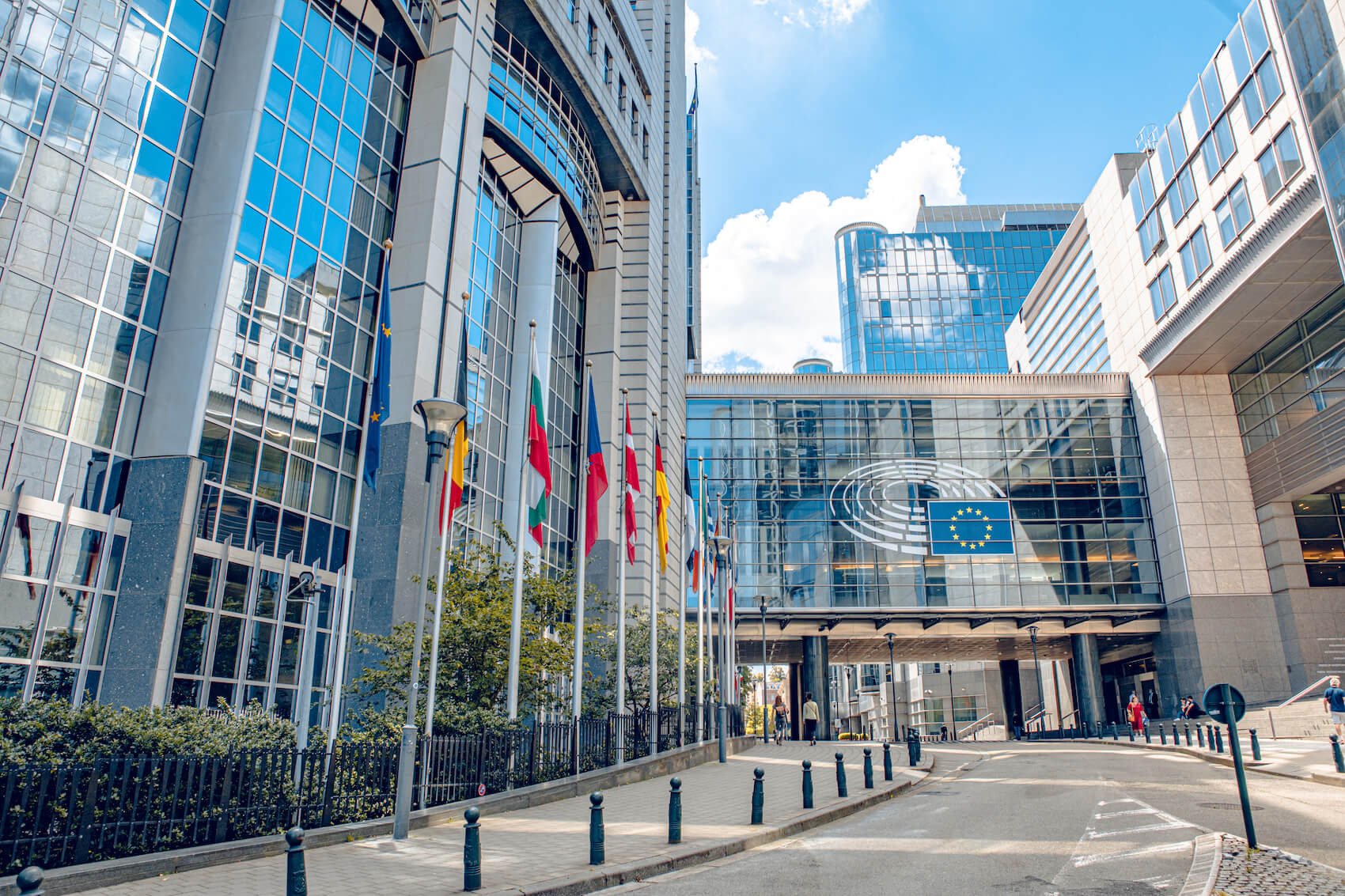
European Parliament offices and European flags in Brussels, Belgium on July 20, 2020. Photo: Lena Wurm.
There is concern that populist right-wing radical parties may secure a quarter of the mandates in the upcoming EU election. How do you anticipate this impacting the political landscape within the EU?
Ann-Cathrine Jungar: The dynamics of the European Parliament will undergo a shift, contingent on how the parliamentary groups, particularly the Identity and Democracy (ID) and the European Conservatives and Reformists (ECR), are formed. In the Member States, we’ve observed center-right parties cooperating with the radical right, and the question arises whether a similar pattern will emerge in the European Parliament. This could manifest as the European People’s Party (EPP) cooperating with ECR but not with ID, or potentially a collaboration between ECR and ID.
The nature of these dynamics will significantly impact their influence and decision-making within the European Parliament. While it’s expected that their influence will grow, the extent of this progress will hinge on the interplay between these groups. Additionally, radical right parties hold considerable influence in the Council of Ministers due to their participation in various national governments, such as Italy, Finland, and support party in Sweden, and Eastern European nations. The changing dynamics in the European Parliament and the European Union have already become apparent, but the presence of radical right parties will bring a different dynamic, particularly during decision-making procedures and collaborations.
How do you assess the potential impact of global political collaboration among right-wing radical parties, especially in light of the potential return of Donald Trump to power in the upcoming fall? What could be the nature of populist political challenges globally in the wake of a second Trump mandate in the US?
Ann-Cathrine Jungar: We are aware that the European radical right is divided over Russia, creating a potential line of division between Identity and Democracy (ID) and the European Conservatives and Reformists (ECR). Last year, the Finns Party transitioned from ID to ECR after parliamentary elections, driven in part by this division. The Finns Party’s closest international ally is the Sweden Democrats, who have cultivated links with the United States, particularly with Republican think tanks and organizations, aligning closely with Trump supporters.
Trump’s radicalization and his stance towards Russia pose challenges for European right-wing parties in taking a clear position in favor of Trump. The Sweden Democrats, among other Nordic radical right parties, have established connections and learned from these links. However, it remains problematic for the leadership, as evidenced by the Nordic parties condemning anti-democratic practices, including questioning electoral institutions.
When you attend a Sweden Democratic meeting or any Nordic Radical right party gathering, you’ll encounter individuals expressing favorable sentiments towards Trump. There is a grassroots appeal, a sentiment that resonates with a certain demographic. However, it becomes problematic for the leadership. It wouldn’t be accurate to claim an immediate and close connection. The Nordic parties, collectively, have taken a stand against anti-democratic tendencies, particularly rejecting challenges to electoral institutions and discourse around electoral fraud. This stance has not been an easy pill for these parties to swallow, given their dependence on prevailing circumstances.
The Nordic parties have faced difficulty accepting challenges to democratic norms. The potential support for Trump could pose a divisive issue within these parties, further complicating their internal dynamics. While grassroots sentiment may favor Trump, the leadership may find it challenging to navigate this terrain.
Indeed, the dynamics surrounding Trump’s potential support would vary among different radical right parties. Similar to their varying stances on Russia and Putin, supporting Trump would be impractical for Nordic radical right parties, especially those committed to securing European Union support for Ukraine and its stance against the war. This alignment might be feasible for more extreme right-wing parties, but mainstream parties would find it impossible.
We’ve observed a radical shift in Sweden Democrats’ approach to Ukrainian refugees, contrasting with their prior call for a complete halt to refugee immigration. How do you interpret the ideological adaptability of far-right parties adjusting to current circumstances and cultural distinctions? Can SD be characterized as a civilizationalist populist as well?
Nordic radical right parties, despite their anti-immigration stance, may express support for refugees from Ukraine as part of their geopolitical agenda, which revolves around ensuring European Union backing for Ukraine in its conflict with Russia. This backing doesn’t necessarily align with a more inclusive immigration policy but serves their strategic goals within the broader geopolitical context.
Their framing of the question revolves around the perception that refugees from Ukraine are seen as legitimate, fleeing from war, as opposed to what they label as “economic refugees” from the Middle East. Their argument is that Ukrainians are expected to return home when the war concludes, differentiating them from refugees from other parts of the world.
In response to the ongoing crisis, the Swedish Government is preparing a package to help Ukrainians return home when the conflict subsides. There has been a historical lack of support for Ukrainians in Sweden, with restrictions on their access to Swedish education. This may be attributed to integration challenges, including language barriers.
As the situation evolves and the labor shortage becomes apparent, there is a growing recognition of the education and skills of Ukrainian refugees. Civil society organizations and municipalities are stepping in, providing language education and other support to facilitate the integration of Ukrainian refugees.
In an exclusive interview, Professor Albena Azmanova emphasizes that the ascent of populist parties finds its roots in widespread economic insecurity rather than mere inequality. She contends that the fear of job loss affects not only the unemployed but also those with stable jobs and good pay, emerging as the primary catalyst for societal insecurity. She critically examines the term ‘populism,’ expressing reservations about its negative connotations, and advocates for a linguistic shift. Azmanova argues that the term “populism” is misleading, diverting attention from the actual transformations in ideological orientations. Instead, she proposes a reframing of the political divide, suggesting the lens of opportunity versus risk, transcending conventional left-right categorizations.
In an exclusive interview with the European Center for Populism Studies (ECPS), Professor Albena Azmanova, a distinguished academic in Political and Social Science at the University of Kent, underscores that the rise of populist right-wing parties is rooted in widespread economic insecurity rather than mere inequality. The fear of job loss, she contends, affects not only the unemployed but also those with stable jobs and good pay, shaping the primary driver of societal insecurity.
The interview navigates through key themes from Professor Azmanova’s articles, such as the intersection of precarity, populism, and the prospects for a green democratic transformation. She posits that left populism has the potential to counter right-wing populism by focusing on economic stabilization policies that appeal to a broad spectrum of the population. Delving into the intricacies of populism, precarity, and the evolving global political scenario, Professor Azmanova sheds light on her insightful analyses and research and challenges conventional perspectives and offers a nuanced understanding of the socio-political forces at play.
In her exploration of the shortcomings in the left’s response to the rise of populism, Professor Azmanova introduces the concept of ‘democratic prejudice’—a tendency to interpret history as a cyclical progression of democracy and crises. She critiques the left’s focus on combatting inequality, urging a shift towards addressing economic insecurity, which she identifies as the real and enduring issue affecting people across classes. Professor Azmanova introduces the term ‘precarity’ to highlight a distinct form of insecurity politically produced by specific policies. According to her, this form of disempowerment goes beyond general unpredictability and significantly affects people’s livelihoods, lives, and cultural spheres. The discussion unveils the societal implications of precarity, impacting the ability to manage diversity, navigate crises, and govern itself.
The interview further explores Professor Azmanova’s proposition in her book, “Capitalism on Edge,” where she contends that the present state of capitalist democracy holds the potential to subvert capitalism itself. She calls for a recognition that insecurity, politically induced by specific policies, can be politically undone, offering hope for a more resilient and equitable future.
Addressing the term ‘populism,’ Professor Azmanova critiques its negative connotations and advocates for a shift in terminology. She argues that the label is misleading, as it obscures the real changes in ideological orientations. Instead, she proposes framing the political divide as opportunity versus risk, transcending traditional left-right distinctions.
Professor Azmanova addresses her concerns about the surge in support for far-right parties in upcoming European Parliament elections but attributes the trend to the refusal of centrist parties to address popular concerns. She emphasizes the need for a responsive and inclusive political approach to navigate the evolving political landscape.
In an exclusive interview, Professor Albena Azmanova emphasizes that the ascent of populist parties finds its roots in widespread economic insecurity rather than mere inequality. She contends that the fear of job loss affects not only the unemployed but also those with stable jobs and good pay, emerging as the primary catalyst for societal insecurity. She critically examines the term ‘populism,’ expressing reservations about its negative connotations, and advocates for a linguistic shift. Azmanova argues that the term “populism” is misleading, diverting attention from the actual transformations in ideological orientations. Instead, she proposes a reframing of the political divide, suggesting the lens of opportunity versus risk, transcending conventional left-right categorizations.
In an exclusive interview with the European Center for Populism Studies (ECPS), Professor Albena Azmanova, a distinguished academic in Political and Social Science at the University of Kent, underscores that the rise of populist right-wing parties is rooted in widespread economic insecurity rather than mere inequality. The fear of job loss, she contends, affects not only the unemployed but also those with stable jobs and good pay, shaping the primary driver of societal insecurity.
The interview navigates through key themes from Professor Azmanova’s articles, such as the intersection of precarity, populism, and the prospects for a green democratic transformation. She posits that left populism has the potential to counter right-wing populism by focusing on economic stabilization policies that appeal to a broad spectrum of the population. Delving into the intricacies of populism, precarity, and the evolving global political scenario, Professor Azmanova sheds light on her insightful analyses and research and challenges conventional perspectives and offers a nuanced understanding of the socio-political forces at play.
In her exploration of the shortcomings in the left’s response to the rise of populism, Professor Azmanova introduces the concept of ‘democratic prejudice’—a tendency to interpret history as a cyclical progression of democracy and crises. She critiques the left’s focus on combatting inequality, urging a shift towards addressing economic insecurity, which she identifies as the real and enduring issue affecting people across classes. Professor Azmanova introduces the term ‘precarity’ to highlight a distinct form of insecurity politically produced by specific policies. According to her, this form of disempowerment goes beyond general unpredictability and significantly affects people’s livelihoods, lives, and cultural spheres. The discussion unveils the societal implications of precarity, impacting the ability to manage diversity, navigate crises, and govern itself.
The interview further explores Professor Azmanova’s proposition in her book, “Capitalism on Edge,” where she contends that the present state of capitalist democracy holds the potential to subvert capitalism itself. She calls for a recognition that insecurity, politically induced by specific policies, can be politically undone, offering hope for a more resilient and equitable future.
Addressing the term ‘populism,’ Professor Azmanova critiques its negative connotations and advocates for a shift in terminology. She argues that the label is misleading, as it obscures the real changes in ideological orientations. Instead, she proposes framing the political divide as opportunity versus risk, transcending traditional left-right distinctions.
Professor Azmanova addresses her concerns about the surge in support for far-right parties in upcoming European Parliament elections but attributes the trend to the refusal of centrist parties to address popular concerns. She emphasizes the need for a responsive and inclusive political approach to navigate the evolving political landscape.
Here is the transcription of the interview with Professor Albena Azmanova with some edits.
Insecurity Significantly Affects and Troubles People
Professor Azmanova, thank you very much for joining our interview. Let me start with the first question:In your analysis in the article published in 2019 and titled “The paradox of emancipation: Populism, democracy and the soul of the Left,” you mention the Left’s struggle to harness anti-establishment energies and channel them into leftist politics despite the fertile ground created by the Great Recession. Could you elaborate on specific shortcomings in the Left’s response to the rise of populism, and how the phenomenon of ‘democratic prejudice’ might be impeding its effectiveness in appealing to voters?
Albena Azmanova: So, Nietzsche’s famous ‘democratic prejudice,’ which I believe is indeed obscuring our vision, hinders us from making an accurate diagnosis of the current time. Let me explain. Nietzsche observed that in the modern West, we have a reflexive tendency to interpret history as the continuous progression of democracy and its subsequent crises. The recurring pattern is evident: democracy advances, encounters a crisis, and our response is to restore it. However, this perspective carries a conservative intuition about history, implying a constant need for repair and a simultaneous backward and forward movement.
I think the left is currently perceiving the damage caused by neoliberalism, which includes the politics of labor market and product liberalization and the opening of economies. This policy package entails deregulation, privatization, and economic liberalization. The left predominantly identifies the damage in terms of heightened inequality, viewing it as an epidemic undermining democracy. Therefore, the response is to combat inequality, which is the typical left reaction. We hear a lot about fighting inequality, and it has even manifested in academic programs such as master’s degrees in equality studies. The approach is to heal our ailing societies by reverting to a policy set reminiscent of the welfare state’s glorious times—inclusive prosperity, less inequality, and numerous inclusionary policies achieved through growth and redistribution. However, this inclination seems to be rooted in a nostalgic instinct to return to the familiar and typical left solutions. This is evident in the frequent use of direct rhetoric involving class struggle and calls to tax the rich.
All these diagnoses and proposed solutions hinder us from grasping the precise changes in the world and the evolution of our societies. Through my research, I’ve come to the conclusion that insecurity, rather than inequality alone, significantly affects and troubles people. While inequality is undoubtedly a problem, the widespread insecurity presents a different and more challenging dimension. To illustrate practically, consider the rise of Trump in the working class in 2016. The states where he gained support, such as Alaska, Oklahoma, Wyoming, Utah, and Michigan etc., had experienced the smallest increases in nationwide inequality since 1989. However, these states faced economic challenges due to a lack of stable employment opportunities.
The primary driver of this insecurity is the fear of job loss, which affects not only the unemployed but also those with stable jobs and good pay. This fear has been palpable for years, evident in events like the 2005 Polish plumber mobilization in France against the European Constitution. Workers were driven by the fear that cheaper labor from Eastern Europe would compromise their job security and wages, leading to social dumping. This understanding shapes my perspective on the current situation, emphasizing the need for different policies and solutions aligned with the diagnosis of widespread insecurity.
The Left Must Transcend Traditional Class-based Approaches
In your article titled “Precarity, Populism, and Prospects for a Green Democratic Transformation,” you assert that “left populism would finally be able to eclipse the xenophobic, exclusionary right-wing populism, and offer a constructive alternative to neoliberal capitalism.” Considering the current global trend of a rise in far-right parties not only in Europe but also worldwide, how do you envision the realization of this prophecy?
Albena Azmanova: Unfortunately, it’s not a prophecy in the sense of prediction; it’s an advice. It serves as guidance for the so-called progressive forces to address the real issue affecting people: massive economic insecurity. The right is currently responding to these fears of insecurity, job loss, and loss of livelihood by implementing policies that prioritize physical security. This includes increased crackdowns, increased surveillance, and stricter immigration controls. Although they address these concerns with stabilization policies, it’s important to note that these are not focused on economic stabilization.
What the left needs to do is focus on economic stabilization policies, emphasizing stability. This approach should aim to appeal to a much broader section of the population than its typical electorate, as economic insecurity affects nearly everyone— not just the working class, professional classes, but also the middle and even upper-middle classes. The traditional class struggle narrative cannot fully capture the diverse concerns of individuals, as seen in the recent protests by farmers and the Yellow Vests movement. Those taking to the streets were not solely the working class; they included property owners and individuals deeply troubled by the challenges in managing their lives under mounting pressures. So, the strategy needs to adapt accordingly, moving beyond the traditional class-based approach.
In the article, you introduce the term ‘precarity.’ Could you provide a clear definition of ‘precarity,’ and elucidate how its dynamics intersect with populism?
Albena Azmanova: That is a very special form of insecurity. I use the term “precarity,” a not-so-pleasant term, to highlight a distinct form of insecurity. It’s not the conventional unpredictability or uncertainty of modern life. Instead, it’s a unique kind of disempowerment that is politically produced. It represents insecurity, but it cannot be equated with general uncertainty. I refer to it as “precarity”—disempowerment rooted in politically produced threats to livelihoods, lives, and cultural life worlds. Nowadays, people are primarily concerned with threats to their livelihoods, their sources of income, as jobs even in conditions of lower unemployment become increasingly insecure.
Additionally, the pressures on job holders escalate. I understand precarity as an incapacity to cope, rooted in a discrepancy between mounting responsibilities and our capacity to fulfill them. Growing obligations but deficient resourcesand limited abilities to fulfill them. In academia, for instance, academics are expected to take on more teaching, administrative work, and even student recruitment, for which we are not adequately trained. We’re pressured to publish more, teach more, and engage in tasks for which we lack qualifications simply because it is cost-effective for universities to press workers to do more with less. This misalignment between work pressures and resources creates a massive incapacity to cope. In this context, people with well-paying, seemingly secure good jobs, like doctors and nurses, also experience precarity due to the pressures they face beyond their fully equipped capabilities. Therefore, precarity, understood as politically generated disempowerment, affects not only our material well-being but also the psychological welfare of individuals and operates on a societal level. It hampers society’s ability to manage diversity, handle challenges, navigate crises, and, consequently, govern itself.
I believe this is why the medical crisis with Covid transformed into a social crisis—our public services, particularly healthcare, were underfunded and unable to handle the pressures. The gradual reduction in healthcare funding over the past decades left our hospitals ill-equipped to confront such a crisis. The healthcare sector, as a whole, faced an incapacity to cope due to specific policies redirecting funding. While a lack of capacity to cope is understandable in the face of a natural disaster, our specific vulnerability resulted from the repercussions of neoliberal policies. Driven by the goal of enhancing global economic competitiveness, these policies entailed cutting funding for social services. This approach prioritized economic competitiveness, compromising social infrastructure and resilience in the process.
The Solution Entails Undoing the Politics and Policies Generating Precarity
In your book “Capitalism on Edge,” you assert a straightforward proposition: that the present state of capitalist democracy harbors a discernible potential for subverting capitalism itself. Could you delve deeper into the specifics of this claim? Are we witnessing the culmination of capitalist democracy as it has been understood so far, and what implications does this hold for liberal democracies?
Albena Azmanova: Two crucial points to consider and understand for a more optimistic perspective amid the prevalent precarity: First, it’s essential to recognize that this insecurity, this precarity, is politically induced by specific policies, often dictated by the imperative for competitiveness in the globally integrated market economy. Since it is politically produced, it can be politically undone. Thus, the solution involves more than just building resilience against general insecurity; it entails undoing the politics and policies generating precarity.
Secondly, as I previously mentioned, precarity affects almost everyone. It’s not exclusive to the working class or the poor. To put it bluntly, even the successful individuals find their lives impacted by these pressures, hindering their ability, what they’re educated to enjoy the life they aspire to—a life of leisure, friendships, and travel—due to fears of job loss and work pressures. This reality forms a substantial societal alliance with a shared interest in combatting precarity and addressing its root causes, including the pressures of competitiveness and, fundamentally, the profit motive, which stands as the primary driver of capitalism. It is crucial to recognize that we have sacrificed too much in the pursuit of profit.
So, my hope lies in this alliance of social forces that transcends traditional classifications—a substantial shift that could occur. However, realizing this potential requires the right political forces and effective leadership to respond to this available opportunity and potential.
People Bear Increasing Responsibilities but Have Diminishing Power
What factors contribute to the understanding of the peculiar nature of the most recent populist upsurge in particular in Europe?
Albena Azmanova: Populism today possesses a distinct nature, with economic insecurity serving as its primary grievance, even when manifested as xenophobia. This animosity towards foreigners is not cultural, but primarily economic, rooted in the fear of job loss. Addressing this fear offers hope that people may be more receptive to progressive reform ideas. For instance, the farmers’ movement, evident in protests across Europe, highlights economic insecurity as the central grievance. Listening to the farmers reveals concerns about their struggle to cope with mounting regulations from the European Commission and increased competition from cheap imports originating from Ukraine and other parts of the world. These grievances revolve around their incapacity to handle these pressures.
This connection to populism becomes apparent when individuals, under such pressures, narrow their thinking to the immediate present, diminishing their capacity to plan for the future and reducing their ability to engage in solidarity, as the instinct becomes one of self-preservation. This introversion and loss of future perspective result in a permanent crisis management mode. People, due to precarity, end up supporting leaders who promise quick solutions to their problems, such as stopping immigration and enhancing political and military security. Economic reforms, which take time, often get overlooked in favor of immediate measures. This links populism and precarity.
Therefore, I define populism as precarity—responsibility without power. People bear increasing responsibilities but have diminishing power to fulfill them. The opposite of this, power without responsibility, aligns with autocracy, which is precisely what populist leadership represents. These two concepts are two sides of the same coin.
You argue that ‘What is being currently demonized in the mainstream media as “populism” can be seen, therefore, not as a transient expression of discontent, but as an expression of broadly shared and lasting anxiety triggered by perceptions of physical insecurity, political disorder, cultural estrangement, and employment insecurity.’ First why do you think ‘populism’ has been demonized in the mainstream media, secondly why do you think it is not transient?
Albena Azmanova: Well, journalists and academics have done us a disservice by creating this negative connotation of populism. Initially, populism was not a negative label. For instance, take the US People’s Party in the late 19th century, known as the Populist Party, was a left-wing agrarian political party with a rather progressive agenda advocating for a gradual income tax, collective bargaining, and a shorter work week. They aimed for federally controlled warehouses, embodying the idea of taking care of the people. Actually, I find it very hypocritical because if populism is equated with making political promises that cannot be fulfilled, look at our centrist parties. They keep promising us to address issues like greening the economy and addressing the ecological crisis, prosperity for all, which everybody knows is not feasible without enormous resources. So, if that is not populism, I don’t know what is. This label is not helpful in identifying the actual problems.
It is not transient because the rise of what we call populism has been around for 30 years, drawing attention with the financial crisis in 2008. However, unconventional parties and anti-establishment protests had already started to rise in the 1990s, a decade marked by economic prosperity but also significant destabilization in our Western societies due to neoliberal policies like privatization and deregulation. My first analysis of this trend was written in 2003, published in 2004, much before the economic meltdown of 2008. I observed how it took the shape of very unorthodox anti-establishment protests that combined elements of both left- and right-wing policies in response to people’s grievances like political disorder, physical insecurity, cultural estrangement, and employment insecurity—issues that cannot be neatly defined as either left or right.
The Term ‘Populism’ Is Misleading
You suggest that we should stop using the lazy and misleading label populism. Why do you think the term populism is misleading? What do you propose instead?
Albena Azmanova: The term “populism” is misleading as it hinders us from understanding the real changes in people’s ideological orientations. For ordinary voters, the traditional left and right labels no longer make much sense. The real divides are not about a regulated versus free market economy or liberal values versus traditionalism. If you look at any of those formations that are forming this insurgency now, they combine the narrative centers around open versus closed economies—whether to embrace or protect against global capitalism. It’s not about state intervention in the economy or the extent of privatization; it’s about protecting our capitalism against global capitalism. On the other side are those who believe in global integrated capitalism because they’re reaping its benefits. I prefer viewing it from the perspective of opportunity versus risk, rather than a traditional left-right divide. The central division in people’s perceptions lies in whether to fear the reforms or the neoliberal policy set or to profit from it. As I mentioned, an increasing number of people find themselves on the losing side of this dynamic.
In terms of cultural values and social agenda, the dichotomy is mixed. On the opportunity side, voters embrace the benefits of the global economy, IT revolution. However, on the risk side, there’s a growing demand for more welfare protection, but specifically for us, not for strangers—referred to as welfare nationalism. Culturally, it takes an opposing stance. For instance, the far-right opposition to Islam justifies itself as a defense of our liberal values, presenting Islam as traditionalist. Thus, we claim to defend women’s rights and homosexual rights. An example is Pim Fortuyn, the first populist leader in the Netherlands, who was a homosexual. Trump, in his criticism of Wall Street and globalists, blends social protection and cultural defense of Western liberal values in an exclusionary manner due to the fears and pressures people are unable to cope with.
Therefore, populism is a lazy term that prevents us from seeing the emerging divide. The traditional left-right divide, which has structured ideological understanding for at least two centuries, is being replaced by a new divide—opportunity versus risk. On the opportunity side, there is a mixture of former left and right values, and on the risk side, there is also a blend of left and right preferences.
How do you define the Ataka party in your native Bulgaria? Is it a populist or a racist party?
Albena Azmanova: Alright, so you’re essentially asking whether we should discard the term “populism” and how we should refer to these parties. Well, many parties labeled as populist in a negative sense are essentially nationalist. They advocate for the welfare state for “us” at the exclusion of “others,” often involving white supremacism. For instance, if we consider Ataka in my native Bulgaria, it is undeniably nationalist, but it also incorporates a left-wing critique of globalization. Despite its clear racist elements, I would prefer to characterize it as nationalist rather than use the term populist.
How concerned are you about a possible explosion of in far-right parties’ support in the upcoming European Parliament elections?
Albena Azmanova: Well, I’m concerned, of course, but not surprised. I believe the sweeping victory for right-wing parties is a trend that began in the 2004 European elections. The popular support for populist and right-wing parties has been growing. I would blame that on the centrist parties that simply refused to listen to the popular concerns.
Please cite as: Ashirbekova, Zhanyl & Sithole, Neo. (2024). Religious Populism and Radicalization in Indonesia. European Center for Populism Studies (ECPS). February 6, 2024. https://doi.org/10.55271/rp0049
This report is derived from the third event of The European Center for Populism Studies’ (ECPS) monthly Mapping Global Populism panel series which was conducted online in Brussels on May 25, 2023. The panel, themed “Religious Populism and Radicalization in Indonesia,” convened five distinguished scholars specializing in populism to delve into various facets of the subject. Serving as an outcome of this insightful panel, the report encapsulates overviews of the presentations delivered by the panelists.
By Zhanyl Ashirbekova & Neo Sithole
This report is derived from the third installment of the “Mapping Global Populism” monthly panel series, conducted online in Brussels on May 25, 2023, under the theme “Religious Populism and Radicalization in Indonesia.” Co-organized by the ECPS and The Alfred Deakin Institute for Citizenship and Globalisation (ADI), the panel featured five distinguished scholars from Australia and Indonesia. As an outcome of this insightful panel, the report encapsulates concise summaries of the presentations delivered by the speakers.
The panel was moderated by Dr. Ihsan Yilmaz, Research Professor and Chair of Islamic Studies and Intercultural Dialogue at the Alfred Deakin Institute for Citizenship and Globalisation (ADI), Deakin University, Melbourne, Australia, and included the following speakers: Dr. Inaya Rakhmani, Director of Asia Research Centre, Universitas Indonesia; Dr.Pradana Boy Zulian, Associate Professor of Islamic Studies at the Faculty of Islamic Studies, Universitas Muhammadiyah Malang, Indonesia; Dr. Kurniawati Hastuti Dewi, Senior Researcher at the Research Center for Politics, National Research and Innovation Agency – BRIN, Indonesia; Dr. I Gede Wahyu Wicaksana, Senior International Relations Lecturer in the Department of International Relations Faculty of Social and Political Sciences, Universitas Airlangga, Indonesia.
Dr. Inaya Rakhmani: “Main Drivers of Populism in Indonesia”
Dr. Rakhmani emphasized the growing concern among scholars in Indonesia and Asia about the factionalization of progressive voices that traditionally critique the decline or setbacks in democracy within Southeast Asia. This factionalization also extends to identity politics, where some progressive academics, public intellectuals, and civil society advocates who support democracy find themselves divided along religious and racial lines, often fueled by social media and messaging platforms. In her perspective, these divisions are closely tied to inequalities and the concentration of wealth. The expression of these divisions on social media is viewed as a symptom of deeper economic and social disparities.
As the first panelist, Dr. Inaya Rakhmani began her introduction by discussing the rise of Islamic populism in Indonesia. She highlighted the occurrence of the largest religious mass demonstration during electoral politics in the capital city of Jakarta. She pointed out that the surge in Islamic expression has been evident since the 1990s, leading to the fragmentation of the authoritarian government under Suharto, followed by the democratization and decentralization period. Dr. Rakhmani noted that economic growth has been accompanied by increasing social inequalities, and the equality promised by democracy has not translated into economic equality. These disparities are expressed along religious and racial lines, with comparisons drawn to Turkey, Egypt, and India.
According to her speech, Dr. Rakhmani incorporates Bob Jessop’s cultural political economy framework into her work to understand the moments and reasons behind mobilizing certain discursive narratives into material conditions. Since 2014, she has focused on studying the evolution of the middle class, often portrayed as a bastion for moderation in literature, especially from the US and Western Europe. Dr. Rakhmani highlights that the commercialization processes in the late 1990s and throughout the 2000s introduced global products from northern countries into Southeast Asia and various large cities across Indonesia. These consumer products played a significant role in expanding the middle class of the 2000s, enabling it to adapt and thrive in a new volatile and precarious world. The “halal” label, legitimizing their purchases and consumerist behavior to navigate everyday life in neoliberal conditions, served as an index guiding them on where to go, which products to consume, and whose perspectives to trust, providing a sense of safety.
During the presidential campaign in 2019, the current president Jokowi received more direct support from Islamist political parties. Vice President Ma’ruf Amin is associated with the two largest Muslim organizations known for their pluralistic inclinations. Dr. Rakhmani noted that at these moments, there can be political legitimacy following demonstrations, even though these mobilizations were based on lexicons without a strong social and political basis either in support of or against the Christian Chinese Governor. Nevertheless, these demonstrations crystallized into political positions, solidifying the stances of Islamist leaders in the 2019 presidential elections.
Concluding her speech, Dr. Rakhmani emphasized the growing concern among scholars in Indonesia and Asia about the factionalization of progressive voices that traditionally critique the decline or setbacks in democracy within Southeast Asia. This factionalization also extends to identity politics, where some progressive academics, public intellectuals, and civil society advocates who support democracy find themselves divided along religious and racial lines, often fueled by social media and messaging platforms. In her perspective, these divisions are closely tied to inequalities and the concentration of wealth. The expression of these divisions on social media is viewed as a symptom of deeper economic and social disparities. Unfortunately, in her opinion, this condition is likely to persist not only in Indonesia but also in many parts of the world.
Dr. Pradana Boy Zulian: “Radicalism, Extremism and Civilizationalist Populism in Indonesia”
Dr. Zulian posed a question: “How does religious literacy populism on the internet contribute to the spread of extremism and radicalism?” He observed that studying religion on the internet provides instant thinking and answers, making it preferable for many people. Moreover, the internet is influenced by conservative orientation activists. Research indicates that approximately 60% of internet Islamic content in the Indonesian context is dominated by conservative groups, with less representation from progressive voices in the online Islamic discourse.
Dr. Pradana Boy Zulian’s presentation delved into the connection between populism, religious literacy, and their impact on religious life in Indonesia. His talk highlighted three key points: i) Exploring how populism in religious literacy is linked to extremism and radicalism. ii) Examining the role of the internet as a new public sphere for religious discussions, leading to fundamental changes in how Islam is studied. This shift not only alters the approach to studying Islam but, according to Dr. Zulian’s observations, also dismantles the traditional hierarchy of religious authority figures. iii) Addressing the preference for Islamic symbolism over Islamic values and the influence of conservatism in the digital realm, suggesting that populism in religious literacy could potentially contribute to the proliferation of extremism and radicalism.
Dr. Zulian commenced his speech by introducing the concept of “Internet Islam.” He referred to it as a religious dynamic shaped by the digitization of human life, where the internet serves as the primary source of Islamic learning for the public. Various studies by scholars across generations have sought to examine the impact of the information technology revolution on the formation of religious orientation in contemporary Muslim societies. Dr. Zulian cited Zizi Papacharissi’s 2018 speech, portraying the internet as a virtual space transformed into a public sphere.
In the political context, traditional citizens are now joined by “netizens,” citizens of the digital world. However, Dr. Zulian drew a distinction between citizens and netizens based on substantive characteristics. While citizens are accountable for their words and actions, following a rational logic of thinking, netizens are characterized by a predominantly authoritarian nature. This implies that in constructing discourse, they display a level of irresponsibility and immaturity.
Dr. Zulian highlighted the substantial number of internet users in Indonesia, particularly in provinces like West Java, Central Java, and East Java, where around 88 million users constitute approximately one-third of the country’s population. He pointed out that the challenge posed by the internet lies in the fact that the truth of discourse is not defined by the logic of rational thinking.
Addressing the question of how the internet challenges religious institutions and authority, Dr. Zulian emphasized that the most serious impact of populism in religious literacy is the challenge it presents to traditional institutions and authority. Drawing on his personal experience as a supervisor for a student organization from 2015-2018, he recounted an incident involving students planning an “Islamic Law Clinic.” The students intended to act as muftis, providing consultative dialogue on Islamic law issues, claiming expertise acquired through internet study. This revelation startled Dr. Zulian, leading him to reflect on how Islamic religious literacy populism significantly contributes to a sense of religious maturity and existence within Muslim societies.
In the concluding part of his speech, Dr. Zulian posed the question: “How does religious literacy populism on the internet contribute to the spread of extremism and radicalism?” He observed that studying religion on the internet provides instant thinking and answers, making it preferable for many people. Moreover, the internet is influenced by conservative orientation activists. Research indicates that approximately 60% of internet Islamic content in the Indonesian context is dominated by conservative groups, with less representation from progressive voices in the online Islamic discourse.
Dr. Kurniawati Hastuti Dewi: “Gender Roles in Indonesia’s Religious Populism”
Dr. Kurniawati Hastuti Dewi provides insights into how the interplay of gender, populism, and politics is actively influencing Indonesia’s political terrain. With the approaching 2024 general election, candidates face the challenge of negotiating these intricate dynamics while addressing the varied concerns of the electorate. The significance of women in politics is expected to gain prominence, mirroring a larger societal shift towards gender equality and social justice in Indonesia.
The third speaker on the panel, Dr. Kurniawati Hastuti Dewi, shared insights derived from her research and recent observations of Indonesia’s political landscape. Commencing her discussion, Dr. Dewi delved into the 2019 general elections, which marked a pivotal event due to the simultaneous occurrence of legislative and presidential polls. This election showcased two prominent candidates, each addressing issues pertinent to Indonesian mothers, or “mamas.” Notably, approximately 50.6 percent of voters were female, underscoring their substantial role in determining the electoral outcome.
The discourse during this prominent election brought attention to the intersection of gender, populism, and politics. For instance, debates arose among Indonesian women activists regarding the representation of women in politics. Divergent views emerged regarding the term “mama” as a political symbol; while some perceived it as empowering ordinary women, others criticized it for perpetuating traditional gender roles.
Dr. Dewi delved into the evolving role of women in politics, noting its increased visibility through various media outlets and the growing awareness of women’s issues within electoral processes. However, this discourse has encountered complexities, as different factions within women’s movements hold divergent views on how to address gender issues in politics. Having established this, Dr. Dewi shifted focus to the 2024 general elections, where the political landscape continues to undergo transformation, with gender issues intersecting broader societal concerns.
Amidst the political atmosphere in Indonesia, the ascent of conservative groups, particularly concerning LGBTQ rights, has become a contentious issue in Indonesian politics. Consequently, presidential candidates are expected to navigate these issues with care, aiming to appeal to Muslim voters while simultaneously addressing concerns about family values and religious conservatism.
Another key point in the presentation emerged when exploring the substantial influence of religious and political groups in shaping the narrative surrounding family values and social conservatism. This influence becomes particularly evident in the opposition to events or movements perceived as conflicting with conservative values, as exemplified by the cancellation of an LGBTQ conference in Indonesia.
Highlighting the aforementioned religious conservatism, Dr. Dewi redirected attention to how, in the approaching 2024 elections, candidates are likely to capitalize on issues that resonate with conservative voters. According to her, this approach may potentially polarize the electorate along religious and social lines, posing challenges for candidates aiming to balance the demands of diverse interest groups while upholding a cohesive political platform.
To offer a comprehensive understanding of the Indonesian political landscape, emphasis was placed on the role of social media in shaping public discourse. Underscoring the significance of social media as digital platforms that amplify voices across the political spectrum, Dr. Dewi highlighted how women’s groups, in particular, have utilized social media to advocate for greater representation in politics and to counter regressive policies. Despite the challenges outlined, Dr. Dewi expressed optimism among women activists regarding the potential for enhanced women’s representation in politics. This optimism has spurred numerous efforts to mobilize support and raise awareness about gender issues, signifying a growing awareness of women’s rights among the electorate.
In conclusion, Dr. Dewi revisited the ongoing impact of the intersection of gender, populism, and politics on Indonesia’s political landscape. As the nation gears up for the 2024 general election, candidates face the challenge of navigating these intricate issues while addressing the diverse concerns of the electorate. The role of women in politics is anticipated to gain prominence, mirroring a broader societal shift towards gender equality and social justice in Indonesian society.
Dr. I Gede Wahyu Wicaksana: “Populism and Foreign policy: The Indonesian Case”
Dr. I Gede Wahyu Wicaksana highlighted the significant role of ideologies in Indonesian foreign policy, emphasizing nationalism as the dominant feature and populism as a lighter version of nationalistic ideologies. He acknowledged that while populism may have influenced the state’s foreign policy in specific historical moments and political events, its impact is constrained by pragmatic economic interests and the realities of the global and regional context.
The last speaker of the panel, Dr. I Gede Wahyu Wicaksana, commenced his speech by highlighting two key points related to the study of populism’s impact on foreign policy in Indonesia. Firstly, he emphasized the scarcity of published works on the foreign policy dimensions of populism in Indonesia, despite its significant influence on politics. He suggested that this lack of in-depth examination might be attributed to the absence of adequate theoretical and methodological tools for studying this area. Secondly, he expressed his interest in contributing to this field of study, particularly due to the intriguing connection between Indonesian foreign policy and ideology. Dr. Wicaksana noted that ideologies play a pivotal role in Indonesian foreign policy, with nationalism being the dominant feature and populism representing a lighter version of nationalistic ideologies.
Dr. Wicaksana highlighted that the practices and expressions of populist leaders in Indonesian international affairs differ from those of leaders like Trump, Bolsonaro, Erdogan, or Duterte in shaping populist foreign policy identities. Nevertheless, he asserted that populism does play a role in how some leaders in Indonesia conduct international relations. Dr. Wicaksana aims to explore three significant constraints on populist rhetoric and actions in Indonesian foreign policy.
According to him, three major constraints on populist rhetoric and actions in Indonesian foreign policy are rooted in historical legacies, economic cooperation, and the current international order. Indonesia, as a post-colonial state, emerged amidst domestic ideological and political conflicts among three main political forces: Islamic political forces, secular nationalists, and socialists. The newly formed Republic of Indonesia grappled with the challenges of navigating the Cold War power dynamics between the Soviet Union and the United States. Various literature has explored how these dynamics shaped Indonesian foreign policy. Consequently, nationalist leaders, notably Mohammad Hatta, positioned Indonesia as an independent state with an active foreign policy, rejecting external dictates and solely pursuing its national interests.
In the formative years of Indonesian nation-building (1945 to 1965), pragmatism characterized Indonesian foreign policy. However, in Sukarno’s final years, there was a revival of political ideology, and to some extent, he adopted populist rhetoric and actions. Sukarno exhibited traits typical of a populist leader: he portrayed the West as imperial elites and rallied third-world countries as those striving for autonomy in international politics. During Sukarno’s leadership, which involved revising the domestic political system and redirecting Indonesian foreign policy, the pragmatic course was redefined. Sukarno, indifferent to ideology, sought economic aid and financial assistance from the West and aimed to maintain stability in Southeast Asia.
In a recent study on populism published in the Australian Journal of International Affairs, Dr. Wicaksana argued that pragmatism is an advanced expression of populism in Indonesia’s foreign policy. Transitioning to the second factor, “economic cooperation,” he emphasized the historical significance of economic interests in Indonesia’s foreign affairs. According to him, maintaining economic stability and fostering peace in Southeast Asia have always been crucial aspects of the country’s international relations, regardless of the president or ministers in power. Dr. Wicaksana noted that Jokowi, the current Indonesian president, exhibits pragmatism in foreign policy by cultivating close relations with China, the US, and improving ties with the Middle East and Europe.
Concluding his speech, Dr. Wicaksana asserted that Indonesia’s position as a populist foreign policy state is further constrained by the regional and international order. With the escalating competition between China and the US, Indonesia cannot adopt a populist stance that confronts China while aligning with the US. Dr. Wicaksana emphasized that China is acutely aware of potential conflict zones that could threaten Indonesian national sovereignty. In summary, he stated that while populism may have had an impact on the state’s foreign policy in certain historical moments and political events, it remains restricted by pragmatic economic interests and the realities of the global and regional context.
The 2024 EU parliament election polls show the populist right and far right as the main winners. The fact that voters tend to choose populist parties could increase the populist agenda of the left to compete with the far right, as an attempt to transform xenophobic tendencies by the right into inclusionary populism, which describes the conservative elite as the other and creates further social conflicts. Therefore, we need to ask ourselves how populism (both left and right) impacts EU legislation and what forecasts we can identify for the elections in 2024.
The upcoming elections of the EU Parliament and the next presidency of the Council of the EU, which will be Hungary, are contentious issues for the European Community (Henley, 2024). The polls for the 2024 EU elections and the Hungarian presidency indicate a rise of right-wing and anti-Europe populist parties. These tendencies fuel the transformation of the EU towards the right and conservativism (Wax & Goryashko, 2024).
The 2024 EU parliament election polls show the populist right and far right as the main winners. The fact that voters tend to choose populist parties could increase the populist agenda of the left to compete with the far right, as an attempt to transform xenophobic tendencies by the right into inclusionary populism, which describes the conservative elite as the other and creates further social conflicts (Henley, 2024; Suiter, 2016; Stavrakakis & Katsambekis, 2014). Therefore, we need to ask ourselves how populism (both left and right) impacts EU legislation and what forecasts we can identify for the elections in 2024.
In this essay, I propose that recently adopted EU legislation, the Green New Deal (including the Nature Restoration Regulation and Deforestation Regulation), and the New Pact on Migration and Asylum, are influenced by populism and identity politics and harm the EU. In connection with this, populist candidates driven by identity politics threaten the future of the EU.
Theoretical Framework
Populism is defined as a thin ideology comprising three key elements: the people, the general will and the elite, (Zulianello & Larsen, 2021; Mudde, 2004). Additionally, it incorporates the dimension of the “dangerous others,” often represented by migrants, positioned in contrast to the people (Rooduijn & Akkerman, 2015).
Even though populism is in Western Europe closely associated with the right, the left has increasingly adopted populist strategies. The negligence of academic research about the populist left can be responsible for those recent findings. This seems even more relevant when we consider the outstanding electoral performance of populist left parties compared to populist right parties for the last elections of the European Parliament in 2019, such as Podemos in Spain, Syriza in Greece, and Sinn Féin in Ireland (Bernhard & Kriesi, 2021; Statista, 2024).
For example, The Greek Syriza Party (founded in 2004) and the Irish Sinn Féin Party (founded in 1905) were only recognized as left-wing populist parties in 2014 (O’Malley & Fitzgibbon, 2014;Stavrakakis & Katsambekis, 2014). Nevertheless, Syriza’s populism has been questionable through its government term and recent opposition in 2021 (Markou, 2021).
Identity is a set of labels describing persons distinguished by attributes (Noury & Roland, 2020). Identity politics is the belief that identity is a fundamental focus of political work, which can be connected to lifestyle and culture (Bernstein, 2005). Politicizing immigrants as the other is an example of that. In Europe, identity politics is referred to as the protection of the “silent majority” from harmful consequences of immigration, which is used by right-wing populists (Noury & Roland, 2020).
The effect of rising populism within the EU on the right- and left-wing can already be recognized by looking at EU-party campaigns or populist candidates for the upcoming elections. Besides the right, the left populists also employ identity politics. The left populism can be seen in promoting marginalized identities, such as racial and ethnic identities and seeking to transform the shame previously associated with these identities into pride (Salmela & Von Scheve, 2018). Accordingly, these protests generate others, including people who abide by a different value system and also the privileged elite who overlook intersectional identities as a threat. While promoting human rights, advocacy for intersectional identities can also fall into the trap of populism among leftist groups and other advocates (Stavrakakis & Katsambekis, 2014). However, intersectionality may not be the only advocacy that can turn into a populist movement in the name of advocacy. Climate and human rights activists can also be politicized and positioned as polarized identities (Mackay et al., 2021).
Inherent Populism in EU Legislation
Environmental politics presents contention for both the right- and left-wing populist parties. Both the right and left-wing parties instrumentalize newly adopted legislation to increase the public appeal of voters (European Commission, 2023). This can be exemplified in the recent regulations. The newest adopted legislation, the European Green New Deal, including its Deforestation Regulation and its Regulation on Nature Restoration, and the New Pact on Migration and Asylum, have elements of otherization and marginalization of identities. A closer examination of de jure analysis and how these laws, as portrayed in political language, unearths the need for more interest in realizing the general goals of protecting nature. It looks like nature is wiped of its identity within the hands of humans who instrumentalize nature as a theme broadly advocated by large swaths of society. Therefore, identity politics exploiting nature must be identified and widely discussed to protect nature and the shared values of humanity, not to sacrifice basic human dignity for politics, especially before the upcoming elections.
The European Green New Deal
The European Green New Deal, including the Deforestation Regulation, entered into force on June 29, 2023, and the provisional agreement for the Regulation on Nature Restoration was accepted on November 9, 2023. These legislations gaining the support of the left can also be instrumentalized to boost the attention and sympathy of left-wing parties before the elections.
The populism surrounding the Nature Restoration Regulation can be approached as a case showcasing populist politics appealing to the left (The EU #NatureRestoration Law, 2023). The left uses advocacy of this legislation, especially the Greens/EFA, in the elections for greenwashing purposes and voter accumulation. However, this law focused more on economic benefits than actual environmental protection and lost its progressiveness throughout the legislative procedure. Therefore, it is based on the misconception that this regulation substantially improves nature restoration and indigenous rights protection (Pinto, 2023). Moreover, this law increases the financial burden for the forestry, fishery, and farming sectors, claims the conservative European People’s Party (EPP) (Weise & Guillot, 2023). However, these realities are dismissed in the political language of environmental advocacy.
The Greens-European Free Alliance (Greens/EFA) campaign clearly describes the people as the “citizens, farmers, fishers and business in the EU.” The elite is defined as “the conservatives, far right and some liberals” who “try to tear down a new EU law to restore nature.” The general will of the people focuses on tackling “biodiversity and the climate crisis (GreensEFA, 2023). The campaign by the Greens/EFA for this regulation plays into identity politics as the party uses a language claiming to advocate for the protection of marginalized indigenous and local communities. While this claim remains to be only a discourse, regardless, it boosts the popularity of the Greens. Zoomed closely, the ostensibly evergreen legislation advocating the protection of biodiversity promotes local cartels and exploitative companies that benefit and take advantage of the EU partnerships (Euronews, 2023). The hypocrisy and the tact in the use of language can be seen in the advocacy language of the party that left these cartels intentionally out.
Deforestation Regulation
The Greens/EFA campaign for the Deforestation Regulation shows characteristics of populism (European Commission, 2023). Greens/EFA characterizes “the people” as the “people that must always come before profit.” Thus, this regulation favors European distributers instead of the exploited farmers in the developing countries. In this case, “the elite” is the group of companies that need to safeguard no deforestation or human rights violations along the production.” “The generalwill” is intended to “end EU-driven deforestation” (Greens/EFA, 2023). This is an example of how left parties connect political anti-elitism to economic anti-elitism and the argument that hardworking, ordinary citizens are betrayed by the political-economic power elite (Rooduijn & Akkerman, 2015).
Additionally, the new regulation will only prevent EU customers from buying products derived from deforestation. However, the actual deforestation and sales of deforested products to other customers worldwide can continue (Greenpeace, 2021). The regulation also lost its progressive and ambitious character throughout the legislation procedure (Fairtraide.net., 2022).
New Pact on Migration and Asylum
The left and the right use identity politics as a tool to increase sympathy for the upcoming elections through the usage of marginalized identities such as “migrants” and “asylum seekers” (Greens/EFA, n.d.). The recent pact on migration can be shown as an example of populist identity politics transcending the right and left binary, uniting the voters around the so-called threat posed by the influx of migrants and asylum seekers.
The New Pact on Migration and Asylum reinforces the topic of illegal migration and thus supports the right-wing campaigning for the European Elections 2024. The political language on this regulation is laden with populist elements. Firstly, the right-wing European Peoples Party defines “the people” as “the hard-working EU citizens.” Secondly, “the elite” is defined as “smugglers and traffickers controlling illegal migration” (Press Statement von der Leyen, 2023). Thirdly, “the general will” is defined as stopping the suffering of the EU through migrants (Press Statement von der Leyen, December 20, 2023; Press Statement Schinas, 2023).
The populist language forebears the identity politics around migration appealing to both the right and the left. The New Pact and statements by the EU Commission play into identity politics through the terminology of the “bad migrants,” positioning them as “dangerous others.” Unfortunately, the New Pact has been under debate in the EU since 2020 and is now used as a promotional tool for the upcoming elections to attract voters on the right and the left (Georgian, 2024).
The New Pact can also be used by the Greens/EFA populist campaign for the European Elections 2024, reinforcing the idea of a unified peace union. “The people” are defined as “us and the migrants and asylum seekers, that we do not leave behind.” “The general will” is to “uphold human rights and international law” (GreensEFA, 2023). “The elite” is defined as the authoritarian national governments of developing countries, making it necessary for refugees to flee (Greens/EFA, n.d.).
Additionally, the Pact favors the reinforcement of border controls, returns and re-admissions over legal migration opportunities. Those stay symbolic, vague, and distant policy goals. Recent reviews of policy documents show that the EU prioritizes regulating irregular migration, and despite its rhetoric for “strengthening legal migration,” concrete action is missing (Sunderland, 2023).
Identity Politics and Candidates
Introducing inexperienced candidates tailored to resonate with particular social groups is a common strategy employed by both left and right populist parties to garner support. This practice serves as another instance of identity politics shaping the European political landscape. Following in the footsteps of their forerunners, like Marie Le Pen or Hugo Chávez from the past, these charismatic political figures engage in populist rhetoric, addressing a diverse range of social and legal issues in their political discourse—from environmental protection to EU identity and migration (Serra, 2017).
Examples for the upcoming European Parliament elections 2024 include Nicola Gehringer, promoted by the German right-wing party CSU (Christian Social Union), on place nine. Gehringer is a successful executive assistant of a big corporation “Neoloan AG” with potential to attract successful business owners. Another figure is the farmer and agriculture expert Stefan Köhler, who runs for the CSU on place six to attract farmers (Zeit Online, 2023). With the recent increasing farmer’s protests in Germany, France and the Netherlands, farmers have become increasingly crucial in the European discourse (Trompiz & Levaux, 2024).
Legal and security experts are also running with public appeal to the voters across political divides. The German candidate for “Die Linke,” a leftist Party, is Carola Rackete. She is a human rights activist fighting for better refugee rights and asylum laws, running for the second position (MDR.DE., 2023). The human rights activist as a candidate can increase the amount of more radical voters from the left. The German Green Party is heading with a policeman on place eighteen towards the elections, trying to include more right-leaning social groups as well in the Green voter repertoiresince police officers can tend to vote for conservative and right-wing parties (Papanicolaou & Papageorgiou, 2016).
In Austria, the first candidate for the Greens party is Lena Schilling, a climate activist of “Fridays-for-future.” Schilling has a high chance of attracting young voters as she is the only young female top candidate among all running top party candidates in Austria (Völker, 2024). The second place will be Thomas Waitz, a sustainable and organic farmer who aims to attract sustainable farmers in Austria (Waitz, 2023; Schweighofer, 2024). The references to elite vs the people in their language blur the lines between the right and the left ideologies and connect these figures around a shared sentiment: fighting for the people against a designated elite. This populist sentiment fuels populism and social conflict, undermining liberal democracy and EU values.
Conclusion
The increasing populism of left and right parties in the EU and the fanatism of those who want to increase their share of voters for the upcoming EU elections are tremendously responsible for the outcomes of recent EU legislation. The populist rhetoric before and after the adoption of new EU legislation clearly shows how parties instrumentalize the outcomes of EU legislation procedure instead of trying to find real compromises and long-term future-oriented solutions for the problems of unregulated migration and the climate crises.
Regulated migration is still almost not touched upon in the New Pact on Migration and Asylum, which has been part of discussions in the EU since 2020. The Green New Deal, especially with the Nature Restoration and Deforestation Regulations, was a proper start to increase sustainability, environmental protection, and indigenous rights. However, both proposals lost their progressiveness and lacked ambition and actual help for developing countries outside of the profit-making fetishism of the EU. If the upward trend of populism persists on both the left and right, EU politics and legislation may increasingly adopt populist and voter-driven approaches, potentially jeopardizing the democratic and compromise-oriented decision-making process within the EU. This heightened polarization between parties could further contribute to a climate of bashing and hinder cooperative efforts.
Remarkably, identity politics not only permeates the populist rhetoric of EU party politics but also extends to the selection of candidates for upcoming elections. If identity politics continues to embed itself deeply within the strategic political framework of EU parties, the shift towards prioritizing short-term voter turnout and popularity contests over substantive and long-term democratic considerations seems inevitable. This trend risks undermining EU values by leveraging EU legislation for immediate political gains rather than establishing enduring goals for the European Community. It is imperative to educate voters about this form of political manipulation that compromises EU values for short-term advantages. No political gain should supersede long-term EU objectives, as such a scenario would entail the erosion of EU values and identity.
Bernhard, L. & Kriesi, H. (2021). “Populism in election times: a comparative analysis of 11 countries in Western Europe.” In: Varieties of Populism in Europe in Times of Crises (pp. 48-68). Routledge.
Mackay, C. M.; Cristoffanini, F.; Wright, J. D.; Neufeld, S. D.; Ogawa, H. F. & Schmitt, M. (2021). “Connection to nature and environmental activism: Politicized environmental identity mediates a relationship between identification with nature and observed environmental activist behaviour.” Current Research in Ecological and Social Psychology, 2, 100009. https://doi.org/10.1016/j.cresp.2021.100009
Papanicolaou, G. & Papageorgiou, I. (2016). “The police and the far right in Greece: a case study of police voting behaviour in Athens.” Crime Law Social Change 66, 397–419. https://doi.org/10.1007/s10611-016-9633-7
Salmela, M. & Von Scheve, C. (2018). “Emotional dynamics of right- and left-wing political populism.” Humanity & Society, 42(4), 434–454. https://doi.org/10.1177/0160597618802521
Serra, G. (2017). “The electoral strategies of a populist candidate: Does charisma discourage experience and encourage extremism?” Journal of Theoretical Politics, 30(1), 45–73. https://doi.org/10.1177/0951629817737860
Stavrakakis, Y. & Katsambekis, G. (2014). “Left-wing populism in the European periphery: the case of SYRIZA.” Journal of Political Ideologies, 19(2), 119–142. https://doi.org/10.1080/13569317.2014.909266
Suiter, J. (2016). “Ireland: The rise of populism on the left and among independents.” In: (Eds) Toril Aalberg, Frank Esser, Carsten Reinemann, Jesper Strömbäck, and Claes H. de Vreese, Populist Political Communication in Europe on July 26, 2016. Routledge eBooks (pp. 137–147). https://doi.org/10.4324/9781315623016-18
Wulff, Jan-Denis. (n.d.). Unsere Vielfalt ist Europas Stärkehttps://www.jandeniswulff.de/ (accessed on February 5, 2024).
Zulianello, M. & Larsen, E. G. (2021). “Populist parties in European parliament elections: A new dataset on left, right and valence populism from 1979 to 2019.” Electoral Studies, 71, 102312. https://doi.org/10.1016/j.electstud.2021.102312
(Associate Professor at the Department of Political Science, Kulliyyah of Islamic Revealed Knowledge and Human Sciences, International Islamic University Malaysia).
Speakers
“Islamic Extremism, Populism and Formation of National Identity in Bangladesh,” by Mr. Bobby Hajjaj (Department of Management, North South University, Bangladesh).
“Masks of Authoritarianism: Hegemony, Power and People in Bangladesh,” by Dr. Mubashar Hasan(Post-Doctoral Fellow at the Department of Culture Studies and Oriental Languages at the University of Oslo, Norway).
“Religious Extremism and Islamist Populism in Contemporary Bangladesh,” by Dr. Maidul Islam (Assistant Professor of Political Science, Centre for Studies in Social Sciences, Calcutta).
“Civilisational Populism and Buddhist Nationalisms in Sri Lanka,” by Dr. Rajni Gamage (Postdoctoral Fellow, Institute of South Asian Studies (ISAS), National University of Singapore).
“Will Rise of Religious Nationalism and Populism in the Maldives Lead to Another Authoritarian Reversal?” by Dr. Mosmi Bhim (Assistant Professor, Fiji National University).
Please cite as: Guidotti, Andrea. (2024). Varieties of Populism and Authoritarianism in Malaysia and Singapore. European Center for Populism Studies (ECPS). January 25, 2024. https://doi.org/10.55271/rp0048
This brief report offers a summary of the sixth event in ECPS’s monthly Mapping Global Populism panel series, titled “Varieties of Populism and Authoritarianism in Malaysia and Singapore” which took place online on October 26, 2023. Professor Garry Rodan moderated the panel, featuring insights from four distinguished populism scholars.
This report provides an overview of the sixth event in ECPS’s monthly Mapping Global Populism panel series, titled “Varieties of Populism and Authoritarianism in Malaysia and Singapore” held online on October 26, 2023. Moderated by Dr. Garry Rodan, Honorary Professor of Political Science and International Studies at the University of Queensland) the panel featured speakers Dr. Ahmad Fauzi Abdul Hamid, Professor of Political Science, University Sains Malaysia, Dr.Syaza Farhana Mohamad Shukri, Associate Professor at the Department of Political Science, Kulliyyah of Islamic Revealed Knowledge and Human Sciences, International Islamic University Malaysia, Dr.Kenneth Paul Tan, Professor of Politics, Film, and Cultural Studies, School of Communication, Hong Kong Baptist University and Dr.Shanon Shah, Visiting Research Fellow at the Department of Theology and Religious Studies, King’s College London.
In his opening remarks, Professor Gary Rodan examined the interplay between authoritarianism and populism in the contexts of Malaysia and Singapore. Dr. Rodan argued that, generally, the origins of authoritarianism can be linked to colonization. He noted that, despite brief periods of vigorous contestation in the early stages of independence, these two countries diverged in their trajectories toward authoritarianism. In contrast, he highlighted the limited exploration of populism in these countries in the existing literature.
Professor Rodan underscores a significant observation that an examination of the literature on the correlation between authoritarianism and contemporary manifestations of populism in Malaysia and Singapore suggests distinct characteristics and rationales for the effectiveness of authoritarianism. In the early stages of independence in Malaysia, Professor Rodan notes that the political agenda of the United Malays National Organization (UMNO), which later emerged as the predominant ruling coalition, necessitated the development of a political project fostered by an ethnic Malay bourgeoisie and guided by ethnic Malay bureaucrats.
In contrast, as Professor Rodan points out, Singapore witnessed a scenario where a cadre of technocratic political bureaucrats had to contend more strenuously for power, relying on an ideology of elitism centered around meritocracy as the primary justification for the legitimacy of their ruling coalition. Nevertheless, despite these distinctions, both cases experienced challenges stemming from capitalist development over time. Notably, the state capitalist models in the two countries were accompanied by a surge in material and social inequalities.
Continuing with the Malaysian case again, Professor Rodan notes that pervasive corruption has frequently exacerbated cleavages, whether related to or separate from social class. The persistent challenges faced by the ruling coalition over several decades have led to the emergence of new coalitions attempting to contest the dominance of the UMNO within the formal political sphere. However, these challenges have arisen from groups advocating for either democratic reforms or from proponents of the authoritarian political regime rooted in the political supremacy of Malays, with Islamic religious nationalism as its foundation.
Professor Rodan emphasizes that in 2018, amidst escalating political polarization, Malaysia witnessed its first change in the ruling coalition since gaining independence in 1957. The newly formed coalition that assumed governance included the Pakatan Harapan Alliance of Hope and the United Malaysian Indigenous Party. However, this coalition proved short-lived and was subsequently replaced in 2022 by a collaboration between Pakatan Harapan and UMNO, with Anwar Ibrahim serving as prime minister. Despite the involvement of some democratic forces in coalitions, these entities were grappling elements, either striving to protect themselves from democratic forces or to shield themselves from those claiming to be champions of Islam. In essence, there is an intense power struggle over the boundaries of permissible political conflict, favoring a reassertion of authoritarianism in Malaysia’s political landscape.
In Singapore, Professor Rodan notes a recurring shift against the ideology of meritocracy promoted by the People’s Action Party (PAP), particularly by individuals who perceive themselves as having been excluded from the purported economic miracle. The political legitimacy of the PAP faces challenges stemming from conflicts that the party has not entirely addressed, despite some redistributive policies. This differs from the less sophisticated approach observed in Malaysia, highlighting the continuously evolving model in Singapore characterized as a new state-controlled form of participation known as consultative authoritarianism.
In summary, Professor Rodan contends that while Malaysia and Singapore represent different types of regimes, they are both encountering comparable pressures. The central inquiry of the panel revolves around whether, and to what extent, the contemporary nature and trajectory of authoritarianism in Malaysia and Singapore are influenced by populism. Drawing on insights from Anne Munro-Kua’s 1996 book, Authoritarian Populism in Malaysia, Professor Rodan suggests that the political economy of Malaysia since the 1970s has cultivated a communal foundation for political populism, intricately tied to the specific capitalist model.
Dr. Ahmad Fauzi Abdul Hamid: “Political Islam and Islamist Populism in Malaysia: Implications for Nation-Building”
“Contrary to historical patterns, extremism in Malaysia has historically exhibited a high degree of acceptance for pluralism, and instances of violence are rare. Despite notable support for ISIS among Malay Muslims, the country demonstrates low cases of terrorism or violent extremism. Malaysia, being a multiethnic and multireligious nation, enjoys considerable political stability. The data suggests that extremism in Malaysia is primarily attitudinal, with non-violent extremism representing a vocal stance disavowing violence as a matter of principle.”
In his presentation as the first panelist, Professor Ahmad Fauzi Abdul Hamid shifted the focus towards NGO-based populism rather than party politics. Additionally, he sought to establish a close connection between populism and extremism, delving into the concepts of nativism and Islamism, both crucial factors in either jeopardizing or fostering populism in Malaysia.
The initial part of his presentation was dedicated to a conceptual analysis of certain terms. In the context of Islamist populism, Professor Abdul Hamid clarified that it involves a politically arbitrary interpretation of Islam rather than a direct reference to Islam itself. Populism, in this context, signifies the exploitation of the popular sentiments primarily among indigenous Muslims. As for the concept of Islamism, it can be defined as a political ideology advocating for the establishment of a juridical Islamic state governed by Shariah, aiming for practicing Muslims to realize the ideals of Islam as a comprehensive way of life.
In connection to this, extremism, as explained by Professor Abdul Hamid, views politics from a supremacist perspective, delineating boundaries between in-group and out-group categories, often based on race and religion but not exclusively so. Extremism is also considered as an anthropological concept, presupposing the existence of a silent enemy opposed to the dominant or hegemonic force.
In this context, according to Professor Abdul Hamid, Malaysia presents an anomaly due to its history of peaceful Islamic propagation influenced by Sufism. Contrary to historical patterns, extremism in Malaysia has historically exhibited a high degree of acceptance for pluralism, and instances of violence are rare. Despite notable support for ISIS among Malay Muslims, the country demonstrates low cases of terrorism or violent extremism. Malaysia, being a multiethnic and multireligious nation, enjoys considerable political stability. The data suggests that extremism in Malaysia is primarily attitudinal, with non-violent extremism representing a vocal stance disavowing violence as a matter of principle. However, it is crucial to recognize that non-violent extremism poses risks, as it may lead to violence and potentially encourage others to engage in violent forms of extremism.
Viewed from this perspective, there is little distinction between populism and non-violent extremism; the differentiating factor in the Malaysian context is nativism, which upholds the concept of Malay supremacy. Nativist responses in Malaysia have arisen to safeguard Malay identity against perceived threats stemming from globalization and collaboration with non-Malay populations.
Preceding independence, Malay nationalists considered their rights as derived from an implied social contract, recognizing Malays as the original inhabitants in exchange for extending citizenship to non-Malays. This notion is reinforced by constitutional provisions acknowledging Malay indigeneity, as evident in the designation of Islam as the religion of the federation in article 3.1. of the constitution.
The disentanglement of the UMNO as the guardian of Malay interests has challenged this conception. Consequently, Islamist conservative groups have gained prominence, offering populist interpretations of Islamist politics with right-wing extremist elements. This trend commenced in 2008 when UMNO weakened and lost its two-thirds majority. Another surge occurred in 2016 following the election of Donald Trump in the US and Rodrigo Duterte in the Philippines, leading to the emergence of the Islamic group ISMA.
While ISMA explicitly disavows violence, its extremely assertive public discourse has the potential to incite violence among discontented elements of Malay-Muslim society. This risk arises for two reasons: it blurs the line between violent and non-violent extremism, and its asymmetrical stance on special privileges and non-Muslim citizenship rights is rooted in an extreme interpretation of the Muslim Brotherhood. Despite the powerful penetration of ISMA’s discourse into general Muslim society, it has not translated into significant actions. Regarding the medium and methods of ISMA’s discourse, noteworthy is the production of the film “Mat Kilau,” the highest-grossing film of all time in Malaysia. The film was produced by Studio Kembara, whose director, Abdul Rahman Mat Dali, was a former Vice President of ISMA.
In conclusion, Professor Abdul Hamid suggests a disciplinary bias in asserting that extremism or populism is inherently nonviolent. When addressing the challenge of populism, Muslim countries should prioritize local indigenous resources, categories, themes, strategies, strengths, and narratives. The foundation must be indigenously developed, not globally imposed, human rights. The shortcoming lies in the inability to redefine the terms of this discourse in concepts that hold more significance for Muslims residing in the Islamic world.
Dr. Syaza Farhana Mohamad Shukri: “Islamist Civilizationism in Malaysia”
Professor Shukri highlighted several key points during her presentation: ethnonationalism surged after the race riots of 1969 in Malaysia; Mahathir Muhammed’s ambition to become a Muslim world leader set the stage for Islamist civilizational populism; domestic issues contributed to the rise of Islamist populist politicians in the country; in our globally connected world, these Islamist populist politicians utilize civilizational discourse to position Malaysia within the larger Ummah, all while targeting a primarily domestic audience.
The second panelist, Professor Syaza Shukri, centered his discussion on the Islamic civilization in Malaysia, specifically examining the evolution of Islamist civilizational populism. Theoretically, the country’s majority population is legally obligated to be Muslim, so discussions about (native) Malays implicitly involve Islam. Dr. Shukri’s key argument is that developments since the 1960s have paved the way for Malaysian political leaders to adopt a discourse on civilization as a populist strategy in the twenty-first century. In this context, the Malaysian discourse on civilization to the Malay people functions as part of a broader and sacred framework of Islamic civilization and ethno-nationalist populism.
To clarify her argument, Dr. Shukri provided a historical overview. In the past decade, this ethno-nationalist populism has evolved into Islamic civilization populism. This shift means that, rather than solely focusing on defining Malays by their majority, the emphasis is now on Malays as Muslims. The Islamist populists have situated the Islamic identity of Malays within the broader civilization narrative of the Islamic Ummah. This populist narrative designates Malaysia’s majority Malay population as the ‘true people,’ while the Chinese are labeled as the ‘others.’ Following the populist narrative, which pits elites against the people, the Chinese, due to their perceived economic and ethnic dominance, are viewed as the dominant elite against whom Muslim Malays are in opposition.
An important observation pertains to the deliberate use of emotions to evoke fear and resentment, particularly directed towards Chinese economic dominance, said Dr. Shukri. According to her, these populists employ religion to define Islam within the framework of their civilizational rhetoric. They have successfully united Malays against a perceived threat, leveraging the unifying appeal of Islamic civilization. In essence, Islam has been co-opted into a cultural identity.
It is crucial to remember, said Dr. Shukri, that the peninsula and even the Borneo region have been multicultural since at least 500 AD. However, due to their ancestors arriving on the peninsula around 3000 years ago, Malays are considered the original inhabitants of the region. During British colonization, the harmonious relationships among major ethnic groups eroded. When Chinese elites sought entry into the civil service, the British declined. Consequently, special rights were granted to the Malay indigenous population, ensuring, under Article 3 of the Constitution, Islam as the Federation’s religion.
Another pivotal development occurred during the 1969 racial riots, leading to subsequent policies such as the Economic Policy and the National Culture Policy. These policies mandated non-Malays, including Chinese individuals, to assimilate into Malay culture and adopt Malay customs.
The significant cultural and religious renaissance among Malays took place during Mahathir Mohamad’s administration in the 1980s. According to the presentation of Dr. Shukri, his objective was to cultivate employees and leaders across various industries who adhered to value-based duties in accordance with Islam. The institutionalization of Islam in the 1980s strengthened the Islamic identity, laying the groundwork for the subsequent flourishing of Islamic civilization populism in recent years. According to Dr. Shukri, without the rise of Islamization, there wouldn’t have been an audience for such populist grievances. Global challenges such as 9/11 and the war on (religious) terrorism have also played a role in shaping this civilization narrative. Social media, being a significant factor, amplifies beliefs that are at times perceived as persecuted by the actions of Westerners.
In addition to these major events, Dr. Shukri underscored that one of the most significant purported crises facing Malay-Muslims in Malaysia is the rise of Malay political opposition, specifically the Malaysian Islamic Party (Parti Islam Se-Malaysia or PAS). Since 1999, when Anwar Ibrahim launched the reform movement, Malaysia’s opposition has steadily gained support and strength. In 2008, the ruling Barisan National Party failed to secure a two-thirds majority, and in 2013, it did not secure the popular vote, which was instead won by the PAS opposition.
An historic change occurred in 2018 when a segment of the government led by the Chinese-dominated Democratic Action Party raised the secular Malaysian narrative and ideology. Exploiting this development to its advantage, the Pakatan Harapan used it to assert that Malay Muslims were under attack, aligning with the Islamic civilization populist narrative.
Analyzing other prominent political figures, following Cas Mudde’s description, Abdul Hadi Awang (leader of PAS) can be characterized as a typical populist. He has proclaimed that it is forbidden to be aligned with enemies of the religion and the Ummah. Additionally, he has made robust statements against Ukraine’s actions in the Donbass region, drawing parallels to Israel’s ‘genocidal’ policy against Palestinians. Hadi Awang has also criticized Western nations for not aiding Turkey after the 2023 earthquake, accusing them of neglecting to offer assistance to a Muslim country in need.
Another noteworthy example is Muhyiddin Yassin, former president in 2020 and 2021, who asserted that Christians and Jews sought to convert Malaysia into a Christian nation for the purpose of gaining votes. He also accused some orientalist scholars of Islamophobia.
In conclusion, Professor Shukri highlighted several key points: ethnonationalism surged after the race riots of 1969 in Malaysia; Mahathir Muhammed’s ambition to become a Muslim world leader set the stage for Islamist civilizational populism; domestic issues contributed to the rise of Islamist populist politicians in the country; in our globally connected world, these Islamist populist politicians utilize civilizational discourse to position Malaysia within the larger Ummah, all while targeting a primarily domestic audience.
Dr. Kenneth Paul Tan: “Authoritarian Populism in Singapore”
Professor Tan argues that to build a mass support base, the PAP leaders might instigate moral panic, outrage, and become primary purveyors of conspiracy theories against the elite and minority communities. In an environment that has consistently lacked transparency and access to information, coupled with online falsehood laws, there is a risk of heightening the credibility of censored information. The authoritarian technocrats in power may be much less restrained in resorting to moral panic as a diversion from their weaknesses and mistakes.
Professor Kenneth Paul Tan delivered a speech on the panel discussing authoritarianism and populist trends in Singapore. Dr. Tan highlighted that the Singapore state has garnered an international reputation for political stability, social cohesion, economic prosperity, and international correctness. It consistently ranks among the top nations globally and serves as a source of admiration and emulation by others. The success is often attributed to pro-business and globally oriented policies.
The People’s Action Party, which has been in power for an extended period, operates within a one-party-dominant state, securing an overwhelming majority of parliamentary seats in regularly held general elections, providing the incumbent with significant systematic advantages. However, Dr. Tan emphasized that political legitimacy in Singapore is primarily contingent on the state’s ability to meet the citizens’ basic physiological and security needs at an exceptionally high level of satisfaction.
Since the 1990s, some of the most pointed liberal criticisms of Singapore’s approach to democracy, freedoms, and human rights have been gradually overshadowed by a neoliberal celebration of the Singapore governance model. The PAP government takes pride in its ability to pursue policies it deems necessary for Singapore’s long-term interests, even if they are unpopular. The term “populist” is used contemptuously by the PAP and its supporters to accuse critics and opponents of engaging in political posturing that irresponsibly caters to the demands of ordinary people, often characterized as selfish, ignorant, and shortsighted.
Dr. Tan argues that in Singapore, populism remains primarily a derisive term in party political rhetoric, routinely wielded against the ruling party’s opponents, regardless of the merits of their arguments. However, this characterization has become somewhat self-fulfilling. The highly uncompetitive nature of general elections and the growing perception among ordinary Singaporeans regarding the quality of life and personal prospects have created conditions conducive to the emergence and spread of authoritarian populism, with early signs already apparent.
Singapore has a population of about 5.9 million, with only 3.6 million being full citizens. As a postcolonial, multi-ethnic nation-state and a cosmopolitan global city, Singapore presents itself globally as a city of opportunity, but domestically, it portrays itself as a vulnerable nation with significant deficiencies that necessitate opening itself to the world for access to crucial resources and opportunities. This narrative of perpetual anxiety naturally contributes to propagandistic justifications for why the PAP must continue to lead and do so with substantial power.
Dr. Tan states that migration stands as a crucial issue in Singapore, with immigration policies and the presence of foreigners occupying a central place in the public imagination. In essence, an expanding pool of migrant workers exerts downward pressure on the wages of the poorest Singaporeans, while the increasing presence of foreign talent and the super-rich elevates the salaries of top earners. Consequently, this widens the income gap, resulting in Singapore’s Gini index being significantly higher than the OECD average. As the gap widens, there is a growing expectation that social mobility will be reduced in an increasingly dysfunctional meritocracy.
Dr. Tan said Singapore has evolved into one of the most expensive cities globally, with median wages experiencing sluggish growth over the past few decades. This has led ordinary Singaporeans to consistently express concerns about the rising cost of living. Despite being one of the wealthiest cities, visible signs of both relative and absolute poverty persist, yet there are no official poverty line calculations or a strong endorsement for a minimum wage policy.
While Singapore has transformed into a luxurious playground for the affluent, ordinary citizens often perceive a decline in their overall quality of life. Even foreigners have noted the stressful work environment in Singapore, with reports ranking Singaporeans among the top globally for the longest working hours and shortest hours of sleep. Struggling with high stress levels and constant exhaustion, many Singaporeans express deep concerns about their mental health. Presently, these are often cited as reasons by younger Singaporeans for hesitating to start families and have children, contributing to one of the lowest birth rates in the world. Consequently, Singapore turns to immigration as a swift solution to address and sustain a critical mass of labor and talent.
To Dr. Tan, two developments associated with authoritarian populism are evident. Firstly, xenophobic sentiments are triggering latent feelings of racism that have been suppressed by decades of multi-racial conditioning. Emotionally compelling nativist arguments, particularly those directed against the PAP’s immigration policies, can easily find fertile ground for germination. Secondly, even in a traditionally high-trust society like Singapore, there are clear signs of incredulity and resentment towards the elite, or more broadly, the establishment, who seem entitled, self-serving, heartless, and arrogant. In general, ordinary Singaporeans are confronted with a stark view of how the wealthy and powerful live. While Lee Kuan Yew and his leadership were careful to cultivate an image of austerity in the early decades of independence, today’s highly paid political elite find it challenging to conceal the opulence of their lifestyles. Their elitist attitudes are often exposed by numerous pro-PAP individuals that barely escape the scrutiny and publicity of social media.
To conclude his talk, Professor Tan presented some speculations. As today’s elite circles become increasingly closed and protected, one can anticipate institutional decay along with cultural and intellectual exhaustion. Public skepticism has been openly expressed about the competence and moral authority of the next generation of PAP leaders emerging from this decadent elite. The emergence of demagogues, fueled by growing intra-elite rivalries, can be expected. These figures may channel popular energies and frustrations against the traditional establishment and the plural society. To build a mass support base, they might instigate moral panic, outrage, and become primary purveyors of conspiracy theories against the elite and minority communities. In an environment that has consistently lacked transparency and access to information, coupled with online falsehood laws, there is a risk of heightening the credibility of censored information.
Finally, the authoritarian technocrats in power may be much less restrained in resorting to moral panic as a diversion from their weaknesses and mistakes. This not only is expected to increase in frequency but will also be much harder to conceal and deny.
Dr. Shanon Shah: “Populism, Religion, and Anti-LGBTQ+ Attitudes in Malaysia”
Dr. Shah also emphasized the utility of spatial metaphors in distinguishing populism from nationalism. These metaphors are helpful in identifying arguments that manifest in the constructions of opponents or enemies during Malaysia’s current political transition. According to populist conceptions, the construction of in-group out-group relationships is vertical (elite vs. underdog), while in nationalistic conceptions, the relationship is horizontal (pure vs. polluting). Both of these elements contribute to competing narratives of Malaysian nationhood.
The final panelist of the session, Dr. Shanon Shah, sought to apply insights from studies of populism to gain a better understanding of the process of Malaysian Islamization. He referred to the concept of populism as a moral politics, centered around controversies and issues of high significance from a religious or moral perspective, often closely tied to hotly contested elections. This concept was invoked in the context of Pakatan’s Malaysian electoral campaign in 2018, characterized as “savior politics,” framing the elections as a critical moment (elections were framed as a “do or die / now or never”) to save Malaysia from corruption and degeneration.
Dr. Shah also emphasized the utility of spatial metaphors in distinguishing populism from nationalism. These metaphors are helpful in identifying arguments that manifest in the constructions of opponents or enemies during Malaysia’s current political transition. According to populist conceptions, the construction of in-group out-group relationships is vertical (elite vs. underdog), while in nationalistic conceptions, the relationship is horizontal (pure vs. polluting). Both of these elements contribute to competing narratives of Malaysian nationhood.
In the political transition between the 2018 and 2022 elections, a significant number of previously suppressed contenders began articulating their goals based on democratic reforms, achieving success at the ballot box. Following the 2018 elections, the Harapan government faced criticism from nationalist opponents, particularly from AMNO, accusing it of being pro-LGBTQ. This criticism could be seen both as a vertical argument against nationalist adversaries and as a horizontal argument against other parties accused of exceeding their government boundaries.
The Pakatan Harapan government found itself on the defensive when attempting to assert its political administration of Islam, particularly using LGBTQ issues as a testing ground. In 2022, the dynamics shifted as the first shot fired was a personal attack against Anwar Ibrahim, alleging a sexual past. The intent was precisely to portray the prime minister as a proxy of foreign agents.
Dr. Shah extensively discussed the term “Islamization,” acknowledging its lack of clarity. However, when viewed through the lens of populism, it becomes a tool to reveal and highlight ongoing developments in Malaysian society. Zainah Anwar’s paper, co-founder and executive director of the Islamic feminist group Sister in Islam, questions the current state of affairs after years of Islamization. While assuming the existence of Islamization as an ongoing process for decades, her argument suggests that it has detrimentally impacted Malaysian politics, facilitated and endorsed by the political establishment. This perspective can be characterized as the ‘getting worse thesis,’ representing a vertical argument.
On the other hand, anthropologist Michael Peters presents a second narrative, examining long-term trends and noting significant improvements in the delivery of Muslim women’s rights, particularly under Islamic family law. Peters attributes these improvements to both vertical forces (the administration of Sharia courts) and horizontal forces, crediting the long-term activism of groups like ‘Sisters in Islam,’ which he believes has a positive impact on Muslim women. This perspective can be labeled as the ‘getting a bit better thesis.’
The third narrative remains an open question, labeled as the ‘Pandora’s box thesis.’ It explores the potential direction of far-right politics in Malaysian political life, especially with the influential role of social media. Given the familiarity with cyber troopers and trolls, the question arises about how new motifs from far-right hyper-nationalist movements will influence the country’s political landscape and social norms.
The recent political transition in Malaysia has resulted in the Malay population introducing public discourse on issues such as the ‘Black Lives Matter’ movement, rhetoric portraying Chinese individuals as natural outsiders in the country and attempts within the Indian narrative to reinterpret certain aspects of Malaysian history. This phenomenon is genuinely horizontal in nature. The central question remains whether populist politics have influenced the public debate, considering that Islamization has traditionally been assumed to correlate with an anti-LGBTQ stance in the country. Dr. Shah concluded the presentation with a speculative and open question: Are LGBTQ controversies emerging as new rituals of confrontation in the ongoing Malaysian political transition?