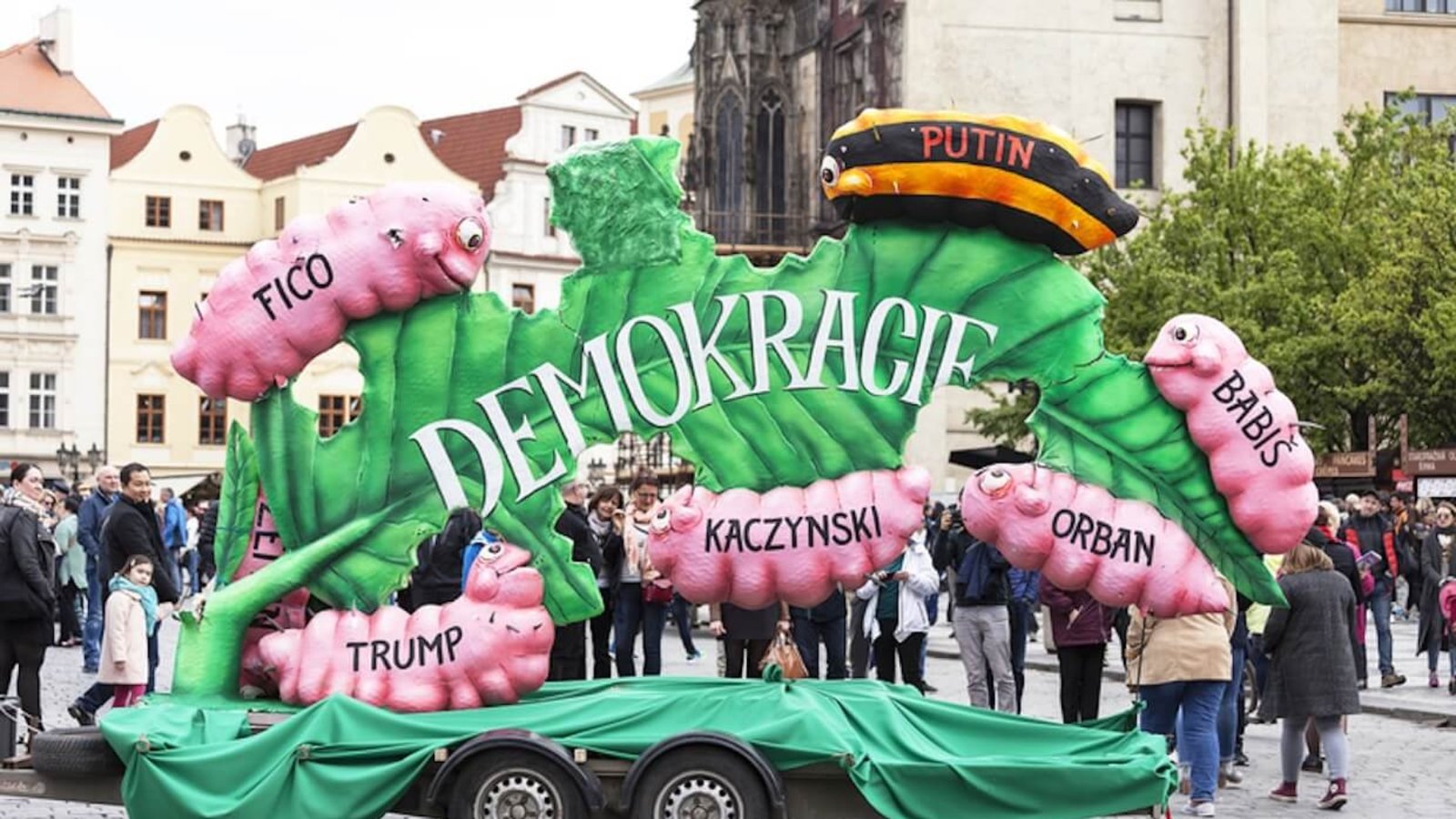
This editorial image, captured in Belgrade, Serbia, showcases an array of novelty socks featuring the likenesses of Vladimir Putin, Aleksandr Lukashenko, Viktor Orban, and Donald Trump in Belgrade, Serbia on December 12, 2024. Photo: Jerome Cid.

Illiberal International: The Transatlantic Right’s Challenge to Democracy

Please cite as:
Benson, Robert. (2026). “Illiberal international: The Transatlantic Right’s Challenge to Democracy.” In: Populism and the Future of Transatlantic Relations: Challenges and Policy Options. (eds). Marianne Riddervold, Guri Rosén and Jessica R. Greenberg. European Center for Populism Studies (ECPS). January 20, 2026. https://doi.org/10.55271/rp00137

DOWNLOAD CHAPTER 16

Abstract

This chapter investigates the transatlantic dimensions of far-right political mobilization, tracing the networks linking populist and authoritarian actors across Europe and the United States. It argues that the far right has become increasingly skilled at building cross-border alliances that exchange strategies, legal models, ideological frames and digital tactics to weaken democratic norms. Moving beyond nation-centred analyses, the chapter highlights growing coordination in anti-immigration rhetoric, attacks on ‘gender ideology’, and efforts to delegitimize multilateral institutions. It examines organizational links among US think tanks, European party foundations and online platforms that amplify common messaging, finance convenings and train activists, with particular attention to the language of ‘sovereignty’, ‘tradition’, and ‘civilizational threat’ as a shared rhetorical toolkit. The chapter also analyses the diffusion of legal hardball tactics – such as assaults on judicial independence, academic freedom, media and civil society – and assesses the implications of these transatlantic linkages for democratic resilience and effective counterstrategies.

Keywords: democracy; transnational; populism; far right


By Robert Benson*

Introduction

For decades, the transatlantic relationship rested on a shared moral and institutional foundation. The United States and Europe defined their partnership through liberal-democratic values – human rights, pluralism and the rule of law. Those principles gave coherence to the Western alliance and legitimacy to its global leadership. Yet that consensus now faces a coordinated and ideologically confident challenge. A network of far-right political actors across the Atlantic has learned to cooperate across borders, fusing rhetoric, strategy and institutional power to erode liberal norms from within.

This chapter investigates the connective tissue of those transatlantic illiberal networks. It argues that the far right’s rise no longer unfolds through isolated national movements but through mutually reinforcing exchanges between American and European actors. These networks trade narratives about ‘sovereignty’, ‘tradition’, and ‘civilizational threat’, and share tactical repertoires – legal activism, institutional capture and digital disinformation – that hollow out democratic checks while preserving a facade of procedural legitimacy in the name of a Western vox populi (Mudde 2004).

The chapter situates this development within the broader trajectory of transatlantic relations. It contends that the liberal consensus has weakened since 2016, replaced by a new normative alignment organized around nationalism and identity. Far-right cooperation no longer merely contests the postwar order; it offers a rival model of democracy based on majoritarian rule, cultural homogeneity and suspicion of technocratic authority. The chapter concludes with concrete policy recommendations to counter these dynamics and rebuild a transatlantic foundation grounded in democratic resilience rather than complacent liberalism.

At a scholarly level, this analysis contributes to an emerging field that examines the internationalization of authoritarian populism – a phenomenon analysed by scholars (Mudde 2020; Müller 2016; and Zürn 2019). The diffusion of illiberal tactics across borders suggests that backsliding no longer unfolds as a domestic pathology but as a transnational process. As authoritarian populists coordinate their respective narratives, liberal democracies face a globalized form of contestation that transcends national institutions and elections. This chapter joins that debate by mapping how transatlantic linkages – once engines of the liberal order – now facilitate its undoing.

The Liberal Consensus and Its Erosion

The transatlantic liberal consensus crystallized after World War II and reached its institutional maturity in the 1990s. NATO’s security guarantees, the European Union’s expansion, and the Helsinki process all reinforced a shared commitment to democracy, free markets and multilateral governance. Washington and Brussels viewed their partnership as the normative core of a rules-based international order. Transatlantic summits revolved around values as much as interests: open societies, free elections, and universal rights served as the moral language of Western cooperation (Ikenberry 2011).

During the post–Cold War moment, this consensus evolved into a doctrine of liberal triumphalism (Fukuyama 1992). The fall of the Soviet Union convinced policymakers that democracy and markets would inevitably spread outwards. The United States expanded democracy promotion programs through USAID and the National Endowment for Democracy, while the EU embedded democratic conditionality in its enlargement policy. ‘Transition assistance’ and civil society funding became instruments of global liberalization. Yet this expansion bred complacency. Liberal universalism hardened into orthodoxy, and many citizens began to see democracy promotion not as solidarity but as ideological export (Chandler 2006). From the Western Balkans to South Asia and beyond, resentment toward externally imposed models began to percolate. In Serbia and Bosnia, local elites portrayed Western conditionality as paternalism, exploiting fatigue with endless reform checklists (Ignatieff 2003). In Türkiye, EU accession delays fed nationalist narratives about cultural intrusion. Across parts of Africa and Latin America, US-backed democracy programs came to symbolize Western hypocrisy (Carothers 2004).

Cracks in that consensus appeared in earnest after 9/11. The United States’ invasion of Iraq divided the alliance and exposed European doubts about American exceptionalism. By the late 2000s, economic crises and migration pressures fuelled domestic disillusionment with globalization. The ‘liberal script’, once a source of pride, became a lightning rod for grievances about lost sovereignty and cultural change (Börzel et al. 2024). Across Europe, populist leaders framed Brussels as an unaccountable bureaucracy and the EU’s rights agenda as an assault on tradition.

Donald Trump’s presidency marked its rupture. His ‘America First’ foreign policy rejected multilateralism and treated alliances as transactional. Trump’s public praise for authoritarian leaders and his attacks on NATO, the EU and the mainstream media emboldened Europe’s far right. Orbán, Le Pen and Salvini hailed him as proof that nationalist populism could capture the world’s most powerful democracy. In turn, American conservatives drew inspiration from European ‘illiberal democrats’, celebrating Hungary, Slovakia, and Poland as models of Christian governance that thoroughly rejected the post-1968 liberal emphasis on secular multiculturalism (Judt 2005; Krastev and Holmes 2019).

The effect was cumulative. By 2020, Trump administration officials such as Secretary of State Mike Pompeo described Hungary as a model of sovereignty, while European populists echoed Trump’s increasingly conspiratorial rhetoric about the ‘deep state’ (Bowman 2019; Le Monde 2025). When President Biden took office, he sought to restore traditional transatlantic language, organizing a ‘Summit for Democracy’. Yet by then, the intellectual current had shifted. The transatlantic right had institutionalized its own moral vocabulary, positioning nationalism as the authentic heir to Western civilization. By the 2024 election and Trump’s triumph at the ballot box, it became clear that Biden – not Trump – had been the aberration.

The postwar ideal of the transatlantic alliance as a moral community gave way to ideological fragmentation. Shared democratic values no longer defined the relationship; instead, competing visions of sovereignty and identity began to dominate. While the Biden administration restored rhetorical commitment to democracy, the structural erosion of shared norms persisted. The far right now operates as a transnational movement that adapts to electoral setbacks and translates domestic victories into global influence.

Mapping the Networks: Actors, Institutions and Mechanisms

The far right’s transatlantic infrastructure spans think tanks, media platforms, political parties and increasingly influential advocacy networks. These actors collaborate through conferences, digital ecosystems and funding flows that sustain a common ideological front.

In the United States, institutions such as the Heritage Foundation, the Leadership Institute, and the Alliance Defending Freedom (ADF) serve as anchor points. They train conservative activists, produce model legislation, and coordinate messaging on issues from religious liberty to ‘gender ideology’. Their international branches, especially ADF International, operate across Europe, supporting legal interventions and advocacy seeking to restrict abortion rights, challenge LGBTQ+ protections, and expand claims of religious freedom. In Italy, for example, ADF International filed legal briefs opposing same-sex marriage legislation, aligning with Catholic organizations to block broader recognition (Savage 2020; See also Alliance Defending Freedom International 2015).

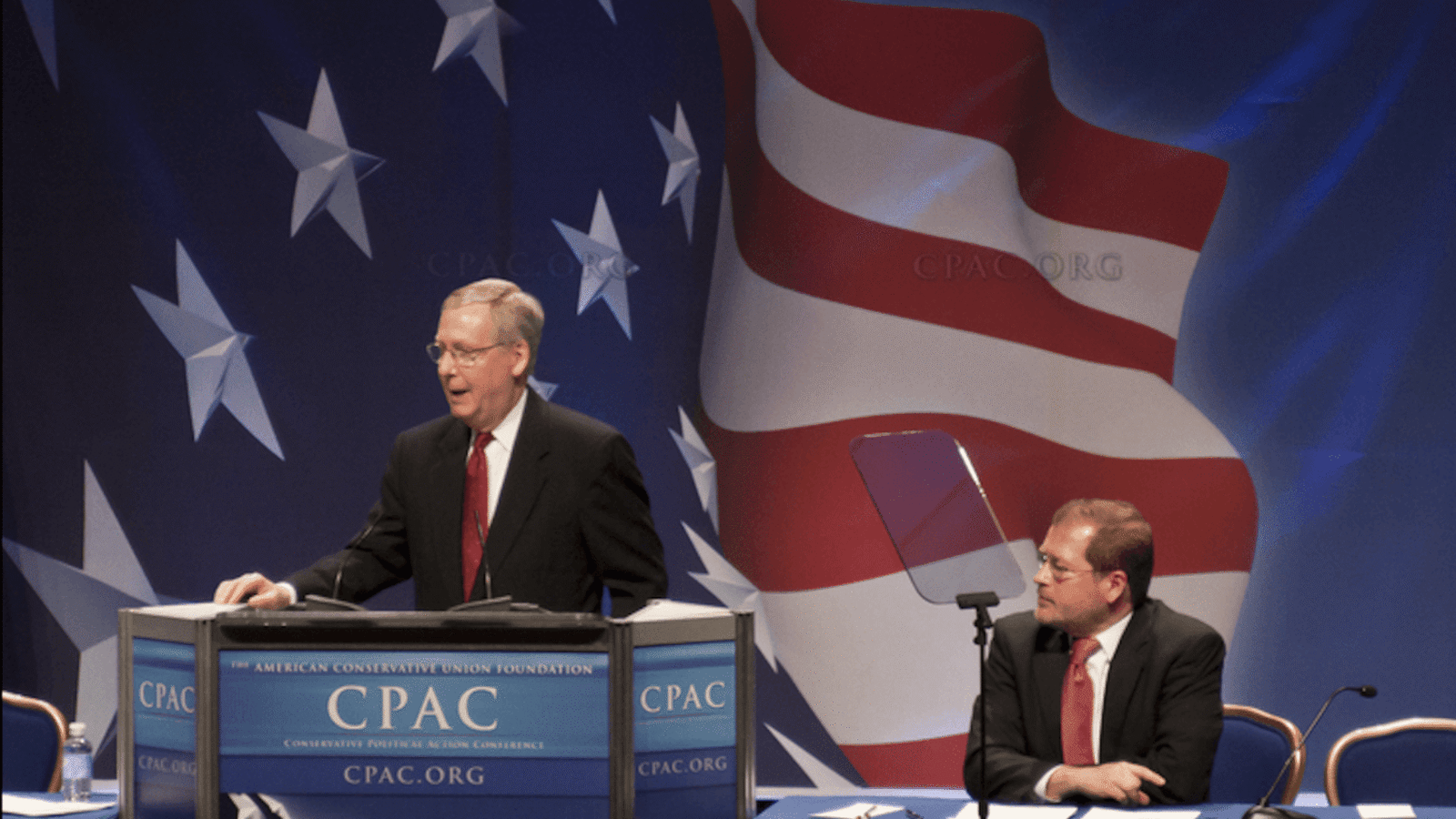
Across Europe, a parallel network mirrors this architecture. Hungary’s Danube Institute in Budapest functions as a regional hub linking Central European intellectuals, US conservatives and right-wing British Brexiteers. Funded through government-aligned channels, it hosts American speakers and frames national conservatism as the moral defence of Christian Europe. Regular attendees include Nigel Farage, Santiago Abascal, and US commentators from Fox News and Newsmax, who broadcast the message to sympathetic audiences at home (Applebaum 2020; See also Danube Institute 2025). What began as a network of think tanks and training institutes has now evolved into a stage-managed political spectacle designed to project moral legitimacy and global reach. CPAC Hungary operates as the movement’s global showcase. In recent years, it has featured keynote addresses from Donald Trump, Viktor Orbán, and Eduardo Bolsonaro, presenting Budapest as the centre of a global ‘anti-woke’ awakening (CEU CEFAS 2025).

Russian-linked media outlets, although not formally integrated into the network, often amplify the event’s messaging, exploiting its resonance with Kremlin narratives about Western decadence, cultural decay and moral weakness. This convergence is not accidental: both camps share an interest in discrediting liberal democracy and promoting an image of the ‘real West’ as spiritually conservative and geopolitically sovereign. The porous boundary between these movements illustrates how transatlantic illiberalism increasingly overlaps with a broader ecosystem of authoritarian influence that stretches from Moscow to Budapest and beyond (Applebaum 2024).

Digital coordination then extends this ecosystem online, giving it reach and velocity. Platforms such as Rebel News, Epoch Times and Breitbart Europe circulate narratives that fuse European and American grievances – migration, ‘wokeness’, and elite betrayal – into a single story of civilization under siege. Influencers move seamlessly across audiences, translating slogans for local contexts while reinforcing a shared moral panic. This transnational publicity turns regional political experiments into global templates, demonstrating how authoritarian and illiberal actors now learn from, legitimize and amplify one another.

Financial flows and personnel exchanges further institutionalize these ties. US donors such as the Koch network and Christian legal foundations fund European conferences, while European governments sponsor sympathetic American commentators. Researchers tracing nonprofit disclosures have documented patterns of mutual support that blur the line between domestic advocacy and international influence operations (Archer 2020; Datta 2021; Laruelle 2022). Together, these linkages sustain what might be called an illiberal epistemic community – a transatlantic network that produces knowledge, training and legitimacy for antiliberal politics.

Ideological and Rhetorical Alignment

Although Europe’s far right remains nationally diverse, its leaders increasingly speak a common language. That lexicon centres on three core narratives: sovereigntytradition, and civilizational threat.

The rhetoric of sovereignty casts technocratic governance as a usurpation of the popular will. American conservatives frame Washington bureaucrats, the ‘deep state’, and the federal judiciary as rogue agents. European populists substitute Brussels and Strasbourg for the same role. The parallel is no coincidence; strategists exchange slogans and framing devices through joint forums. The idea of ‘taking back control’, born in Britain’s Brexit campaign, migrated into American Republican discourse, while ‘America First’ became a template for nationalist rebranding in Europe.

The appeal to tradition provides moral ballast. Movements describe themselves as guardians of Christian civilization, opposing secular pluralism and feminism as existential threats. ‘Gender ideology’, once a fringe Vatican term, has become a unifying transatlantic rallying cry (Ayoub and Stoeckl 2024; Cupać and Ebetürk 2020; Korolczuk and Graff 2022). From Florida’s ‘Don’t Say Gay’ laws to Hungary’s ‘child protection’ amendment, conservatives share the same rhetorical script. They depict liberal tolerance not as virtue but as decay – a sign of civilizational weakness that invites chaos and migration. Conservative Catholic institutions in Spain and Poland now distribute translated versions of US legal briefs and training materials from ADF, illustrating how moral discourse travels with ease (Corporate Europe Observatory 2024).

Finally, the notion of a civilizational threat binds the narrative together. Far-right discourse positions the West in a cultural war against both internal subversion and external invasion. Migrants, Muslims, and ‘globalists’ occupy interchangeable roles in this story. Leaders like Giorgia Meloni, Marine Le Pen, and Donald Trump portray themselves as defenders of an embattled civilization that must reclaim its purity through moral renewal. The effect is to redefine democracy not as pluralism but as cultural self-assertion.

This ideological alignment does not erase local differences; it creates a shared emotional grammar. Phrases such as ‘real people’, ‘common sense’, and ‘nation first’ resonate on both sides of the Atlantic (Moffitt 2016; Wodak 2021). Conferences like National Conservatism (NatCon) codify this worldview, offering a theological and historical narrative that connects Jerusalem, Rome, and Washington in one ‘civilizational’ arc.

These narratives increasingly infiltrate mainstream conservative parties. The United States’ Republican Party has absorbed much of Trump’s illiberal vocabulary, framing political opposition as betrayal and portraying federal institutions as corrupt elites. In Europe, centre-right parties from Spain’s Partido Popular to Germany’s Christian Democrats (CDU) have echoed sovereigntist language to win back voters (Mudde 2019a; Mudde 2019b). This normalization effect blurs distinctions between democratic conservatives and authoritarian populists, allowing illiberal rhetoric to migrate from the margins into governing discourse.

Strategic Diffusion and Legal Hardball

The collaboration between US and European conservatives extends beyond rhetoric to institutional tactics. What unites these actors is their ability to learn from each other’s experiments in bending democratic rules while maintaining formal legality.

American conservatives pioneered the technique of judicial capture through a process of constitutional hardball, using the letter of the law to violate its intent. The Federalist Society’s vetting of Supreme Court nominees provided a model of long-term institutional strategy. European populists adapted that logic to parliamentary systems. In Poland, the Law and Justice Party restructured the judiciary through legislative manoeuvring and disciplinary chambers that undermined judicial independence while preserving constitutional form. Hungarian authorities replicated the approach by packing the Constitutional Court and taking over judicial administration (Benson 2025). Lawyers in Poland connected to the Ordo Iuris Institute for Legal Culture – a conservative–religious legal organization – openly cite American legal precedents in their briefs, translating US culture-war litigation into European constitutional idioms (Coakley 2021).

Conversely, European examples now inspire American actors. Hungary’s media consolidation – centralizing ownership under pro-government foundations – has attracted the attention of US right-wing strategists who call for a patriotic media ecosystem. Hungary’s regulation of foreign-funded NGOs and universities informed US debates about restricting ‘foreign influence’ and targeting liberal foundations. The flow of ideas thus moves in both directions: elite learning across borders produces a repertoire of ‘legal hardball’ tactics that exploit institutional loopholes to entrench power (Barry 2025; Benson et al. 2025).

Conferences serve as accelerators for this diffusion. CPAC Hungary and the Danube Institute’s seminars invite US jurists and politicians to exchange strategies with European counterparts. The presence of figures such as Tucker Carlson, Mike Pence and members of the Heritage Foundation lends these events a sense of legitimacy and global reach. Speeches often emphasize that the ‘fight for Western civilization’ requires coordination, not isolation. The audience learns that illiberal reform is not parochial but visionary – a model for reclaiming democracy from cosmopolitan elites.

Digital mobilization reinforces these lessons. Online influencers and media outlets document each success story, turning national policies into templates. When Poland’s constitutional tribunal restricted abortion rights, American platforms celebrated it as proof that cultural pushback was possible. When Florida curtailed diversity programs in universities, Hungarian state media showcased it as evidence of global ideological realignment. Each side validates the other, creating a feedback loop of right-wing legitimacy (Dougherty 2021; Knefel 2023).

Implications for the Transatlantic Democratic Order

The rise of transatlantic illiberal networks reshapes the meaning of the West itself. For most of the postwar period, Western identity signified liberalism – rule of law, minority protection and multilateral cooperation. Today, those concepts coexist with their opposites. Leaders who undermine judicial independence or vilify minorities still claim to defend Western civilization. This rhetorical inversion erodes the clarity of the transatlantic project.

The consequences for policy cooperation are profound. Divergent value systems weaken the alliance’s ability to respond to authoritarian threats (Benson 2023a; Benson 2023b). When Washington or Brussels condemns democratic backsliding, illiberal governments frame the criticism as ideological imperialism. Shared values once enabled coordinated responses to global challenges; now they produce internal dispute. This fracture carries direct geopolitical costs. The Kremlin exploits these divisions to erode Western unity on sanctions, aid and military assistance to Ukraine. Russian propaganda outlets actively echo the rhetoric of Western populists, portraying the war as a clash between traditional sovereignty and decadent liberalism. In turn, segments of the European and American right adopt that framing to justify fatigue with Ukraine’s defence or scepticism toward NATO. The result is a feedback loop in which Moscow’s narratives and transatlantic illiberal discourse reinforce one another, blurring the line between domestic dissent and foreign influence.

The result is a transnational ecosystem of distrust that corrodes confidence in electoral integrity, journalism and scientific expertise. In the United States, European talking points about ‘cultural Marxism’ and ‘globalists’ circulate daily on cable news and social media, reframed through American populist idioms. In Europe, US-style conspiracy theories – from QAnon to vaccine disinformation – find new life in far-right Telegram channels and street protests (Schulze 2022). Each side validates the other, portraying democratic institutions as captured by unseen powers. This cross-pollination normalizes cynicism and fuels the perception that politics itself is rigged. The contagion spreads not through formal alliances but through shared emotional affect – anger, humiliation and nostalgia – creating a digital transatlantic common of resentment. As this sentiment seeps into mainstream debate, it weakens the civic trust that underpins democratic governance and ultimately, transatlantic solidarity.

At a structural level, the erosion of shared norms transforms the transatlantic relationship from a moral alliance into a transactional partnership. Security and trade cooperation continue, but the normative glue has dissolved. Instead of universal values, the relationship revolves around selective interests.

The question is no longer whether shared values are weakening – they clearly are – but whether democratic actors can forge a new consensus around defending institutional pluralism itself. The challenge lies not in restoring the Cold War’s moral clarity but in constructing a forward-looking democratic solidarity that acknowledges ideological diversity while safeguarding liberal principles.

Policy Takeaways and Recommendations

Countering transnational illiberalism demands a transnational democratic strategy. Policymakers must recognize that far-right cooperation operates across borders; national responses alone cannot contain it. The following recommendations outline potential interventions. They are necessarily aspirational, given current political realities and would require – at a minimum – a new administration in Washington willing to prioritize democracy promotion and transatlantic coordination.

Increase transparency and accountability.

Governments and the EU should strengthen disclosure requirements for political foundations, advocacy organizations and media outlets that receive cross-border funding. Transparency does not suppress free speech; it clarifies the origins of influence. The United States and the EU could establish a joint registry for political nonprofits engaged in transatlantic advocacy.

Build democratic resilience networks.

Civil society cooperation should mirror that of the far right. Universities, local governments and NGOs need transatlantic partnerships that share best practices in civic education, digital literacy and counter disinformation. Programs like the U.S.–EU Democracy Dialogue, now dormant, could expand into a permanent platform for democratic innovation.

Coordinate digital governance.

The EU’s Digital Services Act offers a model for regulating online platforms that amplify extremist content. US policymakers could align transparency standards and algorithmic accountability with European frameworks. Joint initiatives between the Federal Trade Commission and European regulators would prevent regulatory arbitrage.

Reinvest in public diplomacy and narrative competition.

Illiberal actors win not only through policy but through storytelling. Democratic governments must promote narratives of inclusion and dignity that resonate emotionally. Cultural diplomacy, youth exchanges, and support for independent media should form part of a long-term strategy to restore trust in democratic ideals.

Engage the democratic periphery.

Cities, universities and civil society networks can act as laboratories for democratic renewal. Transatlantic cooperation at the subnational level – mayor-to-mayor partnerships, university consortia – builds social capital that resists illiberal capture. Democracy flourishes through participation; it decays through isolation.

Conclusion

The transatlantic relationship stands at a crossroads. The liberal order that once unified Washington and Brussels no longer commands universal allegiance, even within the West. Illiberal networks have learned to cooperate across borders, translating national grievances into a shared civilizational narrative. Their success lies in coordination: they exchange ideas, tactics and legitimacy faster than liberal institutions adapt.

This chapter has traced how far-right actors transformed the transatlantic space from a community of shared values into a contested ideological arena. It showed how think tanks, conferences, and digital platforms weave an alternative network of power that undermines democratic norms while claiming to defend the West. The result is neither the collapse nor the strengthening of shared democratic values but a strategic weakening – a shift from liberal universalism to national conservative pluralism.

Reversing that trend demands proactive engagement. The defence of democracy cannot rest on nostalgia for a bygone consensus; it must evolve into a deliberate partnership that treats democracy itself as a shared security interest. If liberal actors can match the far right’s strategic clarity and cross-border coordination, the transatlantic relationship may yet renew its moral purpose. 


(*) Robert Benson, DPhil., is the associate director for National Security and International Policy at American Progress. Prior to joining American Progress, Benson worked as a global relations consultant at the Organization for Economic Cooperation and Development in Paris and as a research fellow at the Social Science Center Berlin. He holds a Master of Science in global politics from the London School of Economics and a doctorate from the Free University of Berlin. 


References

Alliance Defending Freedom International. 2015. “Third-Party Intervention Brief in Orlandi and Others v. Italy”. ADF Mediahttps://adfmedia.org/wp-content/uploads/2020/10/ItalyOrlandiBrief.pdf

Applebaum, Anne. 2020. Twilight of Democracy: The Seductive Lure of Authoritarianism. Doubleday.

Applebaum, Anne. 2024. Autocracy, Inc.: The Dictators Who Want to Run the World. Doubleday.

Archer, Nandina Naira. 2020. “US Christian anti-LGBT ‘hate group’ spent more than $20m in Europe.” OpenDemocracy, October 27. https://www.opendemocracy.net/en/major-us-religious-group-opposed-to-lgbt-rights-pours-tens-of-millions/

Ayoub, Phillip, and Kristina Stoeckl. 2024. “The Global Resistance to LGBTIQ Rights.” Journal of Democracy 35 (1): 59–73.

Barry, Orla. 2025. “Could Hungary Be the Media Model for the Trump Administration?” The World, January 23.
https://theworld.org/segments/2025/01/23/could-hungary-be-the-media-model-for-the-trump-administration

Benson, Robert. 2023a. “A Bellwether for Transatlantic Democracy: The Rise of the German Far Right.” Center for American Progress, August 22. https://www.americanprogress.org/
article/a-bellwether-for-trans-atlantic-democracy-the-rise-of-the-german-far-right/

Benson, Robert. 2023b. “Hungary’s Democratic Backsliding Threatens the Transatlantic Security Order.” Center for American Progress, September 12.
https://www.americanprogress.org/article/hungarys-democratic-backsliding-threatens-the-trans-atlantic-security-order/

Benson, Robert, Allison McManus, and Dan Herman. 2025. “The Dangers of Project 2025: Global Lessons in Authoritarianism.” Center for American Progress, May 20.
https://www.americanprogress.org/article/the-dangers-of-project-2025-global-lessons-in-authoritarianism/

Benson, Robert. 2025. “How Democracies Defend Themselves against Authoritarianism.” Center for American Progress, April 9.
https://www.americanprogress.org/article/how-democracies-defend-themselves-against-authoritarianism/

Börzel, Tanja A., Johannes Gerschewski, and Michael Zürn. 2024. “Introduction: The Liberal Script at the Beginning of the 21st Century.” In The Liberal Script at the Beginning of the 21st Century, edited by Tanja A. Börzel, Johannes Gerschewski, and Michael Zürn, 1–22. Oxford University Press.

Bowman, Emily L. 2019. “Pompeo Celebrates Hungary’s Sovereignty.” Archive Share / America.gov, February 12. https://archive-share.america.gov/pompeo-celebrates
-hungarys-sovereignty/index.html

Carothers, Thomas. 2004. “The Backlash against Democracy Promotion.” In Critical Mission: Essays on Democracy Promotion, 49–73. Carnegie Endowment for International Peace.

CEU CEFAS. 2025. “We Attended CPAC 2025 in Budapest.” CEU CEFAS. https://cefas.ceu.es/
en/attended-cpac-2025-budapest/

Chandler, David. 2006. Empire in Denial: The Politics of State-Building. Pluto Press.

Corporate Europe Observatory. 2024. ‘The Alliance Attacking Freedom’. 13 May.
https://corporateeurope.org/en/2024/05/alliance-attacking-freedom

Coakley, Amanda. 2021. “The Mysterious Lawyers Trying to Create Europe’s Most Ultra-Conservative State.” Vice, September 28. https://www.vice.com/en/article/ordo-iuris-the-mysterious-lawyers-trying-to-create-europes-most-ultra-conservative-state/

Cupać, Jelena, and Isik Ebetürk. 2020. “The Personal Is Global Political: The Antifeminist Backlash in the United Nations.” British Journal of Politics and International Relations 22(4): 702–714. https://doi.org/10.1177/1369148120948733

Danube Institute. 2025. “Mission Statement.” https://danubeinstitute.hu/en/content/mission-statement

Datta, Neil. 2021. Tip of the Iceberg: Religious Extremist Funders against Human Rights for Sexuality and Reproductive Health in Europe, 2009–2018. European Parliament.

Dougherty, Michael Brendan. 2021. “Poland: Where the Disabled Have a Right to Be Born.” National Review, January 7. https://www.nationalreview.com/magazine/2021/01/25/
poland-where-the-disabled-have-a-right-to-be-born/

Fukuyama, Francis. 1992. The End of History and the Last Man. Free Press.

Híradó (Budapest). 2024. “The Anti-Woke Movement Is Spreading across U.S. Universities.” March 3. https://hirado.hu/english/2024/03/03/the-anti-woke-movement-is-spreading-across-us-universities

Ignatieff, Michael. 2003. Empire Lite: Nation-Building in Bosnia, Kosovo, and Afghanistan. Penguin Canada.

Ikenberry, G. John. 2011. Liberal Leviathan: The Origins, Crisis, and Transformation of the American World Order. Princeton University Press.

Judt, Tony. 2005. Postwar: A History of Europe Since 1945. Penguin Press.

Knefel, John. 2023. “Hungary’s Viktor Orbán Targeted Central European University. Is Gov. Ron DeSantis Following His Playbook at New College?” Media Matters, February 10.
https://www.mediamatters.org/ron-desantis/hungarys-viktor-orban-targeted-central-european-university-gov-ron-desantis-following

Korolczuk, Ewa, and Agnieszka Graff. 2022. Anti-Gender Politics in the Populist Moment. Routledge.

Krastev, Ivan, and Stephen Holmes. 2019. The Light That Failed: A Reckoning. Pegasus Books.

Laruelle, Marlene. 2022. “Illiberalism: A Conceptual Introduction.” East European Politics 38 (2): 303–27. doi:10.1080/21599165.2022.2037079

Le Monde. 2025. “European Nationalists on Pilgrimage to Washington and the Source of Trumpism.” February 24. https://www.lemonde.fr/en/international/article/2025/02/24/
european-nationalists-on-pilgrimage-to-washington-and-the-source-of-trumpism_
6738485_4.html

Moffitt, Benjamin. 2016. The Global Rise of Populism: Performance, Political Style, and Representation. Stanford University Press.

Mudde, Cas. 2004. “The Populist Zeitgeist. Government and Opposition 39(4): 541–563. https://doi.org/10.1111/j.1477-7053.2004.00135.x

Mudde, Cas. 2019a. The Far Right Today. Polity Press.

Mudde, Cas. 2019b. “The Far Right and the Mainstream.” Current History 118(804): 120–126.

Mudde, Cas, ed. 2020. The Populist Radical Right: A Reader. Routledge.

Müller, Jan-Werner. 2016. What Is Populism? University of Pennsylvania Press.

Savage, Rachel. 2020. “U.S. Christian Groups Spent $280 Million Fighting LGBT Rights, Abortion Overseas.” Reuters, October 27. https://www.reuters.com/article/us-christian-groups-spent-280m-fighting-lgbt-rights-abortion-oversea-idUSKBN27C2M7

Schulze, Holger, et al. 2022. “Far-Right Conspiracy Groups on Fringe Platforms.” Convergence 28(4): 1103–1126. https://doi.org/10.1177/13548565221104977

U.S. State Department. 2021–2025. The Summit for Democracy. Bureau of Democracy, Human Rights, and Labor. https://2021-2025.state.gov/bureau-of-democracy-human-rights-and-
labor/the-summit-for-democracy/

Wodak, Ruth. 2021. The Politics of Fear: The Shameless Normalization of Far-Right Discourse. SAGE.

Zürn, Michael. 2019. A Theory of Global Governance: Authority, Legitimacy, and Contestation. Edited by David Held and Eva-Maria Nag. Oxford University Press.

Two elderly men sit on the street in front of a café in Oslo, Norway, asking for alms on August 1, 2013. This image symbolizes the indifference of society and the state toward poverty. Photo: Medvedeva Oxana.

Vulnerable Groups, Protections and Precarity

Please cite as:
Azmanova, Albena. (2026). “Vulnerable Groups, Protections and Precarity.” In: Populism and the Future of Transatlantic Relations: Challenges and Policy Options. (eds). Marianne Riddervold, Guri Rosén and Jessica R. Greenberg. European Center for Populism Studies (ECPS). January 20, 2026. https://doi.org/10.55271/rp00138

DOWNLOAD CHAPTER 17

Abstract
This chapter examines how impoverishment, inequality and precarity have become defining features of contemporary societies in Europe and the United States, reshaping domestic politics and altering the foundations of the transatlantic relationship. Poverty persists despite overall affluence, with COVID-19 reversing earlier gains in Europe and entrenched racialized and generational disparities characterizing the United States. Inequality follows divergent patterns: Europe experiences wide variation shaped by austerity and structural barriers facing migrants, while the United States is marked by extreme wealth concentration and systemic racial gaps. Yet inequality alone does not fully explain public discontent. Instead, precarity – politically produced vulnerability across class, gender, age and status – emerges as the central grievance. Expanding temporary and platform work, weakened labour protections and strained welfare systems expose women, youth, migrants and racial minorities to compounding risks. The chapter argues that rising precarity undermines trust in governance and shifts transatlantic cooperation toward transactionalism, requiring renewed social investment and stronger labour and environmental standards.

Keywords: poverty; precarity; inequality; employment; insecurity; populism


By Albena Azmanova*

Introduction

Over the past decade, Europe and the United States have faced intensifying social vulnerabilities stemming from economic shocks, political realignments and labour market transformations. Transatlantic EU–US relations are increasingly shaped by internal socioeconomic pressures, especially the precarization of labour and the rise of populist politics responding to widespread physical, economic, social and cultural insecurity. These forces are subtly but significantly reshaping cooperation across trade, security and global governance. The domestic pressures driving change have especially to do with deteriorating employment conditions – marked by low wages, gig work, weakened unions and eroded social protections. This trend is evident in both the United States and the EU, although with different institutional buffers. Economic insecurity – especially post-2008 and post-COVID-19 – has fuelled resentment toward globalization, trade liberalization and perceived elite consensus, which have historically underpinned transatlantic cooperation. To this adds cultural and physical insecurity – including migration anxieties, demographic shifts and perceived threats to national identity – which have intensified populist narratives that challenge liberal internationalism. In what follows, we review three interlinked trajectories in domestic developments – poverty, inequality and precarity – to highlight structural patterns, policy responses and emerging fault lines that are likely to affect domestic political attitudes and, consequently, transatlantic relations.

Poverty: Persistent Risks and Shifting Demographics

Europe: The fragmented landscape of poverty amidst wealth

After the 2008 financial crisis, poverty rates in Europe slowly declined. However, COVID-19 disrupted this trajectory, leading to a renewed increase in poverty risk across many EU countries. The ‘Europe 2020’ strategy aimed to lift 20 million people out of poverty by 2020 – a goal that went unmet, with the COVID-19 pandemic exacerbating vulnerabilities and deepening the scarring effects of poverty across the continent (Mussida and Sciulli 2022). The pandemic increased the risk of poverty, particularly for already vulnerable groups and widened disparities between countries due to differences in policy responses. Southern European countries (e.g., Italy, Spain, Greece) experienced sharper increases in poverty risk due to weaker welfare systems and higher reliance on tourism and service sectors. Northern and Western European countries, with stronger social safety nets, were better able to cushion the impact.

In 2024, 21% of the EU population – approximately 93.3 million people – were at risk of poverty or social exclusion, according to Eurostat’s AROPE indicator, which combines income poverty, severe material deprivation, and low work intensity (Eurostat 2025a). Rates remain highest in Bulgaria (30.3%), Romania (27.9%), and Greece (26.9%). Notably, in-work poverty is rising: 10.9% of employed individuals are still at risk of poverty.

Gender disparities persist: overall, women face a higher risk of poverty (21.9%) than men (20.0%), largely due to wage gaps and disproportionate caregiving responsibilities.

The United States: Structural poverty and policy gaps

According to the OECD, the United States has one of the highest relative poverty rates among member countries, with income inequality and poverty deeply entrenched (OECD 2024). The bottom quintile earns less than 3% of national income, while the top quintile earns over 50%.

Racialized poverty remains a defining feature: Black, Hispanic and Indigenous populations face disproportionately high poverty rates, compounded by housing segregation and educational disparities. Child poverty is particularly acute, with 16.1% of children living below the federal poverty line in 2023 (Guzman and Kollar 2023). Elder poverty is rising due to healthcare costs and insufficient retirement savings (Scott 2024).

Despite solid economic growth, real income gains have been uneven, and intergenerational mobility remains low (Kochhar and Sechopoulos 2023; Kochhar 2024). Impoverishment – both absolute deprivation (inability to meet basic needs) and relative poverty (living below a certain percentage of median income in a given society) – has been on the rise in Europe and the United States. This rising poverty has fuelled grievances about affordability, as households struggle to cover essential costs such as housing, food, utilities and debt repayments. Affordability grievances have been prominent in anti-establishment mobilizations, which have placed cost-of-living issues at the centre of national elections. In Europe, this has led to challenging EU integration, migration policy and austerity legacies – which are perceived as causes of impoverishment. In the United States, public anxiety over purchasing power and declining real incomes have driven support for populist candidates who frame globalization and liberal elites as threats to national sovereignty and working-class dignity.

Inequality: Structural Divides and Policy Responses

Europe: Between convergence and divergence

Income inequality in Europe varies widely. The Gini coefficient ranges from 23.8 in the Slovak Republic to 39.5 in Bulgaria (World Bank Group 2023). Post-2008 austerity widened inequality in Southern and Eastern Europe, with long-term effects on youth and low-income workers (Oxfam 2013).

The protective role of higher education has diminished, while employment stability and childcare provision have become more important in mitigating poverty and inequality (Mussida and Sciulli 2022). Migrant populations often face structural barriers to income parity, with limited access to housing, education, and labour protections (ETUC 2024).

The United States: Polarization and policy stagnation

The United States has seen a dramatic rise in income and wealth inequality. Households in the top 10% of the wealth distribution own 79% in the United States (OECD 2024, 86). Tax expenditures disproportionately benefit high earners, exacerbating inequality and reducing fiscal space for redistribution. Coastal urban centres show high income levels but also high living costs, while rural and post-industrial regions face stagnation. Racial disparities in educational attainment, access to capital, and exposure to environmental hazards deepen inequality (Beard et al. 2024). While impoverishment in absolute terms (i.e., reduced purchasing power) has often been expressed in social discontent, inequality (relative impoverishment) has not been reliably traced to social discontent, even as it has been at the centre of academic research and public debate.

Precarity: Labour Market Insecurity and Social Dislocation

Precarity – politically produced vulnerability caused by social threats to lives, livelihoods, and lifeworlds (Azmanova 2020; 2023) – has recently been identified as a critical condition afflicting contemporary democracies, cutting across class, gender, age, educational attainment, professional attainment and even income levels.

Europe: The rise of precarious work

Precarity has intensified through non-standard employment. Eurostat data show that young workers aged 30 or younger are disproportionately represented in temporary and low-paid jobs (Eurostat 2025b). Women are more likely to be in part-time or informal work, often linked to caregiving responsibilities.

Sectors such as hospitality, retail and care show high levels of precarity, with limited union coverage and weak protections. Platform work has expanded, but regulatory frameworks lag behind. The European Trade Union Confederation (ETUC) has called for the full implementation of the EU’s directive on platform work and for universal social protections (ETUC 2023).

The pandemic disproportionately affected workers in precarious employment, temporary contracts, and low‑income service sectors. This disproportionate impact has reinforced the link between insecure labour markets and the persistence of poverty (Mussida and Sciulli 2022).

The United States: Fragmentation and Flexibilization

The US labour market is characterized by high flexibility but low security. Gig economy workers often lack health insurance, paid leave, or retirement benefits (Human Rights Watch 2025). Union membership has fallen to historic lows, around 10% (BLS 2023). Frequent job changes, layoffs and contract work contribute to income volatility and psychological stress. Employer-based health insurance ties security to employment, making job loss a significant risk factor for medical debt and coverage gaps. Policy debates over universal basic income, portable benefits and labour classification have gained traction but remain politically contentious.

COVID‑19 intensified poverty in Europe and the United States by exposing the precariousness of households and labour markets, undoing part of the progress made since the Great Recession. It significantly worsened mental health globally, with sharp rises in anxiety, depression, and stress (WHO 2022), while lockdowns and social isolation also triggered a surge in gender‑based violence, often described as a ‘shadow pandemic’ (UN Women 2020).

Overall, even as societies on the two sides of the Atlantic have returned to economic growth, economic and social precarization has persisted. Labour market insecurity and cost-of-living concerns are diminishing public trust in existing systems of governance and driving an upsurge in anti-establishment, populist mobilizations.

Vulnerable Groups: Intersectional Risks and Policy Blind Spots

Across both regions, certain groups face compounded vulnerabilities, resulting from impoverishment and precarization:

  • Women: Gender pay gaps, caregiving burdens, and exposure to part-time work increase risks (UN Women 2023).
  • Migrants and refugees: Legal status, language barriers, and discrimination limit access to services and stable employment (ETUC 2023)
  • Youth: Entry-level job insecurity, student debt and housing unaffordability create long-term precarity.
  • The elderly: Fixed incomes, rising healthcare costs, and social isolation contribute to poverty (Tornton and Bowers 2024).
  • Racial and ethnic minorities: Structural racism, residential segregation, and unequal access to education and healthcare deepen inequality (Bailey et al. 2017; Mirza and Warwick 2024; Clark et al. 2022; Yearby et al. 2022; Kisa and Kisa 2025).

Thus, while precarity is becoming the overarching grievance in Western democracies, it is strongly stratified and is most acutely felt among the poor and socially marginalized. However, as economic and social insecurity are becoming ubiquitous across income levels and educational attainment, precarity is increasingly being identified as the key factor driving social discontent and fuelling anti-establishment, populist mobilizations (Azmanova 2004, 2020, 2023; Apostolidis 2020; Zhirnov et al 2024; Scheiring et al 2024; Rodríguez-Pose 2020).

Protections: Welfare States, Labour Rights and Emerging Models

Europe: Welfare retrenchment and innovation

European welfare states offer a range of protections, but austerity and demographic pressures have strained their capacity. Some of the key developments include:

  • Minimum income schemes: These vary widely across countries, with some offering robust support (e.g., France’s Revenu de solidarité active (RSA)) and others providing minimal assistance.
  • Universal healthcare: This remains a cornerstone of European social protection, although access and quality vary.
  • Labour market policies: Active labour market programs (ALMPs), vocational training and unemployment insurance help mitigate precarity.
  • EU-level initiatives: The European Pillar of Social Rights and the Recovery and Resilience Facility aim to strengthen social cohesion post-COVID-19.

However, gaps remain in coverage, adequacy and enforcement, especially for non-standard workers and migrants.

The United States: Fragmented safety nets and policy innovation

The United States lacks a comprehensive welfare state, relying instead on a patchwork of federal, state and local programs. Key features include:

  • Means-tested programs: SNAP (food stamps), Medicaid, and TANF (Temporary Assistance for Needy Families) provide targeted support but face eligibility barriers and stigma.
  • Tax-based transfers: The Earned Income Tax Credit (EITC) and Child Tax Credit offer income support, although coverage is uneven.
  • Healthcare reforms: The Affordable Care Act expanded coverage but left millions uninsured or underinsured.
  • Local innovations: Cities like New York and San Francisco have piloted guaranteed-income schemes, tenant protections and worker cooperatives.

Despite these efforts, systemic gaps persist and political polarization hampers federal reform.

The COVID-19 pandemic highlighted that poverty is not only cyclical but also deeply tied to structural vulnerabilities in employment and welfare systems. It revealed how poverty dynamics are shaped not only by economic shocks but also by institutional resilience. Emergency measures (short‑time work schemes, income support, moratoria on evictions) mitigated some effects, but structural weaknesses in welfare systems left many households exposed. Recent policy shifts in the EU that have placed a higher priority on competitiveness and defence spending risk weakening social investment and deepening employment insecurity.

Comparative Reflections and Policy Implications

Since the turn of the century, the combined effects of labour market liberalization, automation and the radical opening of national economies have generated widespread employment insecurity and wage depression, fuelling fears of real, perceived and anticipated losses of livelihood. More broadly, political attitudes have been shaped by anxieties linked to physical insecurity, political disorder, cultural estrangement and economic precarity driven by flexible labour markets, outsourcing and competition with immigrant workers. Together, these four sources of anxiety constitute the core of a new antiprecarity public agenda centred on demands for order and security. This agenda of public concerns cuts across the left–right divide and tends to replace the left–right vectors of electoral competition with a new risk–opportunity divide shaped by the social impact of the new economy of open borders and information technologies (Azmanova 2020, 68–69, 140; See also Azmanova 2004, 2011).

Although these developments are tangible in both the United States and Europe, the transatlantic comparison reveals that Europe’s welfare states offer more robust protections but face demographic and fiscal pressures. The United States exhibits higher inequality and precarity, with fragmented safety nets and racialized vulnerabilities. Both regions struggle to adapt protections to non-standard work and intersectional risks. Policy innovation is emerging at subnational levels, but national coherence is lacking.

Social exasperation resulting from ubiquitous precarity is fuelling both economic and cultural xenophobia and undermining solidarities within countries and between the EU and the United States. This is expressed in adversarial foreign economic policy and in the undermining of the traditional EU–US political and economic partnership. Populist movements in Europe (e.g. the AfD in Germany, the Rassemblement national in France) and the United States (especially under Donald Trump) often frame transatlantic institutions as out of touch with ‘ordinary people’. These actors tend to be sceptical of multilateralism, critical of NATO and hostile to EU regulatory frameworks, which complicates traditional alliance structures.

Populist governments or pressures can lead to policy volatility, weakening long-term commitments to shared goals such as climate action, digital regulation and democratic norms. Indeed, trade tensions have resurfaced, especially around subsidies, digital taxation and industrial policy. The EU’s Green Deal and the United States’s Inflation Reduction Act have created friction over protectionism and competitiveness. While security cooperation remains strong on Ukraine and NATO, it diverges on China, Middle East policy and defence spending expectations.

Fundamentally, institutional trust is eroding. The EU increasingly hedges against US unpredictability by deepening internal defence and tech strategies, while the United States questions European burden-sharing. Under populist demands for short-term stabilization measures, a shift is underway from normative alliance-building to interest-based transactionalism. This shift means cooperation is increasingly contingent on short-term domestic political gains rather than shared values. The EU is recalibrating its strategic autonomy, while the United States – especially under populist leadership – prioritizes sovereignty and unilateralism.

Countering precarization as the root driver of reactionary populism would require a systematic effort for building a ‘political economy of trust’ (Azmanova 2020) that provides economic and social stability along two trajectories: domestic and global. In terms of domestic policies, this means replacing the current focus on competitiveness in the global economy (which is prompting governments to cut job security and social investment) with an industrial policy that generates good jobs, as well as increased investment in the commons (public services and social insurance). In terms of global market integration, the logic of pursuing competitiveness, which is prompting governments to weaken labour and environmental standards, should be replaced by a more rigorous implementation of labour and environmental standards of production, trade and consumption.


(*) Albena Azmanova is Professor of Political and Social Science at City St George’s, University of London. She has held academic positions at the New School for Social Research, Sciences Po Paris, Harvard University, UC Berkeley, and the University of Kent’s Brussels School of International Studies. Her research spans critical social theory, political economy, democratic transitions, populism, and the rule of law, with a focus on how precarity has become the defining social harm of contemporary capitalism. Her book Capitalism on Edge (2020) is the recipient of numerous awards, among them the American Political Science Association’s Michael Harrington Award for scholarship advancing social justice. Beyond academia, she has served as a policy advisor to institutions including the United Nations, the Council of Europe, and the European Parliament.


References

Apostolidis, Paul. 2022. “Desperate Responsibility: Precarity and Right-Wing Populism.” Political Theory 50 (6): 889–915.

Azmanova, Albena. 2004. “The Mobilisation of the European Left in the 1990s: From the Politics of Class to the Politics of Precarity.” European Journal of Sociology 45 (2): 273–306.

Azmanova, Albena. 2011. “After the Left–Right (Dis)continuum: Globalisation and the Remaking of Europe’s Ideological Geography.” International Political Sociology 5 (4): 384–407.

Azmanova, Albena. 2020. Capitalism on Edge: How Fighting Precarity Can Achieve Radical Change Without Crisis or Utopia. New York: Columbia University Press.

Azmanova, Albena. 2023. “Precarity for All.” In Post Neoliberalism, edited by Albena Azmanova and Pavlina Tcherneva. https://www.postneoliberalism.org/articles/precarity-for-all/

Bailey, Zinzi D., Nancy Krieger, Madina Agénor, Jasmine Graves, Nadine Linos, and Mary T. Bassett. 2017. “Structural Racism and Health Inequities in the USA: Evidence and Interventions.” The Lancet 389 (10077): 1453–1463. https://doi.org/10.1016/S0140-6736(17)30569-X

Beard, Sandra, Kristen Freeman, Maria L. Velasco, William Boyd, Tara Chamberlain, Ashley Latoni, Daniel Lasko, et al. 2024. “Racism as a Public Health Issue in Environmental Health Disparities and Environmental Justice: Working Toward Solutions.” Environmental Health 23 (1): 8. https://doi.org/10.1186/s12940-024-01052-8

Bureau of Labor Statistics (BLS). 2023. Union Membership. Washington, DC: U.S. Department of Labor. https://www.bls.gov/news.release/union2.toc.htm

Clark, Ember C., et al. 2022. “Structural Interventions That Affect Racial Inequities and Their Impact on Population Health Outcomes: A Systematic Review.” BMC Public Health 22: Article 2162. https://doi.org/10.1186/s12889-022-14603-w

European Trade Union Confederation (ETUC). 2023. “Platform Directive: No Time to Waste for National Governments.” October 14. https://tinyurl.com/3tfn43nc

European Trade Union Confederation (ETUC). 2024. Migrants. Brussels: ETUC. https://www.etuc.org/en/issue/migrants

Eurostat. 2025a. “People at Risk of Poverty or Social Exclusion in 2024.” https://ec.europa.eu/eurostat/web/products-eurostat-news/w/ddn-20250430-2

Eurostat. 2025b. EU Labour Force Surveyhttps://ec.europa.eu/eurostat/statistics-explained/index.php?title=EU_labour_force_survey

Guzman, Gloria, and Melissa Kollar. 2023. Income in the United States: 2022. U.S. Census Bureau, Report, 60–279. https://www.census.gov/library/publications/2023/demo/
p60-279.html

Human Rights Watch. 2025. The Gig Trap: Algorithmic, Wage and Labor Exploitation in Platform Work in the US. ISBN: 979-8-88708-224-0

Kisa, Adnan, and Sevi Kisa. 2025. “Structural Racism as a Fundamental Cause of Health Inequities: A Scoping Review.” International Journal for Equity in Health 24: Article 257. https://doi.org/10.1186/s12939-025-02644-7

Kochhar, Rakesh, and Stella Sechopoulos. 2022. “How the American Middle Class Has Changed in the Past Five Decades.” Pew Research Center, April 20. https://www.pewresearch.org/short-reads/2022/04/20/how-the-american-middle-class-has-changed-in-the-past-five-decades/

Kochhar, Rakesh. 2024. The State of the American Middle Class. Pew Research Center, May 31. https://www.pewresearch.org/race-and-ethnicity/2024/05/31/the-state-of-the-american-middle-class/

Mirza, Heidi Safia, and Ruth Warwick. 2024. “Race and Ethnic Inequalities.” Oxford Open Economics 3 (Suppl. 1): i365–i452. https://doi.org/10.1093/ooec/odad026

Mussida, Chiara, and Dionisio Sciulli. 2022. “The Dynamics of Poverty in Europe: What Has Changed after the Great Recession?” Journal of Economic Inequality 20: 915–937. https://doi.org/10.1007/s10888-022-09527-9

OECD. 2024. Society at a Glance 2024: OECD Social Indicators. Paris: OECD Publishing. https://doi.org/10.1787/918d8db3-en

Ortiz, Isabel, and Matthew Cummins. 2021. “The Austerity Decade 2010–20.” Social Policy and Society 20 (1): 142–157. https://doi.org/10.1017/S1474746420000433

Oxfam. 2013. A Cautionary Tale: The True Cost of Austerity and Inequality in Europe. Oxfam Briefing Paper 174. https://www-cdn.oxfam.org/s3fs-public/file_attachments/bp174-cautionary-tale-austerity-inequality-europe-120913-en_1_1.pdf

Rodríguez-Pose, Andrés. 2020. “The Rise of Populism and the Revenge of the Places That Don’t Matter.” LSE Public Policy Review 1 (1): 1–12.

Scheiring, Gábor, Marcos Serrano-Alarcón, Anca Moise, Caroline McNamara, and David Stuckler. 2024. “The Populist Backlash Against Globalisation: A Meta-Analysis of the Causal Evidence.” British Journal of Political Science 54 (2): 345–367.

Scott, Jennifer. 2024. “America Has a Retirement Crisis. We Need to Make It Easier to Save.” Pew Charitable Trustshttps://www.pew.org/en/about/news-room/opinion/
2024/01/18/america-has-a-retirement-crisis-we-need-to-make-it-easier-to-save

Thornton, Melissa, and Kate Bowers. 2024. “Poverty in Older Adulthood: A Health and Social Crisis.” OJIN: The Online Journal of Issues in Nursing 29 (1). https://doi.org/
10.3912/OJIN.Vol29No01Man03

World Bank Group. 2023. “Gini Index – European Union.” https://data.worldbank.org/
indicator/SI.POV.GINI?locations=EU&year=2023

World Health Organization (WHO). 2022. “COVID-19 Pandemic Triggers 25% Increase in Prevalence of Anxiety and Depression Worldwide.” https://www.who.int/
news/item/02-03-2022-covid-19-pandemic-triggers-25-increase-in-prevalence-of-anxiety-and-depression-worldwide

UN Women. 2020. The Shadow Pandemic: Violence Against Women During COVID-19.https://www.unwomen.org/en/news/in-focus/in-focus-gender-and-covid-19

Yearby, Ruqaiijah, Brietta Clark, and Jose F. Figueroa. 2022. “Structural Racism in Historical and Modern U.S. Health Care Policy.” Health Affairs 41 (2): 187–194. https://doi.org/10.1377/hlthaff.2021.01466.

Zhirnov, Andrei, Loretta Antonucci, Jan P. Thomeczek, Lilla Horvath, Carolina D’Ippoliti, Carlos A. Mongeau Ospina, André Krouwel, and Norbert Kersting. 2024. “Precarity and Populism: Explaining Populist Outlook and Populist Voting in Europe Through Subjective Financial and Work-Related Insecurity.” European Sociological Review 40 (3): 456–478.

By PX Media

Conclusion: How Should the EU Deal with Changing Transatlantic Relations?

Please cite as:
Riddervold, Marianne; Rosén, Guri & Greenberg, Jessica R. (2026). “Conclusion: How Should the EU Deal with Changing Transatlantic Relations?” In: Populism and the Future of Transatlantic Relations: Challenges and Policy Options. (eds). Marianne Riddervold, Guri Rosén and Jessica R. Greenberg. European Center for Populism Studies (ECPS). January 20, 2026. https://doi.org/10.55271/rp00139

DOWNLOAD CONCLUSION

This concluding chapter synthesizes the report’s core finding: under “Trump 2.0,” transatlantic relations face a systematic populist challenge across all four pillars—security, trade, international institutions, and democratic values. The authors argue that traditional crisis-management reflexes are no longer sufficient, as “America First” policies combine coercive alliance diplomacy, tariff-driven trade politics, and the instrumentalization of international law with an explicit contestation of liberal-democratic norms. While functional cooperation may persist through selective, issue-based “muddling through,” the EU’s most viable response is strategic adaptation without normative retreat. Key recommendations emphasize EU unity, enhanced European defence and industrial capacity, diversified trade partnerships, robust support for multilateral institutions, and renewed commitments to democracy, pluralism, and social cohesion to address populism’s structural drivers.

By Marianne Riddervold*, Guri Rosén** & Jessica Greenberg***

The transatlantic relationship has always shifted between cooperation and crisis, with tensions rooted in how United States (US) leadership is exercised, the evolution of European integration, and recurring disputes over institutions and burden-sharing. Those strains have usually been contained by shared threat perceptions and a baseline commitment to liberal democracy (Tocci and Alcaro 2012; Smith, this volume).

Under a populist right-wing policy under ‘Trump 2.0’, the authors in this volume depict a sharper, more systematic challenge to transatlantic relations across all four pillars of the transatlantic relationship. In terms of security, strategic interests, and threat perceptions no longer align, and the United States is a less reliable ally. Trump’s ‘America First’ agenda combines a broader rollback of international cooperation (including cuts and withdrawals affecting major bodies and funding streams) with punitive trade tools and more coercive alliance diplomacy, all weakening the relationship. In trade, changing policies under Trump is visible, not least in the use of comprehensive tariffs as well as an increasingly more antagonistic approach to the World Trade Organization (WTO). On the international arena, beyond targeting specific organizations, the shift is one of both practice and principle: international law becomes more openly instrumental, diplomacy more performative and multilateral institutions more readily treated as dispensable. As argued by Smith (this volume), for the European Union (EU), this is not only a difficult partner relationship but an assault on the institutional environment from which the Union derives legitimacy and leverage, while also accelerating a global ‘flux’ in multilateralism as other powers fill spaces left by US retrenchment. And not least, the value basis of the relationship is facing severe challenges, with right-wing populist forces challenging many of the core values on which the EU and the transatlantic relationship have been built.

All chapters in the report conclude that the transatlantic relationship has reached a turning point and is undergoing a significant shift. It is a clear possibility that transatlantic relations might weaken even further now, following a near decade of increased uncertainty. At the same time, several authors also emphasize the many adjustments made to accommodate the challenges to the EU–US relationship. One example is the framework agreement on trade (see Young, this volume). Another is defence and security, where increased European defence spending, the changing role of the EU, and the use of informal networks to bypass collaborative deadlocks indicate functional adaptation to the current impasse (Sus, this volume). ‘Muddling through’ implies that cooperation is issue-contingent. Arrangements are made based on the specific interests of either side rather than a shared ideological platform (Alcaro, this volume). While the relationship clearly is weaker than in previous decades, these various instances of ‘muddling through’ could lead to a redefined and different relationship in areas where interests align. Despite the deterioration of collaboration in international organizations, many of the existing networks of transatlantic relations, both public and private, remain strong and likely to withstand the strain, at least in the short to medium term (Smith, this volume). This form of ‘muddling through’ within a different and less strong relationship is identified as a plausible and likely future path for transatlantic relations, distinguishing it from full renewal or outright rupture.

While this is undoubtedly challenging, the European Union is in a strong position to build on and continue to lead in the areas that made the transatlantic relationship successful for so long, if the political will is there. These include active trade policies and more integrated economic and financial policies, a stronger and more independent European defence, robust commitments to core values, and sustained investment in international cooperation, institutions and coordination mechanisms. Across the chapters, the authors offer recommendations that aim to strengthen the alliance where possible, manage the pressures created by rising isolationism, trade conflict, and the current US political climate, and respond to the causes and effects of populist movements. They also emphasize the need for EU unity, a strengthening of European security and defence through investment in key strategic sectors, reaffirmed commitments to democracy, pluralism, and the rule of law, and a reinforcement of European leadership on global challenges. A further priority is to promote effective multilateralism through new strategic partnerships while also strengthening existing international institutions.

This chapter sums up the report’s main recommendations across the four pillars of the transatlantic relationship – security, trade, international institutions and values. At the end, we also provide a table that summarizes the recommendations of each chapter. Overall, the report argues that a broad coalition of actors is needed to address both the causes and the symptoms of strain in the transatlantic relationship and the impact of populism. Such broad action must include coordination among diplomatic services and international institutions, as well as engagement from citizen groups, civil society and rights advocates, state agencies, legal professionals and judges, teachers, social and health care workers, media literacy experts, academics and EU policymakers and elected officials. Both the EU’s executive institutions and the European Parliament (EP) have important roles to play, not only to create efficient but also legitimate solutions to common challenges. The report also notes that while there are clear areas for action in the state, civil society and the economy, many challenges cut across sectors and require combined approaches. For example, industrial policy can be linked with economic development programmes, environmental regulation and research and development that support new security strategies.

So, What Should the EU Do in Response?

While all the chapters have discussed the changes in transatlantic relations across different policy domains and the direction in which the relationship is moving, they also provide policy advice to the EU on how to respond to these changes. Overall, all the chapters argue for a coordinated and coherent EU response. Several argue that the EU should develop a more unified and firm political line towards Washington, moving away from appeasement and signalling that EU support cannot be taken for granted when US policies damage European security, trade or technology interests. While this is challenging when facing a US administration that links trade and other issues to security guarantees and US support for Ukraine, a coherent and strong EU will put the Union in a better position vis-à-vis its traditional partner and, not least, in a better position to adjust its policies in the face of common challenges. EU strategic autonomy should be strengthened further, and the EU must focus on developing its own security policies, although aligning with the US and cooperating where possible, when interests align.

The EU should also continue to promote international cooperation and trade, in multilateral settings where possible, and with like-minded countries where needed. Several chapters focus on the latter point, highlighting how the EU, in order to reduce its vulnerability, should seek to strengthen its strategic autonomy while deepening bilateral and plurilateral partnerships, both in trade and in other areas of common interests. And not least, the EU should continue to uphold the values that have underpinned the integration project since the beginning. In a changing global and domestic environment, with increased right-wing populism taking place in parallel with war on the European continent, increased geoeconomic and geopolitical conflict and changing transatlantic bond, this will perhaps prove to be the EU’s biggest challenge.

Security: Key Recommendations for the EU

The contributions on security (Alcaro, Pomorska and Morgenstern-Pomorski, Sus, Wong) all point to the same conclusion: the post-war transatlantic relationship is entering a ‘post-American’ phase, in which the EU can no longer rely on stable US leadership and must take much greater responsibility for its own security. Transatlantic ties are weakening, even if they are not collapsing, and US politics has become more volatile and less responsive to European concerns. At best, the relationship is muddling through, but due to developments in the EU, we also see a development towards a different, but redefined relationship where the EU takes a stronger role, and the two traditional partners cooperate in areas where interests overlap.

In this context, Europe has begun to improve coordination of resources and defence capabilities – both inside the EU and through flexible coalitions – but progress is uneven and too slow given the scale of the challenge. The EU needs to reduce its dependence on US military enablers, prepare for a possible weaker US commitment to NATO, and use its potential to strengthen member states’ military, industrial, energy and technological assets. To do so will require a firmer, more unified stance towards Washington, greater solidarity inside the EU, and a coherent long-term strategy: building a stronger European defence industrial base, providing predictable support and security guarantees for Ukraine, and investing in genuine interoperability and European capabilities. At the same time, the EU must manage relations with China and other partners in a way that reinforces – rather than undermines – its strategic autonomy and its ability to act with the United States when interests align.

Trade: Key Recommendations for the EU

The authors in the trade section (E. Jones, K.Jones, Poletti, Young) recommend a strategy where the EU builds its own economic strength and resilience while staying anchored in rules-based trade. The EU should keep prioritizing domestic policy goals, using its market power and regulatory tools to support growth, jobs and security at home. Doing so will form the core of a more competitive strategic autonomy. At the same time, member states need to coordinate enough to avoid pushing the costs of globalization onto one another and to prevent a patchwork of conflicting national measures. The EU should deepen trade and investment ties with partners on all continents, so it is less exposed to pressure from either the United States or China and better positioned as a key player in the multilateral trading system. Strengthening supply chains, technology capacity and the defence-related industrial base are central to this effort. In parallel, the EU should help keep the WTO functioning, work with others to update its rules and use WTO-compatible tools where possible. In the short term, it will often have to muddle through the Trump period with sector-by-sector bargaining, but the long-term goal should be a more autonomous and resilient EU economy that can both defend its interests and uphold an open, rules-based trading order.

International Institutions: Key Recommendations for the EU

The authors in the Institutions section (Drieskens, Fiorino, Smith, Veggeland) are also clear on their advice: under weaker transatlantic relations and more volatile US policies, the EU should approach international institutions as core instruments of European power and legitimacy, not as stable extensions of US–EU partnership. Doing so will require moving beyond a ‘wait and see’ posture and protecting the EU’s agency when US support is uncertain. The EU should be able to sustain institutional functions if the US withdraws, reduce the risks created by retaliation, and work to keep multilateral forums credible as places for rule-setting rather than coercive bargaining. Because internal division is a key constraint, the EU’s influence in the United Nations (UN) system and other bodies depends on stronger member state alignment and more predictable European financial and diplomatic capacity.

More generally, the EU should combine adaptation, selective pushback and long-term institutional strengthening. It should adapt where needed to manage short-term risk, while avoiding dependency or appeasement. It should resist in targeted, coalition-backed ways when core norms and interests are at stake. Over time, it should prioritize ‘reconfiguration’ by strengthening international rules, funding models and coalitions with like-minded states so institutions are more resilient to funding shocks, obstruction and shifting power balances. It should also stay the course on long-horizon agendas, especially climate and health and keep building durable EU leadership that is less exposed to temporary US political swings.

Democratic Values and Climate: Key Recommendations for the EU

Authors in the democratic values section (Andersson, Azmanova, Holmes, Newman) find that there is a clear crisis in the underlying consensus that has structured strong transatlantic relationships for the past 70+ years. The commitment to democracy, the rule of law, pluralism and minority rights is weakening on both sides of the Atlantic. This commitment arguably reached its height in the immediate post-Cold War period. Yet, a series of global shocks, including 9/11 and its aftermath, the 2008 financial crisis, the 2015–2016 migration crisis, anti-internationalist and anti-EU sentiments and finally the COVID-19 pandemic, have shaken those earlier commitments to the core. These factors have shaped the rise of right-wing, populist, xenophobic politics on both sides of the Atlantic. More recently, the second Trump administration has directly undermined the shared values and commitment to the transatlantic alliance. The relationship has gone from one of strong alliance, to growing scepticism, towards what now can be seen as outright antagonism.

At the same time, parts of the population and political elites across the Atlantic converge in the rejection of core liberal principles. This convergence has produced an overall picture in which liberal institutions are muddling through, at best and are being actively dismantled, sometimes from the inside out, by populist forces. Within this context, the EU is called on to be a leader in reestablishing the core values that helped achieve the peace and prosperity of the long twentieth century. Its strength lies in EU institutions as a site for multilateral coordination and a ‘bully pulpit’ for the centrality of democratic and rule of law values. The EU must recommit to robust policy and programmatic ways of modelling inclusive approaches to social solidarity and support for precarious and vulnerable populations; returning to models of social integration and human rights guarantees for people on the move; strengthening institutional responses to populist attempts to destabilize, undermine or co-opt democratic procedures, and rule of law principles. There is also a need to balance the need for investment in European security strategies and economic growth with social cohesion, commitments to environmental stewardship and increased civic and democratic participation.

Policy Recommendations on EU–US Relations

Security

Author Chapter title Key policy recommendations
Riccardo Alcaro Overview and Background: Right-wing Nationalism, Trump and the Future of US–European Relations


– Reduce EU dependence on US defence and prepare for a weaker US commitment to NATO.

– Strengthen EU military, energy, technological and industrial capacities.

– Avoid fragmented national approaches and rely on pragmatic, issue-by-issue cooperation.

Monika Sus Functional Adaptation Without Much Love: NATO and the Strains of EU–US Relations – Increase European defence spending and shared capabilities to manage US unpredictability.
– Use strong public support for EU defence to justify deeper cooperation.
– Accept uneven progress while gradually reducing reliance on US military assets.
Reuben Wong EU–US–China Security Relations – Invest in European defence capabilities and the defence industrial base.
– Reinforce coordination through NATO, the Strategic Compass and the Trade and Technology Council.
– Pursue a pragmatic China policy while diversifying partnerships to reduce vulnerability.
Jost-Henrik Morgenstern-Pomorski and Karolina Pomorska The Russia–Ukraine War and Transatlantic Relations – Expand European production and supply chains for weapons, emergency supplies and reconstruction.
– Improve military interoperability and develop genuinely European capabilities.
– Provide Ukraine with credible, long-term security guarantees if US support weakens.

Trade

Author Chapter Key policy recommendations
Erik Jones

Transatlantic Trade from Embedded Liberalism to Competitive Strategic Autonomy

– Keep domestic policy goals at the centre of EU economic strategy.
– Coordinate national responses to globalization to avoid burden-shifting.
– Use EU regulatory and economic power to shape global trade norms while protecting domestic interests.
Arlo Poletti  EU–US–China Trade Relations – Prepare to impose credible retaliatory trade measures when EU interests are harmed.
– Strengthen trade ties with partners across regions.
– Make full use of the EU’s geoeconomic policy toolkit.
Alasdair R. Young

From Trade Skirmishes to Trade War? Transatlantic

Trade Relations during the Second Trump Administration

– Diversify trade and reduce vulnerability to US pressure while supporting the WTO.
– Pursue internal reforms to boost competitiveness and defence-related capabilities.
– Strengthen supply-chain resilience in strategic sectors.
Kent Jones Transatlantic Trade, the Trump Disruption and the World Trade Organization – Expand rules-based trade with non-US partners using the WTO framework.
– Muddle through with sector-by-sector bargaining during the Trump period.
– Strengthen WTO rules, including through plurilateral agreements.

International Institutions

Author Chapter Key policy recommendations
Michael Smith
Overview and Background: International Institutions, Populism and Transatlantic Relations
– Prepare for further weakening of transatlantic cooperation.
– Use resistance, adaptation and reconfiguration to sustain institutions.
– Focus on institutional resilience rather than restoring past cooperation.
Edith Drieskens The United Nations – Acknowledge that EU–US relations at the UN are unequal.
– Increase European capacity to fill gaps left by US retrenchment where possible.
– Build stronger consensus among EU member states for coherent UN action.
Daniel Fiorino The Trump Administration and Climate Policy – Maintain EU climate leadership despite US obstruction.
– Continue Green Deal policies such as ETS expansion, CBAM and climate finance.
– Frame climate action as supporting jobs, security and democratic resilience.
Frode Veggeland Turbulence in the World Health Organization: Implications for EU-US Cooperation in a Changing International Order – Strengthen EU support for the WHO and global health governance.
– Build coalitions of willing partners within and beyond the WHO.
– Increase EU strategic autonomy in health while deepening cooperation with like-minded states.

Democratic Values

Author Chapter Key policy recommendations
Douglas R. Holmes
Overview and Background: Democracy and Populism: The European Case
– Treat populism as a structural political challenge.
– Develop anticipatory tools to identify emerging political pressures.
– Reinforce democratic engagement, especially through the European Parliament.
Saul Newman Illiberalism and Democracy: The Populist Challenge to Transatlantic Relations – Strengthen liberal democratic institutions.
– Counter exclusionary populist narratives and protect minority rights.
– Improve regulation of digital platforms to limit misinformation.
Ruben Andersson The Illiberal Bargain on Migration – Protect civil liberties and limit surveillance overreach.
– Rework partnerships with migration host states through broader cooperation.
– Frame migration as a social and economic issue rather than a security threat.
Albena Azmanova Vulnerable Groups, Protections and Precarity – Address economic precarity as a driver of populism.
– Shift industrial policy toward stable jobs and public services.
– Govern global markets through labour and environmental standards.


(*) Marianne Riddervold is a research professor at Arena, Centre for European Studies at the University of Oslo and at the Norwegian Institute of international affairs (NUPI). She is also a senior fellow at the UC Berkeley Institute of European studies. 

(**) Guri Rosén is Associate Professor of Political Science at the Department of Political Science at the University of Oslo, Norway. She is also a senior researcher at Arena, Centre for European Studies at the University of Oslo, Norway.

(***) Jessica Greenberg is a professor of Anthropology at the University of Illinois Urbana-Champaign. She is a political and legal anthropologist, with expertise in the anthropology of Europe, postsocialism, human rights, social movements, revolution, democracy and law. Her most recent book is Justice in the Balance: Democracy, Rule of Law and the European Court of Human Rights (Stanford University Press, 2025).


References

Tocci, Nathalie, and Riccardo Alcaro. 2012. “Three Scenarios for the Future of the Transatlantic Relationship.” Transworld Working Paper 4. Rome: Istituto Affari Internazionali. https://www.iai.it/en/pubblicazioni/three-scenarios-future-transatlantic-relationship

AI, artificial intelligence, and the concept of fake news, misinformation, and disinformation: A man uses his smartphone displaying the red text “Fake News,” surrounded by related keywords. Photo: Dreamstime.

Post-Truth Populism: A New Political Paradigm

Please cite as:
Syvak, Nikoletta. (2026). “Post-Truth Populism: A New Political Paradigm.” ECPS Book Reviews. European Center for Populism Studies. January 19, 2026. https://doi.org/10.55271/br0025

This review assesses Post-Truth Populism: A New Political Paradigm (2024), edited by Saul Newman and Maximilian Conrad, a timely and theoretically ambitious contribution to the study of contemporary populism. The volume advances the argument that post-truth populism is not merely about political lying, but about a deeper transformation in the status of facts, expertise, and epistemic authority in democratic life. Combining political theory, media studies, and comparative analysis, the book conceptualizes post-truth populism as an epistemic struggle in which claims to “truth” are grounded in identity and moral antagonism rather than verification. While the collection’s conceptual breadth sometimes comes at the expense of analytical coherence, it offers valuable insights into how populism reshapes knowledge, trust, and democratic governance in an era of information disorder.

Reviewed by Nikoletta Syvak*

This book review examines the edition 2024 – Post-Truth Populism: A New Political Paradigm, edited by Saul Newman and Maximilian Conrad, which explores the relationship between populism and post-truth in contemporary politics. The book offers an interpretation of post-truth populism (PTP) as a stable political complex in which anti-elitist mobilization logic is combined with a crisis of trust in expert knowledge and institutional sources of information. The review evaluates the central thesis of the collection, its place in political science literature, the quality of its arguments and empirical evidence, as well as its methodological strengths and limitations. It concludes that the book makes a significant contribution to the study of populism and political communication, although a unified conceptual framework is not always maintained at the level of individual chapters.

The main thesis of the collection is that post-truth is not limited to “lies in politics,” but reflects a change in the status of facts and expertise in the public sphere. The editors emphasize that populism has epistemic potential: the opposition between “the people” and “the elites” turns into a conflict between “the truth of the people” and “the manipulation of the elites,” where plausibility is subordinated to political identity (p. 4). In this sense, post-truth populism can be understood as a form of politics that not only ignores facts but actively redefines the conditions under which facts become legitimate in the first place. Particularly important is the idea that post-truth should be understood not as relativism, but as a kind of “truth fundamentalism”: actors can reject verifiable data while offering their own “only true” reality (p. 8).

The book is organized into four sections: theoretical debates about PTP, followed by chapters on political communication and media, counter knowledge and conspiracy narratives, and finally, the consequences for democracy (pp. 11-16). Thus, the collection combines political theory, media studies, and comparative politics, showing that post-truth politics concerns not only information bubbles but also the transformation of democratic institutions.

First, the book clearly positions itself within the political science literature on populism. The editors use an approach in which populism is understood as a “thin-centered ideology” based on a moral division of society into “pure people” and “corrupt elites” (p. 4). However, the collection also draws on the more recent “epistemic turn” in populism studies, which views populist politics as a struggle over knowledge, trust, and authority (p. 1). This allows the book to go beyond interpretations of populism exclusively as an electoral strategy or a reaction to economic crises.

Second, methodologically, the book is an edited volume, which means it includes different approaches. Qualitative methodology dominates conceptual analysis, a discursive approach, and case-oriented argumentation. However, the collection is not limited to theory. For example, the section on communication and media includes a study that uses experimental design to test how populist messages influence the perception of facts and the tendency toward “factual relativism.” This strengthens the book’s evidence base and shows that the PTP framework can be operationalized and tested, rather than just discussed at the level of metaphor.

Thirdly, the quality of writing and clarity of argumentation are generally high. The introduction provides a good introduction to the problem, quickly identifies its empirical relevance, and explains why post-truth populism cannot be reduced to moral condemnation of politicians. At the same time, it should be noted that some chapters in the collection may be theoretically dense and difficult for readers without prior knowledge: this is a typical feature of edited volumes, where a uniform style is not guaranteed.

Finally, the main question is how convincing the argument is and why it is important for us to pay attention to it. The strength of the book lies in its demonstration that PTP is not only about “fakes” and manipulation, but also about the erosion of trust as a resource of democratic governance. If citizens no longer share basic procedures for determining facts, rational public debate becomes impossible, and politics turns into a competition of moral narratives and identities. In this sense, the book raises a fundamentally important topic for contemporary political science

However, there are limitations. The term “post-truth populism” may be too broad and applicable to too many different phenomena, from anti-elite rhetoric to conspiracy theories and platform disinformation.

Furthermore, the claim of a “new paradigm” requires strict criteria: what exactly distinguishes PTP from mere populism plus media scandals? The collection presents a compelling formulation of the problem but does not always offer a single set of verifiable criteria that would allow PTP to be clearly distinguished from other forms of political communication.

Conclusion

Overall, the book makes a significant contribution to political science: it shows that populism should be analyzed not only as an ideology or mobilization strategy, but also as epistemic politics-the struggle for the legitimacy of knowledge and the right to “truth” in the public sphere (pp. 4-8). Despite its methodological heterogeneity and risk of conceptual vagueness, the collection is useful for researchers of populism, political communication, democratic theory, and the crisis of trust. The main merit of the book is its ability to explain why post-truth populism has become not a temporary anomaly but a symptom of structural changes in modern democracies.


(*) Nikoletta Syvak is a Graduate Student, Department of Political Science and International Relations, East China Normal University (ECNU). Email: syvaknikoletta@gmail.com


Newman, Saul & Conrad, Maximilian (eds.). Post-Truth Populism: A New Political Paradigm. Cham: Palgrave Macmillan, 2024. 349 pp. ISBN: ISSN 2946-6016 

Photo: David Burke / Dreamstime.

Opening the Political Pipeline: Transparency and Civic Access to Party Lists as an Antidote to Populist Distrust

Please cite as:
Ferreira Dias, João. (2026). “Opening the Political Pipeline: Transparency and Civic Access to Party Lists as an Antidote to Populist Distrust.” Policy Papers. European Center for Populism Studies (ECPS). January 15, 2026. https://doi.org/10.55271/pop0006


Abstract

The erosion of trust in liberal democracy – and the dynamic, described by Yascha Mounk, of a growing separation between democracy and liberalism – should be understood in a context of hyper-surveillance, that is, hyper-vigilance and intensified scrutiny. The massification of education and the acceleration and fragmentation of the media environment (online news and social media) have made a persistent social and experiential gap between voters and elected officials increasingly difficult to sustain politically—one that previously drew much of its legitimacy from the formal act of voting and from longer electoral cycles. In this setting, the demand for illiberal solutions emerges plausibly from disenchantment with politics, driven by three factors: (i) civic participation reduced to electoral moments; (ii) thin representative linkages that weaken proximity and blur accountability; and (iii) the perception that political parties function as closed recruitment machines, with internal circuits of elite reproduction and low permeability to merit and to extra-partisan social experience. When integrity failures and scandals compound these conditions, a narrative of moralization and “purification” intensifies and broadens populist repertoires, both in bottom-up variants on the radical left and in broad-based variants on the radical right—directed upward against elites and, at times, downward against minorities and immigrants. The paper’s point of departure is that citizens tolerate delegation when liberal democracy is perceived as functional and fair, particularly in the delivery of the welfare state and in the integrity of fiscal governance. Within a European framework, the paper proposes measures to increase transparency in list formation and open political recruitment (including regulated civic pathways into party lists) as a way to reduce the credibility of populist antagonism and strengthen democratic resilience.


By João Ferreira Dias

Introduction

Politics and policy – as two sides of the same coin – have become, in the last few decades, increasingly under hyper-surveillance, due to the growth of traditional media and the proliferation of social media. Historically, the media have functioned as the “fourth estate” (after government, parliament, and courts), a long-standing and pervasive concept that translates the social, political, and economic impact of media in modern societies, and that is widely associated with social democratization and political accountability (Schultz, 1998). 

But while “citizen journalism” was a foundational idea that dwells in the concept of expanding the role of the citizen as a “watchdog” (Bennett & Serrin, 2005), weblogs and social media became a structural reconfiguration of the information ecosystem. Early blogging ecosystems were often framed as expanding voice and scrutiny beyond traditional gatekeepers, sometimes complementing or contesting mainstream agendas and lowering barriers to agenda-setting (Sánchez-Villar, 2019). However, social media further accelerated the cycle of attention and reward structures around fast, affective engagement, transforming complex ideas into memes, as argued by Yascha Mounk (2023) concerning post-modern theories and their translation into an “identity synthesis.” 

The shift from broadcast to participatory media means surveillance is no longer top-down (state over citizens) but multi-directional: citizens monitor elites, and elites monitor public sentiment via data analytics. The hyper-visibility of political life redefines legitimacy and accountability. But social media proved the limits of this participatory media to work as watchdogs as a functional substitute for deliberative scrutiny, promoting slacktivism, a low-cost and symbolic participation (Christensen, 2011), and producing a set of high-cost externalities, including echo chambers, bubbles, misinformation, and hate speech. Importantly, the empirical literature is mixed on whether low-cost online actions crowd out offline engagement; the stronger claim is that platform dynamics can reconfigure incentives, attention, and affect in ways that strain deliberation.

As argued by Cass Sunstein (2017), democracy’s sustainability is at stake due to digital dynamics that undermine the basis of a healthy public sphere. Inspired by Habermas, Sunstein argues that the republic requires different types of citizens to interact and debate, with exposure to diverse arguments, while also prevailing on a common ground. However, the algorithm favors echo chambers and epistemic bubbles that reinforce preconceptions and beliefs, thereby undermining democratic dialogue. 

This sketch of the informational ecosystem matters because continuous scrutiny changes how citizens interpret political distance. When everyday monitoring highlights missteps, style, and personal conduct—often detached from policy substance—trust can erode and politics can be read through a moral register. In such settings, accountability is simultaneously intensified (everything is visible) and blurred (responsibility is hard to attribute), creating a demand for clarity that representative institutions rarely satisfy.

This political purity has a strong link to theological backgrounds, since the tension between purity and danger is foundational in Judeo-Christian cultures (Douglas, 1966). Applied to political contexts, the grammar of purity is related to political messianism (Ferreira Dias, 2022) and populist-demagogic leaders (Levitsky & Ziblatt, 2018) who claim to represent the true voice of ‘the pure people’ (v.g., Ziller & Schübel, 2015; Mudde & Kaltwasser, 2017). In practical terms, “purification” narratives convert institutional distrust into a moral diagnosis (“the system is rotten”) and a moral remedy (“clean it up”), which expands the repertoire of anti-establishment mobilisation.

All this context of “algorithmcracy” (Amado, 2024) puts stress on the democratic system, vulnerable to a range of factors such as economic crisis, political radicalization, and international affairs. Yet the key point for this paper is not that digital dynamics “cause” democratic erosion on their own, but that they magnify the political costs of long-standing representational frictions, especially the gap between who elects and who is elected.

Additionally, democracy is experiencing a singular crisis due to the emergence of illiberal responses, producing a split between democracy and liberalism, as argued by Yascha Mounk (2018). According to the author, since the 2008 economic crisis, native-born citizens have been experiencing a combination of emotional reactions to political, social, and demographic changes. First, a lack of hope among youth generations when comparing their welfare to that of their parents at the same age. Second, intense  demographic changes – due to migration and refugee inflows and politicised migration debates – are producing emotional responses both in the US and Europe, with a return to nativist claims (Marchi & Zúquete, 2024; Betz, 2017; Marchi & Bruno, 2016; Guia, 2016) and racial working-class ressentiment (Begum et al., 2021; Carnes & Lupu, 2021; Mondon & Winter, 2020a, 2020b; Morgan & Lee, 2018). Third, a rapid progressive consensus in western societies – the so-called “woke culture,” i.e., and “identity-centred progressive agenda” – placed significant challenges, including strong claims about normative change, in terms of language, literature, and art revision based on (i) personal character of the artist/author versus the creation itself, (ii) current morality seen as the ultimate and correct moral. This led to the re-awakening of immaterial culture wars, with a tension between a cultural left and the cultural backlash of the radical right (Ferreira Dias, 2025; Fukuyama, 2018; Hunter, 1991, 1996).

These pressures converge on a structural vulnerability of representative democracy: the gap between who elects and who is elected. Under hyper-surveillance, that gap becomes easier to see and harder to legitimate—especially when (i) civic participation is largely episodic and confined to elections, (ii) representative linkages remain thin, and accountability is perceived as diffuse, and (iii) party recruitment is experienced as opaque or endogamous, privileging internal pipelines over merit and extra-partisan social experience. When integrity failures and scandals are added to this mix, the resulting moral register (“clean-up” and “purification”) increases the plausibility of populist antagonism and demand for illiberal shortcuts. The remainder of the paper, therefore, develops the political recruitment loop as a mechanism linking hyper-surveillance to democratic disenchantment, and proposes a phased, auditable policy toolbox: minimum transparency standards and civic access pathways into party lists, within a European framework, using Portugal as an illustrative case.

The Problem in Europe: Hyper-Surveillance Meets a Representation Gap

Representative democracy has always rested on a tension: citizens govern themselves only indirectly, by selecting others to make decisions in their name (Pitkin, 1967; Urbinati, 2006). This is a consequence of a long-term political process, related to the transition from absolutist monarchy to democracy (Manin, 1997). While the idea that power lies with the people was essential to desacralize the right to rule, the notion that representation seems to be the most effective way to fulfil the will of the majority leads to discomfort, since the will of the people is only indirectly and highly mediated (Manin, 1997; Przeworski, 2018). In stable periods, that tension is often politically manageable because the legitimacy of delegation is anchored in a simple ritual – elections – and in an expectation that institutions will remain broadly functional and fair between electoral moments (Manin, 1997). In other terms, we may say that people accept the rules of democracy – i.e., being set apart from decisions – if they are gaining from it. It is the economy of political satisfaction (Easton, 1965; Scharpf, 1999).

On the other hand, it leads to a recent, however intense, debate: how representation is limiting representativeness, and how representativeness is a political limitation to parties’ independence (Pitkin, 1967; Urbinati, 2006). In more practical terms, demographic changes are demanding affirmative and corrective actions – like quotas – for Parliament to reflect social diversity (Dahlerup, 2006; Krook, 2009; Phillips, 1995). However, while those affirmative actions are producing results, many social movements are claiming that political actors should act like the citizens rather than being independent (Dovi, 2007; Mansbridge, 2003). For instance, it means that it is not enough to have black people in the parliament, government, and other places, but they should act like activist movements expect them to do (Mansbridge, 1999; Phillips, 1995). This is also applied to other visible traits of politicians, despite the racial aspect making this more evident (Young, 2000).

What Changed: Mass Education and the Acceleration of the Information Ecosystem

First, the massification of education increases the baseline capacity to evaluate political claims and the expectation that power must justify itself continuously. Even when information is imperfect, higher educational attainment broadens the social demand for reasons, transparency, and competence. In practical terms, citizens are more likely to notice inconsistency (between rhetoric and action), opportunism (between promises and constraints), and privilege (between ordinary life and elite trajectories).

Second, a more educated public is also very critical of politicians’ abilities, often being cynical towards what seems to be political careers, especially when they start from a young age and involve limited experience of the real world (Bovens & Wille, 2017; Mair, 2013; Przeworski, 2018). In countries where political parties maintain organized youth wings, it is more likely for citizens to see them as “factories of politicians”, i.e., early entry points that socialize and recruit future candidates, producing greater resentment about the gap between electors and the elected (Jalali et al., 2024; Norris & Lovenduski, 1995).

Third, the media environment shifted from periodic broadcast scrutiny to continuous participatory visibility. Traditional media long operated as a “fourth estate,” associated with accountability and the monitoring of power (Schultz, 1998). But the contemporary cycle is faster and more affective: social media ecosystems reward speed, novelty, and emotional resonance, often compressing complex issues into symbolic conflict. In Mounk’s account of contemporary identity politics, the public arena becomes particularly prone to moralized framings and simplified oppositions, an environment in which political legitimacy is judged not only by outcomes but by conduct, language, and symbolic alignment (Mounk, 2023). 

European Symptoms: Low Trust, Party Dislike, and Perceptions of Closure

The European symptom profile is consistent: political parties attract among the lowest levels of trust, and citizens frequently describe politics in terms of closed careers and self-serving elites (Mair, 2013; Przeworski, 2018). In the EU-wide Standard Eurobarometer 101 (Spring 2024), only 22% of respondents “tend to trust” political parties (EU27), while large majorities report distrust (European Commission, Directorate-General for Communication, 2024). Even where trust in other institutions fluctuates, parties remain a focal point for scepticism because they control access to representation: they filter who appears on ballots, how political careers progress, and how internal accountability operates (Hazan & Rahat, 2010; Norris & Lovenduski, 1995).

Perceptions of closure are reinforced where party careers are seen as starting early and progressing through organized youth wings and internal staff roles. While parties tend to see it as a symptom of democracy, citizenship, and generational renovation, public opinion goes on the opposite side, being suspicious of a “jobs for the boys” factory.

Evidence from Portugal suggests an “iceberg-shaped” recruitment ladder: youth wings may be visible as entry points, yet their representation compresses sharply at the decisive stages of candidate selection and electable list placement, with informal bargaining between youth organizations and party leadership shaping outcomes (Jalali et al., 2024). In this sense, anti-establishment narratives are not only moral reactions to individual politicians but institutional reactions to party-controlled filters, what Przeworski (2018) summarizes as the perception that elections reproduce “establishment,” “elites,” or even a political “caste.”

This feeds perceptions aligned with the “cartelization” diagnosis in party scholarship: parties may remain indispensable to democratic coordination while becoming less socially rooted and less permeable to external talent, particularly where public funding and state-linked resources reduce reliance on membership and local embeddedness (Katz & Mair, 1995, 2009; Mair, 2013). Whether or not one adopts the cartel thesis in full, it captures a critical policy-relevant intuition: if citizens experience parties as closed recruitment machines, distrust becomes a rational inference rather than mere cynicism (Hazan & Rahat, 2010; Norris & Lovenduski, 1995).

Finally, the moral register of politics – particularly intense in digital environments –amplifies how integrity failures are interpreted. Scandals do not merely signal individual misconduct; they can erode institutional trust and confirm a broader narrative of closure (“they protect their own”), especially where gatekeeping is opaque (Bowler & Karp, 2004). In that sense, hyper-surveillance often functions less as a neutral accountability tool and more as a lens that magnifies the reputational costs of distance, opacity, and perceived self-reproduction.

A useful contrast is provided by single-member constituency systems such as the United Kingdom. Comparative work on electoral incentives suggests that systems encouraging personal vote-seeking strengthen incentives for constituency-oriented behaviour (Carey & Shugart, 1995), and UK evidence indicates that MPs’ constituency communication and service respond to re-election incentives (Auel & Umit, 2018; Cain et al., 1984; Norton & Wood, 1993). However, stronger constituency linkage does not remove party gatekeeping: candidate selection remains an intra-party process, and perceptions of closure can persist when recruitment is opaque or centrally controlled (Hazan & Rahat, 2010; Norris & Lovenduski, 1995). The implication for European reform debates is therefore precise: improving accountability “at the front end” (representative–constituent linkage) helps, but tackling disenchantment requires reforming the “back end” of democracy: how parties recruit, select, and promote candidates. 

Bridge Conclusion

This paper conceptualises the gap between electors and elected as a recruitment loop rather than merely a communication failure. Citizens watch politics continuously but can intervene meaningfully only episodically; they observe parties as gatekeepers but cannot see inside the gatekeeping process. Under these conditions, accountability becomes diffuse and trust costly. Portugal illustrates this dynamic in microcosm: party youth wings function as visible entry points but are seldom translated into real candidate diversity (Jalali et al., 2024). The challenge is therefore to open recruitment without undermining parties’ capacity to coordinate democracy, to make delegation intelligible again. The following section proposes a pragmatic policy toolbox for doing so, balancing transparency, civic access, and organizational integrity (Hazan & Rahat, 2010; Katz & Mair, 1995; Mair, 2013).

Policy Toolbox: Opening without Breaking Parties 

The central policy challenge is to widen civic access to representation without undermining parties’ coordinating functions. Parties are not merely electoral vehicles; they aggregate preferences, recruit candidates, structure parliamentary majorities, and make responsibility legible in government (Mair, 2013). Yet when parties are experienced as closed recruitment machines, distrust becomes a rational inference rather than a purely moral reaction, especially under hyper-surveillance, where citizens can observe political life continuously but cannot observe how candidacies are actually made (Hazan & Rahat, 2010; Norris & Lovenduski, 1995). The toolbox proposed here follows a simple logic: make recruitment intelligible (transparency), make entry plausible (civic pathways), and make integrity credible (anti-capture safeguards). These reforms are designed to be phased, auditable, and compatible with freedom of association and party autonomy, principles emphasized in European standards on party regulation (OSCE/ODIHR & Venice Commission, 2020).

First Tool

A first tool is a minimum transparency standard for candidate selection. The aim is not to impose a single “best method” of selection, but to require that parties publish the basic architecture of their recruitment decisions in advance: who decides, by what criteria, on what calendar, and with what right of appeal or review. The OSCE/ODIHR and Venice Commission guidelines underline that party regulation should protect pluralism while encouraging democratic internal functioning and clarity of rules (OSCE/ODIHR & Venice Commission, 2020). Translating this into a practical standard means requiring parties to publish written procedures for list formation (including eligibility, stages, and decision bodies) and to report aggregated outcomes after selection (e.g., number of applicants, share coming from outside internal party roles, and basic diversity indicators, reported in non-identifying form). This aligns with the OECD’s emphasis on openness and inclusiveness as trust-relevant “values” drivers: citizens judge not only outcomes, but also whether processes are fair, transparent, and intelligible (OECD, 2017). Crucially, transparency here is not punitive; it is a low-cost infrastructural reform that reduces the informational asymmetry that makes gatekeeping look arbitrary.

Second Tool

A second tool is to create civic access pathways into party lists, designed to reduce the perception that politics is an insiders’ career ladder. Research on recruitment repeatedly shows that who reaches office depends on filters that operate well before election day, such as party selectors, eligibility rules, and informal networks (Norris & Lovenduski, 1995). The policy aim, therefore, is to add a structured “external entry” channel alongside internal recruitment, without delegitimizing internal party work. 

One workable design is a phased system of “civic slots” on party lists, limited in share, clearly defined in eligibility, and tied to an open call. Selection can combine a rule-based screening stage (including blind review where feasible for qualifications and experience), and a plural evaluation panel that includes party representatives plus external members with credibility (e.g., retired judges, academics, civil society leaders). This design reflects the core insight of candidate selection studies: openness alone does not guarantee fairness; the rules of selection and the identity of selectors shape capture risks and public legitimacy (Hazan & Rahat, 2010). To address the predictable objection that “amateurs cannot govern,” parties can attach a standardized training and mentoring track for civic entrants, which preserves competence while changing the optics and reality of permeability.

Third Tool

A third tool is a set of anti-endogamy and integrity safeguards that reduce the probability that openness becomes performative or captured. Here, European integrity standards provide a clear anchor: GRECO’s Fourth Evaluation Round explicitly focuses on corruption prevention for members of parliament, including ethical principles, conflicts of interest, restrictions on certain activities, asset and interest declarations, and enforcement mechanisms (Council of Europe, GRECO, n.d.). 

Yet, the toolbox does not require reinventing ethics regulation; it requires connecting recruitment openness to integrity credibility. Practically, parties adopting civic pathways should commit to (i) basic conflict-of-interest declarations for candidates, (ii) simple anti-nepotism rules and disclosure obligations for close family ties in politically relevant appointments, and (iii) clear restrictions on incompatible roles where these create perceptions of insider privilege. 

Because parties differ legally across European systems, the policy point is not uniform legal transplantation but a minimum package of auditable commitments that makes “purification” rhetoric less plausible by making integrity rules visible and enforceable.

Fourth Tool

A fourth tool is incentives and certification. One reason reforms fail is that voluntary openness is individually costly for a party, especially if competitors remain closed. A practical solution is a transparency certification: an independent audit against a checklist aligned with the minimum transparency standard, civic access design, and integrity safeguards. This can begin as voluntary and reputational, then become scalable if legislatures choose to connect it to permissible incentives (for example, earmarked public funding for training civic entrants, or additional reporting support), always within the constraints recommended in European party-regulation guidance (OSCE/ODIHR & Venice Commission, 2020). The OECD’s trust framework is relevant here: where citizens perceive institutions as open and aligned with public-interest values, trust becomes easier to rebuild; where processes remain opaque, even good outcomes are discounted (OECD, 2017).

Fifth Tool

A fifth, optional tool is participatory selection mechanisms that do not substitute for parties but complement them. Partial primaries or citizen panels (mini-publics) can be used not to choose entire lists, but to evaluate candidates’ competence and integrity claims in a structured, evidence-based setting. The point is to convert hyper-surveillance into functional accountability: create moments where citizens engage substantively with candidate profiles rather than through algorithmic fragments. Because participatory selection can intensify factionalism or media spectacle, it should be deployed cautiously and only with anti-capture rules and clear scope limits (Hazan & Rahat, 2010).

In sum, taken together, these tools aim to change the political economy of distrust by shifting recruitment from an opaque internal practice to a partially visible civic interface. This is particularly relevant in contexts where youth wings function as visible pipelines, yet the decisive stages of list placement remain compressed and informally negotiated, reinforcing the perception that internal circuits dominate political mobility (Jalali et al., 2024). The toolbox is therefore designed to “open without breaking”: to preserve party coordination while lowering the symbolic and practical distance between electors and elected.

Policy Recommendations, Implementation Roadmap, and Metrics 

Recommendations

Recommendation 1 — Adopt a European minimum transparency standard for candidate selection. Parties should publish, ex ante, a written procedure for list formation (eligibility criteria; stages and calendar; decision body; complaint/review channel) and, ex post, an aggregated report on the selection process (e.g., number of applicants; number shortlisted; basic non-identifying diversity indicators; and the share of candidates coming from outside internal party roles). This does not impose a single selection model; it makes gatekeeping legible and therefore contestable on procedural grounds (Hazan & Rahat, 2010; OSCE/ODIHR & Venice Commission, 2020). The expected impact is to reduce informational asymmetry and weaken the plausibility of “closed casta” narratives under hyper-surveillance (European Commission, Directorate-General for Communication, 2024; Mair, 2013).

Recommendation 2 — Implement phased civic access pathways (“civic slots”) into party lists. Parties should reserve a limited and gradually expandable share of list positions for candidates recruited through an open call, with eligibility rules that allow genuine external entry (Norris & Lovenduski, 1995). Selection should be rule-based and staged: a first screening phase can be partly blinded where feasible (qualifications, experience), followed by a plural evaluation panel combining party and external members with high credibility. This targets the core driver of disenchantment identified in recruitment research: citizens can vote, but they cannot realistically enter the pipeline (Hazan & Rahat, 2010; Norris & Lovenduski, 1995).

Recommendation 3 — Add anti-endogamy and integrity safeguards that make openness credible. Where recruitment opens, the system must also signal credible integrity boundaries: baseline conflict-of-interest declarations for candidates; simple anti-nepotism disclosure rules; and enforceable incompatibility rules where accumulation of roles creates perceptions of insider privilege. These measures align with European anti-corruption frameworks that emphasize conflicts of interest, codes of conduct, and enforceability for MPs (Council of Europe, GRECO, n.d.). The expected impact is to prevent openness from being dismissed as symbolic and to reduce “purification” dynamics that thrive on scandal amplification.

Recommendation 4 — Create a transparency certification (voluntary first, scalable later). An independent audit against a short checklist (procedural transparency; civic pathway design; basic integrity disclosures) can generate reputational incentives while limiting the collective-action problem where no party wants to “disarm” unilaterally. This is a policy instrument, not a European legal requirement; it is justified by the governance literature on rebuilding trust through competence and values (OECD, 2017).

Recommendation 5 — Publish annual aggregated metrics to track whether pipelines are actually opening. Parties (or an independent public body) should report a small set of comparable indicators annually (see below). This shifts debate from moral accusation to measurable change and allows phased reforms to be evaluated and adjusted (OSCE/ODIHR & Venice Commission, 2020).

Implementation Roadmap (0–48 months)

In months 0–12, implement the minimum transparency standard (Recommendation 1) and launch a pilot civic pathway with a small number of civic slots (Recommendation 2), accompanied by a basic integrity package (Recommendation 3). In parallel, start the voluntary certification scheme (Recommendation 4) and define the common reporting template (Recommendation 5). 

In months 12–24, expand civic slots modestly (conditional on applicant volume and audit results), institutionalize the plural panel model, and introduce routine disclosure checks (lightweight, standardized, and auditable). 

In months 24–48, consolidate reforms: embed transparency and reporting as stable practice, commission an independent evaluation, and recalibrate thresholds (slot share, screening rules, disclosure scope) based on observed capture risks and legitimacy gains.

Portugal can remain an illustrative benchmark rather than a dedicated section: recent evidence on the translation from youth recruitment to electable list placement shows why “pipeline visibility” does not automatically equal “pipeline openness,” and why reforms must target the decisive stages of selection (Jalali et al., 2024).

Metrics & Evaluation (minimal set)

A compact metrics package should track: (1) the share of elected officials with substantial professional experience outside party/political roles (aggregated); (2) average tenure and rotation rates in elected office; (3) number of applicants per civic slot and selection rates; (4) compliance scores on the transparency checklist (party-level, annually); and (5) time-series trends in trust in parties (national and EU benchmarks, including Eurobarometer) (European Commission, Directorate-General for Communication, 2024).

Conclusion

Hyper-surveillance did not create Europe’s representation gap, but it has raised the political cost of long-standing features of representative government: mediated will-formation, professionalized political careers, and party gatekeeping. When citizens can monitor politics continuously yet cannot observe – or access – the recruitment process, accountability becomes diffuse and trust becomes costly. The policy aim is therefore not moral “purification,” but infrastructural repair: opening the political pipeline while preserving parties’ coordinating capacity. A minimum transparency standard, civic access pathways, and credible integrity safeguards together can transform hyper-vigilance into functional accountability, reducing the plausibility of populist antagonism and strengthening democratic resilience (Hazan & Rahat, 2010; Mair, 2013; OSCE/ODIHR & Venice Commission, 2020).


References

Amado, M. A. N. (2024). Algoritmocracia: Utopia, Distopia e Ucronia. Editora Dialética.

Auel, K., & Umit, R. (2018). Explaining MPs’ communication to their constituents: Evidence from the UK House of Commons. The British Journal of Politics and International Relations, 20(3), 731–752. https://doi.org/10.1177/1369148118762280

Begum, N., Mondon, A., & Winter, A. (2021). Between the ‘left behind’and ‘the people’: Racism, populism and the construction of the ‘white working class’ in the context of Brexit. In Routledge handbook of critical studies in whiteness (pp. 220-231). Routledge.

Bennett, W. L., & Serrin, W. (2005). The watchdog role. In G. Overholser & K. H. Jamieson (Eds.), The institutions of American democracy: The press (pp. 169–188). Oxford University Press.  

Betz, H. G. (2017). Nativism across time and space. Swiss Political Science Review23(4), 335-353.

Bovens, M. A. P., & Wille, A. (2017). Diploma democracy: The rise of political meritocracy. Oxford University Press.

Bowler, S., & Karp, J. A. (2004). Politicians, scandals, and trust in government. Political Behavior, 26(3), 271–287. https://doi.org/10.1023/B:POBE.0000043456.87303.3a

Cain, B. E., Ferejohn, J. A., & Fiorina, M. P. (1984). The constituency service basis of the personal vote for U.S. representatives and British members of parliament. American Political Science Review, 78(1), 110–125. https://doi.org/10.2307/1961252

Carey, J. M., & Shugart, M. S. (1995). Incentives to cultivate a personal vote: A rank ordering of electoral formulas. Electoral Studies, 14(4), 417–439. https://doi.org/10.1016/0261-3794(94)00035-2

Carnes, N., & Lupu, N. (2021). The white working class and the 2016 election. Perspectives on Politics19(1), 55-72.

Christensen, H. S. (2011, February 7). Political activities on the Internet: Slacktivism or political participation by other means? First Monday, 16(2). https://firstmonday.org/ojs/index.php/fm/article/view/3336 

Council of Europe, Group of States against Corruption (GRECO). (n.d.). Fourth Evaluation Round: Corruption prevention in respect of members of parliament, judges and prosecutors. https://www.coe.int/en/web/greco/evaluations/round-4  

Dahlerup, D. (Ed.). (2006). Women, quotas and politics. Routledge.

Douglas, M. (1966). Purity and danger: An analysis of concepts of pollution and taboo. Routledge.

Dovi, S. (2007). The good representative. Blackwell Publishing.

Easton, D. (1965). A systems analysis of political life. John Wiley & Sons.

European Commission, Directorate-General for Communication. (2024, May 23). Standard Eurobarometer 101 – Spring 2024

Ferreira Dias, J. (2022). Political messianism in Portugal, the case of andré ventura. Slovenská politologická revue22(1), 79-107.

Ferreira Dias, J. (2025) Guerras Culturais: os ódios que nos incendiam e como vencê-los. Lisboa: Guerra e Paz. 

Fukuyama, F. (2018). Identity: Contemporary identity politics and the struggle for recognition. Profile Books.

GUIA, Aitana, The concept of nativism and anti-immigrant sentiments in Europe, EUI MWP, 2016/20 – https://hdl.handle.net/1814/43429

Hazan, R. Y., & Rahat, G. (2010). Democracy within parties: Candidate selection methods and their political consequences. Oxford University Press. 

Hunter, J. D. (1991). Culture wars: The struggle to control the family, art, education, law, and politics in America. New York: Basic Books.

Hunter, J. D. (1996). Reflections on the culture wars hypothesis. In J. L. Nolan Jr. (Ed.), The American culture wars (pp. 37-58). University Press of Virginia.

Jalali, C., Silva, P., & Costa, E. (2024). Youth with clipped wings: Bridging the gap from youth recruitment to representation in candidate lists. Electoral Studies, 88, 102767. https://doi.org/10.1016/j.electstud.2024.102767

Katz, R. S., & Mair, P. (1995). Changing models of party organization and party democracy: The emergence of the cartel party. Party Politics, 1(1), 5–28. https://doi.org/10.1177/1354068895001001001

Katz, R. S., & Mair, P. (2009). The cartel party thesis: A restatement. Perspectives on Politics, 7(4), 753–766. https://doi.org/10.1017/S1537592709991782

Krook, M. L. (2009). Quotas for women in politics: Gender and candidate selection reform worldwide. Oxford University Press.

Levitsky, S., & Ziblatt, D. (2018). How democracies die: What history tells us about our future. Crown.

Mair, P. (2013). Ruling the void: The hollowing of Western democracy. Verso.

Manin, B. (1997). The principles of representative government. Cambridge University Press.

Mansbridge, J. (1999). Should Blacks represent Blacks and women represent women? A contingent “yes”. The Journal of Politics, 61(3), 628–657.

Mansbridge, J. (2003). Rethinking representation. American Political Science Review, 97(4), 515–528.

Marchi, R., & Bruno, G. (2016). A extrema-direita europeia perante a crise dos refugiados. Relações Internacionais, (50), 39-56.

Marchi, R., & Zúquete, J. P. (2024). Far right populism in Portugal. Análise Social59(2 (251), 2-19.

Mondon, A., & Winter, A. (2020a). Whiteness, populism and the racialisation of the working class in the United Kingdom and the United States. In Whiteness and nationalism (pp. 10-28). Routledge.

Mondon, A., & Winter, A. (2020b). Reactionary democracy: How racism and the populist far right became mainstream. Verso Books.

Morgan, S. L., & Lee, J. (2018). Trump voters and the white working class. Sociological Science5, 234-245.

Mounk, Y. (2018). The people vs. democracy: Why our freedom is in danger and how to save it. Harvard University Press.

Mounk, Y. (2023). The identity trap: A story of ideas and power in our time. Penguin Group.

Mudde, C., & Kaltwasser, C. R. (2017). Populism: A very short introduction. Oxford University Press.

Norris, P., & Lovenduski, J. (1995). Political recruitment: Gender, race and class in the British Parliament. Cambridge University Press.

Norton, P., & Wood, D. M. (1993). Back from Westminster: British members of parliament and their constituents. University Press of Kentucky. 

OECD. (2017). Trust and public policy: How better governance can help rebuild public trust. OECD Publishing.  

OSCE Office for Democratic Institutions and Human Rights (ODIHR), & European Commission for Democracy through Law (Venice Commission). (2020). Guidelines on political party regulation (2nd ed.). Council of Europe. https://www.venice.coe.int/webforms/documents/default.aspx?pdffile=CDL-AD(2020)032-e

Phillips, A. (1995). The politics of presence. Clarendon Press.

Pitkin, H. F. (1967). The concept of representation. University of California Press.

Przeworski, A. (2018). Why bother with elections? Polity Press.

Scharpf, F. W. (1999). Governing in Europe: Effective and democratic? Oxford University Press.

Schultz, J. (1998). Reviving the fourth estate: Democracy, accountability and the media. Cambridge University Press. 

Sunstein, C. R. (2017). #Republic: Divided Democracy in the Age of Social Media. Princeton University Press.

Urbinati, N. (2006). Representative democracy: Principles and genealogy. University of Chicago Press.

Young, I. M. (2000). Inclusion and democracy. Oxford University Press.

Ziller, C., & Schübel, T. (2015). “The pure people” versus “the corrupt elite”? Political corruption, political trust and the success of radical right parties in Europe. Journal of Elections, Public Opinion and Parties25(3), 368-386.

Protest against ICE following the killing of Renee Nicole Good, a 37-year-old Minneapolis woman fatally shot by a US Immigration and Customs Enforcement (ICE) agent during a federal operation, in Foley Square, Manhattan, NYC, USA on January 8, 2026. The fatal encounter has sparked national outrage and protests demanding accountability and reform of ICE use-of-force policies. Photo: Dreamstime.

Virtual Workshop Series — Session 9: Populism, Crime, and the Politics of Exclusion

On January 8, 2026, ECPS convened Session 9 of its Virtual Workshop Series, titled “Populism, Crime, and the Politics of Exclusion.” The session was chaired and moderated by Dr. Helen L. Murphey, who framed exclusionary populism as a dual process that claims to empower an “authentic people” while simultaneously criminalizing stigmatized “others.” Assoc. Prof. Christopher N. Magno introduced the concept of criminal populism, showing how legal scandal and criminality can be transformed into political capital in the United States and the Philippines. Dr. Russell Foster examined how Austria’s FPÖ and France’s Rassemblement National legitimate anti-migration agendas through securitization and Gramscian metapolitics. Saga Oskarson Kindstrand drew on ethnographic research on the Sweden Democrats to challenge assumptions that populism undermines party organization. Discussants Hannah Geddes and Vlad Surdea-Hernea provided incisive reflections on theory, methodology, and democratic implications.

Reported by ECPS Staff

On Thursday, January 8, 2026, the European Center for Populism Studies (ECPS) convened Session 9 of its Virtual Workshop Series, titled “We, the People” and the Future of Democracy: Interdisciplinary Approaches. Held under the session theme “Populism, Crime, and the Politics of Exclusion,” the session brought together an interdisciplinary group of scholars to explore how populist actors mobilize crime, security, and moral threat to redefine political belonging—deciding who counts as “the people,” who is constructed as a dangerous “other,” and how these distinctions increasingly enter mainstream politics.

The workshop opened with welcoming and technical remarks by ECPS intern Stella Schade, who introduced the session’s structure, speakers, and discussants on behalf of ECPS, situating the event within the Center’s broader commitment to comparative and theoretically grounded research on populism.

The session was chaired and moderated by Dr. Helen L. Murphey (Postdoctoral Scholar, Mershon Center for International Security Studies, The Ohio State University), whose introduction provided the session’s conceptual frame. Dr. Murphey emphasized that exclusionary populism operates through a dual logic: empowering an “authentic people” while simultaneously stigmatizing “others” as criminal, threatening, or disorderly. She highlighted how populists present themselves as reluctant political actors pushed into action by crisis and elite failure, while claiming exclusive authority over law and order. Importantly, she noted that these narratives are no longer confined to populist outsiders but increasingly circulate within mainstream party competition. Her framing raised core questions about the evolution of exclusionary discourse, its entanglement with crime and popular culture, and its implications for democratic norms and party organization.

Dr. Christopher N. Magno, who is an Associate Professor in the Department of Justice Studies and Human Services at Gannon University, presented “From Crime Shows to Power: The Rise of Criminal Populism,” introducing criminal populism as a framework for understanding how leaders transform criminality into political capital. Moving beyond penal populism, Dr. Magno showed how indictments and scandals are reframed as proof of authenticity and persecution, strengthening affective ties with supporters while eroding accountability. Drawing on cases from the United States and the Philippines, he demonstrated how criminal identity becomes a political asset.

Dr. Russell Foster, Senior Lecturer in British and International Politics at King’s College London, School of Politics & Economics, Department of European & International Studies, delivered “The Legitimization Process of the FPÖ’s and the NR’s Migration Policies,” examining how radical right parties in Austria and France mainstream anti-immigration positions through securitization and cultural adaptation. Using a Gramscian lens, he argued that migration is increasingly criminalized by being linked to anxieties over housing, welfare, and identity, while stressing that radical right trajectories vary across national contexts.

Saga Oskarson Kindstrand, PhD candidate at Centre for European Studies and Comparative Politics, Sciences Po, presented “Anti-Party to Mass Party? Lessons from the Radical Right’s Party Building Model,” challenging the assumption that populism rejects mediation. Based on ethnographic research on the Sweden Democrats, she argued that populist discourse can sustain dense party organization by moralizing membership, valorizing “ordinary people,” and cultivating urgency—re-legitimating the party as a representative vehicle.

The presentations were followed by engaged interventions from Hannah Geddes (PhD Candidate, University of St. Andrews) and Dr. Vlad Surdea-Hernea (Postdoctoral researcher at the University of Natural Resources and Life Sciences in Vienna). Their critiques highlighted shared strengths in challenging established assumptions while probing issues of novelty, case selection, class, and internal party power. Together, the session offered a cohesive examination of how populism reshapes crime, exclusion, and democratic representation.

Moderator Dr. Helen Murphey: The Adaptive Politics of Populist Exclusion

Dr. Helen L. Murphey is a Postdoctoral Scholar at Mershon Center for International Security Studies, The Ohio State University.

Dr. Helen Murphey opened Session 9 of the ECPS Virtual Workshop series by situating the panel within both a timely political moment and an evolving scholarly debate. Beginning with acknowledgements to ECPS, the presenters, and the audience, she framed the session—Populism, Crime, and the Politics of Exclusion—as an interdisciplinary conversation addressing one of the most pressing intersections in contemporary populism research.

From the outset, Dr. Murphey emphasized that exclusionary populism, the unifying focus of the three papers, is defined by a dual logic of empowerment and marginalization. While such movements claim to restore political voice to what they portray as the “authentic people,” they simultaneously construct stigmatized “others,” frequently associating these groups with crime, insecurity, and social disorder. Within this framework, exclusionary populists present themselves as the guardians of law, order, and security—values they argue have been abandoned by political elites and mainstream parties.

Dr. Murphey further highlighted a recurring feature of populist self-representation: the claim to reluctant political engagement. Populists, she noted, often depict themselves and their constituencies as driven into politics by crisis rather than ideology. Importantly, she observed that exclusionary narratives are no longer confined to overtly populist actors. Instead, themes of identity, securitization, and exclusion have increasingly migrated into the political mainstream, raising urgent analytical and normative questions.

Against this backdrop, Dr. Murphey outlined several core challenges for scholars. These included understanding how exclusionary populism evolves over time, how it becomes entangled with issues such as crime, security, and popular culture, and what consequences these developments hold for democratic norms and institutions. She also underscored the need to examine how populist claims to represent “the people” shape internal party structures and collective self-perceptions.

The session’s papers, Dr. Murphey argued, respond directly to these questions through diverse case studies, methodologies, and theoretical approaches. Together, they illuminate understudied dimensions of exclusionary populism, particularly its emotive, affective, and cultural dynamics. She stressed that exclusionary boundaries are often deliberately vague and malleable, allowing populist actors to recalibrate identities and grievances as they become embedded within formal political systems.

Concluding her remarks, Dr. Murphey invited participants to reflect on the democratic implications of these shifting contours of exclusion and passed the floor to the first presenter, signaling the start of a discussion aimed at deepening understanding of populism’s complex and adaptive nature.


Assoc. Prof. Christopher N. Magno: “From Crime Shows to Power: The Rise of Criminal Populism”

Christopher N. Magno is an Associate Professor, Department of Justice Studies and Human Services, Gannon University.

In his presentation titled “From Crime Shows to Power: The Rise of Criminal Populism,” Associate Professor Chris Magno of Gannon University offered a provocative and theoretically ambitious account of how crime has been transformed from a political liability into a powerful resource within contemporary populist politics. Drawing on more than two decades of comparative research on the Philippines and the United States, Assoc. Prof. Magno advanced the concept of criminal populism as a novel analytical framework for understanding the convergence of populism, spectacle, and criminality in democracies under strain.

Assoc. Prof. Magno began by situating his scholarly trajectory, noting that his doctoral research at Indiana University Bloomington examined crime as a form of political capital in the Philippines. Upon encountering the concept of penal populism—most notably developed by John Pratt—he initially understood it as a phenomenon largely confined to “crime warrior” politicians in liberal democracies. Penal populism, as Dr. Magno summarized, rests on punitive political agendas framed through wars on drugs, immigration, terrorism, and communism, all of which rely on the symbolic criminalization of racialized and marginalized “others.” This logic, he argued, reinforces a rigid division between a supposedly threatened, morally upright “people” and a dangerous, criminalized “them.”

However, Dr. Magno emphasized that this framework became insufficient to explain emerging political developments, particularly following the electoral success of Donald Trump. Trump’s rise, despite—or rather through—his extensive legal controversies, revealed a critical shift: criminality itself had become a political credential. What was once disqualifying was now openly embraced and weaponized. This realization prompted Dr. Magno’s ongoing book project with New York University Press, which conceptualizes criminal populism as a distinct political formation in which legal transgressions, indictments, and scandals are transformed into sources of legitimacy, authenticity, and mass mobilization.

At the core of Dr. Magno’s argument is the claim that contemporary populist leaders increasingly use criminal records and legal persecution as political assets. Rather than denying or concealing wrongdoing, criminal populists reframe themselves as victims of corrupt elites and politicized justice systems. Through this performative inversion, courts, arrests, and trials are converted into stages of political theater. Indictments become “badges of honor,” reaffirming outsider status and strengthening emotional bonds with disillusioned publics. Dr. Magno argued that this pattern is no longer exceptional but increasingly normalized across democratic systems.

Empirically, Dr. Magno illustrated this trend through comparative electoral data. In the United States, multiple candidates facing criminal investigations secured victories during the 2018 midterm elections, while Trump retained strong electoral viability amid multiple felony indictments. In the Philippines, the pattern was even more pronounced: a majority of candidates facing trials, investigations, or prior convictions won office in both the 2019 and 2025 elections. These developments, Dr. Magno argued, signal a broader transformation in democratic norms, where accountability no longer weakens political authority but may actively enhance it.

To systematize these dynamics, Dr. Magno introduced four ideal-typical categories of politicians who use crime as political capital. The first type, crime warrior politicians, derive legitimacy from aggressively positioning themselves as defenders of law and order. Importantly, Dr. Magno challenged the assumption that this model is exclusive to the political right, pointing to Bill Clinton as a key example. Clinton’s embrace of tough-on-crime rhetoric and legislation, Dr. Magno showed, coincided with rising incarceration rates—particularly among African Americans—even as crime rates declined. This illustrated how penal populism operates through fear amplification, crime propaganda, and the mobilization of state institutions to produce political popularity.

The second category, criminal politicians, consists of leaders who openly acknowledge their own criminal acts and convert them into claims of authenticity. Here, Dr. Magno highlighted Rodrigo Duterte, who repeatedly confessed to killing individuals and promised further extrajudicial violence as part of his war on drugs. Duterte’s electoral success, Dr. Magno argued, rested on his unapologetic embrace of criminality, which resonated with voters seeking decisive, transgressive leadership. Dr. Magno underscored that thousands of documented drug war killings—now under consideration by the International Criminal Court (ICC)—form part of this broader pattern of fascistic criminal governance.

The third type, political criminals, refers to figures whose acts of protest, rebellion, or resistance are criminalized by authoritarian or corrupt regimes. While Dr. Magno acknowledged historical examples such as Nelson Mandela and Martin Luther King Jr., his focus remained on the Philippine context, where dissidents and “coup leaders” have repeatedly transformed criminalized identities into electoral success. These actors, he argued, exploit state repression and the weaponization of law to build political legitimacy grounded in defiance.

The fourth and most extreme category, fascist criminal politicians, combines elements of crime warrior and criminal politician archetypes. These leaders both fight crime and commit it, openly violating legal norms in the name of order. Duterte again served as Dr. Magno’s paradigmatic case, as did Trump in the US context. Fascist criminal politicians, Dr. Magno argued, exceed constitutional limits, normalize extrajudicial violence, and blur the boundary between legality and criminality, thereby hollowing out democratic institutions from within.

Throughout the presentation, Dr. Magno emphasized that criminal populism operates through spectacle, emotion, and selective victimhood. Crime narratives overwhelmingly focus on street crime and marginalized populations, while elite crimes—such as corruption, environmental destruction, and corporate abuse—remain conspicuously absent. By exploiting public anxieties around crime, criminal populists redirect grievance away from structural inequalities and toward racialized or impoverished “others.”

In concluding, Dr. Magno stressed that criminal populism represents a profound challenge for democratic accountability and the rule of law. As criminality becomes normalized—and even celebrated—as political capital, the moral foundations of democratic legitimacy are fundamentally altered. His framework, grounded in long-term comparative research, offers scholars a critical lens for understanding how crime, populism, and power increasingly converge in contemporary political life.


Dr. Russell Foster: “The Legitimization Process of the FPÖ’s and the NR’s Migration Policies”

Dr. Russell Foster is a Senior Lecturer in British and International Politics at King’s College London, School of Politics & Economics, Department of European & International Studies.

In his presentation, Dr. Russell Foster (King’s College London) delivered an unsparing account of how radical-right actors in Europe have helped convert anti-immigration positions—from once-fringe commitments into increasingly mainstream political common sense. Dr. Foster framed the topic as “depressingly apt” for the opening of 2026, situating the discussion within an atmosphere of accelerating radical-right momentum across multiple democracies. The talk unfolded as both an analytical map of party evolution in Austria and France and a conceptual argument about how exclusionary politics gains legitimacy not only through party strategy, but through deeper shifts in political culture.

Dr. Foster began by crediting his co-author, Professor Murat Aktas, for extensive work on the paper, and then outlined the study’s two guiding angles. The first angle concerns variation: while the literature often treats the “European radical right” as a coherent phenomenon, Dr. Foster argued that cross-national similarities can be superficial. Beneath shared slogans and familiar tropes lie national, regional, and local differences that shape how exclusionary policies are narrated and why they resonate. The second angle concerns explanation: to understand why criminalizing narratives about migration become broadly accepted, the paper draws on a Gramscian lens of hegemony and metapolitics. This approach shifts attention away from a purely top-down reading of party manifestos and campaign rhetoric toward the cultural conditions and everyday anxieties that make certain claims feel plausible and politically actionable.

A key motif running through Dr. Foster’s remarks was the rejection of singularity. Just as his earlier work on Euroscepticism emphasized that there are “multiple Euroscepticisms,” he suggested there are likewise multiple radical-right narratives across Europe. These narratives do not operate as simple copies of one another, nor do they necessarily mirror developments in the United States or other global contexts. The implication is methodological as well as political: comparative scholarship must resist flattening diverse trajectories into a single model, especially when trying to explain “mainstreaming”—the process by which exclusionary frames seep into the broader political field.

To clarify what sort of “right” is under examination, Dr. Foster offered a three-part typology. First, the “old right” was described as traditional Burkean conservatism: authority, tradition, continuity, and a largely upper-middle-class politics of maintenance—an establishment conservatism he suggested is increasingly in retreat. Second, the “extreme right” was characterized as overt neo-Nazism—an imagery of violent subcultural extremism that persists but remains socially stigmatized. Third, and central to the paper, the “radical right” was presented as a hybrid formation—what he noted has been dubbed “hipster fascism”: a politics that borrows flexibly from across the ideological spectrum, including the center, segments of the left, and even environmental themes, while retaining an exclusionary core. This radical-right formation, in Dr. Foster’s telling, is defined less by crude nostalgia than by adaptability, presentation, and the strategic recalibration of stigma.

Within this conceptual frame, migration served as the primary policy domain through which Dr. Foster traced legitimization. He argued that the framing of immigration has shifted over time: from earlier narratives that treated immigration as a cultural or even “medicalized” threat (suggesting contamination or societal illness) toward a securitized and criminalized framing in which migration becomes a question of law, disorder, and public safety. This shift is not presented as a sudden invention of the 21st century, but rather as an intensification—an acceleration in the last two decades as radical-right parties have learned to link migration to broader anxieties over housing, employment, education, healthcare, and welfare. Migration, in this storyline, becomes a “master key” issue: a flexible explanatory device used to connect disparate social grievances into one coherent politics of blame.

The comparative heart of the talk focused on two parties: Austria’s Freedom Party (FPÖ) and France’s Rassemblement National (RN). Dr. Foster treated them as parallel case studies—both emerging in the postwar period, both marginal for decades, both rising sharply in the late 20th and early 21st centuries—yet he emphasized meaningful divergences in origins, strategy, and their relationship to governing power.

The FPÖ’s trajectory was presented as beginning nearer to the extreme-right pole. Founded in the mid-1950s after Allied withdrawal, the party was described as having been established by former National Socialist members, with its early leadership tied directly to the political structures of the Nazi era. Yet by the 1980s, Dr. Foster argued, internal shifts began to reposition the party toward respectability. The election of Norbert Steger in 1980 signaled an attempt at liberalization—an effort to appear more acceptable within democratic competition. That repositioning accelerated, paradoxically, with the rise of Jörg Haider in 1986, who pushed the party toward a sharper radical-right orientation and expanded anti-immigration messaging amid rising public anxieties. Dr. Foster described the 1990s as a further pivot point: as the Cold War ended, the party moved away from overt anti-communism and leaned more heavily into Euroscepticism and immigration. The critical marker of political breakthrough arrived in October 1999, when the FPÖ entered government in coalition with the Austrian People’s Party—an early European example of a radical-right party moving from protest to power.

Dr. Foster highlighted that, by the mid-2000s, the FPÖ’s anti-immigration rhetoric hardened again, especially under Heinz-Christian Strache, who intensified a discourse less rooted in older ethnic nationalism and more structured around a contemporary anti-immigrant logic. This repositioning proved politically advantageous as large-scale migration to Europe increased after the Arab Spring in 2011 and during the 2014–2016 migration crisis. Austria’s role as a transit country enabled the FPÖ to translate transnational events into national alarm. Dr. Foster stressed a recurring populist technique here: deliberate vagueness. By keeping categories of threat flexible, parties can “capitalize upon external events they did not cause,” retrofitting those events into an already-available narrative of invasion, insecurity, and criminality. Migration, in the FPÖ’s rhetoric, was reframed not simply as economic pressure or cultural change, but as Islamic threat—and, by extension, as a security and crime issue.

RN’s trajectory was presented as both comparable and distinct. Unlike the FPÖ’s immediate postwar origins, RN’s predecessor emerged in the 1970s, shaped by different historical sediments—anti-communism, antisemitism, and the aftershocks of imperial collapse. Under Jean-Marie Le Pen, it was positioned firmly within the idiom of the old extreme right. Yet, as with the FPÖ, Dr. Foster identified a major strategic shift from the late 1990s into the early 2000s, as the party began to pursue broader acceptability.

Where RN diverged, Dr. Foster argued, was in its relationship to governing responsibility. The FPÖ’s entry into coalition government created exposure: it had to bear consequences for policy and compromise, and it suffered popularity losses—before later recovery. RN, by contrast, had often gained influence without holding national executive power. This produced a distinct mode of mainstreaming: rather than governing directly, RN shaped the agenda indirectly by exerting pressure on mainstream parties, pushing them to adopt securitized, criminalized migration narratives. Dr. Foster characterized this as a metapolitical accomplishment: a capacity to move the boundaries of what can be said and proposed, even from opposition. He invoked the logic of “sniping from the sidelines,” where radical-right actors influence policy while evading the accountability costs of implementation.

Across both cases, Dr. Foster located a shared acceleration after major systemic shocks: the 2007–2008 global financial crisis, the migration crisis from 2014 onward, and—most sharply—the post-pandemic period. These moments, in his framing, expanded the “demand side” for exclusionary narratives. Economic insecurity, housing pressures, fraying trust in institutions, and general disillusionment with traditional politics created a receptive environment for frames that depict migration as the cause of scarcity and insecurity. The parties’ “supply side” strategy—softening overt extremism, abandoning some older tropes, and adopting a “veneer of civilization”—was presented as the enabling condition for legitimacy. But the deeper engine of mainstreaming was cultural: anxieties already present in society, which radical-right actors interpret, amplify, and bind into a coherent story.

Gramsci’s metapolitics served as the theoretical hinge connecting these observations. Dr. Foster treated the radical right less as the creator of public anxiety than as a highly skilled reader of it—an actor adept at sensing “where the wind is blowing socially” and attaching grievances to a politics of exclusion. This is where transnational movements and digital communication enter the account: social media, he argued, has made metapolitics easier by enabling the circulation of narratives, images, and everyday performances of relatability. He pointed to RN’s “de-demonization” efforts and the cultivation of ordinary, lifestyle-based authenticity—politics staged as casual normality rather than elite ritual—as a key mechanism in making radical-right actors seem socially acceptable even as exclusionary policy content remains.

Dr. Foster closed by returning to two concluding claims. First, both parties demonstrate a broad shift from medicalization toward criminalization of immigration—recasting migrants less as cultural outsiders and more as threats to social order. Second, both parties illustrate an evolution from hard Euroscepticism toward what he termed “Euro-alternativeism”: not seeking exit from the European project, but seeking to reshape it into a fortress logic of securitization, sometimes articulated through “great replacement” imaginaries. Ending on what he called a “delightfully cheerful note,” Dr. Foster left the audience with a bleak but analytically precise picture: legitimization is not a single act but a process—built through national histories, cultural anxieties, strategic moderation of style, and the steady normalization of criminalized boundary-making as everyday political reason.


Saga Oskarson Kindstrand: “Anti-Party to Mass Party? Lessons from the Radical Right’s Party Building Model”

Saga Oskarson Kindstrand is a PhD candidate at Centre for European Studies and Comparative Politics, Sciences Po.

In her presentation, Saga Oskarson Kindstrand (Sciences Po) offered an analytically focused intervention into a familiar assumption in populism studies: that populist politics rejects mediation and therefore tends to weaken or bypass party organization. Drawing on ethnographic fieldwork with members of the Sweden Democrats, she proposed a more paradoxical reading. Rather than treating populism as the enemy of party-based linkage, her account suggested that populism can actively enable dense organizational ties—reviving, in certain respects, the relational grammar of the mass party.

Kindstrand opened by positioning the paper as an article-in-progress, shaped through multiple presentations as she refined its framing and contribution. Her starting point lay in the “older” literature on crisis of representation and party linkage—work that diagnoses how political parties attempt to sustain relationships with constituencies under altered social conditions. Within that debate, populism is often treated as either an endpoint of party decline or as a form of democracy that can function without parties. She pointed to formulations—such as Peter Mair’s notion of “populist democracy” as popular democracy without parties—as emblematic of a broader scholarly tendency to presume that populism seeks immediacy: direct, unmediated expression of “the people’s will” rather than representation through institutional intermediaries.

From this theoretical backdrop, Kindstrand sketched a synthetic map of how populism is commonly described across different schools. In an ideological register, populism is frequently opposed to constitutionalism: pluralism, minority rights, checks and balances, and procedural mediation are depicted as constraints on popular sovereignty. In a strategic register, populism is often associated with charismatic leadership and the circumvention of established party channels. In organizational accounts, populism appears as personalization, weak institutionalization, “anti-party” self-presentation, memberless structures, and publicity-driven linkages that privilege direct communication over internal deliberation. Across these literatures, she argued, distinct approaches converge on a shared conclusion: populism tends toward the rejection of mediation.

She then introduced the empirical puzzle that motivated her research. In recent years, a number of radical right populist parties in Europe have moved against this expectation by investing heavily in local organization: building branches and party offices, recruiting fee-paying members, and creating structured opportunities for activism and advancement. Some scholarship has even suggested these parties are “reviving the mass party.” This development, she noted, is puzzling not only because it appears to contradict the theoretical image of populism as anti-intermediary, but also because it defies a standard cost–benefit logic used in membership studies. Membership in stigmatized radical right parties can carry high social costs and limited career returns; yet membership has expanded nonetheless. The persistence of this pattern, she argued, signals that something beyond material incentives is sustaining attachment.

Against this backdrop, Kindstrand proposed a perspective shift: to understand contemporary radical right party-building, one must look at linkage—and crucially, from the viewpoint of members themselves. Her question was not merely whether these parties have organizations, but how they construct and sustain relational bonds with members and supporters, and how members perceive their own role in democratic representation. Do members believe in the party’s mediating power? Do they experience the party as a vehicle connecting “ordinary people” to decision-making, akin to classic mass-party imaginaries?

To answer these questions, Kindstrand presented findings from an ethnographic study conducted in Sweden with Sweden Democrat party members across different levels of engagement. Her research design combined interviews with participant observation of meetings and local activities, treating the party as a discursively constituted institution—one whose meaning and authority are continually produced through language, practices, and shared self-understandings. She briefly contextualized the Sweden Democrats as Sweden’s radical right party: long present as an organization since the 1980s, but relatively new as a parliamentary actor after entering the Riksdag in 2010, and widely discussed as having attracted segments of former Social Democratic and working-class support.

The presentation’s central claim was deliberately counterintuitive: the Sweden Democrats’ ability to cultivate mass-party-style linkage was not despite their populism, but because of it. Kindstrand organized this argument around three recurring themes that emerged in her fieldwork—each a familiar populist motif, but reinterpreted through the lens of party-based representation.

The first theme concerned representation through resemblance. Members repeatedly described the party as constituted by “ordinary Swedes,” an identity portrayed as self-evident yet rarely defined with precision. This vagueness, rather than weakening the category, appeared to strengthen its adhesive power: “ordinary” became an inclusive boundary marker for those who felt socially and politically unseen. Members articulated a belief that because the party was made up of ordinary people, it knew what ordinary people wanted. Political competence was grounded not in expertise or institutional experience, but in proximity to everyday life—being “close to life” and therefore able to “see the problems.” In this narrative, mainstream parties were represented as detached elites—physically and symbolically located in Stockholm, distant from the lived consequences of political decisions, especially on immigration. Populism’s anti-establishment stance thus operated as an epistemology: it claimed that social truth is accessible primarily through lived experience, and that ordinaryness is itself a credential.

Within this representational frame, Kindstrand observed a notable moral grammar: the party was described less as a career ladder and more as a citizen duty. Members frequently rejected careerism, portraying involvement as an obligation to society rather than a self-development project. This moralization of participation aligned with the second theme: the centrality of formal membership. For her respondents, political engagement was not primarily defined as online activism, symbolic support, or loose affinity. The preferred—and valorized—form was formal membership: paying dues, attending meetings, doing paperwork, and participating in the internal rhythms of party life. Joining was narrated as an act of courage, precisely because it entailed stigma. Members spoke of losing friends, encountering hostility from relatives, and feeling threatened—especially those who had joined earlier, when social sanctions were reportedly stronger. Paradoxically, these costs intensified meaning rather than deterring engagement: stigma functioned as a purification mechanism that distinguished insiders from outsiders and reinforced loyalty.

Kindstrand suggested that exclusion from mainstream legitimacy did not only consolidate identity; it also shaped the form of participation. When open political identification carried risk, members became less reliant on visible online expressions and more dependent on in-person networks and local organizational spaces. In her telling, this dynamic inadvertently strengthened local party structures, creating a participatory ecology resembling older mass-party models. She gestured toward Duverger’s “bullseye” model of affiliation—layers of involvement and commitment radiating outward—as a better descriptor of what she observed than the flatter, looser organizational patterns often attributed to contemporary parties.

The third theme was efficacy: a strong belief in the party as a vehicle for change. Here, populism’s crisis narrative did substantial work. Members frequently described Sweden as being in decline and framed politics as urgent, even existential. Mainstream parties were cast as self-serving and unresponsive, and this perceived abandonment strengthened the conviction that only the Sweden Democrats could correct national trajectory. Members described their engagement in future-oriented moral terms—securing safety for children, protecting the country, and restoring order. These narratives produced an affective intensity that made membership meaningful even when individual influence seemed limited. A single member might not “make change,” but being a small part of a collective project was experienced as politically consequential.

In this sense, Kindstrand’s presentation reframed populist anti-establishment discourse as an engine of organizational reproduction. By narrating crisis, betrayal, and urgency, the party could present itself as a historically necessary instrument—echoing, in form if not in content, the early 20th-century mass party described by political scientists Richard S. Katz and Peter Mair as the vehicle through which underrepresented groups gained access to state power. The difference in Kindstrand’s account was that the Sweden Democrats’ linkage was not built on class-based identity in the classic sense. Although class references sometimes surfaced, “ordinary people” functioned as a more flexible identity—portable across occupational categories and capable of absorbing multiple grievances.

Across the presentation, Kindstrand revealed an underlying argument about populism’s relationship to mediation. While populist theory often equates populism with immediacy and hostility toward intermediaries, Kindstrand’s material suggested that populism can also re-sacralize the party as a mediator—so long as the party is imagined not as an elite institution but as an extension of “the people.” In that configuration, the party does not appear as a barrier between citizens and decision-making; it appears as the people’s own organizational body, an authentic conduit into the state. The party becomes legitimate precisely because it claims to negate the distinction between representatives and represented.

Kindstrand concluded by returning to the initial puzzle: why radical right populist parties can sometimes build membership organizations that mainstream parties struggle to sustain. Her findings suggested that the answer may lie less in incentives and more in meaning—specifically, in how populist narratives transform membership into moral duty, stigma into solidarity, and organizational routines into evidence of authenticity. In that sense, the Sweden Democrats’ organizational strength did not contradict populism’s representational claims; it operationalized them. Rather than dissolving party mediation, populism—under certain conditions—can rebuild it on the basis of resemblance, loyalty, and crisis-driven efficacy.


Discussants’ Feedback

Hannah Geddes

Hannah Geddes is a PhD Candidate at the University of St. Andrews.

In her role as discussant, Hannah Geddes (PhD Candidate, University of St. Andrews) offered a thoughtful and analytically generous set of reflections on the three papers, emphasizing their shared strength in challenging entrenched assumptions within populism research. Her feedback moved sequentially through the presentations, combining close engagement with constructive questions that opened space for further theoretical development.

Geddes began with Saga Oskarson Kindstrand’s paper, which she described as particularly compelling in its formulation of a clear and persuasive puzzle. She highlighted the strength of the paper’s core move: juxtaposing dominant expectations about populism—especially the assumption that populist politics is inherently immediate, anti-institutional, and resistant to party organization—with empirical evidence that complicates those claims. Geddes praised the way the paper reframed what appears, at first glance, as a contradiction into a productive analytical insight. Rather than presenting the findings as merely “filling a gap,” she noted, the paper demonstrated that the assumed contradiction between populism and party mediation may not exist in the way the literature presumes.

A central point of appreciation concerned Kindstrand’s constructivist and interpretivist approach. Geddes emphasized that treating parties as discursively constituted institutions was not a limitation but a key strength of the research. She suggested that this perspective allows the analysis to move beyond causal explanation toward a richer understanding of what parties mean to members, and how those meanings reshape assumptions about organization, representation, and linkage. In this respect, Geddes encouraged the author to lean more explicitly into this epistemological stance, arguing that the paper’s contribution lies precisely in unsettling dominant theoretical categories rather than establishing linear causal relationships.

Turning to the presentation on the Austrian Freedom Party (FPÖ) and France’s National Rally, Geddes expressed strong interest in the analysis of immigration and its linkage to broader social concerns. She noted that the discussion of how migration is connected to housing, welfare, and security anxieties was particularly illuminating. Drawing on her own context in Scotland, she raised questions about the demand side of radical-right politics—specifically whether economic grievances are the primary driver, or whether cultural and securitized frames take on autonomous force. She also queried how economic discontent becomes translated into cultural or criminal narratives, describing this transformation as one of the most intriguing aspects of the presentation.

Geddes further reflected on the argument that radical-right parties employ deliberate vagueness in their rhetoric. She questioned whether this vagueness should be understood as intentional strategic ambiguity or as a more structural feature of how such parties operate and adapt to shifting grievances. While not pressing for a definitive answer, she highlighted the analytical value of interrogating intention versus structure in explanations of mainstreaming and legitimation.

In her comments on Chris Magno’s presentation on criminal populism, Geddes again returned to the theme of challenging assumptions. She commended the paper for moving beyond the familiar figure of the “crime warrior” politician and for demonstrating how criminal identity itself can be transformed into political capital. Particularly striking to her was the idea that political actors can simultaneously embody both crime-fighting authority and criminal transgression—an apparent contradiction that the empirical material showed to be politically viable. Geddes posed a key question here: whether this duality represents a contradiction that politicians consciously exploit, or whether they have succeeded in fusing these identities into a coherent populist performance.

Finally, Geddes raised questions about the role of class across the presentations, especially in relation to crime and migration. While acknowledging the emphasis on race and immigration, she suggested that class dynamics—particularly their apparent reconfiguration or blurring—deserved further exploration, especially in European contexts where traditional class cleavages appear increasingly unsettled.

Concluding her remarks, Geddes praised all three presenters for clearly articulated puzzles, empirical richness, and a shared willingness to rethink core assumptions in the study of populism. Her feedback framed the session as a cohesive and intellectually stimulating exchange that advanced both theoretical and empirical debates.

Dr. Vlad Surdea-Hernea

Dr. Vlad Surdea-Hernea is a Postdoctoral researcher at the University of Natural Resources and Life Sciences in Vienna.

In his role as discussant at the session, Dr. Vlad Surdea-Hernea, a Postdoctoral Researcher at the University of Natural Resources and Life Sciences Vienna, offered a set of analytically probing and methodologically oriented reflections on the three papers. His feedback emphasized their shared ambition to unsettle established assumptions in populism research, while also pressing presenters to clarify conceptual scope, empirical grounding, and causal claims.

Dr. Surdea-Hernea began by endorsing Hannah Geddes’s earlier observation that all three papers were united by a willingness to challenge dominant frameworks. Turning first to Assoc. Prof. Chris Magno’s paper on criminal populism, he described the conceptual intervention as innovative and intellectually stimulating, particularly in its move beyond penal populism toward criminality as political capital. At the same time, he raised a historical question about novelty. Drawing attention to early twentieth-century precedents—such as socialist candidates in the United States who campaigned explicitly as convicted prisoners—he questioned whether criminal populism should be understood as an entirely new phenomenon or as a contemporary reconfiguration of a longer-standing strategy. He suggested that tracing such antecedents could strengthen the framework by clarifying what is genuinely novel and what represents continuity.

A second point concerned the relationship between theory and evidence. While praising the conceptual originality of the argument, Dr. Surdea-Hernea cautioned that some empirical illustrations risked appearing adjacent rather than integral to the theoretical claims. He encouraged a tighter integration, arguing that the empirical material should serve as the backbone of the conceptual innovation rather than as illustrative side notes. In his view, the project’s real potential lay not in assembling compelling anecdotes, but in advancing a coherent framework for understanding how crime, populism, and legitimacy intersect—one that could anchor broader debates.

Moving to the paper on the Freedom Party of Austria (FPÖ) and France’s National Rally (RN), Dr. Surdea-Hernea focused on comparative scope and framing. He questioned the logic of case selection by asking how the argument might travel to contexts where radical right parties have become mainstream despite the absence of large immigrant populations, such as parts of Eastern Europe. Exploring such “deviant cases,” he suggested, could illuminate whether the criminalization of migration operates similarly where migration is more imagined than experienced.

He also reflected on the paper’s discussion of responsiveness. While agreeing that radical right actors are adept at sensing social anxieties and adapting their messaging, he cautioned against formulations that might be misread as implying that responsiveness itself is normatively problematic. He encouraged clearer differentiation between democratic responsiveness and the strategic reframing of grievances through exclusionary narratives. Additionally, Dr. Surdea-Hernea suggested that the role of mainstream center-left and center-right parties during and after the 2014–2015 migration crisis deserved greater attention. Within a Gramscian framework, he argued, it would be valuable to clarify whether radical right narratives emerged “downstream of culture” or whether mainstream parties played a more constitutive role in shaping that culture through their responses to crisis.

In his comments on Saga Oskarson Kindstrand’s paper, Dr. Surdea-Hernea raised two interconnected questions. First, he queried whether populist parties that emphasize membership and internal participation actually grant members greater power in practice. If they do, he suggested, this would imply a genuinely distinct organizational form—one that may require rethinking what is meant by a “party” as an institutional vehicle. Second, he pointed to the empirical status of members’ claims. Assertions that populist parties are composed of “ordinary people,” he noted, are at least partially testable through demographic data on class, education, and age. Whether such claims are accurate or not would not undermine the argument, but each outcome would carry different theoretical implications—either confirming real organizational distinctiveness or revealing the power of belief and persuasion within party discourse.

Concluding, Dr. Surdea-Hernea emphasized that these questions were offered in a constructive spirit. Across all three papers, he saw strong foundations for further development and praised the session as a rich and engaging contribution to ongoing debates on populism, representation, and exclusion.

Questions from Participants

Chair Dr. Murphey opened the floor to audience participation by inviting collective reflection on the discussants’ feedback and the presenters’ arguments. She also highlighted a written comment from an audience member, Dr. Heidi Hart, who echoed Hannah Geddes’s earlier question to Chris Magno regarding the paradox of anti-crime rhetoric advanced by actors who themselves engage in or normalize criminality. Dr Hart noted the timeliness of this issue in light of a recent shooting of a US citizen in Minnesota and encouraged reflection on how such events intersect with the performative dimensions of Immigration and Customs Enforcement (ICE) rhetoric and enforcement practices. Her intervention underscored how criminal populism operates not only discursively but also through real-time securitized performances by state actors.

Dr. Murphey then directed a question to Dr. Russell Foster concerning his typology of right-wing politics—distinguishing between the “old right,” the “extreme right,” and the contemporary radical right. While the old right was described as grounded in Burkean notions of tradition, she observed that today’s radical right also mobilizes appeals to “tradition,” albeit in reconfigured forms. Citing cultural battles over gender roles and family structures, Dr. Murphey asked whether this suggested a transformed, rather than abandoned, relationship to tradition—raising the possibility that tradition itself has become a more flexible and strategically redeployed resource within radical right politics.

Dr. Bulent Kenes followed with a question addressed to Saga Oskarson Kindstrand, drawing on his close observation of Swedish politics. He asked whether the organizational and discursive strategies identified among the Sweden Democrats were mirrored by mainstream parties, particularly in light of the Tidö Agreement, which has drawn center-right and even Social Democratic actors closer to radical right framings. Dr. Kenes queried whether similar narratives on criminality and migration were diffusing across the party system, suggesting a broader process of normalization and contagion beyond the populist radical right itself.

Responses by Presenters

Assoc. Prof. Chris Magno’s Response

In his response to the discussants’ feedback and audience questions, Assoc. Prof. Chris Magno offered clarifications that further situated his concept of criminal populism within a longer historical and comparative arc, while also addressing questions of class, identity, and apparent contradiction.

Dr. Magno began by engaging directly with Dr. Surdea-Hernea’s question regarding novelty. He agreed that the use of criminal identity as political capital is not a recent invention, stressing that his book project explicitly traces its roots to the colonial period. In the opening chapter, he examines how state power itself emerged through crime during the US colonization of the Philippines, arguing that many of the core elements of criminal populism—eugenics, racial othering, criminalization, propaganda, militarized policing, and surveillance—were forged in imperial contexts. He introduced the idea of a “colonial feedback loop,” whereby techniques developed in colonial governance later return to the metropole and are redeployed in contemporary democratic politics. This historical framing, he explained, is central to his comparative analysis of the Philippines and the United States, and challenges the assumption that criminal populism is a phenomenon confined to the Global South.

Responding to questions raised by Hannah Geddes on contradiction and class, Dr. Magno emphasized that criminal populists actively manipulate identities associated with poverty and marginalization. He illustrated this with examples from the United States, noting how Donald Trump transformed his mugshot into a fundraising and mobilizing tool, intentionally aligning his criminalized image with populations historically subjected to criminalization, particularly African Americans. Similarly, in the Philippines, Rodrigo Duterte maintained extraordinarily high approval ratings—including among lower-income groups—despite conducting a violent “war on drugs” that disproportionately targeted the poor.

Dr. Magno further extended this logic to Bill Clinton, observing that Clinton retained strong African American support even amid scandal, underscoring how representation often operates symbolically rather than materially. Across cases, he argued, criminal populism thrives on irony and contradiction: leaders claim to embody marginalized identities while simultaneously enacting policies that harm those very groups.

Concluding, Dr. Magno reiterated that while criminal populism has deep historical roots, it is in the present moment that it has crystallized into a distinct political formation—marking a shift away from traditional penal populism toward the strategic weaponization of criminality itself as a source of legitimacy and power.

Dr. Russell Foster’s Repsonse

In his response to the feedback and questions, Dr. Russell Foster offered a wide-ranging and clarifying reflection that reinforced the conceptual ambitions of his paper while acknowledging areas for further refinement. Speaking from a comparative and theoretically self-aware position, Dr. Foster addressed questions of typology, tradition, case selection, responsiveness, and intentionality in the politics of the radical right.

Beginning with Dr. Murphey’s question on typology and tradition, Dr. Foster emphasized that the distinction between the old right, extreme right, and radical right should not be understood as rigid or mutually exclusive. While the old right is often associated with Burkean appeals to tradition, he argued that both the old and radical right rely on what Eric Hobsbawm famously termed “invented traditions.” In this sense, the contemporary radical right does not abandon tradition but actively manufactures new ones. Dr. Foster illustrated this through the example of gender politics, noting the emergence of highly stylized and exaggerated gender roles—hyper-masculine men and submissive “trad wives”—that would have been largely absent from radical right discourse a decade or two ago. These narratives, he suggested, exemplify how tradition is strategically reconstructed rather than inherited.

Addressing Hannah Geddes’s and Dr. Surdea-Hernea’s questions on supply and demand, Dr. Foster stressed that radical right narratives only gain traction where there is an underlying social appetite for them. While such parties may supply exclusionary frames, these frames resonate because they align with existing anxieties. Economic grievances remain central, but they are often experienced indirectly—through housing insecurity, job precarity, limited educational opportunities, and broader political disillusionment. Foster also pointed to cultural fatigue, including backlash against what some perceive as “peak woke,” as another source of demand that the radical right is adept at exploiting.

On case selection, Dr. Foster explained that Austria and France were chosen precisely because they offer contrasting yet complementary trajectories: a large state where the radical right has not governed nationally and a smaller one where it has entered government twice and rebounded electorally after failure. Responding to questions about countries with limited immigration, he argued that similar patterns can be observed in places such as Poland, Hungary, and the United Kingdom. Here, digital media and transnational narratives allow radical right actors to mobilize fear and civilizational rhetoric even in the absence of direct exposure to migration.

Dr. Foster also clarified a potential misreading of the argument on responsiveness. He stressed that the paper does not condemn responsiveness per se; rather, it critiques the framing of grievances as existential and criminal threats. When migration is securitized and criminalized, he argued, legitimate policy debates can slide into exclusionary politics with severe real-world consequences, as illustrated by the UK’s “hostile environment” policies and the Windrush scandal.

Finally, on the question of whether radical right vagueness is deliberate, Dr. Foster acknowledged the epistemic limits of intent. While it may be impossible to prove conscious strategy, he suggested that vagueness functions politically by allowing adaptability. Whether intentional or structural, this ambiguity enables radical right actors to remain relevant across shifting contexts—an adaptability that, in his view, remains one of their most consequential strengths.

Saga Oskarson Kindstrand’s Response 

In her response to the feedback and questions, Saga Oskarson Kindstrand offered a focused clarification of her argument, addressing issues of intra-party power, social composition, and the broader diffusion of populist practices within Swedish politics. Her remarks reaffirmed the analytical intent of her study while drawing clear boundaries around what the article seeks—and does not seek—to explain.

Responding first to questions about whether populist radical right parties genuinely empower their members, Kindstrand emphasized that this varies across cases. In the Swedish context, she noted, the Sweden Democrats do not grant members greater internal influence than mainstream parties and, in some respects, offer even less internal democracy. This limited empowerment is, she argued, typical rather than anomalous. Importantly, she suggested that this does not weaken her argument; instead, it deepens the puzzle. Conventional theories would expect strong incentives—such as internal influence—to drive membership. Yet high levels of commitment persist despite centralized control, indicating that other mechanisms sustain organizational loyalty.

Kindstrand linked this centralization to stigma and exclusion. Because the party is subject to intense public scrutiny and reputational risk, tight control over messaging and behavior is framed as necessary. Granting extensive autonomy to local members is perceived as dangerous, particularly as the party has moved closer to governing power by supporting a coalition. As political influence increases, she observed, efforts to discipline the organization and manage public image intensify rather than recede.

Turning to questions about whether members’ claims of being “ordinary people” are empirically accurate, Kindstrand acknowledged the legitimacy of the concern. Existing studies, she noted, suggest that Sweden Democrat politicians tend to have lower levels of education and income prior to entering politics compared to representatives of other parties—patterns that may reflect both the party’s rapid growth and its outsider status. However, she stressed that adjudicating the truth of these claims is not the primary aim of her article. Instead, her focus lies on how such claims function discursively to sustain a particular organizational form and sense of belonging.

Finally, addressing the diffusion of populist rhetoric across the party system, Kindstrand agreed that mainstream parties in Sweden increasingly echo Sweden Democrat frames, particularly on migration and criminality. This agenda-setting role, she argued, powerfully reinforces members’ sense of efficacy. Observing other parties adopt their positions is interpreted internally as evidence that the party is reshaping politics—further strengthening organizational cohesion and belief in its transformative capacity.

Closing Remarks by Dr. Helen Murphey 

In her closing assessment, Dr. Helen Murphey offered a synthetic reflection that drew together the panel’s core themes while highlighting their broader implications for the study of populism, crime, and exclusion. Thanking the presenters, discussants, and audience, she characterized the session as both intellectually engaging and conceptually enriching, particularly in its collective contribution to understanding the exclusionary dynamics at the heart of contemporary populism.
Murphey identified the construction of identity—alongside practices of inclusion and exclusion—as a unifying thread across the presentations. Central to this, she argued, was the differentiated treatment of crime within exclusionary populist narratives. Drawing on Chris Magno’s intervention, she emphasized how certain forms of criminality are attributed vertically to elites—through discourses of corruption and “draining the swamp”—while other forms are attributed horizontally to marginalized groups, who are cast as threats to social order. At the same time, she noted the paradoxical tolerance, and even valorization, of particular transgressions when they are framed as necessary tools to challenge an unjust status quo. This selective moralization of crime, she suggested, resonates strongly with criminological insights into how illegality is socially coded and unevenly sanctioned.

Murphey further underscored the adaptability of exclusionary populism, highlighting how shifting circumstances allow movements to recalibrate narratives of crime, security, and grievance. This adaptability, she argued, plays a key role in the mainstreaming of exclusionary ideas. Building on insights from scholarship on diffusion, she pointed to how legitimate socio-economic grievances—such as austerity, housing shortages, and affordability crises—become linked to politics of exclusion, thereby creating pathways through which non-populist actors adopt populist frames.

Concluding, Murphey emphasized that the session’s discussions demonstrated not only the mutability of exclusionary populism but also its capacity to reshape broader political discourse. She thanked ECPS for convening the workshop and closed by passing the floor back to the organizers, marking the session as a fitting and reflective start to 2026.

Conclusion

Session 9 closed with a clear analytical takeaway: “crime” operates less as a neutral policy domain than as a political grammar through which exclusionary populism makes boundaries appear natural, urgent, and democratically defensible. Across the three papers, crime and security functioned as elastic categories—capable of being redirected toward elites (as corruption and betrayal), toward marginalized groups (as disorder and threat), and toward institutions themselves (as politicized justice). In this sense, the session illuminated how populism’s promise of protection is inseparable from its capacity to moralize inequality and translate social conflict into hierarchies of belonging.

The discussion also underscored that exclusionary politics is simultaneously discursive, organizational, and institutional. Dr. Magno’s framework emphasized how legal jeopardy can be recoded as authenticity and persecution, turning accountability mechanisms into stages of political spectacle. Dr. Foster’s comparative analysis showed how the securitization of migration becomes “common sense” through metapolitical work: linking everyday grievances—housing, welfare, jobs—to civilizational narratives that render exclusion as prudence. Kindstrand’s ethnographic findings, meanwhile, complicated the assumption that populism merely bypasses intermediaries. Instead, populist discourse can re-legitimate party organization by moralizing membership, intensifying solidarity under stigma, and narrating participation as civic duty.

The discussants sharpened the session’s implications for research design and theory-building. Questions about historical antecedents, case selection beyond high-immigration contexts, the role of mainstream parties in producing cultural “demand,” and the empirical status of members’ claims collectively highlighted a shared methodological challenge: how to distinguish novelty from recombination, strategy from structure, and perception from measurable social composition—without reducing populism to either elite manipulation or voter pathology.

With Dr. Helen Murphey’s moderation providing conceptual continuity, the session ultimately positioned exclusion as an adaptive political technology: strategically vague, emotionally resonant, and increasingly portable across arenas and actors. The broader conclusion for scholarship is that the politics of exclusion cannot be studied only through rhetoric or electoral outcomes. It requires tracing how moral categories of criminality circulate through institutions, organize collective identities, and normalize new thresholds of coercion—thereby reshaping democratic accountability from within.

Ferenc Gyurcsany at a meeting of European Social Democrats in the Willy Brandt House in Berlin on March 24, 2007.  Photo: Mark Waters.

Alcoholic Mobsters and Welfare Criminals: Xenophobia, Welfare Chauvinism and Populism in Gyurcsány Ferenc’s Facebook Posts on Ukrainian Citizens Prior to the War

Please cite as:
Andits, Petra. (2026). “Alcoholic Mobsters and Welfare Criminals: Xenophobia, Welfare Chauvinism and Populism in Gyurcsány Ferenc’s Facebook Posts on Ukrainian Citizens Prior to the War.” Journal of Populism Studies (JPS). January 5, 2026.
https://doi.org/10.55271/JPS000122


Abstract
This article examines how anti-Ukrainian sentiment was mobilized within Hungarian opposition politics prior to the Russian invasion of Ukraine. Focusing on Gyurcsány Ferenc’s 2018 parliamentary election campaign, it analyzes two widely circulated Facebook posts that portrayed Ukrainians as welfare abusers and criminal outsiders. The article demonstrates how xenophobia, welfare chauvinism, and populist political style were combined through visual and narrative strategies to generate moral panic. By situating these representations in relation to Gyurcsány’s post-2022 pro-Ukrainian positioning, the study shows how Ukraine-related narratives function as strategically redeployable political resources rather than stable ideological commitments.


By Petra Andits*

Since the Russian invasion of Ukraine in February 2022, the publication of academic articles, books, and policy briefs focusing on Ukraine has proliferated. In this paper, I discuss the campaign of Gyurcsány Ferenc, the most prominent figure of the Hungarian opposition in 2018, leading up to the 2018 parliamentary elections and I argue that anti-Ukrainian sentiment constituted a significant building block of the campaign. In particular, I examine two infamous Facebook posts on Ukrainians posted by the politician. I investigate how Ukrainians were perceived outside the Russian–Ukrainian context and analyze the historical, cultural, and political references that they evoked. Specifically, I shall investigate three elements of the campaign: xenophobia, welfare chauvinism, and, above all, populism.

The campaign was not only deeply xenophobic but also deployed well-worn welfare-chauvinistic criticisms against Ukrainian citizens: ‘Do you agree that Ukrainian citizens who have never paid pension contributions in Hungary should not be allowed to receive pensions in Hungary?’ Gyurcsány asks voters, having announced in 2018 at the enlarged inaugural meeting of the DK National Council that a petition to this effect would be launched. He stated that hordes of Ukrainians enter Hungary and illegally claim pensions and, subsequently, citizenship rights.

The campaign – and the Facebook posts, in particular – also echoed essentially populist undertones. Interestingly, to date, Gyurcsány’s populist rhetoric has gone entirely unexamined, highlighting a key shortcoming of populist research, whereby the heterogeneity in what may be categorized as ‘populist’ rhetoric is underexplored (Kovács et al., 2022). I argue that ‘populism’ can take various shapes and often operates in accordance with a place-based logic that does not necessarily echo official political discourses (ibid). The Facebook posts reveal a populist moral struggle in which the popular hero (Gyurcsány himself) defeats the devil (Ukrainian welfare criminals backed by Prime Minister Viktor Orbán), and features urgency, crisis, and simplistic solutions – well-known ingredients in populist rhetoric.

The Demokratikus Koalíció’s narrative about Ukrainian pension fraud began to surface near the end of the 2018 election campaign A particularly striking aspect of the campaign is its intentional merging of two wholly distinct issues: first, the planned citizenship rights for minority Hungarians in Ukraine and, second, the pension benefits that some Ukrainians receive from the Hungarian state. Around that time, Orbán was engaged in initial negotiations with the Ukrainian authorities concerning the question of whether dual citizenship should be granted to minority Hungarians. These negotiations were sensitive, given that Ukraine does not allow dual citizenship, and the alignment between Orbán and Russia’s Vladimir Putin further overshadowed the talks. Hungary also has a treaty with Ukraine, based on a 1963 intergovernmental agreement with the Soviet Union, according to which retired Ukrainian citizens who reside permanently in Hungary can apply to have their pensions paid there in Hungarian forints (HUF) (Caglar et al., 2011).

The Hungarian pension system does not simply convert their Ukrainian pensions into HUF but rather determines the amount on the basis of the beneficiary’s former employment using Hungarian mechanisms, as if they had worked in Hungary throughout their lives. This special pension entitlement is associated with residence and ostensibly has nothing to do with Hungarian citizenship,[i] given that any Ukrainian citizen with a permanent address in Hungary is eligible to receive it. Nevertheless, the opposition has intentionally blurred the two issue and incited an anti-Ukrainian hysteria.

In this paper, I have selected for analysis two consecutively published Facebook posts from the campaign in which Gyurcsány disseminated visual materials pertaining to Ukrainian migrants in Hungary. The first is a fact-finding video, entitled ‘In search of the 300,000 Ukrainian pensions’ and featuring Gyurcsány in the guise of a private detective[ii]; the other is a short educational cartoon.[iii] The posts sparked controversy and criticism both in Hungary and from Ukrainian officials, who accused Gyurcsány of spreading false information and promoting anti-Ukrainian sentiment in Hungary.[iv]The incident proved highly significant, as the first video became the second most-watched Hungarian political video of all time on social media,[v] surpassing, for instance, any video made by Orbán.


(*) Dr. Petra Andits is MSCA Seal of Excellence Fellow at the Free University of Bolzano where she leads a project on the emergence of sexual populism in Hungary in the context of migration. Petra is cultural anthropologist by training and holds a Ph.d. in Political and Social Inquiry from the Monash University in Melbourne, Australia. She was research fellow at various universities, among them Universidad Pompeu Fabra in Spain, Tel Aviv University, University of Granada, Ca’Foscari University in Italy as well as the Hungarian Academy of Sciences. She is also an experienced ethnographic and documentary film maker. Email: anditspetra@gmail.com; ORCID ID: 0000-0001-9448-7611


Read Full Article


National Guard troops stand on standby during a downtown demonstration opposing expanded ICE operations and supporting immigrant rights in Los Angeles, United States, June 8, 2025. Photo: Brphoto | Dreamstime.

Virtual Workshop Series — Session 8: Fractured Democracies — Rhetoric, Repression, and the Populist Turn

Please cite as:
ECPS Staff. (2025). “Virtual Workshop Series — Session 8: Fractured Democracies — Rhetoric, Repression, and the Populist Turn.” European Center for Populism Studies (ECPS). December 13, 2025. https://doi.org/10.55271/rp00120  


On December 11, 2025, the ECPS convened Session 8 of its Virtual Workshop Series under the theme “Fractured Democracies: Rhetoric, Repression, and the Populist Turn.” Chaired by Dr. Azize Sargin, the session examined how contemporary populism reshapes democratic politics through affect, moral narratives, and strategic communication. Assoc. Prof. Paul Joosse explored charismatic populism, focusing on suffering, moral inversion, and ritualized transgression in Trumpism, while Artem Turenko analyzed the evolving rhetoric of AfD across the 2019 and 2024 European Parliament elections. Discussants Dr. Helena Rovamo and Dr. Jonathan Madison offered critical reflections on theory, methodology, and causality. A lively Q&A further addressed economic grievance, cultural representation, and the politics of knowledge production, underscoring the session’s interdisciplinary depth and relevance.

Reported by ECPS Staff

On December 11, 2025, the European Center for Populism Studies (ECPS) convened Session 8 of its Virtual Workshop Series, titled “We, the People” and the Future of Democracy: Interdisciplinary Approaches. Held under the session theme “Fractured Democracies: Rhetoric, Repression, and the Populist Turn,” the workshop brought together an international and interdisciplinary group of scholars to examine how contemporary populist actors reshape democratic politics through rhetoric, affect, moral narratives, and strategic communication. The session formed part of ECPS’s broader effort to advance critical, comparative, and theoretically grounded scholarship on populism and its implications for democratic governance.

The workshop opened with brief welcoming and technical remarks by ECPS intern Stella Schade, who introduced the session’s structure, participants, and moderation on behalf of ECPS.

The session was chaired and moderated by Dr. Azize Sargin (Director for External Affairs, ECPS), whose introductory framing provided the conceptual backbone for the discussion. Dr. Sargin situated the session within contemporary debates on democratic fragmentation, emphasizing that populism should be understood not merely as a rhetorical strategy or electoral phenomenon, but as a broader cultural and moral project. She highlighted how populist actors mobilize fear, resentment, and perceived crisis to reorganize political meaning, construct antagonistic identities, and legitimize increasingly exclusionary or punitive forms of governance. Importantly, Dr. Sargin underscored the adaptive nature of populism, noting its capacity to draw on diverse ideological resources, to shift across contexts, and to respond strategically to changing political opportunities. Her framing positioned the session’s papers as complementary explorations of how populism operates at the levels of leadership, discourse, and electoral competition.

The session featured two main presentations. Dr. Paul Joosse (Associate Professor in the Department of Sociology at the University of Hong Kong) delivered a theoretically innovative paper on charismatic populism, focusing on the roles of suffering, moral inversion, and ritualized transgression in sustaining populist authority. Drawing on Weberian sociology, cultural theory, and ethnographic insights from Trump rallies, Dr. Joosse demonstrated how charismatic leaders transform victimhood and norm-breaking into sources of legitimacy, thereby destabilizing democratic norms.

The second presentation, by Artem Turenko (PhD Candidate, National Research University Higher School of Economics, Moscow), offered a comparative analysis of the Alternative für Deutschland’s (AfD) rhetoric during the 2019 and 2024 European Parliament election campaigns. Employing a mixed-methods approach combining sentiment analysis and discourse-historical analysis, Turenko examined how AfD rhetoric adapts to electoral expectations while maintaining a stable populist grammar centered on crisis, sovereignty, and exclusion.

The presentations were followed by in-depth feedback from the session’s discussants, Dr. Helena Rovamo (Postdoctoral Researcher at the University of Eastern Finland) and Dr. Jonathan Madison (Governance Fellow at the R Street Institute). Their interventions critically engaged both papers, raising questions about methodology, conceptual definitions of populism, the relationship between charisma and populist mobilization, and issues of causality and moral paradox. The session concluded with an open Q&A, further extending the discussion to questions of economic grievance, cultural representation, and the political conditions of knowledge production.

Together, the session offered a multifaceted and theoretically rich examination of populism’s role in contemporary democratic transformations.


Assoc. Prof. Paul Joosse: “Charismatic Populism, Suffering, and Saturnalia”

Dr. Paul Joosse is an Associate Professor in the Department of Sociology at the University of Hong Kong.

In his thought-provoking presentation, Associate Professor Paul Joosse (University of Hong Kong) offered an analytically rich exploration of the affective and performative mechanisms through which populist leaders cultivate authority, mobilize followings, and enact moments of political rupture. Drawing from his extensive research on charisma, deviance, and political communication, Dr. Joosse located contemporary populism within deeply rooted sociological traditions, while simultaneously illuminating its specific manifestations in digitalized, hyper-mediatized democracies.

The presentation formed part of the broader inquiry into how rhetoric, emotion, and repression reshape democratic life under populist pressures. Dr. Joosse’s intervention focused on three intertwined dimensions—charisma, suffering, and Saturnalian dynamics—and traced how these elements collectively produce the moral and emotional architecture that sustains populist movements.

Charismatic Authority and the Populist Style

Dr. Joosse began by returning to Max Weber’s classical conception of charisma, underscoring its relevance for understanding populist phenomenon. Charisma, in Weber’s formulation, does not reside solely in individual traits; it is a relational, socially conferred status that emerges through recognition by followers. Populist leaders—from Donald Trump to Jair Bolsonaro, from Nigel Farage to Javier Milei—embody this dynamic through the cultivation of an anti-institutional persona that claims direct, unmediated connection with “the people.”

According to Dr. Joosse, populist charisma is characterized by: i) Transgressive communication styles that break norms and dramatize authenticity; ii) Moral binaries that differentiate “the people” from corrupt elites; iii) Performative storytelling that situates the leader as both savior and victim

This last dynamic—the leader as a suffering figure—became a central axis of the presentation. Dr. Joosse argued that charisma is amplified when leaders frame themselves as persecuted champions, unjustly targeted by the state, media, or global conspiracies. This suffering narrative strengthens affective bonds, deepens identification, and transforms personal grievances into collective ones. In this sense, charismatic populism thrives not simply on policy dissatisfaction but on shared emotional worlds—particularly resentment, humiliation, and righteous indignation.

Suffering as Political Currency

A key theoretical intervention of the talk was Dr. Joosse’s insistence that suffering is not merely an effect but an active resource in populist mobilization. Drawing on both sociological and anthropological literature, he argued that suffering has historically served as a legitimizing device, one that enables leaders to claim moral high ground and portray themselves as martyrs of the people.

Dr. Joosse identified three modalities through which suffering functions: i) Victimization narratives, where leaders claim persecution by courts, the “deep state,” or globalist elites. ii) Redemptive suffering, where hardships encountered by leaders are portrayed as sacrifices undertaken on behalf of the people. Iii) Shared suffering, where leaders mirror or echo the injuries of their supporters—economic precarity, cultural displacement, or political marginalization.

This dynamic, Dr. Joosse suggested, is especially potent in digital ecosystems. Persecution—real or imagined—spreads rapidly through partisan outlets and social media networks, reinforcing the conviction that the leader’s fate and the people’s fate are intertwined.

Dr. Joosse emphasized that this logic can escalate political tensions. When suffering becomes a performative spectacle, it invites supporters to interpret legal accountability or institutional checks as proof of elite conspiracy, thereby undermining democratic legitimacy itself.

Populism and the Saturnalian Inversion

One of the most original contributions of the presentation was Dr. Joosse’s application of the concept of Saturnalia—the ancient Roman festival marked by role reversals, carnivalesque transgression, and temporary suspension of social hierarchy—to the study of populism.

Drawing on the work of Mikhail Bakhtin and on sociological accounts of ritual inversion, Dr. Joosse argued that populist mobilization often takes the form of a Saturnalian eruption in democratic politics. During such moments: i) Norms of decorum, expertise, and civility are overturned; ii) Taboo-breaking becomes a marker of authenticity; iii) Power relations appear symbolically reversed, with “the people” momentarily enthroned over elites. 

This logic helps explain why populist rallies, online forums, and protest events frequently feature humor, ridicule, spectacle, and deliberate vulgarity. These aesthetic practices work not only to entertain but to destabilize the symbolic order—mocking institutions, lampooning experts, and challenging conventional authority.

In Dr. Joosse’s reading, charismatic populists are uniquely skilled Saturnalian performers. Their rhetorical excesses, anti-elite insults, and affective provocations create temporary spaces where ordinary constraints dissolve, generating feelings of liberation among supporters. However, he warned that this inversion, while framed as emancipatory, can also harden into authoritarian sentiment: when Saturnalia ceases to be temporary, democratic norms risk lasting erosion.

The Interplay of Emotion, Ritual, and Media

Throughout the presentation, Dr. Joosse emphasized that charismatic populism is not merely ideological but ritualistic and affective. It depends on i) Co-present gatherings (the rally as ritual); ii) Digital echo-chambers that amplify transgression; iii) Symbolic dramatization of conflict. Media infrastructures—traditional and digital—serve as essential amplifiers of populist charisma. They broadcast Saturnalian moments, circulate symbolic violence, and feed narratives of leader-centric suffering.

Dr. Joosse noted that the current media ecosystem is fertile ground for such dynamics: fragmented attention, algorithmic escalation, and polarizing news cycles intensify the emotional resonance of populist performances. As a result, charisma becomes mass-mediated, creating parasocial intimacy between leaders and followers who may never meet. This, he argued, distinguishes contemporary populism from earlier forms: it is both personalized and distributed, rooted in individual charisma but sustained by networked amplification.

Implications for Democratic Fragility

Dr. Joosse concluded by situating his analysis within the broader theme of “Fractured Democracies.” The interplay of charismatic authority, symbolic suffering, and Saturnalian rupture presents several dangers for democratic governance: i) Delegitimization of institutional checks when leaders portray legal accountability as persecution; ii) Normalization of political transgression, weakening norms needed for democratic stability; iii) Emotional tribalization, which reduces politics to moralized conflict; iv) Acceleration of epistemic fragmentation as suffering narratives circulate unchecked.

He argued that liberal democracies must take seriously the emotional and ritual dimensions of political life. Technocratic or procedural responses alone cannot counteract populist charisma; rather, democratic actors need to cultivate alternative forms of affective engagement, narrative-building, and civic ritual.

In sum, Assoc. Prof. Paul Joosse delivered a conceptually rich and theoretically innovative account of how populist charisma operates through suffering and Saturnalian inversion. His presentation illuminated the mechanisms by which populist leaders harness emotional energies, disrupt symbolic orders, and generate powerful moments of political transgression. By situating these dynamics within a broader sociological and historical frame, Dr. Joosse provided participants with an analytical vocabulary capable of explaining both the appeal and the democratic risks of contemporary populism.

 

Artem Turenko: “The Evolution of the Rhetoric of the ‘Alternative for Germany’: A Comparative Analysis of the Election Campaigns for the European Parliament in 2019 and 2024”

Artem Turenko is a PhD Candidate, Political Science at the National Research University Higher School of Economics, Moscow.

The presentation delivered by Artem Turenko also offered a rigorous comparative analysis of the rhetorical evolution of the Alternative für Deutschland (AfD) across two European Parliament election campaigns—2019 and 2024. Situated at the intersection of political linguistics, populism studies, and European politics, Turenko’s research interrogates a widely held assumption in the literature on populism: that populist parties strategically soften their rhetoric when electoral success is uncertain and radicalize it when victory appears likely. Through a mixed-methods approach combining quantitative content analysis, sentiment analysis, and discourse-theoretical insights, the study provides a nuanced, partially counterintuitive answer.

The analytical strength of the presentation lies not merely in its empirical findings, but in how it captures the AfD’s rhetorical balancing act as a populist actor transitioning from peripheral challenger to semi-mainstream contender within both German and European political spaces. The AfD’s participation in the Identity and Democracy (ID) faction—and later its exclusion and reconfiguration into the “Europe of Sovereign Nations” group—forms a crucial contextual backdrop shaping its discursive strategies.

Methodological Architecture and Analytical Scope

Turenko’s research is grounded in a systematic comparison of two core textual corpora: the AfD’s European Parliament election programs (2019 and 2024) and accompanying campaign posters. Employing ATLAS.ti software, the author conducts sentiment analysis at the paragraph level while also mapping thematic clusters and key lexical markers associated with right-wing populism. Complementing this quantitative layer is a qualitative discourse-theoretical lens inspired by the concept of topoi, particularly as developed in the discourse-historical approach (DHA). This allows the study to trace recurring argumentation schemes such as crisis, threat, sovereignty, and decline.

Crucially, the analysis does not treat rhetoric as a static ideological artifact but as a strategic instrument shaped by electoral expectations, factional alliances, and shifting political opportunity structures at the European level.

Continuity Beneath Change: Thematic Stability Across Campaigns

One of the central findings emphasized in both the presentation and the underlying paper is the remarkable thematic continuity in AfD rhetoric across the two campaigns. Migration, Islam, sovereignty, and skepticism toward supranational governance remain the party’s rhetorical backbone in both 2019 and 2024. Even as the European and domestic political environments changed dramatically—marked by pandemic aftermath, energy crises, war in Ukraine, and geopolitical instability—the AfD’s core narrative of a threatened nation embedded within a dysfunctional EU persisted.

According to Turenko, this continuity suggests that the AfD’s populism is less reactive than structurally embedded. Rather than reinventing its agenda, the party selectively recalibrates emphasis while maintaining a stable ideological grammar. This is particularly visible in the sustained dominance of negative emotional tonality across both election programs. In absolute terms, the 2024 manifesto contains even more negatively coded paragraphs, although this increase is partly attributable to the expanded length of the document.

Rhetorical Radicalization Without Emotional Escalation

The study’s most analytically significant contribution lies in its challenge to the expectation that greater electoral success necessarily produces harsher rhetoric. While Turenko demonstrates an increased frequency of lexical markers associated with right-wing populism in 2024—such as “danger,” “threat,” “ban,” and “reject”—the overall emotional tone of the rhetoric changes only marginally. Negative sentiment remains dominant, but not dramatically more intense.

This apparent paradox becomes intelligible through a third-eye reading: the AfD radicalizes not by amplifying emotional hostility, but by broadening the semantic ecology of crisis. In 2019, crisis discourse was relatively narrow, focused primarily on migration and the euro. By 2024, the crisis topos expands to encompass energy, gas, climate, gender, public health, and global finance. The party thus multiplies perceived threats without fundamentally altering its emotional register. Crisis becomes omnipresent, normalized, and structurally embedded rather than rhetorically explosive.

Strategic Softening and Discursive Moderation

Equally revealing is what disappears from the AfD’s rhetoric. The complete absence of the term “Dexit” in the 2024 program—after its notable presence in 2019—signals a tactical softening on the issue of EU withdrawal. From a third-eye perspective, this omission reflects strategic moderation rather than ideological retreat. The AfD reframes its Euroscepticism from exit-oriented rupture to internal resistance and sovereignty reclamation, aligning more closely with the broader ID faction’s stance as articulated in documents such as the Antwerp Declaration.

At the same time, the emergence of “gender ideology” as a distinct thematic field in 2024 indicates an effort to expand the party’s cultural conflict repertoire. This shift mirrors transnational right-wing populist trends and suggests a strategic attempt to mobilize new constituencies without abandoning core voters.

Visual Rhetoric and Populist Simplification

The comparative analysis of campaign posters reinforces these conclusions. While the 2019 visuals were narrowly focused on border security and migration control, the 2024 posters display a significantly broader issue spectrum, including family policy, energy security, freedom of speech, and EU power limitation. Yet, the emotional architecture remains consistent: short imperatives, exclamatory slogans, and stark binaries. The substitution of “crisis” with “chaos” in visual rhetoric exemplifies how the AfD preserves affective intensity while updating its symbolic vocabulary.

In sum, Turenko’s presentation demonstrates that the AfD’s rhetorical evolution between 2019 and 2024 is best understood as adaptive recalibration rather than linear radicalization or moderation. The party intensifies populist markers and expands its crisis narrative while simultaneously avoiding discursive moves that could alienate broader electorates or constrain coalition possibilities at the European level. The AfD emerges as a populist actor increasingly skilled in managing the tension between ideological rigidity and strategic flexibility. The study thus offers valuable insights not only into German right-wing populism, but also into the broader dynamics of populist normalization within contemporary European politics.


Discussant Feedback and Responses

Dr. Helena Rovamo’s Feedback on Dr. Paul Joosse’s Presentation

Dr. Helena Rovamo is a Postdoctoral Researcher at the University of Eastern Finland.

Session’s first discussant Dr. Helena Rovamo’s feedback on Assoc. Prof. Paul Joosse’s presentation constituted a thoughtful and methodologically attentive intervention that both affirmed the scholarly value of the work and pushed its conceptual boundaries. Positioned within the broader framework of the ECPS workshop, her remarks underscored a shared recognition among presenters that populism must be understood not merely as a strategic or rhetorical phenomenon, but as one deeply embedded in affect, morality, and social relations.

Dr. Rovamo’s engagement unfolds along three analytically distinct yet interconnected axes: methodology, theory, and empirical generalization. First, her methodological inquiry into Dr. Joosse’s ethnographic practice at political rallies foregrounds the often-overlooked relational dynamics of fieldwork. By asking how rally participants experienced being approached by a researcher, Dr. Rovamo implicitly raises questions about reflexivity, power, trust, and emotional negotiation in politically charged environments. This intervention situates populism research within broader debates in qualitative sociology concerning the co-production of data and the affective dimensions of knowledge generation.

Second, Dr. Rovamo’s theoretical questioning targets the conceptual interface between charisma and populism. Rather than accepting their linkage as self-evident, she presses Dr. Joosse to clarify whether charisma constitutes the essence of populism, a parallel phenomenon, or an underlying social mechanism that populist rhetoric mobilizes. This line of questioning reflects a concern with analytical precision and signals the risk of conceptual conflation. Her comments invite a deeper theorization of whether populism should be understood primarily as discursive performance, moral framing, or charismatic social bonding.

Finally, Dr. Rovamo’s reflections on Donald Trump and the apparent durability of his support introduce a critical temporal dimension. By asking whether anything can weaken Trump’s charisma or the broader MAGA movement, she challenges static understandings of charismatic authority. This question opens space for considering erosion, routinization, or transformation of charisma under conditions of scandal, failure, or institutionalization.

Assoc. Prof. Joosse’s Response

Assoc. Prof. Paul Joosse’s response to Dr. Rovamo’s feedback offered a theoretically rich and reflexively grounded clarification of his methodological choices and conceptual commitments. His intervention can be read as an effort to reposition charisma theory as an indispensable, yet insufficiently integrated, component of contemporary populism studies—while simultaneously demystifying the empirical mechanics of researching charismatic movements in situ.

On the methodological plane, Dr. Joosse addressed concerns regarding fieldwork at Trump rallies by reframing such spaces as inherently dialogical rather than hostile research environments. He emphasized that MAGA rallies function as political forums in which participants are not only ideologically motivated but socially primed for interaction. The combination of extended waiting periods, strong collective identity, and expressive political culture renders rally-goers unusually accessible to qualitative inquiry. This response implicitly challenges assumptions about populist publics as suspicious or closed off, instead portraying them as actively seeking recognition and discursive engagement. From an analytical standpoint, Dr. Joosse thus normalizes populist spaces as legitimate sites of sociological encounter rather than exceptional or epistemically compromised arenas.

The theoretical core of Dr. Joosse’s response lies in his articulation of charisma theory and populism theory as complementary rather than competing frameworks. He conceptualizes populism as a relational dynamic centered on the people–elite antagonism, while charisma theory foregrounds leadership and authority grounded in popular legitimacy operating outside institutional norms. Importantly, Dr. Joosse resists reductive equivalence: not all populism is charismatic, and not all charisma is populist. Yet, he argues that each framework addresses the blind spots of the other—charisma theory often under-theorizing collective authorization, and populism theory under-specifying leadership dynamics. His response positions this synthesis as a broader scholarly project aimed at rebalancing agency between leaders and followers.

Dr. Joosse’s reflections on Donald Trump further extend this synthesis through a Weberian lens. Drawing on Max Weber’s concept of routinization, he suggests that charismatic power rarely collapses due to external critique or scandal. Instead, it dissipates internally as followers transform revolutionary authority into ritualized tradition. Trump’s future, in this reading, hinges less on opposition strategies than on whether his movement eventually converts his exceptionalism into reproducible form—akin to the symbolic afterlife of figures such as Ronald Reagan.

Dr. Joosse also underscores the destabilizing nature of charismatic authority. By redefining political rules and defying normative expectations, charismatic leaders render conventional democratic “playbooks” ineffective. This, he argues, explains why institutional actors historically resort to coercive measures when legitimacy contests fail. Dr. Joosse’s response situates Trumpism not as an anomaly, but as a classic instance of charismatic disruption—one whose resolution remains structurally indeterminate rather than strategically manageable.

Dr. Rovamo’s Feedback on Artem Turenko’s Presentation

Dr. Helena Rovamo’s feedback on Artem Turenko’s presentation offered a constructive and analytically focused engagement that both affirmed the scholarly value of the study and probed its core assumptions. Her intervention can be understood as an invitation to strengthen the explanatory architecture of the research by sharpening its theoretical logic and methodological transparency.

Dr. Rovamo began by recognizing the contribution of Turenko’s work to the study of populist rhetoric, particularly highlighting its emphasis on temporal change. She framed this diachronic perspective as a significant strength, noting that tracing how populist communication evolves across electoral cycles enriches existing understandings of populism as a dynamic rather than static phenomenon.

At the same time, Dr. Rovamo raised a fundamental theoretical challenge to the study’s central assumption: that populist parties soften their rhetoric when electoral success is uncertain and harden it when victory appears likely. Drawing on intuitive and strategic reasoning, she suggested an alternative expectation—namely, that parties with little to lose might radicalize more aggressively, while those nearing electoral success might moderate their tone to consolidate broader, centrist support. This question did not dismiss the proposed hypothesis but called for a clearer articulation of its underlying causal logic.

Her critique then shifted to methodology. Dr. Rovamo queried how Turenko inferred the AfD’s expectations of winning or losing across different campaigns, implicitly pointing to the difficulty of operationalizing party perceptions and strategic calculations. She suggested that other explanatory variables—beyond electoral anticipation—might account for rhetorical shifts, thereby encouraging a more pluralistic causal framework.

Finally, Dr. Rovamo turned to the analysis of campaign posters, proposing that future research might benefit from incorporating systematic visual analysis. She implied that visual rhetoric could reveal affective and symbolic dimensions of populism not fully captured through textual analysis alone.

Artem Turenko’s Response

Artem Turenko’s response to Dr. Helena Rovamo’s feedback constituted a reflective and forward-looking clarification of his theoretical assumptions and research design. His intervention can be read as an attempt to situate his findings within an ongoing scholarly debate while acknowledging both the provisional nature of his conclusions and the broader trajectory of his doctoral research.

Addressing the central theoretical challenge, Turenko defended his hypothesis concerning the relationship between electoral expectations and rhetorical intensity by situating it within an existing, though contested, body of literature on populist strategy. He emphasized that scholarly findings on rhetorical “softening” and “hardening” are not uniform and often vary depending on whether populist parties operate in government or opposition. By invoking comparative cases—such as governing populist parties in Hungary versus opposition populists in Western and Central Europe—he underscored the importance of positional context in shaping rhetorical behavior. From an analytical standpoint, this response reframed his assumption not as a deterministic rule but as a context-sensitive proposition.

Methodologically, Turenko clarified that his inference regarding the AfD’s expectations of electoral success was grounded in longitudinal polling data, regional election outcomes, and observable trends in voter support—particularly the party’s sustained gains in eastern German Länder and its expanding appeal in western regions. He acknowledged, however, that the literature offers no definitive consensus on how electoral anticipation translates into rhetorical strategy, thereby implicitly accepting Dr. Rovamo’s call for theoretical openness.

Finally, Turenko addressed the suggestion to incorporate visual analysis by situating the current study within the constraints of an article-length publication. He explained that while posters were included as supplementary material, a systematic visual analysis exceeds the scope of the present article. Importantly, he positioned this limitation as temporary, outlining plans for a more comprehensive, multi-level and multimodal analysis in his doctoral thesis, encompassing regional, federal, and European elections.

Dr. Jonathan Madison’s Feedback on Dr. Joosse’s Presentation

Dr. Jonathan Madison is a Governance Fellow at the R Street Institute.

Dr. Jonathan Madison’s feedback on Assoc. Prof. Paul Joosse’s presentation constituted a dense and multi-layered scholarly intervention that simultaneously affirmed the contribution of the research and pressed it toward greater conceptual and explanatory depth. Madison’s remarks can be read as an effort to situate Dr. Joosse’s analysis of charismatic populism within broader debates on moral order, religious symbolism, and ideological asymmetry.

Dr. Madison began by foregrounding a foundational concern shared across populism studies: the contested nature of the concept itself. By encouraging presenters to clarify their operative definitions of populism, he implicitly highlighted the stakes of conceptual framing for empirical interpretation. This move positioned Dr. Joosse’s work within a wider methodological conversation about what, precisely, scholars are identifying when they analyze populist movements—style, ideology, moral narrative, or social relation.

Turning specifically to Dr. Joosse’s paper, Dr. Madison expressed strong appreciation for its treatment of victimhood as a constitutive element of charismatic populism. He underscored the value of Dr. Joosse’s analysis in showing how narratives of persecution forge an intimate, morally charged bond between leader and followers. Yet Dr. Madison’s feedback was not merely confirmatory; it pivoted toward a series of probing questions that exposed internal tensions within this framework.


A central paradox Dr. Madison identified concerns Christianity. He questioned how Donald Trump can successfully mobilize a sense of Christian oppression when Christianity itself remains a dominant moral framework in American society—and when Trump routinely violates its ethical norms. This question destabilizes simple oppositions between hegemonic morality and populist rebellion, suggesting instead a more complex moral inversion in which norm violation becomes a source of authenticity and solidarity.

Relatedly, Dr. Madison invited Dr. Joosse to reflect on the role of liberalism, neoliberalism, and capitalism as perceived antagonists within Trumpist rhetoric. He proposed that these abstract systems may function as the true objects of rebellion, allowing Christianity to be reframed as a victimized tradition rather than a ruling moral order. This line of inquiry situates charismatic populism within a broader ideological backlash against modernity and abstraction.

Dr. Madison also drew attention to Dr. Joosse’s brief mention of physical suffering, asking whether moments such as Trump’s assassination attempt—and the symbolic solidarities that followed—should be more fully integrated into the analysis. Finally, he raised a critical asymmetry: why condemnation from Trump’s opponents strengthens in-group cohesion, while Trump’s own insults fail to alienate his supporters. This question challenges conventional theories of moral offense and reciprocity.

Assoc. Prof. Joosse’s Response

Assoc. Prof. Paul Joosse’s response to Dr. Jonathan Madison’s feedback offered a nuanced and reflexive elaboration of the moral, religious, and sociological paradoxes embedded in contemporary charismatic populism. His intervention can be read as an effort to theorize contradiction not as a weakness of Trumpism, but as one of its constitutive sources of power.

Addressing Dr. Madison’s question concerning Christianity, Dr. Joosse began by disentangling two analytically distinct issues: Christianity as a hegemonic moral framework and Christianity as a site of internal contestation. While acknowledging that American civil religion is historically rooted in Christianity, he emphasized that hegemonic status does not preclude intense intra-Christian struggle. Competing interpretations of moral authority, decline, and authenticity allow segments of Christianity to frame themselves simultaneously as historically dominant and presently dispossessed. In this sense, Trumpism draws on a narrative of loss rather than marginality, positioning Christianity as a tradition under siege that must be restored rather than defended.

Dr. Joosse then confronted the apparent contradiction of Trump as a Christian figure. Rather than denying the tension, he theorized it as central to charismatic legitimation. Drawing on interview material, he highlighted how supporters distinguish between moral perfection and divine instrumentality. Trump is not venerated as a moral exemplar but accepted as a flawed vessel—often analogized to biblical figures such as King Cyrus—through whom a higher purpose is enacted. This framing allows supporters to bracket Trump’s personal transgressions without undermining his perceived mission, reinforcing rather than weakening charismatic attachment.

On the question of modernity and ideological backlash, Dr. Joosse cautiously acknowledged the relevance of global order, nationalism, and resistance to transnational governance. Yet he underscored a methodological asymmetry between macro-level explanations and micro-level meaning-making. From his ethnographic standpoint, supporters rarely articulate their grievances in abstract ideological terms such as neoliberalism or globalization. Instead, these structural forces are translated into experiential narratives of cultural displacement and moral erosion, suggesting that charismatic revolt operates through lived affect rather than formal ideology.

Dr. Joosse’s reflections on physical suffering further deepened the analysis. He interpreted Trump’s public emphasis on bodily harm—particularly following the assassination attempt—as a powerful act of sacralization. The visual and symbolic replication of injury by supporters, including comparisons to Christian iconography of sacrifice, transforms vulnerability into proof of devotion. Suffering thus becomes a resource for charismatization, dramatizing personal risk as evidence of moral commitment.

Finally, Dr. Joosse addressed Dr. Madison’s question about asymmetric moral judgment. Rather than treating the double standard as a puzzle to be solved, he reframed it as a defining feature of charismatic authority. Operating outside conventional moral and institutional rules, charismatic figures are granted exceptional latitude by their followers, who reinterpret norm violations as authenticity, strength, or combativeness. From this perspective, Trump’s immunity to disqualification is not anomalous but exemplary of charisma’s capacity to suspend ordinary evaluative frameworks.

Taken together, Dr. Joosse’s response advanced a compelling sociological insight: charismatic populism thrives not despite moral contradiction, but through its capacity to absorb, reinterpret, and weaponize it.

Dr. Jonathan Madison’s Feedback on Artem Turenko

Dr. JMadison’s feedback on Artem Turenko’s presentation and paper constituted a careful and theoretically oriented intervention that both affirmed the empirical quality of the research and pressed for greater conceptual rigor. Dr. Madison’s comments can be read as an effort to sharpen the analytical foundations upon which claims about populism and rhetorical change are built.

Dr. Madison began by commending the methodological strength of Turenko’s study, particularly the systematic analysis of campaign messaging and the careful handling of empirical material. He framed the paper as a valuable contribution that other scholars could readily build upon, thereby situating it positively within the broader field of populism research.

At the core of his feedback, however, lay a sustained concern with conceptual clarity. Dr. Madison emphasized that while “populism” is frequently invoked, it remains a deeply contested concept, and he noted that the paper does not sufficiently define how populism is understood or operationalized. He questioned the implicit assumption that references to danger, threat, or crisis can be treated as inherently populist, pointing out that such language may equally characterize ideological projects grounded in nationalism, authoritarianism, or even fascism. From this perspective, Dr. Madison challenged the paper to explain what distinguishes populist rhetoric from other forms of radical or right-wing political communication.

Relatedly, Dr. Madison cautioned against treating “radicalization” and “populist rhetoric” as interchangeable terms. He argued that increasing rhetorical intensity does not automatically equate to populism and that the analytical distinction between these phenomena must be made explicit. Without such clarification, claims about the evolution of populist rhetoric risk conceptual slippage.

Finally, Dr. Madison revisited the issue of causal directionality in Turenko’s argument. He questioned whether rhetorical moderation or radicalization should be understood as a response to anticipated electoral outcomes, or alternatively as a causal factor shaping those outcomes. By highlighting this ambiguity, Dr. Madison invited greater methodological reflexivity and encouraged consideration of competing causal explanations. Overall, Dr. Madison’s feedback underscored the importance of definitional precision and causal clarity in transforming strong empirical research into a robust theoretical contribution.

Artem Turenko’s Response

Artem Turenko’s response to Dr. Madison’s feedback unfolded as a reflective and conceptually attentive clarification of his analytical choices. His intervention can be read as an attempt to reconcile empirical findings with the conceptual ambiguities that pervade the study of populism, while openly acknowledging the limits of explanatory certainty.

Addressing the definitional critique, Turenko began by situating his work within the plurality of scholarly interpretations of populism. He emphasized that his article does not advance a singular or exhaustive definition but instead draws on two widely used conceptualizations: populism as a thin-centered ideology and populism as a political style. In this sense, populism is understood both as an ideological formation that attaches itself to host ideologies—such as nationalism or authoritarianism—and as a mode of political communication characterized by emotional appeal, moral polarization, and simplified antagonisms. From an analytical standpoint, this hybrid approach reflects a pragmatic effort to capture the multidimensional nature of AfD rhetoric rather than to impose rigid categorical boundaries.

Turenko further responded to concerns about conflation between populism and radical right ideology by foregrounding the AfD’s internal heterogeneity. He highlighted the party’s long-standing tension between a more moderate, economically liberal wing and a more radical nationalist faction rooted primarily in eastern Germany. This intra-party struggle, he argued, is visibly encoded in the party’s official programs, which function as negotiated compromises rather than ideologically coherent manifestos. This insight reframes AfD rhetoric as a balancing act between competing internal constituencies rather than a linear trajectory toward radicalization.

On the issue of distinguishing populism from nationalism or fascism, Turenko conceded that lexical markers such as “danger,” “threat,” or “ban” are insufficient on their own to identify populism. Instead, he pointed to argumentation schemes derived from the discourse-historical approach, particularly the topos of danger and crisis, which link perceived threats to calls for extraordinary political action. In this view, populism emerges not from isolated vocabulary but from patterned narratives that construct “the people” as collectively endangered.

Finally, Turenko addressed the challenge of causal directionality regarding rhetorical softening or hardening. He acknowledged that the relationship between electoral expectations and rhetoric remains unresolved in the literature and admitted the possibility that his initial assumption may require revision. His empirical finding—that AfD support increased without significant rhetorical change—was presented as an invitation for further research rather than definitive proof.

The Q&A Session

The Q&A session also functioned as an important analytical extension of the workshop, drawing together core themes of cultural grievance, economic representation, and the politics of knowledge production. The exchange revealed how empirical findings on populism are shaped not only by theoretical frameworks but also by positional contexts—both of researchers and of the actors they study.

The first intervention, raised via the chat by Nikola Ilić and addressed to Assoc. Prof. Paul Joosse, probed the relationship between economic grievance and cultural disrespect in Trumpist mobilization. Ilić’s question implicitly challenged culturalist accounts of populism by asking whether material deprivation operates as a precursor to the moral and symbolic injuries identified in Dr. Joosse’s analysis. 

Dr. Joosse’s response offered a nuanced clarification: while economic concerns—especially inflation and the cost of living—were frequently articulated by rally participants, these concerns were expressed through culturally mediated narratives rather than through technical economic reasoning. Trump’s tariff proposals, for example, were embraced less as policy instruments than as symbolic promises of restored fairness and national strength. From an analytical standpoint, Dr. Joosse reframed economic grievance as a representational resource rather than a causal foundation, emphasizing that objective wealth indicators do not align neatly with subjective experiences of loss. His response reinforced the broader argument that populist appeal operates through meaning-making processes rather than material conditions alone.

The second intervention, posed by Dr. Bulent Kenes and directed to Artem Turenko, shifted the discussion toward epistemic and institutional constraints. Dr. Kenes raised a pointed question regarding the feasibility of studying far-right populism in Europe from within Russia, given the Kremlin’s widely alleged instrumental support for radical-right movements across Europe and beyond. His inquiry foregrounded the political conditions under which academic knowledge about populism is produced, implicitly questioning issues of autonomy, censorship, and selectivity.

Turenko’s response offered a candid and context-sensitive account of Russian academic practice. He argued that, paradoxically, the study of European far-right parties—particularly the AfD—is relatively unproblematic within Russian political science. Far-right populism in Europe is widely covered in Russian media and extensively analyzed in academic institutions such as the Institute of Europe of the Russian Academy of Sciences. According to Turenko, this openness contrasts sharply with the difficulties scholars face when studying sensitive domestic or progressive topics, including left-wing movements or LGBTQ-related politics. His remarks highlighted an asymmetry of academic freedom: external cases of populism are treated as analytically legitimate objects, while internal or normatively challenging subjects remain constrained in Russian case.

Conclusion

Session 8 of the ECPS Virtual Workshop Series offered a theoretically sophisticated and empirically grounded contribution to contemporary debates on populism and democratic fragility. Bringing together sociological theory, discourse analysis, and comparative political research, the session demonstrated that populism cannot be adequately understood as a singular ideology, rhetorical tactic, or electoral strategy. Rather, it emerges as a multifaceted political phenomenon that operates simultaneously at the levels of emotion, morality, symbolism, and institutional contestation.

Taken together, the presentations by Assoc. Prof. Paul Joosse and Artem Turenko highlighted two complementary dimensions of the populist turn. D. Joosse’s analysis foregrounded the affective and ritual foundations of charismatic authority, showing how suffering, transgression, and Saturnalian inversion enable populist leaders to suspend normative constraints and reconfigure legitimacy itself. Turenko’s comparative study, by contrast, illuminated the strategic and discursive adaptability of populist parties within electoral competition, demonstrating how populist rhetoric can remain structurally stable while selectively recalibrating its thematic focus in response to shifting political opportunities.

The interventions by discussants Dr. Helena Rovamo and Dr. Jonathan Madison played a crucial integrative role in sharpening the session’s analytical stakes. Their feedback underscored the importance of conceptual precision, methodological reflexivity, and causal clarity in populism research. By questioning the boundaries between populism, radicalism, nationalism, and charisma, they highlighted enduring tensions within the field and pointed toward the need for more theoretically explicit and dialogical scholarship.

The Q&A session further expanded the discussion by linking populist mobilization to broader questions of economic representation, cultural grievance, and the politics of knowledge production. These exchanges revealed that populism operates not only through material claims or ideological positions, but through culturally mediated narratives that translate structural anxieties into moralized political meaning.

In sum, the session reinforced a central insight of the ECPS workshop series: that understanding the populist turn requires sustained interdisciplinary engagement with the emotional, symbolic, and strategic dimensions of democratic life. By bridging micro-level meaning-making with macro-level political dynamics, the session offered valuable analytical tools for assessing both the appeal of populism and its profound challenges to democratic norms and institutions.

People

Virtual Workshop Series — Session 7: Rethinking Representation in an Age of Populism

Session 7 of the ECPS Virtual Workshop Series offered a compelling interdisciplinary examination of how contemporary populism unsettles the foundations of democratic representation. Bringing together insights from digital politics, the history of political thought, and critical social theory, the session illuminated the multiple arenas—affective, constitutional, and epistemic—through which representation is being reconfigured. Dr. Gabriel Bayarri Toscano revealed how memetic communication and generative AI reshape political identities and moral boundaries within far-right movements. Maria Giorgia Caraceni traced these dynamics to enduring tensions within the conceptual history of popular sovereignty, while Elif Başak Ürdem demonstrated how neoliberal meritocracy generates misrecognition and drives grievances toward populist articulation. Collectively, the session highlighted the necessity of integrated, cross-disciplinary approaches for understanding the evolving crisis of democratic representation.

Reported by ECPS Staff

On November 27, 2025, the European Center for Populism Studies (ECPS) convened Session 7 of its Virtual Workshop Series, “We, the People” and the Future of Democracy: Interdisciplinary Approaches. This session, titled “Rethinking Representation in an Age of Populism,” assembled an interdisciplinary group of scholars to interrogate the shifting boundaries of political representation in an era defined by populist appeals, democratic fragmentation, and technological transformation. The workshop opened with a brief orientation by ECPS intern Reka Koleszar, who welcomed participants, provided technical guidance, and formally introduced the moderator, presenters, and discussant on behalf of ECPS, ensuring a smooth and well-structured beginning to the session.

Under the steady and incisive moderation of Dr. Christopher N. Magno (Associate Professor at Department of Justice Studies and Human Services, Gannon University), the session unfolded as a robust intellectual engagement with the crises and possibilities surrounding contemporary democratic representation. Dr. Magno framed the event by situating today’s populist moment within broader transformations affecting democratic institutions, public trust, and communicative infrastructures. Emphasizing that representation must be understood not only institutionally but also symbolically and epistemically, he set the stage for the three presentations, each of which approached the problem of representation from a distinct but complementary angle.

The first presentation, delivered by Dr. Gabriel Bayarri Toscano (Assistant Professor, Department of Audiovisual Communication, Rey Juan Carlos University), examined how memes, short-form videos, and AI-generated images operate as potent vehicles of populist discourse. His talk demonstrated how digital visual cultures simplify complex ideological battles, construct moralized identities, and normalize hostility—revealing the emotional and aesthetic foundations of far-right mobilization in Latin America. By mapping differences in memetic ecosystems across Argentina, Brazil, and El Salvador, Dr. Bayarri illuminated how digital artifacts reshape political communication and reconfigure the representational field.

Next, Maria Giorgia Caraceni (PhD Candidate in the History of Political Thought, Guglielmo Marconi University of Rome; and Researcher at the Institute of Political Studies San Pio V) offered a long-term conceptual genealogy of popular sovereignty, tracing contemporary populism to the enduring tension between monist and pluralist understandings of “the people.” Through a reconstruction of Rousseauian and Madisonian frameworks, Caraceni argued that the conflict between unfettered majority rule and constitutional constraints is not a modern anomaly but a persistent structural dilemma within democratic theory—one that populism reactivates with renewed force.

The final presentation, by Elif Başak Ürdem (PhD candidate in political science at Loughborough University), analyzed populism as a political response to the failures of neoliberal meritocracy. Introducing the concept of epistemic misrecognition, Ürdem argued that meritocratic regimes undermine democratic parity by devaluing non-credentialed forms of knowledge, generating status injury, and closing off channels of political voice. Her synthesis of Nancy Fraser’s tripartite justice framework and Ernesto Laclau’s theory of political articulation offered a novel explanation for why unaddressed grievances increasingly channel into populist mobilization.

The session concluded with deeply engaged feedback given by Dr. Sanne van Oosten (Postdoctoral Researcher at the University of Oxford), whose discussant reflections synthesized the thematic intersections among the papers while posing incisive questions that broadened the theoretical and comparative horizons of the workshop.


Dr. Christopher Magno: Framing the Crisis of Representation in an Age of Populism

Christopher N. Magno is an Associate Professor, Department of Justice Studies and Human Services, Gannon University.

Session began with an illuminating opening address by Dr. Christopher Magno. Expressing his appreciation to the European Center for Populism Studies and to participants joining from across the globe, Dr. Magno framed the session as an interdisciplinary engagement with one of the most pressing challenges facing contemporary democracies: the erosion, contestation, and reconfiguration of political representation in an age of intensifying populism. As chair of the session, he emphasized that the three featured papers—spanning political theory, digital communication, and the sociology of knowledge—collectively reveal the multifaceted nature of today’s representational crisis.

Dr. Magno began by noting that institutions traditionally associated with democratic representation—parties, parliaments, courts, and the media—are experiencing unprecedented stress. Populist leaders increasingly claim to speak exclusively for “the people,” positioning themselves against bureaucracies, independent institutions, and constitutional checks. Simultaneously, citizens express diminishing trust in political actors and deep frustrations with the perceived distance between decision makers and everyday life. Against this backdrop, Dr. Magno highlighted several foundational questions that today’s scholars must revisit: Who—or what—is represented in modern democracies? What constitutes legitimate political knowledge? How is “the people” symbolically constructed? And in what ways do new communicative infrastructures reshape these dynamics?

Introducing the session’s first paper, Dr. Magno highlighted Dr. Gabriel Bayarri Toscano’s analysis of memetic violence within far-right populist movements in Latin America. He explained that Dr. Bayarri shifts the analytical focus from formal institutions to the emotional and visual terrain of memes, short videos, and AI-generated images. These digital artefacts, he noted, perform serious political work: they simplify complex conflicts into stark moral binaries, normalize hostility through humor, and help forge emotionally charged communities bound by grievance and belonging. In an era of generative AI, Dr. Magno observed, narrative authority increasingly slips away from traditional institutions and into decentralized digital ecosystems where populist movements thrive.

He then turned to Maria Giorgia Caraceni’s contribution, which situates populism within the long intellectual history of popular sovereignty. Dr. Magno explained how Caraceni contrasts a monist Rousseauian conception of a unified general will with a pluralist Madisonian framework grounded in constitutional limits and minority protections. From this perspective, populism reactivates monist understandings of “the people,” illuminating not an aberration but a recurring tension embedded in democratic evolution.

Finally, Dr. Magno introduced Elif Başak Ürdem’s paper, which interrogates populism as a rational response to neoliberal meritocracy’s structural failures. Central to Ürdem’s argument is epistemic misrecognition—the process through which technocratic institutions devalue non-credentialed forms of reasoning, producing profound experiences of exclusion and injury. Dr. Magno noted that this framework invites participants to view representation not only institutionally but also epistemically: as a question of whose knowledge counts and who is recognized as a legitimate political subject.

By weaving together structural, cultural, and conceptual analyses, Dr. Magno concluded, the three papers collectively illustrate that the crisis of representation cannot be reduced to economic grievances, digital disruption, or constitutional design alone. Rather, it emerges at their intersection—and it demands renewed scholarly attention to exclusion, sovereignty, and the contested construction of “the people.” With these reflections, he opened the floor and invited the first presentation.


Asst. Prof. Gabriel Bayarri Toscano: “Memetic Communication and Populist Discourse: Decoding the Visual Language of Political Polarization” 

Gabriel Bayarri Toscano is an Assistant Professor, Department of Audiovisual Communication, Rey Juan Carlos University.

Dr. Gabriel Bayarri Toscano delivered a rich and empirically grounded presentation that examined how far-right populist movements in Latin America strategically deploy memetic communication—particularly memes, short-form videos, and AI-generated images—to mobilize emotions, construct political identities, and shape moral boundaries. Drawing on more than a decade of research in Brazil and three years of fieldwork in Guatemala, Argentina, Uruguay, and El Salvador, Dr. Bayarri’s talk offered an in-depth exploration of the visual and affective infrastructures that sustain contemporary populist politics. His presentation stemmed from a recent Newton International Fellowship undertaken at the University of London, funded by the British Academy.

At the outset, Dr. Bayarri presented three guiding research questions. First, he asked how memes and AI-generated images intervene in far-right populist discourse—not as light entertainment, but as political artifacts capable of translating ideology into immediate emotional resonance. Second, he explored what comparative insights emerge from studying Brazil, Argentina, and El Salvador, three countries with distinct histories yet convergent visual strategies for constructing “the people” and identifying internal enemies. Third, he probed how humor functions as a mechanism of symbolic violence, normalizing hostility toward women, LGBTQ+ communities, racialized groups, and political opponents.

While Dr. Bayarri did not delve deeply into theoretical debates, he situated memetic communication at the intersection of postcolonial studies, political anthropology, and visual analysis. He conceptualized memes as “cultural and affective artifacts”: multimodal, intuitive forms that condense entire worldviews into a single image or short video. Drawing on affect theory, particularly Sara Ahmed’s work, he underscored how emotions structure political recognition, shaping who is perceived as threatening or trustworthy. His concept of memetic violence captured how humor, satire, and exaggeration operate as tools to legitimize aggression. Far from being peripheral, memes constitute a central mechanism through which far-right populism exerts affective force.

From Pixels to Protest: AI’s Role in Shaping Populist Mobilization

A major portion of the presentation focused on the transformative impact of generative AI. Tools like MidJourney, DALL·E, and Stable Diffusion, he argued, have dramatically lowered the barriers to producing high-quality political imagery. Supporters no longer require graphic-design skills; simple textual prompts now generate polished depictions of Javier Milei as a medieval crusader, Jair Bolsonaro as a messianic figure, or Nayib Bukele as a futuristic sovereign. Rather than diversifying the visual field, AI often reinforces authoritarian and nationalist narratives, giving them heightened emotional charge and aesthetic cohesion.

Methodologically, Dr. Bayarri employed a mixed approach combining digital ethnography, visual analysis, and on-the-ground fieldwork. Across Telegram groups in the three countries studied, he collected more than 25,000 images—both manually produced and AI-generated. Equally significant were his ethnographic observations at rallies, demonstrations, and political events. He emphasized that online imagery does not remain confined to screens; instead, it reappears in chants, T-shirts, flags, street art, and casual political conversations. This online–offline loop shows that memetic communication actively shapes political behavior and helps embed antagonistic narratives in everyday life.

Dr. Bayarri then examined each country case in turn. In Argentina, supporters of Javier Milei construct an intensely mythological visual universe in which the libertarian candidate appears as a lion, crusader, or savior. National symbols blend with fantastical elements to portray him as a heroic figure rescuing the nation from the corrupt “political caste.” Although AI use remains moderate, AI-generated images play a significant symbolic role by presenting Milei with heightened coherence and aesthetic polish. Offline discourse mirrors these representations; slogans such as “He will turn lambs into lions” or “He is our Templar” circulate widely.

Divergent Populist Aesthetics Across Latin America

Brazil, by contrast, exhibits relatively low AI use to date but an extremely high volume of manually produced memes. Here, the dominant motifs are Christian morality, national purity, and moralized depictions of innocence. Bolsonaro is frequently shown embraced by Jesus, while rivals such as Lula are caricatured as corrupt, dirty, or monstrous. Telegram groups often include calls for violence framed through moral binaries like “a good bandit is a dead bandit.” Dr. Bayarri suggested that these moralized narratives may evolve significantly as AI becomes more integrated into Brazilian political communication ahead of the 2026 elections.

El Salvador displayed the highest level of AI-generated imagery. President Nayib Bukele is visually reimagined as a king, messiah, or futuristic architect of national modernity. AI-generated skylines, military parades, and stylized heroism reinforce his narrative of decisive, transformative leadership. Manual memes complement this aesthetic by targeting journalists, NGOs, feminists, and other perceived critics, casting them as threats to national security. Supporters often describe Bukele in salvific terms, saying “He saved us” or “He gave us back our country.”

Across these cases, Dr. Bayarri identified three recurring patterns of memetic violence: (1) Moral binaries, which compress politics into a struggle between good and evil; (2) Humor as dehumanization, making aggression appear harmless and fostering group cohesion; (3) The online–offline loop, where images circulate recursively between digital platforms and street politics, blurring boundaries between representation and mobilization.

In concluding, Dr. Bayarri highlighted three broader implications. First, memes profoundly shape how far-right populist identities are constructed and experienced. Humor, affect, and visual storytelling are not peripheral but foundational to populist subjectivity. Second, generative AI intensifies these dynamics by amplifying heroic imagery and accelerating the dehumanization of opponents. Finally, he argued that understanding contemporary populism requires integrating digital research with embodied ethnographic observation. Memetic communication, especially when accelerated by AI, is not simply representational—it actively organizes emotions and behaviors in ways that help far-right populist movements thrive.


Maria Giorgia Caraceni: “Populism and the Evolution of Popular Sovereignty: A Long-Term Theoretical Perspective”

Maria Giorgia Caraceni is a PhD Candidate in the History of Political Thought, Guglielmo Marconi University of Rome and Researcher at the Institute of Political Studies San Pio V.

Maria Giorgia Caraceni delivered a conceptually rich and historically grounded presentation that positioned populism within the long and complex trajectory of the modern idea of popular sovereignty. Speaking from the perspective of the history of political thought, Caraceni argued that contemporary debates on populism cannot be adequately understood without recovering the intellectual genealogy from which the modern notion of “the people” and its sovereign authority emerged. Her central methodological commitment—what she described as a history of ideas approach—aimed to situate present-day populist practices within the deeper philosophical tensions that have shaped democratic theory since the eighteenth century.

Caraceni began by reflecting on a longstanding challenge in populism studies: the enduring absence of a single, shared definition of populism. Drawing on Yves Mény, she observed that the root of this conceptual indeterminacy lies in the ambiguity of populism’s primary referent, the people. In democratic systems, “the people” is both omnipresent and elusive—an essential but vague category whose empirical boundaries are contested and whose normative authority is continually invoked but rarely clarified. This ambiguity, she suggested, is not a mere lexical problem but a structural feature of democratic politics itself.

The Deep Tensions Underlying Popular Sovereignty

To illuminate this structural dimension, Caraceni turned to Ernesto Laclau’s influential theory. She highlighted Laclau’s claim that “the people” is not an empirical datum but an “empty signifier”—a political construct capable of being filled with diverse and often incompatible demands. For Laclau, a popular identity emerges when heterogeneous grievances are articulated into an equivalential chain: broadening in scope, but thinning in specificity. Caraceni noted that this process results in a political identity that is extensive yet intentionally impoverished, capable of unifying diverse groups under a simplified symbolic banner.

However, the central theoretical move in her presentation was to show that Laclau’s distinction between the logic of equivalence (unifying demands into a monist identity) and the logic of difference (preserving particularities within a pluralist landscape) is far from a contemporary innovation. Rather, she argued, these two logics mirror the foundational contrast between the political philosophies of Jean-Jacques Rousseau and James Madison—the canonical interlocutors in the conceptual history of modern popular sovereignty.

Caraceni then reconstructed these contrasting intellectual traditions. Rousseau, she explained, theorized popular sovereignty by grounding it in the general will, which for him represented the collective, indivisible will of the people. The general will did not correspond to the aggregation of private opinions, but to their transcendence through the removal of subjective differences. Yet Caraceni stressed that Rousseau’s framework contains an intrinsic and often overlooked tension. While it aspires to unanimity, it ultimately reduces this unanimity to majority rule. Individuals in the minority, Rousseau insists, must recognize (or be compelled to recognize) that they were “mistaken” about the general will, having already submitted themselves to the collective through the social contract. Thus, Caraceni noted, Rousseau’s monist conception effectively authorizes the majority to compel conformity from dissenters, revealing the latent risk of majoritarian absolutism.

The Battle Between Pluralism and Monism

Madison, by contrast, represents the paradigmatic pluralist response. In Federalist No. 10, Madison acknowledges the inevitability of factions arising from divergent interests and unequal faculties. The key political challenge, he argues, is preventing majority factions from using their numerical strength to oppress minorities. Popular sovereignty must therefore be limited—structured through constitutional mechanisms, separation of powers, and institutional checks—to safeguard individual rights and ensure that no majority can consolidate unrestrained power. Caraceni emphasized that Madison’s project was not to deny the legitimacy of popular rule, but to prevent its degeneration into tyranny. The enduring dilemma he identifies—how to reconcile majority rule with minority protection—remains at the heart of democratic constitutionalism.

Caraceni argued that this Madisonian insight shaped the development of modern constitutional systems, particularly after the Second World War. Judicial review, entrenched rights, rigid constitutional amendment procedures, and the elevation of constitutional norms above ordinary legislation were all introduced to prevent the abuses of unbridled majoritarianism. In these frameworks, the people remain the ultimate source of legitimacy, but their power is mediated, structured, and limited by constitutional forms.

This historical account provided the foundation for Caraceni’s interpretation of contemporary populism. She contended that populist movements emerging since the late twentieth century—especially those mobilized in reaction to globalization and technocratic governance—effectively revive a monist conception of popular sovereignty. Populist leaders, she argued, reclaim the Rousseauian imaginary of a unified general will, presenting themselves as the authentic embodiment of the “true people” while depicting institutions such as courts, parliaments, and bureaucracies as illegitimate obstacles to popular expression. This rhetorical strategy enables a fusion between the will of a part of society and the will of the whole, a move mirrored in institutional pressures toward centralizing executive power and delegitimizing dissent.

Populism Against the Constitution

Caraceni highlighted several contemporary examples of this dynamic, referring to cases where populist executives pursue constitutional reforms aimed at weakening checks and balances—most clearly visible, she suggested, in Hungary, but with resonances across Europe and beyond. Such “reformative hyperactivism,” as she described it, enables populist leaders to occupy the institutional field while justifying their actions as the restoration of popular sovereignty against unaccountable elites. Yet, she argued, the true target of this agenda is not merely political opponents but liberal constitutionalism itself.

One of the most compelling contributions of Caraceni’s presentation was her insistence that the tension between populism and constitutionalism is not merely circumstantial, but structural. The modern concept of popular sovereignty, she argued, has always contained an unresolved aporia between singularity and plurality—between the desire for a unified people and the necessity of institutionalized limits. Populism, in her view, is not an aberrant pathology or a transient consequence of current crises. Rather, it is a recurring reactivation of the conceptual contradictions embedded within democratic modernity.

In concluding, Caraceni proposed that a full understanding of populism requires a dual-level investigation. On the one hand, scholars must undertake a genealogical inquiry into the history of popular sovereignty to show how its original ambivalences reemerge in contemporary politics. On the other hand, they must analyze the socio-political conditions that trigger populist waves and shape citizens’ attachments to populist claims. Populism, she suggested, arises when structural tensions converge with contextual catalysts, producing moments in which the unresolved dilemmas of popular sovereignty become politically salient and institutionally disruptive.

Caraceni closed by reaffirming her hypothesis: populism should be understood not only as a contingent response to present crises but as a recurring manifestation of the inherent contradictions of democratic sovereignty. Her future work, she noted, will continue to explore how these conceptual tensions shape the evolution of democratic institutions and the practices of popular rule.


Elif Başak Ürdem: “Beyond Fairness — Meritocracy, the Limits of Representation, and the Politics of Populism”

Elif Başak Ürdem is a PhD candidate in political science at Loughborough University.

Elif Başak Ürdem delivered a theoretically ambitious and conceptually innovative presentation that examined the relationship between neoliberal meritocracy, social status, and the emergence of contemporary populist politics. Drawing on her broader dissertation research—an empirical analysis of 29 Western liberal democracies—Ürdem used this presentation to articulate a missing conceptual link in the existing literature: how and why a system ostensibly based on fairness and equal opportunity generates political resentment, status injury, and ultimately populist mobilization. Her presentation sought to resolve an epistemological puzzle within populism research by advancing the concept of epistemic misrecognition, while also bridging the frameworks of Nancy Fraser and Ernesto Laclau to reinterpret populism not as an irrational deviation, but as a political logic emerging from structural failures.

Ürdem began by identifying gaps in the theoretical landscape. While traditional research has often treated populism as a “thin ideology” or an emotional deviation from democratic norms, she argued that this perspective has produced an analytical blind spot. Empirical studies increasingly show that declining subjective social status, rather than objective deprivation alone, is a more powerful predictor of populist support. Yet popular explanations—such as cultural backlash or status anxiety—lack an account of why grievances today are drawn toward populist channels rather than absorbed through traditional left-wing or class-based politics. Here, Ürdem positioned meritocracy as the missing but insufficiently theorized piece.

Populist Articulation in the Age of Neoliberal Meritocracy

Turning to Laclau, Ürdem emphasized the need to shift our ontological stance. For Laclau, populism is not a fixed ideology but a logic of political articulation. Populism emerges when institutions lose their capacity to absorb social demands, creating a backlog of unmet demands that begin to link together through an equivalential chain. These demands, though different in content, share a common blockage—an inability to be processed by existing political and institutional frameworks. What eventually crystallizes is an “empty signifier” such as the people, through which heterogeneous frustrations are expressed.

Laclau, Ürdem argued, gives us the form of populist rupture but not the content. What, she asked, are the specific forces generating unmet demands today? Why do people feel unheard, misrecognized, or excluded? Her answer drew heavily on Nancy Fraser’s tripartite theory of justice and its three mutually constitutive dimensions: redistribution, recognition, and representation. For Fraser, justice requires participatory parity—conditions allowing all members of society to interact as peers. These conditions break down when: Redistribution is undermined through material inequality and economic exclusion. Recognition is denied through cultural hierarchies that devalue specific groups. Representation is distorted when political boundaries and decision-making structures exclude or silence certain voices.

Ürdem’s theoretical innovation was to show how neoliberal meritocracy—far from being a neutral fairness principle—produces systematic failures across all three dimensions. Meritocracy promises equal opportunity and rule by competence, but in practice, she argued, it becomes a justificatory regime that launders privilege, devalues non-dominant cultural repertoires, and delegitimizes democratic participation. She traced these failures in turn.

The Redistributive, Recognitional, and Representational Deficits of Meritocracy

First, redistribution failure occurs because meritocracy conflates procedural equality with outcome legitimacy. Drawing on Claire Chambers, Ürdem explained how the “moment of equal opportunity”—such as a supposedly fair university admissions process—obscures the accumulated advantages embedded in class background. Stratified education systems, far from leveling the playing field, amplify inequalities by rewarding those already endowed with cultural and economic capital. What appears to be the outcome of merit is often the endpoint of a process structured by inherited privilege. Thus, redistribution failure is built not only into welfare regimes but into the very definition of merit.

Second, and central to Ürdem’s contribution, is recognition failure, which she conceptualized as epistemic misrecognition. Meritocracy claims to be an objective measurement of intelligence and effort, yet it privileges middle-class cultural repertoires—such as negotiation skills, verbal expressiveness, and institutional navigation—as if they were neutral indicators of ability. Drawing on Annette Lareau’s distinction between “concerted cultivation” (middle-class childrearing) and “natural growth” (working-class childrearing), Ürdem showed how schools and employers interpret middle-class behaviors as talent while reading working-class dispositions as deficits. This is not merely cultural marginalization; it is an injury to one’s perceived capacity for reason. The working class is not only under-rewarded but rendered unintelligible within dominant rationalities. This epistemic misrecognition then feeds redistribution failure: only certain forms of knowledge are validated and economically rewarded.

Third, representation failure follows from the technocratic turn of neoliberal meritocracy. If political competence is equated with technical expertise, then democratic contestation is framed as inefficient or dangerous. Drawing on Hopkin and Blyth, Ürdem described how key economic decisions in Europe have been insulated from public influence in the name of market stability. Those already suffering from maldistribution and misrecognition are thus doubly silenced: they are deemed economically unviable, culturally irrational, and politically incompetent. Their grievances lack institutional channels for articulation.

Populism as the Consequence of Meritocratic Closure

Ürdem’s argument culminated in showing how these three failures converge to produce the exact conditions Laclau describes. Material insecurity, cultural devaluation, and political exclusion create a reservoir of unmet demands that cannot be expressed within the existing technocratic grammar. These demands—dismissed as resentment, envy, or irrational populist anger—accumulate and link together through the shared experience of being unheard and unrecognized. Populism, she argued, is the return of the political that neoliberal meritocracy tries to suppress.

In closing, Ürdem highlighted the three main contributions of her paper. First, it reframes populism not as a deviation from democratic norms but as a symptom of meritocratic closure. Second, it introduces epistemic misrecognition as a crucial mechanism explaining how meritocracy produces status injury and political alienation. Third, it builds a conceptual bridge between Fraser’s theory of justice and Laclau’s theory of political articulation, offering a relational language for analyzing how neoliberal meritocracy generates populist demands.

Ultimately, Ürdem’s presentation provided a compelling theoretical explanation for why grievances in contemporary democracies increasingly move through populist channels rather than traditional left-wing politics. By demonstrating how neoliberal meritocracy denies material security, cultural standing, and political voice, she argued that populism emerges as a rational—if explosive—response to a system that insists individuals both deserve their suffering and lack the vocabulary to articulate it.


Discussant Dr. Sanne van Oosten’s Feedback

Dr. Sanne van Oosten is a Postdoctoral Researcher at the University of Oxford.


As discussant, Dr. Sanne van Oosten offered an engaged, generous, and analytically sharp set of reflections on the three papers presented by Gabriel Bayarri Toscano, Maria Giorgia Caraceni, and Elif Başak Ürdem. She opened by emphasizing how impressed she was with the intellectual quality and timeliness of all three contributions, stressing that each paper was theoretically sophisticated, empirically grounded, and deeply attuned to current developments in populism research. Her comments combined appreciation with pointed questions designed to push the authors’ arguments further.

Reflections on Gabriel Bayarri Toscano’s Paper

Turning first to Dr. Gabriel Bayarri Toscano, Dr. van Oosten praised his analysis of memes and AI-generated images as more than mere jokes, instead treating them as political artefacts that make complex ideological narratives instantly intelligible. She highlighted how convincingly his presentation showed that these visual forms translate abstract ideas into accessible, emotionally resonant symbols, thereby shaping how people perceive political conflicts and identities.

Dr. van Oosten drew an illuminating historical parallel between contemporary memes and earlier traditions of political cartoons. She noted that, for centuries, cartoons have functioned as dense, highly coded political commentaries that require substantial cultural and contextual knowledge to decode. In her view, Dr. Bayarri’s work sits in continuity with this long history: today’s memes, like past cartoons, demand a broad repertoire of cultural and political references from their audiences. She suggested that future historians are likely to use these memes in much the same way scholars now use historical cartoons—as windows into the emotional, moral, and ideological landscapes of a particular era. She invited Dr. Bayarri to reflect on how he expects these memes to be interpreted in hindsight: What broader narratives will they be seen as part of, and to what extent will their meaning remain legible to those lacking the original context?

Another key theme in her feedback concerned the democratization of image production. Dr. van Oosten underscored the significance of Dr. Bayarri’s observation that, with generative AI, users no longer need technical skills such as Photoshop to create powerful images. She encouraged him to delve more deeply into how this shift may or may not change the political communication landscape. While it seems that “anyone” can now produce striking visual content, Dr. van Oosten raised the possibility that this apparent openness might have limited real impact, depending on who actually controls visibility, distribution, and reach.

Building on this, she asked for more detail on the country comparison. Dr. Bayarri’s research shows notable variation in AI use between Brazil, Argentina, and El Salvador, with Brazil relying more on manually produced memes and El Salvador displaying the highest proportion of AI-generated images. Dr. van Oosten urged him to theorize why this is the case. Do these differences reflect national political cultures, varying levels of digital infrastructure, platform ecosystems, or simply the characteristics of the specific Telegram groups he studied? Exploring these explanations, she suggested, could considerably strengthen the comparative dimension of the paper.

Finally, Dr. van Oosten urged closer attention to authorship and agency in meme production. Drawing on an example from the Netherlands, where a major far-right meme group turned out to be administered by members of parliament rather than anonymous “ordinary” users, she questioned the common assumption that meme-makers are isolated individuals in their bedrooms. She encouraged Dr. Bayarri to investigate who actually produces the content he analyzed—grassroots supporters, organized campaign teams, party professionals, or hybrid constellations—and how their prompts, aesthetic choices, and strategic goals shape the memetic ecosystem.

Reflections on Maria Giorgia Caraceni’s Paper

Dr. van Oosten then turned to the paper by Maria Giorgia Caraceni, which she described as a highly impressive exercise in conceptual and historical synthesis. She commended Caraceni for bringing together Ernesto Laclau, Jean-Jacques Rousseau, and James Madison into a rigorous framework that clarifies how monist and pluralist understandings of popular sovereignty inform contemporary populist claims to majority rule. In particular, she appreciated how Caraceni showed that populism’s narrow conception of “the people” as a unified majority has deep roots in democratic thought, rather than being an abrupt contemporary aberration.

Her main invitation was for Caraceni to spell out more explicitly what is normatively and politically problematic about majority rule when it is equated with “the true people.” Dr. van Oosten suggested that while the paper clearly demonstrates how this conception marginalizes minorities, it could go further in specifying what, concretely, is lost when political systems center only the majority voice. Which minority experiences, vulnerabilities, or interests are obscured or silenced? How does this affect the quality of democratic citizenship and equality?

To deepen this point, Dr. van Oosten proposed an intersectional lens. Drawing on intersectional thinking, she noted that almost everyone is a minority in some dimension of their identity: a white man might be less educated, living with a disability, or economically precarious; a member of an ethnic majority might belong to a sexual or religious minority, and so on. From this perspective, minority protection is not about safeguarding a small, isolated segment of the population, but about recognizing that virtually all citizens have dimensions of vulnerability. She encouraged Caraceni to integrate this insight as a way of reinforcing her critique of monist majority rule and showing how the erosion of minority protections ultimately undermines democratic security for nearly everyone.

Dr. van Oosten also connected Caraceni’s theoretical framework to contemporary right-wing populism. She suggested that many actors on the right attempt to marry deeply unpopular economic agendas—such as policies favoring big business—with claims to represent the majority, often framed as the “white” or “ordinary” people. This allows them to appropriate the language of majority rule even when their economic programmes do not benefit most citizens. She encouraged Caraceni to engage with this paradox more explicitly, as it would further demonstrate the political importance of her conceptual work and reveal how appeals to “the majority” can obscure underlying alliances with powerful economic interests.

Reflections on Elif Başak Ürdem’s Paper

Finally, Dr. van Oosten addressed the paper by Elif Başak Ürdem, which she praised for its clarity and for the analytical power of its tripartite framework, drawing on redistribution, recognition, and representation. She found Ürdem’s critique of meritocracy particularly compelling, especially the argument that meritocracy amplifies existing class structures by valuing certain cultural repertoires and parenting styles while devaluing others. She linked this insight to the COVID-19 pandemic, when society sharply distinguished between “essential” and “non-essential” work—often revealing that many of the most necessary jobs were neither the highest paid nor the most prestigious. This experience, Dr. van Oosten suggested, dramatically illustrated the disconnect between meritocratic status and social value.

Her main question for Ürdem concerned what happens after populist radical right parties enter formal politics and even government. Ürdem’s paper convincingly theorizes misrecognition and status injury under conditions in which certain groups feel their views and ways of knowing are excluded from mainstream political representation. But in several countries—such as Italy or the Netherlands—previously marginalized populist radical right forces now hold significant power or participate in governing coalitions. Dr. van Oosten asked how this development affects the dynamics of misrecognition: Do supporters feel less misrecognized once “their” parties are in office, or does the sense of exclusion persist, perhaps redirected toward new enemies such as supranational institutions, domestic elites, or cultural minorities? She suggested that exploring these empirical cases could refine Ürdem’s argument and test its implications under changing political conditions.

Dr. van Oosten closed by linking Ürdem’s work to recent empirical research, such as studies by Caterina de Vries and colleagues on public service deprivation and support for the populist radical right. These studies show that tangible reductions in access to public services and state presence—whether in healthcare, local infrastructure, or everyday administration—significantly increase the likelihood of developing radical right attitudes and voting patterns. Dr. van Oosten argued that these findings resonate strongly with Ürdem’s emphasis on misrecognition and perceived abandonment, and she encouraged her to integrate such evidence more directly, as it would further substantiate her claims about the material and symbolic dimensions of exclusion.

Overall, Dr. Sanne van Oosten’s discussant feedback combined deep engagement with the authors’ arguments, thoughtful connections to broader literatures, and constructive suggestions for future development. Her interventions highlighted the conceptual richness and empirical relevance of all three papers and reinforced the central theme of the session: that understanding populism today requires grappling simultaneously with structures, narratives, identities, and the evolving conditions of democratic representation.


Presenters’ Responses to the Discussant

Following Dr. Sanne van Oosten’s detailed and generous discussant remarks on all three papers presented in Session 7, each of the authors offered thoughtful and discerning responses. Their replies not only clarified core dimensions of their arguments but also highlighted areas for further conceptual and empirical development. Collectively, their reflections underscored the intellectual richness of the session and the productive synergies between their respective approaches to understanding populism, representation, and democratic tension.

Response by Dr. Gabriel Bayarri Toscano

Dr. Gabriel Bayarri Toscano began by expressing deep appreciation for Dr. van Oosten’s insights, noting that her comments resonated not only with his own work but with the broader themes raised by the session. He addressed her first set of questions regarding the historical continuity between contemporary memes and older forms of political cartooning. Dr. Bayarri explained that he is currently preparing an application for a research grant with the British Library to analyze two centuries’ worth of political cartoons—an endeavor that he hopes will illuminate parallels between earlier visual political repertoires and today’s memetic ecosystems. His goal is to identify aesthetic and semiotic patterns that recur over time, particularly within Latin America’s visual construction of political enemies and moral antagonisms. Yet he cautioned that building such a historical bridge is methodologically complex. Unlike more recent comic traditions, older cartoons were produced under different political, cultural, and technological conditions, making direct linear comparison difficult. Nevertheless, he affirmed that Dr. van Oosten’s suggestion had strengthened his resolve to pursue these connections.

Dr. Bayarri then elaborated on the participatory and collaborative dimensions of contemporary meme production, clarifying that one key feature distinguishing memes from classic cartoons is the ability of users to modify, remix, and re-embed visual content. Even when a meme originates from a single creator, its life cycle involves numerous micro-alterations—changing symbols, colors, props, or textual overlays. He described this as a form of “compositional logic” fundamental to understanding the affective bonds and collective identity that emerge within far-right digital communities.

With the rise of generative AI, however, Dr. Bayarri observed a new paradox: while meme-making has become technically democratized, it also risks becoming re-individualized, since AI-generated images typically emerge from a single textual prompt rather than collective layering. This shift mirrors older forms of authorship and centralization found in 20th-century cartooning, thereby complicating assumptions about participatory production in digital environments.

Addressing the question of national variation in meme ecosystems, Dr. Bayarri noted that regulatory frameworks and the timing of fieldwork significantly shape the prevalence of AI-generated content. Brazil, which is gearing up for upcoming elections, has already begun debating and formulating regulations governing AI-produced images. Meanwhile, rapid technological innovations occurring within months of each electoral cycle mean that fieldwork snapshots inevitably capture evolving and uneven dynamics. He stressed that differences between countries often reflect the temporality of technological diffusion rather than stable cultural patterns.

Finally, Bayarri responded to Dr. van Oosten’s questions about authorship. He confirmed that meme producers range widely—from isolated individuals angered by corruption scandals, to organized far-right digital activists, to coordinated troll networks operating as part of broader communication strategies. His findings indicate a layered ecosystem in which spontaneous grassroots contributions coexist with strategically orchestrated propaganda infrastructures.

Response by Maria Giorgia Caraceni

Maria Giorgia Caraceni also conveyed gratitude for Dr. van Oosten’s constructive feedback. She clarified that her use of the term “majority” refers specifically to political or parliamentary majorities, rather than majorities in sociological or demographic terms. In her view, the central danger arises when such majorities operate without constraints, unencumbered by constitutional limits or checks and balances.

Caraceni emphasized two key risks. First, majorities are inherently transient; a group exercising unchecked power today may find itself marginalized tomorrow. Constitutional constraints therefore serve as safeguards not only for minorities but for the political majority itself. Second, in representative democracies, the absence of an imperative mandate means elected representatives may drift from their constituencies. Without institutional limits, citizens—including members of the majority—risk being exposed to abuses of concentrated authority.

She agreed with Dr. van Oosten that public misunderstanding about the function and purpose of constitutional constraints exacerbates this problem. Many citizens perceive constitutional limits as obstacles to popular sovereignty rather than as protections designed to secure democratic equality. For Caraceni, this signals a deeper cultural challenge, rooted in insufficient public knowledge about constitutionalism and democratic institutional design. She noted that dissatisfaction tends to reemerge during moments of economic hardship or geopolitical instability, when populist narratives gain traction by framing constitutional safeguards as elitist barriers to the people’s will.

While she acknowledged the difficulty of resolving this cultural and educational deficit, Caraceni affirmed that her future work aims to continue interrogating the structural tensions between monist and pluralist logics of sovereignty—tensions she believes are recurrent features of democratic life rather than temporary aberrations.

Response by Elif Başak Ürdem

In her response, Elif Başak Ürdem thanked Dr. van Oosten for raising crucial questions that helped refine her conceptual framework. Ürdem explained that her work increasingly focuses on class through the lens of recognition, particularly in relation to what Michael Sandel terms the “dignity of labor.” She reiterated that epistemic misrecognition concerns not merely cultural disrespect but the denial of moral equality—societal messages implying that certain forms of work, knowledge, or reasoning lack legitimacy.

Ürdem addressed the question of what happens when populist radical right parties gain formal representation or enter government. Drawing on Laclau’s notion of the double movement between represented and representative, she argued that once populist figures become institutional actors, their symbolic authority allows them to frame demands, grievances, and identities in powerful ways. This does not necessarily eliminate feelings of misrecognition. Instead, supporters may redirect their sense of exclusion toward new perceived antagonists—technocratic institutions, judicial bodies, EU frameworks, or cultural elites—maintaining a populist logic even after electoral success.

Finally, Ürdem reflected on the political implications of her research. She argued that scholars and political actors who oppose right-wing populism must engage more directly with questions of class, status, and recognition, rather than dismiss populist grievances as irrational. Populism, in her interpretation, signals a return of political contestation that neoliberal meritocracy sought to suppress. She concluded by noting that she intends to further clarify the contours of epistemic misrecognition in subsequent iterations of her work.

The presenters’ responses collectively demonstrated a shared commitment to deepening their theoretical and empirical approaches, while also highlighting the generative impact of Dr. van Oosten’s discussant interventions. Their reflections showcased three distinct yet complementary engagements with populism—as a visual and affective practice, a constitutional and philosophical dilemma, and a response to structural injustice and misrecognition. In doing so, they underscored the richness of Session 7’s contributions and the value of interdisciplinary dialogue in advancing contemporary populism research.


Q&A Session

The Q&A session brought forward a lively, intellectually generous exchange among the panelists, the discussant, and the audience. Moderated by Dr. Magno, the conversation unfolded as an open, exploratory dialogue, allowing participants to deepen key themes emerging from the three papers. The session illustrated how visual politics, democratic theory, and meritocratic misrecognition intersect in shaping contemporary populist dynamics.

Dr. Magno began by drawing historical parallels between Dr. Bayarri’s work on memes and his own earlier research on US colonial caricatures of Filipinos. He noted that early caricatures—produced in an era without radio or television—served as state-driven tools of othering that legitimized colonial domination. By contrast, he observed that today’s digitally generated memes democratize the power to distort, ridicule, or challenge political figures, shifting symbolic control from state institutions to digitally networked publics. This, he suggested, makes Dr. Bayarri’s work crucial for understanding how contemporary othering unfolds outside traditional institutional boundaries.

Dr. Bayarri responded by acknowledging Dr. Magno’s points on the historical legacy of visual stereotyping. He noted that AI-driven meme production has enabled new forms of symbolic violence, normalizing racialized or dehumanizing narratives under the guise of humor. Such normalization, he argued, can seep into public discourse and influence political behavior, including support for exclusionary policies. He affirmed that studying the evolution of these visual forms—both their genealogy and their political effects—remains central to understanding far-right mobilization.

The discussion then shifted to Elif Başak Ürdem’s presentation. Dr. Magno suggested that figures like Donald Trump may operate as examples of “criminal populism,” where political actors capitalize on their own legal troubles to attract supporters—a reversal of penal populism, which targets marginalized groups. He asked whether Ürdem saw Trump’s mobilization strategy as a form of epistemic misrecognition.

Ürdem offered a nuanced clarification. While Trump strategically uses misrecognition narratives, she argued that he does not embody them; rather, he appeals to supporters who feel politically powerless or epistemically dismissed. The issue, in her view, is not the charisma of elite leaders but the inability of existing political frameworks to absorb certain demands, a dynamic rooted in technocratic governance and meritocratic valuation. She stressed that when rational debate becomes circumscribed by elite-defined norms, grievances—however simple or uncomfortable—find alternative, populist outlets.

The final thread of discussion centered on Maria Giorgia Caraceni’s theoretical framework. Dr. Magno invited Caraceni to reflect on the phenomenon of voter regret among supporters of populist leaders such as Trump or Duterte—groups who later experience personal harm under the policies they endorsed. Caraceni acknowledged the complexity of this dynamic, noting that institutional design shapes both the risks and recoverability of populist excesses. Presidential systems, she suggested, are especially vulnerable due to heightened polarization and fewer internal constraints. Ultimately, however, she argued that these cycles underscore the fragility of democratic knowledge: voters often underestimate the protective role of constitutional safeguards until it is too late.

The session concluded with a contribution from Dr. Bülent Kenes, who suggested that Ürdem consider integrating Rawlsian ideas—particularly the “veil of ignorance”—to further illuminate meritocracy as inherited privilege rather than neutral achievement. Ürdem replied that although Rawls was not included in her presentation, his work, alongside Fraser’s and Laclau’s, is extensively engaged within her paper.


Conclusion

Session 7 of the ECPS Virtual Workshop Series offered a vivid demonstration of how interdisciplinary scholarship can illuminate the evolving relationship between populism and democratic representation in the twenty-first century. Across the three papers and the subsequent discussion, a unifying theme emerged: the crisis of representation is not reducible to a single institutional malfunction but is instead the outcome of intersecting structural, cultural, and epistemic transformations reshaping democratic life. By juxtaposing visual political cultures, the conceptual history of sovereignty, and the failures of neoliberal meritocracy, the session revealed that contemporary populism draws strength from multiple sites of dislocation—affective, constitutional, and socio-economic.

Dr. Gabriel Bayarri Toscano’s work showed how memetic communication and generative AI reorganize the emotional infrastructures of politics, enabling far-right movements to mobilize affective communities and reinforce exclusionary narratives. Maria Giorgia Caraceni’s long-term theoretical perspective underscored that the conflict between monist appeals to a unified people and pluralist constitutional constraints is not an anomaly of the present but a recurring tension at the core of democratic sovereignty. Elif Başak Ürdem’s analysis further demonstrated how neoliberal meritocracy erodes participatory parity, generating misrecognition, political silencing, and an accumulation of unmet demands that increasingly crystallize in populist forms.

Equally significant were the insights of discussant Dr. Sanne van Oosten, whose commentary skillfully connected these diverse contributions. Her reflections highlighted how digital aesthetics, constitutional design, and meritocratic ideology collectively shape the representational vacuums in which populism thrives. The presenters’ responses reinforced the session’s central insight: that understanding populism requires attention to both deep structural contradictions and the emergent cultural and technological terrains through which political identities are forged.

Ultimately, Session 7 illuminated how the crisis of representation is inseparable from broader contests over sovereignty, recognition, and the definition of legitimate political knowledge. In doing so, it reaffirmed the necessity of interdisciplinary inquiry for grasping the complexities of democratic life in an age of resurgent populism.

The President of Tunisia, Kais Saied  at the press conference with new Libyan Presidential Council head, Mohamed MenfiTripoli, Libya 17 March 2021

Civilizational Populism and Migration Diplomacy: Tunisia, the European Union, and Italy 

Please cite as:

Murphey, Helen L. (2025). “Civilizational Populism and Migration Diplomacy: Tunisia, the European Union, and Italy.” Journal of Populism Studies (JPS). November 23, 2025. https://doi.org/10.55271/JPS000121


Abstract

Civilizational populists prioritize territorial sovereignty in their approach to migration. In instances of North-South inequality, however, transit countries may be incentivized to accede to ideologically unpalatable agreements. To understand how these compromises are legitimized, this paper analyses Tunisia’s negotiations with the European Union following the signing of a Memorandum of Understanding in July 2023 that laid the foundations for cooperation over irregular migration. The deal faced challenges on both the Tunisian and EU sides. Tunisian president Kais Saied, a civilizational populist, chafed at perceived EU paternalism and threats to Tunisia’s sovereignty. The deal was also controversial within the EU due to the Saied regime’s human rights violations, which led to further scrutiny of the Tunisian government’s migration management practices. This article finds that Italy’s mediation, spearheaded by Prime Minister Giorgia Meloni, was successful in addressing these tensions. By positioning Italy as separate from EU paternalism through a shared framework informed by civilizational populism, Saied could justify engaging in positive-sum diplomacy with the Meloni government and symbolically dispel perceptions of diplomatic asymmetry.

Keywords: migration, European Union, Tunisia, populist foreign policy, Italy


By Helen L. Murphey*

Introduction

In April 2024, Italian Prime Minister Giorgia Meloni met with Tunisian President Kais Saied for the fourth time in a year. The visit was presented as a success: the two leaders vowed to deepen cooperation, notably over migration, based on the principle of mutual benefit (Gasteli & Kaval, 2024). This successful outcome followed a tumultuous negotiation period with the European Union over a joint approach to migration governance, as some European Union members drew attention to Tunisia’s human rights record, and Saied reiterated his refusal to act as Europe’s border patrol (Dahmani, 2024). 

A closer examination of Italy’s role in facilitating EU-Tunisian cooperation over migration helps unpack how populists use foreign policy to preserve sovereignty and mount a symbolic defense of an embattled national identity. It is a truism that populists tend to pursue foreign policy programs that strengthen national sovereignty at the expense of greater long-term international cooperation. This pattern is particularly pronounced when authoritarian populists are driven by strong ethnonationalist concerns, resulting in a reticence to adopt policy positions that might benefit other nations or minority groups (Wajner et al., 2024: 1825). Many such ethnonationalist populist actors can be identified as civilizational populists (Morieson, 2023), a phenomenon referring to populists around the world who adopt a culturalized understanding of the ‘people’ as belonging to a civilizational heritage (Yilmaz & Morieson, 2022b). Such rhetoric allows for boundaries to be drawn between insiders and outsiders that imply a concern with race and demography while instead using the language of culture and civilizational continuity (Mandelc, 2025). This both draws on nationalist tropes while also transcending them through reference to a more grandiose imaginary (Brubaker, 2017: 1211). 

For such actors, migration forms a particularly potent issue. Not only is it is seen to threaten the ‘purity’ of the nation or region’s people, but it also is typically associated with the priorities of elites and their neoliberal economic project (Stewart, 2020: 1210). Indeed, civilizational populists’ construction of the ‘elite’ presents them as “culturally deracinated” and antagonistic to cultural and national specificity, in Brubaker’s framing (Brubaker, 2017: 1192). Migration thus combines populism’s tendency to differentiate itself from both global elites and their ideology of cosmopolitanism, as well as the “dangerous” foreigners who are often linked to crime and disorder (Taguieff, 1997: 20). Meloni herself has referred to migration as part of a “globalist” project to render Italy more economically and culturally vulnerable by depriving its citizenry of their natural identities (Kington, 2022). Yet civilizational populism – and its connections to race, religion, and ethnicity – also helps illuminate the logic of why some migrants may be more accepted than others. For example, while the Meloni regime has been critical of policies allowing for the intake of Middle Eastern and African migrants and refugees, it has been more welcoming towards Ukrainians fleeing the conflict.

In Tunisia, the issue of migration has been particularly salient under the Saied regime. Tunisia has long been a country of departure for migrants seeking to reach Europe, a pattern which accelerated after the economic and political instability following the Arab Spring. Yet while in the past, most migrants transiting from Tunisia to Europe have been of Tunisian origin, since 2023 Tunisia has become the largest point of departure for sub-Saharan African migrants embarking for Europe (Abderrahim, 2024). This has introduced new dynamics, including growing racist and anti-sub-Saharan African sentiments, that have been intensified by European policy favoring the externalization of migration governance. 

In referencing migration, Saied has used language typical of civilizational populism: he has presented mass sub-Saharan African migration as a demographic threat to Tunisian identity. Such rhetoric was civilizational rather than solely ethnonationalist: irregular migration, in his words, would transform Tunisia from a member of the Arab-Islamic community to “just another African country” (Al Jazeera, 2023). This statement drew on a long history of contestation within negotiations over Tunisia’s regional identity, as well as long-standing marginalization of the country’s Black population (Mzioudet, 2024). After Saied voiced these sentiments in an infamous and controversial speech, Tunisian police began escalating repression of migrants and punishing organizations that advocate on their behalf. 

Yet in addressing this issue, the Saied regime has had to balance competing priorities, indicating the complex and shifting power dynamics constraining populists’ agency in the foreign policy arena. The EU has been willing to offer much-needed financial support in exchange for Tunisian cooperation over migration governance. This dependency makes it difficult for Saied to adopt a classic civilizational populist positioning, in which sovereignty is performed through pure oppositionality (Dudlak, 2025: 629). In effect, however, more interceptions of migrant crossings at sea have led to increasing numbers of sub-Saharan Africans stranded in Tunisia, unable to work or obtain housing due to stricter government policies and further inflaming tensions with Tunisian citizens.

This article analyses the tensions at work in EU-Tunisian migration negotiations and their resolution through Italian mediation. Through analyzing official statements, politicians’ interviews with the press, media coverage, and debates within the European Union from the signing of the Memorandum of Understanding in 2023 to the development of European-Tunisian migration partnership throughout 2024-2025, it traces the narratives advanced by proponents and antagonists of the MoU about migration within Tunisia, Italy, and the European Union. This allows for populism to be analyzed as both a strategy and ideology, builds on studies that similarly approach populism – and its links to securitized imaginaries – using a qualitative narrative analytical method centering intertextuality (Löfflmann, 2024). 

This study offers theoretical insights linking populist foreign policy to ontological security. Ontological security suggests that states – as well as international bodies – strive for continuity of identity, even at the cost of instability in their foreign relations (Mitzen, 2006). Through analyzing the EU-Italy-Tunisia relationship, this article argues that Meloni’s intercession, fueled in part by shared civilizational populist values between Meloni and Saied, helped the Saied regime cooperate with Europe whilst avoiding the appearance of subservience to the European Union. In so doing, it preserved both the ontological security of the Saied regime and its prioritization of sovereignty, as well as that of the European Union, who could distance themselves from the human rights abuses attending the deal. 

This article suggests that unequal power dynamics between the European Union and Tunisia – and between member states within the European Union – are essential in understanding the Saied regime’s seeming erraticism during migration negotiations. Consequently, it advances that bilateral relations between populists can be improved through symbolically differentiating themselves from multilateral institutions – which, in turn, can further empower populists on the global stage.


(*) Helen L. Murphey is a Post Doctoral Scholar at the Mershon Center for International Security Studies at The Ohio State University. She earned a PhD in International Relations from the University of St Andrews in 2023, where she was a Carnegie PhD Scholar. She has previously held an appointment as a Visiting Assistant Professor of Politics at Whitman College. She is a Research Associate at the Institute of Middle East, Central Asia and Caucasus Studies at the University of St Andrews and an Affiliate at the Center for the Study of Religion at the Ohio State University. Her research interests include populism, conspiracy theories, religious social movements and migration. Email: murphey.27@osu.edu | ORCID: 0000-0002-1504-3818

Read Full Article