ArjunAppadurai

Professor Appadurai: Ayodhya Temple Opening Heightens Marginalization of India’s Muslims, Transforming Them into a Second-Class Population

In an exclusive interview, Professor Arjun Appadurai analyzed the inauguration of the Ayodhya Temple by Prime Minister Narendra Modi on Monday. He expressed concerns about the potential rise of Hindu majoritarianism and its impact on India’s significant Muslim population. Appadurai emphasized that the monumental structure, replacing the Babri Masjid, symbolizes a shift towards the marginalization of India’s Muslims, potentially relegating them to a second-class status. Alongside many analysts, Appadurai predicts that Modi is poised to maintain a formidable grip on power in the forthcoming Indian elections in April, unless unexpected shifts in the political landscape occur.

Interview by Selcuk Gultasli

In an exclusive interview with the European Center for Populism Studies (ECPS), Dr. Arjun Appadurai (Emeritus Professor of Media, Culture and Communication at New York University) underscores his concerns that the opening of the Ayodhya Temple under Prime Minister Narendra Modi raises the risks of Hindu majoritarianismon India’s sizable Muslim population, estimated at around 250 million. 

Appadurai highlights the historical challenges faced by this minority, with intensified tensions following the recent construction of the Mega Ram Temple in Ayodhya. This monumental structure, replacing the Babri Masjid, symbolizes a shift towards the marginalization of India’s Muslims, transforming them into a second-class population. Appadurai points to domestic policies that foster insecurity among Muslims and explores the paradox of Modi’s alliances with Islamic leaders in Saudi Arabia and the United Arab Emirates. 

According to Professor Appadurai, the inauguration of the Ram Temple consolidates Modi’s image as a righteous Hindu king, departing from historical dominance of Muslim monuments in North India. Appadurai also considers the national dimension, questioning the association of a temple with national identity and challenging conventional perceptions.

Professor Appadurai also delves into the intricate web of demagoguery, propaganda, and the socio-psychological factors that shape political landscapes. Appadurai challenges the conventional narrative by questioning the broad categorization of leaders as demagogic, emphasizing the ubiquitous nature of demagoguery in various forms. Central to the discussion is the exploration of “democracy fatigue,” a concept introduced by Appadurai, shedding light on how demagogues tap into disillusionment with liberal democracy

The conversation expands to the comparison of the political climates in Trump’s America and Modi’s India, unveiling surprising parallels in their success narratives driven by dissatisfaction with the state and societal shifts. Appadurai further unveils the nuanced dynamics in India, where Modi’s leadership seemingly catalyzes Western-style individualism within a traditionally hierarchical society, challenging standard liberal social theories. The interview provides a thought-provoking analysis of the emotional resonance, historical contexts, and unique factors contributing to the success of demagogic figures in diverse democratic settings.

Professor Appadurai underscores the shifting dynamics between the success of the right and the failure of the left, urging a departure from the conventional hydraulic theory. Appadurai emphasizes the transformation of the concept of “the people” by the right, evolving into a pre-political, quasi-biological entity. This conceptual shift, operating on an emotional rather than analytical level, challenges traditional categorizations and contributes to the erosion of democratic institutions.

The interview also explores the concept of polymorphous populism, linking it to the digitalization of society. Appadurai highlights the significance of social media in facilitating the rapid formation of movements, creating a volatile environment with a lack of enduring entities. He draws attention to the emotional bonding fostered by social media, providing a platform for right-wing leaders like Donald Trump and Modi to strategically bolster their power.

Our interview concludes with Professor Appadurai’s prediction for the upcoming Indian elections in April, expressing a prevailing sentiment that Modi is likely to maintain a strong hold on power unless unforeseen shifts occur.

Here is the transcription of the interview with Professor Professor Arjun Appadurai.

KaiArzheimer4

Professor Kai Arzheimer: Exposed AfD Meeting Echoes Ideologies of 1930s-1940s, Reminiscent of Plans to Exterminate Jews 

In an exclusive interview, Professor Kai Arzhemier assessed the recent exposure of a meeting involving right-wing extremist AfD politicians and neo-Nazis, where discussions about deporting millions of people with a non-German ethnic background, including citizens, took place. Professor Arzheimer characterize this meeting as echoing the ideologies of the 1930s-1940s, reminiscent of the Nazis’ plans to exterminate Jews. Arzheimer underscores that the meeting adds to the concerns about the AfD’s trajectory over the past few years, aligning with right-wing extremism.

Interview by Selcuk Gultasli

In an exclusive interview with the European Center for Populism Studies (ECPS), Dr. Kai Arzhemier, a Professor of Political Science at the University of Mainz, discussed the evolving landscape of populist radical right movements in Europe, with a specific focus on the rise of the Alternative for Germany (AfD). The interview delves into various aspects, including the historical context of Germany’s resistance to right-wing populism, the ideological transformation of the AfD, and its impact on German and European politics.

One of the key highlights is the recent exposure of a meeting involving AfD politicians and neo-Nazis, where discussions about deporting millions of people with a non-German ethnic background, including citizens, took place. Professor Arzheimer framed this meeting as echoing the ideologies of the 1930s-1940s, reminiscent of the Nazis’ plans to exterminate Jews. According to Arzheimer, the meeting adds to the concerns about the AfD’s trajectory over the past few years, aligning with right-wing extremism.

The discussion also touches on the upcoming European Parliament elections and the potential performance of the AfD. Dr. Arzhemier suggests that, based on current polling trends and the historical pattern of European elections with lower turnout, the AfD could replicate the success of Geert Wilders’ party in the Netherlands, securing a robust performance ranging between 20-30 percent of the vote.

There are calls from the Social Democratic Party (SPD) to ban the AfD due to the presence of individuals within the party who openly talk about remigrating people based on ethnic criteria. Dr. Arzhemier discusses the arguments both in favor of and against banning the AfD, emphasizing the high legal hurdles involved and the potential risks of the party exploiting such actions to portray themselves as victims of political suppression.

The interview explores Dr. Arzhemier’s research on the impact of ‘place’ on populist radical right sentiment in Germany. He discusses how regional disparities, especially in the former German Democratic Republic (GDR), still influence political sentiments. Factors such as authoritarian remnants, low immigration rates and a sense of “place resentment” contribute to increased support for the radical right in these regions.

Dr. Arzhemier reflects on his prediction from five years ago, stating that the rise of a right-wing populist party in Germany has made the country less flexible and more inward-looking. While acknowledging Germany’s increased flexibility in response to external factors like the war in Ukraine and Brexit, he suggests that debates about the AfD have absorbed significant political energy that could have been directed elsewhere.

Here is the transcription of the interview with Professor Kai Arzheimer

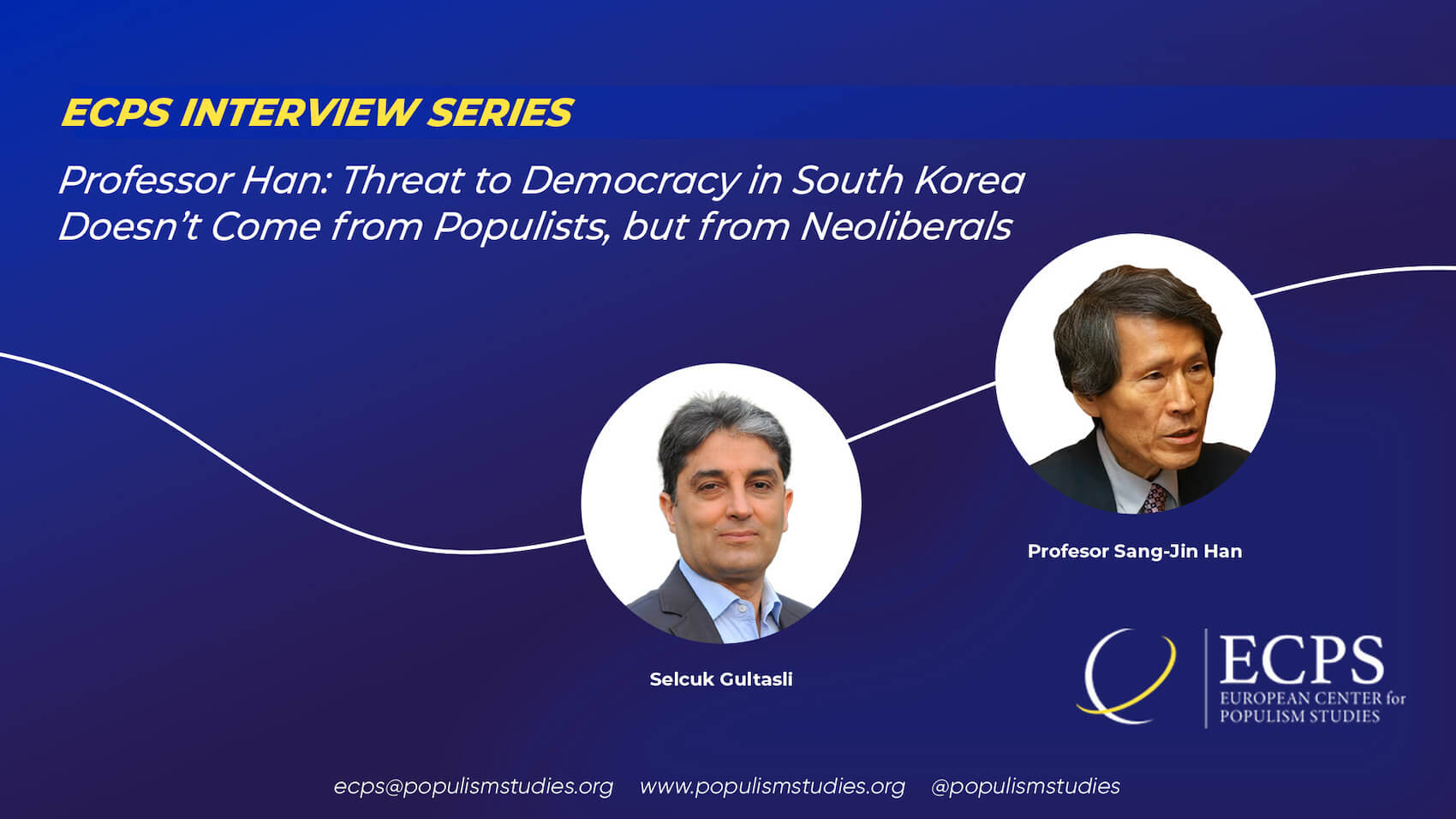
Kurt Weyland

Professor Kurt Weyland: Democracies Possess Inherent Defensive Mechanisms against Populist Challenges

Arguing that democracy is less susceptible, less precarious, and less endangered by populist leadership, Professor Kurt Weyland of the University of Texas emphasizes, “Populist leaders inherently lean towards illiberal tendencies, aiming to consolidate power at the expense of democratic principles. However, democracy possesses inherent defensive mechanisms.”

Interview by Selcuk Gultasli

In an exclusive interview with the European Center for Populism Studies (ECPS), Professor Kurt Weyland, a political scientist and Mike Hogg Professor in Liberal Arts at the University of Texas at Austin, shared insights into the evolving nature of populist movements and their impact on democracies. The interview covered key aspects of his research, addressing the weaknesses of personalistic plebiscitarian leadership, the comparative analysis of populism‘s impact on democracy in Europe and Latin America, the role of charismatic leadership in damaging political-party systems, and the long-term impact of populist movements on the political landscape.

Professor Weyland emphasized the challenges faced by populist leaders due to their domineering and self-assured nature, which often leads to arbitrary policy decisions and a lack of systematic governance. He highlighted the difficulties in forming coalitions and the intentional polarization fostered by populist leaders to maintain plebiscitarian support. 

The comparative analysis of populism‘s impact on democracy revealed insights into the resilience of democratic institutions, emphasizing the significance of institutional frameworks, robust party systems, and the role of society. Weyland discussed conjunctural opportunities that populist leaders exploit, such as windfall rents and crises, and how these factors contribute to their mass appeal.

Addressing the impact on party systems, Weyland highlighted the corrosive nature of charismatic leadership, causing fragmentation within opposition parties and affecting the overall quality of democracy. He expressed optimism about the future of democracy, acknowledging its record of resilience despite populist challenges.

Regarding the potential re-election of Donald Trump in the United States, Weyland raised concerns about ongoing turmoil but maintained confidence in the strength of US institutions to prevent significant deterioration. He discussed the challenges faced by personalistic leaders in institutionalizing their rule, citing examples from Turkey and Bolivia.

Weyland’s analysis extended to the global perspective, critiquing alarmist findings on the decline of democracy by institutions like the V-Dem Institute. He emphasized the need for nuanced evaluations, considering potential biases in subjective ratings and acknowledging the historical context of democracy’s progress.

Weyland emphasized the significance of tackling representation deficits and addressing citizen concerns, pointing to proactive immigration systems as potential strategies for mainstream parties. He illustrated this point by referencing the Danish Social Democrats’ adoption of restrictive immigration policies, a move that had a profound impact on the populist Danish People’s Party.

Here is the transcription of the interview with Professor Kurt Weyland

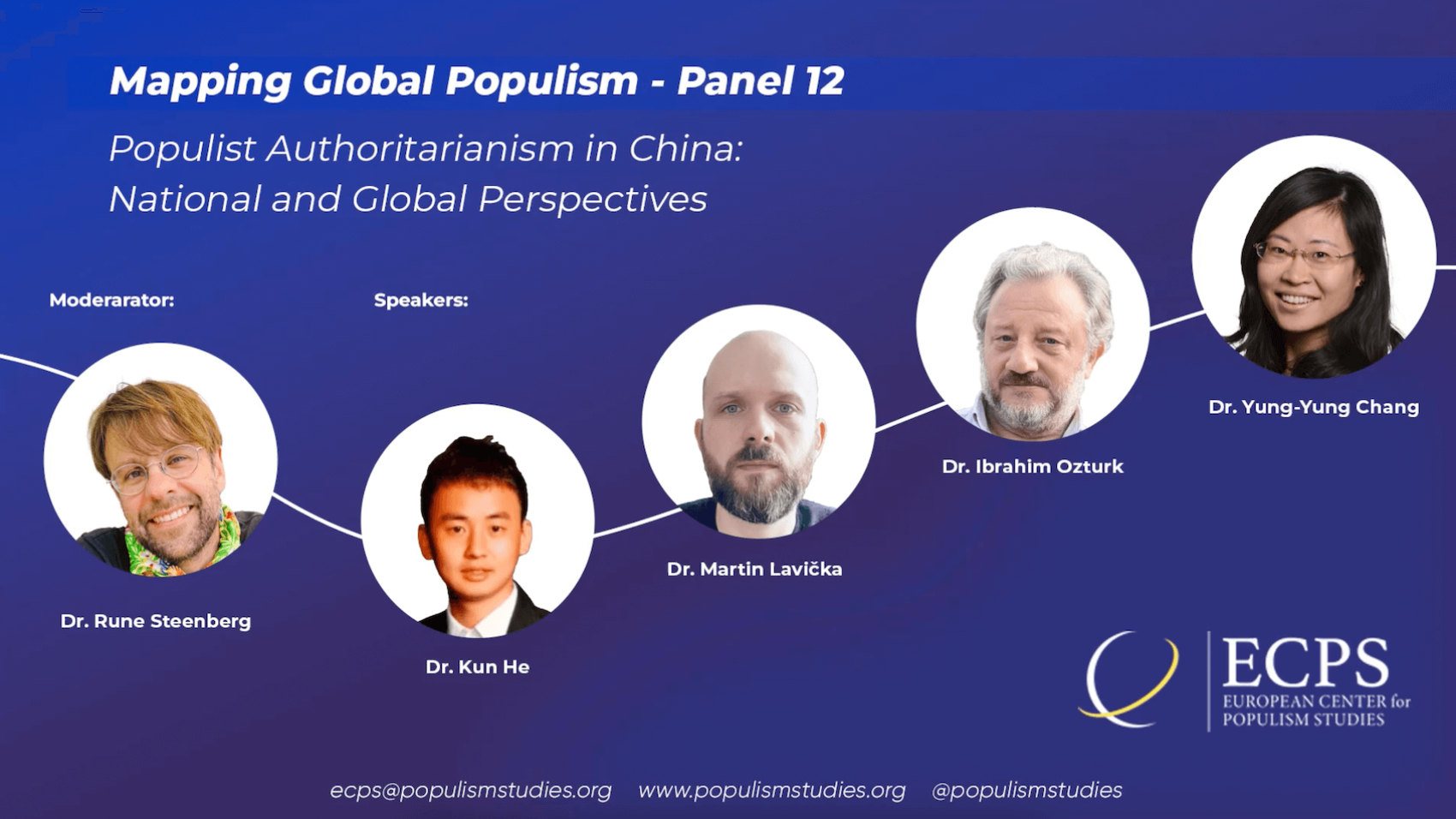
ECPS-MGP-Panel8-Video

Mapping Global Populism — Panel 8: The State of Populist Authoritarianism in Indochina

Moderator

Dr. Nguyễn Yến-Khanh

(Lecturer at Erasmus School of History, Culture and Communication, Erasmus University Rotterdam).

Speakers

“Accountability in a High-Performing Authoritarian Regime: The Case of Vietnam,” by Dr. Nguyen Khac Giang  (Visiting Fellow at the Vietnam Studies Programme, Yusof Ishak Institute – ISEAS).

Political Culture, Social Media, and Authoritarian Populism in Cambodia,” by Dr. Sokphea Young (Visiting Research Fellow at Queen Mary, University of London).

“Reflecting on 48 Years of Socialism in the Lao PDR: What Does This Mean, and What Comes Next?” by Dr. Phill Wilcox (Research Associate at Bielefeld University). 

Is Myanmar a Totalitarian State?” by Dr. Mon Mon Myat (Instructor at the Peace Studies Department in Payap University, Thailand). 

MGP-Panel7-Thailand

Mapping Global Populism — Panel #7: Democracy in Thailand: Navigating Populism and Authoritarianism

Moderator

Dr. Michael Montesano (Associate Senior Fellow, Thailand Studies Programme at Yusof Ishak Institute – ISEAS).

Speakers

“Political Legitimation and Authoritarian Nation Branding in Thailand,” by Dr. Petra Alderman (Post-Doctoral Research Fellow in Leadership for Inclusive and Democratic Politics at the University of Birmingham, and a Research Fellow of CEDAR).

“Authoritarian Ministry of Truth: A Case of Thailand’s Anti-Fake News Center,” by Itsakul Unahakate (PhD candidate at the University of Sydney and Lecturer at Thammasat University).

“Youth Perspective: Is Populism for the People? An Ecofeminist Movement from Thailand,” by Pattanun Arunpreechawat (NUS Lee Kuan Yew School of Public Policy). 

MR

Dr. Rooduijn on the Normalization of Far-Right Discourse: Mainstream Parties Shift Towards Extremes, Populist Radical Right Persists in Radicalism

In examining the unexpected triumph of populist radical right leader Geert Wilders in the Dutch elections on November 22, Professor Matthijs Rooduijn highlights a noteworthy shift within mainstream parties. He notes their increasing embrace of more radical positions, which challenges the prevailing notion of substantial moderation within populist radical right parties. Delving into the narratives of prominent populist radical right figures like Wilders and Marine Le Pen, Professor Rooduijn contends that the observed changes are primarily stylistic rather than indicative of fundamental shifts in political programs.

Interview by Selcuk Gultasli

In an exclusive interview with the European Center for Populism Studies (ECPS), Dr. Matthijs Rooduijn, Associate Professor in the Department of Political Science at the University of Amsterdam, provides insights into the normalization of far-right discourse globally, particularly in the wake of the surprising election results in the Netherlands on November 22, 2023. Dr. Rooduijn underscores a significant transformation within mainstream parties, as they increasingly adopt more radical positions, challenging the prevailing notion of substantive moderation within populist radical right parties. Examining into the narratives of prominent figures such as Geert Wilders and Marine Le Pen, he argues that observed changes are primarily stylistic, rather than representing fundamental shifts in political programs.

Delving into the complexities of populist radical right movements, particularly in the Netherlands, Dr. Rooduijn identifies nativism as the core feature, following Cas Mudde’s definition. Nativism, characterized by exclusionary nationalism, manifests in various expressions such as antisemitism, Islamophobia, anti-immigration attitudes and racism. The interview provides insights into how Wilders’ anti-Islam agenda fits into the broader narrative of populist radical right ideologies.

Examining the international landscape, Dr. Rooduijn explores both the similarities and differences between populist radical right movements in the Netherlands and other European countries. While leadership may vary, the core ideology resonates with a significant portion of the electorate holding right-leaning cultural views. The interview scrutinizes the normalization of far-right discourse in the Netherlands, highlighting shifts in public perception and electoral strategies. Dr. Rooduijn notes the adaptation of mainstream right parties towards the radical right, contributing to the observed normalization globally.

The discussion extends to Wilders’ stance on immigration, distinguishing his emphasis on Islam from other far-right parties. Dr. Rooduijn provides insights into the intertwining of civilizational populism, nationalism, and their resonance with the Dutch public. The interview further explores the relationship between populism and Euroscepticism in Dutch politics, emphasizing Wilders’ hard-Eurosceptic position and its significance in the broader European context.

Dr. Rooduijn sheds light on the role of social media in the success and visibility of populist radical right parties, acknowledging its transformative impact on political communication. Analyzing the recent Dutch elections on November 22nd, he highlights the unexpected shift in the political landscape and underscores the challenges in forming a government coalition.

Looking forward to the European Parliament elections in June 2024, Dr. Rooduijn expresses concern about the potential surge of populist parties, emphasizing the discordance between their ideas and liberal democratic principles. The interview concludes by addressing the challenges faced by populist radical right movements in maintaining long-term political relevance, particularly the stigma associated with Wilders’ party and its impact on recruiting candidates for political positions.

Here is the transcription of the interview with Dr. Matthijs Rooduijn.

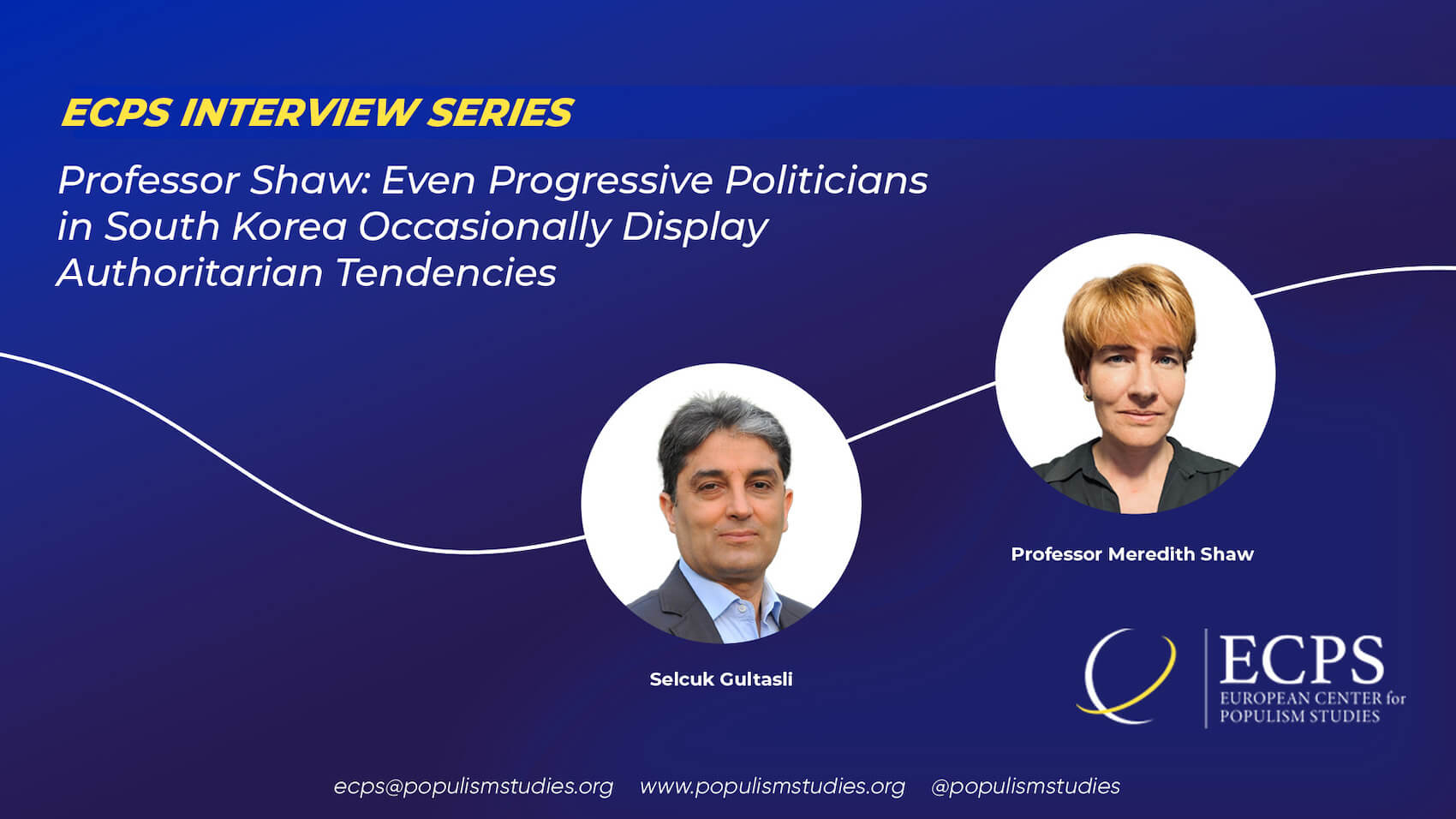
Filc

Professor Filc: Netanyahu’s Era Is Coming to an End, Influence of Clerical Fascism Will Likely Persist

Offering profound insights into the dynamics of Israeli politics and the evolving role of radical right-wing populism in the country, Professor Dani Filc of Ben Gurion University confidently asserts that the era of Benjamin Netanyahu is on the verge of conclusion. However, he also underscores that the influence of “clerical fascism” in Israel is poised to persist.

Interview by Selcuk Gultasli

In an exclusive interview with the European Center for Populism Studies (ECPS), Professor Dani Filc, a distinguished scholar in the Department of Politics and Government at Ben Gurion University in the Negev, confidently asserts that the era of Benjamin Netanyahu, a longstanding figure in Israeli politics, is on the verge of conclusion. However, he also underscores that the influence of clerical fascism is poised to persist.

Offering profound insights into the dynamics of Israeli politics and the evolving role of radical right-wing populism, the interview delves into the historical transformation of the ruling Likud. From its roots as a radical right vanguard to its current status as a sui generis form of right-wing populism, Likud’s evolution is explored. The discussion tracks Likud’s inclusive elements and examines the ideological shifts that occurred during Netanyahu’s tenure.

Addressing the intersection of populism with identity politics, Professor Filc highlights the dangerous chain of equivalencies used to demonize Israeli Arabs and the instrumental use of religion to differentiate the “in-group” and the “out-group.” Professor Filc also provides insights into Israel’s global alliances, pointing out the alliance with European far-right parties. Filc touches on the evolution of Likud under Netanyahu and its alignment with illiberal, right-wing populist movements in Europe. 

Asserting that the ongoing war in Gaza signals the end of Netanyahu’s dominance in Israeli politics, Professor Filc predicts that “with the conclusion of the war in Gaza, Netanyahu will fall, leading to the abandonment of the judicial reform.” However, he expresses concerns about the lasting impact of the ongoing conflict on populist movements and calls for a just peace in the Middle East, highlighting potential dangers associated with civilizational populism or a clash of civilizations.

In this comprehensive interview, Professor Filc shares invaluable insights into the intricate landscape of Israeli politics, the evolution of populism, and the challenges posed by religious and right-wing populist movements in the country.

Here is the transcription of the interview with Professor Dani Filc.

ECPS-SZABIST University-OrtakPanel

Panel by ECPS & SZABIST University: Populism and Electoral Politics Around the World

Moderator

Dr. Fizza Batool (Assistant Professor, SZABIST University, Karachi)

Speakers 

“The Radical Right and the Radical Left in Anno 2023: What Does Populism Got To Do With It?” by Dr. Andrej Zaslove  (Associate Professor – Empirical Political Science, Radboud University.) 

“Psychological Roots of Populist Voting,” by Dr. Bert N. Bakker (Associate Professor, University of Amsterdam). 

The Psychological Appeal of Populism,” by Dr. Jennifer Sheehy-Skeffington (Associate Professor of Social Psychology, London School of Economics and Political Science)

“Electoral Populism in Pakistan and India,” by Dr. Farhan Hanif Siddiqui (Associate Professor, QAU).

“Populist Strategies of Erdogan in 2022 Elections,” by Dr. Salim Cevik (Associate at the Centre for Applied Turkey Studies (CATS), SWP, Germany). 

KennethTan

Authoritarian Populism in Singapore

With its reputation for political stability, social cohesion, and economic wealth, global-city Singapore is very rarely discussed as a case for thinking about populist politics. Kenneth Paul Tan will explore what lies behind this reputation and discuss how the Singapore system, led by a government celebrated as clean, meritocratic, and pragmatic, is now showing signs of change not necessarily in the direction of democratization, but towards authoritarian forms of populism, first of the right and then of the left.

Professor Kenneth Paul Tan delivered this presentation during the “Varieties of Populism and Authoritarianism in Malaysia & Singapore” panel on October 26, 2023, organized as part of the Mapping Global Populism (MGP) panel series.

Kenneth Paul TAN is a tenured Professor of Politics, Film, and Cultural Studies at Hong Kong Baptist University. He teaches and conducts interdisciplinary research at the Academy of Film, the Department of Journalism, the Department of Government and International Studies, and the Smart Society Lab. His books include Asia in the Old and New Cold Wars: Ideologies, Narratives, and Lived Experiences (Palgrave MacMillan, 2023), Movies to Save Our World: Imagining Poverty, Inequality and Environmental Destruction in the 21st Century (Penguin, 2022), Singapore’s First Year of COVID-19: Public Health, Immigration, the Neoliberal State, and Authoritarian Populism (Palgrave Macmillan, 2022), Singapore: Identity, Brand, Power (Cambridge University Press, 2018), Governing Global-City Singapore: Legacies and Futures After Lee Kuan Yew (Routledge, 2017), Cinema and Television in Singapore: Resistance in One Dimension (Brill, 2008), and Renaissance Singapore? Economy, Culture, and Politics (NUS Press, 2007). Previously, he was a tenured Associate Professor at the National University of Singapore. He has held visiting fellowships, and honorary and adjunct professorships at the Australian National University, Chinese University of Hong Kong, Georgetown University (on a Fulbright Fellowship), Harvard University, Sciences Po, the University of Duisburg-Essen, and the University of Hong Kong. His degrees are from the University of Cambridge (PhD, Social and Political Sciences) and the University of Bristol (BSc First Class Honours, Economics and Politics).

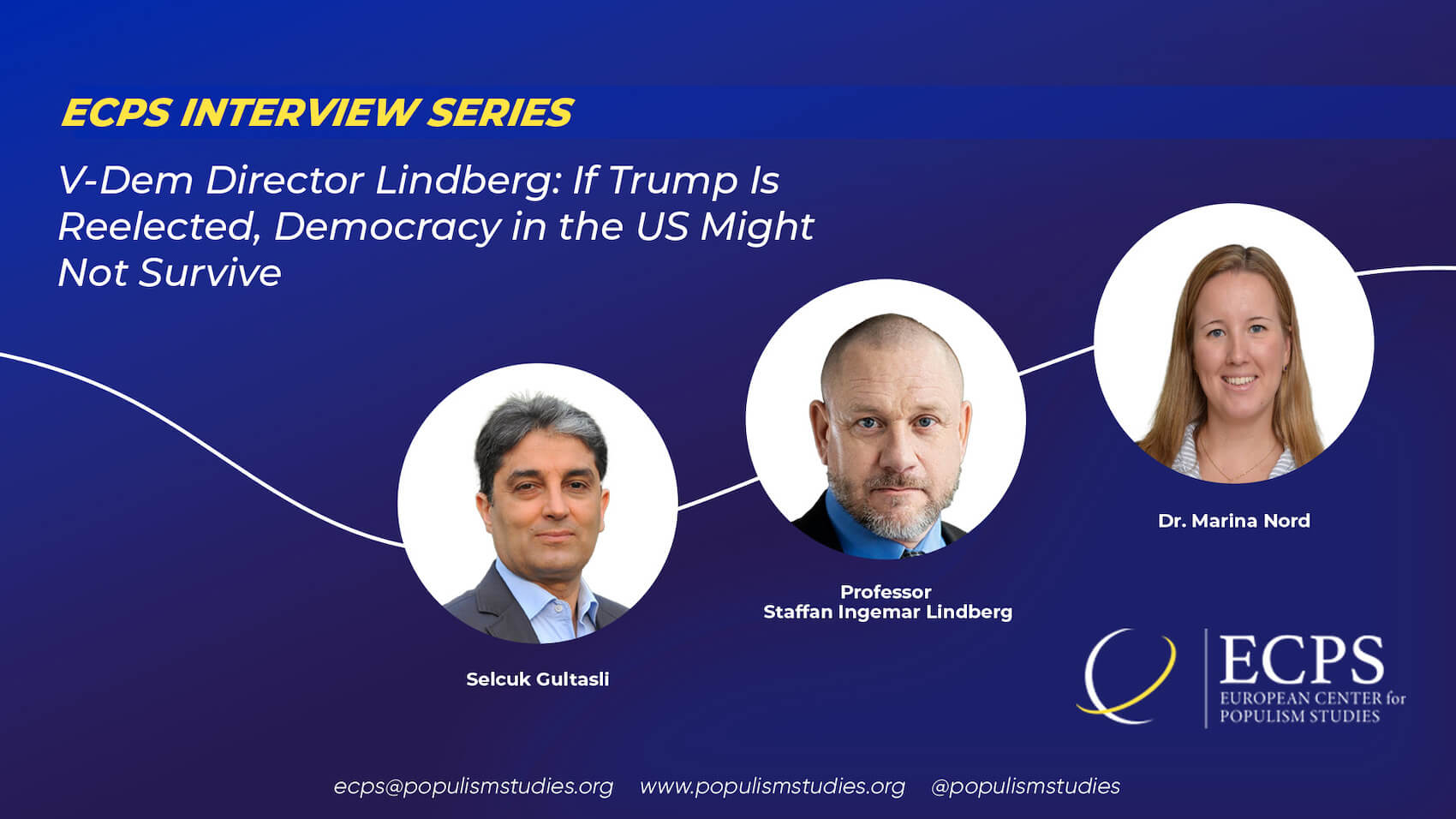
Lindberg-Nord

V-Dem’s Lindberg and Nord express deep concerns about potential victory of far-right populist parties in 2024 EP elections

In an exclusive interview exploring the intricacies of declining democracy, the rise of far-right populism, and the adaptability of democratic systems, Prof. Staffan I Lindberg and Dr. Marina Nord voice their deep concerns, highlighting that this is a matter of significance for all. Prof. Lindberg emphasizes, “We’ve demonstrated through various publications that far-right extremist parties are not only populist but also hold anti-pluralist views in their rhetoric and policies. When they attain power, they often spearhead the ongoing wave of autocratization. I would be very concerned if that also translates into and materialized in the European Parliament elections.”

Interview by Selcuk Gultasli

The state of democracy across the globe is under intense scrutiny as the world grapples with shifting political landscapes and the rise of authoritarian tendencies. In an exclusive interview, Professor Staffan I Lindberg, Director of the Varieties of Democracy (V-Dem) Institute at the University of Gothenburg and Dr. Marina Nord, Postdoctoral Research Fellow at V-Dem Institute, provide valuable insights into the complexities of this critical issue.

Addressing criticisms from Professor Steven Levitsky in an interview with the ECPS on October 12, 2023, the interview begins with a robust response to his contention that the global democratic decline highlighted in the V-Dem Project’s 2023 report may not be as dire as depicted. Lindberg and Nord emphasize the significance of their data, underlining the approach of population-weighted data, which accounts for the global impact of democratic changes in countries with large populations. 

The interviewees discuss the apparent resilience of democracy and its concurrent decline, emphasizing that these findings are not necessarily contradictory. They point to countries such as that have made significant democratic improvements, as well as others where the situation has deteriorated. These varying experiences contribute to the complex global picture of democracy.

Prof. Lindberg explained the use of population-weighted data to assess the state of democracy worldwide, emphasizing that it gives more weight to countries with large populations due to their greater impact on the global state of democracy. This approach led to the conclusion that the global average for democracy regressed to 1986 levels in the V-Dem Project’s 2023 report

Dr. Nord also pointed out that even when looking at country averages, there is a decline, which dates back to 1997. However, she highlighted the resilience of democracy in terms of the continuation of elections in many countries. The interviewees delve into the multifaceted nature of democracy, highlighting that it encompasses much more than the mere presence of elections. Dr. Nord notes that while elections may still take place in certain countries, the decline in essential democratic attributes such as freedom of speech and freedom of association is a pressing concern. 

Prof. Lindberg also expressed a deep concern about the potential surge of far-right populist parties in the upcoming European Parliament elections in 2024. He emphasized that extremist and anti-pluralist parties often drive the current wave of autocratization, and their rise in Europe is worrisome.

Moreover, the interview explores the adaptation of democratic systems to specific cultural and socio-political contexts. Prof. Lindberg emphasizes the inherent contradiction in the concept of an “illiberal democracy” and highlights that the core principle of liberalism is the acceptance of opposing views, which is not compatible with an illiberal stance.

The interviewees conclude with the discussion of the recent Democracy Report by International IDEA, aligning with the findings in the V-Dem Project’s report. Professor Lindberg and Dr. Nord emphasize the urgency of collective action in the face of the growing number of countries undergoing autocratization.

Here is the transcription of the interview with Professor Staffan I Lindberg and Dr. Marina Nord.