Populists rise to power by claiming outsider status against a corrupt elite. Yet many—from Erdogan and Modi to Trump—retain legitimacy long after becoming establishment actors. How? Yilmaz and Morieson argue that populist leaders occupy a dual identity they term “Schrödinger’s Elite”: simultaneously insiders and outsiders. They convert privilege into moral performance—projecting humility, purity, and sacrifice while governing as entrenched elites. This performance is not hypocrisy, but strategy. Whether through Trump’s theatrical diplomacy, Imran Khan’s pious nationalism, or judicial populism in Pakistan and the United States, authority is reframed as service to “the people.” The paradox reveals why populism persists despite policy failure: emotional authenticity eclipses institutional accountability, transforming power into virtue.
One problem populists face when they enter government is that, by definition, they become the very thing they claim to despise: elites. Populist legitimacy is always predicated on their status as outsiders intent on cleansing a corrupt system. However, once the populist outsider becomes part of the governing elite, then it naturally becomes very difficult for them to present themselves as outsiders. One should expect that, once populists begin governing, they should lose their legitimacy. Yet this does not always occur.
Indeed, this notion has been exploded by a generation of populist leaders who, despite making promises they could not keep and becoming insider elites, have retained their popularity and governed in some cases for more than a decade.
The long reigns of populists such as Recep Tayyip Erdogan in Turkey, Narendra Modi in India, and the re-election of Donald Trump in the United States, demonstrate that populists can survive in power despite appearing to lose their outsider status. Moreover, many populist leaders are themselves part of the very elite they condemn. They are educated, wealthy, and deeply embedded within existing institutions. Some populist leaders have emerged from within state institutions, from the judiciary and the military, and cannot therefore be considered in any way outsiders.
However, if populists are supposed to be outsiders battling ‘elites’ on behalf of ‘the people’, why do we see so many populist leaders emerging from, and remaining inside, the most elite sectors of society, including from state institutions and from the super-wealthy?
We call this paradox Schrödinger’s Elite. Like the famous cat in Erwin Schrödinger’s thought experiment that exists in two states at once, populist elites are both insiders and outsiders. They inhabit positions of privilege while performing rebellion. They rule as establishment figures but speak as insurgents. They preserve elite power while transforming it into a moral drama of virtue, authenticity, and at times sacrifice.
Schrödinger’s Elite
Populism, as theorist Benjamin Moffitt notes, does not destroy elite rule. Instead, it dramatizes crisis, performs outrage, uses ‘bad manners’ to present itself as authentic and ‘of the people, and ultimately presents power as service. Leaders appear both powerful and humble, dominant yet close to “the people.” This emotional theatre renews legitimacy without real change.
The idea of Schrödinger’s Elite helps explain everything from Donald Trump’s rallies to former Pakistan Prime Minister Imran Khan’s pious nationalism, and even the moral language of judges in Pakistan and the United States who claim to speak for “the people.” In each case, insiders perform as outsiders and power survives through spectacle.
Illustration of Schrödinger’s cat inside a cube surrounded by neon scientific symbols and formulas, representing quantum physics, superposition, and science education. Photo: Yana Lysenko.
The Paradox of Populist Elites
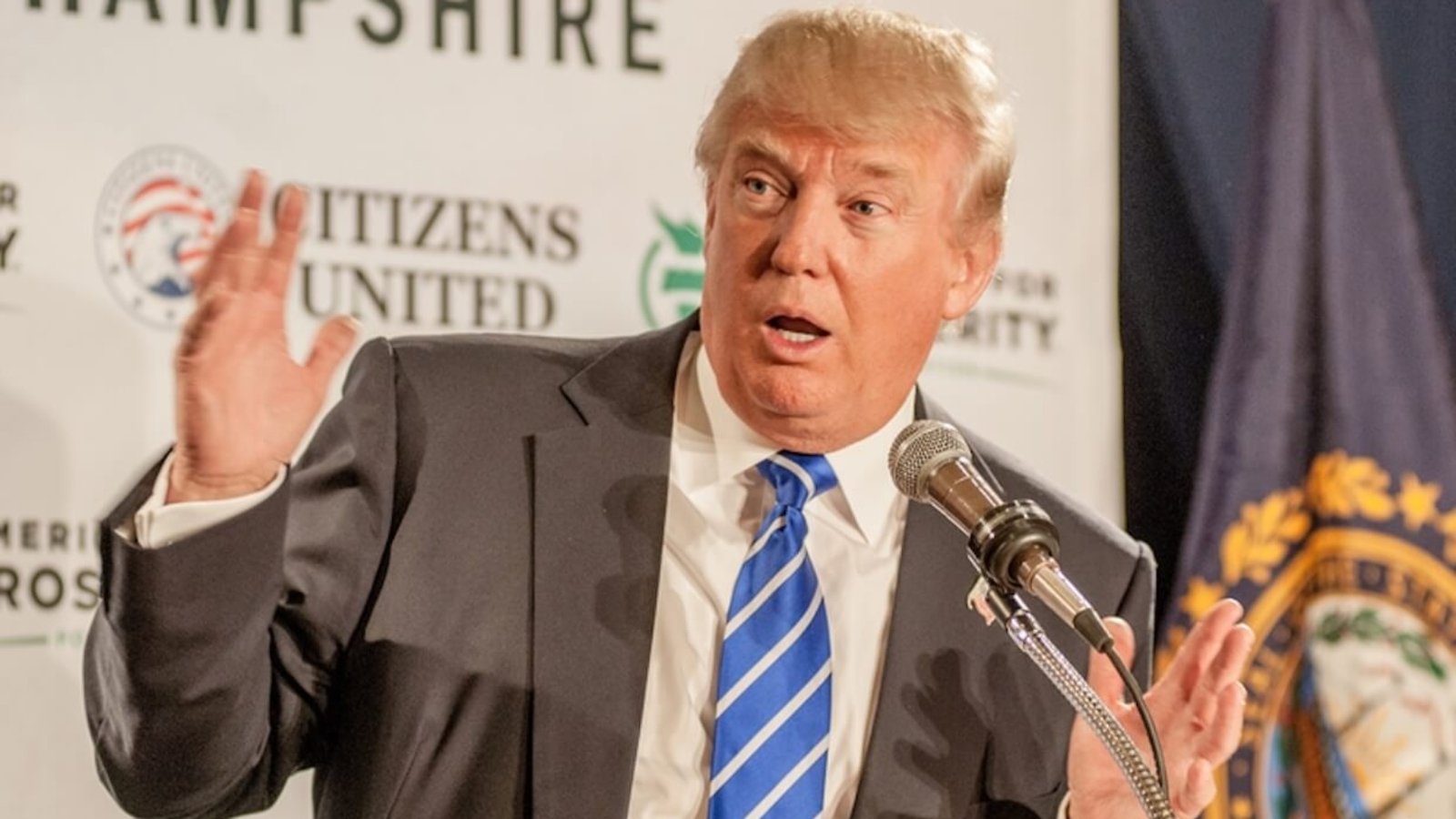
Populism pits “the pure people” against “the corrupt elite.” However, its champions are often wealthy, famous, or institutionally entrenched. For example, US President Donald Trump, a billionaire celebrity, plays the rebel in order to portray himself as an outsider in Washington and a man of the people. His crude humor and defiance convince supporters he is authentic and unfiltered. His wealth – whether real or not – is reframed as proof of independence from the effete Washington elite, which cannot buy him.
Imran Khan performs a similar balancing act. Oxford-educated and once adored as a cricket hero, he recast himself as a pious Muslim and moral crusader against corrupt, insufficiently religious elites. He promised a “New Pakistan” guided by Islamic values, blending humility with righteousness amid promises to save “the people” from corrupt rule.
This combination of purity and power is not hypocrisy but better described as a strategy. Within this strategy, populist leaders turn privilege into moral capital. Their appeal rests less on policy than on emotion, and contra Mudde, less on ideology than on the performance of sincerity.
When Bureaucrats and Judges Turn Populist
Populist performance is not limited to politicians. Bureaucrats and judges can play the same role, posing as the conscience of the nation. Pakistan’s judiciary offers a clear example. For decades, judges have justified coups and interventions under the “Doctrine of Necessity,” claiming to act for “the people.”
In 2007, Chief Justice Iftikhar Chaudhry became a folk hero after defying President Musharraf. The Lawyers’ Movement celebrated him as a defender of democracy, yet it expanded the judiciary’s political reach. Courts later used moral language to disqualify Prime Minister Nawaz Sharif. One judgment compared him to a mafia “Godfather,” casting legal authority as moral and national purification.
The courts presented these rulings as virtue rather than law, appearing humble while exercising vast power. This can be described as a form of judicial populism, in which authority is framed as populist representation of the will of the ‘pure’ people.
The Supreme Court’s Populist Turn
The same pattern arguably surfaces in stronger democracies. For example, when the US Supreme Court overturned Roe v. Wade in Dobbs v. Jackson (2022), the majority framed the decision as restoring democracy, saying “the people” should decide. In doing so, the Court claimed moral authority even as it arguably concentrated power.
American justices are familiar public figures, and now speak publicly more than ever, often presenting themselves as moral figures rather than distant experts on law. As a result, the line between law and storytelling begins to blur, and in an already politicized court, procedure gives way to conviction. And like populist politicians, judges adopt the language of authenticity to build a direct connection between themselves and the public, increasing their own power.
Trump in Cairo
Trump’s October 2025 appearance in Cairo showed how populist performance travels. At a peace ceremony marking a ceasefire between Israel and Hamas, he turned diplomacy into entertainment. He joked with Viktor Orbán and Giorgia Meloni, calling Meloni “beautiful” and boasting that even if nobody liked Orbán, he did, and “I’m the only one that matters.”
To his followers, this vulgarity was truth-telling. His refusal to play by elite rules made him seem both powerful and free. He was the most influential man in the room and the only “outsider.” This was Schrödinger’s Elite in pure form: authority disguised as rebellion.
Imran Khan’s Moral Stage
Imran Khan’s career shows how this paradox works in a postcolonial setting. Khan embodies privilege and once was regarded as a playboy, yet he built his politics on piety. He invoked Riyasat-e-Medina, the ideal early Islamic state, and urged citizens to show moral discipline. His Oxford education became proof of competence and incorruptibility.
Each statement arguably turned politics into moral theatre. His suffering, including dismissal from power, arrests, court battles, and subsequent imprisonment only reinforced his image as a truth-teller persecuted by corrupt elites.
Emotion Over Structure
The figure of Schrödinger’s Elite shows that populism does not end hierarchy but rather reshapes it. Populist elites thrive by performing virtue, and in doing so, turn their dominance into service, their power into purity, and self-interest into sacrifice for “the people.”
This helps explain why populism persists even when it fails to deliver positive results. Accusations of hypocrisy become proof of authenticity. Challenges to legitimacy become attacks by corrupt elites. Through these reversals, leaders convert their own failings into legitimacy and authenticity.
Digital media amplifies the cycle. Outrage, alas, spreads faster than rational argument, while visibility online replaces accountability. Trump’s tweets, Khan’s livestreams, and activist judges’ speeches all use the same grammar of feeling. They create intimacy between elite and follower while bypassing institutions that might check power.
The Theatre of Power
Across regimes and ideologies, populism redefines what it means to be elite. It replaces expertise with emotion and legality with morality. The populist elite, in this way, claims to represent the people while keeping control.
In Pakistan, judges act as the nation’s conscience while consolidating power. In the US, the Supreme Court claims to restore democracy. In Cairo, Trump mocked his peers to show he was above them. Each act sustains authority through performance.
The danger of all this lies not in populism’s attacks on elites, but in its ability to moralize populist domination of politics and law. It turns power into a spectacle of virtue, and in doing so, keeps citizens powerless while making them feel morally included and thus represented.
A Paradox That Endures
Populism’s strength lies in its contradictions. Its leaders inhabit both rebellion and authority, humility and dominance. Across democracies and hybrid regimes alike, the populist governing powers claim to speak for “the people” while reinforcing control. And that is perhaps why populism endures. Its elites have learned not to abolish hierarchy but instead found ways to perform populism while entrenching themselves in power.
In this exclusive interview with the ECPS, Professor Ivan Llamazares of the University of Salamanca analyzes Argentina’s shifting political landscape under President Javier Milei, whose recent midterm victory consolidated his power and emboldened his radical austerity agenda. Professor Llamazares argues that while Milei’s libertarian populism intensifies Argentina’s ideological divisions, it does not fundamentally alter them. “It’s a modification, an intensification—but the underlying structure is still there,” he explains. Rejecting comparisons to Bolsonaro’s authoritarianism, he insists that “authoritarianism is very weak in Argentina, whose popular culture is deeply democratic.” For Professor Llamazares, Milei’s experiment embodies an “extreme illustration” of global right-wing populism—yet remains distinctly Argentine, rooted in enduring social cleavages, economic crises, and democratic resilience.
Argentina’s President Javier Milei has consolidated his grip on power after his party, La Libertad Avanza, won nearly 41% of the vote in the midterm elections, securing 13 of 24 Senate seats and 64 of 127 lower-house seats. The landslide victory marks a major political endorsement of Milei’s radical austerity program, dubbed “chainsaw politics,” defined by deep spending cuts, deregulation, and free-market reforms. The results will allow him to advance his agenda more easily after facing frequent legislative resistance in his first two years in office. Supporters have hailed the win as a rejection of decades of Peronist economic management, while critics warn of deepening poverty, unemployment, and inequality as a result of sweeping cuts to education, healthcare, pensions, and social programs. Despite stabilizing inflation and restoring investor confidence, Milei’s reforms have sparked widespread hardship and a risk of recession. Meanwhile, a record-low turnout of 67.9% reflects rising public apathy and disillusionment with Argentina’s political class.
Against this backdrop of economic turbulence and populist consolidation, Professor Ivan Llamazares, a leading scholar of political science at the University of Salamanca, reflects on the deeper ideological and institutional dynamics shaping Argentina’s political transformation in an exclusive interview with the European Center for Populism Studies (ECPS). Known for his research on ideological structuring and party system dynamics in Latin America, Professor Llamazares situates Milei’s rise within Argentina’s longstanding ideological fault lines—the enduring struggle between Peronist interventionism and neoliberal technocracy.
Professor Llamazares cautions against viewing Milei’s ascent as a structural rupture. “It’s a modification, an intensification,” he explains, “but the underlying structure is still there.” In his view, Mauricio Macri’s victory in 2015 marked a more significant political realignment, introducing a coherent center-right, pro-business coalition that shifted the ideological balance of Argentine politics. Milei, he argues, has merely intensified this trajectory, infusing it with “a new rhetoric, a new style,” and a libertarian flair.
While comparisons to Bolsonaro and Fujimori are unavoidable, Professor Llamazares stresses the limits of authoritarianism in Argentina. “Authoritarianism is very weak… even the authoritarian project itself must be very weak,”he observes. This weakness, he suggests, is rooted in Argentina’s deeply democratic popular culture, shaped by the trauma of the last dictatorship and the political learning processes that culminated in the country’s 1983 democratic restoration. Unlike Bolsonaro, Milei “hasn’t taken significant steps toward building authoritarian institutions.”
At the same time, Professor Llamazares acknowledges that Milei represents “an extreme illustration” of a global populist trend that merges moral populism, economic deregulation, and cultural grievance. Yet, he underscores that many aspects of Milei’s project are “very typically Argentine,” reflecting specific socio-economic tensions—between export-oriented elites and protectionist sectors, between dollarization and social protection, and between a cosmopolitan upper class and the working poor.
Ultimately, Professor Llamazares interprets Milei’s moment not as a new ideological paradigm, but as a cyclical populist insurgency within Argentina’s enduring political structure. “Milei represents something new in style,” he concludes, but the deeper ideological foundations of Argentine politics remain intact.
Here is the edited transcript of our interview with Professor Ivan Llamazares, slightly revised for clarity and flow.
Milei’s Victory Reflects Fear, Not Consensus
Javier Milei casts his vote in Buenos Aires, Argentina, on November 19, 2023. Photo: Fabian Alberto De Ciria.
Professor Ivan Llamazares, thank you very much for joining our interview series. Let me start right away with the first question: How would you interpret Javier Milei’s midterm victory in light of Argentina’s ongoing economic downturn, corruption scandals, and record-low voter turnout? What does this outcome reveal about the contemporary resonance and adaptability of right-wing populist discourse within contexts of socioeconomic precarity and institutional distrust?
Professor Ivan Llamazares: It’s a very complex issue; there are many interconnected themes, but one has to interpret this victory in the context of Argentina’s economic and political situation and the dynamics of the last decade. First of all, there is an ongoing and deep division in Argentine society in terms of economic and political projects. On the one hand, we have Peronism and Kirchnerism as a particular and dominant current with internal divisions, and on the other hand, a more market-oriented, right-wing approach that focuses on control, authority policies, favoring market mechanisms, integrating the Argentine economy into the world, less protectionism, and so on. This has been the structural basis of Argentine politics over at least the last decade.
Then there is also the current economic situation. All the problems you mentioned are very acute and very important. In fact, they also led to the defeat of Milei’s party in the Buenos Aires elections a few weeks ago. But, on the other hand, there is also fear—particularly among those sectors that endorse a more liberal economic project. There was fear that the defeat of Milei would entail economic collapse, devaluation, and an uncertain political scenario that could even lead to his removal.
That helps explain the solidification of the coalition in favor of Milei. He received 40% of the vote—40% of the 68% of people who voted—so, in total, it’s probably less than 30% of all eligible voters, about 29% of Argentine society. It’s a majority of votes, but that’s the basic picture. There are, of course, other elements. That doesn’t mean, by the way, that everyone in this coalition is happy about Milei, or likes or trusts him, but they may have preferred the continuation of his project to the uncertainties that would follow his defeat. These, in my view, are the basic elements.
Trump’s Support Boosted Milei’s Momentum, But Interests May Diverge
To what extent might Milei’s electoral resilience be contingent upon exogenous political and financial scaffolding, particularly from Donald Trump and the US Treasury? Could this episode signify the emergence of a transnational populist alliance that fuses neoliberal governance with nationalist rhetoric across hemispheres?
Professor Ivan Llamazares: The answer to the first question is “yes”—it has helped Milei very clearly. It has moved him to the upper bound of the survey projections. It is also clear that the situation of the peso, the chances of devaluation, and so on, improved over the last week due to these commitments by the Trump administration. So it has helped. I don’t know exactly how much, but it must have helped reassure people who perhaps had some doubts yet wanted to avoid the victory of Peronism, and they must have thought ‘at least we have the support of the US, which is the major economic player, and that means the project can continue in this way for a time’. So I think it has been important.
In terms of the alliance, I am not so sure. Of course, there are some ideological, personal, and political affinities—they are close to each other in some respects. But I’m not sure this is going to be so important in the future, in the sense that there are the interests of the US government and the interests of the Argentine government. The Argentine government is dependent, of course, on the US government, not the other way around. But in a situation where US policymakers make a different evaluation in terms of their calculations, they can change. Also, in this case, people refer to ideological proximity, but there are also some economic interests that may have played a role in this support. People close to the Trump political coalition, to the Trump government, also had some interests at stake in the devaluation, investments, and so on. So I would expect some connections and affinities, but I wouldn’t overemphasize them. Each government has its own interests, for sure.
The US Rescue Deepens Argentina’s Ideological Polarization
The US-engineered bailout has been widely interpreted as politically instrumental rather than economically rational. How do such interventions reconfigure Argentine imaginaries of sovereignty, dependency, and anti-elitism, which have long underpinned populist mobilizations from Peronism to Milei’s “anarcho-capitalism”?
Professor Ivan Llamazares: This is complex. On the one hand, this basically reinforces the interpretations that both Peronists and anti-Peronists have about the economic world. In the case of people who are pro-market, export-oriented, and anti-protectionist, who want to integrate the Argentine economy into global capitalism, this confirms that it is better to be associated with the major economic powers of the world, with the US market. So, it works well in that respect.
With regard to the ideological core of Kirchnerism and Peronism, in the same way, this shows that the Argentine government—this anti-Kirchnerist, anti-Peronist government—is just a puppet of international capitalism. So it doesn’t defend the Argentine economy or Argentine society, and it puts Argentina in a situation of total dependency. In fact, they could make the point, and it was a strong one, that this government has increased Argentina’s debt and that we will not be able to pay it. This is just short-term reassurance, but in the end, we face huge problems. We are in a mess.
So, in that sense, it reinforces everything. Perhaps, for people who are doubtful, this is somewhat favorable toward the right because, in this case, they have saved us. Perhaps there are some advantages in being close to these people. And that may be a little similar to the Menem situation. Menem changed Peronist policies, adopted a strategy of being very close to the United States, to international markets, privatization, and so on, and for a while, it worked. Menem won the 1995 elections. So, it works well in terms of Argentine narratives. One has to wait until the end to see how this finishes. Let’s see what happens in a year and a half—what will be the situation of the peso, the economy, whether it will be in recession or not.
Milei Won the Election, but Not ‘the People’
Given the severe austerity measures, deep welfare retrenchment, and widening inequality, how do you account for Milei’s capacity to sustain an affective and symbolic identification with “el pueblo” while advancing a project grounded in radical market orthodoxy?
Professor Ivan Llamazares: He has been successful in solidifying his coalition in order to win against the Peronists and other contenders. I don’t think this means he can portray himself as the leader and representative of a unified Argentine people. I don’t think that is possible. I think the anti-elite populist discourse had more credibility in the presidential elections, to some extent.But right now, the situation is clear. He represents a social coalition that is more middle class. If you look at the electoral results by municipality, he has performed much better in districts where income is higher than in those where income is lower, in contrast to Peronism. He has won, but the idea that “I represent the people, and Peronism represents the elite” cannot work very well right now.
Peronism is weak, but it represents many people—poor people, working-class people, those who have informal jobs, and so on. So I don’t think it works very well in terms of political rhetoric. It worked fine to win the election, but the idea of casta or anti-elite discourse doesn’t work so well right now, actually.
A New Rhetoric, not a New Structure
Crowd of protesters during the cacerolazos—the pots and pans demonstrations—against President Cristina Fernández de Kirchner in Buenos Aires, Argentina, on November 8, 2012. Photo: Dreamstime.
In your earlier work on ideological dimensions and spatial models of Latin American politics, you emphasized the structuring role of ideology in mediating citizen preferences. How does Milei’s “anarcho-capitalist” imaginary, with its libertarian anti-statism and anti-political moralism, reconfigure Argentina’s traditional ideological continuum between Peronist interventionism and neoliberal technocracy?
Professor Ivan Llamazares: What he represents is rooted in the existing structure of ideological and programmatic confrontation. He’s not departing from it; he’s transforming it slightly—rhetorically and in terms of the social coalition. But he draws his strength from this division. In that sense, I don’t think he’s a radical transformer. He hasn’t changed the parameters of these conflicts, which have a long history in Argentina and became particularly solidified under the Kirchner governments—both Néstor Kirchner and Cristina Fernández de Kirchner.
He hasn’t altered that dynamic drastically; rather, he has given it a new flavor, emphasizing the freedom associated with the market. He has managed to appeal to young people outside formal markets—self-employed workers, young males. But he hasn’t changed the ideological structuring of the Argentine party system. That’s my impression. In a way, he has intensified everything.
This could also be seen, in a similar way, in the election that Macri won. But Macri had a more moderate profile and was more of an establishment politician or leader. Milei is disruptive, but this also has to do with the depth of the Argentine crisis and the depth of Argentina’s conflicts.
Not a Break, but an Escalation of Neoliberal Populism
Can Milei’s experiment be analytically classified as a form of “neoliberal populism,” or do its discursive, moral, and performative elements constitute a qualitatively distinct libertarian-populist hybridity that challenges conventional typologies of populist economics?
Professor Ivan Llamazares: He fits under the first label, but with a new level of intensity and new rhetorical devices. Clearly, it’s pro-market, pro–export-oriented, and neoliberal in an extreme way, with rhetoric that is much more radical. I don’t think he departs from that, but he gives it a libertarian flavor and a highly ideological tone. He draws on obscure economic theoreticians from the Austrian school, speaks in a vulgar way, is rude and disrespectful, and does not represent the elites—the cultural elites—in that sense.
However, he remains rooted in the same neoliberal populist approach. In some respects, he’s also close to Bolsonaro. So I don’t think it’s a total break with the past. By the way, this trend began before Milei, as during the Néstor Kirchner period there were already segments of the Argentine right clearly moving in this direction.
Global Resonance, Local Specificity: Milei’s Unique Populism
How does the Milei-Trump ideological affinity, which is a fusion of moral populism, economic deregulation, and cultural grievance, reflect broader transformations in the grammar of global right-wing populism, particularly its capacity to reconcile anti-establishment rhetoric with financial globalization?
Professor Ivan Llamazares: He represents this trend in a way; he’s an extreme illustration of it—very powerful in rhetorical terms, for instance. Milei embodies something clear and substantive in international terms. I also have the impression that some of these characteristics are very specific to Argentina. I don’t think this ultra-liberal, pro–financial markets, pro–export-oriented, pro-dollarization approach works as well for the radical right in other contexts. I don’t expect or see anything similar when we look at France, Italy, or Germany and when we focus on the radical right.
In some respects, he reflects a distinctly Argentine situation—for instance, the tension between export-oriented and social protection models, the importance of the dollarization process, and the fact that Argentina is an economy where many Argentines hold billions of dollars and have different concerns. There is also the need for the Argentine upper and upper-middle classes to remain strongly connected to international economic markets in different ways—financially and through exports. That’s very Argentinian.
Some elements are similar—pro-market attitudes, certain liberal ideas, anti-elitism, anti-left sentiment, an emphasis on social order, work ethic, discipline, crime and punishment, and punitive policies. But in terms of economic globalization—anti-tax sentiment, by the way, strongly anti-tax—in this respect, many aspects are very typically Argentine.
A Divided Peronism Searching for Renewal
Large crowds march nationwide in defense of public universities and state education in Argentina — one of the largest demonstrations of President Javier Milei’s government, with attendance estimates ranging from 100,000 to 500,000. The building with the image of Eva Perón can be seen in the background in Buenos Aires on April 23, 2024. Photo: Dreamstime.
Peronism has historically embodied a polyvalent synthesis of populism, nationalism, and social justice. How is the Peronist opposition reconstructing its ideological and discursive identity in the face of Milei’s anti-Peronist moral crusade and his attempt to redefine “the people” as entrepreneurial individuals rather than collective actors?
Professor Ivan Llamazares: A good question. First of all, one has to say that Peronism is in the process of reconstruction. It is deeply divided, and there is no clear national leadership. On the one hand, we have Cristina Fernández de Kirchner; on the other, other possible leaders, in particular Axel Kicillof, the governor of the province of Buenos Aires. And there might be other figures within Argentine Peronism who could move in different directions because Peronism is a very plastic, very flexible political creature. So, we don’t know exactly how it is going to evolve over the next couple of years. It’s clear that it has to change.
Historically, it has been the dominant force in Argentine politics, and it has now suffered a very humiliating defeat. The analysis of why this has happened is very complex. I would say that they will have to stick to the idea of social justice and reject many elements of the Milei platform. They don’t have alternatives in that respect. Otherwise, they will lose their reason for being, because if they are going to defend entrepreneurship and individual economic freedom, for that purpose people already have Macri, Milei, PRO, Libertad Avanza, and others. That is not possible.
They also have to appeal to trade unionists, organized labor, and new social sectors that are now more Peronist than in the past—or to sectors that are close to some elements of the Peronist platform, such as people who work at universities. So, they cannot change dramatically, but they must find a new balance, for sure. And that doesn’t mean that, when the situation is ripe, they won’t win. They could easily win future elections.
It depends on Milei’s economic performance, but it’s also true that they must find an economic platform to make national policy—and that is very difficult. Alberto Fernández totally failed. He was divided between different currents and tendencies and didn’t find an economic balance. It is possible that someone more pragmatic—let’s think, for instance, of Sergio Massa—someone very pragmatic, who might even be close to the center-right in some respects, could eventually win. This person could maintain some elements of Peronism but move in a more orthodox direction. That is possible.

But one must also keep in mind that Argentine economics and politics are highly volatile. We have many experiences of very drastic changes, and Peronism has the structure and the network to build something new on that basis.
Authoritarianism Is Weak in Argentina’s Political DNA
In comparative perspective, do you discern substantive parallels between Milei’s “chainsaw politics” and other neoliberal-populist experiments in Latin America—such as Fujimori’s authoritarian neoliberalism or Bolsonaro’s reactionary anti-globalism? How do Argentina’s institutional legacies and socio-political cleavages inflect these trajectories?
Professor Ivan Llamazares: There are some shared elements, for instance with Bolsonaro, in terms of rhetoric and economic direction. They clearly share certain themes—also with Fujimori, in his attempts to reshape the Peruvian economic framework and redefine the role of the state. On the other hand, there are important differences.
One of them is that authoritarianism in Argentina—and this is just an intuition, as there is not enough empirical evidence to confirm it definitively—is very weak. I would say so. Even the authoritarian project itself must be very weak. In fact, despite all the excesses, problems, and exaggerations, Milei hasn’t taken significant steps toward building authoritarian institutions.
That may have to do with Argentine popular culture, which is deeply democratic. It may also stem from the intensity of the trauma of the last authoritarian experience—the violence, the suffering, and the learning processes that led Argentine society to bid farewell to authoritarianism in 1983. It could also be related to the characteristics of Argentine civil and political society.
So, I don’t think an authoritarian transformation is taking place right now, and I don’t think it’s very likely. Bolsonaro attempted to do this; he failed. He failed, but at least he tried. I don’t imagine Milei doing the same. I’m not sure if he’s powerful enough, structurally speaking, within the broader right. The argument could be made that some social and economic sectors are using him, but they are not very strongly connected to him. The Argentine right is plural—there are other actors operating there—so I don’t see this happening.
A Cyclical Insurgency, Not a Structural Rupture
Inauguration ceremony of President Javier Milei at the National Congress in Buenos Aires, Argentina, on December 10, 2023. Photo: Fabian Alberto De Ciria.
Based on your long-standing research on party system dynamics and ideological structuring in Latin America, does Milei’s ascent represent a critical juncture in Argentina’s cleavage structure—a durable reconfiguration of the left–right and populist–technocratic axes—or rather a cyclical populist insurgency within an enduring Peronist framework?
Professor Ivan Llamazares: I would go for the second interpretation. It’s a modification, an intensification—there are significant changes—but the underlying structure remains the same. In that respect, my impression is that Macri’s victory was more important. Until Macri, you had the Peronists and the Radicals—Alfonsín, a Radical; then the Peronists; then Menem; then De la Rúa, who was a Radical, although he led a broad and plural coalition—and then again, the Peronists. With Macri, you had the emergence of a center-right coalition. It was not Radicalism; it was a new actor, one that was very strongly pro-business, pro-market, and so on.
So, Macri brought about a more important and enduring change, and Milei has intensified this in a way—with a new rhetoric, a new style, representing something different. But the structure of pro-market, pro–export-oriented versus protectionist, social-expenditure-driven, inflationary policies represented by Peronism remains in place. I don’t think that has changed.
Populist Style Loses Credibility Once in Office
How might we interpret the performative and aesthetic dimensions of Milei’s leadership, such as his rock-star persona, symbolic aggression, and social media theatrics, as mechanisms of discursive populist construction, mobilizing affective resonance in a post-institutional political environment?
Professor Ivan Llamazares: They are mechanisms—populist elements, populist styles—and shifts in that direction. I have no doubt about it. These elements are more powerful and usually more effective for politicians who are outside of power. They made much more sense and were more impactful in electoral terms when Milei was an outsider contending for the presidency.
Right now, I doubt that they contribute much to his success. The credibility of these elements tends to erode once a president has been in office for three or four years. So, I don’t think this will add much in the next presidential elections. He represents a different style, but it is not as credible. Now the economic alternatives are clear, and that’s what led to Milei’s triumph—not so much that he gave a concert saying, “I’m the Lion,” and so on. That’s my impression.
And who knows—perhaps in two years we will have a Peronist with a very disruptive style. It’s possible. By the way, in Argentine politics, Peronists are often disruptive in style, while the right and the Radicals tend to be more established figures. Milei has changed that, but Menem was also a disruptor—someone who represented something new in terms of style. Cristina Fernández de Kirchner was as well, in the way she spoke and mobilized. Eva Perón, too, in the past. Peronism has a long tradition in that respect, and it is interesting that Milei has taken it and transformed it in a different way, of course.
Peronism Will Likely Re-Emerge as Argentina’s Next Political Force
Murals of Eva Perón and Juan Domingo Perón in Buenos Aires, Argentina, on October 30, 2016. Photo: Dreamstime.
And the final question is: looking forward, do you foresee a durable transformation of Argentina’s political field toward a libertarian-populist realignment, or will economic contradictions, institutional inertia, and popular backlash catalyze the re-emergence of a renewed progressive or Peronist counter-populism capable of reclaiming “the people” from the right?
Professor Ivan Llamazares: A very ambitious question. We cannot predict the future, for sure. Many things can happen. We could also imagine that Milei is successful—it’s a possibility—that the macroeconomy begins to work in a Chilean way in the future. That’s a possibility. We don’t know.
But if I had to make a bet, I would say that this libertarian coalition will also face strong economic problems. I’m saying that not on the basis of any future anticipation, but on the basis of previous experiences. This might be wrong, but recent experiences since the 1970s suggest that it is very difficult for such complex economic and social systems to function smoothly. That’s why Argentine economists say it is very difficult to find a virtuous balance—a virtuous cycle—in Argentine economics, and that sooner or later governments face imbalances and bottlenecks that lead to reconfigurations.
So, I would expect—though I’m not sure if in two years or in four years—a crucial change, an oscillation. And I would assume that Peronism will play a key role in that change, that it will be able to lead a different coalition, and that coalition will have to represent something quite distinct from Milei’s policies. Will they, in the end, pursue the same policies as Cristina Fernández de Kirchner or Néstor Kirchner? Probably not. They would probably have to find a different policy. But I would expect a change in the next two to four years in Argentina’s economic policy.
In this thought-provoking commentary, Dr. João Ferreira Dias argues that the dominant ideology underpinning contemporary right-wing movements is not populism or illiberalism, but nativism—a worldview centered on defending the “native” population against perceived external and internal threats. Drawing on theorists such as Cas Mudde, Ernesto Laclau, and Fareed Zakaria, Dr. Dias shows that while populism offers the form of political antagonism (“the people” versus “the elites”), nativism provides its substance: the protection of cultural and demographic identity against globalization and multiculturalism. Dr. Dias concludes that nativism’s emotional and existential appeal—rooted in fear of the “other” and longing for cultural homogeneity—has achieved social hegemony across much of the West.
We often speak of populism, the radical right, or illiberalism. Yet, to truly understand the rise and entrenchment of the contemporary right, we may need to shift our analytical lens toward nativism. What unites right-wing populist leaders with individuals such as Mr. Armando, the bakery owner; Ms. Aurora, a civil servant; Uncle Venâncio, a retiree; or José Maria, a private school student, is not a coherent philosophical conception of the state. It is something more elemental and psychological: the belief that globalization and multiculturalism—especially in the form of immigration—are dismantling national identities.
When radical right-wing populism first emerged, it proved difficult to classify. While it drew from the Nouvelle Droite (Taguieff, 1993), it also contained a performative, mobilizing dimension, and a radicalism based on the division of society into “us” and “them.”
Cas Mudde (2007), a leading scholar in the field, defined this populism as a “thin-centered ideology,” rooted in the binary logic of “the pure people” versus “the corrupt elites.” Ernesto Laclau (2005), in contrast, identified populism as a political logic—a way of constructing the political—rather than a specific ideological content.
Generally, the radical right populism of recent decades rests on a threefold structure: (i) the moral division between the “pure people” and the “corrupt elites”; (ii) the defense of national identity against multiculturalism; and (iii) the combat against the political left, viewed as conspiring against Western values and the traditional family.
From a governmentality perspective, Fareed Zakaria (1997) introduced the concept of “illiberal democracy” to describe regimes that maintain electoral institutions while eroding liberal principles: consolidating power in a charismatic executive, weakening checks and balances, politicizing the judiciary, and overriding constitutional limits in the name of majority will.
However, illiberalism, in my view, is either inextricably tied to the radical right, or it remains conceptually ambiguous. In fact, the radical left also exhibits illiberal tendencies—engaging in practices such as censorship or moral cancellation—but in favor of minorities and a coercive form of progressive social purification, rather than a majoritarian ethos. This suggests that illiberalism is not exclusive to the right, nor is it sufficient to describe its ideological nucleus.
The term nativism, although first used in 19th-century America to describe anti-immigration movements such as the Know Nothings or the Ku Klux Klan, reemerged in modern academic discourse in the 1950s, particularly through John Higham’s Strangers in the Land (1955). In that work, Higham captures the sense of alienation experienced by native populations facing rapid demographic and cultural transformation.
In the 1990s, as scholarly attention to populism intensified, Paul Taggart and Hans-Georg Betz argued that modern right-wing populism was characterized by a fusion of three elements: populism, nativism, and authoritarianism (Betz, 1994; Taggart, 2000). In the following decade, Cas Mudde (2007) identified nativism as the core ideology of these parties, and populism as their political form. Later refinements clarified this conceptual division: populism provides the structure—the antagonism between “the people” and “the elites”—while nativism offers the content, namely the opposition between natives and foreigners (Mudde & Rovira Kaltwasser, 2017).
This clarification substantiates the central argument of this essay: that nativism should be analyzed as an ideology. Let us consider why.
First, the populist discourse of “us” versus “them” is not exclusive to the radical right. It is equally present on the radical left, which often constructs a similar dichotomy between “the people” and “the elites,” or between the “majority” and “minorities.” The difference lies in the subject being defended and the identity politics at play, rather than in the structure of the discourse.
Second, the radical right is not uniformly illiberal. It exhibits significant internal variation. Many such parties and movements are illiberal with respect to morality—advocating traditionalist or exclusionary cultural values—while remaining economically liberal. Others, though equally illiberal in terms of cultural values (a sine qua non), adopt statist economic models, defending welfare policies but restricting their benefits to the native population. Thus, illiberalism is not a constant across the radical right, but nativism is. It constitutes the shared ideological foundation that allows for otherwise divergent policy positions.
This is why it may be more accurate and analytically fruitful to define these movements simply as nativist, and their ideology as nativism. This classification applies to both political elites and voters alike.
At its core, the ideology’s resonance lies in the perceived demographic threat, most radically articulated in Renaud Camus’ “Great Replacement” theory. This idea has circulated widely, in varying intensities and local adaptations, across Western societies. As native populations decline demographically—due to lower birth rates—and immigration brings culturally distinct newcomers, a so-called “perfect demographic storm” is formed: the “demographic winter” of the native population collides with the “demographic summer” of incoming groups.
The result is a growing sense of existential threat, particularly toward Muslim immigrants, who are seen as both culturally incompatible and demographically ascendant. This sense of threat fuels resentment toward multiculturalism and the progressive left, which is often held responsible for promoting it. What emerges is a feeling of estrangement in one’s own homeland—a central affective dimension of modern nativism.
In sum, the ideology that has achieved social hegemony in many Western societies today is best understood not as populism or illiberalism, but as nativism: a worldview centered on the defense of the native population’s perceived interests, identity, and territorial integrity. Those who support nativist movements are not primarily mobilized by economic platforms, but by a profound distrust of the “other.” This “other” is not necessarily blamed for stealing jobs, but for competing for scarce welfare resources—access to schools, healthcare, housing—or even for altering the cultural landscape of spaces that once symbolized familiarity and social cohesion.
Biology reminds us that the presence of the “other” is often the most basic trigger in the formation of the “we.” Thus, what we are witnessing is not merely populism or illiberalism, but nativism at its core—an instinctive social reaction which, when politicized, seeks to defend what is perceived as the homeland (the nation) and protect those considered its rightful heirs.
References
Betz, H.-G. (1994). Radical Right-Wing Populism in Western Europe. Palgrave Macmillan.
Higham, J. (1955). Strangers in the Land: Patterns of American Nativism, 1860–1925. Rutgers University Press.
Laclau, E. (2005). On Populist Reason. Verso.
Mudde, C. (2007). Populist Radical Right Parties in Europe. Cambridge University Press.
Mudde, C., & Rovira Kaltwasser, C. (2017). Populism: A Very Short Introduction. Oxford University Press.
Taggart, P. (2000). Populism. Open University Press.
Taguieff, P. A. (1993). Origines et métamorphoses de la nouvelle droite. Vingtieme siecle. Revue d’histoire, 3-22.
Zakaria, F. (1997). The Rise of Illiberal Democracy. Foreign Affairs, 76(6), 22–43.
In this incisive commentary, feminist scholar Afiya S. Zia dissects the myth that Imran Khan is “popular, not populist.” Drawing on theorists such as Laclau, Mudde, and Moffitt, Zia argues that Khan’s politics exemplify moral populism: a performative style that fuses piety, masculinity, and nationalism while eroding democratic substance. His rhetoric of virtue and victimhood, she shows, mirrors the Pakistani military’s own moral lexicon of sacrifice and honor, blurring the line between civilian populism and authoritarianism. From symbolic austerity to digital disinformation, Khan’s rule delivered moral spectacle but little structural reform. Zia concludes that his populism—like its global counterparts—offers redemption without reform, transforming faith into a tool of power and consuming democracy in the process.
By Afiya S. Zia*
Recently, the official X account of Pakistan’s emergent third party, Pakistan Tehreek-e-Insaf (PTI), retweeted a supporter’s claim that its leader, “Imran Khan is popular, not populist – his leadership is based on merit, service, and people’s trust, not division or demagoguery.” The statement came amid a charged political atmosphere following Pakistan’s 2024 general elections, marred by allegations of manipulation, the disqualification and imprisonment of Khan, and the reversal of several victories claimed by PTI-backed independents.
Both domestic and international observers noted that the elections were neither free nor fair. In this context of curtailed democracy and contested legitimacy, PTI’s distinction between popularity and populism must be read not as analytical precision but as political self-defense – a claim to moral authenticity and victimhood.
The denial is itself revealing. Theorists such as Ernesto Laclau, Cas Mudde and Benjamin Moffitt have shown that populism is not a coherent ideology but a moralized style of politics. It divides the world into the virtuous “people” and a corrupt “elite” and performs rather than governs. By this definition, Khan’s rhetoric and political persona are unmistakably populist, even as his followers insist otherwise.
The Populist Grammar of Authenticity
From his entry into politics in the 1990s, Khan crafted an image of moral exceptionalism: a national athlete and hero who transcended Pakistan’s dynastic, corrupt politics but never actually politicked, at either constituency or national legislative levels. His signature slogan of naya Pakistan (a “new Pakistan”) offered a redemptive promise of national purification but based on his self-admitted personal turn from a lifestyle of westernized decadence to pious moral virtue, rather than institutional reform.
Khan’s supporters often cite his philanthropic project of the cancer hospital he founded in 1994, as proof that his politics are altruistic rather than populist. Yet, as Jan-Werner Müller observes, populists do not simply appeal to “the people”; they claim exclusive moral representation of them. Of course, there are many altruistic philanthropists in Pakistan, but Khan’s own rhetoric claims that only he is incorruptible enough to save the country.
The 2018 election that brought PTI to power was no popular revolution. It was shaped by judicial disqualification of a PM, backroom military support, the defection of ‘electable’ politicians from rival parties and, newly propped ones. The same military that Khan would later denounce as tyrannical helped secure his ascent to power. Once in office, he engaged in the same symbolic austerities that typify global populism: auctioning state-owned luxury cars, selling buffaloes from the Prime Minister’s House, and promising to turn colonial-era governor mansions into public parks.
Like Donald Trump’s televised reconstruction of the White House, or Narendra Modi’s ascetic imagery of revivalist Hinduism, or Erdogan’s mosque-conversion paternalism, Khan’s performances were not economic policy but moral theatre – staged to show distance from the ‘corrupt elite,’ ‘legacy media,’ or khooni (bloodthirsty) liberals. In Moffitt’s terms, Khan governed through performative crisis: each political setback became proof of his own virtue and of the system’s moral decay.
Khan’s rejection of “Western feminism,” his warnings about “vulgarity” and “sex, drugs, and rock and roll,” and his invocation of an abstract ghairat (honour) are not incidental conservatisms. They are central to a moral populism that imagines the nation as a family, with the leader as its patriarch. Women in this framework are symbols of purity and faith rather than political subjects, an ideal he often upholds in his current fully veiled and pious wife, Bushra Imran.
Like other populists, Khan cultivated a large, devoted, and cross-generational female following, rooted in the intertwining of his athletic masculine charisma and paternalistic image. Many women view him as a moral guide capable of protecting their dignity and rights, often leading to family tensions and highly visible political polarization, especially on social media and within military households. This admiration motivated female supporters to participate in daring street protests, such as the May 2023 Lahore rally, where women boldly confronted police, mocked military generals, and faced repeated arrests with unwavering commitment. They demonstrated political courage even as senior PTI leaders distanced themselves.
Khan’s transformation from celebrity cricketer to spiritual-political leader exemplifies what Dani Filc describes as the “inclusionary–exclusionary” spectrum of populism: while appealing to urban middle-class women and educated elites, he marginalizes groups like Ahmadis, Hazaras, opposition politicians/constituent holders, critical journalists, and feminists. Critics denounce his patriarchal rhetoric, majoritarian bias, and victim-blaming statements on sexual violence, yet supporters defend him for his moral simplicity and protection of women at political events.
This gendered populism both empowers and constrains women’s political engagement. While it inspires unprecedented acts of defiance against the military establishment, it simultaneously reinforces conservative gender norms, framing governance in terms of Islamic virtue rather than liberal democracy. Urban, middle to upper-middle-class female PTI activists often interpret Khan’s patriotism, piety, and defiance of Western powers as moral leadership, seeing him as a surrogate father or protector. Their allegiance centers more on his persona than policy innovations.
Unlike Benazir Bhutto’s empathetic, liberal-rights-based appeal, Khan commands female support while reinforcing patriarchal norms – a pattern consistent with male populists globally. Ultimately, Khan’s piety-driven populism reshapes Pakistan’s discourse on women and democracy, combining the empowerment of select women with the reinforcement of traditional, conservative gender hierarchies, marking a post-feminist turn not unlike the Trump supporting, TradWives movement.
Rebranding as Moral Renewal
A central populist tactic is to rebrand existing institutions as moral innovations. Khan’s renaming of Pakistan’s flagship social protection initiative, the Benazir Income Support Programme (BISP) as Ehsaas, exemplifies this pattern. The rebranding erased the legacy of a female predecessor, taking credit for a recast state policy as a personal act of virtue.
Similar strategies appear elsewhere; Nayib Bukele in El Salvador folded earlier social welfare programs into his “New Ideas” brand; Andrés Manuel López Obrador reframed Mexico’s anti-poverty programs as part of his “Fourth Transformation.” These moves transform bureaucratic continuity into revelation and give the illusion that old policies are purified through the filter of the leader’s sincerity.
In Pakistan, this moralization of governance is amplified through religion. Poverty alleviation becomes an act of zakat (almsgiving), not redistribution; social policy is sanctified through Islamic ethics. In this sense, piety populism does not replace the state, it sacralizes it, for which there is no stable measure nor standard of accountability.
Populism as Civil–Military Mirror
Khan’s populism has often been cast as the antidote to Pakistan’s entrenched military dominance. Yet the two are not opposites; they are mirror images. Both draw legitimacy from moral spectacle and claims of masculine benevolence and sacrifice. Both substitute masculine charisma for institutional accountability or the deepening of democratic collaboration and norms.
After Khan’s ouster in 2022 through a parliamentary vote of no-confidence, he recast himself as the moral redeemer betrayed by a corrupt establishment and ‘treacherous’ generals who retracted their initial support. This shift turned the civil–military conflict into a populist morality play, complete with pejorative references to traitors in Islamic historical tradition, a contest between rival saviors.
His falling out with Army Chief General Javed Bajwa dramatized this contest for moral and political supremacy, later extending to a confrontation with Justice Qazi Faez Isa, poised to become the next Chief Justice, and then with the ascetic and pietist General Asim Munir, who adopted a “zero-tolerance” stance toward PTI protests. Khan’s political ego, shaped by a messianic sense of virtue, left little room for institutional peers/equals. General Munir’s clampdown after Khan’s ouster in 2022 was rationalized as a defense of order, national dignity, and morale, echoing Khan’s own rhetoric of honor, self-belief, and betrayal. The rivalry has persisted after the 2024 elections and ongoing protests by PTI. This tension reached its symbolic peak in May 2025 when India launched a stealth “Operation Sindhoor,” against Pakistan, named after the Hindu symbol of marital devotion as nationalist metaphor. Pakistan’s military response, led by Munir, was saturated in the usual masculine imagery: shaheed (martyr), izzat (honor), and ghazi (holy warrior) and his televised pledge that ‘the sons of Pakistan will defend the honor of our mothers and sisters’ epitomized how both militarism and populism mobilize gendered virtue as political currency.
Social media in Pakistan, dominated by Gen Z users, mocked India’s media frenzy and celebrated Pakistan’s ‘calm victory’ with younger women enamored by the officers who led the Air Force in downing several Indian planes. Yet, as ever, the outcome was an uneasy one: the military emerged re-legitimized, Khan remained imprisoned, and populism simply migrated from civilian to khaki uniform.
Myths of Popular Not Populist
Consider the PTI’s retweet, which encapsulates five claims central to Imran Khan’s carefully cultivated mythos—portraying him as “popular, not populist.” First, it insisted that Khan is genuinely popular rather than populist. However, his rhetoric consistently divides society into “the pure” versus “the corrupt,” mobilizing moral legitimacy over institutional authority – a hallmark of populism.
Second, the tweet claimed that Khan was not a creation of the army. In reality, his rise in 2018 was facilitated by judicial manipulation, military engineering, and rogue officers. Even if he later distanced himself from these institutions, this is no different from what rival political leaders have done historically. Rather than erasing such inconvenient histories, civilian leaders who take refuge behind military intervention must be monitored in the future.
Third, Khan is presented as anti-West, yet his critique existed alongside ongoing IMF negotiations and deep engagement with elite global networks, reflecting a selective post-colonial posture.
Fourth, he is framed as selfless rather than narcissistic, though his populist appeal is replete with iconography, self-aggrandizement, and personal branding (‘I am Democracy,’ ‘I know xxx better than anyone else…’). He also remains guilty of relying on electable elites and the same familial involvement in party matters that are criticized in other parties. There is little tolerance for PTI members who may disagree with Khan or offer any competitive stance which reveals authoritarian tendencies.
Finally, the unproven claim that he is open to compromise masks the fact that his politics thrive on intransigence—treating all dissent as betrayal (except his own) and viewing negotiation with the opposition or the establishment as weakness (except when dealing with the Taliban, even as it attacks Pakistan and inflicts injustices on the Afghan people). PTI’s mastery of trolling opponents, manufacturing fake news, and leading misinformation campaigns as a new form of politics in Pakistan is also overlooked in such sanitized analyses.
Far from disproving populism, these claims actually reinforce it. As Nadia Urbinati observes in Me the People, populism thrives on contradiction, converting apparent inconsistencies into signs of authenticity. Each denial, each assertion of moral exceptionality strengthens Khan’s narrative, reinforcing the image of a leader whose legitimacy rests less on institutions than on his constructed persona. Ironically, the validity of such claims is often on how he is internationally well-known or accepted by the West.
Populism on Empty
From prison, Khan continues to embody what Moffitt calls the performative style of populism—governing through crisis, redemption, claims of torture, and demands for exceptional treatment, even in the absence of office. His courtroom appearances in a supposed bulletproof bucket over his head, viral statements, and ritualized piety function as forms of affective governance from afar.
Yet his tenure in power offered no structural reform: economic stagnation persisted, media freedoms eroded, and minority persecution continued unchecked. His government extended the Army Chief’s tenure, criminalized dissent, and reinforced the surveillance state. The result is what might be called populism on empty and a politics of moral feeling without material change. It mobilizes faith but not reform and it personalizes virtue but not justice.
Imran Khan’s populism was not the negation of military rule but its civilian extension. Both rely on the same moral lexicon of piety, sacrifice, and masculine honor to assert legitimacy in a fractured polity. His electoral legitimacy in 2024 cannot be denied; he was a democratically elected leader who mobilized genuine discontent. Yet his politics squandered democratic energy because he is driven by claims of individual glory, empty rhetoric and not delivery. Claims of refusing to host US bases with an emphatic ‘Absolutely Not’ to a hypothetical question by a journalist and not as an actual matter of policy reality, exemplifies the kind of mythologizing that only a populist can maneuver.
In Pakistan, as across the world, populism has become the grammar of both power and resistance. It is not a rupture from authoritarianism but its reinvention through the idioms of faith and virtue. The contest between Khan and Munir is less about democracy than about rival masculinities with each claiming to embody divine authenticity.
In the end, the PTI’s insistence that Khan is “popular, not populist” collapses under its own logic. Popularity is contingent and plural; populism claims moral monopoly. Khan’s “merit” was moral, not technocratic; his “service” symbolic, not structural; his defiance was personal not a questioning of power.
Imran Khan’s populism, like its global counterparts, offers moral redemption without reform—a politics of virtue that feeds on crisis and ultimately consumes democracy itself. At the very least, it recalibrates and compels all politics to thrust towards the Right end of the political spectrum.
For civilian democracy to prevail in Pakistan, all sides must abandon the language of contempt (libtards, patwaris, youthias, and cultists) that sustains populist polarization. A new politics demands both the recognition of PTI’s electoral legitimacy and respect for shifting electoral demographics, and for the ruling coalition to relinquish its reliance on military brokerage. In turn, the PTI needs to temper its cultic populism with constitutional humility, pluralism, and respect for critical media and civil society – starting with more honest political introspection rather than social media driven slurs and insults.
(*) Afiya S. Zia (PhD) is a feminist scholar and author of Faith and Feminism in Pakistan (Liverpool University Press, 2018). She has written extensively on gender, religion, democracy, and populism in South Asia.
In this insightful interview, world-renowned revolution scholar Professor Jack A. Goldstone warns that we are witnessing both “a descent into an authoritarian pattern across much of the world” and “the beginning of a revolutionary movement.” Professor Goldstone argues that today’s global instability—rising inequality, elite overproduction, populist anger, and democratic decay—signals the breakdown of the post–World War II liberal order. “The global and national institutions of the last 50 years,” he notes, “are falling apart.” Yet he remains cautiously hopeful: while “the next ten years will be very difficult,” he foresees that by the late 2030s, a new generation will “demand more accountability, more freedom, and use new technologies to build a better world.”
In a wide-ranging and thought-provoking interview with the European Center for Populism Studies (ECPS), Professor Jack A. Goldstone—one of the world’s foremost scholars of revolutions and social change—offers a sobering yet ultimately hopeful assessment of the current global order. As the Virginia E. and John T. Hazel, Jr. Chair Professor of Public Policy at George Mason University, senior fellow at the Mercatus Center, and director of Schar’s Center for the Study of Social Change, Institutions and Policy (SCIP), Professor Goldstone brings decades of comparative historical insight to bear on today’s crises of democracy, capitalism, and governance. His diagnosis is clear and unsettling: “We are in a kind of descent into an authoritarian pattern across much of the world. That’s also the beginning of a revolutionary movement.”
According to Professor Goldstone, the present era is marked by the unraveling of the political and institutional order that defined the last half-century. “The global and national institutions of the last 50 years,” he explains, “are falling apart—they’ve come under strain for decades and are now being picked apart by both elite groups seeking advantage and populations deeply dissatisfied with financial crises, cultural clashes, and stagnant mobility.” This confluence of forces, he argues, signals not simply democratic backsliding but the early stirrings of a new revolutionary epoch.
Professor Goldstone situates these developments within the long cycles of political upheaval he has mapped throughout his career. His structural-demographic theory identifies three recurring stressors that produce revolutionary moments: rising government debt, the overproduction of elites, and mass grievances rooted in inequality and declining opportunity. Today, all three are present—governments are overextended, elites are multiplying faster than elite positions, and younger generations across the world are losing faith in social mobility. As he observes, “Failure of mobility is becoming the expectation… and that has huge effects on people’s optimism for the future and confidence in government. It creates the kind of anger that fuels a revolutionary moment.”
Yet, Professor Goldstone warns, the contemporary landscape also differs profoundly from past revolutionary ages. New technologies—from algorithmic media to artificial intelligence—are reshaping how truth, mobilization, and resistance operate. “The internet,” he notes, “was once seen as a tool of democracy, but governments have learned to weaponize it. They don’t shut down dissent; they drown it in misinformation.” In this digital ecosystem, both democratic discourse and authoritarian control are being transformed, deepening uncertainty about the trajectory of change.
Still, Professor Goldstone’s long-view perspective tempers despair with cautious optimism. While he predicts that “the next ten years will be very difficult,” he insists that revolutionary renewal remains possible: “From the late 2030s onward, we will see the next generation demanding more accountability, more freedom, and using new technologies to build a better world for themselves.” For Professor Goldstone, the world’s descent into authoritarianism may, paradoxically, set the stage for its next great democratic transformation.
Professor Jack A. Goldstone, one of the world’s leading scholars of revolutions and social change, holds the Virginia E. and John T. Hazel, Jr. Chair in Public Policy at George Mason University. He is also a Senior Fellow at the Mercatus Center and Director of the Center for the Study of Social Change, Institutions and Policy (SCIP).
Here is the edited transcript of our interview with Professor Jack Goldstone, revised for clarity and flow.
The World Is Entering an Authoritarian Phase—but Also the Dawn of a New Revolution
Professor Jack Goldstone, thank you very much for joining our interview series. Let me start right away with the first question: Throughout your career, you’ve explored how demographic pressures, elite fragmentation, and structural crises shape political transformation. In today’s world—marked by democratic erosion, rising authoritarianism, populist polarization, and a weakening rules-based order—how would you define this historical moment? Are we in a phase of democratic recalibration, a descent into authoritarian consolidation, or the early stirrings of a new revolutionary epoch? And what do these trajectories mean for the future of human rights, freedom, and global democracy?
Professor Jack Goldstone: Well, as a theme I will come back to during several of your questions, I’d say the answer is both—not either/or. That is, yes, we are in a kind of descent into an authoritarian pattern across much of the world. But that’s also the beginning of a revolutionary movement.
Revolutions are long processes. What we are seeing is a situation in which the global and national political institutions of the last 50 years are falling apart. They’ve come under strain for decades and are now being picked apart by both elite groups seeking advantage and by populations deeply dissatisfied with what has happened in terms of global financial crises, economic growth, social mobility, cultural clashes, and global migration.
All these pressures have overwhelmed both mainstream political parties and even the post–World War II liberal consensus institutions. So, yes, it’s the beginning of a revolutionary movement. It’s taking the form of a rejection of democracies increasingly seen as corrupt, self-serving, and ineffective for ordinary citizens.
Where that ends remains to be seen. Revolutions are long processes. We may go through a decade of authoritarian consolidation, but then that may turn around. In the long term, the world is going to move toward democracy—that’s the outcome consistent with growing education and increasing demands for autonomy.
But before we get there, we may experience a period of authoritarian distress, not unlike the 1930s. I hope we avoid wars on the scale of the 1940s, but we’re already seeing conflicts larger than any since that time. So, I do fear we’re entering a phase of authoritarianism and war. Yet, on the other side of that, there’s a good chance the world will emerge on a new path toward greater democracy and prosperity—much as it did after World War II.
Dictatorships Always Appear Stronger Than They Really Are
Turkish President Recep Tayyip Erdogan in Ankara, Turkey on August 30, 2014. Photo: Mustafa Kirazlı.
In some of your recent articles, you argue that democratic breakdowns and the re-emergence of dictatorships have reignited revolutionary cycles. How do you interpret this paradox in an era where regimes such as those in Russia, Turkey, and China appear to have mastered new techniques—digital surveillance, managed populism, and algorithmic governance—to pre-empt revolt and consolidate authoritarian rule?
Professor Jack Goldstone: I’d simply say that regimes have always appeared stronger than they really are. Before the Arab Spring, there was a widespread conviction among Middle East specialists that the region’s autocracies were stable, entrenched, and inherently suited to authoritarian rule. People forgot that the Middle East had been convulsed by revolutions in the 1950s and 1960s. But because from the 1980s to the early 2000s there were stable dictatorships that lasted for decades, many observers thought these regimes had found some key to survival. It wasn’t true.
The same was said of the communist regimes in Eastern Europe and the Soviet Union. They had crushed multiple uprisings in Hungary, Poland, and Czechoslovakia during the 1950s and 1960s. And yet, in the 1970s, when Gorbachev admitted that the Soviet Union was struggling economically—that the consumer sector was terrible, industries were falling behind, and reforms were needed—nobody imagined that would lead to the total collapse of communism within a decade.
Again, many autocratic regimes appear stronger than they are. They may be strong, but they’re also brittle. And that’s because politics, at the end of the day, is driven by one of two emotions: fear or anger. If people are fearful that the government will come after them if they protest, then protest will be suppressed. That’s how authoritarian regimes survive for decades. But if people become sufficiently angry—if they sense that the government is showing signs of weakness and that collective action might succeed—they can be remarkably courageous. The crowds that filled the streets in Moscow and Leipzig had no assurance they wouldn’t face violence, but they sensed widespread discontent and believed that acting together could bring change. The same thing happened in Cairo’s Tahrir Square.
So yes, there is new digital surveillance, and yes, regimes look tough. But if people truly feel compelled to challenge their government, they will. Digital surveillance is only an incremental advantage. Regimes have been targeting, imprisoning, and torturing dissidents for decades. China was just as harsh on opposition leaders after Tiananmen Square as it is today.
So, I don’t think we can say we’ve entered a fundamentally new era that makes dictators far more powerful. They do have new technologies at their disposal, but those don’t change the game entirely. They’re simply the latest tools in the ongoing struggle between governments and the people—a contest that has been unfolding for centuries.
Populism as a Prelude to Revolution?
Building on your structural-demographic theory, could the surge of populist movements across both developing and advanced democracies be viewed as pre-revolutionary signals of systemic stress? How does elite overproduction and the manipulation of anti-elite sentiment by insiders fit within your model of cyclical instability and regime decay?
Professor Jack Goldstone:The structural-demographic theory points to three major weaknesses or vulnerabilities that precipitate a revolutionary situation. One is government debt. That is, when government is unable to raise revenues because of resistance to taxation or economic difficulties, but expenses keep growing. And in the West, the aging of the population and the demand for retirement and healthcare and so on has kept expenses rising as the population’s gotten older. Meanwhile, the population is not growing as fast as it used to. So, the labor force is stagnating, and tax revenues are stagnating. So, we’ve seen Britain, France, Germany, the United States, China—all of these countries are dealing with problems of financing their government and growing government debt. So that’s one major element that no one seems able to escape, because they can’t find the rapid growth that would be necessary to balance the books against the growth in government spending that the populations demand. Plus, the rich are seeking more tax cuts for themselves wherever they can.That’s one element.
Second element, what you mentioned, the overproduction of elites. This is something that’s a little hard to understand, because it’s not just that more people are becoming qualified for elite positions. During times of economic growth and population expansion, that can be a good thing. As long as there’s a growing demand for more doctors, lawyers, accountants, financiers, engineers—after all, China blew its economy up four or five-fold increases—part of that was growing population, growing number of college graduates, growing number of engineers.
Overproduction of elites occurs when you have a growth in the number of people who consider themselves entitled to elite positions, but the number of elite positions that society is providing starts to stagnate or decline. And that leads to kind of a pileup, with more and more people hoping to obtain elite positions and unable to do so. So the visible sign of this is a sharp decline in social mobility—the number of people who are able to move from middle or working or lower class into upper-class positions that declines, because the number of upper-class positions starts to stagnate, and those who are already in those positions try and protect that status for themselves and their families.
For example, universities throughout the 1950s, 1960s, and even the 1970s were engines of social mobility. People went to college, earned degrees, secured white-collar jobs in government, finance, or the private sector, and contributed to sustained economic growth. But from the 1980s and 1990s onward, we began to see wealth becoming more concentrated. The elite universities gradually turned into what I call “the elites’ universities.” It became increasingly difficult for ordinary people to gain admission, as applicants were required to navigate meritocratic hoops that were increasingly dominated by families already entrenched in the upper echelons of the elite.
Declining Mobility, Rising Fury
Many Nepali citizens join Gen Z–led protests in Bhojpur, Nepal on September 9, 2025, showing solidarity with nationwide demonstrations. Photo: Dipesh Rai.
It’s the decline of social mobility that’s really the marker of overproduction of elites. And we see this everywhere. Japan, China—you have the hikikomori in Japan, you have the lie-flat phenomenon in China. In Western Europe and in the United States, you have young people who are increasingly frustrated and angry that they’re not seeing the kind of expected gains in quality of life and lifestyle that their parents enjoyed.
We have data for the United States that shows for cohorts that were born in the 1940s and 50s, their rate of social mobility was almost 85% plus. Whereas for the cohorts that were born in the 1990s, early 2000s, their rate of social mobility—that is, earning a higher income in their 20s than their parents did—has dropped below 50%. Now, failure of mobility is becoming the expectation, and that has huge effects on people’s sense of optimism for the future and confidence in government. It creates the kind of anger that fuels a revolutionary moment. With the government continually burdened by excessive finance, financial debt, there’s not much the government can do to expand employment or provide alternatives. Governments are in debt, elites are getting stacked up, and social mobility is declining.
Then the third element is that the labor force grew with the baby boom. That was amplified by a big surge of immigration in the 1960s and 70s, and then again in the 2000s. The result of all of that is that the wage structure has stratified. That is to say, at the high end, professionals have continued to enjoy rising wages, but for the non-college-educated worker, especially non-college-educated men, real wages have stagnated or even declined over the last 30 years. That creates the sense of popular grievances among a majority of the population that is taking their anger out on those dominant elites who are pulling up the ladder and reducing social mobility.
Structural-demographic theory, in a word: government debt, elite overproduction and excess competition, and popular grievances about declining living standards and loss of opportunity. You put those three together, you have a collapse of faith in the existing government and institutions. That creates a revolutionary situation that can be exploited by leaders who want to lead a group of people who are interested in blowing everything up. People who are angry, frustrated, feel the government is not working in their interests, hasn’t done so for a while, and if they don’t create a dramatic change, they see their situation as only getting worse. That’s a revolutionary moment.
AI, Algorithms, and the Erosion of Reality
3D render of an AI processor chip on a circuit board. Photo: Dreamstime.
You have warned that unregulated social media “floods the zone” with disinformation, eroding democratic consensus. How do emerging technologies—especially artificial intelligence and algorithmic content curation—reshape the conditions for mobilization and revolution? Do these tools empower new forms of collective agency or primarily strengthen authoritarian regimes’ capacity for control and pre-emption?
Professor Jack Goldstone: Any new communications method—whether it was the printing press, radio, television, or now the internet—sets off a struggle between popular groups and governments to see who can control that medium more effectively to create and empower communities. In the beginning, radio and TV were hailed as great opportunities for popular education and strengthening democracy. But of course, whether it was in Germany with radio or in the Soviet Union with television, governments quickly figured out how to use those media and turn them into tools of propaganda. This, of course, happened even earlier with print censorship and government control of public publications. Wherever you see governments controlling media—whether newspapers, radio, or television—it inevitably becomes an outlet for propaganda.
Now, the idea behind the internet was that everyone could publish—that there was no way for the government to take it over. Bill Clinton famously said that if China wanted to run the internet, it would be like trying to nail Jell-O to the wall. The Chinese figured out how to use staples and glue guns. They managed to take control of the internet by creating their own workforce and bots so that if something appears online that Chinese authorities dislike, they don’t try to shut it down—since that would trigger backlash. Instead, they flood social media with contradictory or countering stories. Whatever the original truth or complaint was gets buried under waves of conflicting information, making it nearly impossible for the truth to emerge if there’s no trusted source that people believe.
Instead of having one or two major networks or print publications, we now have thousands. Everyone has their own podcast or internet channel, and people can say whatever they like. It’s completely unregulated. Anyone can lie—and have those lies widely distributed. The President of the United States can spread falsehoods on his own platform, Truth Social—ironically named. It’s reminiscent of how the Soviet Union had Pravda (“Truth”) as its flagship publication, and now the United States has Truth Social as the flagship for whatever stories a president wishes to tell.
The fact that AI can now fabricate visuals and stories at zero marginal cost—and spread them instantly—adds to the problem. But even without AI, the internet itself provides countless channels for misinformation. Originally, people thought the internet would be a great tool for mobilizing citizens against governments, a tool for democracy, because you couldn’t stop people from communicating with each other.
Yet communication for mobilization can also be undermined by a flood of false information. Even if the internet can build communities of resistance, it doesn’t provide the flesh-and-blood courage and solidarity that emerge from physical bonds of community, neighborhood, or religion. If you want to see effective resistance to authoritarian regimes, it still comes from those real-world ties, not just online chat groups.
Where the internet is truly dangerous, in my view, is in its distortion of reality. It makes it difficult for people to be certain of what is true and what is not, which in turn undermines the shared foundation needed to say: This is the truth we must defend. This is the goal we all want to work toward. When that shared reality fractures, complacency, passivity, and anxiety take hold. That’s the greatest danger I see in the social media world.
Still, people will overcome it—just as we’re beginning to rebuild real human bonds in schools, for example, with policies that require students to leave their cell phones in lockers during the school day. For eight hours, they must engage with friends, play real sports, read real books, and talk to one another. That’s a big improvement, and people will increasingly hunger for that kind of genuine connection. But over the last 10 or 15 years, we’ve seen real personal connections, genuine bonds, and confidence in truth significantly eroded by the easy access and superficial engagement fostered by social media. Still, I don’t think that’s permanent.
When Winning Becomes Losing
Protest against Bidzina Ivanishvili on Rustaveli Avenue, Tbilisi, Georgia — November 8, 2020. Demonstrators gather to voice opposition to the ruling party and its leader. Photo: Koba Samurkasov.
In“The Paradox of Victory”(with Bert Useem), you describe how movements that achieve short-term success often fail to institutionalize durable change. Could the Arab Spring, Occupy, and various anti-establishment populist movements exemplify this paradox—where mobilization triumphs are followed by democratic regression or authoritarian backlash? What determines whether such moments yield reform or re-entrenchment?
Professor Jack Goldstone: We’ve seen wild swings back and forth in many policy domains, largely because we’ve become so polarized. And by “we,” I mean the West—the United States, Europe, even Japan. When you look at governments today, instead of opposing parties working to hammer out compromises that could serve as the basis for broad, lasting agreement, you have factions trying to win narrow victories—ramming their views down the throats of the opposition and declaring, “We’re in power now, so we’re going to pass this law or push this policy.” The problem is that as soon as power shifts and the other faction takes control, they respond, “We’re going to repeal everything our opponents did and push our own agenda.” But that doesn’t endure either, because there’s no broad consensus to sustain it.
If we look back at the transformative actions of the 1960s in the United States—building the Great Society, advancing the Civil Rights Movement—leaders then tried to bring on board a broad coalition of different actors. For example, Social Security was not presented as a socialist-style welfare state. In the US, Social Security—pension payments to seniors—was framed as something individuals earned through their contributions.
What other countries saw as a welfare state, American politicians presented as a fair return on an individual’s labor. That framing created broad public consent, so much so that people now consider Social Security payments a basic right of American citizenship. Yet those same people will say, “We reject socialism, but Social Security is something I earned.” It was all in the presentation—a deliberate effort to build compromise and a shared foundation.
If you look at other policies, healthcare—Obamacare, for instance—was a narrow Democratic victory, and Republicans have been trying to dismantle it ever since. Affirmative action once had broader support for a few decades, especially in areas like housing, where people agreed that discrimination was wrong. But school integration—especially when it involved busing students far from home—was never widely accepted. Affirmative action, in general, has always been marginal. America never fully embraced the idea of creating broad-based justice for minorities. It was always piecemeal — “a little bit here for this group, a little bit there for that one.” And now, it has become deeply unpopular, to the point that most affirmative action policies have been or are being rolled back.
This kind of policy instability is damaging. It’s hard for people to plan for the future if policy changes radically every four, six, or eight years. It’s hard for businesses, it’s hard for families, and it erodes public confidence in government when governance itself becomes a football kicked back and forth between two opposing teams. It makes it look like each party is just in it for itself. People start asking, “Who’s looking out for me? Who’s watching out for the ordinary citizen?”
If government doesn’t have a widely accepted set of goals to lift everyone up, then what’s the purpose of it? It just becomes my faction versus your faction. So, when I talk about “the paradox of victory,” what I mean is that you can win something by a narrow margin in the short term—but those narrow, short-term victories often turn into long-term failures for society as a whole. Because without stability, consensus, or shared values, each side’s win just breeds more polarization, more backlash, and more chaos. Each victory overturns what came before, creating insecurity and uncertainty. It might feel good in the moment to say, “We won this year,” but that’s not a victory for society.
Capitalism: From Engine of Progress to Source of Revolt
In “The Handbook of Revolutions in the 21st Century,” you identify global capitalism and corrupt elites as key drivers of revolutionary pressure. How do you interpret the global resurgence of state capitalism—from China’s digital authoritarianism to Western neo-industrialism—as both a mechanism for managing inequality and a source of renewed instability within the international political economy?
Professor Jack Goldstone: In general, I am an enthusiastic supporter of capitalism. By that, I mean there’s no better way than free market competition and the price mechanism for encouraging enterprise and rewarding effort. That is to say, as long as the rules of the game encourage competition, fair dealing, open information, and open opportunity, capitalism can be effective in promoting social mobility, economic growth, higher productivity, and innovation. But, as we all know, capitalism is also prone to control by monopolies and oligopolies.
When oligopolies and monopolies start to dominate, when elites monopolize the key positions in society, you no longer get those benefits for the average person. Instead, you see growing inequality, less social mobility, more difficulties for the average worker, and greater political and economic influence for those who control the largest corporations and main financial institutions. So, while I’m in favor of capitalism, if it becomes too unregulated and allows excessive concentration of wealth and power, it tends to produce revolutionary pressures—fueled by the anger and frustration of those left behind.
During the Cold War, capitalist countries were on the defensive, and capitalist elites tolerated higher taxation on the rich. They accepted stronger unions. All of that was seen as necessary to respond to the challenge of communism, which promised a worker’s paradise and claimed to put workers first. The response to communism since the 19th century has always been to give workers better wages, greater benefits, and more opportunities.
But after the Cold War, when communism seemed defeated and gone, capitalism was unleashed. It was like, “We’ve won this fight—capitalism is clearly the better system—so let it rip.” Globalization accelerated. The market was left to “do its thing.” Profits were good. Greed was good. Unions and regulations were portrayed as obstacles. And what did that bring us? The speculative bubble of the dot-com boom, followed by the unrestrained credit excesses that led to the Great Recession of 2007–2008, which devastated small homeowners.
Those two crises showed that letting capitalism run unchecked leads to instability, wealth concentration, and periodic crises. Look at the United States today: the economy seems to be doing well, but more than half of all private consumption comes from just the top 20% of earners. We’re seeing taller penthouses, bigger yachts, and greater private art collections—but not more investment in public parks, schools, or health systems. Public goods that help ordinary citizens gain security are being weakened, while systems that help the very rich accumulate even more wealth are being strengthened.
At that point, capitalism shifts from being a powerful engine of progress to something that actually undermines the social bonds, confidence, optimism, and shared values that sustain social cohesion and a well-functioning democracy. That’s why I think so many of today’s democracies are in a revolutionary situation that’s opening the way for authoritarian leaders. We’ve allowed capitalism to go too far in the direction of wealth concentration. That’s a normal cycle, but I believe it always has to be regulated to some degree.
From Liberal Order to Ethno-Nationalist Empire
“No Kings” protest against the Trump administration, New York City, USA — June 14, 2025. Demonstrators march down Fifth Avenue as part of the nationwide “No Kings” movement opposing President Donald Trump and his administration. Photo: Dreamstime.
And lastly, Professor Goldstone, your comparative work on historical state crises suggests that revolutionary waves accompany periods of hegemonic decline. Does the erosion of the liberal, rule-based order—through geopolitical fragmentation, trade nationalism, and elite polarization—mark the onset of a new world-systemic revolutionary cycle comparable to those surrounding 1789, 1848, or 1917?
Professor Jack Goldstone: Yes, I think they do. There’s no question that today we are in a worldwide pattern of ethno-nationalist populism. It has already triumphed in Russia and China, where there’s a very strong emphasis on national and ethnic identity as the basis for national cohesion, and that identity is embodied by a strong leader—whether it’s Putin or Xi Jinping. That pattern was once seen as the antithesis of Western democratic values but has actually turned out to be the leading edge of a global ethno-nationalist authoritarian movement.
We see this with the rise of anti-immigration parties. They’ve taken power in Hungary, briefly in Poland, and they’re becoming a larger part of coalitions across European countries. And clearly, in the United States, we now have a government willing to enact authoritarian measures against foreigners—against immigrants if they are suspected of being illegal. We’re bombing fishing boats on the high seas in an act of war to protect our borders from drugs.
The motivating idea now behind the American government is “America First.” “America for Americans”. There’s even a movement to end birthright citizenship and say that you can’t just be born on American territory—you have to be born of American citizens. I don’t know if that will become law or not—it has never been the case—but the fact that we now have a government pursuing that goal, restricting citizenship, becoming more hostile to foreigners, and becoming harshly militarized against suspected illegal immigrants, shows we’re in a worldwide wave of ethno-nationalist populism that has gained power because of the ineffectiveness, turmoil, and collapse of trust in democratic institutions.
Now, you ask, is this like other waves of revolution? Yes—and all waves of revolution are eventually succeeded by a period of consolidation, but then often change. The French Revolution went through phases of republican, authoritarian, and Napoleonic empire—even the restoration of the monarchy. But then, a couple of decades later, there was another revolution to promote constitutional rule. And after several cycles, the French government eventually settled into democracy after 1870.
Across Europe in the 1930s, you had ethno-nationalist authoritarian leaders. This was true of Eastern European states, Germany, of course, and the countries Germany conquered. There were a few exceptions, but for the most part, Europe was given over to dictatorship and ethno-nationalist ideology. After World War II, that reversed.
Hope Beyond the Authoritarian Tide
Now we’re in another wave that reminds me very much of the 1930s—weak democracies accused of being corrupt, elites under attack, and popular strongman authoritarian leaders rising while mainstream parties are cast aside. The mainstream parties have failed in France. Right now, Labour looks very weak in Britain—even after winning a huge majority, they seem ineffective. The ethno-nationalist British Reform Party looks like it’s gaining strength. In France, it looks like the National Rally will be effective.
So, we have a global populist authoritarian movement—and they’re aware of it. These authoritarian leaders meet at The Conservative Political Action Conference (CPAC), share notes, encourage one another, and actively support each other in their quest to create ethno-nationalist authoritarian states.
I’m worried that the 2020s will look like the 1930s in that regard. And, as I say, there may be wars as a result. I don’t rule out the possibility that America and China may go to war over Taiwan. We already see this endless war in Ukraine. I don’t know where others may break out, but ethno-nationalism tends to breed conflict because, by its nature, it’s exclusionary and often hostile.
So, I expect the next ten years to be very difficult. But I’m hopeful that from the late 2030s onward, we will see the next generation of young people demanding more accountability, more freedom, and wanting to use new technologies to build a better world for themselves. So, I remain optimistic in the long run, even though pessimistic, unfortunately, for the next five to ten years.

In an interview with the ECPS, Dr. Maria Papageorgiou, Leverhulme Early Career Fellow at Newcastle University, examines how digital platforms have transformed both domestic politics and international relations. Drawing on her Leverhulme project on Sino–Russian disinformation synergies, she argues that Russia and China have developed a “division of labor” in online influence operations aimed at destabilizing Western democracies. “They have attempted to amplify both sides of political debates through bots and anonymous accounts—using certain elements to appeal to the right wing and others to the left… In short, they play both sides,” she explains. By exploiting emotional content and deepening polarization, these actors are reshaping democratic discourse and testing the limits of resilience in open societies.
Giving an interview to the European Center for Populism Studies (ECPS), Dr. Maria Papageorgiou, Leverhulme Early Career Fellow at Newcastle University, discusses the complex relationship between digital technologies, political communication, and the global rise of disinformation. Her current Leverhulme-funded project investigates Sino–Russian disinformation synergies during UK and US elections, shedding light on how coordinated influence operations exploit social divisions and challenge democratic resilience.
According to Dr. Papageorgiou, the structural shift introduced by social media represents “a more profound transformation in communication than previous technological advancements.” Unlike earlier forms of mass media that centralized information flows, today’s digital platforms empower a wide range of actors—ordinary citizens, political elites, and state institutions alike—to produce and disseminate content instantly. “It allows real-time responses, travels almost instantly, and reaches audiences across multiple countries and languages,” she explains. Yet this democratization of communication also carries serious consequences: “Online content often contains false or exaggerated claims, leading to more emotional forms of political expression and, ultimately, to polarization.”
These dynamics are not confined to domestic politics. In the international arena, Dr. Papageorgiou notes that states increasingly use social media to construct and project national identity in real time, especially during crises. She points to cases such as Russia’s and China’s digital diplomacy during the COVID-19 pandemic and the Ukraine war, when both countries sought to frame themselves as responsible global powers while amplifying counter-narratives to Western accounts. “Particularly during times of crisis, when information circulates in real time, states amplify their social media presence… to more easily frame and project their national identity,” she observes.
Her research finds that Russia and China have developed a complementary “division of labor” in influence operations, pursuing shared objectives of weakening Western unity and credibility. “They have attempted to amplify both sides of political debates through bots and anonymous accounts—using certain elements to appeal to the right wing and others to the left,” Dr. Papageorgiou explains. “They are particularly focused on exaggerating existing polarization, using these accounts to disseminate emotionally charged content designed to provoke reactions. In short, they play both sides.”
For Dr. Papageorgiou, this pattern highlights a wider transformation in global political communication: the erosion of traditional information hierarchies and the normalization of populist performance in digital spaces. “Digital platforms enable a more populist style of performance, especially when one holds executive authority,” she concludes. “We can now see that it is almost impossible to return to older forms of communication. The public is no longer receptive to them; they have become accustomed to these newer, more direct political practices.”
In a fragmented information landscape, her insights underscore both the promise and the peril of digital politics: greater participation on the one hand, and deeper division on the other.
Here is the edited transcript of our interview with Dr. Maria Papageorgiou, revised for clarity and flow.
Social Media as a Structural Revolution in Political Communication
Dr. Maria Papageorgiou, thank you very much for joining our interview series. Let me start right away with the first question: Your work often situates social media within broader transformations of international relations. How would you characterize the structural shift introduced by social media platforms compared to earlier communication technologies (e.g., the printing press, radio), particularly regarding their impact on democratic deliberation?
Dr. Maria Papageorgiou: We need to consider social media as a more profound structural shift in communication than previous technological advancements. It differs in many significant ways. For instance, earlier technologies transformed how information was produced and disseminated, but social media fundamentally altered another key element—who communicates that information. A wide range of actors now participates: traditional media, ordinary citizens, and politicians alike. In this way, social media has transformed who can produce and share information.
Another crucial aspect is the speed at which information circulates. It allows real-time responses, travels almost instantly, and reaches audiences across multiple countries and languages. This has greatly expanded accessibility for the wider population, as the only requirement is an internet-connected mobile phone. In short, social media has drastically transformed the nature of communication.
When it comes to democratic deliberation, social media presents both opportunities and challenges. On the one hand, it has broadened participation in public discourse. Ordinary citizens can voice their opinions, share information, and engage directly with political actors. For instance, they can comment, criticize policies or statements, and more easily participate in debates. This has significantly increased and mobilized political participation.
On the other hand, the sheer volume of online information brings negative consequences. Online content often contains false or exaggerated claims, leading to more emotional forms of political expression and, ultimately, to polarization. We now see distinct ideological camps, creating a kind of chasm—or schism—that did not exist before. As a result, deliberation has become fragmented, with opposing audiences and fewer shared spaces for dialogue.
Although social media has increased political participation—especially among younger generations—the quality of debate has been distorted by the overwhelming amount of information available. Disinformation, often framed to support particular narratives, has encouraged a binary view of politics, where people feel compelled to choose one side over another. Consequently, individuals rarely critique ideas on their merits or acknowledge successful initiatives by opponents. Instead, they remain confined within their ideological camps, reinforcing their group’s narrative. This is a significant drawback for democratic deliberation.
However, we should not focus solely on democracies when evaluating the impact of social media. In more authoritarian states, social media initially created new spaces for civic engagement, mobilization, and even dissent against government policies. It enabled citizens to coordinate collective actions and organize movements. We saw the impact of this, for instance, during the Arab Spring and the protests in Iran. Thus, social media has had a profound influence not only in democratic societies but also in more tightly controlled authoritarian regimes.
How States Perform Power and Identity Online
Illustration: Shutterstock.
Drawing on role theory and your Twitter-based analyses, how do digital platforms reshape state identity and foreign policy roles in real time, especially during crises like COVID-19 or the Ukraine war?
Dr. Maria Papageorgiou: One of the greatest advantages of social media is that they allow policies to be presented in real time. You can offer shorter responses without the need for lengthy diplomatic language. Simple words and concise messages—within 800 characters—make information easily accessible. It becomes much easier to share updates and provide guidance. This was particularly useful in times of crisis; however, it also created several challenges, which I will now unpack.
If we look specifically at role theory, it focuses on how states present themselves to others, and this is very important because we can see how many states actively engage in digital diplomacy. They have established multiple official Twitter (X) accounts, remain highly active, and post continuously—either through ambassadors or ministries of foreign affairs. There is a clear and sustained online presence.
Through their messaging and phrasing, these actors position themselves and seek to construct a particular role for their country, especially during crises. For instance, during COVID-19, many states tried to present themselves as responsible global powers or humanitarians—sharing data, sending messages of solidarity, delivering equipment, and distributing vaccines. They deliberately framed themselves as responsible actors. We saw this particularly with China, Russia, and several other countries adopting this communicative strategy.
They used various communicative acts: videos of airplanes transporting aid and medical supplies, and hashtags such as #RussiaHelps that went viral, increasing engagement, retweets, and likes. These activities helped them project a specific image to the international community.
During the Ukraine war, Ukraine effectively leveraged the advantages of social media to present itself as a country defending its democracy. It sought to engage global citizens, rally support for the Ukrainian cause, and showcase the injustices occurring on the ground. On the other hand, Russia used social media to justify its actions, employing historical narratives about territorial claims—arguing that these areas were part of the Russian Empire or that Crimea had been given to Ukraine during the Soviet period—and portraying itself as acting defensively in response to NATO expansion and grievances in Donbas.
We can see that, particularly during crises when information circulates in real time, states amplify their social media presence. These moments allow them to more easily frame and project their national identity. This is especially significant because countries like Russia and China use platforms that are not widely accessible domestically. For example, Twitter is banned in China and less used in Russia compared to Telegram. This indicates that their communication is primarily aimed at international audiences. From a role theory perspective, this demonstrates how states project themselves and their identities to others—seeking to be perceived in a specific way.
How Social Media Rewired American Campaigns
To what extent were the 2016, 2020, and 2024 US elections shaped by the strategic use of social media by political actors versus structural platform dynamics (e.g., algorithms, network effects)?
Dr. Maria Papageorgiou: The impact of social media on political campaigning, communication, and public engagement actually began earlier. It started with the Obama campaign in 2008, when he utilized Facebook to attract younger volunteers and later to target voters. So, it began then—but 2016 marks a crucial turning point due to Donald Trump’s entry into politics.
Even before officially becoming the Republican nominee, we could see that he fundamentally altered how social media was used for political purposes and how political communication was designed. Particularly during the 2016 election, he relied almost exclusively on Twitter. He posted short, direct messages and frequently retweeted his followers. Many times, he responded to them directly, which was received very positively by the public. Even neutral observers found this approach remarkably new and engaging.
This was also evident in the number of followers he amassed. Compared to Hillary Clinton during the same period, Trump had a double-digit advantage in follower count. He used this informal, personal tone extensively—directly addressing his audience, his voters, and his base. He avoided traditional media channels and the rigid format of reading formal statements.
If we compare the styles of the two campaigns during that period, we can see a clear contrast. Although the Clinton campaign tried to adapt once they recognized the impact of Trump’s strategy in gaining followers and retweets, Trump’s communication style proved far more influential. He used more casual and sarcastic language, as well as humor, which inspired memes, parodies, and skits—helping his campaign content go viral. For example, certain Trump tweets were retweeted up to 6,000 times, compared to Clinton’s average of around 1,000–1,500, showing a significant difference in engagement.
By 2020, social media campaigns had become far more professionalized. They incorporated advanced digital operations, analytics, influencer partnerships, and systematic messaging strategies with targeted content and increased use of video. Campaign communication was far more organized and data-driven.
In 2024, we saw even further advancements. Both candidates used social media systematically—not only to communicate with voters but also to conduct exclusive interviews, raise campaign funds, and coordinate volunteer activities. Social media became a comprehensive campaign infrastructure, not just a communication tool.
While Twitter had been the dominant platform in 2016 and 2020, the 2024 election saw the widespread use of TikTok alongside Twitter, as well as podcasts and YouTube channels. Both major candidates gave interviews to influencers, invited them to record campaign events, and included them in press and official settings.
This evolution has transformed how campaigns—especially in the United States, but also globally—are designed to communicate with the public. Social media have allowed campaigns to adopt more cost-effective strategies, reaching vast audiences without the financial constraints of traditional advertising. This approach has been quite successful for both parties.
A new tool introduced during the 2024 campaigns, used by both candidates, was generative AI. Trump posted memes and cartoons of Kamala Harris, while the Harris campaign reportedly used AI to fill in crowds in certain photos—demonstrating how both sides took advantage of the technology in different ways. This marked a new element integrated into the election process.
Overall, since 2008, we can observe a steady increase in the role of social media in political communication, culminating in 2024, when social media campaigns and communications clearly took precedence over traditional media.
Populism Goes Viral: Trump’s Legacy in Digital Political Culture
In this photo illustration, a smartphone screen displays an image of U.S. President Donald Trump’s Truth Social app on July 8, 2024, in Washington, D.C., United States. Photo: Charles McClintock Wilson.
Do you view Trump’s digital communication strategies as a case of personalized populist leadership leveraging structural media affordances, or as indicative of broader transformations in US political communication?
Dr. Maria Papageorgiou: Trump’s style, we can say, completely changed communication in social media and digital diplomacy. We can see that he managed to bypass traditional media and speak directly to his supporters. He used a particular language and tone that conveyed an urgent sense of crisis or confrontation with his opponents. It became very distinctive. Even after becoming president, the way he addressed both his opponents and allies created an entirely new phenomenon. Other countries even tried to adopt similar forms of what we might call “Twitter diplomacy.”
He truly transformed the way diplomatic communication operated, replacing many previous norms. What he did was important because he bridged domestic issues with international signaling. His messages were performative and highly personalized, centered around himself and his actions.
He also had a particular digital posture toward his critics and opponents. There are, for example, many well-known tweets about the North Korean leader and other political figures whom he directly threatened or criticized. So, we can say that Trump’s presence fundamentally changed communication practices—it was a turning point.
I think this demonstrates how digital platforms enable a more populist style of performance, especially when one holds executive authority, and how they can reshape established norms of political and diplomatic interaction. We can now see that it is almost impossible to return to older forms of communication. The public is no longer receptive to them; they have become accustomed to these newer, more direct political practices.
I’m afraid this trend will continue in the future. Trump truly transformed communication. We cannot say he was merely a populist leader or actor; rather, his approach to social media had a significant impact, particularly in decreasing public trust in traditional media. His repeated criticism of mainstream outlets allowed people to feel they could access information directly—information they might previously have been denied or filtered through traditional media promoting a single narrative or party line.
Even diplomacy and the conduct of international relations and foreign policy have changed. Directly mentioning or addressing specific leaders, making public statements about policies, and using social media to communicate national positions—all of this has profoundly altered the norms of political and diplomatic interaction.
Social Media, Polarization, and Lost Consensus
How has the fragmentation of the US information ecosystem affected democratic resilience, especially when different partisan groups operate with divergent factual baselines?
Dr. Maria Papageorgiou: This is a very important issue, and I believe social media have not only exemplified but also created these highly polarized groups, where both sides operate with very divergent factual baselines. For example, we have long known that certain media—particularly in the US, but also in other countries—lean toward particular political parties and seek to reinforce specific policies. But now, with social media, we see extreme polarization when it comes to supporting one political party or leader over another.
This situation creates many difficulties when we try to have constructive democratic deliberation or solve collective problems. Social media have amplified these divisions by using emotionally charged content. We have seen many people posting videos to express strong views and emotions. This polarization now affects families and friendships; it has expanded far beyond political affiliation and become deeply partisan.
It has also enabled the rapid spread of misinformation because of this emotional tendency. People often do not verify the accuracy of information, even when they suspect something is incorrect. As a result, the repetition of misleading content has created echo chambers where narrow perspectives dominate, further fueling polarization.
It has also deepened distrust in traditional media because, for instance, on social media, people can present an actual event and then compare it with how a particular news channel reported it. At this point, traditional media can no longer bridge this gap.
To address this polarization—which sometimes tends toward extremes—there needs to be broader consensus among political parties and candidates about the appropriate limits of criticism and how opponents should be addressed, focusing, for example, on policy disagreements rather than personal attacks. Unfortunately, I don’t see this kind of consensus emerging. As parties become more ideologically divided, they tend to focus on energizing their bases and emphasizing their differences.
Sadly, the idea of common ground, critical thinking, and collective engagement seems increasingly distant—at least for now.
Sino–Russian Coordination in the Digital Information War
A smartphone displaying the TikTok logo is seen in front of the flag of China. US President Donald Trump banned Chinese apps citing national security concerns. Photo: Dreamstime.
Your Leverhulme project examines Sino–Russian disinformation synergies during UK and US elections. How would you characterize the evolving strategic division of labor between Moscow and Beijing in influence operations? Do you see evidence of complementary tactics, coordinated narratives, or merely parallel but independent efforts—and how might this coordination shape democratic resilience in upcoming electoral cycles?
Dr. Maria Papageorgiou: Both states have heavily invested in information operations. They have even embedded this element in their national security strategy documents and established specific units dedicated to it. Russia, in particular, recognized very early—starting from 2009—the importance of social media and how it would transform political communication. When they began creating official Twitter accounts in 2011, they quickly saw the importance of directly targeting the population, providing them with specific information, and communicating Russian officials’ views without a third party—without, as they put it, allowing other countries to frame Russia’s policies or define what Russia represents.
They have invested extensively in their official presence on social media but also in creating troll farms, as we say. We know about the Russia Internet Research Agency, which controls thousands of social media accounts and creates bots used extensively to promote disinformation and conduct hacking or cyberattacks. So, they have invested significantly in both the technical and diplomatic components of these operations. Moreover, these practices—especially the technical aspects—have been shared with China.
China has also developed its own mechanisms. For example, the PLA Strategic Support Force was established in 2015, two or three years after Russia’s equivalent, showing that they exchanged knowledge and strategies. Later, in 2024, China created the Information Support Force, which places strong emphasis on information-related capabilities. We can see that both countries have committed significant resources to these types of operations.
They share common objectives in what they seek to achieve: creating disunity and social disruption in the West while presenting themselves in a more positive light. Russia wants to avoid appearing isolated, while China seeks to project itself as a great power—even a superpower.
As I mentioned, they have invested not only in technical aspects—how to use bots or conduct cyberattacks—but also in refining how they present and phrase information on social media. For instance, both often emphasize that they were not colonial or imperial powers and promote the idea of a multipolar world where many countries can have equal roles in the international system. They claim to support multilateral cooperation and criticize what they describe as exclusive Western groups such as the G7.
They have thus used converging and coordinated narratives to convey these messages. Regarding elections, they have attempted to amplify both sides of political debates through bots and anonymous accounts—using certain elements to appeal to the right wing and others to the left. They are particularly focused on exaggerating existing polarization, using these accounts to disseminate emotionally charged content designed to provoke reactions. In short, they play both sides.
When it comes to democratic resilience in upcoming electoral cycles, the key challenge lies in public education and better coordination among political campaigns—to help citizens identify official accounts, verify reliable information, and recognize manipulative content. However, it will be very difficult to monitor the influence of these operations because, even if they do not directly change votes or shift support from one candidate to another, they have succeeded—especially since 2020—in deepening polarization.
They tend to emphasize the extremes and keep feeding those divisions through provocative and polarizing operations. This creates disunity within Western societies, generating opposing camps that cannot find common ground. It also fosters doubt about national policies. Many people no longer agree with their country’s foreign or domestic policy and may start to question mainstream narratives—for instance, what China is doing in the South China Sea or whether Russia has valid reasons for the war in Ukraine. This, ultimately, is their goal.
How to Curb Disinformation Without Deepening Distrust
AI, artificial intelligence, and the concept of fake news, misinformation, and disinformation: A man uses his smartphone displaying the red text “Fake News,” surrounded by related keywords. Photo: Dreamstime.
Scholars like Fukuyama and Pildes argue that new technologies have made governance harder by enabling constant mobilization and fragmentation. What regulatory or governance mechanisms do you see as viable for democracies to minimize harm without undermining free speech?
Dr. Maria Papageorgiou: This is a deeply double-edged issue because, on the one hand, we want to limit harmful content or, for example, disinformation and fake news. However, if governments adopt aggressive or poorly designed interventions, these can have the opposite effect. They tend to reinforce public distrust in democratic institutions and mainstream media, and people often claim that such measures are attempts to censor them. We can see examples of this in many countries. For instance, here in the UK, there is a very popular response on social media about the so-called “two-tier justice system,” which has gone viral and become deeply embedded in public discourse.
So, I think that to create viable governance mechanisms, we need to prioritize transparency and ensure accountability that follows from it. Importantly, the process must be bottom-up rather than top-down, involving different levels of governance and public input. When governments impose measures without listening to alternative perspectives or the views of citizens, these actions are perceived very negatively.
The idea of community notes introduced by social media platforms has been quite positive in this regard. Even though they are sometimes added too late—after misinformation has already spread—they still help provide correct information, relevant links, or clarification on how certain content has been distorted. This has been received more positively because it came from public engagement and the platforms themselves, rather than as a direct ban imposed by government authorities.
Another very important element is media literacy and public education. Instead of resorting to censorship, we should emphasize teaching people—whether in schools or universities—how to understand and critically assess information. This kind of literacy helps build societal resilience and critical awareness.
In addition, there should be more direct, coordinated networks that can identify bots and other malicious actors. Governments and social media companies need to collaborate openly and transparently to detect and minimize such activities—but not in a way that silences political opponents.
That is why regulations should avoid appearing partisan or overreaching, especially when they come from the ruling party or government. Often, when governments are struggling in the polls and dislike certain narratives, their interventions risk being perceived as politically motivated. Any regulation must therefore be deliberated collectively—by multiple political parties, organizations, and the social media companies themselves—to create frameworks that do not backfire or further erode public trust in democratic institutions.
How AI Is Rewriting the Playbook of Disinformation
Looking ahead, how do you anticipate AI-generated disinformation—particularly deepfakes and synthetic text—will transform foreign influence operations by Russia, China, and other major or mid-sized actors such as Iran, Turkey, and Israel in upcoming electoral cycles?
Dr. Maria Papageorgiou: I think it will have a significant impact, and we will start seeing this from now on. As I’ve mentioned, in 2024 we already saw AI being used in particular ways by political campaigns—whether to mock opponents or to present one political candidate in a specific light. But as AI technology continues to advance, the implications will become much greater. Until now, many of the images used were clearly identifiable as AI-generated, but as the technology produces increasingly realistic images, videos, and even voices that can mimic public figures or fabricate entire events, new challenges will emerge. It will become much harder to verify authenticity, and this could easily lead to unrest.
For example, people could be drawn into a protest based on fabricated content, only to be confronted by another group—without anyone being able to quickly verify the information. Such content can spread rapidly, while verification often comes later, which can create serious problems.
Other countries—particularly Iran, Turkey, North Korea, and Israel—have also used AI tools to run operations targeting both domestic and international audiences. They have sought to generate more sympathetic views of their governments or movements, presenting themselves in a particular way. They have also tried to discredit opponents or to take tragic events and spin them into specific narratives.
AI allows for highly personalized messaging, tailored to specific demographic audiences, whether one group or another. Fact-checking, however, will become increasingly costly and challenging for social media platforms, as AI-generated content spreads faster and becomes more sophisticated. This raises questions about the willingness of these companies to invest the necessary resources and to engage in responsible practices.
Beyond social media, the more important impact will be on traditional communication channels. For example, during the 2024 campaigns, AI was used in telephone calls to voters to promote certain content or to discredit candidates for the Senate or Congress. Deepfake images and videos of particular leaders addressing the public were also circulated. This shows how widespread and multifaceted the use of AI-generated disinformation can become.
We really need to start thinking proactively about this, because governments, unfortunately, tend to react too late to technological developments. It is crucial that they begin engaging more closely with social media companies to identify the emerging challenges and find the best ways to address these issues.
This commentary examines the tension between authoritarian populism and innovation-driven growth, drawing on the insights of Nobel laureates Joel Mokyr, Philippe Aghion, and Peter Howitt. Their research highlights that sustainable prosperity relies on creative destruction, institutional openness, and freedom of inquiry. In contrast, authoritarian populism undermines these conditions by eroding pluralism, legal stability, and academic autonomy. Using comparative cases such as China, Turkey, Hungary, and Poland, Professor Ibrahim Ozturk shows how populist regimes politicize innovation systems, stifling long-term productivity. The essay concludes that innovation is not merely economic—it is institutional, cultural, and democratic. Without inclusive institutions and free knowledge systems, technological progress becomes extractive rather than transformative.
This commentary explores the fundamental tension between authoritarian populism and innovation-driven economic growth, drawing on the work of Nobel laureates Joel Mokyr, Philippe Aghion, and Peter Howitt. These scholars emphasize the critical role of knowledge, institutions, and creative destruction in fostering sustainable growth. In contrast, authoritarian populism undermines these pillars by eroding institutional openness, pluralism, and policy stability. Combining their contributions with insights from economists like Acemoglu and North, this commentary underlines that technological progress without institutional freedom becomes extractive rather than transformative. Innovation, therefore, is not solely an economic process—it is profoundly institutional, cultural, and democratic.
Innovation Ecosystems and the Foundations of Long-Term Growth
The awarding of the 2025 Nobel Prize in Economics to Mokyr, Aghion, and Howitt comes at a pivotal moment, as authoritarian populism gains ground globally, including in liberal democracies like the United States and across Europe. This recognition is more than an academic endorsement; it serves as a warning against the populist trajectory—and as a call to reaffirm the institutional foundations necessary for long-term, inclusive prosperity. Together, these laureates have transformed our understanding of how innovation drives growth and why it depends critically on inclusive, resilient institutions.
Joel Mokyr provides a historical and cultural framework, arguing that technological advancement arises not simply from material conditions, but from epistemic institutions—universities, protections for dissent, and a culture of inquiry that supports the creation and diffusion of knowledge. Philippe Aghion and Peter Howitt, meanwhile, formalized the process of innovation-led growth through their endogenous growth model, rooted in creative destruction. Their work illustrates how growth is generated when new technologies and firms continuously disrupt the old, enabled by competition, R&D investment, and enabling public policy. Their combined message is clear: Sustainable innovation cannot thrive without freedom of inquiry, legal stability, institutional independence, and competitive markets. When these are eroded, growth not only slows—it may become directionally regressive, channeling resources toward control rather than creativity.
Authoritarian Populism and the Threat to Innovation Institutions
While the Nobel laureates underscore the importance of institutional infrastructure for innovation, the global rise of authoritarian populism presents a sharp countercurrent. Populism’s consolidation of executive power, erosion of checks and balances, and hostility toward expertise and dissent undermine the very systems that make innovation possible. This raises two fundamental questions: i) What can we learn from the intellectual legacy behind the 2025 Nobel Prize in an era of resurgent populism? ii) If our primary concern is sustainable and inclusive economic prosperity, what paths do the populist versus institutionalist frameworks each offer?
The answers lie in the institutional costs of populism. Populist regimes, as Rodrik (2019) explains, often emerge from economic discontent and cultural anxiety—but they typically respond by concentrating authority and limiting contestation. This instinct directly conflicts with the unpredictability and disruption inherent in innovation.
How Populism Damages the Mechanisms of Creative Destruction
Creative destruction, the engine of Aghion and Howitt’s growth model, is inherently destabilizing. It disrupts incumbents, transforms labor markets, and threatens established power structures—dynamics that populist regimes seek to resist. Though some argue that authoritarian populists could theoretically design innovation-friendly policies, empirical reality suggests otherwise. Populist leaders prioritize short-term visibility and control over long-term, uncertain processes like R&D. Consequently, megaprojects and state-industrial policies replace long-term innovation strategies. As Portuese (2021) notes, populists may even weaponize antitrust policy, using it to punish disloyal firms and protect politically connected monopolies—thereby cultivating a climate of fear and rent-seeking, not innovation. The erosion of judicial independence, university autonomy, and press freedom disables the feedback mechanisms essential for adaptive learning. As institutions hollow out, clientelist redistribution replaces competitive funding. Brezis and Young (2023) demonstrate how innovation systems under populist rule become politicized and inefficient, redirecting resources away from discovery and toward loyalty.
Empirical Evidence: Populism’s Innovation Deficit
Numerous case studies support this idea: China, despite its strong state capacity, faces innovation stagnation at the frontier due to censorship, limited peer review, and politically driven science (To, 2022). While China has made significant advances in frontier technologies—ranging from electric vehicles and green energy to artificial intelligence and quantum computing—this progress exists alongside growing structural barriers. Recent reports by the Financial Times (2024) and the World Bank (2023) highlight a widening gap between technological investment and productivity results, indicating that innovation has become increasingly state-led but not more efficient.
The politicization of science limited academic independence, and the expanding influence of party committees within universities and tech companies has hindered the creativity and openness necessary for frontier innovation. Although China has surpassed the United States and the EU in patent volume and some industrial technologies, its overall total factor productivity growth has slowed sharply since the late 2010s, meaning that technological accumulation is not leading to widespread productivity gains. As Foreign Policy (2025) analysis points out, China’s innovation model now risks “technological involution,” where large R&D spending only reproduces existing ideas rather than creating breakthroughs; in short, centralized control can mobilize resources on a large scale but also limits the institutional diversity and critical inquiry that are essential for true creative disruption.
The situation in Turkey, Poland, and Hungary, which exhibits highly strong populist authoritarian hybrid governance mechanisms, shows a similar trend. Turkey’s shift toward authoritarianism after 2011 reversed earlier gains in R&D and scientific output as scientific governance became politicized (Apaydin, 2025). In Hungary and Poland, Ágh (2019) finds that populist leaders systematically undermined institutional independence, leading to stagnation in innovation indices despite EU integration.
While Turkey’s R&D investment and publication output grew rapidly during the 2000s, the post-2011 erosion of academic autonomy—and particularly the post-2016 state-of-emergency decrees—triggered a systemic collapse in institutional freedom and international collaboration. Studies by the Freedom House (2023) and V-Dem Institute (2024) show Turkey’s academic freedom score falling to the bottom decile globally, coinciding with an 18–25% drop in publication activity and widespread self-censorship across universities. The World Bank (2023) further notes that this institutional degradation has curtailed the country’s innovation potential, as politicization redirected R&D spending from independent inquiry toward regime-aligned projects.
In Hungary, the Orbán government’s transformation of public universities into quasi-private “foundations” after 2020—where board members are appointed by the ruling Fidesz party—has drawn strong criticism from the European Commission (2022) and led to suspension of EU research funds under the Erasmus+ and Horizon Europe programs. According to the European Innovation Scoreboard (2024), Hungary remains a “Moderate Innovator,” showing stagnation or decline in scientific co-publications and R&D intensity.
Poland exhibits a similar trajectory: rule-of-law backsliding and politicization of the judiciary under the Law and Justice (PiS) government have weakened legal predictability and university independence. The Freedom House (2023) report documents a marked decline in judicial independence and civil liberties, while the European Innovation Scoreboard categorizes Poland as an “Emerging Innovator,” lagging behind EU averages in R&D expenditure and innovation outputs.
Collectively, these cases demonstrate that while state-led development under populist or illiberal regimes may yield short-term industrial gains, it ultimately erodes the very institutional foundations—autonomy, rule of law, and international openness—upon which decentralized, pluralistic, and experimental innovation systems depend.
Institutional Resilience and the Direction of Innovation
As Acemoglu and Johnson (2023) argue, innovation is not inherently progressive or welfare-enhancing. Its social impact depends on who funds it, controls it, and decides where it is applied. Under authoritarian populism, technological advancement often serves repression—surveillance, military tools, propaganda—rather than social welfare. By contrast, democratic and pluralistic systems encourage innovation aligned with public interest. Independent media, civil society, and open debate create a feedback-rich environment that improves allocative efficiency and mitigates risks.
Importantly, innovation ecosystems are not simply clusters of firms and labs—they are institutional configurations that support curiosity, tolerate failure, and reward experimentation. Where expression is free, laws are predictable, and academia is autonomous, breakthrough innovation thrives. Conversely, populist regimes undermine all three. Furthermore, their nationalist isolationism curtails international collaboration, peer review, and talent mobility—all of which are essential for frontier innovation, especially in an era of global challenges like climate change and pandemics.
Conclusion: Innovation Requires Democracy, Market, and Competition
The message from the 2025 Nobel Prize is unambiguous: Innovation is not merely an economic outcome—it is a political and institutional achievement. Prosperity does not arise from investment alone, but from the freedom to thought, challenge, and experiment. Where institutions collapse, innovation recedes. Where pluralism flourishes, discovery thrives.
Authoritarian populism, by closing civic space and concentrating power, not only compromises democratic legitimacy—it dismantles the very foundations of long-term economic growth. As Acemoglu and Johnson warn, without inclusive institutions, innovation becomes a tool of control—not of emancipation. Thus, the future of progress lies not only in laboratories or startups, but also in constitutions, courts, and universities. Any society that seeks prosperity through innovation must first protect these spaces.
Aghion, P., & Howitt, P. (1992). “A model of growth through creative destruction.” Econometrica, 60(2), 323–351. https://doi.org/10.2307/2951599
Ágh, A. (2019). Declining democracy in East-Central Europe: The divergence of Poland and Hungary. Edward Elgar Publishing. https://doi.org/10.4337/9781788972157
Apaydin, F. (2025). “Repression and growth in the periphery of Europe.” Competition & Change, 29(2), 150–175. https://journals.sagepub.com/home/cch
Brezis, E. S., & Young, D. (2023). “Authoritarian populism and innovation.” Innovation and Development. https://doi.org/10.1080/2157930X.2023.2205303
European Commission. (2022, December 22). Commission decides to request suspension of payments under Hungary cohesion programmes. https://commission.europa.eu/news/commission-decides-request-suspension-payments-under-hungary-cohesion-programmes-2022-12-22_en
European Commission. (2024). European innovation scoreboard 2024. https://ec.europa.eu/info/research-and-innovation/statistics/performance-indicators/european-innovation-scoreboard_en
Freedom House. (2023). Freedom in the World 2023: Turkey. https://freedomhouse.org/report/freedom-world/2023/turkey
Freedom House. (2023). Freedom in the World 2023: Poland. https://freedomhouse.org/country/poland/freedom-world/2023
Mokyr, J. (2002). The gifts of Athena: Historical origins of the knowledge economy. Princeton University Press. https://press.princeton.edu/books/paperback/9780691094830/the-gifts-of-athena
Nelson, R. R. (2017). “National innovation systems and institutional change.” Industrial and Corporate Change, 26(3), 499–511. https://doi.org/10.1093/icc/dtx015
North, D. C. (1990). Institutions, institutional change, and economic performance. Cambridge University Press. https://doi.org/10.1017/CBO9780511808678
Portuese, A. (2021). “Populism and the economics of antitrust”. In: M. Cavallaro & B. Moffitt (Eds.), The Palgrave handbook of populism (pp. 845–866). Palgrave Macmillan. https://doi.org/10.1007/978-3-030-80894-0_39
Rodrik, D. (2019). Why does populism thrive? CEPR Policy Insight No. 100. https://cepr.org/publications/policy-insight/why-does-populism-thrive
Romer, P. M. (1990). “Endogenous technological change.” Journal of Political Economy, 98(5 Pt 2), S71–S102. https://doi.org/10.1086/261725
To, Y. (2022). Contested development in China: Authoritarian state and industrial policy. Routledge. https://doi.org/10.4324/9781003206521
V-Dem Institute. (2024). Academic freedom index dataset v6. University of Gothenburg. https://v-dem.net/data_analysis/CountryGraph/?country=223&indicator=acad_free
In an in-depth interview with the ECPS, Bruce E. Cain—Professor of Political Science at Stanford University—analyzes how Donald Trump has reshaped the Republican Party and advanced classical authoritarian strategies. “There’s no question that, whether by instinct or by deliberate strategy, Trump is playing the classical authoritarian game,” Professor Cain asserts. He situates Trumpism within long-term demographic, institutional, and ideological shifts while underscoring Trump’s unique use of crisis narratives, bullying tactics, and federal coercion. Professor Cain also warns that Trumpism has exploited structural weaknesses in party regulation, executive power, and campaign finance, stressing the urgency of reinforcing democratic guardrails to prevent lasting authoritarian consolidation.
In a wide-ranging and incisive interview with the European Center for Populism Studies (ECPS), Bruce E. Cain—Professor of Political Science at Stanford University and Director of the Bill Lane Center for the American West—offers a penetrating analysis of how Donald Trump’s leadership has reshaped the Republican Party and pushed American politics toward classical authoritarian strategies. “There’s no question that, whether by instinct or by deliberate strategy, Trump is playing the classical authoritarian game,” Professor Cain observes. “There’s no doubt that’s what he’s trying to do. It suits the way he has run his companies, and it suits the kinds of leaders he admires in other countries. He’s essentially following in their footsteps.”
Professor Cain situates Trumpism within broader structural transformations of American politics, emphasizing long-term demographic, geographic, and institutional shifts that made Trump’s rise possible. He points to “social sorting” and “party sorting” since the 1960s, along with growing racial diversity and economic inequality, as crucial background conditions. These shifts, he argues, preceded Trump and “made his rise possible,” even as his “adroit use of social media” and personal brand amplified their impact.
Central to Professor Cain’s analysis is Trump’s deliberate exploitation of crisis narratives and authoritarian tactics. Reflecting on Trump’s response to crises such as the Charlie Kirk assassination, Professor Cain notes that “Trump is playing the classical authoritarian game” and has escalated his reliance on bullying tactics compared to his first term. He highlights Trump’s willingness to deploy federal forces in Democratic-run cities, calling it “very disturbing and very unusual,” and likens it to the EU sending troops into member states to enforce policy—an action that violates deeply held American principles of state sovereignty.
Professor Cain also examines the evolving coalition underpinning the contemporary Republican Party. He underscores the critical role of the MAGA base, describing it as “maybe, at best, 40%, but more likely 30% of the Republican Party’s support,” driven in part by cultural grievance politics and white nationalist narratives. Yet, he stresses the uneasy alliance between this base and more traditional Republicans, warning of internal tensions that could shape future elections.
Institutionally, Professor Cain warns that Trumpism has both exploited and accelerated structural weaknesses in the American political system—from the weakening of party authority and campaign finance regulation to the expansion of executive power. He cautions that if the Supreme Court legitimizes Trump’s expansive claims of emergency powers and unilateral action, “it’ll be monkey see, monkey do,” with Democrats following suit—leading to instability and democratic erosion.
Professor Cain concludes by emphasizing the urgency of shoring up democratic guardrails, particularly regarding executive power, emergency provisions, and the role of the courts. His analysis offers a sobering reminder that while Trump may be unique, the authoritarian strategies he has deployed are embedded within deeper institutional vulnerabilities that will persist beyond his presidency.
Bruce E. Cain is a Professor of Political Science at Stanford University and Director of the Bill Lane Center for the American West.
Here is the edited transcript of our interview with Professor Bruce Cain, revised for clarity and flow.
How Demography and Party Sorting Paved the Way for Trump
Professor Cain, thank you very much for joining our interview series. Let me start right away with the first question: Many scholars locate the transformation of the American Right within long-term structural changes dating back to the 1970s—such as realignments in race, region, and party organization—while others highlight the Trump and MAGA era as a moment of acute disruption. How do you conceptually distinguish between these deeper ideological and institutional evolutions and the more contingent, charismatic, and stylistic ruptures introduced by Trump?
Professor Bruce Cain: This is a really important point that you’re making. Because Trump sucks all the oxygen out of the conversation, people tend to think that everything has to do with Trump himself—his personality and his adroit use of social media. But it’s crucial to emphasize that there were larger demographic and political trends behind Trumpism.
Because the list is very long, I’ll focus on a couple that are particularly important. One is what we call social sorting. America is a very mobile society, and because of this mobility, many states—as well as rural and urban areas—have come to reflect the partisan makeup of different parties. We now have heavily Democratic urban areas and heavily Republican rural areas. This is partly enabled by the fact that people tend to move into neighborhoods with others who are like themselves. As a result, you get social sorting that reinforces what happens online, where people similarly find their way into virtual communities that mirror their own demographics.
The second is party sorting, as we describe it in political science. Party coalitions underwent a sorting process beginning in the 1960s and 1970s with the signing of civil rights legislation. From that period forward, the Democratic Party—which had been a coalition of liberal elites in blue areas and, if you like, very conservative, racially conservative Southern Democrats—broke apart. Essentially, the social conservatives, and racial conservatives in particular, moved to the Republican Party, while liberal Republicans shifted to the Democratic Party.
As a result, the parties—rather than remaining more heterogeneous and containing internal breaks within their coalitional structures—became more ideologically consistent along lines of social and political liberalism versus conservatism.
Then there are factors outside the political process per se, though they are partly the result of policies we passed. One is the incredible rise in inequality, largely based on education, as the American economy became increasingly service-oriented and high-tech. Another is the change in immigration policies during the Civil Rights era, which opened the country to groups from all over the world and increased the racial diversity of the United States. That trend continues, partly because once immigrant groups arrive, they tend to have higher birth rates; even if immigration were to be curtailed, diversity would still grow.
Finally, there are the residual racial tensions from the earlier period, particularly around African Americans and, to some extent, Latinos. So yes, Trump made things worse—but crucially, there were demographic and political trends that preceded him and made his rise possible.
Grievance Politics and the New Republican Base
The contemporary Republican coalition increasingly rests on rural, white, non-college-educated constituencies mobilized through identity-based appeals rather than policy commitments. How has this demographic and geographic consolidation reshaped the movement’s ideological core, and to what extent has the strategic shift toward cultural grievance politics weakened traditional party mediation and fostered extra-institutional ecosystems like the alt-right and online mobilization networks?
Professor Bruce Cain: Yes, and again, this is another one of these underlying trends that really is so critical. I’m an old man, and when I was growing up, there was more of a working-class versus non-working-class managerial divide in American politics. Today, it’s much more college-educated versus not college-educated. The problem for the Democratic Party is that, while there are a large number of college-educated people in the United States, the percent of people who’ve graduated from college is about 37%, and those who do not have a college education make up about 60%.
What that means is that, as we moved away from manufacturing, particularly in the middle of the country, we were taking a whole bunch of jobs—union jobs and well-paying non-white-collar jobs—and giving them over to other countries. Our free trade policies were undermining not only the economic basis of the middle of the country but also that of blue-collar workers throughout the United States.
I believe one element of this is just the anger about downward social mobility on the part of people who do not have a university education. But you also mentioned, and I think it’s right to say, that there’s been a shift in terms of cultural grievance. Part of it is that, along with the economic downward mobility, comes social and political loss of power and loss of status, and that certainly contributes to the grievance that you’re talking about.
But there was also the fact that the court got way out ahead on abortion policy and took it away from the states, nationalizing a policy I tend to agree with, but nonetheless, many Catholics and many fundamentalist Protestant groups don’t agree with, which is the right to abortion. Abortion really played a major role, on top of the racial divisions, in creating a divide between the Democratic and Republican Party.
So, yes, absolutely, I think grievance politics is now a very important part of what we’re talking about here.
Typical cold winter scene in the Rust Belt city of Cleveland, Ohio, with a steel mill in the background. Photo: Dreamstime.
Harnessing Crises for Authoritarian Ends
Trump’s response to events such as the Charlie Kirk assassination reveals how crises can be harnessed to justify extraordinary measures. How would you situate Trump’s use of crisis narratives within classical authoritarian playbooks—such as “Reichstag fire” strategies—and do you see this as a deliberate authoritarian project or an improvisational charismatic populism that nonetheless has authoritarian consequences?
Professor Bruce Cain: That involves psychoanalyzing Mr. Trump, which unfortunately I can’t do. I think some of it is absolutely a deliberate strategy, but some of it is simply that this is not a man who controls his emotions very well. And perhaps, if he follows the path of his father into dementia, we may see more of this kind of emotional rollercoaster, because that’s one of the features of dementia. So, believe me, we’re worried about that in the United States.
There’s no question that, whether by instinct or by deliberate strategy, Trump is playing the classical authoritarian game. There’s no doubt that’s what he’s trying to do. It suits the way he has run his companies, and it suits the kinds of leaders he admires in other countries. He’s essentially following in their footsteps.
But I will say this: so far, he is tracking other presidents—the three presidential administrations, including Trump One—in terms of his popularity with the public. His numbers have been dropping; he’s now at about 41% favorability, which is where he was during Trump One, when he suffered a major setback in the by-election that followed his 2016 victory.
There are also many more courts now, particularly below the Supreme Court level, that are blocking his attempts to implement authoritarian measures, whether involving the use of troops or emergency clauses. Admittedly, we still have to wait for the Supreme Court to weigh in on these matters, but it seems the Court is waiting to hear from many of the district and appellate courts. If I were the Trump administration, I would suspect he’s going to lose a fair number of these cases.
Then, of course, the press corps are increasingly angry with him. Most recently, when the Defense Department tried to get journalists to sign pledges not to use leaked information, virtually the entire press—including the right-wing press—rejected the move.
So, yes, there’s no question that he wants to play the authoritarian playbook. The question is whether that’s actually possible in the United States, even in these very divided times.
Trump’s Legacy and the Institutionalization of MAGA
Do you view the MAGA movement as populism evolving toward a stable authoritarian formation, potentially institutionalized through mechanisms like Project 2025, or as a personalist phenomenon tied to Trump’s leadership that may dissipate with his exit? What institutional or cultural legacies do you expect to persist beyond his tenure?
Professor Bruce Cain: Again, it’s a mix. You can’t take Trump out of the equation. His ability to use social media, the fact that he is a self-financed candidate who was able to launch his campaign with his own money, and his status as a TV star on a show that portrayed him as a strong business leader—even if we think that image was fake—all of these factors mattered. It’s not clear that anyone else could have brought all those elements together, so there is a unique dimension to Trump in that regard.
But the reality is that there was a base composed of people who were unhappy about many of the social issues we’ve been discussing and people who were experiencing downward mobility. There was always the potential to mobilize this base, which we now call the Make America Great Again base, or MAGA base. That base is a critical part of the equation, and it likely won’t disappear, even if Trump decides not to contest the next presidential election because he believes he can run a third time. The Constitution says no. But the MAGA base will remain, no matter what happens to Trump.
Another issue we face is the extremely close contestation between the two parties. Many of our most stable periods have occurred when one party held clear dominance. In the 1960s and 1970s, it was the Democratic Party; during the Reagan years, it was the Republican Party. Today, neither party has a firm grip, which means we’re likely to see a lot of back-and-forth, closely contested elections. This dynamic creates opportunities for mischief, as both sides try to extract tactical and strategic advantages from the system.
So yes, much of this will endure even after Trump moves on. But Trump brings a unique element to the equation—one that I don’t see anyone else in the Republican Party being able to duplicate.
Militarizing Politics: A Break with American Norms
46th US Presidential Inauguration in Washington, D.C. — Held on January 20, 2021, under heightened security following the January 6 insurrection. Public access was restricted, and 25,000 National Guard troops were deployed around the US Capitol. Photo: Dreamstime.
Trump’s willingness to deploy more National Guard in major Democratic-run cities raises questions about federal coercion, politicization of armed forces, and the subversion of local democratic autonomy. How might such measures operate within an authoritarian power-consolidation strategy, particularly in delegitimizing urban, racially diverse political centers framed as “internal enemies”?
Professor Bruce Cain: We’re worried about that. There’s no question that what’s different about Trump is his attempt to incite division rather than suppress or mediate it, along with his use of extra-controversial methods—going around the rules in dubious ways—and waiting for the courts to slap his hand. The courts, of course, are very deliberate; they will examine these matters carefully before making decisions that will shape the future.
This is what’s troubling. Compared to Trump One, there is much more bullying. There was always a bullying element in Trump One, but he has really taken that a step further. He’s now extending it into the states, which is a major violation of American political norms. It would be the equivalent of the EU entering Spain, France, and other European countries and deploying military forces to enforce EU policies.
In the United States, we believe that states have sovereign powers over areas such as education, policing, fire services, and other local affairs. For Trump to coerce at that level is both disturbing and highly unusual. I believe it will ultimately be struck down by the courts, but it will take time before these issues are fully litigated.
DEI Backlash and the Toleration of Extremism
“White replacement” and “white genocide” conspiracies have become central to far-right mobilization. How integral are these narratives to sustaining the contemporary Republican coalition, and how do they interact with institutional party strategies versus grassroots extremist currents?
Professor Bruce Cain: For the MAGA base, these narratives are absolutely essential. The MAGA base constitutes, at best, around 40%, but more likely closer to 30% of the Republican Party’s support. I don’t believe that the white replacement and white genocide conspiracies are significantly influencing traditional Republicans. What may resonate with them, however, is concern over what they perceive as overly zealous efforts to implement Diversity, Equity, and Inclusion (DEI) initiatives. But that doesn’t mean they’ve embraced white nationalism.
The Republican Party should be seen as a coalition between those who believe in the white nationalist agenda that Trump is promoting and traditional Republicans who supported him for tax cuts and regulatory relief. Many in the latter group were willing to tolerate the former, using perceived DEI overreach as a justification for accommodating the white nationalist wing of the party.
As a result, these groups exist in an uneasy coalition within the Republican Party. However, I don’t believe the party as a whole is fully aligned with the MAGA agenda on this issue.
The Secular Strongman of a Sacred Cause
A Trump flag waves at a pier on Coden Beach in Coden, Alabama, on June 9, 2024. The flag bears the slogan, “Jesus is my Savior. Trump is my President.” Photo: Carmen K. Sisson.
The intensified fusion of evangelical Christianity and Republican politics under Trump has transformed the political theology of the Right. How has this religious alignment shaped authoritarian tendencies, policy radicalization, and the sacralization of political conflict?
Professor Bruce Cain: The secular–religious divide in America has deepened over the lifetime of many of us. Those of us who were boomers and grew up in the 1960s and 1970s remember a time when the Democratic Party, under Carter, for example, had an evangelical wing. The abortion issue and subsequent legal decisions created a separation, and George Bush Jr. then brought more evangelicals over to the Republican side.
Trump is not a religious man. He pretends to be, but I don’t think anyone seriously believes he is a pious human being. It is striking that perhaps one of the most secular and morally compromised figures imaginable has become the leader of the religious right. But they view him much like someone views their divorce lawyer: they don’t care about the lawyer’s personal morality as long as they get the divorce.
Trump functions in the same way. They know he’s not a decent person, but they appreciate that he stands up for them, and they overlook the fact that he is anything but a religious man himself.
Strategic Ambiguity on White Nationalism
Republican elites have alternated between embracing and distancing themselves from alt-right and white supremacist movements. How should we interpret this oscillation—tactical ambiguity, strategic co-optation, or deeper ideological convergence?
Professor Bruce Cain: I don’t think it’s completely resolved how far they’re willing to go with this sort of white nationalism. I know too many educated Republicans who don’t share that perspective. For example, at Stanford, one of the most powerful people on campus is the head of the Hoover Institute, Condoleezza “Condi” Rice, an African-American woman who is widely respected. She certainly doesn’t tolerate white supremacist beliefs.
So, it’s an uneasy alliance, and as I mentioned before, it’s justified for the time being because there’s a belief that Democrats went a little too far in promoting diversity, equity, and inclusion measures, and that affirmative action went too far as well—leading some to feel that fairness has been denied in the present to redress past injustices.
There’s a clear distinction between Republican skepticism about DEI and outright supremacist thinking. It’s really a small part of the base that genuinely holds those extremist views. This makes for an uneasy coalition, which could become problematic at some point in the future—perhaps as soon as the next presidential election.
The Activist–Billionaire Nexus in GOP Politics
nti-Trump protest during the Labor Day Parade in New York City on September 6, 2025. Demonstrators gathered on Fifth Avenue across from Trump Tower during the annual parade in Midtown Manhattan. Photo: Dreamstime.
Drawing on your work on party autonomy, how has Trumpism altered the internal structure and strategic independence of the Republican Party? Has it hollowed out institutional authority or merely displaced it toward charismatic leadership and movement actors, especially within a nomination system that was reformed to democratize candidate selection but arguably enabled populist capture?
Professor Bruce Cain: There’s definitely, again, an element that is peculiar to Trump and his very strong bullying methods. That’s enabled him to capture the party. But if we step back, we see that there are longer-term trends that made it possible for him to do this. Right at the top of the list is social media. Social media, as we’ve seen, has become a powerful tool for bullying—everything from doxing to the ability to publicly shame people to mobilizing crowds instantaneously. All of these dynamics have made bullying and intimidation much stronger, not only in politics but also in the lives of our children and in our communities. Trump was definitely a beneficiary of that.
But there were also things we did through political reform that weakened parts of the party. In America, we think of the party as having three components: the party in office, namely the partisanship of the officeholders; the party in the bureaucracy, which consists of the people in the Republican National Committee (RNC), the Democratic National Committee (DNC), and the 50 state parties—those who run the machinery of the party; and finally, the activists.
To make a long, complicated story short, political reforms have strengthened the activists, who are by far the most ideological component of the electorate, while weakening the power of officeholders. Congress is now so afraid of party primaries because primaries do not attract all voters; they attract only the most partisan, activist ones. As a result, the control activists have over the primaries skews both parties to either the left or the right.
Another key factor is that the Supreme Court has allowed wealthy individuals to spend as much money as they want, creating almost limitless self-financing. This helped Trump significantly, as he was able to use his own money to catapult himself into the primaries. There is now far more independent spending, which essentially dwarfs the money given directly to candidates. We are awash in ideological and interest group money, and our inability to control campaign finance has unquestionably helped Trump and made the situation much worse.
Emergency Powers and Democratic Stability
The rise of executive-centered partisanship has weakened Congress and elevated the presidency as the primary partisan engine. Do you see this imbalance as reversible through institutional reform, or has it become structurally entrenched within the constitutional order?
Professor Bruce Cain: We’ll know a lot more about the answer to this question over the next year, as the Supreme Court will have to decide how far emergency powers can be used—the use of emergency powers to suspend normal processes, the use of impoundment activities (i.e., deciding upon entering office not to spend the money allocated by the previous Congress), and how much authority the president has to remove people in the bureaucracy who are nonpartisan rather than political appointees. In other words, how much of the Progressive Era reforms designed to create a nonpartisan bureaucracy can be undone.
If the Court condones these actions, it will be a case of monkey see, monkey do, because the Democrats will take whatever powers are given to the president to politicize everything, use emergency powers, and undo everything that Trump is doing. The Democrats will do the same thing, which means there will be far more instability in American positions vis-à-vis Europe, trade, and climate change. Essentially, the system will become much more schizophrenic and variable, and I believe this will ultimately undermine capitalism, investment, and infrastructure. Whether we are headed in that direction—and whether it becomes permanent—will be decided by the Supreme Court over the next year or two.
Money as Speech—and as a Tool of Power
Image of a pile of dollars currency and text of Trump Effect, symbolizing Trump Effect in American economy. Photo: Paulus Rusyanto.
In your work on “dependence corruption,” you highlighted how financial flows shape representation. How do emerging funding ecosystems—around MAGA media, Christian nationalist donors, tech billionaires, and PACs—challenge existing regulatory frameworks and deepen authoritarian tendencies within the movement?
Professor Bruce Cain: I do believe that America, because it has a very liberal interpretation of the First Amendment—i.e., because we believe that money is speech and that we can only restrict it under the narrowest purposes, namely to prevent quid pro quo corruption, meaning money that’s given directly to a candidate—has opened up the floodgates to a lot of money. That can still work if the money is balanced on both sides, and on many issues, that’s true. But what we’re seeing, for example, with digital currencies is that Trump has brought in lots of billionaires—tech billionaires—who want to create meme coins and invest in large server farms to generate value for digital currency.
All of these developments are tied not only to corruption stemming from campaign contributions but also to Trump himself cutting deals, investing in currency, and then making policy that favors those investments. We’re seeing in America now a level of corruption that we didn’t think was possible after the reforms of the 1970s. It’s approaching the levels of the 19th century, with people getting into office or power and then using it to make themselves richer. This is a major concern, and many of us in the legal and political science communities will be thinking seriously about how to strengthen the system against it.
Reinforcing Democratic Guardrails
Lastly, given these structural, ideological, and institutional transformations, what democratic guardrails or institutional reforms do you view as most urgent to counteract potential authoritarian consolidation on the American Right? Are there specific vulnerabilities—such as in party regulation, executive power, or information ecosystems—that should be prioritized?
Professor Bruce Cain: I would say that many people in my world of political reform are going to try to restore some of the institutions we once had, like the filibuster—i.e., supermajority votes that aim to create bipartisanship. They’re going to try to bring that back, but I think this runs up against the underlying political culture in America right now. Where the Court really needs to draw the line to save American democracy is on executive actions—specifically, the degree to which the President can act unilaterally by imaginatively reinterpreting existing legislation and issuing executive actions.
Secondly, emergency provisions. If everything is an emergency, then nothing is a democracy. That’s essentially where we’re headed if we’re not careful, because political parties can pretty much declare anything an emergency—whether it’s somebody being attacked in a city, an immigration issue, or economic downturns. If everything qualifies as an emergency, democratic norms erode. That is a major vulnerability that needs to be addressed.
Lastly, for both the United States and within the EU, there must be a clear understanding that states’ rights—the ability of states to check the federal government, to serve as laboratories of innovation, and to act differently from the federal government—are critically important. It’s essential that the Court continues to recognize the importance of state sovereignty as granted under the Constitution.
These are the most important steps to take right now, and Trump has made it very clear that we need to shore up both judicial interpretations and, potentially, some of the statutory and constitutional language associated with these issues.
Please cite as: Shukri, Syaza & Hassan, Isyraf. (2025). “Anwar Ibrahim’s Civilisational Populism: The Gaza War and Malaysia.” Journal of Populism Studies (JPS). October 9, 2025. https://doi.org/10.55271/JPS000119
Abstract
This paper examines how Anwar Ibrahim, Malaysia’s tenth prime minister, employs civilisational populism in shaping his foreign policy rhetoric, particularly during the Gaza War that started in 2023. Through the lens of civilisational populism defined by Yilmaz and Morieson as a political strategy that constructs “the people” as defenders of a superior but threatened civilisation, the paper argues that Anwar leverages the Gaza/Palestinian cause to project Islamic solidarity and deflect domestic criticisms of liberalism. In doing so, he seeks to consolidate support against the conservative Islamist opposition, PAS, while maintaining international legitimacy. Drawing on the framework of Foreign Policy Decision Making (FPDM), the study emphasizes the role of individual agency, cognitive calculations, and domestic political pressures in guiding Malaysia’s external stance. Anwar’s rhetorical and symbolic actions such as mass rallies, public condemnations of Israel, and economic restrictions on Israeli-linked entities are analysed not simply as moral positioning but as calculated decisions aimed at managing political survival within a fragmented coalition. The paper highlights contradictions in this approach, such as the BlackRock controversy and local backlash over prioritizing Palestinian aid over domestic needs, revealing the tension between foreign policy idealism and domestic political pragmatism. By integrating FPDM with civilisational populism, the paper provides an understanding of how Malaysia’s foreign policy is not purely reactive or interest-based but shaped by identity politics, leadership perception, and populist imperatives.
The pendulum of civilisationism has swung. After the fall of the Berlin Wall, humanity entered an era of globalisation where connectivity prevailed. However, it did not last, and now that we are in the third decade of the 21st century, we are referring back to Samuel Huntington’s most well-known work, which states that civilisation will be the basis for clashes. In the 1990s, the Washington Consensus fostered a wave of neoliberal globalization, making civilisational divisions seem unlikely. However, following the devastating events of 2001, these divisions have become more apparent, especially against Islamic civilisation. Instead of all-out war, the divisions we are seeing occurs within the framework of national elections. Politicians today are increasingly using civilisationism as part of their populist strategies to win votes.
According to Yilmaz and Morieson, civilisational populism is a political ideology that combines elements of populism with a civilisational framework. It involves a discourse that portrays a particular civilisation—often religious or cultural—as superior and under threat from outsiders or other civilisations. They argued, “populist uses of civilisational discourses differ from non-populist discourses insofar as they use civilisationism to construct internal divisions between an ingroup who they claim belong to ‘our’ civilisation (‘the people’), and outgroups (‘elites,’ ‘others’) who they claim have either betrayed the civilisation of the people or belong to a threatening foreign civilisation,” (Yilmaz & Morieson, 2022: 8).
This form of populism appeals to sentiments of cultural heritage, identity, and belonging by positioning “the people” as defenders of their civilisation against perceived existential threats.
For this paper, we are looking at civilisational populism and its impact beyond the nation-state. We argue that Anwar Ibrahim, the tenth prime minister of Malaysia, has been involved with civilisational rhetoric for the purpose of gaining support. Domestically, Anwar’s main political rival is the Islamist Malaysian Pan-Islamic Party (PAS). Shukri (2023) argued that PAS definitely participated in the civilisational narrative of Islam against non-Muslims, specifically non-Muslim Chinese of Malaysia. On the other hand, Anwar, as argued by Shukri (2024), is more of an inclusivist populist. There is heightened political tension in Malaysia between the Islamists that get support from the majority Malay population and Anwar’s own coalition that is usually labelled derogatorily as “liberal” and finds support among non-Muslims and urban Malays. Due to this pressure, Anwar needs to portray himself as a “defender” of Malays and Muslims but in a civilisational way beyond Muslims in Malaysia in order to maintain his inclusivist reputation. Specifically, this paper will look at Anwar’s rhetoric on the Israel-Gaza War that erupted in October 2023.
Anwar has established himself as an Islamist since his days as a youth leader, and he later transitioned to become a Muslim democrat (Malik & Shukri, 2018). However, we observe that his more assertive rhetoric since becoming prime minister is slightly different from his days as the deputy prime minister under Mahathir Mohamad’s first administration. As a result, it may have led to intra-civilisational discord with other Muslim countries, such as with Saudi Arabia, albeit before the start of the ongoing war, when he was unable to meet either the king or the crown prince during his first visit as prime minister.
The next section will look at Malaysian politics and Anwar Ibrahim’s background. Next, we will look at the literature on civilisational populism and foreign policy decision making in order to provide a framework to guide our understanding of Anwar’s rhetoric about Palestine, Gaza, and the Muslim world. Following that, we will delve deeper into Anwar’s civilisational populism and his relationship with other Muslim leaders. The penultimate section will discuss the impact of Anwar’s civilisational rhetoric in the broader Muslim world context.
On October 4, 2025, billionaire populist Andrej Babiš’s ANO party won the Czech parliamentary elections with just under 35% of the vote, setting the stage for coalition talks with two small right-wing, Eurosceptic parties. In this in-depth interview with ECPS, Professor Lenka Bustikova analyzes the implications of this outcome for Czech democracy and the broader Central European political landscape. Warning that “Babiš’s victory is a big win for illiberalism in Europe,” she explains how this election represents both a consolidation of illiberal forces and a strategic shift in Babiš’s populism—from managerialism to paternalism—raising concerns about democratic backsliding and Czechia’s future orientation within the EU.
On October 4, 2025, billionaire populist Andrej Babiš’s ANO party won the Czech parliamentary elections with just under 35% of the vote, securing 80 of 200 seats—an increase from the previous election. Although short of a majority, Babiš is expected to lead coalition talks. His most likely allies are two small right-wing, Eurosceptic parties: the anti-Green Deal Motorists for Themselves and Tomio Okamura’s anti-immigrant Freedom and Direct Democracy (SPD). While ANO shares the Motorists’ opposition to EU emissions targets, relations with the SPD may prove more complicated due to internal divisions and radical demands. A new Babiš government would likely shift Czech foreign policy, notably by scrapping the Czech ammunition initiative supporting Ukraine.
Against this backdrop, Professor Lenka Bustikova, Director of the Center for European Studies and Professor of Political Science at the University of Florida, provides a detailed analysis of the political transformations currently unfolding in Czechia. In an interview with the European Center for Populism Studies (ECPS), she warns: “I’m very concerned. Despite the relatively moderate appeal, I do think that Babiš’s victory is a significant win for illiberals in the region. I do not think this will be a bloodbath for Czech democracy, but I do think there’s going to be a lot of bleeding. The patient will survive, but there will be a strong shift.”
Professor Bustikova situates the election within a broader pattern of democratic contestation in Central Europe, describing it as both a consolidation of the illiberal camp and a reconsolidation of the liberal camp. Drawing on her scholarship on technocratic populism, she explains how Babiš has evolved from presenting himself as a competent manager to positioning himself as a paternal figure promising redistribution and state-led solutions to economic grievances. His emphasis on managerial competence now interacts with sovereigntist and anti-Green Deal rhetoric, reflecting a hybrid populist strategy.
Crucially, Professor Bustikova underlines the significance of the far right’s role in the coalition-building process. “If this coalition emerges, it will be the first time in Czech history that the far right is either in coalition or silently supporting the government. That’s a huge breakthrough, and it’s very concerning,” she notes. This development, she argues, marks a major illiberal breakthrough, with potential implications for Czechia’s position in the EU.
Although Czechia retains strong institutional guardrails—including the presidency, the Senate, the Constitutional Court, and a pluralistic media environment—Professor Bustikova expects democratic quality to decline during Babiš’s tenure. Situating these developments in a regional perspective, she warns that the illiberal camp is “numerically much stronger,” making future liberal victories increasingly difficult.

Here is the edited transcript of our interview with Professor Lenka Bustikova, revised for clarity and flow.
Professor Lenka Bustikova is the Director of the Center for European Studies and Professor of Political Science at the University of Florida.
Czech Elections Mark a Strategic Shift Toward Illiberalism
Professor Lenka Bustikova, thank you very much for joining our interview series. Let me start right away with the first question: In light of Andrej Babiš’s decisive electoral victory, how would you interpret the current realignment of Czech party politics? Does this signify a deeper structural shift toward sovereigntist populism, or is it a contingent backlash against liberal governance?
Professor Lenka Bustikova: Thank you for this wonderful and difficult question. I would say that I am not alarmed by the outcome of the Czech elections, but I’m certainly concerned. What happened in this election—and many others have commented on it as well—is the consolidation of two camps. I would call them liberal and illiberal, because what the previous or outgoing government offered was not a particularly liberal government.
In this election, Andrej Babiš and his party, ANO, very successfully and skillfully consolidated voters who are unhappy, struggling, insecure, and also revengeful—and he did so effectively. The encouraging news about the Czech elections is that, in the previous election, about one million votes were wasted on smaller anti-system parties. This time, it was only 400,000. Babiš managed to unite this “coalition of the unhappy” and those seeking change, and he did it well. That camp has now consolidated, will have a voice, and will act as an accountability mechanism.
The liberal camp actually did quite well; the electoral math just didn’t work in their favor as it did four years ago. They were punished for not delivering on certain issues. They could have implemented progressive policies that wouldn’t have cost them much, but they didn’t—partly due to tensions within the coalition. They could have been more proactive on LGBTQ rights, registered partnerships, and perhaps on women’s rights.
More importantly, voters were facing a country with high inflation and high debt. The government did all it could, but it wasn’t enough. While the macroeconomic statistics in the Czech Republic are quite favorable, the government failed to communicate this effectively and neglected key economic issues, such as the housing crisis, that required greater attention. The outgoing coalition also continued to embody a kind of 1990s economic approach—loyal to an era that many voters now question and want to move beyond.
Overall, this election represents both a consolidation of the illiberal camp and a reconsolidation of the liberal camp. What we are seeing—in the Czech Republic and elsewhere—is that the illiberal camp is much stronger. If these patterns of consolidation continue, it will become increasingly difficult for the liberal camp to win elections. This is a major challenge in many countries today.
From Technocrat to ‘Big Daddy’ Populist
Drawing on your concept of technocratic populism, how does Babiš’s blend of managerialism and anti-elite rhetoric differ from classical populist radical right movements in Central Europe? Has this hybrid model evolved since his first premiership (2017–2021)?
Professor Lenka Bustikova: When we wrote the article with Professor Petra Guasti on technocratic populism, we conceived of it as an ideal type—and, of course, every ideal type, when faced with reality, becomes a bit murky and messy. In the original classification, technocratic populism in its pure form did not involve culture wars, nativism, or sovereigntism. It was about the populist utilization of expertise to win elections.
Babiš, who is a very flexible and savvy politician, has certainly evolved. Especially during the 2023 presidential elections, we saw him significantly amplify his nativist appeal—it was quite remarkable. But then he softened his rhetoric again. In the current election, he and his party, ANO, have toned it down.
We also see a shift away from the original technocratic populist model and its managerial appeal. When he first ran, he presented himself as a competent manager. Now, he positions himself more as a “big daddy” figure who will take care of things and spend generously on his constituents. The party he originally founded was fiscally conservative, advocating for running the state efficiently like a firm. That is no longer the platform. The current platform focuses on redistribution and targeted spending toward core constituencies.
This has little to do with efficiency, even though one of his electoral appeals is that the previous coalition was ineffective at managing economic problems—and there is certainly some truth to that. In many ways, this election has centered on pocketbook concerns, poverty, and voters in economically disadvantaged regions. Babiš and ANO have managed to mobilize these voters very successfully and effectively.
Sovereigntist Rhetoric, Pragmatic Strategy
Given Babiš’s membership in the Patriots for Europe and his critiques of the Green Deal, how do you assess the interplay between sovereigntist populism in Czechia and EU-level constraints? Are we witnessing a gradual erosion of the EU’s leverage over domestic political agendas?
Professor Lenka Bustikova: We certainly see that the European Union either lacks the instruments or is unwilling to use the instruments at hand to deal with autocratic or illiberal leaders, unfortunately. Babiš is a very pragmatic politician. He will criticize the Green Deal, but if, for instance, his agro-federate firm can benefit from it, I’m sure he would be open to discussions. One important aspect of the Green Deal debate is the likely involvement of the Motorists party, which is expected to be part of the future coalition and absolutely opposes the Green Deal. There is even a possibility that this party will get the environment portfolio, which would certainly lead to a strong pushback against the Green Deal from the incoming coalition.
The coalition negotiations have just started and will take some time, but resistance is almost certain. However, Babiš, being highly pragmatic, will likely oppose the Green Deal selectively, in ways that suit his political agenda, while also accommodating his coalition partners. I’m sure he will navigate this very skillfully, as part of the Green Deal is rhetorical, but there are also technical aspects that will not be easy to roll back.
A Volatile Marriage of Convenience
If Babiš succeeds in forming a minority government backed by SPD and Motorists, how might this affect the strategic behavior of far-right actors? Does your research on illiberal alliances suggest a stable coalition or a volatile marriage of convenience?
Professor Lenka Bustikova: The negotiations have just started, and one possibility is a coalition of ANO, led by Andrej Babiš, and Motorists. It’s not clear whether the far-right party—Tomio Okamura’s party—or its 10 plus 5 MPs will be part of the government or whether they will silently support the coalition from parliament. It’s possible that, for the far right, Babiš will ask them to nominate experts.
This is likely to be a volatile coalition, but Babiš has shown in the past that he can handle coalitions very well. In fact, anyone considering entering a coalition with Andrej Babiš should be very cautious. Babiš was once in a coalition with the Social Democrats, and he completely destroyed them, siphoning off all their voters. They are basically gone, especially after this election—a dead party for which Babiš can take much of the credit.
The SPD should really think twice about how to approach this future coalition relationship because the election results have shown that Babiš can very skillfully siphon off far-right voters as well. He is a highly strategic politician who has effectively cannibalized his coalition partners in the past.
With Motorists, there are likely to be some tensions. It’s not a stable party; it’s built around a few personalities. The biggest source of tension in the coalition will probably concern budget balance. The party of Motorists is, in a way, the intellectual child of former President Václav Klaus. They want to keep balanced budgets—an idea that has already been signaled as completely unrealistic. There may be some initial friction, but it’s likely they will get over it quickly.
Babiš is one of the most talented politicians in the Czech Republic today, and I expect he will handle this situation quite effectively, using a combination of arm-twisting and incentives. I suspect he will be very successful.
Okamura Overshoots, Babiš Benefits
Czech businessman and SPD leader Tomio Okamura in Prague on May 5, 2010. Photo: Dreamstime.
The SPD underperformed compared to expectations. How do you explain the resilience of Babiš’s populist appeal despite the presence of established far-right actors? Does this reflect a mainstreaming of radical right discourse in Czech politics?
Professor Lenka Bustikova: Okamura underperformed—his party underperformed. Moreover, he has a group of very undisciplined MPs because, in fact, he had three other parties in the coalition, so he has five MPs who are more like coalition MPs than SPD members. He is no longer an authentic politician. Many far-right voters, including those from other parties, no longer see him as a credible nativist fighter—that’s one aspect. But also, he is too extreme for the Czech context. He ran a very vitriolic, pro-Russian campaign and openly declared that he would like the Czech Republic to leave NATO and the European Union. Czech voters absolutely do not have the stomach for that, so he overshot. This is simply too extreme.
As Aleš Michal, one Czech political scientist, insightfully observed, the mobilization against the far right led by the pro-democratic parties and the coalition Together—when they warned Czech voters against parties that would steer the country towards Russia—actually worked. Anti-system and far-right or far-left voters moved under the umbrella of ANO. So, in a way, the strategy worked, but it did not help the coalition Together—it helped Babiš.
Another important aspect is that during the presidential elections, which Babiš lost but which were highly polarized, he managed to attract a significant number of far-right voters. In 2023, these voters grew accustomed to the idea of voting for him. So, although he lost the presidential election, it helped him enormously in this election, as he became an acceptable alternative for the far right.
Cultural Issues Trigger Policy Backlash
In your work on the “Revenge of the Radical Right,” you emphasize how minority accommodation can trigger backlash. To what extent are current Czech political dynamics shaped by cultural issues (e.g., LGBTQ+ rights, immigration, Ukrainian refugees) rather than economic grievances?
Professor Lenka Bustikova: I’ve thought about these issues quite a bit because I do think that with a lot of foreign mobilization today, the appeal of ethnic issues is somewhat subdued. I also have one or two articles with Professor Petra Guasti where we speculate about this. The logic of the book is that backlash ensues after the accommodation of minorities—it’s a backlash against elevating groups and putting forward policies that help them. In that sense, the logic of backlash applies here as well. In the Czech Republic, when you consider the status quo and the pursuit of policies that were genuinely beneficial to Ukrainian refugees, you can anticipate an ensuing backlash. Ukrainian refugees are no longer as warmly welcomed as they once were. There have also been many attempts to advance more robust legislation to protect women against rape and sexual assault, as well as attempts to codify the Istanbul Convention. These are all policies that, in a way, shift the balance of power or policy direction, and we have seen backlash as a result. Similarly, the LGBTQ community is hoping to increase their rights. Much of the public is quite open to this possibility, but the process of getting there involves shifting the balance and policies. Once that happens, advocates on the opposing side are naturally activated. So, I do think the policy backlash logic applies here as well.
Recent scholarship highlights the rise of confessional illiberalism across Central Europe. Do you see religiously inflected sovereigntism gaining ground in Czechia, or does the country’s secular legacy limit this trajectory compared to Hungary and Poland?
Professor Lenka Bustikova: This is an excellent question. It refers to a recent article that I’ve written with Lottam Halevi, who is now at the University of Constance. One important thing to keep in mind is that much of the mobilization around religious issues is actually a mobilization of political identity. It is not necessarily the case that more religiously infused countries will experience a higher mobilization of religious identity or religious activity as political identity. Czechia is a very secular country. However, we do see issues around transgender rights or some LGBTQ questions being framed in ways that are very similar to Hungary and Poland. The culture wars are nowhere near as fierce as in neighboring countries, but the country could potentially develop its own mini culture wars.
Another important point is that in the Czech Republic, the Christian Democratic Party is firmly in a coalition and belongs to the liberal or pro-democratic camp. As long as they remain on the side of parties that respect the rule of law, this creates a kind of firewall against the politicization of some of these issues. Nevertheless, we have seen signs of this dynamic even in a country as secular as the Czech Republic.
Culture Wars Remain Underutilized in Czech Politics
Ukrainian activists protest against the Russian invasion of Ukraine during a peaceful demonstration with flags in support of Ukraine in Prague, Czechia on February 24, 2023. Photo: Dreamstime.
Your article “In Europe’s Closet” discusses how minority rights can catalyze illiberal backlash. Are Czech populist and far-right actors increasingly weaponizing LGBTQ+ issues as part of their sovereigntist narratives? How does this compare to developments in Slovakia or Poland?
Professor Lenka Bustikova: Suddenly, these issues are high on the agenda in Slovakia and Poland, even though in Poland some LGBTQ issues are not as salient as they were a few years ago. However, we do see narratives about protecting children against transgenderism emerging. This rhetoric often appears as part of anti-EU, Euroskeptic discourse—telling people what to do, how to raise their children, promoting a progressive agenda around women, or framing gender rights as a threat to traditional families. The offshoots of these narratives are present, though they are not a particularly dominant strain. Pocketbook issues largely dominated this election. So, the potential is there, but it remains underutilized. Moreover, the Catholic Church in the Czech Republic is quite restrained and does not enter into these debates in the way it does in Slovakia or Poland.
In your co-authored work on “Patronage, Trust, and State Capacity,” you argue that low bureaucratic trust fosters clientelism. How does this dynamic manifest in Babiš’s political strategy, especially considering his corporate background and patronage networks?
Professor Lenka Bustikova: Andrej Babiš cares about one thing only, and that’s his firm, Agrofert, and his political party is his firm. The party is not a regular party; it is a business project and a business offshoot. He has a huge conflict of interest, which nobody knows how he’s going to solve if he’s nominated as prime minister, because the Czech Republic doesn’t have an institute of blind trust. The conflict of interest will always be there because his firm, Agrofert, is a large recipient of state subsidies. That’s not necessarily patronage networks; it’s, in a way, making sure that the state is in a fantastic synergistic position with his firm. That is a particularity of his business background and the setup of the party. It is a vehicle for him to keep political power and be able to use state and EU subsidies, and the conflict of interest is just written all over him.
In terms of ANO as a party strategy, I would not necessarily define it as clientelism. What we saw when Babiš was in power, I would call targeted distribution—targeting pockets of voters, many of whom actually do need this targeting, and it is very beneficial to them. It involves picking out or dissecting groups that will be selected for state help, and again, the budget deficit is going to balloon. I don’t think that’s necessarily patronage, but it’s a targeted exchange that a lot of parties engage in, and it’s bread-and-butter politics. Having said that, aside from the targeted distribution, Babiš will make sure that his agglomerate benefits from him being prime minister again, which is a very likely scenario, as it seems now.
From Fiscal Conservatism to Programmatic Populism
Do you think Babiš’s economic promises—higher pensions, lower taxes, welfare expansion—should be understood as clientelistic appeals rooted in weak state capacity, or as programmatic populism aimed at reshaping public expectations?
Professor Lenka Bustikova: If I were to choose, I would really use more of a frame of programmatic populism or targeted distribution. We saw this between 2017–2021. What’s happening in the region now is that voter expectations have changed—and this applies to Poland and Slovakia as well—so that populist voters now expect redistribution and higher spending. If Babiš stays in power for four years, these expectations will become absolutely entrenched. There is a recent book on Poland by Ben Stanley that talks about this lock-in: basically, the transformation of the Polish party system in such a way that all voters now expect the next party in power to spend, no matter who that might be. If the current governing coalition ever comes back, they will have to do the same thing. They will not be able to promise balanced budgets. If they want to defeat Babiš four years from now, they will also have to promise spending. Good luck with the budgets, but there is a general entrenchment of voters expecting that the state needs to really open up the valves. It will probably have pretty bad long-term consequences, but nobody’s thinking long-term these days.
Given Babiš’s emphasis on managerial competence, how does technocratic rhetoric interact with populist radical right sovereigntist claims in his current coalition-building efforts?
Professor Lenka Bustikova: It’s going to be a big spending spree, and the Motorists will have to hold their noses. The far right really doesn’t care—actually, it supports spending as long as it’s spending on Czechs, or native spending, and not on Ukrainians or migrants. This is going to be a move from manager to, in a way, a paternal figure who is going to take care of everybody, including making appointments for colonoscopy. Part of the big appeal of Babiš was the emphasis on improving the healthcare system.
Having been quite critical about ANO, I do have to emphasize that it’s quite possible that some of the portfolios the coalition will control can be given to very competent people. In the previous government, ANO had some ministers or portfolios that were run quite well. For example, the Ministry of Education underwent some really good changes. It’s also possible that some of the infrastructure projects that started and need to be completed, or the huge shortage of housing stock—if Babiš can really deliver on these issues, that’s going to be very successful, rewarded, and it would benefit the country quite a bit. If he throws in managerial competence and delivers, that would be fantastic, and it’s possible that there might be some policy changes that can be done well and have long-term benefits. But I suspect a big spending spree and a very short-term horizon, given Babiš’s age. We’ll see.
A Historic Breakthrough for the Far Right
Analysts have warned that Babiš could align Czechia with Hungary and Slovakia, forming a sovereigntist bloc inside the EU. Do you view this as a tactical positioning or a substantive ideological shift toward illiberal governance?
Professor Lenka Bustikova: I’m very concerned. Despite the relatively moderate appeal, I do think that Babiš’s victory is a significant win for illiberals in the region. I do not think this will be a bloodbath for Czech democracy, but I do think there’s going to be a lot of bleeding. The patient will survive, but there will be a strong shift. Babiš is also very strategic. If he and his coalition partners drag him to some extreme positions, the Czech public may become accustomed to that. If this coalition emerges, it will be the first time in Czech history that the far right is either in coalition or silently supporting the government. That’s a huge breakthrough, and it’s very concerning. The Motorists are not an extreme party, but they are certainly not rooting for the European rule of law and liberal democratic values. This is very troubling, and it’s a big win for illiberalism in Europe. Babiš’s victory is undoubtedly a big win for illiberalism.
Guardrails Exist, But Democratic Quality May Decline
The Statue of Justice by Marius Kotrba, a modern sculpture located at the Supreme Court building in Brno, Czech Republic, on March 10, 2022. Photo: Evgeniy Fesenko.
What are the potential institutional guardrails against democratic backsliding in Czechia, and how do they compare to Hungary and Slovakia during their own illiberal turns?
Professor Lenka Bustikova: There are a lot of guardrails. The most important actor is the current president, Petr Pavel. He can veto, he can play a huge informal role, and he will have to think very carefully about whether the future prime minister is going to violate the law by being in a position of conflict of interest. This is going to be a hard puzzle to solve. The Czech president is a pro-democratic, centrist figure with good temperament and very high levels of popularity.
The second guardrail is the second chamber, which Slovakia does not have. The Czech Senate is still dominated by so-called liberal or pro-democratic parties. There are a lot of roadblocks. Another institution that’s quite important is the Constitutional Court, which has saved Czech democracy many times. That’s also significant.
The media in the Czech Republic have been independent. Babiš is going to go after Czech Television and Czech Radio, but the country has a robust, pluralistic media scene. It might change, but that’s an important characteristic.
Czech civil society is quite active, although one has to be very careful about what mobilization means. For example, work by Petra Guasti and Aleš Michal showed that populists are sometimes much better at mobilizing. This election has shown that people can be mobilized for and against democracy, or for liberal or illiberal causes. This time, the election mobilized the illiberals more, but there were other elections in the past when the pro-democratic camp was mobilized quite well. Civil society is active. It pays attention.
So, there is hope, but I do expect that the quality of Czech democracy will decline during this period because of disrespect for the rule of law. Babiš does not like the rule of law, and his coalition partners are either extremists or at the fringe of the mainstream. Another thing I would like to mention is that one of the leaders of the Motorist Party has accusations of domestic abuse filed against him. In terms of signaling the moral integrity of political leaders, this also doesn’t bode well for appointing people with questionable moral standing to very high positions of power.
Swerve for Now, But the Future Looks Troubling
Finally, situating Czechia within the broader Central European context, do you see the current developments as part of a cyclical populist wave or a deeper structural illiberal swerve, as discussed in “The Illiberal Turn or Swerve in Central Europe?”
Professor Lenka Bustikova: At this moment, I expect that this is going to be four years’ worth, but I don’t know what’s going to happen at the end of these four years, because what we see in other countries is that when the 2.0 comes back—when populists return to power—they are much more effective. They know what to do, they have their playbooks ready, they have done this before, they are much more revengeful, aggressive, and they know how to get things done. So I expect that Babiš will weaken the rule of law and definitely try to weaken some of the guardrails. I do think that the coalition partners will certainly drag the country more towards the East than towards the West. The real question is going to be: after four years, is there anyone who will be able to beat them? It’s going to be very difficult because this consolidation of camps shows that the illiberal camp is simply numerically much stronger. Either they’ll have to make some terrible mistakes—which they will—and the voters may forgive them or may not, or the liberal camp will have to grow, and we see in other countries that it is a very steep hill to climb. So, swerve for now, but I am very concerned about the future.