Environmental crises are increasingly reshaping political conflict across the Global South. In this ECPS commentary, Dr. Oludele Solaja examines the rise of climate populism—a political dynamic in which environmental policies and climate transitions are reframed as struggles between “the people” and technocratic or global elites. As governments implement reforms such as energy transitions, subsidy restructuring, and carbon taxation, the economic consequences—particularly rising fuel and food prices—often generate social backlash under conditions of economic insecurity and political distrust. Drawing on examples from Africa and global energy geopolitics, the commentary shows how climate governance, distributive inequality, and populist political narratives increasingly intersect. Dr. Solaja argues that sustainable climate transitions require integrating environmental policy with social protection, economic justice, and inclusive democratic governance.
Environmental crises are reshaping political conflict across the world. As governments pursue climate-related policy reforms—such as energy transitions, carbon taxes, and subsidy restructuring—the economic consequences of environmental policies, particularly rising fuel and food prices, increasingly turn climate governance into a contentious political arena in many countries of the Global South. Under conditions of economic precarity and political distrust, these pressures create fertile ground for climate populism—a phenomenon that scholars are increasingly examining—where environmental crises and climate policies are framed through narratives that pit “the people” against corrupt, technocratic, or global elites.
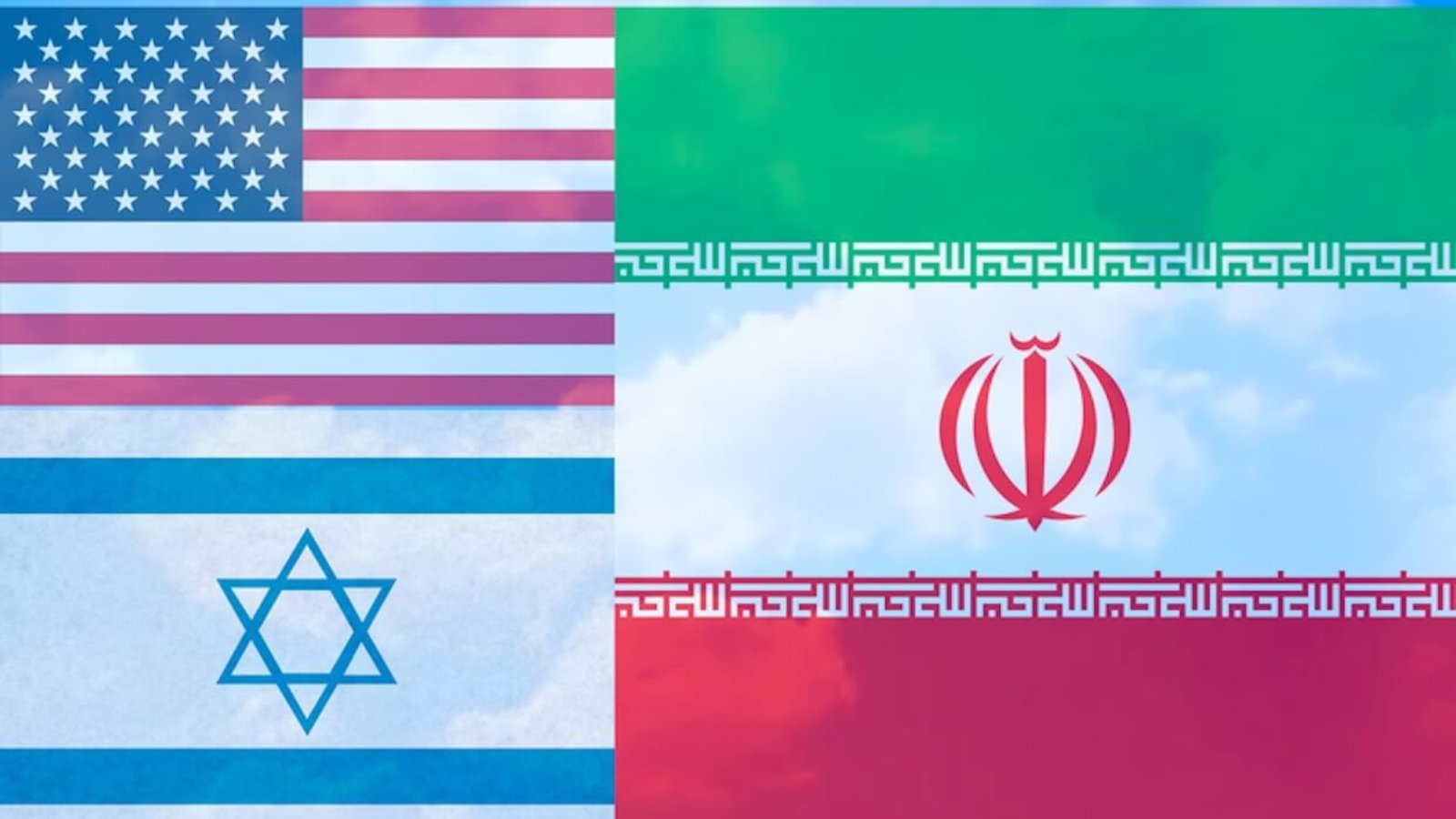
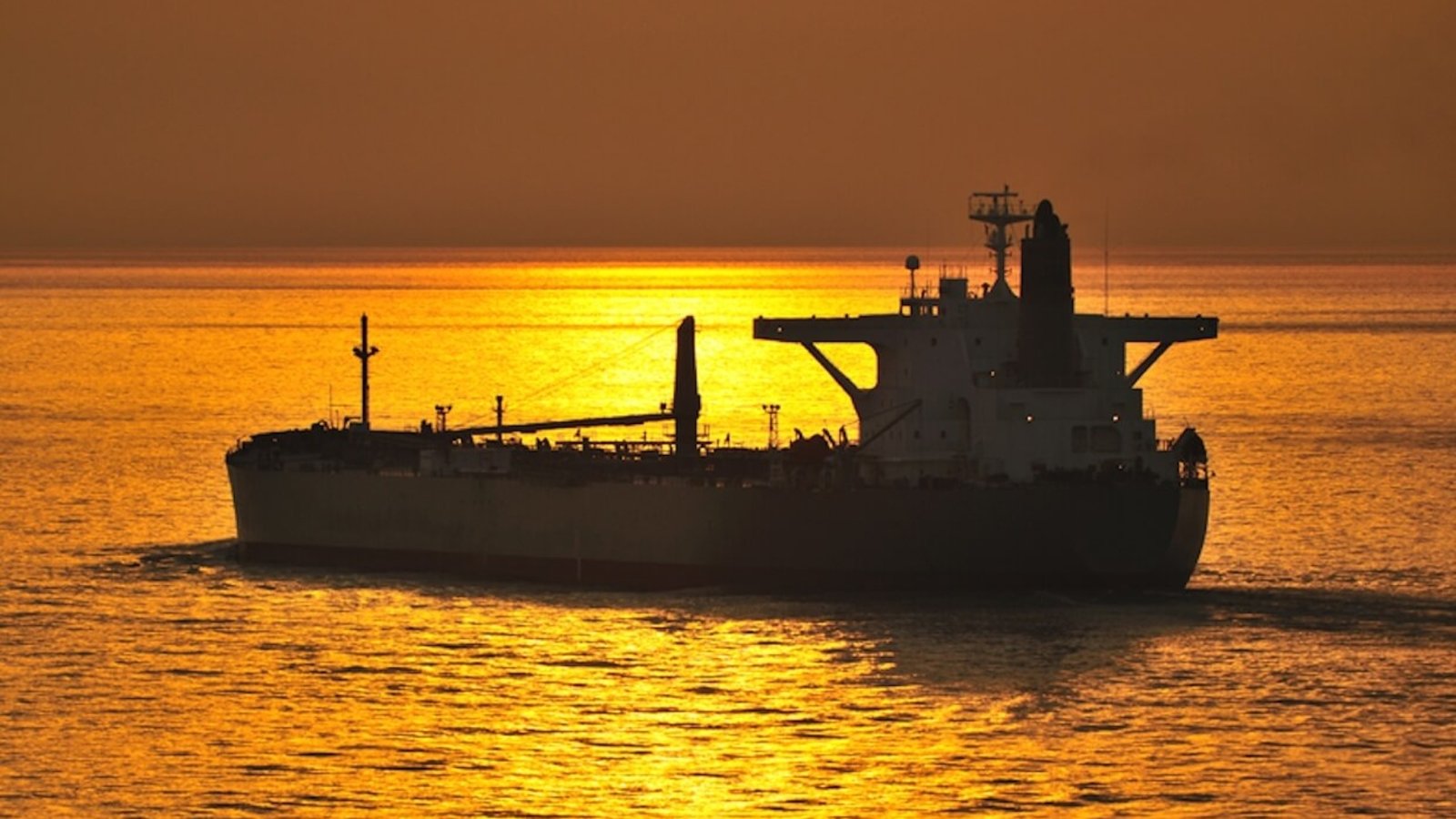
The escalating confrontation between Iran, Israel, and the United States is demonstrative of how the geopolitics of energy transition increasingly converges with that of global confrontation. As major oil routes like the Strait of Hormuz continue to form the spine of global energy supply, even limited military escalation can prompt volatility that quickly becomes translated into increases in fuel prices and foodstuffs in import-reliant economies of the Global South. Here, economic disruptions tied to energy geopolitics could potentially consolidate populist discourse framing climate policies and energy transitions as “elite” enterprises imposed on “the people” (Lockwood, 2018; Haas, 2023; Marquardt et al., 2022).
The convergence of climate governance, economic vulnerability, and a populist political logic of “the people vs. the elite” explains why climate populism has become a growing trend. Climate populism describes the tendency to frame climate crises and environmental policies as political struggles between “the people” and elites who, for example, design policies without public input and are insulated from the negative effects. This is not necessarily about rejecting climate science. Rather, it reframes climate politics as an economic issue that affects ordinary people who bear the brunt of climate policy costs. Populism, understood as the political logic that divides society into two antagonistic groups—virtuous citizens versus corrupt elites (Mudde, 2004)—is emerging in an environment where structural transformations, such as energy and climate transitions, threaten citizens’ economic security, while political institutions are perceived as either unwilling or unable to protect it.
Climate Policy and the Politics of Energy Prices
The political conflict surrounding climate policy is closely linked to the politics of energy markets. The distribution of energy resources, particularly fossil fuels, is a key element of social welfare policies in many developing economies. Governments have historically relied on fuel subsidies to alleviate the cost of living and gain political legitimacy. Policy changes toward energy subsidies and price reform, typically introduced either due to fiscal pressure or international environmental commitment, can and have become a source of political backlashes, protest and civil disobedience (Cheon et al., 2013). Fuel prices are not simply a policy instrument but an integral part of the political relationship between governments and citizens. Environmental policy reforms now become political rather than apolitical technocratic measures.
Measures aimed at reducing emissions can be translated by elites as policies that hurt the poor while benefiting elites or distant entities in ways that can be exploited to incite resentment by actors such as the state and other institutions. This happens primarily during times when economic fragility and political distrust are widespread. Norris and Inglehart (2019) note that populist politics is particularly suited for instances where cultural or economic marginalization occur due to structural shifts. This is exactly what climate transition brings about as governments overhaul energy systems and regulate the environment to facilitate the transition, creating anxieties and uncertainty which populist politics is able to exploit.
The Climate Populist Framing of “People vs. Elites”
Climate populism specifically arises when the issue of environmental policy becomes an important element of populist narratives of social and economic injustice, where environmental policy reform and climate transition are depicted as an agenda of distant elites. The issue of climate governance often becomes framed in the Global South as a policy of global governance institutions such as UN, multilateral financial institutions and environmental NGOS whose global agenda does not have legitimacy in local context. It also assumes a populist stance where the people are unable to influence the decisions. Importantly, climate populism should not be seen as a rejection of climate science. Climate politics itself may be reframed to represent a struggle for fairness, economic and distributive justice.
While climate populism may not challenge the underlying science behind climate change, the perception that the policy may disproportionately affect vulnerable or working class population may translate into protest action and populist politics. Climate populism in the Global South takes two main forms: i) anti-environmental populism which reject climate policies on grounds of economic harm or political injustice and ii) environmental justice populism where environmental policy is criticized on the basis that it either is insufficient or has distributive inequalities in how it applies costs and benefits across society. Both types draw on populist logic by invoking the idea that climate policies do not benefit ordinary citizens and serve elites instead. The nexus between climate governance and the politicization of economic hardship often characterizes the Global South. Increased food prices, fuel price hikes, and climate shocks can make room for populist claims based on widespread inequality and lack of trust in government.
Africa and the Politics of Climate Economic Discontent
Examples from various African countries illustrate the politics of climate economic hardship. Subsidy reforms and fuel price changes often trigger significant political mobilization. Nigeria provides one of the starkest cases where the 2012 fuel subsidy removal triggered protests known as “Occupy Nigeria” which halted the economy, forcing the government to reverse parts of the reform (Ogunyemi, 2013). In many of these protests, fuel price hikes were perceived as the product of government corruption and elite mismanagement.
Similar cases of mass protests are visible across African countries in countries such as Sudan where rising fuel prices contributed to the collapse of the regime, as well as Kenya and Ghana where fuel price hikes have become recurrent drivers of political dissent. These instances reflect the convergence of energy politics, climate policy, governance and inequality within African countries. The politics of climate transition is therefore fraught with the risk of triggering widespread opposition through populist political rhetoric on matters of economic injustice. Efforts to implement climate policies while simultaneously seeking to maintain economic stability face heightened risks in such countries.
The Global South and the Politics of Environmental Inequality
The emergence of climate populism in the Global South can also be understood through global inequality of climate impact. Countries in the Global South, while least responsible for climate change, suffer disproportionately. These inequities give rise to global justice claims that can easily translate into political discourse in the Global South. Developing countries also have limited resources and institutional capacity to meet global climate policy demands. The push toward global climate mitigation goals coupled with global policy reforms that carry certain conditions attached with funds may increase the perception of external imposition and lack of democratic processes on climate policy making. In this context, climate populism arises out of these dynamics of unequal distribution of climate impacts, risks and responsibilities. In other words, climate policies can become entangled with questions of state sovereignty, national autonomy, and global power relations.
Climate policy reforms must incorporate social protection in order to be politically sustainable. It has been shown that policy changes regarding fuel reforms face much less resistance when they are accompanied by compensating social protection mechanisms such as targeted cash transfers and welfare support programs that benefit the poor (Scurfield, 2003). The inclusion of ordinary citizens in climate governance can also strengthen public buy-in and resilience. Popular engagement can enhance the legitimacy of climate policy and prevent anti-climate populist narratives from gaining traction.
Conclusion
Climate change impacts ecological systems as well as politics. Environmental crises in developing countries where they intersect with the existing lack of equity and institutional capacity provides conditions for populist politics based on the issues of fuel prices, subsidy reform and climate governance. Climate populism therefore indicates the deep distributive inequalities and challenges associated with climate transition. As more governments move towards a transition toward climate smart economies, contests over distribution of costs and benefits associated with reforms will increase. To respond to climate populism, policy actors will need to integrate climate governance with distributive justice, social protection and equitable policy making at all levels. Failure to ensure social fairness of climate transition will also trigger anti-elite populist backlash.
(*) Dr. Oludele Solaja is a faculty member in the Department of Sociology at Olabisi Onabanjo University in Ago-Iwoye, Ogun State, Nigeria.
References
Cheon, A.; Urpelainen, J. & Lackner, M. (2013). “Why do governments subsidize gasoline consumption? An empirical analysis of global gasoline prices.” Energy Policy, 56, 382–390.
Marquardt, J. (2022). “Climate change and populism.” Environmental Politics, 31(1), 1–23.
Mudde, C. (2004). “The populist zeitgeist.” Government and Opposition, 39(4), 541–563.
Norris, P., & Inglehart, R. (2019). Cultural backlash: Trump, Brexit, and authoritarian populism. Cambridge University Press.
White, J. (2023). “Climate populism: The political consequences of environmental crisis.” London School of Economics Working Paper.
In this long ECPS commentary, Professor Ibrahim Ozturk examines the 2026 US–Israeli strikes on Iran as part of a broader transformation in global power politics rather than an isolated regional conflict. He argues that the confrontation reflects a strategic intersection of energy security, regional military dynamics, and intensifying great-power rivalry, particularly between the United States and China. The crisis surrounding the Strait of Hormuz—through which a substantial share of global oil flows—demonstrates how military escalation, energy markets, and geopolitical competition are increasingly intertwined. Professor Ozturk suggests that contemporary conflicts are being managed through strategic compartmentalization: limited escalation, selective alliances, and narrative control. In this emerging landscape, regional actors and global powers alike seek to reshape influence within a fragmented and increasingly competitive international order.
By Ibrahim Ozturk
The Israeli-US attack on Iran, at this pivotal moment, is more than just another Middle Eastern conflict or a simple prelude to a new oil shock. It should be seen as part of a broader shift in global power, in which regional conflict, energy security, and great-power rivalry are managed together rather than separately. The aim in this deliberately segmented crisis caused by the last military stand-off with Iran is (i) to weaken Iran’s nuclear and missile capabilities to bolster Israel’s regional dominance focused on security; (ii) Washington’s effort to retain strategic control over global energy flows amid rising competition with China; and (iii) in doing so, to keep the conflict politically contained—avoiding the perception of a broader clash of civilizations in the Muslim world, thus preventing them from falling under China’s influence and minimizing the reasons for China’s growing influence in the Global South.
That stance closely aligns with a recent British parliamentary report, which suggests that energy, war, diplomacy, and narrative are no longer separate policy areas. Instead, they are being strategically managed together. The result is a new power dynamic—one that shifts away from crisis management within a liberal international order and toward a more fragmented system characterized by selective coalitions, limited violence, and varying legitimacy.
Beyond Energy and Iran’s Nuclear Capacity
Without any convincing legal justification, UN resolution, or data from American institutions indicating that Iran posed an imminent threat—and launched during ongoing negotiations—these attacks resulted in the “arbitrary” killing of thousands of civilians in Iran, the massacre of schoolchildren, the arbitrary sinking of an unarmed Iranian ship returning from military exercises in India and of a Sri Lankan ship, killing hundreds of soldiers, as well as severe damage to many UNESCO-protected historical monuments in Iran. In such a context, the first and most important task is to correctly situate these attacks by the US–Israel axis.
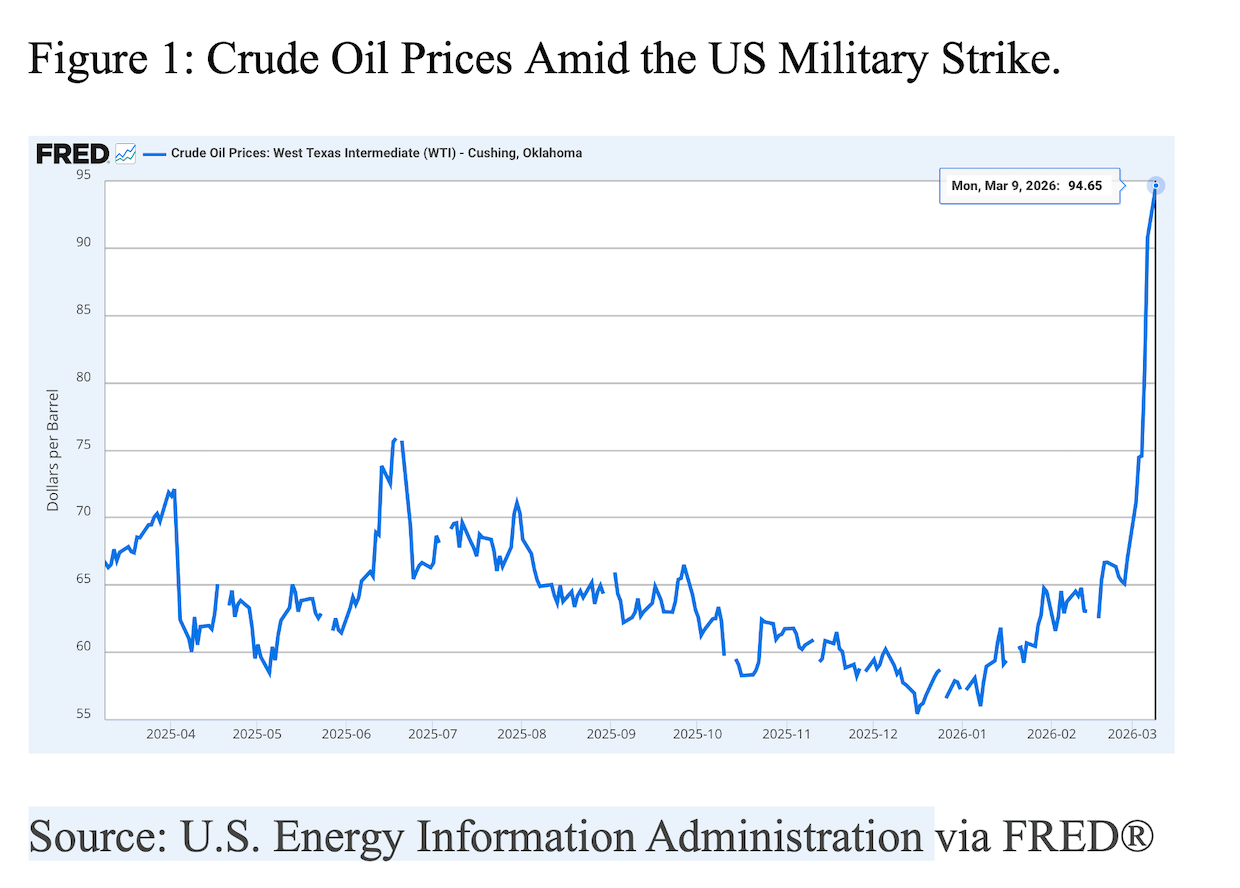
On February 28, 2026, Israel and the US carried out coordinated strikes on Iran, targeting leadership sites, military forces, and nuclear and ballistic missile infrastructure. The immediate market response was straightforward. After the attacks, global energy markets became extremely volatile, with Brent crude soaring to a peak of $119.50 on March 9, 2026, as the closure of the Strait of Hormuz threatened 20% of global supply. This ‘panic spike’ was followed by a sharp intraday reversal, with prices sliding back toward $90.00 after US officials indicated a quick end to the military operations, ultimately leaving the market stuck in a highly volatile trading range between $85.00 and $105.00 (Figure 1).
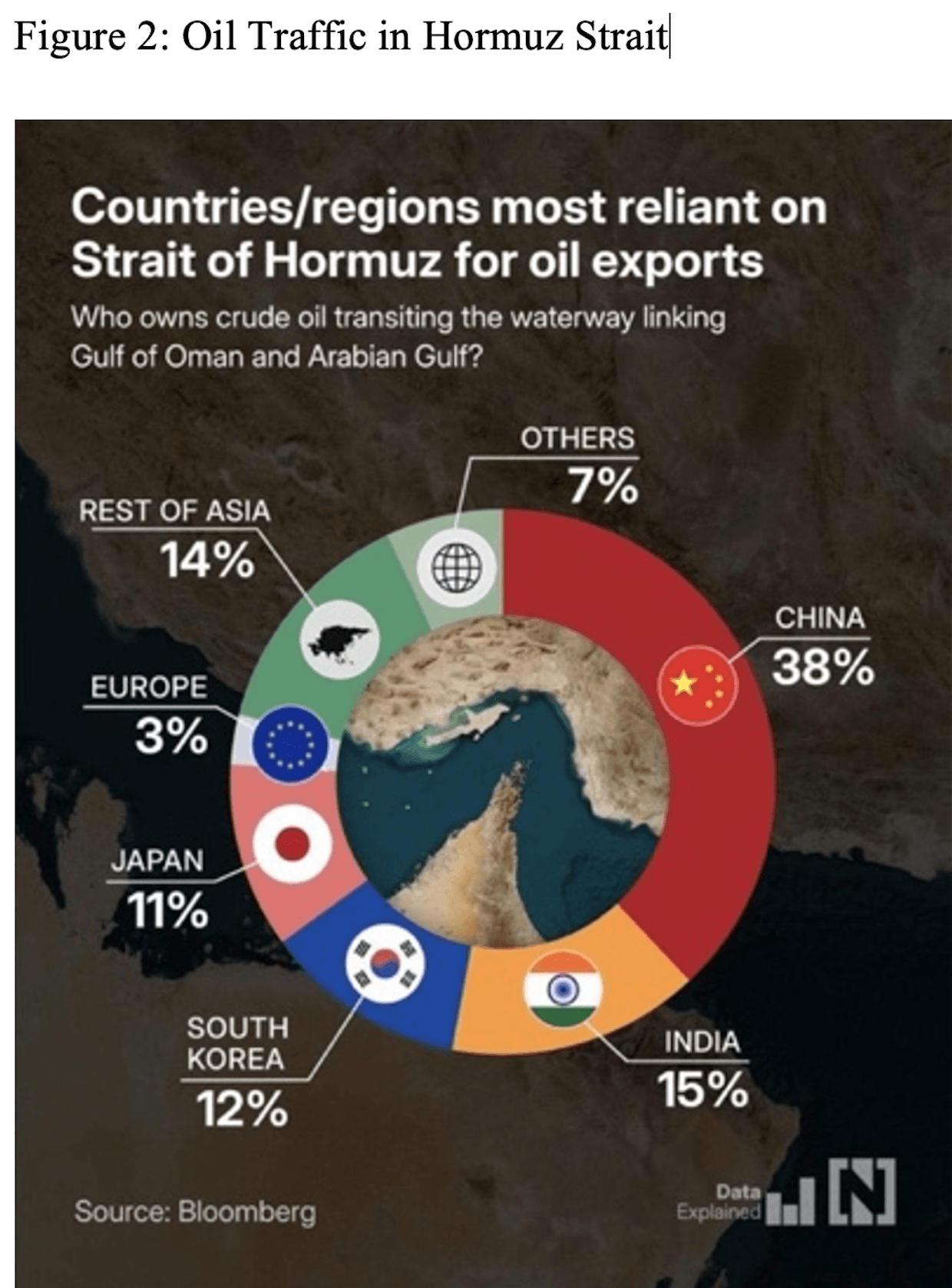
The strategic role of the Strait of Hormuz in the global oil supply is beyond discussion. In 2025, nearly 15 million barrels of crude oil per day and about 20 million barrels of total oil transited Hormuz, most of which headed to Asian markets rather than Europe (Figure 2). Any serious disruption, therefore, impacts not just supply but also freight, insurance, and risk premiums across the wider global economy. Therefore, the 2026 assault on Iran has clearly and rightly revived a familiar concern: that the global economy remains vulnerable to disruption at the Strait of Hormuz.
Energy Leverage and the China Factor
The energy dimension gives this compartmentalization broader strategic significance. The IEA reports that China and India together received 44 percent of the crude oil exported through Hormuz in 2025, while Europe accounted for only around 4 percent of those crude flows. The Atlantic Council similarly estimates that roughly 78 percent of Middle Eastern crude exports to China, Japan, South Korea, and Taiwan passed through the Strait in 2025. A crisis involving Iran and Hormuz is therefore not merely a Middle Eastern problem; it is also a point of pressure on Asian industrial power.
China is particularly vulnerable, though not helpless. The Oxford Institute for Energy Studies estimates that about half of China’s crude imports and roughly one-third of its LNG come from the Middle East. According to comprehensive market monitoring and tanker-tracking data, unofficial Iranian oil flows to China reached an average of approximately 1.38 million barrels per day (mb/d) in 2025 (Kpler; Vortexa). While some short-term fluctuations were observed in early 2025, the annual average remained robust, consistently exceeding the 1.3 million marks. Reuters and financial analysts report that China purchased more than 80 percent of Iran’s total shipped crude throughout the year (Reuters; Modern Diplomacy). This volume represents approximately 13.4 percent of China’s total seaborne oil imports, underscoring Iran’s critical, albeit unofficial, role in Beijing’s energy security strategy despite ongoing international sanctions (Energy Policy Research Foundation). In this context, pressure on Iran also indirectly affects a vital part of the Chinese economy. However, the strategic significance should not be overstated. The EIA indicates that China’s crude supply sources are diverse, with Russia and Saudi Arabia remaining its top suppliers in 2024, while the IEA’s Global Energy Review shows China continuing to lead global renewable capacity growth. Blocking Iranian flows can cause friction, uncertainty, and increased costs, but it is unlikely to fundamentally derail China’s rise on its own.
The situation in Venezuela aligns with this perspective. Even before the January 2026 US unilateral and unlawful military strike that led to Nicolás Maduro’s kidnapping, Venezuelan crude oil was not a key element of Chinese energy security. Reuters reported that, in the first half of 2019, China imported around 350,000 barrels of Venezuelan crude daily—about 3.5 percent of its total imports. In 2025, Reuters estimated Chinese imports from Venezuela at approximately 470,000 barrels per day, or roughly 4.5 percent of China’s seaborne crude imports. A later Reuters report stated that Venezuelan supply accounted for only about 4 percent of China’s crude imports. The message is clear: Venezuela has been a useful supplier to China due to its discounts and political convenience, but not a vital part of Chinese energy security. Disrupting one sanctioned supplier may be strategically significant; however, it is not automatically a decisive move.
There is also a broader distribution issue. An oil price spike caused by war would hurt not only Asia but also Europe. The IEA has already warned of renewed volatility in the gas market and ongoing pressure on European competitiveness, while its Electricity 2026 report notes that electricity prices for energy-intensive industries in the European Union remained roughly twice US levels in 2025. In contrast, the EIA indicates that the US has been a net petroleum exporter since 2020, and its world oil transit chokepoints analysis shows that US imports from Persian Gulf countries have decreased significantly over time. The energy situation is real and important—but in the larger power struggle, it appears as a meaningful yet still limited factor rather than a decisive tool of containment.
Despite all these facts and figures, it would be inaccurate to view the current crisis as just a repeat of the 1970s. The main issue is not only scarcity but also how conflict is framed, limited, and strategically handled. The war is better understood as a managed crisis within a larger shift in global order: force is used, but not arbitrarily; escalation is tolerated, but only to a certain extent; legitimacy is not universal but gradually built through temporary alliances and selective diplomatic efforts. In this context, energy is more than just a commodity at risk. It is a vital part of a broader strategic struggle.
Israel’s Security Dilemma and the Logic of Securitization
As R. Gilpin puts it, history suggests that moments of major power shifts or systemic transitions do not simply unsettle small and middle powers; they also redistribute opportunity. Some regional actors use great-power rivalry, imperial retreat, or strategic ambiguity to rise above their original weight—as Piedmont-Sardinia did in the wake of the Crimean War, Meiji Japan under the pressure of Western encroachment, and Ibn Saud amid the collapse of Ottoman authority. Some others, for instance, misread the same fluidity and overreach, as Saddam Hussein’s Iraq did in 1990, when a bid for regional expansion triggered the first major post–Cold War crisis and ended in rapid military defeat. In this sense, periods of power transition rarely leave the regional tier untouched: they create openings for some states to rise and traps for others to collapse. Israel’s conduct in the present phase of global power transition suggests that it is trying to exploit precisely such a window—not merely reacting to uncertainty but attempting to convert it into a regional hegemonic opportunity.
As US primacy becomes more contested and the Middle East is reorganized by overlapping energy, security, and corridor politics, Israel appears to be pursuing a dual strategy of expansion through both partnership and coercion. Besides, on the side of deterrence, its aggressive stance on war also reflects Israel’s recognizable security calculation. For years, Iranian missile capabilities, proxy networks, and nuclear advances have been cast in Israeli strategic discourse as existential or near-existential threats. From that vantage point, the February 2026 campaign is intelligible even if it is not thereby rendered lawful or strategically prudent. Once a hostile regime is defined as a total strategic danger, the political threshold for extraordinary measures falls: Preemptive force, regime-degrading strikes, regional militarization, and external coalition-building become easier to justify.
That said, deepening structured cooperation with states can help establish a favorable regional order. In that context, Israel is using punitive military actions against adversaries such as Iran, Syria, Hamas, and allied armed groups to weaken hostile capabilities, restore deterrence, and expand its strategic maneuvering space. This suggests that Israel is acting less like a besieged small state and more like an aspiring regional poweraiming to secure regional dominance before the emerging multipolar order becomes less accommodating. This also explains why the current conflict setup is not just about immediate battlefield outcomes but about shaping the future political landscape of the Eastern Mediterranean and the broader Middle East.
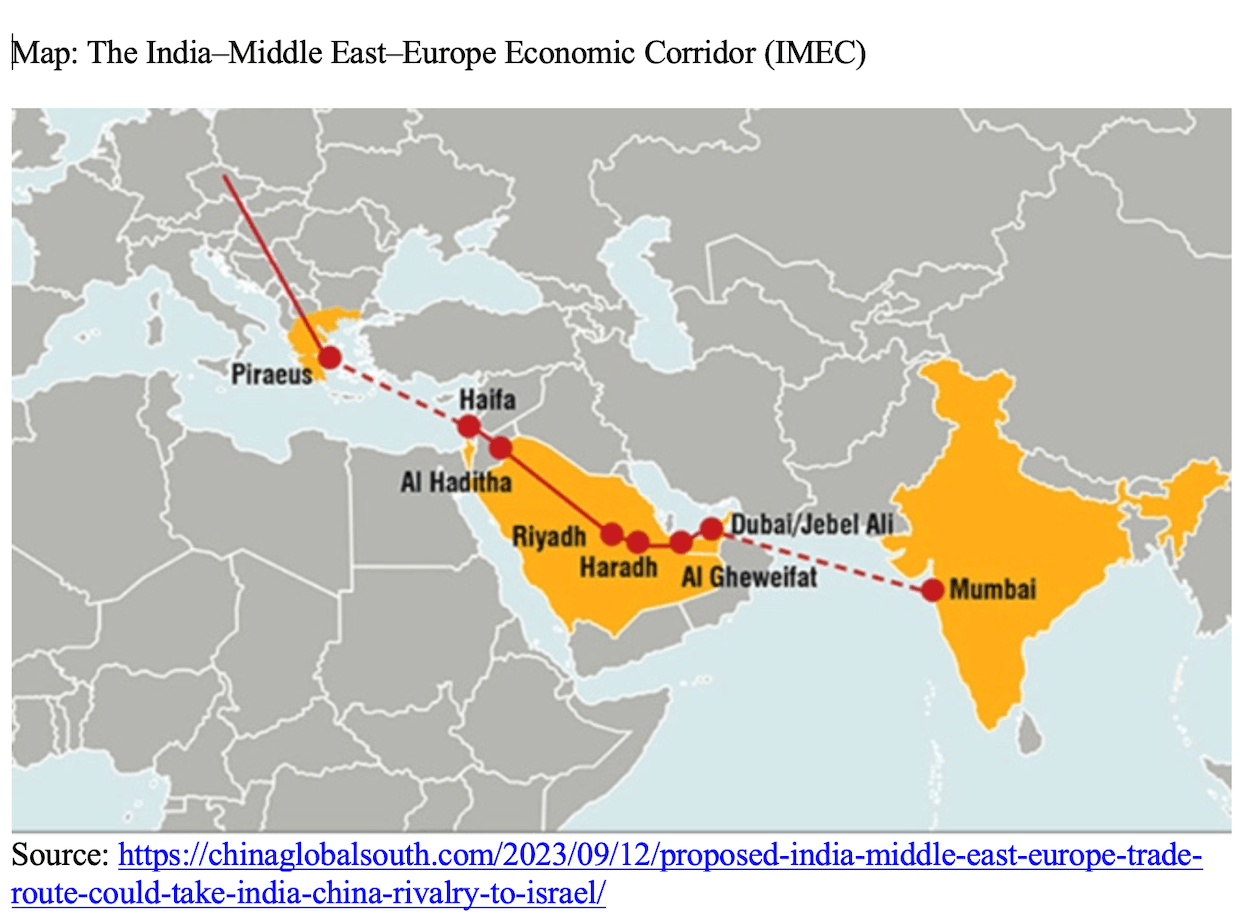
Rising patterns show that Israel’s Mediterranean strategy is now part of a broader geo-economic vision extending from the Caspian Sea in the Caucasus-Central Asia region to India and Europe. In his February 2026 address to the Knesset, Indian Prime Minister Narendra Modi described India and Israel as sharing “ancient civilizational ties” and called for deeper cooperation through IMEC and I2U2, giving the relationship a geopolitical depth beyond transactional defense ties. This matters because Israel’s partnerships are no longer confined to immediate neighbors; they are increasingly tied to larger corridor projects, technology platforms, and Indo-Middle Eastern alignments. This relationship is anchored in the geopolitical logic of the India–Middle East–Europe Economic Corridor (IMEC), a proposed multimodal route linking India to Europe via the UAE, Saudi Arabia, Jordan, and Israel, with maritime, rail, energy, and digital components converging on Israel’s Mediterranean gateway, and again excluding Turkey. Promoted by its backers as a faster and more resilient alternative to existing routes—and widely read as part of a broader effort to balance China’s Belt and Road Initiative (BRI)—IMEC helps explain why India–Israel ties now extend beyond bilateral cooperation into the strategic architecture of an emerging Indo-Mediterranean order.
At the same time, not every actor moving closer to Israel should be labeled as part of an open pro-Israel bloc. Saudi Arabia still publicly conditionally normalizes relations on Palestinian statehood, yet its strategic interests overlap with Israel’s on issues such as containing Iran, protecting energy supplies, and maintaining a favorable regional balance. The new Syrian leadership’s revived US-mediated security talks with Israel present an even clearer example of pragmatic convergence. These are not full alliances, but they do show that Israel is operating in an environment where former or potential adversaries are increasingly involved in patterns of coordination, deconfliction, or selective accommodation. The broader point is that Israel is trying to transform multipolar disorder into a hierarchical regional order: building networks where possible, managing enemies where necessary, and using both cooperation and calibrated force to expand the sphere within which it can act as the dominant regional power.
Strategic Compartmentalization and the Avoidance of a Civilizational Trap
This is where Samuel Huntington’s Clash of Civilizations thesis becomes relevant—though not in the crude sense often invoked in moments of war. Huntington argued that post-Cold War conflicts would increasingly follow cultural and religious fault lines. Yet the emerging strategy of Washington and its regional allies is not to embrace such a clash outright, but to instrumentalize its logic selectively while containing its broader consequences.
According to SIPRI, Israel is widely recognized to possess a nuclear arsenal. Meanwhile, the International Court of Justice has ruled that Israel’s ongoing presence in the occupied Palestinian territory is illegal, and repeated UN reports under Security Council Resolution 2334 continue to document settlement expansion. At the same time, UN humanitarian reports recorded that, by early December 2025, Gaza’s Ministry of Health reported more than 70,000 Palestinians killed, over 170,000 injured, and mass displacement on a devastating scale. Taken together, these facts make any claim that Israeli actions remain firmly within a stable zone of legal and moral legitimacy highly questionable.
Thus, the US-Israeli challenge has never been limited to threat detection alone. It has also involved managing the political fallout from their responses. From Trump’s and Netanyahu’s perspectives, the operation against Iran needed to be framed in a way that preserved as much international legitimacy as possible, even when a clear legal justification was difficult to establish. At the same time, the conflict had to be prevented from escalating into a civilizational clash that could push Muslim-majority societies toward China and expand Beijing’s strategic influence across the Global South. Here, deeper contradictions become unavoidable.
Iran and Hamas are cast as securitized and containable threats, while Gulf monarchies and other Muslim-majority states are engaged through donor diplomacy, regime-security guarantees, and calibrated alliance management. The objective is not simply to fight an adversary, but to prevent the war from consolidating an anti-Western political identity across the broader Muslim world—especially at a moment when parts of the Global South are drifting toward more China-friendly alignments.
This is precisely where the current war differs from a simple Huntingtonian interpretation. The conflict has not been allowed to evolve into a straightforward “West versus Islam” narrative. Instead, much of the diplomatic framework has sought to confine it to a narrower Iran-Hamas security issue. The Council on Foreign Relations noted that the Board of Peace relied heavily on participation from Gulf Arabs and Central Asians, while excluding direct Palestinian political representation at the highest levels of decision-making. Conversely, the UN Human Rights Office sharply criticized this setup as incompatible with a reparative, rights-based approach to reconstruction. From an analytical perspective, however, the main point is not whether the structure is morally convincing. It is that the structure acts as a mechanism of compartmentalization: some actors are isolated as threats to be disarmed or neutralized, while others are kept within a cooperative framework of reconstruction, stabilization, and donor politics.
The regional response confirms that interpretation. In their extraordinary GCC-EU joint statement, Gulf and European ministers condemned Iran’s attacks on GCC states, emphasized that GCC territories had not been used to launch attacks against Iran, invoked self-defense, and highlighted the importance of protecting maritime routes, supply chains, and energy market stability. Meanwhile, Carnegie noted that Gulf monarchies are caught between Iranian escalation and US recklessness, with their main focus on preserving fragile economic and security systems. This is not the language of a unified civilizational bloc; it is the language of regime survival. Nor did the broader Muslim political field unify into a single anti-Western Front. The OIC’s condemnation of Israeli attacks on Iran coexists with muted and ambivalent official Gulf reactions, while AP reporting emphasized elite anger at the US for exposing Gulf states to retaliation without sufficient warning or protection. As a European Council joint statement states, what emerged was fragmentation rather than bloc unity—and that fragmentation was not accidental but part of the crisis’s strategic outcome.
As a conclusion to this part, Gulf monarchies are neither full participants in an anti-Iran crusade nor members of an anti-Western camp. They are defensive actors seeking to preserve commercial credibility, domestic order, and external security amid a war they did not want. That posture is inherently compartmentalizing. It seeks to prevent regional collapse without fully endorsing the strategic logic that produced the crisis in the first place.
Washington’s Domestic Politics and the Uses of External Crisis
The domestic American context also matters, although it should be approached with analytical caution. While the operational details of the strike on Iran are often examined solely from a kinetic perspective, the decision-making process cannot be separated from the Trump administration’s increasing domestic vulnerabilities. The kinetic action serves as the ultimate “escape forward,” where the smoke of external conflict hides the fire of internal issues. Notably, two factors—the recently disclosed Epstein Scandal and the motivations of Trump’s eschatological cabinet—are significant.
A DOJ/FBI memorandum issued in July 2025 stated that investigators found no evidence of a Jeffrey Epstein “client list.” However, in March 2026, the Associated Press reported that newly disclosed files—previously omitted due to an alleged coding error—contained strong allegations involving Donald Trump. While this may not directly confirm a causal link between scandal exposure and war-making, as the Department of Justice and the Federal Bureau of Investigation note, it nonetheless supports a more defensible argument: a scandal-ridden domestic environment can increase the short-term political value of external escalation by diverting scrutiny, reinforcing partisan discipline, and shifting media focus to security rather than accountability.
Beyond the tactical use of distraction, this pressure is increasingly driven by a fundamentalist-Christian elite that has gained unprecedented influence within the cabinet. The appointment of Christian-Zionist ideologues to key bureaucratic positions in the US and diplomatic roles abroad, especially in Israel and the surrounding region, shows that the administration’s foreign policies are being guided by eschatological beliefs. The recent gathering of prominent pastors to “anoint” the President for a perceived war acts as a strategic response to the Epstein disclosures. By portraying the President as a Cyrus-figure—a flawed vessel chosen for divine geopolitical realignment—this faction provides a moral cover that redefines personal scandal as part of spiritual warfare.
In this context, Epstein’s emergence as a posthumous influence agent suggests that the timing of these disclosures may be less coincidental and more coercive. Trapped between the threat of legal disgrace and the demands of his Dominionist base, the President’s move toward external escalation becomes an expected outcome of survival politics. The combination of these allegations with radical religious rhetoric shows that the administration is being pushed into a policy space where aggression is used as the main tool for maintaining domestic stability and ideological legitimacy.
Europe’s Passive Alignment with Trump’s Vision
Europe now appears less as a strategic leader and more as a sign of Western division. Although it remains an important economic player, its geopolitical influence is diminishing. It is a giant in market size, but surprisingly weak in political unity, strategic direction, and external influence. Its direct reliance on Hormuz crude is lower than Asia’s, but it remains highly vulnerable to energy price shocks, industrial setbacks, and alliance pressures. What is especially notable is that Europe has faced the recent escalation in the Middle East while transatlantic relations are already strained. A recent European Parliament study notes that since early 2025, EU-US relations have been increasingly tense over NATO, Greenland, Ukraine, trade, technology, climate, and China, indicating a deeper split in strategic visions across the Atlantic. A recent ECPS Report concurs, finding that the transatlantic relationship has reached a turning point under Trump-era right-wing populism, with erosion in security, trade, international institutions, and democratic norms. In this context, Europe faces the Iran-Israel crisis not with confidence, but amid broader geopolitical confusion.
Yet this is exactly what reveals Europe’s muted stance on Israel. While Washington has become a source of pressure and unpredictability for Europe, the EU has struggled to develop a clear and independent position on Israel. This silence signifies more a weakness than a deliberate strategy: leadership gaps, the lack of a strong, shared perspective within the Union, and the lingering influence of Cold War-era habits of outsourcing hard security to the US. The ECPS volume is especially useful here because it views the current Atlantic crisis not as isolated turbulence but as a systemic shift that requires greater European agency and strategic independence. Europe’s relative passivity, then, should be seen not just as deference but as a sign of unpreparedness: a wealthy political bloc that has yet to turn economic influence into geopolitical power.
Conclusion
The 2026 war with Iran should be seen as more than just a regional military conflict or a temporary energy crisis. It reveals a broader shift in the global order, in which the lines between war, energy security, alliance politics, and narrative control are increasingly blurred. What is emerging isn’t a return to a stable US-centered system, nor a fully developed multipolar balance, but rather a fragmented and coercive landscape. In this environment, major powers, regional players, and smaller states seek to gain advantages through selective alliances, limited escalation, and compartmentalized crisis management. In this context, Israel has acted with unusual clarity, trying to turn global uncertainty into regional dominance through military deterrence, strategic partnerships, and corridor politics. The Gulf monarchies sit at a crucial middle ground, balancing pressure, exposure, and opportunities. Europe, on the other hand, seems less a driver of outcomes than a reflection of Western fatigue—economically significant, politically hesitant, and strategically unprepared for a world where American leadership has become both less dependable and more disruptive.
The deeper significance of this moment lies specifically here. The crisis isn’t just about Iran, or even about the immediate future of the Middle East. It’s about how power is exercised in an era when the liberal language of rules, institutions, and multilateral restraint persists but increasingly lacks the material cohesion or political authority that once sustained it. Strategic compartmentalization has become the preferred way to manage disorder: adversaries are securitized and targeted, partners are reassured and selectively brought in, and broader civilizational escalation is contained rather than solved. This might bring temporary stability, but it does so by reinforcing a new international logic—one characterized by differentiated legitimacy, asymmetrical coercion, and declining normative consistency. The real lesson of the Iran war, then, isn’t just that energy geopolitics has returned, but that it now functions within a more severe and openly hierarchical struggle over who will shape the regional and global order to come.
International Court of Justice. (2024, July 19). Advisory opinion of 19 July 2024: Legal consequences arising from the policies and practices of Israel in the Occupied Palestinian Territory, including East Jerusalem. https://www.icj-cij.org/index.php/node/204160
International Energy Agency. (2025). Global energy review 2025: Electricity. https://www.iea.org/
International Energy Agency. (2025, February 23). European gas market volatility puts continued pressure on competitiveness and cost of living. https://www.iea.org/
Nolte, D. (2010). “How to compare regional powers: Analytical concepts and research topics.” Review of International Studies, 36(4), 881–901. https://doi.org/10.1017/S026021051000135X
Oxford Institute for Energy Studies. (2026, March 1). Disruption in the Strait of Hormuz: Implications for China’s energy security. https://www.oxfordenergy.org/
Prime Minister of the Hellenic Republic. (2025, January 8). Joint declaration of the tenth Egypt-Cyprus-Greece Trilateral Summit (Cairo, 8 January 2025).https://www.primeminister.gr/en/2025/01/08/35631
U.S. Energy Information Administration. (2025, February 11). China’s crude oil imports decreased from a record as refiners lowered runs. https://www.eia.gov/
Professor Peter W. Klein offers a historically grounded warning against simplistic regime-change narratives in Iran. In this ECPS interview, the Emmy Award–winning investigative journalist and University of British Columbia professor argues that political transformation in Iran may occur, but not in ways the West expects. Drawing on cases such as Hungary in 1956, the Bay of Pigs, Iraq, and Afghanistan, Professor Klein shows how external encouragement of uprising without sustained commitment can produce abandonment, repression, and long-term instability. He stresses that Iran’s history with the United States, the entrenched role of the IRGC, and the country’s internal complexity make any externally driven transition deeply uncertain. At the same time, he warns that escalation could trigger wider regional blowback, making caution, historical memory, and strategic realism indispensable.
Giving an interview to the European Center for Populism Studies (ECPS), Professor Peter W. Klein, an Emmy Award–winning investigative journalist, documentary filmmaker, and full professor at the School of Journalism, Writing, and Media at the University of British Columbia, offers a historically grounded and sobering assessment of regime change narratives surrounding Iran. Drawing on decades of reporting from conflict zones and his scholarship on media, power, and political transformation, Professor Klein cautions against simplistic assumptions that authoritarian systems collapse once a single leader is removed. As he puts it bluntly, the notion that eliminating one figure will transform an entire political order is deeply misguided: “Removing one leader—whether it is Khamenei or Maduro—is enough… [that] everything else will somehow fall into place. But Venezuela is not Iran.”
Professor Klein situates the current debate about Iran within a longer historical pattern in US foreign policy: Rhetorical encouragement of uprisings without sustained commitment. Reflecting on historical precedents—from the 1956 Hungarian Revolution to the Bay of Pigs invasion and the 1991 Shiite uprising in Iraq—he identifies a recurring cycle in which external actors implicitly encourage rebellion but fail to provide protection once uprisings occur. Recalling the Hungarian case, he notes that revolutionary hopes were fueled by signals from the West, yet “when the revolution happened… there was no cover.” The consequences were devastating: The uprising was crushed, and reformist leader Imre Nagy was ultimately executed. These experiences, Professor Klein argues, highlight the moral and strategic dilemmas that arise when “the words don’t match the actions.”
This historical lens also informs Professor Klein’s skepticism toward contemporary discussions of regime change in Iran. While acknowledging that dissatisfaction with the Iranian regime is real, he emphasizes the structural and historical constraints shaping political change. Iranian public attitudes toward foreign intervention remain deeply influenced by historical memory—especially the 1953 CIA-backed coup, which continues to generate suspicion toward US rhetoric about liberation and democracy. Even where domestic frustration exists, external calls for uprising may produce the opposite effect. As Professor Klein explains, “many Iranians may resist calls for regime change if those calls come directly from the United States.”
Beyond historical memory, Professor Klein underscores the institutional resilience of the Iranian state, particularly the central role of the Islamic Revolutionary Guard Corps (IRGC). Far from being an isolated security apparatus, the IRGC is deeply embedded in Iran’s political economy and social fabric. Its integration across military, economic, and political spheres makes the idea of a rapid grassroots overthrow highly improbable. In such contexts, he warns, expectations of swift democratic transition often ignore the realities of authoritarian resilience.
Professor Klein also highlights the dangers of escalation in the broader Middle East. With conflicts already unfolding across Gaza, Lebanon, and other regional arenas, miscalculation could transform localized confrontation into a wider regional war. The stakes, he warns, are immense: “The blowback from a regional conflict would be enormous… the cost of that may simply be too high.”
Ultimately, Professor Klein cautions against confident predictions about Iran’s political future. Transformation may indeed occur, but its direction remains uncertain and may not align with Western expectations. “There may be change,”he concludes, “but it may not be the kind of change that many people in the West would want.”
Here is the edited version of our interview with Professor Peter W. Klein, revised slightly to improve clarity and flow.
The Perils of Promising Liberation Without Commitment
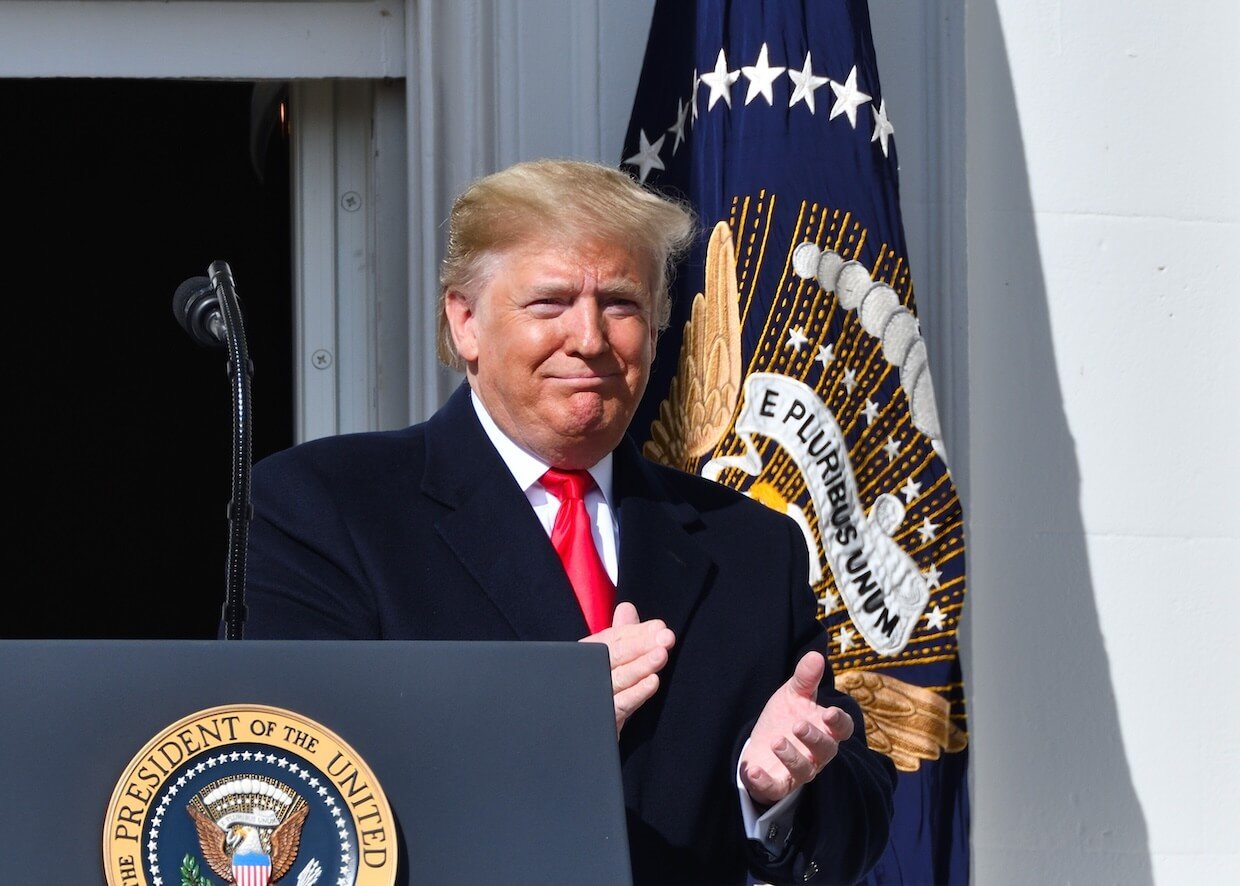
US President Donald Trump applauds from the White House balcony during a welcoming ceremony for the Washington Nationals baseball team on the South Lawn in Washington, D.C., on November 4, 2019. Photo: Evan El-Amin.
Professor Peter Klein, thank you so much for joining our interview series. Let me start right away with the first question: In your article published by the New York Times, you invoke historical precedents—from Hungary (1956) and the Bay of Pigs (1961) to the Shiite uprising in Iraq (1991)—to illustrate the dangers of encouraging rebellion without sustained commitment. In your view, what structural patterns recur across these cases that contemporary policymakers still fail to internalize?
Professor Peter W. Klein: When I saw President Trump making more than one plea to the people of Iran, saying this is your opportunity to revolt and overthrow the regime, there wasn’t—at least as far as I could see—an explicit promise of cover and protection, but it was certainly implicit. And it just resonated for me, which is what led me to write that essay in the Times. It resonated on many levels.
Having been raised by Hungarian refugees, I knew what happened in 1956. I didn’t live through it the way my brother did, but I heard many stories—about listening to Radio Free Europe and the encouragement of revolution, and then what happened when the revolution actually occurred. There was no cover. Of course, you understand the political context. It was the height of the Cold War; the two nuclear superpowers were confronting each other. What followed 1956 was a series of conflicts—both hot and cold—between the United States and the USSR.
But the implication at the time was that if you took to the streets and took over your country, you would be protected. That obviously did not happen. Imre Nagy came in, tried to establish a new government, and the effort was crushed. Ultimately, he was executed.
It also resonated for me because of reporting I had done in Iraq. I was there shortly after the fall of Saddam Hussein and had been sent to report specifically on the Shia population. In 2003, I think for many American audiences the distinctions between Shias and Sunnis, the Baathist system, the subjugation of the majority population, and the complexities of the relationship with Iran were not widely understood.
I went there with my colleague Bob Simon and producer Tricia Doyle for CBS 60 Minutes. We were trying to find the right way to tell the story. We spoke with a number of people. At one point we interviewed the grandson of Ayatollah Khomeini, who had come to Iraq and was saying that it was good America was there. But many people in the Shia community told us he did not have much credibility. They suggested that if we really wanted to understand the mood on the street, we should go on a Friday night to the Imam Ali Mosque in the holy city of Najaf and meet a young cleric named Muqtada al-Sadr.
We met with Sadr, and he was very clear. He said, “Saddam was a small serpent; the United States is the big serpent. You should leave. We don’t want you here.” And this view was rooted in history—specifically the events of the first Gulf War in the early 1990s, when George H. W. Bush had made a very similar appeal to the Shia population, encouraging them to rise up against Saddam. The message was essentially: this is your opportunity to take over your country. And the Shia did revolt.
But they were crushed—brutally crushed. And the Americans essentially watched. They were observing from aircraft as kerosene was poured on people and they were set on fire. It was horrific violence carried out by Saddam’s forces. The pattern of abandonment and betrayal echoed again and again.
I also grew up in Miami among Cuban exiles, so I was familiar with the history of the Bay of Pigs as well. It’s a pattern that we have seen repeatedly. And that is why I thought the historical resonance was worth highlighting.
Why Removing One Leader Rarely Transforms a State
You suggest that rhetorical support for uprisings can become morally problematic when it is not matched by material backing. From an ethical and strategic standpoint, where should the line be drawn between normative support for democratic movements and irresponsible geopolitical signaling?
Professor Peter W. Klein: Powerful countries are always going to try to shape the world and manipulate it to their needs. That is realpolitik. The challenge is that sometimes the words don’t match the actions.
As we have seen in the examples I noted—and many others—I don’t think the intention was necessarily absent. When Eisenhower sent messages to Hungarians suggesting that they should stand up to the Soviet empire and implying that the United States would have their back, I don’t think Eisenhower had ill intentions. He was expressing rhetoric aligned with American policy. But it’s a little like the dog that catches the car: once the revolution actually begins, the question becomes, what are we going to do now? The reality sets in. Are we really prepared to confront another nuclear power?
The same question applies to Iran. If the Iranian people actually listened and launched a full-scale revolution in their country, it is hard to imagine what exactly would happen. Would the United States really intervene, especially after all the rhetoric that this administration is not about regime change and that regime change is not its intention? In this case, it becomes particularly relevant and important to discuss, because the Trump administration has been quite clear from the beginning that regime change is not its philosophy and that it is highly critical of that approach.
Trump has also pointed to what he considers the example of Maduro—removing a bad actor or despotic leader while leaving the broader infrastructure intact. The idea seems to be that if you remove one person, things will somehow fall back into place. But we have seen the opposite in cases like Iraq. When Saddam was removed and deep de-Baathification dismantled the entire governing infrastructure, the country effectively collapsed.
I was in Iraq recently reporting on corruption there. Corruption is so rampant that people often say something striking: Under Saddam there was one corrupt person you had to pay off, but now there are hundreds—hundreds of hands, hundreds of Saddams. People say they don’t even know how to function in the system anymore. You see half-built buildings everywhere, and the oil infrastructure is a mess. The state simply never rebuilt a functioning system to replace what had been dismantled.
Nation-building is extremely difficult to do from the outside. It’s a bit like building a ship inside a bottle—you are trying to assemble something complex from outside the structure rather than letting it develop organically.
Trump has been advancing this idea that removing one leader—whether it is Khamenei or Maduro—is enough, that eliminating one figure will somehow allow everything else to fall into place. But Venezuela is not Iran. The United States can exert influence in places like Venezuela because of economic and political ties. Iran is probably one of the least likely places where the United States can simply step in and impose that kind of outcome, regardless of removing one leader. So, the philosophy itself seems flawed.
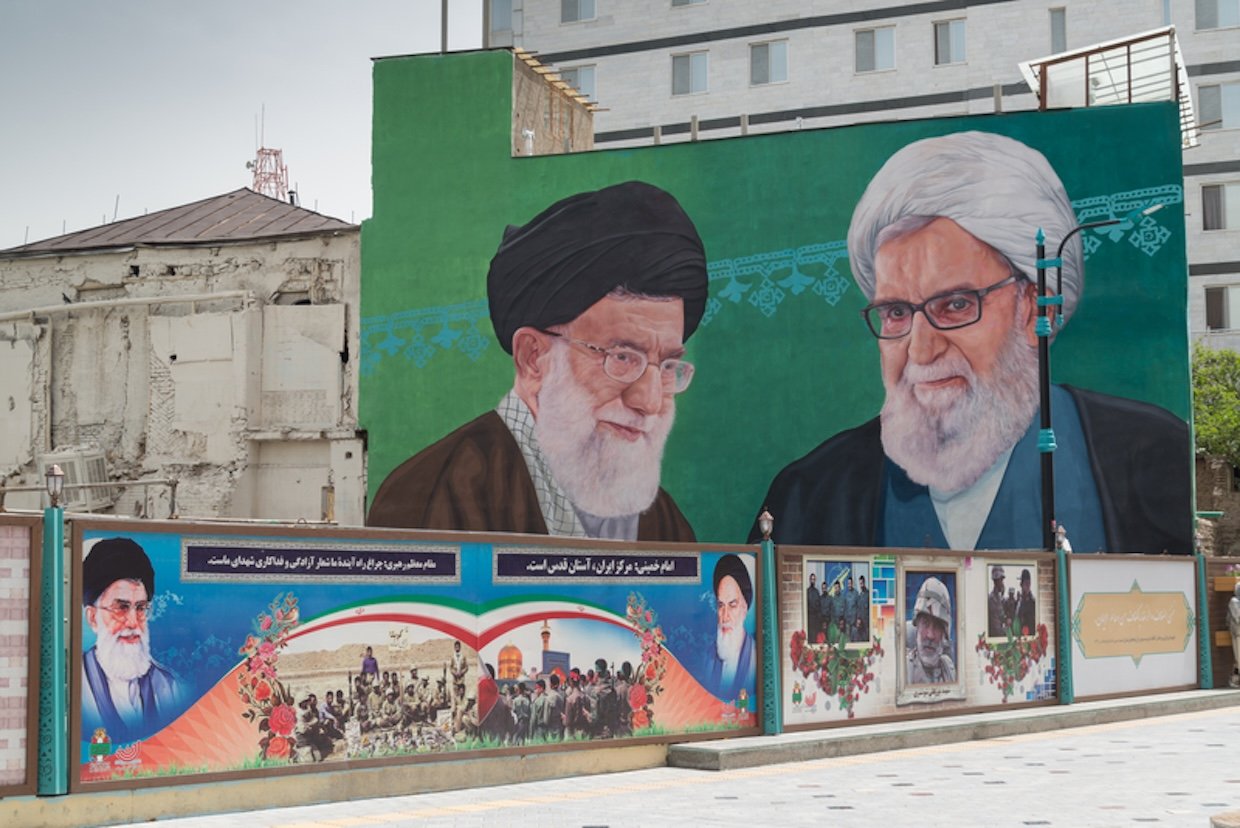
Billboard depicting Ayatollah Sayyid Ali Hosseini Khamenei and Imam Sayyid Ruhollah Musavi Khomeini on a building wall in Tehran, Iran, April 2018. The portraits honor the founder of the Islamic Republic, Ruhollah Khomeini (Supreme Leader 1979–1989), and his successor Ali Khamenei (Supreme Leader 1989–2026), whose images frequently appear in public spaces as symbols of the regime’s ideological authority. Photo: Dreamstime.
Why Regime Change in Iran Is Unlikely to Be Imposed from Outside
Your analysis implies that regime change is rarely a spontaneous outcome of external pressure alone. Based on your research into Iran and past US interventions, what conditions would realistically be required for a regime transition in Iran to succeed without producing state collapse?
Professor Peter W. Klein: I’m not an expert on Iran by any means. I’ve reported on Iran, and I have many friends who are Iranian, including Iranian scholars. So, this is very much a cursory view, and if you have audience members with PhDs in political science, my apologies for simplifying this. But my sense is that the grassroots movement of frustration in Iran is, in many ways, more complex than—I’ll compare it to the Hungarian case, which I know better because I grew up among Hungarians, lived in Hungary, and worked there as a reporter.
In Hungary, in 1956, there was genuine frustration with the centralized system and with many of the issues affecting the country. So, when the United States came in and suggested that Hungarians should move in a certain direction, there wasn’t much resistance to that idea. In fact, there was quite a bit of enthusiasm—people felt it was great that America was encouraging them. The United States was also very effective in its propaganda, presenting itself as a place where the streets were paved with gold.
My father believed much of that. When he came to America, he genuinely thought the streets were paved with gold because that was the image people had been given. But he ultimately became a very patriotic American because much of that promise proved true. He was able to buy a house and build a life in ways that would not have been possible for him in Hungary.
In Iran, however, the situation is far more complicated. There is the historical relationship with the United States—going back to the era of the Shah—as well as US support for Israel and the broader conflict between Iran and Israel. So even if many people are frustrated with the regime, and surveys suggest there is widespread dissatisfaction, the United States is not necessarily the actor they want telling them what to do.
It’s a bit like when I tell my kids to do something. Even if it’s a good idea, they might resist simply because it came from me. In the same way, many Iranians may resist calls for regime change if those calls come directly from the United States.
So, it is a very complicated scenario. As you suggested, regime change generally does not come from outside. It can happen if you bomb a country to smithereens, as happened in Iraq, and remove its leader. By definition, that produces regime change. But it is extremely messy regime change—often unsustainable—and it can take decades to rebuild a functioning state afterward.
The IRGC’s Embedded Power and the Limits of Regime Destabilization
You highlight the enduring memory of the 1953 CIA-backed coup in Iran as a source of skepticism toward American intentions. To what extent does this historical legacy still shape Iranian public attitudes toward US rhetoric about liberation and democracy?
Professor Peter W. Klein: It is definitely one of those sore points that continues to linger. So, the idea of the United States coming in and lecturing Iran—after having, in some cases, helped create some of the conditions that contributed to the problems they face today, and given the history of US involvement there—carries a lot of weight. This is not some theoretical issue involving something that happened in Argentina or some distant place. It happened in their own country. So, there is a great deal of sensitivity around it, at least from what I can tell from talking to Iranians. It is clear that there are real sensitivities surrounding that history.
You emphasize the institutional strength of the Islamic Revolutionary Guard Corps (IRGC) as a central obstacle to regime change. How does the IRGC’s political–economic role within Iran complicate external attempts to destabilize the regime?
Professor Peter W. Klein: That’s a tough and a very good question. I think it’s one that people much smarter than me can answer much better than I can. I spent a lot of time dealing with the Rafsanjani regime years ago in Iran, and I got a glimpse of the complexities and the connections between the business elites and the IRGC. Not just the oil industry—although, obviously, the oil industry is huge. There are so many ties there, and of course there is a lot of corruption. So, this is not a stand-alone militia that is independent of the fabric of the country. While there is a lot of frustration with and fear of the IRGC, they are also integrated in many ways. And they are huge—they are powerful. This is not some small force.
Going back to my Hungary example, it required Soviet tanks and Russian soldiers to come in and crush that rebellion. In Iran, however, this is internal. It is an internal security force that is large, powerful, and integrated into many aspects of the economy and society. So again, it makes it very difficult to imagine a grassroots revolution simply changing that regime.
Escalation Risks: How a Localized Strike Could Ignite a Regional War
Photo: Pavel Kusmartsev / Dreamstime.
The current escalation involving US and Israeli strikes against Iranian targets intersects with ongoing conflicts in Gaza, Lebanon, and the broader regional confrontation with Hezbollah. How do you assess the risk that the Iranian theater could evolve into a multi-front regional war?
Professor Peter W. Klein:, That’s the fear that so many people have: where does this go? You think back on how regional or even world wars start—they start small. They begin with some small activity that somehow gets out of control.
I do think that one of the concerns I have is the lack of clear messaging, particularly from the United States. I think Israel’s messaging is quite clear, and their agenda has always been very clear on Iran. The more challenging thing is that the United States’ messaging is very unclear, and part of that may be that Donald Trump and the people around him haven’t aligned their messaging, and Trump himself has been inconsistent in what he has said. In politics and war, messaging is so important. If you are not sending a clear message about what the intention is and where things are going, everyone becomes uneasy. It makes everyone in that region a little bit trigger-happy or gun-shy, depending on which direction they are going in, and it creates the potential for a powder-keg situation.
I’m still hopeful that cooler heads will prevail and that this situation will be quieted down, because I do think that whether some people consciously—or perhaps subconsciously—appreciate it, there is a lot at stake here. This is not, going back to the Venezuela example, one economically powerful country that is somewhat isolated regionally. The implications of what happened in Venezuela carried very little chance of turning into a regional conflict.
Here, however, there is a huge chance of it. So, I’m hoping that the people who are in charge—even including the Israelis—realize that the blowback from a regional conflict would be enormous and that this situation has to be quieted down. As much as there may be aspirations of regime change, the cost of that may simply be too high.
Proxy Networks and the Uncertain Reach of Iran’s Deterrence Strategy
Iran’s strategic influence across the region is often exercised through proxy actors such as Hezbollah, Iraqi militias, and Palestinian groups. In your assessment, how central are these networks to Iran’s deterrence strategy, and how might they respond to intensified military pressure?
Professor Peter W. Klein: That dynamic has been around for a long time. So, I don’t know how much Hezbollah or other proxies factor into this particular conflict. I do know that there are heightened concerns. There are heightened concerns in New York City, and there are heightened concerns elsewhere that the actions being taken in Iran could have broader reverberations. I know people who live in Israel, near the border of the West Bank, and there is genuine concern that there may be activities coming from the West Bank similar to October 7.
Do I think that’s going to happen? Probably not. But I don’t live there, and that’s not my world. The fact that people are genuinely concerned about it is telling. There is a sense that it could have implications and blowback in specific areas and communities. But I don’t know how significant that is on the larger scale when it comes to this war.
Talk Is Cheap: The Political Incentives Behind Rhetoric of Liberation
Your article critically examines the recurring rhetoric of liberation and democratic uprising in US foreign policy. Why does this narrative persist despite repeated historical failures, and what political incentives sustain it?
Professor Peter W. Klein: It comes down to the fact that talk is cheap. Whether it’s telling your partner, your kids, your colleagues, or the people of another country, this is what I want to do, this is what the intention is. If you don’t follow through, you lose credibility. But there can still be a short-term gain from saying you should revolt, or we have your back, or we’re going to protect you.
And it’s also a little bit like one of the challenges of politics. Because if Eisenhower did it, or Kennedy did it, or George H.W. Bush did it, that was a long time ago. People ask, what does that have to do with today? What does that have to do with my administration? So, the sins of the country from the past are often forgotten.
They are also sometimes forgotten by the people who are being encouraged to revolt. The Iranians could have learned lessons from the Cubans and the Hungarians, but they didn’t necessarily look at those historical precedents. Instead, they might think: Great, we’ll just revolt—the United States says it has our backs.
But again, talk is cheap. It’s easy to gain short-term political advantage from it and perhaps even hope that the moment never actually arrives. You can present yourself as a powerful leader who believes in freedom, liberty, and democracy—an American apple-pie version of leadership that projects a positive image.
And then the options are: Nothing happens, and you get credit for your rhetoric without having to act; or something happens and you don’t follow through, in which case you pay the short-term political cost; or, in the rare case, you actually back them up.
Militias, Fear, and Control: The Architecture of Authoritarian Survival
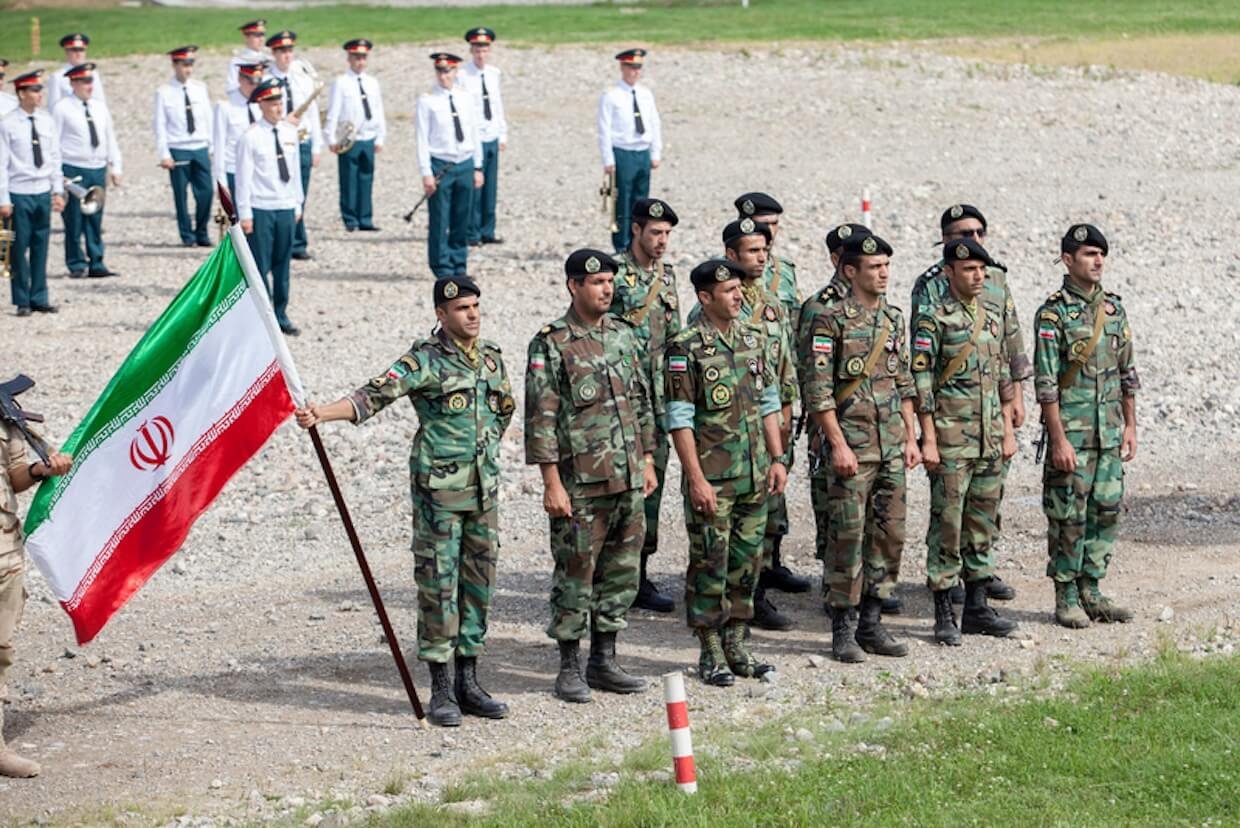
Platoon of Iranian army soldiers carrying the flag of the Islamic Republic of Iran during the international military competition ARMY-2018 in Pesochnoye, Kostroma Region, Russia, June 2018. Photo: Dreamstime.
You argue that authoritarian regimes rarely collapse easily and often respond to threats with intensified repression. In the Iranian context, what mechanisms of authoritarian resilience make the system particularly difficult to destabilize?
Professor Peter W. Klein: This is where the Revolutionary Guard has an advantage. In many of these authoritarian regimes, they are able to maintain their control for a variety of reasons, including ruling with an iron fist.
I’ll give you just a quick sidebar example that I found interesting. Under Saddam, I think it was his nephew who ran the militia there, and he knew that they needed to put considerable effort, money, time, resources, and human power into building a militia—a state militia that could crush rebellions, especially after there had already been a Shia rebellion. So even the fear of that could be enough. People walking around with guns can be enough—you don’t have to shoot people; the threat alone is often sufficient.
What I found particularly interesting was a videotape I obtained after the fall of Saddam. I got it from the palace in Baghdad, in the Green Zone. I had received a number of videotapes that I started going through, and one of them was the strangest thing. It showed Saddam Hussein shortly before the 2003 invasion, sitting with a group of his ministers. They were examining what looked like toys—things like tacks, slingshots, and Molotov cocktails, essentially very low-level weapons.
So, I sat down with a translator and a couple of other people to understand what the conversation was about and what was going on. No one had seen this footage before. I eventually included it in a documentary that aired on the History Channel, and the New York Times did a big story about it. The Daily Show even did a spoof on it.
But what was interesting—the real insight—was that Saddam was essentially telling the people around him that the Americans might invade in 2003 and that there could be another Shia revolt. He said they needed to get the people on their side, but they didn’t want the population to be armed well enough to challenge the regime. So, the idea was to provide low-level weaponry—Molotov cocktails and slingshots—that civilians could use against other civilians, but that would not be powerful enough to challenge Saddam’s forces.
It was somewhat comical. There is a reason The Daily Show used a clip of it, because it was surreal to see Saddam Hussein, this powerful dictator, discussing what looked like toys. But the conversation itself was very serious. The logic was that the regime’s militia could crush civilians armed with low-level weapons, while loyalist civilians—Baathists—could be mobilized to confront and suppress the Shia. And it really gave some insight, at least for me, into how authoritarian regimes think about structuring military power in order to control the public.
The Devil We Know: The Uncertain Consequences of Regime Collapse
You warn that even a successful uprising could produce internal fragmentation or civil conflict. Looking at cases such as Iraq after 2003 or Afghanistan after 1989, what lessons should policymakers draw about the dangers of post-regime power vacuums?
Professor Peter W. Klein: What we keep doing is going into places that are diverse and complex without fully understanding that diversity and complexity. In Iran, I couldn’t even begin to list all the groups—whether it’s the Baluch or others. There are so many different factions within Iran, and you can easily imagine significant factional violence or strife if the whole country were to collapse.
You saw this in Iraq, and Iraq was, frankly, a much simpler place than Iran. You basically had Shias, Sunnis, and Kurds. There were also Turkmen and a couple of other groups, but you still saw huge strife among these different communities. So, this reflects the argument that sometimes it is the devil we know rather than the devil we don’t know. You might have a strongman who runs a country and keeps some of those factions at bay, and at least you know how to deal with that one leader.
Once things break into factional violence, as we saw in Afghanistan, it becomes extremely difficult to control. This is why every world power ends up struggling in Afghanistan, because it’s like trying to fight a marshmallow—you can’t really knock it out. There are so many different factions, and the enemy becomes very undefined. It has been an endless challenge, whether for the Soviets, the Americans, or others.
I’m not saying that Iran is Afghanistan. Iran is obviously a much more organized and economically developed country in most respects. In some ways, that makes the target clearer. But it is still complicated, and if you got rid of the Revolutionary Guard, I honestly don’t know what would happen in that country.
The Fragmented Media Landscape and the Crisis of Trust
London Newspaper stand refects the diverse range of newspapers and languages of modern London. Photo: Dreamstime.
As an investigative journalist and documentary filmmaker, how do you see the role of media narratives and digital information flows shaping global perceptions of the Iran conflict and the legitimacy of calls for regime change?
Professor Peter W. Klein:We have a huge responsibility. Consistently some journalists rise to the occasion and do an amazing job, while many journalists don’t. I mean, it was interesting with Venezuela. All of these journalists who couldn’t find Venezuela on a map before suddenly became experts on Venezuela, and that’s just the reality that many journalists are thrown into: You have to quickly figure out and understand a place that you may never have covered before.
I appreciate the challenge that journalists face. As a journalism professor, it’s something we often talk about—the responsibility, not just the basic ethics, but also the implications of what we do. Journalism has become so bifurcated and complicated. It’s not only that newspaper or that newscast anymore. There’s social media, there are bloggers. Some of the most influential people in media are coming from very non-traditional places, whether it’s Joe Rogan with a podcast or late-night comedians who essentially have journalists on their staff digging in and pushing particular perspectives.
So, it has become even more complicated than just the New York Times, Washington Post, or Guardian reporters shaping the narrative. And the other challenge is that you may try to do a really good job, but obviously we don’t have control over the entire media landscape. There are always going to be people who are either getting stories wrong or pushing false narratives, misinformation, or misguided agendas. And I hear it all the time from the public. Just from talking to people at conferences and presentations I do, people are frustrated and confused. Where should I be getting my news? Who can I trust? Who shouldn’t I trust?
And there isn’t a great solution. One of the solutions we often suggest in the academic world is transparency—being transparent about your positionality and transparent about your political affiliations. There is some real value to that. But then all that means is that we end up having an echo chamber, where people go only to others who share the same political views and values they have, and they’re not exposed to opposing opinions.
So, there really isn’t a great solution, unfortunately. But I think just being aware matters. Your question itself has value, because having these open conversations can have some real, real positive impacts.
Change May Come—But Not in the Way the West Expects
And lastly, Professor Klein, looking beyond the immediate crisis, what scenarios do you see as most plausible for the next decade of Iranian politics—gradual reform, intensified authoritarian consolidation, externally triggered conflict, or eventual systemic transformation?
Professor Peter W. Klein: I’m suspicious of anyone who makes predictions, and I will confess that I am a terrible predictor. I thought Barack Obama would never become president, so I’m not a good person to ask. But I can tell you what my hope is. I hope that gradual transformation happens. I do think there are some very serious problems in Iran that need to be addressed, both internally and externally.
Maybe history will show that this particular attack opened the door for change. But the opposite can happen as well—it could move in the opposite direction. So, there may be change, but it may not be the kind of change that many people in the West would want. There could be a doubling down on the nuclear program, proxy wars, and similar policies.
I personally don’t think there is going to be a huge regional conflict. I don’t think this will open the door to World War III. But it is impossible to know for certain, which is why we really need to be very careful. Policymakers certainly need to be cautious, and in academia and journalism we also need to be careful both in making predictions and in explaining and analyzing the situation, because it is so complicated that most people don’t fully understand it, including myself.
Plastic waste has become one of the defining environmental crises of the twenty-first century—but its politics extend far beyond questions of recycling and waste management. In his commentary, Dr. Oludele Solaja examines how global plastic trade reflects deep structural inequalities between the Global North and the Global South, where environmental burdens are systematically displaced onto poorer regions. Drawing on insights from political economy and environmental justice scholarship, he introduces the concept of waste sovereignty—the claim that states should exercise political control over transboundary waste flows as part of broader struggles for ecological justice and economic autonomy. By examining global waste markets and emerging regulatory responses, Dr. Solaja highlights how plastic pollution has become a key arena of power, sovereignty, and inequality in global environmental governance.
By Dr. Oludele Solaja*
For decades the plastic waste has been travelling through global trade routes and has ultimately landed on waste pickers and informal sector recyclers in developing countries. Although most of the plastic products are consumed in richer economies, the bulk of waste generated through their consumption processes is handled in countries that lack technical capabilities and facilities to do proper recycling. What seems like a technical issue of dealing with waste is, in fact, tied up to the power politics and global asymmetrical relationship between Global North and South resulting in large transfer of environmental risk and pollution to the poorer world, thereby causing rampant pollution.
The first part of the twenty-first century has undoubtedly been defined by an environmental crisis involving plastics. The production of plastic has rapidly escalated to over 400 million tons of material annually since the late 1970s. Despite this, only countries in the Global South have to manage the overwhelming environmental problems related to the processing of this waste, which is mostly generated by more prosperous countries. The flow of plastic waste to the South is a direct result of the export business where more industrialized countries ship their own plastic waste to developing countries for disposal under the guise of recycling markets. Although these movements often disguise themselves as a technical solution to plastic waste disposal, it’s truly about exporting environmental harms to less equipped regions.
According to many researchers and environmentalists, these movements reflect a “plastic colonialism,” where developing nations bear the burden of ecological unequal exchange. As political economist Dani Rodrik describes “globalization is in conflict with democratic politics. A great tension now exists between deep global economic integration and the conditions of domestic political legitimacy.” Plastic has therefore moved beyond being merely an environmental problem; it has become a symbol of global inequality, giving rise to the emerging political concept of waste sovereignty—the argument that nations should have the right to control the transboundary movement of waste as part of broader struggles for environmental justice and economic autonomy.
The Global Plastic Waste Economy
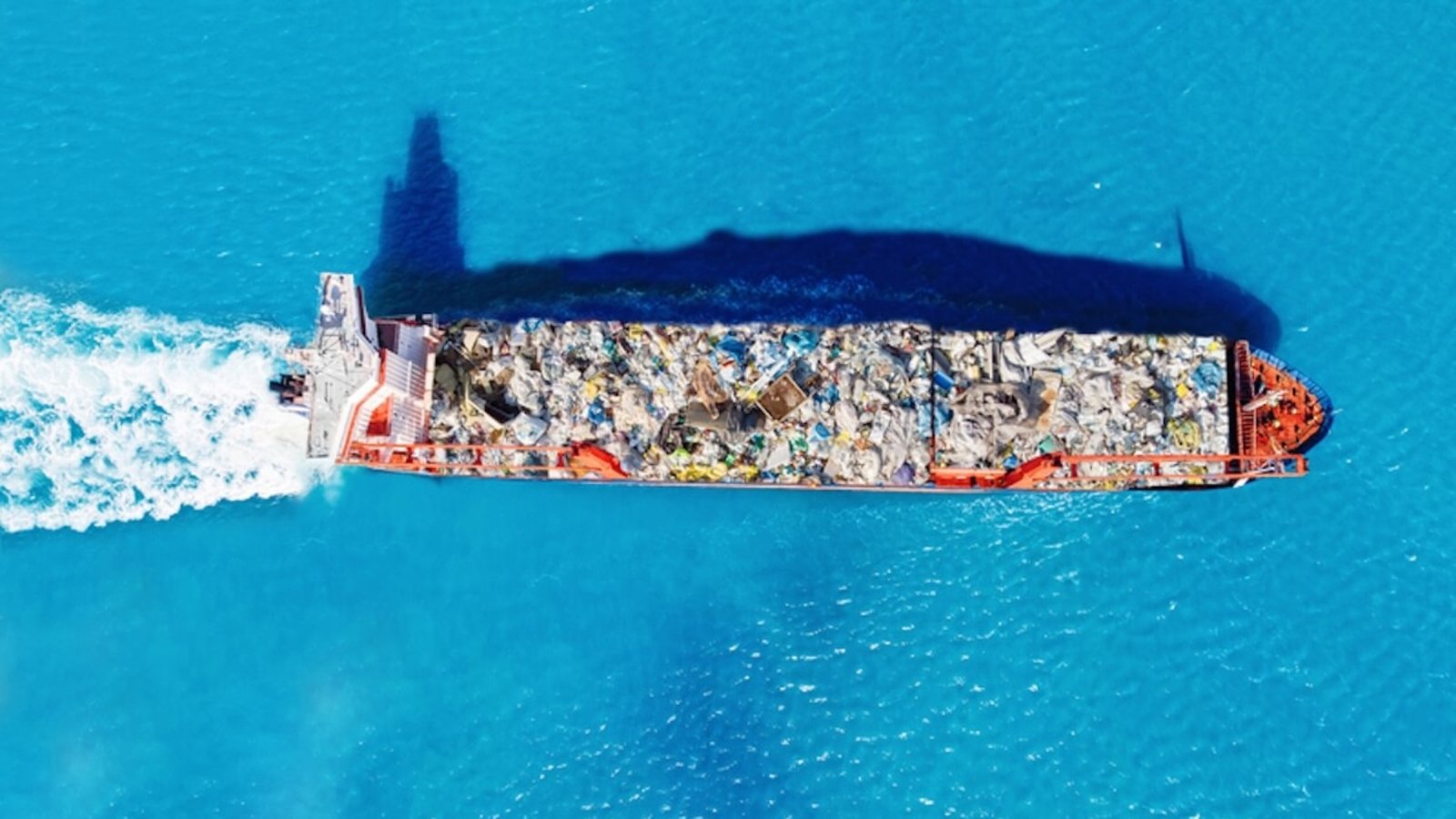
The world economy of plastic involves intricate networks spanning continents that link production, consumption, and disposal, while producing globally distributed yet inequitable environmental impacts. For a long time, China has been a recipient of bulk quantities of plastic waste exported from the US, Japan, and various European countries; this changed in 2018 when China refused to process contaminated waste products. In turn, the export markets shifted, mainly to Southeast Asia and parts of Eastern Europe.
However, these new arrangements are evidence of weaknesses in our recycling infrastructure. In 2017, research from the journal Science showed that only a mere 9% of all plastic waste has ever been recycled. While the remainder of the waste gets dumped, incinerated, or deposited in natural environments. A study from Nature reveals the sheer amount of plastic pollution in our oceans: “275 million tons of plastic, of 4.8 million tons, are drifting across the world’s seas” (Jambeck et al., 2015). The irony of promoting recycling for plastic waste is clear: the recycling industry relies on disposable structures.
Plastic Colonialism and Environmental Inequality
Political ecology and critical political economy inform the notion of plastic colonialism, illustrating that waste is rarely just a result of technical failures in managing waste disposal; rather it is a consequence of wealth disparities, power imbalances, and weaknesses within governmental infrastructure.
In this light, the flow of global waste represents a process of ecological unequal exchange, where waste generated in richer parts of the world results in environmental degradation predominantly in the poorer regions of the world. Thomas Piketty in his study of political economy confirms the persistence of structural disparities within global politics. Moreover, it has been suggested by scholars like Nancy Fraser that environmental problems frequently entail “expropriation,” where marginalized populations bear the ecological costs of production within a globalized world. Plastic waste is therefore not simply about recycling techniques but a critical political struggle between different parties over an issue of environmental justice and unequal resource distribution.
Waste Sovereignty Theory
In an effort to contextualize these issues, Waste Sovereignty Theory introduces the concept of governing waste as an expression of political and environmental sovereignty. Here, governments seek to reclaim ownership over environmental decision making while rebuffing impositions by international markets which place the burden of ecological costs on them. The theory is best understood through the framework of four interconnected concepts representing how states and communities tackle unequal global waste governance.
Territorial Control: States attempt to regulate and control transboundary movements of waste through bans and regulatory checks, with China’s 2018 plastic waste ban being a prime example.
Economic Transformation: Nations are looking to make waste a resource rather than a burden. The creation of circular economy strategies aims to reintroduce waste as part of the production system.
Environmental Justice: Claims for waste sovereignty are primarily derived from accusations that developing nations bear an unjust ecological burden due to the consumption in wealthier nations. These claims call for a new system of waste trade that prevents the unequal distribution of environmental responsibility.
Political Mobilization: The debate over waste governance is often linked to populist and nationalist narratives, which frame these issues as a struggle against oppressive distant powers and an exploitative system where rich nations offload their environmental burdens.
These four pillars, therefore, show how waste politics has become a political and environmental battlefield.
Global Case Studies
Several of the countries across the world exemplify the increasing power of waste sovereignty politics. In Malaysia, a dramatic increase in exports of plastic waste, recently taking place there, is attracting national concern over pollution. Malaysia’s government is trying to regain control of waste streams via a strategy of inspection and sending of suspect materials back to source countries.
Turkey, along with other European countries, is also now dealing with large shipments of plastic waste from Europe, leading to domestic focus on the issues the trade raises in Turkey, and demands for a more responsible waste trading relationship with European countries.
The management of plastic waste across many African countries, presents a multifaceted problem intimately linked to development, and millions survive by waste picking (Ghana). In Kenya, there is a ban on all single-use plastic bags, and in Nigeria research explores avenues for using waste plastic in sectors like textiles.
They all portray a story of nations attempting to address their domestic plastic pollution concerns, while also attempting to retain some control over imported waste streams.
Waste Politics and Populist Narratives
Waste politics and populist ideas are increasingly interconnected. Waste import debates offer powerful evidence that the world’s powerful global players continue to exploit weaker nations. As demonstrated in Naomi Klein’s analysis of environmental crises, these issues can become a part of a larger critique against neoliberalism; the problem of plastic waste is not just a technological issue but also political as it symbolizes the unequal nature of globalization.
Conclusion
The worldwide crisis in plastics unveils a significant discrepancy between the circular economy strategies proposed by global institutions and the ongoing replication of inequality in the sharing of environmental problems that exists in the global waste trade. Plastic colonialism isn’t just an inability to deal with waste, but a structured reflection of the inequality found within the globe, a growing challenge that has sparked protest across the Global South. Waste Sovereignty theory provides an understanding of such developments by framing waste governance as a battle for environmental justice, political sovereignty, and economic autonomy. The international debate surrounding waste governance is likely to play an integral role in the future of global environmental politics and the path towards establishing a more equal world.
(*) Dr. Oludele Solaja is a faculty member in the Department of Sociology at Olabisi Onabanjo University in Ago-Iwoye, Ogun State, Nigeria.
References
Brooks, A. L.; Wang, S. & Jambeck, J. R. (2018). “The Chinese import ban and its impact on global plastic waste trade.” Science Advances, 4(6), eaat0131. https://doi.org/10.1126/sciadv.aat0131
Fraser, N. (2016). Expropriation and exploitation in racialized capitalism: A reply to Michael Dawson. Critical Historical Studies, 3(1), 163–178. https://doi.org/10.1086/685779
Geyer, R.; Jambeck, J. R. & Law, K. L. (2017). “Production, use, and fate of all plastics ever made.” Science, 3(7), e1700782. https://doi.org/10.1126/sciadv.1700782
Jambeck, J. R.; Geyer, R.; Wilcox, C.; Siegler, T. R.; Perryman, M.; Andrady, A.; Narayan, R.; & Law, K. L. (2015). “Plastic waste inputs from land into the ocean.” Nature, 347(6223), 768–771. https://doi.org/10.1126/science.1260352
Klein, N. (2014). This Changes Everything: Capitalism vs. the Climate. New York: Simon & Schuster.
In this commentary, Dr. Oludele Solaja examines the often-overlooked ecological consequences of modern warfare. Moving beyond traditional analyses focused on military strategy and territorial control, he argues that contemporary conflicts produce long-lasting environmental damage that can destabilize societies for decades. From contaminated farmland and polluted water systems to devastated ecosystems and forced migration, war’s environmental fallout directly undermines human security. Drawing on historical examples such as Agent Orange in Vietnam and the Kuwaiti oil fires during the 1991 Gulf War, the commentary highlights how ecological destruction persists long after hostilities end. Dr. Solaja ultimately calls for stronger international environmental governance and greater integration of environmental protection into global security and peacebuilding frameworks.
By Dr. Oludele Solaja*
Thinking About War in an Ecological Framework
When war is finished in terms of battles, water systems remain polluted, nature destroyed, and infrastructure shattered—and continues to shape the ways in which societies survive and exist. Whereas the majority of scholarly focus concerning warfare centers on issues of military victory, deterring enemies, or controlling territory, the environmental consequences of war can often produce effects that can persist over decades (Lawrence & Stohl, 2019; UNEP, 2009). The current confrontation between the United States, Iran, and Israel, for instance, should be understood not merely as a geopolitical conflict, but as an ecological disaster, as well. The bombing and attack on industrial and energy infrastructure result in more than mere destruction of physical property; these incidents produce ecological disarray, which can lead to widespread contamination of landscape, livelihood and inhabitants, even long after the end of hostilities (Foster et al., 2010; Ide, 2021).
Understanding war in relation to ecology and displacement is one way of looking at the long-term consequences of military combat. Destruction to environment can create instability for societies by contaminating farmland, polluting water sources, or even eliminating the natural resource base required to survive. Therefore modern warfare reaches beyond the battlefield to create different forms of insecurity that may exist in the environment for generations (Nixon, 2011). Hence a sociological study of war, examining both strategic and environmental results of battle, should be adopted in understanding conflict in the 21st century. In an age of increasing environmental crises and security concerns, treating war as an ecological affair can become as significant as viewing it as the domain of military actions (Foster et al., 2010).
Environmental Effects of Modern Warfare
Even though destruction of the environment has historically been a factor of warfare, it often goes overlooked in analyses of security. It can create massive ecological devastation, not just exacerbate humanitarian crises within a warzone, but create an environmental crisis for surrounding regions as well (UNEP, 2009; Lawrence & Stohl, 2019). Aerial bombardment of infrastructure can spread poisons into the air, water sources and natural habitat required for sustenance. Industrial buildings and energy sources—refineries, chemical plants, water treatment plants—are sometimes prime targets. When these sites are destroyed, dangerous pollution can linger in land, air and ground water long after fighting has ended, with effects on human security far reaching (Ide, 2021).
Toxic lands may become unfit for farming and public health will be compromised by contaminants and the food supply jeopardized. It can often take decades to repair the environmental damage so that it may become safely habitated again (UNEP, 2009). Attacks on Iranian oil refineries and petrochemical industries, for example, could cause catastrophic environmental degradation over a wide region of the Middle East, compromising public health and damaging natural ecosystems of the area (Lawrence & Stohl, 2019).
Historical Evidence of Environmental Destruction during War
The long-term humanitarian effects have historically been a characteristic of war-induced ecological damage. Between 1961 and 1971, the US deployed large quantities of Agent Orange across Southeast Asia during the Vietnam War. Large portions of farmland and forest became useless while their soils were contaminated with toxins. In addition to long-lasting health problems, communities continue to deal with the aftermath of these chemicals (Vo & Ziegler, 2018).
Also, during the 1991 Gulf War, Iraqi troops burned hundreds of Kuwaiti oil wells in an attempt to deter advancing forces. Large quantities of pollutants were released into the air, and oil slicks devastated marine life (Al-Dabbous & Kumar, 2014). As in Vietnam, long-lasting human security issues and a devastated ecosystem resulted from environmental disaster during wartime. The widespread destruction of natural and manmade landscapes caused during conflict does not end immediately and the need for their repair is a long-term challenge that often prolongs instability within nations affected by war. Such environmental harm frequently unfolds gradually and invisibly, what Nixon describes as “slow violence,” in which ecological destruction continues to affect communities long after the immediate conflict has ended (Nixon, 2011).
War, Environmental Degradation and Human Security
Seeing war as a source of ecological devastation helps to better understand the link between war and human security. Attacks on water systems, farms or factories can harm societies through ecological harm which causes social consequences. An attack on an ecosystem could destroy farms, harm public health through pollution of water sources and prompt migration as farming has no longer become an option. These elements—war, environment, displacement—can therefore be described as having a circular relationship, where destruction to one aspect of existence directly fuels destruction in another.
Rural communities are particularly susceptible, since their entire way of life is contingent on their surrounding environment. Without the existence of healthy ecosystems, a livelihood becomes unsustainable and this leads to forced migration in order to survive (Ide, 2021). Homer-Dixon has emphasized the importance of the environment as the driver of conflict through its impact on resource availability and human security; with widespread ecological destruction during conflict, this connection is intensified, creating an even more dire situation (Homer-Dixon, 1999).
Implications for International Environmental Governance
The ecological devastation that war leaves in its wake makes clear the need for international action to help govern the conduct of war so that environment is not harmed so severely and, hopefully, at all. Although international laws of armed conflict are already in place to help alleviate the harm inflicted upon the environment during war, their enforceability has not been successfully maintained (UNEP, 2009). The long-lasting results of ecological destruction often are not considered and may never be compensated for or rectified in the absence of stronger governance structures.
The establishment of environmental monitoring systems, strict liability laws for states or parties engaged in warfare that are responsible for ecological damage, and inclusion of environmental restoration within peacebuilding initiatives would all serve to diminish the long-term negative effects of war on ecology (Ide, 2021). Making protection of the environment a component of security strategy will make policies aligned with global security concerns, and address issues of ecological sustainability as well.
Conclusion
The conflict with Iran highlights the vast ecological consequences of modern warfare. It is a process that not only brings conflict to lands and peoples, but can reshape entire landscapes. Its consequences, historically in war zones such as Vietnam and the Persian Gulf, show that it can be a far more destructive phenomenon to ecosystems than merely battlefield action, lasting far into the future of human habitation (Vo & Ziegler, 2018; Al-Dabbous & Kumar, 2014). Considering war an ecological threat has made it easier to grasp its entire meaning, and looking at warfare from a strategic and environmental perspective allows for a far greater understanding of warfare itself. In an age of increasing geopolitical turmoil, it may soon become just as significant as military victories, if not more so, to understand the environmental threat war poses.
(*) Dr. Oludele Solaja is a faculty member in the Department of Sociology at Olabisi Onabanjo University in Ago-Iwoye, Ogun State, Nigeria.
References
Al-Dabbous, A. & Kumar, P. (2014). “Environmental impacts of the Gulf War oil fires.” Environmental Pollution, 189, 59–68.
Foster, J. B., Clark, B., & York, R. (2010). The Ecological Rift: Capitalism’s War on the Earth. Monthly Review Press.
Homer-Dixon, T. (1999). Environment, Scarcity, and Violence. Princeton University Press.
Ide, T. (2021). “Environmental peacebuilding and the impact of war on ecosystems.” Global Environmental Politics, 21(1), 1–12.
Lawrence, M., & Stohl, A. (2019). “The impact of military emissions on climate change and air pollution.” Nature Communications, 10(1), 1–9.
Nixon, R. (2011). Slow Violence and the Environmentalism of the Poor. Harvard University Press.
UNEP. (2009). Protecting the Environment During Armed Conflict: An Inventory and Analysis of International Law. United Nations Environment Programme.
Vo, M., & Ziegler, A. (2018). “Agent Orange and the environmental legacy of the Vietnam War.” Journal of Vietnamese Studies, 13(2), 1–28.
In this reflective Voice of Youth (VoY) commentary for International Women’s Day, Emmanouela Papapavlou examines how gender hierarchy persists not only through overt exclusion but through the subtle normalization of unequal recognition. Using the contrasting reactions to the US men’s and women’s hockey gold medals at the 2026 Winter Olympics, she argues that women’s athletic success is still too often treated as supplementary rather than self-evidently equal. The issue, she suggests, lies less in explicit insult than in the quiet cultural codes that frame male achievement as the default and female achievement as the exception. By focusing on laughter, tone, and seemingly minor acts of dismissal, Papapavlou offers a sharp critique of how misogyny survives in normalized everyday reactions, revealing the distance that still separates formal equality from genuine social recognition.
By Emmanouela Papapavlou*
At the 2026 Winter Olympic Games, the United States won two gold medals in hockey. One by the men’s team. One by the women’s team. Same sport, same flag on the chest, same summit. A few hours later, in a conversation with the President of the United States, it is announced that the men’s team will be invited to the White House to be honored for their victory. And in the flow of the conversation, comes the phrase, “we have to invite the women too.” The players burst into laughter. A spontaneous, collective, light laugh.
It was not an insult. It was not an attack. Nothing explicitly degrading or offensive was said. And yet, in those few seconds, something deeper was revealed. Because the women’s victory entered the sentence as a footnote. As a reminder. As something that “also” happened.
A gold medal has no gender. The flag is raised the same way, the anthem sounds the same, while on paper, in official statements, in medal tables, the two achievements are absolutely equal. And yet, in our collective reaction, they are not. The men’s category is considered the default version of sport. The women’s is the special category. The men’s is the prototype, while the women’s is treated as its variation.
And this was not born in that room. It did not begin with a joke. It is the product of a culture that has learned to treat male success as a given and female success as an exception. As something worthy of congratulations, but not of the same unquestioned recognition. As something that “it would be good to honor as well.”
We live in 2026 and sport remains deeply male-dominated. Not only in terms of funding and visibility, but in symbolism. The hero, the captain, the leader, the warrior. Think about it. The images that accompany these words are still male. When a woman wins, we often describe her journey as “inspiring,” her endurance as “moving,” her presence as a “role model.” When a man wins, we speak of dominance, power, greatness. One victory moves us. The other confirms expectations.
What is most troubling, however, is not the difference in adjectives. It is that the laughter caused no discomfort. There was no pause. No split second of silence suggesting something was off. It felt natural. And that sense of naturalness is the problem. So why did it feel so natural in the first place?
Misogynistic mentality today rarely appears through shouting. It does not openly declare that “women are worth less.” It shows up in subtle tones. In inflections. In glances. In “jokes” that pass unnoticed. In the familiar “come on, don’t take it so seriously.” In an invitation framed like an obligation. In an achievement treated as an addition rather than as an unquestioned equal.
These small things, which seem insignificant, are what sustain the larger structure. As with every form of gender inequality, the root does not lie only in extreme incidents. It lies in what we have learned to consider normal. In the fact that unequal treatment no longer surprises us. In the fact that it does not bother us enough to react. In the fact that we laugh too or remain silent.
That is how hierarchy is built without ever naming it. Through small concessions. Through subtle diminishments. Through a society that speaks of equality on paper, yet in practice continues to place the male experience at the center and the female one at the margins. If the medal is equal, why isn’t the reaction?
And today, on International Women’s Day, we will once again speak about rights, achievements, and struggles that were fought to get us here. We will honor the women who fought to stand on fields that did not want them, in competitions that did not count them, in societies that preferred them silent. For every woman who spent countless hours training, who endured doubt, mockery, less funding, less coverage, less recognition. For every woman who reached the top knowing that even there she would have to prove her worth all over again, only for the very country she represented to remind her, the next day, with a laugh, that her effort and her victory were not quite as important.
This is not about oversensitivity. It is not about “political correctness.” It is about value. If a woman’s success requires a reminder in order to be acknowledged, then it is not considered self-evident. If inclusion provokes laughter, then equality has not taken root. It has merely been legislated.
So the question is not whether someone had bad intentions. The question is why diminishment fits so easily inside a joke. Why the idea that “we have to invite the women too” sounds like an add-on rather than an obvious part of the sentence. Why, even today, female success requires clarification.
Perhaps because our sense of normal has not changed as much as we think. Perhaps because the equality we proclaim has not yet moved from law into consciousness. And until it does, we will continue to encounter misogyny not only in the loud and blatant moments, but in the small, smiling ones.
The issue is not to stop laughing. The issue is to start asking ourselves what exactly we find funny.
(*)Emmanouela Papapavlou is a high school student from Thessaloniki, Greece, deeply passionate about social and political issues. She has actively participated in Model United Nations and other youth forums, serving as a chairperson in multiple conferences and winning awards in Greek debate competitions. Writing is her greatest passion, and she loves using it to explore democracy, civic engagement, and human rights. Her dream is to share her ideas, inspire action, and amplify the voices of young people who want to make a difference. Email: emmanpapapavlou@gmail.com
In this interview with the ECPS, Dr. Amir Ahmadi Arian offers a penetrating account of Iran at a moment of war, repression, and political uncertainty. As the Israel/US–Iran conflict deepens and succession struggles intensify in Tehran, he argues that the central issue is the systematic erasure of Iranian popular agency. For Dr. Arian, the Islamic Republic has evolved from an ideological revolutionary order into an increasingly militarized system—“basically a killing machine”—while external intervention risks further marginalizing the people in whose name it claims to act. Moving from everyday micropower and censorship to the IRGC’s rise, social humiliation, and the politics of war, he underscores a stark reality: neither foreign powers nor clerical elites genuinely represent the Iranian people.
Giving an interview to the European Center for Populism Studies (ECPS), Dr. Amir Ahmadi Arian—Iranian American writer and journalist, and Assistant Professor of Creative Writing at Binghamton University—offers a powerful and deeply textured analysis of Iran’s current condition at a moment of extraordinary peril. As the Israel/US–Iran war expands into a broader regional conflict marked by bombardment, civilian displacement, and intensifying regime-change rhetoric, Dr. Arian cautions against narratives that erase the agency of the Iranian people themselves. In a context where President Donald Trump has demanded Iran’s “unconditional surrender,” openly declared an interest in shaping the country’s postwar leadership, and where succession debates have reportedly intensified following the death of Ayatollah Ali Khamenei, Dr. Arian’s central warning is stark: “neither of them has anything to do with the Iranian people.”
That insistence on popular agency—and on its systematic denial—runs through the interview as a whole. For Dr. Arian, Iran’s predicament cannot be reduced either to foreign pressure alone or to a simplistic image of “clerical rule.” Rather, he describes a political system that has evolved over 47 years from an ideological revolutionary order into something far more militarized, coercive, and socially corrosive. What began with “a very strong ideological core, surrounded by a security apparatus,” he argues, has gradually become “less and less ideological and more and more militarized.” In his starkest formulation, the regime today is “basically a killing machine,” one whose relationship to society has been reduced to a binary of “friend and enemy.”
Yet Dr. Arian’s account is not confined to the spectacular violence of war and mass repression. One of the interview’s greatest strengths lies in its insistence that authoritarian domination in Iran is reproduced through everyday practices, cultural control, and administrative routines. Recalling his own childhood and youth, he explains that in the 1980s and 1990s one “felt the presence of the state almost on your skin.” From school rituals and anti-American iconography to compulsory hijab and the disciplining of bodies, the regime exercised what he calls a “very Foucauldian kind of presence of power in daily life.” The same logic extended into literature and language: censorship, exile, and the weakening of Persian literary culture did not merely restrict expression but also narrowed the horizons of political imagination itself.
At the same time, Dr. Arian foregrounds the uneven social distribution of repression. The Islamic Republic, he notes, presents itself internationally as a defender of “the poor, the wretched of the earth, the underdog,” yet “nobody has suffered at its hands more than the poor.” Women, Baha’is, workers, and peripheral communities have borne disproportionate burdens of exclusion, persecution, and violence.
Against this backdrop, his analysis of the current war is especially sobering. If military intervention deepens, he warns, “the will of the people becomes the last thing that counts.” The core question, then, is not simply whether the regime survives, but whether Iranians themselves can recover political agency from both authoritarian rulers and external powers claiming to act in their name.
Here is the edited version of our interview with Assistant Professor Amir Ahmed Arian, revised slightly to improve clarity and flow.
Iran Regime’s Presence Felt Omnipresent
Billboard depicting Ayatollah Sayyid Ali Hosseini Khamenei and Imam Sayyid Ruhollah Musavi Khomeini on a building wall in Tehran, Iran, April 2018. The portraits honor the founder of the Islamic Republic, Ruhollah Khomeini (Supreme Leader 1979–1989), and his successor Ali Khamenei (Supreme Leader 1989–2026), whose images frequently appear in public spaces as symbols of the regime’s ideological authority. Photo: Dreamstime.
Professor Amir Ahmed Arian, thank you so much for joining our interview series. Let me start right away with the first question: Having grown up and begun your literary career inside Iran, how would you describe the everyday texture of life under Iran’s clerical-authoritarian system? At the level of routines—schooling, workplaces, gender norms, religion, and bureaucracy—how do these micro-practices reproduce obedience, negotiation, or subtle forms of resistance?
Dr. Amir Ahmadi Arian: In Iran, one caveat I have to give at the beginning—which will apply to all my answers—is that when we talk about the Islamic Republic, we are talking about 47 years of rule by this political system, and it has evolved and changed a lot over time. So, the practices that you mentioned—the way they were conducted in the 1980s and the 1990s—are very different from those in 2000 or 2010. The rulers have changed a lot as well. Depending on who the president was, society changed dramatically. And even more importantly, Iranian society itself sheds its skin very quickly, generation after generation.
What you see among young people now—this generation—has very little to do with my generation. People who were born around the time of the revolution are now middle-aged, and the twenty-somethings today do not really listen to us or care much about what we think. So, what I am saying is mainly founded on my own personal experience growing up there. I left Iran in 2011, and over the last fifteen years the country has changed quite dramatically. So, what I say is less a comprehensive analysis of what is going on in Iran and more an account based on my own personal experience.
To answer your question, growing up in Iran in the 1980s and the 1990s, you really did feel the presence of the state, because that was the strictest period after the revolution. After the reformist movement in the late 1990s, things began to open up. But in those first two decades, you felt the presence of the state almost on your skin.
It was overwhelming and omnipresent all the time. To give you one example, the way they tried to inculcate their foreign policy in the mind of a child was that throughout my education—during elementary school, high school, and later in college, when I attended the University of Tehran—there were massive flags of the US and Israel painted on the ground in front of the gates of all those institutions.
So, when you walked into the school or through the university gate, you could not even enter without stepping on them. Imagine doing that for twelve years in school and then five years in college—almost every day. Not just me, but millions of children across the country stepped on the US and Israeli flags in order to enter school. Just imagine what that does to your unconscious mind—how it shapes the way you see the world unwittingly, beyond what you consciously know or learn.
For women especially, there was another, much more aggressive layer, which was the compulsory hijab. This started in elementary school. Six-year-old girls had to wear uniforms and maghnaeh, these tight scarves, and they had to keep them on throughout the day. Of course, in public spaces there was also a very strict dress code for women. Women could not appear in the street without complying with it. I do not think anything embodies the aggressive presence of the state in all aspects of daily life as clearly as the compulsory hijab.
These are just two small examples.
The way the system worked was that, instead of relying only on a top-down system of propaganda, there was also the presence of micropower spread throughout society. These mechanisms were designed to strictly control bodies and constantly remind you that the state is here, and the state is watching you. So, it was a very Foucauldian kind of presence of power in daily life.
Iran’s System Is Not Just Clerical Rule—It Is a Militarized Security State
Analysts often reduce Iran’s system to “clerical rule,” yet your work suggests a far more complex configuration of institutions. How should we conceptualize the Iranian regime today—as a theocratic regime, a bureaucratic-security state, or a hybrid authoritarian system combining ideology, patronage networks, and coercive institutions?
Dr. Amir Ahmadi Arian: It’s basically all of the above. From the beginning of the revolution, the system has had a very strong ideological core, surrounded by a security apparatus. And you have the Revolutionary Guards, which constitute a very complicated and vast network of people. Within it, there are individuals who are completely cynical and technocratic, or those who are there to run their own businesses through military means, as well as truly apocalyptic warriors who want to bring about Armageddon and believe they are involved in some sort of end-of-the-world battle.
In between, you have all kinds of government bureaucracies and institutions that try to find a foothold in this network.
But the point is that, as time has gone on—from the beginning of the revolution to now, over these 47 years—the Iranian government has become less and less ideological and more and more militarized. So right now, more than anything, it resembles something like a European fascist regime in the 1930s and 1940s, one that was completely reduced to security forces. It is basically a killing machine. And the last moment when we saw that very clearly was this January.
On January 8 and 9, they opened fire with live ammunition on unarmed protesters all over the country and killed at least 8,000 people. I know that number is very contested, but at this point we have 8,000 names identified without a shadow of doubt. The organization that documented this is also working on verifying 11,000 more names. Many of them are already partially verified, but the process of full verification is ongoing. So even if half of that is true, we are looking at a five-digit death toll in basically 36 hours, which would make it the bloodiest massacre a state has committed against its own population in modern history.
That alone should make it very clear that the ideological façade and the bureaucratic elements are collapsing. The ideological façade is gone, because what they did then cannot be justified by any religious doctrine—or, frankly, by any ideological doctrine other than some form of fascism, perhaps something like Shia fascism. And the bureaucratic veneer is also very thin now; I would even argue that it has largely disappeared. Because no reasonable governing entity—whether a state or any other governing body—would do that simply to control society. You only do that when you see your own people as the enemy. There is really no other explanation.
So right now, the system has been reduced to a very hardcore security corps composed of armed elements of the Basij, the Revolutionary Guards, and parts of the police. And their relationship with the Iranian people is essentially one of friend and enemy. You are either in their camp, or you are not. And if you are not, they are out there to eliminate you. They do not really want you to exist anymore. So, of all the political systems that have existed, from what little I know of European history, they remind me of Franco’s regime in Spain—something that functions in a very similar way or resembles certain forms of 20th-century fascism.
The Revolutionary Guards Have Become a Military–Political–Economic Juggernaut
Platoon of Iranian army soldiers carrying the flag of the Islamic Republic of Iran during the international military competition ARMY-2018 in Pesochnoye, Kostroma Region, Russia, June 2018. Photo: Dreamstime.
The Islamic Revolutionary Guard Corps occupies a central position in Iran’s political and economic life. Should the IRGC be understood primarily as a military institution, a security apparatus, a sprawling economic conglomerate, or even a ruling class? What does its economic embeddedness mean for reform, regime durability, or potential transition?
Dr. Amir Ahmadi Arian: So again, that’s another case with the IRGC, or the Sepah. It started off as a military organization at the beginning of the revolution, mainly to help the official army during the Iran–Iraq War. It was almost exclusively military in the beginning. Then, as time went on, it started consolidating power, accruing more and more influence through the decades. This became especially evident during the reformist movement, because the commanders of the IRGC were opposed to Khatami and the reformists in power, as well as to the political elite that came to power in the late 1990s. After that, they decided to become increasingly involved in politics.
Another turning point came later with the economic sanctions imposed after the controversy surrounding Iran’s nuclear program. Following these disputes, Western countries began imposing some of the harshest sanctions in the world on Iran. As we know, such conditions often become a recipe for corruption. In my view, these sanctions cast something like a net over Iran’s economy. They disrupted the natural flow of exports and imports, especially oil exports. However, there was a significant hole in this net: Iran’s access to China. China was simply too powerful to fully comply with the sanctions and follow the United States’ lead, so it continued to purchase oil from Iran. Because China has an enormous and constant appetite for energy, Iran could sell oil to it below market price and still sell large volumes. As a result, even under very harsh sanctions, Iran was still able to generate a considerable amount of revenue through oil sales to China.
The problem, however, was that this revenue flowed through only one channel: the Revolutionary Guards. As a result, large segments of the economy gradually became concentrated in their hands, which almost inevitably led to corruption. Over time, within the ranks of the Revolutionary Guards, you can see an oligarchy beginning to take shape. And not just within the Revolutionary Guards—the broader political elite, especially their children and relatives, also joined this oligarchic network. Perhaps a few thousand people became involved in the export and import of oil with very little accountability. As a result, they began making themselves extremely rich, often at the expense of the well-being of ordinary Iranians and their daily lives.
At that point—perhaps by the mid-2010s—you could see that the Revolutionary Guards, which had started as a military organization and later evolved into a military–political organization, were becoming a military–political–economic juggernaut. It became something like an octopus, with tentacles reaching into almost every aspect of Iranian society, and that has continued to be the case until now.
Humiliation Is One of the Main Engines of Protest in Iran
Your writings frequently evoke emotions such as humiliation, anger, fear, and exhaustion. How do these affective dimensions shape political mobilization in Iran? In particular, how do humiliation and generational frustration interact with social fatigue to influence the timing and intensity of protest movements?
Dr. Amir Ahmadi Arian: I think humiliation is really key, especially if you watch the state media in Iran. It is a relentless and non-stop process of insulting your intelligence through the way propaganda is produced. It is really as absurd as looking at the sky in broad daylight while the TV tells you that it is nighttime. And they say it very aggressively, with zero respect for the intelligence and dignity of their audience.
Iranians are very well aware of the source of their problems. They know that the main source of their misery is their rulers, the Islamic Republic. Yes, sanctions have contributed heavily. The hostility from Israel, all the stories about the nuclear program—some exaggerated, some fabricated—and the accusations coming from a state that possesses far more nuclear weapons than Iran will ever have all contain a degree of hypocrisy. Iranians recognize that. But when you look at the political landscape of Iran, it is very clear to everyone that most of what we have gone through is the responsibility of the Islamic Republic. And the rulers know that too. It is not a secret to them.
But for 47 years, you look at their behavior and see that they have not taken a single step toward the people of Iran. Not one. They have never shown any willingness to make concessions to civil society or to protesters in the streets. They have never demonstrated any real interest in listening to them. Every time people have come out to protest, the regime initially responded with batons, and as protests intensified, with bullets. And we saw just last month what a wholesale massacre was essentially.
Even today, they continue to deny most of their responsibility for the absolute disaster they have inflicted on Iranian lives. So, when you look at this while living inside Iran, you see a government responsible for the immiseration of multiple generations yet unwilling to take even a shred of responsibility for what it has done. They have shown no willingness to change course.
This is the frustration, the rage, and the humiliation that it instills. And it can very easily boil over and drive people into the streets.
Iranians know how brutal their rulers are, how willing the regime is to kill them, and yet protests continue. In fact, you have rarely seen street protests as frequently anywhere in the world as in Iran over the past 10 or 15 years. Every couple of years there is a major wave of mass protest—whether over economic conditions, the compulsory hijab, or other issues.
Each time, people know they will be met with extreme violence, with bullets and batons. Every time they go out into the streets, they know they may never return home. Yet they still do it, because the sense of humiliation and frustration runs so deep that, in their minds, risking death can feel worthwhile simply to express it publicly.
Iranian woman standing in middle of Iranian protests for equal rights for women. Burning headscarves in protest against the government. Illustration: Digital Asset Art.
Women, Minorities, and the Poor Bear the Heaviest Burdens of Repression
For those who challenge the regime—writers, activists, workers, or ordinary protesters—what does the spectrum of repression look like in practice? How are risks such as censorship, economic exclusion, detention, torture, or exile distributed across class, gender, ethnicity, and geography?
Dr. Amir Ahmadi Arian: Probably the biggest irony of the Islamic Republic is that its outward presence to the world—its public face—and unfortunately many in the West buy into that, especially people on the left, is that it presents itself as standing up for the poor, for the wretched of the earth, for the underdog, for the downtrodden, and so on. So, it defines itself as one of the few states in the world that stands with the underdog. But when you go inside Iran, nobody has suffered at its hands more than the poor, working people, and those who do not have the means to make ends meet.
And this has been the case for decades, at least since the 1990s. You could argue that in the 1980s the regime implemented some policies aimed at creating a degree of economic equality. But definitely since the 1990s, after the death of Ayatollah Khomeini, it has essentially operated as an economic system that consistently favors the rich while suppressing the poor. It has only worsened over time, and as I mentioned earlier, the sanctions have also contributed to this dynamic.
So if you are poor—and there is a reason why in more recent demonstrations and protests you see more working people and poor citizens from the margins of society, from smaller towns near the borders where poverty is particularly severe—those are often the people who take to the streets and risk their lives more than people in the major cities. That was not the case back in 2009 during the Green Movement.
Then, of course, there are religious minorities, especially the Baha’is. It is actually a principle of their religion not to engage in political activism, so they have never posed any significant threat to the political order in Iran. Yet, because of the dogmatism and fanaticism of the Shia clerics in power, that community has been persecuted more savagely than almost any other group.
So, you have the persecution of the poor through economic means, the persecution of the Baha’is for religious reasons, and of course the situation of women, who have effectively been treated as second-class citizens since the beginning of the revolution. They have been fighting for very basic rights for a very long time. And just three years ago, during the Women, Life, Freedom movement, they finally managed to force the state to abandon the enforcement of compulsory hijab—though at enormous cost—after months of civil protests across the country.
So, this is also a form of gender apartheid. You have extreme economic discrimination against the poor, religious discrimination against minorities, and what amounts to a flat-out system of gender apartheid from which women have suffered enormously over the last half century.
Iran Regime Is Not a Well-Oiled Machine, It Is Corroded by Corruption
You have often suggested that repression in Iran operates through mundane institutional routines rather than overt ideological fanaticism. To what extent does this resemble Hannah Arendt’s notion of the “banality of evil,” where ordinary bureaucratic practices normalize authoritarian violence?
Dr. Amir Ahmadi Arian: I think there is an important difference there. In Arendt’s articulation of the banality of evil, it emerges from a bureaucratic machine that actually functions extremely well. You have a system whose cogs rotate together very efficiently. The Nazi extermination process was, in that sense, a highly organized and well-oiled machine. Every officer was a small cog within that machine, carrying out their assigned tasks without really reflecting on the consequences of what they were doing.
In the case of Iran, however, what you see is incompetence—sheer incompetence. Part of the problem is that the state has essentially collapsed, and its bureaucratic institutions are no longer functioning properly. There is so much corruption, so much nepotism, and so much discrimination based on factors such as religious beliefs, social background, or political loyalty—especially when it comes to employment in government institutions, even in very basic administrative matters.
Over time, this has corroded the system of governance to such an extent that it simply no longer works effectively. Even very simple things—like renewing a driver’s license or dealing with routine banking procedures—can become extremely frustrating experiences when you live inside Iran.
So, the way government authority grates on people’s nerves stems less from a highly efficient bureaucratic machine and more from pervasive incompetence and corruption, rather than from a system operating smoothly but devoid of moral reflection.
No One Has Damaged Persian Literature More Than the Islamic Republic
Drawing on your own experience with literary censorship, how does the state’s control over cultural production shape not only what can be said publicly but also what can be imagined politically? In other words, how does censorship function as a technology of power over narrative and collective imagination?
Dr. Amir Ahmadi Arian: There is another irony here. The state in Iran has always prided itself on having a kind of nationalist element. They made a great deal out of independence when you go back to the beginning of the revolution. The main slogan was “Independence, freedom, the Islamic Republic.” So, independence came first. There was always a kind of Islamic nationalism embedded within the discourse. And the Persian language was always part of that. Especially Mr. Khamenei, the supreme leader who was recently killed—he was very much into Persian poetry. He was a very skilled orator, a very good speaker, and he knew Persian very well. They were enamored with Persian literature and the history of Persian poetry, and so on. Yet no one has damaged the Persian language or launched such a profound assault on Persian literature as the Islamic Republic has through censorship.
I am just one example. Until I was 30 years old, I was a writer in Iran. I published a number of books and many articles, and I loved writing in my mother tongue. But they basically forced me out of Iran. At some point after the Green Movement, it became impossible to continue living there. So, I had to move out of Iran—first to Australia and then to the United States—and I had to switch to writing in English.
I am just one small example. I could have contributed to that language and to that literary culture. I could have added something to it. I was doing well there as a writer. But over extremely small and trivial issues, the censorship office started banning my books, and they effectively took away my job as a newspaper writer. So, I had to leave. And I am just one example among thousands of writers like me who loved that language and that culture and were more than willing to contribute to it and devote their lives to it. But the state did not want us around.
Through censorship, what has happened is an extreme weakening of the Persian language itself. When you talk about political imagination, language is crucial. When a language is battered for so long—when it has been depleted of its resources through censorship for half a century—it inevitably loses many of its tools. Its toolbox becomes depleted.
Some of those tools have started to return since the emergence of the internet, but it is very different to have a formal written culture in a society than to have a writing culture mainly on social media. These are two very different phenomena.
What the state has done is to erode the abilities and capabilities of the Persian language, which historically has been a very strong force in maintaining the fabric of Iranian society. Through that erosion, they have negatively affected not only Iranian culture and literature but also the broader cohesion of Iranian society as a whole.
Military Intervention Often Pushes the Will of the People to the Margins
Large poster of Mahsa Amini displayed by the Iranian Diaspora Collective in the Chelsea neighborhood of Manhattan, New York City, November 23, 2022. Photo: Erin Alexis Randolph / Dreamstime.
In the context of the ongoing confrontation between Iran and the US–Israel alliance, how might external military pressure reshape internal political dynamics? Historically, do wars weaken authoritarian regimes by exposing their fragility, or strengthen them by mobilizing nationalism and securitizing dissent?
Dr. Amir Ahmadi Arian: It is very hard to say now. We are right in the middle of the war, and it is very unclear how it will turn out—at least it is unclear to me. Right now, there are so many contradictory accounts and reports about who has the upper hand, whose military is in a weaker position, who is running out of ammunition, and who is running out of defensive shields, and so on. So, it is very difficult to draw conclusions at this point.
But at the end of the day, we have many examples of military intervention, especially in Middle Eastern countries, and none of them have ended well. The way events are unfolding now can already be seen in the recent quarrel over the selection of the next Supreme Leader.
The Assembly—the council of elders, as it is sometimes called in Iran—consists of the people who choose the next leader. There are about 80 very old clerics, all men and all clerics. They are very old and do not represent Iranian society in any meaningful way. In fact, they are about as far removed from Iranian society as possible, yet they are tasked with choosing the next leader. So, whoever they choose will have nothing to do with the Iranian people. It does not matter who it is; it is simply not a democratic process.
On the other hand, you have Donald Trump, who just yesterday said that he wants to have a say in choosing the next Supreme Leader of Iran. He almost sounded as if he meant it, so I will take him at his word. He said something like, “I need to be there when they choose the next Supreme Leader. I want to have a say.”
So, you see two entities talking about selecting the Supreme Leader—the highest political position in Iran—and neither of them has anything to do with the Iranian people. This is often what happens in the aftermath of military intervention. The will of the people becomes the last thing that counts. The agency of the Iranian population is already pushed aside, unless, after this war, they somehow manage to reclaim it.
A Political Vacuum Could Activate Long-Dormant Ethnic Fault Lines
One of the most catastrophic scenarios involves state fragmentation, separatist mobilization, and armed conflict across border regions. Given Iran’s complex ethnic landscape—including Kurds, Baluch, Arabs, Azeris, etc.—how real is the risk of civil conflict if state authority weakens, and what might a pluralistic settlement look like in such conditions?
Dr. Amir Ahmadi Arian: That’s another thing I can’t really say. I have no idea how that will turn out. Iran is a little different from other Middle Eastern countries that have this sort of ethnic tension, in that it has existed within roughly the same borders for about 400 years now. I mean, it has lost some territories over time, but since the Safavid era in the 17th century, Iran has largely remained the same territorial entity that it is today. It is smaller than it was back then, but the core of the country has remained intact.
In this area, all of the ethnic minorities you mentioned have been living together fairly peacefully for hundreds of years. So, Iran is not a colonial construction in the same way that Syria or Iraq are. Because of that, there is more cohesion and a greater possibility of coexistence. Civil war and ethnic conflict are probably less likely in Iran than people sometimes assume, given the long history of these communities living together for many centuries.
But when you have a political vacuum at the center, combined with a deep accumulation of discontent and rage toward the central government, anything can happen. When you bring down a sledgehammer on a society—or a double-stage sledgehammer, both from the government and from a foreign invader—you activate all these fault lines that may have been dormant for centuries, perhaps even millennia. Those fault lines can then produce tremors and earthquakes here and there. How destructive they might become is anyone’s guess. But they could potentially end up destroying this political entity that has existed for many centuries.
When Soldiers Defect, the End of the Regime May Be Near
Lastly, Professor Arian, looking ahead over the next months, what early-warning indicators should observers watch—elite defections, labor strikes, inflation thresholds, prison dynamics, clerical positioning, IRGC cohesion, or international mediation—to determine which trajectory Iran is moving toward? And do you see the emergence of a “fifth scenario,” a hybrid outcome that analysts currently underestimate?
Dr. Amir Ahmadi Arian: I think defection, definitely. Defection—and also what you mentioned about IRGC cohesion, which is kind of synonymous with defection. As I said before, the government in Iran has been reduced to a security force. Right now, more than anything, it is essentially a military entity that is fighting both its own people and the United States and Israel. So, labor strikes are a fantasy at this point. Under bombs, no one can organize a labor strike.
And what the clerics say or think really does not matter anymore. In this situation, you always have to look at the armed forces—the people in uniform. If you see any form of substantial defection in their ranks, both in terms of rank and numbers—meaning defections among high-ranking officers as well as a significant number of personnel—then I think that would be the strongest indication that regime collapse is imminent. But as long as you do not see that, other scenarios should still be considered. I think defection is the key sign we should be looking for.
In this analysis, Dr. Oludele Solaja examines how geopolitical tensions around the strategic oil chokepoint of the Strait of Hormuz transmit economic shocks across the global political economy and disproportionately affect African states. Because many African economies remain highly dependent on commodity exports and imported energy, oil price volatility quickly translates into inflation, fiscal stress, and social pressure. Even oil-exporting countries such as Nigeria face paradoxical effects, benefiting from higher crude revenues while simultaneously suffering from rising domestic fuel costs. These inflationary pressures can fuel economic discontent, weaken government legitimacy, and create fertile ground for populist mobilization. Dr. Solaja argues that recurrent commodity shocks expose deep structural vulnerabilities, underscoring the need for economic diversification, energy transition, and stronger regional integration to build resilience.
By Oludele Solaja*
Geopolitical conflicts rarely stay within their battlefield boundaries. In a world with integrated economy, war in strategic energy corridor would swiftly lead to inflation, political instability and governmental pressures far from conflict. Geopolitical tensions in the strategic energy corridor are central to the functioning of the global political economy. The Strait of Hormuz holds a peculiar important position in the transit routes among all. Some one fifth of the global petroleum liquids passes through the narrow maritime passage in between Iran and Arabian Peninsula (US Energy Information Administration, 2023), hence the perception of armed conflict even if it’s just the rumor of one in the area would lead to an immediate volatility shock in the global oil market.
Not just the physical supply disruptions but the uncertainty itself would create price volatility. Higher cost of insuring the vessels, shifting of the routes and market responses all contribute to the volatility as well. Scholars of energy politics have always acknowledged that oil markets are intrinsically connected with national security and strategic rivalry (Bridge & Le Billon, 2017). As such, conflict occurring in energy producing areas could have economic impact across nations without any boundaries.
The effects on the developing nations would be even worse. World Bank warns that such shocks from the Middle Eastern energy supply chains could push the oil prices beyond $100/barrel, creating inflation pressure and fiscal burden upon developing nations. In an integrated global economy, a geopolitical shock will be transmitted across the commodity supply chain. Energy supply, food production, transportation network and capital flow are all interconnected.
Inflation Transmission and African Political Economy
When energy prices shock happens in African countries, typically there are two related effects: windfall profit to oil exporters, and inflationary pressure to domestic markets.
On one hand, oil exporters like Nigeria, Angola and Algeria could profit from rising crude oil prices through high export revenues and balance of payments surplus. In theory, windfalls can stabilize fiscal conditions and support increase development expenditure. Nevertheless, political economy literature argues that commodity windfalls often reproduce and strengthen existing vulnerabilities of the economies, which fail to transform into sustainable development instead of generating rent-seeking behavior without firm institutions and diversified economies (Auty, 2001; Ross, 2012).
On the other hand, rising global oil prices will transmit inflation through the domestic economies. Transportation costs rise with higher fuel prices, pushing the price up of goods including foods, which need logistics and transportation, as well as costs for manufactured goods and fertilizers for farming. Electricity costs are also higher and so forth.
In Nigeria, this paradox is crystal clear. Despite being one of Africa’s biggest exporters of crude oil, Nigeria needs to import its supply of refined petroleum products as its own refining capacity is insufficient. This creates two divergent effects at the same time: Nigeria has to pay high fuel import costs from imported refined oil, while export revenue is expected to rise with higher crude prices. Informal sector workers who are in the vast majority in Nigerian labor market would experience increasing cost of living.
The consequences for oil-importing African countries are even harsher. Rising costs of fuel import not only leads to greater trade deficit and depreciation of national currency but also increase countries’ exposure to sovereign debt distress.
Commodity Shocks and Politics of Economic Discontent
The macroeconomic impact beyond energy sector can reshape the domestic political landscape by raising costs of living especially in the vulnerable societies. Political scientists have noted that a sudden increase in living costs can cause popular unrest, weaken government legitimacy, and contribute to the emergence of populism (Rodrik, 2018; Kriesi & Pappas, 2015).
In this case, a global economic shock would have translated into domestic political pressure. When confronting with inflation pressures, African governments often are compelled to subsidize the consumption of oil or enforce price caps, which have proven to undermine fiscal positions and postpone necessary structural adjustments. Repeated commodity shocks in institutionally weak economies can reproduce the same vicious cycles of economic discontent and political instability.
Geopolitical conflicts in energy corridors therefore do more than creating turbulence for economies. They challenge domestic political legitimacy by accentuating conflicts between different strata of society about inflation, social welfare, and commodity distribution.
Structural Vulnerability in Commodity-dependent Economies
All of the aforementioned highlights the inherent structural vulnerabilities of commodity-dependent economic systems. Dependency theorists have consistently asserted that countries that depend on exports of primary commodities are exposed to volatility in international commodity markets (Frank, 1967; Amin, 1976). Moreover, the “resource curse” debate emphasizes rent seeking, volatility, and limited industrial development in extracting economies (Ross, 2012).
Energy geopolitical shock can only intensify this vulnerability. Shipping disruptions or higher freight costs resulting from higher insurance fees due to conflict at Persian Gulf can be re-routed around Africa’s Cape of Good Hope, further intensifying the costs borne by all importing nations, especially those relying on food imports, manufactured goods and agricultural inputs. In such cases, the impacts of wars fought at energy corridors are redistributed across the commodity markets that link the Strait of Hormuz to consumers across a faraway land.
Policy Implications: Building Resilience
Mitigating vulnerability of geopolitical commodity shocks requires a long-term perspective beyond ad hoc management strategies. The first thing for African countries is to speed up economic diversification (industrialization and value adding in agriculture), because it will lead to sustainable development not only by reducing dependence on the exports of oil. Secondly, investment in infrastructure and on renewable energies will lead to energy sustainability in African countries and reduces the reliance on imported refined goods. Third, strengthen the social safety net (cash transfers, food security program, etc.) can shield the poorest households from inflationary shocks. Fourth, expand intra-African trade using the African Continental Free Trade Area (AfCFTA) will make the region reduce dependence on unstable international commodity market.
Conclusion
Volatility in strategic energy corridors such as the Strait of Hormuz is a manifestation of geopolitical tensions’ spread across the global political economy. For Africa’s commodity-dependent economies, it amplifies the persistent structural vulnerabilities that are embedded in extraction-based development strategies. Short term export gains associated with rising prices rarely outweigh the subsequent inflationary pressures and fiscal instability in the longer run. Unless these development strategies are actively reformed to emphasize diversification, energy transition and resilience, each commodity shock following every conflict will result in the similar outcomes: temporary windfall gains followed by inflation-induced hardship and fragile development. Geopolitical conflicts in energy corridors, hence, are not just regional security issues; they are fundamentally tests of structural resilience in the development agenda of the Global South.
(*) Dr. Oludele Solaja is a faculty member in the Department of Sociology at Olabisi Onabanjo University in Ago-Iwoye, Ogun State, Nigeria.
References
Amin, S. (1976). Unequal development: An essay on the social formations of peripheral capitalism. Monthly Review Press.
Auty, R. (2001). Resource abundance and economic development. Oxford University Press.
Bridge, G., & Le Billon, P. (2017). Oil. Polity Press.
Frank, A. G. (1967). Capitalism and underdevelopment in Latin America. Monthly Review Press.
Kriesi, H., & Pappas, T. (2015). European populism in the shadow of the Great Recession. ECPR Press.
Rodrik, D. (2018). “Populism and the economics of globalization.” Journal of International Business Policy, 1(1–2), 12–33.
Ross, M. (2012). The oil curse: How petroleum wealth shapes the development of nations. Princeton University Press.
U.S. Energy Information Administration. (2023). World oil transit chokepoints. https://www.eia.gov
World Bank. (2023). Commodity markets outlook. World Bank.
This research note introduces high frequency “real-time” Google Trends data as a novel tool for studying public engagement with major political speeches. Unlike traditional dial-testing, which captures emotional reactions, “googling” patterns reveal cognitive engagement—moments when audiences actively seek information about claims, people, or policies mentioned by the speaker. Analyzing the 2026 State of the Union Address by President Donald J. Trump, the study shows that search activity spiked around issues such as TrumpRX, “Trump Accounts,” and D.E.I., as well as narratives tied to culture-war themes like the story of Sage Blair. The findings suggest that policy proposals addressing material needs—combined with culture-war framing—can mobilize significant public attention, echoing strategies seen in contemporary populist politics.
This research note introduces high frequency “real time” Google Trends data as a tool for research on the general public’s engagement with high-profile political speeches. Contrary to the well-known dial-testing – providing data on emotional engagement – “googling” patterns offer glimpse into the cognitive engagement – actual efforts to obtain additional information on the issues introduced in the speech.
The 2026 State of the Union (SOTU) Address by President Donald J. Trump offered promising testing ground for such tool, due to its prominence, extraordinary length, diverse content and involvement of extraordinary invitees personifying the key narratives. The results indicate that TrumpRX and “Trump Accounts” – generated substantial interest among audience – as well as D.E.I. (Diversity, Equity, and Inclusion). Moreover, search data revealed noticeable interest in the history of Sage Blair – an example of engaging framing of the culture war issues. These narratives could be applied in forthcoming campaigns to construct the mix of policies addressing material needs of anti-elitist voters and the culture war narrative – the sort of “bread and circuses” already deployed by Central European illiberals.
Introduction
On 24 February 2026 President Donald J. Trump delivered the first State of the Union (SOTU) address of his second term. The one hour and 47 minutes performance – breaking President Clinton’s 2000 record by over 20 percent (Peters, 2026) – provided unique communication opportunity for president facing tensions among his MAGA fandom as midterm elections approaches.
Staged in the most “presidential” setting imaginable – a joint session of the United States Congress in a year marking 250 years of US independence – President Trump’s spectacle involved proclamation of “the golden age of America,” litany of 47th President’s achievements and bashing on the “craziness” of his opponents. It also featured appearance of extraordinary invitees, personifying President’s narratives on the past, present and future of the United States. Indeed, as noticed by The Economist, the speech was “light on policy and heavy on theatre” as “more than 60% of it made no reference to specific proposals, far more than any other address in the past 50 year.”[1]
According to the Nielsen data, SOTU attracted 32.6 million TV viewers.[2] In a 24 February survey, conducted for CNN via text message using the SSRS Text Message Panel among 482 respondents who watched the speech,[3] 64% reacted positively (of them 38% very positively) and 36% negatively (of them 20% very negatively). Noteworthy, the sample was noticeably skewed towards the right – only 18% of respondents described themselves as Democrats, 41% as Republicans, and 41% as independents or others.
As put by W. Mead, “Trump does not speak in order to convey information to his hearers” but rather say things and then see how they react.[4] Undoubtedly SOTU spectacle offered extraordinary occasion for that, with President spending nearly two hours probing wide array of themes and narratives. In that sense the event can be considered an experiment, and the vast amount of collected data will likely be meticulously crunched in order to develop communication strategies for approaching midterm elections.
On top of surveys, such data can be collected using so called dial-testing – technique developed in 1984 to record real-time reactions of the focus group participants (Kirk & Schill, 2011). For example, Fox News enriched its covering of 2026 SOTU address with dial-testing results from panel made up of 29 Democrats, 30 independents and 41 Republicans.[5]
The goal of this research note is to introduce another data source, that can be applied to elicit real-time reactions audience of such political event – the “real time”[6] high-frequency Google Trends data.
Contrary to the dial-testing, aimed at recording feelings and attitudes (emotional reaction), Google Trends reflects actual behaviour of millions of people engaging in the effort to obtain additional information on the issues introduced by the speaker. That could involve attempts to fact-check or learn more about the piece of information mentioned as a part of the bigger narrative.
The rest of the note is structured as follows. Section II briefly introduces Google Trends as a data source, Section IIIapplies them to the President Trump’s 2026 SOTU address, focusing on people explicitly mentioned by the President, as well as keywords relevant for his key topics. Section IV concludes.
2) “Real Time” Google Trends data
Presented research design is based upon assumption that as of 24 February 2026, “googling” remained sufficiently popular tool for searching factual information in the USA (as compared to alternative search engines or conversations with AI chatbots), that Google Trends data can provide meaningful depiction of this process.
As explained in FAQ about Google Trends data,[7] its aim is to “display interest in a particular topic from around the globe or down to city-level geography.” Search data is normalized “to the time and location of a query … each data point is divided by the total searches of the geography and time range it represents to compare relative popularity … the resulting numbers are then scaled on a range of 0 to 100 based on a topic’s proportion to all searches on all topics.”
Some categories of searches are filtered out, including: (i) searches made by very few people; (ii) repeated searches from the same person over a short period of time; (iii) queries with apostrophes and other special characters as well as (iv) searches made by Google products and services. However, it is admitted that data “can also reflect irregular search activity, such as automated searches or queries that may be associated with attempts to spam our search results.”[8]
Technically, public Google Trends tool produces data using “largely unfiltered sample[9] of actual search requests made to Google.” The “real time” data relies on sample spanning seven days only, however it can be accessed in intervals up to one minute – frequency sufficiently high to trace reactions to the political speech. Unfortunately, reliance on sampling and the “rolling” character of the data diminishes replicability of the results.
Summing up, the search data provided by public Google Trends tool have serious limitations from the scientific point of view. Indeed, users are directly reminded that it is “not scientific and might not be a perfect mirror of search activity.”
However, it offers too many opportunities to be simply ignored, as indicated by application to the topics ranging from macroeconomics (Varian & Choi, 2012), electoral politics (Prado-Román et al. 2021) and pandemic dynamics (Saegner & Austys, 2022).
3) The Results
To gain in-depth insight into the search patterns of US general public during the SOTU address, “real time” Google Trends data for the territory of the United States had been collected with highest available frequency – i.e. with one-minute intervals. The data spanned window from 9:00 PM to 11:00 PM Eastern Time, with SOTU address scheduled at 9:00 PM ET (actually started at 9:11 PM ET).
By design, the values of the search volume index ranged from 0 to 100 – which, in this particular sample, denoted the search volume for “Trump” at 9:42 PM, after President discussed “Trump Accounts”.
3.1. Searches related to the individuals mentioned during the 2026 SOTU address
To demonstrate analytical potential of “real time” Google Trends data for analysis high-profile political speeches, search volume for each of the 30 individuals explicitly referred to by the President Trump during 2026 SOTU address (see table 1 for list) had been plotted on figure 1.
Table 1. Summary of individuals mentioned by President Donald J. Trump during 2026 SOTU address
Name
Description based on the President Trump’s address and open sources
Joe Biden
46th US President
Connor Hellebuyck
Ice-hockey goaltender, gold medalist of Team U.S.A.
Buddy Taggart
World War II veteran
Milly Cate McClymond
Survivor of Texas flood of 4 July 2025
Scott Ruskan
Coast Guard rescue swimmer during Texas flood of 4 July 2025
Megan Hemhauser
Beneficiary of President Trump’s tax cuts
M. and S. Dell
Donors of the $6,250,000,000 to fund the “Trump accounts”
Brad Gerstner
Another donor for “Trump accounts”
Catherine Rayner
Beneficiary of President Trump’s drug discounts, undergoing IVF
Raysall Wiggins
Placed bids on 20 homes but lost to gigantic investment firms
Nancy Pelosi
Member of the U.S. House of Representatives
Dalilah Coleman
Victim of a car crash caused by “illegal alien”
Lizbeth Medina
Victim of a murder committed by “illegal alien”
Sage Blair
In 2021 socially transitioned to a new gender
Melania Trump
The First Lady
Charlie Kirk
Assassinated MAGA activist
Anya Zarutska
Ukrainian war refugee, victim of a murder
Sarah Beckstrom
National Guard Specialist killed in the terrorist attack in Washington, DC
Andrew Wolfe
National Guard Staff Sgt., survivor of the terrorist attack in Washington, DC
Steve Witkoff
Special Envoy
Jared Kushner
Special Envoy, Ivanka Trump’s husband
Marco Rubio
U.S. Secretary of State
Suleimani
Iranian Islamic Revolutionary Guard Corps general killed in U.S. attack
Nicolás Maduro
President of Venezuela raided by US forces in 2026
Delcy Rodríguez
Acting president of Venezuela
E. and A. Gonzalez
Venezuelan opposition leader freed from prison and his niece
Eric Slover
U.S. Army Chief Warrant Officer 5, helicopter pilot during Maduro raid
Royce Williams
World War II, Korean war and Vietnam war veteran
Thomas Jefferson
Founder of the USA, Third US President
Source: Own compilation based on transcript by The New York Times[10]
As one could expect, celebrity status of C. Hellebuyck and Melania Trump was reflected in the volume of related searches. Other individuals mentioned by President Trump, who attracted highest search volumes involved: (i) Michael and Susan Dell and (ii) Brad Gerstner – “Trump Accounts” donors, (iii) Nancy Pelosi, (iv) Sage Blair – personifying narrative on risks associated with gender transition, (v) Charlie Kirk – assassinated MAGA activist, (vi) Andrew Wolfe – Washington D.C. terrorist attack survivor , (vii) Marco Rubio – US Secretary of State and (viii) Royce Williams – war veteran awarded with Congressional Medal of Honor.
Undoubtedly the exact reasons for “googling” specific individuals in a given time can differ. To use example of Nancy Pelosi, first peak involved President’s quip on Stop Insider Trading Act, and the second coincided with her appearance in Fox broadcast[11] wearing “Release the Files” button.[12] Despite that, the search volume for “Epstein” remained unaffected (see fig. 2). One can imagine that peak for Thomas Jefferson reflected the attempts to fact-check date of his death provided by the President.
3..2. Search words related to key issues raised by President Trump during 2026 SOTU address
Figure 2 plots second group of keywords examined in this note – those related to the topics raised by the President Trump, selected on the basis of the transcript of the speech.
The top panel illustrates the most-searched keywords, starting with the President himself, D.E.I. and two Trump-named programs – “Trump accounts” (saving vehicle for American children[13]) and TrumpRX (website providing access to large discounts on high-priced medicines[14]). Also, the recent decision of the Supreme Court on tariffs and President’s quip on the renaming of Fort Bragg had been reflected in “googling” data.
The middle panel illustrates primarily keywords referring to the economy and costs of living. Despite President Trump’s references to the inflation data or the remarks on the price of eggs and beef, there is no doubt that “$1.85 a gallon for gasoline” inspired the most factchecking.
Finally, the searches on crime and murder peaked as President Trump urged Congress to pass “tough legislation to make sure violent and dangerous repeat offenders are put behind bars, and importantly, that they stay there” (search volume for murder previously peaked when President proclaimed that the “murder rate saw its single largest decline in recorded history”). Also, President’s references to the insider trading and voter ID legislation – as well as quips on “Somali pirates who ransacked Minnesota” – had been reflected in the respective keywords search volumes.
In a survey conducted for the CNN,[15] 45% of respondents claimed that the President focused too little on the economy and costs of living (according to 53% it was the right amount) and 38% claimed that he focused too much on immigration (according to 56% it was the right amount) – assessment that seems consistent with patterns observed in web searches. As of foreign policy 62% claimed the President devoted the right amount.
Given substantial search volumes for D.E.I. and two Trump-named programs, it is interesting to explore their state-level differences. The data indicates that in some states D.E.I. was “googled” much more intensely than both Trump-named programs (like Rhode Island and Vermont). TrumpRX attracted considerably more attention than D.E.I. in several Republican states, as well as District of Columbia and Virginia. “Trump Accounts” did so in Alaska, Montana and D.C., but not in South Dakota.
4) Conclusions
The goal of this note was to introduce high frequency “real time” Google Trends data as a tool for examining the general public’s reactions to the high-profile political speeches. Contrary to the well-known dial-testing – providing data on emotional reactions – “googling” patterns offers glimpse into the cognitive reactions – actual efforts to obtain additional information on the issues introduced in the speech. The 2026 SOTU address by President Trump offered promising testing ground for such tool, due to its prominence, length, range of topics and extraordinary invitees personifying the key narratives.
To illustrate its analytic potential, one can compare obtained results with the conventional wisdom on 2026 SOTU. In particular, relatively scant attention is paid to the issue of TrumpRX or “Trump Accounts” – that actually inspired a lot of information searching.
That could indicate, that as of 2026, programmes directed at the material needs of voters – although with distinct, US characteristics, like reliance on market mechanisms and billionaire donations – could resonate among President Trump’s bases. Thereby, their importance in his political strategy could increase.
Moreover, as judged by “googling” patterns, topics like D.E.I., political correctness (like renaming Fort Bragg) still attract attention of US public. The interest in the history of Sage Blair confirmed that her story offered engaging example of framing culture war issues.
If indeed deployed, the mix of policies addressing material needs of anti-elitist voters coupled with the culture war narrative could provide MAGA with the sort of “bread and circuses” already deployed by Central European illiberals, ending what Timothy Snyder called “sado-populism.”
(*) Kamil Joński, Ph.D. is an assistant in the Department of Tax Law at the Warsaw School of Economics (SGH) and an economist by training. He holds a degree from SGH and is currently employed as part of a research project at the institution. Dr. Joński has participated in several research projects funded by the National Science Centre and conducted at the Warsaw School of Economics, the University of Economics in Kraków, and Adam Mickiewicz University in Poznań. His research focuses on the functioning of public institutions—particularly common and administrative courts—as well as public policy formulation and implementation, tax policy, and legislative processes.
References
Peters, G. (2026). “Length of State of the Union Addresses in Minutes (from 1966).” The American Presidency Project. Ed. John T. Woolley and Gerhard Peters. Santa Barbara, CA: University of California. 1999-2026. Available at: https://www.presidency.ucsb.edu/node/324136/ (accessed on February 26, 2026).
Prado-Román, C.; Gómez-Martínez, R.; Orden-Cruz, C. (2021). “Google Trends as a Predictor of Presidential Elections: The United States Versus Canada.” American Behavioral Scientist. 2021;65(4):666-680. doi:10.1177/0002764220975067
Saegner, T; Austys, D. (2022). “Forecasting and Surveillance of COVID-19 Spread Using Google Trends: Literature Review.” International Journal of Environmental Research and Public Health, 2022, Sep 29;19(19):12394. doi: 10.3390/ijerph191912394.
Kirk R.; D. Schill. (2011). “CNN’s Dial Testing of the Presidential Debates. Parameters of Discussion in Tech Driven Politics.” In: Hendricks, J.A., & Kaid, L.L. (Eds.), Techno Politics in Presidential Campaigning: New Voices, New Technologies, and New Voters, Routledge. https://doi.org/10.4324/9780203851265
Footnotes
[1] https://www.economist.com/graphic-detail/2026/02/25/our-language-analysis-of-donald-trumps-state-of-the-union-address (Accessed 2 March 2026).
[2] https://www.nielsen.com/news-center/2026/32-6-million-watch-2026-state-of-the-union-address/ (Accessed 2 March 2026).
[3] https://www.documentcloud.org/documents/27411442-cnn-poll-conducted-by-ssrs-state-of-the-union-reaction/ (Accessed 2 March 2026).
[4] LSE public event “American foreign policy in the age of Trump”, 19 February 2026, available at: https://youtu.be/5OhbCXoJ-kM?list=PLK4elntcUEy3kR3B4Ws8PcKndb1g5a68Y&t=779 11584551 (Accessed 2 March 2026).
[5] https://www.foxnews.com/politics/voters-react-trump-touts-signature-tariff-plan-state-union (Accessed 2 March 2026).
[6] https://medium.com/google-news-lab/what-is-google-trends-data-and-what-does-it-mean-b48f07342ee8 (Accessed 2 March 2026).
[7] https://support.google.com/trends/answer/4365533 (Accessed 2 March 2026).
[8] It is explained that “these searches may be retained in Google Trends as a security measure: filtering them from Google Trends would help those issuing such queries to understand we’ve identified them”.
[9] As explained later: “Providing access to the entire data set would be too large to process quickly. By sampling data, we can look at a dataset representative of all Google searches, while finding insights that can be processed within minutes of an event happening in the real world”.
[10] https://www.nytimes.com/2026/02/25/us/politics/state-of-the-union-transcript-trump.html (Accessed 2 March 2026). See also text and video available at: https://www.presidency.ucsb.edu/node/386357 (Accessed 2 March 2026).
[11] Video recording by LiveNOW from FOX, available at: https://www.youtube.com/watch?v=zF7Vve53z4k (Accessed 2 March 2026).
[12] https://nypost.com/2026/02/24/us-news/democratic-womens-caucus-reps-wear-all-white-attire-epstein-related-pins-to-state-of-the-union-2026-address/ (Accessed 2 March 2026).
[13] https://www.whitehouse.gov/research/2025/08/trump-accounts-give-the-next-generation-a-jump-start-on-saving/ (Accessed 2 March 2026).
[14] https://www.whitehouse.gov/fact-sheets/2026/02/fact-sheet-president-donald-j-trump-launches-trumprx-gov-to-bring-lower-drug-prices-to-american-patients/ (Accessed 2 March 2026).
[15] https://www.documentcloud.org/documents/27411442-cnn-poll-conducted-by-ssrs-state-of-the-union-reaction/ (Accessed 2 March 2026).
Professor Jeffrey Kopstein argues that Trumpism is best analyzed not primarily as populism, but as patrimonial rule—where “the state itself becomes an extension of the ruler’s household” and governance turns into “a family business.” In this ECPS interview, Professor Kopstein distinguishes patrimonialism from classic competitive authoritarianism: rather than merely “tilting the playing field,” patrimonial leaders seek to “own the entire field.” He traces how loyalty tests, selective legality, and the “monetization of office” reshape elite incentives and accelerate institutional hollowing. Drawing on Weberian theory, Professor Kopstein warns that irreversibility arrives when career survival depends on pleasing a patron rather than serving an office—and when the line between public and private interests starts to seem “quaint.” The interview also examines selective impunity, conditional judicial autonomy, personalized coercion, and why democratic resistance must target structural vulnerabilities rather than “waiting for collapse.”
Giving an interview to the European Center for Populism Studies (ECPS), Jeffrey Kopstein, Professor of Political Science at the University of California, Irvine, offers a conceptually rigorous reinterpretation of Trumpism that moves beyond the familiar vocabulary of populism and competitive authoritarianism. Anchored in Weberian state theory and comparative authoritarianism, Professor Kopstein argues that the most analytically precise framework for understanding the contemporary transformation of American governance is patrimonialism—a form of rule in which the state is treated as the personal domain of the leader. As he memorably puts it, under patrimonial logic “the state itself becomes an extension of the ruler’s household,” collapsing the boundary between public authority and private interest and turning governance into what he repeatedly calls “a family business.”
Professor Kopstein’s intervention challenges dominant scholarly narratives that focus primarily on rhetoric, electoral manipulation, or ideological polarization. While competitive authoritarianism “rigs the game,” he contends, patrimonialism seeks something more radical: ownership of the system itself. In his words, the logic is “not simply to tilt the playing field, but to own the entire field.” This shift, he suggests, captures a deeper transformation from constitutional republicanism toward personalized rule structured by loyalty, selective legality, and the monetization of office. Trumpism, he argues, is best understood through this lens because its defining features—“loyalty tests, public humiliation of subordinates, monetization of office, and the personalization of coercive authority”—are not incidental pathologies but the governing principle of the system.
A central theme of the interview is institutional hollowing. Drawing on Max Weber’s theory of modern bureaucracy, Professor Kopstein explains how privileging personal loyalty over professional expertise erodes state capacity from within. When career advancement depends on pleasing the patron rather than serving impersonal offices, information deteriorates, policy becomes erratic, and public goods provision declines. The critical threshold, he warns, is reached when citizens and elites alike lose the ability to distinguish between public and private interests—when that distinction begins to seem “quaint.” At that point, patrimonial consolidation is effectively complete.
Equally significant is Professor Kopstein’s analysis of elite incentives. When public office becomes a revenue stream, neutrality becomes costly and adaptation becomes rational. Economic success increasingly depends not on market entrepreneurship but on proximity to power, reversing the conventional liberal assumption that wealth generates political influence. In patrimonial systems, he notes, the causal arrow often runs in the opposite direction: political power produces wealth. This dynamic helps explain why scandals, legal controversies, or reputational crises frequently fail to weaken such regimes. Surviving scandal without consequences signals immunity and reinforces an aura of invincibility among supporters.
By reframing Trumpism as a patrimonial project rather than merely a populist movement, Professor Kopstein invites scholars to redirect analytical attention from mass ideology to elite control over institutions, resources, and coercive capacity. The interview thus situates contemporary American politics within a broader comparative perspective on personalist rule, offering a sobering account of how democratic systems can be gradually transformed without the overt dismantling of formal institutions.
Here is the edited version of our interview with Professor Jeffrey Kopstein, revised slightly to improve clarity and flow.
Not Tilting the Field but Owning It: Trumpism as Patrimonial Rule
US President Donald Trump delivers a speech to voters at an event in Phoenix, Arizona. Photo: Danny Raustadt.
Professor Jeffrey Kopstein, thank you so much for joining our interview series. Let me start right away with the first question: In yourPersuasionarticle, you argue that Trumpism represents a shift from constitutional republicanism toward patrimonial rule. Conceptually, how does this transformation differ from classic competitive authoritarianism, and why does patrimonialism better capture the logic of power under Trump?
Professor Jeffrey Kopstein: First of all, thanks so much for having me. Competitive authoritarianism—I’m not a specialist on exactly that concept, but I’ve read it, and I know Lucan Way very well—refers to regimes that manipulate electoral competition while preserving institutional arenas as sites of contestation. Elections still matter, courts still operate, and opposition exists, albeit under constraints.
By contrast, patrimonialism treats the state itself as an extension of the ruler’s household. It becomes a family business. Offices turn into instruments of personal loyalty, law is applied selectively, and the boundaries—most importantly—between public power and private benefit collapse. The logic here is not simply, to use their language, to tilt the playing field, but to own the entire field. In this view, the state is a family business.
Stephen Hanson and I argue that Trumpism is better understood in patrimonial terms because its defining features are loyalty tests, public humiliation of subordinates, monetization of office, and the personalization of coercive authority. These are not incidental excesses; they are the governing principle. If I could leave you with a sound bite, competitive authoritarianism rigs the game, whereas patrimonialism claims ownership of the stadium.
When Pleasing the Patron Overrides Serving the Office
Drawing on Weberian theory and your work on modern statehood, how does the systematic privileging of personal loyalty over bureaucratic expertise in the US reshape state capacity—and at what point does institutional hollowing become politically irreversible?
Professor Jeffrey Kopstein: Let’s go back to Weber. It’s always the right thing to do. Weber argued that modern statehood depends on impersonal offices and expertise. When loyalty replaces competence, three things happen: information degrades, exits increase, and compliance becomes politicized. Policies become erratic, feedback loops collapse, and public goods deteriorate.
Irreversibility sets in not in a single legal moment, but when expectations shift—when career incentives depend on pleasing the patron rather than serving the office. At that point, even restoration-minded elites begin to hesitate to act.
So, there is no single point of no return, but it arrives when survival in government depends on loyalty rather than competence. We are not in a perfect patrimonial world yet in the United States. The way I would put it is this: our notion of the state depends on a clear separation between the public interest and the private interest. When we are no longer able to understand that difference, when it seems quaint, then we will know that the patrimonial regime has fully consolidated.
From Market Entrepreneurship to Proximity to Power
Caricature: Shutterstock.
You describe the Trump presidency as collapsing the boundary between public authority and private enrichment. How does this blurring alter elite incentives, especially among business, judicial, and security elites who must decide whether to resist, adapt, or profit?
Professor Jeffrey Kopstein: It’s a really important question. Clearly, Trump has been very busy turning the state into a family business, and as we say in the article, business is booming. When public office becomes monetizable, elites shift incentives toward adaptation and profit rather than resistance. And we see that already. We see that with chip makers; rather than economic entrepreneurship, it’s proximity to power that determines whether you are a rich elite. We just saw that this last week with Anthropic and AI.
If you’re out of favor with the government, they can, sort of, crush you. Even in that dust-up between Elon Musk and Trump, it’s super interesting. Here you have the richest man in the world versus the most powerful man in the world, and in that fight, my judgment is Trump crushed him like a bug. It was not close. We’re used to thinking in the United States—and basic political science says—that if you’re rich, that gives you power, that economics determines political power. But in many parts of the world, and at many times in history, it’s actually the reverse: great power yields great wealth. And I think we’re starting to see that in the United States. So, the bottom line is that when office becomes a revenue stream, neutrality becomes a liability.
In Patrimonial Systems, Scandals Create an Aura of Invincibility
How should scholars interpret the political effects of the Epstein files and Trump’s alleged proximity to that scandal—not in moral terms, but as a demonstration of selective impunity within a patrimonial system? Under what conditions do scandals cease to delegitimize power and instead reinforce it?
Professor Jeffrey Kopstein: In patrimonial systems, surviving scandal often reinforces power. Scandals cease to delegitimize authority when media ecosystems are polarized, selective enforcement is normalized, and elites expect law to be wielded strategically rather than neutrally.
So, under these conditions, I think proximity to scandal that produces no consequences signals immunity—that they can’t be punished. And everybody understands this. So, people stop thinking in terms of enforcing the law, or in terms of, is Trump competent? Is he crazy? Is he a pervert? I mean, all of those things become sort of uninteresting. It’s not that people won’t continue to try; it’s that each one of those he survives within a patrimonial regime doesn’t weaken him—it actually strengthens him, because it creates this aura of invincibility.
So, the bottom line is that, in a rule-of-law system, the kinds of things that would have disqualified Trump long ago—in a patrimonial system—succeed, at least for his most ardent followers, in creating, to put it in Weberian terms, for the leader and his staff, a kind of image of strength.
Patrimonial Stability Rests on Ambition, Fear, and Beneficiaries
Comparatively speaking, how does Trump’s apparent insulation from reputational or legal consequences resemble patterns observed in other patrimonial regimes, such as Russia, Turkey, or Hungary? Is this best understood as elite coordination failure or as successful authoritarian learning?
Professor Jeffrey Kopstein: Does it have to be either? It could be both. Insulation from consequences reflects both coordination failure and successful authoritarian learning. The fragmentation of opposition enables consolidation, and we see that with the Democratic Party in the United States right now. It’s somewhat of a mess, although they are trying to find their footing.
In Hungary, we’re going to see what happens. Orban has succeeded, in a sense, in playing the opposition like a fiddle. He appears to be threatened right now, and we will see whether he moves toward a full authoritarian route, as opposed to the competitive authoritarian route, though he may. The same dynamic applies to Turkey as well—though you would know much better than I do. My understanding is that it is also in a similar situation. Over time, rulers manage elites through selective reward and punishment, especially through court-politics dynamics. People at the top, if they begin opposing, either leave—or, if the regime is fully consolidated, as in Russia, they may face physical liquidation.
Now, in most patrimonial regimes, it is not like Russia. You can have patrimonialism in both a democracy and a dictatorship; the line runs orthogonal to the distinction between the two. It is not coterminous with it. Patrimonial stability does not require universal support. It relies on individualized ambition and fear. There are large numbers of distributional beneficiaries of Erdogan, of Orban, of Netanyahu in Israel, and now increasingly of Trump in the United States. So, yes.
Courts Persist Under Patrimonialism but Align in Political Cases
The US Supreme Court building at dusk, Washington, DC. Photo: Gary Blakeley.
You note that courts rarely disappear under patrimonialism but instead become conditionally autonomous. How does the high rate of judicial alignment with Trump administration interests reshape expectations about the judiciary as a democratic backstop?
Professor Jeffrey Kopstein: I think you raise a really important point. Even in a patrimonial regime, even in an authoritarian regime, for the most part courts continue to exist. They handle normal matters—inheritance, ordinary criminal behavior, standard criminal law—but here we are really talking about political cases, cases that deal especially with the power of the executive.
Under those circumstances, the courts begin to align with the patron. You see that somewhat in the United States. There are already things that people on the Court want. Those who, for example, are interested in libertarian ideas hope Trump will deliver them, although Trump is not a pure libertarian. Those interested in Christian nationalism in the United States hope he will give them what they want as well. Those interested in enhanced executive authority—there are some on the Court in that camp too—are also aligned with the Federalist Society and want that outcome. They, of course, expect Trump to deliver it.
That said, there are certain issues on which the Court will resist. We saw that in the case of tariffs, where the Court ruled against Trump. They may still allow him to pursue similar goals by other means. Over time, the Court figures out how far it can contradict the great father figure—which is what patrimonialism actually implies—and where it cannot.
From a patrimonial perspective, how does the use of agencies such as ICE—operating with diminished oversight and heightened personal loyalty—alter the relationship between citizens and the state? Does this represent bureaucratic drift or deliberate personalization of coercion?
Professor Jeffrey Kopstein: It could be both, but patrimonialism really highlights the personalization of coercion. If you look at the US budget right now, Trump has, on purpose, cut a huge number of regular bureaucratic jobs, which appears to align exactly with what one would expect Republicans to do. However, the budget has not gone down.
They have actually created this huge new bureaucracy that is personally dependent on Trump, and that’s ICE. And it’s becoming not just a personal empire; it’s becoming something like a real estate empire. They’re acquiring a lot of territory, which, of course, Trump likes—real estate. So this personalization of coercive agencies is deliberate. It takes away not only from legal oversight, but also removes or disempowers people who are not personally dependent on Trump.
Thus, the legal forms remain while the zones of exceptional enforcement expand. When oversight weakens and loyalty is rewarded, enforcement becomes personalized. It becomes somewhat theatrical. The objective is not efficient enforcement, but loyal enforcement. Those two things can overlap, but they can also be very different.
Episodic Force and Symbolic Threat as Tools of Control
Border Patrol agents monitor an anti-ICE protest in downtown Los Angeles, June 8, 2025. Demonstrators rallied against expanded ICE operations and in support of immigrant rights. Photo: Dreamstime.
Unlike 20th-century dictatorships, Trumpism relies less on mass repression and more on episodic coercion and symbolic threat. How much actual violence is necessary for patrimonial consolidation in a mature media democracy?
Professor Jeffrey Kopstein: I’ve written pretty extensively on this. Consolidation does not require mass repression. There has been a lot of discussion of fascism and totalitarianism and all that kind of stuff, Hanson and I worry about it a great deal. But what is probably also true is that selective, visible coercion effectively reshapes expectations. A few exemplary punishments communicate risk pretty broadly. It’s not to say that there won’t continue to be resistance to ICE. We saw that in Minnesota; we’ve seen it in other places. I’m here in California, where we have a pretty active resistance, and our state government—California has 40 million people; it’s a country—has continued to resist. But ICE is still around; it’s in my neighborhood. It doesn’t need to terrorize everyone; it only needs to make everyone calculate as if it could. And that’s the case. It changes expectations.
Succession Anxiety Is the Structural Weakness of Personalist Rule
You argue that succession is the Achilles’ heel of patrimonial regimes. How does Trump’s discourse around a third term function strategically to freeze elite expectations and delay post-Trump realignments?
Professor Jeffrey Kopstein: It’s absolutely crucial. As you said, succession is the Achilles’ heel of a patrimonial regime. Under most circumstances, patrimonialism is the oldest form of government in the world. Under most circumstances, patrimonialism is related to kingship or queenship. It passes on through the royal family. Of course, remaking the state as a family business in the modern world—we don’t have kings or queens anymore—so you would think it would pass through his family. It doesn’t seem all that likely in Trump’s case that the sons are going to be the successors. Interestingly, the daughter Ivanka is probably the most cognitively fit to be the successor. But patrimonial women don’t do very well either.
But the key here is that personalist regimes destabilize when elites anticipate an endpoint. So, signaling negotiable terms that that endpoint may not come freezes expectations and discourages hedging. As the end comes closer, the staff start scrambling like rats on the deck of a sinking ship. And the whole point of this third-term discussion—which he may very well want, and I don’t think he could easily get, but he will try, and it is to be taken extremely seriously as a pressure point against the consolidation of a patrimonial regime—is that it is extremely important that it be opposed, because it’s all about maintaining the leader and his staff. And if the staff see that endpoint, the regime itself becomes destabilized. So, yes, succession anxiety is the Achilles’ heel of a patrimonial regime. All experience shows that.
To what extent does labeling Trumpism as “populist” obscure its deeper patrimonial logic? What analytical errors follow if scholars focus too heavily on mass ideology rather than elite control of resources and institutions?
Professor Jeffrey Kopstein: I think it’s really important. On the one hand, populism—most of political science, most scholars, most social science are very interested in this, and populism is part of it—focuses on how people come to power, the rhetoric, the appeal, and how they stay in power. What patrimonialism looks at is something different: it examines what they do when they come to power, how they actually govern. Governance is extremely important, and populism, we think, obscures patrimonial control. It highlights rhetoric.
Patrimonialism highlights elite control over appointments, enforcement, resources—things that populism doesn’t talk about at all. The two aren’t completely contradictory, but they address really different dimensions. So, populism, or dictatorship versus democracy, is part of a discourse concerned with how leaders come to power and stay in power. Patrimonialism is interested in what they do to the state once they come to power. And that’s just something very different.
Foreign Policy as Regime Maintenance by Other Means
US Army advances during a demonstration at MCAS Miramar, October 5, 2008. Photo: Anton Hlushchenko / Dreamstime.
How does Trump’s coercive, transactional foreign policy—toward NATO allies, territorial revisionism (as in Greenland), and extraterritorial enforcement—serve domestic patrimonial consolidation rather than traditional strategic goals?
Professor Jeffrey Kopstein: As we’re talking about this, of course, the world’s foreign policies are in great flux and turmoil with what’s going on in the Middle East. One of the things about patrimonialism is that patrimonial leaders, because they have a very traditionalist view, no longer see borders as legal; they view them as historical and traditional—fuzzy, if you will—and that really works at odds with the modern world.
Even more important than that, they view their relations with other countries, as you said, as transactional. Transactional diplomacy dramatizes sovereignty and creates distributable rents for loyalists. So, who’s going to control Greenland? Will it be Donald Trump Jr. creating mines for strategic minerals that university professors will be forced to work in like a gulag? I don’t think so, but that’s the idea.
So, foreign policy becomes a sort of regime maintenance by other means. It’s an extension. Traditional international relations tends to ignore the makeup, the regime type, of domestic politics, but we think that foreign policy—and Trump’s foreign policy in particular—is especially driven by this domestic makeup, by domestic politics.
Patrimonial Stability Depends on Cohesion Between Leader and Staff
From a comparative international perspective, how likely is it that sustained allied resistance and strategic balancing against the United States could feed back into domestic regime instability—or do patrimonial rulers generally externalize such costs successfully?
Professor Jeffrey Kopstein: They can. It’s an excellent question, and we don’t have a great answer to that, to be honest. But, on the one hand, foreign wars—and we’re in one right now—can produce a sort of rally-around-the-flag phenomenon, although in the United States right now my understanding is that the war, the bombing of Iran, is not very popular.
But here’s the point: external resistance destabilizes only if it fractures key domestic elites. That’s the point. Again, Weber and patrimonialism tells us, that you need to look at the relationship between the leader and his staff.
And so it only works—it only destabilizes—if it fractures the elites underneath the leader. And why? Because balancing imposes costs. Destabilization occurs when those costs split the coalition. So, that’s how I would answer that, although our emphasis is really not on foreign policy. But it’s an important question.
When the State Becomes a Family Business, Public Goods Deteriorate
You emphasize that patrimonial regimes are structurally bad at providing public goods. What kinds of policy failures—climate disasters, pandemics, financial crises—are most likely to puncture the aura of inevitability surrounding Trumpism?
Professor Jeffrey Kopstein: What you would expect from a patrimonial regime, as you said quite correctly, is that as a bureaucracy based on merit recruitment is degraded and becomes a plaything of the family business, you would see a systematic under-provision of public goods, or only those public goods that serve the interests of the extended household of the leader being provided. So, you’d expect two things to happen. One—and the one you pointed to—is that when we need the state to respond to disasters, and we saw this with COVID, but you can also see it with financial crises and other kinds of public health breakdowns, there is an institutional halt. When we need the state, what the state represents under those circumstances is a hedge against disaster. And so we need the state, and we may not have it.
I’m living here in California. We get earthquakes. If we need the state after a really bad earthquake, if it has been degraded enough, we won’t have it. But there’s a second type of deterioration that is slower moving, and that is the under-provision of public goods for things like roads, bridges, and airports. Over time, what you should see is public infrastructure decaying, and we already have that in the United States, and it’s going to get worse. I live next to the second-largest city in the United States, Los Angeles, and the airport here is like a third-world airport. It’s not really being built up or maintained. That’s called LAX (Los Angeles International Airport). You should expect to see much of the public infrastructure in the United States start to look more and more like LAX.
Effective Opposition Raises the Costs of Loyalty and Lowers the Costs of Exit
“No Kings” protest against the Trump administration, New York City, USA — June 14, 2025. Demonstrators march down Fifth Avenue as part of the nationwide “No Kings” movement opposing President Donald Trump and his administration. Photo: Dreamstime.
And finally, Professor Kopstein, given your critique of “waiting for collapse,” what forms of democratic resistance are most effective against patrimonial rule? Specifically, how can opposition forces exploit structural weaknesses—succession anxiety, declining popularity, and governance failure—without reinforcing siege narratives?
Professor Jeffrey Kopstein: That’s the hardest question you’ve asked yet, but I want to reinforce the assumption we make, and as we wrote in this article, that we should not expect scandal, incompetence, the Supreme Court, nor foreign policy failures to save us. None of those things will probably work. Patrimonial leaders are pretty good at dealing with all of them. The weaknesses of patrimonialism, as we’ve been discussing, are much more structural, as you said quite explicitly. They’re slow-moving. They’re unspectacular. So, we’ve talked about splits, succession failures, institutional hollowing—things that are slow-moving and fly under the radar. That is why it is so difficult for us to deal with this type of regime, to understand it, and to expose it.
So, I think focusing on succession and undermining inevitability is key. That is why each congressional House race matters: if you can show that the Democrats won by more than expected, or that Trump did not win by as much as he expected in a particular district, that punctures the aura of inevitability. Most important is to connect governance failures to institutional hollowing. That is the key weak point here—to connect those two—and to avoid rhetoric that is easily reframed as elite disdain. The bottom line is: don’t wait for collapse. Raise the costs of loyalty, fracture the elite, and lower the costs of exit.