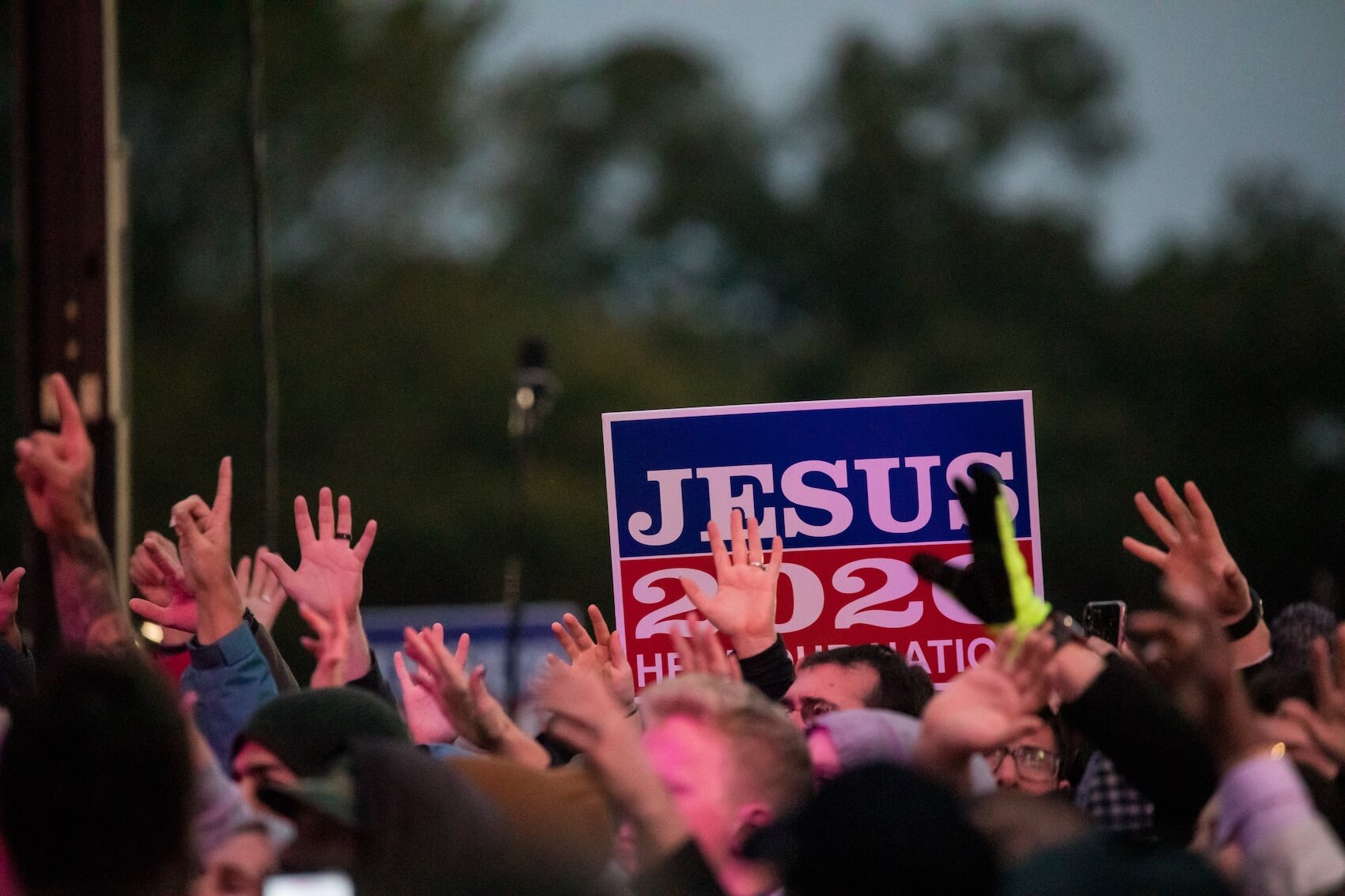
The BJP consistently built a mass movement to construct a temple for Lord Ram at his birthplace of Ayodhya. This populist narrative, which framed an imagined majority as the ‘authentic people,’ resonated widely. The temple’s construction became the central issue for the 2024 General Elections. However, soon after the temple’s inauguration in February, the expected exuberance was noticeably absent. Mobilization around the temple fell flat, failing to create the kind of hysteria that Modi expected would secure him a third term in office.
By Ajay Gudavarthy*
Indian democracy, alongside global shifts, took a ‘populist turn’ in 2014. It had populist features since 1970s that some have referred to as ‘agrarian populism,’ which included populist welfarism for rural peasants (Ghosh, 2019). However, in 2014, India witnessed a dramatic shift to a majoritarian discourse of authentic (Hindu) people; strongman phenomenon that undermined procedural niceties, legal norms and rule of law; centrality of performance and narrative over mobilization of social identities such as caste, class and language; pre-eminence of personality cult over institutional functioning; foregrounding of culture and civilizational ethos over public discourses on redistribution and justice; penetration of anti-elitist discourse against entitled and entrenched caste/class networks and finally a shift to mobilization based on psychological imperatives, latent emotions and everyday ethics.
Under the stewardship of Prime Minister Narendra Modi, populist features assumed heightened mobilizational potential that could be seen in greater street mobilization, everyday violence (such as mob lynching) and aspirational aggression combined with electoral successes. Though BJP`s (Bharatiya Janta Party) vote share was limited to 37% at the height of its popularity, there was an unprecedented spread of the BJP’s footprint to unchartered territories in the Northeast of India and South of Vindhayas. Modi became the glue cutting across the regions. He symbolized a new age religiosity, hyper-nationalism, and supremacism that came across in popular politics as resurgent Hindu identity and renewed Indic civilizational belonging. Modi managed to tap deep-seated cultural codes, harness ‘collective sub-conscious,’ and stroke a sense of historical injury in majority Hindu community. It was a decade long (2014-2024) high decibel cultural narrative that left the opposition parties struggling with the muscular nationalism and populism of Modi. BJP, at one point, began to make hyperbolic claims such as ‘Congress-mukt Bharat’ (India free of Congress) and that it will continue in power for the next 50 years. The Modi juggernaut looked unstoppable.
Come 2024 General elections, there is a deafening silence, and lull. It now looks like the Modi juggernaut has come to a sudden and an abrupt screeching halt. In complete contrast to the last ten years, the ongoing general elections in India are without a national narrative, excitement, hyperbole, and in fact is witnessing a steady withdrawal by the electorate. The current elections are witnessing a palpable drop in the voter turnout. According to the data released by the Election Commission, the first phase witnessed 66.14 per cent turn out as against 69.89 per cent in 2019; second phase saw 66.71 turn out as against 69.64 per cent in 2019, and the third phase 65.68 per cent as against 67.3 in 2019. India’s voter turnout is lower than in several emerging markets (Mohan, 2024).
India is considered one of the youngest nations of the world, given its demographics of the largest youth population. Modi was considered an aspirational figure for the young. However, Election commission claimed only 38% of eligible first-time voter (18 million out of 49 million) registered to vote in 2024 elections; merely 17% of youth population of Bihar (state with highest concentration of youth and considered one of the poorest) registered to vote and only 21% in the capital city of Delhi. A Recent survey titled Drivers of Destiny argued that the young do not see politics and elections as a way out of social problems (Rama, 2024). Does this suggest an initial and preliminary withdrawal from populist mobilization? If so, we could ask what after populism? Do we return to constitutional liberal democracy, or would it be a new combination of constitutionalism and populism?
In fact, in the ongoing elections opposition parties are seeking support around the counter narrative of ‘save constitution, save democracy.’ Protection of the Constitution is the central plank for the opposition parties. If the INDIA bloc (opposition alliance) is to come to power in June 2024, what kind of questions should one raise in terms of the continuances of the ‘populist turn’? Could we refer to a certain combination of social democratic imagination, with nyay (justice) as its central theme, and bringing back institutional accountability as a turn to left populism? However, there is no populist leader, no strongman, there is no appeal to an authentic people and there is a return to social identities of caste and local narratives and issues.
Equally perplexing is the sudden change in the contours of Hindu identity. Much of BJP`s mobilization in the last ten years was centered around the construction of an authentic Hindu identity that needs to avenge the historical injury caused by external invaders (read Muslims). It consistently built a mass movement for building a temple for Lord Ram at his birthplace of Ayodhya. This populist narrative around an imagined majority as the ‘authentic people’ found a great deal of resonance. In fact, construction of the temple was the central issue for the General elections, 2024. However, soon after the temple was inaugurated (referred in religious parlance as ‘Pran Prathistha’) in February 2024, it was followed by absence of exuberance. Mobilization around temple fell flat and it failed to create the kind of hysteria that Modi expected will grant him his third term in the office. However, another decision of the Modi government of abrogation of Article 370 that granted autonomy to Kashmir, continued to remain popular.
What does this variance between religious mobilization and nationalist mobilization suggest? Does it mean nationalism with regard to Kashmir has a better appeal owing to the sense of belonging it offers, as against the communalism centered on religious identity? Could we then meaningfully argue that populist assemblage could crack into smaller parts that do not find an easy equivalence? Does this lead to decline of populism or into the emergence of different shades of populism?
Finally, there is a return of the region and the local, as against the national. The ongoing general elections are witnessing a distinct voting pattern between the Hindi-speaking Northern states and the non-Hindi speaking Southern states. Modi’s populist mobilization based on nationalism and religiosity managed to partially obscure these boundaries. More than voting, the North-South divide foreground significant issues for our understanding of the interface between the social/cultural and the political domains that is at the heart of the ‘populist turn.’
Populism indicated certain kind of culturalization of politics and economy. While, North had, for instance, politicization of caste through the emergence of caste-based political parties, it had very little impact on the socio-economic indicators in terms of the mobility of marginalized castes. In contrast, in South of India, anti-caste movements took to social mobilization, independent of political parties, and electoral politics. It witnessed significant change in the socio-economic mobility of the marginalized castes.
Along these lines, independent social activists and organizations for the first time took part in the electoral process by campaigning against the BJP. It had significant impact in the electoral outcomes in Karnataka and Telangana, two developed states of the South. Karnataka forged, Eddelu Karnataka (wake up Karnataka) and in Telangana it was called Jago Telangana (Wake up Telangana). The understanding was, while Rastriya Swayam Sevak Sangh (RSS) mobilized around socio-cultural issues for the BJP, it was the social activists working for the opposition bloc.
North of India had no independent social activists or movements that coincided with the unprecedented rise of right-wing populist-authoritarianism. This tells us something about the workings of populism after the ‘neoliberal consensus.’ If there is independent and social mobilization, it seems to work as a check on hyperbolic political mobilization. However, to check populist authoritarianism, independent social activists were ‘compelled’ to take part in electoral campaigns. There seems to be a need to recalibrate the interface between the social/cultural and political domains. In fact, the changing equation between these domains in modern, complex and socially differentiated societies is what decides the future of populism.
(*) Dr. Ajay Gudavarthy is an Associate Professor at the New Delhi Centre for Political Studies, Jawaharlal Nehru University, India. His recently published book is titled as Politics, Ethics, Emotions in ‘New India,’ (Routledge, India, 2023).
References
Ghosh, Atig. (2019). “Rearticulating ‘Agrarian Populism’ in Postcolonial India: Considerations around D.N. Dhanagare’s Populism and Power: Farmers’ Movement in Western India: 1980-2014 and Beyond.” Delivered as Lecture entitled as part of the Friday Lecture Series of Mahanirban Calcutta Research Group on July 18, 2019. http://www.mcrg.ac.in/Friday_Lecture/Abstract/Atig_Populisum.pdf
Dr. Chipo Dendere(Assistant Professor of Africana Studies at Wellesley College).
Speakers
“Various Facets of Populist, Authoritarian, and Nationalist Trends in Africa,” by Dr. Henning Melber (Professor, Nordic Africa Institute, Uppsala; Extraordinary Professor at the Department of Political Sciences at the University of Pretoria and the Centre for Gender and Africa Studies at the University of the Free State in Bloemfontein).
“Democratizing Africa: Navigating Populist Trends, Building Trust in Institutions, and Promoting Stability through Inclusive Governance,” by Dr. Nchofua Anita Nyitioseh(Assistant Lecturer, Department of English Law, University of Bertoua, Cameroon).
“Taming the Lion: On the Conditions of Possibility of a Progressive Populism in Sub-Saharan Africa,” by Dr. Sergiu Mișcoiu(Professor of Political Science, Director of the Centre for International Cooperation Babeș-Bolyai University).
“Populism and The Challenges of Democratic Governance in Africa,” byDr.Edouard Epiphane Yogo (Executive Director and Principal Researcher at the Bureau of Strategic Studies (BESTRAT), University of Yaoundé II, Cameroon).
“Populism Discourse and the Proliferation of Hate during Elections in Central African Sub-region,”by Dr. Derick Fai Kinang(University of Buea, Cameroon).
“The Protection of Female Rights and the Rise of Populism in African Democracies: A Need for a Reformed Society,” by Dr. Ama-Ambo Chefor (Senior Lecturer, Department of English Law, University of Dschang, Cameroon).
Professor Christophe Jaffrelot notes that under the leadership of Prime Minister Narendra Modi, Hindutva has taken on a distinctly populist and more aggressive posture, marking a shift from the Bharatiya Janata Party’s previously disciplined, cadre-based approach. Modi’s populist influence has further polarized Indian society, rendering his brand of Hindu nationalism more exclusionary and assertive than ever. He also highlights the subtle yet significant similarities between India and Israel in their conceptualization and treatment of minorities. In India, minorities, particularly Muslims, experience systemic exclusion from equal opportunities in employment, housing, and other areas.
In a compelling interview with the European Center for Populism Studies (ECPS), Professor Christophe Jaffrelot, a distinguished CERI-CNRS Senior Research Fellow who teaches at Sciences Po across three schools, delves into the intricate patterns of ‘ethnic democracies’ as exemplified by India and Israel. He highlights the subtle yet profound similarities between the two nations in how they conceptualize and treat their ethnic majorities and minorities. According to Professor Jaffrelot, while Israel’s ethnic democracy is de jure, India’s version manifests de facto, where minorities, particularly Muslims, experience systemic exclusion from equal opportunities in employment and housing among others.
According to Professor Jaffrelot, this discrimination is not just a passive societal residue but an active part of governmental policy and social rhetoric. Professor Jaffrelot articulates that the ideological underpinnings of this approach in India stem from a century-old ideology known as Hindutva. This ideology, largely unchanged since its formal introduction in 1923 by Savarkar in “Hindutva: Who is a Hindu?”, defines the nation in terms of Hindu heritage and culture, positioning Hindus as the rightful sons of the Indian soil. This framework inherently diminishes the status of other communities, effectively making them second-class citizens unless they assimilate into the dominant Hindu culture.
The Professor points out that under the leadership of Prime Minister Narendra Modi, Hindutva has acquired a distinctly populist and more aggressive posture, which is a departure from the earlier disciplined, cadre-based approach of the Bharatiya Janata Party (BJP). Modi’s populist dimension has further polarized the Indian society, making his version of Hindu nationalism more exclusionary and assertive than ever before.
The implications of such a hardened stance are far-reaching, affecting not just the internal social fabric of India but also its external diplomatic relations, especially with countries like Pakistan and Israel. The shared ideological and strategic interests between India under the BJP and Israel, particularly their common stance on Islam and Islamism, underscore a unique geopolitical alignment that transcends mere diplomacy, touching the core of national identity and cultural politics.
As the interview progresses, Professor Jaffrelot explores the consequences of this ideology on India’s secular and multicultural ethos. He argues that the populist manipulation of Hindu nationalism under Modi’s leadership does not merely challenge the pluralistic foundations of India but also poses a significant risk to the democratic principles enshrined in the constitution.
Through this in-depth discussion, Professor Jaffrelot not only provides a critical analysis of the current political climate in India but also places it within a broader global context of rising ethnic nationalism and far-right populism. His insights offer a sobering reminder of the potent mix of populism and nationalism, which is reshaping nations across the world, making this interview a crucial read for anyone interested in understanding the contemporary challenges facing democratic societies today.
Dr. Chipo Dendere(Assistant Professor of Africana Studies at Wellesley College).
Speakers
“Various Facets of Populist, Authoritarian, and Nationalist Trends in Africa,” by Dr. Henning Melber (Professor, Nordic Africa Institute, Uppsala; Extraordinary Professor at the Department of Political Sciences at the University of Pretoria and the Centre for Gender and Africa Studies at the University of the Free State in Bloemfontein).
“Democratizing Africa: Navigating Populist Trends, Building Trust in Institutions, and Promoting Stability through Inclusive Governance,” by Dr. Nchofua Anita Nyitioseh (Assistant Lecturer, Department of English Law, University of Bertoua, Cameroon).
“Taming the Lion: On the Conditions of Possibility of a Progressive Populism in Sub-Saharan Africa,” by Dr. Sergiu Mișcoiu(Professor of Political Science, Director of the Centre for International Cooperation Babeș-Bolyai University).
“Populism and The Challenges of Democratic Governance in Africa,” byDr.Edouard Epiphane Yogo (Executive Director and Principal Researcher at the Bureau of Strategic Studies (BESTRAT), University of Yaoundé II, Cameroon).
“Populism Discourse and the Proliferation of Hate during Elections in Central African Sub-region,”by Dr. Derick Fai Kinang(University of Buea, Cameroon).
“The Protection of Female Rights and the Rise of Populism in African Democracies: A Need for a Reformed Society,” by Dr. Ama-Ambo Chefor (Senior Lecturer, Department of English Law, University of Dschang, Cameroon).
Dr. Chipo Dendere is a Zimbabwean born scholar of political science. She studies factors that influence party survival and democratization in the developing world. As an Assistant Professor of Africana Studies, Wellesley College, Wellesley, MA, she teaches Political Sciences classes on African Politics and Democratization in the Developing World.
She completed my Bachelor of Science Degrees in Political Science and Psychology at Linfield College, OR. She earned her Ph.D. in Political Science, 2015 at Georgia State University under the supervision of Dr. Daniel Young. Herdoctoral dissertationand subsequent book manuscript is on the impact of voter exit (via emigration or withdrawal from politics) on the survival of dominant parties. For this work, she interviewed 300 Zimbabweans in four countries. Her new research is on the relationship between African politics and social media in all its varieties.
Various Facets of Populist, Authoritarian, and Nationalist Trends in Africa
Dr. Henning Melber came to Namibia as a son of German immigrants in 1967, where he joined the anti-colonial movement SWAPO in 1974. He was Director of The Namibian Economic Policy Research Unit in Windhoek, Research Director of the Nordic Africa Institute and Director of the Dag Hammarskjöld Foundation, both in Uppsala/Sweden. He is an Extraordinary Professor at the Department of Political Sciences/University of Pretoria and the Centre for Gender and Africa Studies/University of the Free State in Bloemfontein and a Senior Research Fellow at the Institute of Commonwealth Studies at the University of London.
He is a trained journalist, studied at the Freie Universität Berlin, and obtained a PhD in Political Sciences (1980) and Sociology (Habilitation in Development Studies 1992) at the University of Bremen.
His latest books include Understanding Namibia: The Trials of Independence (London: Hurst 2014, also Oxford University Press and Jacana), Dag Hammarskjöld, The United Nations and the Decolonisation of Africa (London: Hurst 2019, also Oxford University Press), and (with Reinhart Kößler) Völkermord – und was dann? Die Politik deutsch-namibischer Vergangenheitsbearbeitung (Frankfurt/Main: Brandes & Apsel, 2017).
He is editor of Deutschland und Afrika – Anatomie eines komplexen Verhältnisses (Frankfurt/Main: Brandes & Apsel 2019) and (with Wolfgang Geiger) Kritik des deutschen Kolonialismus – Postkoloniale Sicht auf Erinnerung und Geschichtsvermittlung (Frankfurt/Main: Brandes & Apsel 2021).
Democratizing Africa: Navigating Populist Trends, Building Trust in Institutions, and Promoting Stability through Inclusive Governance
Dr. Nchofua Anita Nyitioseh is a lecturer at the University of Bertoua, within the Faculty of Law and Political Science, specifically in the Department of English Law. Additionally, she holds a part-time position at the University Institute of Leaders Douala and the Institute Supérieur Informatique et Gestion (ISIG), where she contributes to the Department of Transport and Logistics. Recently, she participated in a research writing workshop organized by the Merian Institute for Advanced Studies in Africa, College of Humanities at the University of Ghana.
Nchofua is also a jurist and corporate law specialist, with expertise in Alternative Dispute Resolution Mechanisms under OHADA Law. She earned her PhD in Directors’ Duties and the Protection of Stakeholders under OHADA and English Corporate Law from the University of Dschang, Faculty of Law and Political Science, Department of English Law. Her academic journey includes completing a Master’s and Bachelor’s degree in Law from the same institution.
Furthermore, Nchofua is actively engaged in research, focusing on various aspects such as Alternative Dispute Resolution, Consumer Protection, Green Energy Transition, and climate change in Africa, particularly in Cameroon.
Abstract: In recent years, Africa has witnessed a surge in populist movements, challenging established political norms and institutions. This paper explores the diverse trends of populism across the continent, examining their causes, manifestations, and implications for democracy and governance. Against this backdrop, the importance of democratic institutions in fostering political stability and facilitating constructive change is reiterated. Despite significant progress in democratization efforts, suspicion and mistrust of political systems persist in many African societies. This paper delves into the underlying factors contributing to such sentiments, including historical legacies, socio-economic inequalities, and governance failure.
Moreover, insecurity and instability continue to plague African nations, posing formidable challenges to peace, development, and democratic consolidation. Various manifestations of insecurity, ranging from armed conflict to terrorism and organized crime, underscore the urgent need for comprehensive and sustainable solutions. Against this backdrop, the paper proposes a set of policy recommendations aimed at enhancing democracy and strengthening democratic institutions and processes in Africa. Central to these recommendations is the promotion of inclusive governance mechanisms that prioritize citizen participation, accountability, and transparency. Strengthening the rule of law, protecting human rights, and combating corruption are identified as critical components of efforts to build trust in political systems and foster social cohesion.
Furthermore, investing in conflict prevention, peace building, and post-conflict reconstruction is essential for addressing the root causes of insecurity and promoting long-term stability.
The paper also underscores the importance of regional cooperation and collaboration in advancing democratic governance agendas across Africa. Regional institutions such as the African Union (AU) and sub-regional organizations play a pivotal role in promoting democratic norms, facilitating dialogue, and mediating conflicts. Leveraging their collective strengths and resources can enhance the effectiveness of democratization efforts and promote synergy in addressing common challenges.
In conclusion, democratizing Africa requires a multifaceted approach that addresses the complex interplay of populist dynamics, institutional weaknesses, and security threats. By embracing inclusive governance, strengthening democratic institutions, and fostering regional cooperation, African nations can chart a path towards sustainable development, peace, and prosperity. The policy recommendations outlined in this paper aim to provide actionable strategies for policymakers, civil society actors, and international partners committed to advancing democracy and stability on the continent.
Keywords: Democratizing, Africa, populist trends, building trust, governance.
Taming the Lion: On the Conditions of Possibility of a Progressive Populism in Sub-Saharan Africa
Dr. Sergiu Mișcoiu is a Romanian researcher and Professor of Political Science at the Faculty of European Studies, Babeș-Bolyai University in Cluj-Napoca. He also serves as the Director of the Center on International Cooperation and the Director of the Centre for African Studies (Cestaf) at Babeș-Bolyai University. Additionally, he is a permanent member of the Political Studies Institute at the University of Paris-Est (LIPHA), where he has been a PhD tutor since 2010 and an associate professor since 2007. Over the course of his career, he has authored four books, edited or co-edited 20 volumes, and contributed chapters to 61 collective volumes and 56 scientific articles. Dr. Mișcoiu holds a PhD in Political Science from the University of Paris-East Marne-la-Vallée, another PhD in History from Babes-Bolyai University, and a habilitation in Political Science from the University of Paris-East. He has served as a guest professor at several universities, including those in Nantes and Bordeaux (France), Warwick (UK), Bogota (Colombia), Marrakesh (Morocco), Yaoundé (Cameroon), Dakar (Senegal), and Abomey-Calavi (Benin), where he co-founded the country’s first PhD School in Political Science in 2017. He has received numerous awards for his academic achievements, including the Paris Thesis Prize in 2007, the Annual Research Prize of UBB in 2015 and 2020, and the Ordre des Palmes académiques from the French Government in 2012.
Abstract: If following Ernesto Laclau, Chantal Mouffe or Jacques Rancière we believe that the essence of politics is the fundamental and insurmountable disagreement about the values to be enforced in society, we should accept that populism is based on an essentialized construction of the collective identity of the people that it opposes to a denounced elitist establishment, as the latter has supposedly no common measure with the first. Consequently, populism targets radical change and the instauration of a better new order.
In Sub-Saharan Africa, populism has been historically equivalated with the contestation of the neocolonial elite-based regimes by parties, movements and platforms claiming the achievement of a full national popular sovereignty. However, these populist movements have been themselves deeply affected by the autocratic or totalitarian penchant of their leaders, impregnated by the adoption of the USSR-inspired Marxism-Leninism and/or of the reactionary identitarian ethnocentricity, the latter trend being much more salient than the first after the failed wave of democratization of the early 1990s.
Under these circumstances, it is legitimate to ask ourselves if a progressive (emancipatory, liberal-democratic and universalist) populism is possible in Sub-Saharan Africa. What would be its articulatory form and discursive content? Where would its main proponents emerge from? And what would be its public? I will try to formulate some inevitably partial answers to these questions based on a qualitative field research consisting in 89 interviews and two focus-groups organized with Sub-Saharan African citizens.
Populism and The Challenges of Democratic Governance in Africa
Dr. Edouard Epiphane Yogo is a political scientist specializing in international relations and strategic studies at the University of Yaoundé II. He also teaches at military academies in Cameroon, including the War School, the Staff College in Yaoundé, the Gendarmerie Officers’ School, and the Center for Advanced Techniques in Law Enforcement (CPTMO). With ten scholarly books and over thirty scientific articles to his name, Dr. Yogo is a prominent scholar in his field. Through his teaching, research, and extensive consultations with the United Nations system, he is dedicated to enriching academic, military, and international arenas with valuable perspectives and insights into political science and international relations.
Abstract: Populism is increasingly asserting itself as a significant political force in Africa, thereby confronting the fundamental tenets of democratic governance across the region. This study scrutinizes the distinct challenges that populism poses to democratic governance in Africa, shedding light on its ramifications for both political stability and the efficacy of democratic institutions.
This inquiry amalgamates an exhaustive examination of extant literature on populism in Africa with comprehensive case studies conducted in multiple countries within the region. Methodologically, data is garnered from a spectrum of sources, including academic documents, governmental publications, and conducted semi-structured interviews with experts in African political affairs.
The discerned outcomes elucidate that populism in Africa engenders pivotal challenges for democratic governance, encompassing political polarization, the enfeeblement of democratic institutions and the constricting arena for political pluralism and civic engagement. Notably, populist leaders often exploit prevailing social and ethnic schisms to fortify their grip on power, thus impinging upon the legitimacy of democratic processes.
This research emphatically underscores the imperative of fortifying democratic institutions and fostering inclusive dialogue as the panacea to address the multifaceted challenges engendered by populism in Africa. Essential to this endeavor are political and institutional reforms geared towards fostering transparency, accountability, and equitable representation, while concurrently safeguarding the sanctity of fundamental rights and civil liberties.
It concludes that populism emerges as a formidable impediment to democratic governance in Africa, necessitating strategic and concerted responses from political stakeholders, democratic institutions, and civil society cohorts alike. A comprehensive approach is indispensable to fortify the resilience of democratic frameworks vis-à-vis the exigencies posed by populist tendencies, thereby buttressing the legitimacy of political processes throughout the region.
Populist Discourse and the Proliferation of Hate During Elections in Central African Sub-region
Dr. Kinang Derick Fai is a Political Scientist, Jurist, Conflict Resolution Specialist, and Crime Expert specializing in Human Rights and Economic Intelligence with the Cameroon National Council of Crime Experts. He earned his PhD in International Relations and Conflict Resolution from the University of Buea. He is the founder and research lead of several organizations focusing on hate crime and diversity. Since 2020, he has served as the Project Associate for #defyhatenow, an anti-hate speech campaign in Kenya, Uganda, and Sudan. Additionally, he is the Founder of Humanity for Peace Education and Digitalization (HUPED) and a Co-founder of Civic Watch. With a keen interest in Conflict of Diversity, Human Rights Violations, and War Crimes, Dr. Fai works with a dynamic team dedicated to mitigating hate speech, incitement to violence, misinformation, and crime both online and offline.
Abstract: With the different waves of populism experienced by Africa from the colonial era to the advent of multiparty politics in the early 1990s. This period, to date, characterised by the quest to conquer, exercise, and transmit power through elections, has been plagued by a wide spread of hate, a political strategy to conquer power within the electoral market by populist leaders. With examples like Yoweri Museveni speaking volumes, populism discourse espouses with the complicity of the media contributes to the proliferation of hate to change the status quo as they leverage on the people waging a moral battle against elites to achieve set objectives. It is against the backdrop of this existential reality that this study seeks to examine the use of hate rhetoric through the vilification of vulnerable out-groups as a political strategy by populist leaders to conquer power, thus contributing to its proliferation compounded by related social scourges. In this study, we argue hateful communication framing the political class, excluding and categorising them as enemies of the res publica is a political strategy used by populist leaders to conquer power, thus leading to its upsurge. The study argues such practices produce long-term deleterious ramifications responsible for bad governance, destruction of state unity and social cohesion, flaming of hate tendencies and the fuelling of tensions that breed violent armed conflict when they go uncontrolled. This brings to light the need for increased reforms that promote justice and strong institutions, a saint democratic culture and a critical mass that can check the excesses of politicians and make informed choices in times of elections, especially in the Central African Sub-region.
Keywords: Populism discourse, hate, elections.
The Protection of Female Rights and the Rise of Populism in African Democracies: A Need for a Reformed Society
Dr. Ama-Ambo Chefor is a senior lecturer at the University of Dschang, Cameroon, Faculty of Law and Political Science at the Department of English Law. She is a specialist in maritime criminality and security in the Gulf of Guinea. Dr. Chefor obtained her PhD in English Law at the University of Dschang in 2019. She served as the interim Dean at the School of Law and a lecturer at the School of Maritime, Transport and Logistics at the National Polytechnic University of Bamenda, Cameroon, where she dispensed several courses at the postgraduate and the undergraduate school. She supervises theses on maritime-related issues, politics and the rule of law, criminal law, human trafficking, property rights, employment law and international public Law. She published widely on maritime security, politics and the rule of law.
Abstract: The rule of law, and democracy are key components of every society as they make provision for values such as the freedom of expression necessary for a society to function successfully. Considering no society can function without democracy, there is, therefore, the need to protect the law’s fundamental human rights, most especially female rights. Sadly, the rise of populism is not just a major challenge to human rights but a threat to democracy, leading to democratic crises and insecurities ranging from economic to ontological. The risk of populism represents a threat to constitutional democracy and the rule of law. Not only so, but populist governments are also a threat to the international legal order and the authority of international legal agreements. This destabilization can be seen in democratic societies like the United States and within African societies like Cameroon. Consequently, women experience a violation of their human rights such as the right to freedom of expression. There is, therefore, the need to reform the democratic values of society just as it has been respected in every protected democracy in every state of law
Keywords:Populism, democracy; rule of law, female rights.
When queried about the correlation between populism and democracy and the potential jeopardy to democracy in South Korea, Profesor Sang-Jin Han argues the potential threat to democracy in South Korea does not come from populist citizens, but from neoliberal ones. By sharing insights from his 2018 empirical study, he elucidated, “My research aimed to discern which citizens genuinely endorse autocracy and strong leadership. Surprisingly, the findings unveiled that those meeting specific criteria for populism did not inherently endorse robust autocratic leadership. Rather intriguingly, it was the neo-liberal citizens who exhibited a tendency to endorse such authoritarian leadership.”
Giving an exclusive interview to the European Center for Populism Studies (ECPS) on Monday,Profesor Sang-Jin Han, Emeritus Professor of Sociology at Seoul National University in South Korea, says the potential threat to democracy in South Korea does not come from populist citizens, but from neoliberal ones.
When queried about the correlation between populism and democracy and the potential jeopardy to democracy in the nation, Professor Sang-Jin Han shared insights from his 2018 empirical study. He elucidated, “My research aimed to discern which citizens genuinely endorse autocracy and strong leadership. Surprisingly, the findings unveiled that those meeting specific criteria for populism did not inherently endorse robust autocratic leadership. Rather intriguingly, it was the neo-liberal citizens who exhibited a tendency to endorse such authoritarian leadership.”
According to Professor Han, the perplexing aspect is why neo-liberal citizens, who typically enjoy the benefits of political liberty and economic liberalism, would support authoritarian leadership. One possible explanation is that they perceive a threat from a powerful civil society and civil movements, fearing that these forces could potentially hinder democracy. In their view, embracing a strong leader is a means to mitigate this perceived threat and safeguard against the influence of civil society.
This puzzling phenomenon raises questions about the motivations of neoliberal citizens, who, despite enjoying political and economic liberties, rally behind authoritarian leaders. Professor Han suggests that their support may stem from a perceived threat posed by powerful civil society and civil movements, which they fear could hinder democracy.
The interview delves into various aspects of populism in South Korea, exploring its historical roots, manifestations, and implications for democracy. Professor Han also challenges the traditional left-wing/right-wing dichotomy often applied to populism, arguing that populism in Korea transcends ideological boundaries and is more about emotion than specific political positions. He highlights the rise of a populist leader, Cho Kuk, and the emotional fervor observed during recent elections, signaling a potential threat to democracy.
Moreover, Professor Han sheds light on the genealogy of populism in Korea, tracing its origins to the aftermath of the Korean War and its enduring influence on the country’s political landscape. He emphasizes the unique context of Korean populism, distinct from Western models, and the role of digital media in shaping public discourse.
Professor Christophe Jaffrelot notes that under the leadership of Prime Minister Narendra Modi, Hindutva has taken on a distinctly populist and more aggressive posture, marking a shift from the Bharatiya Janata Party’s previously disciplined, cadre-based approach. Modi’s populist influence has further polarized Indian society, rendering his brand of Hindu nationalism more exclusionary and assertive than ever. He also highlights the subtle yet significant similarities between India and Israel in their conceptualization and treatment of minorities. In India, minorities, particularly Muslims, experience systemic exclusion from equal opportunities in employment, housing, and other areas.
In a compelling interview with the European Center for Populism Studies (ECPS), Professor Christophe Jaffrelot, a distinguished CERI-CNRS Senior Research Fellow who teaches at Sciences Po across three schools, delves into the intricate patterns of ‘ethnic democracies’ as exemplified by India and Israel. He highlights the subtle yet profound similarities between the two nations in how they conceptualize and treat their ethnic majorities and minorities. According to Professor Jaffrelot, while Israel’s ethnic democracy is de jure, India’s version manifests de facto, where minorities, particularly Muslims, experience systemic exclusion from equal opportunities in employment and housing among others.
According to Professor Jaffrelot, this discrimination is not just a passive societal residue but an active part of governmental policy and social rhetoric. Professor Jaffrelot articulates that the ideological underpinnings of this approach in India stem from a century-old ideology known as Hindutva. This ideology, largely unchanged since its formal introduction in 1923 by Savarkar in “Hindutva: Who is a Hindu?”, defines the nation in terms of Hindu heritage and culture, positioning Hindus as the rightful sons of the Indian soil. This framework inherently diminishes the status of other communities, effectively making them second-class citizens unless they assimilate into the dominant Hindu culture.
The Professor points out that under the leadership of Prime Minister Narendra Modi, Hindutva has acquired a distinctly populist and more aggressive posture, which is a departure from the earlier disciplined, cadre-based approach of the Bharatiya Janata Party (BJP). Modi’s populist dimension has further polarized the Indian society, making his version of Hindu nationalism more exclusionary and assertive than ever before.
The implications of such a hardened stance are far-reaching, affecting not just the internal social fabric of India but also its external diplomatic relations, especially with countries like Pakistan and Israel. The shared ideological and strategic interests between India under the BJP and Israel, particularly their common stance on Islam and Islamism, underscore a unique geopolitical alignment that transcends mere diplomacy, touching the core of national identity and cultural politics.
As the interview progresses, Professor Jaffrelot explores the consequences of this ideology on India’s secular and multicultural ethos. He argues that the populist manipulation of Hindu nationalism under Modi’s leadership does not merely challenge the pluralistic foundations of India but also poses a significant risk to the democratic principles enshrined in the constitution.
Through this in-depth discussion, Professor Jaffrelot not only provides a critical analysis of the current political climate in India but also places it within a broader global context of rising ethnic nationalism and far-right populism. His insights offer a sobering reminder of the potent mix of populism and nationalism, which is reshaping nations across the world, making this interview a crucial read for anyone interested in understanding the contemporary challenges facing democratic societies today.
Here is the transcription of the interview with Professor Christophe Jaffrelot with minor edits.
Modi Has Changed Hindu Nationalism More Than Anybody Else
How has Hindu nationalism and Hindutva evolved, and what historical factors shaped its current form, especially in its intersection with populism in contemporary Indian politics?
Professor Christophe Jaffrelot: Well, this movement is now 100 years old. It was initiated in the 1920s, with the first ideological charter published in 1923 by Savarkar titled “Hindutva: Who is a Hindu?” The ideology, which remains largely unchanged to this day, defines the Indian nation on the basis of Hinduism, or more precisely, on the basis of the Hindu people. Hindus are seen as the sons of the soil, the main community, the primary people, and minorities are expected to pledge allegiance to their religion and culture or accept that they are second-class citizens. This ideology has not changed significantly. The organization evolved; in 1925, two years after Savarkar’s book, the Rashtriya Swayamsevak Sangh (RSS) was born. This organization embodies Hindu nationalism and is non-political.
Initially, RSS didn’t seek any particular role but aimed to organize Hindus and make them more cohesive and muscular. They adopt a paramilitary style for disciplining young Hindus. This organization has remained largely the same since then, except that after independence in the 1940s, they started building additional subsidiaries such as student unions, trade unions, labor unions, peasant unions, and a political party. This political party is now the Bharatiya Janata Party (BJP), led by Narendra Modi. Modi has probably changed Hindu nationalism more than anybody else by enrolling it with a populist dimension. Until Modi, the BJP was a disciplined, cadre-based organization. With Modi, after the 2014 elections, a mass appeal emerged, making a huge difference, and as a result, the BJP has become the largest Indian party, with the majority of members of Parliament in the Lower House now belonging to it.
Ethnic Democracy Is De Jure in Israel, De Facto in India
What does Hindutva’s proliferation mean for the Indian democracy? How does Hindutva challenge the secularism, pluralism, and the multi-culturalism of the Indian state?
Professor Christophe Jaffrelot: As I mentioned, the Hindutva ideology considers that minorities must either pledge allegiance to Hindu culture or expect to be in a dominated situation. So, there is a rejection of multiculturalism and secularism. In India, secularism means that all groups are treated equally by the state. This principle is enshrined in the Constitution, which includes articles stating that minorities can apply for subsidies to run their own schools, among other provisions. However, Hindu nationalism has consistently opposed this idea, arguing that citizens should not be seen as equals and that Hinduism should prevail. This stance is detrimental to multiculturalism and democracy. But it’s not surprising, as populism tends to oppose pluralism.
When you say that the people are enshrined, epitomized by the “sons of the soil,” it becomes very challenging for minorities to secure the collective rights they deserve in a democratic, multicultural setup. In this way, India appears to be following a pattern seen in many other places, including Israel. In Israel, the concept of “ethnic democracy” was introduced by Sammy Smooha, a political scientist. Ethnic democracy can be de jure, as in Israel, or de facto, as in India. In the de facto scenario, minorities are second-class citizens because they lack equal access to the job market and the housing market. This discrimination is precisely what we observe today vis-a-vis the Muslims.
Hinduism and Hindutva Are Distinctly Different
Volunteers of Rashtriya Swayamsevak Sangh (RSS) on Vijyadashmi festival, a large gathering or annual meeting during Ramanavami a Hindu festival in Ghaziabad, Uttar Pradesh on October 19, 2018. Photo: Pradeep Gaurs.
How would you characterize the relationship between Hindu nationalism, Hindutva and populism in the context of the BJP’s rise to power? What factors have contributed or paved the way for BJP’s and Modi’s electoral victory in 2014? How has the BJP shaped and promoted Hindu nationalism, and is Prime Minister Narendra Modi’s leadership style effective in this context?
Professor Christophe Jaffrelot: Hinduism and Hindutva are certainly not the same, although some claim they are. They argue that Hindutva is merely an extension of Hinduism, but this is not the case. Hinduism, unlike many religions, lacks a definitive corpus; it has no central book with a capital “B,” no clergy, no church, and no singular center of gravity. Instead, its unit of analysis is the Sampradaya, or sectarian movements, which have been established by Gurus who demonstrated significant spiritual creativity. Unity in Hinduism stems from the caste system and social organization, rather than a religious framework, which is highly diverse. A fitting metaphor for Hinduism is the Banyan tree, where the trunk—or core—is elusive, and all Gurus are equally legitimate in their approaches to guiding disciples toward salvation.
Hindutva is an ideology and does not view Hinduism as a creed. It is not concerned with paths to salvation or beliefs; instead, it focuses on forging a collective identity to make a people. Hindus are not just believers; they are a people. This mirrors the difficulties in distinguishing between Zionism and the Jewish people. Hindutva has instrumentalized Hinduism for its purposes. For example, in the 1980s, proponents of Hindutva launched a movement to reclaim a sacred site in Ayodhya, in northern India. This site was the location of the Babri Masjid, a mosque built in 1528 by the first Mughal Emperor, Babur. They claimed this mosque was erected over a demolished Hindu temple, purportedly at the birthplace of Lord Rama, an avatar of Lord Vishnu—a belief widely held among Hindus. In the 1980s, this sentiment was leveraged to mobilize Hindus against Muslims, incite riots, and eventually lead to the demolition of the mosque and the construction of a new Hindu temple, which was inaugurated in January this year. This is a prime example of how religion can be instrumentalized by ideologues. However, I must emphasize again that Hinduism and Hindutva are distinctly different.
Populism Results in Authoritarianism
India’s Prime Minister, Shri Narendra Modi visits Gurdwara Rakabganj Sahib to pay tribute to Guru Teg Bahadur, in New Delhi on December 20, 2020. Photo: Shutterstuck.
How would you describe Narendra Modi’s populism and how does it differ from other populisms in particular populist parties in Europe?
Professor Christophe Jaffrelot: There are many similarities. The concept of populism, in my view, primarily involves a direct connection between the leader and the populace, bypassing traditional intermediaries. Narendra Modi, for instance, did not heavily rely on his party or the RSS, despite being a product of the RSS. As an RSS volunteer since the age of seven, he certainly embodies the organization’s ethos. However, upon becoming the Chief Minister of Gujarat, he opted to establish his own parallel power structure, which focused more on promoting his personal image rather than the party or organization. He pioneered the use of social media, holograms, and even a TV channel named after him to communicate directly with the public. This strategy of direct engagement is a quintessential element of his approach.
The second characteristic of populism is that the leader is perceived as “one of the people,” yet also possesses a unique charisma. Modi exemplifies this as he comes from a humble, low-caste background, making it easy for him to appear as one of the people, one of the plebeians, one of the common folk. He often speaks in a manner that resonates with the general populace, frequently discussing his impoverished childhood and his closeness to the poor. Despite this, Modi is also viewed as a charismatic and exceptional figure. Notably, he took bold actions, such as the military strike on Pakistan in 2019, which was unprecedented since 1971. Additionally, his tenure as Chief Minister is marked by controversial events like the anti-Muslim pogroms, underscoring his extraordinary and divisive role in politics. Thus, the second criterion of populism is being “a man of the people,” but one who is distinctly apart from them in capability and action.
This insight is crucial for grasping Narendra Modi’s populist style, a trait he shares with other populist leaders globally. Similar patterns can be observed in figures like Erdogan, Duterte, and Trump, who position themselves as antagonists of the elite, often claiming victimization by them. Modi frequently portrays himself as a victim of the Nehru-Gandhi dynasty and the liberal elite, English-speaking elite, emphasizing his vernacular identity by predominantly speaking in Indian languages rather than English.
Now there are two other very important criteria of populism that Narendra Modi fulfills, and they have to do with ideology. He is a national populist. He speaks in the name of the majority, not in the name of all citizens. Thus, he continues to polarize. In the ongoing election campaign, he has been very critical of Muslims, openly denigrating them in a mean manner. His style is also very vulgar because he wants to mobilize Hindu voters, not all voters. So, he is a national populist. Similarly, Netanyahu, when conversing, does not try to get the Muslim vote. He does not care for the Muslim vote. On the contrary, he tries to polarize by attacking Muslims, Palestinians in the colonies. The similarity there is also striking.
The fourth, but very important, dimension that I want to bring into the picture is that, like many other populists, he is authoritarian. Populism leads to authoritarianism almost automatically because the moment you can say, “I am the people,” there is no place for diversity, dissent, or opposition. If you are opposing the man who represents the people, you are deemed international. Therefore, you’re illegitimate. He has kept disqualifying the opposition leaders and has even sent many of them behind bars. Today, for the first time in the history of India, a chief minister, the chief minister of Delhi, is in prison, and that’s just one example among political prisoners. Secondly, the Congress party, the number one opposition party, has seen several of its bank accounts frozen because, again, they are seen as threats, which are considered illegitimate.
The media is also captured by the ruling party, most of the time. News channels, including NDTV, the last independent channel, have been bought by oligarchs, friends of the ruling party. So, that’s another very important criterion of populism: populism results in authoritarianism, and this authoritarianism is conducive to fighting against opposition and transforming the election competition into a non-level playing field. It’s a non-level playing field because of the media coverage of the election campaigns and also because of money. The kind of financial resources the BJP has is nothing compared to what the opposition possesses. The opposition is, of course, at the receiving end of so many rules and regulations, making it very difficult for them to finance the election campaign. So, it’s still not a level playing field.
I conclude that in a populist regime like this one, the leader must take the risk of an election. It’s not North Korea; it’s not China. Populists need the popular mandate. They need legitimacy derived from the vote, from the electorate, to be in a position to say, “I can prevail because I am the people.” Of course, when you take the risk of the vote, of the election, you also risk losing. That’s why it’s an authoritarian regime, but not a fascist regime. It’s a different category.
Muslims in India Are Getting Ghettoized
A man chanting songs with a dummy cow in the background during the Golden Jubilee celebration of VHP – a Hindu nationalist organization on December 20, 2014 in Kolkata, India. Photo: Arindam Banerjee.
What role do the BJP and Modi play in promoting exclusionary practices against Muslim minorities in India? How does the nexus of Hindu nationalism and populism impact social cohesion, diversity, and India’s democratic ideals?
Professor Christophe Jaffrelot: This time, Modi has been explicitly communal, using words vis-à-vis Muslims that he had never publicly used before, because he is on the defensive. He needs to mobilize his support base as much as possible. However, until recently, he was not explicitly anti-Muslim. Thus, the dirty job was done by others. There was a very clear division of labor: the government and the party tried to remain clean. By contrast, underground, there were groups we call ‘vigilantes’. These vigilantes indulged in cultural policing, patrolling university campuses to check whether Muslim boys were talking to Hindu girls, to prevent them from interacting with Hindu girls because of the fear of them seducing and converting Hindu women. It sounds banal, but in practice, it could be very ugly and result in violence. Violence is the order of the day when they patrol highways to check whether truck drivers are transporting bovines to the slaughterhouse, with the cow being the sacred animal, par excellence, in India. This movement, known as cow protection, is clearly a way to discipline and harass Muslims, and there have been many cases of lynchings. Similarly, the same groups make it very difficult for Hindus to sell their flats or houses to Muslims in mixed neighborhoods, to ensure that there is no interaction and that ghettoization remains the order of the day. Muslims are getting ghettoized for that reason among others, including socioeconomic decline. Of course, all these practices go together with discrimination in the job market, and Muslims are suffering socioeconomically.
These are the daily routines for Muslims, who live in fear, especially when they are in small minorities. However, what is new is the passing of laws that not only de facto but also de jure make them second-class citizens. For instance, a significant law passed in 2019, the Citizenship Amendment Act, states that only non-Muslim refugees from Bangladesh, Pakistan, and Afghanistan would be eligible for Indian nationality and citizenship. Many other laws have been enacted at the state level, making interreligious marriages very difficult, severely restricting conversion out of Hinduism, and complicating the sale of houses to someone from a different community.
So, while BJP and Modi at the center appear to remain clean, underground vigilantes do the dirty work. But lately, we also see governments at both the state and national levels indulging in overtly communal practices. This is a notable change. In India, we use the term ‘communal’ because it was the word used, especially under Nehru in the 1950s and 1960s, to indicate a departure from nationalism. Communalism can be Hindu, Muslim, Sikh; nationalism is Indian. People were encouraged to feel like Indians and not indulge in communalism. I find this distinction still very useful.
You often refer to ‘the banalization of Islamophobia.’ How has this banalization evolved as BJP took root in Indian politics?
Professor Christophe Jaffrelot: The center of gravity in public discourse has shifted. For me, banalization is evident in the acceptance of words that would never have been deemed legitimate in the public sphere 15-20, or 25 years ago. Saying that Muslims have many wives and engage in polygamy, or that Muslims have many children precisely because they have many wives, or that they pledge allegiance to Mecca and the Middle East—none of these assertions would have been possible 15-20, or 25 years ago. They would have faced sanctions and been considered outside the bounds of legitimate discourse. Now, the situation is entirely different. There is a banalization of prejudice, making it very commonplace. This isn’t only in India; it’s something you find elsewhere. But it has emerged prominently in India, with the type of words and stigmatization that have become so routinized. It’s truly astonishing. This shift also manifests in physical violence, including lynching, which was not at all part of the public life scenario 10-15, or 20 years ago, again.
To what extent has Hindu nationalism influenced foreign policy decisions under the Modi government?
Professor Christophe Jaffrelot: It’s not so easy to establish a clear correlation between these two. Certainly, vis-à-vis Pakistan, but even there, this assertion must be qualified. Narendra Modi invited Nawaz Sharif to his swearing-in ceremony in 2014 and made a stopover in Lahore to wish Nawaz Sharif a happy birthday in 2015. He wanted to normalize relations with Pakistan, and Nawaz Sharif was seen as the right partner for this endeavor. This effort halted after terrorist attacks in India, likely perpetrated by Jihadi groups who were opposed to this normalization. These groups have consistently sabotaged the normalization process between India and Pakistan. After these incidents, Modi became probably more aggressive than any of his predecessors, except perhaps Indira Gandhi, vis-à-vis Pakistan, influenced by his ideological stance. It can be argued that his position as a Hindu nationalist leader played a role, but this became evident only after 2015-16. Regarding other international relations, there are affinities with Israel that can be understood only through ideological proximity and a shared opposition to Muslims or, at least, Islamists. The fact that the Modi government has not been critical of Netanyahu lately is very revealing.
There Are Affinities between Zionism and Hindutva
Photo: Shutterstock.
This is the next question, Professor, let me ask it. Why does Israel present itself as an ideal polity for BJP?
Professor Christophe Jaffrelot: It is because there are affinities between Zionism and Hindutva, as I’ve mentioned previously. These two ideologies perceive their people not merely as believers of a religion but as descendants of the original inhabitants of a sacred land. Very few religions in the world can claim that their practitioners have in their veins the blood of the original inhabitants of the land where their most sacred sites are located. Thus, you have two sides of the same coin: the identity of the people, a kind of ethnic unity, and the location, a sacred land. These commonalities are significant. Additionally, there are very few countries with these characteristics, and atop that, they can claim to have been there for 3,000 years or 4,000 years—and they are often generous with these estimates. This represents their common ground.
Of course, they share one more thing in common: the fear of Islam and Islamism. This fear is certainly exaggerated, and both sides play the victimization card very effectively. However, this fear is not entirely imagined; there have been Islamist attacks. The Jihadi attacks on India in the 2000s had a significant impact. These attacks targeted, of course, Kashmir, but also, as you may remember, Mumbai in 2008 and Delhi in 2001. This common enemy, so to speak, has brought them closer, even before the BJP took over. As early as the 2000s, the Congress-led government considered that fostering closer ties with Israel for security reasons made sense. This is why they also collaborate in military terms.
After EP Elections We Will See A Different Europe
Lastly, Professor, do you think the electoral victory of Geert Wilders and his Party for Freedom opens a new chapter in European politics signaling the normalization of far-right parties? How concerned are you about a possible surge of far-right parties in the upcoming European Parliament (EP) elections in June?
Professor Christophe Jaffrelot: It’s certainly a trend we see all across the board. Most European countries will witness the rise of far-right parties. Interestingly, they are not all aligned in their approaches, which is something we sometimes overlook. Some parties are striving to appear more moderate; Marine Le Pen, for example, is desperately trying to present a more moderate image, and it’s working. Conversely, in Germany, we see a radicalization of the extreme right. So, the trajectories are not the same.
Moreover, their views on Russia differ significantly. Many national populist parties in Eastern Europe, including Poland’s PiS, identify Russia as the main threat, whereas other parties, including Orban’s Fidesz, still regard Putin as a role model. Putin is also a role model for others, including Salvini’s Lega and Le Pen’s National Rally.
This divergence creates another point of contention. For instance, forming a unified group in the European Parliament won’t be straightforward; the risk of this happening is, in fact, minimal for all these reasons. However, this doesn’t mean they won’t impact the European Parliament. My concern is that they will consistently join forces on issues like immigration and the Green Deal, making it very difficult to continue many policies in the spirit they were initiated.
Yes, the risk is very real that we will see a different Europe. They don’t want to leave the EU; rather, they aim to transform it from within. Brexit is not a model they wish to emulate, especially given the high cost Britain has paid. Instead, they will try to transform the EU from the inside, and the European Parliament will be the laboratory for this transformation.
When queried about the correlation between populism and democracy and the potential jeopardy to democracy in South Korea, Profesor Sang-Jin Han argues the potential threat to democracy in South Korea does not come from populist citizens, but from neoliberal ones. By sharing insights from his 2018 empirical study, he elucidated, “My research aimed to discern which citizens genuinely endorse autocracy and strong leadership. Surprisingly, the findings unveiled that those meeting specific criteria for populism did not inherently endorse robust autocratic leadership. Rather intriguingly, it was the neo-liberal citizens who exhibited a tendency to endorse such authoritarian leadership.”
Giving an exclusive interview to the European Center for Populism Studies (ECPS) on Monday,Profesor Sang-Jin Han, Emeritus Professor of Sociology at Seoul National University in South Korea, says the potential threat to democracy in South Korea does not come from populist citizens, but from neoliberal ones.
When queried about the correlation between populism and democracy and the potential jeopardy to democracy in the nation, Professor Sang-Jin Han shared insights from his 2018 empirical study. He elucidated, “My research aimed to discern which citizens genuinely endorse autocracy and strong leadership. Surprisingly, the findings unveiled that those meeting specific criteria for populism did not inherently endorse robust autocratic leadership. Rather intriguingly, it was the neo-liberal citizens who exhibited a tendency to endorse such authoritarian leadership.”
According to Professor Han, the perplexing aspect is why neo-liberal citizens, who typically enjoy the benefits of political liberty and economic liberalism, would support authoritarian leadership. One possible explanation is that they perceive a threat from a powerful civil society and civil movements, fearing that these forces could potentially hinder democracy. In their view, embracing a strong leader is a means to mitigate this perceived threat and safeguard against the influence of civil society.
This puzzling phenomenon raises questions about the motivations of neoliberal citizens, who, despite enjoying political and economic liberties, rally behind authoritarian leaders. Professor Han suggests that their support may stem from a perceived threat posed by powerful civil society and civil movements, which they fear could hinder democracy.
The interview delves into various aspects of populism in South Korea, exploring its historical roots, manifestations, and implications for democracy. Professor Han also challenges the traditional left-wing/right-wing dichotomy often applied to populism, arguing that populism in Korea transcends ideological boundaries and is more about emotion than specific political positions. He highlights the rise of a populist leader, Cho Kuk, and the emotional fervor observed during recent elections, signaling a potential threat to democracy.
Moreover, Professor Han sheds light on the genealogy of populism in Korea, tracing its origins to the aftermath of the Korean War and its enduring influence on the country’s political landscape. He emphasizes the unique context of Korean populism, distinct from Western models, and the role of digital media in shaping public discourse.
Here is the transcription of the interview with Profesor Sang-Jin Han with minor edits.
Two Pillars of Populism: Distrust to Political Elites and Advocacy of the People as Source of Political Legitimacy
Professor Han, thank you so very much for your time and for joining our interview series. Let me start with the first question. How do you define populism in the context of South Korean politics, and what are the key criteria you use to identify populist movements?
Professor Sang-Jin Han: I propose two criteria for a theory of populism: a high degree of distrust towards political elites and conventional politicians, coupled with the advocacy of the people as the genuine source of political legitimacy. I define populism based on these overarching criteria.
Why do you think Derrida’s concept of hauntology is useful to the study of populism not only in Western Europe or Latin America but also globally?
Professor Sang-Jin Han: I was very fascinated by Derrida’s concept of hauntology because we can say that the specter of populism is spreading, haunting the world today, much like Marx and Engels declared the specter of Communism haunting Europe in 1848. Now, living in Asia, I find an interesting overlapping imagination. In East Asia, when someone passes away, we wish for their soul to rest in peace. However, sometimes these specters emerge, wandering around sensitizing attention to their deep-seated sorrows, resentment, or anguish. We feel compelled to address to this anguish in order for them to rest in peace. In a similar way, Derrida argues that the specter of Marxism resurfaces to express their desperate anguish over the lost future which is related to the normative principle of democracy. Thus, Derrida attempts to reconstruct the specific specter of Marxism as critique because it contributes to democracy while deconstructing other specters arising from the genealogical traces of orthodox Marxism or historical materialism. I find this hauntological approach very intriguing.
Profesor Sang-Jin Han, Emeritus Professor of Sociology at Seoul National University in South Korea.
In your article The Hauntological Approach to Populism, you argue that: “Thus, there is no reason for the hauntological approach to treat populism in itself as an intrinsic danger to democracy. On the contrary, in many historical examples, populist orientations and movements have paved the road to democracy until modern democratic institutions became rooted there.” Can you please give concrete examples to clarify the assumption that populism is not intrinsically danger to democracy?
Professor Sang-Jin Han: To start, democracy operates on the normative principle that the people are the genuine source of legitimacy in political power. Populism often taps into this appeal. However, the empirical reality often diverges from this normative ideal, leading to the emergence of populism in the real world. This disjuncture serves as the starting point for analysis. Derrida, naturally, acknowledges this complexity. Populism arises as a response to this gap, representing a longing for a future that never quite materialized, yet refusing to relinquish hope for it.
What does this hope for the future entail in the context of populism? Primarily, it involves recognizing the people as the true source of political legitimacy. This underscores the importance of scrutinizing which aspects of populism contribute positively to democracy. While populism can bolster democracy by emphasizing the primacy and advocacy of the people, it also poses dangers. If populism breeds hatred, it becomes a threat to democracy. History provides ample examples. Many experiences in Latin America during the 1930s, 1940s, and 1950s, as well as instances in Southern Europe and Korea in the 1980s, illustrate how populism can either serve as a catalyst for furthering democracy or undermine it, depending on its manifestations.
Role of “Minjung” in Shaping History of South Korean Populism
What are the basic historical milestones in the formation of the significant genealogical traces of populist imagination in modern Korean history?
Professor Sang-Jin Han: I believe one of the most significant occurrences in the 1980s was the transition towards political democracy in our country. The primary actors were the students and the protestant church, advocating a form of emancipation theology. Together, they played a pivotal role in shaping the history of populism. At the heart of this movement was the concept of “Minjung,” representing the grassroots people. The students endeavored to revitalize Minjung culture through various forms of expression such as art, folk dancing, and pop performances, all the while spearheading the democratization process.
Their advocacy extended to marginalized and oppressed individuals under military leadership and dictatorship. Thus, the 1980s stand out as a crucial milestone in Korea’s history. During this period, students ventured into urban shanty towns, rural areas, and factories, actively engaging with workers to help organize labor unions. Through these efforts, they contributed significantly to shaping a constructive image of populism in Korea’s democratization process.
Candlelight March Movement versus National Flag Movement
Ranks of men carry banners to protest against the policies of South Korea President Moon Jae-In in Seoul on November 16, 2019. Photo: Matt Ragen.
You state that, populism in itself involves both pro-democratic and anti-democratic streams. Yet, in the case of South Korea, the historical experience as well as the empirical analysis shows that the pro-democratic streams, exemplified by candlelight vigils, have been so far much stronger than the anti-democratic ones like hatred populism. Can you please elaborate on the pro-democratic streams that help consolidate democracy in South Korea?
Professor Sang-Jin Han: As observed by foreign onlookers, South Korea stands as a compelling example of political democracy despite enduring periods of military or authoritarian rule. The peaceful transition of government through elections in 1988, roughly four decades ago, marked a significant milestone. With two robust political parties, an active opposition, a vibrant political culture, and a strong civil society and public sphere, Korea doesn’t fit the mold of a populist country. However, there are populist tendencies evident among citizens, actors, and popular movements.
Notably, events like the Candlelight March and the National Flag Movement in 2016 and early 2017 showcased dramatic instances of populist movements. These gatherings, occurring in the same downtown streets of Seoul for months, remarkably remained peaceful with no clashes or violence. Despite their differences, with the Candlelight March predominantly composed of young, progressive, and liberal individuals advocating for democracy, and the National Flag Movement comprising older, conservative individuals leaning towards authoritarianism. They peacefully coexisted, competing for attention.
Interestingly, supporters of the Candlelight March emphasized the primacy of the people, while backers of the National Flag Movement harbored significant distrust towards politicians. This dichotomy suggests that populist movements advocating for the people, albeit in a republican sense, tend to bolster democracy, as demonstrated by the events of 2016 in Korea.
Your research distinguishes between the Candlelight movement and the National Flag movement. Could you explain the differences between these two movements and their respective impacts on democracy in South Korea?
Professor Sang-Jin Han: The Candlelight March Movement has a deep-rooted history in Korea, often emerging as a form of populism during periods of democratic regression. In the case of 2016, our government was under the control of President Park Geun-hye, the daughter of former President and military leader Park Chung-hee. Her administration sought to revert to a bureaucratic authoritarian regime by exerting control over civil society through a well-organized bureaucracy.
However, Korean society had undergone significant progressiveness since the democratization movements of the 1980s. The main energy within civil society had become younger, more dynamic, and increasingly committed to principles of freedom of expression, freedom of assembly, and democratic governance. This growing disparity between the political establishment and civil society eventually culminated in clashes, notably in downtown areas.
These clashes symbolize a recurrent pattern: whenever our democracy faces a threat of backsliding, energy within civil society surges, manifesting in movements like the Candlelight March. While not unprecedented, the 2016 protests were particularly decisive and successful. Ultimately, Parliament moved to impeach the President—a decision upheld by the Constitutional Court. This peaceful, progressive process demonstrated the power of people to advance democracy by countering threats and sources of democratic regression.
The events of 2016 stand as a remarkable chapter in Korean history, showcasing the resilience and efficacy of democratic movements in safeguarding and advancing democratic principles.
In your view, what are the main threats to democracy in South Korea, and how do these threats relate to populist movements such as the National Flag movement?
Professor Sang-Jin Han: I’d like to clarify that the National Flag Movement in 2016 didn’t pose a direct threat to democracy; rather, it represented a genuine voluntary effort by individuals, predominantly with conservative leanings, to defend Korea’s freedom against perceived threats from North Korea. Unlike past movements orchestrated by the government or conservative factions, this movement arose more spontaneously, indicating a positive evolution in democracy. However, its advocacy wasn’t inherently pro-democratic; instead, it focused on safeguarding freedom against North Korean threats.
Central to this movement was a strong aversion to the political elite, particularly those perceived as aligning too closely with North Korea. This sentiment, characterized by a sense of hatred or animosity towards certain political figures, rather than a commitment to democratic principles, has the potential to impede democratic progress. The National Flag Movement thus exemplifies this trend. While the movement’s intentions to defend national sovereignty and freedom are commendable, its emphasis on anti-North Korean sentiments and distrust of political elites may detract from broader democratic objectives.
Neo-Liberals as a Threat to Democracy
A group of demonstrators sit on the steps of a downtown building, chanting in protests against president Park Geun-hye in Seoul, South Korea on December 3, 2016. Photo: Kaitlyn McLachlan.
What were the findings of your empirical research regarding the association between populist movements in South Korea and support for democracy? How do these findings inform our understanding of the relationship between populism and democracy in the country? You argue; in the case of South Korea, the potential threat to democracy does not come from populist citizens, but from neoliberal citizens. Can you please explain why this is the case?
Professor Sang-Jin Han:Explaining this question in a simple yet insightful manner is indeed challenging. My empirical research, conducted in 2018, aimed to understand which citizens truly support autocracy and a strong leader. Interestingly, the findings revealed that those citizens meeting certain criteria for populism did not actually support a strong autocratic leader. Instead, it was the neo-liberal citizens who tended to favor such leadership.
The perplexing aspect is why neo-liberal citizens, who typically enjoy the benefits of political liberty and economic liberalism, would support authoritarian leadership. One possible explanation is that they perceive a threat from a powerful civil society and civil movements, fearing that these forces could potentially hinder democracy. In their view, embracing a strong leader is a means to mitigate this perceived threat and safeguard against the influence of civil society.
Despite being relatively privileged and satisfied compared to other groups in South Korea, these neo-liberal citizens still rally behind an autocratic leader. It’s a puzzle, but it’s the reality we uncovered through our research.
What is your response to the arguments that South Korea is democratically backsliding and in the middle of a democratic depression?
Professor Sang-Jin Han:As I previously mentioned, during moments of democratic backsliding, we often witness spontaneous societal movements pushing back against threats to democracy, ultimately succeeding in overcoming these challenges. Currently, while I don’t believe South Korea is facing democratic backsliding, there are concerning signs that suggest we may be heading in that direction.
In recent national elections held in April, both ruling and opposition parties and their leaders heavily relied on populist rhetoric, fueled by a sense of animosity towards each other. Unlike previous elections where strategists led the charge, this time, political leaders themselves actively advocated populist ideas, portraying their opponents not just as political adversaries, but as enemies deserving of punishment, even imprisonment. Consequently, the electoral atmosphere became emotionally charged, marked by harsh and unrestrained confrontations.
This heightened emotional struggle and the unprecedented level of confrontation during the election could potentially set the stage for democratic backsliding in the future. However, it’s worth noting that South Korea has overcome many difficulties in maintaining democracy thus far.
How will the elections held last month influence the political landscape in terms of right-wing and left-wing populism? What implications do you see for South Korean politics in terms of the polarization and demonization observed between the ruling conservative party and the progressive opposition party?
Professor Sang-Jin Han:I’m skeptical about the concept of left-wing populism versus right-wing populism, particularly in the context of South Korea. In my observation, neither left nor right ideology dominates the content of populism here. Populism, by its nature, tends to be more about emotion than adhering to specific ideological positions. Of particular concern is the cultivation of hatred, which I observed flourishing during the last general election.
A notable development during this election was the rise of a specific populist leader, Cho Kuk, a former law professor at Seoul National University and a close aide to former President Moon Jae-in. Over the years, for some understandable reasons related to the legal prosecution of himself and his wife, Cho Kuk has gained public sympathy as a symbol of political oppression and resentment. Just before the election he created a political party which became surprisingly the third party in national congress. He continues to employ aggressive rhetoric, labeling opponents as enemies deserving punishment. The emergence of such a populist leader and party may signal a potential threat to democracy in Korea.
This observation is intriguing, and while I can’t make a definitive judgment, I’m closely monitoring the role of this populist politician and party. Despite being a colleague and friend, his transformation into a popular populist figure underscores a significant shift in Korean politics. Unlike in the past, we now witness the emergence of a strong populist politician and party as a notable departure from previous political landscapes.
South Korea Follows Its Own Trajectory vis-à-vis Populism
Does the surge in populist movements in Europe and the US have any impact on South Korean populism?
Professor Sang-Jin Han:When examining the genealogy of populism in Korea, I find little influence from either Europe or the US. The roots of populism in Korea can be traced back to strong emotions, particularly those that emerged during the Korean War from 1950 to 1953 and its aftermath. During this period, anti-communist sentiment proliferated, heavily influenced by American Cold War policies. While we’ve moved past this era, remnants of this anti-communist fervor persist, shaping the political landscape.
However, today’s populism in Korea is not directly tied to past influences from Europe or America. Rather, it’s evolving in its own context, influenced by the country’s unique historical trajectory. Populism is no longer neatly categorized into left or right ideological frameworks. Instead, it’s become more of a visually driven phenomenon, especially in the age of social media. Korean society is emotionally charged and deeply divided, and politicians and other actors capitalize on this by leveraging digital media to create and disseminate compelling images.
Korea’s advanced digital technology allows for effective image production and dissemination, shaping public perceptions and discourse. While foreign observers may attempt to apply labels like left populism or right populism, these dichotomies just reflect political slogans or flags but don’t necessarily capture the nuances of Korean populism. Korea follows its own trajectory, distinct from Western models, and its populism reflects this unique context.
Pretorius, Christo & Valev, Radoslav. (2024). “Populist Authoritarianism in China – National and Global Perspectives.” European Center for Populism Studies (ECPS). May 2, 2024. https://doi.org/10.55271/rp0055
This report provides a summary of the presentations delivered during the twelfth installment of ECPS’s monthly Mapping Global Populism (MGP) panel series, titled “Populist Authoritarianism in China – National and Global Perspectives.” The event, held online on April 25, 2024, undertook a comprehensive examination of China’s dynamic political terrain. Dr. Rune Steenberg, an esteemed anthropologist and Principal Investigator at Palacký University Olomouc, adeptly moderated the panel, which featured a distinguished lineup of scholars. Each expert contributed unique insights into China’s populist authoritarianism, drawing from diverse disciplinary perspectives.
The twelfth event in ECPS’s monthly Mapping Global Populism (MGP) panel series, titled “Populist Authoritarianism in China – National and Global Perspectives,” convened online on April 25, 2024, delving into a multifaceted exploration of China’s evolving political landscape. Moderated by Dr. Rune Steenberg, an esteemed anthropologist and Principal Investigator at Palacký University Olomouc, the panel assembled a distinguished line-up of scholars, each offering unique insights into China’s populist authoritarianism from diverse disciplinary lenses.
Dr. Steenberg initiated the discussion by contextualizing the rise of populism within China, tracing its trajectory over the past decade under Xi Jinping’s leadership. Highlighting themes of nationalism, surveillance, and internal suppression, Dr. Steenberg elucidated the complex interplay between populist rhetoric, state power, and societal transformation, emphasizing China’s assertive global posture and its implications for domestic governance.
Subsequent presentations delved into specific dimensions of China’s populist authoritarianism. Dr. Kun He, Postdoctoral Researcher at the Computational Linguistics Group within the University of Groningen, scrutinized the intricate dynamics of populism within China’s socio-political landscape, delineating its manifestations and distinguishing features. Dr. Martin Lavička, Visiting Research Fellow at the Centre for East and South-East Asian Studies at Lund University, illuminated the state’s regulation of religion under Xi Jinping, underscoring its implications for religious practitioners and broader societal dynamics. Dr. Ibrahim Ozturk, Professor of Economy and visiting fellow at the University of Duisburg-Essen, elucidated China’s global populist endeavors through the lens of the Belt and Road Initiative (BRI), unraveling its geopolitical implications and coercive strategies. Lastly, Dr. Yung-Yung Chang, Assistant Professor at Asia-Pacific Regional Studies at the National Dong Hwa University, explored the intersection of technology and populism, shedding light on China’s digital authoritarianism and its ramifications for global governance.
Through nuanced analyses and interdisciplinary perspectives, the panelists navigated the contours of China’s populist authoritarianism, unraveling its complexities and global reverberations. As geopolitical landscapes continue to evolve, understanding China’s populist authoritarian trajectory assumes paramount importance, offering critical insights into the unfolding dynamics of global politics and governance.
Dr. Rune Steenberg: “Rise of Populist Authoritarianism in China”
Although the global-oriented policies of Deng Xiaoping played a part, according to Dr. Rune Steenberg, the pivotal moment that has put China on its current path was the economic crash of 2008. Furthering this theory, he highlighted that the hardening of borders, refugee crises, the environmental crisis, rising global inequality, and the attack on personal freedoms and liberties globally, have all been the context for both other populist leaders to gain popularity and power across the world, and the breakdown of the liberal world order. This has allowed power to shift towards China and its interests and offers scholars a wealth of avenues from which they can investigate the minute details of how and why this shift is occurring.
The panel moderator, Dr. Rune Steenberg, started the session by stating that he has seen the rise of populist authoritarianism in China during his work as an anthropologist, which has allowed him to investigate the issue from a broader anthropological perspective. He indicated that populist authoritarianism in China has been on the rise for at least ten years, often connected to Xi Jinping’s rise to power and his ‘Wolf Warrior Diplomacy,’ certain forms of nationalistic propaganda, competition to the United States, which all coincided with internal suppression of individual rights, freedom of expression, and the expansion of surveillance. Dr. Steenberg also noted that there is a popular support for ‘imperial ambitions’ on Hong Kong, Mongolia, Tibet, and Xinjiang that is often hard for outside commentators to understand.
Highlighting one strain of analysis, Dr. Steenberg notes that the use a Chinese historical perspective to explain China’s rise to power is often used – notably the economic reforms under Deng Xiaoping in the 1970s, which emphasized hiding one’s strength until become strong enough to assert oneself on the global scene. Commentators, such as Andre Gunder Frank, state that China is currently emerging from the shadows, a narrative often linked to the reversal of the ‘Century of Humiliation.’ In connection to this is China’s policies to go abroad, such as the Belt and Road Initiative (BRI), its connection and cooperation with Latin American and African countries, and the framing of China as an anti-colonial power, all while furthering its own colonial policies in the process.
Dr. Steenberg questioned how much of these policies come from grassroot elements compared to state elements. To frame this question, he indicated that there are certain reminders of the joint state and grassroot “Cultural Revolution” that can be found in the re-education camps in Xinjiang, which can be coupled with the breaking up of traditional society to the advantage of a modernization policy pursued by the Chinese government. Scapegoats, both internal and external, are a major part of populism, and in China modern scapegoats take on a different context than they did during the “Cultural Revolution,” especially as China becomes a major global power both economically and militarily.
Although noting that the global-oriented policies of Deng Xiaoping played a part, according to Dr. Steenberg, the pivotal moment that has put China on its current path was the economic crash of 2008. Furthering this theory, he highlighted that the hardening of borders, refugee crises, the environmental crisis, rising global inequality, and the attack on personal freedoms and liberties globally, have all been the context for both other populist leaders to gain popularity and power across the world, and the breakdown of the liberal world order. This has allowed power to shift towards China and its interests and offers scholars a wealth of avenues from which they can investigate the minute details of how and why this shift is occurring.
Dr. Kun He: “Who Are the People, Populist Articulation of the People in Contemporary China”
According to Dr. Kun He, three categories exist in China to define the ‘people.’ First it is the group that fight against those are defined as ‘foreign others’ and the elites who betray Chinese identity, whilst the idea of a Chinese nation functions as an ideological glue to unite those of the Chinese nationality. These ideas tie into historical contexts of China as ‘victor’ and ‘victim’ to mobilize and protest against the external ‘others.’ The second category of mass resistance is an anti-intellectual emotional appeal, with people rejecting elite dominated cultural production and their institutions, as well as established norms and values. The third category of the people are the netizens who are impoverished, vulnerable, and marginalized in society.
To start his presentation, Dr. Kun He gave examples of successful populist campaigns across the world, stating that ‘populism’ itself is, however, a contested concept. He goes on to give examples used to define populism, including: the ‘pure people’ vs. the ‘elites,’ criticism of established power structures, and its rhetoric and left- and right-wing orientations. Because of the diverse understanding of what populism is, multiple approaches to its study can be found, including populism as an ideology, strategy, discourse, and social movement. Populism’s ability to adapt to changing political and socio-economic circumstances further makes it difficult to pin down an all-encompassing definition.
Continuing, Dr. He demonstrates that in democratic countries populism often takes a top-down approach, with populist leaders acting as mediators in the name of the people against the elite. However, in China populism takes a more bottom-up approach, with grassroot movements often using collectivist languages – such as ‘we are the 99%.’ According to Dr. He, this difference of perspective is what was needed to pin down a more precise definition of populism, which, according to him, can indeed be understood as ‘the people’ vs. ‘the elite.’ Within China, populism has adapted to fit a Chinese context. By using the anonymity of the internet, Chinese netizens can collectively express their grievances towards the government, which they perceive as corrupt elite with established power. A key characteristic of this approach to populism is that it is decentralized, unlike what is found in democracies. Populism therefore relies on spontaneous and collaborative efforts for collective actions such as disseminating contested information.
By using a video example of Donald Trump’s inauguration speech, which itself is steeped in populist rhetoric, Dr. He demonstrated how Trump managed to tap into a general feeling of discontent that many voters felt – the political system was broken, and the government was not serving the people. He goes on to discuss generalities in western populism: a vertical axis of power, and a horizontal axis of boundaries. Modern democratic theory proposes that legitimacy of political power rests on the ‘sovereign people,’ which is why populist leaders can argue that politics should be an expression of the general will of the people. The populist leader therefore represents this will against the corrupt elite who have leading positions in every aspect of society. The ‘people’ is also, therefore, an inclusive and exclusive concept, and contributes to the ambiguity of where the line can be drawn between elites and the people. Dr. He highlights that on larger scales of investigation ‘the people’ should therefore be seen as a united abstract construct.
According to Dr. He, three categories exist in China to define the ‘people.’ First it is the group that fight against those are defined as ‘foreign others’ and the elites who betray Chinese identity, whilst the idea of a Chinese nation functions as an ideological glue to unite those of the Chinese nationality. These ideas tie into historical contexts of China as ‘victor’ and ‘victim’ to mobilize and protest the external ‘others.’ The second category of mass resistance is an anti-intellectual emotional appeal, with people rejecting elite dominated cultural production and their institutions, as well as established norms and values. The third category of the people are the netizens who are impoverished, vulnerable, and marginalized in society.
Dr. Martin Lavička: “Religion with Chinese Characteristics – Regulating Religions under Xi Jinping’’
Dr. Martin Lavička emphasized that the Chinese government regards religion with suspicion, fearing its potential exploitation by foreign entities to undermine central authority. Consequently, China pursues a strategy of “dereligionizing” religious practices and restructuring religious institutions to conform to the CCP’s centralized control. These regulatory efforts are geared toward preserving the dominance of communist ideology and preempting both internal and external challenges to the party’s power. Moreover, China not only seeks to exert control over religion but also aims to leverage it for its own strategic advantage.
Dr. Martin Lavička began his presentation by arguing that the steady rise of religious believers in China not only poses a significant challenge but also an opportunity for the central government’s leadership. Therefore, the purpose of the presentation was to uncover the Chinese regulatory policies aimed at religious practitioners in China.
Dr. Lavička stated that the Constitution of the Chinese People’s Republic (CPR) prohibits any discrimination based on nationality or religious affiliation. Furthermore, as part of the UN Security Council, China should have a leading role in promoting the UN Bill of Rights. Despite these legal obligations, independent observers such as UN bodies or NGOs have consistently found a more troubling reality regarding religious freedom in China. What is reported specifically is the mistreatment of Uyghurs (a predominantly Muslim ethnic group living in the Xinjian Autonomous region). In 2022, the UN Human Rights Office concluded that China might be responsible for committing crimes against humanity. However, it seems that the strategy of blaming and shaming someone to make them comply with international obligations does not work, especially when it comes to global powers such as China.
According to Dr. Lavička, even though the majority of the media attention goes to the Muslim Uyghurs, that does not mean that the other religious groups in China are free from oppression and control. The religious restrictions from the Chinese government have intensified since Xi Jinping took office. However, Chinese leaders have not really changed their attitude since the 1980s. Document 19 which was published in 1982 from the Chinese Communist Party (CCP) stated that religion is a tool for oppression by feudalists and capitalists and the eradication of religion in China would be a lengthy process. However, it appears that the Xi Jinping administration would like to accelerate that process of eradication. In 2016, in a conference relating to religious affairs, Xi Jinping stated that CCP members must consolidate their believes and remain unyielding Marxists and atheists which stands in contrast to the Chinese Constitution and religious freedom.
Dr. Lavička further argued that the Chinese government views religion with suspicion and believes that foreign forces could use it to undermine the power of the central government. Therefore, the government believes that religion should obey and respect the CCP and adapt to the path of the so-called Socialism with Chinese characteristics. This is also signified by the decision to incorporate the State Administration of Religious Affairs to the United Front Work Department which shows that the CCP wants greater control over religious affairs. However, China not only wants to control religion but also use it for its own benefit.
According to Dr. Lavička, China has been increasingly attempting to regulate the religious institutions. One of the most important objectives is to ensure that the religious teachings do not undermine the party’s ideology. This means that the religious personnel are carefully selected to convey the right ideas to the religious followers. However, the central government is not only concerned with the religious content and the religious personnel’s loyalty but also with the materialization of the foreign influence. For example, the ban of religious attire such as the head coverings of Muslim women or the removal of architectural features of religious venues such as the domes and minarets of mosques. The central government views those features as bearing foreign influence and undermining the Chinese characteristics.
Dr. Lavička concluded his presentation by examining the future trajectory of religion in China. He underscored China’s ongoing efforts to “dereligionize” religious practices and reshape religious structures to align with the CCP’s centralized administration. The regulatory measures implemented aim to safeguard the primacy of communist ideology and preempt internal and external challenges to the party’s authority. Ultimately, these initiatives seek to ensure that China’s purported 200 million religious adherents do not place any authority above that of the CCP.
Dr. Ibrahim Ozturk: “Unveiling China’s Global Populism – Sharp Power Politics Along the Belt and Road Initiative”
Dr. Ibrahim Ozturk highlighted several outcomes of the BRI, including debt-trap diplomacy and the transfer of strategic national interests. To exert influence over countries along the BRI, China employs sharp-power politics, utilizing manipulation, coercion, infiltration, and misinformation to shape societies. Dr. Ozturk emphasized the imperative for democratic nations to reject China’s flawed transnational populist rhetoric. It’s crucial to raise awareness among the populace to counter disinformation and reduce economic reliance on China.
At the outset of his presentation, Dr. Ibrahim Ozturk began by arguing that populism is defined by the enhancement of people’s representation in politics. Therefore, when discussing populism, there is an electoral and competitive aspect wherein the balance of power can shift due to both fair and unfair elections. However, this paradigm does not apply in China, given its one-party system, ensuring the perpetual dominance of the CCP. Consequently, discussing populism in China poses challenges. To effectively analyze the Belt and Road Initiative (BRI), a shift in perspective is required, moving from national populism to transnational populism.
In the transnational populist approach, the national citizens are replaced with transnational citizens and the national elite with transnational elite. Furthermore, the unit of analysis is on a global scale rather than the national level. There has been one such political effort in Europe, namely the political movement of the former Greek Finance Minister, Yanis Varoufakis. He wanted to construct a transnational left-wing project with the objective to democratize Europe which would decouple Europeans from their national identities and towards a European one. This European society would vote in European elections and would have a European constitution that would represent them.
However, Dr. Ozturk aimed to adopt the approach of transnational populism and apply it to China, particularly within the context of the BRI. In this scenario, the ‘elite’ would encompass the capitalist West, namely the US and Europe. China employs critical rhetoric against global corporations and designates them as scapegoats. Additionally, China selectively critiques Western multilateral organizations, highlighting the absence of Chinese representation within them rather than acknowledging their status as global institutions.
Dr. Ozturk argued that there was a principal-agent problem, claiming that China criticizes the global economy and its principal institutions, however China was benefitting from those to a large extent and saw great success because of them. Therefore, it is not clear who China is blaming in terms of global elites. In terms of defining the transnational people, the Chinese approach also fails to conceptualize this idea. China does not advocate globally for the interest of the masses and its diplomacy is based on a state-to-state approach.
In general, said Dr. Ozturk, China advocates for sovereignty and independence in the international affairs of each state while also promoting collaborative globalization through the BRI. China endeavors to shape discourse around a “global community with a shared destiny and harmonious society,” advancing a win-win nation-state approach encapsulated by “One Belt, Many Recipes.” The BRI stands out for its cooperation model, lacking clear-cut rules and established institutions like Western multilateral organizations. Instead, it operates through Memorandums of Understanding (MoUs), offering a flexible framework subject to continuous negotiations and adjustments.
The BRI primarily focuses on projects in extraction, construction, and transportation. However, the complexity and scale of these endeavors, coupled with government involvement and opacity, create opportunities for skimming, corruption, and money laundering. As authoritarian governments seek to benefit from the BRI, they often compromise their sovereignty, undermining their administration and ultimately harming global citizens.
In conclusion, Dr. Ozturk highlighted several outcomes of the BRI, including debt-trap diplomacy and the transfer of strategic national interests. To exert influence over countries along the BRI, China employs sharp-power politics, utilizing manipulation, coercion, infiltration, and misinformation to shape societies. Dr. Ozturk emphasized the imperative for democratic nations to reject China’s flawed transnational populist rhetoric. It’s crucial to raise awareness among the populace to counter disinformation and reduce economic reliance on China.
Dr. Yung-Yung Chang: “The Expanding Reach of China’s Authoritarian Influence: Shaping a New Illiberal Digital Order”
Dr. Yung-Yung Chang highlights China’s ambition to become a cyber superpower, noting its persistent efforts to regulate the digital space. China has promoted the “Digital Silk Road,” aimed at establishing digital infrastructure along the BRI participants and promoting Chinese tech giants. This initiative underscores China’s leadership in a novel form of digital governance, where digital technologies serve both economic advancement and the extension of political power. Consequently, the distinction between Chinese companies’ pursuit of commercial interests and the state’s pursuit of strategic objectives has become increasingly blurred. Some Chinese firms have received subsidies from the central government and collaborated on projects related to military and security.
Dr. Yung-Yung Chang’s presentation centered on delineating the intersection of technology and populism. Dr. Chang initiated by categorizing scholars’ perspectives on the crisis of the liberal world order into two camps. The first group perceives the crisis as temporary, advocating for the continued importance of US rule and influence to uphold the liberal order. Conversely, the second group contends that the crisis has persisted for an extended period and has undergone substantial transformation. According to this perspective, the liberal world order is irreversibly altered and unlikely to revert to its previous state. In this context, China’s influence emerges as pivotal, as a major power dissatisfied with the current global order and actively seeking to reshape it.
Dr. Chang specifically aimed to examine China’s impact on the digital order within the broader context of its emerging influence. The primary concern surrounding the new digital order revolves around whether it will bolster people’s freedom or amplify autocratic influence. Consequently, two main discourses emerge. On one hand, the liberal digital order posits that digital technologies can promote democratic values, freedom of expression, and individual autonomy. On the other hand, digital authoritarianism contends that digital technologies enable governments to exert control over their populace, manipulating and disseminating disinformation. In this narrative, state security and stability take precedence over internet freedom.
In China, according to Dr. Chang, we can already see upcoming ambitions that the country wants to become a cyber superpower. China has been attempting to continuously regulate the digital space. Furthermore, there has been the promotion of the so-called Digital Silk Road which establishes digital infrastructure along the participants of the BRI and promotes Chinese big digital companies. China has been the leader of a new form of digital governance where digital technologies not only advance the economy but also serve as a tool to extend political power. Therefore, the line between the pursuit of Chinese companies towards commercial interests and the state’s pursuit of achieving strategic objectives has been blurred. Some Chinese companies have been subsidized by the central government and have worked together on projects relating to military and security. Therefore, digital technologies can also be used for the advancement of military hardware and not only for economic advancement.
Dr. Chang’s research delved into the case of Huawei’s “safe city” project, designed to enhance urban safety and reduce crime rates. Participating cities typically share similar characteristics: they are located in Asia or Africa, exhibit limited political liberalism, and fall within the lower-middle income bracket. This underscores China’s influence in establishing a digital authoritarian paradigm. The rationale behind Huawei’s safe city initiative is straightforward. Cities facing public order challenges and high crime rates demand solutions, prompting Chinese companies to offer digital technologies as a remedy. These companies are particularly attractive to states due to their ability to provide enhanced capacity and legibility.
A notable case study is Huawei’s sponsored safe city project in Nairobi, Kenya. In response to the city’s high crime rate, thousands of cameras were installed throughout the urban area to collect and transmit information to local law enforcement agencies. However, despite these efforts, there has been no significant reduction in the crime rate. Additionally, the absence of data protection laws in Kenya raises concerns about the relationship between the government and its citizens, potentially exacerbating tensions.
In conclusion, Dr. Chang asserted that the safe city project should be examined from both demand and supply perspectives, as China did not impose these technological assets on participating countries. Moreover, Dr. Chang contended that deploying surveillance technologies does not necessarily lead to the advancement of authoritarian leadership. Looking ahead, this digital order has the potential to facilitate not only authoritarianism but also democracy. However, it’s crucial to recognize that liberal and authoritarian digital ecosystems cannot coexist indefinitely within the same environment. Political leaders must make a decisive choice between the two paradigms.
(Anthropologist Researching Uyghurs and Central Asia, Principal Investigator at Palacký University Olomouc).
Speakers
“Who Are the People, Populist Articulation of the People in Contemporary China,” by Dr. Kun He (Postdoctoral Researcher at the Computational Linguistics Group within the University of Groningen).
“Religion with Chinese Characteristics – Regulating Religions under Xi Jinping,” by Dr. Martin Lavička (Visiting Research Fellow at the Centre for East and South-East Asian Studies, Lund University).
“Unveiling China’s ‘Global Populism’: Sharp Power Politics Along the Belt and Road Initiative,” by Dr. Ibrahim Ozturk(Professor of Economy and visiting fellow at the University of Duisburg-Essen).
“The Expanding Reach of China’s Authoritarian Influence: Shaping a New Illiberal Digital Order,” by Dr. Yung-Yung Chang (Assistant Professor at Asia-Pacific Regional Studies, National Dong Hwa University, Hualien, Taiwan).
The Ventotene Manifesto beautifully weaves together the aspirations for a united Europe with the principles of (federalist) liberalism. Its legacy should encourage European citizens to ponder the significance of European values and to defend them. How? By promoting a system both market-based and social; that rejects collectivism and embraces individualism; that prompts personal responsibility and denounces populism; that promotes transparent, efficient, and democratic governance; that acknowledges liberal democracy’s flaws but knows that the authoritarian pathway – fostered by populist forces – is ruinous. This is federalist liberalism.
The European Union (EU) has historically been seen as a beacon of peace, cooperation, and shared values. However, in recent years, there has been a noticeable rise in populist movements – from the right to the left – across several EU countries. The use of nationalist discourse, the unabashed use of demagogy and populism as a method of political offer, and the recourse to the “protection” of the state, are elements which demonstrate today’s crisis in the EU. These elements typically belong to the populist discourse and weaken the EU as a whole. In particular, the surge in right and far-right movements has led to increased polarization in the member states (Roberts, 2022), with political discourse becoming more confrontational. Alongside the rise of far-right ideologies, euroscepticism has also gained momentum. Eurosceptics often criticize the EU’s institutions for being bureaucratic, undemocratic, and infringing upon national sovereignty.
A general sense of dissatisfaction concerning the economic conditions in some EU countries, immigration, the post-Covid-19 pandemic, and the Russian war in Ukraine are among the conditions that enable right- and left-wing populism and anti-Europeanism to gain popularity. Growing eurosceptic sentiment fuels debates about the EU’s future, with traditional debates on supranationalism – that is, supranational actors promote integration through the spillover effect – and intergovernmentalism – that is, member states, following national interests, dictate control (Schmidt, 2016). Modern Europe has a decade-long legacy of fighting against totalitarian regimes and defending democratic values; and this should remind the EU about its determination to overcome internal divisions and continue to promote peace, prosperity, and solidarity.
The 80th anniversary of the Ventotene Manifesto, penned by Altiero Spinelli and Ernesto Rossi (2006 [1944]) is being celebrated this year and continues to stand as an inspirational cornerstone text of the EU and its values. However, it is also a useful guide for dealing with the multiple crises plaguing the EU. Conceived in 1941 while the two authors were confined on the island of Ventotene, the document was initially distributed covertly. Eugenio Colorni later published it, adding a preface. Secretly printed in Rome in January 1944, it was later complemented with two essays by Spinelli, “The United States of Europe and the Various Political Tendencies” (1942) and “Marxist Politics and Federalist Politics” (1942-1943). While Richard Coudenhove-Kalergi’s Pan-Europe (1997 [1923]) advocated for a European union steered by technocrats (thus more functionalist), the Manifesto proposed a European Federation with a parliament and a government wielding substantial powers in areas like economics and foreign policy.
While this article reviews Spinelli’s and Rossi’s work, it starts from the Manifesto and its legacy to outline some priorities for the EU to return to the federal spirit and the renewal of liberal ideas in a federalist key considering the EU’s current political context. The Manifesto proposed the creation of a “United States of Europe” as a solution to avoid future conflicts on the continent and to promote peace and prosperity through greater political and economic integration between European nations (D’Auria, 2011). The document, which has had a major impact on the federalist movement (Vayssière, 2005), is still a roadmap towards an unfinished project in today’s EU, threatened in its cohesion and unity by internal – populists – and external actors – autocrats. The Manifesto’s principles and ideals might serve as a guide to strengthen the European integration process and face the current challenges with determination and common vision.
In his preface, anti-fascist Italian philosopher Eugenio Colorni cautioned against merely rearranging populations after the Second World War, advocating instead for a genuine European Federation, more advanced than the ineffective League of Nations. Mindful of the 1930s they experienced, Spinelli and Rossi argued that an integralist principle of non-intervention among European nations was absurd; and no country should freely opt for an authoritarian regime – as this would have, as it had, dramatic consequences for its neighbors. Thus, they emphasized the need to establish a new transnational political entity, a European Federation. Colorni called for the establishment of a unified federal army, a single currency, the elimination of customs barriers and migration restrictions between states, representation of citizens in federal institutions, and a cohesive foreign policy.
There is little point in listing the Manifesto’s achieved and unachieved policies, as the world today is significantly different from the mid-1940s’. It is rather useful instead to focus on the major insights set out by the authors and to understand how these can be adapted today and how they can benefit the European governance. At the Manifesto’s core lies the principle of freedom and the four liberties – free movement of goods, people, capitals, and services. For Spinelli and Rossi, a free and united Europe represented the path to rekindling the development of modern civilization oriented on liberal democracy. They envisioned a federal union enhanced by the close cooperation among member states, democratic representation for European citizens, and an unwavering respect for the continent’s cultural diversity.
The authors started by proposing to overcome territorial selfishness, both at the national and European levels, and to eliminate obstacles to the free movement of people and goods. They aspired to a reduction of state interference in citizens’ lives, openly criticizing authoritarian approaches (2006 [1944]). A significant section of the Manifesto addresses economic issues. The authors argued that given the global economic interconnectedness, the entire world has become the living space for people eager to maintain a modern way of life. In an age of economic interdependence, the authors argued, trade wars are counterproductive and unnecessary. Rossi and Spinelli highlighted how the total nationalization of the economy was seen as a liberating utopia by the working classes; however, once realized, it did not lead to the desired goal, but rather to a system in which the population is subservient to the bureaucratic managerial class.
A Europe that is truly free and ready to face future challenges is also one that values the free market and assigns the state an appropriate role, one that does not see it as a protagonist in the lives of citizens. On these notes, without mentioning it, the Manifesto was to designate federalist liberalism as the way forward for a future European construction – not by chance, both federalism and liberalism champion individual freedom, advocate for the autonomy of local communities, checks and balances. Federalist liberalism aims to strike a harmonious balance between the sovereignty of member states, and prioritizes safeguarding individual rights, while fostering economic growth and welfare. Within this framework, European federalism emerges as an indispensable system for securing peace, stability, and progress across the continent, harmonizing the individual nations’ autonomy with collaborative efforts at the European level.
The federalist vision of a united, free, and democratic Europe shines as a beacon of hope, and serves as both compass and inspiration. The Manifesto’s relevance endures today for several reasons, each aligning with five EU’s key priorities: an effective European Federation, the emphasis on peace and democracy, the spirit of solidarity, the quest for a shared European identity, and the promotion of democratic governance.
The vision of a European Federation has seen significant realization with the gradual formation of today’s EU. Given today’s global challenges, there’s an amplified need for increased integration and cooperation among EU member states. But most of all, there is still much to be done in terms of the EU’s efficiency and integration (Schimmelfennig et al.,2023) – for example fiscal union, cooperation in the energy sector, policies for high-tech companies. Today’s EU needs Spinelli’s and Rossi’ enthusiasm to reinvigorate, enhancing cohesion and cross-collaboration among its member states. It is in times of change that the concept of a European Federation might renew its significance. While deepening integration in key areas like defense, health, and foreign policy will pave the way for more effective EU as local and global actor. Just as in the early days of the European Community, when nations pooled coal and steel within the supranational organization European Coal and Steel Community (Glockner-Rittberger, 2012).
Secondly, the Manifesto underscored the pivotal role of peace and democracy in averting conflicts and ensuring the citizens’ welfare. Peace in Europe is not a given; and it is indispensable for forging a united and prosperous Europe. However, geopolitical tensions, regional crises, and autocratic and terrorist threats still test the continent’s security. Thus, upholding democratic values and fostering unity among European nations remain crucial for peace and stability. There cannot be peace without rule of law. European-style democracy is not merely a political system; it embodies a set of values, principles, and rights safeguarding well-being and freedom. But again: without the rule of law, democracy is also vacuous. It is from freedom that peace and democracy are achieved, not the other way around. See, for example, the accession of some former Warsaw Pact countries to the European Community in 2004: only under conditions of freedom they were able to develop a modern economy and liberal democracy, thus true peace, and welfare.
Solidarity is emphasized in the Manifesto as a vital principle binding the peoples of Europe together and it continues to resonate in today’s European political discourse. Solidarity – an ethical guideline and element of integration – is a hidden principle of federalist liberalism: the better-off helps the weaker – not only out of a spirit of charity, but because it may be in its interest to deal with partners in the best conditions to cooperate. Effective solidarity transcends national divisions. A unified response from EU member states, solidarity is also sharing responsibility in the current challenges. It encompasses respecting human rights, but it is also pivotal in the economic sphere as well, fostering also growth, dignity, and prosperity.
The Ventotene Manifesto advocated for a European identity rooted in shared values, cultures, and a common historical legacy. Federalist liberalism would preach that fostering European identity might be an answer to rising nationalism. The concept of European identity is not necessarily at odds with the idea of nationhood and national identity. It offers a pathway to a united yet open and uncertain future, complementing – and not substituting – national identities. It offers a shared platform where diverse European cultures and traditions coexist, fostering mutual enrichment and collaboration. While the European identity has been and still is object of debate (Wallace-Strømsnes, 2008), the European identity is an identity among other global identities. It is on this common ground that European states came together and federated; and today it needs further integration via a new European governance model (Kaplan, 2018).
A fifth element is a governance system grounded in democratic principles and transparency. Amid ongoing critiques of EU bureaucracy, the Manifesto – again – offers valuable perspectives on this. The transparency of European institutions cannot only be a matter of fact but must also be perceived by the population (Brandsma, 2019, Font-Pérez-Durán, 2022). Such a governance framework would prioritize European citizens’ democratic representation and their interests, ensuring that European-level decisions resonate with people’s interests and values. Transparency empowers citizens with access to information and involve them in decision-making processes, expanding their rights, bolstering the legitimacy and efficacy of European institutions to get the new European governance more efficient and accountable.
Today the Manifesto underscores the significance of a free and open society, a fundamental framework cherishing individual freedom, market economy, and the rule of law. The Ventotene Manifesto beautifully weaves together the aspirations for a united Europe with the principles of (federalist) liberalism. Its legacy should encourage European citizens to ponder the significance of European values and to defend them. How? By promoting a system both market-based and social; that rejects collectivism and embraces individualism; that prompts personal responsibility and denounces populism; that promotes transparent, efficient, and democratic governance; that acknowledges liberal democracy’s flaws but knows that the authoritarian pathway – fostered by populist forces – is ruinous. This is federalist liberalism. Spinelli and Rossi could not have imagined today’s EU, which has made huge strides from post-World War Two Europe, but they wanted a transnational and social, open, and transparent European federalist movement.
The Manifesto stands as a symbol of the quest for a European identity anchored in cooperation, unity, and solidarity. Federalist liberalism not only represents a perfect synthesis between supranationalism and intergovernmentalism, but it might reinvigorate the current EU. Spinelli and Rossi envisioned a federation as the output of a new governance. However, the realization of this project has been gradual, and the journey remains unfinished. The Ventotene Manifesto is not only a historical reference point, but also a source of inspiration and a call to action for who believe in the European project. It is a reminder of the need to overcome national divisions and to work together to enhance a united, free, and prosperous Europe. It offers both a history lesson and a roadmap for the future. Its federalist viewpoint, rooted in liberal and democratic principles, is still valid today for us to recognize the compatibility of cooperation and freedom.
References
Brandsma, Gijs J. (2019). “Transparency of EU informal trilogues through public feedback in the European Parliament: promise unfulfilled.” Journal of European Public Policy, Volume 26, Issue 10, pp. 1464-1483, DOI: 10.1080/13501763.2018.1528295
Coudenhove-Kalergi, Richard Nicolaus. (1997 [1923]). Pan-Europa. Un grande progetto per l’Europa unita. Rimini: Il Cerchio Iniziative Editoriali.
D’Auria, Matthew. (2011). “The Ventotene manifesto: The crisis of the nation state and the political identity of Europe.” In: Spiering, Menno; Wintle, Michael (Ed.). European identity and the second world war. Basingstoke: Palgrave Macmillan.
Font, Nuria; Pérez-Durán, Ixchel. (2022). “Legislative Transparency in the European Parliament: Disclosing Legislators’ Meetings with Interest Groups.” Journal of Comon Market Studies. Volume 61, Issue 2, pp. 379-296, 10.1111/jcms.13371.
Glockner, Iris; Rittberger, Berthold. (2012). “The European Coal and Steel Community (ECSC) and European Defence Community (EDC) Treaties.” In: Laursen, Fin (Ed.). Designing the European Union. London: Palgrave Macmillan.
Kaplan, Yılmaz (2018). “(Re)considering sovereignty in the European integration process.” Asian Journal of German and European Studies. Volume 3, Issue 1, DOI: 10.1186/s40856-017-0023-4.
Roberts, Kenneth M. (2022). “Populism and Polarization in Comparative Perspective: Constitutive, Spatial and Institutional Dimensions.” Government and Opposition. Volume 57, Issue 4, pp. 680-702, DOI: 10.1017/gov.2021.14.
Schimmelfennig, Frank; Leuffen, Dirk; De Vries, Caterine. E. (2023). “Differentiated integration in the European Union: Institutional effects, public opinion, and alternative flexibility arrangements.” European Union Politics. Volume 24, Issue 1, pp. 3-20, DOI: 10.1177/14651165221119083.
Spinelli, Altiero; Rossi, Ernesto. (2006 [1944]). Il Manifesto di Ventotene. Milan: Mondadori.
Vayssière, Bertrand. (2005). “Le manifeste de Ventotene (1941) : acte de naissance du fédéralisme européen.” Guerres mondiales et conflits contemporains. Volume 217, Issue 1, pp. 69-76, DOI: 10.3917/gmcc.217.0069.
Wallace, Claire; Strømsnes, Kristin. (2008). “Introduction: European Identities.” Perspectives on European Politics and Society. Volume 9, Issue 4, pp. 378-380, DOI: 10.1080/15705850802416762