This event was jointly organised by The European Center for Populism Studies (ECPS) and The Alfred Deakin Institute for Citizenship and Globalisation (ADI) .
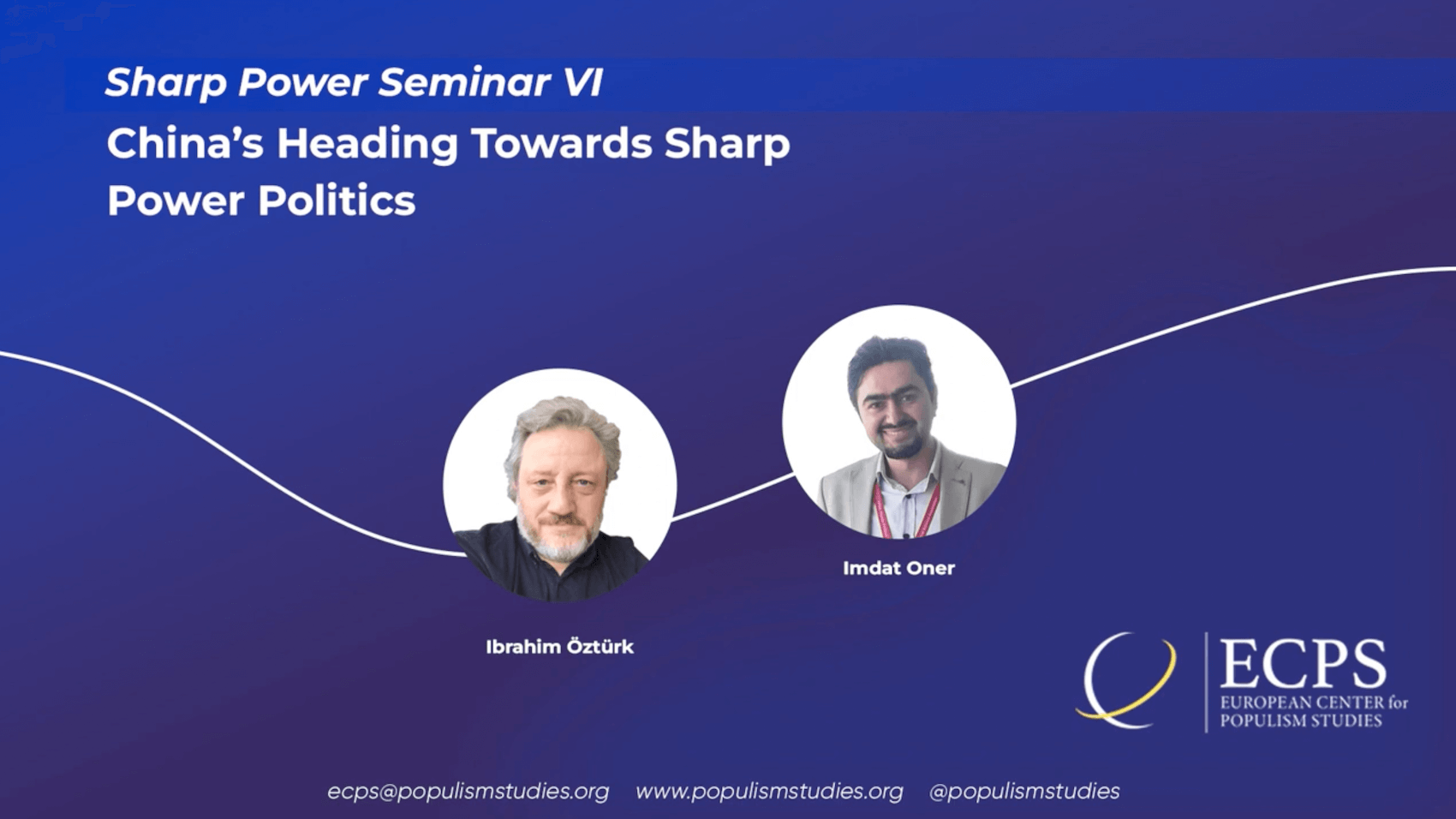
Ozturk: The international community allowed China’s increasing integration into the liberal multilateral global order, mainly, through membership in global organizations like the WTO in 2001, with the belief that China will continue “normalizing” through further opening based on reciprocity and “converging” to the rule of the game. However, empirical pieces of evidence both in (Honk-Kong, Tibet, and Xinjiang internment camps) as well as outside China have shown that the view of “China as an opportunity” has been falsified and, instead, “China as threat” school is gaining prominence globally. Today, we come to the stage where ignorance of China’s use of sharp power to prioritize profit and Chinese market access is not sustainable anymore when China crosses the line of national security in many countries.
Oner: China, Russia, and the US are globally competing for political leadership and spheres of influence. This discussion, in particular, focuses on the instrumental role of narrative power projected through social media and international broadcasting in great power competition and rivalry for global influence. How do China, Russia and the US seek to undermine each other through negative messaging in their respective state-led media outlets? To answer this question, this discussion will offer an analysis of the narrative conveyed by China’s CGTN, Russia’s Sputnik and the US’s Voice of America. In addition, this discussion will also provide a context of narrative convergence between China and Russia against the United States.
Ibrahim Oztürk has been a visiting professor of economics at the University of Duisburg Essen (Germany) since 2017. Since his PhD at Keio University (Tokyo, Japan, 1998) with a dissertation on the rise and decline of Japan’s developmental institutions post-WWII, Dr Öztürk has been working on the Japanese, Chinese and Turkish economies. He has been working at (1) the UDE since 2017 as a visiting research fellow and (2) the European Center for Populism Studies (ECPS) since October 2020 as a senior economic researcher.
Before, he worked at both Marmara University (full-time: 1993-2016) and Bosporus University (part-time: 2003-2014) (İstanbul, Turkey), at Tokyo University (2004), Institute of Developing Economies (Tokyo, Japan, 2005), at North American University, (Houston/Texas, the USA, 2014-2015). He is one of the founders of the Istanbul Japan Research Association and Asian Studies Center of Bosporus University. He served as a consultant to business associations, companies, and the government. Also, he was a columnist and TV commentator in Turkey at different media outlets for long years.
His research area includes Japanese economic development, China and the Belt and Road Initiative (BRI), governance, the political economy of Turkey, and the role of institutions in economic development. His native language is Turkish, and he is fluent in English, advanced (C1) in German and Lower intermediate in Japanese as a spoken language.
Imdat Oner is a former Turkish diplomat who recently served as Deputy of Head of Mission and Political Officer at the Turkish Embassy in Caracas, Venezuela. He is currently a Senior Policy Analyst at the Jack D. Gordon Institute for Public Policy at Florida International University, where he received his Ph.D. in International Relations.
This event was jointly organised by The European Center for Populism Studies (ECPS) and The Alfred Deakin Institute for Citizenship and Globalisation (ADI) .
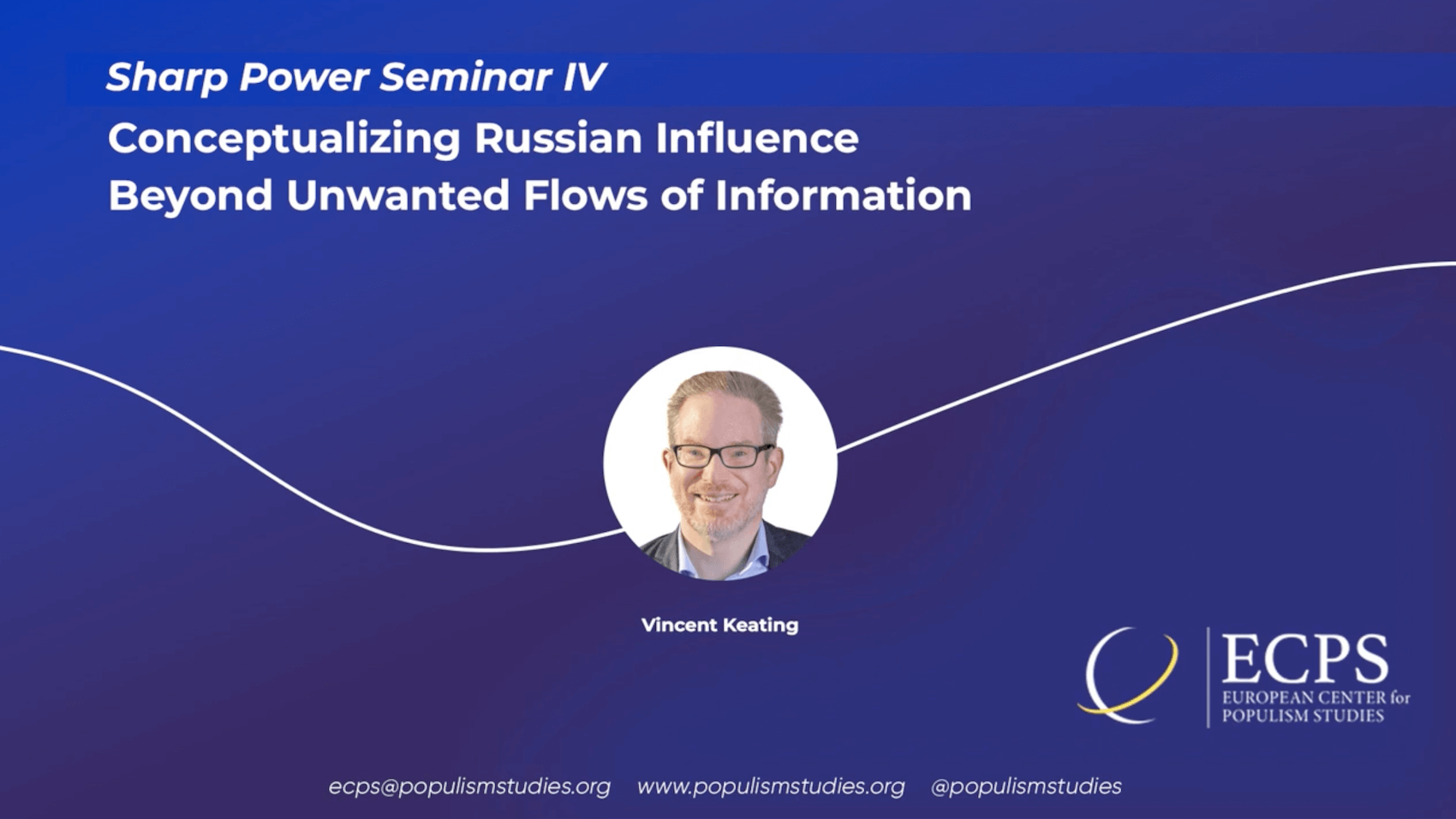
Sharp power is one of several recent attempts to conceptualize the influence that illiberal states have on liberal states. Characterized as not ‘hard power,’ involving direct military or potentially economic coercion, sharp power attempts to theorize coercion, that although not as severe as hard power, nonetheless has the potential to undermine and damage liberal states. This talk aims to show how this conceptualization of illiberal state influence, one that can be grouped together with other similar concepts under the heading ‘unwanted flows of information,’ has led to a cognitive blind spot in our understanding of the scope of Russian influence in the West. By focusing on manipulation and subversion, it rejects the possibility that the messages coming out of the Russian state can be more than this – that they can also be ideologically attractive. In making this claim, this talk suggests that we need to characterize the influence of illiberal states not simply as ‘unwanted flows of information,’ such as sharp power, but consider how the influence is also ideological, and how that changes how we might think of solutions to this problem.
Vincent Charles Keating is an Associate Professor and Head of Section for International Politics, Center for War Studies, University of Southern Denmark. He holds an MSc in Nationalism Studies from the University of Edinburgh and a PhD in International Politics from Aberystwyth University. Dr Keating’s co-authored work on Russian soft power has been published in International Politics and the Journal of International Relations and Development. Before coming to SDU, he held a previous position at the University of Durham and has been an invited guest professor at Université Paris-Panthéon-Assas (Paris II). In addition to Russian soft power, Keating’s research spans a number of other topics, including the challenges of the War on Terror on international human rights, the role of trust and distrust in international security, and how international non-governmental organizations maintain their global legitimacy.
This event was jointly organised by The European Center for Populism Studies (ECPS) and The Alfred Deakin Institute for Citizenship and Globalisation (ADI) .
The talk addresses a largely overlooked actor in China’s foreign relations, the International Department of the Communist Party of China. Building on an intense travel diplomacy, the ID-CPC maintains a widely stretched network topolitical elites across the globe. The ID-CPC’s engagement is not new; but since Xi Jinping took office, the CPC has bolsteredits efforts to reach out to other parties. Party relations not only serve as an additional channel to advance China’sforeign policy interests. Since President Xi has come to power, party relations also emerged as a key instrument to promoteChina’s vision for reforming the global order. Moreover, China increasingly uses the party channel as a vehicle of authoritarian learning by sharing experiences of its economic modernization and authoritarian one-party regime. The cross-regionalanalysis of the CPC’s engagement with other parties helps us to better understand the role of the CPC in Chinese foreignpolicymaking, pointing to a new research agenda at the intersection of China’s foreign relations, authoritarian diffusion, and transnational relations.
Julia Bader is Associate Professor in the Department of Political Science at the University of Amsterdam. Before joining UvA in July 2012, she worked as a research fellow at the German Development Institute / Deutsches Institut für Entwicklungspolitik (DIE) in Bonn (Germany). Dr Bader holds a MA in Politics and Management from Konstanz University and a PhD in Political Science from Heidelberg University.
Dr Bader’s research focuses on China’s foreign relations, regime transition and autocratic stability, international relations and foreign policy, development assistance and human rights. Dr Bader is the author of the monograph China’s Foreign Relations and the Survival of Autocracies which has been published with Routledge. Her work has appeared in academic journals such as International Studies Quarterly, European Journal of Political Research, Journal of Peace Research, Foreign Policy Analysis, Democratization, International Studies Review, Contemporary Politics, and in several collective book projects. Her research on the Chinese Communist Party’s International Department has been featured in The Economist and in the South China Morning Post. She has been interviewed for the VPRO’s Tegenlicht Future Shock Podcast (in Dutch).
This event was jointly organised by The European Center for Populism Studies (ECPS) and The Alfred Deakin Institute for Citizenship and Globalisation (ADI) .
If a unified theory of Russian information warfare exists, its core tenet might well be its historic indivisibility from regime security in Russian strategic thought. Rather than as an aggressive or expansionist expression of Moscow’s foreign policy, the Kremlin’s “information war” should primarily be viewed through a domestic political and security prism—as much a counterinsurgency as an expeditionary strategy, less an escalation than a projection.
Gavin Wilde is a senior fellow in the Technology and International Affairs Program at the Carnegie Endowment for International Peace, where he applies his expertise on Russia and information warfare to examine the strategic challenges posed by cyber and influence operations, propaganda, and emerging technologies. He previously served on the US National Security Council, and in analytic and leadership roles in the US intelligence community for 15 years—including as a coauthor of the IC assessment of Russia’s interference in the 2016 presidential election. He is also an adjunct lecturer on information conflict at the Johns Hopkins University School of Advanced International Studies.
This event was jointly organised by The European Center for Populism Studies (ECPS) and The Alfred Deakin Institute for Citizenship and Globalisation (ADI) .
China, Russia, and other countries ruled by repressive regimes have dramatically scaled up their investment into spheres commonly associated with soft power, including into media, education, technology, and entertainment. Most free societies are still not adequately prepared to meet the multidimensional sharp-power strategies applied by China, Russia, and like-minded states. Open societies will be vulnerable so long as they maintain a blind spot about the compromising and corrosive aspects of such forms of authoritarians’ outward-facing influence.
Christopher Walker is Vice President for Studies and Analysis at the National Endowment for Democracy, an independent, nonprofit foundation dedicated to the growth and strengthening of democratic institutions around the world. In this capacity, he oversees the department that is responsible for NED’s multifaceted analytical work. Prior to joining the NED, Walker was Vice President for Strategy and Analysis at Freedom House. Walker has testified before legislative committees, appears regularly in the media, and frequently conducts briefings on critical issues relating to democratic development.
Walker has been at the forefront of the discussion on authoritarian influence on democratic systems. His articles have appeared in numerous publications, including the Financial Times, Wall Street Journal, New York Times, Washington Post, Foreign Affairs, and the Journal of Democracy. He is co-editor (with Larry Diamond and Marc Plattner) of the edited volume Authoritarianism Goes Global: The Challenge to Democracy (2016), and co-editor (with Jessica Ludwig) of the reports Sharp Power: Rising Authoritarian Influence (2017), and Sharp Power and Democratic Resilience (2021). His article, “Rising to the Sharp Power Challenge,” appears in the October 2022 issue of the Journal of Democracy.
Over the past four decades, Portuguese voters have imprinted a solid resistance to the emergence of far-right parties in the political setting. However, this time ended in the 2019 legislative elections when the CHEGA, a self-located party on the far-right spectrum, with a posture assumed as anti-system and unconcerned with the accusations of racism and hate exhilaration, elected André Ventura to the national parliament. Moreover, in the 2021 presidential elections, he got 497,746 votes, a scant point to be the second most-voted candidate. The 2022 legislative elections placed CHEGA as the third most-voted party, and the number of members in parliament has climbed to twelve. This article critically examines the political constraints and opportunities for the rise of the CHEGA party in the Portuguese political setting. It argues that CHEGA emerges from the disintegration of centre-moderate right parties and the interruption of the emancipatory function of the leftist parties coupled with a ubiquitous traditional media landscape, which has proved favourable to the CHEGA propensity towards the Portuguese electorate and without scrutinise its narratives opposing the dominant ruling system. Beyond news media and cumulatively, social networks have also increased party exposure by recruiting affiliates and strengthening support bases.
By Carlos Morgado Braz
Throughout history, economic and social distress have stimulated antagonisms and political discontent with ordinary party politics. This thick reading explains why numerous radical far-right (RFR)[1] parties became well-established following the Cold War period. For Wodak and Krzyżanowski (2017), the return of these parties is one of the main threats to democracy. On the other hand, few others suggested it might positively affect contemporary democracy (Fraser, 2017). Nevertheless, whatever different argument these scholars use, they all agree that the RFR party’s success has been appropriating “claims” about the negative impact of social-cultural globalisation (e.g. ethnicity, religion) or the migration influx (e.g. class) involving a Manichean worldview, which divides social space into two opposing camps: the “true people” and the “corrupt establishment” (Urbinati, 2019).
To a great extent, as Goldberg (2020) found, this blurry puzzle has affected electoral behaviour, increasing the number of de-aligned and disillusioned voters who either do not participate or become open to new and more radical alternatives. However, in the existing literature, little attention has been paid to opportunities left open in the political setting by the dislocation of mainstream parties when they smooth over their foundational ideological matrixes to increase their chances of securing a winning majority. Instead, mainstream literature has mainly focused on voter turnout based on socio-economic variables or the dynamics behind RFR parties’ attitudes towards electoral campaigns. This article addresses this gap using the Portuguese CHEGA party’s emergence as a case selection.
One attempt to explain the RFR party’s electoral success could be Rydgren’s demand-side and supply-side conceptual approach[2]. According to Rydgren (2007), the demand-side approach reflects changes affecting citizens’ economic status and social-cultural identity – the base for RFR parties to go with criticism against those in power. In addition, the supply-side approach is twofold: the first focuses on the constraints and opportunities given by the political-institutional context that extend the prospect for their emergence; the second concentrates on parties themselves, e.g. the role of ideology and their organisational structures, including leadership. This article rests on the supply-side Rydgren’s approach. So, naturally, I question: Is Portugal dangerously returning to the fascist path, or is CHEGA a sceptre of the mainstream Portuguese political parties’ disaggregation?
To begin with is essential to remember that whatever ideological positioning a particular party uses, its manifestations will be contextual and dependent, among other things, on the country’s political, social and religious culture. The CHEGA is not an extremist party and is not, using a Wittgensteinian metaphor, an incarnation of our recent past. Instead, I argue it is a populist radical far-right party that emerged from the disintegration of centre-moderate right parties and the interruption of the emancipatory function of the leftist parties. Regarding its rise, the Portuguese traditional and social media platforms have facilitated André Ventura wide-reaching communication and intensified levels of connection with “the people” daily. However, given the spatial constraints of this article, this line of research is an obvious challenge that I will not address.
The ongoing environmental crisis has prompted various groups, organizations, and political parties to develop new strategies for addressing this global challenge. In this context, eco-populist actors, organizations, and parties are playing a key role in challenging the current exploitative capitalist system. However, it is important to note that eco-populist movements can differ significantly from one another. This article aims to distinguish between two contemporary but distinct movements: eco-populism and eco-fascism. To accomplish this, the terms “populism” and “eco-populism” will be conceptualized and analyzed, and the ideological deviations that eco-populism has undergone will be explained. The article will then provide brief case studies that showcase both eco-populist and eco-fascist events. By examining these examples, we will strive to identify the main similarities and differences between these two movements. Our conclusion will be that, despite sharing some features, eco-fascist movements tend to be more violent and nativist than eco-populist movements.
ByIvánEscobar Fernández & HeidiHart
Although some extremist Populist Radical Right Parties are still reluctant to acknowledge the evident effects of climate change and the urgent need to take necessary actions (see Spanish Populist Radical Right Party VOX), there is quite a consensus among climate researchers, environmental scientists, sociologists, and anthropologists on the causes that have driven us to this climate crisis. Among the main reasons that can explain climate change, there is no doubt that greenhouse gas (GHG) emissions and massive extraction and exploitation of natural resources have contributed the most to the ongoing crisis (see IPCC, 2022). However, the impacts of climate change differ from region to region, thus making individuals more vulnerable according to their nationality, social class, proximity and dependency on natural areas (see Thornton et al., 2014). Considering these factors, it can be concluded that Indigenous communities are among the most endangered groups due to climate change. This vulnerability has led to the emergence of popular movements that oppose extractive industries and their consequent exploitation of the resources found in natural areas, thus fueling violence and concern all over the globe (see Torres-Wong, 2019).
In the beginning, these movements were somehow marginal and unknown by the rest of the world and their demands were far from being considered by policymakers; however, as climate change impacts have become more tangible, these groups and movements have enjoyed more recognition, and their demands are currently being heard and considered, for example during the Alternative COP 26 in Glasgow and COP 27 in Egypt. Today, though the approaches and strategies may differ, it is difficult to find a political party that has not included climate change mitigation and adaptation in its agenda. However, although “green policies” have become an integral area of most political parties and social movements, different approaches and schools of eco-political thought have emerged in response to the current situation. These include Eco-Rousseauians, who believe that GHGs emissions must be curbed by the purchase of carbon credits from the underdeveloped world and call for the immediate and voluntary halt to the exploitation of natural resources and the protection of ecosystems of the world; Eco-Hobbesians, who defend that climate change can only be overcome by the imposition of global sanctions and mutual coercion mechanisms; Eco-Smithians, think that climate change will be solved by human inventiveness and see it as an opportunity for designing, producing, and selling new products that will boost private gain Eco-Calvinists, who opt for using resource-efficiency techniques to solve the climate crisis; Eco-Christians, who firmly believe that only a coalition with evangelicals would ensure God’s creation; and Eco-Populism, which is worth a more thorough explanation due to its complexity (Yanarella, 2015).
This article aims to analyze the rise of eco-populism across the world and to identify its main features, motivations and goals. Furthermore, this article will also aim to make a distinction between eco-populism and an appearance similar movement that has been coined under the name of eco-fascism. To do so, we will first conceptualize what we understand as populism and eco-populism and will point out some deviations the latter has undergone in recent years. The following section will showcase four different case studies that will aim at helping us identify some common and distinctive features between eco-populists and eco-fascists. Lastly, our findings will be discussed and contrasted with the existing literature.
The relevant literature shows that populists come to power through various rhetorics by exploiting the incumbent orders and the problems they have caused. However, failures and disappointments in fulfilling their promises push them to employ increasingly authoritarian measures to silence society to stay in power by gradually changing the system, manipulating citizens through controlling media, and undermining fundamental institutions. By emphasizing the overall performance of populist governments during the COVID-19 pandemic crisis, this article explores the future course of populist politics and governments after the pandemic. The paper concludes that although the pandemic has clearly shown the limits and capacity of many populist governments, the political and economic conjuncture in the post-pandemic era, coupled with the high tension of power transition, might bring new “opportunities” for the use of populists. With several defects and structural weaknesses of the existing liberal multilateral order, populism is here to stay with different implications for the multilateral liberal order and globalization.
As a dangerous external shock to the global economic and political system, the COVID-19 pandemic arrived at a stage when the negative repercussions of the Global Recession (GR) had not fully subsided, exacerbating existing problems, such as unemployment, loss of income, and inequality, with further political and social repercussions. With the advent of other “horses of the apocalypse” – such as climate change, famine, migration, terrorism, and state failure – the current pandemic could emerge as an endemic part of life worldwide through new mutations.
This article strives to explore the effect of the pandemic on the performance of populists either in government or opposition in the post-pandemic era. Taken together, widespread uncertainties, confusions, fears, and stresses are the main push factors behind populism. Nevertheless, populist rhetoric offers untested (and sometimes) romantic promises to counter the actual social, political, and economic traumas and shocks, referring to an unknown, not yet born “alternative” system. Therefore, even if it is rather more straightforward for populists to come to power with the help of such political-economic conjunctures, they are more likely to experience difficulty fulfilling the expectations their populist rhetoric has caused. The real danger is that, despite failing to fulfil their promises, they tend to employ increasingly authoritarian measures to silence society so as to stay in power by gradually changing the system, manipulating citizens through controlling media, and undermining fundamental institutions.
This article strives to predict whether the global populist environment created by the GR will turn against populist governments during and after the Global Lockdown (GL) of the pandemic. However, the analysis of the performance of mainstream and populist parties during the COVID-19 pandemic is quite a challenging task as it is complicated by several other factors such as the ongoing global power shift and the accompanying national, regional and global geopolitical conflicts. In addition, countries’ overall political and economic situations just before the pandemic crisis have also been immensely influential on their performance. All these parameters have brought additional evaluation criteria other than their actual economic performance during the pandemic and ended up prolonging their lifespan.
van Os, Kim & Smith, Chloe. (2023). “Mapping Global Populism – Panel 1: Populism and Far-Right in Australia.” European Center for Populism Studies (ECPS). June 5, 2023. https://doi.org/10.55271/rp0040
This report is derived from the inaugural panel of ECPS’s monthly series, titled “Mapping Global Populism,” which took place online on March 23, 2023. The panel featured renowned scholars on populism from Australia and New Zealand. As a result of this insightful panel, the report provides brief summaries of the speeches presented by the speakers.
This report is based on the inaugural panel of the ECPS’s monthly panel series titled “Mapping Global Populism,” held on March 23, 2023. The panel featured esteemed scholars in the field, including Dr. Imogen Richards, from Deakin University Australia, Dr. Rachel Sharplesfrom Western Sydney University Australia, and Dr. Josh Roose from the Alfred Deakin Institute for Citizenship and Globalization. Dr.John Pratt, from Victoria University of Wellington, served as the moderator for this panel.
Dr. Pratt initiated the panel by emphasizing the importance of studying populism in this region. He highlighted that Australia, along with New Zealand, exhibited early indications of far-right tendencies even before the emergence of Donald Trump in the United States.
In the 1990s, Australia witnessed the rise of a distinctive populist party named One Nation. This party espoused anti-immigration, anti-science, and anti-expert stances, garnering considerable support from tabloid media. While One Nation experienced electoral successes primarily in Queensland during the subsequent decade, its influence has since diminished significantly. In the recent federal election in Australia, One Nation failed to secure any seats. Nonetheless, as Dr. Pratt maintains, this does not imply the disappearance of far-right populism in Australia. One Nation has left its mark on mainstream parties, particularly evident in the national party’s climate change denial stance.
Dr. Imogen Richards: “From Past to Present: The Question of Populism, Extremism and the Far-Right in Australia”
Dr. Richards revealed a complex interplay and representation of connections between white identity, environment, culture, race, and territory. Concepts such as blood and soil, race, and place, emerged and strongly influenced the ideological foundations of the far-right in Australia.
Dr. Imogen Richards presented a compelling analysis of the utilization of environmental politics by far-right actors in Australia, employing key theories of populism to shed light on the subject. Without delving into the contested realm of populism definitions, Dr. Richards acknowledged the potential value of both the ideological and performative approaches in examining the discussion that follows. She offered brief summaries of the perspectives on populism put forth by Mudde, Mondon & Winter, and Moffitt.
Dr. Richards emphasized the significance of Australia’s colonial history in comprehending the contemporary expressions of environmentalism by white supremacist groups. This history is characterized by the British genocide of indigenous peoples, who inhabited the mainland for over 65,000 years, and extends to their ongoing marginalization, dispossession, and displacement. Furthermore, Dr. Richards stressed the importance of recognizing the lack of honest appraisal of Australian colonization, which has led to a disregard for the spiritual and cultural practices of indigenous peoples relating to land and country.
Appreciating the context and impact of Australia’s white colonial history is pivotal to understanding how the far-right in Australia relies on specific environmentalist expressions to forge a distinct white Australian identity. This discussion revealed a fusion of mythologized and aesthetic depictions of a white, male Australian with a highly selective historical account of their interactions with Australian land.
Dr. Richards delved into the origins of this identity, rooted in the British genocide of indigenous people and the ongoing displacement, dispossession, and exploitation of the land of Indigenous Australians. The “birthing story” of these far-right groups revolves around the “taming” of Australia’s harsh natural environment. They construct narratives that revolve around the historical and contemporary use and exploitation of Australian land for economic purposes, disregarding the traditional custodianship of the land. This narrative positions them at the center of environmental politics and practices, claiming ownership, a deep connection to, and profitable usage of Australian land.
The discussion then explored key events in Australia’s early post-colonial history that have solidified the white Australian identity and the extremists associated with its cultivation. These events include the racist riots against Chinese gold field miners in the 1850s, the implementation of the White Australia policy in 1901, and the importation and support of fascism and Nazism. Dr. Richards revealed a complex interplay and representation of connections between white identity, environment, culture, race, and territory. Concepts such as blood and soil, race, and place, emerged and strongly influenced the ideological foundations of the far-right. The Australian First Movement (AFM) and its leader ‘Inky’ Stephenson appropriated and incorporated indigenous heritage and symbols. Additionally, two archetypes—the ‘larrikin’ and the ‘bushman’—formed during this period, still evident in Australian culture today. These archetypes portray a deep connection to the land, physical strength, and a degree of anti-intellectualism.
The discussion then examined the different trends that emerged after World War II, resulting in diverse expressions of the far-right and their connection to the environment. Industrialization and increasing diversity fostered anti-urban sentiments, which aligned with the far-right’s attempts to align themselves with the early organic farming movement. Dr. Richards also identified a transformation in far-right discourse in the post-1960s era, wherein extremist groups, while still emphasizing race and place, also focused on population reduction, quasi-bioregionalist ideas, and the valorization of the military as a key recruitment source.
In order to comprehensively address and challenge far-right narratives, it is essential to gain insight into how their proponents construct and perpetuate the identities they espouse. This discussion critically examines the role of Australia’s colonial history in relation to environmental politics, shedding light on the white identity that continues to serve as a driving force for far-right groups in the country. Moreover, it underscores the influence of international and global ideologies on far-right movements, which intertwine with their national myths, legends, and symbolism.
Dr. Richard’s research drawed extensively from the forthcoming co-authored monograph titled “Global Heating and the Australian Far-Right,” scheduled for publication with Routledge in 2023. While this presentation was truncated due to time constraints, the forthcoming book promises to provide further captivating insights for those seeking a comprehensive understanding not only of the development of the Australian far-right but also of the profound impacts of colonialism. It underscores the significant role of environmental politics as a catalyst for the formation of exclusionary ideologies and the construction of identity.
Dr. Rachel Sharples: “Racism, White Privilege and White Supremacy in Australia”
Dr. Sharples argued that the denial of racism and white privilege represents a direct consequence of the failure to address indigenous sovereignty and dispossession in Australia, as well as the realities of Australia as a nation of migrants. Notably, her research focuses on the mainstream population rather than extremists, as claims of anti-white racism and white privilege are deeply entrenched in the attitudes and behaviors of broader society.
During her presentation, Dr. Rachel Sharples delved into the emergence of far-right ideologies within the broader Australian population, focusing on themes such as racism, white privilege, white supremacy, and anti-white racism. Dr. Sharples emphasized that white privilege continues to hinder efforts to combat racism in Australia. She asserted that anti-white racism and white privilege have been fostered by the infiltration of right-wing nationalism into mainstream discourses, perpetuated not only by politicians and the media but also deeply ingrained in the attitudes of a segment of the Australian population. While these sentiments have long existed in the Australian collective consciousness, contemporary times have witnessed a heightened tolerance and legitimacy given to white supremacy and national populist views, which Dr. Sharples argues warrants a unique and under-examined perspective on white privilege discourses in Australia.
According to Dr. Sharples, white privilege stems from individuals subscribing to notions of lost privileged status associated with Anglo-Celtic heritage, as well as perceived government ambivalence toward acknowledging and addressing these changes. Building on the prior panel discussion by Dr. Richards, these ideas and narratives must be contextualized within Australia’s history as a white settler and multicultural nation that has failed to adequately address indigenous sovereignty and dispossession.
Drawing on years of research and data collected through a large-scale attitudinal survey of Australians, Dr. Sharples highlighted the responses of thirty-eight individuals who explicitly made claims of anti-white racism and white privilege. Findings revealed that claims of anti-white racism were linked to perceptions of favoritism toward migrants, a sense of “white paranoia” stemming from perceived threats by ethnic minorities, and a perceived loss of control over national space and identity.
Furthermore, Dr. Sharples argued that the denial of racism and white privilege represents a direct consequence of the failure to address indigenous sovereignty and dispossession in Australia, as well as the realities of Australia as a nation of migrants. Notably, her research focuses on the mainstream population rather than extremists, as claims of anti-white racism and white privilege are deeply entrenched in the attitudes and behaviors of broader society. Dr. Sharples posits that addressing these issues at a societal level can help curb the misuse and harms associated with the adoption of more extremist positions.
Dr. Sharples contended that a growing number of white Australians perceive themselves as victims of anti-white racism, becoming increasingly vocal about their perceived prejudices and concerns about the erosion of a white national identity. These claims have found expression in the political sphere as well.
Additionally, Dr. Sharples highlighted an unexamined sense of ownership over the national space, evident in commentaries that whitewash Australian history, disregarding both the indigenous history of the land and the contributions of immigration and multiculturalism.
The remainder of Dr. Sharples’ discussion underscored how these claims have permeated not only mainstream media and political discourse but also the fabric of Australian society. She provided numerous examples that solidify the argument that these ideological claims have firmly taken root in mainstream Australian discourse, with prominent political figures and a divisive media and entertainment environment being key contributors.
The discussion drew attention to divisive political figures who have fueled and endorsed anti-white racist claims, welcoming and celebrating far-right proponents of hate and racism on platforms such as ‘hate tours.’ Even the Parliament House has faced criticism for hosting problematic speakers and promoting a range of intolerant, hateful, and racist views.
Australia’s media landscape, long accused of permitting racist and intolerant views, aligns with the findings presented by Dr. Sharples. She described several high-profile sports and media personalities who have used their national platform to propagate racist views against Indigenous Australians and Muslims. Troublingly, despite facing backlash, these individuals have retained their high-profile positions and remain influential figures today.
In her concluding remarks, Dr. Sharples emphasized the rightward shift in the Australian political landscape and highlighted a significant dichotomy present in policy debates and the corresponding populist media coverage. This divide centers around the tension between aspiring to be a nation that embraces cultural diversity and a perceived necessity to safeguard the white colonial heritage or white national identity. The firm establishment of this dichotomy within mainstream Australian society, coupled with a growing number of claims of white vulnerability and victimization, underscores the dangers associated with the normalization of intolerant, racist, and anti-white sentiments by influential figures who shape public discourse and debate.
Dr. Josh Roose: “Masculinity, Populism and Religion in Australia”
According to Dr. Roose, a thorough understanding of the far-right and populist right necessitates a careful examination of masculinity, which encompasses the societal construction of male identity. Masculinity entails the establishment of social expectations regarding manhood and the hierarchical structuring of society, privileging masculine traits while devaluing those associated with femininity. While participants in far-right groups are predominantly men, the influence of masculinity extends beyond these subgroups.
In his presentation, Dr. Josh Roose employed a lens of masculinity and religion to examine the far-right phenomenon in Australia. He posited that both masculinity and religion are perceived by far-right populists and extremists as being under existential threat, which significantly influences their political agenda. Dr. Roose commenced his talk by providing contextual information on the current state of Australia and the underlying factors that have contributed to the emergence of far-right populism. Subsequently, he delved into an analysis of recent developments within the country.
According to Dr. Roose, a thorough understanding of the far-right and populist right necessitates a careful examination of masculinity, which encompasses the societal construction of male identity. Masculinity entails the establishment of social expectations regarding manhood and the hierarchical structuring of society, privileging masculine traits while devaluing those associated with femininity. While participants in far-right groups are predominantly men, the influence of masculinity extends beyond these subgroups. Origins, ideologies, internal dynamics, and recruitment methods within these groups are intricately intertwined with notions of masculinity. Notably, among white-collar workers, there exists a perception of engraved entitlement and a perceived erosion of the respect, recognition, and social status to which they believe they are entitled as men.
To comprehend this phenomenon, Dr. Roose suggested examining the changing status of men and work over the past five decades, particularly in light of the introduction of free market economics and its displacement of Keynesian economics. Participation in far-right groups may be driven by resentment and blame directed towards women and minority groups, who are perceived as having benefited from male economic, legal, and political subordination. Additionally, such sentiments may be directed towards governments perceived to have facilitated these developments and could be rooted in feelings of shame.
Dr. Roose also explored the role of religion within this framework and the way it is framed in relation to populism. He argued that significant intersections exist in terms of intellectual, ideological, and affinitive aspects between hard-right populists, far-right extremists, and religious actors emphasizing textualist interpretations. These groups all lay claim to possessing universal truth, harbor a sense of marginalization, and cultivate a powerful perception of persecution and victimhood, among other shared characteristics. Dr. Roose further posited that misogyny serves as a gateway to contemporary manifestations of the far-right. Furthermore, these groups often espouse anti-LGBTQ+, antisemitic, and anti-science views.
Dr. Roose also highlighted the notable trend wherein an increasing number of young individuals, particularly angry young men, are actively engaging in these spaces, contrary to the prevailing notion of youth disengagement.
Concluding his presentation, Dr. Roose contended that a crucial aspect requiring further investigation is the extent to which these attitudes intersect with mainstream values, politicians, and community members. It is imperative to understand the potential for these relatively small groups to build a broader movement and gain prominence within the wider population, as this is where the true consequences may arise and the real damage can be done.
(*) Kim van Os is an intern at European Center for Populism Studies (ECPS) with a master’s degree in International Relations. Her main research interests are the relation between populism and far-right radicalization, gender, racism, Islamophobia, and xenophobia.
This panel was jointly organised by The European Center for Populism Studies (ECPS) and The Alfred Deakin Institute for Citizenship and Globalisation (ADI) .
Moderator
Dr Ihsan Yilmaz(Research Professor and Chair of Islamic Studies and Intercultural Dialogue at the Alfred Deakin Institute for Citizenship and Globalisation (ADI), Deakin University, Melbourne, Australia).
Speakers
“Main drivers of populism in Indonesia,” by DrInaya Rakhmani(Director of Asia Research Centre, Universitas Indonesia).
“Radicalism, extremism and civilizationalist populism in Indonesia,” by Dr Pradana Boy Zulian (Associate Professor of Islamic Studies at the Faculty of Islamic Studies, Universitas Muhammadiyah Malang, Indonesia).
“Gender roles in Indonesia’s religious populism,” by DrKurniawati Hastuti Dewi (Senior Researcher at the Research Center for Politics, National Research and Innovation Agency – BRIN, Indonesia).
“Populism and foreign policy: The Indonesian case,” by Dr I Gede Wahyu Wicaksana (Senior International Relations Lecturer in the Department of International Relations Faculty of Social and Political Sciences, Universitas Airlangga, Indonesia).