In the environment of rising right-wing populism, women in Turkey and across Europe are worried about losing their hard-earned legal rights and protections under the guise of saving the nation from foreign encroachment. The targeting of the Istanbul Convention clearly indicates how populist leaders effectively and intensely use the discourse of gender in the construction of an antagonist “Other.” In demonizing this “Other,” populist leaders seek to benefit from the chaotic atmosphere to consolidate more power for themselves.
An “obsession with gender and sexuality” has been a common feature of contemporary right-wing populism. This manifests in various discourses that “conjure up the heteronormative nuclear family as the model of social organization, attack reproductive rights, question sex education, criticize a so-called ‘gender ideology,’ reject same-sex marriage and seek to re-install biologically understood binary gender differences” (Dietze & Roth, 2020: 7). The Council of Europe Convention on preventing and combating violence against women and domestic violence, commonly known as the Istanbul Convention, has been a recent target of right-wing populists, ironically enough in Turkey, where the convention was opened for signature and thus gets its name.
Women in Turkey have always found it challenging to protect themselves from violence and discrimination at the hands of the social, institutional, and structural actors due to the poor implementation of the existing national laws. Particularly within the last two decades, Turkey has seen a drastic increase in cases of domestic violence and femicide, according to the civic platform “Kadin Cinayetlerini Durduracagiz” (“We Will Stop Femicide”), which has been documenting and publishing the monthly and annual number of femicide cases since 2013. In 2020, when pro-government voices in Turkey carried out a vigorous campaign against the Istanbul Convention, the Kadin platform reported 300 cases of femicide, a higher number than usual due to pandemic-related stay-at-home orders (130 femicide cases have been detected so far in 2021).
As is common in European right-wing populist discourses, the campaign against the Istanbul Convention in Turkey was built on religious (Islamist) themes and protecting the traditional family unit. Although it was the same Justice and Development Party (AKP) government under the leadership of Recep Tayyip Erdogan that hastily ratified the Convention in 2011, the authoritarian turn of the government after 2013 has significantly eroded the hype for European Union membership in Turkey. Hence, when the Convention finally became law in 2014, it lacked the government support to be properly implemented. Still, the human rights organizations saw the Convention as progress and pushed for its proper implementation to combat gender-based violence and domestic violence.
As Eren Keskin, the Human Rights Association (IHD) co-chair, mentions, “until 2005, violence against women was not even a ‘chapter title’ in the Turkish Penal Code.” The title of the section regulating violence against women in the law was ‘general morality and crimes against family.’ So, a woman was just an ‘element’ of ‘morality and family’.” Keskin also highlights that the law was amended in 2005 only because of the struggle of women and the “winds” favoring the European Union at the time. Consequently, violence against women were brought into the penal code as “sexual assault crimes.” However, even if the written law has changed, it cannot be said that there has been a significant change in practice and understanding. In other words, language, discourse, and mentality matter greatly in the proper understanding and implementation of laws.
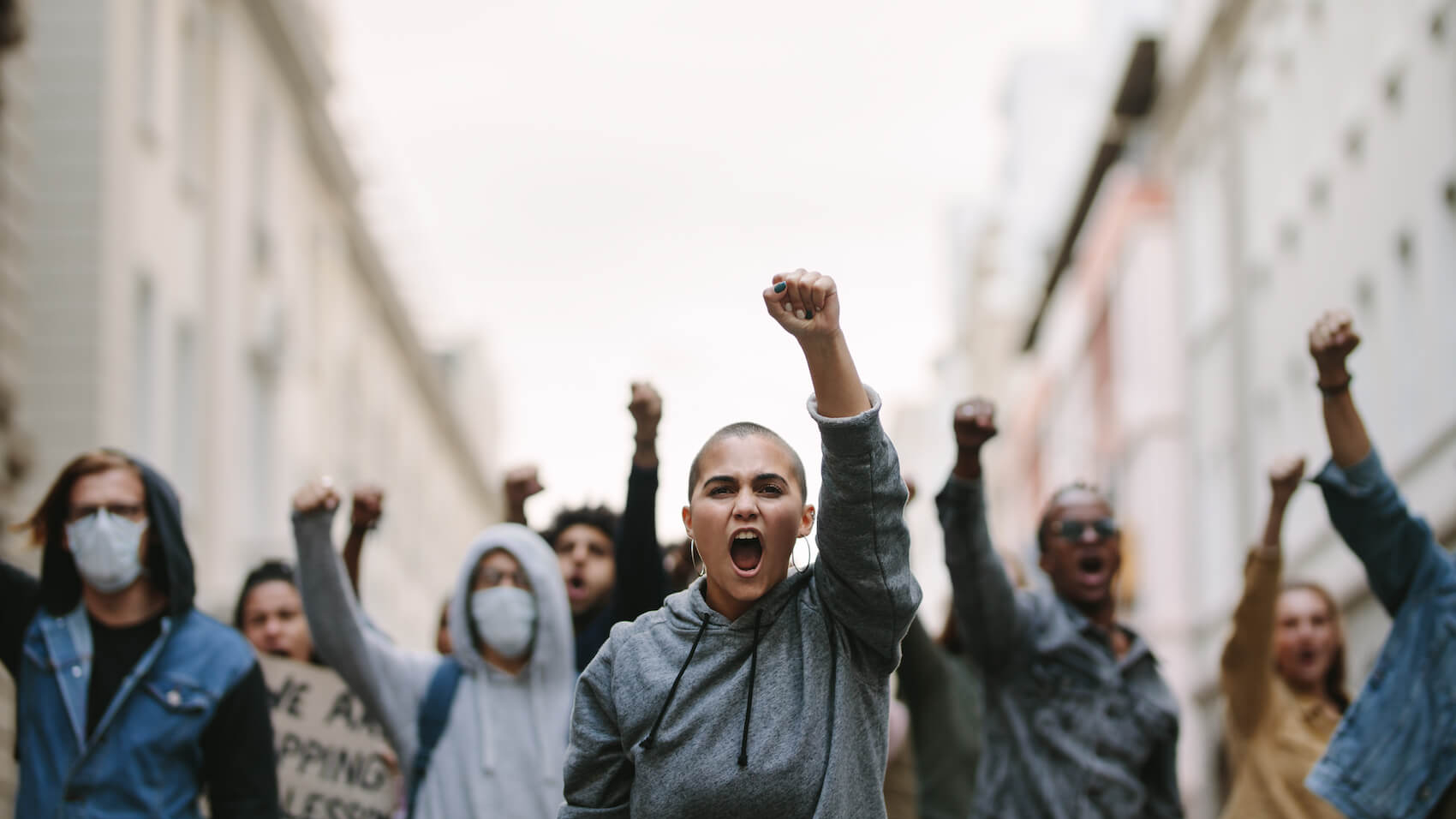
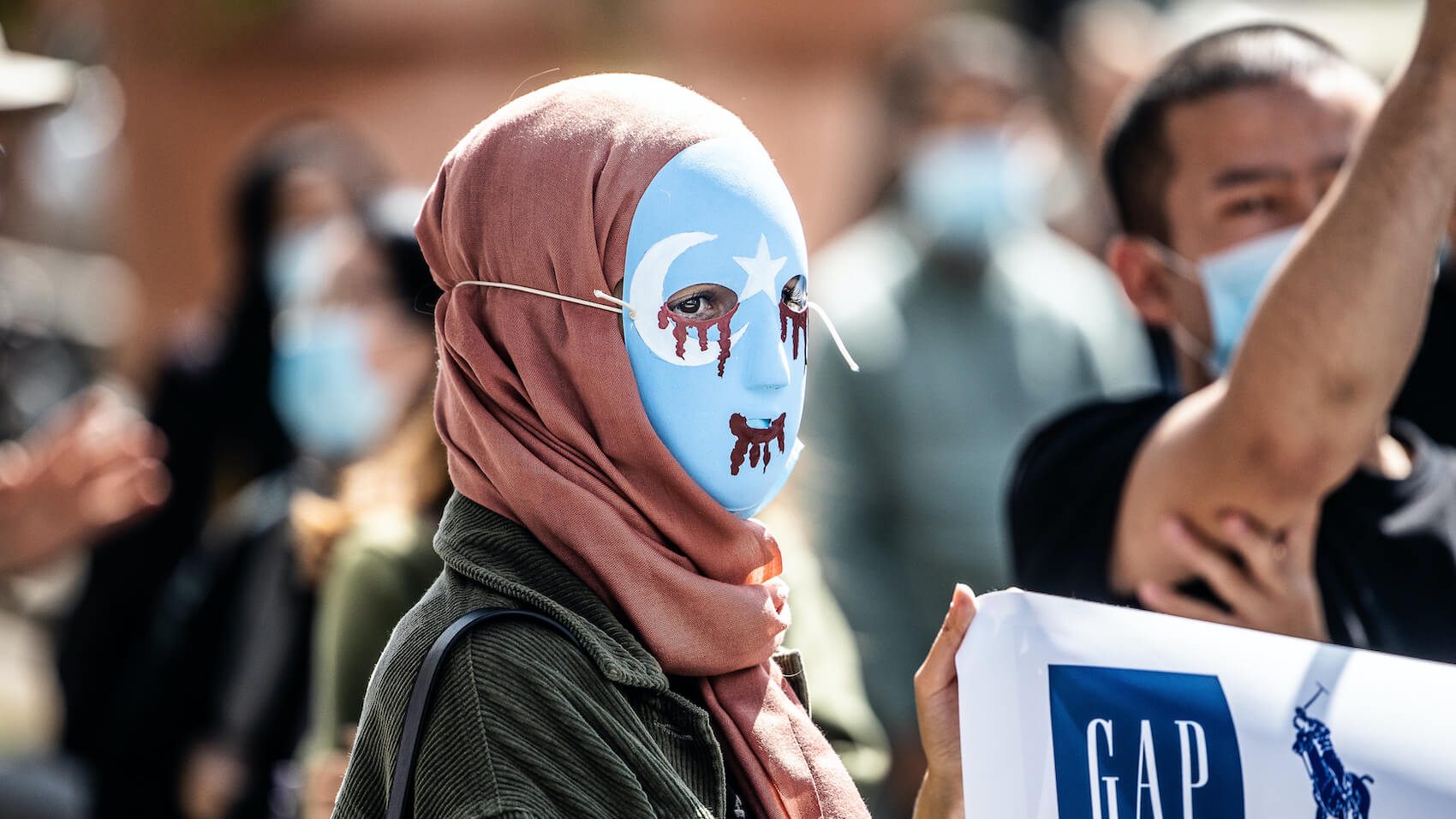
On July 1, 2021, the day when Turkey officially exited the Istanbul Convention, people came together to protest this decision in Istanbul, Turkey. Photo: Okan Ozdemir.
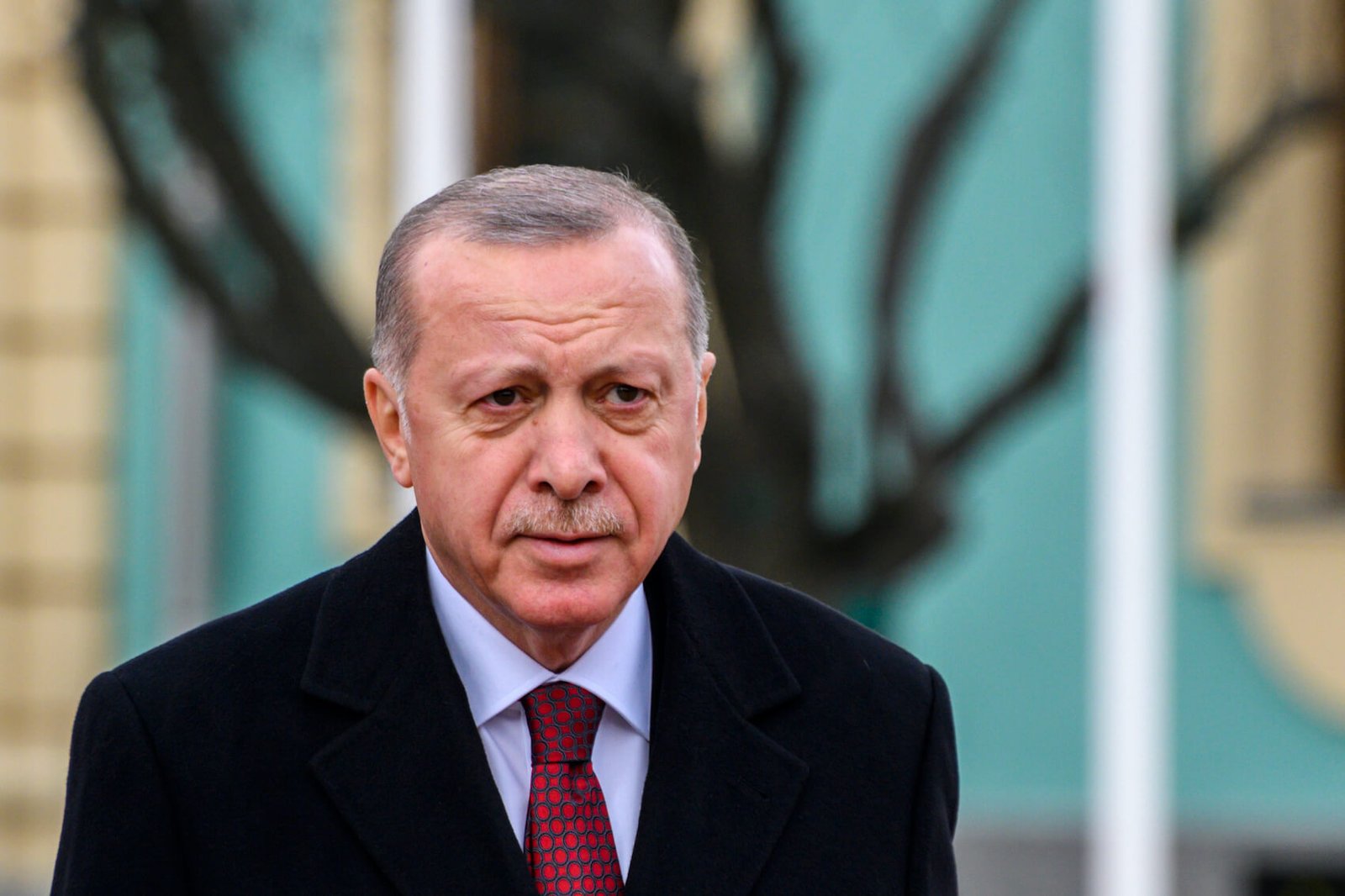
Understandably, women’s rights groups that have been fighting for the full implementation of the Istanbul Convention were shocked and frustrated when Erdogan declared Turkey would withdraw from the Convention in a late-night presidential decree on March 20, 2021. Protests erupted in many cities of the country, demanding the government retract the decision. Journalists, legal professionals, academics, politicians, human rights defenders have declared their deep concerns in various ways, including articles, social media campaigns, TV shows, and artworks. On the other hand, there has been considerable support for the withdrawal decision among right-wing voters, who nonetheless appear to have little or no knowledge about the actual content of the Convention. So, what exactly makes this international treaty a target of right-wing populist anti-gender propaganda?
The Istanbul Convention is described as “a landmark treaty on preventing and combating violence against women and domestic violence” by the Council of Europe (CoE). It is “the most far-reaching international legal instrument to set out binding obligations to prevent and combat violence against women,” which has been ratified by 34 member states of the COE and signed by a further 12 (pending ratification). However, simply by its feature of being an international treaty, it has come under the nativist and nationalist radar of the AKP government, which has increasingly returned to its anti-Western and anti-secular Islamist roots since 2011. Indeed, one of the first steps of the AKP government regarding women’s issues was renaming the “Ministry of Women and Family” into the “Ministry of Family and Social Policy.” By doing so, women’s policy became restricted to families matters and the traditional role of women as mothers and wives.
Along with this official change, the discourse of the party and Erdogan himself supported the restriction of women’s roles. President Erdogan explicitly declared that “You cannot put women and men on an equal footing. It is against nature. Our religion regards motherhood very highly. Feminists do not understand that; they reject motherhood.” In its attempt to expand its Islamist political base by tapping on the valued social symbols of family, children, and religion, the Turkish government manipulated some specific articles in the Istanbul Convention, which went in line with the party discourse and religious elites’ confirmation. The Turkish society, which is mostly conservative, has been tightly tied to religious and traditional discourse with a pro-family approach. In other words, as Eslen-Ziya purports, the “AKP government adopted populist discourses involving Islamist elements of nationalism and conservatism” (Eslen-Ziya, 2020: 4).
So, is the Istanbul Convention actually a threat against the family concept as claimed by the Erdogan regime? All articles related to family issues in the Convention are entirely aimed at combating domestic violence. The first article explains the purpose of the Convention to “protect women against all forms of violence, and prevent, prosecute and eliminate violence against women and domestic violence.” This is followed by the second article that emphasizes legal implementation: “Parties are encouraged to apply this Convention to all victims of domestic violence. Parties shall pay particular attention to women victims of gender-based violence in implementing the provisions of this Convention.”
In this vein, Article 52 advises the parties to take “necessary legislative or other measures” to restrain the perpetrators of violence from the victims, which was put into practice in the Turkish Penal Code with Law No. 6284 to Protect Family and Prevent Violence Against Women. As repeated throughout the text, the Istanbul Convention focuses on protecting all family members from domestic violence without dictating any particular notion of the family. However, this ambiguity and inclusiveness in its language make the Convention a target of the populist claims of undermining the “God-sanctioned” heteronormative family by giving room for the normalization of other “deviant” forms of family. As Kuhar and Pajnik note, “In the zero-sum logic typical of populist discourse, the more homosexuality (and, by virtue, ‘gender ideology’ as an empty signifier for anything, from gender studies to sexual education, to reproductive rights) is presented as normal, the more children, traditional families and the nation are threatened and under attack” (Kuhar & Pajnik, 2020: 178).
The terms “sexual orientation” and “gender identity” in the specific articles of the Convention have been claimed to promote and encourage homosexuality and LGBTQ+ identities. In Article 3, gender is defined as “the socially constructed roles, behaviours, activities and attributes that a given society considers appropriate for women and men.” Following that is Article 4 that guarantees to protect the rights of victims “without discrimination on any ground such as sex, gender, race, colour, language, religion, political or other opinion, national or social origin, association with a national minority, property, birth, sexual orientation, gender identity, age, state of health, disability, marital status, migrant or refugee status, or other status.”
Another point of concern raised by the opponents of the Convention is the education and teaching materials requirement in Article 14, which calls the governments to educate their people on “equality between women and men, non-stereotyped gender roles, mutual respect, non-violent conflict resolution in interpersonal relationships, gender-based violence against women and the right to personal integrity…in formal curricula and at all levels of education.” A common obsession with the term gender and its academic studies can already be observed in Viktor Orban’s Hungary, which refused to ratify the Istanbul Convention with the same arguments and removed the accreditation from gender studies MA programs in Hungarian universities in 2018.
Despite the frequent expressions of concern and criticism from the international community, the populist authoritarian leaders have insisted on their anti-women and anti-gender campaigns. Turkey did not target gender studies and academic programs directly, unlike Hungary. However, it consolidated its dominance in the university administrations and the civil society with an attempt to counteract the liberal Western gender studies discourse and replace it with a conservative or Islamist one. This is clearly seen in the mixed messages on the withdrawal decision sent by KADEM (the Women and Democracy Association), co-founded by Erdogan’s daughter Sumeyye Erdogan. While initially expressing support for the Convention during the ongoing campaign against it, the organization did not join the major women’s rights groups to protest the decision once it was made official in March 2021. Instead, they blamed the Convention for creating societal tension and commended the decision to withdraw. As an unofficial mouthpiece of the government on the issues of women and gender, KADEM “serves to institutionalize pro-government, right-wing populist gender ideology” and plays a role as an agency to supporting “policies through protecting family as an institution and embracing gendered roles (women as mothers and wives and men as bread winners and head of the households) where patriarchal order is protected” (Eslen-Ziya, 2020: 4–5).
In the environment of rising right-wing populism, women in Turkey and across Europe are worried about losing their hard-earned legal rights and protections under the guise of saving the nation from foreign encroachment. The targeting of the Istanbul Convention clearly indicates how populist leaders effectively and intensely use the discourse of gender in the construction of an antagonist “Other.” In demonizing this “Other,” populist leaders seek to benefit from the chaotic atmosphere to consolidate more power for themselves.
References
Dietze, Gabriele & Roth, Julia. (2020). “Introduction.” In: Right-Wing Populism and Gender: European Perspectives and Beyond, edited by Gabriele Dietze and Julia Roth.
Eslen-Ziya, Hande. (2020). “Right-wing populism in New Turkey: Leading to all new grounds for troll science in gender theory.” HTS Teologiese Studies/ Theological Studies. 76(3):1-9. DOI:10.4102/hts.v76i3.6005
Kuhar, Roman & Pajnik, Mojca. (2020). “Populist Mobilizations in Re-traditionalized Society: Anti-Gender Campaigning in Slovenia.” In: Right-Wing Populism and Gender: European Perspectives and Beyond, edited by Gabriele Dietze and Julia Roth.
In periods characterized by difficulties and worries, it is easier to get discouraged and look for a scapegoat to blame for the wrongs one believes one has suffered. The “forgotten men” and the “losers of globalization” turn toward their common enemy — the elites. After all, those who have not benefited from the fruits of progress and who feel forgotten by institutions see the origin of their ills in the power of “experts.” The “forgotten men” not only envy elites because they constitute the class of the “winners of globalization,” but they are also resentful because the elites chosen to deal with the crucial national challenges have seemingly failed.
Anger, resentment, and rancor characterize the present. As hate speech, violence, and discrimination—which are a natural consequence of discontent, distrust, and disillusionment—invade our societies, politics seemingly mirrors such behaviors. After the 2008 financial and economic crisis, several social groups manifested their dissatisfaction and intolerance toward the “system” and “powers that be.” Consider, for instance, movements as the Indignados (a Spanish anti-austerity movement), the Gilets Jaunes (a protest movement for economic justice in France), and the V-Day protestors (an Italian political and civic initiative to “clean up” the parliament). They are forms of protest that claim general and generic changes but are animated by the desire for revenge against those in power and therefore held responsible for the their current malaise.
Such groups’ quest for revenge reflects an elite legitimacy crisis that stems from experts’ (purported) failure to guarantee social well-being and security. For instance, the challenges faced by virologists and scientists in getting a handle on the Covid-19 pandemic (at least in the beginning) have heightened the risk that messages that epistemic elites are useless and that the costs of their existence outweigh the benefits will become more entrenched and widespread.
Thus, social frustration, originating from socio-political and socio-economic problems, has been channeled by the populist parties, which feed and sharpen social polarization. Populist parties exploit discontent stemming from a perceived elites’ failure, and they find fertile ground in times of crisis. Such tendencies increase tribalism among ordinary citizens and the political establishment and originate from social resentment. Therefore, it is essential to understand the political importance of social resentment and investigate it from a philosophical perspective.
Resentment and Populism
I decided—among several alternative interpretations—to focus on the resentment dimension of populism by adopting the ideational approach, which considers populism a thin-centered ideology. Consequently, following Mudde (2004: 543), I define populism as: “an ideology that considers society to be ultimately separated into two homogeneous and antagonistic groups, ‘the pure people’ versus ‘the corrupt elite,’ and which argues that politics should be an expression of the volonté générale (general will) of the people.”
I believe such a definition helps better define the polarization and dichotomy that populism entails and the tribalism it promotes. Indeed, I consider social and collective resentment a crucial factor in the development of populism. Current democratic societies feature internal contrasts and tensions, and social opposition and the search for culprits to blame for unsatisfactory circumstances are widespread. Besides, as a recent report from the Nordic think tank Timbro (2019) shows, in times of crisis, populism gains ground —from 2008, the year of the global financial crisis, to 2018, voter support for authoritarian populists in Europe expanded significantly. Tonello et al. (2016) suggest the most recent wave of populism in Europe has emerged from voters’ desire to communicate a clear “rejection” of incumbent governments (deemed unable to cope with the challenge to the economic crisis).
The research and statistical surveys conducted by Algan et al. (2017, 2019) stress how three types of crisis—political, economic, and cultural– stimulate the rise of populist forces. The political crisis manifests itself in the form of distrust of national and international political institutions. In particular, the data show a sharped relationship between voting in favor of anti-system forces and citizens’ distrust of institutions. The economic crisis, one of the triggers of political resentment, is instead produced by the economic upheavals that have resulted in income erosion and unemployment. Statistics confirm the relationship between the economic crisis and the success of populism. Here, according to the authors, a 1 percentage-point increase in the unemployment rate leads to an average increase of 2–3 percentage points in favor of anti-system parties. Finally, the component of mistrust also returns in the cultural crisis because the unfulfilled promises have caused broad disillusionment to spread among the citizens.
Consequently, it is plausible to consider resentment as a cause of populism. According to Foa et al. (2019), the Brexit referendum and Donald Trump’s presidential election were political events driven by resentment. The article’s data show social cleavages that create a socio-political identikit of pro-Leave voters or Trump’s electors. What such people had in common was deep anger toward the political establishment and social resentment toward elites (the European Union in the Brexit case, and the Democratic Party in Trump’s).
Mudde’s definition of populism allows us to highlight the importance of resentment in populism’s origins. After all, populism is an ideology (albeit a thin-centered one) and so evokes a vision of how the world is and how it should be. Being thin-centered reflects “the empty heart of populism that gives it both weakness and potential ubiquity” (Taggart, 2004: 275). It is, therefore, an incomplete and chameleonic theoretical approach because the terms “people” and “elite” are in turn shaped on other ideologies, representing empty categories fillable in different ways depending on the context. Such a solution allows populist politics to stir up the crowd’s anger toward ever new and diverse scapegoats. For this reason, it is now opportune to focus our attention on resentment—particularly on its philosophical dimension—to better understand current social problematics.
A Philosophical Genealogy of Resentment
Resentment (or ressentiment) is defined as the indignation that an individual feels toward someone or something due to behavior considered harmful or unfair. Such a feeling is a combination of resentment, hatred, envy, humiliation, and helplessness. The resentful person hatches hatred and anger in an almost pathological way, envies the goods and qualities of others, suffers from his weakness and inadequacy.
Concerning the aim of the commentary, it is worth focusing on Friedrich Nietzsche’s (1994) conception of resentment, exposed in his On the Genealogy of Morality (first published in 1887). The work in question theorizes how the “good”—that is, noble and strong individuals—have defined themselves as such, arrogating the right to forge their values and emphasizing their peculiar superiority. Thus, the crucial contrast for the entire Nietzschean moral theory emerges—between knights and priests and between nobles and slaves. The former are physically thriving and the latter utterly powerless. As a result, the “bad” harbor a certain degree of resentment, which in turn feeds a desire for revenge over the nobles and the brave. The men of resentment, thirsting for revenge despite wearing the clothes of judges, are guided by the “ascetic priest” and are the enemies of life because they desire another world; in so doing, they demean their will to power. Nietzsche describes men of ressentiment, worn out by envy and prey to frustration, as follows: “These worm-eaten physiological casualties are all men of ressentiment, a whole, vibrating realm of subterranean revenge, inexhaustible and insatiable in its eruptions against the happy, and likewise in masquerades of revenge and pretexts for revenge” (1994: 91).
Nevertheless, it is essential to consider Max Scheler’s reworking of the Nietzschean ressentiment. Indeed, it provides the best theoretical basis for making the transition from personal resentment to social resentment. Scheler understands ressentiment as the ethos of the bourgeoisie. To occur, resentment requires “repression,” the failure to vent negative emotions. The origin of resentment consists in the repression of hatred, hostility, and aggression in stifling their outburst. Generally, the Schelerian ressentiment involves powerlessness and passivity but also a diminishing of others’ success and Schadenfreude. Scheler (1912: 4) describes this sentiment as a: “…self-poisoning of the mind which has quite definite causes and consequences. It is a lasting mental attitude, caused by the systematic repression of certain emotions and affects which, as such, are normal components of human nature. Their repression leads to the constant tendency to indulge in certain kinds of value delusions and corresponding value judgments. The emotions and affects primarily concerned are revenge, hatred, malice, envy, the impulse to detract, and spite.”
Therefore, ressentiment is a reaction whose natural consequence is the impulse to revenge. However, it manifests itself only and exclusively when the feelings of hatred, rancor, envy are not followed by a moral overcoming (as forgiveness can be) nor by a physical overcoming (violence or threat, for example). The ground of resentment is especially limited to those who find themselves in conditions of servitude or domination, unable to rebel against such harassment. Such a condition is identifiable as “existential envy,” the bitterness deriving from the fact that one person cannot be similar to another. Thus, it is apparent that Schelerian ressentiment is always the result of the confrontation between the self and the other that is not disciplined but instead results in a self-conviction of weakness and ineptitude.
A constant reciprocal competition emerges here, as men compare themselves with others to obtain feedback on their value. Such a dynamic conducts us to the “mimetic theory” developed by the French anthropologist René Girard. Mimesis is defined as the desire of an individual to be like the other. According to mimetic theory, the model is both admired/imitated and envied/hated because it always occupies the place one would like for oneself. A triangular relationship then emerges between subject, model, and object, in which both the subject and the model desire the same object, but the latter almost loses its importance in light of the conflict between the two parties. Therefore, resentment for Girard is the feeling that the imitator feels toward the model he wants to imitate, which constitutes the impediment to taking possession of the object on which both focus their desires.
Existential envy and social mimicry, which are based on comparison and competition with others, are essential theoretical presuppositions for the analysis of social and collective resentment, which is currently widespread in populist and political rhetoric. Understanding the philosophical origins of resentment allows us to read contemporary political life through the lens of an emotive dichotomy between people and the elite.
The Cultural Politics of Resentment
The phenomena of existential envy and social mimicry on a collective level feature liberal democracy because citizens tend to look at those who enjoy greater power and wealth with rancor and anger. Moreover, resentment is a natural component of democracy precisely because it stimulates and fuels reactions in the face of any injustice and inequality. However, resentment is often added to the envy of inequalities, dictated by the belief that they have suffered harm. Crisis and uncertainty exacerbate such a provision. This happened after the Great Recession of 2008, as was the case following the Great Depression of the 1920s and 1930s. And it is happening today with the Covid-19 pandemic underway.
In periods characterized by difficulties and worries, it is easier to get discouraged and look for a scapegoat to blame for the wrongs one believes one has suffered. The “forgotten men” and the “losers of globalization” turn toward their common enemy — the elites. After all, those who have not benefited from the fruits of progress and who feel forgotten by institutions see the origin of their ills in the power of “experts.” The “forgotten men” not only envy elites because they constitute the class of the “winners of globalization,” but they are also resentful because the elites chosen to deal with the crucial national challenges have seemingly failed.
What Nietzsche, Scheler, and Girard describe is expressed today in populist rhetoric. Marlia Banning (2006) defines such behavior as the “political culture of resentment.” Her meaning here is that this rhetoric aims to divert attention from socio-economic issues such as job loss, underemployment, and growing economic insecurity. The political culture of resentment is a “smoke machine” that diverts attention and public discussion from the changes taking place in society toward minority or immigrant groups. In this way, the ressentiment conveys insecurity, fear, and anger against an indeterminate “Other.”
Besides, according to Banning, the political culture of resentment favors the development of identity politics, or rather an identity alliance necessary to cement a group that shares a series of values, diverting attention from material difficulties and socio-economic changes. In this way, a “politics of division” is created, which increases polarization and bias within society. Attitudes of tribalism are sufficiently heightened that all critical thinking fails—it is enough to be part of the so-called “other” to become the target of insults and political attacks.
Populist rhetoric, thus, manages to manipulate and exploit the resentment of citizens and direct it against a common enemy by satisfying the thirst for social revenge by identifying a scapegoat for this purpose. Society needs to channel the resentment and suppressed anger of its citizens toward an external enemy, as Girard illustrated in The Scapegoat (1986) and James Frazer did in The Golden Bough (1890). Today this “Other” is often represented as a threat to the individual mass and can take on different features—the establishment, the financial elite, or migrants—and is an essential element of the rhetoric typical of the populist style. The populist political forces leverage the resentment that arises against the elites in conditions of fear and uncertainty when security expectations are disregarded. By doing so, populisms channel citizens’ anger by obtaining voters’ support and cementing the sense of value-ideological belonging.
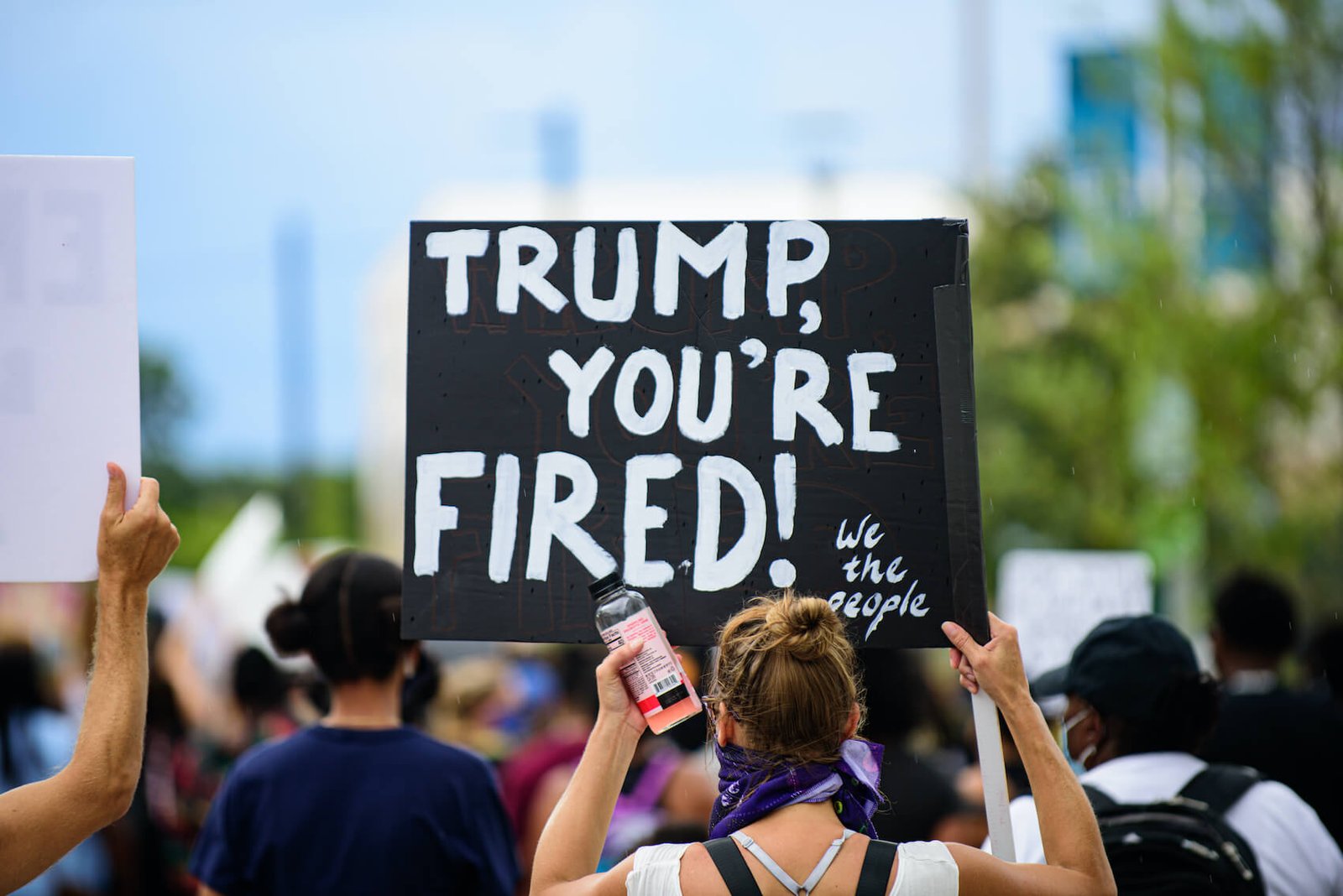
The examples of Brexit and Trump I gave above are crucial in describing the practical developments of the phenomena of social resentment. The Leavers have directed their discontent toward the European Union, convinced by politicians that the problem was external to Great Britain (as with the issue of migrants). Trump, for his part, has incited with his tweets to protest against the alleged electoral fraud, thus channeling the discontent that snaked online toward the center of American power par excellence, in a plastic and material representation of the contrast between the people and the elite.
After all, Nietzsche was clear about it: every sufferer looks for the cause of his affliction, convinced that there must be someone responsible for his suffering. The problem is not the pain itself but the origin of the pain. If you suffer, then someone must be the cause. In On the Genealogy of Morality, the ascetic priest cares for and ministers to the sick flock. Similarly, today, the politician must heal the resentment of citizens. As Nietzsche (1994: 93) wrote, “the priest is the direction-changer of ressentiment.” Today the populist leader does the same, directing the resentment of the “pure people” against “the corrupt elite.”
Taggart, Paul. (2004). “Populism and representative politics in contemporary Europe.” Journal of Political Ideologies. 9(3): 269–288
Tonello, F. & Morini, M. (2016). “Alternanze di governo e grandi coalizioni nell’Unione europea. 2008–2015.” In: Urbinati, N. (edited by). Democrazie in transizione. Milan, Feltrinelli
While debates on the effects of the post-9/11 counterterrorism measures (CTMs) on civil society organizations (CSOs) exist, there is a paucity of data on how CTMs are shaping the spaces and actors of CSOs in Nigeria. During this ECPS seminar, Dr Emeka Thaddues Njoku discusses CSOs’ perceptions on the effects of counterterrorism measures, the countermeasures that CSOs are taking, and the government’s views on security threats posed by CSOs with Saskia Brechenmacher.
“When populists included [others] it was under the condition of surrendering to the leader conceived as the embodiment of the will and aspirations of the people. Populist inclusion, therefore, needs to be differentiated from democratization as a long-lasting process based on the expansion of rights, the respect for pluralism, the right to dissent, and freedoms of expression and association. Populists did not create institutions and practices based on respect for civil rights. Those who did not accept the wisdom of the leader were branded as enemies, dissent became treason, and populist polarization transformed political rivals into enemies that need to be contained,” says Professor Carlos de la Torre.
Professor Carlos de la Torre, who is director of Center for Latin American Studies at the University of Florida, believes populism is here to stay. Prof. De La Torre, whose new book Global Populisms will be published soon, argues that the task of citizens, students, and scholars is to understand populism’s complexities without demonizing it. He underlines that we need to understand why these parties mobilize citizens: “Populists rightly criticize the deficits of participation and representation of real existing democracies. Populists often point to problems and issues that other politicians overlook.” Yet he warns about the solutions populists present: “If populists are right in some of their criticism on the malfunctioning of democracy, their solutions are problematic.”
The following are excerpts from the interview.
Do the policy makers and intellectuals in the North have anything to learn from the experiences of Latin America? Can you please elaborate?
The surge of populism studies in English has unfortunately relegated the Global South to a few marginal footnotes. Most scholars compare Europe and the US, and do not pay attention to the rich bibliography on populism written about Latin America and other regions of the Global South and published in English. For instance, most introductory volumes do not even mention the pioneering work of Gino Germani on populism and fascism. Even when scholars compare the North and the Global South, the categories that they use are derived from European experiences that are posed as the universal norm.
For instance, Cas Mudde’s concept of populism that was developed to explain right-wing extremist parties located on the fringes of the political system is used as the matrix that supposedly allows comparisons between the West and the rest. Yet his categories do not travel well to explain cases worldwide. As an example, Mudde does not consider that the leader is central to his definition of populism. His assertion makes sense if the object of his study is small extremist right-wing European political parties. But in other regions, populism revolves around powerful leaders. In Europe, successful populist mass-based parties like the National Rally, Syriza, or Podemos are leader-centric.
The bibliography on the Global South might give answers to what to expect from populists in power, and how to better resist them. After all, in Latin America, populists got to power before [they did] in Europe and the US.
Populism is based on interactions between two antagonistic camps. Populist attempt to be the centre of the social order and the media tends to obsessively focus on the leader allowing him or her to dominate the news cycle. When the opposition felt that all democratic channels were closed, they called the military to solve civilian problems. These irresponsible and undemocratic acts play into the hands of the populist that presents herself as a victim and the avatar of democracy. Not all populists will have the same effects on democratic institutions.
People as Ethnic, Political, or Social Constructions
How do you compare and contrast Latin American populism with European populism? Do we find more similarities or more differences when it comes to these forms of populism?
To distinguish types of populism, it is important to analyse how they define “the people” and its enemies. The people could be constructed with ethnic or political criteria, and as a plural population or as a unitary actor. Ethnic constructs could be exclusionary, as when the enemies of the people are minority populations such as Muslims and non-whites in Europe and the US. “The people” as constructed by Donald Trump for example faces ethnic and religious enemies such as Mexicans and Muslims. He launched his presidential candidacy from Trump Tower in New York City asserting, “When Mexico sends its people, they’re not sending their best…They’re bringing drugs. They’re bringing crime. They’re rapists. And some I assume, are good people.” He expanded his racist platform by calling Muslims terrorists and promising to monitor Muslims within the US and banning those who want to enter this country.
Differently from Trump’s racist view of the people as white and its enemies as cultural, religious, and ethnic “others” fundamentally different and dangerous to the true white-Christian, and heterosexual people, Evo Morales and his political party, the Movimiento al Socialismo (MAS – Movement Toward Socialism), successfully used inclusive ethno-populist appeals. Given the fluidity of race and ethnic relations in Bolivia, they were able to create an inclusionary ethnic party grounded in indigenous organizations and social movements. The MAS and Morales were successful because they also incorporated non-indigenous organizations and candidates. The term indigenous was politicized to include all Bolivians who defended national sovereignty and natural resources from neoliberal elites. It was an embracive category that signified a claim to post-colonial justice, and for a broader political project of nationalism, self-determination, and democratization. Morales’ enemies were the neoliberal political and economic elites that served the interests of multinational corporations, supranational institutions like the IMF, and US imperialism.
Left-wing populists tend to construct the people with political and socioeconomic criteria as those excluded by neoliberal elites. Hugo Chávez framed the political arena so that he did not face political rivals, but instead an oligarchy that he defined as the political enemy of the people, “those self-serving elites who work against the homeland.” Left-wing populist parties in Southern Europe like Syriza and Podemos similarly construct the category of the people as the majorities in their nations who are excluded by neoliberal policies imposed by supranational organizations like the IMF or the Troika.
Democrats imagine the people as a plurality of actors with different views and proposals. By constructing the people as plural, democrats face rivals that have legitimate institutional and normative spaces. Populists like Donald Trump or Hugo Chávez on the contrary claim that they and only they represent the “true people.” Chávez boasted, “This is not about Hugo Chávez; this is about a ‘people.’ I represent, plainly, the voice and the heart of millions.” On another occasion he commanded, “I demand absolute loyalty to me. I am not an individual; I am the people.” Even though Chávez’s political and socioeconomic construction of the people was inclusionary, his view of the people-as-one was anti-pluralist, and in the end, antidemocratic because he attempted to become its only voice.
When ethnic or religious views of the people are combined with constructs of “the people” as one, populism becomes exclusionary and antidemocratic. Under these conditions, populism can be a threat to the basic values of modernity such as a pluralistic, critical, and inclusive civil society. Because ethnic and religious enemies are seen as a threat to the purity and morality of the true and rightful people, they might need to be confined or expelled. Therefore, ethnic constructions of the people in the most extreme cases could lead to ethnic cleansing. Political and socioeconomic constructions of “the people” can lead to inclusionary policies. Yet when “the people” is viewed as one, as Chávez did, his populism was inclusionary and antidemocratic because he assumed that the part of the people that he embodied was the only authentic group.
Light Populism versus Full-blown Populism
Populist not only differ on how they construct the people and on the right and left axis: light and full-blown populism should be differentiated. By light populism, I refer to political parties and politicians that occasionally use populist tropes and discourses, but that do not aim to rupture existing institutions. Under this criterion, Bernie Sanders, who did not break with the Democratic Party creating a third party in 2016 or 2020, is a light populist. Full-blown populists aim to rupture existing institutions by polarizing society and the polity into two camps of enemies and constructing a leader as the symbol of all the demands for change and renewal. Light populists are almost indistinguishable from other politicians in contemporary democracies that appeal to trust in their personas and use the mass media to bypass traditional parties. Full-blown populists often use democratic institutional mechanisms and mass mobilization to try to bring change. When seeking power, full-blown populists appeal to constituencies that the elites despise or ignore. They use discourses and performances to shock and disturb the limits of the permissible and to confront conventions.
Despite their different constructs of who is “the people” and dissimilar politicizations of grievances and emotions, populists do similar things when in power. Populists aim to rupture exclusionary institutional systems to give power back to the people. They face enemies, not democratic rivals. They appeal to reason and emotion to reduce the complexities of politics to the struggle between two antagonistic camps. Regardless of its potential inclusionary promise, the pars pro totodynamic of populism is inherently autocratic because a part of the population claims to be its whole and pretends to rule in the name of all. A leader is constructed as the true voice and the only representative of the “real people.” Some populist leaders are represented as the saviours of their people. Other leaders become avatars of patriotism and claim to know how to make things right for their people.
What can we learn from Latin American populism to explain its relationship with democracy worldwide?
Populism forces scholars to define what they mean by democracy not only as an analytical term, but also as a normative ideal. Whereas critics argue that it is a danger to democracy, populists claim to embody democratic ideals. Whereas some argue that populism is an anomaly of malfunctioning institutions, for others it is a permanent possibility in democratic politics. Three approaches about the relationship between populism and democracy can be differentiated: populism is democratizing; populism leads to autocracy; and populism is a sui-generis combination of inclusion and autocracy.
i) Populism Is Democratizing
For scholars that understand democracy as policies that mitigate structural inequalities, the record of populism for democratization is positive. The sociologist Carlos Vilas argues that from the 1930s to the 1960s, populism in Latin America led to its fundamental democratization. During the first two terms of Juan Perón [Argentina] from 1946 to 1955, the percentage of voters surged from 18 percent of the population in 1946 to 50 percent in 1955, and women voted for the first time in the 1952 elections. The share of wages in the National Gross Domestic Product increased from 37 percent in 1946 to 47 percent in 1955. Similarly, Thaksin Shinawatra in Thailand (2001-2006) materially improved [the lives of] the poor by creating health programs, giving debt relief to rural cultivators, and introducing a loan system for low-income university students. Poverty fell and he led the political involvement of the informal sector, the rural poor, urban middle classes, and the northern small business and landowners.
Populist material, political, and cultural inclusion was not accompanied by the respect for pluralism and dissent. Perón for example expropriated critical newspapers. His government created a chain of radio stations and newspapers and produced movies and other propaganda materials. Perón dominated the labour movement by displacing and jailing communist, socialist, and anarchist leaders, and by promoting cronies to the leadership of the powerful national labour confederation CGT.
When populists included it was under the condition of surrendering to the leader conceived of as the embodiment of the will and aspirations of the people. Populist inclusion, therefore, needs to be differentiated from democratization as a long-lasting process based on the expansion of rights, the respect for pluralism, the right to dissent, and freedoms of expression, and association. Populists did not create institutions and practices based on respect for civil rights. Those who did not accept the wisdom of the leader were branded as enemies, dissent became treason, and populist polarization transformed political rivals into enemies that need to be contained.
Despite the historical record of populist power being at best ambiguous for democracy, Ernesto Laclau and Chantal Mouffe view left-wing populism as a normatively desirable democratizing alternative to stopping the xenophobic and racist populist right. Populism, Laclau argues, entails the renaissance of politics. It is a revolt against technocratic reasoning, the surrendering of national sovereignty to supranational institutions, and of the popular will to neoliberal political elites. With the global rise of neoliberalism, understood as a rational and scientific mode of governance, public debate on the political economy was closed and replaced by the imposition of the criteria of experts. When all parties accepted neoliberalism and the rule of technocrats, politics was reduced to an administrative enterprise. Contrary to social democrats that embraced neoliberalism, the populist right used nationalist and xenophobic arguments to challenge globalization and the surrendering of national sovereignty. To stop right-wing variants, the left must construct popular democratic subjects.
Laclau’s normative defence of populism is problematic because he relies on Carl Schmitt’s view of the political as the struggle between friend and enemy. Under these constructs, it is difficult to imagine democratic adversaries who have legitimate institutional spaces. Enemies, as in Schmitt’s view, might need to be manufactured and contained. Moreover, the historical record of left populists in power in Latin America does not support views of populism as democratizing tout court. The leftist governments of Hugo Chávez, Evo Morales, Ernesto and Cristina Kichner, and Rafael Correawere inclusionary. When the prices of commodities were high, for example, they reduced poverty. Yet their governments entered into war against the media, attempted to control civil society, and attacked freedoms of expression, association, and the inviolability of the individual.
ii) Populism Leads to Autocracy
A second group of scholars argue that populism in power leads to authoritarianism. Kurt Weyland differentiates two routes by which populists erode democracy. The first is that when populists close all democratic institutional channels to the opposition, they provoke the most reactionary sectors to plot military coups. From the 1930s to the 1970s, the history of Latin America oscillated between populists in power being ousted by military coups.
After the third wave of democratization, when the international community accepted elections as the only tool to name and remove presidents, coups became too costly. Nowadays, populism, Weyland argues, is leading to slow processes of democratic erosion. The systematic yet incremental confrontations between populist presidents with the media and with critical organizations of civil society, the instrumental use of laws to punish critics and to favour cronies, and the concentration of power in the presidency leads to what Guillermo O’Donnell conceptualizes as the slow death of democracy—or to competitive authoritarian regimes.
iii) Populism Is a Sui-generis Combination of Inclusion and Autocracy
For a third group of scholars, populism in democratizing contexts and when citizens were not incorporated into political parties is a unique mix of inclusion and autocracy. Populism in Latin America was simultaneously inclusionary and anti-pluralist. Populists’ democratic credentials were grounded in the premise that legitimacy lies in winning free elections. In the 1930s and 1940s, Juan Perón in Argentina and José María Velasco Ibarra in Ecuador fought against electoral fraud and expanded the franchise. In the early years of the twenty-first century, Hugo Chávez, Evo Morales, and Rafael Correa used elections to displace traditional neoliberal elites and to build new hegemonic blocks. Yet elections under populism are plebiscitarian, and rivals are turned into enemies. Populist inclusion is based on the condition of surrendering one’s will to the leader who claims to be the embodiment of the people and the nation.
If global populist trends continue, what sort of a world will we be inhabiting in 20-30 years?
I don’t know. But what we learned after Trump was voted out of office in 2020, and his attempts to stay in power at all costs, is that populism is here to stay. Our task as citizens, students, and scholars is to understand its complexities without demonizing it. We have to comprehend why these parties mobilize citizens without using stereotypes that label followers as irrational.
Populists rightly criticize the deficits of participation and representation of real existing democracies. Populists often point to problems and issues that other politicians overlook. They, for instance, politicize anger at socioeconomic and political exclusions. If populists are right in some of their criticism on the malfunctions of democracy, their solutions are problematic. Populism can lead to processes of democratic disfigurement when the complexities of modern society are reduced to the struggle between two antagonistic camps, and when one part of the population claims to represent the population as a whole. Under these conditions, opponents do not have institutional or normative spaces to articulate dissent, becoming the hideous oligarchy or the anti-national other. The populist critique needs to be taken seriously, yet we have to interrogate whether their solutions will actually return power to the people or will lead to what Nadia Urbinati calls “the disfigurement of democracy.”
***
Who is Carlos de la Torre?
Carlos de la Torre is Director of the UF Center for Latin American Studies. He has a Ph.D. from the New School for Social Research. He was a fellow at the Simon Guggenheim Foundation, and the Woodrow Wilson Center for Scholars. His areas of interest are populism, democratization, and authoritarianism, as well as racism and citizenship in the Americas.
His most recent books are The Routledge Handbook of Global Populism (Routlege, 2019); Populisms a Quick Immersion(Tibidabo Editions, 2019); De Velasco a Correa: Insurreciones, populismo y elecciones en Ecuador (Universidad Andina Simón Bolívar, 2015); The Promise and Perils of Populism (The University Press of Kentucky, 2015); Latin American Populism of the Twenty-First Century, co-edited with Cynthia Arnson, (The Johns Hopkins University Press and the Woodrow Wilson Center Press, 2013); and Populist Seduction in Latin America (Ohio University Press, second edition 2010).
Sener, Omer & Demir, Mustafa. (2021). “From Populism to Racism: The Chinese American Trickster Tradition from Sun Wu Kong to Wittman Ah Sing.” ECPS Working Papers. European Center for Populism Studies (ECPS) July 1, 2021. https://doi.org/10.55271/wp0002
Abstract
This article discusses the Chinese American trickster tradition focusing specifically on archetypes and several key themes, such as racism, populism, and essentialism. We argue that the figure of the Monkey King is central to Chinese American literature, particularly in Chinese American women’s writing, and the concepts of populism and racism are made relevant through the cultural appropriation of this folk figure in the writings of Chinese American authors. Furthermore, the article discusses tricksterism in relation to politics and cultural production, particularly the Monkey King. In this regard, the article makes an original contribution to the literature on tricksterism and cultural populism by analyzing the Chinese American trickster tradition from these fresh perspectives.
There is a thriving Chinese American trickster tradition with distinctive characteristics peculiar to Chinese American literature, specifically Chinese American women’s writing. Producing some of the earliest examples of Chinese American women’s writing, the Eaton sisters—Edith Eaton (also known as Sui Sin Far) and Winnifred Eaton—used trickster techniques in their writings, although they did not create a trickster tradition based on one protagonist, like Sun Wu Kong. On the other hand, Maxine Hong Kingston, Amy Tan, and Gish Jen, all established Chinese American authors, have developed a Chinese American trickster tradition with trickster characters. The primary source and inspiration for these characters is the Chinese trickster tradition with hints of the African American Signifying Monkey (Gish Jen’s Mona in the Promised Land comes to mind). It is fair to say that Kingston’s trickster character Wittman Ah Sing became the basis of the Chinese American variety, while Tan and Jen further shaped this evolving tradition with new tricksters, such as Mona, Lanlan, and Kwan Li.
When we talk about the Chinese American trickster tradition, the monkey as an archetype emerges as a prominent motif. This can take the form of an actual monkey-like character in the narrative, or like the Signifying Monkey, through narrative elements and language use. However, the use of the monkey trickster as an archetype is ever-changing and open to new interpretations, as each author brings something new to the table, with new characters as well as new trickster narratives and traits. Writing about the dynamic nature of myths and tricksters, Estella Lauter holds that “myths are part of the dynamic of history instead of being one of its reservoirs”—as such, myths are not “records of a completed process” (1984: 3). set Never set in stone, tricksters as archetypes adapt, change, and transform as time goes on through new narratives and via cultural adaptation. Thus, they are dynamic and fluid rather than static.
Kingston, Tan, and Jen have all contributed to the development of a Chinese American trickster tradition which, as mentioned, draws extensively on the Chinese trickster tradition. However, it is distinguished from the classic approach by its distinctive trickster types and styles, its own arguments, and a “communal signification” (Vizenor, 1993: 187). It is therefore focused on the concerns of the Chinese American community and its ethnic heritage.
The main aims of the Chinese American trickster tradition can be summarized as follows: Re-establishing bonds with one’s ethnic community, reclaiming one’s heritage, and reinterpreting the same ethnic heritage and traditions. “Ethnic” here signifies the broadest range of cultural and racial elements, concerns, and issues. As such, while gender plays an important role, the connecting tissue of the Chinese American trickster tradition is ethnic belonging as well as inter-ethnic relations and tensions.
Maxine Hong Kingston bases her trickster character—Wittman Ah Sing, an assertive and popular trickster—on the Monkey King. The Sing (星) in Wittman’s name means “star” in Cantonese). Kingston’s primary concerns in writing The Woman Warrior, published in 1989, were gender inequality, patriarchy, and oppression. However, her central theme and driving point in creating Wittman Ah Sing and writing Tripmaster Monkey, published some years late, was to create a popular Chinese American trickster who is concerned for the wellbeing of his community and fights racial stereotypes of the Chinese.
Shades of Populism in Culture
According to Jagers and Walgrave, populism is a type of discursive practice and is essentially a form of rhetoric (Jagers & Walgrave, 2007). For others, populism is a well-devised strategy (Barr, 2009) formulated with the intention of transforming the existing system of governance or taking over the state apparatus. For others still, it is essentially a political style or performance (Moffit, 2016).
Although there are many different approaches to populism—focusing variously on ideology, strategy, style, or discourse (Mudde 2004; Bar 2009; Moffit 2017)—there is a scholarly consensus that it is a social plague creating antagonistic us versus “the enemy” other binaries. Furthermore, populist figures see such divisions as an opportunity and try to capitalize on them by further dwelling on the sociological faultiness to portray themselves as the savior of the “real people” of the country from the exploitation of the enemy “Other.” Thus, exaggerating divisions and threats, the populist aims to deconstruct society’s social fabric in a way that defines the interests of “the people” (i.e., the populist’s followers) versus those opposed (“the Other”). Therefore, “notwithstanding its competing definitions, leaving its ontological nature to the discussion in the extant literature, … populism is about constructions (construction, de-construction, and re-construction) of ‘the people(s),’ and mobilization in an antagonistic fashion by the populists. This is because construction of ‘the people’ is ‘the main task of populists’.” (Yilmaz et al. 2021: 3).
Populist divisions and binaries are created at different levels or in different dimensions such as “vertical” and “horizontal” (Taguieff, 1995: 32–35) or in civilizational terms (Brubaker, 2017). Concerning this civilizational aspect of populism, Taggart (2000) explains how populists construct “heartlands” and appeal to the people, stirring a feeling of nostalgia in them. Thus, populists invite the people—“the rightful owners” of the native land to reconstruct and live in these “heartlands.” In the construction of these heartlands, the primary reference is to history. However, more than history, it is the culture that keeps those emotions alive in mind and practice. Therefore, we argue that it is culture that allows for the conversion of certain periods of history into emotional spaces— namely, “heartlands” that people yearn to reconstruct and live. In this regard, we can view certain aspects of the trickster, as in the example of the Monkey King, appropriated for the purposes of patriotism, nationalism, and populism, as the tools of culture used to carve out history for “heartlands.”
Populism in Literature
Populism as a concept is more discussed in the realm of politics than culture. However, culture and populism are related concepts that need to be scrutinized in relation to one another. Hence, the merging of the two concepts as “cultural populism” is understood to mean “primary cultural production” or “aesthetic populism” also denotes the “study of popular cultural texts” (McGuigan, 1992: 2). As such, cultural populism can be understood as the infusion of “popular cultural elements” into “‘serious’ works of art” (McGuigan, 1992: 3). Thus, at the intersection of populism and culture, we see that populism lacks the default negative connotation it has vis-à-vis politics. Rather, at least in one of its meanings, it is understood simply as the popularization of art and cultural production among the masses.
On the other hand, populism, in its negative connotation, is also present in the cultural domain. Hence, cultural populism is criticized for trivializing art or cheapening the quality of entertainment (TV films versus cinema, popular bestsellers versus literary books). This kind of populism does not mobilize the masses; rather, it affects the consumers in ways more subtle, which are criticized (creating less complex, watered-down versions of literary characters or stories, with the assumption that the masses cannot comprehend more complex forms of storytelling or art).
Finally, concerning cultural populism and mass media, the criticism that populism creates “lowbrow” (cf “highbrow”) culture is worthy of discussion and analysis (Mudde & Kaltwasser, 2017: 108). As can be observed in our paper, the difficulties involved in popularizing classical literature (in the form of the Chinese classic Journey to the West) and creating popular forms of culture in the form of animation films and TV cartoons while appropriating the themes as characters to popular political leaders (as in the case of Mao Zedong), are all the more apparent here, and worth discussing in relation to populism and tricksterism.
Wittman Ah Sing
This article attempts to identify and analyze the different trickster types in the Chinese American tradition. Each of thesehas specific functions and attributes (ranging from countertypes to mediators), in line with specific themes (such as populism, essentialism, and racism). Hynes and Doty have previously categorized tricksters and identified their attributes, such as trickster as “shape-shifter,” “deceiver/trick player,” and trickster as “situation-inverter” (1997: 34). We argue that such categories are necessary to comprehend the functions of tricksters in the Chinese American trickster tradition.
There are different dimensions of the trickster created by Kingston. In Tripmaster Monkey: His Fake Book, Kingston creates a new trickster archetype with Wittman Ah Sing. On the second level, she creates a “trickster countertype” in the person of Wittman, countering the culture and dominant worldviews that produce stereotypes of Chinese Americans. Wittman Ah Sing set an example in Chinese American literature as a new archetype by being the first fully-fledged trickster protagonist written by a Chinese American author. The concept of archetype was initially used to mean a “symbolic figure” in tribal lore (Jung, 2003: 4).
According to Jung, while it can be “disseminated … by tradition, language, migration,” an archetype can also “rearise spontaneously” with no apparent influence from outside factors, and at any given time or location (Jung, 2003: 13). Joseph Henderson also talks about “trickster archetypes,” but unlike Jung, whose definition is based on parapsychology, he bases his definition on the study of tricksters in oral literature. Henderson gives the example of the Coyote in the Native American oral tradition as a trickster archetype ([1967] 2005: 28). Henderson holds that a “trickster archetype” can assist people in “mediat[ing] between the powers of good and evil” (2005: 28).
So, a trickster archetype is not an archetypal figure with a purely evil or purely good presence but is marked as a go-between with the abilities of “creative experimentalism” (Henderson, 2005: 28). In parallel to these definitions, by “trickster archetype,” we mean a model that sets precedence in creating trickster characters in a literary tradition. A trickster archetype contains the basic attributes of all other tricksters within the same trickster tradition, as it represents the trickster tradition as a whole.
On the other hand, tricksters that follow the archetypal example take a specific attribute of that archetype and embellish it, developing in this way new types. In this sense, Wittman Ah Sing is the trickster archetype of Chinese American women writers’ fiction (and Chinese American literature in general) and was followed by other trickster characters with different traits.
Referring to her study of myths in the work of women artists and poets of the twentieth century, Lauter explains her stance regarding the uncovering of myths and archetypes. She remarks that “[t]hese women have not discovered truths that are outside history; they have simply responded to the imperatives of their own history in ways that may disclose the imperatives of ours” (Lauter, 1984: x). Thus, while these writers write and rewrite traditional trickster figures, and in some cases, create a new trickster archetype, they also write to respond to their own past and present in a dynamic understanding of meaning production through tricksters.
Wittman Ah Sing parallels other trickster archetypes, such as the trickster archetype of the Coyote, but especially the Monkey King of classical Chinese literature. In line with Henderson’s description of a trickster archetype, Wittman’s actions and character are ambiguous. His transgressive and disruptive behavior can be considered harmful, but his intentions and the results of his actions can be considered positive and constructive. Like other trickster archetypes from various traditions, Wittman Ah Sing also stands out with his creativity, experimenting with new trickster strategies, and becoming the prime example of the trickster in Chinese American literature.
With this said, let us now look at the attributes of tricksters in the Chinese American tradition and the general discourses and themes that they are associated with in Chinese American women’s fiction.
The Chinese character, Chinese Monkey God Sun Wu Kong in the novel Journey to the West. Photo: Bundit Yuwannasiri.
The “Awkward Dinner Guest:” Populism and the Chinese Trickster
One of the themes and discourses that is relevant to Chinese American tricksters is populism. We argue that one of the trickster archetypes is the trickster in the guise of an “awkward dinner guest,” who—after getting himself drunk—challenges the hosts by asking difficult and bizarre questions. Nevertheless, such questions can lay bare underlying problems, however discourteous it may be of the guest to raise them (Moffitt, 2010). In fact, according to Moffitt, the “awkward dinner guest” is the very personification of populism in relation to liberal democracy (2010).
In this trickster guise, the awkward dinner guest can be a positive force, laying bare the shortcomings of the system and challenging the status quo. However, the guest can also be a hindrance in a democratic context. The functioning of democracy is undermined if the guest challenges democratic practices. However, the trickster can also be a force for good if it can “identify otherwise overlooked political problems” and become the voice of minorities and “marginalised groups” (Gidron & Bonikowski, 2013). In this sense, Wittman Ah Sing is the perfect example of a popular and populist trickster who becomes the voice of marginalized Chinese Americans. The discursive challenge to populism is highlighted in Wittman’s tricksterism through the example of Wittman’s unsuccessful efforts to find work at an employment office. Here, unemployment as a recurring issue in American society is laid bare and implicitly critiqued via the narrative.
Furthermore, in line with the Monkey King archetype, Wittman Ah Sing creates chaos, disrupts authority, and challenges stereotypes about Chinese people created by the majority culture (Kingston, 1998: 78–79). Similarly, Wittman’s final aim is to create his own one-man show through which he plans to share his populist discourse about tackling stereotypes. Through the show, he aims to unite the Chinese community, echoing in a way the discursive goals of a populist “leader of the people.”
However, it is more noteworthy that the very archetype of Chinese tricksterism, Sun Wu Kong, on which Wittman Ah Sing was based, was also utilized as a banner holder of populist political discourse. Thus, in the context of this trickster archetype, the trickster is not only the awkward dinner guest but a cultural hero of populism itself. Therefore, it should come as no surprise that the archetypal Chinese cultural hero and trickster, Sun Wu Kong, was used by the Chinese Communist Party as a symbol of communism, appropriating the figure of the trickster to fit the party’s populist discourse. It is no coincidence that a cartoon version of Sun Wu Kong, the Chinese trickster, was shown on Chinese national television for decades.
What is more, books and films were published in China where Sun Wu Kong was identified with none other than Mao Zedong through political undertones and allusions. In Havoc in Heaven, a Chinese animation film from 1965, the Monkey King challenges the authority of the Jade Emperor in line with the Journey to the West narrative. The difference here is that, unlike the classic novel, the animation has a “political backdrop” that became apparent to viewers and film critics in China, who noticed the political undertones with its revolutionary themes (Harvard Press, 2014).[1] In light of the film, Mao was “compared … to the mischievous Monkey King,” and Heaven, where the Jade Emperor resided, was compared to the Chinese bourgeoisie, which Mao was fighting against.
Thus, Monkey King became a populist trickster who challenged the despotic ruler in the form of the Jade Emperor. This strife between Monkey King and the Jade Emperor was appropriated to fit the populist discourse of China’s communist government. However, even before the new political and populist signifiers attached to Monkey King, it can be said that the original Chinese trickster archetype had populism as a central theme, as he went on to challenge all the gods stuck in their old ways, as a way of challenging authority and mobilizing the masses, in the form of his monkey followers (Harvard Press, 2014).
The Trickster Countertype
A countertype is created in the face of a stereotype about a certain group or ethnicity. Thus, countertypes are positive portrayals that show how wrong the stereotypes are concerning the targeted group, as they demonstrate the positive traits of that group or show the opposite of the stereotype. In this way, a countertype operates as a “positive stereotype” (Nachbar & Lause, 1992: 238).
Two important cultural examples that showcase countertypes about African Americans are The Cosby Show and the American film Shaft. Nachbar argues that The Cosby Show presented an African American family with none of the stereotypes associated with African Americans, while Shaft presented the viewers with an African American private detective protagonist who was assertive, courageous, and clever (Nachbar & Lause, 1992: 238). However, The Cosby Show’s presentation of Black people can be criticized. The countertypes in the show do not represent the conditions of the majority of African Americans. Rather, the show presents a middle-class version that ignores the poor living conditions and economic inequalities true for many Black people in American society even today.
Similarly, Shaft’s creation of a countertype for Blacks is not entirely benign, as the film lauds gangster culture and presents Black men as dangerous and prone to violence. These examples presented as countertypes were, in fact, criticized for showcasing a selective and sometimes misleading and harmful version of the ethnic group they were thought to represent. Another criticism against countertypes in general is that they fail to meaningfully change or transform the stereotypes they confront. Countertypes on their own are not politically effective in overcoming stereotypical depictions. The main criticism of countertypes is that despite their utilization in media and literature, the stereotypes associated with ethnic groups persist in other domains of popular culture and popular imagery.
The trickster countertype functions similarly to the cultural countertype, with a few significant differences. While the countertype directly aims to replace existing stereotypes, the trickster countertype does not necessarily aim to take the place of a stereotype. Rather, a trickster countertype, such as found in Jen’s Mona in the Promised Land, functions to challenge and dispel the essentialism, inequalities, and cultural reductionism that create stereotypes. Another significant difference of the trickster countertype is its ability to utilize some of the traits of the stereotypes about a particular ethnic group to mock and disrupt the dominant discourses that made these stereotypes possible.
Rather than countering stereotypes headlong, the trickster countertypes often point at the problems and inequalities. The trickster countertype does this effectively by utilizing the trickster’s characteristics of transgression and transformation. The trickster countertype depends largely on the existing trickster narratives, and ethnic-minority writers such as Gish Jen create trickster countertypes as protagonists.
Jen transforms Sun Wu Kong into a trickster countertype in her novel. While in Tripmaster Monkey, Kingston creates a Chinese American trickster archetype and countertype in the person of Wittman Ah Sing, in Mona in the Promised Land,it is Mona who follows in the footsteps of the trickster archetype, disrupts inequalities, racism, and essentialism in the American society, while at the same time providing a utopian alternative with her trickster powers.
The Trickster Mediator
Tricksters have always been noted for their role as mediators between the known world and the supernatural world and as interpreters of the gods, as they communicate with the unseen world and channel their knowledge to the world of humans.
When discussing aspects of tricksters from Afro-Caribbean folklore, Gates emphasizes the role of Afro-Caribbean tricksters as mediators (1989: 6). Esu, a trickster in the Yoruba oral tradition and other African cultures, is mainly known for his function as the “messenger of the gods,” as he makes sense of the messages of the gods, and brings those messages to men, and carries the wishes of men to the gods in turn (Gates, 1989: 6). Given the tricksters’ ability to cross boundaries, they can also take on the role of a messenger between the world of the gods and the mortal world (Stookey, 2004: 129). Hermes, a mythical figure from Greek mythology who is characterized as the messenger of gods, also performs the role of the trickster: as a trickster, he is not bound by any restrictions and can also communicate “lies and deceits” (Stookey, 2004: 130). As a trickster, Esu is, like Hermes, a “shifty mediator” whose mediation can be disruptive and full of tricks (Hyde, 2008: 125).
For Gates, the tricksters’ tricks are themselves his “mediation” (1989: 6). Although most tricksters have some attributes of mediation, not all tricksters are messengers of the gods and communicators of gods’ wishes to humanity. The trickster as mediator is a specific type whose relationship with the supernatural is his primary attribute and specialty. Like the two classic trickster mediators, Hermes from Greek mythology, and Legba from African folklore, all trickster mediators are scarcely “rule-governed;” therefore, they can both make sense of the gods’ messages and leverage them for their trickster ends (Stookey, 2004: 130). Another attribute of the trickster mediator is his role in making sure that human beings offer sacrifices to the gods; otherwise, he brings them suffering and afflictions (Hyde, 2008: 125).
Like the trickster mediators Hermes, Legba and Esu, the Monkey King has also mediated between deities and mortals. The Monkey King is constantly in touch with the supernatural world, always summoning spirits, gods, and demons, either to his aid or to question them for a wrongdoing. Like the trickster mediator, he can also be mischievous in his communication and tricks humans and deities into believing in him, twisting and distorting facts for his benefit.
When the Monkey King visits the Underworld, he communicates with Yama, the King of the Dead, and then erases his records from the archive of the dead to become immortal. When he is appointed to a position to take care of the horses in the palace of the Jade Emperor, he ditches work to trick the gods and eats the pills of immortality. As part of his penance for wrongdoing in a past life, Monkey King is also punished for his trickery in his mediation with the gods: he promises Kwan Yin, the goddess of Mercy, that he will join a Buddhist monk on his journey to India and abide by his rules. But after a while, he relapses into his old violent ways, fighting and killing many of those who cross his and the monk’s path on the journey to India. Because of his mischief, Kwan Yin metes out another punishment, forcing the Monkey King to wear a magical iron helmet that causes him severe headaches whenever he descends into mischief.
As a trickster mediator, Kwan Li in The Hundred Secret Senses also communicates with the supernatural world, which she calls the World of Yin. In line with her attributes, she is also a trickster mediator, as she has a close affinity with the Monkey King trickster of the Chinese tradition. While Kwan follows the patterns of a trickster mediator, she is a reinvention of the Monkey King character, emphasizing his attributes of mediation. Like traditional trickster mediators such as Hermes and Esu, Kwan Li interprets the messages she receives from spirits residing in the World of Yin and conveys them to her sister Olivia and anyone who comes to her to seek help from the World of Yin.
Unlike traditional tricksters, Kwan Li has an altruistic nature, always wanting to help her sister Olivia and her friends. However, it is striking to observe that as a trickster mediator, Kwan Li is also not a stranger to the idea of sacrifice. While traditional trickster mediators like Esu request that humanity makes sacrifices to the gods, Kwan Li gives up her own lifeto save a precious friend from death.
The Trickster Disruptor
One of the key characteristics of tricksters in various oral traditions is disruption. The trickster’s attribute of disruption creates chaos, unsettling the balance and breaking the “order of things” (Wiget, 1994: 95). The Monkey King often disrupts the schemes of the authorities to achieve his aim of immortal life. He tricks the Jade Emperor, the ruler of the universe, and disrupts the Heavenly Peach Banquet, wreaking havoc there after realizing that the authorities have not invited him. Following the example of the Monkey King, Wittman Ah Sing also creates chaos, disrupting parties and challenging accepted stereotypes about Chinese people (Kingston, 1998: 78–79).
The trickster disruptor is different from Wittman Ah Sing and the traditional Chinese trickster Monkey King in one important aspect: The Monkey King and Wittman break the order of things with a particular aim and with positive results in the end. While the Monkey King destroys opponents and the many bandits who cross his path on the way to India, his ultimate aim is to safely take delivery of and bring the Buddhist scriptures back to China for the good of the community. Similarly, despite Wittman’s transgressive behavior, his particular aim is to found his own one-man show and, through his show, bring together his disparate community.
The trickster disruptor breaks the balance and makes life difficult for others, creating disorder and chaos without any particular aim, acting as a negative force. Even if the results of her actions may have some relatively positive outcomes, this is not deliberate and conscious, as the trickster disruptor disturbs the balance without such goals. However, despite the trickster disruptor’s primary role as a troublemaker, she shares one significant trait with the trickster mediator—namely, the source of inspiration. This source is the Chinese oral tradition, through which proverbs, stories, sayings of Chinese scholars are incorporated into the trickster discourse. Despite this positive aspect, the trickster disruptor’s role is often not welcomed by society. Finally, like the trickster mediator, the trickster disruptor also feels she belongs nowhere. Since she leads a liminal life, even if she may feel some connection to particular individuals and places, she is not ultimately bound to any one place or person.
Monkey King esport and sport mascot logo design. By FNR Graphics.
Trickster Techniques in Kingston, Tan, and Jen’s Work
In this final part of the article, we would like to look at some of the trickster techniques that refer to a specific use of language, characters, and style in a given text, which gives the text its trickster qualities, which in return has ideological functions and implications for the writer and readers. According to Gerald Vizenor, the “trickster is a liberator and healer in a narrative, a comic sign, communal signification and a discourse with imagination” (1993: 187). By identifying the trickster both as a sign and a discourse, Vizenor emphasizes that the trickster does not necessarily always appear in a given text but can also manifest itself as a discourse and style.
A trickster language and style are not necessarily only apparent in texts with trickster figures, given that the trickster can also manifest itself as a “language game in a comic narrative” (Vizenor, 1993: 187). Henry Louis Gates Jr. emphasizes the trickster’s use of formal language, particularly in the context of the Afro–American trickster figure of the “Signifying Monkey” (Gates, 1989: xxi). The Signifying Monkey becomes relevant in analyzing the narrative style and language of the trickster, given that it is more a rhetorical device or a “rhetorical principle” than an actual figure (Gates, 1989: 44), and it has significant functions in the production of meaning alongside the trickster’s actions in the text. The Signifying Monkey, as the “‘ironic reversal’ of the insulting stereotype of the Black as monkey-like, uses language to break away with stereotypes, using different language tropes such as puns, metaphors, repetition, irony, and hyperbole, all of which constitute his trickster ability of ‘Signifying’” (Gates, 1989: 52).
The most important aspects of a trickster tradition in the context of Chinese American literature in general and Chinese American women writers’ fiction, in particular, are their stance against essentialism and stereotypes and their close-knit connections with different forms of storytelling. The trickster technique of Kingston, Tan, and Jen foregrounds storytelling as a significant part of the construction of identity and community. By telling their stories from multiple perspectives, the tricksters in Kingston, Tan, and Jen’s novels create narratives that do not have one central “authorial” perspective that dominates their trickster novels. Their challenging essentialist constructions of Chinese identity is another significant and definitive aspect of the Chinese American monkey trickster tradition. This technique is apparent in Kingston’s characterization of Wittman Ah Sing, who invokes the trickster Monkey King. He also culturally dismantles reductionist depictions of the Chinese through his trickster ability of transgression. Kingston’s trickster strategy, which challenges essentialist discourses about Chinese Americans, is shared with Jen, who also challenges Chinese stereotypes in the trickster character of Mona.
A significant technique in the Chinese American monkey trickster tradition is building a trickster identity that is fluid and subject to change. It has been noted by critics such as Hynes that essentialist conceptions of identity are rigid, static, limited, and limiting and that the trickster figure provides a significant challenge to this static view of identity, intersecting with the postmodern conception of identity. Hynes remarks, pointing to the divergent character of the trickster, that “the logic of order and convergence, … is challenged by another path, the random and divergent trail taken by that profane metaplayer, the trickster” (1997: 216).
Another trickster technique utilized by the authors is the use of laughter and parody to dismantle dominant ideologies and hegemonic constructions. The novel is “a fundamental liberation of cultural-semantic and emotional intentions from the hegemony of a single and unitary language” (Bakhtin, 1998: 366). According to Bakhtin, “the rogue, the clown and the fool” represent the negative side of the Rabelaisian novel (1998: 406), as symbols of what Bakhtin calls “Rabelaisian laughter” and as figures that clearly have trickster qualities. In Bakhtin’s view, Rabelaisian laughter signifies a quality in the novel that operates to bring out “the crude, unmediated connections between things that people otherwise seek to keep separate” and to “destroy … traditional connections and abolish … idealized strata” (1998: 170). On the other hand, for Bakhtin, the positive side in Rabelais’ conception of the novel form relies “upon folklore and antiquity” (1998: 169–170). Thus, Kingston, Jen, and Tan use laughter and criticism to expose ethnic stereotypes and essentialist constructions of ethnic identity on the one hand while maintaining their connection to their cultural narratives and myths through trickster strategies and figures in their novels on the other.
Another central aspect of a trickster technique in the fiction of Chinese American women writers is “liminal cultural position,” characterized by the transgression of existing boundaries, whether they are cultural, ethnic, or ideological boundaries. Liminality as a concept was first coined and discussed in the context of anthropology as a phase in the rites of passage of tribal peoples. Arnold Van Gennep, who coined the term “rites of passage,” uses the term “liminal” while discussing initiation and transition rites of tribal societies (1960: 11, 21, 53).[2]
Van Gennep also associates rites that involve passing through a door or a portal with the liminal, calling them “liminal/threshold rites” (1960: 21–22). As part of the rites of passage of a tribe, the liminal phase represented a threshold in the ritual, which was preceded by the separation of the individual from the society. The trickster’s apparent autonomy from society’s norms and restrictions is a metaphor that stems from the actual condition of the liminal phase in the rites of passage of a tribal society. As Turner observes, the person who goes through the “liminal period” in the rites of passage gains an ambiguity and enters a “cultural realm” that is unstable, and completely separate from and dissimilar to the past and coming phases of the ritual ([1965] 2008: 94–95).
At the same time, the attributes of liminality as a condition are, also, the attributes of the person who dwells in the liminal space, what Turner calls the “liminal personae” or the “threshold people” and what we call the trickster embodying a “liminal position,” echoing Smith’s argument that the trickster has a “liminal cultural position” that allows him to move beyond the confines of the world (1997: 12). Hence, the main characteristic of liminality is ambiguity and the condition of eluding any fixed definitions or classification. Therefore, “liminal entities” “are neither here nor there” and are “betwixt and between the positions assigned and arrayed by law, custom, convention and ceremonial” (Turner, 2008: 95).
Tricksters are relatively free from society’s laws and restrictions, which allows them to expose these same restrictions and create new spaces of meaning production on a textual level. Despite liminal space being confined to the homogenous and monolithic character of the tribal society, the liminality utilized in the fiction of the trickster writer functions as a bridge between different cultural influences, genders, and ethnic groups in a society while also evading monolithic definitions of culture and ethnicity, reflecting Van Gennep’s association of threshold rites with liminality (1960: 21).
Paralleling the liminal space of threshold rites, which allows the initiated individual to travel between the world of immortals and the world of gods or from the world of the dead to the world of the living (Van Gennep, 1960: 53), the trickster in the liminal space of the novel can cross ethnic boundaries and challenge existing worldviews. In this way, Wittman Ah Sing can defy Frank Chin’s claims to a belligerent and patriarchal Chinese tradition and reject being enlisted in the Vietnam War. Mona Chang of Mona in the Promised Land can go beyond ethnic boundaries and freely exchange cultural traditions with Sherman Matsumoto of Japan and Seth Mandel, a Jewish American. A “liminal position” informs and empowers the fiction of trickster writers such as Kingston, Tan, and Jen. What we call the “liminal space” of the trickster text allows for questioning ethnic stereotypes and becomes useful for women and people of color in the face of racism in a patriarchal society.
Conclusion
In this article, we have analyzed the different aspects of the trickster in Chinese American literature and attempted to provide an overview of the different trickster types and discourses found in the Chinese American trickster tradition, from populism to countertypes, with particular attention paid to the novels of Maxine Hong Kingston, Amy Tan and Gish Jen, whose writings, we argue, have had an enormous impact on the way the Chinese American trickster tradition found its unique identity within American literature.
Finally, we discussed the Chinese American trickster tradition through the lens of the techniques utilized by Chinese American authors in shaping and influencing the literary tradition in question. During our research, we have found that while Tan and Jen’s trickster characters are female, they are still based on the male trickster Monkey King, and their primary concern is to challenge ethnic stereotypes, create inter-ethnic and inter-communal harmony, and challenge racist ideologies.
To conclude, the Chinese American trickster tradition evolves with each new novel and short story that utilizes trickster techniques and characters. While each is worthy of study in its own right, we can nevertheless trace common origins in classical Chinese literature and in the figure of Sun Wu Kong.
—
(*) OMER SENER holds a Ph.D. in Cultural Studies and Literary Criticism. His research interests include tricksters,cultural populism, video games, Asian American (Japanese, Korean and Chinese) literature, comparative literature, and creative writing.
—
References
— (1996). Mona in the Promised Land. London: Granta Books.
— (2004). The Opposite of Fate. London: Harper Collins.
Kingston, M. H. ([1987] 1990). Tripmaster Monkey: His Fake Book. London: Vintage.
Tan, A. (1991). The Kitchen God’s Wife. London: Harper Collins.
Wiget, A. (1994). Dictionary of Native American Literature. New York: Garland.
Tan, A. (1995). The Hundred Secret Senses. London: Harper Collins.
Bakhtin, M. & Holquist, M. (1981, 1998). The Dialogic Imagination: Four Essays. Austin: University of Texas Press.
Barr, Robert R. (2009). “Populists, Outsiders and Anti-Establishment Politics.” Party Politics. 15(1), 29–48.
Cheung, K. (1992). Words matter. Honolulu: University of Hawai’i Press in association with UCLA Asian American Studies Center, Los Angeles.
Gates, H. L. Jr. (1989). The Signifying Monkey: A Theory of African American Literary Criticism. Oxford: Oxford University Press.
Henderson, J. L. ([1967] 2005). Thresholds of Initiation. Illinois: Chiron Publications.
Hynes, W. & Doty, W. (1997). Mythical Trickster Figures. Tuscaloosa: University of Alabama Press.
Hyde, L. ([1998] 2008). Trickster Makes This World: Mischief, Myth, and Art.Edinburgh: Cannongate Books.
Jagers, J., & Walgrave, S. (2007). “Populism as political communication style: An empirical study of political parties’ discourse in Belgium.” European Journal of Political Research. Vol. 46 (3), pp. 319–345.
Jen, G. ([1991] 1992). Typical American. London: Plume.
Jung, C. ([1953] 2003). Four Archetypes: Mother, Rebirth, Spirit, Trickster. Oxon: Routledge.
Kingston, M. H. (1976). The Woman Warrior: Memoirs of a Girlhood among Ghosts. London: Knopf.
Skenazy, P. & Martin, T. (1998). Conversations with Maxine Hong Kingston. Jackson: University Press of Mississippi.
Lauter, E. (1984). Women as Mythmakers: Poetry and Visual Art by Twentieth-century Women. Bloomington: Indiana University Press.
McGuigan, J. (1992). Cultural Populism. Routledge: London and New York.
Moffit, Benjamin. (2017). “Transnational Populism? Representative Claims, Media and The Difficulty of Constructing A Transnational ‘People’.” Javnost: The Public. 24(4), 409–425. DOI: https://doi.org/10.1080/13183222.2017.1330086
Mudde, C. & Rovira Kaltwasser C. (2017). Populism: A Very Short Introduction. Oxford: Oxford University Press.
Nachbar, J. & Lause, K. (1992). Popular Culture. Bowling Green: University Popular Press.
Stookey, L. L. (2005). Thematic Guide to World Mythology. Westport, SC: Greenwood Press
Taggart, P. 2000. Populism. Philadelphia: Open University Press.
Tan, A. (1989). The Joy Luck Club. London and Auckland: Minerva.
Turner, V. W. ([1965] 2008). The Ritual Process: Structure and Anti-structure. New Jersey: Transaction Publishers.
Van Gennep, A. (1960). The Rites of Passage. Chicago: University of Chicago Press.
Vizenor, G. R. ([1989] 1993). Narrative Chance: Postmodern Discourse on Native American Indian Literatures. Norman: University of Oklahoma Press.
Wiget, A. (1990). “His Life in His Tail: The Native American Trickster and the Literature of Possibility.” Redefining American Literary History. New York: Modern Language Association of America.
[1] The title of the article in question, “Havoc in Mao’s Heaven,” is a reference to the animated film, Havoc in Heaven, and could also be a reference to a quote attributed to Mao Zedong: “There is great chaos under Heaven; the situation is excellent” (“天下大乱,形势大好”). Understood to refer to the Cultural Revolution, as a way of creating order through chaos, the attribution of the quote to Mao is nevertheless questionable.
[2] We use “liminal space” to denote the complete narrative space of a trickster text that accomodates the trickster, while using “liminal position” to denote the liminal attributes of the trickster in literature. Thus the trickster has relative freedom in the liminal space of trickster fiction, which allows him or her to cross the “limen” of societal restrictions and hierarchies.
Professor Ruth Ben-Ghiat: “The most successful of authoritarian rulers are the ones who know how to play on that ‘we.’ And they make themselves personally the embodiment of the nation of that ‘we.’ Often they say, if you attack me, you’re attacking the whole nation. In Erdogan’s case, anyone who is against his government is a terrorist. Erdogan is a typical authoritarian personality with all of his insult suits… 21st century authoritarians use the law and lawsuits to financially and psychologically exhaust people… Authoritarians want people to be so resigned and hopeless and feeling that it’s their destiny to be in political situations without agency and rights that they give up…”
Ruth Ben-Ghiat, a professor of history and Italian studies at New York University and a commentator on fascism, authoritarian leaders and propaganda and the threats they pose to democracies, said that any society can be susceptible to an authoritarian strongman figure if it’s the right time. “It’s very important to see the warning signs in the beginning and stop these people in their tracks,” she warned.
Giving an interview to Sweden-based Stockholm Center for Freedom (SCF), Prof. Ben-Ghiat talked about her latest book, “Strongmen: Mussolini to the Present,” the rising authoritarianism around the world, the link between masculinity and authoritarianism and how to stop the “strongmen.”Stating that the most successful of authoritarian rulers are the ones who know how to play on that “we” Ben-Ghiat said that “they make themselves personally the embodiment of the nation of that ‘we.’ Often they say, if you attack me, you’re attacking the whole nation. In (Recep Tayyip) Erdogan’s case, anyone who is against his government is a terrorist. Erdogan is a typical authoritarian personality with all of his insult suits… 21st century authoritarians use the law and lawsuits to financially and psychologically exhaust people…Authoritarians want people to be so resigned and hopeless and feeling that it’s their destiny to be in political situations without agency and rights that they give up…”
The following is the excerpts from the interview.
In the book you begin by describing how there is a strong link between masculinity and authoritarianism. What are some aspects of masculinity that make an authoritarian leader and draw the support of people?
There are many types of masculinity in the world, but the strongman is an authoritarian leader who not only damages or destroys democracy but uses this kind of toxic, arrogant masculinity as a tool of rule. So some of them, like Mussolini and Putin, will use their bodies, they strip their shirts off, and so they let their bodies become kind of emblems of national strength. And they also use threats. Their strength is also threatening. This is a kind of masculinity that’s about domination, possession of others, and it connects to a worldview where these leaders have a proprietary conception of power and the state so that they seize businesses, as Erdgan does in Turkey and Putin in Russia. So this is a kind of masculinity, and the reason I use arrogance is that there is nothing that shouldn’t be theirs.
Ultimately, Authoritarian Governments Are Very Destructive and Unstable
Do you think in some societies people are more drawn to a father figure, a savior, than in other societies?
One of the ways these leaders find popular appeal is that they correspond to ancient archetypes of male figures, such as the protector or the father figure and also the savior. One common theme is that they all say they are going to save the nation. Only they have unique qualities, and this is where their charisma can come in or their personality cult. Only they can save the nation. On the one hand, they project themselves forward in time, where they say, “I’m going to make things great in the future.” They often pose as modernizers where they’re building highways and airports. But they also channel nostalgia, where they say, so it’s not “Make the nation great again,” as Donald Trump would say, it’s not “Make the nation great,” it’s “Make it great again.” So the nostalgia for a world that used to be better, for a lost empire, is very important. Mussolini had the Roman Empire, Erdogan has his fantasy of reviving the Ottoman Empire. … They attract people by playing into fantasies of grandeur and power.
One of the things my research taught me is that any society can be susceptible to this strongman figure if it’s the right time. The right time is sometimes after a defeat … or a time where there has been a lot of social change that includes gender emancipation or racial equity, and white males in the European and American context often feel threatened.
In the book you mention that most strongmen have anger issues. Could you elaborate on that?
Historically people have seen authoritarians as crazy, starting with Hitler. People said he was a ranting fool and crazy. I was astounded doing my research at how similar the personalities of authoritarian leaders were. They each have their own quirks and not exactly the same, but they all have paranoia, narcissism, they all are very aggressive, and they like to humiliate others. This leads to certain styles of governance that are very dysfunctional and full of turmoil. So they create inner sanctums around themselves with family members — like Erdogan — because they’re corrupt and need people to keep their secrets. But everybody else is humiliated and fired and re-hired. So their governments are not stable at all. Their personalities are impulsive and they think they are God sometimes and that they’re infallible. They make snap decisions which are not good for policy making. Ultimately, their governments are very destructive and unstable, even though the myth of authoritarians is that these are take-charge men who will bring peace and stability.
Their personalities are full of turmoil, but dismissing them as crazy is shortsighted because they’re opportunists who are extremely skilled at managing people. They know how to connect with people. Erdogan cries a lot and shows a lot of emotion. Not only are they highly aggressive, they have got this politics of emotion that makes people feel included. So all of this does not add up to somebody who’s crazy. It adds up to somebody who’s very skilled and very savvy, actually.
Authoritarian States Need Intellectual Legitimacy
Viktor Orban, Hungary’s prime minister arrives for a meeting with European Union leaders in Brussels, Belgium on Dec. 13, 2019. Photo: Alexandros Michailidis.
When the political situation in Turkey turned for the worse, one of the first groups to be targeted were academics who were critical of the government. What is the fixation with academia and academics for authoritarians and populists?
Authoritarian states need intellectual legitimacy because they are thug states, mafia states. Violence is their everyday behavior. On the one hand they need intellectuals to write their propaganda, to be their spokespeople, to do nationalist research. They need intellectuals to rewrite the schoolbooks to support their nationalist historiography. On the other hand strongmen disappear people, but they also disappear fields of knowledge that conflict with their goals. While they promote certain things, they also ban other things and threaten people to not work on those topics.
In Hungary Orbán banned gender studies overnight. That was a prelude to his anti-trans policies. So sometimes universities are the first place where the recasting of knowledge and propaganda shows itself. … In authoritarian regimes academics become political people, the government sees them as political people, and then sometimes they become enemies of the state. Erdogan has jailed and detained so many academics, and he is threatened by certain kinds of research.
At a broader level, authoritarians are always threatened by fact-based knowledge. The facts are their enemy. Propaganda means that you have to create an alternate reality that your believers will follow, and research based on science and scientific method becomes the enemy.
What about international support? Did the EU support the stability of Erdogan’s regime for the sake of the migration deal?
Erdogan is a good example of benefitting, that the EU has not been standing up for democracy. They shouldn’t be funding Erdogan, who has locked so many people up and is so corrupt. So what is the EU standing up for? There are groups of foreign enablers because authoritarians, in all areas of their policies, depend on foreign capital and goodwill. Erdogan is just the latest who is doing all these infrastructure improvements with foreign money and foreign debt. If financial institutions were guided more by morality, they could easily retract these foreign lending practices and make them dependent on democratic actions.
These are leaders who care only about money and power, so the West not only does not use its power to change the behavior of autocrats, they help them. The same could be said for international financial institutions and law firms that help autocrats store their money in offshore tax havens.
The anti-globalism of authoritarians is fake because they are the biggest globalists of all. They are dependent on international infrastructure coming from democracies and also foreign autocracies to keep in power. A few years ago Erdogan had five different American PR firms working for him to support his interests in Washington. He and Trump were quite close.
What do you think Western democracies could have done differently to prevent what is happening in Turkey today?
It is very important to see the warning signs at the beginning and stop these people in their tracks at the start and let them know that the EU is not going to fund them anymore or make treaties for migration, and really flex the muscle of democracy and open society and use that. These are men who see any weakness or gentility towards themselves as weakness. They’re always testing the boundaries. … Violations of international law are a test, so the first time there’s a violation, we need to strike very hard. All of these guys in power now have been there for a long time, so it’s too late to retrain them, but we don’t do what we could do. These men only listen to force, and if the EU and democracies don’t show that, then we’re not going to get results.
Authoritarians Like to Believe They Have Divine Guidance
Turkish President Recep Tayyip Erdogan. Photo: Siarhei Liudkevich.
Can we say that authoritarianism is in part the result of democracy failing to fulfil its promises?
To some extent, absolutely. Authoritarians have managed to make people feel included and give them a sense of community. They have been better at that with rallies and chants which may seem superficial but are part of a political culture. Liberal democracy has never been as skilled at that. Authoritarian leaders are able to make an emotional connection. Liberal democracy has been about reason and not raw emotion. This goes back to the figure of the leader who cries in public like Erdogan and who has this charisma that’s constructed.
Once they’re in power, there are huge resources devoted to their personality cults. But people connect with them, and one of the reasons I want to concentrate on leaders is because they are so important for the success of these dynamics. For example, on the personality cult it’s fascinating that the rules of personality cults actually haven’t changed for a hundred years, even though today we have social media and back then there were news reels. So the leader needs to be an everyman who can connect with anyone. At the same time they have to be superman, they have to be men above all other men. They need to be someone who’s all powerful and can get away with things. They like to believe they have divine guidance. It’s the same all over the world and says something about human psychology that we seem to need this in our leaders.
In recent years gender-based violence has increased and even become more visible in Turkey. Would it be right to assume that there is a correlation between rising authoritarianism and the vulnerability of women?
Women have been the targets of authoritarians as much as lawyers, judges, journalists and the critical opposition. They have traditionally been an enemy, even in situations where the state ideology preaches equality, like in communism, you know, Joseph Stalin took away abortion rights. Most authoritarians have ambitions to re-found the family. And this is where the father figure comes in. Authoritarians fear demographic change, so women become pawns and tools of larger social demographic political schemes. If authoritarians are expansionists like the former fascists, then women have to produce babies. Women’s bodies and rights become legislated.
When you have a leader who models through his person disrespect for women or even hatred for women and a kind of violent aggressive personality, then this is reflected throughout society, and it’s often backed up with policies. It’s a little-known fact that Trump, who is a serial sexual assaulter who became president, partly decriminalized domestic violence in the US in 2018. Physical violence was still domestic violence, but all other kinds of abuse — emotional, psychological — were no longer considered domestic violence so women couldn’t get help from the authorities. This leaves them more vulnerable.
Gaddafi was a real revolutionary in the beginning and believed in women’s rights. He hugely bettered the legal status and the employment status of women in Libyan society. Women had the right to work and own their own property. But he fostered a culture of sexual assault and violence as his hold over the country strengthened.
Accountability Is Key
Do you think it is possible to recover from an authoritarian period? After countries are ruled by authoritarianism, is it possible for them to return to liberal democracy, or will they always have some sort of political instability?
If you don’t hold people accountable and you don’t have a mechanism for testimonials to come out for people, like in the former East Germany, when they made public the Stasi files and people could go and see their own file on themselves. This was very empowering to people and created for many decades a lot of stability in Germany. But Germany versus Italy is an interesting case because Italy did not go through an aggressive de-fascism. So the fascists went underground, but it was not rooted out. It was not made to be as taboo in the culture as in Germany. After Franco in Spain you were not allowed to talk about it, so there was democracy but no accountability. There’s always a lot of fear around revenge, retribution, vendetta, and so sometimes in transitional eras sometimes even the people who are on the side of the victims can be afraid to let the energies of the victimized find the full expression. Accountability is key.
What do you think of the use of the “us” and “them” dichotomy? Such as the use of anti-Semitic, anti-migrant and anti-West narratives.
Authoritarians create a community of the included through excluding others. All the community building rituals like rallies, are built on the active exclusion of some so that others feel included. There can be various enemies who are demonized. Sometimes these are Jews, other times these are illegal immigrants, or George Soros, who kind of is everything. He’s a very convenient symbol of many things. But this is the essential dynamic that appeals to very primitive and powerful feelings in people, to feel one with a community and to feel superior. Nazism and fascism because it was so racially oriented made a woman who was deemed an Aryan superior to a man who was not Aryan. So when people ask why women so often support these leaders, it’s because they have status if they are in the included community over men.
In the US, for example, a white woman who loves Trump felt superior to a non-white man. So it plays with gender hierarchies and is a very powerful thing. The most successful of these rulers are the ones who know how to play on that “we.” And they make themselves personally the embodiment of the nation of that “we.” Often they say, if you attack me, you’re attacking the whole nation. In Erdogan’s case, anyone who is against his government is a terrorist. Erdogan is a typical authoritarian personality with all of his insult suits. That is very interesting to me as a clue to this very insecure and prideful personality who gets pleasure out of humiliating and ruining others. 21st century authoritarians use the law and lawsuits to financially and psychologically exhaust people. They make it too tiring so you can’t survive and you’re harassed. So you self-censor, and that’s their ultimate goal.
Authoritarians Need to Be Shamed and Outed
Autocrats like Erdogan and Orban who use pseudo democratic institutions are not necessarily less repressive than their institution-free counterparts. Armenian people protested Erdogan in New York City on October 10, 2020. Sign reads “Erdogan is Hitler, Stop Genocide”.
In Turkey people like to say geography is one’s fate. Is authoritarianism a “fate” for some countries?
I find this fatalistic. Authoritarians want people to be so resigned and hopeless and feeling that it’s their destiny to be in political situations without agency and rights that they give up. … In fact the suffering of the past can make people much more determined to have freedom. The opposite being a place like the United States, which has never had a national dictatorship or foreign occupation, and so people did not see the warning signs of what Trump represented. … They don’t have the history at all and can be complacent, and this is also a problem.
What can we do to safeguard our democracies? Especially, people who are still living in free democratic countries, what can they do for its continuity and also to protect those in vulnerable and dangerous situations?
I think going back to pressuring the EU, pressuring financial and legal institutions and all the enablers of authoritarianism. We don’t have enough journalism articles devoted to them. They need to be shamed and outed, and that is one thing that would have a practical effect, making these authoritarians pariahs, so that US law firms and PR firms won’t take their cases on, so that Erdogan won’t have five different companies to convey his propaganda to US politicians.
The kind of work the SCF does in defense of human rights is important because a lot of that means publicizing the stories of the victims. This is why I included a lot of unpleasant material in the book because today we have the far-right all over the world who openly say, for example, “Pinochet did nothing wrong.” This erases the history of what he did do, so that’s why although it’s not nice to write about the torture, it’s very important. So in real time when Erdogan is beating up people and they come out of prison and they have the marks of what they have suffered, it’s important to show that because this is the kind of evidence they try to cover up.
Who is Ruth Ben-Ghiat?
Ruth Ben-Ghiat is Professor of History and Italian Studies at New York University and an Advisor to Protect Democracy. She writes frequently for CNN and other media outlets on threats to democracy around the world. As author or editor of six books, she brings historical perspective to her analyses of current events. Her insight into the authoritarian playbook has made her an expert source for television, radio, podcasts, and online events around the globe. She is also a historical consultant for film and television productions.
Ben-Ghiat’s work has been supported by Fulbright, Guggenheim, and other fellowships. Her books Fascist Modernities and Italian Fascism’s Empire Cinemadetail what happens to societies when authoritarian governments take hold, and explore the appeal of strongmen to collaborators and followers. Growing up in Pacific Palisades, California, where many intellectuals who fled Nazism resettled, sparked her interest in the subject. Her latest book, the #1 Amazon bestseller Strongmen: From Mussolini to the Present(Norton, 2020), examines how illiberal leaders use corruption, violence, propaganda, and machismo to stay in power, and how resistance to them has unfolded over a century. She also publishes Lucid, a newsletter about abuses of power and how to counter them.
Erdogan and Khan’s use of Islamist populism lays bare a highly pragmatic approach to addressing Muslim issues, rather than one motivated by Islamic social justice or humanitarianism. Their stances are designed to evoke emotions and justify their existence as populists while expanding their transnational populist appeal among other Muslim-majority nations. Yet their treatment of the “Muslim Other” within their own countries and silence over the Uighur genocide in China earn them the title of pragmatic Islamist leaders.
Following in the footsteps of Turkey’s authoritarian (Islamist) populist leader Recep Tayyip Erdogan, Imran Khan has emerged as among the most prominent faces of religious populism in the (Sunni) Muslim-majority world. “There is so much debate about moderate and radical Islam, but there is only one Islam,” declared Imran Khan in 2019. This echoed the tone adopted several years earlier (in 2017) by Erdogan, who asserted “there is no moderate or immoderate Islam. Islam is Islam, and that’s it.” The idea of “one Islam” or “Islam is Islam” is part of a populist process of “Islamizing Islam.” This comes in the wake of the leadership gap that opened up with the withdrawal of Saudi Arabia as the Sunni Muslim hegemon. Thus, in neo-Ottoman fashion, Turkey seeks to fill this gap, with Pakistan acting as its aide to address its “ontological insecurities” (Yilmaz, 2021). In highlighting Islam in this way, both Erdogan and Khan define “the people” or “the pious” against an antagonistic “Other,” which includes the West, non-Muslims, liberals, and usually non-Sunni groups (Gursoy, 2019; Yilmaz, 2018; Mudde, 2017; Moffit, 2016; White, 2013).
Other than their political instrumentalization, the sheer size of these two countries’ populations makes this phenomenon a concern worth exploring. Turkey’s population is 82 million, while Pakistan’s is even greater at 217 million people. Moreover, over the last decade, both Erdogan and Khan have increasingly instrumentalized religion to galvanize electoral support and gain diplomatic sway with (Sunni) Muslim-majority countries under this populist framework.
While Turkey and Pakistan are two very culturally and ethnically different societies, they share a long historical political affiliation that dates back well into the late medieval period. South Asia was ruled by the Mamluk (slave) rulers of the Delhi Sultanate, who were ethnically Turkic (Eaton, 2019). After the Ottomans achieved the status of the Muslim Caliphate, all leaders in South Asia —from emperors to princely state rajas —sought royal endorsement from Constantinople, which usually came in the form of an adorned robe from the Caliph himself (Eaton, 2019; Avari, 2016). This political link built a healthy network of trade between the regions that also led to the exchange of soldiers, resources, literature, art, and other labor that infused the Ottoman Turkish elements in the Mughal court and smaller sultanates in united India (Eaton, 2019; Avari, 2016). Despite being over 3,000 kilometers away, the profound connection between the two regions was felt when the Khilafat Movement in British India, initially led by both Muslims and Hindus, tried to oppose the Treaty of Sèvres to preserve the Ottoman caliphate (Niemeijer, 1972). This centuries-old pan-Islamic connection is now undergoing an Islamist populist transformation that seeks to redefine Islam under Turkish and Pakistani leadership.
We argue that this “reengineering” is, in fact, a pragmatic political maneuver of both leaders to consolidate their power within their respective countries and overseas. It is a convenient tool that is used when needed and shelved when it is politically expedient. Thus, both leaders have used (or expediently avoided) Islamist populist rhetoric, policy, and programmatic interventions depending on the context and the audience.
Once the definitional boundaries are constructed, anti-Western and liberal rhetoric is put into place to create a “crises” situation in which Muslims are presented as being under attack from “moral” degradation or simply victims of Western imperialism and Islamophobia. This “crisis” is portrayed as a transnational issue when it extends to Muslim victimhood, especially on the issue of Islamophobia. Both leaders have highlighted their concern over discrimination, killings, and terrorist attacks targeting Muslims in Western countries and the plight of Muslims in conflicts that target them, such as the Gaza conflict, the Kashmirdispute, and Rohingya ethnic cleansing.
Pakistani Prime Minister Imran Khan. Photo: Awais Khan.
In addition to creating a sense of moral panic, both these Islamist populists have blamed “outside forces” or “dark forces” for supposedly carrying out attacks on the respective countries to undermine and destabilize them. This extends “the Muslim victimhood narrative” (Yilmaz, 2021) further and accentuates the economic and security failures of “hypocrites” within and “enemies” outside as well.
When the Shia Hazara community in Pakistan was targeted as part of sectarian terrorism, the blame for orchestrating the attacks was shifted to India, which was accused of seeking to undermine Pakistan’s stability. While visiting the victims’ family, Khan said, “no doubt what happened was part of a bigger game” and showed his determination to bridge the Sunni-Shia gap. He continued, “my mission is not only to unite the whole country but the entire Muslim ummah. To end this divide, we have tried to remove differences between Saudi Arabia and Iran.” In a similar manner, President Erdogan has also warned the Turkish nation of the “the sneaky plans of the dark forces” who are blamed for a wide variety of issues such as the devaluation of the currency, organizing anti-AKP protests, the 2016 failed coup attempt, and the like (Yilmaz & Erturk, 2021; Yilmaz, 2018; Yilmaz & Bashirov, 2018).
With crises both tangible and intangible in place, Khan and Erdogan have not shied away from presenting themselves as the “strongmen” that their nations and the ummah need. In an unapologetic manner, both have justified various undemocratic measures as necessary to confront the extraordinary challenges facing the nation. Khan reminded the nation to vote for him because “visionary leaders do not make popular decisions; they make the right decisions” — his way of justifying his anti-Western stance along with anti-corruption policies. Erdogan has also felt the need to remind the citizens that “every country needs a strong leader in order to progress.”
On various occasions, both leaders have called for cooperation among the ummah to counter Islamophobia and other pressing issues. In 2020, Erdogancalled on the Muslim world to undertake joint action to defend the interests of the ummah: “As Muslims, we should exchange our views more frequently […] many areas of our geography of fraternity are subject to blood, tears and instability […] We will never harm our brothers […] those, who become troubled with the rise of Islam, attack our religion.” on multiple occasions since his 2018 electoral victory, Khan has advocated for Muslim brotherhood in international forums. In an open letter to leaders of Muslim-majority countries in late 2020, he expressed his concerns and urged Muslim leaders to “act collectively to counter growing Islamophobia in non-Muslim states.”
To put words into action, both leaders have taken specific measures at home and overseas to mobilize “the pious ummah.” Given Turkey’s better governance structures and institutional capacity and nearly two decades of AKP rule, the country has taken more concrete measures. Specifically, a network of state organizations, such as the “Directorate of Religious Affairs (Diyanet) and its European extension DITIB, the Turkish Cooperation and Coordination Agency (TIKA), and humanitarian NGOs with close ties to AKP officials” Erdogan has been able to transmit this narrative of Islamist populism among the Turkish diaspora and other Muslim communities. In a sense, the Turkish state has created through these organizations a support network endorsed by disenfranchised Muslim communities in the West while university exchange programs, mosque sermons, knowledge-production, and media (both entertainment and news) have highlighted Islamophobia and discussed anti-Western and anti-imperialism.
While Khan has not funded programs of such scale, he has used his speeches at the Organisation of Islamic Cooperation (OIC), the World Economic Forum (WEF), and the United Nations (UN) to address the Pakistani diaspora in America and other Muslim communities. For example, during COVID-19, when Khan visited Sri Lanka, he helped local Muslims by negotiating with the government to ensure they would receive ground burials (as is the Islamic tradition) rather than being cremated like the rest of the Sri Lankan population. For this, he was hailed a hero by the Sri Lankan Muslim community. At the same time, Khan has imported Turkish entertainment media to Pakistan with shows such as Dirilis: Ertugrul (Resurrection: Ertugrul), Kurulus: Osman (Establishment: Osman), Payitaht: Abdulhamid (The Last Emperor), and Yunus Emre: Aşkın Yolculuğu (Yunus Emre: The Journey of Love) which have neo-Ottoman and anti-Western themes and subtexts and call for unification of the ummah.
Their Call For Action Not Based On Human Rights
Cooperation also extends beyond these soft power links to the realm of hard power, with distinctive jihadist undertones. The Azerbaijan-Armenia conflict over Nagorno-Karabakh is a prime example. Not only did neighboring Turkey lend support to “fellow Muslim” Azerbaijan but also Pakistan. Moreover, the American withdrawal from Afghanistan has also seen these two partners within the ummah take a leading role in negotiations with the Taliban and the Afghan government. “Efforts” like this taken on behalf of the Muslim ummah are no doubt why Erdogan and Khan are consistently found to be among the most influential Muslim leaders in the world in various rankings.
Despite the global recognition among many Muslim circles worldwide, the use of Islamist populism by both Khan and Erdogan is selective, making it pragmatic. Two distinct features of both populist governments show that the call for action is not based on human rights; rather, it is a convenient instrumentalization of religion for political gain.
Firstly, Turkey and Pakistan both have ethnic and sectarian rifts. Under the AKP leadership, since the fallout of the Kurdish opening, not only has the pro-Kurdish Peoples’ Democratic Party (HDP) been vilified as a terrorist group but the AKP’s political opposition has faced increasing harassment and charges of aiding and abetting “terrorism” (Yilmaz, 2018; Yilmaz & Bashirov, 2018; Yilmaz et al., 2020; Yilmaz et al., 2021). Another community, the Alevis, has also been increasingly targeted on sectarian lines. Even though most Kurds and Alevis are Muslims, these minorities in a Sunni-majority country are often persecuted on ethnic and sectarian lines.
In Pakistan as well, the sectarian rifts between Shias and Sunnis are deepening, and other than condemning targeted attacks on Shia minorities in Pakistan, the PTI government has done little to uproot the anti-Shia sentiments of variousclerics in the country. Moreover, ethnic tensions between the state and the Pashtun and Baloch communities have seen little effort at conflict resolution. Instead, the state chooses to ignore the rifts and at times sanctions police- or military-led action against Pashtun or Baloch rights activities (Yousaf, 2019).
It is clear that both Pakistan and Turkey have constructed a particular ideology that casts the ummah as majority Sunni and favors the major ethnic group in power. Thus, despite their repeated call for “social justice” and “equity” for victimized Muslims abroad, they have been persecuting Muslims within their own borders.
Secondly, both leaders have been highly selective in their cherry-picking of “Muslim causes.” Thus, they often speak about the conflict in Palestine, the Rohingya genocide, and the Indian government’s restrictions in Kashmir while avoiding discussion of the Uighurs (or Uyghurs), a Muslim population in China, who are subjected to genocide by the Chinese government. Given the deep investment and strategic ties between China, Turkey, and Pakistan, both leaders have chosen to remain silent about this “Muslim” issue. When confronted about this selective silence, the PTI government and Imran Khan have called the issue “an internal matter” and a “non-issue” or simply dismissed it and called China “a great friend of Pakistan.”
Turkish President Recep Tayyip Erdogan. Photo: Siarhei Liudkevich.
Ankara has also maintained a similarly muted approach towards the issue by preventing the opposition from bringing the issue up and ignoring international efforts to impose sanctions or even condemn the Chinese suppression of the Uighurs (Erdemir & Kowalski, 2020; Shams, 2020). The Uighur majority of Xinjiang is connected with Pakistan through the territories of Azad Kashmir and Gilgit–Baltistan (formerly known as the Northern Areas). In addition, Turkey shares a cultural bond with the Uighurs through their common Turkic roots. Yet, both leaders continue their silence over the issue. While Erdogan and Khan have both condemned France, America, and other Western and non-Muslim countries for discriminating against Muslims or attacking them, this deafening silence by these two “most influential” leaders of the ummah reveals their selective approach and use of populist Islamism.
Erdogan’s and Khan’s use of Islamist populism lays bare a highly pragmatic approach to addressing Muslim issues, rather than one motivated by Islamic social justice or humanitarianism. Their stances are designed to evoke emotions and justify their existence as populists while expanding their transnational populist appeal among other Muslim-majority nations. Yet their treatment of “the Muslim Other” within their countries and silence over the Uighur genocide earns them the title of pragmatic Islamist leaders. Moreover, both Erdogan and Khan are co-opting and pursuing a pan-Islamist brotherhood for the Sunni Muslim world. This synchronized populist agenda risks further deepening political divides — not to mention sectarian and ethnic conflict — within both countries.
At the same time, by positioning themselves as the leaders of the ummah, Khan and Erdogan risk homogenizing the Muslim faith under the Sunni archetype, which would repudiate the plurality of the faith and its various schools of thought. Moreover, isolating the Uighurs in exchange for “hush money” from China is a dangerous precedent being set by Turkey and Pakistan. Moreover, it goes to show how readily economic interests trump morality even for those who traditionally claim to “stand up” for the marginalized and disadvantaged. Finally, the transnational nature of the selective Islamism of these allied populist leaders means their project will have a broader impact that transcends Turkish and Pakistani geographical borders with as yet unknown consequences.
References
Avari, B. (2016). Islamic Civilization in South Asia: A History of Muslim Power and Presence. New York: Routledge.
Eaton, M. Richard. (1992). India in the Persianate Age 1000-1765. Allen Lane: Penguin History.
Gürsoy, Yaprak. (2019). “Moving Beyond European and Latin American Typologies: The Peculiarities of AKP’s Populism in Turkey.” Journal of Contemporary Asia.
Moffitt, Benjamin. (2016). The Global Rise of Populism: Performance, Political Style, and Representation. Stanford: Stanford University Press.
Mudde, Cas. (2017). “The Populist Zeitgeist.” Government and Opposition. 39(4), 2004, 541– 563.
Niemeijer, A. (1972). The Khilafat Movement in India 1919-1924. The Hague: Brill.
White, Jenny. (2013). Muslim Nationalism and the New Turks. Princeton and Oxford: Princeton University Press.
Yilmaz, Ihsan. (2021). Creating the desired citizens: State, Islam and ideology in Turkey. Cambridge University Press.
Yilmaz, Ihsan & Morieson, Nicholas. (2021). “A Systematic Literature Review of Populism, Religion and Emotions.” Religions. 12 272. https://doi.org/10.3390/rel12040272
Yilmaz, Ihsan and Erturk, Faruk. (2021). “Populism, violence and authoritarian stability: necropolitics in Turkey.” Third World Quarterly. 10.1080/01436597.2021.1896965
Yilmaz, Ihsan & Bashirov, Galib. (2018). “The AKP after 15 years: emergence of Erdoganism in Turkey.” Third World Quarterly. 39(9), 1812-1830, DOI: 10.1080/01436597.2018.1447371
Yilmaz, Ihsan. (2018). “Islamic Populism and Creating Desirable Citizens in Erdogan’s New Turkey.” Mediterranean Quarterly. 29:4, 52-76.
Yilmaz, Ihsan; Caman, Mehmet Efe & Bashirov, Galib. (2020). “How an Islamist Party Managed to Legitimate Its Authoritarianisation in the Eyes of the Secularist Opposition: The Case of Turkey.” Democratization.DOI: 10.1080/13510347.2019.1679772.
Yilmaz, Ihsan; Shipoli, Erdoan & Demir, Mustafa. (2021). “Authoritarian Resilience through Securitisation: An Islamist Populist Party’s Co-optation of a Secularist Far-Right Party.” Democratization. DOI: 10.1080/13510347.2021.1891412
Yousaf, F. (2019). “Pakistan’s ‘Tribal’ Pashtuns, Their ‘Violent’ Representation, and the Pashtun Tahafuz Movement.” SAGE Open. doi:10.1177/2158244019829546
“I think the words that we use are very important. Quite a lot of studies on the Capitol [attack], on 9/11, and on July 22 [in Norway] really illustrate that. I know that people have been working on how violence in the US tends to be described; you don’t have school shooters, for example, described as terrorists, as long as they are white. If something is done by a Muslim person, the word ‘terrorism’ is far more easily used, as we can see in media studies.”
July 22, 2011 is a date Norwegians and many others around the world will not forget. Right-wing adherent Anders Behring Breivik carried out two politically motivated attacks, a bombing near the government centre in Oslo and a mass shooting of participants in a Workers Youth League (AUF) summer camp, located on a lake island northwest of the city. These two acts of violence killed 77 people and injured over 300. Professor Anne Gjelsvik’s new book, Bearbeidelser. 22.juli i ord og bilder (Adaptations: 22 July in Words and Images, Universitetsforlaget, 2020, available in Norwegian), gathers and reflects on a variety of responses to the attacks, from music and poems to portrayals in visual art, film, and theatre. In this interview with ECPS, Prof. Gjelsvik describes some of these memorial adaptations and discusses ongoing controversies around far-right ideology, cultural populism, and terrorism.
Arguing that one topic that’s really, really important to someone can lead to extremism, Professor Gjelsvik said that actual violent attacks have been fewer, so [right-wing groups] tend to do other things. “They tend to infiltrate public debate; they try, or instance, to get left-wing politicians to silence them, by threatening them online and so on. And so, it’s moved from the explicit violence, but it’s evident that there are a lot of right-wing extremists out there doing what they can do to threaten the democracy in Norway,” she said.
The following are excerpts from the interview lightly edited for clarity and length.
Can I ask you first of all to introduce yourself and say a little bit about your work and how you started working with film, violence, and political movements around the world?
Yes, my name is Anne Gjelsvik, and I am a Professor of Film Studies at the Department of Art and Media Studies at the Norwegian University of Science and Technology (NTNU) in Trondheim, Norway. I’ve done quite a lot of work on violence and issues related to violence, particularly in cinema but also in media in a broader sense. This was actually triggered by one question, in the 1990s, the question of what violence in cinema meant.
In Norway this peaked, with quite a big debate, when Quentin Tarantino’s Pulp Fiction and Oliver Stone’s Natural Born Killers came to the cinema. I became interested in film reviewing and noticed that reviewers tended to be very positive toward Tarantino’s film, whereas in relation to Stone’s film, they were much more reluctant to say that this was a good movie … The first thing I decided to do was a study of film reviewers and how they responded to violence in film, when they thought it was a problem, when they thought it was valuable in a film. Sometimes they do; for example, in relation to David Lynch’s films, they would say, “It’s art, it’s valuable.”
So, this is how my interest was triggered, that sometimes we think about [violence] as a problem, and sometimes we think about it as something that needs to be there. This led to my Ph.D., which was on popular American cinema containing violence. My research from then on has been about the relationship between film and society, I would say, and the issue of violence has been a recurring topic in different ways.
“We’re Not As United As People Thought in the Beginning”
Monument Iron Roses in Oslo dedicated to the victims of the July 22, 2011 terrorist attacks in Oslo and Utoya island, Norway.
Thank you. That helps me with a little background. So, this is the 10-year anniversary of the massacre in and around Oslo, Norway, perpetrated by a right-wing adherent. You’ve just edited a book on artistic and literary responses to the 2011 attacks. Can you talk about the different modes of responding and how effective they’ve been in helping the country to heal?
The book project is the direct result of a big research project funded by the Norwegian Research Council. It started out by looking at media responses, and it became quite evident to me that the terror attacks had been treated in many different ways throughout these ten years, or the nine years when we were working on the book. These [responses] served very different purposes, and they also have been treated very differently. That was what we wanted to find out by collaborating between fields within the humanities, from literature to art and music and theatre studies, as well as film and media studies, which is what my group is working on. And what we see is that at the beginning, Norway [focused on] memorial events or gatherings, where music was particularly important.
We saw that from the beginning, music was used as a way of comforting, an artistic means to bring people together. We also saw that writers were very early in addressing this trauma, [as] they reached out to write mostly poems and short stories that were trying to grasp what happened. Later on, we have had other art forms such as film, which have been way more controversial.
In order to bridge the whole period, I would say that in the beginning, art was seen as something that could bring all of Norway together, and process the event, whereas today it’s a bit more complicated and a bit more controversial, because there are different pulls in different directions, and it’s more evident that we’re not as united as people thought in the beginning. It’s very notable in Norway … that we would have what we call rose parades, in the first week after the attacks, where people came together, bringing roses, marching in the streets, and then gathering with music being performed. Nowadays, people would say, “What about all those people who didn’t show up for those events?”
That’s a good question, always the question of who’s excluded, or who chooses not to participate. Can you discuss the more controversial memorials and other responses to the massacre? There’s a “Memory Wound” project that I think has been suspended, if that’s correct – an environmental intervention, and then some theatrical portrayals of the perpetrator that have also been controversial.
I would say that these are two instances where the art, or artistic treatments of the terror attacks, becomes controversial. One issue is art that is in the public square … a memorial, or artwork that you can’t choose to ignore, because it’s in your working place, for instance. The question about the public memorials has been controversial, and then when it comes to topics, it’s the question about the perpetrator, or the terrorist.
To take the first [question], the Norwegian government decided that they wanted a national memorial, early on, only a few months after the attacks. They put up a competition, and the Swedish artist Jonas Dahlberg won the competition with his work “Memorial Wound.” There were two attacks, one in Oslo, at the government headquarters, and one at Utøya, which is an island in a lake. This memorial was planned to be on the land side, not on the island, and what happened was that some of the neighbors were very reluctant to have this kind of memorial in their neighborhood, in part because they didn’t want the visitors, and in part because they thought that the art that they chose was so brutal. It is a wound in the landscape, as you say, it’s a cut. Some wanted something else, and some wanted it away from where they live. In the end [the government] chose to not only postpone it but terminate the contract with the artist.
Now they have started working on a more comforting, more traditional memorial, which is still in the making because of the controversies with the neighbors. It was put on hold, and they won’t make it to the tenth anniversary as they’d planned to, but it will be there. This really illuminates that it’s not everyone who wants to remember; it could be because they have this as a traumatic experience themselves, it could be political issues, but it could be related to what art can do in a public environment.
So, that has been very controversial and disturbing in many ways, and then we have the issue of how to portray the perpetrator, which has also been very challenging. We’ve had a couple of theatre performances where this was really, really controversial. We have that issue in the depiction of him in the newspapers, and we have that as a challenge when it comes to the films that have been made. None of the Norwegian films have actually portrayed him at all. The only cinematic representation of July 22 in which he is actually portrayed is the Paul Greengrass Netflix production, whereas the Norwegian productions emphasize the victims and the survivors. This is really hard to handle, still, after ten years: how to deal with him, how to think about his background, his reasons for doing this. Was he insane, was it political … all of this is very controversial.
A billboard from the movie Utoya in Amsterdam, the Netherlands in 2018.
Because you’ve written quite a bit about this, what about films that portray violent events? It’s a very difficult thing to do. Erik Poppe’s July 22 film uses one long take to portray the [Utøya] massacre, in contrast to the Netflix version, which has very quick edits, is very fast moving. How do these films work? I’m wondering, is it possible for these films to work in a critical way, without just providing entertainment?
That’s a good question, and it’s actually difficult to say something that [applies] as a general rule. Erik Poppe’s film is only situated at Utøya, at the youth camp, where as many as 69 people were shot and killed during that attack. A lot of people in Norway were very worried about what kind of movie could this turn out to be – it would brutal and horrible to watch. But in the end, when the film premiered in Norway, it got really good reviews, and it’s been very well received in Norway. What I think Poppe did, which is good, is that he doesn’t really exploit the violence. The violence is there, but a lot of it takes place outside the camera, offscreen. What he’s trying to portray is the experience of being there. The young people who were there, many of them didn’t actually see that much violence, they were hiding, they tried to escape. So, it’s that kind of experience that he tries to portray. And he wanted to do this, because he felt that too little attention was given to the victims and the survivors.
You really have to have a lot of courage and good preparation to be able to pull that off, and I think he does it in an ethical, satisfactory way. It doesn’t feel exploitative to me. But then I also know that if you don’t really know the event, you don’t have all the information about what happened, and the trial afterwards, and the political debate, and so on, then it feels more exploitative. I’ve looked into the German reception, for instance, and for them it was more of an experience of the violence, and too little of the context, which is what Paul Greengrass tries to add, by getting the terrorist to talk about his idea, and so on. So, it is a tricky field. I think Erik Poppe’s film works in Norway, because Norwegians know the context, but it doesn’t necessarily travel that well, in order to tell the context and the reasons why this happened. It was a political attack, and that doesn’t really show in the film.
“Today, There Are More Instances of Right-wing Opinions and Propaganda in the Public Square”
Thank you, that’s what I wondered about, reception in different places and audience reactions. To broaden our questions a little bit here, in the past ten years since this event, what changes have you observed in far-right populist movements in Scandinavia?
As a matter of fact, I was actually at a seminar, my first in-person seminar during the pandemic, in Oslo last week. It was hosted by a center that does research on right-wing extremism, called C-REX [Center for Research on Extremism] at University of Oslo. [Based on] the research they presented, I think it’s fair to say that in the public debate in Norway, we can see that today there are more instances of right-wing opinions and propaganda in the public square, more than we were used to. A lot of people would say that things that Anders Behring Breivik put in his manifest ten years ago, which were then seen as really extreme, you can now find in debates on Facebook, etc. So, the [dark] web is not the only place where you find it.
When it comes to the climate of debates and opinions, Norway has turned more toward right-wing development than before. But when it comes to the more explicit extremist behavior, that is less of an issue. For instance, the group SIAN [Stop the Islamization of Norway], which is really right-wing, is coming to Trondheim next week, actually, to have a demonstration. They are allowed to do that, because freedom of speech makes it possible for them to demonstrate. But, these kind of events don’t gather a large group. So, if we talk about that kind of development, it hasn’t increased, but the mainstreaming of extreme attitudes, that has developed toward a worse situation.
That’s helpful, and it’s similar to what’s been happening in the US, where things like nooses left in trees in public places, and swastikas left on synagogues, that’s become more common, unfortunately, as well as Facebook debates and all the things you’re describing.
I can also add that what the C-Rex research showed is that actual violent attacks have been fewer, so [right-wing groups] tend to do other things. They tend to infiltrate public debate; they try, or instance, to get left-wing politicians to silence them, by threatening them online and so on. And so, it’s moved from the explicit violence, but it’s evident that there are a lot of right-wing extremists out there doing what they can do to threaten the democracy in Norway.
Viking blonde with war shield, sword and a black crow as a battle animal. Photo: Fernando Cortes.
That makes sense, thank you. I’m going to move into the topic of ecofascism, which has been the subject of some of our commentaries here. The “deep ecology” movement has roots in Norway – I’m thinking of the writings of Arne Næss and similar thinkers – and now has problematic links to ecofascism [and also “ecoterrorism” from either side of the political spectrum]. What is your sense of how violence “for” nature plays out in popular culture?
I know that you have also been intrigued by the Icelandic film Woman at War. I’ve been teaching that film, and when I describe for the students that Halla, an activist in Iceland, is portrayed as a terrorist, the students say, “No, no no,” they don’t see her that way. They don’t make that connection, which I find very interesting. It’s not a big topic in Norwegian popular culture, at least, but we can see that this influences the public debate to some extent. Recently, we had activists who forced themselves into pig farms and took pictures that they have been sharing to the news media. This has really generated a big debate about how animals are treated in Norwegian farming, whereas Norwegian farming has sold itself as something other than the animal industry that we know from abroad. “Buy Norwegian food,” you know, “it’s safe.” And then you’ve got these pictures from these farms showing that the pigs didn’t have an ethical environment to live in at all.
Another interesting thing is Viking re-enactment culture. We’ve been writing here aboutcultural populism, and this valorization of nature, getting back to the earth through Stone Age and Viking traditions. You mentioned to me a few months ago a young blogger who has been involved in the Viking re-enactment culture and has started to question it. Could you say something about that?
There have been a lot of Norwegians who have been intrigued by their heritage from the Viking era. That could be crafts, that could be costumes, that could be re-enactments, and so on. But what we have seen is that this has become way more offensive for some people, and we also see that those who are interested in Viking traditions sort of take over what has been an interest for people who don’t have the right-wing attitude that goes with some of these groups. So, there was this Norwegian [blogger], now she’s working in film, but she used to do LARPs [Live Action Role Play], talks, walks, and workshops with the Viking tradition. She got more and more online harassment from these groups, so she actually decided to step down from sharing the traditional work that she had been doing, because of this harassment, by groups that have sort of taken over the Viking tradition.
Outside of Europe, too, deep ecology and close-to-nature sentiment has traction on the right and on the left, for example the YPJ militia group fighting against the Syrian government. How do you see this playing out beyond Europe?
This is out of my territory in a way, but we can see that these groups and this way of thinking encourages people who are opposed to government and opposed to authority. You see how these ideas can travel from right-wing to left-wing. You can be on one side then change in ways that don’t really make sense, in terms of the topics or the issues, because the same elements get triggered. One topic that’s really, really important to someone can lead to extremism.
“School Shooters Are Not Described As Terrorists, As Long As They Are White”
We see this crossover in the US, too, for example in organic food culture. I think of this as a sort of purity culture, too, that can cross those political lines. I want to come back to the word “terrorism,” though, because after the January 6 insurrection in the US, there was a debate on the left about how to use that word. Some people were saying, “We need to call this what it is, and call it domestic terrorism,” and others were saying, “No, that word has racist implications after 9/11, in the way Muslims were demonized.” So, I wonder if you’ve found any challenges in using the word “terrorism,” in the Scandinavian context.
I think the words that we use are very important. Quite a lot of studies on the Capitol [attack], on 9/11, and on July 22 [in Norway] really illustrate that. I know that people have been working on how violence in the US tends to be described; you don’t have school shooters, for example, described as terrorists, as long as they are white. If something is done by a Muslim person, the word “terrorism” is far more easily used, as we can see in media studies. We’ve also seen this in Norway, in relation to July 22, in the question of whether this was something done for political reasons. If the shooter in these attacks is, for instance, in a shopping mall, if you determine it to be due to illness, then you would describe it as something else … In Norway, the issue of whether this is a political attack, which is what terrorism is, has been downplayed in some environments.
Today the AUF [youth wing of the Labour Party] has really put on the agenda that we need to describe what happened on July 22 as terrorism, and the perpetrator as a terrorist, and don’t describe it as an “event” or just as a “shooting.” They really stress the importance of using that word today. I think in Norway most people today would agree that we describe this as terrorism. A lot of people would also be eager to say that this is what happened in January in the US, seen from our perspective with our experience here, that it’s clearly political violence with the clear intention to get a lot of attention. From my perspective, I wouldn’t be reluctant to call that terrorism at all.
Thank you, that’s very clear. Now to move to a topic related to terrorism, especially with regard to the right-wing attacks we see in the US, you’ve also co-written a book on gender in Game of Thrones. In light of growing concerns about violence against women, especially since domestic violence is an indicator in those who commit mass shootings, how do you see the intense onscreen portrayals in this series? I’ve just read a think piece on this that takes the “blame the media” route, but that may be a bit too easy. What are your thoughts on that?
We also saw this with Anders Behring Breivik, that this is clearly an issue of what he thinks about gender as well, and it’s something we see with a lot of violent attacks. It doesn’t necessarily have to be an attack on women but [could result from] an influence on the whole attitude. The book that I co-edited with Rikke Schubart, Women of Ice and Fire [Bloomsbury, 2016], had a starting point exactly because Game of Thrones was mostly seen as a feminist show, with strong women, and that this was really popular culture at its best, where you see women having different roles than we are used to: they could be the queen, or a knight, with different ways of portraying all types of gender roles. But in my work, I was particularly concerned with the actual violence that I saw onscreen, where rape scenes and violence against women changed from book to screen.
It is difficult to say how this influences the audience, and it’s really complicated to find causal connections. I don’t think it’s as easy as saying, “This one show creates violence against women.” But I think if you broaden the perspective, you can actually say something about how HBO portrays violence, how they tend to have violence towards women, and how crime fiction tends to have a lot of dead young women. It’s hard for me, who has put so much time into researching film and television and media, to think that it doesn’t matter, that it doesn’t have a role. I don’t think it’s a one-to-one thing, that you see a film and then get violent, but it does influence how we think about violence, and how we think about gender roles, for sure. I think it is a complicated mix, and it does play a part.
Thank you, this is helpful. One final question: I know you’ve also worked with environmental media, for example climate-crisis films. Where is your work going in that direction now and in the next few years?
As we’re wrapping up the project on terrorism, I’m thinking about what’s next. I’m part of an environmental humanities group at NTNU, and one thing that we see is that Norwegian popular culture has been a bit slow. We don’t have a lot of Norwegian films on climate change, for instance. But we have noticed that there are quite a lot of films about oil [coming out] in the next couple of years, a big disaster movie about the oil platforms in the North Sea, for instance, so I’m looking into that as a possible topic for research.
As you know, Norway is very dependent on the oil industry, so “the green shift,” as we call it, or “grønne skiftet,” is really, really challenging in terms of politics now: when should we stop making oil, how can we make a transition, and what should Norway live on in the future? So, it’s a big topic, and it’s very interesting to see so many films and television series coming up in the next few years.
Another thing I’ve seen, in Norwegian documentaries, is related to one of the issues that you brought up earlier, the more nostalgic [approach], with a lot of documentaries looking into the traditional ways of living, particularly in the western part of Norway. This also intrigues me, to think about what kind of portrayals of Norway are happening now, and what kind of “man and nature” relationship these documentaries are showing.
Thank you so much, and I look forward to seeing more of your work in that direction.
Who isAnne Gjelsvik?
Anne Gjelsvik, Professor of film studies at the Department of Art and Media Studies at the Norwegian University of Science and Technology (NTNU), Trondheim, Norway. She has published on different topics within film studies and is currently working on media and terrorism and cinematic representations of the Anthropocene. She is currently the project leader for “Face of Terror. Understanding Terrorism from the Perspective of Critical Media Aesthetics.” (2016-2021), funded by the Research Council of Norway. She is member of Environmental Humanities research group at NTNU.
She has published several books both in English and Norwegian, as well as a large number of articles in journals and anthologies. Her latest book is Bearbeidelser. 22.juli i ord og bilder (in Norwegian. Universitetsforlaget, 2020) which features art and articles about the artistic treatments of the Norwegian terror attacks in 2011.
Among her publications are Cinema Between Media (Edinburgh University Press, 2018) Co-written with Jørgen Bruhn, Women of Ice and Fire: Gender, Game of Thrones and Multiple Media Engagements (co-edited with Rikke Schubart, forthcoming on Bloomsbury 2016), Hva er film (What is Cinema) (Universitetsforlaget, 2013), and the co-edited anthologies Eastwood’s Iwo Jima. An Critical Engagement With Flags of Our Fathers & Letters from Iwo Jima(Columbia University Press, 2013) and Adaptation Studies: New Challenges, New Directions (Bloomsbury, 2013).
The Turkish regime is competitive-authoritarian a la Levitsky and Way (2010, Cambridge UP). Elections are held but manipulated, with massive government overspending and a great deal of pressure on the opposition (e.g., the Kurdish party, the HDP). So, the electoral playing field is unfairly skewed. Nevertheless, opposition forces do have a chance to win, as in 2019 in Istanbul.
Professor Kurt Weyland from the University of Texas at Austin argues that Recep Tayyip Erdogan has destroyed democracy in Turkey and adds that although elections in Turkey are held, they are manipulated to a large extent. He argues that Turkey is now a “competitive-authoritarian” regime. In an exclusive interview with the ECPS, Prof. Weyland says the electoral playing field is unfairly skewed but draws attention to the opposition’s electoral victory in Istanbul at the 2019 local elections.
Prof. Weyland argues that the idea that advanced democracies are vulnerable to populism is exaggerated, stressing that advanced democracies have a high degree of consolidation. “Advanced democracies have a high degree of consolidation, with firm institutions, independent judiciaries, reasonably strong party systems, a vigilant press, a vibrant civil society, and an energetic and resourceful citizenry,” he says.
The following are excerpts from the interview lightly edited for clarity and length.
Trump Did Not Have Much of a Chance for His Undemocratic Efforts
You think former US President Donald Trump’s threat to American democracy is overestimated. Can you explain why?
Trump certainly intended to concentrate power, weaken checks and balances, disadvantage the opposition, and so on. So, he did pose a threat. But as my 2020 article in Perspectives on Politics explains, US democracy is highly resilient, institutions are very firmly rooted, a constitutional transformation was out of the question, and checks and balances (including the federal division of power) “held” to quite some extent, as evident in the independence of the judiciary. Moreover, the US has a strong, vibrant civil society and an independent press, good parts of which constantly monitored and strongly opposed Trump. Therefore, he did not have much of a chance to succeed in his undemocratic efforts.
Trump could not impose his populist system but has democracy in the United States emerged intact from the challenge of Trump’s populism? Has Trump left lasting scars on US democracy?
Trump has exacerbated the partisan polarization that has plagued US democracy for many years and has further deepened the hostility between different political forces, especially Democrats vs. Republicans. Moreover, Trump has sown doubt about “the truth” in many Republicans’ minds and thus helped to weaken the public sphere, civic debate, and political pluralism. So, Trump has done some damage to US democracy.
But institutionally speaking, US democracy remains almost entirely intact. Trump has not managed to undermine or weaken the institutional framework of US democracy. There has been no constitutional transformation, no major change in institutional checks and balances, in election laws, and so on. So, US democracy is largely intact.
Why do you think the argument that advanced democracies are vulnerable to populism is exaggerated?
Advanced democracies have a high degree of consolidation, with firm institutions, independent judiciaries, reasonably strong party systems, a vigilant press, a vibrant civil society, and an energetic and resourceful citizenry. Populist efforts to concentrate power and undermine liberal democracy, therefore, face very substantial obstacles.
Note that populist leaders who have governed in advanced democracies (e.g., Berlusconi and Trump) have done no significant damage to democracy. Note also that even during the turbulent, crisis-wracked interwar years, democracy in advanced countries (Northwestern Europe) survived, as Cornell, Moller, and Skaaning highlight in their 2020 Oxford University Press book.
For democracies to succumb to populism, you argue that a second precondition is necessary, which is either to experience some kind of acute crisis or be blessed by huge hydrocarbon windfalls. However, in Turkey, the second precondition has not been met. How do you explain that Erdogan’s populism has been so successful?
Sure, there was – the fallout of the 2001 economic collapse, which significantly weakened the opposition and helped Erdogan win a clear election victory in 2002.
Trump Has Inadvertently Re-energized US Democracy
“Trump, you’re fired!” poster was held during a demonstration in Orlando, FL, USA on June 19, 2020.
You argue that President Trump’s populism could inadvertently spark a revival of American democracy. Could you expand on this a little?
I cover much of this in the last part of my 2020 article. Precisely due to the partisan polarization in the US, Trump’s problematic machinations prompted a strong reaction—a lot of anti-populist, anti-Trump energy—from many sectors of civil society and, of course, the Democratic Party. And because of the institutional strength of US democracy, this energy did not lead to contentious protests, which can be problematic for democracy and can fuel populism by playing into populist leaders’ penchant for confrontation. Instead, this energy was channeled into conventional channels, especially elections. So, in the 2018 midterm and the 2020 presidential elections, voter turnout was significantly higher than in the recent past—and the anti-Trump forces won! Thus, Trump has inadvertently re-energized US democracy and counteracted the tendency toward low electoral participation (in comparison to Europe).
You argue that Erdogan destroyed democracy in Turkey. How do you define Turkey’s political system today?
Competitive-authoritarian a la Levitsky and Way (2010, Cambridge UP). Elections are held but manipulated, with massive government overspending and a great deal of pressure on the opposition (e.g., the Kurdish party, the HDP). So, the electoral playing field is unfairly skewed. Nevertheless, opposition forces do have a chance to win, as in 2019 in Istanbul.
Unlike many colleagues of yours who deal with populism, you started writing on populism in the 1990s. How do you explain this?
The root cause is my old age! At the tail end of my dissertation research in Brazil, I witnessed the electoral campaign and early government of Fernando Collor de Mello (1990–92), who was a right-winger but used a typically populist political strategy to win and exercise power. As a charismatic leader, he appealed directly (without any organized party) to the heterogeneous masses — “the people.” His base came disproportionately from the politically unorganized people in the urban informal sector and the rural poor. Then in government, he constantly invoked his 35 million votes and tried to bypass established parties and civil-society groupings, willfully imposing his projects from the top down.
I then “saw” a similar strategy in Argentina under Carlos Menem (1989–99) and especially Peru under Alberto Fujimori (1990–2000), whose government I followed closely, starting my field research in Peru with a brief visit in 1995 and then an extended stay in 1996. Together with the borderline case of Carlos Salinas de Gortari in Mexico (1988–94), those three leaders inspired my analysis of neopopulism. These were also foreshadowed by Alan Garcia of Peru (1985–90), as analyzed by Cynthia Sanborn in her 1991 Harvard dissertation.
My early writings on neopopulism then gave rise to my conceptual article (2001) on populism as a political strategy. Due to my interest in populism, I also followed the rise of “Bolivarian” populism a la Hugo Chavez. And then, finally, Trump.
Overall, populism has had a long tradition in Latin America that I have followed since taking a graduate seminar on Argentina’s history in the 19th and 20th century in 1984 (!) as an MA student at the University of Texas at Austin. The military regimes of the 1960s and 1970s failed in their efforts to extirpate populism, which made a comeback in Argentina, Brazil, and Peru in the 1980s. Thus, for almost a century now, populism has played a very important role in several Latin American countries, which any student of these countries must recognize.
Political Developments Often Do Not Advance in Linear Trajectories
If populist waves continue, what sort of a US and Europe will we witness in 20–30 years?
That is very difficult to predict! One usually thinks in terms of continuities and ongoing trends, such that things would get worse and worse. There certainly are factors that would point in that direction, such as the continued weakening of “established” party systems, which creates political space for populist leaders. There is also the growing complexity of modern politics, which leaves citizens at a loss and makes them susceptible to the simplistic slogans and appeals of populists. Finally, there are specific issues that populist leaders take advantage of, such as the seemingly growing pressures of international mass migration.
But then, political developments often do not actually advance in linear trajectories. Instead, there can be surprising turnarounds, driven, for example, by processes of learning or other counteracting tendencies. I hope that over time, citizens will learn to “see through” the simplistic slogans, the unproductive resentments, and the facile promises made by populist leaders and won’t “fall for” these kinds of politicians anymore.
Fukuyama predicted the victory of liberal democracy after the Cold War. Instead, we now witness the rise of populism. What went wrong?
First, with his specific claim, namely that all ideological alternatives to liberal democracy had collapsed, Fukuyama was essentially correct. Populism constitutes, in Juan Linz’s term, a vague “mentality,” not a real ideology. And it has no real institutional alternative to democracy, as Marxist communism and fascism did. All that populism proposes is to add a few plebiscitary mechanisms, and of course, to concentrate power in the presidency and to soften or limit institutional checks and balances. At the same time, populists, as we know, sneakily distort that whole framework through overbearing personalistic leadership. But that’s a surreptitious effort, not an institutional project.
Consequently, there is no ideological and institutional alternative to liberal democracy, just as Fukuyama argued. Nobody has come up with another project, vision, or utopia – neither the right nor the left.
But for sure, liberal democracy hasn’t remained as triumphant as it was circa 1990, nor has it flourished, as Fukuyama had hoped. Instead, a deep malaise has set in – not unlike the malaise affecting earlier hopes of liberal progress in the late 19thcentury. This is partly a product of the fact that the ideological alternative to liberal democracy has folded. Ideological projects often look better, find more support, and are more vibrant when they confront dangerous adversaries. Note that in the struggle against an authoritarian regime, liberal democracy looks great. But as soon as the battle is won—authoritarianism is defeated, and democracy established—disenchantment (desencanto in Spanish) usually sets in. This is because democracy is not wonderful, because it involves compromise rather than heroic struggle, and because politicians often pursue particularistic deals rather than programmatic projects.
But there are also deeper, serious structural problems. I believe that one of the most important difficulties arises from the incredible (and growing) complexity of modern politics, which citizens have increasing difficulty grasping. Moreover, all governments have felt compelled to enlist more and more technocrats, who tell citizens and especially their governments what they “can” and “cannot” do. Therefore, governments often diverge from their campaign promises to citizens who want more social benefits and more police in the street, yet lower taxes. How can this circle be squared?
These gaps diminish citizens’ trust in politicians and governments and create space for populists, who irresponsibly promise even more than establishment politicians. And nowadays, can citizens still have the civic competence that democracy presupposes? Do they know how best to advance their own interests, who it is in their best interests to vote for, and which party or leader represents them best?
I think these fundamental structural problems, examined, for example, in Yasha Mounk’s 2018 book, are among the root causes of democracy’s contemporary problems.
Who Is Kurt Weyland?
Kurt Weyland is a Professor of Political Science at the University of Texas at Austin. Weyland’s research interests focus on democratization and authoritarian rule, social policy and policy diffusion, and on populism in Latin America and Europe. He has drawn on a range of theoretical and methodological approaches, including insights from cognitive psychology. He has done extensive field research in Argentina, Bolivia, Brazil, Chile, Costa Rica, Peru, and Venezuela. After receiving his Ph.D. from Stanford University in 1991, he taught for ten years at Vanderbilt University and joined UT in 2001. From 2001 to 2004, he served as Associate Editor of the Latin American Research Review.
Weyland is the author of several books and many articles in journals such as World Politics, Comparative Politics,Comparative Political Studies, Latin American Research Review, International Studies Quarterly, Journal of Democracy, Foreign Affairs, and Political Research Quarterly. He has also (co-)edited two volumes—namely Learning from Foreign Models in Latin American Policy Reform (Woodrow Wilson Center Press, 2004) and, together with Wendy Hunter and Raul Madrid, Leftist Governments in Latin America: Successes and Shortcomings (Cambridge University Press, 2010). His latest book, Making Waves: Democratic Contention in Europe and Latin America since the Revolutions of 1848, was published by Cambridge University Press in 2014.
ABSTRACT: In the latest installment of the Assassin’s Creed franchise, developer Ubisoft brings its acclaimed series to Viking-era England and casts Eivor as the protagonist. She is a fierce Viking whose saga is shaped by the player’s choices throughout the game. In this commentary, we argue that by choosing to focus on Scandinavian mythology, emphasizing the trickster aspects of Odin and Loki, and giving Eivor similar trickster qualities as the main character in Valhalla, Ubisoft popularizes a type of anti-fascist neo-paganism while also popularizing traditional trickster characters (such as Loki) in the person of Eivor, called a “trickster spirit” in one of the game’s arcs.
How do we define a trickster, let alone a popular one? We know tricksters are found across cultures and traditions: Myrddin the Wizard, Nasreddin the Scholar, and Sun Wu Kong, the wise and victorious Stone Monkey. All of these figures have shared characteristics, such as being able to transform both their identities, whether understood as metaphorical or physical, and “the society’s norms” (Wiget, 1990: 86). In addition, they are “timeless, universal,” and “disrupt all orders of things, including the analytic categories of academics” (Wiget, 1994: 95).
In the latest update to its beloved series, entitled “Assassin’s Creed Valhalla,” we find Ubisoft placing tricksters at the forefront of the game’s narrative. By taking its latest game to Viking-era England, it also benefits from the richness of Scandinavian mythology and its trickster characters. While AC Valhalla is not the first game to take advantage of Scandinavian folklore (Skyrim also comes to mind), it could be the first such game to make the trickster the central character of the game.
In AC Valhalla, the player shapes the story of Eivor, a fierce Viking warrior with a warm heart, throughout the game. As the game uses Scandinavian lore as a backdrop, Odin (known in Scandinavian mythology as the All-Father) and Loki (a trickster and companion of Odin, known for his cunning mind and transformations), also make an appearance. The game, as a whole, emphasizes the trickster aspects of Odin and Loki. Perhaps most importantly, the game gives Eivor similar trickster qualities, such as a cunning mind, ambiguity in terms of gender and loyalty, and the ability to communicate with the divine. Furthermore, by casting none other than Einar Selvik—the famous Norwegian musician—as Bragi (the game’s bard and companion of Eivor) and having him sing most of the songs heard in the game, Ubisoft popularizes a type of anti-fascist neo-paganism. At the same time, it popularizes traditional trickster characters (such as Loki) in the person of Eivor, called a ‘trickster spirit’ in one of the game’s arcs.
In the Glowecestrescire arc of the game, Eivor finds herself participating in a Gaelic festival called Samhain. During the festival, Eivor puts on an animal skull (symbolically representing her transformation into animal form) and goes from door to door, telling riddles, and receiving gifts from the hosts. While the Samhain festival later transformed into Halloween (Simpson & Weiner, 1989), what is important for us here is that Eivor is called a “trickster spirit” in this part of the game.
While this is undoubtedly the highlight of Eivor’s tricksterism in the game in the literal sense, many allusions are scattered throughout this latest installment in the franchise. First of all, the player is given the option of choosing Eivor’s gender, as we are told that we cannot ascertain the character’s gender from historical records. In this sense, Eivor is similar to Loki, the Nordic trickster, who ‘has the ability to change his shape and sex’ (Encyclopedia Britannica, Loki). Similarly, while we have observed the aforementioned metaphorical transformation of Eivor (by donning the Samhain mask) during the Glowecestrescire arc, we find out that Basim, a legendary assassin in the game, is an incarnation of Loki.
Thor fighting Loki on a beach in Anyer, Banten, Indonesia. Photo: Ari Wid
There are other similarities that connect Eivor to Loki, the traditional trickster of Norse sagas. Loki is a ‘companion of [the] great gods Odin and Thor’ (Britannica), and Odin is always seen at the side of Eivor throughout the game, giving her advice or commenting on her actions. At the same time, Loki is also “the enemy of the gods,” causing “difficulty for them and himself” (Britannica). Not surprisingly, Eivor also eventually challenges the Norse god Odin, even fighting him as part of a boss fight toward the end of the game. This contradictory character of Loki is also reflected in other aspects of Eivor in the game, based on player choice and game design. While Eivor can choose to spare or slay her enemies throughout the game, she regularly finds herself in the position to raid monasteries and settlements, which is a central mechanism in the game that allows players to develop their own settlements with the materials gained through raiding.
Through these intentional similarities, Ubisoft popularizes Norse mythology, and the traditional trickster character Loki, as part of Scandinavian and Germanic culture, through the game’s protagonist Eivor. This process of popularizing traditional cultural elements is called “cultural populism” (or one aspect of it) in Cultural Studies. Jagers and Walgrave (2007) hold that populism is a discursive practice. For Barr (2009), populism is a well-devised strategy. For yet others, it is a kind of performance, and within the realm of International Relations, it is a type of political strategy (Moffit, 2017). On the other hand, cultural populism, as mentioned above, is the “infusion of popular cultural elements into ‘serious’ works of art” (McGuigan, 1992: 3). In our case, cultural populism can be understood as the popularization of traditional cultural and mythological elements through the popular medium of gaming.
Cultural populism also has a negative connotation, as it can be criticized as a means of trivializing art or cheapening the quality of entertainment (e.g., TV films versus arthouse cinema, airport paperbacks versus “serious” literature). While this kind of populism does not mobilize the masses, it can still affect the consumer in more subtle ways. For example, it can trivialize the complexity of characters, turning them into caricatures, or water down traditional stories with shallow characterizations, under the assumption that consumers cannot handle the complexity of the original material.
By featuring Einar Selvik, the Norwegian musician known for his anti-fascist stance and neo-pagan music, Ubisoft’s latest game also popularizes neo-paganism. This is underscored by the inclusion of many other pagan elements throughout the game, such as the pagan festivals of Ostara, Samhain, and the Yule Festival, among others. This links with other cultural elements of the game. Norse cultural elements are also utilized extensively by proponents of neo-paganism, with Thor, Odin, and other Norse deities of particular importance. Although the game does not explicitly promote neo-paganism, it features pagan elements heavily, thus popularizing the pagan aspects of Norse mythology and culture.
Thus, through Assassin’s Creed Valhalla, Ubisoft takes us back to Viking-era England. Players are able to control Eivor as a trickster character, a Viking leader, and a problem solver, whose actions depend on each player’s choices. In this commentary, we have argued that by choosing to focus on Scandinavian mythology, emphasizing the trickster aspects of Odin and Loki, and giving Eivor similar trickster qualities as the main character in Valhalla, Ubisoft contributes to the rising popularity of a type of anti-fascist neo-paganism, while also popularizing traditional trickster characters (such as Loki) in the person of Eivor, called a “trickster spirit” in one of the game’s arcs.
As explicated above, in the virtual space of gaming, participants not only observe and are exposed to stories but also are given opportunities to live in and be part of the cultural elements and narratives in a fashion that is remarkably close to real-life experience, if not more. This encourages participants to engage emotionally with the epic elements of said culture. Thus, in general, the realm of gaming and interactive entertainment is open to the soft power, even sharp power, activities of third parties. This certainly is not a new thing, as the prominent example of the US army sponsoring video games for new recruits shows (Jacques, 2009).
Whether video games such as the Call of Duty series have been used to securitize certain groups or communities is an open question, which can be investigated as the topic of another commentary. For now, we can at least rest assured that Ubisoft is aware of this phenomenon, as they include a disclaimer at the start of each entry in their franchise: “Inspired by historical events and characters, this work of fiction was designed, developed, and produced by a multicultural team of various beliefs, sexual orientations, and gender identities.” As Burns rightly points out, this is necessary given the sensitivity of the topics that the series has been exploring from the beginning (Burns, 2012).
(*) OMER SENER holds a PhD in Cultural Studies and Literary Criticism. His research interests include tricksters, cultural populism, video games, Asian American (Japanese, Korean and Chinese) literature, comparative literature, and creative writing.
Jagers, J., & Walgrave, S. (2007). “Populism as political communication style: An empirical study of political parties’ discourse in Belgium.” European Journal of Political Research. Vol. 46 (3), pp. 319–345.
Moffit, Benjamin. (2017). “Transnational Populism? Representative Claims, Media and The Difficulty of Constructing A Transnational ‘People’.” Javnost: The Public. 24(4), 409–425. DOI: https://doi.org/10.1080/13183222.2017.1330086
Simpson, John & Weiner, Edmund. (1989). Oxford English Dictionary (second ed.). London: Oxford University Press
Wiget, Andrew. (1994). Dictionary of Native American literature. Garland.
[1] This commentary includes spoilers about Assassin’s Creed Valhalla, particularly regarding the identity of the protagonist and the ending of the game.