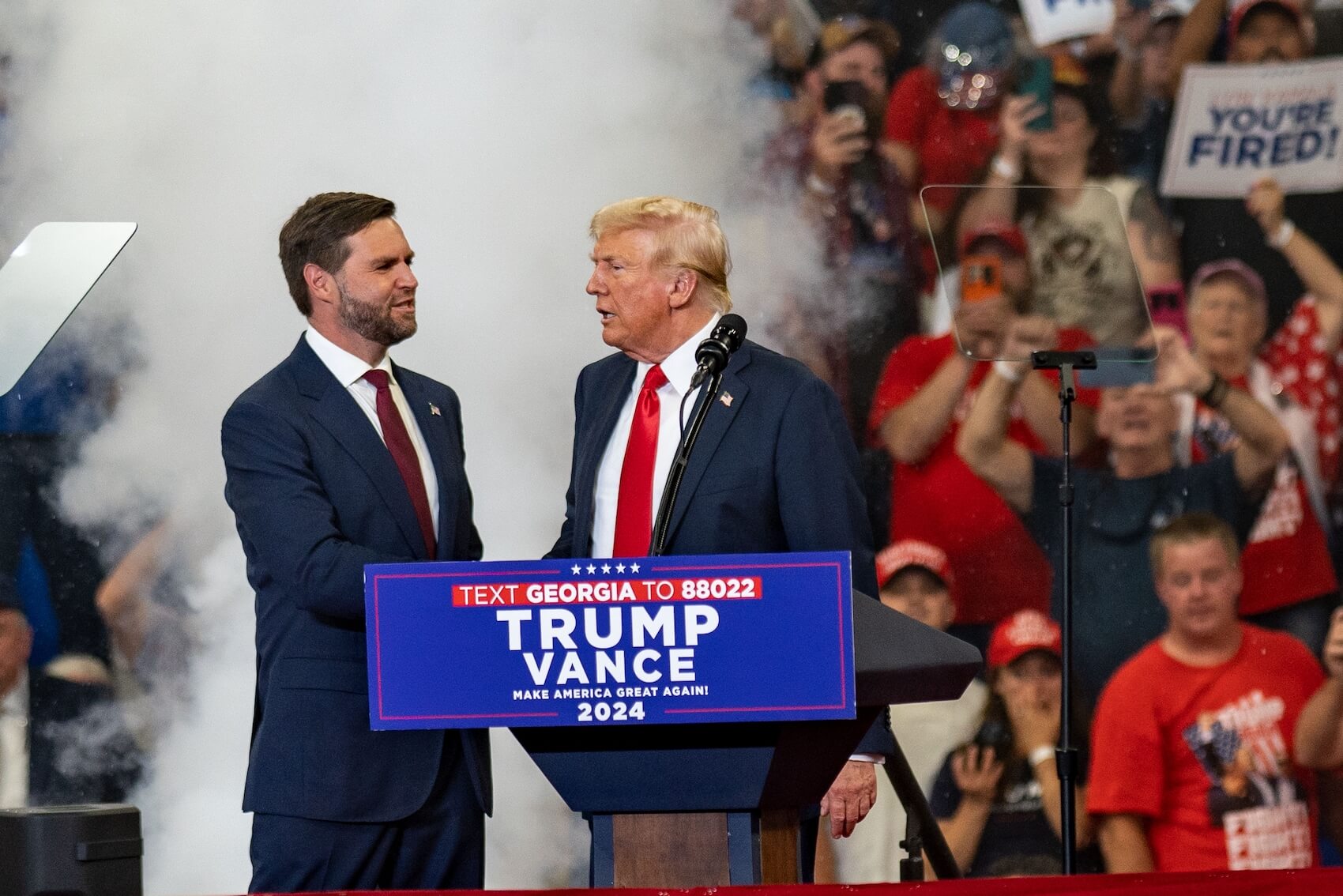
Davao City officials, including Vice President Sara Duterte, celebrated Philippine Independence Day on stage in Davao City, Philippines, on June 12, 2024. Photo: Elvie Lins.

The Philippines: From ‘People Power’ to Democratic Backsliding

Kenes, Bulent. (2023). “The Philippines: From ‘People Power’ to Democratic Backsliding.” ECPS Book Reviews. European Center for Populism Studies. June 14, 2023. https://doi.org/10.55271/br0014


In his recently released book, scholar Mark R. Thompson underscores how the “people power” narrative gradually lost credibility in the Philippines, as evidenced by the opposition’s resounding defeat in the 2022 elections. This outcome demonstrated the diminishing appeal of this discourse among the majority of Filipinos. Given Thompson’s assessment of Duterte’s election and his populist legacy as the latest iteration of a cyclical pattern in Philippine politics, his book represents a valuable contribution to the literature on populism.

Reviewed by Bulent Kenes

On May 9, 2016, Rodrigo Roa Duterte was elected as the 16th President of the Philippines by the Filipino people. Despite his controversial reputation, which he had acquired during his long political career as the mayor of Davao City, Duterte emerged victorious. He pledged to establish a regime similar to the one he had implemented in Davao City, with the goal of restoring “law and order” throughout the entire country. Following his inauguration, public trust in him soared to an astonishing 91 percent. What factors contributed to Duterte’s remarkable success as an illiberal and penal populist leader? How did the socio-economic environment and troubled political history of the Philippines play a role in the frequent rise of populist strongmen like Duterte? In his recently published book, “The Philippines: From ‘People Power’ to Democratic Backsliding,” Mark R. Thompson explores the socio-political, economic, and structural factors behind the convergence of democratic backsliding and the rise of strongman leaders within the Filipino context.

Thompson’s book utilizes a structuration approach to analyze the country’s recent shift towards strongman rule within the historical backdrop of nearly a century of Philippine presidential politics. The Philippines stands as one of the few global cases of “hyper-presidentialism.” The book highlights the fact that Philippine presidents possess significantly more formal power than their counterparts in the United States, particularly when it comes to their wide discretion over budgetary matters, which is essential in a patronage-driven democracy, making them the “patrons-in-chief.” They can subordinate the legislature, the courts, and independent bodies, despite theoretically being coequal branches of government or constitutionally mandated agencies, thus establishing the President’s authority as nearly omnipresent throughout the state apparatus.

Thompson’s book traces this “tyrannical potential” of Philippine presidents back to the American colonial era. One section of the book explores how a patronage-driven democracy facilitated executive aggrandizement by three transgressive presidents – Quezon, Marcos, and Duterte – who employed strongman messaging as they disregarded weak formal democratic checks. It also examines the stronger but uncertain informal constraints imposed on presidential power by elite strategic groups that employed a liberal reformist discourse. This dynamic first emerged after the manipulated 1949 presidential elections and resulted in Magsaysay’s victory four years later. However, a similar effort two decades later failed to prevent Ferdinand E. Marcos from imposing martial law. Yet, Marcos was later ousted by a people powermovement with a similar elite “hegemonic bloc” at the forefront. Following Marcos’ downfall, corruption scandals, which seemed inevitable in a patronage-dominated system, undermined the promise to restore “good governance” and also discredited the elite strategic groups promoting it. With the weakening of reformism and elite guardianship, a political opportunity arose for Duterte’s highly illiberal messaging. Duterte swiftly regressed Philippine democracy after winning the presidency in 2016. As a pioneer in political violence, Duterte fundamentally transformed Philippine politics by making violent populism appealing to the majority of Filipinos.

The first authoritarian leader in the Philippines was Commonwealth President Quezon, and three decades later, Marcos followed in Quezon’s footsteps. Even before declaring martial law in 1972, Marcos had already become the most powerful president since the country gained independence in 1946. He crafted an elaborate justification for martial law, citing not only threats from the far-left (communists) and far-right (oligarchs), but also utilizing strongman messaging that promised to address poverty, injustice, and bring about political change. Marcos argued that authoritarian rule was necessary to restore order and accelerate development. He imposed strict restrictions on the previously free press, which was factionalized and oligarchical, suppressing opposition criticism of nepotism and favoritism. The Marcos regime quickly transformed into a highly “sultanistic” system, blurring the boundaries between the public treasury and the private wealth of the ruler. Marcos and his wife Imelda became the wealthiest couple in the Philippines and among the richest in the world.

Meanwhile, Thompson emphasizes the presence of four influential non-governmental strategic groups (the Catholic Church hierarchy, big business leaders, civil society activists, and top military brass) that have played pivotal roles in constraining presidential power since independence in 1946, particularly during the later stages of the Marcos dictatorship and in the post-people power era. While not directly part of the government, these groups maintain close ties to the state, with representatives from big business and civil society often holding high-ranking positions in presidential cabinets. They possess extensive organizations that enable them to mobilize supporters in favor of or against a president, either through nonviolent means such as demonstrations or, in the case of the military, through a show of force via military intervention.

The book also integrates three key themes from existing literature – patronage democracy, political violence, and widespread impoverishment – to provide a comprehensive understanding of the Philippines’ recurring democratic crises. From a structuralist perspective, according to Thompson, the democratic transition that commenced after Marcos’ downfall in 1986 was only temporary. The “people power” uprising in Metro Manila in February 1986 captured global media attention and received praise from world leaders. This peaceful overthrow of an authoritarian ruler by civilian protesters demanding democratic restoration demonstrated the potential for change. However, Thompson argues that the perception of people power has undergone a remarkable metamorphosis in the Philippines, particularly since the time of Corazon C. Aquino, the widow of the assassinated opposition politician Benigno “Ninoy” S. Aquino, Jr., who assumed the presidency after the heavily manipulated snap presidential elections in early February 1986 that triggered the uprising. 

Author recalls that two additional crises unfolded in the subsequent three decades. Another “people power” style uprising took place, but this time it was directed against the freely and fairly elected President Joseph E. Estrada in 2001. His successor, Gloria Macapagal Arroyo, faced immediate and long-term legitimacy issues throughout her scandal-ridden tenure. In 2016, Duterte was elected, pledging a brutal “war on drugs.” Duterte’s popularity during his term created a strong political demand for a presidential candidate with a similar strongman image. Surveys indicated that 85 percent of Filipinos preferred “partial” or “full continuity” of his rule. Ferdinand Romualdez Marcos, Jr., the son of the Marcos dictatorship’s ruling couple, positioned himself as the rightful heir to Duterte’s legacy and won the May 2022 presidential elections with ease. Running alongside Duterte’s daughter as his vice-presidential candidate, the Marcos-Duterte tandem successfully positioned themselves as the successors to Duterte. Despite hopes from opponents that “Dutertismo” would fade away in 2022, there is little indication that Marcos intends to deviate from Duterte’s illiberal path. 

According to Thompson, this democratic backsliding occurred against the backdrop of historically rooted structural conditions in which neoliberal economic strategies revived economic growth but failed to significantly alleviate poverty, thereby enabling Duterte to secure power. The author highlights the fact that while post-dictatorship presidents in the Philippines restored financial stability and stimulated economic growth, they were unsuccessful in eradicating mass poverty. “Proletarian populists” who promised to help the majority of Filipinos who identified themselves as poor were either overthrown or subject to electoral fraud. This created an opportunity, according to Thompson, for Duterte to present himself as the last hope for Filipinos. By convincing many that they had been betrayed by the “irresponsible ‘yellow’ elites,” Duterte, as president, initiated a “war on drugs” that resulted in thousands of extrajudicial killings by the police and vigilantes linked to law enforcement. He justified these murders by dismissing liberalism and human rights as “Western” concepts. By late 2018, the Chair of the Philippine Commission on Human Rights estimated that up to 27,000 suspected drug users and dealers had been killed in the drug war. Duterte even targeted mayors and local officials accused of having drug links – by June 2021 more than half of the forty-four mayors, vice mayors, and other local officials identified by the Philippine president as being “narco politicians” had been killed.

Despite his obvious illiberalism, Duterte claimed democratic legitimacy, aligning with larger global trends. Unlike Trump and right-wing populists in developed countries who targeted immigrants, Duterte identified drug users and dealers as “enemies of the people.” His violent populism went beyond the typical “penal populism” seen in the West, representing an extreme form of illiberal rule that embraced an aggressive “us versus them” mentality. Thompson reminds that through his “war on drugs,” Duterte garnered massive popular support, surpassing the levels achieved by other illiberal populists globally. However, according to him, Duterte was not the first Philippine president to extensively employ political violence to consolidate power. Quirino relied on local warlords to intimidate the opposition during his presidential election campaign in 1949. As a young man Marcos, Sr., was convicted of killing his father’s chief political rival. In his controversial reelection campaign in 1969, Marcos employed not just local paramilitaries but also national military force, which he had increasingly brought under his personal control in the run-up to declaring martial law in 1972.

Thompson highlights that while many contemporary illiberal populist leaders have marginalized, imprisoned, or even assassinated those targeted and othered by their rhetoric, Duterte stands out for instigating state-led mass murder against his own country’s civilian population through his war on drugs. While Recep Tayyip Erdogan in Turkey intensified attacks against Kurdish rebels and Vladimir Putin in Russia waged the brutal Second Chechen War and later invaded Ukraine, these are military campaigns rather than “peacetime” massacres, as clarified by Thompson, although Erdogan’s campaigns against Kurds have also involved attacks during peacetime. These strongman presidents effectively crafted messaging to justify their concentration of power, often resorting to political violence and exploiting persistent poverty as a pretext for their power grabs. As poverty rates and unemployment remained high during the post-Marcos era, the liberal reformist discourse appeared uncaring and morally self-righteous.

Furthermore, Duterte eroded democracy through less violent means as well, eroding judicial independence, marginalizing independent institutions, and bullying local leaders, according to the book. His patronage politics undermined institution-building. The country’s bureaucracy has a history tainted by political interference and corrupt practices, with widespread perception of corruption in the courts. Duterte capitalized on a “legally cynical public” that lacked trust in a flawed judicial system, where drug offenders often had their cases dismissed on technicalities and bribery and manipulation were common accusations. Duterte, a former prosecutor, presented his drug crackdown as a silver bullet, appealing to the belief that the corrupt legal system needed cleansing before meaningful reforms could be introduced.

The rise of Duterte’s violent populism was also facilitated by the weakening of key elite strategic groups mentioned earlier in the book. For example, Duterte effectively outmaneuvered the church by threatening to expose its sex scandals, claiming personal childhood abuse by a priest. Institutional barriers were swiftly sidelined, resulting in the emergence of an illiberal democracy. As a political innovator, Duterte drew from and transformed traditions of local political violence in the Philippines, which he continued during his presidency. He also employed the strategy of securitizing problems and scapegoating the urban poor in other policy areas, notably in his highly militarized but ineffective response to the pandemic.

The book argues that the Philippines’ recent democratic backsliding is a result of Duterte’s violation of democratic norms in a patronage-driven democracy with weak institutionalization, following the patterns of Quezon and Marcos before him. The book also closely examines pseudo-reform programs used to divert attention from the persistence of mass poverty. Recently, Duterte’s drug war has primarily targeted the poor, with urban residents who are petty drug users and dealers becoming the focus, while mass poverty continues to endure. However, this approach proved effective in legitimizing his highly illiberal rule.

Like previous presidents, according to the author, Duterte did not harbor a general hostility towards the oligarchy; rather, he used such rhetoric as a means to attack his political enemies and favor his own allies. However, the broken promises of his predecessors to combat corruption and alleviate poverty had paved the way for simplistic solutions to the country’s complex social problems, exemplified by Duterte’s “dystopian narrative” of the drug war. The drug war’s popularity across class lines indicated that Duterte had successfully redirected the grievances of the poor away from the failures of social reform. In line with Marcos and Quezon before him, Duterte exploited the persistence of poverty to justify the erosion of democratic values. Employing pseudo-social reforms, Duterte portrayed his drug war as a panacea for the nation’s social issues, garnering support across different social strata, despite the fact that it harmed and disproportionately targeted the poor.

As a strategy of legitimation, Duterte relied on extravagant but largely hollow promises of implementing social reform, eradicating corruption, and eliminating illegal drugs, which proved remarkably effective as political tools. His “brute force governance,” characterized by personalized strongman rule, blame-shifting, and securitization, undermined the mechanisms of accountability. This enabled him to maintain public approval, despite the drug war’s failure to effectively address substance abuse and the ineffectiveness of widespread lockdowns in curbing the spread of the pandemic. Despite the highly illiberal nature of Duterte’s rule, he continued to claim democratic legitimacy based on competitive elections and high approval ratings, while adhering to constitutional norms. This undermined electoral opposition and weakened resistance from critical figures such as Catholic bishops, influential business groups, and civil society activists. According to Thompson, among the major strategic groups in the Philippines, only the military remained a significant check on Duterte’s power.

In conclusion, Thompson underscores how the “people power” narrative gradually lost credibility, as evidenced by the opposition’s resounding defeat in the 2022 elections, particularly with Marcos, Jr.’s victory. This outcome demonstrated the diminishing appeal of this discourse among the majority of Filipinos. The recent democratic backsliding in the Philippines serves as a cautionary tale about the failure of a liberal reformist project to improve the lives of ordinary people and fundamentally reshape the political system to reduce reliance on patronage, strengthen institutions, and mitigate political violence. Given Thompson’s assessment of Duterte’s election and his populist legacy as the latest iteration of a cyclical pattern in Philippine politics, this book represents a valuable contribution to the literature on populism.


Mark R. Thompson. The Philippines: From ‘People Power’ to Democratic Backsliding. As part of “Elements in Politics and Society in Southeast Asia.” (Cambridge University Press).  May 25, 2023. 86 pp. 21,24  ISBN: ‎ 1009398482. DOI: 10.1017/9781009398466  

Supporters of Syriza left wing party with flags outside Athens University in Greece on January 25, 2015. The baner says:"This is really good night Mrs Merkel." Syriza, won general elections. Photo: Kostas Koutsaftikis.

Government participation and populist discourse transformation of radical left SYRIZA and radical right ANEL

Abstract

This study examines how the government participation within an EU country can affect the discourse of the left-wing and right-wing populist parties. We analyzed this question by tracing two Greek populist parties’ discourse, the left-wing Syriza and the right-wing Independent Greeks (Anel), during the 2012-2019 period. We have split the examined period into two subperiods (2012 to July 2015, and August 2015 to 2019). The turning point was the Syriza-Anel government’s signature of the third EU bailout program in August 2015. The first hypothesis was that the government accession within the EU context would slightly decrease the populist logic of the two parties. The next two hypotheses referred that the EU leverage emerged by the signing of the bailout agreement will decrease the populist rhetoric of the two parties towards the external elites (mainly the EU). However, the right-wing populists (Anel)- even after this decrease- will target the external elites to a larger extent than the left-wing populists. To examine the hypotheses in-depth, we applied a combination of quantitative content analysis with qualitative discourse analysis. The findings have corroborated our three initial hypotheses. Simultaneously, the qualitative discourse analysis offered us some additional findings concerning the two parties’ use of topos of “History” to increase their populist appeal within the electorate.

By Alexandros Ntaflos

In the last years an increase in the appeal of populist parties has been occurred all around Europe (Inglehart & Norris, 2016; Ibsen, 2019). In some countries, the populist parties have participated in the national governments (Mair, 2013). According to the literature, populism’s main feature is that it divides society along two sides: the people (general will) vs. the elites (Laclau, 2005; Mudde, 2004). However, many analysts have mentioned that significant differences between the left-wing and right-wing populism exist (Otjes & Louwerse, 2015; Katsambekis, 2017). The gradual decrease in mainstream parties’ appeal had allowed right-wing populist parties to increase their electoral share participating in government cabinets in countries such as Austria, Italy, Norway, Finland, etc. (Mair 2013, p. 46). Furthermore, in Southern Europe, populist parties with left leanings have gained significant power after the 2008 Great Recession in Greece, Spain, and Portugal (Agustin, 2018; Bosco & Verney, 2012; Polavieja, 2013).

Given that populist parties have increased their power in many EU countries, often participating in governmental cabinets, it is -both academically and socially relevant- to investigate how these parties act when they assume governmental positions, and whether they adapt their discursive strategies (Kriesi 2014, p. 368; Albertazzi & Mueller, 2013). Following the Mair’s (2009) thesis, in contemporary democracies, it is tough for a government to be both representative and responsible, thus leading to a division of labor between the mainstream parties (responsible government) and the populists (representative role in the opposition). In this rationale, it is critical to explore how the populist parties of the EU democracies change their discursive articulation from the opposition to the government.

Greece constitutes a distinct case of populism. Following the country’s bankruptcy in 2010 the mainstream political parties faced an unprecedented electoral deterioration. Left-wing populist, Syriza (Coalition of Radical Left) and right-wing populist Anel (Independent Greeks) were the main newcomers that arose from the huge crisis of representation existed. The significant increase of their electoral power allowed them to form a government coalition in January 2015. However, the huge EU economic dependence that Greece had forced the two parties to sign a new bail-out agreement in August 2015 continuing the austerity policies implemented by the previous governments. Given that the two parties have articulated populist narratives targeting both domestic (mainstream parties, oligarchy, banking system, media) and external (EU bureaucracy, financial markets, globalization’s system) elites it is significant to examine how their accession to government within a period that Greece was under a strict EU financial surveillance affected their discursive strategies. A combination of quantitative content analysis with a qualitative discourse analysis on the party leaders’ pre-electoral public speeches -within the period 2012-2019- will take place to examine this question.

See Full Text

Activists protest against the rise of fascism in Portugal in Coimbra in September 2020. Photo: Joao Ferreira Simoes.

CHEGA! A sceptre of the mainstream Portuguese parties’ disaggregation or a spectre of fascism?

Abstract

Over the past four decades, Portuguese voters have imprinted a solid resistance to the emergence of far-right parties in the political setting. However, this time ended in the 2019 legislative elections when the CHEGA, a self-located party on the far-right spectrum, with a posture assumed as anti-system and unconcerned with the accusations of racism and hate exhilaration, elected André Ventura to the national parliament. Moreover, in the 2021 presidential elections, he got 497,746 votes, a scant point to be the second most-voted candidate. The 2022 legislative elections placed CHEGA as the third most-voted party, and the number of members in parliament has climbed to twelve. This article critically examines the political constraints and opportunities for the rise of the CHEGA party in the Portuguese political setting. It argues that CHEGA emerges from the disintegration of centre-moderate right parties and the interruption of the emancipatory function of the leftist parties coupled with a ubiquitous traditional media landscape, which has proved favourable to the CHEGA propensity towards the Portuguese electorate and without scrutinise its narratives opposing the dominant ruling system. Beyond news media and cumulatively, social networks have also increased party exposure by recruiting affiliates and strengthening support bases.

By Carlos Morgado Braz

Throughout history, economic and social distress have stimulated antagonisms and political discontent with ordinary party politics. This thick reading explains why numerous radical far-right (RFR)[1] parties became well-established following the Cold War period. For Wodak and Krzyżanowski (2017), the return of these parties is one of the main threats to democracy. On the other hand, few others suggested it might positively affect contemporary democracy (Fraser, 2017). Nevertheless, whatever different argument these scholars use, they all agree that the RFR party’s success has been appropriating “claims” about the negative impact of social-cultural globalisation (e.g. ethnicity, religion) or the migration influx (e.g. class) involving a Manichean worldview, which divides social space into two opposing camps: the “true people” and the “corrupt establishment” (Urbinati, 2019).

To a great extent, as Goldberg (2020) found, this blurry puzzle has affected electoral behaviour, increasing the number of de-aligned and disillusioned voters who either do not participate or become open to new and more radical alternatives. However, in the existing literature, little attention has been paid to opportunities left open in the political setting by the dislocation of mainstream parties when they smooth over their foundational ideological matrixes to increase their chances of securing a winning majority. Instead, mainstream literature has mainly focused on voter turnout based on socio-economic variables or the dynamics behind RFR parties’ attitudes towards electoral campaigns. This article addresses this gap using the Portuguese CHEGA party’s emergence as a case selection.

One attempt to explain the RFR party’s electoral success could be Rydgren’s demand-side and supply-side conceptual approach[2]. According to Rydgren (2007), the demand-side approach reflects changes affecting citizens’ economic status and social-cultural identity – the base for RFR parties to go with criticism against those in power. In addition, the supply-side approach is twofold: the first focuses on the constraints and opportunities given by the political-institutional context that extend the prospect for their emergence; the second concentrates on parties themselves, e.g. the role of ideology and their organisational structures, including leadership. This article rests on the supply-side Rydgren’s approach. So, naturally, I question: Is Portugal dangerously returning to the fascist path, or is CHEGA a sceptre of the mainstream Portuguese political parties’ disaggregation?

To begin with is essential to remember that whatever ideological positioning a particular party uses, its manifestations will be contextual and dependent, among other things, on the country’s political, social and religious culture. The CHEGA is not an extremist party and is not, using a Wittgensteinian metaphor, an incarnation of our recent past. Instead, I argue it is a populist radical far-right party that emerged from the disintegration of centre-moderate right parties and the interruption of the emancipatory function of the leftist parties. Regarding its rise, the Portuguese traditional and social media platforms have facilitated André Ventura wide-reaching communication and intensified levels of connection with “the people” daily. However, given the spatial constraints of this article, this line of research is an obvious challenge that I will not address.

See Full Text

Group of demonstrators on road, young people from different culture and race fight for climate change. Photo: Disobey Art.

What’s under green? Eco-populism and eco-fascism in the climate crisis

Abstract

The ongoing environmental crisis has prompted various groups, organizations, and political parties to develop new strategies for addressing this global challenge. In this context, eco-populist actors, organizations, and parties are playing a key role in challenging the current exploitative capitalist system. However, it is important to note that eco-populist movements can differ significantly from one another. This article aims to distinguish between two contemporary but distinct movements: eco-populism and eco-fascism. To accomplish this, the terms “populism” and “eco-populism” will be conceptualized and analyzed, and the ideological deviations that eco-populism has undergone will be explained. The article will then provide brief case studies that showcase both eco-populist and eco-fascist events. By examining these examples, we will strive to identify the main similarities and differences between these two movements. Our conclusion will be that, despite sharing some features, eco-fascist movements tend to be more violent and nativist than eco-populist movements.

By Iván Escobar Fernández & Heidi Hart

Although some extremist Populist Radical Right Parties are still reluctant to acknowledge the evident effects of climate change and the urgent need to take necessary actions (see Spanish Populist Radical Right Party VOX), there is quite a consensus among climate researchers, environmental scientists, sociologists, and anthropologists on the causes that have driven us to this climate crisis. Among the main reasons that can explain climate change, there is no doubt that greenhouse gas (GHG) emissions and massive extraction and exploitation of natural resources have contributed the most to the ongoing crisis (see IPCC, 2022). However, the impacts of climate change differ from region to region, thus making individuals more vulnerable according to their nationality, social class, proximity and dependency on natural areas (see Thornton et al., 2014). Considering these factors, it can be concluded that Indigenous communities are among the most endangered groups due to climate change. This vulnerability has led to the emergence of popular movements that oppose extractive industries and their consequent exploitation of the resources found in natural areas, thus fueling violence and concern all over the globe (see Torres-Wong, 2019).

In the beginning, these movements were somehow marginal and unknown by the rest of the world and their demands were far from being considered by policymakers; however, as climate change impacts have become more tangible, these groups and movements have enjoyed more recognition, and their demands are currently being heard and considered, for example during the Alternative COP 26 in Glasgow and COP 27 in Egypt. Today, though the approaches and strategies may differ, it is difficult to find a political party that has not included climate change mitigation and adaptation in its agenda. However, although “green policies” have become an integral area of most political parties and social movements, different approaches and schools of eco-political thought have emerged in response to the current situation. These include Eco-Rousseauians, who believe that GHGs emissions must be curbed by the purchase of carbon credits from the underdeveloped world and call for the immediate and voluntary halt to the exploitation of natural resources and the protection of ecosystems of the world; Eco-Hobbesians, who defend that climate change can only be overcome by the imposition of global sanctions and mutual coercion mechanisms; Eco-Smithians, think that climate change will be solved by human inventiveness and see it as an opportunity for designing, producing, and selling new products that will boost private gain Eco-Calvinists, who opt for using resource-efficiency techniques to solve the climate crisis; Eco-Christians, who firmly believe that only a coalition with evangelicals would ensure God’s creation; and Eco-Populism, which is worth a more thorough explanation due to its complexity (Yanarella, 2015).

This article aims to analyze the rise of eco-populism across the world and to identify its main features, motivations and goals. Furthermore, this article will also aim to make a distinction between eco-populism and an appearance similar movement that has been coined under the name of eco-fascism. To do so, we will first conceptualize what we understand as populism and eco-populism and will point out some deviations the latter has undergone in recent years. The following section will showcase four different case studies that will aim at helping us identify some common and distinctive features between eco-populists and eco-fascists. Lastly, our findings will be discussed and contrasted with the existing literature.

See Full Text

Photo: Blue Planet Studio.

The economics of pandemics and the future course of populism

Abstract

The relevant literature shows that populists come to power through various rhetorics by exploiting the incumbent orders and the problems they have caused. However, failures and disappointments in fulfilling their promises push them to employ increasingly authoritarian measures to silence society to stay in power by gradually changing the system, manipulating citizens through controlling media, and undermining fundamental institutions. By emphasizing the overall performance of populist governments during the COVID-19 pandemic crisis, this article explores the future course of populist politics and governments after the pandemic. The paper concludes that although the pandemic has clearly shown the limits and capacity of many populist governments, the political and economic conjuncture in the post-pandemic era, coupled with the high tension of power transition, might bring new “opportunities” for the use of populists. With several defects and structural weaknesses of the existing liberal multilateral order, populism is here to stay with different implications for the multilateral liberal order and globalization.

By Ibrahim Ozturk

Introduction

As a dangerous external shock to the global economic and political system, the COVID-19 pandemic arrived at a stage when the negative repercussions of the Global Recession (GR) had not fully subsided, exacerbating existing problems, such as unemployment, loss of income, and inequality, with further political and social repercussions. With the advent of other “horses of the apocalypse” – such as climate change, famine, migration, terrorism, and state failure – the current pandemic could emerge as an endemic part of life worldwide through new mutations.

This article strives to explore the effect of the pandemic on the performance of populists either in government or opposition in the post-pandemic era. Taken together, widespread uncertainties, confusions, fears, and stresses are the main push factors behind populism. Nevertheless, populist rhetoric offers untested (and sometimes) romantic promises to counter the actual social, political, and economic traumas and shocks, referring to an unknown, not yet born “alternative” system. Therefore, even if it is rather more straightforward for populists to come to power with the help of such political-economic conjunctures, they are more likely to experience difficulty fulfilling the expectations their populist rhetoric has caused. The real danger is that, despite failing to fulfil their promises, they tend to employ increasingly authoritarian measures to silence society so as to stay in power by gradually changing the system, manipulating citizens through controlling media, and undermining fundamental institutions.

This article strives to predict whether the global populist environment created by the GR will turn against populist governments during and after the Global Lockdown (GL) of the pandemic. However, the analysis of the performance of mainstream and populist parties during the COVID-19 pandemic is quite a challenging task as it is complicated by several other factors such as the ongoing global power shift and the accompanying national, regional and global geopolitical conflicts. In addition, countries’ overall political and economic situations just before the pandemic crisis have also been immensely influential on their performance. All these parameters have brought additional evaluation criteria other than their actual economic performance during the pandemic and ended up prolonging their lifespan.

See Full Text

People are attending a political rally and marching through the city streets of Melbourne with a police escort in Victoria, Australia on March 16, 2019. Photo: Adam Calaitzis.

Mapping Global Populism – Panel 1: Populism and Far-Right in Australia 

van Os, Kim & Smith, Chloe. (2023). “Mapping Global Populism – Panel 1: Populism and Far-Right in Australia.” European Center for Populism Studies (ECPS). June 5, 2023. https://doi.org/10.55271/rp0040


This report is derived from the inaugural panel of ECPS’s monthly series, titled “Mapping Global Populism,” which took place online on March 23, 2023. The panel featured renowned scholars on populism from Australia and New Zealand. As a result of this insightful panel, the report provides brief summaries of the speeches presented by the speakers.

By Kim van Os* & Chloe Smith

This report is based on the inaugural panel of the ECPS’s monthly panel series titled “Mapping Global Populism,” held on March 23, 2023. The panel featured esteemed scholars in the field, including Dr. Imogen Richards, from Deakin University Australia, Dr. Rachel Sharples from Western Sydney University Australia, and Dr. Josh Roose from the Alfred Deakin Institute for Citizenship and Globalization. Dr. John Pratt, from Victoria University of Wellington, served as the moderator for this panel.

Dr. Pratt initiated the panel by emphasizing the importance of studying populism in this region. He highlighted that Australia, along with New Zealand, exhibited early indications of far-right tendencies even before the emergence of Donald Trump in the United States.

In the 1990s, Australia witnessed the rise of a distinctive populist party named One Nation. This party espoused anti-immigration, anti-science, and anti-expert stances, garnering considerable support from tabloid media. While One Nation experienced electoral successes primarily in Queensland during the subsequent decade, its influence has since diminished significantly. In the recent federal election in Australia, One Nation failed to secure any seats. Nonetheless, as Dr. Pratt maintains, this does not imply the disappearance of far-right populism in Australia. One Nation has left its mark on mainstream parties, particularly evident in the national party’s climate change denial stance.


Dr. Imogen Richards: “From Past to Present: The Question of Populism, Extremism and the Far-Right in Australia”

Dr. Richards revealed a complex interplay and representation of connections between white identity, environment, culture, race, and territory. Concepts such as blood and soil, race, and place, emerged and strongly influenced the ideological foundations of the far-right in Australia.

Dr. Imogen Richards presented a compelling analysis of the utilization of environmental politics by far-right actors in Australia, employing key theories of populism to shed light on the subject. Without delving into the contested realm of populism definitions, Dr. Richards acknowledged the potential value of both the ideological and performative approaches in examining the discussion that follows. She offered brief summaries of the perspectives on populism put forth by Mudde, Mondon & Winter, and Moffitt.

Dr. Richards emphasized the significance of Australia’s colonial history in comprehending the contemporary expressions of environmentalism by white supremacist groups. This history is characterized by the British genocide of indigenous peoples, who inhabited the mainland for over 65,000 years, and extends to their ongoing marginalization, dispossession, and displacement. Furthermore, Dr. Richards stressed the importance of recognizing the lack of honest appraisal of Australian colonization, which has led to a disregard for the spiritual and cultural practices of indigenous peoples relating to land and country.

Appreciating the context and impact of Australia’s white colonial history is pivotal to understanding how the far-right in Australia relies on specific environmentalist expressions to forge a distinct white Australian identity. This discussion revealed a fusion of mythologized and aesthetic depictions of a white, male Australian with a highly selective historical account of their interactions with Australian land.

Dr. Richards delved into the origins of this identity, rooted in the British genocide of indigenous people and the ongoing displacement, dispossession, and exploitation of the land of Indigenous Australians. The “birthing story” of these far-right groups revolves around the “taming” of Australia’s harsh natural environment. They construct narratives that revolve around the historical and contemporary use and exploitation of Australian land for economic purposes, disregarding the traditional custodianship of the land. This narrative positions them at the center of environmental politics and practices, claiming ownership, a deep connection to, and profitable usage of Australian land.

The discussion then explored key events in Australia’s early post-colonial history that have solidified the white Australian identity and the extremists associated with its cultivation. These events include the racist riots against Chinese gold field miners in the 1850s, the implementation of the White Australia policy in 1901, and the importation and support of fascism and Nazism. Dr. Richards revealed a complex interplay and representation of connections between white identity, environment, culture, race, and territory. Concepts such as blood and soil, race, and place, emerged and strongly influenced the ideological foundations of the far-right. The Australian First Movement (AFM) and its leader ‘Inky’ Stephenson appropriated and incorporated indigenous heritage and symbols. Additionally, two archetypes—the ‘larrikin’ and the ‘bushman’—formed during this period, still evident in Australian culture today. These archetypes portray a deep connection to the land, physical strength, and a degree of anti-intellectualism.

The discussion then examined the different trends that emerged after World War II, resulting in diverse expressions of the far-right and their connection to the environment. Industrialization and increasing diversity fostered anti-urban sentiments, which aligned with the far-right’s attempts to align themselves with the early organic farming movement. Dr. Richards also identified a transformation in far-right discourse in the post-1960s era, wherein extremist groups, while still emphasizing race and place, also focused on population reduction, quasi-bioregionalist ideas, and the valorization of the military as a key recruitment source.

In order to comprehensively address and challenge far-right narratives, it is essential to gain insight into how their proponents construct and perpetuate the identities they espouse. This discussion critically examines the role of Australia’s colonial history in relation to environmental politics, shedding light on the white identity that continues to serve as a driving force for far-right groups in the country. Moreover, it underscores the influence of international and global ideologies on far-right movements, which intertwine with their national myths, legends, and symbolism.

Dr. Richard’s research drawed extensively from the forthcoming co-authored monograph titled “Global Heating and the Australian Far-Right,” scheduled for publication with Routledge in 2023. While this presentation was truncated due to time constraints, the forthcoming book promises to provide further captivating insights for those seeking a comprehensive understanding not only of the development of the Australian far-right but also of the profound impacts of colonialism. It underscores the significant role of environmental politics as a catalyst for the formation of exclusionary ideologies and the construction of identity.

Dr. Rachel Sharples: “Racism, White Privilege and White Supremacy in Australia”

Dr. Sharples argued that the denial of racism and white privilege represents a direct consequence of the failure to address indigenous sovereignty and dispossession in Australia, as well as the realities of Australia as a nation of migrants. Notably, her research focuses on the mainstream population rather than extremists, as claims of anti-white racism and white privilege are deeply entrenched in the attitudes and behaviors of broader society.

During her presentation, Dr. Rachel Sharples delved into the emergence of far-right ideologies within the broader Australian population, focusing on themes such as racism, white privilege, white supremacy, and anti-white racism. Dr. Sharples emphasized that white privilege continues to hinder efforts to combat racism in Australia. She asserted that anti-white racism and white privilege have been fostered by the infiltration of right-wing nationalism into mainstream discourses, perpetuated not only by politicians and the media but also deeply ingrained in the attitudes of a segment of the Australian population. While these sentiments have long existed in the Australian collective consciousness, contemporary times have witnessed a heightened tolerance and legitimacy given to white supremacy and national populist views, which Dr. Sharples argues warrants a unique and under-examined perspective on white privilege discourses in Australia.

According to Dr. Sharples, white privilege stems from individuals subscribing to notions of lost privileged status associated with Anglo-Celtic heritage, as well as perceived government ambivalence toward acknowledging and addressing these changes. Building on the prior panel discussion by Dr. Richards, these ideas and narratives must be contextualized within Australia’s history as a white settler and multicultural nation that has failed to adequately address indigenous sovereignty and dispossession.

Drawing on years of research and data collected through a large-scale attitudinal survey of Australians, Dr. Sharples highlighted the responses of thirty-eight individuals who explicitly made claims of anti-white racism and white privilege. Findings revealed that claims of anti-white racism were linked to perceptions of favoritism toward migrants, a sense of “white paranoia” stemming from perceived threats by ethnic minorities, and a perceived loss of control over national space and identity.

Furthermore, Dr. Sharples argued that the denial of racism and white privilege represents a direct consequence of the failure to address indigenous sovereignty and dispossession in Australia, as well as the realities of Australia as a nation of migrants. Notably, her research focuses on the mainstream population rather than extremists, as claims of anti-white racism and white privilege are deeply entrenched in the attitudes and behaviors of broader society. Dr. Sharples posits that addressing these issues at a societal level can help curb the misuse and harms associated with the adoption of more extremist positions.

Dr. Sharples contended that a growing number of white Australians perceive themselves as victims of anti-white racism, becoming increasingly vocal about their perceived prejudices and concerns about the erosion of a white national identity. These claims have found expression in the political sphere as well.

Additionally, Dr. Sharples highlighted an unexamined sense of ownership over the national space, evident in commentaries that whitewash Australian history, disregarding both the indigenous history of the land and the contributions of immigration and multiculturalism.

The remainder of Dr. Sharples’ discussion underscored how these claims have permeated not only mainstream media and political discourse but also the fabric of Australian society. She provided numerous examples that solidify the argument that these ideological claims have firmly taken root in mainstream Australian discourse, with prominent political figures and a divisive media and entertainment environment being key contributors.

The discussion drew attention to divisive political figures who have fueled and endorsed anti-white racist claims, welcoming and celebrating far-right proponents of hate and racism on platforms such as ‘hate tours.’ Even the Parliament House has faced criticism for hosting problematic speakers and promoting a range of intolerant, hateful, and racist views.

Australia’s media landscape, long accused of permitting racist and intolerant views, aligns with the findings presented by Dr. Sharples. She described several high-profile sports and media personalities who have used their national platform to propagate racist views against Indigenous Australians and Muslims. Troublingly, despite facing backlash, these individuals have retained their high-profile positions and remain influential figures today.

In her concluding remarks, Dr. Sharples emphasized the rightward shift in the Australian political landscape and highlighted a significant dichotomy present in policy debates and the corresponding populist media coverage. This divide centers around the tension between aspiring to be a nation that embraces cultural diversity and a perceived necessity to safeguard the white colonial heritage or white national identity. The firm establishment of this dichotomy within mainstream Australian society, coupled with a growing number of claims of white vulnerability and victimization, underscores the dangers associated with the normalization of intolerant, racist, and anti-white sentiments by influential figures who shape public discourse and debate.

Dr. Josh Roose: “Masculinity, Populism and Religion in Australia”

According to Dr. Roose, a thorough understanding of the far-right and populist right necessitates a careful examination of masculinity, which encompasses the societal construction of male identity. Masculinity entails the establishment of social expectations regarding manhood and the hierarchical structuring of society, privileging masculine traits while devaluing those associated with femininity. While participants in far-right groups are predominantly men, the influence of masculinity extends beyond these subgroups.

In his presentation, Dr. Josh Roose employed a lens of masculinity and religion to examine the far-right phenomenon in Australia. He posited that both masculinity and religion are perceived by far-right populists and extremists as being under existential threat, which significantly influences their political agenda. Dr. Roose commenced his talk by providing contextual information on the current state of Australia and the underlying factors that have contributed to the emergence of far-right populism. Subsequently, he delved into an analysis of recent developments within the country.

According to Dr. Roose, a thorough understanding of the far-right and populist right necessitates a careful examination of masculinity, which encompasses the societal construction of male identity. Masculinity entails the establishment of social expectations regarding manhood and the hierarchical structuring of society, privileging masculine traits while devaluing those associated with femininity. While participants in far-right groups are predominantly men, the influence of masculinity extends beyond these subgroups. Origins, ideologies, internal dynamics, and recruitment methods within these groups are intricately intertwined with notions of masculinity. Notably, among white-collar workers, there exists a perception of engraved entitlement and a perceived erosion of the respect, recognition, and social status to which they believe they are entitled as men.

To comprehend this phenomenon, Dr. Roose suggested examining the changing status of men and work over the past five decades, particularly in light of the introduction of free market economics and its displacement of Keynesian economics. Participation in far-right groups may be driven by resentment and blame directed towards women and minority groups, who are perceived as having benefited from male economic, legal, and political subordination. Additionally, such sentiments may be directed towards governments perceived to have facilitated these developments and could be rooted in feelings of shame.

Dr. Roose also explored the role of religion within this framework and the way it is framed in relation to populism. He argued that significant intersections exist in terms of intellectual, ideological, and affinitive aspects between hard-right populists, far-right extremists, and religious actors emphasizing textualist interpretations. These groups all lay claim to possessing universal truth, harbor a sense of marginalization, and cultivate a powerful perception of persecution and victimhood, among other shared characteristics. Dr. Roose further posited that misogyny serves as a gateway to contemporary manifestations of the far-right. Furthermore, these groups often espouse anti-LGBTQ+, antisemitic, and anti-science views.

Dr. Roose also highlighted the notable trend wherein an increasing number of young individuals, particularly angry young men, are actively engaging in these spaces, contrary to the prevailing notion of youth disengagement.

Concluding his presentation, Dr. Roose contended that a crucial aspect requiring further investigation is the extent to which these attitudes intersect with mainstream values, politicians, and community members. It is imperative to understand the potential for these relatively small groups to build a broader movement and gain prominence within the wider population, as this is where the true consequences may arise and the real damage can be done.


(*) Kim van Os is an intern at European Center for Populism Studies (ECPS) with a master’s degree in International Relations. Her main research interests are the relation between populism and far-right radicalization, gender, racism, Islamophobia, and xenophobia.  

MGP-Indonesia

Mapping Global Populism — Panel #3: Religious Populism and Radicalization in Indonesia

This panel was jointly organised by The European Center for Populism Studies (ECPS) and The Alfred Deakin Institute for Citizenship and Globalisation (ADI) .

Moderator

Dr Ihsan Yilmaz (Research Professor and Chair of Islamic Studies and Intercultural Dialogue at the Alfred Deakin Institute for Citizenship and Globalisation (ADI), Deakin University, Melbourne, Australia). 

Speakers

“Main drivers of populism in Indonesia,” by Dr Inaya Rakhmani (Director of Asia Research Centre, Universitas Indonesia).

“Radicalism, extremism and civilizationalist populism in Indonesia,” by Dr Pradana Boy Zulian (Associate Professor of Islamic Studies at the Faculty of Islamic Studies, Universitas Muhammadiyah Malang, Indonesia).

“Gender roles in Indonesia’s religious populism,” by Dr Kurniawati Hastuti Dewi (Senior Researcher at the Research Center for Politics, National Research and Innovation Agency – BRIN, Indonesia).

Populism and foreign policy: The Indonesian case,” by Dr I Gede Wahyu Wicaksana (Senior International Relations Lecturer in the Department of International Relations Faculty of Social and Political Sciences, Universitas Airlangga, Indonesia).

The banner 'Potato, onion, goodbye Erdogan' was carried in the 1 May rally än Istanbul, which coincided with the critical 14 May elections in Turkey. Photo: Shutterstock.

A Lesson from Turkey: Economic Crises as Steppingstones, but not Exit Routes for Authoritarian Populists

It is evident that populist politicians, even if they come to power through free elections, deviate from the same path when they stay in power for an extended period and transform the regime. Turkish President Erdogan’s prolonged tenure in Turkey allowed him to skillfully reshape the political regime into a one-person rule. By monopolizing the achievements of his ancestors and emphasizing religious values in opposition to ultra-secularist elites, whom he portrayed as foreign puppets and defenders of the oppressive status quo that insulted the way of life of ordinary citizens, Erdogan successfully created a deep polarization in society to maintain his grip on power.

By Ibrahim Ozturk

In my Project Syndicate piece titled “Erdogan’s Success Story” (June 14, 2011), I provided a positive assessment of Erdogan’s remarkable economic achievements over the past decade, highlighting Turkey’s expected entry into higher-income country status during his third term. However, I concluded the article by posing the question: “How will Turkey utilize its rapidly growing economic power?”

In a notable departure from the initial period (2003-2011) when Erdogan strengthened his position and reformed the regime, he veered away from the essential factors that contributed to his success. The period following the 2011 election victory witnessed a shift towards a process of power intoxication, culminating in the complete consolidation of the presidential government system (PGS) in 2018. This marked a departure from the so-called “orthodoxy,” replaced by a more arbitrary approach characterized by learning by doing and trial-and-error, which Erdogan referred to as “heterodoxy.” Although this era resulted in unprecedented economic and political turmoil, Erdogan’s election for a third term as president raises the question of why a populist government that initially came to power amidst an economic crisis did not encounter more significant challenges.

However, empirical evidence suggests that populists often come to power through relatively “free,” if not entirely “fair,” elections, yet only a few of them are consistently able to exit power. This usually occurs through being voted out of office, primarily if they manage to stay in control long enough to transform the system into a more authoritarian one. Consequently, the modes of departure often involve scandals, impeachment or resignations, constitutional crises, refusals to step down, coups, suicides, or tragic accidents. The recent elections in Turkey have demonstrated that in cases of democratic backsliding, an economic crisis alone is a necessary but insufficient condition for an authoritarian leader to change course. The positive case of successfully defeating an authoritarian populist in Brazil in March 2013 highlights that the sufficiency condition lies in the opposition’s ability to employ and manage various factors more effectively than the government, even when the latter abuses state power.

Erdogan as a Mastermind of Populism

Engaging in debates about the fairness or fraudulence of Erdogan’s election victory at this stage does not provide significant insights. As highlighted by Funke et al., when populists manage to remain in power for a decade or longer, they often shape their country’s political destiny in negative ways. After Erdogan’s prolonged tenure, Turkey has regressed from being considered a “free” country, as indicated by the Freedom House Index of 2023, and the elections can no longer be deemed fair. In a country like Turkey, where the general election results show that the opposition party (Republican People’s Party, CHP – 25%) consistently lags behind the ruling party (Justice and Development Party, AKP – 35% on May 14, 2023) by approximately 10 percentage points for nearly 21 years, the transfer of power appears unlikely, regardless of the coalition formed.

While the definition of populism may vary, as the Pope declared, it is commonly viewed as an “evil” that tends to lead to undesirable outcomes. Erdogan’s brand of populism aligns perfectly with a Machiavellian approach, where any means or methods to secure victory are deemed permissible or legitimate. Engaging in a political game with a leader like Erdogan, who does not hesitate to employ divisive tactics and polarize society through the creation of antagonistic groups such as “us vs. them,” “the people (ordinary, virtuous citizens) vs. the elite (pro-statuesque, corrupt, self-serving),” “true believers vs. infidels,” and “nationalists vs. traitors,” is a recipe for a nightmare scenario. He consistently invents and substitutes (foreign or domestic) enemies, identifies (internal or external) scapegoats, stokes security concerns within society, and perpetuates a state of conflict to solidify his hold on power.

Populism, with its rhetoric in defense of the rights of the “innocent and silent majority” against the perceived beneficiaries of an establishment or elite, implies that political power should not be held by economic, financial, intellectual, or political elites, but by a homogenous and virtuous “people.” This perspective, as highlighted by Arnesen and Peters, draws from Norris (2018) and encourages the emergence of a charismatic leader who presents themselves as an outsider to the establishment and claims to understand the “true desires” of the people, representing their voice and serving their interests. Consequently, this discourse undermines the significance of “mediating institutions,” particularly in the countries dominated by a paternalistic or patrimonial culture like Turkey. As a result, modern governance institutions, norms, and values, such as the division of labor and expertise, lose their relevance. Merit is increasingly replaced by loyalty and militant advocacy, and professional, autonomous specialized institutions are either weakened or filled with supporters. Erdogan’s era exemplifies the harm inflicted upon institutions and the economy as populists remain in power. It is important to note that Erdogan’s “populism” is not a learned, an acquired or imported ideology but an original synthesis deeply connected to geography, culture, history, and the cult of his leadership personality.

Several factors play a decisive role in Erdogan’s populist discourse:

  1. A multipolar world in power transition without an omnipotent hegemonic power dictating its unilateral will to the “rest.” 
  2. Geopolitics, which can be negotiated and marketed in such a world, just like the geography of Turkey. A situation that brings both high risk and return. 
  3. A majority population whose “memory” has been manipulated and updated with an older version of the software, ancestors, and religion being the two strategic tools. 

In such a geostrategic location of great power rivalries, Erdogan’s situation can be likened to a person who owns few rooms but several keys to open them. Obviously, it is almost impossible to find the right key and open the door in time always quickly. But he doesn’t waste time opening the door; either he breaks it in an emergency or uses the only lock in this geography to open all the doors with a magical capacity; culture! In that regard, Erdogan can be called the “inventor of populism” in the 21st century when it comes to the creation and exploitation of a nostalgic “populist heartland” that corresponds to a retrospectively imagined utopia built on an abandoned but undead human based past. 

As Yilmaz and Morieson put,“the addition of religion has made populism a formidable force capable of producing a range of emotions among segments of the public, thereby increasing the demand for populism.” Keeping society intact with his constantly renewed agenda, Erdogan’s emotional populism allows him to employ the elements of religion-history-culture and friends-foes antagonism.

An additional defining trait, and perhaps surprising to some, is Erdogan’s religious belief, encapsulated by the motto “After you have done all you can, leave the rest to God and trust it.” This philosophy stems from the recognition that in the face of complex and ever-changing circumstances, risks are amplified by deteriorating institutions and declining human capital. Such challenges reflect the vulnerability of the “one-man system,” where even an omnipotent dictator cannot single-handedly handle significant challenges. In such situations, prayer becomes the only recourse, driven by the conviction that “the new day will come with new hopes or opportunities!”

Erdogan’s approach to economic management serves as a field where his populism is exemplified through the stylized characteristics outlined above.

The Transformation of Turkey’s Economy: From Orthodoxy to Heterodoxy

In countries with strong institutions, an orthodox economy signifies a market that operates based on its internal dynamism, guided by market-friendly rules that address potential market failures. Conversely, in a country dominated by authoritarian populism, a heterodox economy implies arbitrariness and uncertainty. Both of these approaches were tested and experienced in Turkey from 2003 to 2023. In this article, Erdogan’s economic management can be examined within three distinct periods: the first period (2003-2011) characterized by the application of good governance principles to a reasonable extent, the second period (2011-2018) marked by a turbulent transition to a completely different regime, and finally, the consolidation of the authoritarian PGS since 2018.

In the following discussion, I will summarize the key achievements and highlight unresolved problems that have spiraled out of control, particularly with the consolidation of the single-man regime under the PGS.

During the first period, the orthodox approach primarily involved:

(i) the establishment of quality institutions such as central bank autonomy and the rule of law,

(ii) fostering peaceful coexistence and regional relations through the “zero problems with neighbors” policy, and

(iii) pursuing integration with the EU, the global community, and global governance institutions.

Except for the global economic crisis of 2008-2009, the first period witnessed domestic reforms, solid institutional capacity, and comparable long-term growth performance to similar countries. The economy expanded by an average of around 5.8 percent, as depicted in Figure 1, although with a visible loss of momentum. By 2013, national income surpassed the trillion-dollar threshold, and per capita GDP reached $12,500, propelling Turkey to the status of an “upper middle-income country” for the first time.

Figure.1 Economic Growth in Turkey (2003-2022)

Source: https://www.macrotrends.net/countries/TUR/turkey/gdp-growth-rate

i) According to Acemoglu and Üçer, a notable development during this period was the dominance of overall productivity growth over factor inputs, marking a significant shift. Additionally, the implementation of monetary and fiscal discipline contributed to a decrease in inflation from 55% in 2002 to single-digit figures by 2005.

ii) In terms of financing economic growth, there was a notable increase in capital inflows across all categories and terms, which facilitated a smooth expansion. Furthermore, thanks to fiscal and monetary discipline, interest rates experienced a significant decline across all categories and terms. This period also witnessed a reduction in the budget deficit and a decrease in the share of interest burden on the budget.

iii) According to World Bank data, there was a striking improvement in income distribution during this period. This was evident in the decrease of the Gini Coefficient from 0.45 in 2005 to 0.38 by 2007, indicating a more equitable distribution of income.

On the downside, despite positive progress in leading economic indicators and relative macroeconomic stabilization, the following aspect remained fragile, with long-term implications:

i) While the population increased from nearly 65 million to 85 million as of 2023, primarily due to the influx of millions of unorganized refugees, GDP receded to nearly 800 billion dollars after 2019. As a result, per capita GDP also declined by 8000-9000 dollars, indicating Turkey’s middle-income trap status as of 2022.

ii) Turkey’s potential for growth did not improve, primarily due to a decline in productivity growth resulting from the discontinuation of reforms after losing external anchors, such as Turkey’s full membership negotiations process with the EU.

iii) The halted structural transition led to the persistence of a growth model based on classical low-value-added, capital-labor intensive industries. Moreover, the share of upper-middle-income technology in production and exports remained stagnant at around 2.5% until 2022, showing no improvement over nearly two decades. It is worth noting that countries like South Korea and China achieved a share of 35% at a similar development level.

iv) Reflecting the insufficiency of national savings and structural weaknesses, Turkey’s reliance on imports and capital inflows for growth persisted. As a result, each period of economic growth led to a significant increase in the current account deficit, which reached approximately 5-6 percent of GDP in 2022.

In his third term, which began in June 2011, Erdogan exhibited an increasing authoritarian tendency, reflecting a sense of power intoxication. Unfortunately, this period saw a decline in the gains that had been achieved. The process was initiated by the corruption operations on December 17-25, 2013, and further exacerbated by the self-orchestrated coup attempt by “the team Erdogan” on July 15, 2016. It culminated in a complete overhaul of the system in 2018, leading to a severe economic downturn referred to as a “free fall.”

Throughout the years, Erdogan systematically politicized and undermined the independence of key judicial institutions, including the Council of State, Court of Cassation, Court of Accounts, and the Constitutional Court. He also exerted control over institutions such as the Central Bank, Statistical Institute, Competition Authority, and banking supervision and regulation bodies. This process resulted in a loss of control over inflation, unemployment, domestic and foreign deficits, and the accumulation of national debt. Official figures indicate that annual inflation reached 86% in 2022, significantly higher than the global average rate of less than 8%. These macroeconomic imbalances were primarily causedby the excessively low policy rate pressure imposed on the Central Bank of Turkey and excessive monetary expansion, which became rapidly unsustainable. Moreover, these policies enabled Erdogan-backed speculators to generate exorbitant profits.

Then Why and How Erdogan Wins: A Hate and Hope Paradigm

Displays of a foreign currency exchange bureau in Istanbul, Turkey, on May 5, 2023. Photo: Tolga Ildun.

In a country the size of Turkey, lacking abundant natural resources, it is impossible to conceal economic facts and failures from the public and international community for an extended period. Manipulating data through Soviet-style fabricated politburo methods or exerting strict militant control over autonomous policy-making authorities like the statistical institute is ineffective. This is because the impact of these developments is directly felt in people’s daily lives.

This finding aligns with the overall understanding that populist economic policies have a short lifespan and are not sustainable. Furthermore, it predicts that such a government either loses power or transitions into complete authoritarianism. Unfortunately, Turkey currently teeters on the brink of such a development following the May 2023 elections.

Does Erdogan’s continued stay in power, particularly with the main opposition party CHP trailing the ruling party by almost 10 points, imply that economic factors have lost importance in authoritarian regimes during elections? While the literature suggests that populist parties often come to power after a macroeconomic crisis, the reverse is not necessarily true. These elections demonstrated that an economic crisis is necessary but insufficient to dislodge an authoritarian government. It also indicates that Erdogan skillfully constructed an ‘uneven playing field’ and relied on a dependent electoral majority. The opposition made every effort to win the rigged game, even adopting the populist-ethnonationalism strategies of its adversary, but ultimately failed. In addition to Erdogan’s “success” in providing livelihood security to a significant portion of the electorate, he also stoked security concerns and fear of a return of the old status quo elites, known as “White Turks,” who previously threatened and humiliated the lifestyle of ordinary citizens.

The most crucial factor that neutralized or balanced the devastating economic crisis, as indicated in Table 1, is the extensive and effective use of the “Welfare regime.” Despite Turkey’s unfavorable rankings in all categories compared to similar authoritarian populist countries like Argentina and Brazil, it excelled in implementing widespread social support programs, including those targeting the most vulnerable families. Furthermore, these measures were presented skillfully within the framework of culture and religion, yielding profound political consequences. Culture matters. In a region where the notion of citizenship demanding justice and the rule of law as a public good has remained premature for centuries due to the culture of patrimonialism, citizens perceived “social support” not as a constitutional guarantee but as a benevolent offering from the Sultan. Their “loyalty” was consequently secured through a minimum level of economic security, protecting those who felt neglected and left behind.

Table.1 Governance in Selected Populist/Authoritarian Countries

The second decisive factor is the utilization of immigrants as a source of cheap labor and a voting reserve for the ruling AKP. Despite having to work informally in low-wage sectors without social security protection, Erdogan adeptly leveraged foreign funds, primarily from the EU, to compensate for their losses, including providing social protection. In the midst of a deteriorating economic environment, the opposition’s discourse of repatriating immigrants did not resonate, particularly among small and medium-sized companies, due to this practice that alleviates labor costs for millions of refugees and grants a comparative advantage to low value-added sectors.

In addition to financial support, Erdogan fostered a strong emotional connection and sense of belonging among the immigrants by invoking a highly susceptible concept from religious literature known as “ummah” or “Ansar brotherhood.” Moreover, he transformed this imaginary notion into tangible expectations that shape the minds of millions of people. Depicting a mythical “global land of brotherhood” based on religious commonalities and historical memories, Erdogan conveys the message: “Just like our esteemed ancestors, it is time to reclaim our history as the worldwide Muslim diaspora eagerly looks to us as protectors.” As a result, sympathy towards Erdogan among the average person on the streets of any Muslim country may be higher than in Turkey itself.

While these “pull factors” served their economic purpose, Erdogan also strategically employed “push elements” in his rhetoric. Believing in the power of media under his control and the limited memory of the people, Erdogan not only took credit for past successes but also shifted blame for past failures onto present-day politicians who were not in power at the time and never governed Turkey. In a country with low levels of political, religious, and economic literacy, he manipulated the decision-making capacity of the electorate through the media he seized. The production of manipulated statistics, inventions, and innovations within this context instilled a sense of pride and superiority in a society yearning for a return to the glory days of the past.

Conclusion

Therefore, it is evident that populist politicians, even if they come to power through free elections, deviate from the same path when they stay in power for an extended period and transform the regime. Erdogan’s prolonged tenure allowed him to skillfully reshape the political regime into a one-person rule.

By capitalizing on and monopolizing the achievements of his ancestors and emphasizing religious values in opposition to ultra-secularist elites, whom he portrayed as foreign puppets and defenders of the oppressive status quo which oppressed and insulted the life patterns of ordinary citizens, Erdogan successfully created a significant divide that was crucial for maintaining control.

To secure the loyalty of the people, with whom he had “connected with heart and imagination,” particularly those who were likely victims of economic difficulties, Erdogan employed a combination of cultural and economic transactional policies. He not only provided various economic benefits but also manipulated them by instilling fear of losing their privileges and fostering a sense of national security, sovereignty, and even independence. When one considers the opposition parties’ leadership, policy quality, and communication skills with the public, it becomes clear that Erdogan would not be replaced with the configuration of such a coalition.

President of Turkey Recep Tayyip Erdogan arrives at the European Council building in Brussels, Belgium, on May 25, 2017. Photo: Alexandros Michailidis.

Populism reigns supreme in Turkey, what next for European Union?

While a new term for Erdogan will bring more challenges, Turkey will remain a crucial interlocutor for the EU on many issues, including migration, energy, and regional security, particularly against the backdrop of Russia’s war in Ukraine. Despite EU has clearly determined that Turkey under Islamist populist Erdogan has been less democratic and more authoritarian, the Union falls short of making serious warnings in this regard.

By Selcuk Gultasli

Turkey’s Islamist-populist president Recep Tayyip Erdogan beat his rival Kemal Kilicdaroglu, the chairman of the main opposition party CHP and the candidate of six-party opposition bloc in the elections held on Sunday. Despite the twin earthquakes that killed more than 50.000 people in early February, a looming economic crisis, and the deepening polarization, Erdogan managed to secure another five years at the helm of Turkey. Seemingly, his Islamist populism entrenched with authoritarianism paid off at the ballot box and enabled him to enter the third decade of his rule which means he will be ruling Turkey for a quarter of a century. While he received 52 percent of the vote, his challenger Kilicdaroglu got 48 percent. 

The Turkish Parliament, whose members were elected in the first round of the vote on May 14, 2023, is deemed to be the most conservative-nationalist House in the hundred years of the Republic. Combined with increasingly authoritarian regime of Erdogan, the future does not bode well for almost half of the population who voted for the opposition. As BBC put it ‘the strategic NATO nation’ had chosen its path, most voters opting for a seasoned autocrat rather than an untested democrat in the form of Kilicdaroglu. While Kilicdaroglu stressed the need to revitalize the relations with the European Union (EU) – which is frozen for almost a decade – and revise the migrants deal that was agreed in 2016, Erdogan barely mentioned the EU in his election campaign. For Erdogan, the relationship with Brussels is run on a transactional basis.

For the first round of elections of May 14, the joint observation mission from the OSCE Office for Democratic Institutions and Human Rights (ODIHR), the OSCE Parliamentary Assembly (OSCE PA), and the Parliamentary Assembly of the Council of Europe (PACE) found that the legal framework did not fully provide a basis for holding democratic elections. Frank Schwabe, head of the PACE delegation, underlined that Turkey did not fulfil the basic principles for holding a democratic election. “Key political and social figures are in prison even after judgments of the European Court of Human Rights, media freedom is severely restricted and there is a climate of self-censorship. Turkey is a long way from creating fair election campaign conditions,” said he. For the second round, Schwabe reiterated his position that the second round also took place in an environment that in many ways did not provide the conditions for holding democratic elections. Selahattin Demirtas, the former leader of the second largest opposition party, pro-Kurdish HDP is still in jail despite the ruling by the European Court of Human Rights that he should be freed with immediate effect.

The election on Sunday was closely watched by European Union, US, the Middle East and Russia. The point was made by Baroness Cathy Ashton, the EU’s former foreign policy chief. 

“What happens in Turkey in terms of its democracy and in terms of its place in the region has a huge impact on Europe, on Asia, and of course on all of the global issues that we’re all grappling with. So, it is really important,” said she. And the Economist, the British weekly announced on its cover that the Turkish election was the most important of 2023. “Most important, in an era when strongman rule is on the rise, from Hungary to India, the peaceful ejection of Mr Erdogan would show democrats everywhere that strongmen can be beaten,” wrote the weekly. There was hope if Erdogan could be defeated at the ballot box, it would send a message to all the populist authoritarian regimes across the globe. 

Although it was not unexpected that Erdogan would use a populist discourse to demonize his opponents, what is surprising was Kilicdaroglu’s embrace of populist rhetoric right after it became obvious that the presidential election would go to a run-off on May 28. Kilicdaroglu who lost the first round of presidential elections by almost 5 percent of the vote immediately changed his course and employing an ethnonationalist strain, swerved right. He promised to send home millions of Syrian refugees and doubled down the nationalist tone in his rhetoric. According to an Al Monitor/Premise poll which was conducted between May 19-23 across Turkey, 71 percent of the respondents favored an imminent return of refugees. The economy and refugees stood out as the top two issues that the respondents deemed challenges for the country. To win the nationalist votes, Kilicdaroglu signed a protocol with the leader of the far-right Victory Party, Umit Ozdag. Ozdag proclaimed the return of the refugees as the number one priority for his party. The protocol promised to return all of the refugees within a year. Right after the first round of elections, Kilicdaroglu claimed Erdogan had brought 10 million refugees to the country and that number would increase if he would remain in power. Adopting a fearmongering style, Kilicdaroglu implied that ‘our daughters’ would not be able to go around safely if the Syrian and other refugees would stay in Turkey.

While Kilicdaroglu was busy in forming alliances with the far-right parties, Erdogan, too, was seeking to enlist the support of religious populist and far-right parties. Erdogan who won five parliamentary elections, two presidential polls and three referendums, this time around, felt he could be beaten by the opposition. Thus, he agreed to create an alliance with the Islamist New Welfare Party and the Kurdish Islamist Huda-Par (Free Cause Party). Huda-Par is essentially the political projection of Kurdish Hizbullah, an Islamist organization, unrelated to Lebanese Hezbollah, known for its gruesome murders in the 1990s. These two parties have declared that they want Turkey to withdraw from the Istanbul Convention and the repeal of the Law 6284 which basically provides protection for women against violence. Moreover, Erdogan went ahead to court far-right leader Sinan Ogan campaigning heavily on terrorism. In the large meetings which hosted tens of thousands of people, he showed fake videos that falsely implied his opponent Kilicdaroglu had links with outlawed Kurdistan Workers’ Party (PKK). 

Cultural Metamorphosis 

Besides politics, Erdogan has successfully pursued a populist political ideology together with cultural populism. Erdogan’s authoritarianism is more than ballot box as he employs television and music, monuments and memorials that have been prime levers of a political project, a campaign of cultural ressentiment and national rebirth. As the New York Times reported it, this cultural metamorphosis reoriented national culture and promoted a nostalgic revival of the Ottoman past ‘sometimes in grand style sometimes as pure kitsch.’.

What Next With EU? 

While a new term for Erdogan will bring more challenges, Turkey will remain a crucial interlocutor for the EU on many issues, including migration, energy, and regional security, particularly against the backdrop of Russia’s war in Ukraine. 

Turkey has applied EU back in 1959, was declared candidate in 1999 and started accession talks in October 2005. It is the longest history of a candidate country ever. It has been 18 years since the accession talks started however barely16 chapters out of 35 have been opened and only one chapter has been provisionally closed. Former French President Nicolas Sarkozy and former German Chancellor Angela Merkel together with the Greek Cypriots have been instrumental in blocking the accession talks. Erdogan’s authoritarian populist streak has also been pivotal in European Council’s decision to freeze accession talks in 2018. This is due to Ankara backtracking on democracy and civil liberties, particularly following the 2016 coup attempt (whose details are still murky), and tensions over developments in Turkish foreign policy. Included were Ankara’s naval operations in the Aegean and Eastern Mediterranean, as well as Ankara’s Syria policy and Cyprus. In 2018, after a similar decision by the European Parliament, the EU froze the accession negotiations, although they were already comatose.

‘The EU’s serious concerns on the continued deterioration of democracy, the rule of law, fundamental rights and the independence of the judiciary have not been addressed. There was further backsliding in many areas,’ said the European Commission country report of 2022. On most democracy indexes, Turkey has gone down dramatically. According to World Press Freedom Index published by Reporters Without Borders (RSF) in the beginning of May, Turkey together with Tajikistan and India dropped from being in a “problematic situation” into the lowest category and now ranks 165 out of 180. “Turkey jails more journalists than any other democracy,” said RSF. After Erdogan’s win of the presidential election, it will not be surprising if he tightens his grip on fundamental freedoms and on freedom of expression, in particular. 

The relations between Turkey and EU have been transactional since almost 2013 when Erdogan embraced authoritarianism after a huge corruption scandal erupted implicating his son and several of his ministers. One of the milestones of this relationship has been the refugee deal of 2016 according to which Turkey would prevent the crossings of migrants to EU.

EU, without committing itself to any form of membership talks has openly called for ties based on mutual benefit. “The EU and Türkiye continued high-level engagement in areas of common interest such as climate, health or migration and security. This was in line with the EU’s offer to support a more positive dynamic in EU-Türkiye relations, expressing readiness to engage with Türkiye in a phased, proportionate, and reversible manner in a number of areas of common interest, subject to the conditions set out by the European Council. On energy, Türkiye continues to be an important and reliable transit country for the EU,’ said the country report of 2022. On the refugee deal, the EU has commended Turkey for hosting more than 3.5 million people.

EU has clearly determined that Turkey under Erdogan has been less democratic and more authoritarian, however, Brussels falls short of making serious warnings in this regard. “There are serious deficiencies in the functioning of Türkiye’s democratic institutions. During the reporting period, democratic backsliding continued. Structural deficiencies in the presidential system remained in place. Key recommendations from the Council of Europe and its bodies have yet to be addressed. Parliament continued to lack the necessary means to hold the government accountable. The constitutional architecture continued to centralize powers at the level of the Presidency without ensuring the sound and effective separation of powers between the executive, legislative and the judiciary. In the absence of an effective checks and balances mechanism, the democratic accountability of the executive branch continues to be limited to elections,’ remarked the country report. 

This transactional nature of the relationship has been confirmed by the messages of EU leaders in the wake of the presidential elections. While the foreign policy chief Josep Borrell congratulated Erdogan and called for the continuation of relations based on mutual interest, the German Chancellor Olaf Scholz has invited Erdogan to Berlin without mentioning the serious backsliding on fundamental freedoms. 

The world order has been rapidly shifting from a unipolar to a multipolar one. The battle over Europe’s future and the emerging new security architecture will have major implications for the EU and Turkey. As a major security, political and economic actor, Turkey will have a vital role in the future of EU. Thus, Brussels should craft a clear strategy to address dramatic deterioration of fundamental freedoms on the one hand and deepen relations with a view to revitalize the accession process, on the other.

Turkish President Recep Tayyip Erdogan watching the August 30 Victory Day Parade in Ankara, Turkey on August 30, 2014. Photo by Mustafa Kirazli.

The short story of Erdogan’s election victory(!)

Erdogan’s primary adversary is no longer the opposition, but rather the anticipated deepening of the economic crisis. A climate of uncertainty, compromised rule of law, and suspended democracy hinders substantial investments. The potential for democratic change could arise if the nation reaches a state of ungovernability, prompting conservative voters to transcend their historical reservations against secularists. Alternatively, the Erdogan regime may solidify its support base irreversibly by effectively managing the economy to prevent social upheavals, ultimately establishing a system where elections serve as mere symbolic displays.

By Savas Genc*

Under the leadership of Recep Tayyip Erdogan for a span of almost 22 years, Turkey recently witnessed an election in which the opposition had a chance of victory for the first time. In a nation grappling with an official inflation rate of approximately 80 percent, opposition leaders united to form an electoral coalition with the aim of securing success in the election. Hinging on the fervor of the masses to bring an end to the Erdogan regime, the opposition parties engaged in lengthy negotiations and crafted policies that pledged a restoration of the parliamentary system. By emphasizing the strengthening of democracy, an independent judiciary, and transparent governance, the opposition diligently conducted extensive public engagements over several months to instill confidence in the electorate.

In various independent international indices, Turkey has steadily witnessed a decline in terms of justice, democracy, media freedom, human rights, and corruption, progressively exhibiting an authoritarian trajectory. The opposition formulated its entire electoral strategy around the backdrop of economic distress, the repatriation of over 4 million Syrian and Afghan migrants, and the disintegration of a modern state along with its liberal democratic institutions. They presented a vision of a democratic system in alignment with European Union (EU) standards, incorporating merit-based recruitment schemes for public positions, and advocating for gradual repatriation of migrants through negotiations with the Assad regime in Syria and the EU. The opposition introduced an election program that was virtually flawless in its technical details and captivated the public with its competent cadre of seasoned politicians and academics.

Discussions on Opposition Candidate

The coalition of six opposition parties, having conducted thorough deliberations on the political and economic agenda to be presented to the electorate, deliberately deferred discussions regarding the presidential candidate during their gatherings for months. This cautious approach was adopted to prevent any potential disintegration of the electoral alliance. The criteria for a viable candidate were well-defined. The candidate would originate from the main opposition Republican People’s Party (CHP), the dominant party within the alliance, and would need to garner support from both Kurdish voters and conservative masses. Various opinion polling firms consistently indicated Ekrem Imamoglu, the mayor of Istanbul, as the candidate who best embodied this criterion.

Recognizing Imamoglu’s growing popularity and his strong prospects of winning the elections, President Erdogan took notice and, having faced defeat in Istanbul twice before, invoked judicial mechanisms. It became evident that Erdogan had exerted influence over the judiciary to impose a political ban on Imamoglu. On the day when the decision on the political ban was announced, CHP leader Kemal Kilicdaroglu, who was anticipated to express support for Imamoglu, coincidentally had a scheduled trip to Germany. In the aftermath of the court’s verdict and the subsequent political ban imposed on Imamoglu, Kilicdaroglu, who had been contemplating a presidential candidacy, engaged in discussions of significance over breakfast with prominent figures from the Peoples’ Democratic Party (HDP), a Kurdish party with close ties to the center. The Kurdish leaders conveyed their intention to field their own candidate if Kilicdaroglu chose not to run, citing concerns regarding the nationalist background of another potential contender, Mansur Yavaş, the mayor of Ankara.

Alliance Reaches a Critical Juncture as Kilicdaroglu Insists on Candidacy

Following Erdogan’s official decision to call early elections in the aftermath of the devastating earthquake on February 6, 2023, the opposition alliance initiated meetings with the objective of nominating a joint candidate. Kilicdaroglu successfully advanced the nomination process by offering each of the three smaller parties in the alliance a minimum of 10 parliamentary seats and a ministerial position. However, the Good Party (İYİ Party), which holds the second strongest position in the alliance and does not rely on the CHP’s support in the parliamentary elections, sought to halt this trajectory.

Meral Aksener, the leader of the Good Party, raised objections to Kilicdaroglu’s candidacy, citing doubts about his electability. Observing that her concerns were being disregarded, she issued a strongly worded press release announcing their departure from the alliance. This development shattered the hopes of opposition voters. Kilicdaroglu, who had made considerable headway in positioning himself as the preferred candidate for the Kurdish constituency, was taken aback by the fierce reaction of his nationalist partner. In the face of a vehement response from opposition constituents following the dissolution of the alliance, Aksener had no choice but to return to the negotiation table. Reluctantly, she declared their support for Kilicdaroglu’s candidacy, on the condition that the two mayors, Imamoglu and Yavaş, assume the role of vice presidents.

The Electoral Process

Kilicdaroglu embarked on the election with two formidable and popular vice-presidential candidates, resulting in a commendable performance. His campaign maintained a positive tone, refraining from responding to Erdogan’s provocations, while focusing on democratization initiatives. Conversely, Erdogan accused the opposition, which enjoyed Kurdish support, of being linked to terrorism. Employing deep fake videos, he asserted that banned PKK leaders were collaborating with Kilicdaroglu. The masses, initially distancing themselves from Erdogan due to the economic crisis, began to rally behind him again, fueled by concerns over Kilicdaroglu’s security policies. 

The opposition was taken aback when Erdogan secured 49.4 percent of the vote in the first round. Their hopes of outpacing Erdogan and even winning the election outright were drastically altered as they entered the second round with a recalibrated strategy. Kilicdaroglu, in a bid to appeal to nationalist voters, who were crucial for securing their support, made a significant shift by signing a memorandum of understanding with the ultra-nationalist and anti-immigrant Zafer Party. However, this move disappointed Kurdish voters and dissuaded their participation in the elections.

The Factors Behind Erdogan’s Re-election

It is widely recognized that Erdogan does not possess the qualities of an intellectual politician. However, his remarkable ability to win elections and retain power for 22 years showcases his prowess as an election-winning machine. Faced with the looming risk of electoral defeat, Erdogan strategically relied on identity politics as his trump card. He tapped into the deeply held sentiments of nationalist and religious conservatives who view the Turkish republic, once controlled by secular elitist forces, as a cherished possession they are unwilling to relinquish. By portraying the opposition as godless, Erdogan positioned himself and his party as the safeguarders of the religious masses’ interests and achievements.

The primary fault line in Turkish politics lies in the clash between secular/modern and conservative/traditionalist voters. Despite the nation grappling with a profound economic crisis, erosion of judicial independence, curtailment of media freedoms, and the failure to address the immigration problem, the broad conservative electorate rallied behind Erdogan’s leadership.

Erdogan’s prospects of securing re-election appeared highly improbable merely a year ago, given the prevailing deep economic crisis, as indicated by numerous opinion polls. However, he resorted to political tactics aimed at enticing voters, including the liquidation of all foreign currency and gold reserves held by the treasury. Additionally, the early retirement law was passed, granting hundreds of thousands of citizens under the age of 50 the right to retire. By increasing the minimum wage above the inflation rate, Erdogan successfully garnered support from the Anatolian masses, where the cost of living is relatively lower. Moreover, Erdogan’s position was bolstered by Russia’s decision to postpone Turkey’s $20 billion natural gas debt until after the elections, while countries like Qatar, the United Arab Emirates, and Saudi Arabia extended billions of dollars in loans to the Erdogan government through swap agreements, further consolidating his position of influence.

Erdogan’s Media Empire: An Unassailable Armada

Erdogan, leveraging his extensive media apparatus, has amassed an overpowering media presence that has transformed into an invincible armada. Through awarding substantial public tenders to crony companies, Erdogan’s administration effectively facilitated the acquisition of nearly all major media outlets in the country. For those private media outlets that could not be directly acquired, coercion tactics were employed to align them with a pro-Erdogan stance. Furthermore, the state broadcaster, TRT, funded by public resources, was fortified by the establishment of numerous television channels. During the electoral process, Kilicdaroglu, Erdogan’s opponent, was limited to appearing on a modest news channel, while Erdogan enjoyed the privilege of addressing the public for hours on 24 national news channels. Despite Kilicdaroglu’s repeated invitations, Erdogan refrained from engaging in a political debate on-screen, thereby obstructing his opponent’s visibility. By even impeding opposition advertisements on television through financial means, Erdogan effectively isolated Anatolian voters who relied predominantly on TV channels for news, limiting their exposure to a narrow political bubble.

The Election Turnout

In the context of the election, the opposition demonstrated its strength by securing victories in the metropolitan areas. However, Erdogan’s widespread support among the populace in the expansive Anatolian region played a pivotal role in determining the overall outcome. Through the formation of an alliance encompassing Islamist and nationalist elements, Erdogan exceeded expectations by attaining greater voter support. While Erdogan’s AKP party experienced a decline of 8-9 percentage points in votes, those who did not endorse his party redirected their support to other parties within his political alliance. In the second round, Erdogan, who narrowly missed a first-round victory, successfully gained the backing of his nationalist rival, Sinan Ogan.

The performance of Erdogan had a demoralizing effect on opposition voters, as the first-round results starkly diverged from the data projected by various polling companies. This perception of manipulated elections and the belief that their support for the opposition would be ineffectual led to a significant decline in voter participation during the second round. While the first round witnessed an 87 percent turnout, this figure dipped to 85 percent in the subsequent round. Remarkably, Erdogan maintained a 52 percent share of the vote, positioning himself to potentially govern uninterrupted for 27 years, coinciding with the centenary of the republic.

Erdogan employed strategies such as providing employment opportunities to the offspring of his party’s loyal supporters in roles such as teachers, policemen, watchmen, and salaried sergeant specialists in the Turkish army. Additionally, he bolstered the economic well-being of conservative masses by allocating tenders to his senior executives through his construction industry network. As aptly stated by Brezinski, “Just as oil is a decisive factor in Arab countries, the construction sector and real estate investments play a crucial role in Turkish politics.” Erdogan effectively generated jobs and wealth for substantial segments of the population through his wealth-sharing model centered around construction revenues. The masses, concerned about the potential collapse of the established order, disregarded the country’s institutional and economic crises, experiencing upward economic mobility under Erdogan’s leadership.

The Potential Success of the Opposition with a Different Candidate?

The question arises as to whether the opposition would have achieved success had they fielded a different candidate. In this context, it is crucial to examine Kilicdaroglu’s political track record, characterized by 17 prior unsuccessful attempts in general and local elections, during which he never ventured to challenge Erdogan directly as a candidate. Interestingly, Kilicdaroglu, confident in the prospects of his election chances amidst the deepening economic crisis and the earthquake’s impact, exhibited a reluctance to entertain discussions regarding alternative candidates. Seizing upon the political ban imposed on Imamoglu as an opportunity, Kilicdaroglu engaged in strategic deliberations with Kurdish politicians, aiming to obstruct Mansur Yavas, the mayor of Ankara, from pursuing candidacy. This particular course of action instigated dissatisfaction among opposition voters.

While it remains true that Yavas hailed from nationalist roots, it was precisely this background that rendered him a potential contender capable of garnering support from protest voters disenchanted with Erdogan. Multiple opinion polls consistently identified Yavas as the candidate most likely to secure victory against Erdogan in the initial round of elections. Yavas, with his history within nationalist parties, would have been well-positioned to effectively counter Erdogan’s accusations of association with “terrorists” and Kurdish support.

It is important to note that definitive assertions regarding Yavas’ victory over Erdogan cannot be made, given Erdogan’s prowess as an election-winning machine and his mobilization of state institutions to this end. However, it is reasonable to suggest that Yavas’ prospects of success would have been considerably higher compared to Kilicdaroglu, irrespective of the ultimate outcome.

The Future of Turkey Following Erdogan’s Re-election

Numerous political analysts and scholars contend that the recent election outcome in Turkey may represent the final opportunity for democratic reform. With another five years of governance ahead and parliamentary support, Erdogan aims to shape the opposition into a force that merely legitimizes his authority, akin to regimes observed in Central Asia.

Considering Erdogan’s advancing age and increasingly evident health concerns, he must also cultivate a new and trustworthy leader to safeguard his family’s political legacy. Similar to practices in Central Asian regimes, he may need to involve one of his sons or sons-in-law in politics, thereby paving the way for a future leadership transition and the preservation of his family’s influence.

In this process, Erdogan’s primary adversary will not be the opposition, which has encountered challenges in securing electoral victories, but rather the anticipated deepening of the economic crisis. Turkey currently grapples with significant debt, leading to borrowing at prohibitively high interest rates due to its credit default swap (CDS) scores. Although Erdogan managed to stabilize the exchange rate by injecting all available foreign currency reserves into the markets prior to the elections, attracting new investors to the country remains unlikely. A climate of uncertainty, compromised rule of law, and suspended democracy hinders substantial investments. The potential for democratic change could arise if the nation reaches a state of ungovernability, prompting conservative voters to transcend their historical reservations against secularists. Alternatively, the Erdogan regime may solidify its support base irreversibly by effectively managing the economy to prevent social upheavals, ultimately establishing a system where elections serve as mere symbolic displays.


(*) Dr. Savas Genc completed his doctoral studies at the esteemed University of Heidelberg and has been serving as a Visiting Scholar at the Institute for Political Science at the University of Heidelberg since 2020, supported by the Alexander von Humboldt Foundation’s PSI program. Prior to this, he held the position of Professor of International Relations in Istanbul, where he also served as an Erasmus Visiting Professor, imparting his knowledge to students at various European universities. Dr. Genc’s academic contributions encompass a wide range of research interests, including directing the “Research Center for Contemporary Civilizations” and leading notable projects such as “The Perception of Turkish Foreign Policy in the Middle East.”