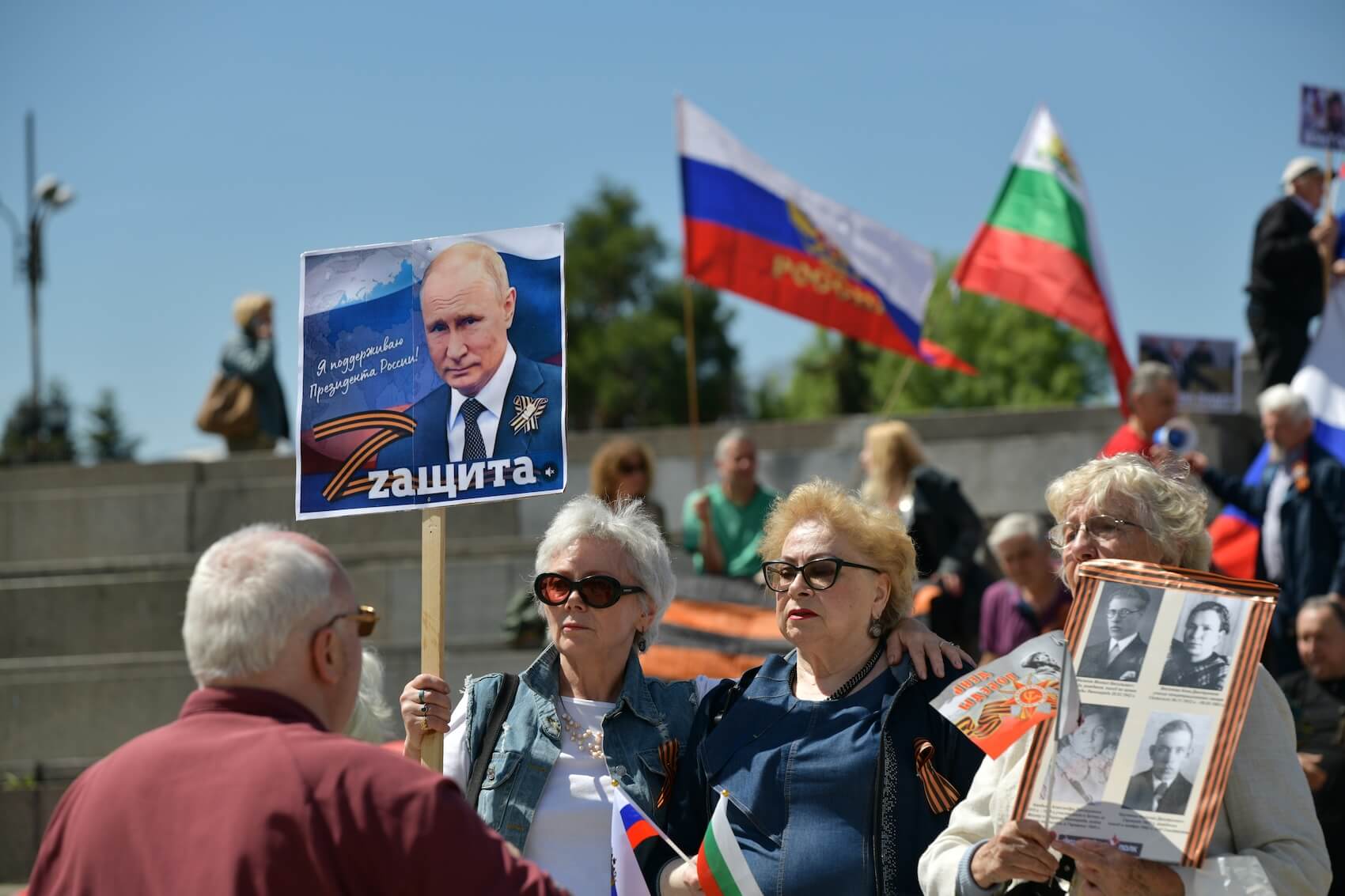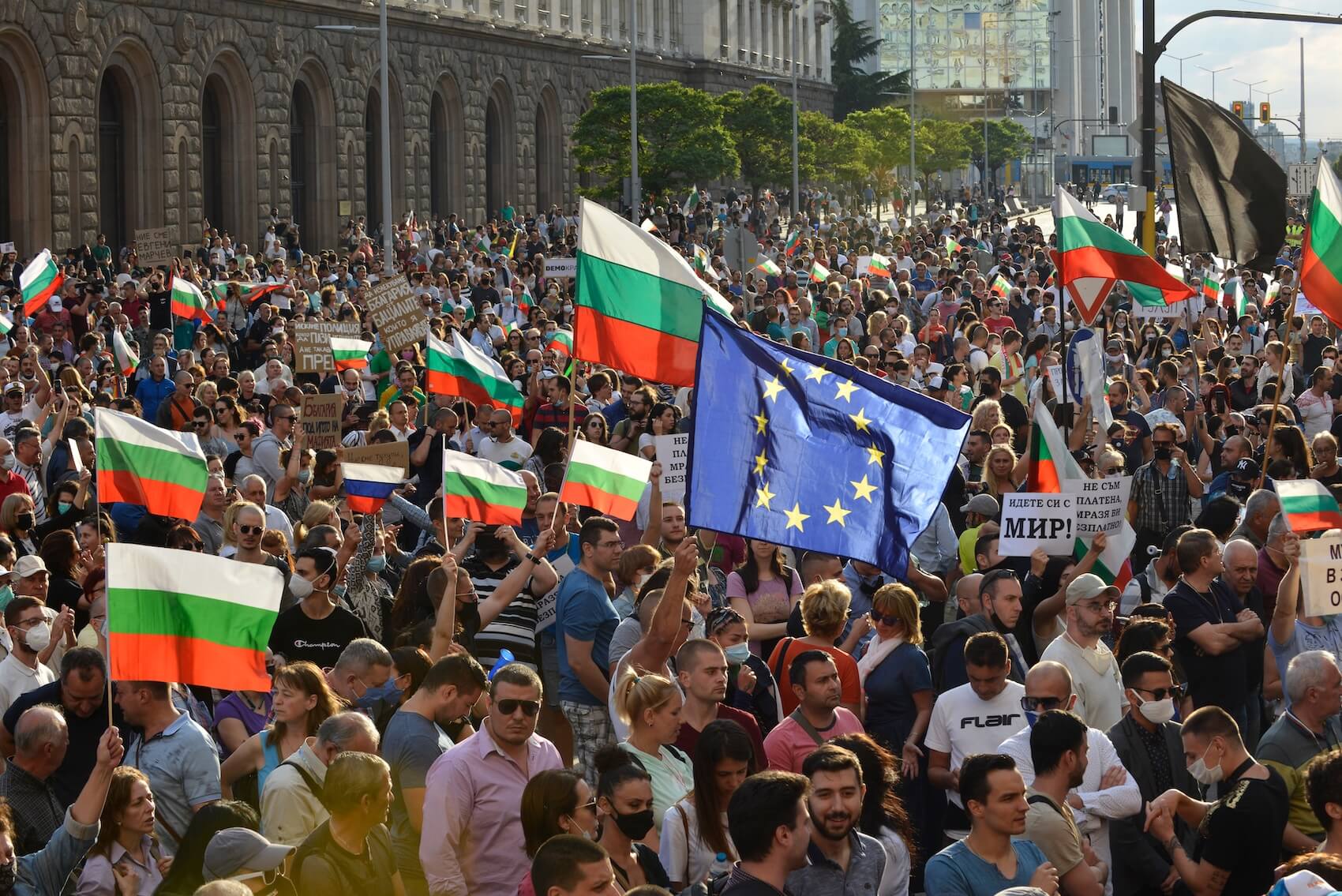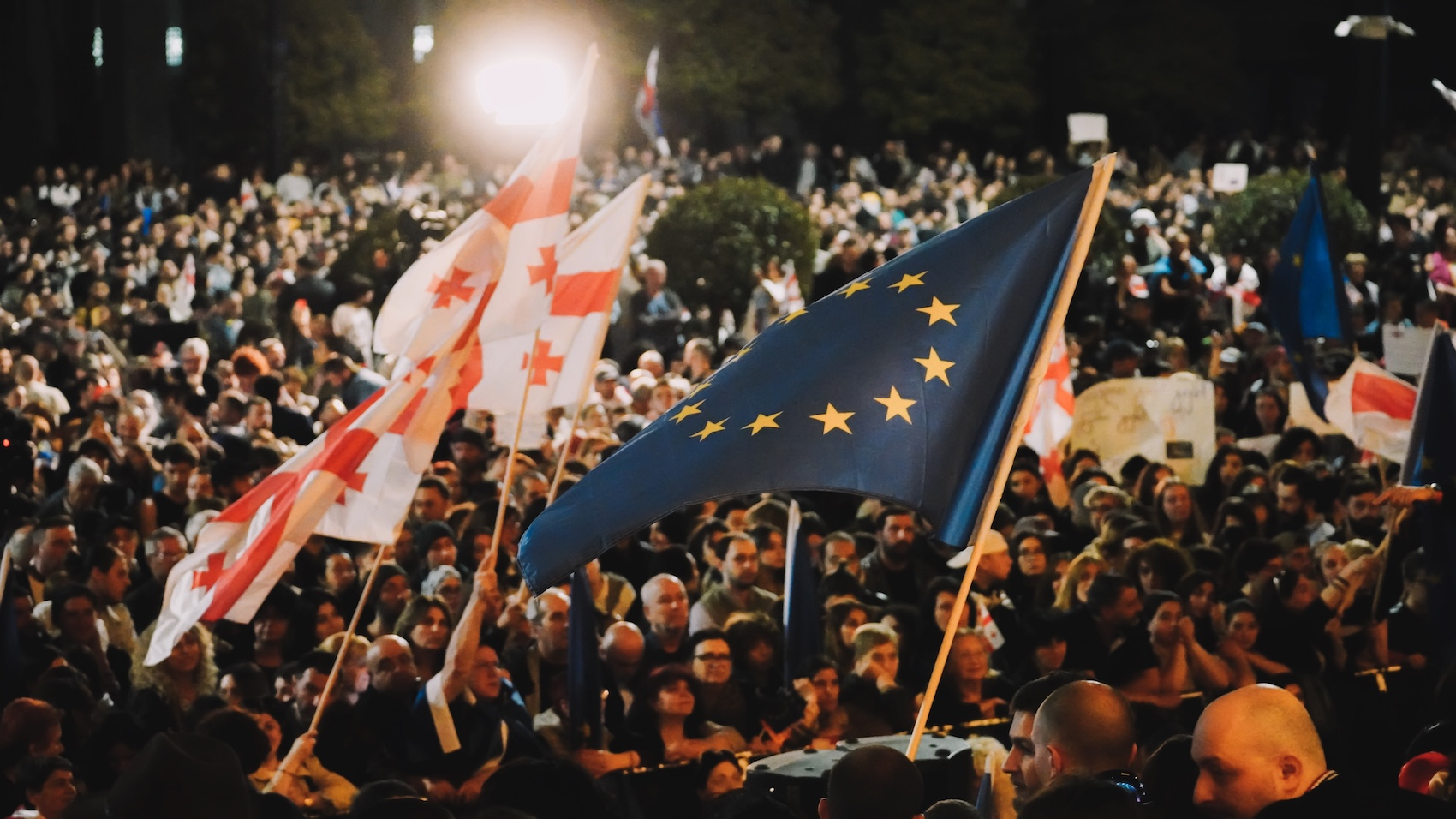

A rally on the main square of Bishkek. Photo:  Omurali Toichiev.

Tracing the Pathways of Autocracy and Authoritarianism across Central Asia

Valev, Radoslav. (2024). “Tracing the Pathways of Autocracy and Authoritarianism across Central Asia.” European Center for Populism Studies (ECPS). July 10, 2024. https://doi.org/10.55271/rp0058


The fourteenth event in ECPS’s monthly Mapping Global Populism (MGP) panel series, titled “Tracing the Pathways of Autocracy and Authoritarianism Across Central Asia,” convened online on June 20, 2024. This event delved into the evolving autocratic political landscape of Central Asian countries. Moderated by Dr. David Lewis, a respected professor of Politics at the University of Exeter, the panel featured insightful presentations that dissected various aspects of autocracy and authoritarianism from multiple disciplinary perspectives.

Report by Radoslav Valev

In a comprehensive examination of Central Asia’s political landscape, the European Center for Populism Studies (ECPS) hosted the fourteenth and final event of its academic year in the monthly Mapping Global Populism (MGP) panel series. Titled “Tracing the Pathways of Autocracy and Authoritarianism Across Central Asia,” this online event convened on June 20, 2024, bringing together a distinguished panel of scholars to discuss the region’s evolving dynamics. Moderated by Dr. David Lewis, a respected professor of Politics at the University of Exeter, the panel featured insightful presentations that dissected various aspects of autocracy and authoritarianism from multiple disciplinary perspectives.

Dr. Lewis set the stage by reflecting on the evolving discourse around authoritarianism and democracy in Central Asia. He noted the increasing complexity of political systems influenced by populism and regional dynamics, underscoring the shift in international engagement shaped by geopolitical factors rather than clear democratic promotion strategies. Dr. Lewis emphasized the importance of understanding the nuanced aspects of authoritarian regimes, including informal economics, clan politics, and power struggles, beyond mere repression.

The subsequent presentations offered deep dives into specific manifestations of autocracy in the region. Dr. Aksana Ismailbekova, a Postdoctoral Researcher at Leibniz-Zentrum Moderner Orient, analyzed Sadyr Japarov’s rise to power in Kyrgyzstan, attributing his sustained popularity to his portrayal as a “man of the people” and his strategic adaptation to different cultural contexts despite authoritarian measures. Dr. Dinissa Duvanova, Associate Professor at Lehigh University, examined Kazakhstan’s shift towards populism under President Tokayev, arguing that it is a strategic adaptation to maintain autocratic rule by balancing elite interests with popular demands. Oguljamal Yazliyeva, a Ph.D. researcher at Charles University, explored how Turkmenistan’s autocratic system, influenced by Soviet legacy and tribal traditions, cultivates a personality cult around its leaders through controlled media and traditional respect for authority.

Although one of the speakers, Dr. Diana T. Kudaibergen(ova), could not join due to connectivity issues, the panel provided a rich exploration of Central Asian political systems. Dr. Lewis concluded by highlighting the value of this nuanced approach to understanding governance in the region, moving beyond simplistic binaries of democracy and autocracy, and expressed enthusiasm for the ongoing research in this complex field.

Moving Beyond Simplistic Binaries of Democracy and Autocracy 

Dr. David Lewis, the moderator of the panel, gave an overview of the context of the topic of the panel. He began by reflecting on the evolution of discourse surrounding authoritarianism, democracy, and liberal values in Central Asia over the past two decades. Initially, in the early 21st century, liberal democracy was seen as the dominant global paradigm, but this has been increasingly challenged. The rise of populism in Western democracies and a more nuanced understanding of political systems in regions like Central Asia have contributed to a more complex view of authoritarianism and democracy.

Dr. Lewis noted that populism, once associated with revolutionary movements, is now also prevalent in regime politics and authoritarian systems. He highlighted the shift in international engagement with Central Asia, often driven by geopolitical factors rather than a clear strategy for promoting democracy. Dr. Lewis emphasized the importance of understanding the complexities of authoritarian regimes beyond simple repression. This includes examining informal economics, clan politics, regional dynamics, and power struggles that persist even in non-democratic systems.

He remarked that the new generation of political scientists in Central Asia is providing more nuanced insights into these political systems, contributing to a more complex body of literature on the topic. Dr. Lewis concluded by expressing enthusiasm for the panel’s focus on this subject, seeing it as an opportunity to explore the latest research on Central Asian political systems. He emphasized the value of this more intricate approach to understanding governance in the region, moving beyond simplistic binaries of democracy and autocracy.

Dr. Aksana Ismailbekova: “Clean Politics: Kyrgyzstan between Informal Governance and Democracy”

Dr. Aksana Ismailbekova discussed Sadyr Japarov’s rise to power in Kyrgyzstan following the October 2020 revolution. She began by arguing that despite implementing authoritarian measures, Japarov has maintained popularity by portraying himself as a “man of the people” and leveraging his personal history of suffering and injustice. Japarov has demonstrated a talent for speaking the language of local people and using simple language that resonates with them. Dr. Ismailbekova argued that Japarov’s success lies in his ability to wear “several hats” simultaneously. He presents himself as a simple man, a Native Son, while proposing authoritarian power.

The presentation by Dr. Aksana Ismailbekova discussed Sadyr Japarov’s rise to power in Kyrgyzstan following the October 2020 revolution. She began by arguing that despite implementing authoritarian measures, Japarov has maintained popularity by portraying himself as a “man of the people” and leveraging his personal history of suffering and injustice. Kyrgyzstan has experienced three revolutions in recent history (2005, 2010, and 2020), driven by public dissatisfaction with government corruption, fraudulent elections, and mismanagement. The 2020 revolution, sparked by the mishandling of the COVID-19 pandemic, led to the overthrow of President Jeenbekov and the rise of Japarov to power.

According to Dr. Ismailbekova, Japarov, who was released from prison during the 2020 protests, quickly seized the opportunity to become acting president and prime minister. He criticized previous leaders for corruption and mismanagement while promising justice. However, he soon began consolidating power by amending the constitution to increase presidential authority, restricting media freedom, and taking control of the judiciary and foreign policy. Dr. Ismailbekova attributed this to Japarov’s ability to mobilize mass support by playing on emotions and using strategies of kinship. His personal suffering and tragic life story have become key elements in his political narrative, allowing many Kyrgyz citizens to identify with him.

Japarov’s biography plays a crucial role in his political appeal. In 2013, he organized protests to nationalize a gold company, leading to criminal charges and forcing him into exile. He often refers to this experience, claiming to understand the hardships faced by millions of Kyrgyz migrants, primarily in Russia. Dr. Ismailbekova emphasized how Japarov has become an “embodiment of injustice” in Kyrgyzstan. His attempted suicide in prison, which he claimed was a protest against the corrupt court system, resonated with many citizens. Furthermore, Japarov’s personal tragedies, such as losing his son and parents while in prison, have garnered sympathy and support from the public.

Dr. Ismailbekova underscored that Japarov’s suffering has been translated into political capital. He is perceived as more relatable than other candidates, someone who has experienced the injustices of the system firsthand. This narrative of suffering has been cultivated as a necessary virtue for being a good president. Dr. Ismailbekova noted that Japarov has positioned himself as the “hope of the nation” in a failed democracy. This narrative has been well-received by many of his constituents.

Interestingly, since Japarov became president, historians have begun searching for his ancestors to legitimize his right to lead Kyrgyzstan. Some claim that Japarov is a direct descendant of the Khans (a title historically given to rulers and military leaders in Central Asia), suggesting that the search for justice is “in his blood.” Dr. Ismailbekova highlighted how Japarov adapts his image to different situations. For example, when visiting southern Kyrgyzstan, he wore the hat of Iskhak Razzakov, the first Secretary of the Communist Party of Kyrgyzstan, appealing to villagers and relatives by claiming to continue Razzakov’s mission.

Japarov has demonstrated a talent for speaking the language of local people and using simple language that resonates with them. Dr. Ismailbekova argued that Japarov’s success lies in his ability to wear “several hats” simultaneously. He presents himself as a simple man, a Native Son, while proposing authoritarian power. 

The international media has taken notice of Japarov’s rise to power, with many articles focusing on his journey “from prison to presidency.” This narrative reinforces his image as someone who has overcome adversity. 

In conclusion, Dr. Ismailbekova suggested that the popularity of Japarov stems from citizens’ identification with his tragic life story and his ability to tap into the emotional experiences of the Kyrgyz people. Japarov’s political strategy involves constantly referring to his personal history, particularly during elections. Dr. Ismailbekova concluded that Japarov’s approach has maintained his popularity. His ability to understand cultural nuances and to present himself as one of the people have been key to his success. 

Dr. Dinissa Duvanova: “Autocracy’s Past and Present in Kazakhstan”

Dr. Dinissa Duvanova argued that the seeming populist pivot in Kazakhstan is better understood as a strategic adaptation within a stable autocratic framework. The balance between elite interests and popular demands, mediated through regulatory constraints and economic management, continues to define the country’s political landscape. The increase in state capacity and regulatory oversight, influenced by economic conditions, highlights the nuanced strategies employed by the regime to maintain its authority.

Dr. Dinissa Duvanova began her presentation by stating that in Kazakhstan, the link between the autocratic nature of its political regime and populism appears tenuous compared to other cases. After the January 2022 protests, President Kassym-Jomart Tokayev addressed the joint session of the Senate and Mazhilis (The Lower House of the Parliament in Kazakhstan) via a Zoom call. In his speech on January 11, 2022, he criticized powerful elites and profitable companies in Kazakhstan, suggesting it was time they paid their dues to the people. Tokayev proposed establishing a National Fund to collect these debts and redistribute them to the population. Dr. Duvanova suggested that this can be seen as a potential shift towards a populist style of governance, though it may also reflect a continuation of established strategies to maintain autocratic stability.

Following the protests, Tokayev initiated a crackdown on elite leaders behind the unrest, leading to the imprisonment and asset seizure of key figures. However, the extent of asset seizures varied significantly; for instance, only a small fraction of the estimated wealth of members of former President Nazarbayev’s family was confiscated. This indicates that while there was a response to popular demands, it may not represent a deep-rooted commitment to populism but rather a tactical move within a broader autocratic framework.

Dr. Duvanova added that in her research, detailed in her book “Thieves, Opportunists, and Autocrats,” she argued that what appears as a populist pivot in Kazakhstan is actually another iteration of maintaining stable autocratic power perfected during Nazarbayev’s era. This involves strengthening and institutionalizing authoritarian state mechanisms, balancing elite interests with those of the masses. This balance is crucial for autocrats to sustain their rule, ensuring both elite support and popular acquiescence.

Moreover, Dr. Duvanova argued that one way to think about state-building by autocrats is the need to balance the particularistic demands of elites with the promotion of collective goods. Neglecting the latter can lead to economic decline, intensifying competition for rents and destabilizing the regime. Therefore, autocrats must invest in economic performance, benefiting the national economy and, by extension, the populace.

A notable quote from Tokayev’s January 11, 2024 speech highlights this balancing act: “For my friends, everything; for my enemies, the law.” This saying, originally attributed to Latin American politician Oscar Benavides, encapsulates the Kazakh autocracy’s approach to governance, rewarding loyal elites while maintaining a facade of legal accountability for others.

The concept of a regulatory authoritarian state, which Dr. Duvanova explored in her research, involves the systematic construction of formal regulatory constraints on state agencies. These constraints ensure more predictable and accountable bureaucratic behavior. Data from Kazakhstan show a significant increase in formal regulatory constraints since the mid-2000s, driven primarily by ministerial orders rather than legislative statutes. This regulatory expansion corresponds with fluctuations in oil revenues, with more stringent regulations emerging during times of declining oil rents and vice versa.

Popular protests, such as those in January 2022, often prompt autocrats to streamline state institutions to improve responsiveness and effectiveness. Additionally, declining resources necessitate a focus on enhancing economic performance to maintain regime stability. The Russian invasion of Ukraine in February 2022, leading to rising oil prices, provided Kazakhstan with increased resources, potentially alleviating some pressures to pursue populist policies aggressively.

Dr. Duvanova’s quantitative research demonstrates that in times of economic difficulty, characterized by declining state resources, there is an increase in regulatory oversight to curb bureaucratic opportunism. Overall, Kazakhstan has emerged as a high-capacity autocracy, evidenced by its regulatory quality and state capacity ratings. This increase in state capacity has occurred alongside systemic corruption and favoritism towards regime associates. Despite the heavy-handed use of regulations to manage economic activity, these regulations are often biased towards private interests.

The signs of liberalization under Tokayev can also be seen as the rise of digital authoritarianism, with increased digitalization of state services improving efficiency and state capacity. However, there is little evidence of reliance on transparency, public accountability, and oversight, as restrictions on press freedom and an independent judiciary persist.

In conclusion, Dr. Duvanova argued that the seeming populist pivot in Kazakhstan is better understood as a strategic adaptation within a stable autocratic framework. The balance between elite interests and popular demands, mediated through regulatory constraints and economic management, continues to define the country’s political landscape. The increase in state capacity and regulatory oversight, influenced by economic conditions, highlights the nuanced strategies employed by the regime to maintain its authority.

Oguljamal Yazliyeva: “Autocracy in Turkmenistan and the Role of Media in Cultivating Personality Cult”

Oguljamal Yazliyeva argued that Turkmenistan’s autocratic system is deeply entrenched, supported by a tightly controlled media apparatus that perpetuates a strong personality cult. The government’s use of historical tribal traditions recycled Soviet methods, and modern media techniques has created a robust system of authoritarian control. While this system appears stable, the lack of alternative media and independent information sources poses significant challenges for potential democratic development in the country.

Oguljamal Yazliyeva began her presentation by stating that Turkmenistan’s autocratic system and the role of media in cultivating a personality cult is a complex topic that intertwines historical, political, and cultural elements. The country, one of the five Central Asian republics, gained independence in 1991 after the collapse of the Soviet Union. Since then, it has developed into one of the most isolated nations in the region, with a political system characterized by authoritarianism and a strong personality cult surrounding its leaders.

Yazliyeva argued that the foundations of Turkmenistan’s current political culture can be traced back to two main sources: the recycling of the Soviet system and the historical tribal traditions of the Turkmen people. The first president of independent Turkmenistan, Saparmurat Niyazov, promised to develop the country towards democracy but emphasized that it would be a step-by-step process. In reality, this approach led to the state maintaining control over every aspect of life, including the media system.

The Turkmen government has utilized various strategies to legitimize its power and consolidate its authoritarian rule. One such method is the use of national symbols, such as the five patterns on the Turkmen flag representing the country’s five provinces. This symbolism serves to connect the current political system with the tribal history of the Turkmen people.

Yazliyeva also importantly noted that the media plays a crucial role in strengthening and consolidating the authoritarian regime in Turkmenistan. All media channels, including television, radio, print media, and the internet, are under strict state control. The constitution of Turkmenistan nominally guarantees freedom of speech and prohibits censorship, but in practice, the government exercises complete control over all media outlets.

Television remains a significant platform for the government to disseminate information about its policies. A survey conducted by Yazliyeva among Turkmen people revealed that more than 25% of media consumption is through television. Interestingly, over 50% of respondents prefer Russian-language media, which the government also uses to spread its message.

The Turkmen government employs the media to create a cult of personality around its leaders. This is particularly evident in the use of specific epithets and phrases to glorify the president, such as “Father of the Nation, be healthy.” In news broadcasts, these glorifying phrases are repeated multiple times, even in short reports about mundane events like sports.

According to Yazliyeva, the media landscape in Turkmenistan is characterized by repression, propaganda, and suppression. Academic literature on the subject is limited, but existing studies describe a system where all media channels are under state control. Even the single platform considered “private” was launched under government leadership and remains under strict official control.

Yazliyeva  added that the government uses media to consolidate its power through various means. One strategy involves broadcasting content that instills fear in the population. For example, television shows often depict the wrongdoings and subsequent imprisonment of individuals who deviate from government policy. Another tactic involves showcasing acts of extreme deference to the leader, such as hand-kissing or bowing, which are not traditional in Turkmen culture.

Yazliyeva underscored that the personality cult surrounding Turkmenistan’s leaders is a central feature of the country’s political culture. This phenomenon takes root in the historical tribal conditions, the legacy of Soviet communist control, and the idiosyncratic personality of the state leaders. The media consistently promotes the key role of the state leader in Turkmen society by glorifying them on various platforms.

Interestingly, Yazliyeva argued that the consolidation of this authoritarian regime is not solely the work of the political elite. Ordinary citizens also participate in and accept this system, partly due to traditional respect for patriarchal structures and tribal kinship. This acceptance makes it easier for the government to maintain its grip on power.

The development of Turkmenistan’s political system and media landscape since independence has resulted in a unique model of political culture. This model, based on authoritarianism and one-man rule, has played a significant role in building and maintaining the cult of personality around the country’s leaders, from the first president Saparmurat Niyazov to his son and current president, Gurbanguly Berdimuhamedov.

In conclusion, Yazliyeva argued that Turkmenistan’s autocratic system is deeply entrenched, supported by a tightly controlled media apparatus that perpetuates a strong personality cult. The government’s use of historical tribal traditions recycled Soviet methods, and modern media techniques has created a robust system of authoritarian control. While this system appears stable, the lack of alternative media and independent information sources poses significant challenges for potential democratic development in the country. As such, the introduction of alternative media could be crucial in providing Turkmen citizens with diverse perspectives and information about their country and the world at large.

Professor Tim Bale is a renowned scholar from the School of Politics and International Relations at Queen Mary University of London.

Professor Bale: PRR Parties Can Be Beaten at Elections, But They Can’t Be Eradicated

By analyzing the recent electoral success of Nigel Farage’s Reform UK Party (RUKP) as a representative of European PRR parties, Professor Tim Bale emphasized that “mainstream parties who oppose them have to learn to live with this fact and realize that while they can be beaten at elections, they can’t be eradicated.” Discussing the broader political climate, Professor Bale warned of the challenges posed by both right-wing and left-wing populism. He pointed out that left-wing populism, while lacking the xenophobic and Islamophobic elements of its right-wing counterpart, often proposes overly simplistic solutions that could threaten good governance and economic stability. 

Interview by Selcuk Gultasli

In an interview on Tuesday with the European Center for Populism Studies (ECPS), Professor Tim Bale, a renowned scholar from the School of Politics and International Relations at Queen Mary University of London, provided deep insights into the enduring presence of populist radical right (PRR) parties in the UK and European politics. Reflecting on his earlier predictions, Professor Bale emphasized that “mainstream parties who oppose them have to learn to live with this fact and realize that while they can be beaten at elections, they can’t be eradicated.”

Professor Bale analyzed the recent electoral successes of Nigel Farage’s Reform UK Party (RUKP), highlighting the demographic trends underpinning its support. Unlike in many European countries, where far-right support often comes from younger voters, in the UK, it is generally middle-aged or older individuals who are drawn to these parties. These supporters, many of whom left school at 16 or earlier, are not necessarily deprived but often feel uneasy about cultural changes and harbor nostalgia for a bygone Britain. RUKP has skillfully expanded its appeal beyond immigration to include resistance to “woke” politics and rapid environmental policies, positioning itself as a defender against perceived excessive social liberalism and fast-tracked net-zero targets.

The interview explored the potential implications of the Labour Party’s recent electoral victory on far-right parties. Professor Bale noted that Labour’s handling of immigration would be crucial. While a reduction in legal migration might temper some support for RUKP, ongoing issues such as illegal Channel crossings could still provide fertile ground for Farage’s rhetoric. “Nigel Farage and RUKP will be able to capitalize on that particular problem and Labour’s inability to stop them completely,” he observed.

Discussing the broader political climate, Professor Bale warned of the challenges posed by both right-wing and left-wing populism. He pointed out that left-wing populism, while lacking the xenophobic and Islamophobic elements of its right-wing counterpart, often proposes overly simplistic solutions that could threaten good governance and economic stability. “While left-wing populism has its downsides, it may not be as dangerous for minority communities as right-wing populism has proven to be,” he concluded.

In reflecting on the Conservative Party’s strategy, Professor Bale highlighted the ongoing internal debate about how to address the rise of RUKP. He suggested that the Conservatives’ move towards populist radical right policies has so far been counterproductive, potentially perpetuating a vicious cycle. The party faces a crucial decision: whether to embrace Farage and his supporters or to reaffirm its commitment to centrist, economically focused policies.

Overall, Professor Bale’s insights underscore the complex and enduring nature of PRR parties in the UK and Europe. His assertion that these parties are now a permanent fixture in the political landscape serves as a sobering reminder for mainstream parties of the challenges they face in addressing and countering populist narratives.

Here is the transcription of the interview with Professor Tim Bale with some edits.

Farage Has Majority Shareholder at the Limited Company “Reform UK”

Nigel Farage speaking in Dover, Kent, UK, on May 28, 2024, in support of the Reform Party, of which he is President. Photo: Sean Aidan Calderbank.

Professor Bale, thank you so very much for joining our interview series. Let me start right away with the first question. Can you provide a brief overview of the historical roots of populist far-right movements in the UK and how they have evolved over the past few decades?

Professor Tim Bale: After the Second World War, there was very little support for far-right organizations in the UK. They were very much marginal to the political process. That began to change in the late 1960s and early 1970s when mass migration first became very apparent in the UK, with the founding of an organization called the National Front, which, at least at a local level, challenged some of the main parties’ candidates.

The National Front, however, seemed to have gone effectively underground from the 1970s into the 1980s, when it was in some ways reconstituted by an organization called the British National Party (BNP). The BNP didn’t actually have much success until the late 1990s and early 2000s, when it began to fight European Parliament elections and actually had a couple of MEPs. That, however, was in the end sidelined because it was seen to be too extreme and too racist.

To some extent, it was overtaken by the United Kingdom Independence Party (UKIP), which had no roots at all in the kind of extremist or neo-fascist, violent underground in the same way the National Front or the BNP had. If UKIP was a far-right party, it was very much a Populist Radical Right (PRR) party, not an extreme right party. UKIP became more and more popular, particularly when led by Nigel Farage, and in 2015 it won approximately 4 million votes, but only because of the first-past-the-post system did it secure one MP in Parliament.

Then it transformed itself into the Brexit Party, which did very well at the European elections of 2019, when it took 30% of the vote and came first, beating the Conservatives into fifth place. The Conservatives responded by electing Boris Johnson, and in the 2019 election, the Brexit Party was reduced to just 2% of the vote and no MPs.

However, since then it has rebuilt itself to become Reform UK, very much a PRR party again. In the 2024 election, it was led once again by Nigel Farage. It performed very creditably, taking 14% of the vote, for which it won five MPs—the first RUKP MPs we’ve ever had in this country, one of whom is Nigel Farage.

So, it is seen to be on the rise at the moment. It is an unusual organization, however, in that it is not a political party in the way that most political parties would be recognized. Rather similarly, in some ways, to Geert Wilders’ PVV in the Netherlands, it is very much a kind of leadership-directed organization. It doesn’t have members and is a limited company with shareholders, with Nigel Farage as the majority shareholder.

Immigration, Opposition to “Woke” Politics and Resistance to Net Zero Environmental Policies

In your view, what are the main socio-economic drivers behind the support for far-right parties in the UK? How do these parties capitalize on issues like immigration, economic disparity, crime and national identity?

Professor Tim Bale: Well, immigration has probably been the main appeal of these parties. When the far-right in this country was more extreme, there was a degree of biological or genetic racism—the idea that people from certain ethnicities were somehow inherently inferior. I think that has largely disappeared. However, the racism exhibited by the populist radical right today tends to be more of a “new variety,” whereby people from different ethnicities are not seen as biologically inferior but are perceived as having a culture that does not easily integrate with the majority culture.

Support for these parties depends partly on concerns about cultural integration and the numbers of people coming to the UK. Any increase in immigration, either legally or, as they would define it, illegally (such as asylum seekers arriving outside recognized government routes), is associated with a rise in support for these parties.

Demographically, the support for radical right parties in the UK, unlike in many European countries, does not come much from young people. Their support is generally located among middle-aged or older individuals, including those who are retired. Many of these supporters left school at the age of 16 or even earlier and are not necessarily deprived; some are quite comfortably off but are uncomfortable with cultural change and have a degree of nostalgia for how Britain was when they were younger.

However, immigration isn’t their only appeal. They have also begun to expand their repertoire to include resistance to what they call “woke” politics—any kind of social liberalism they see as excessive. Additionally, they campaign against too rapid a progress towards net zero on the environmental front. So, RUKP pitches its appeal on three main issues: immigration, opposition to “woke” politics, and resistance to net zero environmental policies.

Labour Party leader Sir Keir Starmer speaking and gesturing in the House of Commons, UK Parliament, at Westminster Palace in London, UK, on February 7, 2024. Photo: Tennessee Witney.

How do you think the recent victory of the Labour Party impacts the political landscape for far-right parties in the UK? Do you foresee a decline in their influence, or could it potentially galvanize their base?

Professor Tim Bale: I think, in part, the answer to that question depends on how Labour deals with and delivers on immigration. If Labour manages to preside over a drop in immigration numbers, then that will, to some extent, suppress the support for RUKP. However, it will likely not be able to stop people from making the crossing in the English Channel from France to the UK to claim asylum. This is something that successive British governments have found very difficult to combat, and given that Nigel Farage and RUKP make a great deal out of that particular route into the country, it’s going to be difficult for Labour to completely suppress support for RUKP that arises from anxiety about those crossings.

We will have to see how things unfold. The numbers will probably go down when it comes to legal migration anyway, because fewer people will be coming from Ukraine and Hong Kong, which have been significant contributors to the increase in numbers. The previous government also made it more difficult for people to bring their families with them when they come on the study route into the UK. So, numbers will probably go down as a result of that as well.

However, as I mentioned, that’s only legal migration. The small boat crossings will likely continue, and therefore Nigel Farage and RUKP will be able to capitalize on that particular problem and Labour’s inability to stop them completely.

Labour’s Social Liberalism May Become a Point of Attack for RUKP

Given the current political climate, what potential threats do you think far-right parties pose in the UK? How might they adapt their strategies in response to the Labour Party’s resurgence and the broader political environment? Do you think they will continue to rely heavily on populist Euroscepticism, or might they shift their focus to other issues?

Professor Tim Bale: Euroscepticism is indeed an interesting topic. There is a conspiracy theory on the right of British politics, with RUKP being the main carrier of this idea, that Labour is ultimately interested in rejoining the European Union, or at the very least, getting much closer to it and “reversing Brexit.” Any move by the Labour government in that direction will likely encourage pushback from RUKP, potentially leading them to emphasize Europe more than they have recently. Interestingly, Brexit was not a major part of the general election campaign or RUKP’s campaign; they focused more on immigration, “woke” politics, and net zero.

Given that the Labour government will almost certainly need to try and move closer to Europe to reduce trade friction, it could find itself under attack from RUKP on that basis. Additionally, since the Labour government is fully committed to rapid progress towards net zero carbon emissions, RUKP will likely attack it on those grounds. They will also presumably criticize Labour for not making as big an issue of so-called cancel culture or trans rights as the Conservative government did. Labour’s inherent social liberalism may also become a point of attack for RUKP.

What I predict will happen is that RUKP will argue that both the Conservatives and Labour have tried and failed, particularly on immigration, and now it is time to give RUKP a chance. 

Farage to Be a Very Important Part of PRR Politics in the UK for Decades to Come

Nigel Farage has been a significant figure in British politics, particularly in the rise of UKIP and the Brexit movement. Given the current political landscape, how do you assess Farage’s continuing influence on far-right politics in the UK? 

Professor Tim Bale: Well, in some ways, Nigel Farage is far-right politics in the UK. There is no one, really, at least electorally competitive to the right of RUKP, and he is very much the undisputed leader of that party. He is a consummate communicator, incredibly persistent and patient. He was elected to Parliament on his eighth attempt, having tried and failed seven times before. His doggedness has paid off, and he’s not going away anytime soon. Despite looking older, he is actually only in his late fifties or possibly just about sixty, so he has plenty of political life left in him.

One potential issue with Farage is his tendency to fall out and argue with colleagues who challenge him in any way. This has been a recurring story with UKIP and, to some extent, the Brexit Party, and it may indeed become true of RUKP. It remains to be seen whether RUKP will be able to institutionalize and become a normal political party if that means diluting Farage’s authority. It will be interesting to see if RUKP becomes a genuinely membership-based organization. Currently, its “members” are essentially subscribers or donors with no real say or rights within the party.

As a Member of Parliament, Farage will be able to use that platform in addition to his media presence. Whether he will continue to present his nightly weekday show on GB News, a new streaming platform that has become quite important in the center-right and right-wing media ecosystem, remains to be seen. However, he is undoubtedly “box office” in media terms. Journalists are charmed by him, obsessed with him, and give him much more airtime than RUKP’s vote share or number of MPs would typically warrant.

I would expect Nigel Farage to be a very important part of populist radical right politics in the UK for years, possibly even decades, to come.

Reform is the party that increased its vote the most, by 14% and got 4 million votes. Can you elaborate on the success of Nigel Farage’s RUKP as a populist party like its peers in continental Europe? Can you explain the similarities and differences between RUKP and the continental populist parties? How has his rhetoric and political strategy managed to resonate with a significant portion of the electorate?

Professor Tim Bale: I think Nigel Farage has to be seen as very much the British representative of the populist radical right in Europe. I would use that phrase to classify RUKP rather than the phrase “extreme right.” This differentiates him from parties like France’s National Rally, which has its roots in the extreme right despite its detoxification process. Similar histories can be found in the Sweden Democrats in Sweden and the Brothers of Italy, which evolved out of the fascist movement in that country.

In some ways, Farage is more like the populists seen in other Scandinavian countries, which don’t necessarily have roots in the anti-democratic, sometimes violent, fascist underground. This places him on the more moderate side of far-right parties in Europe.

In terms of techniques, Farage employs familiar populist strategies seen across Europe. He positions himself as the tribune of the people against the elite, who he claims have betrayed the people, particularly on issues like mass migration. He is also prepared to use language regarding Islam that mainstream politicians avoid. Farage talks about the supposed dangers Islamist subcultures present to mainstream national culture, and his rhetoric has become more Islamophobic and xenophobic over the years, which is also true of many populist parties in Europe. So, Farage is not a unique British archetype; he is very much a familiar figure to anyone who has followed populist parties in Europe. 

The Conservative Party’s Strategy Proves Counterproductive

British PM Rishi Sunak shaking hands with supporters at a meet and greet in Leigh-on-Sea, UK, on January 15, 2024. Photo: Tennessee Witney.

Will this moment of triumph for RUKP prove a temporary upset to Britain’s long tradition of largely centrist rule? Or will RUKP’s explosive arrival in Westminster bring a fundamental realignment of British politics along the lines seen elsewhere for populist parties across the globe?

Professor Tim Bale: This is the million-dollar question and relates to how the Conservative Party, the mainstream center-right party in the UK, deals with Nigel Farage from now on. One can argue that the Conservative Party has been moving from the mainstream towards the populist radical right over the last decade, partly because it believed that to suppress support for RUKP, and before that the Brexit Party and UKIP, it had to adopt some of the rhetoric and measures proposed by the populist radical right.

However, that strategy doesn’t seem to have worked. Just as in Europe, it often proves counterproductive, simply increasing the salience of the issues on which those populist radical right parties thrive. So, the Conservative Party has moved towards the populist radical right, yet the populist radical right has become just as, if not more, popular than before.

The Conservative Party is now debating within itself, as it chooses a new leader, whether that new leader should welcome Nigel Farage into the party or at least into some sort of alliance to “unite the right,” or whether they should continue to hold Farage at arm’s length to differentiate themselves and not alienate more moderate voters. This conversation will likely continue within the Conservative Party for some time to come.

The impact of RUKP is limited by the UK’s electoral system. Because we have a first-past-the-post system, RUKP is not rewarded with a fair proportion of seats in Parliament for the votes it receives. Given that it got about 14% of the vote this time around, you would expect it to have something like 75-80 seats in the UK Parliament, which has 650 in the lower chamber, but it only has 5.

However, Nigel Farage has a significant media presence and appeals to both Conservative voters and Conservative members. When polling is done among Conservative Party members, they often cite Farage as one of their favorite politicians. This has led some to conclude that if Farage were ever to join the Conservative Party, he would stand a good chance of leading it, given that the decision on who becomes the leader is up to grassroots members with whom he is very popular.

Do you think RUKP’s success will push the Tories more to the populist right, a trend we see in continental Europe as we already hear calls by some Tory heavyweights to include RUKP among their ranks?

Professor Tim Bale: I think that is entirely possible, because the Conservatives, as I’ve already mentioned, are somewhat obsessed with Nigel Farage and RUKP. They focus more on the voters they have lost to him and that party than on those they have lost to Labour and the Liberal Democrats on their left or centrist flank.

An analysis of the election results suggesting that the Conservative Party did poorly because the right was split might encourage Conservatives to move even further to the right to try and bring back some of those voters from RUKP. However, as examples from Europe indicate, this doesn’t seem to be a particularly successful strategy. That doesn’t mean, of course, that the Conservative Party won’t adopt this strategy, because parties aren’t always as rational as they should be.

Conservative Party Acts More Like a Populist Radical Right Party

In your article “Who leads and who follows? The symbiotic relationship between UKIP and the Conservatives – and populism and Euroscepticism,” you discuss how the Conservative Party initially fused populism and Euroscepticism, which UKIP later capitalized on. How do you see this symbiotic relationship evolving now, especially with the Labour Party’s resurgence and the success of Farage’s party? 

Professor Tim Bale: Well, in that piece, I argued that the Conservative Party talked up themes that resonate with voters for the populist radical right and then elected a leader who chose to abandon those policies and that rhetoric, allowing Nigel Farage to come in and fill that vacuum. At that point, the Conservative Party began to try and bring those who had defected to his party back by adopting his rhetoric. This creates a continual cycle where the Conservative Party begins to act more like a populist radical right party, and the populist radical right begins to do quite well. 

The Conservative Party’s analysis often leads them to believe they need to act even more like a populist radical right party, perpetuating a vicious cycle. I expect this to continue unless and until the Conservative Party elects a leader who decides to break this pattern. Such a leader would need to refocus the party on being a mainstream center-right entity, with an appeal based on their ability to manage the economy and provide a welfare safety net for those who need it. Until that happens, this cycle will likely continue.

The Conservative Party now faces a significant decision. Whether they will elect such a leader this time around or after potentially losing another election, remains to be seen.

Populist Radical Right Parties Can’t Be Eradicated

In your article titled ‘Cinderella and Her Ugly Sisters: The Mainstream and Extreme Right in Europe’s Bi-polarising Party Systems’ that you penned back in 2010, you stress that there is every chance, that such parties (far-right parties) will indeed ‘succeed in securing a permanent niche in Western Europe’s emerging political market.’ How do you evaluate your statement that was made almost 15 years ago looking at both Europe and Britain in 2024?

Professor Tim Bale: Well, I think it sounds rather immodest to say, but it has been borne out by the facts. It is clear now, as scholars like Cas Mudde would emphasize, that the far right is very much a part of normal politics in many countries, including the UK. The populist radical right, as part of the far right, is also well-entrenched. These parties have an appeal to a certain section of the electorate who are frustrated with the mainstream’s inability to deliver what they want, whether it be immigration control, a better standard of living, or a halt to cultural changes.

I see no reason why this shouldn’t continue. However, at the moment, in most countries—perhaps with the exception of France, Italy, and Austria—the populist radical right tends to hit a ceiling of around 15 to 20% in most countries. It will be interesting to see what happens in the upcoming Austrian elections, where the far right is expected to do very well again.

We also have examples like Hungary, where the populist radical right is in power, even though it didn’t necessarily come to power as such a party but has become one under Viktor Orbán and Fidesz. Anyone interested in the populist radical right must accept that these parties are a permanent part of Europe’s party systems. Mainstream parties who oppose them have to learn to live with this fact and realize that while they can be beaten at elections, they can’t be eradicated.

And lastly, second round parliamentary elections in France show that far-left has beaten the far-right National Rally. Do you consider left-wing populism as problematic as right-wing populism?

Professor Tim Bale: Left-wing populism tends not to carry the xenophobic and Islamophobic overtones that are prevalent in the populist radical right. In this sense, it is somewhat less dangerous to multicultural societies than its right-wing counterpart. However, left-wing populism often proposes very radical solutions that are simplistic and likely not feasible, posing a significant threat to good governance and economic growth.

So, while left-wing populism has its downsides, which include potential harm to economic dynamism and governance, it may not be as dangerous for minority communities as right-wing populism has proven to be.

Thumbnail Professor Jean-Yves Camus

Professor Camus: National Rally’s Electoral Success Goes Beyond Protest Votes

Professor Jean-Yves Camus emphasizes that the social and economic policies of President Emmanuel Macron have driven many voters to the National Rally (NR). However, he cautions against viewing this merely as a protest vote. “When a party remains strong for over 50 years, it cannot be solely due to protest,” he notes. According to Camus, NR’s support base reflects a society grappling with increasing inequalities, where many citizens feel deprived of fair opportunities. This sentiment is compounded by a growing resentment towards foreigners, particularly those from North African, West African and Middle Eastern backgrounds.

Interview by Selcuk Gultasli

In an era marked by the rising influence of far-right movements across the globe, the unprecedented success of France’s National Rally (NR) in both the European Parliament elections in early June and the first round of national elections on June 30, 2024, has captured widespread attention. Scholars, politicians and citizens are keenly observing this seismic shift in French politics. To delve deeper into this phenomenon, we are joined by Professor Jean-Yves Camus, a political analyst and Associate Research Fellow at The French Institute for International and Strategic Affairs (IRIS), who is also a distinguished expert on far-right movements.

Reflecting on NR’s recent successes, Professor Camus emphasizes that the social and economic policies of President Emmanuel Macron have driven many voters to the National Rally. However, he cautions against viewing this merely as a protest vote. “When a party remains strong for over 50 years, it cannot be solely due to protest,” he notes. According to Camus, NR’s support base reflects a society grappling with increasing inequalities, where many citizens feel deprived of fair opportunities. This sentiment is compounded by a growing resentment towards foreigners, particularly those from North African, West African and Middle Eastern backgrounds. NR voters often believe in a clash of civilizations, perceiving a lack of proper assimilation into French society, especially among Muslim immigrants.

In this interview, Professor Camus provides historical context, current dynamics and future projections for the National Rally. He discusses how the NR’s appeal transcends mere protest, touching on deep-seated issues within French society, such as economic disparities, social mobility and national identity. Camus also explores how the NR’s messaging resonates across various demographics, indicating widespread discontent with traditional political parties. He examines the party’s evolution under Marine Le Pen’s leadership, particularly its ‘normalization’ process, which has made it more palatable to a broader segment of voters.

Additionally, Camus sheds light on the influence of cultural and historical factors, including the legacy of France’s colonial past and the Gaullist tradition of national sovereignty, in shaping contemporary far-right and populist movements. He addresses the complexities of European nationalist parties forming cohesive alliances within the European Parliament and the role of external influences, notably from the US and Russia, on the NR and similar movements.

As France stands on the brink of potentially significant political change, this interview offers a thorough analysis of the forces driving NR’s rise and what its continued success could mean for the future of French politics. Professor Camus’s insights are invaluable for understanding the broader implications of this shift and the underlying currents shaping the political landscape.

Here is the transcription of the interview with Professor Jean-Yves Camus with some edits.

Marine Le Pen and Jordan Bardella are seen at the end of a polical meeting in Marseille for Rassemblement National party on March 3, 2024. Photo: Obatala-photography.

Professor Camus: National Rally’s Electoral Success Goes Beyond Protest Votes

Professor Jean-Yves Camus emphasizes that the social and economic policies of President Emmanuel Macron have driven many voters to the National Rally (NR). However, he cautions against viewing this merely as a protest vote. “When a party remains strong for over 50 years, it cannot be solely due to protest,” he notes. According to Camus, NR’s support base reflects a society grappling with increasing inequalities, where many citizens feel deprived of fair opportunities. This sentiment is compounded by a growing resentment towards foreigners, particularly those from North African, West African and Middle Eastern backgrounds.

Interview by Selcuk Gultasli

In an era marked by the rising influence of far-right movements across the globe, the unprecedented success of France’s National Rally (NR) in both the European Parliament elections in early June and the first round of national elections on June 30, 2024, has captured widespread attention. Scholars, politicians and citizens are keenly observing this seismic shift in French politics. To delve deeper into this phenomenon, we are joined by Professor Jean-Yves Camus, a political analyst and Associate Research Fellow at The French Institute for International and Strategic Affairs (IRIS), who is also a distinguished expert on far-right movements.

Reflecting on NR’s recent successes, Professor Camus emphasizes that the social and economic policies of President Emmanuel Macron have driven many voters to the National Rally. However, he cautions against viewing this merely as a protest vote. “When a party remains strong for over 50 years, it cannot be solely due to protest,” he notes. According to Camus, NR’s support base reflects a society grappling with increasing inequalities, where many citizens feel deprived of fair opportunities. This sentiment is compounded by a growing resentment towards foreigners, particularly those from North African, West African and Middle Eastern backgrounds. NR voters often believe in a clash of civilizations, perceiving a lack of proper assimilation into French society, especially among Muslim immigrants.

In this interview, Professor Camus provides historical context, current dynamics and future projections for the National Rally. He discusses how the NR’s appeal transcends mere protest, touching on deep-seated issues within French society, such as economic disparities, social mobility and national identity. Camus also explores how the NR’s messaging resonates across various demographics, indicating widespread discontent with traditional political parties. He examines the party’s evolution under Marine Le Pen’s leadership, particularly its ‘normalization’ process, which has made it more palatable to a broader segment of voters.

Additionally, Camus sheds light on the influence of cultural and historical factors, including the legacy of France’s colonial past and the Gaullist tradition of national sovereignty, in shaping contemporary far-right and populist movements. He addresses the complexities of European nationalist parties forming cohesive alliances within the European Parliament and the role of external influences, notably from the US and Russia, on the NR and similar movements.

As France stands on the brink of potentially significant political change, this interview offers a thorough analysis of the forces driving NR’s rise and what its continued success could mean for the future of French politics. Professor Camus’s insights are invaluable for understanding the broader implications of this shift and the underlying currents shaping the political landscape.

Professor Jean-Yves Camus, a political analyst and Associate Research Fellow at The French Institute for International and Strategic Affairs (IRIS).

Here is the transcription of the interview with Professor Jean-Yves Camus with some edits.

NR Has Been “Normalized” with Marine Le Pen

Professor Camus, thank you very much for joining our interview series. Let me start right away with the first question. What is the significance of National Rally’s success in the history of the 5th French Republic? What awaits France if NR wins the second round of elections which will, probably, lead to ‘co-habitation’?

Professor Jean-Yves Camus: The significance of this situation, where the Nationally Rally (NR) was voted more than 30% on the first of an election to the lower House of Parliament, is huge. It’s the first time in the history of the Fifth Republic that the extreme right has achieved such success. Back in the 1980s, we used to say in political science that the extreme right was dead. It was believed to have ended in 1945 with the victory against fascism and Nazi Germany and most political scientists considered that it would not be able to resuscitate because there was so much anger from citizens at what fascism stood for.

In spite of this, what we have seen, especially during the time of Jean-Marie Le Pen, between 1972 and 2011, is the re-emergence of the extreme right with some very extreme people and statements. It slowly transitioned from a small fringe movement to parties that initially polled 10%, then 15% and eventually 20%. The National Front even made it to the second round of the Presidential election in 2002 and more or less normalized with Marine Le Pen. Today, it is seen as a far-right party, especially on immigration issues and law and order.

However, the legacy of fascism and the historical extreme right is no more. The generation of people who experienced the Second World War is now deceased. The current members of the party are very young, with figures like Jordan Bardella, who is only 28 years old. For most French people, this is simply a far-right party with a law and order and anti-immigration agenda.

It Would Be a Mistake to Think This Is Only a Protest Vote

How do you explain the enormous success of National Rally both in the European Parliament elections on June 9 and in the first round of French parliamentary elections held on June 30?

Professor Jean-Yves Camus: What is particularly striking is that the National Rally came out ahead among all segments of the population, from people aged 18 to 25 to elderly pensioners and from the upper-middle class to the working class. This indicates that the party has support across almost all segments of French society.

The success of the National Rally can be partly explained by the disaffection of voters with mainstream parties. Whether it be the Socialist Social Democrat left, Macron’s party—which was clearly sanctioned by the voters—or the mainstream conservative right party, Les Républicains, which garnered only 10% of the votes. You have to realize that the party of Jacques Chirac, Nicolas Sarkozy and François Fillon, which used to be a major conservative force, is now practically dead.

The social and economic policies of Macron have driven many voters to the National Rally. However, it would be a mistake to think this is only a protest vote. When a party remains strong for over 50 years, it cannot be solely due to protest.

First of all, the vote reflects the reality that our society is becoming less and less egalitarian. In France, we have a passion for equality, which doesn’t mean everyone should earn the same wage or have the same education. Instead, it means the Republic should enable anyone from any walk of life to climb the social ladder. For example, someone from the working class should be able to see their children rise to the middle class and then to the upper class and so on. However, this social mobility is becoming less and less possible. Inequalities in terms of income and education are now greater than they were in the 1980s.

The second point is that many citizens feel they do not have fair access to opportunities. They perceive that there is an elite—a political elite, a media elite and an economic elite. On the other side, there are the common people and the gap between these two groups is widening.

To National Rally voters, it seems that democracy is not truly democratic because power is concentrated in the hands of a small group of people. That’s their perspective. While I am not claiming this is the absolute truth, it is the way most National Rally voters see French society.

There is also a wider resentment against foreigners, particularly those from North African, West African and Middle Eastern backgrounds. National Rally voters often believe in a kind of clash of civilizations. They think that assimilation into French society, especially of Muslim immigrants, is not happening as it should.

It is true that France has suffered many terror attacks from radical Islamic groups, which has played a very significant role in shifting many conservative voters, who used to vote for the Republicans, towards more hardline stances on immigration and national identity issues. Many of these voters initially moved to Eric Zemmour’s Reconquête party, but since that party received only 0.7% of the vote in the parliamentary elections, many of those votes have shifted to the National Rally. These voters believe that the country is overwhelmed by immigration and advocate for halting it altogether.

French People Are Longing for the Past

The crowd and supporters with French flags during the campaign meeting (rally) of French presidential candidate Eric Zemmour, on the Trocadero square in Paris, France on March 27, 2022. Photo: Victor Velter.

In what ways has the Gaullist tradition and its emphasis on national sovereignty shaped the contemporary far right and populist radical right movements in France?

Professor Jean-Yves Camus: Sovereignty is a key word here. You might remember that during the era of Charles de Gaulle, sovereignty was a central aspect of his policy. At that time, we had the Common Market, not the EU, which was essentially a loose association of nation-states cooperating on selected issues and projects. This arrangement preserved each country’s sovereignty over foreign policy and the economy and there was no common currency. French legislation was not superseded by EU regulations.

Today, however, around 80% of what is voted in our Parliament must align with standards set by the EU. Consequently, our sovereignty is somewhat limited. While we retain the freedom to send or withhold our troops as we see fit, many citizens feel that the EU imposes constraints on our sovereignty. We now have a common currency and we must often agree with our European partners on important issues, relying on EU funding for various projects. The EU project, to some extent, aims at superseding the sovereignty of member states.

This passion for sovereignty, rooted in the Gaullist era, resonates with the far right and populist radical right movements in France. It also ties into the historical perception of France as a global superpower with colonies around the world. France once saw itself as one of the most important countries globally in terms of budget, military forces and influence.

Nowadays, our influence is less. This doesn’t mean that France cannot send a message to the world in terms of values or that we account for nothing on the international scene. We are now a medium-sized power and this status can bring many positive aspects. However, if you speak to National Front voters, they lament that we used to be one of the biggest countries in the world and have lost our colonial empire. They have a sense of decadency, longing for the past, which I personally do not share.

Given the current political landscape and the shift towards illiberalism, how do you assess the role of cultural and historical factors in shaping the political agendas of far-right movements in France today?

Professor Jean-Yves Camus: The National Rally is a good example of what an illiberal democracy would be like if it were in power.

Cultural factors are significant. The first cultural factor is the notion that in France, becoming French means assimilating to a set of values. Unlike Canada, the United States, or the United Kingdom, where individuals can retain part of their cultural or religious background and still identify as Italian American, Afro-American, Arab American or Jewish American, in France, we do not think that way. We have a set of values that require assimilation, which essentially means forgetting about your past identity and embracing the French way of life. This includes the principle of laïcité or the separation of church and state, which is very important in our secular state. When populations from non-European countries with different sets of values arrived, many French people resented this as an attack on our cultural model.

Then comes history. In France, history inevitably involves reflecting on our colonial past. Our relationships with Algeria and, to a lesser extent, Morocco are rooted in this colonial history. Algeria, for instance, gained independence in 1962 after a war that began in 1954. This conflict, which was a civil war both in Algeria and in mainland France, included an attempted coup in 1961 and resulted in many casualties on both sides. The French army was sent to Algeria to combat the pro-independence movement. How can we have a constructive relationship with Algeria when we have not yet overcome the burden of this past? This remains a significant issue. So, this is the challenge we face.

Of course, we also have issues with other countries from our former colonial empire. The burden of the past may be less pronounced with West African countries, but it still exists. These nations were colonized, and some of them are now asking for apologies for the colonization. For instance, if you look at the National Rally’s voter base, about 99% are nostalgic for the France of the colonial era. They do not support the idea of apologizing or paying reparations. Thus, we are still a country that needs to do a lot of introspection and work regarding our colonial past.

Less Than 50% of the French Think the National Rally Is a Threat

How do you assess the evolution of the National Rally (formerly National Front) under Marine Le Pen’s leadership, particularly in terms of its ‘normalization’ process and its success in attracting voters from Les Républicains? Can you provide us a historical perspective? Has the ‘normalization’ or ‘mainstreaming’ of National Rally been successful in attracting the votes of French middle class?

Professor Jean-Yves Camus: The so-called normalization of the National Rally can be seen in the fact that today, opinion surveys show less than 50% of the French think the National Rally is a threat to democracy. In the past, under Jean-Marie Le Pen’s leadership, more than 70% of the French viewed the party as a threat to the democracy.

Why has this perception changed? First of all, when Marine Le Pen became chairperson in 2011, it was clear she did not share her father’s ideology. She is not anti-Semitic, does not believe in racial inequality, and does not deny the harms that Nazi Germany did to France. Compared to her father, Marine Le Pen is more moderate.

However, she remains the only political leader who wants to stop immigration and make France a fortress closed to any kind of immigration. While she is still radical, she is less so than her father was. This normalization process grew gradually as new generations joined the National Rally, generations that had no political activity during Jean-Marie Le Pen’s era. They are not as obsessed with the party’s past and are drawn to it out of disillusionment with the mainstream political spectrum and resentment towards immigration, albeit in a different way than Jean-Marie Le Pen’s followers.

As a result, the party has slowly become more mainstream. Le Pen is perceived by many French citizens as a relatable political leader, someone who resonates deeply with the everyday struggles of the average person. This perception contrasts sharply with the widespread criticism of politicians who are seen as too detached and distant from the daily concerns of ordinary people. 

Marine Le Pen’s appeal lies in her focus on issues such as the spending power of citizens, job losses and factory closures. She is seen as empathetic towards the struggles of the working and middle classes, who are often overlooked by the political elite. This perception makes her particularly attractive to the middle class, a demographic that feels the brunt of economic stagnation. This group, responsible for paying a substantial portion of taxes, sees their income either stagnating or growing very slowly. They are also the ones unable to assure their children of a better future than their own.

The middle class finds itself in a difficult position. On the one hand, a segment of the French population benefits greatly from globalization and financial markets. On the other hand, the working class receives social benefits and often pays minimal taxes due to lower incomes. Those in the middle, however, feel the weight of heavy taxation and perceive a lack of representation and support.

Main Challenge Far Right Parties Face in the EP Is Their Division

The transnational connections of illiberal movements have been in the spotlight for a considerable amount of time. Do you think trans-European strategies have been successful so far for European illiberal groups and their leaders? In your opinion, what challenges do they face in maintaining a cohesive front within the European Parliament?

Professor Jean-Yves Camus: The main challenge they face in the European Parliament is their division into two political factions: the Identity and Democracy Group (ID Group), led by Marine Le Pen, and the European Conservatives and Reformers (ECR Group), led by Giorgia Meloni. Other figures, such as Viktor Orbán, do not currently belong to any particular group but may join one in the future.

These nationalist parties often do not prioritize establishing strong links with foreign groups due to potential clashes over national interests. For example, putting Hungarian and Romanian nationalists in the same room could lead to disagreements over the Hungarian minority in Romania. Similarly, Italian and Austrian nationalists might clash over territorial issues like South Tyrol.

So, the truth is that in every Parliament around the world, you have to belong to a group. This affiliation provides you with significant benefits: funding, jobs, the ability to convene meetings at the headquarters of the European Parliament and opportunities to travel and meet with fellow nationalists. Without group membership, you are essentially isolated in Parliament. Even when it comes to speaking time, those not affiliated with a group receive very limited opportunities to speak. In contrast, groups are allocated speaking time proportional to the number of seats they hold, enhancing their visibility and influence.

Therefore, it is crucial for members to put aside ideological and national differences to sit in the same room. By doing so, they gain the capacity to speak on the floor, increase their visibility and enhance their overall influence within the Parliament.

There is ongoing discussion about the potential merging of the ECR and ID groups into a supergroup of illiberal nationalist parties. However, personal ambitions and ideological differences make this challenging. For instance, deciding the leading figure among Marine Le Pen, Giorgia Meloni or Orban could be contentious.

So, I think in the next legislature at the European Parliament, we will have at least the two existing groups, ID and ECR, and probably a third one. The German AfD can no longer sit with Marine Le Pen’s French National Rally, as Le Pen does not want her party associated with the AfD. Consequently, the AfD is working on building another, more far-right group with the Hungarians from the Mi Hazánk Mozgalom party and some parties from Eastern Europe, which may include the Forum for Democracy in the Netherlands.

The difficulty in forming a group in the European Parliament lies in meeting the required criteria: having at least 25 members and representing at least one-third of the member countries. While gathering 25 members might be straightforward, assembling members from diverse countries can be challenging.

NR and Putin Regime Stands for the Same Values

An activist of the NLM Katasonova Maria holds a poster with the image of Vladimir Putin, Marine Le Pen, and Donald Trump at the press conference in Moscow, Russia on December 23, 2016. Photo: Shutterstock.

Given the historical context of foreign influences on European politics, how do you view the role of US and Russian influences on the National Rally and other far-right movements in France today? Can you elaborate especially on the role of Putin regime in consolidating the role of far-right parties and illiberal movements? 

Professor Jean-Yves Camus: When it comes to the National Rally, one very important piece of their agenda is the desire for France to withdraw from the military command of NATO. This is significant because, despite French troops being sent abroad, we saw in Sahel in West Africa, under French command, they often have to rely on intelligence gathered by the United States and sometimes the UK. This reliance illustrates the complexities of their stance.

The second point is: What does the National Rally want regarding the Ukraine-Russia war? Marine Le Pen has stated that Russia is a multidimensional enemy. She made this claim a week ago during a TV debate. However, shortly after, she clarified her stance, saying, “Russia is an enemy, but I will not send French troops to train and help Ukrainian soldiers. I shall not allow France to sell missiles to Ukraine because those missiles might kill Russian civilians in Russian cities.”

In terms of strategy, usually when a country is labeled as an enemy, there is an implicit expectation to support the opposing side. In this context, if Russia is deemed the enemy, support should go to Ukraine. However, if Le Pen asserts that Russia is the enemy but simultaneously refuses to send troops or provide essential weapons to Ukraine, she indicates a reluctance to fully back Ukraine. This position effectively means turning her back on Ukraine and showing a preference for Russia over Ukraine.

It’s not only a matter of National Rally having relied on Russian money in the past to run the party. Of course, they did borrow money from a Russian bank, but money does not dictate their relationship with Russia. They are supportive of Russia because they believe the Russian regime stands for the same values. These values include authoritarian democracy, a very strong leader and a firm, vertical way of ruling the country. They claim that Russia stands for traditional family values, a multipolar world and law and order. Russia also fights Islamism, even within its borders. In their view, Russia represents a country where traditional European values are still upheld by the government. In other words, they believe the West is too liberal and that Russia is the most traditional country on our continent.

In an article you wrote for Le Monde Diplomatique back in 2014 with the title ‘Not your father’s far right,’ you argue that extensive research into far-right populism over the last 30 years has yet to find a precise, workable definition for this catch-all term, and we need more information on the political category it covers. Revisiting the debate in 2024, do you think we now have a workable definition for populism?

Professor Jean-Yves Camus: We are still in a similar position as we were back in 2002. There is no consensus on a common definition of populism. Broadly speaking, populism can be divided into two different strands: left-wing populism and right-wing populism. In France, for example, left-wing populism is embodied by figures like Jean-Luc Mélenchon and La France Insoumise, while right-wing populism includes parties like the National Rally.

The only similarity between them is their desire to bypass representative democracy in favor of direct democracy, advocating for referenda on major issues. However, what is specific to the far right is their xenophobic agenda. They scapegoat foreigners, immigrants and refugees for everything that goes wrong in the country. In contrast, the far left does not advocate for different rights for native citizens versus documented immigrants or naturalized citizens. For the far right, this xenophobia is the cornerstone of their agenda, which is the fundamental difference between the two.

Photo: Shutterstock.

The Far-right’s Success in the 2024 European Election in Germany — What Does It Mean, and What Is Its Impact?

While the AfD has contributed to the widely expected shift towards the right in the new European Parliament by winning four additional seats, this is unlikely to make a significant political difference. However, the impact of this result in Germany is difficult to underestimate. Paradoxically, as the AfD has become more radical, it has also become an almost normal part of political life in Germany. Unlike in many other European countries, German mainstream parties still choose to ignore that the radical right “owns” the immigration issue. Any attempts by mainstream parties to publicly take a tough stance on immigration will likely further benefit the AfD.

By Kai Arzheimer*

The result of the 2024 European election was a devastating blow to Germany’s mainstream parties. Collectively, the Social Democrats, Greens, and Liberals that make up the “traffic light” coalition won just 31% of the vote. The Christian Democrats (CDU/CSU), for decades Germany’s natural party of government, won 30%. While this is a modest improvement of 1.1. percentage points on their 2019 result and significantly better than the 24.1% they won in the 2021 federal election; this is still disappointing given the CDU/CSU’s historical record and the fact that the government is so unpopular. 

15.9 %, or almost half of the remaining votes, went to the populist radical right “Alternative for Germany” (AfD). While the tally was almost exactly in line with pre-election polls, and while the AfD’s vote share remained well below those of the Rassemblement National or the Fratelli d’Italia in their respective countries, this is still a remarkable result that send shockwaves through Germany and Europe, and rightfully so. 

Who are “Alternative for Germany”?

In the 2010s, Germany was one of the few West European countries where the so-called “third wave” of far-right mobilization, which had begun in the 1980s, had apparently failed on the national level. However, this changed in 2013 when a new party called “Alternative for Germany” founded just months before the federal election, came tantalizingly close to the electoral threshold. AfD won its first seats in the 2014 European elections and was successful in just about every state-level and national election that followed.

AfD initially started out as a softly Eurosceptic, socially conservative, market liberal party fueled by the rejection of the various “bail outs” aimed at keeping the southern member states within the Eurozone. From 2015, it quickly transformed into a typical radical right party focused on immigration and multiculturalism, a process speeded up by the so-called refugee crisis of 2015/16 and the political opportunities it offered.

However, the AfD differs from most other successful European far-right parties in one important way. Parties like the Rassemblement National, the Fratelli or even the Sweden Democrats strive to cut or downplay any ideological ties with historical and contemporary right-wing extremism they had or have. While this does not necessarily render them respectable, it makes them at least acceptable to a wider spectrum of potential voters and coalition partners.

The AfD initially followed a similar strategy by billing itself as “liberal-conservative” and presenting a reassuring front row of politicians that mostly could have been or even had been members of center-right parties. But from the very beginning, the party also harbored other right-wingers that were not just radical in their rejection of immigration and minority rights but also sympathetic to right-wing extremist ideas and openly anti-democratic actors outside the party proper. Over time, this faction (for a time formally organized under the label “the wing”) became the most influential force within the party and already dominated the AfD when they first entered the national parliament in 2017. 

At long last, these developments attracted the attention of the “Office for the Protection of the Constitution,” Germany’s domestic intelligence agency that is tasked with monitoring extremist threats. Three state parties, the AfD’s youth wing, and several individual politicians have already been classified as right-wing extremist by the authorities. The party as a whole is under surveillance as a “suspected right-wing extremist organization,” a legal designation that the party has repeatedly challenged in court to no avail. 

Remarkably, all but two of the thousands of the documents the Office presented in court as evidence are from open sources that anyone could access. The AfD’s caucus in the Bundestag has hired more than a hundred known right-wing extremists as staffers, funneling public money into their organizations. Dozens of AfD politicians, up to the honorary party president, are on the record arguing that some Germans could never be considered full citizens because of their ethnicity (a claim that contravenes the constitution). Others were uncovered as members of extremist chat groups, and one former MP, a sitting judge, is currently standing trial on charges of terrorism and high treason. She had used her parliamentary pass to bring some of her co-conspirators into parliament for reconnaissance and was slated as the minister for justice in the future revolutionary government.

The party also has longstanding ties with Russia. State-level and federal MPs have repeatedly travelled to Russia, but also to Crimea and to the occupied oblasts in eastern Ukraine to serve as “election monitors” as late as September 2022. 

Why Do They (Still) Vote for AfD?

At the end of 2023, the AfD rose above 20% in the polls for the first time in its history, bolstered by concerns about inflation, immigration, energy supplies, and a general sense of discontent. However, January 2024 marked the beginning of a chain of events that trounced the party. In the early weeks of the new year, investigative journalists released footage of a meeting between AfD members including the co-leaders bureau chief, representatives of the right-wing extremist Identitarian Movement, and potential donors. The attendants had discussed plans for the expulsion of millions of Germans from minority backgrounds. The report triggered mass protests on a scale not seen in many years that lasted well into March and still have not fully subsided. The story also marked the beginning of a public rift between the AfD on the one hand and Marine Le Pen and her ID group in the EP at the other. 

Over the course of April, Czech media and authorities released footage which documents that Petr Bystron, the AfD’s second-from-the-top candidate for the EP, had accepted tens of thousands of Euros from the pro-Russian propaganda outlet “Voice of Europe.” As vote buying and selling is illegal in Germany, Bystron became the object of a full criminal investigation that was still ongoing at the time of the election. Just a couple of days later, Belgian police raided the offices of Maximilian Krah, the AfD’s Spitzenkandidat for the EP, and arrested one of his aides as an alleged spy for China. Krah himself was not charged, but German prosecutors launched a pre-investigation (still ongoing) into allegations that he too accepted money from China and Russia. The party made further negative headlines in May, when one of the party’s most notorious hardliners was sentenced for (repeatedly) using the banned slogan of the NSDAP’s paramilitary wing at party conferences. Just two days later, an appellate court confirmed once more that the party’s observation by the intelligence agency was legal and justified. To cap this disastrous campaign off, the AfD was finally expelled from the ID group after Krah had tried to downplay the crimes of the Waffen SS in an interview with an Italian newspaper. 

And yet, against this backdrop, 15.9% of the electorate still voted for the AfD. It is hard to frame this as some sort of content-free protest, as the AfD has a very clear and widely publicized ideological profile. There can be no more doubt that they are fervently anti-immigration, anti-European and anti-Ukrainian, linked to domestic insurrectionists, friends with foreign dictators: too far-right even by Marine Le Pen’s standards.

Pre- and post-election surveys have once more confirmed what has been known all along. The AfD’s voters are primarily driven by a (highly emotional) rejection of immigrants in general and Muslims in particular. Backlash against the ecological transformation and the Green party, gender issues, and German support for Ukraine provide secondary motives. Reports about extremist tendencies within the AfD are regularly dismissed or priced in by these voters, and even concerns about Chinese and Russian influence are minimized. It is difficult to see how other parties could win these voters back in the short and medium term. 

What Are the Likely Consequences for Europe and in Germany?

While the AfD has numerically contributed to the widely expected shift towards the right in the new EP by winning four additional seats, it looks like this will make no big political difference. Even after they excluded Krah from their delegation, the remain excluded from the ID group. Right now (June 25, 2024), the AfD is approaching a number of smaller far-right parties, mostly from Central and Eastern Europe, in a bid to form a parliamentary group of their own. Whether they succeed in bringing together at least 23 MEPs from at least seven members states and whether that impacts the co-operation amongst the parties in the ECR and ID groups remains to be seen. 

However, it is difficult to underestimate the impact of the result in Germany. Somewhat paradoxically, while the AfD has become more and more radical, it has also become an almost normal fact of political life in Germany. Compared to the 2019 EP and the 2021 federal election, the party has gained considerably more support amongst younger voters (a group where the AfD struggled in the past) and has also made inroads in many areas in the western states. 

Nonetheless, the AfD’s support remains geographically lopsided, with levels in the East on average twice as high as in the West. At 30% or more, this makes the AfD the biggest party in large swathes of the eastern states, three of which will go to the polls in September. If the AfD’s levels of support remain where they are now, and if some of the smaller parties fail to clear the electoral threshold in these elections (almost a certainty for the FDP and not unlikely in the case of the Greens, the Left, and the SPD), the AfD will necessitate a very awkward cooperation of the Christian Democrats and the new, left-authoritarian populist BSW. They may win enough seats to block the appointment of judges in state constitutional courts and other officials. The AfD may even end up forming a minority government in one or more of these states that would be, amongst other things, be in charge of the school curriculum and the state police force. The consequences for the respective states, but also for Germany’s normally consensual and highly interdependent system of federal policy making would be dramatic. 

But even outside (state) government, the AfD’s influence can already be felt. In the last week of the EP campaign, the Social Democrats made a desperate U-turn and came out in support of the repatriation of criminals to Afghanistan and Syria. The Christian Democrats (especially those in the eastern states) and even the Liberals have long argued that only the promise of tougher rules on immigration and immigrants can curb support for the AfD. And immediately after the election, the Chancellery, the Home Office, and the state premiers agreed that they would explore the legal feasibility of arrangements akin to the British deal with Rwanda.

Contrary to the evidence from many other European countries, German mainstream parties still choose to ignore that the radical right “owns” the immigration issue. In all likelihood, any attempts to publicly go tough on immigration will only further benefit the AfD. 


(*) Kai Arzheimer is Professor of German Politics and Political Sociology at the Johannes Gutenberg University in Mainz, Germany. He has published widely on voting behaviour and political attitudes and is particularly interested in Far Right parties and their voters.

Claudia Wiesner Thumbnail

Professor Wiesner: Von Der Leyen and EPP Are Playing a Dangerous Game by Preferring Far-right to Greens

Professor Claudia Wiesner voices her concerns regarding the troubling trend of the European People’s Party (EPP) and Ursula von der Leyen, showing a preference for collaborating with populist far-right groups over the Greens. Professor Wiesner argues that this strategy is fraught with risks for the European Union. She questions the strategic interest behind such alliances, emphasizing, “These parties would not support strong European integration. They favor a weaker Europe, whereas the Greens support a stronger Europe. It would be in the interest of a strong European Commission to align with parties favoring a stronger European Union.” Wiesner further highlights the potential legitimacy crisis the EU might face if it continues down this path.

Interview by Selcuk Gultasli

In an intriguing interview with the European Center for Populism Studies (ECPS), Dr. Claudia Wiesner, Jean Monnet Chair and Professor for Political Science at Fulda University of Applied Sciences, discussed the concerning trend of the European People’s Party (EPP) and its leader, Ursula von der Leyen, showing a preference for collaborating with far-right groups such as Giorgia Meloni’s Fratelli d’Italia over the Greens. Professor Wiesner argued that this strategy is fraught with risks for the European Union. She questioned the strategic interest behind such alliances, emphasizing, “These parties would not support strong European integration. They favor a weaker Europe, whereas the Greens support a stronger Europe. It would be in the interest of a strong European Commission to align with parties favoring a stronger European Union.”

Wiesner further highlighted the potential legitimacy crisis the EU might face if it continues down this path. “If the major faction in the European Parliament collaborates with groups that have previously acted against these principles and the rule of law, it will create a legitimacy problem for the EU,” she warned. She raised critical concerns about how citizens could trust von der Leyen’s commitment to defending democracy when she collaborates with leaders like Meloni, who has been accused of undermining media liberty in Italy, or the Polish Law and Justice Party (PiS), known for driving democratic backsliding in Poland.

The issue of coalition-building in the European Parliament is another significant challenge. According to Wiesner, the volatility of majorities necessitates a coalition of at least four political groups, including Conservatives, Social Democrats, Liberals, and Greens, to achieve consensus. However, current debates suggest the possibility of excluding the Greens in favor of the European Conservatives and Reformists (ECR), which could further complicate efforts to foster a unified and strong European Union.

Professor Wiesner’s insights underscore the complexities and potential pitfalls of current political maneuvers within the EU. Her critique serves as a stark reminder of the importance of adhering to the EU’s foundational values and the risks involved in straying from these principles for short-term political gains. “If the European Union wants to be credible in defending its values, it needs to defend these values internally as well,” she concluded, highlighting the need for consistency and integrity in EU governance and policymaking.

Here is the transcription of the interview with Professor Claudia Wiesner with some edits.

Prime Minister Narendra Modi is showing victory sign with both hand to supporters at Bharatiya Janata Party office amid the results of the Indian General Elections 2024 in New Delhi, India on June 4 2024. Photo: PradeepGaurs.

The 2024 General Election and the Future of Authoritarian Populism in India 

The 2024 election was the least free and fair election in India’s history. Just days after India’s nationalist-populist Bharatiya Janata Party (BJP) formed a government for the third time, Delhi’s BJP Lieutenant Governor, V.K. Saxena, proceeded to charge the writer Arundhati Roy, a fierce critic of Modi, under the Unlawful Activities (Prevention) Act (UAPA) 2019 for a speech she gave in 2010. The already draconian law was amended in 2019 to allow the government more extraordinary powers to designate individuals and organizations as terrorists without a formal judicial process. BJP leaders accused Roy of being a traitor backed by the Congress party. This strongly indicates that some version of authoritarian populism, with its attacks on dissent, undermining of institutions, and social polarization, will likely continue to shape governance under the new government.

By Priya Chacko* and Kanchan Panday** 

Introduction: India’s Unfree and Unfair 2024 Election 

India’s nationalist-populist Bhartiya Janata Party (BJP) has formed government for the third time. The 2024 election was the least free and fair election in India’s history. For much of its history as an independent state, India has been an electoral democracy, defying the ‘Lipset hypothesis’ that democratic institutions and cultures usually only thrive in affluent societies. Barring a period of Emergency rule in the 1970s when elections were suspended, India has met the threshold for free and fair elections. Its voter turnout has typically been high at around 70%, and a complex electoral structure involving phased voting, a Model Code of Conduct (MCC), travelling electoral and security officials seek to reach all voters, and electronic voting has been put in place to prevent fraud. Since 2018, however, there has been a steep decline in the quality of India’s electoral democracy. The V-Dem Institute now regards India as an electoral autocracywithout sufficient freedoms and safeguards to ensure free and fair elections. 

The BJP went to the polls supported by a pro-government mainstream media and with vastly more resources than other parties. This was thanks to an opaque electoral financing system it introduced, which was belatedly declared unconstitutional by the Supreme Court in February. Opposition leaders allege the Modi government is misusing state agencies to target them on charges of money laundering and tax violations. Before the election, two prominent opposition Chief Ministers, Arvind Kejriwal of the Aam Aadmi Party (AAP) and Hemant Soren of the Jharkhand Mukti Morcha (JMM), were arrested on charges of corruption.

However, even though Modi is embarking upon a third term, and despite the lack of a level electoral playing field, his party has been denied a majority for the first time in a decade. To continue to govern, he must rely on two veteran regional leaders who are a part of the NDA, Nitish Kumar of the Janata Dal (United) (JD) and Chandrababu Naidu of the Telegu Desam Party (TDP). 

In this article, we discuss India’s decade-long descent into authoritarian populism – following its praxis and its traces in the 2024 campaign discourse. We probe into the increasingly authoritarian character of India’s state under Modi, which includes the growing prevalence of Islamophobic rhetoric, the suffocation of dissent, the curbing of critical spaces, and the capture of institutions by the Sangh Parivar or Hindutva movement. We conclude with a discussion on the limits and the future of India’s authoritarian populism following the election results.

Decade of Authoritarian Populist Rule 

In the last decade, the Modi government has used nationalist-populist discourses and strategies to legitimise and facilitate increasingly authoritarian and exclusionary forms of governance. The government has promoted discourses and policies aimed at marginalising and stigmatising India’s Muslim population and propagating Hindu upper-caste social norms, exposing the most vulnerable groups, Muslims, Dalits, and Adivasis, to vigilante violence. Its economic policies favoured the private sector and trickle-down economic growth, increasing economic inequality. It has enabled institutional disintermediation, concentrating power in the executive and eroding institutional independence and federalism. It grew increasingly intolerant of dissent, using laws against sedition, defamation and anti-terrorism as well as tax and corruption investigations to jail and intimidate journalists, activists and political opponents. India was always a flawed democracywith draconian laws applied particularly to restive regions with large numbers of minorities, inadequate public goods, overly centralised governance structures and a Hindu bias in its Constitution. However, the Modi government’s inherently authoritarian nationalist-populist politics of Hindutva has intensified these pre-existing illiberal and anti-democratic features of governance.

Hindutva is an organicist nationalism that draws on religious concepts from ancient texts from the Vedic era (1500-500 BCE) to construct India as a living organism. Hindutva ideologues like Deendayal Upadhyaya and M.S. Golwalkar conceptualised India as Virat Purusha (Cosmic Man) –  with a Hindu soul (chitti) and limbs that are analogous to the caste order of Brahmins (head), Kshatriyas (arms), Vaishyas (abdomen) and Shudras (legs). This organic national unity underpinned by the caste order is seen as threatened by religious, political, caste and class conflict. To create a unified Hindu nation and stigmatise dissent, Hindutva leaders have utilised populist political strategies to construct an aspirational Hindu people, privileging upper caste forms of Hinduism while encouraging caste pride to secure acceptance for an unequal status quo. These Hindu ‘people’ were pitted against ‘anti-national’ secular, liberal-left elite and religious minorities, particularly Muslims, who are characterised as dangerous and disloyal because they adhere to foreign religions and ideologies. In the past decade, so-called elites – opposition leaders, university students, activists, intellectuals, bureaucrats, independent journalists – were accused of being anti-national, corrupt and ‘appeasing’ Muslims who were posed as threats to the Hindu people in various ways. Modi fashioned himself as a representative of God with divine origins who embodied the common people and was sent to rescue the poor and restore India’s (Hindu) civilisational greatness.

Such discourses framed the government’s policies and its institutional capture. For instance, the government’s welfare policies, consisting of small cash transfers, small loans, food rations, and subsidies for private goods like toilets and insurance, have been communicated as superior to previous programs, which were constrained in their delivery by elite corruption and as  ‘guarantees’ of a better life from Modi. Yet their limited nature means the considerable onus is placed on personal duty to pursue ‘empowerment’ through market participation, which is consistent with Hindutva’s emphasis on swadharma (own duty) for the upholding of social order rather than transformation. Nationalist-populist discourses underpinned the introduction of policies targeting and stigmatising Muslims, such as curtailing interreligious marriage –  on the grounds they often involve religious conversion and the coercion or tricking of Hindu women by Muslim men – and the promotion of Hindu upper caste behavioural norms, for instance, banning beef production and consumption. Both religious conversion (termed ‘love jihad’) and beef production, the BJP claimed, permitted establishment elites to cultivate Muslim ‘vote banks.’ Liberal universities were targeted as full of ‘anti-national’ elites, and their administrations were filled with pro-government leaders. Courts increasingly favoured the executive, including by adopting its rhetoric. The mainstream media became increasingly uncritical of the government, while the independent media were subject to censorship, defamation charges and tax investigations to stifle their dissent.

Authoritarian Populism and the 2024 Election Campaign

People wait in queues to cast votes at a polling station during the 3rd phase of Lok Sabha polls, in Guwahati, India on May 7, 2024. Photo: Hafiz Ahmed.

Authoritarian populism also framed the 2024 election campaign. In the lead-up to the election, the largest party of INDIA block, the Congress, which the BJP alleges is led by corrupt elites, accused the government of instigating the income tax department to freeze its accounts for late tax filings, leaving it unable to effectively campaign.

Modi’s initial campaigning revolved around his welfare ‘guarantees’ for improving the lives of the poor and the building of a temple marking the birthplace of the god Rama on the site of a mosque demolished by Hindutva activists in 1992. This campaigning emphasised aspirational nationalist-populism, tinged with anti-Muslim resentment. Modi has sought to represent himself as an aspirational leader, leaving the espousal of anti-Muslim rhetoric to colleagues like Amit Shah, vigilante groups and his supporters. During the inauguration of the Ram Temple in January, for instance, while Modi declared the temple a symbol of religious unity, his supporters filled public spaces, both virtual and physical, with anti-Muslim rhetoric

As the campaign wore on, however – perhaps due to low voter turnout and negative internal polling – Modi resorted to explicitly Islamophobic and anti-elite rhetoric. Modi declared the Congress Party manifesto as having an “imprint of Muslim League” (The party often blamed for the partition of India in 1947). He also accused the Congress Party, which pledged to of wanting to snatch away affirmative action benefits of lower castes to satisfy the ‘Muslim vote bank.’ In the state of Bengal, ruled by prominent regional party and Congress ally Trinamool Congress’s Mamata Banerjee, the Prime Minister evoked the fears of infiltrators (implicitly Muslims) snatching away resources of the Hindu people of Bengal. He also alleged the Congress’s emphasis on redistribution meant that it wanted to snatch away the mangal sutras  (an ornament worn by married Hindu women) and buffalos of Hindus to give to Muslims. The Election Commission failed to adequately enforce the Model Code of Conduct with respect to these comments.

In several fawning interviews with pro-government legacy media channels, Modi sought to respond to charges that he is cultivating a dictatorship by invoking a victimised ‘common man’ persona. In one such interview, he said, “People used to slap me if they feel they have been given cold tea, so I am accustomed to accusations and harassments. As I am a common man, I know these people in higher echelons of society abuse the common man.” Though social media and especially YouTube emerged as a site of alternative and critical news coverage, it was also targeted with censorship

During the long seven phases of polling, numerous reports of voter suppression and intimidation emerged. In Uttar Pradesh’s Muslim-dominated constituency of Sambhal, Muslim voters were beaten up, their voter IDs snatched, effectively barred from voting. BJP officials were caught on camera bribing the polling officials to intimidate Muslim voters. The election commission stayed silent on most accounts of polling irregularities, and also delayed voter turnout data for first two phases of polling raising questions on the sanctity of voting process. 

The Limits of Authoritarian Populism

Modi had begun his election campaign proclaiming his intention to win more than 400 seats and media pollsters predicted him to win by a substantial margin. However, signs of discontent were visible. A pre-poll survey conducted by the Centre for the Study of Developing Societies (CSDS) from mid-March to early April showed significant voter discontent about inflation and unemployment. While 44% of respondents want the government to return to power, a sizeable 39% did not want the government to be re-elected. Interviews by independent media organisations with voters during the campaign reflected this discontent. There is visible distress in India’s rural economy, where wages have been stagnant for the past ten years. Rural growth rates were on the decline even before Modi took office, but they have only worsened since then, contrary to his promises. The “Ache Din (Good days)” rhetoric has fallen deaf after ten years. Reports also indicated a lack of enthusiasm among BJP party workers, who have been important vote mobilisers in previous elections and strong campaigning by the opposition Indian National Developmental Inclusive Alliance (INDIA). 

Taking advantage of repeated claims by BJP leaders about needing to change the Constitution, Congress leader Rahul Gandhi’s speeches highlighted a commitment to protecting the Constitution, addressing caste-based injustice by undertaking a caste census to reveal the extent of disadvantage and the concentration of wealth. Rashtriya Janata Dal (RJD)’s Lalu Prasad Yadav, an important ally of the INDIA block, warned the BJP intended to change the Constitution to end caste-based affirmative action. Though this was denied by Modi, the allegation was plausible given that BJP leadersoften spoke of the need to change the Constitution and seemed to strike a chord with voters. Caste presents a dilemma for Modi’s Hindutva politics, which is dominated by upper-caste leaders and valorises upper-caste Hindu practices and behaviour while relying on support from the lower-caste majority to win elections. The BJP has sought to ameliorate this tension by promoting welfare schemes. In the lead-up to the election, Modi, who often emphasises his lower caste background, claimed to have replaced traditional forms of caste stratification with four castes of welfare ‘beneficiaries’ – women, farmers, youth and the poor. However, the government’s welfare schemes only compensate for the stagnation of incomes and the lack of jobs. Its spending on health and education, which could have transformative effects on social mobility, has languished

Ultimately, the BJP was reduced to 240 seats, the NDA won 293 seats, and INDIA performed much better than pollsters had predicted, winning 232 seats. Modi’s victory margin in his seat of Varanasi dropped to about 150,000 votes from 500,000 in 2019, and a post-poll survey indicated stagnation in his popularity. The BJP lost one-third of its rural seats. The Congress Party almost doubled its tally, winning 99 seats and made gains in Rajasthan, Haryana and Maharashtra, taking advantage of discontent among rural voters and particular caste communities like Jats and Rajputs. The Samajwadi Party (SP), a regional party, won 37 seats and made a comeback in Uttar Pradesh. The SP previously dominated Uttar Pradesh politics by fashioning a voter base of lower caste ‘Other Backward Class’ (OBC) Yadavs and Muslims. This politics, however, generated resentment among non-Yadav and Dalit voters, which the BJP exploited to make gains in the state in the 2014 national election and win the state election in 2017. In this election, the SP fashioned a new broader caste coalition, including Dalit and non-Yadav OBC candidates. Other important parties in the INDIA bloc, including the Dravida Munnetra Kazhagam (DMK)  as well as the Trinamool Congress (TMC), also made sweeping regional gains in their respective states of Tamil Nadu and West Bengal, respectively. 

The euphoria over the Ram temple did not result in votes, with the BJP even losing the seat of Faizabad, where the Ram temple is located, to a Dalit candidate, Awadhesh Prasad, of the SP, who may have benefitted from discontent over the construction process which displaced and dispossessed poor residents and the failure of promised jobs to materialise. 

The CSDS post-poll survey revealed that 69% of voters decided who to vote for during the campaign or shortly before voting. Hence, Modi’s anti-Muslim campaign statements may have backfired, encouraging a consolidation of Muslim voters (92%) for INDIA in Uttar Pradesh, where they constitute 20% of the population, and increasing concerns among voters about communal conflict. Modi lost in 20 of the 22 constituencies where he made anti-Muslim speeches. While in the CSDS pre-poll survey, 3% of voters listed communalism and religious conflict as the most disliked aspect of the government’s performance issues, in its post-poll survey, this rose to a total of 9% of voters.

The lessons from the 2024 election are that regional political parties and caste politics remain potent forces in Indian politics and that even when elections are unfree and unfair, opposition parties can dent the dominance of ruling parties by presenting a united front and sticking to a consistent message reflecting specific issues of voter discontent. 

Conclusion: The Future of Authoritarian Populism 

Mira Bortakhur Goswami congress party candidate of Guwahati constituency during door to door election campaign ahead of Lok Sabha Election 2024 in Guwahati, India on April 7, 2024. Photo: Dasarath Deka.

While the BJP now needs coalition partners to govern, it remains India’s dominant political party, losing only one per centof its vote share. Moreover, it has made inroads in new regions and retains its broad-based caste and class voter coalition. It swept the state of Odisha, taking advantage of high anti-incumbency against the 20-year-old state government of the regional Biju Janata Dal led by Naveen Patnaik. It consolidated its presence in Madya Pradesh and Gujarat, where no strong regional opposition exists. It increased its vote share in the southern state of Tamil Nadu and won its first seat in Kerala, where it won support from upper caste and OBC voters in particular. 

While there was a significant rise in the youth vote share for the Congress’s allies, and the BJP’s support has declined among the older voters, it has kept its lure among young voters (below 25 years), with 39% of young voters supporting it, despite high unemployment and irregularities in the selection process of public sector jobs. Modi’s ‘development man’ image, associated with a higher standard of living and its social media outreach, might be the reason for the voting pattern among youngsters. 

Among women voters, we see a marginal increase in the vote share of Congress and allies, with a 2% increase for Congress and a 5% increase for its allies. Both the INDIA bloc and NDA centred their campaign on wooing women voters through welfare schemes. Meanwhile, the women’s vote share has remained stagnant for NDA. While the BJP claimed that the Lakhpati Didi scheme has successfully curbed unemployment by creating 10 million Lakhpati Didi, grounds reports by independent media organisations showed a rather grim image of the implementation. Survey trends suggest that women vote for immediate improvement in household conditions, which has been showing stagnation in recent years. In states such as Odisha and Chhattisgarh, a reverse trend has also been observed, where women voters have pushed the BJP’s victory, though this may reflect broader factors like high anti-incumbency in the former and a lack of regional party alternatives in the latter.

Upper castes remain a reliable vote bank for the BJP. It has also made noticeable inroads among the Adivasi voters, broadening its caste network of voters with few deviations. It is the other backward castes (OBC) and Dalits who more significantly stand opposed to BJP’s financial and political governance. It also needs to be mentioned that though the Muslim vote has aggregated against the BJP, 10% of Muslims voted for BJP in 2024. 

Recent allotments of portfolios show that ministers and officials at the forefront of the authoritarian populist agenda, such as Amit Shah, whose Home Affairs ministry is responsible for discriminatory citizenship laws and drives the intimidation of civil society, continue to occupy positions of power. Only 26 Muslim legislators are part of the 18th Lok Sabha, the second lowest ever in the lower house. For the first time, the Indian cabinet does not have any Muslim representatives. 

Moreover, in the past ten years, many aspects of the Hindutva agenda have become mainstream. Opposition parties have been shying away from openly appealing to Muslims for fear of being labelled appeasers and anti-Hindu. Both pre-poll and post-poll surveys show that the building of the Ram temple, a core Hindutva issue, has been popular with voters and that Modi still remains India’s most popular leader. 

Much focus has been given to the coalition aspect of the new government, but it remains to be seen whether regional parties in the NDA will hinder the BJP’s governance. Chandrababu Naidu and Nitish Kumar consider Muslim voters partof their electoral coalition; both have previously criticised the BJP for its authoritarian governance. However, both also have their own agendas that require support from the BJP and the central government. Naidu intends to revive his Amravati capital city project for Andhra Pradesh, which has been a long-standing issue since the state’s bifurcation in 2014. The cost of building a smart city has been increasing, and it will need the central government’s financial support. Although the NDA won the most seats in the state of Bihar, Nitish Kumar’s party, the JD(U), lost its vote share to the Rashtriya Janata Dal, a regional caste-based party, which commanded the highest vote share as a single party. Nitish Kumar needs greater national government assistance to appeal to voters for the upcoming 2025 state legislative election and may downplay issues on which he diverges from the BJP. Additionally, both Naidu and Kumar want special category status for their respective states, which will perhaps make them more amenable to the BJP’s Hindutva agenda. 

Just days after the new government was sworn in, Delhi’s BJP Lieutenant Governor, V.K. Saxena, proceeded to charge the writer Arundhati Roy, Modi’s fierce critic, under the Unlawful Activities (Prevention) Act (UAPA) 2019 for a speech she gave in 2010. The already draconian law was amended in 2019 to allow the government more extraordinary powers to designate individuals/organisations as terrorists without a formal judicial process. BJP leaders accused Roy of being a traitor backed by the Congress party. This is a strong indication that some version of authoritarian populism, with its attacks on dissent, undermining institutions and social polarisation, will likely continue to shape governance under the new government.


(*) Dr. Priya Chacko is an Associate Professor of International Politics | Department of Politics and International Relations, School of Social Sciences at the Faculty of Arts, Business, Law and Economics at the University of Adelaide. She is also co-editor of South Asia: Journal of South Asian Studies and Steering Committee Member of Open Society University Network Forum on Democracy and Development.

(**) Kanchan Panday is a PhD student at Deakin University.

Italian Prime Minister Giorgia Meloni and EU Commission President Ursula von der Leyen meet in Brussels, Belgium on November 03, 2022. Photo: Alexandros Michailidis.

Professor Wiesner: Von Der Leyen and EPP Are Playing a Dangerous Game by Preferring Far-right to Greens

Professor Claudia Wiesner voices her concerns regarding the troubling trend of the European People’s Party (EPP) and Ursula von der Leyen, showing a preference for collaborating with populist far-right groups over the Greens. Professor Wiesner argues that this strategy is fraught with risks for the European Union. She questions the strategic interest behind such alliances, emphasizing, “These parties would not support strong European integration. They favor a weaker Europe, whereas the Greens support a stronger Europe. It would be in the interest of a strong European Commission to align with parties favoring a stronger European Union.” Wiesner further highlights the potential legitimacy crisis the EU might face if it continues down this path.

Interview by Selcuk Gultasli

In an intriguing interview with the European Center for Populism Studies (ECPS), Dr. Claudia Wiesner, Jean Monnet Chair and Professor for Political Science at Fulda University of Applied Sciences, discussed the concerning trend of the European People’s Party (EPP) and its leader, Ursula von der Leyen, showing a preference for collaborating with far-right groups such as Giorgia Meloni’s Fratelli d’Italia over the Greens. Professor Wiesner argued that this strategy is fraught with risks for the European Union. She questioned the strategic interest behind such alliances, emphasizing, “These parties would not support strong European integration. They favor a weaker Europe, whereas the Greens support a stronger Europe. It would be in the interest of a strong European Commission to align with parties favoring a stronger European Union.”

Wiesner further highlighted the potential legitimacy crisis the EU might face if it continues down this path. “If the major faction in the European Parliament collaborates with groups that have previously acted against these principles and the rule of law, it will create a legitimacy problem for the EU,” she warned. She raised critical concerns about how citizens could trust von der Leyen’s commitment to defending democracy when she collaborates with leaders like Meloni, who has been accused of undermining media liberty in Italy, or the Polish Law and Justice Party (PiS), known for driving democratic backsliding in Poland.

The issue of coalition-building in the European Parliament is another significant challenge. According to Wiesner, the volatility of majorities necessitates a coalition of at least four political groups, including Conservatives, Social Democrats, Liberals, and Greens, to achieve consensus. However, current debates suggest the possibility of excluding the Greens in favor of the European Conservatives and Reformists (ECR), which could further complicate efforts to foster a unified and strong European Union.

Professor Wiesner’s insights underscore the complexities and potential pitfalls of current political maneuvers within the EU. Her critique serves as a stark reminder of the importance of adhering to the EU’s foundational values and the risks involved in straying from these principles for short-term political gains. “If the European Union wants to be credible in defending its values, it needs to defend these values internally as well,” she concluded, highlighting the need for consistency and integrity in EU governance and policymaking.

Dr. Claudia Wiesner, Jean Monnet Chair and Professor for Political Science at Fulda University of Applied Sciences.

Here is the transcription of the interview with Professor Claudia Wiesner with some edits.

Rising Populist Parties Seek to Redefine European Identity or Values

How do you define European identity? Is there a European identity? What are the problems and contradictions when we try to define a European identity? Has the EU been successful in constructing a European identity?

Professor Claudia Wiesner: This is a difficult question to answer briefly. So, let me start with a yes or no. The answer isn’t strictly no, but it does resemble the “glass half full or half empty” perspective. 

There are elements of European identity. For instance, people identify with the European Union (EU) as a polity, participate in European elections, and the relatively high turnout in the last European Parliament (EP) elections shows that people find the EU politically relevant. Additionally, events like the current football competition in Germany, with participants from all over Europe and coverage by the German tabloid Bild calling Europe a great country, indicate elements and dimensions of European identity. Eurobarometer data shows that EU citizens feel European and believe that membership in the EU is beneficial. These indicators suggest there is something to this concept of European identity.

Early research on European identity often compared it to national identity, a comparison I believe is unattainable. The question isn’t whether people would die for the European Union, as they might for a nation-state. We must recognize that identification with the EU differs from identification with a nation-state. European identity is a dual identity; people might say, “I’m a German and a European,” or even, “I’m from Frankfurt, I’m German, and I’m European.”

In conclusion, the answer is complex. Despite this complexity, there is a certain degree of European identity.

How does the rise of populist movements within the EU challenge the formation of a cohesive European identity, and what strategies can be employed to mitigate these challenges while promoting democratic values?

Row of EU Flags in front of the European Union Commission building in Brussels. Photo: VanderWolf Images.

Professor Claudia Wiesner: You mentioned three key points here: the rise of populism, European identity and the defense of democratic values. The rise of populism has multiple causes and is a significant field of research, with contributions from many colleagues. There are various triggers for the rise of populism, including social inequality, dissatisfaction with the government, a surge of nationalism and an anti-migration stance.

The success of populist parties and actors generally mobilizes a feeling of “us versus them,” often articulated in nationalist terms. I am currently leading a work package in a Horizon project on resilient social contracts and we recently finished data collection on the European elections. We collected TikTok videos, revealing how populist arguments work. In Germany, a strong right-wing extremist/populist party uses mobilization to emphasize this “us versus them” narrative. In their rhetoric, “us” represents the hardworking German citizens, the taxpayers, and the average citizen, while “them” includes governmental allies portrayed as incompetent or corrupt, and sometimes the European Union.

Interestingly, the “others” are no longer other nations, like the French, the Greeks, or the Belgians, but everyone who doesn’t fit into a right-wing populist worldview. This conflict is not necessarily against European identity but is about defining a different European identity. This is where values come into play. The European Union’s values, outlined in Article 2 of the Treaty on European Union, include liberal representative democracy, freedom, the rule of law, human rights and equality between men and women.

Right-wing extremists or populists criticize these values to some extent but mainly attempt to reformulate them. They might say, for instance, that they support democracy, but it should be democracy as they define it. Or they might claim to support equality between men and women but insist on traditional gender roles, arguing that women staying at home to care for children is natural and doesn’t mean inequality.

Therefore, rising populist parties do not necessarily oppose European identity or values but seek to redefine them, arguing that current practices are not in favor of the good citizens or hardworking people and need reformation.

They would add that this perspective doesn’t mean treating women and men unequally but recognizing their differences. So, rising populist parties wouldn’t explicitly state that they are against European identity or values. Instead, they would seek to redefine these values, arguing that their current enactment is not beneficial for good citizens or hardworking people and thus needs reformation.

Viktor Orban Engages in Conceptual Politics

Ursula von der Leyen, President of the European Commission arrives for a EU Summit, at the EU headquarters in Brussels, on June 30, 2023. Photo: Alexandros Michailidis.

In the light of your article titled “Actors, concepts, controversies: the conceptual politics of European integration,” how do the conceptual politics of European integration influence the formation of a European identity, especially in the context of increasing populism across member states?

Professor Claudia Wiesner: Conceptual politics is a well-established concept and a significant research focus. It provides a way of looking at and analyzing phenomena in the political realm. Conceptual politics involves being sensitive to how people frame, use, describe and contest political concepts.

For example, the reinterpretation of European values, such as democracy within the European Union, is a case of conceptual politics. It involves the EU claiming certain meanings for concepts like democracy, while others, such as Victor Orban, argue that these concepts should mean something else.

Orban is a case in point. The European Court of Justice has numerous rule of law cases and infringement procedures against Hungary based on the values outlined in Article 2 of the EU Treaty. The Court has ruled against Hungary in many of these cases, questioning Hungary’s adherence to these values.

Orban engages in conceptual politics by claiming he is not against democracy but upholds it more robustly than the EU bureaucrats. He redefines democracy, coining the term “illiberal democracy,” suggesting this is the true form of democracy. Whether he personally believes this or not, his actions exemplify conceptual politics by presenting an alternative idea of democracy. This contestation around the concept of democracy is a common feature in current populism.

In what ways do populist movements challenge the existing conceptual frameworks of EU integration, and how does this affect the EU’s ability to foster a cohesive European identity? Could you please elaborate on the role historical narratives and past conceptual controversies play in shaping current debates on identity and populism within the EU?

Professor Claudia Wiesner: I think it’s okay if we leave out the historical context for a moment and start with a concrete example. I just read about the debate regarding the alignments and collaborations in the next European Parliament. Specifically, there is a discussion on whether the European People’s Party (EPP), the classical Conservatives, will collaborate with the right-wing populists or the very conservative fringe of the Conservatives, such as the European Conservatives and Reformists (ECR), which includes the Polish Law and Justice Party (PiS) and Giorgia Meloni’s Fratelli d’Italia. Broadly speaking, they can be classified somewhere between very conservative and right-wing populist.

The European Conservatives and Reformists, along with the even more right-wing Identity and Democracy (ID) group, have voted jointly with the European People’s Party on issues like the NextGenerationEU and REPowerEU, the two main policy packages currently in focus. This suggests the emergence of a de facto coalition between the classical conservatives and right-wing populists when it comes to energy policy. They have voted against harsh climate conditions and measures for energy transformation.

There is also a debate on whether all these measures against climate change are necessary. Right-wing populists often argue against climate change measures, pointing out the economic challenges of restructuring industries. These arguments are evident in the ongoing debates.

The challenge for the European Union is clear: the Commission, led prominently by Ursula von der Leyen, has put forward the idea that the EU needs to become the leading world region in climate protection. To achieve this, the EU must change the way its economy is organized, promoting more green industries. This approach faces opposition, especially from the German car industry, which will need to undergo significant changes. Interestingly, this opposition comes from within von der Leyen’s own camp. The European People’s Party wants to dilute this goal, mixing classical populist arguments against climate protection.

I would say it’s a very new cleavage around climate change and climate protection that we see at work here. This cleavage and the debates around it obviously impact the EU and its policies because the EU has promoted this goal and it has been concluded. However, when it comes to the nitty-gritty details, the laws that follow from it, we see a watering down in the European Parliament.

No Tension between National and European Identities

How do the conceptual politics of EU integration address the issues raised by populist rhetoric, especially regarding sovereignty and national identity and what role do these politics play in either exacerbating or alleviating the tensions between national and European identities?

Professor Claudia Wiesner: The interesting thing is that I don’t see many tensions between national and European identities at the moment. Interestingly, not even Marine Le Pen or Giorgia Meloni want to leave the European Union. Viktor Orbán doesn’t want to leave the European Union either, as it is too beneficial.

What we see is that political actors like these tend to say “Hungary first,” “France first,” or “Italy first.” It’s not exactly placing national identity against European identity but rather establishing a priority, saying “Italy first” and then the European Union or “Italy first” meaning Italy needs to lead the European Union.

For instance, Giorgia Meloni would make strong claims for a restrictive migration policy, advocating that the European Union should adopt a policy modeled after Italy’s approach. This is essentially an Italian model, driven by Meloni as the current leader of Italy, suggesting the EU should adopt policies reflecting Italy’s stance.

So, the conceptual politics here don’t create an opposition but rather establish priorities, implying that national identity and interests come first, followed by European interests.

Regarding historical parallels, this prioritization of national identity over European interests is not new. It has been a recurring theme ever since European integration began.

If the EU Wants to Be Credible, It Should Defend Its Values Internally as Well

How would you assess the recent European Parliament elections compared to former elections of EP? Do the results of the EP elections point to a serious crisis of the EU in terms of legitimation?

Professor Claudia Wiesner: Yes and no.

On one hand, we have a very high turnout with many people genuinely interested in European Parliament elections. There isn’t a majority of anti-EU voices in the European Parliament. The estimates regarding the outcome of the European Parliament election were initially much more critical for the Democratic camp. For instance, prognoses predicted a higher percentage for Identity and Democracy than what they actually achieved. So, we have a pro-European majority in the European Parliament, composed of a multi-party coalition.

Given the volatility of majorities in the European Parliament, it is necessary to have four political groups in this majority, which raises difficulties in finding consensus. This coalition would need to bring together Conservatives, Social Democrats, Liberals, and Greens under one common roof. Alternatively, the current debate suggests excluding the Greens in favor of the European Conservatives and Reformists.

This brings me to the challenges these parliamentary elections present. It’s a dangerous game, seemingly still pursued by von der Leyen and the European People’s Party, which shows strong sympathies for collaborating with Meloni’s Fratelli d’Italia rather than with the Greens. I struggle to understand the strategic interest behind this, as these parties would not support strong European integration. They favor a weaker Europe, whereas the Greens support a stronger Europe. It would be in the interest of a strong European Commission to align with parties favoring a stronger European Union.

Additionally, the European Union is based on the principles outlined in Article 2 and there are existing rule of law conflicts. If the major faction in the European Parliament collaborates with groups that have previously acted against these principles and the rule of law, it will create a legitimacy problem for the EU. How can citizens trust von der Leyen’s commitment to defending democracy when she collaborates with Giorgia Meloni, who is undermining media liberty in Italy or with Polish PiS, which has driven democratic backsliding in Poland?

Obviously, this idea of defending the rule of law might even appear as a lie. People recognize this issue. I have been in many public discussions and it’s something that even average citizens—not just EU scholars—realize: there is a problem. My point is that if the European Union wants to be credible in defending its values, it needs to defend these values internally as well.

In your book “Politicisation, Democratization and the European Identity,” you argue that the EU appears as a kind of defective democracy. Where do these deficiencies stem from and how can they be fixed? What can be done to reduce democratic deficiency of the EU?

Professor Claudia Wiesner: This is a crucial question. The concept of a “defective democracy” doesn’t originate from EU research but from political science research on the quality of democracy. It refers to a system that falls between fully fledged representative democracies and autocracies. A defective democracy lacks some of the criteria of a fully functioning liberal representative democracy.

An EU politician famously stated that if the EU were to apply for membership, it would have to decline because it doesn’t meet its own rule of law standards. There’s a long-standing debate on the democratic deficit in the European Union, with many criticisms still valid.

My main point at the moment is the lack of transparency and accountability within the European Union (EU). The EU is too complicated and complex, which is a recurring issue. Citizens often don’t understand what’s going on, leading to a legitimacy problem. How can a political system be considered legitimate if people don’t understand how it works? Additionally, this complexity creates an accountability problem because it’s unclear who is responsible for decisions. To support this, I need several research projects that examine citizen views on the European Union.

Brussels, as a political hub, houses many actors, making it challenging to identify who exactly makes decisions. There’s also a transparency deficit, with many political decisions made behind closed doors during negotiations. This lack of visibility makes it difficult for citizens to oversee EU decisions.

One main point is the need to increase transparency and accountability in the EU. This isn’t just about formal accountability but about visible transparency that citizens can perceive. People feel that if they wanted to hold someone accountable, they wouldn’t know where to start.

The remedy would be treaty reform, which is an optimistic perspective at present and fostering more public reasoning and debates within EU institutions.

Critics: “EU Does Not Adhere to Its Own Ideals”

In your article, “The War Against Ukraine, the Changing World Order and the Conflict Between Democracy and Autocracy,” you argue that a world structured around a maximum of two hegemonic great powers has been successively replaced by a world order in which several poles of larger and smaller states confront and compete with each other—politically, territorially, economically, militarily and ideologically. For the EU, this means that its previous global political strategy, which focused strongly on ‘change through trade’ and its role as a ‘normative power Europe,’ no longer looks promising. In this multi-order world, what should EU do to regain its clout and stay relevant?

Professor Claudia Wiesner: In the lecture series that I conduct every winter term, I invite politicians and academics to discuss various topics with my students. About a year ago, we had a Green MEP from Germany who remarked that the European Union must decide whether it wants to “sit at the table or be on the menu.” While this is a harsh way of putting it, the point is significant.

The EU has lost importance, economic power and ideological influence in the world and there isn’t an easy solution to regain it. This challenge encompasses ideological, economic and geopolitical battles. If the EU wants to regain influence, it needs to be attractive and convincing across all these policy fields.

I think this is quite a challenge without an easy answer. A key issue is credibility. Many students from the Global South at my university are strongly critical of the EU. Interestingly, even my German and other European students share this critical view, believing the EU lacks credibility in its defense of democracy and human rights.

When discussing the EU’s role in non-EU countries, former developing countries and the Global South, there is significant criticism and dissatisfaction with the EU’s actions. They argue that the EU does not adhere to its own ideals and is unconvincing in its efforts.

To regain confidence, the EU needs to address this issue. They must work diligently to appear convincing and uphold their promises.

In the same article, you argue that there are several signs that liberal democracy is under threat, not only from outside the EU, but from within the EU itself. What does the recent EP elections tell us about the internal challenges of EU against the liberal democratic order?

Professor Claudia Wiesner: I believe I made my point quite strongly. One internal challenge is the democratic backsliding in several EU member states. Today, I read about a new law passed in Slovakia that restricts media freedom. They dissolved the public TV station and created a new one to replace journalists who did not report favorably on the government. This is similar to what we’ve seen in Hungary and Poland. Interestingly, the government in Slovakia is of a different political color than those in Poland or Hungary.

The European Commission addresses these issues through rule of law reports and, if necessary, infringement procedures, with the Court of Justice of the European Union stepping in. This highlights why the EU and any incoming European Commission and Commission President need to be highly attentive in this area.

In Germany, there is currently a debate about maintaining a “firewall” against right-wing extremists, emphasizing that conservative parties should not collaborate with them. This principle is crucial for the European Union. Right-wing populists, such as Giorgia Meloni in Italy, often limit media freedom and pose significant internal challenges to democracy in the EU.

If centrist politicians, including the European People’s Party (EPP), disregard this firewall and collaborate with right-wing extremists, it becomes more than a matter of political color. It supports democratic backsliding and strengthens the internal threats to democracy in the EU, which is very dangerous for anyone who supports liberal democracy.

Possible Implications of a Probable Le Pen Victory

Marine Le Pen and Jordan Bardella are seen at the end of a polical meeting in Marseille for Rassemblement National party on March 3, 2024. Photo: Obatala-photography.

How do you think a likely victory of Le Pen in France would change the EU and EP in particular?

Professor Claudia Wiesner: A likely victory of Le Pen in France would not change the European Parliament immediately because it has just been elected, and its composition is set. Le Pen’s potential victory wouldn’t affect this.

I’m not certain about a likely victory for Le Pen except for the next Presidential elections in France, which are in three years. The next parliamentary elections in France are more uncertain.

I, along with many French commentators, don’t understand why Emmanuel Macron called for snap elections. It seemed like a bad moment for his party, which performed poorly in the EP elections, especially when right-wing extremists in France are strong.

Interestingly, the left in France united very quickly, within four days, forming joint lists and joint candidacies. This sets up an intriguing opposition between Le Pen, Jordan Bardella and the “Nouvelle Union Populaire.” We might see a victory for the left or the extreme right, but it’s unlikely we’ll see a strong showing from Macron’s camp.

If we look at the election results in France, they are not very strong in the French Parliament because the French Parliament is elected through a majority voting system based on constituencies. This means that to win a seat in the National Assembly, you need to win a constituency. Even in this scenario, it’s going to be difficult for Rassemblement National (RN) to win a majority of the constituencies because they are alone. They don’t have many experienced partners with them, except probably the party of Éric Zemmour. So, really, we’ll have to see because there is a right-wing extremist potential of between 35 and 50% in France. Yes, but you need to realize it in every constituency. And I’m not 100% sure this will be the case, so I wouldn’t set my thoughts entirely on a victory of the right-wing extremists.

But, if they win, there would be a Prime Minister from Rassemblement National. I think it wouldn’t be Le Pen, it would be Jordan Bardella, so, the young president of Rassemblement National. It would mean that there would be another right-wing populist government in Europe, in a big founding member state along with Italy. So, probably they would work very well together.

Interestingly, what we see is that collaboration in the European Union has a kind of moderating influence even on those right-wing populists. So, as long as there is no right-wing populist majority in the Council, there wouldn’t be such a massive effect. There would be some effect, but it would be moderated, especially because there is no right-wing majority in the European Parliament.

SummerSchool

ECPS Academy Summer School — Populism and Foreign Policy: How Does Populist Politics Influence Foreign Affairs? (July 1-5, 2024) 

Are you passionate about global politics and understanding the dynamics that shape it? Are you looking for a way to expand your knowledge under the supervision of leading experts, seeking an opportunity to exchange views in a multicultural, multi-disciplinary environment, or simply in need of a few extra ECTS credits for your studies? Then, consider applying to ECPS Summer School. The European Center for Populism Studies (ECPS) is looking for young people for a unique opportunity to assess the relationship between populism and foreign policy in a five-day Summer School led by global experts from a variety of backgrounds. The Summer School will be interactive, allowing participants to hold discussions in a friendly environment among themselves in small groups and exchange views with the lecturers. You will also participate in a Case Competition on the same topic, a unique experience to develop problem-solving skills in cooperation with others and under tight schedules. 

Overview 

Populism has often been studied as a subject of political science and investigated as a topic of domestic affairs, namely party politics and elections. Nevertheless, a growing body of literature suggests that this phenomenon is not confined to the borders of nation-states; it interferes with international relations thanks to populist leaders’ desire to shape foreign affairs with a populist and mostly revisionist view. Trump’s threats to withdraw the US from NATO, Modi’s handling of India’s relations with Pakistan, Erdogan’s diaspora politics towards European countries, Orban’s instrumentalization of migration in the EU, Netanyahu’s approach to the Israel-Palestinian conflict, Johnson’s management of the Brexit process and numerous attempts by populist leaders to undermine or subvert international or supranational organizations, such as the UN, WTO, and EU, are among many examples that showcase how external relations can be blended with populism. 

Considering the current political landscape in which the number of populist figures is on the rise, we may witness more similar instances in the international political arena in the period to come. Populism in international relations has the potential to complicate existing problems, create new ones and bring about repercussions for the multilateral liberal global system. This outlook urges scholars and policy-makers to understand the interwoven relationship between populism and external relations more deeply and take into account the populist dimension of problems while crafting solutions to interstate issues. 

Against the background explained above, at the ECPS Summer School this year, we would like to look at populism from an international relations perspective. To this end, we will discuss the theoretical background of the interplay between populism and foreign affairs and examine a number of case studies from different parts of the world with a view to see similarities as well as differences between the ways populist leaders craft external politics. 

The lecturers for this year’s Summer School are:

  • Professor Sandra Destradi
  • Associate Professor Angelos Cryssogelos
  • Associate Professor Jessica Greenberg
  • Dr. Thorsten Wojczewski
  • Assistant Professor Georg Loefflman
  • Professor Cengiz Aktar
  • Professor Emeritus Louis Kreisberg
  • Professor Bertjan Verbeek
  • Irina Von Wiese
  • Professor Craig Calhoun
  • Professor Joanna Dyduch

Sessions will be moderated by:

  • Dr. Rubrick Biegon
  • Assistant Professor Gustav Meibauer
  • Associate Professor Jessica Greenberg
  • Dr. Jonny Hall
  • Professor Ana E. Juncos Garcia
  • Professor Franco Zappettini

The program will take place on Zoom, consisting of two sessions each day. Over the course of five days, interactive lectures by world-leading practitioners and experts will discuss the nexus between populism and foreign policy. The lectures are complemented by small group discussions and Q&A sessions moderated by experts in the field. The final program with the list of speakers will be announced soon. 

Moreover, as last year, the Summer School will comprise a Case Competition on a real-life problem within the broad topic of populism and foreign policy. Participants will be divided into teams to work together on solving the case and are expected to prepare policy suggestions. The proposals of the participants will be evaluated by a panel of scholars and experts based on criteria such as creativity, feasibility, and presentation skills. 

Our five-day schedule offers young people a dynamic, engaging, and interdisciplinary learning environment with an intellectually challenging program presented by world-class scholars of populism, allowing them to grow as future academics, intellectuals, activists and public leaders. Participants have the opportunity to develop invaluable cross-cultural perspectives and facilitate a knowledge exchange that goes beyond European borders. 

Schedule 

Monday, 1 July 2024 

Populism and International Relations: A Theoretical Overview

Lecture One: (15:00–16:30) – Populism and International Relations: Introducing a Dynamic Research Field

Lecturer: Dr. Sandra Destradi (Professor at the University of Freiburg).

Moderator: Dr. Rubrick Biegon (Lecturer at the University of Kent).


Lecture Two: (17:30–19:00) – Populism and the Challenge to the International Order

Lecturer: Dr. Angelos Cryssogelos (Associate Professor at London Metropolitan University).

Moderator: Dr. Gustav Meibauer (Assistant Professor, Radboud University).

Tuesday, 2 July 2024

Lecture Three: (15:00–16:30) – Populism, Conflicts and International Courts

Lecturer: Dr. Jessica Greenberg (Associate Professor at the University of Illinois, Urbana-Champaign).

Moderator: Dr. Allison Jean Carnegie (Professor of Political Science at Columbia University). 

Lecture Four: (17:30–19:00) – Populism, Hindu Nationalism and Foreign Policy in India

Lecturer: Dr. Thorsten Wojczewski (Lecturer at Coventry University).

Moderator: Dr Ajay Gudavarthy (Associate Professor at Jawaharlal Nehru University).


Wednesday, 3 July 2024

Populism, Peace and Security

Lecture Five: (14:00–15:30) – America First and the Populist Impact on US Foreign Policy

Lecturer: Dr. Georg Loefflman (Assistant Professor at Queen Mary University of London).

Moderator: Dr. Jonny Hall (Fellow at the London School of Economics and Political Science).


Lecture Six: (16:00–17:30) – Showcase: Turkey

Lecturer: Dr. Cengiz Aktar (Professor at the University of Athens).

Moderator: Dr. Aleksandra Spancerska (Research Fellow at the Polish Institute of International Affairs).


Lecture Seven: (18:00–19:30) – Populism, Constructive and Destructive

Lecturer: Dr. Louis Kreisberg (Professor Emeritus at Syracuse University).

Moderator: Dr. Alexandra Homolar (Professor at the University of Warwick).


Thursday, 4 July 2024

Populism and the EU Foreign Policy

Lecture Eight: (15:00–16:30) –EU’s External Relations: Do Populists Propel It, Or Does It Propel Populists?

Lecturer: Dr. Bertjan Verbeek (Professor at Radboud University Nijmegen Netherlands).

Moderator: Dr. Ana E. Juncos Garcia (Professor at the University of Bristol).


Lecture Nine: (17:30–19:00) –Populism and the EU Foreign Policy

Lecturer: Irina Von Wiese (President of ECPS, a former member of the European Parliament).

Moderator: Dr. Andrei Zaslove (Associate Professor at Radboud University).


Friday, 5 July 2024

Lecture Ten: (15:00–16:30) – Brexit and “National Conservatism”

Lecturer: Dr. Craig Calhoun (Professor at Arizona State University).

Moderator: Dr. Franco Zappettini (Senior Lecturer at the University of Liverpool).

Lecture Eleven: (17:30–19:00) –Populist Foreign Policy: The Israeli Case Study of Hawkish- Historicist Foreign Policy

Lecturer: Dr. Joanna Dyduch (Professor at the Israel Institute, Jagiellonian University-Institute of Middle East and Far East).


Who should apply? 

This unique course is open to master’s and PhD level students and graduates, early career researchers and post-docs from any discipline. The deadline for submitting applications is June 21, 2024. The applicants should send their CVs to the email address ecps@populismstudies.org with the subject line: ECPS Summer School Application. 

We value the high level of diversity in our courses, welcoming applications from people of all backgrounds. Since we have a limited quota, we suggest you apply soon to not miss this great opportunity. 

Evaluation Criteria and Certificate of Attendance 

Meeting the assessment criteria is required from all participants aiming to complete the program and receive a certificate of attendance. The evaluation criteria include full attendance and active participation in lectures. 

Certificates of attendance will be awarded to participants who attend at least 80% of the sessions. Certificates are sent to students only by email. 

Credit 

This course is worth 5 ECTS in the European system. If you intend to transfer credit to your home institution, please check the requirements with them before you apply. We will be happy to assist you; however, please be aware that the decision to transfer credit rests with your home institution.


Brief Biographies and Abstracts


Day One: Monday, July 1, 2023

Populism and International Relations: Introducing a Dynamic Research Field

Dr. Sandra Destradi is a Professor of International Relations at the University of Freiburg, Germany. She currently serves as a DAAD long-term guest professor at Reichman University, Israel. Together with Johannes Plagemann, she leads the project “Populism and Foreign Policy”, funded by the German Research Foundation.

Abstract: The lecture will introduce into the research field that studies the international implications and effects of populism. It will start by outlining how populism has been variously conceptualized in comparative politics and political theory. Second, it will introduce into the state of the art on the international effects of populism, a dynamic research field that has developed tremendously over the past few years. The third part of the lecture will outline some hypotheses on how populism might impact foreign policy, focusing on the escalation of international disputes, contributions to global public goods provision, participation in multilateral institutions, and the formation of alternative partnerships with authoritarian and other populist governments. The presentation will build on insights from a project funded by the German Research Foundation.

Reading List

Destradi S and Plagemann J (2019). Populism and International Relations: (Un)predictability, personalisation, and the reinforcement of existing trends in world politics. Review of International Studies 45 (5), 711–730.

Lacatus C, Meibauer G and Löfflmann G (eds) (2023), Political Communication and Performative Leadership: Populism in International Politics (Cham: Palgrave Macmillan).

Plagemann J and Destradi S (2019). Populism and Foreign Policy: The Case of India. Foreign Policy Analysis 15 (2), 283–301.

Spandler K and Söderbaum F (2023). Populist (De)legitimation of International Organizations. International Affairs 99 (3), 1023-1041.

Moderator Dr. Rubrick Biegon was appointed Lecturer in International Relations in 2018. He has convened modules on US foreign policy, international political economy, international security, terrorism and political violence, and foreign policy analysis, among other subjects.

Prior to coming to Kent to complete his PhD, Biegon worked as an analyst and consultant with several organisations in Washington, DC. He holds a BA in Political Science from the University of Minnesota and an MA in International Politics from the American University’s School of International Service. He currently serves as the lead editor of Global Society, an interdisciplinary journal of international studies published by Taylor & Francis.

Biegon’s main areas of research explore the political violence and political economy of US power in international relations. He is the author of US Power in Latin America: Renewing Hegemony (2017). He is currently working on two book projects: a co-authored history of the US War on Terror (with Agenda publishing); and a research monograph on remote warfare and American hegemony (with McGill-Queen’s University Press).  


Populism and the Challenge to the International Order

Dr. Angelos Chryssogelos is Reader in Politics and International Relations in the School of Social Sciences of London Metropolitan University. He has worked in the past at LSE, King’s College London, Weatherhead Center of Harvard and SAIS Johns Hopkins. In 2020-21 he was Jean Monnet fellow at the Schuman Centre of the EUI in Florence.

Abstract: The global rise of populism as a major political force has given rise to the debate about its international repercussions and whether it constitutes a threat to the ‘liberal international order’. While this assessment is not wrong as such, it underappreciates the variety of populist phenomena around the world and the ability of populists to engage and even usurp elements of the LIO. This talk will argue that only a thorough conceptual understanding of populism can allow us to appreciate consistently its effects on the international order; and that the international impact of populism is less uniform and linear than often assumed, but no less important.

Reading List

Chryssogelos, A (2021) Is there a Populist Foreign Policy? London: Chatham House

Chryssogelos, A (2020) State transformation and populism: From the internationalized to the neo-sovereign state? Politics, 40(1), 22-37.

Chryssogelos, A et al (2023) New Directions in the Study of Populism in International Relations, International Studies Review, Volume 25, Issue 4, viad035, https://doi.org/10.1093/isr/viad035

Moderator Dr. Gustav Meibauer is an Assistant Professor, Radboud University. Meibauer has research interests in foreign policy analysis, security studies and international relations theory. His research focuses on muddled state behavior, decision-making and the political dynamics of foreign policy choice, especially with regards to tools such as no-fly zones and buffer zones. Meibauer has published on the theoretical contributions of neoclassical realism to foreign policy analysis and international relations theory, as well as on the role of political ideas, rhetoric and communication in decision-making processes. He contributes to on-going projects on gender & diversity representation in academia as well as on novel approaches to experiential and active learning. Meibauer holds degrees from the London School of Economics, the Fletcher School of Law and Diplomacy, and the University of St Gallen.


Day Two: Tuesday, 2 July 2024

Populism, Conflicts and International Courts

Dr. Jessica Greenberg is An Associate Professor of Anthropology at the University of Illinois, Urbana-Champaign.  Prior to coming toUIUC, Greenberg was an Academy Scholar at the Harvard Academy for International and Area Studies, and an assistant professor in Communication Studies at Northwestern University. She recently earned a Master of Studies in Law at the College of Law, University of Illinois. She is also currently the Co-Editor of the Political and Legal Anthropology Review (PoLAR). Her research interests include anthropology of democracy, legal studies, youth, social movements, revolution, Serbia/Balkans, Europe, Human Rights.


Populist Foreign Policy: The Israeli Case Study of Hawkish- Historicist Foreign Policy

Dr. Joanna Dyduch is a Professor at the Institute of the Middle and Far East of the Jagiellonian University, and head of the Department of Israel. Visiting scholar at the: University of Oxford (2023-2024), University of Potsdam (2022), Matej Bel University in Banská Bystrica (2019),  University of Vienna (2017). In 2018 she was a research fellow at the German Institute for International and Security Affairs (SWP). Prof. Dyduch is an author of several scientific articles and books on foreign policy and other public policies (e.g. energy policy), recently her research interest has focused on European-Israeli relations, as well as Israel’s foreign policy. She has been also engaged in several research projects, among the most recent ones, there are: OPUS project funded by Poland’s National Science Center (NCN) entitled: “Energy security and the growing international interdependence. Israeli energy policy in the process of transition” (2022-2025). HORIZON-CL2-2021-DEMOCRACY – project entitled: “Rethinking and Reshaping the EU’s Democracy support in its Eastern and Southern Neighbour”, (contractor in the project. Project implemented in 2022-2025.COOPERATION financed by the European Commission; PARTNERSHIPS IN HIGHER EDUCATION (KA220-HED) titled: “Jews, Muslims and Roma in the 21st Century Metropolises: Reflecting on Polyphonic Ideal and Social Exclusion as Challenges for European Cohesion carried out in cooperation with the Charles University in Prague (project leader) and the Moses Mendelssohn Center for European-Jewish Studies (University of Potsdam).

Abstract: Building on existing literature, the paper tries to bridge and integrate scholarly insights on the causalities between populism and foreign policy. Against this backdrop, the paper suggests distinguishing between the two types of foreign policy ideological orientations: 1. ‘liberalist’ and 2. ‘historicist’ (Bjereld and Demker 2000), where the differentiating variable is the engagement of historical memory in the process of national identity construction and policy strategies conceptualisation and operationalisation. Consequently, the historical memory becomes a specific framework and driver of state international activity. In light of the above consideration, the paper introduces and utilises the concept of ‘Foreign Policy Historicism’ (FPH), (Reynolds 1999). FPH, contrary to the liberalist variant is identified with a hawkish approach, emphasising national values and interests – very often fuelled and empowered by emotions (national pride, fear, victimhood, etc.). This specific approach is strongly tied to the process of ‘othering’ as a key element of national identity formation, and therefore very much influences foreign bilateral and multilateral relations. 

Reading List

Wajner, Daniel F., and Philip Giurlando. (2024) Populist Foreign Policy: Mapping the Developing Research Program on Populism in International Relations. International Studies Review, https://doi.org/10.1093/isr/viae012

Sharon Pardo, Dani Filc (2012). EU–Israeli relations. Geopolitical perspectives in the wake of nationalist populism. In: Routledge Handbook of EU–Middle East Relations, Routledge.

Dani Filc & Sharon Pardo (2021) Israel’s Right-wing Populists: The European. Connection, Survival, 63:3, 99-122, DOI: 10.1080/00396338.2021.1930409.

 Joanna Dyduch (2021) “Israel and East-Central Europe: Case Studies of Israel’s Relations with Poland and Hungary.” Israel Studies Review, vol. 36, no. 1, spring 2021.

 Joanna Dyduch (2024) Israel and Poland. [in]: Routledge Handbook on Israel’s Foreign Relations, Routledge.


Day Three: Wednesday, 3 July 2024

Populism, Peace and Security

Showcase: United States 

Dr. Georg Loefflman is Assistant Professor at Queen Mary University of London. Previously, he was Assistant Professor in War Studies and US Foreign Policy at the Department of Politics and International Studies (PAIS) at the University of Warwick (until March 2023). Before that, he undertook a three-year Early Career Fellowship (2018-2021) funded by the Leverhulme Trust with a research project on the interlinkage of security discourses and populist rhetoric in the United States under the Trump presidency.

His other academic appointments include his role as research fellow working with Nick Vaughan-Williams on his project ‘Everyday Narratives of European Border Security and Insecurity’ (2016-2018) and a one-year PAIS teaching fellowship in American politics and US foreign policy (2015-2016). Between 2011 and 2014, He undertook his PhD studies the University of Warwick. His PhD thesis is titled: ‘The Fractured Consensus – How competing visions of grand strategy challenge the geopolitical identity of American leadership under the Obama presidency,’ and was supervised by Prof. Stuart Croft and Prof. Nick Vaughan-Williams. The thesis was nominated for the 2016 Michael Nicholson Prize for best doctoral thesis in International Studies. Before his PhD, he studied International Relations in Germany at the FU Berlin, the HU Berlin, and the University of Potsdam, and Social Sciences and History at the University of Erfurt in Germany.

Moderator Dr. Jonny Hall is a Lecturer at Department of International Relations at London School of Economics.  Prior to being an LSE Fellow, he was a Lecturer in Politics and International Relations at the University of Surrey. He previously completed his PhD in the International Relations department at LSE before spending a year as an IRD Fellow. 


Showcase: Turkey 

Dr. Cengiz Aktar is an adjunct professor of political science at the University of Athens. He is a former director at the United Nations specializing in asylum policies. He is known to be one of the leading advocates of Turkey’s integration into the EU. He was the Chair of European Studies at Bahçeşehir University-Istanbul.

In 1999, he initiated a civil initiative for Istanbul’s candidacy for the title of European Capital of Culture. Istanbul successfully held the title in 2010. He also headed the initiative called “European Movement 2002” which pressured lawmakers to speed up political reforms necessary to begin the negotiation phase with the EU. In December 2008, he developed the idea of an online apology campaign addressed to Armenians and supported by a number of Turkish intellectuals as well as over 32,000 Turkish citizens.

In addition to EU integration policies, Dr. Aktar’s research focuses on the politics of memory regarding ethnic and religious minorities, the history of political centralism, and international refugee law.


Populism, Constructive and Destructive

Dr. Louis Kriesberg is the Maxwell Professor Emeritus of Social Conflict Studies and Professor Emeritus of Sociology at Syracuse University. He has published widely on diverse areas of sociology and social conflicts, including the US-Soviet Cold War, Israeli-Palestinian-Arab relations, non- governmental organizations, and social movements. His recent work focuses on constructive ways of fighting, conflict transformation, and conflict resolution methods. Kriesberg has been highly active in regional, national, and international associations of sociology, conflict resolution, and international peace, for which he has received numerous awards. He was also the founding director of the Program on the Analysis and Resolution of Conflicts (PARC) at Syracuse University. He received his PhD in Sociology at the University of Chicago in 1953.

Abstract: Populism is variously defined. For the purposes of this analysis, it refers to non-governmental people taking direct actions trying to change the conduct of some other resistant group. They are in conflict. In all human societies there are procedures to pursue and settle many such conflicts – the procedures are embodied in legal and political institutions. However, members of one or more contending parties often choose to take actions which are deemed populist. Often, the actions are intended to influence the conduct of members of established institutions. In this presentation, I will examine the actions of people engaged in conflicts resorting to populist conduct. I will discuss cases in the United States, in European states, and in other countries. In accord with work in the field of conflict resolution, I will assess their degree of being constructive or destructive. This is based on my many years of research and publications on this matter. Constructiveness varies in the nature of the inducements employed in a conflict, persuasion, promised benefit, and coercion. Usually all are employed in varying degree over time. Persuasion varies in different degrees of presumed effectiveness. Promised benefits relate to the terms of settlement being sought. Coercion varies in severity and therefore destructiveness, in varying degrees of violence and denial of benefits. Constructiveness also varies by the conception of each side has of itself and of its antagonists. Finally, constructiveness varies with the degree of differences each side has about the terms of a conflict settlement. In addition to assessing varying degrees of constructiveness, I will discuss how conflict destructivity can be reduced.

Reading List

Cas Mudde and Cristóbal Rovira Kaltwasser, Populism: A Very Short Introduction, New York, Oxford University Press, 2017 Louis Kriesberg, Realizing Peace: A Constructive Conflict Approach, NY: Oxford University Press, 2015.

Louis Kriesberg, “Interactions among Populism, Peace, and Security in contemporary America,” S&F Sicherheit und Frieden; Security and Peace, 37 (1) pp. 1-7, 2019.

Louis Kriesberg, Fighting Better: Constructive Conflicts in America, New York: Oxford University Press, 2023.

Moderator Dr. Alexandra Homolar is Professor of International Security at the University of Warwick. Homolar has taught and researched at universities in Germany, the US, and the UK. She currently holds a Leverhulme Research Fellowship for her project ‘Populist FantasylandLink opens in a new window‘ (RF-2021-527/7), and from 2013-2017 she was the Principal Investigator of the ESRC Future Research Leaders project ‘Enemy Addiction‘ (ES/K008684/1). At Warwick, Homolar is the academic lead of Speaking International Security at Warwick (SISAW) and the co-lead of the interdisciplinary Research in Global Governance Network (RiGG NetLink opens in a new window) as well as the organizer of the Annual Masterclass in CSS/IR. She served as Director of Research Degrees and on the PAIS Senior Management Team in 2018-2020. Homolar received her Diplom [BA Hons., MA] in Political Science, Law, History, and Empirical Research Methods as well her Dr. phil [PhD] from J.W. Goethe University Frankfurt.


Day Four: Thursday, 4 July 2024

Populism and the EU Foreign Policy 

EU’s External Relations: Do Populists Propel It, Or Does It Propel Populists?

Dr. Bertjan Verbeek is a Professor of International Relations at the Department of Political Science at Radboud University, Nijmegen, the Netherlands. He publishes on the impact of populism on foreign policy; on crisis decision making; and on the role of intergovernmental organizations in contemporary world politics.

Abstract: In this seminar we will discuss the interrelationship between populism and the external relations of the EU. On the one hand, the stronger the presence of populists in EU member states governments and the EU’s institutions, the more likely it is that the EU’s external relations are reflecting populists’ foreign policy preferences.  However, this requires us to first discuss whether such a thing as a populist foreign policy preference exists in the first place. On the other hand, the EU’s external relations may have an impact on the position of populist parties within its member states. We will address these topics by focusing on the EU’s worldwide promotion of democracy as well as on the impact of the Russian-Ukrainian war on populism’s strength within the EU.

Reading List

Bertjan Verbeek & Andrej Zaslove, “Populism and Foreign Policy” in Cristóbal Rovira Kaltwasser, Paul A. Taggart, Paulina Ochoa Espejo, and Pierre Ostiguy (eds) Oxford Handbook of Populism, Oxford: Oxford University Press, 2017, pp. 384-405.

Cadier, David, and Christian Lequesne. How Populism Impacts EU Foreign Policy. SciencesPo Working Paper, (2020). downloadable at https://sciencespo.hal.science/hal-03592985/

Buzogány, Aron, Oriol Costa, and Magdalena Góra. “Contesting the EU’s external democratization agenda: an analytical framework with an application to populist parties.” Cambridge Review of International Affairs 35.4 (2022): 500-522.

Ivaldi, Giles & Zankina, Emilia. (2023). “Conclusion for the report on the impact of the Russia–Ukraine War on right-wing populism in Europe.” In: The Impacts of the Russian Invasion of Ukraine on Right-wing Populism in Europe. (eds). Gilles Ivaldi and Emilia Zankina. European Center for Populism Studies (ECPS). March 8, 2023. Brussels.  https://doi.org/10.55271/rp0035

Moderator Dr. Ana E Juncos Garcia is Professor at the University of Bristol. Her primary research interest lies in European foreign and security policy, with a particular focus on the development on the EU’s conflict prevention and crisis management capabilities and its role in conflict resolution. Her previous research project examined the EU’s intervention in the Western Balkans since the dissolution of the Yugoslav Federation in 1991. This study looked into the coherence and effectiveness of EU foreign policy over time and assessed the EU’s contribution to post-conflict stabilisation and peacebuilding in Bosnia. In other work, she has examined EU security sector reform and the institutionalisation of EU foreign policy, in particular, in relation to the newly created European External Action Service. Her current research examines EU peacebuilding in the neighbourhood, including the shift towards resilience approaches at the EU level.


Populism and the EU Foreign Policy

Irina von Wiese, who is Honorary President of ECPS, was born in Germany, the daughter and granddaughter of Polish and Russian refugees. After completing her law studies in Cologne, Geneva and Munich, she obtained a scholarship to study at the Harvard Kennedy School where she gained a master’s in public administration. Her subsequent legal training took her to Berlin, Brussels and Bangkok, and gave her a first insight into the plight of refugees and civil rights defenders across the globe.

From 1997 to 2019, Irina lived and worked as a lawyer in private and public sector positions in London. During this time, she volunteered for human rights organisations, advising on migration policy and hosting refugees in her home for many years.

In 2019, Irina was elected to represent UK Liberal Democrats in the European Parliament. She served as Vice Chair of the Human Rights Subcommittee and as a member of the cross-party Working Group on Responsible Business Conduct. The Group’s main achievement was the introduction of EU legislation to make human rights due diligence mandatory in global supply chains. During her term, she was also elected to the Executive Committee of the European Endowment for Democracy, whose task is to support grassroots civil society initiatives in fragile democracies.

Having lost her seat in the European Parliament after the UK’s withdrawal from the European Union, Irina returned to the UK, where she was elected to the Council of Southwark, one of London’s most diverse boroughs. Her links to Brussels are maintained through an advisory role at FGS Global, where she works on EU law and ESG issues. In addition, Irina is an Affiliate Professor at European business school, the ESCP, teaching international law and politics (including a course entitled ‘Liberalism and Populism’).

Abstract: In an increasingly bipolar world, marred by two wars on Europe’s doorstep, the geopolitical influence of the EU is at risk. Accused of double standards in its response to Russia’s invasion of Ukraine compared to other conflicts, under pressure from populists in virtually all member states and unable to rid itself of an autocracy within its own borders, does the EU still have moral and political capital to spend? The lecture will explore this question and investigate, in particular, the EU’s powers in the areas of foreign policy and security and defence, and its record in conflict intervention. It will also discuss the ‘soft’ power of the EU as the world’s biggest single market. Economic tools include direct mechanisms such as sanctions, tariffs and industrial policies such as ‘friend-shoring’, but also more subtle tools like free trade negotiations, supply chain monitoring and the involvement of private actors (e.g. large companies) exerting political pressure. I will draw on my experience as vice-chair of the European Parliament’s human rights subcommittee and my work at Liberal International.

Reading List

Timothy Garton Ash, Homelands https://youtu.be/Y4_O7HIjkdA?si=veruZJjY7YqqSwCQ


Day Five: Friday, 5 July 2024

Showcase: Brexit 

Dr. Craig Calhoun is a Professor at Arizona State University. Craig Calhoun is a comparative and historical sociologist, social theorist, and scholar, known for his interdisciplinary work in anthropology, communications, economics, history, international studies, political science, philosophy, and science and technology studies. His latest book, “Degenerations of Democracy,” co-authored with Charles Taylor and Dilip Gaonkar, was published by Harvard University Press in 2022. He edited “The Green New Deal and the Future of Work” with Benjamin Fong (Columbia University Press, 2022) and has collaborated with former students to create widely used anthologies covering classical and contemporary sociological theory. Calhoun has authored nine books and published over 150 peer-reviewed papers, articles, and chapters.

Calhoun currently serves as the University Professor of Social Sciences at Arizona State University. Prior to joining ASU, he served as president and director of the London School of Economics and Political Science (LSE), president of the Social Science Research Council (SSRC), and president of the Berggruen Institute. Calhoun has taught at Columbia University, NYU, where he founded the Institute for Public Knowledge, and the University of North Carolina at Chapel Hill, where he also served as dean of the graduate school and directed the University Center for International Studies. In addition, he has been a visiting professor at universities and institutes in the U.S. and abroad, including in Asmara, Beijing, Bristol, Khartoum, Oslo, and Paris, and as an Einstein Fellow in Berlin.

Calhoun’s research focuses on contemporary transformations, possible futures, and the political economy of the modern world-system. He is also committed to studying universities and knowledge institutions, democracy, and shifting structures of social solidarity. In his philosophical pursuits, Calhoun explores the relationship between transformation and transcendence in understanding human existence.

Calhoun is actively engaged in advancing political, economic, and social democracy locally, nationally, and internationally. Calhoun serves on the board of the MasterCard Foundation, the American Assembly, the Center for Transcultural Studies, the Pulaski Institution, and Reset Dialogues. Calhoun is also active in speaking and supporting programs for a range of organizations and communities in Arizona, elsewhere in the US, and internationally.

Moderator Dr. Franco Zappettini is a Lecturer in the Department of Communication and Media at the University of Liverpool (where he is also the current Director of the PhD Programme). He previously held the post of Adjunct Professor of English at the Faculty of Education, University of Genoa, Italy and was Honorary Researcher Associate at Royal Holloway, University of London. He is the Book Review Editor at the Journal of Language and Politics edited by John Benjamins Publishing.


Showcase: India / Populism, Hindu Nationalism and Foreign Policy in India

Dr. Thorsten Wojczewski is a Lecturer in International Relations at Coventry University. Previously, he was a Leverhulme Early Career Fellow in the School of Global Affairs, King’s College London. His research interests are foreign policy analysis, populism and the far right, world order, poststructuralist IR and critical security studies. His research has been published or is forthcoming in International Affairs, International Relations, International Studies Review, Foreign Policy Analysis, and Journal of International Relations & Development, among others. He is the author of the books ‘The Inter- and Transnational Politics of Populism: Foreign Policy, Identity and Popular Sovereignty’ (Cham: Palgrave, 2023) and ‘India’s Foreign Policy Discourse and its Conceptions of World Order: The Quest for Power and Identity’ (London: Routledge, 2018).

Abstract: This lecture discusses the relationship between Populism, Hindu Nationalism and Foreign Policy in India. It unpacks the major ideological themes and issues of Hindu nationalism and outlines the Hindu Nationalist foreign policy outlook. Drawing on discourse-theorical approaches to populism and nationalism, it then shows how populism and nationalism are related and can be used to construct and mobilize collective political identities such as ‘the people’ in the realm of foreign policy. It discusses how the Bharatiya Janata Party (BJP) and Prime Minister Narendra Modi used foreign policy issues for the purpose of political mobilization and rallying ‘the people’ behind their political project. At the same time, it discusses the impact of Hindu Nationalism and populism on India foreign policy. Finally, the lecture looks at Modi’s outreach to fellow populist radical right politicians in the United States and Europe and sheds light on the rationale and effects of this international collaboration.

Reading List

Shani, Giorgio. 2021. Towards a Hindu Rashtra: Hindutva, religion, and nationalism in India. Religion, State and Society 49(3), 264–280. https://doi.org/10.1080/09637494.2021.1947731

Kinnvall, Catarina. 2019. Populism, ontological insecurity and Hindutva: Modi and the masculinization of Indian politics. Cambridge Review of International Affairs 32(3), 283–302. https://doi.org/10.1080/09557571.2019.1588851

Wojczewski, Thorsten. 2020. Populism, Hindu Nationalism, and Foreign Policy in India: The Politics of Representing “the People”. International Studies Review 22(3): 396–422. https://doi.org/10.1093/isr/viz007 

Thumbnail Panel on EP Elections

ECPS Special Panel on EP Elections: Where Is Europe Heading?

Date/Time: Tuesday, June 18, 2024 / 15:00-17:00 (CET)


Moderator

Irina von Wiese (ECPS Honorary President; Affiliate Professor at European Business School, the ESCP, and former MEP).

Speakers

“European Democracy’s Resilience to Populism‘s Threat,” by Dr. Kurt Weyland (Mike Hogg Professor in Liberal Arts at University of Texas).

“A Far-right Tipping Point? The Impact of the 2024 European Elections in France,” by Dr. Gilles Ivaldi (Senior Researcher in Politics at CEVIPOF and Professor at Sciences Po Paris).

“The Populist Rebellion of the Young,” by Dr. Albena Azmanova (Professor of Political and Social Science at University of Kent).

“EP Elections in Austria: Between ‘So What’ and the New Normal,” by Dr. Robert A. Huber(Professor of Methods at the University of Salzburg and Co-editor in Chief of Political Research Exchange).

“Beyond the Cordon Sanitaire: Normalization of Far-right and Racist Politics,” by Dr. Ulrike M. Vieten (Assistant Professor in Sociology at Queen’s University Belfast).