Dr.SenadaŠeloŠabić Thumbnail Final

Dr. Šelo Šabić: If the US Under Trump Ceases to Be the Anchor of Stability in the Balkans, the Region Will Wake Up to a Different Future

In an interview with the ECPS, Dr. Senada Šelo Šabić discusses the shifting geopolitical landscape of the Balkans, emphasizing the critical role of the United States in maintaining regional stability. She highlights concerns over the potential impact of Donald Trump’s second term, arguing that if the US withdraws from its stabilizing role, the region could face new uncertainties. Dr. Šelo Šabić also explores Croatia’s position within the EU and NATO, the rise of populist leaders, and the influence of Russia and China, offering a comprehensive analysis of the region’s evolving political dynamics.

Interview by Selcuk Gultasli

In an exclusive interview with the European Center for Populism Studies, Dr. Senada Šelo Šabić, a political scientist and Scientific Advisor at the Institute for Development and International Relations (IRMO) in Zagreb, Croatia, shared her insights on the evolving political landscape of the Balkans. She discussed the role of populist leaders, the future of European integration, and Croatia’s position within NATO and the EU, particularly under President Zoran Milanović.

Dr. Šelo Šabić addressed international concerns regarding Milanović’s rhetoric, especially in relation to NATO, Ukraine, and EU foreign policy. While some accuse him of being a “pro-Russian puppet,” she emphasized: “I always wait to see more evidence that Milanović is a pro-Russian player. He has made statements that could lead to such a conclusion, particularly in discussions about Ukraine, NATO’s engagement in Ukraine, and NATO enlargement concerning Sweden and Finland’s membership. But I have not seen concrete evidence that he could significantly steer Croatian politics away from the European Union or cause a fundamental shift in Croatia’s foreign policy.”

When discussing Milanović’s record-breaking electoral success, she attributed it to his personal appeal rather than an ideological shift: “He did appeal broadly to Croatian citizens. He comes from a social-democratic background, but he also has a distinct personal political character and a very specific way of communicating. This is something that a majority of traditional citizens respect and accept.” She further explained that “while Milanović ran in the parliamentary elections and did not win, citizens overwhelmingly chose him as President. This suggests that they see him in that specific role, rather than as a political leader shaping government policy.”

Dr. Šelo Šabić also reflected on the potential consequences of Donald Trump’s second term as US President, cautioning that a radical shift could have serious implications for the region. “Some leaders in the Balkans are very hopeful, while others are fearful of what a new Trump administration might bring. The United States has been, for the last 30-plus years, a key force in stabilizing this region. If that changes—if the United States ceases to be the anchor of stability in this region—then we will wake up to a different future. I sincerely hope this does not happen and that peace is maintained in the Balkans.”

Beyond Milanović and transatlantic relations, Dr. Šelo Šabić also examined Croatia’s role in EU enlargement, the rise of populist movements, and the growing influence of Russia and China in the region. Her analysis provides a striking perspective on the challenges facing Croatia and the Western Balkans today.

Here is the transcription of the interview with Dr. Senada Šelo Šabić with some edits.


Dr. Senada Šelo Šabić, a political scientist and Scientific Advisor at the Institute for Development and International Relations (IRMO) in Zagreb, Croatia.

Dr. Šelo Šabić: If the US Under Trump Ceases to Be the Anchor of Stability in the Balkans, the Region Will Wake Up to a Different Future

In an interview with the ECPS, Dr. Senada Šelo Šabić discusses the shifting geopolitical landscape of the Balkans, emphasizing the critical role of the United States in maintaining regional stability. She highlights concerns over the potential impact of Donald Trump’s second term, arguing that if the US withdraws from its stabilizing role, the region could face new uncertainties. Dr. Šelo Šabić also explores Croatia’s position within the EU and NATO, the rise of populist leaders, and the influence of Russia and China, offering a comprehensive analysis of the region’s evolving political dynamics.

Interview by Selcuk Gultasli

In an exclusive interview with the European Center for Populism Studies, Dr. Senada Šelo Šabić, a political scientist and Scientific Advisor at the Institute for Development and International Relations (IRMO) in Zagreb, Croatia, shared her insights on the evolving political landscape of the Balkans. She discussed the role of populist leaders, the future of European integration, and Croatia’s position within NATO and the EU, particularly under President Zoran Milanović.

Dr. Šelo Šabić addressed international concerns regarding Milanović’s rhetoric, especially in relation to NATO, Ukraine, and EU foreign policy. While some accuse him of being a “pro-Russian puppet,” she emphasized: “I always wait to see more evidence that Milanović is a pro-Russian player. He has made statements that could lead to such a conclusion, particularly in discussions about Ukraine, NATO’s engagement in Ukraine, and NATO enlargement concerning Sweden and Finland’s membership. But I have not seen concrete evidence that he could significantly steer Croatian politics away from the European Union or cause a fundamental shift in Croatia’s foreign policy.”

When discussing Milanović’s record-breaking electoral success, she attributed it to his personal appeal rather than an ideological shift: “He did appeal broadly to Croatian citizens. He comes from a social-democratic background, but he also has a distinct personal political character and a very specific way of communicating. This is something that a majority of traditional citizens respect and accept.” She further explained that “while Milanović ran in the parliamentary elections and did not win, citizens overwhelmingly chose him as President. This suggests that they see him in that specific role, rather than as a political leader shaping government policy.”

Dr. Šelo Šabić also reflected on the potential consequences of Donald Trump’s second term as US President, cautioning that a radical shift could have serious implications for the region. “Some leaders in the Balkans are very hopeful, while others are fearful of what a new Trump administration might bring. The United States has been, for the last 30-plus years, a key force in stabilizing this region. If that changes—if the United States ceases to be the anchor of stability in this region—then we will wake up to a different future. I sincerely hope this does not happen and that peace is maintained in the Balkans.”

Beyond Milanović and transatlantic relations, Dr. Šelo Šabić also examined Croatia’s role in EU enlargement, the rise of populist movements, and the growing influence of Russia and China in the region. Her analysis provides a striking perspective on the challenges facing Croatia and the Western Balkans today.

Dr. Senada Šelo Šabić, a political scientist and Scientific Advisor at the Institute for Development and International Relations (IRMO) in Zagreb, Croatia.

Here is the transcription of the interview with Dr. Senada Šelo Šabić with some edits.

The Balkans Turned from Refugee Solidarity to Migration Securitization

Dr. Šabić, thank you very much for joining our interview series. Let me start right away with the first question: How do populist narratives in the Balkans leverage the refugee crisis to deepen divisions and reinforce ethno-nationalism, particularly in relation to the securitization of migration? What role does the portrayal of refugees as cultural or economic threats play in populist movements within the Balkan region, and how does this compare to similar strategies in Western Europe?

Dr. Senada Šelo Šabić: I will try to give a short answer to this complex question. There are three key elements in responding to your question. The first is the personal experience of many Balkan citizens from the 1990s, when they were refugees and displaced persons due to the wars in the former Yugoslavia. Many people still have personal reflections and direct experiences from that time.

The second element is that, since the refugee crisis in 2015, we have seen—at first a more humanitarian or solidarity-based response from most countries in the Western Balkans and Southeast Europe, including Croatia. However, this later transformed into a more securitized and border-focused approach to migration. This shift was also a result of the European Union’s policy and approach, which prioritizes border protection, prevents irregular crossings, and increasingly lacks both the capacity and the willingness to process asylum claims with empathy.

The third emerging element is the trend of new immigrants as foreign workers. Like many other countries in the European Union (EU) and beyond, these nations face a labor shortage. This shift is creating additional social, political, and economic challenges for societies that are unprepared for such changes. The transformation is happening without real policy discussions, and I see that as a problem.

How has the rise of populist leaders in the Balkans influenced policymaking during and after the refugee crisis, especially regarding border security and the treatment of asylum seekers?

A group of war refugees walks through a cornfield on the Serbia-Croatia border on November 3, 2015, as they seek passage to the EU. Many are Syrian refugees fleeing conflict. Photo: Ajdin Kamber.

Dr. Senada Šelo Šabić: As I mentioned earlier, most governments at the time—except for a few, particularly in the Western Balkans—took a similar stance. Without delving too much into history, if we focus on Croatia, for instance, the country demonstrated a humanitarian approach by accepting, assisting, and facilitating the transit of refugees.

Our concept of humanitarianism was largely defined by our ability to provide aid and ensure safe passage. Even today, most Western Balkan nations remain transit countries for refugees, except for certain foreign workers who settle. In general, refugees continue to move through these countries toward wealthier European nations.

Currently, a radical anti-migrant political force has not fully taken root. However, it is gaining traction due to several factors: the EU’s securitization policies, populist narratives, and the arrival of new legal migrants. The lack of public discourse, education, and engagement with the local population has led many to perceive these migrants as a threat. This is further amplified by the rise of a broader global anti-liberal discourse.

Why EU Rule of Law Reforms Falter in the Western Balkans

You argue that the underlying gap between massive formal transfers and shallow or reversible enforcement of EU rules is particularly evident in the area of the rule of law (RoL) across the Western Balkan countries. Can you explain why this is the case?

Dr. Senada Šelo Šabić: You are referring to an article that I wrote with my colleague, Roald Elbassani, where we compared Croatia and Albania. However, the main theme has been explored by many different researchers and authors.

We see evidence of this issue in a number of what one could call new EU Member States, although by now they have had quite a long membership. The idea has been that EU accession transforms candidate states, and once they fulfill the criteria and conditions set before them, they will reform in a way that enables them to become fully functional members of the European Union.

However, the problem lies in these countries’ low level of democratic development. Many have undergone post-war transitions, as well as post-socialist or post-communist political and economic transitions—from a collective to a market economy—along with dealing with wars and broader global changes. These countries still need assistance in democratic development. At the same time, the EU is facing its own internal problems, where, despite pledges, the promise of enlargement remains distant.

Both sides publicly commit to the process, yet in reality, they remain reserved and not structurally or objectively dedicated to the goal of reform. Many of my colleagues say that the EU pretends it wants to enlarge and admit new members, while candidate countries pretend they genuinely want to reform to join the EU. This creates a kind of “dance of pretense.”

For many reasons, this applies not only to Western Balkan countries but also to any other potential EU candidate states. The EU, as a mechanism for sharing values—normative values of peace, dialogue, cooperation, and solidarity, along with the four key freedoms—has a crucial role to play. These goals remain essential for the sustainability of the EU itself. Hopefully, the EU will be able to incorporate new members in a way that strengthens rather than weakens it.

What has Brexit’s impact been on the Europeanization of Croatia’s foreign and defense policies and the possible advancement or undermining of its Europeanization process?

Dr. Senada Šelo Šabić: Limited. The only fun fact, let’s say, is that when Croatia joined the European Union in 2013, the pre-campaigning for Brexit had already begun. Very soon after, there was a referendum, and a few years later, the United Kingdom officially left the European Union. For Euro-enthusiasts in Croatia, this was hurtful because we were joining a union—an organization that had been the country’s key political goal since gaining independence—while a prominent member was departing. However, in many other aspects, bilaterally, Croatia and the UK were not deeply entangled, so Brexit did not significantly diminish or decrease Croatia’s European aspirations.

‘Euroscepticism in Croatia Is Not a Significant Political Force’

Street view in the city center of Zagreb, Croatia. Photo: Arsenie Krasnevsky.

How have elite and public Euroscepticism in Croatia evolved towards key EU policies such as Eurozone membership, enlargement, common security and defense, and the rule of law? How do populist parties and rhetoric leverage narratives of national identity, sovereignty, and economic or cultural anxieties to shape public opinion and resistance to deeper European integration, both domestically and in comparison with other Balkan countries?

Dr. Senada Šelo Šabić: I think this question is a prospective one, and we will see whether stronger Eurosceptic political parties emerge. In 2016, for example, there was a short period of six months when we had a different parliamentary makeup, with more right-wing or even far-right populist Eurosceptic parties. These parties were not anti-European but rather Eurosceptic. However, this was short-lived.

Currently, all our key political parties remain committed to EU membership. Our key political figures, including the President and the Prime Minister, are pro-EU and pro-NATO. Despite political differences in ideology or preferences and the natural competition among political actors, there are not many significant differences regarding EU membership.

It will be interesting to see if changes occur due to evolving realities within the European Union or, more broadly, in transatlantic relations. However, at present, Euroscepticism in Croatia is not a significant political force. That said, it does not mean that it may not become one in the future.

How does the rise of conservative ideologies and nationalist rhetoric in Croatia reflect broader populist trends, and what role does EU membership play in either amplifying or mitigating these tendencies?

Dr. Senada Šelo Šabić: As in any other EU Member State and even in candidate countries, every society is pluralistic, and we have seen trends of polarization in many societies. Croatia is no exception. Polarization is not a novelty here—it is evident in Germany, France, the results of the American elections, and elsewhere in Europe and the world.

Regarding how EU membership influences these forces, yes, it fosters liberal thought, but it also strengthens conservative thought, as both are strongly present within the European Union. In that sense, liberals, centrists, conservatives, and right-wing individuals all have their interlocutors in other EU Member States and in the European Parliament.

‘Croatia Must Engage More Substantially in Enlargement Discussions’

How has the interaction between populist rhetoric and Euroscepticism in Croatia impacted its role as an advocate for EU enlargement in the Western Balkans?

Dr. Senada Šelo Šabić: Croatia is in the minority within the European Union in advocating for further enlargement, as most Member States and their citizens are generally against it. The UK was actually an exception compared to some other wealthier EU Member States, and in that sense, Brexit was a loss for enlargement. However, the issue I see with Croatian support is that while Croatia is particularly keen on supporting the enlargement of the Western Balkans—specifically the six Western Balkan countries—it needs to engage more actively in the process.

I’m trying to find the right way to phrase this: it is one thing to say, “We want the EU to expand,” but we must recognize that one of the key problems with enlargement is the issue of internal decision-making within the European Union. If a country wants to see the EU admit new members, it should also be willing to discuss the rules—or even consider changing them—regarding decision-making in the EU. For example, if we agree on qualified majority voting, this could alleviate fears of inefficiency and blockades caused by Member States using veto powers. This would lead to a more constructive discussion on enlargement. Croatia remains largely silent on this topic, and I believe we need to engage more substantially in this discussion. If we want to defend and realize our interests, we must also acknowledge the interests of other members—this is still lacking.

What are the key factors driving the rise of populist movements in Croatia, and how do these factors differ from those in Western Europe?

Dr. Senada Šelo Šabić: When you say “populist movements,” it is a broad term, and definitions may vary. However, if I consider political parties that exhibit at least some similarities to those seen elsewhere, certain trends emerge. We have a strong conservative ideology, with a significant influence from the Catholic Church, particularly in terms of upholding and protecting values, norms, and cultural aspects of traditional society—such as family values and language.

Additionally, as I mentioned, the anti-migrant narrative is not yet as prominent in Croatia. While it is developing, it has not been central to populist ideology thus far. One additional factor that may not be as prevalent elsewhere is the legacy of the wars in this part of Europe at the end of the 20th century. There are still many unresolved issues with neighboring countries, and this remains a major driver of populist rhetoric, particularly for citizens who feel these issues strongly on an emotional level.

Reckoning with the Past Is the Only Path to Lasting Stability

To what extent do populist leaders in the Balkans utilize nationalism and historical narratives to consolidate their power, and how does this impact regional stability?

Dr. Senada Šelo Šabić: This builds on your previous question. Ethnic hatred, ethnic distrust among different nations, and exclusive nationalism as an ideology fueled the contested issues in the former Yugoslavia, ultimately leading to violent wars. Even today, we still face unresolved problems and challenges from three decades ago that continue to burden our present reality.

Our societies still need to go through a phase of reckoning, and I hope we will take that path without new conflicts—either in Europe or in our region. This path should involve confronting the past, investing in dialogue with former enemies, and working toward reconciliation and peace with our neighbors and within our own societies.

We can continue insisting on our own version of the truth and our own rights, but if we do so without making an effort to establish channels of communication, understanding, and dialogue with those we disagree with, we will remain closed societies.

The whole idea of the European Union was founded on the decision that wars should no longer be used as instruments for resolving disputes, and I truly hope that one day, Balkan societies will mature enough to follow this path.

How have external actors, such as the European Union, Russia, and China, influenced the trajectory of populist politics in Balkan countries?

Dr. Senada Šelo Šabić: We have already mentioned the EU, as there is a reflection, communication, and sharing of political ideologies within the European Union. Different parties or political families in the EU have their counterparts in this region. Some of these align closely with the political ideology and worldview coming from China and Russia.

They are not necessarily all in the same category, but there are overlaps. I am not sure how much detail you want me to go into regarding Balkan politics, but let’s say that, as elsewhere in Europe and within the European Union, in the Balkans—particularly in Croatia—there are overlaps, similarities, or at least a certain level of sympathy and understanding for different positions in relation to mainstream European politics.

How have Croatian far-right parties employed populist strategies to address economic grievances, such as rising costs of living and inflation, and how effective has this been in broadening their appeal beyond traditional nationalist bases?

Dr. Senada Šelo Šabić: Not successfully—not because these issues are unimportant, but rather because, somewhat unexpectedly, Croatia is currently experiencing a relatively favorable financial situation due to European funds. In this financial framework, Croatia has received substantial support from the European Union, leading to salary increases and higher public spending, including investments in reconstruction and various other projects.

Inflation is a concern, but so far, economic hardship has not become a dominant issue in Croatia. However, this does not mean it won’t in the future, particularly when EU funding is reduced. This is something to monitor closely, as Croatia faces several negative economic trends, including demographic decline, an aging population, deindustrialization, and a heavy reliance on tourism as one of its key industries. Given the impact of climate change and the volatile geopolitical environment, tourism remains a highly sensitive sector. These factors make the economic outlook something to watch closely.

‘Milanović’s Victory Is Unquestionable In Terms of Legitimacy

President of Croatia, Zoran Milanović, addresses a press conference in Ploče, Croatia, on September 14, 2024. Photo: Jure Divich.

Zoran Milanović achieved the highest electoral score for a presidential candidate since Croatia’s independence in 1991. What factors contributed to this remarkable success during his second term?

Dr. Senada Šelo Šabić: Several factors contributed. He appealed broadly to Croatian citizens. While he comes from a social-democratic political background, he also has a distinct personal political character that he brings to the public and a very specific way of communicating with people. This is something that a majority of traditional citizens respect and accept.

Additionally, the Croatian Constitution mandates that the President is popularly elected but holds limited power, as most authority lies with the government in Croatia’s parliamentary democracy. Zoran Milanović also ran in the parliamentary elections, where he did not win, which indicates that citizens overwhelmingly chose him for the presidential role rather than as a parliamentary leader.

His election reflects not only his personal appeal but also his role in maintaining checks and balances within the system. In that sense, his victory is unquestionable in terms of legitimacy, particularly within the constitutional framework of Croatia.

‘If the US Ceases to Be the Anchor of Stability in This Region…’

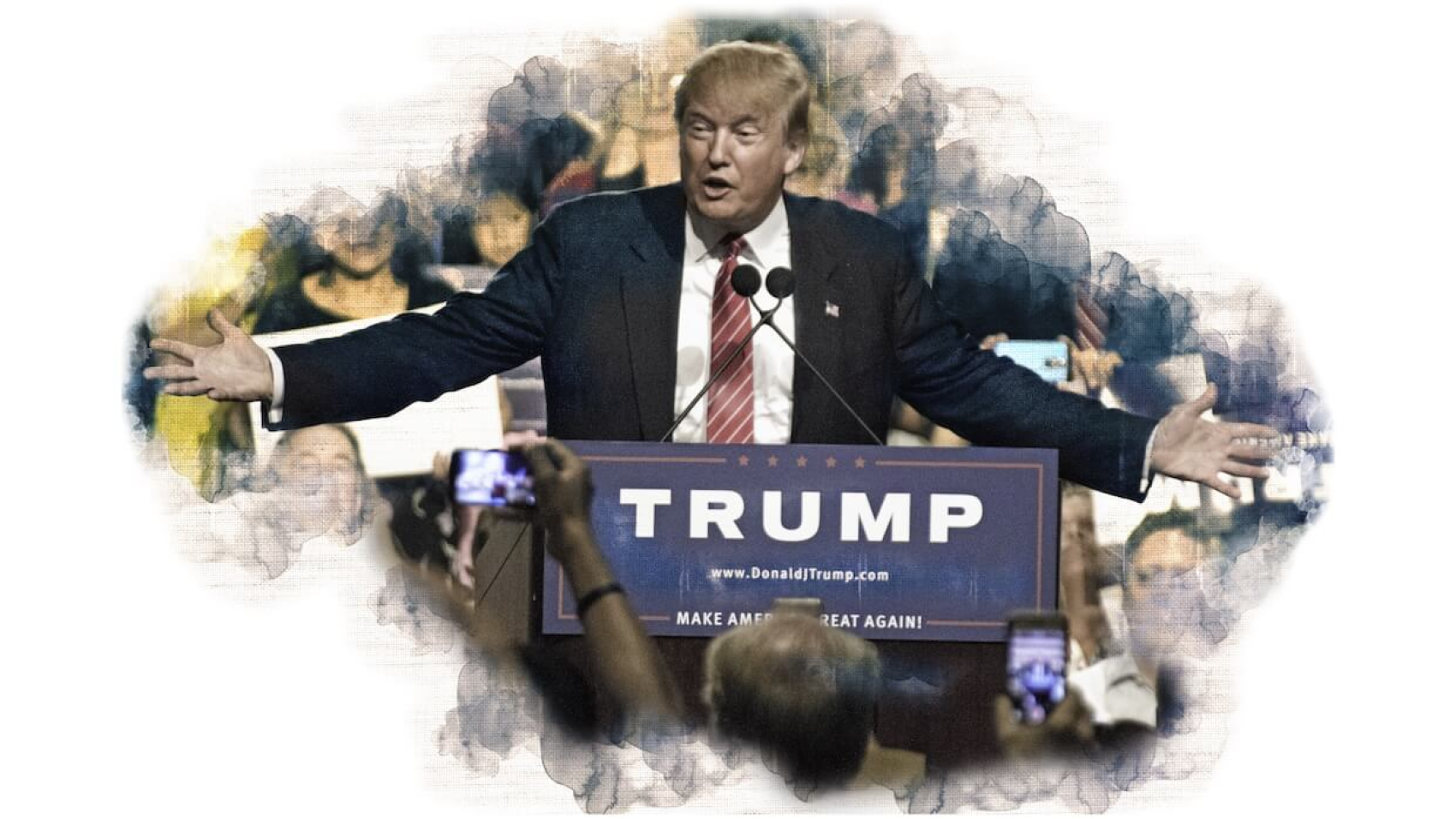
US Presidential candidate Donald Trump held a campaign rally at PPG Paints Arena in Pittsburgh, Pennsylvania, on November 4, 2024. Photo: Chip Somodevilla.

Milanović is often accused of being a “pro-Russian puppet” who undermines Croatia’s credibility within NATO and the EU. With leaders like Viktor Orbán in Hungary and Robert Fico in Slovakia, how significant is Milanović’s potential influence in weakening the EU’s pro-Ukraine stance?

Dr. Senada Šelo Šabić: I always wait to see more evidence that Milanović is a pro-Russian player. He has made statements that could lead to such a conclusion, particularly in discussions about Ukraine, NATO’s engagement in Ukraine, and NATO enlargement concerning Sweden and Finland’s membership. He has also linked these issues to the situation in Bosnia and Herzegovina. However, I have not seen concrete evidence that he could significantly steer Croatian politics away from the European Union or cause a fundamental shift in Croatia’s foreign policy. Many of the mutual suspicions and accusations stem from domestic political debates rather than an actual change in the country’s foreign policy orientation.

And lastly, with Donald Trump beginning his second term as US President, how might Milanović and other populist leaders in the region be impacted by Trump’s renewed leadership?

Dr. Senada Šelo Šabić: I don’t think Milanović is in the same camp as other leaders in the region, if we are discussing the broader Balkans, because Croatia is a member of the European Union. We still operate under a collective umbrella that largely determines our transatlantic relationship with the United States.

However, some other leaders in the Balkans are either very hopeful or very fearful of what the new Trump administration might do. The United States has been, for the last 30-plus years, a key force in stabilizing this region. If that changes—if the United States ceases to be the anchor of stability in this region—then we will wake up to a different future. I sincerely hope this does not happen and that peace is maintained in the Balkans.

Thumbnail Dr.VassilisPetsinis

Dr. Petsinis: Populism in the Balkans Shaped by Persistent Ethno-Nationalism and Euroscepticism

The Balkans, a region deeply influenced by historical tensions and sociopolitical complexities, has become a breeding ground for diverse populist movements. Dr. Vassilis Petsinis, an authority on Central and Eastern European politics, dissects the dynamics driving populism in Croatia, Serbia, and North Macedonia. According to Dr. Petsinis, the persistence of ethno-nationalism is a defining characteristic that distinguishes Balkan populism from its Western European counterparts. His analysis explores the interplay of nationalism, Euroscepticism, and historical grievances, shedding light on how populist actors consolidate power and reshape political landscapes, offering insights into the unique challenges populism poses in the region.

Interview by Selcuk Gultasli

The Balkans, a region marked by historical tensions and complex political dynamics, has emerged as a fertile ground for populist movements in recent years. In this illuminating interview, Dr. Vassilis Petsinis, Associate Professor of Politics, Corvinus University in Budapest and a prominent scholar specializing in Central and Eastern European politics, delves into the factors driving populism in Croatia, Serbia, North Macedonia, and other nations. According to Dr. Petsinis, regarding differences between the Balkans and Western Europe, one key element is the persistence of ethno-nationalism across Balkan societies. Dr. Petsinis sheds light on how these movements leverage nationalism, Euroscepticism, and historical grievances to shape public narratives and consolidate power.

According to Dr. Petsinis, Balkan populism differs significantly from its Western European counterparts. In Croatia, for instance, the Domovinski Pokret (Homeland Movement) capitalizes on anti-establishment sentiment and critiques of European Union policies. The party’s focus on defending Croatian sovereignty and opposing perceived EU intervention resonates strongly with voters disillusioned by traditional parties. However, as Dr. Petsinis observes, the Homeland Movement’s transition into a coalition government has tempered some of its anti-establishment rhetoric, reflecting the fluid nature of populist politics.

In Serbia, Dr. Petsinis highlights how the ruling Serbian Progressive Party (SNS) under President Aleksandar Vučić employs ethno-nationalist narratives centered on Kosovo. By emphasizing the reintegration of Kosovo into Serbia and the protection of Serbian cultural and historical sites, Vučić consolidates support among nationalist constituencies. Meanwhile, in North Macedonia, left-wing populist movements, such as Levica, incorporate nationalist and anti-imperialist themes, favoring alignment with BRICS nations rather than traditional Western alliances.

Dr. Petsinis also explores the influence of external actors, including the European Union, Russia, and China on Balkan populism. Serbia’s populist actors, for example, view Russia as a key ally, particularly in the context of the Kosovo issue. Conversely, Croatia’s populist rhetoric often distances itself from Russia due to historical alignments with Serbia. Dr. Petsinis emphasizes that China’s economic investments in the region offer populist leaders a viable alternative to EU frameworks, further complicating the geopolitical landscape.

With populist leaders like Zoran Milanović in Croatia combining Euroscepticism with domestic critiques of corruption, Dr. Petsinis underscores the delicate balancing act these figures perform to appeal to diverse voter bases. This interview offers a nuanced analysis of Balkan populism, highlighting the interplay between nationalism, external influences, and shifting political landscapes under Dr. Petsinis’s expert guidance.

Here is the transcription of the interview with Dr. Vassilis Petsinis with some edits.

President of Croatia, Zoran Milanović, addresses a press conference in Ploče, Croatia, on September 14, 2024. Photo: Jure Divich.

Dr. Petsinis: Populism in the Balkans Shaped by Persistent Ethno-Nationalism and Euroscepticism

The Balkans, a region deeply influenced by historical tensions and sociopolitical complexities, has become a breeding ground for diverse populist movements. Dr. Vassilis Petsinis, an authority on Central and Eastern European politics, dissects the dynamics driving populism in Croatia, Serbia, and North Macedonia. According to Dr. Petsinis, the persistence of ethno-nationalism is a defining characteristic that distinguishes Balkan populism from its Western European counterparts. His analysis explores the interplay of nationalism, Euroscepticism, and historical grievances, shedding light on how populist actors consolidate power and reshape political landscapes, offering insights into the unique challenges populism poses in the region.

Interview by Selcuk Gultasli

The Balkans, a region marked by historical tensions and complex political dynamics, has emerged as a fertile ground for populist movements in recent years. In this illuminating interview, Dr. Vassilis Petsinis, Associate Professor of Politics, Corvinus University in Budapest and a prominent scholar specializing in Central and Eastern European politics, delves into the factors driving populism in Croatia, Serbia, North Macedonia, and other nations. According to Dr. Petsinis, regarding differences between the Balkans and Western Europe, one key element is the persistence of ethno-nationalism across Balkan societies. Dr. Petsinis sheds light on how these movements leverage nationalism, Euroscepticism, and historical grievances to shape public narratives and consolidate power.

According to Dr. Petsinis, Balkan populism differs significantly from its Western European counterparts. In Croatia, for instance, the Domovinski Pokret (Homeland Movement) capitalizes on anti-establishment sentiment and critiques of European Union policies. The party’s focus on defending Croatian sovereignty and opposing perceived EU intervention resonates strongly with voters disillusioned by traditional parties. However, as Dr. Petsinis observes, the Homeland Movement’s transition into a coalition government has tempered some of its anti-establishment rhetoric, reflecting the fluid nature of populist politics.

In Serbia, Dr. Petsinis highlights how the ruling Serbian Progressive Party (SNS) under President Aleksandar Vučić employs ethno-nationalist narratives centered on Kosovo. By emphasizing the reintegration of Kosovo into Serbia and the protection of Serbian cultural and historical sites, Vučić consolidates support among nationalist constituencies. Meanwhile, in North Macedonia, left-wing populist movements, such as Levica, incorporate nationalist and anti-imperialist themes, favoring alignment with BRICS nations rather than traditional Western alliances.

Dr. Petsinis also explores the influence of external actors, including the European Union, Russia, and China on Balkan populism. Serbia’s populist actors, for example, view Russia as a key ally, particularly in the context of the Kosovo issue. Conversely, Croatia’s populist rhetoric often distances itself from Russia due to historical alignments with Serbia. Dr. Petsinis emphasizes that China’s economic investments in the region offer populist leaders a viable alternative to EU frameworks, further complicating the geopolitical landscape.

With populist leaders like Zoran Milanović in Croatia combining Euroscepticism with domestic critiques of corruption, Dr. Petsinis underscores the delicate balancing act these figures perform to appeal to diverse voter bases. This interview offers a nuanced analysis of Balkan populism, highlighting the interplay between nationalism, external influences, and shifting political landscapes under Dr. Petsinis’s expert guidance.

Dr. Vassilis Petsinis, Associate Professor of Politics, Corvinus University in Budapest and a prominent scholar specializing in Central and Eastern European politics.

Here is the transcription of the interview with Dr. Vassilis Petsinis with some edits.

Ethno-Nationalism and Populism in the Balkans: A Unique Political Landscape

Professor Petsinis, thank you very much for joining our interview series. Let me start right away with the first question. What are the key factors driving the rise of populist movements in the Balkan countries such as Serbia, Croatia, and Montenegro, and how do these factors differ from those in Western Europe?

Dr. Vassilis Petsinis: I think that, depending on the perspective, we should first address the question of defining populism. For example, if we start with Serbia, I would suggest that whether we study populism from a more discursive perspective, like that of Ernesto Laclau, or from the ideational approach, as presented by Cas Mudde, we don’t have genuine populist political actors in these countries.

In Serbia, the leading right-wing Serbian Progressive Party could be seen mostly as a cartel or an established right-wing party with certain anti-establishment rhetoric, especially regarding international, global, and European institutions. However, I wouldn’t classify it as a genuinely populist political actor.

In Croatia, we have the Domovinski Pokret (Homeland Movement), which is currently a government partner to HDZ (the Croatian Democratic Union). This right-wing party has incorporated powerful anti-establishment rhetoric since its formation in 2020, focusing on ethno-nationalism, gender-related issues, nativism, and relations between the Church and State. It also emphasizes anti-abortion and pro-life stances. However, last spring, the Homeland Movement quickly entered a coalition government with HDZ, thereby alleviating many of its anti-establishment prerogatives. Overall, it could now be classified more as a national conservative party.

As for North Macedonia, we see an interesting case with the left-wing populist party Levica. This party, while left-wing, also incorporates a nationalist component and expresses a preference for the BRICS global alliance in international politics. Additionally, elements of right-wing populism exist under the umbrella of the leading VMRO-DPMNE party, although its new leadership has sought to curb these tendencies.

Regarding differences between the Balkans and Western Europe, one key element is the persistence of ethno-nationalism across Balkan societies. For example, in Croatia, sociocultural factors such as Vatican contracts with the Roman Catholic Church have strengthened anti-LGBT and pro-life tendencies within populist, radical-right, and national-conservative circles. These factors contribute to the unique landscape of populist movements in the region compared to their Western European counterparts.

How do you interpret the relationship between the rise of right-wing populism in Central and Eastern Europe and its influence on domestic ethnopolitics, particularly in terms of shaping public narratives around minority groups and immigration?

Dr. Vassilis Petsinis: I think it depends on the context. Central and Eastern Europe is such a vast region geographically, politically, and socioculturally. To narrow down the discussion, I would prefer to focus on the countries of the former Yugoslavia, as I have dedicated several reports on Croatia and ethno-nationalism for ECPS.

Starting with ethno-nationalism, there are specific open issues. For instance, in Croatia, for the radical right and the national conservative right, maintaining the country’s national sovereignty is of paramount importance. A common theme in the rhetoric of parties like the Homeland Movement, as well as the right-wing faction within the ruling HDZ in Croatia, is the emphasis on protecting Croatia’s sovereignty. This sovereignty, tied to the country’s independence following the Homeland War of the 1990s, is often framed within the current international context, highlighting the need to maintain autonomy while participating in alliances like NATO and the EU.

In Serbia, the situation revolves around the status of Kosovo, the protection of the ethnic Serbian minority in Kosovo, and the preservation of cultural monuments in the region. These issues fuel ethno-nationalist tendencies and provide substantial material for right-wing populist forces in Serbia.

These specific, contextual ethno-nationalist concerns drive much of the particularistic ethnopolitics in these societies. They fuel ethno-nationalism and provide material for radical right-wing populism, which may not be directly applicable to other societies in Central and Eastern Europe or Europe as a whole.

Populist Rhetoric and Ethnic Identity: Contrasting Strategies in the Baltics and the Balkans

In your comparative analysis of the Baltic States and Western Balkans, what role does populist rhetoric play in framing ethnic minorities as either threats or integral parts of national identity, and how does this rhetoric vary across these regions?

Dr. Vassilis Petsinis: I think it really depends on the country. Starting with Estonia, the main radical right-wing party there, although its popularity has been declining since 2022, initially securitized the collective status of the ethnic Russian minority in Estonia. However, in recent years, they have also attempted to approach this minority by playing the card of allegedly shared conservative values.

In Latvia, the National Conservative National Alliance Party has also been somewhat suspicious of the ethnic Russian minority. It was only after Russia’s invasion of Ukraine that they began calling more emphatically for the securitization of domestic politics in Latvia.

Moving further south to Croatia, the Domovinski Pokret (Homeland Movement) and the right-wing faction within the ruling HDZ have been very skeptical of the ethnic Serb political party, the Serbian Independent Democratic Party. The Homeland Movement, in particular, has included in its political program calls for the semi-securitization of bilateral relations between Serbia and Croatia. They have also demanded that Serbia pay reparations for the war in the 1990s.

In Serbia, the broader radical right and national conservative circles have primarily focused on Kosovo, which they continue to regard as a constitutional part of Serbia. Domestically, however, there is less emphasis on framing ethnic minorities as threats. For example, the ethnic Hungarian community in Vojvodina is no longer perceived as a threat. While there has been some suspicion about the Bosniaks in Sandžak, the focus has shifted toward Euroscepticism and the protection of Serbia’s sovereignty in European and global politics, rather than targeting ethnic minorities in the same way as in the 1990s.

Given your discussion of Euroscepticism and populism, how do populist parties in Central and Eastern Europe balance their critiques of the EU’s influence on sovereignty with their need to engage with EU frameworks on issues like ethnic minority rights and migration?

Dr. Vassilis Petsinis: I think it depends. Again, I would like to focus mostly on Croatia and Serbia, as these are the countries I prepared for this conversation.

In the case of Croatia, the Homeland Movement is rather rigid regarding the protection of national borders by the state itself, rather than relying on the EU. They are against the EU’s common defense policies, and since their formation, they have been skeptical of EU intervention, such as that of the Venice Commission of the Council of Europe, particularly before Croatia’s accession to the EU. This skepticism extends to the enhancement of collective rights for minorities, especially the ethnic Serb minority and their institutional representation in the Croatian Parliament. This is a significant dimension of their emphasis on state sovereignty.

Turning to Latvia, parties such as the National Alliance were, in their early stages, quite skeptical of what they perceived as EU interventionism, which they felt challenged the ethnic democracy model applied in Latvia. A similar sentiment existed in Estonia. However, over time, the context has evolved.

For instance, in Croatia, while nationalist principles are maintained, the focus has shifted primarily to domestic politics, such as efforts to exclude the ethnic Serb minority party from power, without directly blaming the EU for this.

As for Serbia, and also Estonia and Latvia, the context becomes more complex. In Estonia, EKRE (the Conservative People’s Party of Estonia) attempted to approach the ethnic Russian community in recent years. However, Russia’s invasion of Ukraine significantly altered the situation.

Overall, there is no uniform pattern here. The strategies of these populist parties vary depending on the national and geopolitical context.

Populism’s Role in Power Dynamics and Regional Stability in the Balkans

Serbian President Aleksandar Vučić participates in an SNS political campaign at Hall Čair in Niš, Serbia, on March 30, 2022. Photo: Radule Perisic.

To what extent do populist leaders in the Balkans utilize nationalism and historical narratives to consolidate their power, and how does this impact regional stability?

Dr. Vassilis Petsinis: I think it depends on the context. In Serbia, for example, there is the prominent issue of Kosovo. All political parties, including the leading SNS under Aleksandar Vučić, programmatically prioritize the defense of Kosovo, advocating for its effective reintegration into the Serbian state structure. Additionally, they emphasize the protection of the ethnic Serbian minority and Serbian cultural monuments in the region, presenting these as top priorities. This issue holds significant weight in both domestic and international politics.

In Croatia, on the other hand, there is a strong emphasis on the concept of sovereignty. The prevailing notion is that Croatian sovereignty must be staunchly defended and not compromised, whether in relations with Western, Eastern, or other global partners. This focus on sovereignty is a key element of the political narrative.

How have external actors, such as the European Union, Russia, and China, influenced the trajectory of populist politics in Balkan countries?

Dr. Vassilis Petsinis: I think it really depends on the context. In the case of Serbia, right-wing populist actors have long viewed Russia as a key partner, especially since the 1990s. Political parties, including more recent ones like Dveri, as well as the broader radical and national conservative right-wing spectrum, regard Russia as Serbia’s main ally in international politics.

In Croatia, however, the situation is different. There is a more staunch approach, and while China has been viewed as a more reliable economic partner compared to the EU by the broader right-wing spectrum in Serbia, this perspective is not as prevalent in Croatia. The radical and national conservative right in Croatia has historically been open to a degree of economic cooperation with Russia. However, they have always been somewhat suspicious of Russia, largely due to its perceived partnership with Serbia. This skepticism intensified after Russia’s invasion of Ukraine in 2022.

In North Macedonia, we see the example of the Levica party, which adopts a different approach. They are quite open to cooperation with the BRICS countries, including Russia and China, as well as other nations they associate with the Global South. Levica justifies this stance through a quasi-anti-imperialist platform, presenting it as an alternative to traditional Western alliances.

How Religion Fuels Populist Rhetoric and National Identity in the Balkans

What role does religion play in shaping the rhetoric and appeal of populist parties and leaders in the Balkan countries?

Dr. Vassilis Petsinis: Well, of course, it does. In Croatia, for example, parties like the Domovinski Pokret, the right-wing faction within HDZ, and smaller parties such as the Croatian Sovereignty Movement, Bloc for Croatia, and Most (Bridge), to the extent that it can be regarded as a national conservative right party, advocate for a partnership-like relationship between the state and the Roman Catholic Church. They also strongly support the protection and continuation of the so-called Vatican contracts.

In Serbia, the broader right-wing political spectrum emphasizes a similar partnership-like relationship between the state and the Orthodox Church. This includes some particularistic interpretations of the Orthodox doctrine, such as Svetosavlje. This Serbian-specific brand of Orthodox theology, rooted in the teachings of Serbian theologian Justin Popović during the interwar period, remains a distinctive and particularistic interpretation of Orthodoxy. It is often espoused by political actors from the radical right, reinforcing their ideological narratives.

How do the national conservative and radical right-wing parties in Croatia use populist rhetoric to mobilize support, particularly regarding issues like the “Homeland War” and minority rights, and how does this compare to similar movements in other Central and Eastern European countries?

Dr. Vassilis Petsinis: Well, they do. For instance, the Domovinski Pokret (Homeland Movement), founded in 2020, has been very active in protests, both through demonstrations and online campaigns via their websites. A notable example is their opposition to the public use of the Serbian Cyrillic script in areas like Vukovar. Vukovar holds a central symbolic role in contemporary Croatian nationalism due to the resistance mounted by the Croatian military against the Yugoslav People’s Army and Serbian auxiliary forces in 1991.

The Homeland Movement also incorporates ethno-nationalist principles into its broader anti-establishment rhetoric, targeting Croatia’s two major parties: the center-right Croatian Democratic Union (HDZ) and the center-left Social Democratic Party (SDP). However, the interplay between ethno-nationalist principles and anti-establishment rhetoric can be quite malleable. For example, since last spring, the Homeland Movement has been a member of a governing coalition with HDZ.

This intersection of ethno-nationalism and establishment politics shows that parties like the Homeland Movement are not always as anti-establishment as they claim to be. It is worth noting that a faction within the Homeland Movement opposed the coalition pact with HDZ, seeing it as a betrayal of the movement’s anti-establishment principles. In response, this faction formed a new party, Domovinski Otpora (Homeland Resistance), in September 2024.

Euroscepticism and National Sovereignty in a Shifting Political Landscape

In a recent chapter, you discuss the soft Euroscepticism of Croatia’s Homeland Movement (DP). How does the populist framing of national sovereignty by this party challenge or reinforce broader European Union integration narratives?

Dr. Vassilis Petsinis: Well, the Homeland Movement does not have a standard pro-EU stance. They advocate for a Europe of sovereign nations and do not support Eurofederalism.

In your analysis, how have Croatian far-right parties employed populist strategies to address economic grievances, such as rising costs of living and inflation, and how effective has this been in broadening their appeal beyond traditional nationalist bases?

Dr. Vassilis Petsinis: They have consistently accused the government of mismanaging the economy. Like other political actors on the broader right across Europe, they have also blamed the EU’s Green Deal for the increase in energy prices over the last couple of years.

At the same time, there has been a powerful emphasis on ethno-nationalist underpinnings. The Homeland Movement’s critique of alleged economic mismanagement often focuses on the revitalization of Croatian regions such as Slavonia, Lika, or parts of Dalmatia—areas ravaged by war. These regions have a notable presence of wartime veterans or invalids, making them key target groups for the party.

Alongside its critique of economic mismanagement by HDZ and the Social Democratic Party in the past, the Homeland Movement has also promoted a more concrete program for economic support specifically aimed at these categories of the population, particularly war veterans from the Homeland War.

SDP Voters Back Milanović Despite Diverging Views on Euroscepticism

Croatian President Zoran Milanović attends a ceremony in Vrgorac, Croatia, on July 1, 2022. Photo: Jure Divich.

According to Euractiv, Zoran Milanović achieved the highest score by a presidential candidate since Croatia’s independence in 1991. How do you explain this huge success during his second term as president?

Dr. Vassilis Petsinis: I think Zoran Milanović is a rather controversial character, and it’s not easy to pin down his appeal. He has made several contentious statements in the past, particularly regarding relations between Croatia and Bosnia, as well as Croatia and Serbia. He has also expressed doubts about the protection of collective minority rights of ethnic groups in Bosnia. Furthermore, he questioned Serbia’s legitimacy as a candidate for EU membership. More recently, since 2022, he has expressed skepticism about Ukraine’s eligibility for NATO or EU membership. So, he’s been quite a colorful figure, so to speak.

At the same time, his success in the elections likely has several explanations. First, since the constitutional amendments of 2000–2002, the actual powers of the Croatian president have been significantly reduced. The current president has far more limited competencies compared to Franjo Tuđman’s term in office during the 1990s. This semi-parliamentary arrangement doesn’t make the president a purely decorative figure, but the role is definitely less influential compared to the prime minister.

Most likely, Milanović’s success reflects the fact that Croatian voters, who elect the president directly, saw him as a more reliable candidate compared to others.

Last Sunday, after the vote in Zagreb, Milanović criticized Brussels as “in many ways autocratic and unrepresentative,” run by unelected officials. The 58-year-old Milanović regularly blames the HDZ for the party’s long-standing corruption problems and calls Prime Minister Plenković “a Brussels employee.” How much of a role did his attacks on the EU play in his victory in the presidential elections?

Dr. Vassilis Petsinis: I think they did play a part, as he managed to create an umbrella for Eurosceptic trends among the Croatian electorate. These are voters who do not necessarily want to align with the national conservative or radical right and do not want to vote for HDZ. This could be one explanation.

Additionally, Zoran Milanović originates from the Social Democratic Party (SDP), which does not necessarily adopt such strong Eurosceptic stances on a party level or share Milanović’s harsh criticism of the EU. However, having a representative from the SDP in the presidential office could enhance the party’s standing vis-à-vis HDZ in Croatian politics. This may have been another incentive for SDP voters to support Milanović, even if they do not entirely agree with his Eurosceptic views.

Donald Trump has just started his second term as president of the US. How do you think the populist Milanović and other populist leaders in the region will be affected by Trump’s second term?

Dr. Vassilis Petsinis: I think it depends on the context. Milanović has not expressed any real preference, even indirectly, for Donald Trump.

Now, in Serbia, considering the political establishment, particularly the ruling SNS (Serbian Progressive Party) under President Aleksandar Vučić, they may look for a better deal regarding Kosovo during Donald Trump’s term in office. This seems to be what they are aiming for.

DBSubedi Thumbnail

Dr. Subedi: Majoritarian Populist Politics Marginalizes Minorities in South and Southeast Asia

Dr. DB Subedi highlights how majoritarian populist politics in South and Southeast Asia marginalizes minorities by leveraging identity politics and ethno-religious narratives. He underscores how populist leaders, from Myanmar to India, utilize state apparatuses to consolidate power, often legitimizing exclusionary policies and fostering polarization. With examples like Hindu nationalism in India, Buddhist nationalism in Myanmar, and Islamist populism in Bangladesh, Dr. Subedi examines how these movements exploit historical grievances and global populist trends while adapting them to local contexts. His analysis sheds light on the fragile state of pluralism and democracy in these multicultural societies.

Interview by Selcuk Gultasli

Dr. DB Subedi, a distinguished lecturer in Peace and Conflict Studies at the University of Queensland, Australia, delves deeply into the dynamics of majoritarian populist politics in South and Southeast Asia in an insightful interview with the European Center for Populism Studies (ECPS). Drawing from his extensive academic expertise, Dr. Subedi examines how populist leaders in the region leverage identity politics and state apparatuses to marginalize minorities and consolidate power, often at the expense of democratic institutions and pluralism.

In the interview, Dr. Subedi sheds light on how the historical, cultural, and political landscapes of post-colonial South and Southeast Asia have created fertile ground for nationalist and religious populist ideologies. He highlights the role of religion, ethnicity, and national identity in shaping these populist movements, often leading to the exclusion of minorities and the reinforcement of majoritarian dominance. The cases of India, Myanmar, Sri Lanka, and Bangladesh serve as pivotal examples, with each showcasing how populism adapts to local contexts while drawing on broader global populist trends.

Dr. Subedi also explores the economic underpinnings of populism in the region, emphasizing the interplay between economic inequality, globalization, and populist rhetoric. He points out that while globalization has lifted millions out of poverty in Asia, it has simultaneously deepened economic divides, creating grievances that populist leaders exploit to craft exclusionary narratives.

Furthermore, the discussion extends to the intersection of nationalism and populism, where Dr. Subedi identifies the trend of leader-centric politics replacing traditional party-led systems. This shift has enabled authoritarian populist leaders to manipulate institutions, bypass democratic norms, and entrench their authority. The examples of Narendra Modi in India, Rodrigo Duterte in the Philippines, and the Rajapaksa brothers in Sri Lanka illustrate how such leaders use religion and identity to legitimize their power while marginalizing dissenting voices and minority groups.

The interview provides a comprehensive understanding of how majoritarian populist politics operates in South and Southeast Asia, offering valuable insights into its implications for democracy, social cohesion, and the region’s broader political landscape. Dr. Subedi’s analysis serves as a critical lens through which to examine the challenges posed by populism in multicultural societies.

Here is the transcription of the interview withDr. DB Subedi with some edits.

Myanmar

Dr. Subedi: Majoritarian Populist Politics Marginalizes Minorities in South and Southeast Asia

Dr. DB Subedi highlights how majoritarian populist politics in South and Southeast Asia marginalizes minorities by leveraging identity politics and ethno-religious narratives. He underscores how populist leaders, from Myanmar to India, utilize state apparatuses to consolidate power, often legitimizing exclusionary policies and fostering polarization. With examples like Hindu nationalism in India, Buddhist nationalism in Myanmar, and Islamist populism in Bangladesh, Dr. Subedi examines how these movements exploit historical grievances and global populist trends while adapting them to local contexts. His analysis sheds light on the fragile state of pluralism and democracy in these multicultural societies.

Interview by Selcuk Gultasli

Dr. DB Subedi, a distinguished lecturer in Peace and Conflict Studies at the University of Queensland, Australia, delves deeply into the dynamics of majoritarian populist politics in South and Southeast Asia in an insightful interview with the European Center for Populism Studies (ECPS). Drawing from his extensive academic expertise, Dr. Subedi examines how populist leaders in the region leverage identity politics and state apparatuses to marginalize minorities and consolidate power, often at the expense of democratic institutions and pluralism.

In the interview, Dr. Subedi sheds light on how the historical, cultural, and political landscapes of post-colonial South and Southeast Asia have created fertile ground for nationalist and religious populist ideologies. He highlights the role of religion, ethnicity, and national identity in shaping these populist movements, often leading to the exclusion of minorities and the reinforcement of majoritarian dominance. The cases of India, Myanmar, Sri Lanka, and Bangladesh serve as pivotal examples, with each showcasing how populism adapts to local contexts while drawing on broader global populist trends.

Dr. Subedi also explores the economic underpinnings of populism in the region, emphasizing the interplay between economic inequality, globalization, and populist rhetoric. He points out that while globalization has lifted millions out of poverty in Asia, it has simultaneously deepened economic divides, creating grievances that populist leaders exploit to craft exclusionary narratives.

Furthermore, the discussion extends to the intersection of nationalism and populism, where Dr. Subedi identifies the trend of leader-centric politics replacing traditional party-led systems. This shift has enabled authoritarian populist leaders to manipulate institutions, bypass democratic norms, and entrench their authority. The examples of Narendra Modi in India, Rodrigo Duterte in the Philippines, and the Rajapaksa brothers in Sri Lanka illustrate how such leaders use religion and identity to legitimize their power while marginalizing dissenting voices and minority groups.

The interview provides a comprehensive understanding of how majoritarian populist politics operates in South and Southeast Asia, offering valuable insights into its implications for democracy, social cohesion, and the region’s broader political landscape. Dr. Subedi’s analysis serves as a critical lens through which to examine the challenges posed by populism in multicultural societies.

Dr. DB Subedi, a distinguished lecturer in Peace and Conflict Studies at the University of Queensland, Australia.

Here is the transcription of the interview withDr. DB Subedi with some edits.

The Roots of Populism: Religion, Identity, and Authoritarianism in South and Southeast Asia

Professor Subedi, thank you very much for joining our interview series. Let me start right away with the first question. In the context of South and Southeast Asia, what historical, cultural, and political factors have contributed to the rise of nationalist and religious populism, and how do these dynamics align with authoritarian populism to shape contemporary political narratives?

Dr. DB Subedi: That’s a very important question. When we talk about populism in South and Southeast Asia, to understand the overall dynamics of populism, we need to examine the historical context of post-colonial state formation in this region.

Religion, culture, and national identity have always been contentious issues in South and Southeast Asia. From the time of post-colonial state formation, for example, the role of Islam in Pakistan and Indonesia was heavily debated. Similarly, in Sri Lanka, religion has always been central to defining the majoritarian identity, and this has been deeply contested by minority groups. These dynamics are common across other regions as well.

Religion, history, and culture collectively define the social identity of one group of people, but at the same time, the same applies to minority groups. This creates a form of social polarization. Over time, populist leaders have tapped into these polarizations, mobilizing them to construct and define their own bounded political communities, which they then appeal to, while pursuing populist political narratives, ideas, and policies. The question of religion is particularly central in this regard.

This has also translated into various political discourses, such as the formulation of political ideologies and policies, where religion has often been both a contentious and central element. Countries like Bangladesh, Sri Lanka, and Pakistan are key examples, and we see similar instances in other parts of South and Southeast Asia.

The historical context of nation-state formation, the creation of national identity, and the manipulation of collective identities have become key features in defining populism in this region, both in the past and to a large extent in the present. For instance, the first wave of populism in South and Southeast Asia was led by national heroes—what we might call the nationalist leaders of independence movements. Not all of them, of course, but some of these founding fathers of modern nation-states had populist elements in the way they defined national identities, often at the cost of excluding others and mobilizing specific constituencies.

If you like, we could see these leaders as the first generation of populist figures. But times have changed. Over the past 50–70 years, if we look back to the 1950s and 1960s, there have been different waves of populism in this region. However, religion and national identity continue to play a crucial role in defining populist movements in South and Southeast Asia.

The Role of Economic Inequality and Globalization in Driving Populism

What role do economic grievances, inequality, and globalization play in fueling nationalist and religious populism in South and Southeast Asian countries?

Dr. DB Subedi: That’s another very important question. Earlier, I mostly discussed the cultural aspects of the rise of populist politics in this region. However, economic factors also play a significant role. Economic inequalities—both within and between ethnic groups, at national and sub-national levels—are key drivers of grievances. These inequalities often fuel resentment toward groups perceived as affluent or privileged within the community.

Inequality has consistently been a major issue shaping populist movements. For instance, in the 1980s, agrarian populist movements in parts of India were largely driven by economic grievances. Similarly, economic inequalities played a central role in mobilizing support for former Prime Minister Thaksin Shinawatra in Thailand. In this sense, inequality has always been a central issue in the rise of populism.

Globalization is another critical factor. When addressing inequality, populist rhetoric often targets political elites at the national level, but it frequently extends to external actors, such as multinational corporations and proponents of neoliberal policies, who are portrayed as the “enemies of the people.” Economic grievances stemming from globalization provide fertile ground for populist narratives.

In the contemporary wave of populism, almost all populist leaders in the region have proposed ambitious and transformative economic policies aimed at redistribution. However, these agendas have often failed, with many populist leaders losing power after an average of 4–5 years.

In Asia, the role of globalization is complex. Unlike the “losers of globalization” thesis commonly seen in Western Europe and the US, where certain groups are left behind, globalization in Asia has largely benefited many countries. For example, the globalization of production industries has led to the relocation of manufacturing from the Global North to countries in the Global South, such as India, Vietnam, Malaysia, and Indonesia. This shift has contributed to economic growth and lifted many people out of extreme poverty.

However, this growth has been accompanied by rising inequality. While a segment of the population has profited greatly, the majority have seen only incremental improvements, leaving systemic economic inequality intact. This dynamic fuels public grievances and provides populist leaders with a platform to craft their narratives and agendas.

In this sense, globalization in Asia acts as a double-edged sword. On one hand, it creates opportunities for populist leaders to exploit growing inequality and public frustration, leading to anti-government and anti-establishment protests that propel populist figures to power. On the other hand, globalization has delivered tangible benefits to many in Asia, making the relationship between globalization and populism more ambiguous and requiring further exploration.

The Impact of Populist Nationalism on Marginalized Communities

A man chanting songs with a dummy cow in the background during the Golden Jubilee
celebration of VHP – a Hindu nationalist organization on December 20, 2014 in Kolkata, India. Photo: Arindam Banerjee.

How do nationalist and religious populist ideologies intersect and manifest in countries like India, Bangladesh, Myanmar, and Sri Lanka, shaping the broader sociopolitical landscape, and what are the implications for marginalized communities across Hindu-majority, Muslim-majority, and Buddhist-majority contexts in South and Southeast Asia?

Dr. DB Subedi: When we talk about the intersection of nationalism and religion, we should first look at the interface between ethnicity and religion, in Asian countries, because religion and ethnicity are deeply intertwined in many Asian countries. Take Sri Lanka, for example, where the majority of Sinhalese follow Buddhism, and as a result, historically, since the colonial period and in the post-colonial state formation, Sinhala Buddhism has become a dominant ideology. Sinhala Buddhist leaders of the past, and even more recently, have mobilized that ideology to define their majority political constituency.

We can say similar things about India. India is vast in terms of geography, ethnicity, caste, and so on. Even today, Hindus form the majority population, which provides political parties like the Bharatiya Janata Party (BJP) leverage to pursue Hindu nationalist politics both at the center and in the regions. In other words, the intersection of ethnicity and religion constructs the collective social identity of the people, providing leverage for political parties and populist leaders to define their bounded political communities, which they mobilize in their populist politics. One example is the populist nationalist politics of the BJP and its current Prime Minister, Narendra Modi, who many have analyzed as a Hindu nationalist and populist leader.

You can see similar dynamics in Bangladesh, where Islam and politics go hand in hand, and ethnicity obviously comes into play. In the case of the countries you mentioned—Sri Lanka, India, Bangladesh, and Myanmar—the majoritarian ethno-religious identities of the majority populations have always been central features in attempts to homogenize national identities.

This process of homogenization has been deeply contested by minorities in countries like Myanmar or India, where Muslim minorities, along with secular and liberal-minded political leaders and parties, contest this idea. Similar patterns are evident in Thailand, where the homogenization of national identity, based on Thai national identity drawn primarily from Buddhist culture and religious identities, is contested by other minorities.

As a result, there are multiple effects on the national polity, both from a populist and nationalist point of view. One major implication of this political dynamic is that in most Asian countries, nationalism often hosts populism. In other words, populism travels alongside nationalism in most Asian countries. Of course, the role of religion is present, and we can discuss religious populism separately. However, one prominent feature across the region is populist nationalism.

In terms of policy and political outcomes, minorities have suffered, as this form of politics often shares exclusionary characteristics similar to populist politics seen elsewhere, particularly in Western Europe and North America.

Power Consolidation and Minority Exclusion in South Asia

To what extent do nationalist and religious populist leaders in Buddhist, Hindu, and Muslim-majority countries leverage identity politics and state apparatuses to consolidate power, legitimize violence, and exclude minorities, and how do institutional and cultural narratives in post-colonial South Asia justify and sustain these populist-authoritarian practices?

Dr. DB Subedi: That’s another very good question. It actually points to some of the issues I mentioned in my earlier response, particularly the interplay between religious identity and national identity. What we have seen most recently across Asia is that populist leaders have frequently referred to the blending of religious and national identities in these countries to define their sociopolitical landscapes.

Having said that, we should also acknowledge that Southeast Asia and South Asia are vast regions, with diverse sociocultural and sociopolitical contexts, as well as differing historical and contemporary dynamics. These variations shape the realization, aspiration, and respect for pluralism and democracy in this region. Therefore, while identifying common trends, we must be cautious not to overgeneralize.

Despite these differences, one commonality across these countries is the centrality of leaders in shaping the political landscape. In the past, political parties held this central role. However, with the rise of authoritarian, populist, and nationalist politics—from the Rajapaksa regime in Sri Lanka to Sheikh Hasina in Bangladesh, Aung San Suu Kyi in Myanmar, Hun Sen in Cambodia, and Rodrigo Duterte in the Philippines—we have seen strong and powerful leaders dominating the political sphere.

This shift toward leader-centric politics has been a significant trend across South and Southeast Asia. Leaders like Narendra Modi in India connect directly with their followers, often bypassing institutional processes, by mobilizing cultural, religious, or national identities. Similarly, Duterte in the Philippines sought direct engagement with the public, frequently circumventing institutional frameworks.

Populist leaders often appeal to the “will of the people” to justify and consolidate power. They use this direct connection with their political constituencies, defined by religious, national, or ethnic identities, to legitimize their authority. This raises the question: where do institutions stand in this process?

Institutions do matter, and in Asia, as elsewhere, populist leaders often come to power through elections, no matter how free or fair those elections might be. The presence of democratic institutions, even minimally, has been a prerequisite for populist leaders to rise to power. However, once in power, these leaders employ various tactics to manipulate, dismantle, or reform existing political and democratic institutions to consolidate their authority.

For example, in Sri Lanka, the populist-nationalist government of Gotabaya Rajapaksa and his predecessor, his brother Mahinda Rajapaksa, pushed for constitutional reforms to concentrate power in the presidency. Similarly, in the Philippines, Duterte passed an anti-terrorism law that weakened civil society organizations, particularly those engaged in peacebuilding in conflict-affected areas like Mindanao. Institutional manipulation and re-engineering of democratic structures have become common strategies for populist and authoritarian leaders to sustain their hold on power.

Contrasting Populisms: Nationalist Narratives in Asia and the Global West

Large protests demand the resignation of Prime Minister Sheikh Hasina’s government as part of the Anti-Quota Movement and Bangladesh Quota Reform Protests. Thousands took to the streets in Dhaka, Bangladesh, on August 4, 2024. Photo: M.D. Sabbir.

How does the rise of nationalist and religious populism in Asia compare with similar movements in the global West in terms of discourse strategies and mobilization methods, and to what extent are these movements influenced by global populist trends while adapting international narratives to local contexts?

Dr. DB Subedi: Interesting question. Asia, especially South and Southeast Asia, is a unique region in terms of understanding populism. It is unique because, unlike in the West, in South and Southeast Asia, we have seen populist movements and populist styles of politics that involve different varieties of populist movements. There isn’t one singular form of populism.

As I mentioned earlier, nationalism has often hosted populism in Asia, and the two frequently go hand in hand. This is because questions of national identity, ethnicity, and religion are central to defining both nationalist and populist movements. While there are key differences between the two, most populist leaders in the region also embody elements of nationalism to some extent. Narendra Modi is an example, and you can observe similar trends in Thailand, Myanmar, and Indonesia, among others.

This is a unique feature of populism in Asia. However, across the region, we should be cautious when interpreting or explaining populism with the same degree of intensity. By “degree of intensity,” I mean that in some cases, when populism intersects with nationalism, it manifests as what I would call “soft populism.”

When I say “soft populism,” the overall political manifestation or style of a particular populist leader might appear nationalist but incorporates populist orientations or elements. Imran Khan’s politics in Pakistan is a recent example. In Bangladesh, politics under Sheikh Hasina was mostly authoritarian, but in her later years in government, she also played the nationalist card while implementing redistributive economic policies, which had populist undertones. She reached out to Muslim voters and her support base using a populist style of politics. Similar examples can be observed elsewhere.

Soft populism can involve a strong leader or political party that is primarily nationalist or authoritarian but includes populist elements. On the other hand, there are also cases of “hard populist” governments and leaders in the region. Rodrigo Duterte in the Philippines is a prime example, as is Thaksin Shinawatra in the past in Thailand. These leaders represent a more pronounced form of populism.

This distinction—between soft and hard populism—is one of the differences between populism in Asia and the populist leaders in Western Europe and North America. The phenomenon in Asia is shaped by the region’s distinct history of post-colonial state formation and its sociopolitical landscape of collective identity and politics.

In this sense, soft populist politics in South and Southeast Asia often appears as an extended form of identity politics.

Finally, when we compare similarities and differences, we observe that during the 1980s and 1990s, there was a rise in left-wing populism. Interestingly, in the last 10 to 15 years, we have seen the emergence of populism that looks more exclusionary, sharing certain elements of right-wing populism seen elsewhere. However, there are still a few examples of left-wing populism in this region.

Comparing Buddhist, Hindu, and Islamist Populist Policies in South Asia

In what ways has Buddhist nationalism in Myanmar influenced the state’s policies towards minorities, and how does it compare to Hindu nationalism in India or Islamist populism in Bangladesh?

Members of Myanmar’s Muslim Rohingya minority walk through a broken road at Shah Porir Deep, at Teknaf in Cox’s Bazer, Bangladesh on September 11, 2017. Photo: Sk Hasan Ali.

Dr. DB Subedi: All these countries have different histories and contexts of post-colonial state formation, although one similarity is that all three countries were colonized. So, they are post-colonial nations with a history of colonial rule. At the same time, they are multicultural countries with both ethnic and religious majorities as well as minorities.

In Myanmar, for a long time, when the military junta was in power—and they remain in power today—they have consistently used ethno-religious nationalism as a key strategy and ideology for ruling the country. This trend has been especially pronounced over the last few decades. When the military first came to power, they seemed to adopt a different kind of socialist policy, and the religious and ethno-religious dimension was not as prominent at that time. However, over time, there has been a growing trend of mobilizing the sentiments of Theravada Buddhist Burmese, which has been deeply contested by other ethnic and religious minorities.

One consequence of this trend has been the subordination and marginalization of ethnic minorities, which has contributed to ongoing civil wars in Myanmar for decades.

In India, the situation is quite different. The BJP came to power relatively recently, whereas before that, the Indian National Congress, which was more oriented toward pluralism and liberal policies toward minorities, held power. Under the current government, however, Hindu nationalist policies have led to the introduction of certain citizenship laws and other policies that discriminate against Muslim minorities.

Similar trends can be observed in Sri Lanka and Bangladesh as well. In a nutshell, minorities have often become victims of majoritarian, exclusivist politics when such ideologies are in power.

Map: Shutterstock.

Unveiling China’s ‘Transnational Populism’ and Sharp Power Politics: The Case of the Belt and Road Initiative

Abstract

In a mutually reinforcing context, the rise of multipolarity and the decline of the rules-based liberal multilateral world order have transformed populism from a national phenomenon into one with global dimensions, characterized by transborder transgressiveness. Rooted in nationalist rhetoric that emphasizes independence and sovereignty, this dynamic challenges the norms and values of multilateralism, fuels a vicious cycle of sharp power politics (SPP), and opens new fronts in the competition for national interests. China’s recent political and economic trajectory under President Xi Jinping provides a compelling case for examining the interplay between these factors. Drawing on the evolving theoretical framework of populism and an analysis of the Belt and Road Initiative (BRI), this article argues that Xi Jinping’s strategic framing of SPPs within an appealing populist narrative does not qualify him as a transnational populist leader. Notably, Chinese rhetoric lacks a cohesive ideology, a clearly defined transnational citizenry with shared interests, and a corresponding mechanism for the participatory representation of global citizens.

Keywords: Populism, sharp-power politics, multipolarity, multilateralism, China, governance, development, (in)dependence, global public goods, cooperation.


By Ibrahim Ozturk

Introduction

The transformation of global power dynamics, particularly in the post-Cold War era, has exposed vulnerabilities in the Western-dominated liberal multilateral order, leading to a multipolar world (dis)order. This shift has also curtailed the dominance of any single superpower, intensifying competition for influence and resources. This complex landscape has witnessed two notable political phenomena: the global rise of right- and left-wing populism and the adoption of Sharp Power Politics (SPP) by rising powers like Russia and China to enhance their global influence.

The emergence of this geopolitical landscape significantly limits the global cooperation necessary for collective action to effectively secure global public goods. Increasingly characterized by a “negative-sum game,” this environment poses deeply troubling implications for the future. It fosters the development of a causal chain in which populism, typically addressed at the national level, transcends borders and amplifies the influence of sharp-power politics.

While populists often portray themselves as champions of the people, challenging the established order on behalf of the masses, SPP co-opts populist rhetoric to serve the interests of authoritarian regimes, ultimately consolidating their power. A plausible transmission mechanism involves the gradual co-option of a functioning, though flawed, rule-based democracy by exclusionary, interest-driven coalitions of established elites. These elites prioritize their class interests at the expense of long-term efficiency, leading to stagnation. Over time, populist leaders exploit systemic vulnerabilities, using their rhetoric to gain power. If they maintain power long enough, they eventually transform the system into a form of authoritarianism, reinforcing this new status quo through sharp-power tactics both domestically and internationally to expand their influence and national interests.

Within this framework, the central aim of this article is to explore the extent to which the concept of “transnational populism” (TNP) can be considered an intermediate stage linking the progression from national-level populism to authoritarianism and, subsequently, to SPP beyond national borders. Following these theoretical discussions, the article also seeks to examine whether the notion of TNP can be inferred from the extensive use of populist rhetoric within China’s SPP framework, specifically in the context of the Belt and Road Initiative (BRI).

The article is organized as follows: The second section explores key theoretical issues, evaluating the existence of a robust concept of transnational populism while examining the intersections, overlaps, and tensions between national populism, transnational populism, and sharp power politics (SPP). The third section builds on these theoretical insights to assess whether China’s foreign policies can be interpreted through the framework of transnational populism within its authoritarian regime. The fourth section connects China’s so-called transnational populism (TNP) to SPP, highlighting their incompatibilities, particularly in the context of the BRI. The final section concludes by summarizing the key findings.

Click to Read the Article

Hundreds of migrants attempt to cross the US-Mexico border as the Texas National Guard works to prevent irregular crossings in Juárez, Chihuahua, Mexico on March 21, 2024.
Photo: David Peinado Romero.

The “Awkward Alliance” of the Left and the Right

The politics of immigration in the U.S. reveal peculiar alliances on both sides of the aisle. For Democrats, the coalition spans ethnoracial diversity, balancing ideals of equality with the economic and cultural concerns of immigration. This tension often leaves the Left grappling with its own contradictions. For Republicans, an equally uneasy partnership emerges. Grassroots voters, driven by ethnonationalist anxieties, align with capitalist elites who benefit from cheap immigrant labor. This “awkward alliance” pits anti-immigrant rhetoric against the economic realities of business reliance on immigration, fueling policies that prioritize elite agendas while alienating vulnerable voters.

By Sanne van Oosten*

Politicians of Populist Radical Right Parties (PRRP) often cite material scarcity faced by the populations of receiving countries as arguments against immigration. Whether the argument is that ‘they’ are stealing ‘our’ jobspublic services, or housing; materialist concerns are central to their arguments against immigration. The mobilisation of perceived economic injustice has proven to be an effective strategy for attracting voters, with the most recent U.S. elections serving as yet another example.

The U.S. Republican Party now also champions strong anti-immigration narratives, though this has not always been at the top of the party’s political agenda. This shift occurred during the Obama-era. Despite Obama’s first campaign and term being predominantly focused on healthcare reform, beneath the surface of the Republican Party, anti-immigration sentiments swelled, with many voters perceiving Obama as a symbol of immigration. While he didn’t, in reality, let more immigrants in than his Republican predecessors, Bush or Reagan. Although voters are generally positive about Black politicians, Obama’s African roots invigorated the Tea Party, a grassroots movement, leading them to turn to immigration as a response to the latent, smouldering old-fashioned racism his presidency stirred.

Even in the most conservative corners of the U.S., openly admitting to being racist is stigmatised, prompting many to mask such views. Concerns over economic justice often serve as a justification for racism by pointing to the scarcity of ‘our’ jobspublic serviceshousing; or whatever scarce economic resource is the challenge of the moment. By invoking these appeals to economic justice, one can pull off xenophobic claims without the stigma attached to more explicit expressions of xenophobia. These forms of strategic masking not only help avoid stigma in everyday life and political discourse, Republicans also can leverage these strategically against Democrats. After all, weren’t Democrats the ones who were supposed to protect ‘our’ jobs, public services, and housing? Didn’t they claim to care about the people and economic justice? Well, with all the immigrants they’re letting into our country, I guess they don’t!

Besides materialist masking, ‘civilisationist‘ masking serves to destigmatise racist and xenophobic claims while simultaneously dividing Democratic voters. Trump’s call to protect ‘our’ women from Latino immigrant rapists is a prime example of contemporary U.S. femonationalism. His calls to protect American gay people from dangerous Muslims illustrate homonationalism. Amid student protests against the war in Gaza, Trump also invoked the need to protect Jewish safety—what I refer to as Judeonationalism. Essentially, the infamous U.S. election campaign quote, ‘they are eating the pets,’ was also a form of civilisationist masking—what I call animeauxnationalism. These arguments follow the same logic and purpose as materialist justice: they not only serve to avoid stigma in everyday life and political discourse, but they also act as a wedge to internally divide the Democratic electorate.

And the truth is, in Western countries, the Left represents a much more ethnoracially diverse voting coalition, creating an ‘awkward alliance’ as I call it. White Leftists often support the Left out of ‘conviction’ for equal rights for all, including women and gay people, as well as animals and nature, while non-white Leftists tend to stay with the Left out of ‘necessity:’ the opposition denies their identities, yet, they often prioritise other concerns over equal rights and individual freedoms. This uneasy coalition unsettles political elites of the Left, leaving them uncertain about how to navigate this political catch-22.

Indeed, there is an inherent awkwardness in the Democratic claim to champion individual freedoms and equal rights while also supporting (or at least tolerating) immigration of people who do not necessarily hold the same core national values. This awkwardness mirrors the one found in materialist concerns: the Democrats advocate for workers, stronger public services, and affordable housing, yet they also support immigration, which some believe jeopardises jobs, strains public services, and drives up housing prices. Very awkward indeed.

Yet, the alliances on the other side of the aisle might be even more awkward. The Republican Party unites forces from the top-down and the bottom-up. From the bottom-up, Republicans represent an ethnonationally anxious voting base unsettled by ‘demographic panic’ due to immigration, grown from the grass roots Tea Party movement. From the top-down, the Republican alliance consists of large business elites (such as the Koch-network) who benefit from immigration by relying on workers willing to take jobs that many white Americans won’t, such as hard agricultural labour. These forces—both top-down and bottom-up—create another ‘awkward alliance,’ or an ‘uneasy marriage,’ or even ‘strange bedfellows,’ between a voting base riled up by anti-immigration sentiment and capitalist elites who profit from cheap labour and the economic growth that immigration fuels. The racist views that are often masked by arguments of economic justice serve as a ‘godsend’ for capitalist plutocrats, enabling them to mobilise an ethnonationalist electorate. Meanwhile, top-down forces prefer concealing the fact that their voters might not be voting in their own best interest through expressing and fuelling anti-immigrant sentiment by keeping unsettling news about immigration on the national agenda and the back of people’s minds.

These top-down capitalist elites are, however, most interested in boosting business, cutting back on regulations, and shrinking government social spending by, ironically, courting a voting base that is often reliant on Social Security and Medicare. ‘Anti-Obama anger,’ fuelled by racist undertones, proved to be a ‘godsend.’ For instance, by dubbing universal healthcare ‘Obamacare,’ opposition to government spending was built with the help of racism-driven xenophobia, even among those most dependent on the exact same public services, and those who are positive about the policies when not named after the first Black president, but Clinton. Even though immigration helps their businesses grow, these capitalist elites accept Trump’s strong anti-immigration stance as ‘unpleasant ransom’ to advance their libertarian agenda, which benefits capitalism and large corporations to the detriment of the lesser-educated voters riled up by anti-immigration rhetoric. This may be the most ‘awkward alliance’ of all.


(*) Dr. Sanne van Oosten is a postdoctoral researcher at Centre for Migration Policy and Society (COMPAS), University of Oxford.

Muslim women wearing hijabs walking on the streets of Paris, France, June 15, 2012. Photo: Shutterstock.

The Importance of In-group Favouritism in Explaining Voting for PRRPs: A Study of Minority and Majority Groups in France, Germany and the Netherlands

DOWNLOAD ARTICLE

Please cite as: 

van Oosten, Sanne. (2025). “The Importance of In-group Favouritism in Explaining Voting for PRRPs: A Study of Minority and Majority Groups in France, Germany and the Netherlands.” Populism & Politics (P&P). European Center for Populism Studies (ECPS). January 12, 2025. Doi: https://doi.org/10.55271/pp0046

Please find all replication materials including data, code and appendices here: https://doi.org/10.17605/OSF.IO/T7G5N


 Abstract

The voting behaviour of racial and ethnic minorities is a topic that attracts much speculation, with some claiming that racial and ethnic minorities do vote for Populist Radical Right Parties (PRRPs) and some claiming they do not. In the European Union, where saving data on individual’s race and ethnicity is prohibited, it is very difficult to contribute to these conversations with real facts. Do ethnic minorities and majorities tend to vote for PRRP and what explains their (lack of) support? Thanks to a novel yet costly sampling method, I surveyed racial/ethnic minority and majority voters in France, Germany and the Netherlands and asked them about their propensity to vote for Rassemblement National (RN) in France, Alternative für Deutschland (AfD) in Germany, and Partij voor de Vrijheid (PVV) in the Netherlands. I compare racial/ethnic minority groups, including Muslims, with majority groups and test the mechanisms that might predict their support for PRRPs. My findings indicate Muslims are among the least likely to vote for PRRPs, though the difference with voters without a migration background is only significant in the Netherlands. When testing what explains the propensity to vote for PRRPs, I find that indicators of in-group favouritism usually explain support to larger extent than out-group hate. Though anti-immigration attitudes predict PRRP voting in all three countries, in-group favouritism explanations explain PRRP voting to a slightly stronger extent. In France and Germany, the ethnocentrism scale predicts voting for RN/AfD more than immigration attitudes do. In the Netherlands, feeling accepted as belonging in the Netherlands explains voting for the PVV the most. Amongst Muslim French, German and Dutch voters, in-group favouritism, or the lack thereof, explains voting for PRRPs as well. French Muslims who feel more attached to France are more likely to vote for RN. German Muslims who do not believe in religious freedom for Muslims are more likely to vote for AfD. This also applies to Dutch Muslims, though immigration attitudes also predict voting for the PVV: the more a Dutch Muslim is against immigration, the more likely they are to vote PVV. Generally, this study makes a case for expanding the standard predictors of PRRP voting towards more indicators of in-group favouritism for the majority in-group, while for Muslims PRRP voting is more driven by policy attitudes. Feeling close or distant towards ethnic in- or out-groups does not predict PRRP voting in any of the cases. These findings contribute to our understanding of PRRP voting in Europe.

Keywords: Populism, Muslims, race, ethnicity, voting behaviour, France, Germany, Netherlands, RN, AfD, PVV.


By Sanne van Oosten (Postdoctoral Researcher at Oxford University, sanne.vanoosten@compas.ox.ac.uk)

Introduction

Political pundits and strategists have long believed that increasing diversity and gender equality would naturally expand the US Democratic voting base, assuming racial and ethnic minorities would reject ethnonationalist extremism in the Republican Party and have nowhere else to turn (Judis & Teixeira, 2002; Skocpol & Tervo, 2020). While this view has been challenged over time (Judis & Teixeira, 2023; Lee, 2008), the 2024 US elections highlighted the complexity of racial and ethnic minority voting behaviour, with racial and ethnic minority voters shifting from Democrat to Republican, though still leaning Democrat (ANES, 2021).

In Europe, studying minority voting behaviour is more challenging due to privacy regulations, yet it remains crucial as the “Replacement Theory” — a conspiratorial claim that immigrants are brought in to vote for political elites — has shaped far-right rhetoric across France, Germany, the Netherlands (Bracke & Aguilar, 2020) as well as the US (Skocpol & Williamson, 2011). Despite this, some pundits suggest that racial and ethnic minorities are increasingly inclined to vote for Populist Radical Right Parties (PRRPs), with figures like Geert Wilders[2] and Donald Trump[3] claiming that Muslim and Black voters support them. However, all of these claims remain underexplored in Europe. This paper investigates whether Muslims and ethnic minorities in France, Germany, and the Netherlands vote differently from their white counterparts, and what factors drive any differences in their voting behaviour.

Answering these questions in the European Union is more difficult than in the US or UK (as shown by the wealth of data in Sobolewska & Ford, 2020). Standard sampling strategies do not yield enough minority participants for statistical analyses (Font & Méndez, 2013). Moreover, strict European privacy regulations limit the availability of sampling frames for racial/ethnic and religious minorities in the European context (Simon, 2017). To overcome these challenges, I surveyed a large sample of Kantar-panellists and used a mini-survey to oversample voters from France, Germany, and the Netherlands with a migration background in Turkey (France, Germany, and the Netherlands), North Africa (France), Sub-Saharan Africa (France), the Former Soviet Union (Germany), Surinam (the Netherlands), and Morocco (the Netherlands). I sampled a high number of minority respondents, with 1889 out of a total N of 3058 respondents having a migration background, of which 649 self-identify as Muslim.

In this paper, I test how likely Muslims or other minority groups are to vote for PRRPs compared to majority groups, and why. I find that Muslim voters are much less likely to vote for the PVV in the Netherlands, though they are just as likely to vote for RN or AfD in France or Germany, respectively. I also explore what predicts the likelihood of Muslims voting for PRRPs. The literature on minority voting is not focused on voting for PRRPs, but explanations vary from issues, belonging and in-group favouritism, or the lack thereof, in this case. I find that issues explain PRRP voting, or the lack thereof, the most amongst the Muslims in France, Germany and the Netherlands.

Amongst majority groups, voting for PRRPs is generally often explained by economic and cultural factors, or their level of education and attitudes towards immigration. In-group favouritism is generally not studied, despite the longstanding evidence that in-group favouritism operates independently from out-group hate (Brewer, 1999). My various indicators of in-group favouritism indeed predict voting for PRRPs more strongly than immigration-attitudes and the impact of level of education disappears when including policy positions and in-group favouritism in the models.

In essence, this research advocates for broadening the conventional factors used to predict PRRP voting to encompass a greater emphasis on affinity towards the dominant in-group. Conversely, among Muslims, PRRP voting tends to be influenced more by policy stances. Whether one feels a sense of closeness or detachment from ethnic in-groups or out-groups doesn’t seem to have any bearing on PRRP voting outcomes in any scenario examined. These discoveries deepen our comprehension of PRRP voting patterns across Europe.

Theory

It has long been believed that increasing racial and ethnic diversity and gender equality would naturally lead to an expansion of the US Democratic voting base (Judis & Teixeira, 2002), as racial and ethnic minorities are put off by ethnonationalist extremism in the Republican Party (Skocpol & Tervo, 2020; Sobolewska & Ford, 2020) and, therefore, have nowhere else to go (Judis & Teixeira, 2002). Though this thesis had been questioned for a longer time (Judis & Teixeira, 2023; Lee, 2008), the most recent US elections drove the point home that reality is more complicated than the “demography is destiny” thesis claims it is[4]: The 2024 US elections saw a significant swing of racial and ethnic minority voters from voting Democrat to voting Republican[5], though the latest most robust data still indicate that the majority of Latinx voters prefer the Democrats[6], just as in 2020 (ANES, 2021). Studying the voting behaviour of racial and ethnic minorities is relatively easy in the US and UK, yet the more stringent privacy regulations in the European Union (EU) make sampling European racial and ethnic minorities more costly and, therefore, rare. In this paper, I use a novel sampling method and study to what extent and why racial and ethnic minority and majority voters in France, Germany and the Netherlands vote for Populist Radical Right Parties (PRRP).

In Europe, the influential conspiratorial “Replacement Theory” claims that immigrants are imported by political elites so they will vote for the political elites who imported them[7][8], as recently propagated by Elon Musk in an effort to promote Trump in the US election campaign[9], this narrative shapes the “demographic imagination”[10] on both sides of the Atlantic. In France, the Great Replacement theory was introduced by writer Renaud Camus in 2011 (Bracke & Aguilar, 2020: 685-686), while similar claims were being made in the US before that (Skocpol & Williamson, 2011: 79-80). Promoted by right-wing figures like Marine Le Pen, it has become central to nationalist rhetoric, suggesting that French culture and identity are at risk due to immigration. This conspiracy theory has influenced political discourse, especially within far-right parties, fuelling xenophobic fears of cultural “submersion.”[11] In Germany, similar views gained traction through the works of Thilo Sarrazin, who claimed that mass immigration would lead to the decline of ethnic Germans. The theory has also been propagated by figures from the Alternative for Germany (AfD), who argue that immigration policies are designed to replace native Germans. Meanwhile, in the Netherlands, populist politicians such as Geert Wilders and the current chair of Dutch Parliament, Martin Bosma, have embraced the theory as well.[12][13][14]

However, pundits and PRRPs also sometimes claim the opposite: that racial and ethnic minority voters are actually very much inclined to vote for PRRPs. For instance, when Geert Wilders’ Partij voor de Vrijheid (PVV) won the Dutch general elections on November 22, 2023 (van Oosten, 2023b), Geert Wilders gave a speech in which he thanked all of his voters, especially the many Muslims who had voted for him.[15] Pundits weighed in by giving anecdotal evidence of Muslims voting for Wilders.[16][17] Were these claims an effort to legitimize Geert Wilders as a potential prime minister of all Dutch people, or was it really true? Given the lack of research on the voting behaviour of minority groups, these claims remained unsubstantiated.

In summary, the voting behaviour of Muslims, ethnic minorities and immigrant origin individuals is speculated about wildly. As seen above, in an effort to gain perceived legitimacy, some pundits and PRRP leaders will argue minorities vote for them. Conversely, to amplify “demographic anxiety,”[18] PRRP leaders will argue minorities vote for the pro-immigrant Left. So, which one is it? Do Muslims and ethnic minorities in France, Germany, and the Netherlands vote differently than their white majority counterparts? And what drives the differences?

In this theoretical framework, I first discuss the literature on minority voting which is mostly based on policy positions held by minority voters and discrimination they have experienced. Then, I discuss the most frequent explanations of PRRP voting amongst majority groups. I conclude with a discussion about in-group favouritism and how the dynamics of in-group favouritism differ amongst majority and minority groups.  

Cultural and Economic Issues as Explanations of Minority Voting

I do not know of any literature on PRRP voting amongst minorities in Europe, though there is literature on the tendency for minorities to vote for left-wing parties. In general, claims that ethnic minority voters vote for Left-wing parties because of their tendency to prefer redistributive policies (Bird et al., 2010: 10–11) have been debunked (Baysu & Swyngedouw, 2020; Bergh & Bjørklund, 2011; Sobolewska, 2006: 206–207; van Oosten et al., 2024e). Cultural issues play a much larger role in explaining voters’ choices than economic issues do (Otjes & Krouwel, 2019: 1159, 1152; Vermeulen et al., 2020: 445, 448). Many of these issues directly influence the way racial and ethnic minority voters see their place in society (Loukili, 2021a, 2021b), and the discrimination that they have experienced (Grewal & Hamid, 2022; Nandi & Platt, 2020; Phalet et al., 2010), or the discriminatory rhetoric they hear coming from politicians on the Right, making them side with the Left, not out of conviction, but out of necessity (Sobolewska & Ford, 2020) or circumstance (Rovny, 2024).

Though racial and ethnic minority voters align with the Left in their views on immigration, integration and Islam, they are less likely to do so on issues such as gender equality (Spierings & Glas, 2022), Lesbian Gay, Bi and Trans (LGBT)-rights (Geurts et al., 2023) and anti-Semitism (Koopmans, 2013). These differences between racial and ethnic minority and majority voters within the Left-wing voting coalition (Sobolewska & Ford, 2020) are used to drive the Left-voting coalition apart (Brubaker, 2017; Farris, 2017; Puar, 2007; van Oosten, 2024e). The general assumption is that racial and ethnic minority voters make the trade-off between aligning with the Left on issues such as immigration, integration and Islam on the one hand, and making compromises on gender and sexuality issues on the other hand (Sobolewska & Ford, 2020). The extent to which this is true, remains under researched, but the rhetoric of this “awkward alliance” (van Oosten, 2025) has influenced political narratives and has rendered party strategists on the Left anxious about how to deal with cultural issues such as gender equality, immigration, and LGBT-rights (Dancygier, 2017; van Oosten, 2022a, 2022b, 2023a).

The awkwardness of the assumed diverse voting coalition of the Left has led to some similar civilisationist forms of nationalism (Brubaker, 2017). Homonationalism, femonationalism, and judeonationalism are examples of these forms of nationalism that instrumentalize vulnerable groups such as women, LGBT individuals, and Jewish people to justify exclusionary practices, particularly against Muslim immigrants. Homonationalism, coined by Puar (2007), refers to the use of LGBT-rights, particularly in Western countries, to contrast “civilised” Western values against perceived intolerance in non-Western groups, particularly Muslims. Femonationalism, introduced by Farris (2017), involves the strategic use of gender equality, often framing Western interventions as a means to liberate women in non-Western countries, such as the justification for the war in Afghanistan.

Homonationalism and femonationalism are not the only forms of civilisationism. For instance, Judeonationalism, recently coined by me (van Oosten, 2024c, 2024d, 2024e, 2024f), refers to the instrumental use of antisemitism to discredit immigrants and justify anti-immigrant rhetoric. Animeauxnationalism (van Oosten, 2024h) is a term I coined to describe the infamous US election campaign quote, ‘they are eating the pets,’ as another form of civilisationism that leverages the idea that racial and ethnic minorities do not believe in animal rights, especially the rights of pets, not so much farm animals, to the same extent as white majorities do. These, and many other, forms of nationalism are often mobilized to promote xenophobia by framing vulnerable groups as symbols of Western values under threat from outsiders, contributing to the marginalization of immigrants and minorities. However, because the literatures on homonationalism and femonationalism are much more developed, I will focus on the impact of these narratives on voting.

Homonationalism first emerged in the Netherlands in 2002 with populist radical right leader Pim Fortuyn, as a response to perceived threats to the country’s liberal values. This was particularly in reaction to Moroccan and Turkish immigrants, coinciding with the Netherlands’ legalization of same-sex marriage in 2000, the first in the world (Brubaker, 2017). This unique context juxtaposed a traditionally progressive stance on LGBT-rights with an alleged Islamic intolerance (Mepschen et al., 2010). In contrast, around the same time, femonationalism gained more traction in the United States, where it was initially used to gather support for the war in Afghanistan by framing it as a mission to liberate oppressed Afghan women (Farris, 2017). This strategic instrumentalization of gender equality has since spread to other Western countries, particularly in Europe (Rahbari, 2021). Meanwhile, Judeonationalism—the use of antisemitism to discredit newcomers—has been especially prominent in Germany, the Netherlands, the UK, and the US, particularly following the Palestine protests in the spring of 2024 (van Oosten, 2024c, 2024d, 2024e, 2024f).

Civilisationism is frequently leveraged during political crises or when national identity is perceived to be under threat, particularly from cultural outsiders (Brubaker, 2017; Farris, 2017; Puar, 2007; van Oosten, 2024c, 2024d, 2024e, 2024f). Conceptual work on these narratives indicates they are primarily elite-driven, top-down efforts aimed at stoking xenophobia, particularly Islamophobia (Khalimzoda et al., 2025), to scapegoat minorities and distract from failing policies (de Haas, 2023). Politicians and media elites, however, frame civilisationist narratives as reactive responses to imminent threats particularly following high-profile acts of violence against women or LGBT-individuals (e.g. Frey, 2020).

Existing research demonstrates that civilisationist rhetoric affects public opinion amongst majority populations (van Oosten, 2022a, 2022b, 2023a), but it remains unclear whether this extends to racial and ethnic minority voters and Muslims. Might views on gender and sexuality impact whether racial and ethnic minority and Muslim voters vote for PRRPs? Or are minority voters more influenced by their views on immigration, integration and Islam?

Indeed, immigration policy and discrimination do impact the everyday lives of racial and ethnic minority voters. Immigration policies play a key role in determining the opportunities for family reunification, while Islamophobia and anti-discrimination laws affect access to the job market, and so on. It is therefore logical that these matters would influence the voting behaviour of racial and ethnic minorities. Furthermore, Muslims endure particularly high rates of discrimination in their day-to-day experiences (Awan, 2014; Fernández-Reino et al., 2023; Mansouri & Vergani, 2018), and witness their inclusion in society be mobilized for electoral purposes (Schmuck & Matthes, 2019: 739). This research will analyse the extent to which racial and ethnic minority voters and Muslims trade-off economic, gender and sexuality-related cultural issues, as well as immigration and Islam-related cultural issues influence voting for PRRPs.

Cultural and Economic Issues as Explanations of Majority Voting

There are two main schools of thought on how to explain why majority groups vote for PRRP: cultural and economic explanations. Just as is the case with minority voters, popular claims that voters are attracted to PRRPs because of economic insecurity instead of cultural issues are largely debunked with cultural issues being the most explanatory of all (Abou-Chadi & Helbling, 2018; Abou-Chadi & Wagner, 2019; van der Brug & van Spanje, 2009). However, economic factors also continue to explain PRRP voting, when the scarcity created by the arrival of immigrants is thrown into the argument.

Although migration experts agree that the economies of receiving countries benefit from immigration (de Haas, 2023; Kustov, 2024), economic challenges and the perceived injustice faced by the populations of receiving countries are often cited as arguments against immigration: whether the argument is that ‘they’ are stealing ‘our’ jobs (Thom & Skocpol, 2020), public services (Cremasci et al., 2024), or housing (Fernández-Reino et al., 2024; Ghekiere & Verhaegen, 2022), material concerns rooted in scarcity lie at the core of the debate. The mobilization of perceived economic injustice has proven to be an effective strategy for attracting voters, with the most recent U.S. elections serving as yet another example.

The US Republican Party now champions the strongest anti-immigration narratives, though this has not always been at the top of the party’s political agenda (Skocpol, 2020). This shift occurred during the Obama-era. His first campaign and term were predominantly focused on healthcare reform (idem). However, beneath the surface, anti-immigration sentiments swelled, with many voters perceiving Obama as a symbol of immigration (idem). While he didn’t, in reality, let more immigrants in than his Republican predecessors, Bush or Reagan (Thom & Skocpol, 2020). Although voters are generally positive about Black politicians (van Oosten et al., 2024a), Obama’s African roots invigorated the Tea Party, a grassroots movement, leading them to turn to immigration as a response to the latent, smouldering old-fashioned racism his presidency stirred (Tesler, 2013).

This puts into question whether concerns over economic issues are not actually concerns over cultural issues, in other words: immigration and racism. Even in the most conservative corners of the US, openly admitting to being racist is stigmatized, prompting many to mask such views (Creighton, 2023). Concerns over economic justice often serve as a justification for racism by pointing to the scarcity of ‘our’ jobs, public services, housing, or whatever scarce economic resource is the challenge of the moment (idem). By invoking these appeals to economic justice, one can pull off xenophobic claims without the stigma attached to more explicit expressions of xenophobia (idem). Putting into question, once again, whether claims of economic injustice are real, or masks to justify anti-immigration views, racism and Islamophobia.

Anti-immigration views and Islamophobia are also not one and the same dimension that can be studied interchangeably. Views towards Muslim predict voting behaviour in the US (Jardina & Stephens-Dougan, 2021; Weller & Junn, 2018). Even those with more positive attitudes towards immigrants are far more critical towards Muslims (Helbling & Traunmüller, 2018), suggesting that discrimination based on religion is much more accepted than discrimination based on ethnicity. The study at hand also sets out to answer whether views towards immigration on the one hand, and Islam on the other impact PRRP-voting differently. This research I am conducting here, will compare and contrast all of these cultural and economic explanations of PRRP-voting for both majority and minority groups. On top of this, I will also include how in-group favouritism compares to the explanations we already know.

The Differential Impact of In-group Favouritism Amongst Minorities and Majorities

According to Social Identity Theory, humans strive towards a positive self-image, and a central strategy to achieve this is in-group favouritism, which is the tendency to prefer members of one’s own group (Tajfel & Turner, 1979). In-group favouritism is an effort to achieve, what Social Identity Theory calls, positive distinctiveness (Tajfel & Turner, 1979), the tendency to seek a favourable comparison of one’s self (positive distinctiveness) through preferring members of one’s own group (in-group favouritism) (Haslam, 2001, 21). Many people mistakenly assume that in-group favouritism is a universal phenomenon, despite the pioneers in Social Identity Theory specifying specific conditions under which this occurs (Tajfel & Turner, 1979: 36). I highlight how individuals can be incentivized to consider alternative strategies to achieve positive distinctiveness without in-group favouritism and the role social status plays in these dynamics.

Social Identity Theory proposes that individuals use three possible strategies to achieve positive distinctiveness: individual mobility, social creativity, and social competition. The choice of strategy depends on various factors such as the group’s social status, belief in social mobility or change, the permeability of group boundaries, perceived security of group relations, and the perceived homogeneity/heterogeneity of the out-group.

Low-status groups, such as racial and ethnic minority or Muslim voters, can use the three strategies to achieve positive distinctiveness in different ways. Some groups may perceive their boundaries as permeable, for instance because they have a name or appearance that makes them pass as part of the high-status out-group. This could be the case amongst German citizens with a migration background in the Former Soviet Union or Maghrebi French with fair skin and a French name. If that is the case, they will be likely to strive for individual mobility to join the high-status group, leading to out-group favouritism through accepting the out-group’s superiority. Other groups may perceive their boundaries as impermeable, possibly due to having an ethno-racially distinct name or black skin. This may be the case amongst citizens with a migration background in Turkey or French citizens from Sub-Saharan Africa. In that case, boundaries are impermeable. If group relations are seen as legitimate and stable, individuals will try to achieve positive distinctiveness through social creativity by redefining the dimensions of group comparison or attributing different meanings to current comparative dimensions (Haslam, 2001: 25), think of Muslim women in Europe countering common stereotypes of themselves as complacent and docile (van Es, 2019). This redefinition of group membership coincides with avoiding a direct challenge to the out-group’s superiority. If group boundaries are perceived as impermeable and status differences as illegitimate and/or unstable, low-status groups are more likely to choose social competition, leading to direct and open in-group favouritism (Haslam, 2001: 25), also known as “fighting fire with fire” in the case of Muslim voters voting for a political party advocating for and run by Muslims in the Netherlands, DENK (Loukili, 2021a, 2021b). In summary, not all low-status groups favour their in-group.

For high-status groups, the same three strategies exist, but they always lead to in-group favouritism. If group boundaries are perceived as permeable, high-status groups expect low-status groups to exert individual mobility and join them. If not, high-status groups may argue that low-status groups are guilty of causing their own inferiority. If group boundaries are perceived as impermeable, legitimate, and stable, high-status group members may exhibit “magnanimity” while engaging in latent discrimination and covert repression (Haslam, 2001: 26), which may be the case amongst high-status groups claiming to be colour-blind (Tiberj & Michon, 2013). If a high-status group perceives group relations as unstable and threatening, they may resort to “supremacist ideologizing, conflict, open hostility, and antagonism” by directly promoting the out-group’s inferiority (Haslam, 2001: 26), as is the case with some members of populist radical right parties (Kešić & Duyvendak, 2019; Kortmann, Stecker, & Weiß, 2019). For high-status groups, all strategies lead to in-group favouritism, as already demonstrated for voting behaviour (Nadler et al., 2025; van Oosten, 2024g).

Comparing France, Germany, the Netherlands and their PRRPs

I conducted this research in France, Germany and the Netherlands, three countries with key differences. In France, there is a strong emphasis on citizenship, secularism and a strong division between church and state, there are no religious parties in the political landscape of France (Kuru, 2008). In Germany, Christian political parties have had a longstanding presence (Schotel, 2021) and the approach towards Muslims is characterized by the history of integration of guestworkers (Yurdakul, 2009). The Netherlands has a host of PRRP and Christian parties in Parliament (Kešić & Duyvendak, 2019), and a history of guest workers from Turkey and Morocco and immigrants from former colonies such as Surinam and Indonesia (Vermeulen et al., 2020). All three countries have a history of parliamentarians from mainstream and PRRPs espousing Islamophobic rhetoric, with France and the Netherlands having a longer and more vociferous history of PRRPs and Germany being relatively new to the game and taking on a comparatively less strident tone (Brubaker 2017).

In France, secularism (laïcité) tends to frame debates on Islam more than in Germany and the Netherlands (Kuru, 2008). For decades, French discussions on the headscarf have more often been related to religious neutrality of the state than to gender equality (Korteweg & Yurdakul, 2021). Although Marine le Pen, leader of France’s PRRP Rassemblement National (RN) mixes civilisationist weaponization of gender equality and LGBT-rights with Christian conservatism championing traditional gender roles and the abolition of marriage equality (Scrinzi, 2017: 5; Snipes & Mudde, 2020: 455–456), gay French voters are still attracted to RN more than their straight counterparts (Dancygier, 2017: 188). Nevertheless, the supposed binary between gender equality/LGBT-rights on the one hand and Islam on the other remains a powerful civilisationist argument against Islam in France (Brubaker, 2017: 1201; McGlynn, 2020). 

In Germany, the first Populist Radical Right Party (PRRP) emerged relatively late in the Bundestag, compared to France and The Netherlands (Albertazzi & Mcdonnell, 2008; Althof, 2018). Germany has relatively conservative policies on homosexuality, such as not yet adopting marriage equality (Schotel, 2021). Germany’s PRRP Alternative für Deutschland (AfD) has a more conservative Christian nature and following than their French and Dutch counterparts. AfD propagates traditional gender roles and opposition to marriage equality and to homosexual couples adopting children (Althof, 2018: 341), although examples of German homonationalist rhetoric do exist (Ayoub, 2019: 25). The rare instances of a civilisationist backlash against Islam are more often framed in feminist than homonationalist terms (Choi et al., 2021; Dancygier, 2017: 188).

The Netherlands is considered the most striking example of a country that uses civilisationist rhetoric in combating Islam (Brubaker, 2017: 1194). While France and Germany’s PRRPs need to navigate between civilisationist rhetoric and courting of conservative Christians (Marzouki et al., 2016), Dutch PRRPs have not been nearly as inhibited by constraints posed by conservative Christian electorates. Therefore, the weaponization of gender equality and LGBT-rights in combating Islam are more common, more ingrained and more virulent than in France and Germany (Brubaker, 2017: 1193–1197; Mepschen et al., 2010). Islamophobia is by far the highest in The Netherlands, compared to France and Germany (Heath & Richards, 2019: 29). Nonetheless, of the three countries, the Netherlands is the only one to recognize Islam as a state religion (Saral, 2020: 5). 

The electoral systems of France, Germany and the Netherlands could help explain the different flavours of PRRPs we see in the three countries. Germany knows mixed-member proportional representation, with a first vote for a direct candidate of their constituency and a second vote for a party list. The threshold of five percent for a political party to enter the Bundestag and elements of a single-member district system and the sizable Christian population make it necessary to court conservative Christian voters, partially explaining why AfD chases conservative Christians in the way they do.

France belongs to a completely different family of voting systems with single-member districts and a two-round runoff for national elections, making it even more necessary for new parties to enter politics with a broad coalition of voters. Despite France’s strong history of secularism, exacerbating civilisationist rhetoric, RN needs to woo conservative Christian electorates in order to make it first past the post. This means that civilisationist rhetoric is less likely to be visible.

The Netherlands knows party list proportional representation and a very low voting threshold: a mere one seat in parliament. This system allows for many parties who each have their own flavour of populism and Christian conservatism separately. Indeed, the Netherlands has four PRRPs in parliament at the time of writing and three separate Christian parties as well. Dutch PRRPs are therefore less likely to need to court Christian conservatives. This explains, in part, why civilisationist rhetoric pitting Dutch secular liberal values against a regressive Islam did not need to be combined with pursuing Christian conservative voters as much as we see in France and Germany, making Dutch civilisationism “strikingly” (Brubaker, 2017: 1194) different and all the more virulent.

Methods

I oversampled respondents with specific migration backgrounds to make group-specific statistical inferences (Font & Méndez, 2013: 48) and chose minoritized groups: numeric minorities that state experiencing discrimination to the largest extent (FRA: European Union Agency for Fundamental Rights, 2017: 31). In France, the oversampled groups of ethnic minority citizens consist of French citizens with a North-African (Morocco, Tunisia, Algeria), Sub-Saharan African (Niger, Mauritania, Ivory Coast, French Sudan, Senegal, Chad, Gabon, Cameroon, Congo) and Turkish background. In Germany, I oversampled German citizens with a Turkish and Former Soviet Union (FSU) background. In the Netherlands, I oversampled Dutch citizens with a Turkish, Moroccan and Surinamese background. Some groups have come to France, Germany or the Netherlands as a result of the colonial ties between host and home country, some came as guest workers (FRA: European Union Agency for Fundamental Rights, 2017: 93). I also oversampled French citizens with a Turkish background and German re-migrants from the FSU. Some, but not all, of the oversampled migration backgrounds are countries with Muslim-majority populations (Phalet et al., 2010; Verkuyten & Yildiz 2009; Dangubić et al., 2020), making it possible to disentangle whether effects are either religiously or ethnically/racially driven.

After running pilots and obtaining the ethics approval, see Appendix, I gathered data between March and August of 2020 and surveyed 3.058 citizens of France, Germany and the Netherlands, administered by survey agency Kantar Public. One important challenge in surveying ethnic/racial minority groups comes from the General Data Protection Regulation (GDPR), a European law legally restricting saving data on race and ethnicity (European Commission, 2018). I overcame this challenge by employing a large-scale filter question to the representative Kantar-panels in all three countries. I asked a very large sample to participate in a mini survey. The first and only question of this mini survey asks where their mother and father were born. If either one of their parents were born in a country of origin I wanted to oversample, we redirected this respondent to the full survey. If not, we either terminated the survey or redirected a small percentage to the full survey. This enabled me to form sizable groups of minority citizens for my final survey, ensuring ample diversity, a feature so often missing from survey research (Coppock & McClellan, 2018; Krupnikov & Levine, 2014; Mullinix et al., 2015). Though there is still a chance of selection bias, I have variables to weight the data on gender, migration background, education, age, urbanization and region, and the findings are broadly the same with and without weights. All data, survey questions, information about the sampling strategy implemented, pre-registration details, and ethical review documentation can be found on Harvard Dataverse for France (van Oosten et al., 2024b), Germany, (van Oosten et al., 2024c) and the Netherlands (van Oosten et al., 2024d). I ended up with the following number of respondents in each group:

I asked all respondents about their ethnic and religious identification. For ethnic identification I asked: “In terms of my ethnic group, I consider myself to be… (max. 2 answers).” I presented the respondents a list of 13 answer categories, including French, German, Dutch, Turkish, Maghrebi, Yoruba, Former Soviet Union, Kazakh, Moroccan, Surinamese, and Hindustani, see the full list on Harvard Dataverse (van Oosten et al., 2024b, 2024c, 2024d). The last questions of the survey were about religious identification. I asked: “Do you consider yourself as belonging to any particular religion or denomination?” If the respondent answered yes, I followed up with “Which one?” allowing respondents to answer “Christian, Muslim, Hindu, Buddhist, Jewish, Other, [specify].” Respondents were able to indicate that they identified with a max of two ethnic groups, of which one could be French, German or Dutch and one religion. Table 1 shows the exact number of each group of respondents based on their migration backgrounds, and the percentage of which identified as Dutch, an ethnic minority group or belonging to a religion.

For each ethnic group and religion respondents selected, the respondents then received a list of four statements with answers ranging from 0 (disagree) to 10 (agree), which together form an ethnic in-group favouritism scale (Bizumic et al., 2009). Respondents received this battery of four statements between zero and three times, depending on how many ethnic or religious groups they identified with. I measured levels of ethnic and religious in-group favouritism on a scale from 0 to 10. I asked respondents to answer the following questions:

  1. In general, I prefer doing things with [ethnic or religious group] people.
  2. The world would be a much better place if all other groups are like [ethnic or religious group] people.
  3. I don’t think it is good to mix with people from other groups.
  4. We should always put [ethnic or religious group] interests first and not be oversensitive about the interests of others.

I conducted principal component analysis and the Chronbach Alpha for the ethnic scale was 0.87 and for the religion scale it was 0.80.

I measured issue stances in both the cultural and economic dimensions, split into eight issues: taxing the rich, social benefits, climate change, fuel prices, immigration, Islam, equal pay for men and women, and Lesbian, Gay, Bi (LGB, I did not measure attitudes towards trans rights)-rights. I standardized all independent variables to run from 0 to 1. For the exact measurements of issues, belonging in the Netherlands and experiences with discrimination, age, gender and level of education, see the full list of survey questions on Harvard Dataverse (van Oosten et al., 2024b, 2024c, 2024d).

As the dependent variable, I measured propensity to vote (PTV) for RN, AfD and PVV by asking respondents: “Please indicate the likelihood that you will ever vote for the following parties. If you are certain that you will never vote for this party then choose 0; if you are certain you will vote for this party someday, then enter 10. Of course, you can also choose an intermediate position” (as formulated in LISS, 2018). I also measured the PTV for all other parties in parliament at the time of gathering data, see the data and appendix on Harvard Dataverse (van Oosten et al., 2024b, 2024c, 2024d).

In figure 1a, 1b, and 1c, I analyse and present the data using marginal means where I compare different subgroups because I wish to avoid confusing readers with different reference categories (Leeper et al., 2020). I present marginal means of PTV-scores for all racial, ethnic and religious groups sampled separately. I do not use weights. I ran robustness checks with weights for the general population and didn’t find differences between the outcomes with and without weights, see code. Weighting the data for the minority and majority groups separately is impossible because France and Germany do not have population data of educational attainment, gender, age, urbanization, or region of ethnic minority and majority citizens, let alone Muslims. I analyse the underlying mechanisms using linear models. I prepared the data using R-package “tidyr” (Wickham, 2020), analysed it using linear models with R-base, and visualized it with R-package “ggplot2” (Wickham et al., 2020).

Findings

Intergroup Voting Differences

How likely are the racial, ethnic and religious groups to vote for PRRPs? In Figure 1a, I present the mean PTV-scores of RN in France and show that voters with a Turkish background in France are most inclined to vote for RN, followed closely by Christian and non-migrant French voters. Conversely, Muslims exhibit the lowest likelihood of supporting RN, significantly less than Turkish-background voters. In Figure 1b, I present the mean PTV-scores of AfD in Germany and show that voters from the Former Soviet Union are most likely to support AfD, with no significant difference in Muslim voters’ likelihood to support AfD compared to other groups. Finally, in Figure 1c, I present the mean PTV-scores of PVV in the Netherlands and find that Dutch voters without a migration background are most inclined to vote for PVV, while Muslim, Turkish, and Moroccan voters are significantly less likely to support PVV compared to other groups, with Muslims showing the lowest likelihood.

Based on Figure 1a, voters with a background in Turkey are the most likely to vote for RN in France, with a score of 3.26 (SD = 0.34). This is closely followed by Christian voters, with a score of 2.78 (SD = 0.19), and French voters without a migration background, with a score of 2.78 (SD = 0.30). Voters with a background in North Africa come next, scoring 2.66 (SD = 0.37), followed by non-religious voters, scoring 2.56 (SD = 0.24). Muslims have the lowest likelihood of voting for RN, scoring 2.25 (SD = 0.45). When considering confidence intervals, there is overlap between all groups except for voters with a background in Turkey and Muslims. This suggests that the difference in voting likelihood between only these two groups is statistically significant, indicating that voters with a background in Turkey are more likely to vote for RN than Muslims in France. Although the group of French citizens with a background in Turkey is small (N=87) and mostly secular. It is important to note that Muslims are just as likely to vote for RN as non-religious and Christian voters, as their confidence intervals overlap with those groups. This suggests that there’s no statistically significant difference in the likelihood of Muslims voting for RN compared to non-religious or Christian voters in France.

In the German case, voters with a background from the Former Soviet Union (FSU) are the most likely to vote for AfD, scoring 2.42 (SD = 0.39). This is followed by Christian voters, with a score of 2.34 (SD = 0.37), and German voters without a migration background, scoring 2.08 (SD = 0.34). Non-religious voters come next, scoring 1.97 (SD = 0.27), while voters with a background in Turkey score 1.72 (SD = 0.43). Muslims have the lowest likelihood of voting for AfD in Germany, scoring 1.50 (SD = 0.53). Notably, there is no significant difference between Muslims’ likelihood to vote for AfD and any other group, as the confidence intervals for all groups overlap. This suggests that there is no statistically significant difference in voting likelihood between these groups when it comes to supporting the AfD in Germany.

In the Netherlands, Muslim, Turkish, and Moroccan voters are significantly less likely to vote for PVV (Party for Freedom, Partij voor de Vrijheid) compared to non-religious voters and Dutch voters without a migration background. Dutch voters without a migration background have a score of 1.99 (SD = 0.33), followed by Surinamese voters at 1.60 (SD = 0.29), non-religious voters at 1.67 (SD = 0.24), and Christian voters at 1.62 (SD = 0.24). Turkish and Moroccan voters have lower scores, 0.99 (SD = 0.26) and 0.63 (SD = 0.13) respectively, while Muslims have the lowest likelihood of voting for PVV, scoring 0.66 (SD = 0.20).

What Explains PRRP Voting Amongst Muslims?

Figure 2a, 2b, and 2c provide insights into the factors influencing the voting behaviour of Muslims in France, Germany, and the Netherlands regarding PRRPs. In France, attitudes towards fuel prices, social distance towards Maghrebi individuals, and attachment to France significantly impact voting for RN. In Germany, level of education, attitudes towards social benefits, Islam, perceived social distance towards FSU individuals, and in-group favouritism towards Muslims are significant predictors of AfD support. In the Netherlands, attitudes towards taxing the rich, immigration, and Islam, along with social distance from Dutch Moroccans, influence the likelihood of voting for PVV among Dutch Muslims.

What predicts whether French Muslims vote for RN? The adjusted R-squared for the model is 0.08931. Among the predictors, significant variables include the perceived social distance towards the ethnic minority group Maghrebi (Estimate = 1.67036, p-value = 0.03644), and attachment to France (Estimate = 2.58745, p-value = 0.00703), indicating that these factors have a significant impact on predicting whether French Muslims vote for RN. However, other variables such as education, taxing the rich, social benefits, climate, fuel prices, immigration, Islam, equal pay, LGB-rights, and several measures of social distance and group favouritism were not found to be statistically significant predictors in this analysis.

The adjusted R-squared for the model is 0.4062. Among the predictors, significant variables include level of education (Estimate = -2.2044, p-value = 0.00763), attitudes towards social benefits (Estimate = -1.9359, p-value = 0.03729), Islam (Estimate = -3.2628, p-value = 0.00124), perceived social distance towards FSU individuals (Estimate = 2.2490, p-value = 0.00566), and in-group favouritism towards Muslims (Estimate = 2.1648, p-value = 0.04216). However, other variables such as taxing the rich, climate, immigration, equal pay, LGB-rights, perceived social distance towards Turkish, German, Christian, and non-religious individuals, Belonging, attachment, and self-identified ethnic group were not found to be statistically significant predictors in this analysis. In addition to the significant variables mentioned earlier, some predictors came close to meeting the threshold for significance. These include attitudes towards fuel prices (Estimate = 1.4701, p-value = 0.08188), equal pay (Estimate = 1.3387, p-value = 0.06756), and German in-group favouritism (Estimate = 2.6970, p-value = 0.06304).

The adjusted R-squared for the model is 0.1914. Among the predictors, significant variables include attitudes towards taxing the rich (Estimate = -0.6797338, p-value = 0.038547), immigration (Estimate = -1.1692163, p-value = 0.003246), and Islam (Estimate = -1.3668919, p-value = 0.000557). The more positive at Dutch Muslim is about taxing the rich, immigration and Islam, the less likely a Dutch Muslim is to vote for PVV. The more distant one feels from Dutch Moroccans, the more likely one is to vote for the PVV (Estimate = 0.7867001, p-value = 0.051232). These results suggest that perceptions of immigration, attitudes towards Islam, and social distance from Moroccans significantly influence the likelihood of Dutch Muslims voting for PVV. However, other variables such as education, social benefits, climate, fuel prices, equal pay, LGB-rights, perceived social distance towards Surinamese, Turkish, Dutch, Muslim, Christian, and non-religious individuals, feeling accepted as belonging in the Netherlands, attachment to the Netherlands, self-identified ethnic group, and favouritism towards Dutch and Muslim in-groups were not found to be statistically significant predictors in this analysis.

In-group Favouritism

The analysis of in-group favouritism amongst ethnic minority and majority groups, as well as Muslims and Christians in France, Germany, and the Netherlands, reveals differences in in-group favouritism scores. Amongst the majority ethnic group voters, in-group favouritism emerges as notably higher compared to minority ethnic groups. Muslim and Christian in-group favouritism are comparable.

In-group Favouritism as a Stronger Predictor to Voting for PRRPs

The findings across Figures 3a, 3b, and 3c underscore the significance of measuring in-group favouritism when examining voting behaviour for PRRPs. In each case, a substantial portion of the variance in the likelihood to vote for these parties is accounted for by factors related to in-group favouritism and attachment. Notably, French and German in-group favouritism emerge as the strongest predictors of voting behaviour for RN and AfD, respectively, outweighing other variables such as immigration attitudes. In the Netherlands, feeling accepted as belonging in the Netherlands was the strongest indicator of voting PVV, with those who feel less accepted being more likely to vote PVV. While negative attitudes towards immigration remain a potent predictor across all cases, views that pertain to the in-group predict PRRP voting more strongly.

The adjusted R-squared for the model predicting whether French voters without a migration background vote for RN is 0.1626, indicating that approximately 16.26% of the variance in likelihood to vote for RN is accounted for by the predictor variables. Among the predictor variables, statistically significant predictors include attitudes towards immigration (estimate = -1.727, p < 0.01), feeling accepted as belonging in France (estimate = -1.363, p < 0.05), French in-group favouritism (estimate = 2.731, p < 0.001), and feelings of attachment to France (estimate = 1.360, p < 0.05). These results suggest that negative attitudes towards immigration and a strong sense of French identity are associated with a higher likelihood of voting for RN, while positive attitudes towards France and attachment to the country are associated with a lower likelihood of voting for RN. Conversely, variables such as education, taxing the rich, social benefits, and others are not statistically significant predictors of voting for RN in this model. The indicator with the highest impact was French in-group favouritism. Having a stronger preference for the French in-group is associated with a substantially higher likelihood of voting for RN.

The adjusted R-squared for the model predicting whether German voters without a migration background vote for AfD is 0.2739, indicating that approximately 27.39% of the variance in likelihood to vote for AfD is accounted for by the predictor variables. Among the predictor variables, statistically significant predictors include attitudes towards immigration (estimate = -1.905, p < 0.01), feelings of acceptance as belonging in Germany (estimate = -0.744, p < 0.05), German in-group favouritism (estimate = 3.862, p < 0.001), and Christian in-group favouritism (estimate = 3.25373, p < 0.001). These results suggest that negative attitudes towards immigration and a strong sense of German and Christian identity are associated with a higher likelihood of voting for AfD, while positive attitudes towards Germany and attachment to the country are associated with a lower likelihood of voting for AfD. Conversely, variables such as education, taxing the rich, social benefits, and others are not statistically significant predictors of voting for AfD in this model. The indicator with the highest impact was German in-group favouritism. Having a stronger preference for the German in-group is associated with a substantially higher likelihood of voting for AfD, amongst Germans without a migration background.

The adjusted R-squared for the model predicting whether Dutch voters without a migration background vote for PVV is 0.2732, indicating that approximately 27.32% of the variance in likelihood to vote for PVV is accounted for by the predictor variables. Among the predictor variables, statistically significant predictors include attitudes towards immigration (estimate = -2.463, p < 0.001), concern about climate change (estimate = -1.579, p < 0.05), raising fuel prices (estimate = -1.246, p < 0.05), feelings of acceptance as belonging in the Netherlands (estimate = -2.616, p < 0.05), and preference for the Dutch in-group (estimate = 1.784, p < 0.05). These results suggest that negative attitudes towards immigration are associated with a higher likelihood of voting for PVV, while positive attitudes towards the Netherlands and attachment to the country are associated with a lower likelihood of voting for PVV. Conversely, variables such as education, taxing the rich, social benefits, and others are not statistically significant predictors of voting for PVV in this model. The indicator with the highest impact was feeling accepted as belonging in the Netherlands. Feeling less accepted is associated with a substantially higher likelihood of voting for PVV.

Conclusion

This paper has focused on the likelihood of minorities and majorities to vote for PRRPs and what explains the voting likelihoods. In France and Germany, there are remarkably few differences in the likelihood of voting for minority and majority groups. In France, voters with a Turkish background exhibit the highest inclination to support RN, followed closely by Christian and non-migrant French voters. Conversely, Muslims show the lowest likelihood of supporting RN. In Germany, voters from the Former Soviet Union are most likely to support AfD, with no significant difference in Muslim voters’ likelihood to support AfD compared to other groups. In the Netherlands, Dutch voters without a migration background are significantly more inclined to vote for PVV, while Muslim, Turkish, and Moroccan voters are significantly less likely to support PVV compared to other groups, with Muslims showing the lowest likelihood.

I also discuss the factors influencing the voting behaviour of Muslims in France, Germany, and the Netherlands regarding PRRPs. Generally speaking, issues are the biggest predictor of Muslim voting for PRRPs. In France, attitudes towards fuel prices, social distance towards Maghrebi individuals, and attachment to France significantly impact voting for RN. In Germany, level of education, attitudes towards social benefits, Islam, perceived social distance towards FSU individuals, and in-group favouritism towards Muslims are significant predictors of AfD support. In the Netherlands, attitudes towards taxing the rich, immigration, and Islam, along with social distance from Dutch Moroccans, influence the likelihood of voting for PVV among Dutch Muslims.

Moreover, when it comes to majority voters, I find in-group favouritism predicts voting more than issues do. French and German in-group favouritism emerge as the strongest predictors of voting behaviour for RN and AfD, respectively, outweighing other variables such as immigration attitudes. In the Netherlands, feeling accepted as belonging in the country was the strongest indicator of voting PVV, with those who feel less accepted being more likely to vote PVV. Overall, negative attitudes towards immigration remain a potent predictor across all cases, while views related to the in-group predict PRRP voting more strongly.

Lastly, the examination of in-group favouritism among ethnic minority and majority groups, alongside Muslims and Christians in France, Germany, and the Netherlands, reveals that in-group favouritism is much higher among racial and ethnic majority voters. Meanwhile, the analysis shows remarkably low levels of in-group favouritism within minority groups. This trend underscores that groups with more power and privilege tend to uphold and reinforce their social dominance through favouring their own group, while the groups with less power and privilege do not favour their in-group to the same extent and might benefit more from siding with the dominant out-group.

I argue that in-group favouritism can be extended towards voting for PRRPs because the analysis reveals that French, German and Dutch in-group favouritism and PRRP voting are strongly related for racial and ethnic majority groups in France, Germany and the Netherlands. The relationship between majority group in-group favouritism and PRRP voting is stronger for majority voters compared to minority voters due to the dynamics of social identity and power asymmetry. For majority voters, who typically hold higher social status and enjoy dominant societal norms, in-group favouritism serves as a reinforcing mechanism of their perceived superiority and control over resources. In-group favouritism not only bolsters their positive self-image but also reinforces their position of privilege within the social hierarchy. I argue this extends to PRRP voting. Moreover, for majority voters, in-group favouritism and PRRP voting is intricately linked with the preservation of their cultural and political hegemony. Supporting policies or political parties aligned with their group interests not only reinforces their social identity but also serves to protect and advance their collective interests within society. In-group favouritism as well as voting for PRRPs becomes a means of maintaining the status quo and resisting challenges to their dominance from minority groups.

In contrast, minority voters often face systemic barriers and discrimination that limit their access to resources and opportunities. Sometimes their situation leads to in-group favouritism, but in some situations it is more beneficial to favour the dominant out-group. This is most visible in France and Germany, where racial and ethnic minority and Muslim voters are just as likely to vote for PRRPs as their majority counterparts. In France, the Turkish group of voters is even most likely to vote for PRRPS, possibly because they are only a very small part of the population and do not have a very large in-group community to favour, unlike in Germany and the Netherlands where there are larger Turkish communities. Thus, siding with the out-group through PRRP voting might reveal an inclination towards favouring the dominant out-group to navigate existing power structures. In the Netherlands, the strong focus on multiculturalism historically, might have bolstered the Muslim, Turkish and Moroccan communities leading them to be much less likely than other groups to vote for PRRPs. However, this could also be due to the relatively explicit nature of the PVV in their opposition against Muslims, especially those of Turkish and Moroccan descent.

In conclusion, the significance of in-group favouritism varies between majority and minority voters due to the differential distribution of power and privilege within society. For majority voters, in-group favouritism reinforces their social dominance and cultural hegemony, whereas for minority voters, it may be one of many strategies employed in the pursuit of equality and social change. In-group favouritism is also more important compared to immigration attitudes in predicting PRRP voting. While negative attitudes towards immigration remain a significant predictor across most cases, I show that in-group favouritism often outweighs immigration sentiments, especially among majority voters. This suggests that for majority groups, the allegiance to their in-group holds greater sway in shaping their electoral choices than attitudes towards immigration, arguably the out-group.

Conversely, among minority voters, policy positions, especially regarding issues relevant to their community, such as immigration policies, play a slightly more decisive role in guiding their voting behaviour. This relationship between in-group favouritism, immigration attitudes, and policy preferences underscores how important it is to consider in-group favouritism in future research, recognizing its relationship with power dynamics. By doing so, we can deepen our understanding of the factors shaping electoral behaviour and contribute to a more inclusive and equitable democratic process.


References

Abou-Chadi T and Helbling M (2018) How Immigration Reforms Affect Voting Behavior. Political Studies 66(3): 687–717.DOI: 10.1177/0032321717725485.

Abou-Chadi T and Wagner M (2019) The Electoral Appeal of Party Strategies in Postindustrial Societies: When Can the Mainstream Left Succeed? The Journal of Politics 81(4): 1405–1419. DOI: 10.1086/704436.

Albertazzi D and Mcdonnell D (2008) Twenty-First Century Populism (eds D Albertazzi and D McDonnell). London: Palgrave Macmillan UK. DOI: 10.1057/9780230592100.

Althof A (2018) Right-wing populism and religion in Germany: Conservative Christians and the Alternative for Germany (AfD). Zeitschrift für Religion, Gesellschaft und Politik: 335–363. DOI: https://doi.org/10.1007/s41682-018-0027-9.

American National Election Studies (2021). ANES 2020 Time Series Study Full Release [dataset and documentation]. February 10, 2022 version. https://electionstudies.org/data-center/2020-time-series-study/ Accessed December 17 2024

Awan I (2014) Islamophobia and twitter: A typology of online hate against muslims on social media. Policy and Internet 6(2): 133–150. DOI: 10.1002/1944-2866.POI364.

Ayoub PM (2019) Intersectional and Transnational Coalitions during Times of Crisis: The European LGBTI Movement. Social Politics: International Studies in Gender, State & Society 26(1): 1–29. DOI: 10.1093/sp/jxy007.

Bergh J and Bjørklund T (2011) The Revival of Group Voting: Explaining the Voting Preferences of Immigrants in Norway. Political Studies 59(2): 308–327. DOI: 10.1111/j.1467-9248.2010.00863.x.

Baysu G and Swyngedouw M (2020) What Determines Voting Behaviors of Muslim Minorities in Europe: Muslim Identity or Left‐Right Ideology? Political Psychology 41(5): 837–860. DOI: 10.1111/pops.12653.

Bizumic B, Duckitt J, Popadic D, et al. (2009) A cross-cultural investigation into a reconceptualization of ethnocentrism. European Journal of Social Psychology 39(6): 871–899. DOI: 10.1002/ejsp.589.

Bird K, Saalfeld T and Wüst AM (2010) Ethnic diversity, political participation and representation: A theoretical framework. In: The Political Representation of Immigrants and Minorities, Voters, Parties and Parliaments in Liberal Democracies. Routledge, pp. 1–22. DOI: 10.4324/9780203843604.

Brewer, M. B. (1999). The psychology of prejudice: Ingroup love and outgroup hate? Social Issues, 55(3), 429–444. https://doi.org/10.1111/0022-4537.00126

Bracke S and Hernández Aguilar LM (2020) “They love death as we love life”: The “Muslim Question” and the biopolitics of replacement. The British Journal of Sociology (January): 680–701. DOI: 10.1111/1468-4446.12742.

Brubaker R (2017) Between nationalism and civilizationism: the European populist moment in comparative perspective. Ethnic and Racial Studies 40(8). Taylor & Francis: 1191–1226. DOI: 10.1080/01419870.2017.1294700.

Coppock A and McClellan OA (2018) Validating the Demographic, Political, Psychological, and Experimental Results Obtained from a New Source of Online Survey Respondents. Working Paper. DOI: 10.1177/2053168018822174.

Cremaschi, S., Rettl, P., Cappelluti, M., & De Vries, C. E. (2024). Geographies of discontent: Public service deprivation and the rise of the far right in Italy. American Journal of Political Science, first published. https://doi.org/10.1111/ajps.12936

Creighton, M. (2023). Hidden hate: The resilience of xenophobia. Columbia University Press. https://doi.org/10.7312/crei12345 Dancygier RM (2017) Dilemmas of Inclusion. Princeton University Press. DOI: 10.2307/j.ctt1vwmgf2.

de Haas, H. (2023). How migration really works: A factful guide to the most divisive issue in politics. Viking.

European Parliament. (2018, May 24). New EU data protection rules take effect on Friday. https://www.europarl.europa.eu/news/en/press-room/20180522IPR04042/new-eu-data-protection-rules-take-effect-on-friday Accessed December 17 2024

Farris SR (2017) In the Name of Women’s Rights, The Rise of Femonationalism. Durham and London: Duke University Press.

Fernández-Reino M, Di Stasio V and Veit S (2023) Discrimination unveiled: a field experiment on the barriers faced by Muslim women in Germany, the Netherlands, and Spain. European Sociological Review 39(3): 479–497. DOI: 10.1093/esr/jcac032.

Fernández-Reino, M., Brindle, B. & Vargas-Silva, C. (2024) Migrants and Housing in the UK. Migration Observatory briefing, COMPAS, University of Oxford. https://migrationobservatory.ox.ac.uk/resources/briefings/migrants-and-housing-in-the-uk/ Accessed December 17 2024

Font J and Méndez M (2013) Surveying Ethnic Minorities and Immigrant Populations. Amsterdam: IMISCOE Research Amsterdam University Press. Available at: https://www.imiscoe.org/docman-books/354-font-a-mendez-eds-2013 Accessed August 16 2023.

FRA: European Union Agency for Fundamental Rights (2017) Second European Union Minorities and Discrimination Survey (EU-MIDIS II): Main Results. DOI: 10.2811/902610.

Frey A (2020) ‘Cologne changed everything’ – The effect of threatening events on the frequency and distribution of intergroup conflict in Germany. European Sociological Review 36(5): 684–699. DOI: 10.1093/esr/jcaa007.

Geurts, N., Glas, S., & Spierings, N. (2023). “It is for God to judge”1: Understanding Why and When Islamic Religiosity Inhibits Homotolerance. Journal of Homosexuality, 71(13), 2901–2926. https://doi.org/10.1080/00918369.2023.2267723

Ghekiere, A., & Verhaeghe, P.-P. (2022). How does ethnic discrimination on the housing market differ across neighborhoods and real estate agencies? Journal of Housing Economics, 55, 101820. https://doi.org/10.1016/j.jhe.2021.101820

Grewal S and Hamid S (2022) Discrimination, Inclusion, and Anti‐System Attitudes among Muslims in Germany. American Journal of Political Science 0(0): 1–18. DOI: 10.1111/ajps.12735.

Heath A and Richards L (2019) How do Europeans differ in their attitudes to immigration? Findings from the European Social Survey 2002/03 -2016/17. the 3rd International ESS Conference. DOI: https://doi.org/10.1787/1815199X.

Helbling M and Traunmüller R (2018) What Is Islamophobia? Disentangling Citizens’ Feelings Towards Ethnicity, Religion and Religiosity Using a Survey Experiment. British Journal of Political Science: 1–18. DOI: https://doi.org/10.1017/S0007123418000054.

Jardina A and Stephens-Dougan L (2021) The electoral consequences of anti-Muslim prejudice. Electoral Studies 72(June): 102364. DOI: 10.1016/j.electstud.2021.102364.

Judis, J. B., & Teixeira, R. (2002). The emerging democratic majority. Simon & Schuster.

Judis, J. B., & Teixeira, R. (2023). Where have all the Democrats gone?: The soul of the party in the age of extremes(illustrated ed.). Henry Holt and Company.

Khalimzoda, I., Sadaf, S., & van Oosten, S. (2025). Journalistic Tactic and Intercultural Deficit:  Post–publication Audience Engagement in a Finnish News Case Study. https://doi.org/10.31219/osf.io/c68q2

Kuru AT (2008) Secularism, state policies, and muslims in Europe analyzing French exceptionalism. Comparative Politics41(1): 1–19. DOI: 10.5129/001041508×12911362383552.

Koopmans, R. (2013, June 25-27). Religious fundamentalism and out-group hostility among Muslims and Christians in Western Europe. Presentation at the 20th International Conference of Europeanists, Amsterdam. Social Science Center Berlin (WZB). https://www.wzb.eu/system/files/docs/sv/iuk/ruud_koopmans_religious_fundamentalism_and_out-group_hostility_among_muslims_and_christian.pdf Accessed December 17 2024

Korteweg AC and Yurdakul G (2021) Liberal feminism and postcolonial difference: Debating headscarves in France, the Netherlands, and Germany. Social Compass 68(3): 410–429. DOI: 10.1177/0037768620974268.

Kortmann M, Stecker C and Weiß T (2019) Filling a Representation Gap? How Populist and Mainstream Parties Address Muslim Immigration and the Role of Islam. Representation 55(4). Taylor & Francis: 435–456. DOI: 10.1080/00344893.2019.1667419.

Krupnikov Y and Levine AS (2014) Cross-Sample Comparisons and External Validity. Journal of Experimental Political Science 1(1): 59–80. DOI: 10.1017/xps.2014.7.

Lee T (2008) Race, immigration, and the identity-to-politics link. Annual Review of Political Science 11(1): 457–478. DOI: 10.1146/annurev.polisci.11.051707.122615.

Leeper TJ, Hobolt SB and Tilley J (2020) Measuring Subgroup Preferences in Conjoint Experiments. Political Analysis 28(2): 207–221. DOI: 10.1017/pan.2019.30.

Lim, M., van Oosten, S., & Wan Jaafar, W. M. (2024). Type of primary school attended influences bribe-giving intentions. Public Integrity, 26(3), 1-12. https://doi.org/10.1080/10999922.2024.2353710

Loukili S (2021a) Fighting Fire with Fire? “Muslim” Political Parties in the Netherlands Countering Right-Wing Populism in the City of Rotterdam. Journal of Muslims in Europe (April). DOI: 10.1163/22117954-12341409.

Loukili S (2021b) Making Space , Claiming Place Social Media and the Emergence of the “Muslim” Political Parties DENK and NIDA in the Netherlands. Journal for Religion, Film and Media 7(2): 107–131. DOI: 10.25364/05.7.

Mansouri F and Vergani M (2018) Intercultural contact, knowledge of Islam, and prejudice against muslims in Australia. International Journal of Intercultural Relations 66(June): 85–94. DOI: 10.1016/j.ijintrel.2018.07.001.

Marzouki N, McDonell D and Roy O (2016) Saving the People: How Populists Hijack Religion. London: Hurst & Company.

McGlynn R (2020) They Hate Our Freedoms: Homosexuality and Islam in the Tolerant West. In: Contestations of Liberal Order. Cham: Springer International Publishing, pp. 151–174. DOI: 10.1007/978-3-030-22059-4_6.

Mepschen P, Duyvendak JW and Tonkens EH (2010) Sexual Politics, Orientalism and Multicultural Citizenship in the Netherlands. Sociology 44(5). SAGE PublicationsSage UK: London, England: 962–979. DOI: 10.1177/0038038510375740.

Mullinix KJ, Leeper TJ, Druckman JN, et al. (2015) The Generalizability of Survey Experiments. Journal of Experimental Political Science 2(2): 109–138. DOI: 10.1017/XPS.2015.19.

Nadler, A., Hepplewhite, M., & van Oosten, S. (2025). Does In-Group Favouritism Lead to In-Group Voting? An Experimental Study of Vote Choice among Minority and Majority Voters. https://doi.org/10.31219/osf.io/7fze4

Nandi A and Platt L (2020) The relationship between political and ethnic identity among UK ethnic minority and majority populations. Journal of Ethnic and Migration Studies 46(5): 957–979. DOI: 10.1080/1369183X.2018.1539286.

Puar J (2013) Rethinking homonationalism. International Journal of Middle East Studies 45(2): 336–339. DOI: 10.1017/S002074381300007X.

Phalet K, Baysu G and Verkuyten M (2010) Political Mobilization of Dutch Muslims: Religious Identity Salience, Goal Framing, and Normative Constraints. Journal of Social Issues 66(4): 759–779. DOI: 10.1111/j.1540-4560.2010.01674.x.

Rahbari L (2021) When gender turns right: racializing Islam and femonationalism in online political discourses in Belgium. Contemporary Politics 27(1). Taylor & Francis: 41–57. DOI: 10.1080/13569775.2020.1813950.

Rovny, J (2019). Ethnic minorities, political competition, and democracy: Circumstantial liberals. Oxford University Press. https://doi.org/10.1093/9780198906742.001.0001

Saral M (2020) State, Religion and Muslims (eds M Saral and Ş Onur Bahçecik). BRILL. DOI: 10.1163/9789004421516.

Schmuck D and Matthes J (2019) Voting “Against Islamization”? How Anti-Islamic Right-Wing, Populist Political Campaign Ads Influence Explicit and Implicit Attitudes Toward Muslims as Well as Voting Preferences. Political Psychology 40(4): 739–757. DOI: 10.1111/pops.12557.

Schotel, A. L. (2021). A Rainbow Bundestag? An Intersectional Analysis of LGBTI Representation in Angela Merkel’s Germany. German Politics, 31(1), 101–118. https://doi.org/10.1080/09644008.2021.1991325

Skocpol, T. (2020). The elite and popular roots of contemporary Republican extremism. In T. Skocpol & C. Tervo (Eds.), Upending American politics: Polarizing parties, ideological elites, and citizen activists from the Tea Party to the anti-Trump resistance (pp. 3–28). Oxford University Press. https://doi.org/10.1093/oso/9780190083526.003.0001

Skocpol, T., & Tervo, C. (Eds.). (2020). Upending American politics: Polarizing parties, ideological elites, and citizen activists from the Tea Party to the anti-Trump resistance. Oxford University Press. https://doi.org/10.1093/oso/9780190083526.001.0001

Skocpol, T., & Williamson, V. (2011). The Tea Party and the remaking of Republican conservatism. Oxford University Press.

Sobolewska M (2006) Ethnic Agenda: Relevance of Political Attitudes to Party Choice. Journal of Elections, Public Opinion & Parties 15(2): 197–214. DOI: 10.1080/13689880500178781.

Sobolewska, M., & Ford, R. (2020). Brexitland. Cambridge University Press.

Snipes A and Mudde C (2020) France’s (Kinder, Gentler) Extremist: Marine le Pen, Intersectionality, and Media Framing of Female Populist Radical Right Leaders. Politics and Gender 16(2): 438–470. DOI: 10.1017/S1743923X19000370.

Glas S and Spierings N (2022) The impact of anti-Muslim hostilities on how Muslims connect their religiosity to support for gender equality in Western Europe. Front. Polit. Sci. 4:909578. doi: 10.3389/fpos.2022.909578

Tajfel H and Turner JC (1979) An Integrative Theory of Intergroup Conflict. In: W. G. Austin & S. Worchel (ed.) The Social Psychology of Intergroup Relations. Monterey, CA: Brooks-Cole.

Tesler M (2013) The return of old-fashioned racism to white Americans’ partisan preferences in the Early Obama Era. Journal of Politics 75(1): 110–123. DOI: 10.1017/S0022381612000904.

Thom, Elizabeth, and Theda Skocpol, ‘Trump’s Trump: Lou Barletta and the Limits of Anti-Immigrant Politics in Pennsylvania’, in Theda Skocpol, and Caroline Tervo (eds), Upending American Politics: Polarizing Parties, Ideological Elites, and Citizen Activists from the Tea Party to the Anti-Trump Resistance (New York, 2020; online edn, Oxford Academic, 23 Jan. 2020), https://doi.org/10.1093/oso/9780190083526.003.0006, accessed 17 Dec. 2024.

Tiberj V and Michon L (2013) Two-tier Pluralism in ‘ Colour-blind ’ France Two-tier Pluralism in ‘ Colour-blind ’. 2382. DOI: 10.1080/01402382.2013.773725.

van der Brug W and van Spanje J (2009) Immigration, Europe and the ‘new’ cultural dimension. European Journal of Political Research 48(3): 309–334. DOI: 10.1111/j.1475-6765.2009.00841.x.

van Es MA (2019) Muslim women as ‘ambassadors’ of Islam: breaking stereotypes in everyday life. Identities 26(4). Routledge: 375–392. DOI: 10.1080/1070289X.2017.1346985.

van Oosten S (2020) An MP Who Looks Like Me? Pre-registration. OSF. https://doi.org/10.17605/OSF.IO/JTDQW

van Oosten S (2022a) What shapes voter expectations of Muslim politicians’ views on homosexuality: stereotyping or projection? Electoral Studies 80(December). Elsevier Ltd: 1–11. DOI: 10.1016/j.electstud.2022.102553.

van Oosten, S. (2022b). Stereotyperen kiezers Islamitische politici als homofoob? Stuk Rood Vlees, 2022(12).https://stukroodvlees.nl/stereotyperen-kiezers-islamitische-politici-als-homofoob/ Accessed 17 December 2024.

van Oosten, S. (2023a). Which voters stereotype Muslim politicians as homophobic? ECPR The Loop 2023(2). https://theloop.ecpr.eu/which-voters-stereotype-muslim-politicians-as-homophobic/ Accessed 17 December 2024.

van Oosten, S. (2023b). Why did the Netherlands vote PVV? COMPAS Blog, 2023(12). https://www.compas.ox.ac.uk/2023/why-did-the-netherlands-vote-for-wilders-pvv-implications-for-migration-policy/ Accessed 17 December 2024.

van Oosten S, Mügge L and Van der Pas D (2024a) Race/Ethnicity in Candidate Experiments: a Meta-Analysis and the Case for Shared Identification. Acta Politica 58(1). Palgrave Macmillan UK. DOI: 10.1057/s41269-022-00279-y.

van Oosten S (2024a) Waarom stemmen mensen PVV? Binnenlands Bestuur 2024(1). Binnenlands Bestuur B.V. https://www.binnenlandsbestuur.nl/carriere/verbeter-de-economische-positie-van-alle-nederlanders Accessed 17 December 2024.

van Oosten S (2024b) Broadstancers hebben een electoraal voordeel. Binnenlands Bestuur 2024(2). Binnenlands Bestuur B.V. https://www.binnenlandsbestuur.nl/bestuur-en-organisatie/negatieve-vooroordeel-tegen-islamitische-politici-verdwijnt-helemaal-wanneer Accessed 17 December 2024.

van Oosten S (2024c) Nationalists Pit Jewish and Muslim People Against Each Other and Why This Needs To Stop. COMPAS Blog, 2024(2). https://www.compas.ox.ac.uk/article/a-battle-of-rhetoric-and-racism-how-nationalists-pit-jewish-and-muslim-people-against-each-other-and-why-this-needs-to-stop Accessed 17 December 2024.

van Oosten S (2024d) ‘Judeonationalisme’ als nieuwe beschavingsretoriek. Binnenlands Bestuur 2024(3). Binnenlands Bestuur B.V. https://www.binnenlandsbestuur.nl/carriere/judeonationalisme-nadelig-voor-moslims-en-joden Accessed 17 December 2024.

van Oosten S (2024e) Een wapen tegen moslims en links. Binnenlands Bestuur 2024(6). Binnenlands Bestuur B.V. https://www.binnenlandsbestuur.nl/carriere/judeonationalisme-speelt-kwetsbare-groepen-tegen-elkaar-uit Accessed 17 December 2024.

van Oosten, S. (2024f). Judeonationalism: Calling out antisemitism to discredit Muslims. ECPR The Loop, 2024(6). https://theloop.ecpr.eu/judeonationalism-antisemitism-for-the-discrediting-of-muslims/ Accessed 17 December 2024.

van Oosten S, Mügge L, Hakhverdian A, Van der Pas D and Vermeulen F (2024b) French Ethnic Minority and Muslim Attitudes, Voting, Identity and Discrimination (EMMAVID) – EMMAVID Data France. Harvard Dataverse. DOI: https://doi.org/10.7910/DVN/ULQEAY

van Oosten S, Mügge L, Hakhverdian A, Van der Pas D and Vermeulen F (2024c) German Ethnic Minority and Muslim Attitudes, Voting, Identity and Discrimination (EMMAVID) – EMMAVID Data Germany. Harvard Dataverse. DOI: https://doi.org/10.7910/DVN/GT4N9J

van Oosten S, Mügge L, Hakhverdian A, Van der Pas D and Vermeulen F (2024d) Dutch Ethnic Minority and Muslim Attitudes, Voting, Identity and Discrimination (EMMAVID) – EMMAVID Data the Netherlands. Harvard Dataverse. DOI: https://doi.org/10.7910/DVN/BGVJZQ

van Oosten, S., Mügge, L., Hakhverdian, A., & van der Pas, D. (2024e). What Explains Voting for DENK: Issues, Discrimination or In-group Favouritism? Representation, 60(4), 601–623. https://doi.org/10.1080/00344893.2024.2387011

van Oosten S (2024g) Who favour in-group politicians? In-group voting in France, Germany and the Netherlands and the challenges to the descriptive and substantive representation of Muslims. OSF Preprints. DOI: https://doi.org/10.31219/osf.io/rkejd.

van Oosten S (2024h) Animeauxnationalism: ‘they are eating the pets’. Digressions&Impressions.https://digressionsnimpressions.typepad.com/digressionsimpressions/2024/10/animeauxnationalism-they-are-eating-the-pets-guest-post-by-sanne-van-oosten.html Accessed 17 December 2024.

Vermeulen F, Harteveld E, van Heelsum A, et al. (2020) The potential of immigrant parties: insights from the Dutch case. Acta Politica 55(3): 432–453. DOI: 10.1057/s41269-018-0123-z.

Weller N and Junn J (2018) Racial Identity and Voting: Conceptualizing White Identity in Spatial Terms. Perspectives on Politics 16(2): 436–448. DOI: 10.1017/S1537592717004285.

Wickham H (2020) Package ‘tidyr’. 1.1.2. Cran. Available at: https://cran.r-project.org/web/packages/tidyr/tidyr.pdf Accessed 16 August 2023.

Wickham H, Chang W, Henry L, et al. (2020) Package ‘ggplot2’. 3.3.2. Cran. Available at: https://cran.r-project.org/web/packages/ggplot2/ggplot2.pdf.

Yurdakul G (2009) From Guest Workers into Muslims: The Transformation of Turkish Immigrant Associations in Germany. Newcastle upon Tyne.


Footnotes

[1] Please find all replication materials including data, code and appendices here: https://doi.org/10.17605/OSF.IO/T7G5N

[2] https://www.nu.nl/formatie-2023/6292199/moslims-stemmen-helemaal-niet-massaal-op-de-pvv.html

[3] https://www.abc.net.au/news/2024-08-01/donald-trump-suggests-kamala-harris-suddenly-became-black/104167996

[4] https://www.theamericanconservative.com/is-demography-still-destiny-after-2024/

[5] idem

[6] idem

[7] https://apnorc.org/projects/immigration-attitudes-and-conspiratorial-thinkers/

[8] https://apnorc.org/1-in-3-fears-immigrants-influence-us-elections-ap-norc-poll/

[9] https://www.bloomberg.com/graphics/2024-musk-x-election-influence-immigration/

[10] https://europeanstudiescentre.blogspot.com/2024/06/democracy-of-last-man-politics-of.html

[11] https://www.nytimes.com/2019/03/18/technology/replacement-theory.html

[12] https://www.nytimes.com/2019/03/18/technology/replacement-theory.html

[13] https://www.nrc.nl/nieuws/2018/01/22/kasteelheer-slaat-alarm-over-cultuur-van-europa-a1589332

[14] https://www.nrc.nl/nieuws/2024/06/21/de-diepe-racistische-wortels-van-de-omvolkingstheorie-a4857248

[15] https://www.telegraaf.nl/video/45024727/geert-wilders-bij-overwinningsspeech-nederland-bedankt

[16] https://www.ad.nl/politiek/switchten-moslims-in-nederland-massaal-naar-de-pvv-dit-zeggen-de-cijfers~afea4f90/?referrer=https%3A%2F%2Fwww.google.com%2F

[17] https://www.nu.nl/formatie-2023/6292199/moslims-stemmen-helemaal-niet-massaal-op-de-pvv.html

[18] https://europeanstudiescentre.blogspot.com/2024/06/democracy-of-last-man-politics-of.html

Emirati men perform the traditional Al Ayala dance in Abu Dhabi, UAE, on December 23, 2019. Photo: Shutterstock.

Populism and Autocracy in the Gulf Countries

Please cite as:

Shewan, Molly. (2025). “Populism and Autocracy in the Gulf Countries.” European Center for Populism Studies (ECPS).January 10, 2025. https://doi.org/10.55271/rp0094


On December 19, 2024, ECPS hosted the 18th session of the Mapping Global Populism (MGP) Panel Series, titled “Populism and Autocracy in the Gulf Countries.” This session examined a number of key contemporary dynamics at the intersection of populism and authoritarianism in the Gulf region. A distinguished panel of experts presented on a wide range of topics, including the evolution of social contracts in Gulf states; autocratization processes; the environmental dimension of authoritarian leadership; and the role of religion in shaping both domestic and international politics. The session thus offered many key critical insights into both the nebulous features of populism itself and the importance of bringing the Gulf region into scholarly conversation regarding populism’s impact across the globe. 

Report by Molly Shewan

The European Center for Populism Studies (ECPS) hosted the 18th session of the Mapping Global Populism (MGP) Panel Series, “Populism and Autocracy in the Gulf Countries,” on December 19, 2024. The session explored the complex dynamics surrounding populism and authoritarianism across the Gulf region. Bringing together a distinguished panel of scholars and practitioners, the discussion focused on a number of key developments, including the environmental and religious dimensions of autocratic leadership in the Gulf States, as well as the evolution of the social contract, in order to examine the diverse causes, manifestations and impacts of populism and authoritarianism in the region.  

Moderated by Dr. Courtney Freer, Assistant Professor at the Department of Middle Eastern and South Asian Studies-Emory University, the panelists included  Dr. Thomas Demmelhuber, Professor of Middle East at the Friedrich Alexander University, Erlangen-Nürnberg-Germany; Dr. Gail Buttorff, Hobby School of Public Affairs-University of Huston;  Dr. Tobias Zumbraegel, senior researcher and lecturer at the Department for Human Geography at Heidelberg University-Germany; Mr. Kardo Kareem Rached, University of Human Development-Iraq, and  Dr. Kristin Smith Diwan, senior resident scholar at the Arab Gulf States Institute in Washington. 

The panel made a multidisciplinary, wide-ranging, and insightful contribution to the scholarly exploration of populism and autocracy in the rapidly evolving social and political context of the Gulf region. Therefore, this session constitutes a significant and timely addition to the panel series overall, aiding in its goal of generating a more complete understanding of the diverse impact of populism and authoritarianism across the globe. 

Panel Overview 

Dr. Thomas Demmelhuber opened the panel with his presentation on “Key Drivers of Autocratization in the Gulf Region.” Dr. Demmelhuber began by arguing that Gulf regimes are often much too complex to be neatly categorized into a binary division between democracy and authoritarian governance. Rather, he regards autocratization as a fluid, multifaceted process which can occur within a variety of regime types in notably different ways. Dr. Demmelhuber argued that autocratization is primarily driven through the actions of prominent elites at the domestic, regional and international levels. 

At the domestic level, populist discourses can be utilized as a means of consolidating regime power, utilizing affective appeals to the citizenry as a united collective in order to strengthen the legitimacy of the regime. At the regional level, regimes often learn from one another and adapt their political strategies to mirror their neighbors, which is linked to the emergence of authoritarian gravity centers. On the international level, norm diffusion can occur through transnational networks, promoting authoritarian practices across the globe. Dr. Demmelhuber concluded his insightful presentation by flagging the need for greater scholarly interrogation of the non-material dimension of populist appeals, as well as of the populism which emerges “from below.”

Our second speaker, Dr. Gail Buttorff, a researcher of gender and political participation in the Middle East, followed with an engaging talk titled “The Evolving Social Contract in the GCC” with a particular focus on gender as a key factor. Dr. Buttorf began by offering a succinct overview of the social contract in the GCC up to the 2000s, which was heavily reliant upon strong wealth redistribution and a generous welfare state in exchange for limited political participation by the citizenry. She then went on to note a variety of factors that have put pressure on this institutional arrangement since then: declining oil rents, lower revenue, and growing populations, which led Gulf states to embrace austerity while unemployment was rising. 

In an effort to renegotiate their social contracts in this new contemporary context, Gulf regimes have deployed policies of labor renationalization, which in turn resulted in a significant increase in female employment, as well as “vision statements” which explicitly emphasize “mutuality” between state and citizen responsibility. The gendered impact of these adjustments was particularly visible during the COVID-19 outbreak, as a number of states – including the UAE and Bahrain – passed legislation which illustrated the intersection between labor nationalization and women’s participation in public life. 

Overall, Dr. Buttorff effectively explored the ways in which Gulf states have attempted to retain legitimacy in uncertain economic conditions by adjusting their social contracts, with particularly significant implications for women across the region.  

Dr. Tobias Zumbraegel, who has written extensively on the environmental dimension of state power in the Gulf, turned to focus on the environmental dimension in his presentation: “The New Green Autocrats: How Saudi Arabia and the UAE Redefine Environmental Leadership.” He, too, began by examining the social contract in the Gulf, emphasizing the enhanced role of provision and protection by regimes—made possible through the vast income generated by the oil and gas industries—in exchange for a lack of participation by their citizens. In the wake of growing pressures to lessen their dependence on fossil fuels, Dr. Zumbraegel argued that the emerging “Green Gulf Model” is characterized by strong, personalistic leadership, a techno-utopian vision which perhaps over-exaggerates the potential for new technologies to reverse environmental harm, strong emphasis on the continuing importance of fossil fuels; and a close alignment of environmental goals with other economic diversification projects, such as in sports and entertainment. Dr. Zumbraegel further sought to locate the role of these “green autocrats” in influencing global environmental governance, supported by a strong alliance of transnational corporations whose goals align with those of the Gulf regimes. 

To conclude, Dr. Zumbraegel argued that autocratic regimes in the Gulf have embraced a top-down approach to sustainability. By gradually pivoting towards green energy yet continuing to protect their oil and gas interests, Gulf states are attempting to maintain the rentier welfare state system whilst neglecting the environmental and social justice dimensions of sustainability altogether.  

Mr. Kardo Kareem Rashed, an expert on the intersection between religion and politics in the Middle East, discussed the intersection between religion and authoritarianism in his talk: “The Role of Salafism in the National and International Politics of Gulf Monarchies.” Taking a historical-analytical approach, Mr. Rashed began by tracing the roots of Salafism back to Saudi Arabia, emphasizing its complex role in shaping Saudi Arabian domestic and international politics since 9/11 due to links with Jihadism. He went on to note the relevance of the political decision-making process in Saudi Arabia, a strictly patrimonial regime, wherein power flows downwards through a hierarchical model of authority from the King to tribal sheikhs and army leaders. 

As Saudi Arabia evolved into a rentier state, Mr. Rached argues, Salafism became institutionalized; post-World War II, Salafism was a powerful tool used by Saudi King Faisal to oppose and suppress Arab nationalist movements, bolstered through the establishment of new educational institutions. The Gulf War marked a key turning point, however, as the Salafist movement rejected the presence of US troops on Saudi soil. As a result, the Saudi state began to tighten control over religious institutions and strengthened alliances with other nations on the basis of shared Islamist ideology. Overall, Mr. Rached argued, in a supposedly post-Salafi era, a complex relationship remains between the Saudi state and transnational religious dynamics.  

Finally, Dr. Kristin Smith Diwan, a leading scholar on the politics of Arab Gulf States, presented on the topic “Populism in Gulf Monarchies: Suppression, Cooptation, Adoption,” concluding our discussion with a more direct interrogation of populism itself, its varying definitions and its contemporary manifestations across the Gulf region. 

Dr. Diwan began by discussing salient conceptualizations of populism as a theory of international relations, an approach to economic policy, and a style of political leadership before arguing that populism appears particularly prominently as a discursive form of rhetoric in the Gulf region. Populist rhetoric frequently features direct appeals to “the people” as a virtuous citizenry and depicts a cultural, economic or political elite as a corrupt “establishment.” Dr Diwan aptly noted that populist rhetoric is also often tightly entwined with nationalism, as it punches both downwards, outwards the “undeserving” unproductive class, as well as outwards, targeting migrants and non-citizens too. 

While it might be surprising to see populism emerge in the Gulf states, considering their strong track record of resource distribution, Dr. Diwan argued that both increasing wealth inequality and the emergence of communication technology – e.g. social media – are both important factors in explaining the emergence of populism from below. Detailing a number of examples of populist rhetoric by opposition figures, Dr. Diwan argued that different Gulf Monarchies have responded with varying strategies of suppression, cooptation and adoption. In a particularly interesting case, she noted that Saudi Arabian elites have deployed populist rhetoric from above in an attempt to consolidate their state power, emphasizing the fluid nature of populist discursive strategies.  

Conclusion 

The 18th session of the Mapping Global Populism (MGP) Panel Series provided an engaging examination of some of the key contemporary features of populism and authoritarianism in the Gulf region. Each speaker presented an insightful contribution to this theme, from conceptualizing autocratization to gendering the social contract to the intersection between autocracy, environmentalism, and religion. Overall, the panel highlighted the pressing need for greater scholarly attention on the region within the field of populism studies, owing largely to the rapidly evolving social, political and environmental landscape of the Gulf states. In particular, scholars emphasized the need to consider both the material and non-material causal factors at play in furthering populist or autocratic trends. For instance, changes in wealth redistribution and affective emotional or discursive appeals were both highlighted as particularly relevant. 

The highly engaging and insightful analysis shared throughout the panel was, therefore, not only successful in representing a number of key developments within current scholarship on the region but also in signposting important avenues for further research. 

Overall, this session constituted an effective contribution to ECPS’s broader goal of advancing our understanding of populism across the globe. It will undoubtedly prove a valuable resource for those looking to enhance their understanding of the way in which populism and autocracy manifest and interact within the Gulf region today.