Associate Professor Guilherme Casarões argues Brazil’s October 4 election marks more than a contest between Luiz Inácio Lula da Silva and Flávio Bolsonaro: it signals a deeper transformation of the country’s democratic order. Assoc. Prof. Casarões contends that “what really died, or what really was defeated on October 4th, was Brazil’s democratic pact itself,” while stressing that this does not mean democracy has ended. He sees Bolsonarism as still fundamentally personalistic, continuing to revolve around Jair Bolsonaro even as Flávio emerges as its electoral standard-bearer. The interview explores identity polarization, Christian nationalism, punitive security politics, Trumpism, and the transnational far right, while also examining Lulism’s growing association with the establishment. Together, these dynamics place Brazil at what Assoc. Prof. Casarões describes as a consequential political “crossroads.”
Interview by Selcuk Gultasli
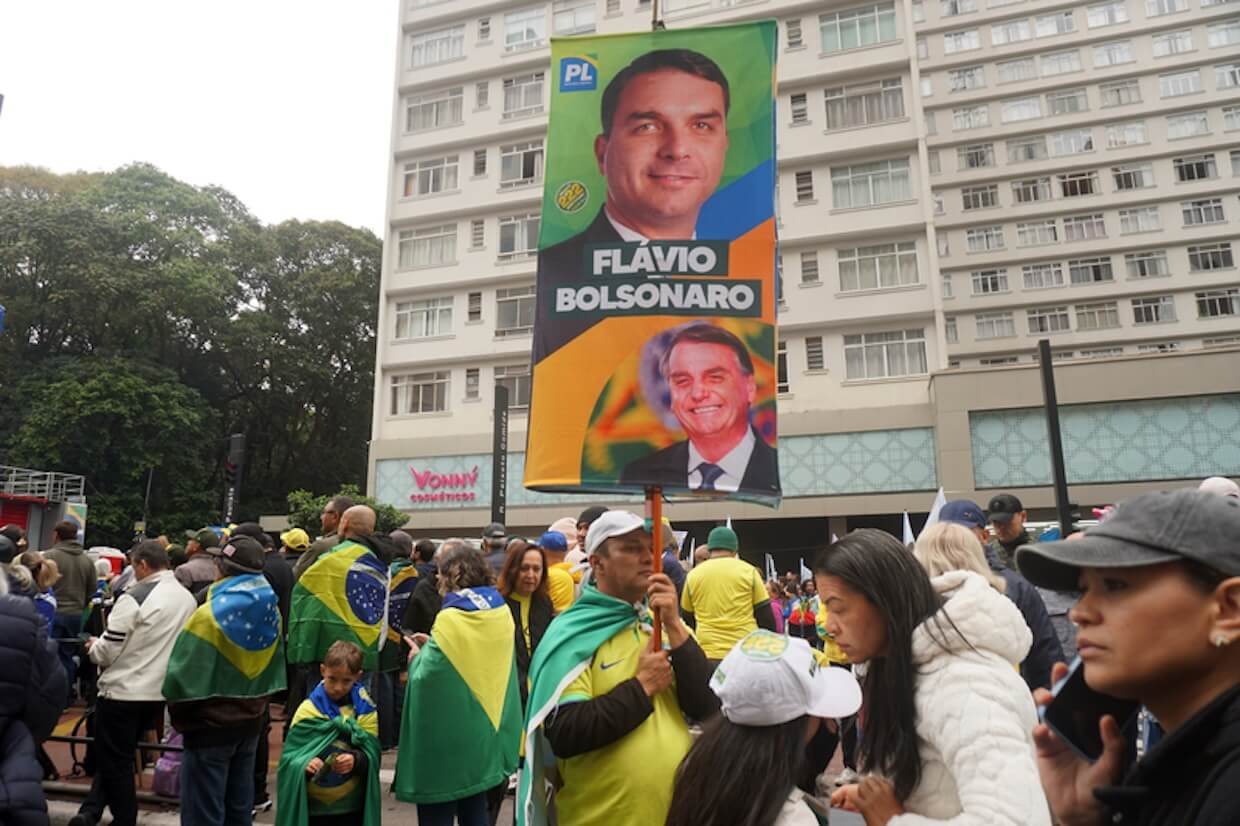
Brazil’s October 4, 2026 presidential election produced a first-round result that significantly altered the political landscape ahead of the October 25 runoff. Flávio Bolsonaro finished first with about 47% of the vote, ahead of incumbent President Luiz Inácio Lula da Silva on 45.1%, while right- and far-right forces also performed strongly in congressional and gubernatorial contests. The outcome sharpened the confrontation between Lulism and a post-Jair form of Bolsonarism, while also raising broader questions about the resilience of Brazil’s post-authoritarian democratic settlement, the institutionalization of the radical right, and the future of political representation in the country.
In this interview with the European Center for Populism Studies (ECPS), Guilherme Casarões, Associate Professor of Brazilian Studies at Florida International University, argues that the significance of October 4 extends well beyond the immediate electoral competition between Lula and Flávio Bolsonaro. For Assoc. Prof. Casarões, the most consequential development is not simply the continued strength of Bolsonarism without Jair Bolsonaro on the ballot, but what the election reveals about the transformation of Brazil’s democratic order. As he puts it, “what really died, or what really was defeated on October 4th, was Brazil’s democratic pact itself.”
Assoc. Prof. Casarões is careful to stress that this does not mean Brazilian democracy has ended. Rather, he argues that the political pact sustaining democracy since the transition from military rule in the mid-1980s and its constitutional consolidation in 1988 “is now gone, or at least seems to be over for now.” In his view, this makes the 2026 election even more consequential than the watershed contests of 2018 and 2022. Brazil, he argues, has reached “a crossroads,” with the future character of its democratic system increasingly uncertain.
At the same time, Assoc. Prof. Casarões resists interpreting Flávio Bolsonaro’s success as evidence that Bolsonarism has already become fully institutionalized. Despite the son’s electoral rise and the growing importance of the Liberal Party, he maintains that the movement “still gravitates around the image of Bolsonaro the father” and remains “a very personalistic movement.” Ultimately, he suggests, Bolsonarism still resembles “a cult of a person,” and “this person is Jair Bolsonaro himself.”
The interview develops this diagnosis across a wider set of themes: the decline of policy-based competition and the rise of identity polarization; Christian nationalism and the religious-populist radical right; punitive approaches to crime; the transnational circulation of far-right ideas; and the interaction between Trumpism and Bolsonarism. Assoc. Prof. Casarões also examines the contrasting trajectory of Lulism, arguing that Lula has increasingly come to symbolize the establishment itself. Taken together, his analysis presents October 4 not merely as an electoral upset, but as a possible marker of a deeper reconfiguration of Brazil’s democratic and populist politics.
Here is our interview with Associate Professor Guilherme Casarões, edited lightly to enhance clarity, readability, and overall flow for publication.
Bolsonarism Is Not Yet Institutionalized

Professor Casarões, welcome. Let me begin with the transformation of Bolsonarism itself. Brazil’s first-round result appears to represent something more structurally significant than another confrontation between the political camps created around Lula and Jair Bolsonaro. With Jair Bolsonaro himself absent from the ballot and Flávio Bolsonaro not only emerging as the principal candidate of the right but actually finishing first with about 47% of the vote, are we witnessing the transformation of Bolsonarism from a highly personalized populist movement into a more durable political identity? What would distinguish the institutionalization of Bolsonarism from the simple continuation of the Bolsonaro family?
Assoc. Prof. Guilherme Casarões: That’s a great question and let me take a step back just to refer to what I think is the biggest change after the October 4th elections in Brazil. I think that—and this is something that I’ve argued in a very recent piece that I wrote for The Conversation website—what really died, or what really was defeated on October 4th, was Brazil’s democratic pact itself.
By saying this, I’m not implying that Brazilian democracy is over. What I’m trying to say is that the pact that has sustained Brazil’s democracy for over 40 years, starting in the mid-80s, being written into the Constitution of 1988, and sustaining Brazil’s democracy ever since then, is now gone, or at least seems to be over for now. There’s a big change going on in Brazil, therefore making the 2026 elections in the country even more consequential than the 2018 and 2022 elections. This is why we are at a crossroads right now. There’s something going on. We don’t know exactly how to describe what Brazil’s democracy is going to look like in the future, if at all, but this is an important caveat to make.
Now, as for Bolsonarismo, we have other examples around the world of children of very popular politicians who become leaders of movements themselves. That’s the case of Marine Le Pen in France. If we think about the transition between Jean-Marie Le Pen and Marine Le Pen, there’s a big inheritance, but also a big transformation between these two moments of leadership. We also have something along similar lines in Peru, with Alberto Fujimori back in the 1990s and early 2000s, and now we have Keiko Fujimori, who is Peru’s current president. So, this is not very unusual, if you think about it, politics is also hereditary in many ways.
Bolsonarism Is Still a Cult of Jair Bolsonaro
But I don’t think that the case of Brazil really represents a break, or an evolution, for that matter. We are not yet witnessing the institutionalization of Bolsonarismo in Brazil, because everything still revolves very much around the figure of Jair Bolsonaro, the former president who’s now serving 27 years in prison under house arrest for attempting a coup d’état back in 2022. He was convicted in 2025. But the references are almost entirely directed at him. The movement still gravitates around the image of Bolsonaro the father. He was the one, to be sure, who handpicked his oldest son, Flávio, to succeed him on the ballot in 2026.
However, I’m not sure, and I don’t believe that we are at the point of institutionalization of a movement yet. It’s still a very personalistic movement. We are yet to see what Flávio’s going to make of his own party. Flávio ran on the ticket of the Liberal Party of Brazil. Bolsonaro was also affiliated with this party. This has become more and more the party of Bolsonarismo in the country, but the Liberal Party has been around for much longer.
It never really represented Bolsonaro. He used it more than anything else. That was a very recent turn taken by Bolsonaro himself back in 2021 in order to run, because in Brazil you need to be affiliated with a party in order to run, and I think that if it depended entirely on Bolsonaro the father, he wouldn’t really have a party. He tried to create one from scratch, and he couldn’t.
What we have in Brazil, which is a multi-party-political system, is that the Bolsonarista movement captured one of the parties that was just lying there, a party that sees a great benefit in joining the rank and file of Bolsonarismo, and that’s where we are right now. Therefore, we might have to wait for another electoral cycle. Or this is something that’s going to happen along the way between right now and 2030, but the point is that it’s not fully institutionalized yet.
We might see this transition happen at some point down the road, but I still think that, if I could describe Bolsonarismo as a political movement, it really seems to me like a cult of a person, and this person is Jair Bolsonaro himself.
Lulism Became Personalistic, but Lula Remained Institutional

Conversely, the first-round result also sharpens the succession problem for Lulism. Lula remains the principal integrative figure of the Brazilian left, yet he finished behind Flávio Bolsonaro despite entering the election expecting to win in the first round. Should Lulism itself be understood as a variety of left populism, and if so, how does its populism differ analytically from the moral polarization, anti-establishment rhetoric, and cultural politics associated with Bolsonarism?
Assoc. Prof. Guilherme Casarões: Let me unpack these points. The first thing readers have to understand about Brazil is that the very same political elites who took power back in the mid-80s, after the end of a 21-year military dictatorship in the country, are the same elites who are still in power today. That’s true for the right and the left. You see, Bolsonaro himself—now he’s in jail—but he was a congressman for 28 years before getting elected president in 2018. Even though he used to depict himself as an outsider, as an anti-establishment candidate, we know for a fact that the same guys who have been around for over 30 years now, they were the ones who, if not established the New Republic, as we call Brazil’s post-dictatorship moment, were there from the get-go.
I don’t think that this is something that a lot of people understand about Brazil. Lula himself has been around for a very long time. He was the founder of the Workers’ Party back in 1979, and he very quickly rose to become one of the most popular politicians in Brazil. He ran for president in Brazil’s first direct presidential elections in 1989. He ran again in 1994 and in 1998, and he was defeated in the first three elections he ran. Then he got elected in 2002, got elected again in 2006. He handpicked his successor, Dilma Rousseff, in 2010, who then won again in 2014.
Lula was about to make a comeback in 2018, but he was put in prison, and he couldn’t run at the end of the day, so he ran again in 2022. We’re talking about so many elections. I mean, six and a half, if we consider 2018 as an election that he could have run, and he ended up not being able to, and now it’s the seventh time. He ran for president. He runs for president. I’m not going to say things in the past because the election is still not decided, but let’s consider that, despite what happens on October 25th, Lula’s going to be a seven-timer when it comes to presidential elections.
People are tired of this. They are tired for many reasons. I mean, Lula is 80 years old. Of course, in today’s world, it’s not unusual to have leaders who are over 80 or over 70, and that’s totally fine. But the fact that he was president for three full terms, the fact that he was able to choose his own successor, who was impeached in 2016—and there are many explanations for the impeachment proceedings—she was very unpopular. She drove, according to many, Brazil to its worst economic crisis in generations.
Because of that, we are witnessing a politician who is very popular on the one hand and, of course, very acclaimed internationally because of all his diplomatic feats, but who’s also very much worn down on the other hand. He doesn’t look tired if you watch his speech at the General Assembly of the United Nations or if you watch Lula in action during the campaign. He doesn’t seem tired, but people are tired of him.
Is he a populist? I don’t think he’s a populist. If you look at the definitions of populism that we work with on a daily basis, it’s mostly about the division between the elite and the people and, of course, claiming that he, or the populist leader, is the only one able to speak on behalf of the people, maybe with a capital P. This is not Lula.
Lula Has Become the Target of Political Dissatisfaction
Let me explain to you why I think it’s not the case. Lula might have been very divisive during campaigns. Indeed, if you go back to 1989, or 1994, 1998, or even 2002, he was always talking about the elites versus the people. And he, being a former metal worker and somebody who came from a very poor background back in the 1950s or 1940s, identifies with the people, and that’s all true. But the behavior of populists must go beyond elections. Elections are naturally moments in which you see some division flourish because you have to draw lines between yourself and your opponents. Populism goes beyond that. A populist has to govern using the same strategies or the same narratives that have allowed this person to get elected in the first place.
This is not Lula. Ever since he was elected for the first time in 2002 and took office the next year, he’s been super institutional. He’s been one of the most institutional presidents that we’ve ever had, and that might explain at least part of his success. So, there is Lulismo in the sense that there was a time, especially with the first corruption scandals that go back to 2005, when we might have seen a moment when Lula detached himself from the Workers’ Party. This is when one very famous commentator in Brazilian politics, André Singer, wrote a book about the rise of Lulismo, or Lulism, as opposed to petismo, or Workers’ Partyism. He was basically describing the opposite trajectory of the far right. The far right moves from the personal to the institutional, and PT and Lula were moving from the institutional to a more personalistic approach to politics. That’s true, but Lula as a president has been something else. He has been very institutional. He has been very willing to make concessions and to cooperate and to negotiate.
You can look at it from a positive perspective and basically say, “okay, this is great.” Lula is a man who’s been able to advance a lot of very important policies regarding the reduction of inequality in the country, the reduction of poverty, and social welfare policies of many different kinds. That was all good, and that was all made through a lot of concession and a lot of negotiation.
But at the same time, because he’s been so willing to negotiate and to make concessions ever since he got elected for the first time, a lot of people identify him as the representative of the establishment. So, whenever there’s a corruption scandal, whenever there’s something that Brazil’s democracy can no longer deliver, people will naturally blame it on Lula himself because he’s the face of Brazil’s democratic pact. He’s the face of Brazil’s establishment in so many ways.
And the more people get frustrated with the establishment, the more people hate everything that’s going on in Brazilian politics, they will look at Lula and say, you are the one to blame because you’ve been around for so long. It’s not populism, but it’s a personalistic identification with the system, which is, by definition, the opposite of populism in so many ways, that has made Lula so popular, but also the preferential target of pretty much every single dissatisfaction we’ve seen in Brazil for the last 20 years or so.
Brazil’s Political Divide Is Now About Identity

The first round now seems to confirm that Brazil is confronting two highly developed political identities: Bolsonarism as a cultural, moral, religious, and anti-establishment formation, and Lulism as a socially redistributive and inclusion-oriented coalition. At the same time, the strength of Bolsonarista candidates in congressional and gubernatorial races suggests that the right’s political identity extends well beyond the presidential contest. Does this mean that Brazilian polarization is becoming more deeply institutionalized even as it becomes somewhat less dependent on Lula and Jair Bolsonaro personally?
Assoc. Prof. Guilherme Casarões: I believe so, and there’s a reason for this. You’ve correctly pointed out that polarization has just grown in Brazil. It’s hard to be super rigorous when it comes to polarization, because there are many different hypotheses about this. Some people just dismiss the idea that there is polarization to begin with. I think there is, and it shows not only in presidential elections, but also in the rhetoric that we have seen politicians embrace over the last eight years. It has become more divisive. It has become more violent and aggressive, especially on the side of the far right.
I would say that the big division, or the big chasm, between the two major political groups in the country today—Bolsonarismo on the one hand, and the left progressives or Lulismo on the other—happens around identity lines. So, it’s not necessarily a matter of policy.
You see, back in the 1990s or the 2000s, the PT, the Workers’ Party, was running against the Social Democratic Party, which was the center-right party of that time, and they were fundamentally disagreeing around policy. I mean, what’s the best policy for our economic adjustment? What is the best policy to tame inflation? What is the best policy to include more and more poor people into the job market or into the schooling system? So those were the conversations back in the day. To be fair, I really miss them because those were programmatic discussions. Those were relevant, tangible policy discussions. What we see today is mostly about identity.
On the one hand, you have a project that’s been around for at least 40 years. This is not the Workers’ Party. That was the consensus that Brazil got to after the end of the military dictatorship. What was this consensus about? Number one, the idea of Brazil being a diverse country. Diversity was part of the idea of what being a Brazilian was. Diversity of race, diversity of religion, even diversity of parties and political positions. This very pluralistic notion of a diverse country is at the base of Brazilian politics. That’s been around for a long time. I would even go as far as to say that even during the times of the military dictatorship, some of the consensus around what the Brazilian identity was already there. That was the identity consensus that the PT embraced and built upon.
What Bolsonaro offers, on the other hand, and he’s been offering this ever since he ran for the first time in 2018, and even more so now, is a very different identity that I could describe in one idea, which is the idea of Christian nationalism. You see, what the Bolsonaro family and movement are trying to push is the notion that you can only be a true Brazilian if you belong to a specific faith. Of course, it’s not just about religious affiliation. You can be a Catholic, you can be an evangelical Christian, a Protestant. You can be a spiritualist of any kind, as long as you think about the world in terms of these conservative culture-war values, you belong.
It was interesting because, just to illustrate this point, back in 2017, Bolsonaro was running. He was in his pre-campaign, and he was at a rally in a state in the northeast of Brazil, and he very explicitly said, unlike what people think, Brazil’s a Christian country. Minorities must bow to the majority of this country. He was basically saying this country belongs to Christians and not to anyone else.
The week after that, he was interviewed by a YouTube channel of the Jewish community in Brazil. There are a lot of Jews in Brazil who’ve supported Bolsonaro from the very beginning because they saw Bolsonaro as the savior of relations between Brazil and Israel at the time. Bolsonaro was the first and the only candidate so far who vowed to transfer the embassy of Brazil from Tel Aviv to Jerusalem. We know that back in the early Trump years, that was something that mattered a lot to many countries. So, basically, he was interviewed by this Brazilian Jewish channel on YouTube, and he got the question: You said that Brazil is a Christian country. What about the Jews? And Bolsonaro then responded, “Aren’t Jews Christians too?”
Christian Nationalism Is Central to Bolsonarista Identity
So, it tells us that it’s not about religion. It’s about something bigger. It’s about the notion of belonging along the lines of identity. Jews can be Christians in this regard. Even some Muslims can be Christians in this regard, depending on your political views, depending on your worldviews in general. So, identity is key to understanding the big divide that we find ourselves in in Brazil right now. But there’s something that goes beyond that.
Brazil’s not the United States. Brazil has always had a multi-party system since the end of the Second World War. And because of that, Brazil’s democracy has always been built around consensus. Of course, consensus can be good and bad. If you pursue a lot of consensuses, then you’re probably not going to get very far. You’re not going to get anywhere, because you’re always trying to build a super-consensual position that’s possibly not going to work fully. But that’s what Brazil’s democracy has always looked like, at least over the last 40 years.
One of the things that Bolsonaro has proposed, and that’s another very important division right there, is a different democracy, not based on consensus, but based on the majority. But we can name this, if you want, the tyranny of the majority. This is, in many ways, what populism is also about: the notion that as long as I’m enabled to speak on behalf of the people, it doesn’t matter if 50% of the country voted for me, or 80%. I will be able to govern only for those who voted for me in the first place.
This divisive notion of democracy, which is certainly not compatible with our own understanding of what a liberal democracy is, is also part of Bolsonaro’s repertoire, is also part of what he’s been standing for. It’s a combination of things, but I think that it goes on a very social dimension and also runs to the institutional dimension along identity lines, which are very different from the ones that we have become used to in Brazil.
Bolsonarism Defines the People by Who Does Not Belong
Your work on populism emphasizes its capacity to divide political space between a morally legitimate “people” and forces portrayed as threatening that community. In the wake of the first round, who exactly constitutes “the people” in the Flávio Bolsonaro version of the Bolsonarista imaginary? Is he reproducing Jair Bolsonaro’s construction of ordinary Brazilians against political, judicial, cultural, and intellectual elites, or has the electoral success of October 4 encouraged a broader and potentially more institutionalized version of this populist identity?
Assoc. Prof. Guilherme Casarões: That’s a good question. Flávio has never really been openly explicit about who the people are. The people are basically those who vote for him, who voted for his father in 2018 and 2022. Of course, he throws some ideas around at times, such as: you got to be conservative. So, the true Brazilian is conservative. The true Brazilian respects family values. The true Brazilian is in favor of individual freedoms and liberties. The true Brazilian is Christian—and again, in a very enlarged, weak definition of what Christianity is, because it’s a Christian nationalist thing, not necessarily a religious thing. This is the people defined by Flávio Bolsonaro.
But most importantly, one of the great abilities of the far right in Brazil—and that’s also true for many other countries, the United States and some Latin American countries as well, but that also includes Europe—is that identity is not only defined by what you project about what the people should be, or what the people are. Identity is also established around the negatives, around what people are not. As important as saying that people are Christian and conservative and pro-family and whatnot, we also have the other side, which is demonizing different expressions of what Brazilian society should be. Of course, if you’re a follower of an Afro-Brazilian religion, it’s going to be very hard for you to fit into this notion of Christianity. If you’re progressive, or woke, as they call it, it’s going to be very hard for you to be part of that idea of society. If you’re LGBTQ, or if you’re a woman—especially a woman who stands for her own right to be autonomous and to do her own things—that doesn’t really sit well with the traditional family idea.
This project of Bolsonarismo as a movement is not so much just about constructing who they think the people are but also defining the enemies of the people. That happens on a regular basis, and it happens as we speak. Those are moving targets because sometimes all it takes is somebody from Bolsonaro’s inner circle to call you a communist. Then you’re going to become a communist in the eyes of whoever’s looking at you. It’s not just about what you do; it’s about how people want to portray you. It’s interesting to see, for example, that in the political world, there were a lot of former Bolsonaro allies who’ve become communists overnight because Bolsonaro said so at some point in the past. This is an interesting thing. We’re talking about identity, and this identity is not yet institutionalized, because it would take maybe a generation of a different education system, a different perspective of history, and different laws to allow this identity to fully reveal itself and to become an integral part of Brazil’s institutions.
But the message is already there. Of course, with a strong presence in both chambers—we’re talking about pluralities, of course, not a majority of 50 plus 1%—Flávio Bolsonaro will probably have, if he gets elected, more than a quarter of the House of Representatives and more than a quarter of the seats in the Senate as well, just about a third, really. So, it’s unprecedented. Never before in Brazil’s 40-year democracy have we had a party with so many seats in both houses of the legislative branch. If they want to start changing laws, if they want to start changing education, if they want to start redefining what Brazil is as a country, now is the time for them to do it.
The Populist Right Turns Fear of Crime into a Promise

Public security was one of the major concerns of voters in the first round, alongside the economy, sovereignty, and corruption. Flávio Bolsonaro has campaigned on a particularly punitive approach to crime, including proposals to designate gangs as terrorist organizations and create maximum-security prisons modeled on El Salvador. How does security become a specifically populist issue? Does radical-right populism gain traction by transforming legitimate concerns about violence into a broader moral distinction between “honest citizens,” dangerous outsiders, permissive elites, and supposedly obstructive institutions?
Assoc. Prof. Guilherme Casarões: People are afraid, people are scared, and violence plays a very important role in that. Of course, you can use many different scare tactics to bring people to your political camp. You can talk about transgender people using different-sex bathrooms. You can talk about transgender people in sports. You can talk about Muslims being a religious menace to the country.
But in the case of most developing countries out there—that might also be true for the United States, but let’s stick to the Third World for a minute, to the developing world—violence is very real. Violence is deeply structural because it runs on inequality. It runs deep into the big class divides of society. So, people have many reasons to be scared.
It used to be a middle-class problem, maybe back in the 1970s or the 1980s, but nowadays it’s more and more everyone’s problem. Even poor people are having their phones taken away. Even poor people are having their houses broken into. That’s a problem that somehow binds Latin American countries together, because these countries are going through the very same things. Violent crime is on the rise. We have a lot of organized crime groups that promote chaos in many of these countries. Drug trafficking is a real issue, gun trafficking and arms trafficking are real issues, and, of course, mortality rates are also going up because of gun violence in most of these countries.
So yes, I totally understand why people are scared. I also understand that it’s much easier for the right to tap into this fear and turn it into a promise. We don’t know if this promise is going to be fulfilled, and I don’t think it’s going to be fulfilled at all, unless you embrace a model along the lines of Nayib Bukele in El Salvador, which is a very specific thing that might work for a country as tiny as El Salvador, but certainly won’t work for Colombia or Brazil or Argentina or Mexico, which are much bigger countries.
So, I think that we have a problem, because the only example that the right has, when it comes to being tough on crime, is an example of a semi-dictatorial or authoritarian regime at this point. But it’s interesting to see that all the opponents of Lula in this race of 2026 have, at some point, mentioned the Bukele model as something that they looked up to. Flávio Bolsonaro was no exception.
This also serves as a point of identity, because one of the first big divisions that Bolsonaro the father would play out, a couple of years before the presidential race, was between the good citizens and the criminals. So, if you support him, you’re a good citizen. If you support the Workers’ Party, if you support the left or communism, you’re also a criminal. Or at least you’re vouching for criminals all the time.
Populism Offers Simple Solutions to Complex Security Problems
Of course, it doesn’t add up in reality because they say they are against crime, but most of the people who’ve been elected on the right, and even Flávio Bolsonaro himself, have massive charges of corruption and a lot of investigations going around. These guys are not clean at all, and some of them—Flávio Bolsonaro himself—have a very close relationship with organized crime groups in Rio de Janeiro, which is one of the most populous states in the country.
Therefore, it’s a fictitious division, but it’s a division that really resonates with people because what they are basically saying is, if you vote for me, I’m going to prevent you from getting robbed again. I’m going to prevent you from having a gun pointed at you again.
Of course, there’s no magical solution for that. Bolsonaro the father, while he was in office, wasn’t able to change a lot. The only thing that he really changed during his tenure was that he passed a lot of laws deregulating gun control in Brazil, meaning that a lot of citizens now have more access to guns than ever before. It hasn’t really solved the problem of crime or violent crime.
So basically, that’s a good point, because this is extremely populist, if you think about it. Populism is also about coming up with magical solutions, very simple solutions for generally very complex problems. Public security is one of the realms in which the right has been able to offer the simplest of solutions, which is either putting everybody in prison—that’s the Bukele model—or what they believe is the US model, which is basically giving guns away to everyone. Neither of those models really solves the problem. But people still have hope that this is something they can hold on to: maybe Brazil’s going to be better in the future. I don’t think it’s going to be, not with that kind of policy.
Religious Politicization Is on the Rise
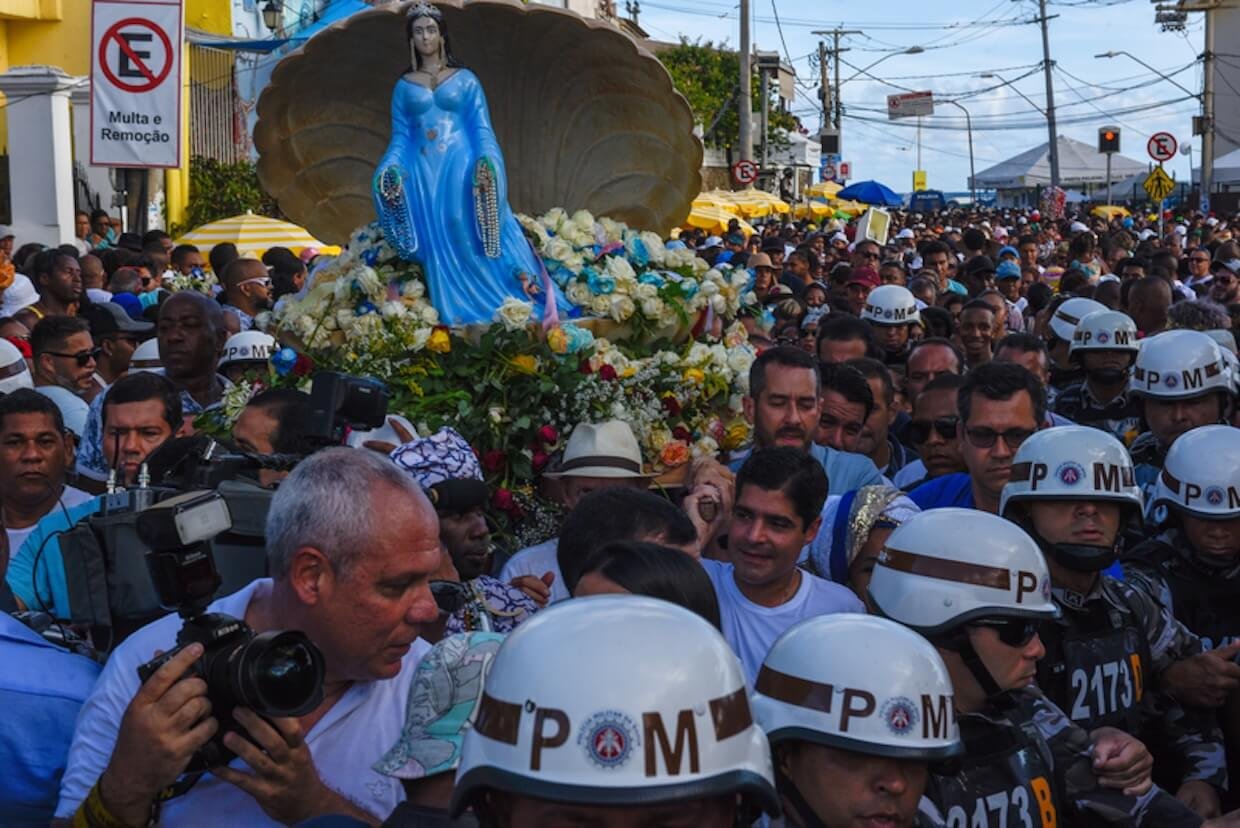
Religion is central to your scholarship on Bolsonaro. In your work with Ricardo Barbosa Jr., you propose the category of the “religious-populist radical right,” arguing that religion provides not only ideas but also organizational resources and social power through which the radical right can capture institutions and participate in transnational culture wars. How useful is this concept for understanding the first-round result, particularly given Flávio Bolsonaro’s strength among evangelical Christians and Lula’s continuing advantage among Catholics?
Assoc. Prof. Guilherme Casarões: This is a very interesting paradox, because, as Pippa Norris and other authors have demonstrated very recently, religious affiliation is decreasing worldwide, meaning that we live in a world that’s not as religious as it used to be, certainly not 40 or 80 years ago. The paradox is precisely the fact that even though religious affiliation is declining, religious politicization is on the rise, meaning that those who are trying to hold on to religion are becoming more and more political.
We used to live in a society that had a clear division between what’s religious and what’s political. Of course, it’s impossible to prevent these things from overlapping occasionally. But all in all, secularism had prevailed, and that was the original thought.
Then, as early as 1993, an American sociologist called Mark Juergensmeyer wrote a book called The New Cold War?, in which he defends the idea that what’s new about the end of the Cold War is precisely the rise of religious nationalism. When he wrote this book back in 1993, he was talking about religious nationalism in some parts of the Middle East, religious nationalism in some parts of South Asia, religious nationalism in some parts of Africa, and that was that. He himself even treated that as a peripheral phenomenon.
What we have seen over the last 30 years, however, is the mainstreaming of religious nationalism. If you look at it today, a lot of far-right movements are very closely tied to this new identity of religious nationalism. If you think about Vladimir Putin in Russia, there was a turn at some point between 2012 and 2016 in which he became very close to Orthodox Christianity in Russia.
Erdoğan, in Turkey—he was elected as Prime Minister back in 2002. Of course, the AKP was always very religion-infused, but at the same time, it wasn’t a religious party, strictly speaking, and he has become more and more religious with time. The whole idea of making Russia Imperial Russia once again, or making Turkey Ottoman Turkey once again, these are all very strong religious tropes.
What’s interesting about religious nationalism today, and that’s one of Juergensmeyer’s theses, is that it attaches itself to an idea of civilization as well. No matter if you’re a Catholic, a Protestant, or an Evangelical Christian in Brazil, Argentina, Peru, or, above all, the United States, irrespective of your specific religious affiliation, you have this civilizational notion that has to be preserved. We have to protect what a lot of people across the hemisphere have called the Judeo-Christian tradition.
I could have mentioned other examples, and Israel and India are also very important examples of the mainstreaming of religious nationalism. If you look at Benjamin Netanyahu’s government right now, it’s pretty ethno-religious. It’s even more than just religious. If you look at India’s BJP and Modi, their core ideology is Hindutva, which is basically Hindu nationalism as well.
Religion and Populism Are Formidable Together
What I’m trying to say here, and that’s the reason why Barbosa and I came up with this notion of the religious-populist radical right, is basically that what we see today is precisely the mainstreaming of such religious ideas and the fusion of these religious ideas with populism. If populism is about creating this divide between the people and the elites, now the people are the religious ones. The religion of the people is the fundamental thing that has to be observed and has to be somehow preserved in these countries.
It was born out of a case study about Brazil. But it brings a more universal lesson for what we have experienced in many parts of the world. Religion and populism are formidable together. They are able to produce many important results, especially because they speak not only to the organizational side of things, they speak not only to the money that fuels all these movements, but they speak fundamentally about belonging and about identity. This is what makes it so strong.
Europe might be an exception. I just want to mention this, because I don’t want to elaborate on this, but I think it’s important to make a distinction here. We talk about the far right, treating them as though they were part of the very same set of ideas, and, of course, European far-right movements are also very much civilizational, but it’s not necessarily along religious lines.
France and Germany say little about religion, whereas Spain and Portugal say a little bit more about religion. Europe is a more complicated mosaic that we have to look into, but in Latin America and the United States, the hemisphere has become fundamentally Christian nationalist. That’s an important take on whatever’s going on right now in our part of the world.
Religion Is a Powerful Transnational Force in the Americas
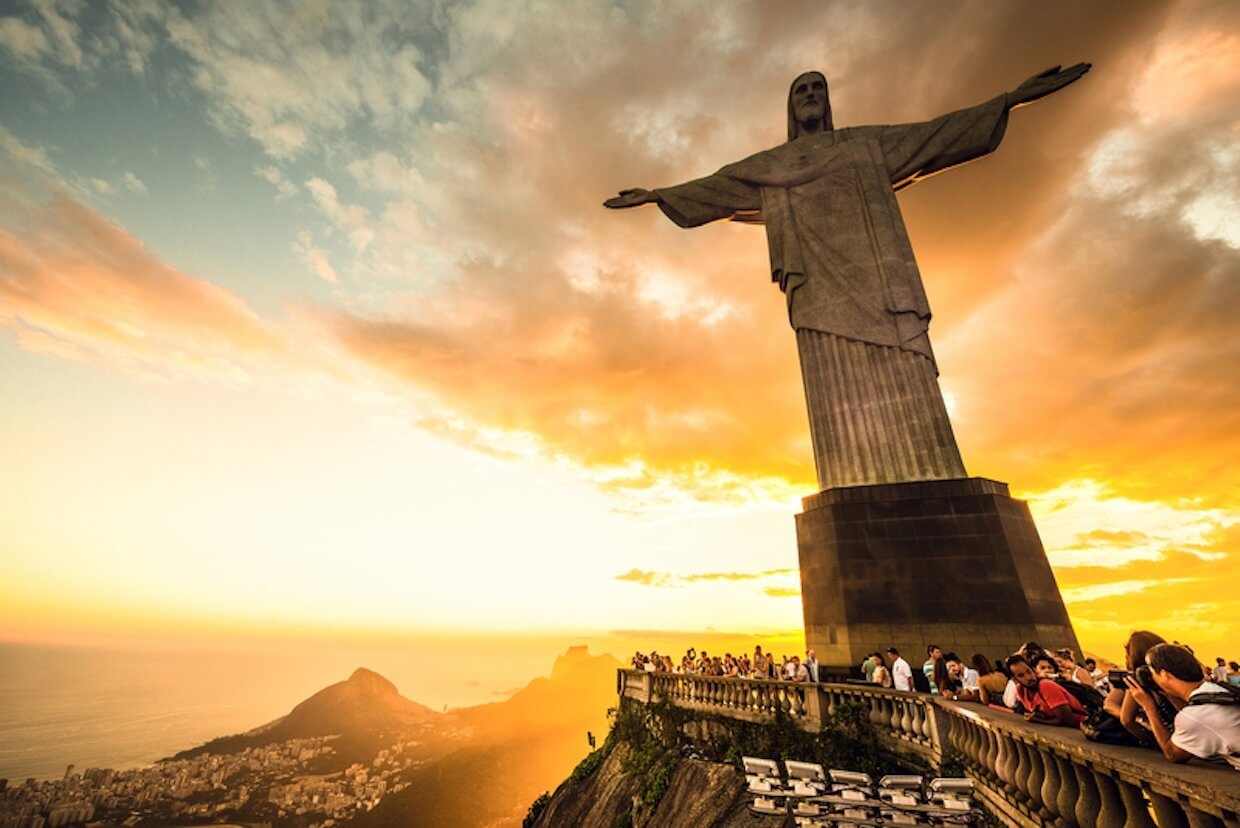
Your research also suggests that Christian nationalism under Bolsonaro was not merely domestic but transnational: religious narratives shaped alliances, culture-war agendas, relations with Israel, and participation in conservative international initiatives. To what extent has this transnational religious nationalism survived Jair Bolsonaro’s presidency and become embedded in the broader Brazilian right? Does Flávio Bolsonaro’s first-round victory suggest that this infrastructure can continue shaping Brazilian politics and foreign policy without Jair Bolsonaro personally returning to power?
Assoc. Prof. Guilherme Casarões: Over this summer, I taught a course called Transnational Politics in Latin America. My original idea was to talk about the transnational far right in Latin America. That was my obsession. But it turns out that I decided to take a step back and look at the much bigger picture of transnationalism in Latin America, from colonial times all the way down to today. Basically, it was a course on so many different angles of transnationalism in Latin America.
One of the things that I learned from that course, based on the readings that I put together and the discussions that I had in the classroom, was precisely that religion has been one of the most transnational things connecting countries in Latin America or in the Americas, by and large. Because if you think about the beginning of the colonization of the Americas, especially Spanish and Portuguese America, meaning Latin America in general, it all starts not only with Spain and Portugal, but with the Jesuits, with the Catholics from that time. So, colonization had a very strong transnational component, and this component was the Catholic faith, evangelization, missionary work, and so on and so forth.
What we see during the Cold War is another chapter of the same process. But now, we’re not talking about religion coming out of Europe to change the landscape of Latin America. From the 1960s on, in the middle of the Cold War, we’re talking about the Protestant faith, in a way, trying to challenge not only communist atheism but also, and most importantly, what became known as liberation theology in Latin America.
So, we have to put things in context and remember that in Latin America, the Catholic Church took a turn to the left in the 1960s and 1970s, so much so that Pope John Paul II from Poland went after these bottom-up grassroots movements of the Catholic Church because they were, according to the official doctrine of the church, becoming communists themselves.
Protestantism emerged out of the United States. Of course, Protestantism is also very national. We have national churches being built, or national movements being created in El Salvador, the Dominican Republic, Brazil, Paraguay, and the list is pretty long. But at the same time, there was a very important push by US administrations, by the CIA, by a number of US-based churches, to project this faith transnationally onto Latin America during the Cold War.
This is important because what we see right now—the growth of evangelicalism in Brazil, in Chile, in Argentina, in a lot of Central American countries—is precisely the unfolding of this process. It’s a long shot, of course, but it has paid off. Brazil, for example, when I was born in the 1980s, had around 5 to 7% evangelical Christians. In 2026, Brazil has about 30% of the population as evangelical Christians. It’s a big change.
Some countries have become evangelical-majority countries, as opposed to the Catholic majority that has always dominated the landscape in Latin America. My point is that evangelicals have become more and more consequential.
Evangelicalism Has Helped Turn Conservative Ideas into Policy
Of course, one of the transnational nodes that we can identify is precisely cultural war. One of the things that evangelical churches, movements, and leaders import from the United States, in exchange among them, is the fight against abortion, the fight against LGBTQ rights, the fight against drugs, which is framed in a very specific way, traditional family values, Christian nationalism, Christian Zionism, which is the love for Israel. All these things are, in many ways, the web that connects all these churches and movements around the region.
So, as much as Bolsonarismo as a movement is transnational, and religion plays an important role in that, the far right in Latin America is born out of transnational forces. And, of course, religion is also a very important point of that process.
Now, we have to make a distinction, however, and not treat all evangelicals as the same thing. Not all evangelicals are in favor of Israel. Not all evangelicals are in favor of Bolsonaro, for that matter. Not all evangelicals love the idea of Trump interfering with Brazilian elections. I would say that nowadays, because of religious values or because of even conservative worldviews, evangelicals vote for Bolsonaro, be it Flávio Bolsonaro the son or Jair Bolsonaro the father, at a 70–30 ratio. So, out of the around 60 million evangelicals that we have in Brazil, some 40 million consistently vote for Bolsonaro.
Some people blame the leaders. Some people say it’s just about these leaders of megachurches in São Paulo, in Rio, and in other urban areas. They are the ones who call the shots, and if we are able to defeat these people, then we’re going to be able to change the minds of the followers. That’s fundamentally wrong.
Of course, leaders have a very big influence on how followers vote. Even when they don’t talk about it explicitly, we have a lot of people who go to the services and who listen to the pastors and the leaders, and they fundamentally agree with that. It’s not about an imposition of vote or political positions; it’s just agreement. This is important because it also explains that maybe the role of leaders is limited, more limited than we think.
There’s an American scholar called Amy Erica Smith from the University of Iowa, and she wrote a book about evangelicals in Brazil. She basically says it’s important to consider the role of evangelical leaders, those who own churches, those who replicate churches, even internationally, but we cannot pretend that voters are not agents of their own decisions. Meaning that evangelical Christians might vote for Bolsonaro not because their leader has told them so, but because they believe in what they’re listening to. They believe in the promises. That’s an important thing. And, of course, what evangelicalism has done to countries like Brazil is not that it has transformed voters into more conservative voters. It’s different. Evangelicalism, because it’s a more outspoken faith, as opposed to Catholicism, has allowed these conservative ideas to flourish and to become more open.
It’s not about changing people’s minds. Brazilians, as much as Turks, as much as Argentinians, as much as whoever else you want to name, most people are conservative in one way or another. Religion is there to enable these conservative ideas to become policy. That’s where we are right now in Brazil.
Bolsonarism Began by Emulating Trump
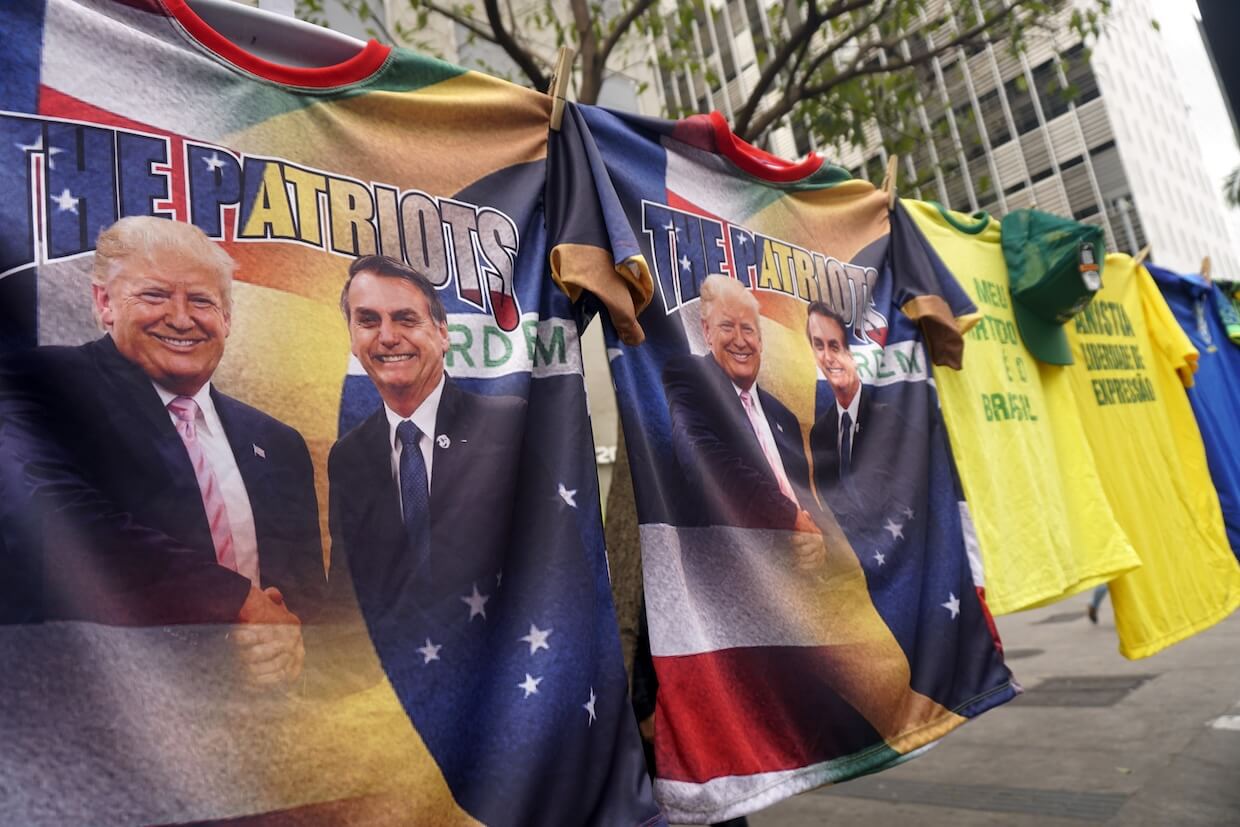
This brings us to Trumpism. Donald Trump became an explicit issue in the first-round campaign, with Lula accusing the US president of seeking to influence the election in Bolsonaro’s favor, while Flávio Bolsonaro openly advocated a closer relationship with Trump. How should we understand Trumpism’s influence on contemporary Bolsonarism after the first-round result: as imitation, ideological diffusion, strategic borrowing, or participation in a genuinely transnational populist network?
Assoc. Prof. Guilherme Casarões: I think it’s a transnational thing. It starts out with emulation or imitation. In the beginning, when Bolsonaro decided to run for president back in 2016, that was precisely the time Trump was about to get elected in the United States. And the moment Trump got elected, in November 2016, Bolsonaro started calling himself the Brazilian Trump, or Trump of the tropics. That’s another version of the story.
Of course, the beginning was mostly about emulating Trump’s playbook, because we have to concede something to Trump: his playbook was super successful. It was successful because it tapped into identity, it tapped into people’s fears, it tapped into people’s hate—hate for whatever they hate, either racial hatred or religious bigotry, it doesn’t matter. Trump was able to bring all of these things together into one movement, which was not cohesive, it was not super tight, but it was a loose movement that was able to get him elected in 2016. Bolsonaro attempted the very same things, and it worked. Emulation has paid off.
But emulation is not the whole story, because ever since Bolsonaro got elected, or even slightly before that, we could already notice some degree of circulation of ideas among these movements. Brazil and the United States have the two biggest and most important far-right movements in the hemisphere. We’re talking about the two biggest countries anyway.
The American and Brazilian Far Right Borrow from Each Other
It would be naive to say that everything that the Brazilian far right does is just a copy of what the United States did. If you look at the evolution of the two movements side by side, you’re going to see that there’s a lot of interaction between them. There were times when the Trump movement, or the MAGA movement, also borrowed from some of the strategies played out by Bolsonaro in Brazil. For example, the whole “dictatorship of the courts” argument is an old argument in US politics, but it started out with Brazil and then trickled up to the United States. It’s an interesting thing, because if you analyze these two movements closely, you’re going to see a lot of interaction. At this point, we can safely affirm that it’s a truly transnational movement with a lot of back and forth.
These movements talk to each other, they translate each other’s talking points, they resort to each other’s images at times. It wasn’t rare to see Trump, when outside of power in 2022 and 2023, using some images of Brazil and saying, this is what’s going to happen to the United States if Biden stays in power, or something like that. So, in many ways, there is a degree of interaction.
The interesting thing at this point is that it’s not just about the US and Brazil, because a lot of these things have also been incorporated into some other movements around the hemisphere, Argentina, Colombia, etc. Bernardo de la Espriella, Colombia’s new president, has a good relationship with Trump, but also with the Bolsonaro family. They show up at CPAC (Conservative Political Action Conference) together at times. Eduardo Verástegui of Mexico, who is probably the least likely to win, because Mexico is a very much consolidated political system, and now it’s settled on the left. But he’s friends with Flávio Bolsonaro and Eduardo Bolsonaro, who’s Bolsonaro’s son as well. Eduardo Bolsonaro is a very young former congressman who lost his office because he had spent too much time in the United States, and he still lives in the United States, where he has kept lobbying in favor of the liberation of his father from prison ever since last year, and he’s got the ears of a lot of people in the White House as of now.
It’s interesting to see how these things are articulated and how these things circulate. I’m currently working on this, so that’s probably going to be my next paper or something—on the transnational routes of the Latin American far right. So, it’s not just about the mechanism; it’s also about the origin of these movements and the conditions that have enabled these movements to be considerably successful, if you look at them right now, in power in so many countries of Latin America.
The Workers’ Party Has No Alternative to Lula
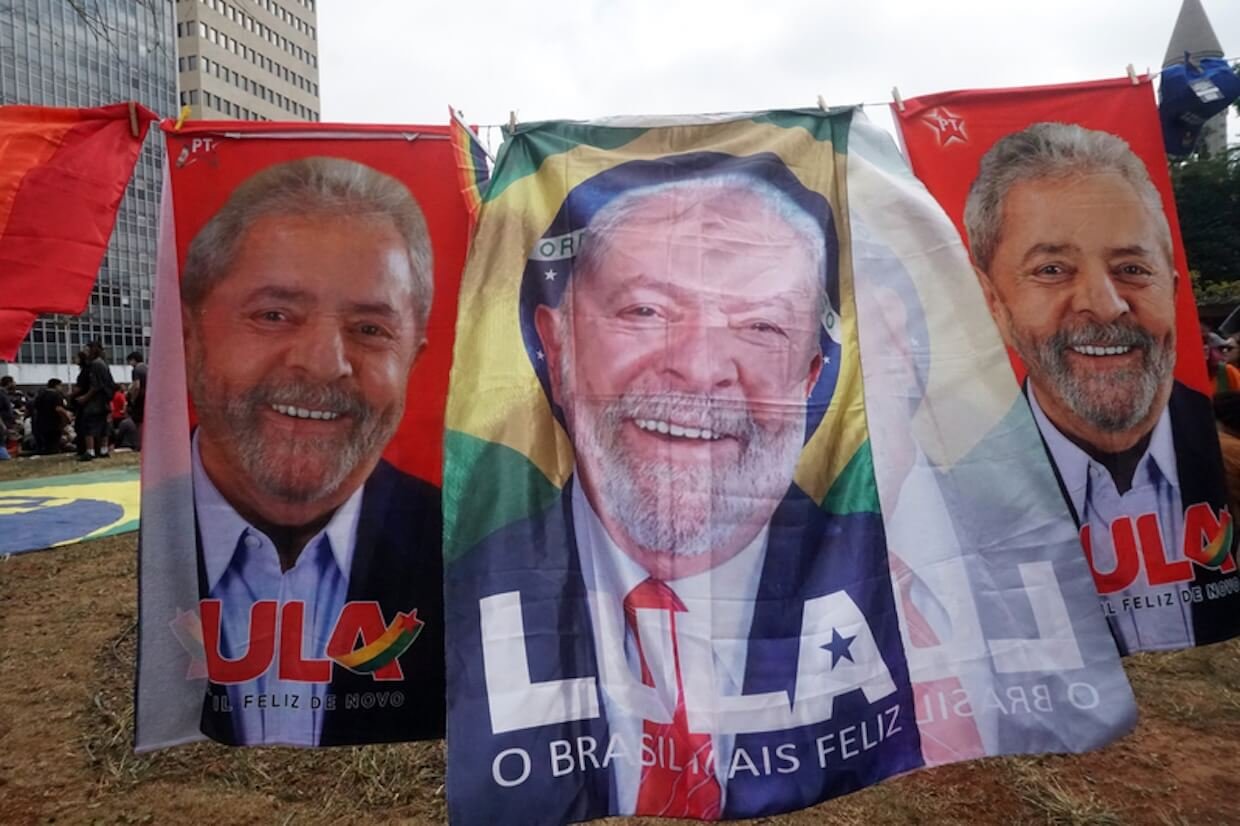
Finally, what does the October 4 first-round result tell us about the evolution of populism in Brazil? With Flávio Bolsonaro leading without Jair on the ballot and Lulism showing signs of weaker electoral dominance, are we moving from charismatic leadership toward more institutionalized populist identities—and what could this mean for Brazilian democracy?
Assoc. Prof. Guilherme Casarões: I don’t think so, and let me explain. Bolsonarism is still very much a populist movement. Of course, the leader now is the son, not the father, but as we’ve mentioned a few times before, the movement still gravitates very much around the image of Jair Bolsonaro. Of course, there might be an evolution, there might be successors outside of the family, and there might be some changes along the way. But the way things are as of right now, it’s a very personalistic and a populist movement in this regard, too.
Meanwhile, the left has a problem in Brazil. Lula might have been a populist very early on. He might have run so many elections, some unsuccessfully, on a populist platform. But Lula can no longer be considered a populist. Because nowadays, when people look at him, what they see is not an agent of transformation, an agent of change. What they see today when they look at Lula is a backward politician, somebody who acts on behalf of a corrupt system, of an outdated model of politics.
So, in many ways, we can draw a comparison between what happened in the United States under Biden and what happened in Brazil under Lula. This is not to say that Lula’s going to lose the second round of elections. Maybe he will, and most likely he will, but I’m not even taking that into account. What I’m trying to say is that what Lula represents today, regardless of whether he gets elected or not, is the establishment. People look at him and they see a failed model right there.
Of course, I understand that some people can be, as we say in Portuguese, chameleons. Some people can just change identities over time; some people can just build new identities from scratch. But Lula has been pretty much the same person ever since the beginning. Now, at 80, people look at him, and they can’t see any expectation of transformation.
Because of that, one of the biggest mistakes that we’ve had, both in the United States and in Brazil—that’s also true for Argentina and perhaps some other countries—is that these countries’ elites on the left, who used to be populist back in the day, or who could have become populist at some point, have failed to construct alternatives.
The Workers’ Party has no alternative to Lula. This is why he’s running for the fourth term. Very worn down, tired, old, but he’s still the only option. We don’t even have, in Brazil, a Kamala Harris option, which would be, maybe, Fernando Haddad, who’s the former finance minister of Brazil, who already ran in 2018 and lost to Bolsonaro’s father.
Brazil Missed the Chance for a Positive Left-Wing Populism
So, what we have today is a left, a progressive movement in Brazil, that has become, to speak directly to your question, so deeply institutionalized that it cannot really detach itself from the bad things people see in the system itself. As much as we see with the Democratic Socialists of America movement and Abdul El-Sayed and Zohran Mamdani, all these guys—AOC, of course, was the first one to come up with that, and Bernie Sanders, of course, enabling the others—this is something that Brazil needs.
We don’t have a two-party system, so this is probably going to happen as a specific partisan movement in Brazil. But the feeling that I have is that, unfortunately, we have missed the opportunity to consider a positive left-wing populism emerging to counter the right-wing populism that we have so dominant in the country right now.