Professor Markus Kotzur’s lecture explored one of the defining questions of contemporary European integration: can the European Union translate its regulatory influence into genuine geopolitical leadership? Rejecting conventional measures of power centered solely on military capability, he argued that the EU’s comparative advantage lies in its constitutional foundations, legal authority, and capacity to shape global norms through regulatory governance. Examining concepts such as Normative Power Europe, the Brussels Effect, and strategic autonomy, the lecture demonstrated how Europe’s economic strength, legal order, and institutional resilience remain essential assets amid intensifying geopolitical competition. Combining European constitutional law with international relations and political economy, Professor Kotzur offered a compelling vision of an EU capable of reconciling values with strategic responsibility in a fragmented international order.
Reported by ECPS Staff
The concluding lecture of the ECPS Academy Summer School 2026, held under the overarching theme “Europe Between Oceans: The EU in the Age of Geoeconomics, Populism, and Strategic Competition,” addressed one of the most consequential questions confronting European integration today: Can the European Union exercise genuine geopolitical leadership in an increasingly fragmented international order? While much contemporary debate focuses on Europe’s economic competitiveness, military preparedness, or strategic autonomy, the lecture by Professor Markus Kotzur, Professor of European and International Law at the University of Hamburg and Vice Dean for International Relations, invited participants to examine a more fundamental issue. Before asking whether the European Union possesses sufficient power to lead, it is necessary to clarify what leadership itself means for a political entity that is neither a sovereign state nor a conventional international organization. Drawing upon constitutional law, international law, and European integration studies, Professor Kotzur argued that the future of European leadership depends not merely on accumulating material capabilities but on reconciling legal legitimacy, regulatory influence, political integration, and strategic purpose within a rapidly evolving geopolitical environment.
The session was introduced by Dr. Camille Nessel, who situated the discussion within the European Union’s broader geopolitical transformation initiated during Ursula von der Leyen’s first Commission. Recalling von der Leyen’s ambition to create a “geopolitical Commission” in 2019, Dr. Nessel explained how this initiative fundamentally altered scholarly and policy debates surrounding the European Union’s external role. Whereas previous decades had largely conceived European integration through the lenses of market integration and regulatory governance, recent developments increasingly emphasize economic security, strategic partnerships, critical raw materials, and geopolitical competition. Trade policy, environmental regulation, and technological governance have progressively become instruments of geopolitical influence rather than merely vehicles of economic integration. In this context, concepts such as open strategic autonomy, economic security, and regulatory sovereignty have emerged at the center of European policymaking, raising new questions about how the Union can exercise influence while remaining committed to multilateralism and the constitutional values upon which European integration has historically rested. Dr. Nessel’s introduction effectively framed the lecture by illustrating that Europe’s external policies can no longer be understood independently of broader geopolitical transformations, particularly the rise of China, renewed great-power competition, and increasing skepticism toward globalization.
Can the European Union Lead? Reconceptualizing Power, Political Community, and Global Actorship
Professor Markus Kotzur is a Professor of European and International Law at the University of Hamburg and Vice Dean for International Relations.
Building upon this context, Professor Kotzur proposed that discussions of European leadership often begin from an inadequate premise. Much contemporary commentary measures geopolitical influence primarily through traditional indicators of state power—military capability, coercive capacity, or hegemonic dominance. Such perspectives, strongly associated with realist approaches to international relations, inevitably portray the European Union as structurally disadvantaged when compared with major powers such as the United States or China. Yet Professor Kotzur argued that this comparison overlooks the Union’s distinctive political character. Rather than attempting to evaluate the European Union as though it were an ordinary nation-state, he suggested conceptualizing it as a political community—a unique form of political organization that transcends the conventional distinction between sovereign state and international organization. This conceptual shift, he maintained, fundamentally alters how European leadership should be understood.
For Professor Kotzur, describing the European Union as a political community emphasizes that European integration extends far beyond economic cooperation or market regulation. The Union embodies an ongoing process of political integration grounded in shared constitutional values, institutional cooperation, and collective decision-making. Consequently, Europe’s capacity for leadership cannot be reduced solely to military capabilities or traditional notions of sovereignty. Instead, its influence derives from the interaction of legal authority, regulatory capacity, democratic legitimacy, and institutional resilience. The European Union therefore exercises a form of political leadership fundamentally different from that of conventional great powers—a leadership rooted less in coercion than in governance, coordination, and the production of international norms.
This argument naturally led Professor Kotzur to distinguish between different conceptions of power itself. Realist perspectives traditionally associate leadership with material capabilities, particularly military strength and the ability to impose outcomes through coercive means. Judged according to these criteria alone, the European Union undoubtedly faces significant limitations. Defense remains primarily the responsibility of individual member states, while security has historically depended upon NATO and, above all, the strategic umbrella provided by the United States. Compared with the military capabilities of Washington or Beijing, the European Union possesses only limited autonomous coercive capacity. Yet Professor Kotzur cautioned participants against equating these limitations with geopolitical irrelevance. Power, he argued, also assumes regulatory, legal, institutional, and normative forms that have become increasingly important within an interconnected global economy.
Indeed, one of the lecture’s central themes was that the European Union has historically developed precisely these alternative forms of influence. Rather than aspiring to classical hegemonic dominance, Europe has sought to shape international behavior by establishing legal standards, promoting regulatory convergence, and embedding international cooperation within institutional frameworks. This distinctive mode of influence reflects the constitutional foundations of the Union itself. Article 2 of the Treaty on European Union, which enshrines democracy, human rights, and the rule of law as the Union’s foundational values, provides not only an internal constitutional framework but also the normative basis for Europe’s external engagement. In Professor Kotzur’s view, these legal principles have enabled the European Union to become a global standard-setter whose influence often extends far beyond its territorial borders.
At the same time, the lecturer acknowledged that the international environment sustaining this model has changed profoundly. For much of the post-Cold War period, a functional division of labor characterized transatlantic relations. While the United States largely assumed responsibility for military security through NATO, the European Union concentrated on economic integration, regulatory governance, and the promotion of multilateral norms. This arrangement allowed Europe to exercise considerable international influence without developing equivalent military capabilities. However, shifting geopolitical realities—including Russia’s aggression against Ukraine, intensifying strategic competition with China, and growing uncertainty regarding American security commitments under Donald Trump’s second presidency—have increasingly exposed the limitations of this model. Europe can no longer assume that military security will remain permanently outsourced while it focuses exclusively on regulatory leadership.
These developments, Professor Kotzur suggested, require a fundamental reconsideration of European leadership itself. Rather than abandoning its normative foundations, the European Union must determine how legal authority, economic strength, and strategic capability can be combined within a coherent geopolitical strategy. Leadership in today’s international order demands more than the capacity to regulate markets; it increasingly requires resilience, institutional coordination, technological innovation, and credible security capabilities. Yet Europe’s comparative advantage continues to reside in the constitutional and legal traditions that distinguish it from more conventional great powers. The challenge therefore lies not in replacing normative power with military power but in integrating both within a broader conception of strategic actorship.
By framing the discussion in this manner, Professor Kotzur established the analytical foundation for the remainder of the lecture. The central question was no longer simply whether Europe possesses sufficient power to compete with other global actors, but whether its unique combination of law, regulation, political integration, and democratic legitimacy can provide the basis for effective geopolitical leadership in an era increasingly defined by strategic rivalry and geoeconomic competition. This perspective would subsequently guide his examination of the European Union’s normative influence, the Brussels Effect, and the evolving concept of strategic autonomy.
Normative Power Europe, the Brussels Effect, and the Evolution of Strategic Autonomy
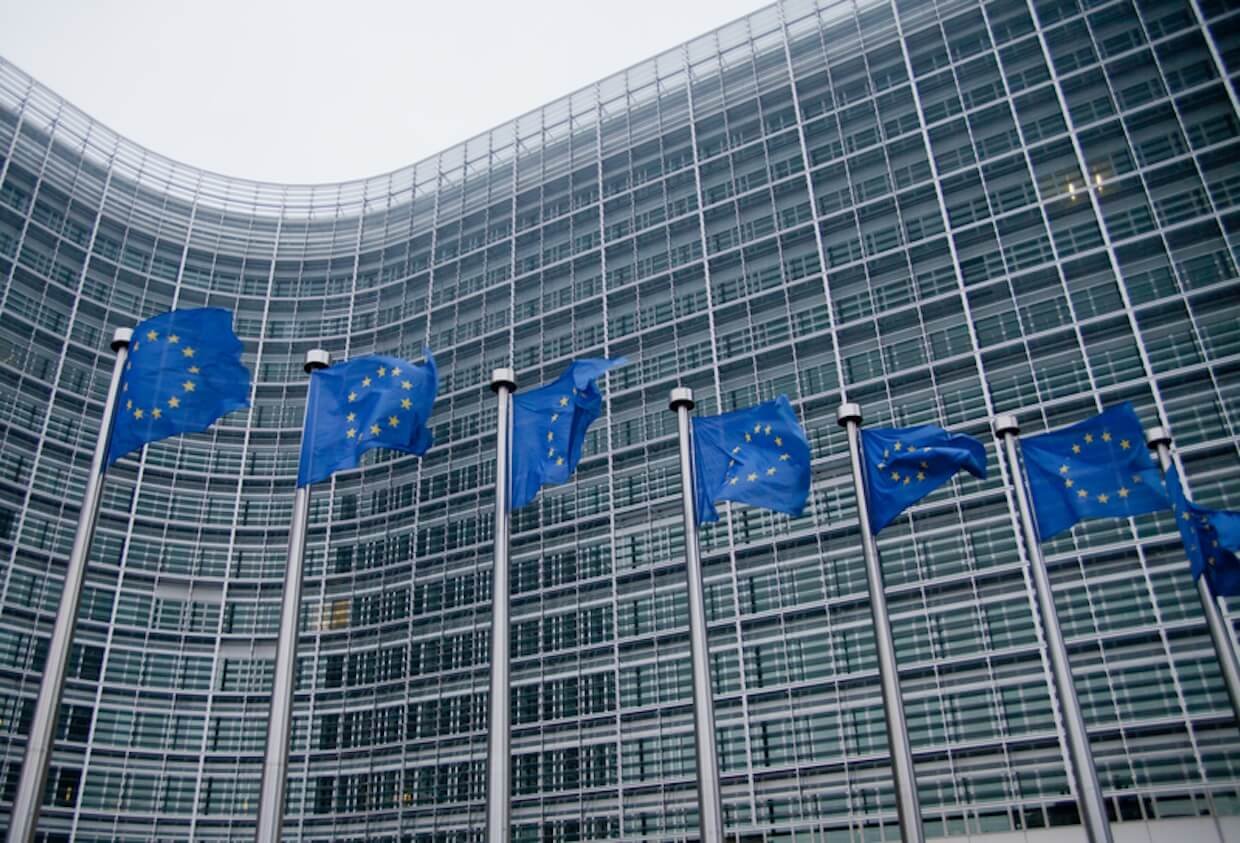
European Union flags against European Parliament in Brussels, Belgium.
Having established that the European Union should be understood as a distinctive political community rather than a conventional nation-state, Professor Kotzur turned to the sources of Europe’s international influence. If the Union lacks the military capabilities traditionally associated with great-power politics, how has it nevertheless managed to shape global governance and international economic relations? Professor Kotzur argued that the answer lies in Europe’s longstanding role as a normative and regulatory power, a form of influence that derives not from coercion but from the ability to establish legal standards that increasingly structure international political and economic behavior. This regulatory capacity, he suggested, remains one of the European Union’s greatest strategic assets, even as the geopolitical environment becomes more competitive and uncertain.
Central to Professor Kotzur’s argument was the concept of Normative Power Europe, which has occupied a prominent place in European integration scholarship for more than two decades. Unlike traditional powers that project influence primarily through military or economic coercion, the European Union has historically sought to shape international conduct through the diffusion of legal norms, constitutional principles, and regulatory standards. Democracy, human rights, the rule of law, and sustainable development constitute not merely internal constitutional values but also external objectives guiding European foreign relations. According to Professor Kotzur, these principles provide the normative foundation upon which the Union’s international influence has long rested. Rather than compelling other actors to follow European preferences, the Union seeks to encourage convergence by making adherence to these standards increasingly advantageous for states wishing to deepen political or economic cooperation with Europe.
Professor Kotzur explained that this normative influence operates through two complementary mechanisms. The first ispositive conditionality, whereby closer cooperation with the European Union—including association agreements, neighborhood partnerships, accession negotiations, and preferential trade arrangements—is linked to the adoption of European legal and constitutional standards. Countries aspiring to strengthen relations with the Union are encouraged to improve democratic governance, judicial independence, human rights protection, and the rule of law. This “more for more” approach reflects the belief that regulatory convergence strengthens both political cooperation and legal certainty. In this sense, European integration has historically functioned not only as an economic project but also as an instrument for promoting constitutional transformation beyond the Union’s borders.
The second mechanism operates through market access. Access to the European Union’s vast internal market increasingly depends upon compliance with European regulatory requirements. Firms wishing to export products, provide services, or invest within the European market must satisfy standards relating to product safety, environmental protection, digital governance, consumer rights, competition policy, and increasingly artificial intelligence. Compliance therefore becomes not merely a legal obligation but an economic necessity. Through this process, European regulations frequently extend far beyond the Union’s territorial jurisdiction, influencing commercial practices across global markets without relying upon traditional forms of extraterritorial coercion.
This phenomenon, Professor Kotzur observed, is most commonly described as the Brussels Effect. Building upon the influential scholarship surrounding this concept, he explained that the European Union’s enormous market size, combined with its sophisticated regulatory framework, often incentivizes multinational corporations to adopt European standards globally rather than maintaining separate regulatory systems for different jurisdictions. Because complying with a single high regulatory standard is often more efficient than producing multiple versions of the same product, firms frequently extend European rules to operations beyond Europe itself. Consequently, regulations adopted in Brussels may shape business practices in Asia, Latin America, Africa, and North America despite the absence of formal international legal obligations.
Professor Kotzur highlighted several contemporary illustrations of this regulatory influence. The General Data Protection Regulation (GDPR) fundamentally reshaped global approaches to privacy and digital governance by establishing one of the world’s most comprehensive data protection regimes. Similarly, the Artificial Intelligence Act seeks to position Europe at the forefront of regulating emerging technologies through a risk-based legal framework that may influence legislative developments far beyond the European Union. Environmental policies associated with the European Green Deal, including sustainability standards and climate-related regulations, likewise demonstrate how domestic European legislation increasingly generates significant international repercussions. These examples illustrate that regulatory power has become an important dimension of contemporary geopolitics, particularly as technological innovation and global supply chains become progressively integrated.
Yet Professor Kotzur also emphasized that the Brussels Effect should not be understood simply as a technocratic process driven by legal expertise. Rather, it reflects a broader transformation in the relationship between markets and political authority. Regulation itself has become an instrument of geopolitical influence. By determining the conditions under which access to one of the world’s largest consumer markets is granted, the European Union exercises considerable leverage over international commercial behavior. This capacity enables Europe to project influence internationally even where its military capabilities remain comparatively limited. Regulatory governance thus constitutes an alternative form of power, rooted in economic interdependence rather than territorial coercion.
Nevertheless, Professor Kotzur argued that recent geopolitical developments increasingly challenge the sufficiency of normative power alone. The relative stability that once enabled Europe to rely primarily upon regulatory influence has gradually eroded under the pressures of great-power competition, technological rivalry, and economic coercion. Russia’s invasion of Ukraine, intensifying strategic competition between the United States and China, and growing uncertainty surrounding transatlantic relations have all demonstrated that legal standards alone cannot guarantee geopolitical resilience. The European Union therefore faces the difficult task of preserving its identity as a normative power while simultaneously developing greater strategic capacity.
This challenge has given increasing prominence to the concept of strategic autonomy, which Professor Kotzur approached through both linguistic and political analysis. Returning to the Greek origins of the concept, he explained that autonomia signifies the capacity to live according to one’s own laws, while strategy refers to the ability to lead and direct collective action. Strategic autonomy therefore implies far more than economic independence or military capability. It represents the capacity of a political community to formulate and pursue its own objectives independently while remaining faithful to its underlying constitutional values. Europe, in this conception, seeks neither isolation nor disengagement but the ability to make sovereign strategic decisions without excessive dependence upon external actors.
Importantly, Professor Kotzur deliberately omitted the increasingly fashionable adjective “open” from his presentation’s title in order to stimulate critical reflection. Rather than accepting “open strategic autonomy” as an uncontested policy objective, he encouraged participants to consider whether genuine strategic autonomy can remain fully open under conditions of intensifying geopolitical rivalry. This question reflects one of the European Union’s most fundamental contemporary dilemmas. Europe seeks simultaneously to preserve openness, defend multilateralism, strengthen economic resilience, and reduce excessive strategic dependencies. Reconciling these objectives requires careful balancing between economic integration and geopolitical prudence.
By the end of this section, Professor Kotzur had demonstrated that Europe’s future leadership cannot depend exclusively upon either normative influence or strategic power in isolation. The Brussels Effect continues to provide the European Union with remarkable global regulatory reach, yet contemporary geopolitical realities increasingly demand that this regulatory capacity be complemented by greater strategic resilience. Rather than abandoning its identity as a community founded upon law and multilateralism, Europe must learn to integrate regulatory influence with a more comprehensive understanding of geopolitical actorship. In doing so, the Union seeks to transform legal authority into a broader form of strategic leadership capable of navigating an international order that is becoming simultaneously more interconnected and more contested.
From Outsourced Security to Strategic Responsibility: Institutional Limits and the Future of European Defense
Photo: Pavlo Lys.
Having examined the European Union’s regulatory influence and the conceptual foundations of strategic autonomy, Professor Kotzur shifted the discussion toward one of the Union’s most persistent structural challenges: the relationship between legal competence, political will, and military capability. Rather than delivering a purely expository lecture, Professor Kotzur transformed this section into an interactive dialogue, inviting participants to reflect upon whether the existing constitutional framework of the European Union is capable of supporting meaningful geopolitical leadership. Their questions and observations became an integral component of the discussion, illustrating precisely the kind of interdisciplinary debate that the ECPS Academy Summer School seeks to foster.
Professor Kotzur began by emphasizing that discussions surrounding European defense cannot be separated from the constitutional architecture established by the EU Treaties. Unlike sovereign states, whose governments exercise inherent authority across the full spectrum of foreign and security policy, the European Union operates according to the principle of conferral, whereby it may act only in areas where competencies have been explicitly transferred by its member states. This legal principle, fundamental to European constitutional law, continues to shape every debate concerning the Union’s geopolitical ambitions. While economic integration has become highly supranationalized, foreign policy and defense remain areas in which national governments retain extensive authority. Consequently, the question confronting Europe is not simply whether it desires greater strategic autonomy, but whether its constitutional framework currently permits such ambitions to be fully realized.
Rather than providing an immediate answer, Professor Kotzur invited participants to consider whether the existing treaty framework already contains sufficient legal instruments for the European Union to become a more significant geopolitical actor or whether meaningful strategic autonomy would ultimately require comprehensive treaty reform. This interactive approach encouraged students from diverse disciplinary backgrounds to engage directly with questions that are often confined to specialist legal scholarship.
Several participants offered observations that significantly enriched the discussion. One participant suggested that European defense integration had historically remained underdeveloped precisely because military security had long been outsourced to the United States through NATO. As long as Washington guaranteed Europe’s security, the incentives to construct genuinely autonomous European defense capabilities remained relatively weak. Professor Kotzur broadly agreed with this historical assessment. He recalled that attempts to establish European defense structures date back to the earliest years of post-war integration but repeatedly encountered political resistance. One recurring concern was that independent European military structures might duplicate—or even weaken—the North Atlantic Treaty Organization. Consequently, NATO became the principal framework for collective defense, while European integration concentrated largely upon economic and political cooperation.
At the same time, Professor Kotzur stressed that the situation has evolved considerably since the adoption of the Treaty of Lisbon, which significantly expanded the legal foundations for cooperation in foreign and security policy. Although the Treaties do not currently permit the creation of a fully-fledged European army, they nevertheless provide important mechanisms through which member states can deepen defense cooperation. The Common Foreign and Security Policy (CFSP) and the Common Security and Defense Policy (CSDP) establish institutional frameworks for joint action, while initiatives such as Permanent Structured Cooperation (PESCO) demonstrate that considerable progress remains possible without immediate treaty revision. From a legal perspective, therefore, the European Union already possesses greater flexibility than is often assumed, even if important constitutional limitations remain.
The discussion subsequently broadened to consider whether recent geopolitical developments have fundamentally altered the political incentives surrounding European defense integration. Professor Kotzur suggested that two historic developments have acted as powerful catalysts. The first was Russia’s full-scale invasion of Ukraine, which fundamentally transformed European perceptions of security by demonstrating that large-scale interstate war had returned to the European continent. The second was the return of Donald Trump to the American presidency, which further intensified doubts regarding the long-term reliability of the United States as Europe’s principal security guarantor. Together, these developments have accelerated debates over strategic autonomy far more rapidly than decades of academic discussion ever achieved.
Drawing upon Germany’s own experience, Professor Kotzur pointed to the profound transformation in domestic political attitudes toward defense spending. The concept of Zeitenwende, introduced following Russia’s invasion of Ukraine, symbolizes a broader shift in German political culture regarding military responsibility. Political parties traditionally associated with pacifism, most notably the Green Party, have increasingly accepted that preserving peace may require greater investment in defense capabilities. This evolution illustrates how external geopolitical shocks can reshape democratic consensus, generating political support for policies that previously appeared unimaginable. What had once seemed politically controversial has increasingly become regarded as a necessary response to changing strategic realities.
Yet Professor Kotzur cautioned that military capability alone cannot create effective European leadership. Institutional legitimacy remains equally important. Another participant questioned whether Europe’s remarkable political diversity—comprising twenty-seven democracies with distinct historical experiences, domestic electorates, and strategic priorities—might itself constitute an obstacle to coherent foreign policy. Professor Kotzur acknowledged this challenge while rejecting the conclusion that diversity necessarily precludes collective action. The European Union’s legal personality under international law, established by the Treaty of Lisbon, enables it to conclude international agreements, participate in international organizations, and exercise meaningful diplomatic influence. Although foreign policy frequently requires consensus among member states, this institutional complexity should not be mistaken for institutional incapacity.
The discussion also addressed the politically sensitive question of hegemonic leadership. Professor Kotzur noted that, unlike the United States or China, European political discourse has historically regarded the very concept of hegemony with considerable suspicion, reflecting the continent’s experience of imperialism, nationalism, and colonial domination. Yet participants observed that even the European Union’s normative ambitions contain elements of hegemonic influence insofar as Europe seeks to encourage—or at times require—other countries to adopt its legal and regulatory standards. Professor Kotzur accepted this observation but distinguished between coercive hegemony and normative leadership. The European Union’s objective, he argued, should not be domination but persuasion, exercising influence through law, cooperation, and mutually beneficial partnerships rather than through military coercion.
Questions concerning Germany’s expanding military role further highlighted the complexity of European defense integration. Participants noted that increasing German defense expenditures inevitably evoke historical sensitivities among neighboring countries. Professor Kotzur acknowledged these concerns but suggested that today’s context differs fundamentally from earlier periods of European history. Germany’s rearmament takes place within dense multilateral institutions—NATO, the European Union, and an extensive network of constitutional safeguards—that substantially reduce the risks traditionally associated with unilateral military expansion. Contemporary defense integration therefore represents not a return to historical rivalries but an attempt to strengthen collective European security within established democratic frameworks.
Ultimately, this interactive exchange illustrated one of the lecture’s central insights: Europe’s future as a geopolitical actor depends not simply upon acquiring greater military capabilities but upon successfully integrating constitutional legitimacy, democratic support, institutional coordination, and strategic purpose. The European Union already possesses important legal foundations for deeper security cooperation, yet translating these possibilities into effective geopolitical leadership requires sustained political commitment from its member states. Strategic autonomy, Professor Kotzur suggested, is therefore neither exclusively a legal project nor solely a military one. It represents an ongoing constitutional and political process through which Europe seeks gradually to assume greater responsibility for its own security while remaining faithful to the principles of democracy, multilateralism, and the rule of law that have long defined the European project.
Europe Between Values and Power: Strengthening the EU’s Global Leadership in an Era of Geopolitical Fragmentation
The European Union’s AI Act introduces restrictions on high-risk artificial intelligence applications and requires greater transparency from companies regarding data use and algorithmic practices. Photo: Dreamstime.
In the final section of his lecture, Professor Kotzur moved beyond diagnosing the European Union’s geopolitical challenges to outlining a constructive vision of how the Union might strengthen its global leadership without abandoning the constitutional principles that have long defined the European project. Rather than advocating a radical transformation into a traditional military power, Professor Kotzur argued that Europe’s future influence depends upon building strategically upon its existing strengths while adapting to an international environment increasingly characterized by geopolitical rivalry, technological competition, economic coercion, and the erosion of multilateral institutions. His concluding reflections therefore sought to reconcile realism with legal idealism, arguing that effective European leadership requires neither the abandonment of normative values nor naïve reliance upon them alone, but rather a careful integration of power and principle.
Central to Professor Kotzur’s concluding argument was the proposition that the European Union should “strengthen its strengths.” Throughout the history of European integration, the Union’s greatest comparative advantage has not been military capability but economic integration, regulatory governance, and legal certainty. Attempting to imitate the geopolitical behavior of traditional great powers would therefore be both unrealistic and strategically counterproductive. Instead, Europe should continue to capitalize upon the assets that have already made it one of the world’s most influential political actors: its single market, its sophisticated regulatory framework, its institutional stability, and its capacity to shape international standards. These resources remain significant sources of geopolitical influence even within an increasingly competitive international system.
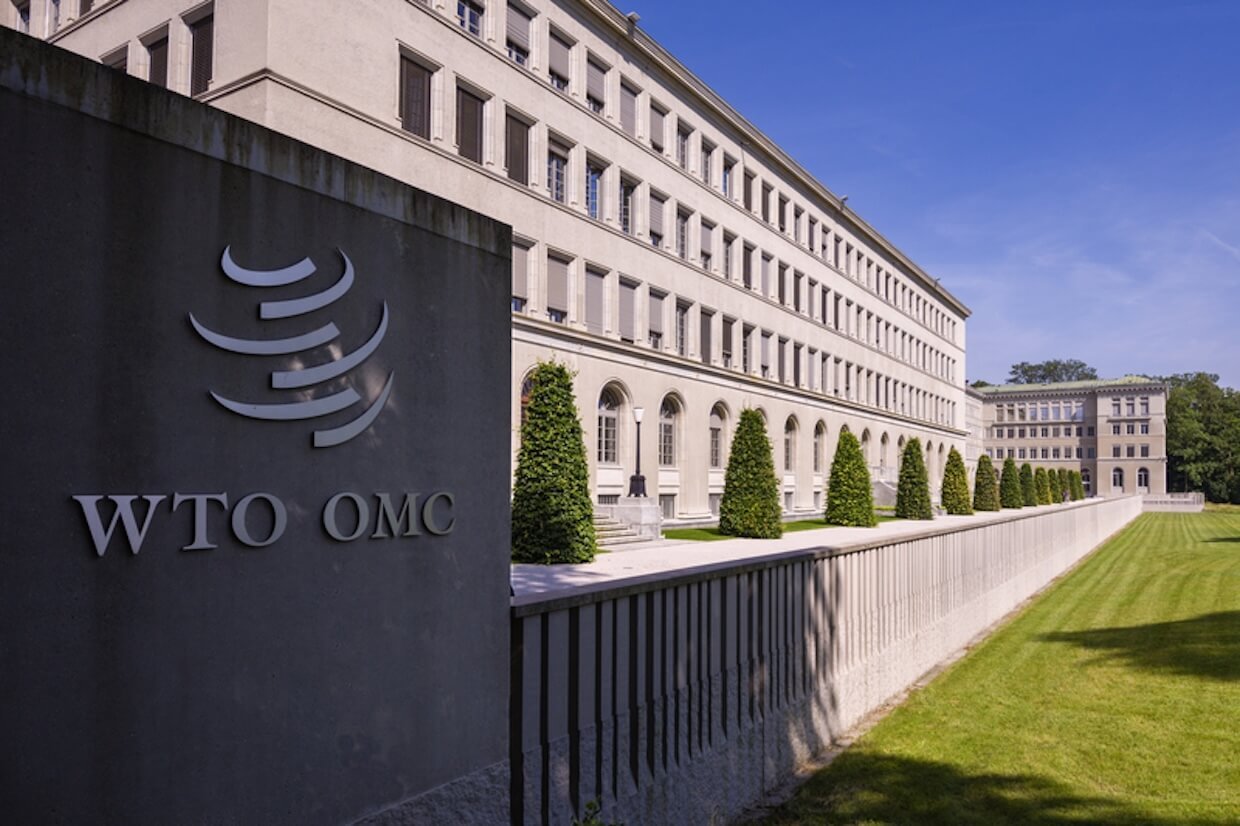
Accordingly, Professor Kotzur argued that revitalizing multilateral trade should remain one of the European Union’s foremost strategic priorities. While acknowledging the growing dysfunction of the World Trade Organization (WTO)—particularly the paralysis of its dispute-settlement mechanism—he maintained that Europe possesses both the credibility and the economic weight necessary to champion the renewal of rules-based international commerce. The European Union’s continued commitment to reducing barriers to trade, supporting predictable legal frameworks, and defending multilateral economic governance reflects not only economic interests but also broader constitutional values rooted in openness, cooperation, and legal certainty. In an era when many major powers increasingly employ tariffs, sanctions, and industrial policy as geopolitical instruments, Europe’s defense of an organized multilateral trading system constitutes both a strategic necessity and an expression of its normative identity.
At the same time, Professor Kotzur rejected any suggestion that Europe should distance itself fundamentally from the United States despite recent political tensions. Although the return of Donald Trump and growing uncertainty surrounding American foreign policy have accelerated debates over strategic autonomy, transatlantic relations, he argued, remain an indispensable pillar of European security and prosperity. What requires reconsideration is not the partnership itself but its internal balance. Europe should assume greater responsibility for its own defense while preserving the broader Atlantic alliance. In this sense, strategic autonomy complements rather than replaces transatlantic cooperation. A stronger European defense capability would ultimately reinforce NATO by enabling a more balanced distribution of responsibilities between European allies and the United States. Strategic autonomy should therefore be understood as a process of maturation rather than separation.
Professor Kotzur likewise emphasized that Europe’s geopolitical credibility increasingly depends upon technological innovation and industrial competitiveness. Regulatory leadership alone will prove insufficient if Europe gradually loses its capacity to innovate in emerging sectors. Artificial intelligence, semiconductors, digital infrastructure, renewable technologies, and advanced manufacturing have become decisive arenas of international competition. Should Europe fall behind technologically, its ability to establish global standards through instruments such as the AI Act or environmental regulation will inevitably diminish. Normative influence cannot be sustained indefinitely without corresponding scientific, technological, and economic capacity. Consequently, investment in innovation represents not merely an economic policy but a strategic imperative essential to maintaining Europe’s long-term geopolitical relevance.
Environmental leadership occupied a similarly prominent place within Professor Kotzur’s concluding reflections. The European Green Deal, together with the broader objective of achieving climate neutrality, exemplifies the European Union’s aspiration to combine economic modernization with global environmental responsibility. Yet Professor Kotzur cautioned that successful climate leadership requires greater sensitivity toward historical inequalities and the needs of developing countries. Drawing upon principles of international environmental law, particularly the doctrine of common but differentiated responsibilities, he argued that industrialized European states bear special responsibilities in supporting sustainable development across the Global South. Financial assistance, technological cooperation, and equitable climate partnerships are therefore indispensable if European environmental policies are to retain international legitimacy rather than being perceived as protectionist or neo-colonial instruments.
This emphasis on partnership naturally extended to Professor Kotzur’s discussion of the Global South. One of the lecture’s most forward-looking arguments concerned the need for Europe to diversify its international relationships beyond its traditional geopolitical partnerships. If strategic autonomy ultimately seeks to reduce excessive dependence upon any single external actor, the European Union must cultivate broader and more balanced global networks. Emerging economies in India, Latin America, Africa, and Southeast Asia should therefore be viewed not merely as markets but as long-term strategic partners capable of contributing to a more resilient and diversified international order. Agreements such as the EU–Mercosur trade agreement, although politically controversial, illustrate the broader strategic logic underpinning this approach. Similarly, Africa’s rapidly expanding population and economic potential present opportunities for mutually beneficial cooperation founded upon equality rather than paternalism. Professor Kotzur stressed that such partnerships require honest engagement with Europe’s colonial legacy while simultaneously focusing upon future-oriented cooperation based on mutual respect and shared interests.
Importantly, Professor Kotzur argued that Europe’s normative commitments should continue to shape these partnerships, albeit in a more dialogical manner. Rather than presenting democracy, human rights, and the rule of law as unilateral prescriptions imposed upon others, the European Union should promote these principles through sustained dialogue and cooperative engagement. Such an approach recognizes that constitutional values remain central to the European project while acknowledging the increasingly pluralistic nature of contemporary international politics. Europe’s credibility, he suggested, depends less upon moral preaching than upon demonstrating that liberal democracy, legal certainty, and multilateral cooperation provide practical advantages in addressing common global challenges.
As the lecture drew to a close, Professor Kotzur returned to the question posed in its opening moments: Can the European Union lead? His answer was neither unequivocally optimistic nor unduly pessimistic. Europe possesses significant assets—economic strength, regulatory influence, constitutional legitimacy, and institutional resilience—that continue to distinguish it from other global actors. Yet these advantages cannot be taken for granted. Sustaining European leadership will require continued investment in innovation, stronger defense capabilities, renewed commitment to multilateralism, and deeper partnerships with emerging regions of the world. Above all, the European Union must avoid the false choice between values and power. Its greatest comparative advantage lies precisely in its ability to combine legal legitimacy with strategic purpose, transforming constitutional principles into instruments of effective international leadership.
Taken together, Professor Kotzur’s lecture offered a sophisticated synthesis of European constitutional law, international relations, and geopolitical strategy. By demonstrating that leadership in the twenty-first century increasingly depends upon the interaction of regulatory authority, economic resilience, technological innovation, institutional legitimacy, and strategic responsibility, he challenged simplistic conceptions of power based solely upon military capabilities. Instead, he argued that Europe’s future role in an increasingly fragmented international order will depend upon its capacity to strengthen its existing advantages while adapting pragmatically to new geopolitical realities. In doing so, the lecture encapsulated one of the central messages of the ECPS Academy Summer School: that Europe’s place “between oceans” will ultimately be determined not only by external competition but also by its own ability to reconcile openness with resilience, values with interests, and normative ambition with geopolitical responsibility.
Japan has long been regarded as an outlier in comparative studies of populism, distinguished by political stability, Liberal Democratic Party dominance, and limited immigration. In this thought-provoking lecture, Professor Axel Berkofsky challenged that conventional wisdom, arguing that Japan has entered its own delayed populist moment. Examining the rise of the Sanseito party, demographic decline, labor shortages, identity politics, and the evolution of conservative nationalism, he demonstrated how structural economic pressures and political discourse are reshaping Japanese democracy. The lecture also assessed the resilience of EU–Japan relations, highlighting the enduring importance of the Economic Partnership Agreement despite growing geopolitical uncertainty. Combining comparative politics with international political economy, Professor Berkofsky offered a nuanced framework for understanding populism beyond its traditional European context.
Reported by ECPS Staff
While much scholarly and policy attention has focused on the rise of populism across Europe and North America, Japan has long appeared to constitute a notable exception to this global political trend. For decades, the country’s remarkable political stability, the electoral dominance of the Liberal Democratic Party (LDP), and its comparatively homogeneous social structure appeared to insulate it from the anti-establishment movements that transformed politics elsewhere. Yet recent developments suggest that this exceptionalism may no longer hold. The emergence of overtly populist and anti-immigration political actors, coupled with growing public anxiety over demographic decline, economic stagnation, inflation, and national identity, indicates that Japan is increasingly experiencing many of the political tensions reshaping advanced democracies more broadly.
Against this backdrop, the eighth lecture of the ECPS Academy Summer School 2026, held under the overarching theme “Europe Between Oceans: The EU in the Age of Geoeconomics, Populism, and Strategic Competition,” explored the evolving relationship between domestic political transformation and international economic cooperation through the lens of EU–Japan relations and populism. Delivered by Professor Axel Berkofsky, Full Professor at the University of Pavia and Co-Head of the Asia Centre at the Istituto per gli Studi di Politica Internazionale (ISPI), the lecture combined comparative politics, international political economy, and East Asian studies to examine whether Japan is witnessing the emergence of its own variant of populism and how these developments may shape one of the European Union’s most important strategic partnerships in Asia.
Japan’s Late Encounter with Populism
Professor Axel Berkofsky is Full Professor at the University of Pavia and Co-Head of the Asia Centre at the Istituto per gli Studi di Politica Internazionale (ISPI).
The session was introduced by Dr. Sébastien Goulard, Manager of Cooperans and an expert on EU–Asia connectivity projects, who situated the lecture within the broader comparative study of populism. He observed that while populism has become a defining feature of European politics over the past three decades—manifesting itself through movements ranging from Brexit in the United Kingdom to the electoral successes of radical-right and radical-left parties across the continent—its development in Asia has followed a more uneven trajectory. Dr. Goulard briefly pointed to examples such as Narendra Modi’s Bharatiya Janata Party (BJP) in India and Rodrigo Duterte’s presidency in the Philippines before posing the central question that would animate the lecture: Does Japan, long regarded as politically exceptional, now face its own populist moment? Equally important, he asked whether any rise of Japanese populism could affect the EU–Japan partnership, particularly given that many populist movements elsewhere have been deeply skeptical of international trade agreements and economic integration. His framing effectively connected domestic political developments in Japan to broader debates surrounding globalization, regional cooperation, and the future of liberal international order.
Rethinking EU–Japan Relations in an Age of Political Discontent
Professor Berkofsky started his lecture by underscoring that Japan has long represented something of a puzzle within comparative studies of populism. While right-wing populist movements expanded across much of Europe during the 1990s and 2000s, and Donald Trump’s election transformed American politics, Japan appeared remarkably resistant to similar developments. Unlike many Western democracies, where established party systems fragmented under the pressure of anti-establishment mobilization, Japanese politics continued to be dominated by the Liberal Democratic Party, whose uninterrupted rule—interrupted only briefly on two occasions since 1955—provided an extraordinary degree of institutional continuity. This prolonged political stability, Professor Berkofsky suggested, delayed rather than prevented the emergence of populist politics.
The lecturer explained that understanding Japan’s political exceptionalism requires appreciating the unique character of the LDPitself. Rather than functioning as a narrowly ideological organization, the LDP historically operated as a broad catch-all party composed of multiple internal factions representing diverse constituencies. Through an intricate system of intra-party bargaining, factional competition, and clientelist networks, the party successfully incorporated competing interests while maintaining overall political dominance. Prime ministers changed frequently, often every twelve to eighteen months, yet the governing party remained the same. Consequently, political stability did not depend upon individual leaders but upon the institutional resilience of the LDP as Japan’s dominant governing organization. This remarkable continuity, Professor Berkofsky argued, insulated Japan from many of the political ruptures experienced elsewhere, reducing opportunities for anti-system movements to gain electoral traction.
Nevertheless, Professor Berkofsky contended that important changes have gradually emerged beneath this surface stability. The watershed moment, in his view, came with the 2025 lower house elections, during which the overtly populist and xenophobic Sanseito (“Japan First”) party secured representation in Japan’s parliament by winning approximately 7.4 million votes and fifteen parliamentary seats. Although modest by European standards, Professor Berkofsky regarded this breakthrough as historically significant because it marked the first time that an explicitly populist, anti-immigration movement had established a meaningful parliamentary presence in post-war Japan. The country’s long-standing immunity to global populist currents had, he argued, effectively come to an end. Japan had become, in his words, a “latecomer” to the global populist wave rather than a permanent exception to it.
Importantly, Professor Berkofsky cautioned participants against interpreting this development as an abrupt rupture with Japan’s political past. Instead, he argued that contemporary populism has developed gradually within an existing political environment where elements of nationalism, cultural conservatism, and skepticism toward immigration had long been present, albeit often in implicit rather than explicit form. Japanese society itself, he stressed, should not be characterized as inherently xenophobic or racist. Having lived and worked extensively in Japan, Professor Berkofsky emphasized both his personal admiration for the country and the openness of Japanese society in everyday life. Yet beneath this generally welcoming social environment there had always existed what he described as a latent distinction between “the Japanese” and “the outsiders.” This distinction did not automatically translate into exclusionary politics, but it provided fertile political ground upon which more overt nationalist narratives could subsequently be constructed.
According to Professor Berkofsky, this gradual normalization of exclusionary political discourse accelerated significantly during the premiership of Shinzo Abe. While Abe remained firmly within the mainstream LDP tradition rather than representing an anti-system outsider, his administration increasingly legitimized political rhetoric that portrayed foreigners with greater suspicion and framed questions of national identity more prominently within public debate. Professor Berkofsky carefully distinguished between Abe’s policies and those of contemporary European radical-right leaders, noting that Japan under Abe did not become a populist regime. Rather, Abe expanded the boundaries of politically acceptable discourse by making previously marginal nationalist themes more mainstream. Discussions surrounding immigration, cultural identity, and national sovereignty became increasingly visible within Japanese political life, creating opportunities for more explicitly populist actors to advance even stronger versions of these arguments in subsequent years.
This trajectory, Professor Berkofsky argued, reached a new stage under Prime Minister Sanae Takaichi, whom he described as representing a more assertive and uncompromising version of the conservative nationalism associated with Abe. Although Takaichi continues to govern through the institutional framework of the LDP rather than through a newly created populist movement, her political rhetoric increasingly revolves around themes familiar to observers of European populism: identity politics, concerns over immigration, anxieties regarding national cohesion, and skepticism toward globalization. Professor Berkofsky drew explicit comparisons with leaders such as Giorgia Meloni in Italy, arguing that although important historical and institutional differences remain, contemporary conservative discourse in Japan increasingly resembles broader international trends evident across numerous advanced democracies. Populism, he suggested, has become a genuinely global phenomenon whose ideological vocabulary increasingly transcends regional boundaries.
One of the lecture’s central analytical contributions lay in Professor Berkofsky’s insistence that Japan’s emerging populism cannot be understood simply by borrowing European categories. Unlike many European countries, Japan remains one of the world’s least immigrant-intensive societies. Foreign residents account for only around three percent of the total population, an extraordinarily low proportion compared to most advanced industrial democracies. Consequently, anti-immigration narratives claiming that foreigners threaten employment opportunities, overwhelm welfare systems, or fundamentally transform Japanese society rest upon empirical foundations that Professor Berkofsky repeatedly described as highly questionable. Indeed, one of the striking paradoxes emphasized throughout the lecture was that Japan’s populist discourse has emerged despite the absence of the large-scale immigration flows typically associated with the rise of anti-immigration politics elsewhere. This paradox would become one of the central themes explored during the remainder of the session, as Professor Berkofsky examined how demographic decline, labor shortages, and economic stagnation have created political opportunities for populist entrepreneurs despite Japan’s continued need for greater levels of immigration.
National Identity, Immigration, and the Political Mainstream: The Gradual Normalization of Populist Discourse
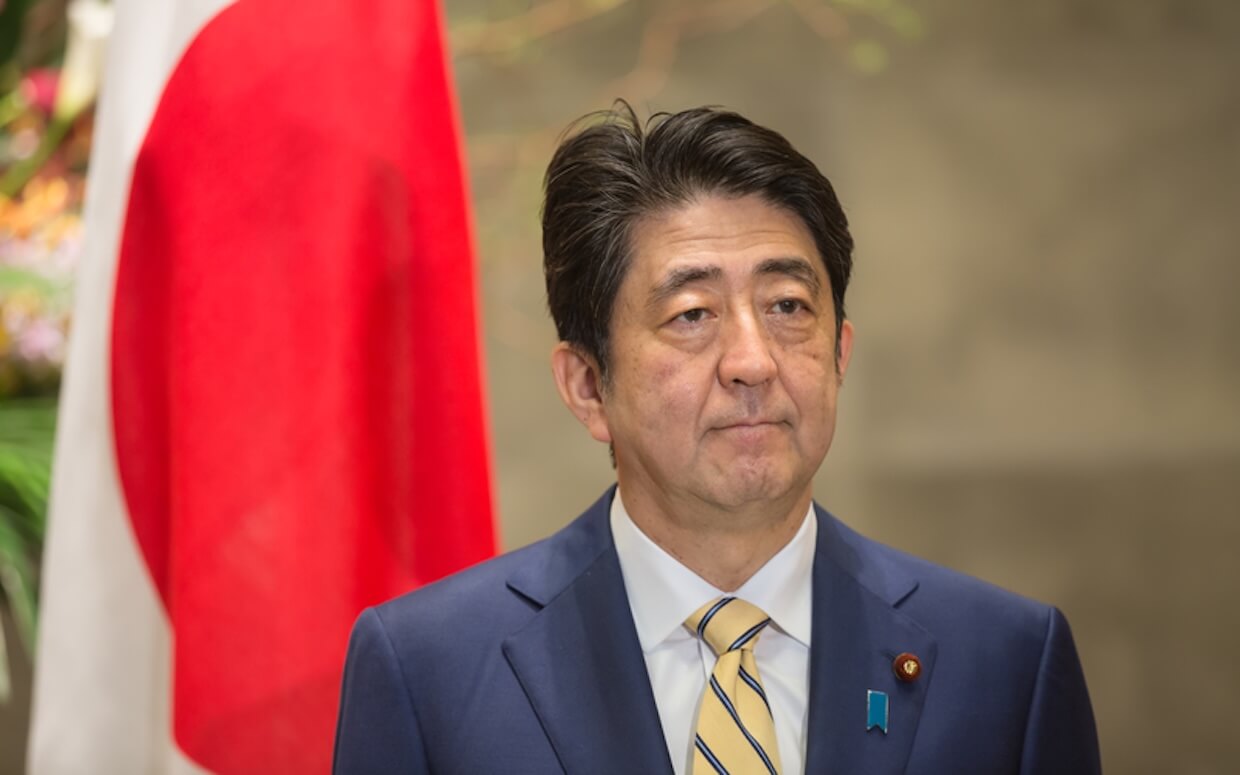
Japan’s former Prime Minister Shinzo Abe. Photo: Dreamstime.
Having argued that Japan has entered what he described as its own delayed populist moment, Professor Berkofsky devoted the second part of his lecture to explaining why this transformation has occurred despite the country’s long-standing reputation for political moderation and institutional stability. Rather than attributing Japan’s changing political landscape to a sudden surge of anti-establishment sentiment, he argued that contemporary populism has emerged through a gradual process of ideological normalization within the political mainstream itself. This process, he suggested, differs significantly from the trajectories observed in many European democracies, where populist parties frequently arose in opposition to established political elites. In Japan, by contrast, important elements of nationalist and identity-based politics developed from within the governing establishment before eventually creating opportunities for more explicitly populist actors to flourish.
Central to Professor Berkofsky’s analysis was the political legacy of Shinzo Abe, whose nearly eight years in office made him Japan’s longest-serving post-war prime minister. Professor Berkofsky was careful to reject simplistic characterizations of Abe as a populist in the European or American sense. Abe neither campaigned as an anti-system outsider nor sought to dismantle existing political institutions. Instead, he remained firmly embedded within the LDP and governed through established institutional channels. Nevertheless, Professor Berkofsky argued that Abe played a pivotal role in shifting the boundaries of acceptable political discourse. Under his leadership, themes of national identity, patriotism, constitutional revision, security normalization, and historical memory acquired far greater prominence within public debate than they had during previous decades. Although these themes remained largely compatible with mainstream conservative politics, they also contributed to the gradual legitimization of rhetorical strategies that later proved advantageous for more overtly populist movements.
According to Professor Berkofsky, Abe’s greatest political innovation lay not in introducing entirely new ideas but in redefining the political center of gravity. Issues that had previously occupied the margins of political discussion gradually entered mainstream discourse. Questions concerning immigration, cultural cohesion, and the preservation of Japanese identity increasingly became legitimate subjects of electoral competition rather than peripheral concerns associated with fringe nationalist organizations. This evolution mirrored broader developments observable across many advanced democracies, where mainstream conservative parties increasingly incorporated elements of populist rhetoric in response to shifting public attitudes. Professor Berkofsky emphasized that such developments should not be interpreted as evidence that Japan had become fundamentally xenophobic. Rather, they reflected the gradual politicization of issues that had previously remained relatively insulated from electoral contestation.
The lecturer then turned to the administration of Prime Minister Sanae Takaichi, whom he presented as representing a further stage in this ideological evolution. While Takaichi continues to govern through the institutional framework of the LDP, Professor Berkofsky suggested that her political style places greater emphasis on themes of national sovereignty, cultural identity, and immigration control than many of her predecessors. Her rhetoric increasingly resonates with narratives familiar from contemporary European conservative politics, particularly those stressing the need to protect national traditions against the perceived pressures of globalization and demographic change. Although important contextual differences remain, Professor Berkofsky drew comparisons with political figures such as Meloni, arguing that conservative politics across advanced democracies increasingly shares a common vocabulary centered upon nationhood, identity, borders, and sovereignty.
Yet Professor Berkofsky repeatedly cautioned participants against assuming direct equivalence between Japan and Europe. One of the lecture’s most important comparative insights concerned the striking disparity between the intensity of anti-immigration rhetoric and the actual scale of immigration into Japan. Unlike Germany, France, Sweden, or Italy, Japan has experienced relatively limited immigration. Foreign nationals constitute only a small proportion of the overall population, and immigration has historically remained tightly regulated. Consequently, political narratives portraying Japan as overwhelmed by immigration bear little resemblance to empirical reality. Professor Berkofsky described this disconnect as one of the defining paradoxes of contemporary Japanese politics: anti-immigration discourse has intensified despite the absence of mass immigration itself.
Demographic Decline, Economic Anxiety, and the Rise of Sanseito
A campaign poster for the right-wing populist Sanseito party in Tokyo, Japan. The slogan *Nihon o Nameruna* (“Don’t underestimate Japan” or “Don’t look down on Japan”) reflects the party’s nationalist political message. Tokyo, July 11, 2025. Photo: Hiroshi Mori / Dreamstime.
Having demonstrated how nationalist discourse gradually entered Japan’s political mainstream, Professor Berkofsky turned to the structural conditions that have enabled explicitly populist movements to gain electoral traction. Central to this discussion was the emergence of Sanseito, which he identified as the clearest expression of right-wing populism in contemporary Japanese politics. Although the party remains considerably smaller than the dominant LDP, its parliamentary breakthrough marked a significant turning point, establishing an institutional foothold for political narratives long associated with European and American populism. Rather than dismissing Sanseito as a temporary protest movement, Professor Berkofsky argued that its electoral success reflects deeper socioeconomic and demographic transformations reshaping Japanese politics.
Sanseito has positioned itself as a challenger to Japan’s political establishment by combining nationalism, economic protectionism, skepticism toward globalization, and particularly strong opposition to immigration. Presenting itself as the defender of “ordinary people” against detached political elites and international influences, the party’s slogan, “Japan First,” echoes nationalist rhetoric that has become increasingly familiar across advanced democracies. Yet Professor Berkofsky stressed that Japanese populism should not be viewed simply as an imitation of its European or American counterparts. Rather, it represents the adaptation of broadly similar narratives to Japan’s distinctive political institutions, demographic realities, and historical experience.
Immigration occupies the center of Sanseito’s political message. The party attributes rising crime, economic insecurity, and social fragmentation to increasing numbers of foreign workers. Professor Berkofsky challenged these claims as empirically unsupported. Japan remains one of the least immigrant-intensive societies among advanced economies, and available crime statistics provide no evidence that foreigners constitute a disproportionate burden on public safety. Likewise, labor-market data indicate that migrant workers overwhelmingly fill positions in sectors experiencing chronic labor shortages rather than displacing Japanese employees. Agriculture, construction, manufacturing, hospitality, logistics, and elderly care increasingly depend upon foreign labor simply to maintain existing levels of production and service provision. Far from undermining Japanese society, immigration has become an indispensable component of economic sustainability.
This disconnect between political rhetoric and demographic reality formed one of the lecture’s central arguments. Professor Berkofsky emphasized that Japan’s principal challenge is not excessive immigration but the opposite: an insufficient inflow of foreign workers to offset rapid population ageing, persistently low fertility rates, and a shrinking workforce. Employers across the economy increasingly struggle to recruit labor, while long-term demographic projections point toward further decline. Under these conditions, reducing immigration would almost certainly deepen Japan’s economic difficulties rather than alleviate them.
The paradox, Professor Berkofsky argued, illustrates a broader characteristic of contemporary populism. Its political effectiveness derives less from empirical accuracy than from its ability to simplify complex structural problems into emotionally compelling narratives. Long-term economic stagnation, weak wage growth, inflation, declining purchasing power, and demographic decline are multifaceted challenges rooted in economic, technological, and demographic change. Yet populist actors frequently attribute these developments to more visible political targets such as immigration, globalization, or detached elites. Even in a country where immigration remains comparatively limited, these narratives resonate because they tap into broader anxieties surrounding national identity, cultural continuity, and social cohesion.
Professor Berkofsky nevertheless cautioned against reducing Japan’s political transformation solely to economic grievances. While acknowledging that many citizens have experienced genuine economic insecurity after decades of slow growth and rising living costs, he argued that concerns about immigration also reflect deeper questions of identity and national belonging. Public unease cannot simply be dismissed; however, it should not be mistaken for an accurate description of Japan’s demographic realities. Policymakers therefore face the challenge of balancing legitimate concerns over social integration with the country’s undeniable economic need for greater international labor mobility.
Japan’s experience, Professor Berkofsky concluded, offers an important comparative perspective on the global evolution of populism. Unlike many European countries, where anti-immigration movements emerged following sustained immigration, Japan has witnessed the rise of similar political narratives despite maintaining exceptionally low levels of foreign residents. This demonstrates that identity politics need not depend upon large-scale migration alone but can also emerge from broader demographic anxieties, economic uncertainty, and shifting political discourse. By distinguishing carefully between rhetoric and empirical evidence, Professor Berkofsky showed that Japan’s encounter with populism reflects a complex interaction of demographic decline, economic pressures, identity politics, and institutional change rather than a straightforward rejection of globalization itself
The lecture also highlighted the increasingly important role of digital communication in facilitating populist mobilization. Like many contemporary populist movements elsewhere, Sanseito has proven particularly effective at utilizing social media platforms to disseminate simplified political messages, challenge mainstream media narratives, and cultivate direct communication with supporters. Professor Berkofsky noted that such strategies have enabled relatively small political organizations to achieve levels of visibility that would previously have required far greater organizational resources. The digitalization of political communication has therefore lowered barriers to electoral competition while simultaneously amplifying emotionally charged narratives concerning immigration, national identity, and political distrust. Although Japan’s media environment differs significantly from those found in many Western democracies, similar technological dynamics increasingly shape political discourse across advanced industrial societies.
Throughout this section, Professor Berkofsky consistently urged participants to distinguish between the political success of populist narratives and their analytical validity. Anti-immigration rhetoric may resonate with segments of the electorate experiencing economic anxiety, yet demographic evidence overwhelmingly suggests that Japan’s long-term prosperity depends upon attracting—not excluding—greater numbers of foreign workers. Likewise, blaming globalization or immigration for structural economic challenges risks obscuring deeper issues relating to productivity, demographic ageing, labor-market reform, and fiscal sustainability. Populism, in this sense, offers politically powerful narratives but rarely provides comprehensive solutions to the complex problems confronting advanced industrial democracies.
By examining the rise of Sanseito within this broader structural context, Professor Berkofsky demonstrated that Japan’s political transformation reflects far more than the emergence of a new political party. It illustrates how demographic decline, economic insecurity, identity politics, and digital communication increasingly interact to reshape democratic competition across advanced societies. Japan may have entered the global populist era later than Europe or the United States, but the underlying dynamics driving this transition reveal striking similarities. The country’s experience therefore offers valuable comparative insights into how populism adapts to distinct national contexts while drawing upon an increasingly shared repertoire of political narratives, grievances, and electoral strategies.
Populism, Free Trade, and the Future of EU–Japan Relations
Photo: Marian Vejcik / Dreamstime.
In the concluding section of his lecture, Professor Berkofsky shifted from analyzing Japan’s domestic political transformation to assessing its implications for one of the European Union’s most important strategic partnerships in Asia. Returning to the question posed at the beginning of the session, he asked whether the gradual emergence of populist politics in Japan might ultimately undermine the deepening economic and political cooperation between Tokyo and Brussels. His answer was deliberately cautious. While acknowledging that populist narratives are becoming increasingly visible within Japanese politics, Professor Berkofsky argued that there remains little evidence to suggest that Japan is on the verge of abandoning its long-standing commitment to international economic openness. Unlike many European and North American populist movements, whose electoral success has often been accompanied by hostility toward free trade agreements and multilateral institutions, Japanese populism has thus far developed within a political environment where broad elite consensus continues to support international economic engagement. Consequently, the future of EU–Japan relations appear considerably more resilient than many observers might initially assume.
Professor Berkofsky reminded participants that the EU–Japan Economic Partnership Agreement (EPA), which entered into force in 2019, remains one of the most comprehensive bilateral trade agreements ever concluded by either party. Negotiated against the backdrop of growing protectionist tendencies elsewhere, the agreement represented a powerful political statement in favor of rules-based trade, multilateral cooperation, and open markets. Covering approximately one-third of global GDP and creating one of the world’s largest free trade areas, the EPA extended well beyond tariff reductions to encompass regulatory cooperation, government procurement, intellectual property, environmental standards, and sustainable development. For both Brussels and Tokyo, the agreement symbolized a shared commitment to preserving an international economic order increasingly challenged by geopolitical rivalry and economic nationalism.
At the same time, Professor Berkofsky cautioned against viewing the partnership through overly idealized lenses. Despite its considerable achievements, the EPA has not eliminated all commercial frictions between the two economies. Agricultural market access, sanitary and phytosanitary regulations, public procurement, automotive trade, and steel safeguard measures continue to generate periodic disagreements. European exporters frequently seek greater access to Japanese agricultural markets, while Japanese firms remain attentive to European trade defense measures affecting industrial products. These issues, Professor Berkofsky suggested, should not be interpreted as evidence of weakening relations but rather as normal features of a mature economic partnership between two highly developed economies with occasionally divergent commercial interests. Importantly, such disagreements continue to be managed through institutional dialogue and negotiated compromise rather than escalating into broader political conflict.
This institutional resilience, Professor Berkofsky argued, distinguishes EU–Japan relations from many contemporary trade relationships increasingly characterized by unilateral tariffs, retaliatory sanctions, and economic coercion. Both parties continue to view predictable rules, legal certainty, and multilateral governance as essential foundations of international economic cooperation. Even as governments around the world increasingly embrace industrial policy, supply-chain diversification, and strategic competition, Brussels and Tokyo remain committed to maintaining a broadly liberal trading relationship. In this respect, the EU–Japan partnership has acquired significance extending beyond bilateral commerce itself, serving as an important example of how advanced democracies can continue supporting international economic openness while adapting to a more uncertain geopolitical environment.
The lecture nevertheless acknowledged that domestic political developments could gradually complicate this picture. Should populist parties expand their electoral influence, trade agreements may become increasingly vulnerable to broader political debates concerning sovereignty, globalization, and national identity. Professor Berkofsky noted that this pattern has already become familiar across Europe, where opposition to international trade agreements often extends beyond economic concerns to encompass wider anxieties regarding immigration, democratic accountability, environmental regulation, and cultural identity. While Japan has not yet experienced comparable levels of political contestation surrounding trade policy, the emergence of more vocal nationalist actors suggests that similar debates may become increasingly prominent in future electoral campaigns. The challenge for policymakers will therefore be to preserve public support for economic openness while addressing legitimate concerns regarding inequality, regional disparities, and economic insecurity.
One of Professor Berkofsky’s most important observations concerned the relationship between economic performance and political stability. He argued that Japan’s experience demonstrates how prolonged economic stagnation, declining real incomes, and demographic pressures can gradually erode confidence in established political institutions even where those institutions remain highly stable by international standards. Populist movements frequently gain support not because they offer comprehensive policy solutions but because they provide emotionally compelling narratives that identify clear causes for complex structural problems. Consequently, defending liberal economic cooperation requires more than simply emphasizing the aggregate benefits of free trade. Governments must also demonstrate that globalization generates broadly shared prosperity capable of maintaining democratic legitimacy. Failure to address the distributive consequences of economic change risks creating political opportunities for movements seeking to replace nuanced policy discussions with simplified nationalist narratives.
Professor Berkofsky further suggested that the European Union may itself draw valuable lessons from Japan’s experience. Although Europe and Japan differ substantially in terms of immigration levels, demographic structures, political institutions, and historical development, both confront remarkably similar long-term challenges: ageing populations, labor shortages, technological competition, slowing productivity growth, and increasing geopolitical uncertainty. Both have also sought to balance economic openness with greater strategic resilience without abandoning their commitment to rules-based international cooperation. In this sense, EU–Japan relations increasingly extend beyond traditional trade diplomacy to encompass broader cooperation on economic security, digital governance, technological innovation, supply-chain resilience, and the defense of multilateral institutions. These shared interests provide a strong foundation upon which the partnership can continue to develop despite evolving domestic political landscapes.
Throughout his concluding remarks, Professor Berkofsky repeatedly resisted alarmist interpretations of Japan’s political trajectory. While acknowledging that the country’s immunity to populism has weakened, he argued that contemporary Japanese politics remains fundamentally different from the highly polarized environments observed in several Western democracies. The LDP continues to dominate national politics, institutional continuity remains strong, and broad elite consensus in favor of international engagement persists. Populist actors have undoubtedly entered the political arena, but they have not displaced the established structures that continue to shape Japanese policymaking. Consequently, the emergence of parties such as Sanseito should be understood less as evidence of systemic political rupture than as an indication that Japan is gradually experiencing political dynamics already familiar elsewhere.
As the lecture concluded, Professor Berkofsky returned to the broader comparative perspective that had framed his analysis from the outset. Japan, he argued, should no longer be viewed as an exceptional democracy somehow insulated from the social and political transformations affecting other advanced industrial societies. Rather, it represents a particularly instructive case illustrating how populism adapts to distinctive national contexts while responding to common structural pressures. Demographic decline, economic uncertainty, globalization, identity politics, and digital communication increasingly interact across democratic systems in ways that transcend regional boundaries. Yet Japan’s experience also demonstrates that institutional resilience, pragmatic policymaking, and sustained international engagement can moderate these pressures without eliminating them entirely.
Taken as a whole, Professor Berkofsky’s lecture offered participants a sophisticated comparative framework for understanding the evolving relationship between domestic political change and international economic cooperation. By tracing Japan’s gradual encounter with populism while simultaneously examining the resilience of EU–Japan relations, he demonstrated that contemporary debates surrounding globalization, immigration, and national identity cannot be separated from wider questions of demographic transformation, economic governance, and strategic competition. In doing so, the lecture reinforced one of the central themes of the ECPS Academy Summer School: that Europe’s future “between oceans” will increasingly depend upon its ability to cultivate resilient partnerships with like-minded democracies facing many of the same political, economic, and geopolitical challenges.
As Europe deepens its engagement with the Indo-Pacific, the region has become far more than a distant theatre of economic opportunity—it has emerged as a central arena where geopolitical competition, technological innovation, supply-chain resilience, and strategic autonomy intersect. In this insightful lecture, Dr. Giulio Pugliese demonstrated how the Indo-Pacific evolved from a Japanese strategic narrative into a defining framework for understanding twenty-first-century international politics. Examining the growing rivalry between the United States and China, Taiwan’s geopolitical and technological significance, and the implications of Washington’s increasingly transactional alliance strategy, he argued that Europe must move beyond traditional regional perspectives and formulate a coherent Indo-Pacific policy rooted in its own interests. The lecture offered participants a nuanced understanding of how Europe’s future security and prosperity are becoming increasingly intertwined with developments across Asia.
Reported by ECPS Staff
The third day of the ECPS Academy Summer School 2026 continued its exploration of Europe’s changing geopolitical environment by shifting attention beyond the Atlantic theatre to the increasingly consequential dynamics unfolding across the Indo-Pacific. Held under the overarching theme, “Europe Between Oceans: The EU in the Age of Geoeconomics, Populism, and Strategic Competition,” the sessions examined how the European Union is recalibrating its external relations amid intensifying strategic competition between the United States and China. Following discussions on strategic autonomy, de-risking, and economic security, the sixth lecture broadened the analytical horizon by investigating Europe’s evolving engagement with Asia and the conceptual transformations that increasingly shape international politics. Against this backdrop, Dr. Giulio Pugliese, Director of the EU–Asia Project at the European University Institute and Associate Fellow at the Istituto Affari Internazionali and King’s College London, delivered a stimulating lecture entitled “The EU’s Policy Towards Asia Amidst Changing US–China Security and Trade Dynamics.” Combining insights from international relations, strategic studies, and Asian regional politics, the lecture challenged participants to rethink the Indo-Pacific not merely as a geographical designation but as a politically constructed strategic space whose emergence has profoundly influenced European foreign policy. <
The session was thoughtfully introduced by Anita Tusor, doctoral researcher at Charles University and Staff Officer at NATO’s Allied Command Transformation, who situated the discussion within one of the defining strategic dilemmas confronting contemporary Europe. She observed that the European Union increasingly finds itself navigating between its two most important economic partners—the United States and China—at a time when their rivalry is reshaping both global trade and international security. Rather than portraying the Indo-Pacific as a distant theatre of commercial interest, Tusor argued that recent geopolitical developments, particularly Russia’s full-scale invasion of Ukraine, have fundamentally altered European strategic thinking. The conflict has created direct linkages between the Euro-Atlantic and Indo-Pacific security theatres, compelling European policymakers to recognize that developments in East Asia now carry direct implications for Europe’s own security calculations. She further suggested that Europe’s growing interest in Japan’s experience of managing long-standing US–China tensions provides valuable opportunities for policy learning as Brussels seeks to navigate an increasingly polarized international environment. Her introduction effectively framed the lecture by emphasizing that Europe’s engagement with Asia is no longer peripheral but has become an integral component of its broader strategy for managing geopolitical competition.
Reimagining the Indo-Pacific: Strategic Narratives and Europe’s Asian Turn
Dr. Giulio Pugliese is Director of the EU–Asia Project at the European University Institute and Associate Fellow at the Istituto Affari Internazionali and King’s College London.
Connecting live from Taipei, Dr. Pugliese began by explaining that his primary objective was not simply to review recent European policy initiatives toward Asia but to unpack the intellectual foundations of one of the most widely used yet insufficiently examined concepts in contemporary international relations: the Indo-Pacific. While the term has rapidly entered the vocabulary of policymakers, diplomats, and scholars alike, he argued that it should not be understood as a politically neutral geographical label. Instead, it represents what strategic communication scholars describe as a strategic narrative—a carefully constructed story designed to simplify complex geopolitical realities, define particular challenges, identify preferred actors, and legitimize specific policy responses. Seen through this lens, the Indo-Pacific is not merely a map but a political project that reflects competing visions of regional order, international leadership, and global governance. Dr. Pugliese invited participants to appreciate that language itself constitutes an instrument of power, capable of shaping perceptions, legitimizing alliances, and influencing strategic behavior.
At the heart of Dr. Pugliese’s analysis lay the argument that the Indo-Pacific concept originated not in Washington but in Tokyo. Drawing extensively upon his own research on Japanese foreign policy, he demonstrated that the contemporary understanding of the Indo-Pacific owes much to the strategic vision developed by the late Japanese Prime Minister Shinzo Abe and a relatively small circle of policymakers who sought to redefine Asia’s geopolitical architecture during the late 2000s and early 2010s. Their objective was to present an alternative regional order capable of responding to China’s expanding economic and strategic influence, particularly the growing prominence of the Belt and Road Initiative (BRI). By advancing the concept of a Free and Open Indo-Pacific (FOIP), Japan deliberately expanded the geographical imagination of Asia beyond a China-centered perspective. Rather than viewing Asia exclusively through East Asia and the Western Pacific, the Indo-Pacific connected the Pacific and Indian Oceans into a single strategic theatre stretching from East Africa to the western shores of the Americas, encompassing India, Australia, Southeast Asia, and maritime democracies across the region. In doing so, the concept challenged what Pugliese described as the increasingly Sinocentric geographical narrative embedded within Beijing’s own regional initiatives.
Dr. Pugliese explained that each element of the FOIP formulation carried important political meaning. “Free” referred not only to democratic governance but also to the provision of alternatives to Chinese-led infrastructure financing and development initiatives. “Open” emphasized freedom of navigation, overflight, and the maintenance of open sea lanes that remain indispensable for international commerce. Collectively, the concept sought to portray the Indo-Pacific as a region characterized by openness, connectivity, transparency, and respect for international law, thereby implicitly contrasting it with perceptions of China’s expanding strategic influence. While acknowledging that such narratives inevitably simplify reality, Dr. Pugliese argued that their political effectiveness lies precisely in their capacity to mobilize coalitions of like-minded states around a shared strategic vision. The Indo-Pacific therefore functions simultaneously as a geographical concept, a diplomatic framework, and a normative narrative through which states articulate competing understandings of regional order.
The lecture further traced the intellectual genealogy of this strategic narrative to earlier Japanese initiatives, including Abe’s conception of an “Arc of Freedom and Prosperity” and the revival of the Quadrilateral Security Dialogue (Quad) involving Japan, Australia, India, and the United States. Dr. Pugliese argued that these initiatives reflected a sustained Japanese effort to cultivate a network of maritime democracies capable of balancing China’s growing influence without necessarily resorting to overt containment. Behind these policy innovations stood a relatively small but highly influential group of Japanese officials and strategic thinkers who consistently sought to integrate economic policy, diplomacy, security cooperation, and strategic communication into a coherent foreign policy vision. Their efforts, he suggested, represented one of the most successful examples of middle-power agenda-setting in contemporary international relations, demonstrating that states need not possess overwhelming material capabilities to shape global strategic discourse.
According to Dr. Pugliese, Japan’s most remarkable achievement was its ability to persuade the United States to adopt this conceptual framework during the first Trump administration. He described this as an exceptionally rare case in which a close ally effectively exported a foreign policy narrative to Washington rather than merely adapting to American strategic preferences. Following intensive diplomatic engagement, the United States officially embraced the Indo-Pacific concept in 2017, replacing the long-established Asia-Pacific terminology within its strategic vocabulary. The subsequent declassification of the US Strategic Framework for the Indo-Pacific further illustrated how the concept had become integrated into American grand strategy, where it served not only to strengthen partnerships among regional democracies but also to provide an overarching framework for managing strategic competition with China. Dr. Pugliese emphasized that this represented far more than a semantic adjustment; it marked the institutionalization of a new geopolitical imagination that would subsequently influence the policies of numerous allies, including those within Europe.
Thus, Dr. Pugliese had fundamentally reframed participants’ understanding of the Indo-Pacific. Rather than accepting it as a self-evident geographical reality, he demonstrated that the concept itself constitutes an important arena of strategic competition, reflecting broader struggles over regional leadership, international legitimacy, and the future architecture of global order. This conceptual foundation established the basis for the remainder of the lecture, which would examine how the intensifying rivalry between Washington and Beijing has increasingly drawn Europe into this evolving strategic landscape, compelling the European Union to rethink both its relations with Asia and its own geopolitical identity.
Europe’s Strategic Recalibration: From the Asia-Pacific to the Indo-Pacific
Flags of the Quad countries—Japan, Australia, the United States, and India—alongside a chess king, symbolizing strategic competition and the Quad’s evolving role in balancing China’s growing influence in the Indo-Pacific. Illustration: Sameer Chogale / Dreamstime.
Having established that the Indo-Pacific is fundamentally a strategic narrative rather than a neutral geographical designation, Dr. Pugliese proceeded to examine how this conceptual innovation gradually reshaped the foreign policies of the world’s leading powers. His central argument was that strategic narratives matter not merely because they influence political discourse but because they can fundamentally alter the way governments define interests, identify partners, and formulate grand strategy. The Indo-Pacific, he argued, evolved from a Japanese diplomatic initiative into the dominant geopolitical framework guiding American policy toward Asia before eventually being embraced—albeit in modified form—by the European Union and several of its member states. Understanding this process, he suggested, is essential to explaining why Europe increasingly views developments in East Asia as directly relevant to its own security and prosperity.
Dr. Pugliese argued that the decisive turning point came during the first Trump administration. While previous American administrations had pursued engagement with China alongside regional balancing, President Donald Trump’s first term marked a more explicit shift toward strategic competition. Rather than viewing China’s rise as an opportunity for deeper integration into the liberal international order, Washington increasingly came to regard Beijing as a systemic rival whose growing technological, economic, and military capabilities required active counterbalancing. The trade war initiated against China, restrictions on Chinese technology firms such as Huawei, and growing concern over supply-chain vulnerabilities all reflected a broader transformation in American strategic thinking. Crucially, however, Dr. Pugliese emphasized that the conceptual vocabulary through which this shift was articulated had largely originated in Tokyo. Japan’s success in persuading Washington to officially adopt the Indo-Pacific framework represented, in his view, one of the rare instances in modern diplomacy where a middle power successfully influenced the grand strategy of the world’s leading superpower.
Particularly significant was Dr. Pugliese’s discussion of the United States Strategic Framework for the Indo-Pacific, a document declassified at the conclusion of the first Trump administration. Unlike carefully crafted public statements, this internal strategic document revealed with unusual candour the objectives underpinning Washington’s regional policy. It openly framed China as the principal strategic competitor and explicitly identified the promotion of a “Free and Open Indo-Pacific” as a means of strengthening alliances while countering Beijing’s expanding influence. Dr. Pugliese drew participants’ attention to the informational dimension of this strategy, noting that the Indo-Pacific narrative was designed not only to organize military and diplomatic cooperation but also to compete with China’s own strategic messaging surrounding the BRI. Strategic communication, public diplomacy, and the contest over international narratives thus emerged as integral components of contemporary great-power competition.
This observation led Dr. Pugliese to one of the lecture’s broader conceptual contributions: the growing importance of information politics within international relations. Great-power competition today extends well beyond military deployments and economic sanctions to encompass competing stories about the international order itself. He pointed to narratives portraying China’s BRI as “debt-trap diplomacy” as examples of what he termed informational contestation. Such narratives sought to shape international perceptions by presenting Chinese infrastructure investment not as development assistance but as a mechanism for creating political dependency. Whether entirely accurate or not, these narratives significantly influenced public debates across Europe, North America, and Asia, reinforcing broader geopolitical efforts to limit China’s expanding influence. The Indo-Pacific, therefore, functions not simply as a strategic framework but also as a powerful communicative device through which competing powers seek to legitimize their preferred regional order.
Against this backdrop, Dr. Pugliese turned to the question of why Europe gradually embraced the Indo-Pacific concept despite its initial reluctance. He recalled that, during its early years, the term carried uncomfortable political connotations within many European capitals because it appeared closely associated with American efforts to contain China. For governments seeking to preserve productive economic relations with Beijing, openly endorsing a framework perceived as anti-Chinese seemed diplomatically unwise. Consequently, European policymakers initially preferred the more familiar Asia-Pacific terminology and avoided language that could be interpreted as aligning Europe too closely with Washington’s increasingly confrontational posture.
Several developments, however, fundamentally altered European calculations. According to Dr. Pugliese, one important factor was the gradual deterioration of EU–China relations driven by persistent trade imbalances, concerns over market access, investment reciprocity, technology transfer, and broader disagreements regarding human rights and political governance. These tensions had already encouraged European institutions to adopt a more cautious approach toward Beijing before the outbreak of the COVID-19 pandemic further exposed vulnerabilities associated with dependence on global supply chains concentrated in China. The pandemic reinforced concerns regarding economic resilience, strategic dependencies, and the security implications of excessive reliance on external suppliers, thereby lending greater credibility to calls for diversification and de-risking.
The most decisive catalyst, however, was Russia’s full-scale invasion of Ukraine in February 2022. Dr. Pugliese argued that the war fundamentally transformed European perceptions of China, not primarily because Beijing directly participated in the conflict but because of its increasingly close relationship with Moscow. Although China formally maintained neutrality, European policymakers became increasingly concerned by evidence suggesting that Beijing had provided Russia with critical dual-use technologies and economic support that helped sustain its war effort. From a realist perspective, Dr. Pugliese explained, such behaviour reflected China’s strategic interest in preventing the emergence of a weakened or pro-Western Russia that might leave China strategically isolated. Yet for many Europeans, China’s unwillingness to distance itself from Moscow significantly weakened confidence in the possibility of a stable strategic partnership.
At the same time, Dr. Pugliese cautioned against interpreting Europe’s Indo-Pacific engagement exclusively through the lens of ideological confrontation with China. Instead, he proposed a more nuanced explanation rooted in strategic bargaining within the transatlantic alliance. Following Russia’s invasion, Europe became even more dependent upon the United States for military assistance, intelligence sharing, energy supplies, and broader security guarantees. This asymmetry inevitably strengthened Washington’s leverage over European foreign policy. In return for sustained American support in Ukraine, the United States increasingly expected its European allies to align more closely with broader American strategic priorities in Asia. Support for Japan, South Korea, Taiwan, the Philippines, and other regional partners thus became part of a wider process of transatlantic strategic coordination extending well beyond the European continent itself. Europe’s growing Indo-Pacific engagement should therefore be understood not only as a response to developments in Asia but also as an indirect consequence of the changing political economy of the transatlantic alliance.
Yet Dr. Pugliese repeatedly emphasized that European alignment with the United States also reflected Europe’s own interests. Asia’s extraordinary economic dynamism provides compelling incentives for deeper European engagement irrespective of American preferences. The Indo-Pacific contains many of the world’s fastest-growing economies, leading centers of technological innovation, and increasingly important markets for advanced manufacturing and defense industries. European firms have substantial commercial interests in expanding cooperation with countries such as Japan, South Korea, India, and Taiwan, particularly in sectors related to semiconductors, green technologies, digital infrastructure, and advanced manufacturing. Consequently, Europe’s Indo-Pacific strategy cannot be reduced to alliance politics alone; it also reflects a broader recognition that the center of gravity of the global economy continues to shift toward Asia.
Dr. Pugliese illustrated this economic dimension by highlighting Europe’s growing interest in securing access to high-end semiconductors produced by Taiwan’s globally significant manufacturing sector. The political signaling directed toward Taipei should therefore be understood not solely as an expression of democratic solidarity but also as part of a broader strategy aimed at attracting investment, diversifying technological supply chains, and supporting Europe’s twin digital and green transitions. The Indo-Pacific thus emerges simultaneously as a security theatre, a technological ecosystem, and a vital economic space whose importance transcends traditional geopolitical categories.
By the conclusion of this section, Dr. Pugliese had demonstrated that Europe’s embrace of the Indo-Pacific reflects the convergence of multiple structural forces: intensifying US–China rivalry, deteriorating EU–China relations, Russia’s invasion of Ukraine, changing transatlantic dynamics, and the growing economic significance of Asia itself. Rather than representing a sudden strategic pivot, Europe’s Indo-Pacific policy emerged as the cumulative product of shifting geopolitical realities that increasingly blur the boundaries between European and Asian security. The lecture therefore invited participants to reconsider the European Union not as a passive observer of Indo-Pacific developments but as an increasingly active participant in the evolving strategic architecture linking the Atlantic and Pacific worlds.
Taiwan, Economic Security, and the Geopolitics of Interdependence
The flags of Taiwan, the United States, and China displayed on semiconductor chips, symbolizing intensifying global competition over advanced chip production, technological leadership, and strategic supply chains. Illustration: Korn Vitthayanukarun / Dreamstime.
Building upon his analysis of Europe’s gradual embrace of the Indo-Pacific framework, Dr. Pugliese devoted the third section of his lecture to what he described as one of the most consequential developments in contemporary international politics: the growing strategic centrality of Taiwan. While public debate often portrays Taiwan primarily through the lens of cross-Strait tensions or democratic solidarity, Dr. Pugliese argued that the island has acquired a far broader geopolitical significance. Taiwan today occupies the intersection of military strategy, technological competition, global supply chains, and great-power rivalry, making it one of the principal theatres through which the evolving balance of power in the Indo-Pacific is increasingly contested. For the European Union, he suggested, Taiwan represents not merely a distant regional issue but an increasingly important component of its own economic security and technological resilience.
Dr. Pugliese encouraged participants to move beyond simplified narratives that portray cross-Strait relations as an inevitable confrontation between democracy and authoritarianism. Instead, he situated recent developments within a longer historical trajectory. The election of Taiwan’s Democratic Progressive Party (DPP) government in 2016 marked an important turning point because the new administration rejected the political understandings that had underpinned earlier efforts to stabilize relations with Beijing. From the perspective of the Chinese Communist Party, this shift fundamentally altered the trajectory of cross-Strait relations by diminishing prospects for eventual peaceful reunification under previously accepted political formulas. Beijing consequently intensified diplomatic, economic, and military pressure designed to isolate Taiwan internationally while discouraging further movement toward a distinct Taiwanese political identity. Rather than interpreting these developments solely through ideological categories, Dr. Pugliese invited participants to recognize the complex interaction of historical memory, nationalism, domestic politics, and strategic calculation that continues to shape Chinese policy.
The deterioration of cross-Strait relations coincided with a profound transformation in American grand strategy. As the first Trump administration adopted a more confrontational approach toward China, Taiwan assumed an increasingly important position within Washington’s broader strategy of balancing Chinese power. Dr. Pugliese argued that Taiwan gradually evolved into what he repeatedly described as a strategic chess piece within the wider architecture of US–China competition. This characterization did not diminish Taiwan’s own agency or democratic achievements; rather, it reflected the reality that major powers increasingly viewed the island through the prism of broader regional military calculations. Maintaining the status quo across the Taiwan Strait became essential not only because of Taiwan itself but because of its location within the broader maritime geography of East Asia and its implications for regional power projection.
To explain this strategic importance, Dr. Pugliese introduced participants to the concept of the First Island Chain, a geographical arc extending from northern Japan through Okinawa and Taiwan to the Philippines and onward toward Southeast Asia. Far from representing a mere cartographic feature, this chain constitutes one of the most strategically significant maritime corridors in the contemporary international system. Control over—or access through—these waters shape naval mobility, intelligence gathering, anti-submarine warfare, and the broader military balance in the Western Pacific. Dr. Pugliese illustrated how the deployment of advanced surveillance systems, missile capabilities, radar installations, and underwater sensors throughout this maritime corridor has increasingly transformed the region into a densely monitored strategic environment. In this context, Taiwan occupies a uniquely sensitive position because any alteration to the status quo would fundamentally affect the operational environment of both China and the United States, as well as their regional allies.
This strategic logic, he explained, has profoundly reshaped alliance structures throughout East Asia. The United States has pursued what contemporary defense planners describe as integrated deterrence, strengthening operational cooperation with Japan, the Philippines, Australia, and other regional partners while enhancing interoperability, logistical coordination, and joint contingency planning. Japan, in particular, has assumed a much more prominent role within this evolving security architecture, expanding defense cooperation with Washington and adapting its own military posture to the possibility of a Taiwan contingency. The Philippines has similarly increased cooperation by providing greater access to military facilities, while Australia has deepened its participation in regional security initiatives. According to Dr. Pugliese, these developments illustrate that Taiwan has become embedded within a much broader regional deterrence strategy extending well beyond the island itself.
Yet Dr. Pugliese was equally careful to avoid reducing Taiwan’s significance to military considerations alone. One of the lecture’s central themes was the growing fusion of security and economics in contemporary international relations. Taiwan’s extraordinary technological capabilities—particularly its globally dominant semiconductor industry—have elevated the island from a regional security concern to a cornerstone of the global digital economy. Advanced semiconductor manufacturing has become indispensable for artificial intelligence, telecommunications, defense systems, electric vehicles, and countless other technologies underpinning modern industrial production. Consequently, disruptions to Taiwan’s manufacturing ecosystem would carry profound consequences far beyond East Asia, affecting supply chains, industrial production, and technological innovation across Europe and the wider international economy.
For Europe, these developments have acquired increasing policy relevance through the emerging concept of economic security. Dr. Pugliese explained that the European Union’s efforts to diversify supply chains and reduce strategic dependencies have naturally directed attention toward Taiwan’s semiconductor industry. European governments have actively sought to attract investment from leading Taiwanese firms, recognizing that securing access to advanced chip production has become essential for the continent’s digital transformation, industrial competitiveness, and technological sovereignty. Europe’s growing diplomatic engagement with Taiwan should therefore be understood not merely as an expression of support for democratic values but also as a pragmatic effort to strengthen resilience within strategically vital industrial sectors.
This convergence of economic and security considerations extended beyond semiconductors to encompass defense industrial cooperation more broadly. Dr. Pugliese observed that both Europe and East Asia have experienced a dramatic expansion in defense expenditure following Russia’s invasion of Ukraine and the intensification of geopolitical competition. Rising military budgets have created new opportunities for collaboration in defense technologies, weapons systems, logistics, maintenance, and industrial production. European defense manufacturers increasingly view Indo-Pacific markets as important destinations for exports, co-development projects, and long-term industrial partnerships. At the same time, such cooperation contributes to reducing production costs and strengthening Europe’s own defense industrial base. Security cooperation, therefore, increasingly reflects not only strategic necessity but also significant commercial incentives.
Throughout this discussion, Dr. Pugliese repeatedly cautioned against simplistic explanations of Europe’s growing engagement with Taiwan and the wider Indo-Pacific. While democratic values undoubtedly play an important role in shaping European discourse, he argued that material interests remain equally significant. Taiwan matters because it is democratic, but it also matters because it occupies a pivotal position within global technology supply chains, financial markets, and maritime trade routes. Likewise, Europe’s Indo-Pacific strategy reflects concern over regional stability, but it also reflects the continent’s own industrial ambitions, technological needs, and economic future. These multiple motivations coexist rather than compete, producing a more complex picture than narratives centered exclusively upon ideology or security.
An equally important contribution of the lecture lay in Dr. Pugliese’s application of the concept of the security dilemma to contemporary US–China relations. He suggested that many of the military deployments, alliance expansions, and deterrence measures currently unfolding across East Asia are driven by reciprocal perceptions of insecurity. Measures intended by one side to preserve stability may be interpreted by the other as preparations for confrontation, thereby generating self-reinforcing cycles of strategic competition. Taiwan, in this sense, is both an object of genuine political concern and a symbol of broader geopolitical rivalry. Understanding these action–reaction dynamics, Pugliese argued, is essential for avoiding overly deterministic interpretations of current tensions while appreciating the structural pressures confronting policymakers on all sides.
By the conclusion of this section, participants were presented with a nuanced portrait of Taiwan as far more than a regional flashpoint. Instead, the island emerged as a focal point where questions of technological leadership, economic resilience, alliance politics, military deterrence, and strategic communication converge. For Europe, Taiwan increasingly embodies the wider challenges of navigating an international environment in which economics and security have become inseparable. The European Union’s growing interest in the Indo-Pacific, therefore, cannot be understood solely as an extension of transatlantic solidarity or support for democratic partners. Rather, it reflects the recognition that Europe’s own prosperity, technological competitiveness, and strategic autonomy are becoming progressively intertwined with developments unfolding thousands of kilometers beyond its traditional neighborhood.
Transactional Alliances, Strategic Autonomy, and Europe’s Indo-Pacific Future
In the concluding section of his lecture, Dr. Pugliese turned to the question that ultimately linked every preceding discussion: how should the European Union position itself in an Indo-Pacific increasingly shaped not only by intensifying US–China competition but also by profound changes within the United States itself? While much of the strategic debate over the past decade has focused on China’s growing influence, Dr. Pugliese argued that Europe’s most immediate challenge now lies in responding to the transformation of American grand strategy under Donald Trump’s second administration. The issue confronting European policymakers, he suggested, is no longer simply how to manage China’s rise but how to navigate an international environment in which the reliability, priorities, and strategic commitments of the United States have themselves become less predictable.
Dr. Pugliese observed that the second Trump administration has introduced a noticeably more transactional approach to international alliances than its predecessors. While the broader American national security establishment—including the Department of Defense, the State Department, and the defense-industrial sector—continues to regard strategic competition with China as the defining challenge of twenty-first-century international politics, the White House has increasingly emphasized burden-sharing, domestic priorities, and the reduction of costly foreign commitments. Rather than fundamentally abandoning America’s alliances, Washington has sought to redefine them according to a logic that requires allies to assume substantially greater responsibility for their own security. In this sense, Dr. Pugliese suggested, contemporary American strategy reflects not isolationism in the traditional sense, but a recalibration of alliance management designed to reduce American costs while preserving strategic influence.
This changing approach has had profound implications for both Europe and East Asia. Throughout the lecture, Dr. Pugliese repeatedly emphasized that Washington now expects its allies to devote considerably larger shares of national resources to defense. European governments have been encouraged to expand military expenditure well beyond previous commitments, while similar expectations have been directed toward Japan, Taiwan, Australia, and other Indo-Pacific partners. Such demands are presented not merely as financial obligations but as evidence of political resolve and strategic credibility. In practical terms, this means that allies are increasingly expected to shoulder a greater proportion of deterrence, procurement, logistics, and operational planning, thereby allowing the United States to preserve flexibility while maintaining its broader strategic posture toward China.
Dr. Pugliese also highlighted the important economic dimension underlying these developments. Rising defense expenditure is not simply a matter of military preparedness; it has become an increasingly significant component of industrial policy on both sides of the Atlantic. The expansion of defense production stimulates investment, creates manufacturing demand, and contributes to broader efforts at industrial revitalization. Referring to developments in Germany and elsewhere in Europe, Dr. Pugliese observed that defense procurement has increasingly been linked to debates surrounding reindustrialization, technological innovation, and economic competitiveness. Former civilian manufacturing facilities are gradually being adapted to defense production, while military industries have assumed renewed importance within national economic strategies. The security agenda, therefore, cannot be separated from wider questions concerning employment, industrial policy, and technological modernization.
The lecture nevertheless cautioned against interpreting contemporary alliance politics exclusively through the lens of burden-sharing. Dr. Pugliese argued that Washington’s approach toward China has itself become increasingly complex. Although the strategic framework established during the first Trump administration continues to shape American policy, recent developments suggest a greater willingness on the part of the White House to pursue tactical accommodation with Beijing where domestic political or economic interests require it. He pointed to the temporary stabilization of US–China relations following the escalation of tariff disputes and China’s restrictions on exports of rare earth minerals as evidence that geopolitical rivalry increasingly coexists with selective negotiation and pragmatic compromise. Great-power competition, therefore, does not unfold as a linear process of confrontation but rather through continuous cycles of competition, bargaining, and limited cooperation.
Rare earths emerged as a particularly revealing illustration of the changing character of economic statecraft. China’s restrictions on exports of strategically important minerals exposed the extent to which advanced industrial economies remain dependent upon Chinese production in sectors essential to digital technologies, renewable energy, and defense manufacturing. Dr. Pugliese noted that these measures affected not only civilian industries but also the American defense-industrial base itself, demonstrating that economic interdependence continues to constrain even the world’s most powerful states. The resulting negotiations between Washington and Beijing therefore reflected mutual vulnerabilities rather than unilateral leverage. For Europe, this episode underscored the urgency of diversifying critical supply chains while avoiding simplistic assumptions that complete economic disengagement from China remains either feasible or desirable.
Turning once more to Taiwan, Dr. Pugliese argued that recent American policy illustrates the increasingly transactional character of alliance politics. While Washington has continued to announce substantial arms packages and reaffirm its interest in maintaining stability across the Taiwan Strait, implementation has often proven uneven. Delays in weapons deliveries, greater pressure on Taipei regarding trade and tariff issues, and adjustments to diplomatic engagement all suggest a more flexible approach shaped by immediate political considerations, including domestic electoral calculations. Nevertheless, Dr. Pugliese cautioned against interpreting these developments as evidence of strategic disengagement. Beneath the political rhetoric of the White House, the broader American national security apparatus continues to deepen military cooperation with Japan, Australia, the Philippines, and other regional partners. Defense planning, alliance coordination, and operational integration initiated during earlier administrations have largely continued, illustrating the considerable institutional continuity that often characterizes foreign policy despite changes in political leadership.
One of the lecture’s most insightful observations concerned the coexistence of continuity and change within American strategy. Although presidential rhetoric may fluctuate considerably, longstanding institutional commitments frequently persist beneath the surface. Military exercises continue, defense partnerships expand, and strategic planning remains oriented toward balancing China’s growing capabilities. This distinction between political leadership and institutional strategy, Dr. Pugliese argued, is essential for understanding current international developments. It also cautions against interpreting individual diplomatic episodes in isolation from the deeper structural forces that continue to shape US–China competition.
Throughout this concluding discussion, Dr. Pugliese consistently returned to the position of the European Union. Europe, he argued, increasingly finds itself compelled to pursue a delicate balancing act. On one hand, the continent shares important strategic concerns with the United States regarding China’s growing military capabilities, technological ambitions, and economic influence. On the other hand, Europe possesses significant commercial interests in maintaining productive relations with Asian economies, including China itself. Simultaneously, the unpredictability associated with American foreign policy reinforces longstanding European aspirations for greater strategic autonomy. Rather than blindly aligning with either Washington or Beijing, the European Union must therefore cultivate the capacity to pursue its own interests while preserving constructive partnerships across the Indo-Pacific.
Importantly, Dr. Pugliese rejected simplistic narratives portraying Europe as either an unquestioning follower of American strategy or an independent geopolitical pole entirely detached from transatlantic cooperation. Instead, he depicted European policymaking as a process of continuous negotiation among competing priorities: maintaining alliance solidarity, preserving economic competitiveness, protecting critical technologies, strengthening defense capabilities, and avoiding unnecessary escalation with China. The Indo-Pacific strategy adopted by the European Union reflects precisely this balancing effort. Its deliberately inclusive language seeks to strengthen engagement with democratic partners while avoiding explicit endorsement of comprehensive containment strategies. Europe, in other words, is gradually seeking to develop a distinct Indo-Pacific identity that remains compatible with transatlantic cooperation without being wholly defined by it.
As the lecture drew to a close, Dr. Pugliese emphasized that understanding Europe’s evolving role in Asia requires abandoning narrow regional perspectives. The Indo-Pacific and the Euro-Atlantic can no longer be treated as separate strategic theatres. Russia’s invasion of Ukraine, China’s growing global influence, technological competition, supply-chain vulnerabilities, and alliance politics have created an increasingly interconnected geopolitical landscape in which developments in one region inevitably reverberate across the other. Europe’s future prosperity, security, and strategic autonomy will therefore depend upon its ability to engage effectively with both theatres simultaneously.
Taken as a whole, Dr. Pugliese’s lecture provided participants with a remarkably nuanced framework for understanding the European Union’s evolving engagement with Asia. Rather than presenting the Indo-Pacific as merely the latest geopolitical slogan, he demonstrated how strategic narratives, alliance politics, economic interdependence, technological competition, and shifting global power structures have become deeply intertwined. By tracing the intellectual origins of the Indo-Pacific concept, examining the evolution of US–China rivalry, analyzing Taiwan’s strategic significance, and exploring the implications of America’s increasingly transactional alliance policy, the lecture illuminated the profound transformation currently underway in international politics. Most importantly, it underscored that Europe’s future “between oceans” will not be determined solely by the choices of Washington or Beijing but by its own ability to formulate a coherent, strategically autonomous, and globally engaged vision capable of navigating an increasingly contested international order.
The European Union’s pursuit of strategic autonomy has emerged as one of the defining geopolitical debates of the twenty-first century, reflecting the growing convergence of security, economics, technology, and global power competition. In this intellectually stimulating lecture, Associate Professor Reuben Wong examined how Europe’s search for greater strategic independence has been reshaped by an increasingly volatile international environment marked by intensifying US–China rivalry, Russia’s revisionism, and rapid technological transformation. Challenging conventional assumptions about Europe’s transatlantic relationship and its approach toward China, he argued that strategic autonomy requires not only stronger defense and economic security instruments but also a fundamental reassessment of Europe’s place within an emerging multipolar order. The lecture offered participants a provocative and nuanced framework for understanding the future of European geopolitics.
Reported by ECPS Staff
The third day of the ECPS Academy Summer School 2026 marked a decisive transition from examining the political economy of international trade toward confronting the broader geopolitical forces reshaping Europe’s external relations. Convened under the overarching theme, “Europe Between Oceans: The EU in the Age of Geoeconomics, Populism, and Strategic Competition,” the programme explored how the European Union is increasingly compelled to navigate an international environment characterized not only by intensifying strategic rivalry between the United States and China but also by the erosion of long-standing assumptions about globalization, security, and the liberal international order. Against this backdrop, Associate Professor Reuben Wong of the National University of Singapore delivered a thought-provoking lecture entitled “Strategic Autonomy, De-risking, and EU Economic Security Tools,” inviting participants to reconsider Europe’s geopolitical position through an analytical lens that combined European integration studies with the strategic realities of contemporary international politics.
From the outset, Assoc. Prof. Wong made clear that his objective was not merely to catalogue the European Union’s emerging economic security instruments or explain the technical dimensions of de-risking. Rather, he sought to interrogate the underlying assumptions shaping European strategic thinking at a moment when the continent finds itself simultaneously confronting geopolitical uncertainty, technological transformation, and shifting distributions of global power. Drawing upon his long-standing scholarship on European foreign policy, as well as his experience observing both European and Asian strategic debates, Assoc. Prof. Wong encouraged participants to move beyond familiar policy slogans and instead examine the deeper questions surrounding Europe’s identity, capabilities, and long-term strategic interests.
One of the lecture’s distinguishing features was the perspective from which it was delivered. Speaking from Singapore—a country whose foreign policy has long depended upon balancing relations among competing major powers—Assoc. Prof. Wong approached debates over European strategic autonomy with a degree of analytical distance rarely encountered within discussions dominated by either Brussels or Washington. Rather than treating Europe’s geopolitical dilemmas as uniquely European, he situated them within a broader transformation of the international system, where established powers increasingly confront rising competitors, traditional alliances are being reassessed, and economic interdependence has itself become a source of strategic vulnerability. This external vantage point enriched the discussion by encouraging participants to question assumptions that often remain implicit within European policy circles.
Assoc. Prof. Wong also began by highlighting the conceptual ambiguity surrounding two of the most frequently invoked expressions in contemporary European policy discourse: strategic autonomy and de-risking. Although both terms have become central to debates on European foreign and economic policy, they often carry different meanings depending upon the context in which they are employed. Assoc. Prof. Wong observed that discussions of de-risking almost invariably evoke Europe’s increasingly complex relationship with China. The concept reflects growing concerns regarding excessive dependence on Chinese supply chains, critical raw materials, strategic technologies, intellectual property protection, and infrastructure deemed essential to European economic resilience. De-risking, therefore, does not necessarily imply economic decoupling from China but rather seeks to reduce strategic vulnerabilities while preserving mutually beneficial commercial relations.
By contrast, Assoc. Prof. Wong suggested that strategic autonomy has historically been associated less with China than with Europe’s relationship with the United States. At its core lies the question of whether the European Union possesses the political, military, and institutional capacity to pursue its own foreign policy independently of American strategic preferences. While the expression has acquired renewed prominence following Russia’s invasion of Ukraine and amid renewed uncertainty surrounding American global leadership, Assoc. Prof. Wong reminded participants that the debate itself stretches back to the end of the Cold War. Since the early 1990s, European leaders have repeatedly grappled with the challenge of transforming the Union from an economic giant into a credible geopolitical actor capable of defending both its interests and its values.
Rather than presenting these concepts as separate policy debates, Assoc. Prof. Wong argued that they should be understood as interconnected responses to a rapidly changing international environment. Strategic autonomy addresses Europe’s dependence on external security guarantees, while de-risking reflects growing awareness of economic dependencies that may equally constrain political decision-making. Together, they illustrate the European Union’s broader search for resilience in a world where geopolitical competition increasingly extends beyond military affairs to encompass trade, technology, investment, industrial policy, and digital infrastructure.
Throughout this opening section of the lecture, Assoc. Prof. Wong established the intellectual framework that would guide the remainder of his presentation: understanding Europe’s future requires examining not only the policies it adopts, but also the assumptions it holds about power, alliances, and the changing architecture of the international system. By placing strategic autonomy and economic security within this wider geopolitical context, he invited participants to reconsider whether Europe’s existing conceptual frameworks remain adequate for navigating an era defined by intensifying great-power competition and accelerating technological transformation.
The Long Search for Strategic Autonomy: From European Aspirations to Geopolitical Reality
Associate Professor Reuben Wong is Deputy Head of the Political Science Department at the National University of Singapore.
Having established the conceptual foundations of strategic autonomy and de-risking, Assoc. Prof. Wong proceeded to examine the historical evolution of Europe’s quest for greater geopolitical independence. Rather than portraying strategic autonomy as a recent response to heightened tensions with China or the return of Donald Trump to the White House, he situated it within a much longer trajectory of European integration that has unfolded since the end of the Cold War. His historical reconstruction demonstrated that contemporary debates over European defense, foreign policy, and economic security are best understood not as abrupt policy innovations but as the latest chapter in a decades-long effort to reconcile Europe’s political ambitions with its enduring strategic dependencies.
At the center of Assoc. Prof. Wong’s discussion stood a deceptively simple definition of strategic autonomy: the ability of a state—or, in the European Union’s unique case, a union of sovereign states—to pursue its preferred foreign policy and defend its interests without excessive dependence on external powers. Although straightforward in formulation, Assoc. Prof. Wong argued that this definition immediately exposes one of the European Union’s most enduring dilemmas. Unlike conventional nation-states, the EU has long aspired to exercise geopolitical influence while lacking many of the instruments traditionally associated with great-power status, particularly unified military capabilities and a fully integrated foreign policy apparatus. Consequently, strategic autonomy has remained as much an aspiration as an accomplished reality.
This ambition has shaped European foreign policy thinking since the early 1990s, when the collapse of the bipolar international order appeared to create new opportunities for Europe to emerge as an independent strategic actor. The establishment of the Common Foreign and Security Policy (CFSP) represented one of the most ambitious manifestations of this aspiration. By seeking to coordinate foreign policy among member states, the EU hoped to complement its growing economic integration with greater diplomatic coherence and international influence. Yet, as Assoc. Prof. Wong reminded participants, translating institutional innovation into effective geopolitical action proved considerably more difficult than its architects had anticipated.
To illustrate this challenge, Assoc. Prof. Wong revisited one of the defining moments in post-Cold War European diplomacy: the violent disintegration of Yugoslavia. At the outset of the crisis, European leaders famously declared that the conflict represented “the hour of Europe,” signaling their confidence that the continent possessed both the responsibility and the capability to resolve security crises in its own neighborhood. Events quickly exposed the limitations of that ambition. As the conflicts escalated into prolonged warfare, ethnic cleansing, and genocide, European diplomatic initiatives failed to prevent violence, while decisive military intervention ultimately depended upon the United States and NATO. For Assoc. Prof. Wong, the Yugoslav wars became an enduring reminder that Europe’s geopolitical aspirations remained constrained by its continued reliance on American military power.
This lesson profoundly shaped subsequent debates over European defense integration. Assoc. Prof. Wong devoted particular attention to the 1998 Saint-Malo Declaration, jointly issued by British Prime Minister Tony Blair and French President Jacques Chirac, which called for the European Union to develop autonomous military capabilities capable of responding to regional crises. Although frequently celebrated as a milestone in the evolution of European security policy, Assoc. Prof. Wong argued that the declaration also revealed fundamental differences regarding the meaning of strategic autonomy itself.
France, he explained, traditionally viewed strategic autonomy through the lens of genuine strategic independence. Rooted in Gaullist thinking and reinforced by decades of skepticism toward excessive reliance on Washington, successive French governments argued that Europe should possess independent military capabilities, autonomous command structures, and the political freedom to undertake operations without depending upon NATO. Strategic autonomy, from this perspective, required Europe to become a fully-fledged geopolitical actor capable of acting on its own behalf.
Britain’s interpretation differed significantly. While London supported stronger European defense cooperation, it remained firmly committed to preserving NATO as the cornerstone of European security. British policymakers generally understood strategic autonomy not as an alternative to the Atlantic Alliance but as a complementary mechanism that would enable European states to contribute more effectively to collective defense without duplicating NATO structures. As Assoc. Prof. Wong noted, this more Atlanticist understanding was shared by many other European governments, particularly those in Northern and Central Europe, which regarded American security guarantees as indispensable to continental stability.
These competing interpretations, Assoc. Prof. Wong argued, help explain why European defense integration has repeatedly advanced in incremental rather than transformative ways. Although successive crises—including the Arab Spring, Russia’s intervention in Georgia, the annexation of Crimea, and ultimately Russia’s full-scale invasion of Ukraine—have reinforced calls for greater European strategic capacity, member states have continued to differ over the extent to which strategic autonomy should supplement or gradually replace dependence on the United States.
Drawing upon his own experience as a diplomat and scholar observing European capitals, Assoc. Prof. Wong enriched this historical analysis with comparative reflections on how different countries interpreted the post-Cold War strategic environment. He recalled that policymakers in Paris were already contemplating a future in which American reliability could no longer be taken for granted, prompting early efforts to strengthen European defense capabilities. By contrast, officials in London, Bonn, and many other European capitals struggled to imagine a European security architecture detached from American leadership. These contrasting strategic cultures, he suggested, continue to shape debates over European defense to this day.
The return of Donald Trump to the White House has injected renewed urgency into these long-standing discussions. While strategic autonomy had often been treated as an ambitious long-term objective, changing transatlantic dynamics have increasingly transformed it into what many European leaders now perceive as an immediate strategic necessity. Yet Assoc. Prof. Wong cautioned against viewing contemporary developments solely through the lens of personalities or electoral cycles. The deeper issue, he argued, concerns whether Europe has sufficiently adapted to a changing international system in which alliances can no longer be assumed to be permanent or unconditional.
In one of the lecture’s most intellectually provocative moments, Assoc. Prof. Wong introduced a distinctly realist interpretation of contemporary international politics. Reflecting upon the evolution of European strategic thinking, he suggested that the European Union had spent much of the post-Cold War era operating under liberal assumptions regarding the durability of democratic solidarity and the permanence of the rules-based international order. Those assumptions, he argued, increasingly require reconsideration. States, including democratic allies, ultimately pursue their own interests, and alliances endure only so long as they continue to serve mutually beneficial strategic purposes. From this perspective, expecting the United States to indefinitely shoulder the burden of European security irrespective of its own changing priorities may represent less a realistic strategic assessment than an increasingly untenable political assumption.
By tracing the historical evolution of strategic autonomy through successive geopolitical crises, Assoc. Prof. Wong demonstrated that Europe’s present predicament is neither accidental nor entirely new. Rather, contemporary debates reflect the culmination of unresolved tensions that have accompanied European integration for more than three decades. The challenge facing the European Union today, therefore, is not simply to devise new policy instruments, but to determine whether it is finally prepared to align its strategic ambitions with the capabilities required to sustain genuine geopolitical autonomy.
Between Washington and Beijing: Reassessing Europe’s Strategic Environment
Photo: Dreamstime.
Having traced the historical evolution of strategic autonomy, Assoc. Prof. Wong shifted the discussion toward the rapidly changing international environment within which the European Union must now pursue that ambition. Rather than treating Europe’s security dilemmas as the product of a single crisis, he situated them within a broader transformation of global politics marked by shifting power balances, intensifying great-power competition, and the gradual erosion of assumptions that had underpinned the post-Cold War international order. Throughout this section of the lecture, Assoc. Prof. Wong argued that Europe’s strategic predicament cannot be understood solely through its relations with either Washington or Beijing; instead, it emerges from the increasingly complex triangular relationship among the European Union, the United States, and China.
Assoc. Prof. Wong began by observing that Europe finds itself confronting an unprecedented convergence of external pressures. Relations with Russia have deteriorated dramatically following Moscow’s invasion of Ukraine, fundamentally altering Europe’s security landscape. At the same time, the return of Donald Trump to the American presidency has reopened longstanding questions regarding the reliability of the transatlantic alliance, while relations with China have become increasingly complicated by disputes over trade imbalances, technological competition, industrial policy, human rights, and concerns over Beijing’s growing strategic partnership with Russia. Rather than confronting a single geopolitical rival, Europe now faces the far more demanding challenge of managing simultaneous tensions with multiple major powers whose interests increasingly intersect.
The lecture devoted particular attention to the implications of changing transatlantic relations. Assoc. Prof. Wong argued that the debate over European strategic autonomy has acquired renewed urgency not simply because of Russia’s military aggression but because uncertainty regarding American strategic commitments has become significantly more pronounced. Referring to the early months of Trump’s second presidency, he recalled disputes over tariffs, trade policy, and even Washington’s controversial rhetoric regarding Greenland. These developments, he suggested, reinforced concerns among European policymakers that the United States was becoming an increasingly unpredictable partner whose strategic priorities might diverge from those of its European allies.
Yet Assoc. Prof. Wong was careful to emphasize that such developments should not be interpreted merely as the consequence of one administration or one political leader. Instead, he invited participants to consider whether Europe has been too slow to recognize broader structural changes in international politics. Drawing upon a realist understanding of international relations, he argued that great powers do not maintain costly alliances indefinitely out of sentiment or historical loyalty alone. Rather, alliances endure because they continue to serve concrete strategic and material interests. From this perspective, the expectation that the United States will remain permanently committed to underwriting European security regardless of shifting geopolitical priorities may no longer represent a sustainable assumption.
This argument marked one of the lecture’s most provocative departures from conventional European policy discourse. Assoc. Prof. Wong suggested that, for much of the post-Cold War period, European strategic thinking had been shaped by liberal assumptions concerning democratic solidarity, institutional cooperation, and the durability of the rules-based international order. While these assumptions contributed significantly to European integration itself, he argued that they have become increasingly difficult to reconcile with contemporary geopolitical realities. The resurgence of great-power rivalry, growing economic nationalism, and renewed emphasis on national interest all point toward a more competitive international environment in which states, including democratic allies, increasingly prioritize their own strategic calculations.
It was within this broader realist framework that Assoc. Prof. Wong introduced what was arguably the lecture’s most controversial proposition. Contrary to prevailing narratives within many European political circles, he suggested that the United States, rather than China, has increasingly become the principal source of strategic uncertainty confronting Europe. Several years earlier, such an assessment might have appeared implausible. Yet Assoc. Prof. Wong argued that recent developments require a reassessment of long-held assumptions about the respective roles of Washington and Beijing within the international system.
To support this contention, Assoc. Prof. Wong contrasted the behavior of the two powers in relation to the international rules-based order. While acknowledging the numerous disagreements that continue to characterize relations between Europe and China, he nevertheless argued that Beijing has, in several important respects, sought to operate within existing international institutions and norms established after the Second World War. By contrast, he suggested that recent American policies have increasingly challenged many of the very principles that Washington itself had historically championed, including support for multilateral institutions, international trade regimes, and predictable alliance commitments. In Assoc. Prof. Wong’s assessment, the paradox of the current international order lies in the fact that the principal architect of the post-war liberal system now appears increasingly willing to revise or abandon elements of that system, while China often presents itself as a defender of institutional stability and economic globalization.
This interpretation naturally challenged participants to reconsider familiar geopolitical narratives. Assoc. Prof. Wong acknowledged that many European policymakers continue to view China primarily through the lenses of strategic competition, human rights concerns, and systemic rivalry. Nevertheless, he encouraged his audience to distinguish between legitimate concerns regarding China’s growing influence and broader assumptions that automatically portray Beijing as the principal disruptor of the international order. Historical experience, institutional inertia, and deeply embedded transatlantic political cultures, he suggested, have made it difficult for many Europeans to recognize the extent to which the geopolitical landscape has evolved.
At the same time, Assoc. Prof. Wong cautioned against reducing international politics to a simplistic binary competition between Washington and Beijing. Instead, he argued that Europe’s strategic interests require a far more nuanced understanding of both powers. China should neither be romanticized nor automatically treated as an adversary whose rise inevitably threatens European prosperity. Equally, the United States should not be assumed to remain an unchanging guarantor of European security simply because of decades of successful transatlantic cooperation. Strategic autonomy, therefore, demands that Europe develop the analytical capacity to evaluate both relationships on the basis of its own interests rather than inherited geopolitical assumptions.
The lecture also situated China’s rise within the longer trajectory of global power redistribution. Assoc. Prof. Wong argued that China should no longer be understood merely as an emerging power but rather as a fully-fledged superpower whose influence increasingly shapes international politics, global markets, technological innovation, and diplomatic agendas. Referring to recent high-level interactions between Washington and Beijing, he suggested that historians may ultimately identify the latest summit between the two governments as a symbolic moment in which the United States implicitly acknowledged China as a strategic peer. The absence of unequivocal American dominance in these negotiations reflected, in his view, a broader transition toward a more multipolar international system.
Within such a system, Europe can no longer rely upon geopolitical habits formed during the Cold War or the immediate post-Cold War decades. Instead, Assoc. Prof. Wong argued that the European Union must cultivate a more independent strategic identity grounded in realistic assessments of its own capabilities, interests, and external environment. This requires moving beyond reflexive alignments with either superpower while simultaneously preserving constructive relations with both. For Europe, the challenge is not to choose between Washington and Beijing, but to develop sufficient strategic confidence to cooperate, compete, and disagree with each according to its own long-term interests.
By the conclusion of this section, Assoc. Prof. Wong had fundamentally reframed the strategic autonomy debate. Rather than presenting it as a defensive response to external threats alone, he portrayed it as a process of intellectual and political maturation through which the European Union must redefine its place within an increasingly fragmented international order. Strategic autonomy, in this sense, is less about distancing Europe from particular partners than about equipping it with the capacity to navigate a world in which geopolitical certainty has become the exception rather than the rule.
Normative Power, Market Power, and Europe’s Technological Challenge
Photo: Maryna Kushnarova / Dreamstime.
Having examined Europe’s shifting geopolitical environment, Assoc. Prof. Wong turned to one of the lecture’s central analytical questions: whether the European Union still possesses the capacity to shape the international order through its traditional strengths. Rather than focusing exclusively on military capabilities or diplomatic influence, Assoc. Prof. Wong explored Europe’s changing position as a producer of international norms, regulatory standards, and market rules. In doing so, he revisited two of the most influential concepts in European Union scholarship—Normative Power Europeand Market Power Europe—before questioning whether the material foundations that once sustained these forms of influence remain sufficiently robust in an era of accelerating technological competition and shifting global economic power.
Assoc. Prof. Wong began by discussing the influential work of political scientist Ian Manners, whose concept of Normative Power Europe has long occupied a central place in debates on the European Union’s international role. Manners argued that the EU’s distinctive influence derives not primarily from military power but from its capacity to define what constitutes legitimate behavior in international politics. Through the promotion of democracy, human rights, rule of law, multilateralism, environmental protection, and good governance, the Union has sought to exercise influence by shaping norms rather than imposing coercion. This vision has become deeply embedded within both academic literature and European policymaking, reinforcing the idea that the EU represents a unique kind of international actor whose strength lies in persuasion rather than force.
While acknowledging the significance of this intellectual tradition, Assoc. Prof. Wong encouraged participants to distinguish between aspiration and empirical reality. The European Union undoubtedly seeks to project normative influence, he argued, but successful norm entrepreneurship requires willing audiences capable of accepting and internalizing those standards. In practice, the EU has proven most effective when engaging countries that aspire to join the Union or maintain exceptionally close institutional and economic ties with it. The accession process itself illustrates the remarkable power of European conditionality, whereby candidate states undertake extensive political, legal, and economic reforms in exchange for eventual membership. Beyond this sphere of attraction, however, Europe’s capacity to shape political norms becomes considerably more limited.
To illustrate this point, Assoc. Prof. Wong referred to states that possess sufficient political autonomy, demographic weight, or strategic leverage to resist European pressure. Russia represented the clearest example of a country unwilling to organize its domestic or foreign policy according to European expectations. Yet Assoc. Prof. Wong also cited Turkey, Iran, and other significant regional powers that, despite maintaining important economic relationships with the EU, have repeatedly demonstrated their willingness to reject European normative preferences when these conflict with domestic political priorities or broader strategic interests. Such examples, he argued, reveal that normative influence ultimately depends upon underlying distributions of political and economic power rather than normative appeal alone.
If Europe’s ability to export political values has become increasingly constrained, Assoc. Prof. Wong suggested that its more enduring source of influence has historically resided elsewhere. Here he introduced Chad Damro’s concept of Market Power Europe, which shifts attention from political ideals to economic scale. Unlike normative power, which rests upon persuasion and legitimacy, market power derives from the size, wealth, and regulatory sophistication of the European single market. As one of the world’s largest integrated economic areas, the EU has long possessed the ability to establish product standards, environmental regulations, competition rules, labor protections, and consumer safety requirements that multinational corporations frequently adopt worldwide. Access to the European market has thus encouraged firms and governments alike to conform to European regulatory frameworks, extending the Union’s influence well beyond its territorial borders.
For Assoc. Prof. Wong, however, even this formidable source of influence can no longer be taken for granted. Market power ultimately depends upon economic dynamism, technological leadership, and sustained commercial relevance. Here he painted a considerably more cautious picture of Europe’s future. While the European Union remains one of the world’s largest economies, its relative share of global trade has steadily declined over recent decades as emerging economies—particularly China and increasingly India—have assumed a larger role in global production, investment, and innovation. Whereas Europe once accounted for roughly a quarter of world trade, its share has gradually diminished, reflecting broader structural changes in the global economy.
This decline carries consequences extending well beyond trade statistics. Assoc. Prof. Wong argued that countries which dominate emerging industries also acquire disproportionate influence over the standards governing those industries. Historically, Europe’s industrial strength enabled it to shape international regulations across numerous sectors, from manufacturing and pharmaceuticals to environmental protection and consumer rights. Yet leadership in future technologies increasingly belongs elsewhere. As innovation shifts toward artificial intelligence, advanced semiconductors, electric vehicles, renewable energy systems, and digital infrastructure, regulatory influence will increasingly follow technological leadership rather than historical institutional prestige.
Artificial intelligence emerged as perhaps the most illustrative example of this transformation. Assoc. Prof. Wong observed that Europe possesses world-class universities, research institutions, and highly skilled scientific communities. Nevertheless, these strengths have not translated into globally dominant AI platforms capable of competing directly with American and Chinese technological giants. While companies such as OpenAI, Google, Anthropic, DeepSeek, Alibaba, Tencent, and Baidu increasingly shape the global AI ecosystem, Europe has yet to produce comparable commercial champions operating at similar scale. Consequently, Assoc. Prof. Wong argued, Europe risks finding itself in the position of regulating technologies whose fundamental architecture, commercial logic, and technical standards are being established elsewhere.
The discussion then broadened to encompass the wider technological transformation underway in China. Assoc. Prof. Wong challenged participants to reconsider widespread perceptions that continue to portray China primarily as a manufacturing economy dependent upon copying foreign technologies. Drawing upon personal experiences from his recent visits, he described a society that has rapidly become one of the world’s foremost laboratories of technological innovation. Cashless payment systems, integrated digital platforms, sophisticated logistics networks, and autonomous delivery technologies illustrated the extent to which China has advanced in areas where many developed economies still rely upon older infrastructures. These examples were not presented merely as anecdotes but as evidence of China’s growing capacity to shape future technological ecosystems.
Particularly striking was Assoc. Prof. Wong’s discussion of China’s digital economy. Recounting his surprise when physical cash and even international credit cards proved largely unusable during his visits, he highlighted how mobile payment platforms such as Alipay and WeChat Pay have fundamentally transformed everyday economic life. Likewise, China’s extensive deployment of automated logistics—including robotic delivery services in hotels and urban environments—served to illustrate the speed with which technological innovation has been integrated into ordinary commercial practice. Such developments, he argued, underscore the increasingly significant gap separating technological adoption in parts of Asia from prevailing assumptions still common in Europe.
These observations naturally fed into Assoc. Prof. Wong’s broader concern regarding Europe’s future competitiveness. If technological innovation increasingly determines not only economic prosperity but also the capacity to establish international standards, Europe faces a narrowing window within which it can preserve meaningful regulatory influence. Regulatory excellence alone cannot indefinitely compensate for declining industrial leadership. Without stronger innovation ecosystems and greater participation in frontier technologies, Europe’s capacity to shape global governance may gradually erode despite its sophisticated legal and institutional frameworks.
The lecture also encouraged participants to place China’s contemporary rise within a broader historical context. Assoc. Prof. Wong reminded his audience that Chinese strategic thinking continues to be profoundly shaped by the historical memory of the so-called Century of Humiliation, during which successive unequal treaties, foreign occupations, and imperial interventions severely constrained Chinese sovereignty. Although China escaped formal colonization in the manner experienced by many Asian and African societies, Assoc. Prof. Wong argued that nineteenth-century European and Japanese interventions nonetheless left enduring historical scars. The visible architectural legacies of foreign concessions in cities such as Shanghai continue to serve as reminders of a period during which external powers exercised extraordinary influence over Chinese territory and governance.
By invoking this historical perspective, Assoc. Prof. Wong sought neither to justify nor to excuse contemporary Chinese policies. Rather, he encouraged participants to appreciate how historical memory informs present-day strategic behavior. European concerns regarding China’s growing global influence are undoubtedly significant, he acknowledged, yet Chinese policymakers likewise interpret international politics through a historical narrative centered upon sovereignty, national rejuvenation, and the determination never again to experience external subordination. Understanding these competing historical narratives, Assoc. Prof. Wong suggested, constitutes an essential prerequisite for developing more sophisticated European engagement with China.
From De-risking to Strategic Partnership: Reimagining Europe’s Economic Security
Stacks of euro coins placed before the flag of the European Union, symbolizing the euro currency and European economic integration. Photo: Marian Vejcik / Dreamstime.
In the concluding section of his lecture, Assoc. Prof. Wong shifted from diagnosing Europe’s strategic predicament to exploring the policy choices available to the European Union as it seeks to strengthen its economic resilience in an increasingly contested geopolitical environment. Returning to the second concept introduced at the beginning of the session—de-risking—he examined how the EU’s emerging economic security agenda fits within the broader pursuit of strategic autonomy. Rather than viewing economic security solely through the lens of defensive measures against perceived external threats, Assoc. Prof. Wong argued that Europe’s long-term success will depend upon combining resilience with openness, regulation with innovation, and strategic caution with international cooperation.
Although he acknowledged that discussions surrounding de-risking are frequently associated with reducing Europe’s dependence on China, Assoc. Prof. Wong cautioned against equating de-risking with comprehensive economic decoupling. Such an approach, he implied, would neither be economically sustainable nor strategically desirable. Instead, he presented de-risking as an effort to identify and mitigate vulnerabilities in areas where excessive dependence on external suppliers could undermine Europe’s political autonomy or economic stability. Critical raw materials, advanced semiconductors, digital infrastructure, strategic technologies, and resilient supply chains have all become central components of this emerging economic security agenda. Yet, Assoc. Prof. Wong argued, the effectiveness of these policies ultimately depends upon whether they enhance Europe’s own competitiveness rather than merely restrict external actors.
The discussion naturally turned to the policy instruments increasingly available to the European Union. While Assoc. Prof. Wong did not provide an exhaustive catalogue of individual legislative measures, he emphasized that Europe has gradually assembled a more sophisticated economic security toolbox capable of responding to external coercion and strategic pressure. These instruments include mechanisms to scrutinize foreign investment, strengthen supply-chain resilience, regulate emerging technologies, protect critical infrastructure, and respond collectively to economic coercion by third countries. Such measures, he suggested, represent an important evolution in European policymaking, reflecting the growing recognition that economic interdependence can generate strategic vulnerabilities as well as mutual benefits.
A particularly revealing illustration of this evolving approach emerged from Assoc. Prof. Wong’s discussion of the tensions that followed the return of Donald Trump to the White House. Referring to disputes surrounding Greenland and the renewed threat of punitive tariffs against European partners, Assoc. Prof. Wong observed that these developments produced an unusually unified response from several EU member states. He highlighted the symbolic decision by a number of European governments to express support for Denmark following Washington’s increasingly assertive rhetoric regarding Greenland. Although these gestures carried limited immediate military significance, they nevertheless reflected an important political signal: European solidarity could no longer be assumed to operate only against external competitors traditionally perceived as strategic rivals. For perhaps the first time in NATO’s history, Assoc. Prof. Wong noted, several European governments found themselves collectively signaling resistance to political pressure originating from the United States itself.
This episode, he argued, underscored the growing relevance of Europe’s economic security instruments. Faced with the prospect of American tariffs and economic coercion, the European Union demonstrated its willingness to contemplate robust countermeasures capable of imposing significant economic costs in return. Assoc. Prof. Wong referred to the Union’s capacity to deploy powerful retaliatory trade instruments, observing that although such measures would inevitably entail substantial economic consequences for both sides, they nevertheless constitute an increasingly important source of European strategic leverage. Economic statecraft, in other words, has become an indispensable complement to traditional diplomacy within the EU’s broader pursuit of strategic autonomy.
Yet Assoc. Prof. Wong was equally careful to stress that Europe’s future cannot be secured through defensive instruments alone. Protection, regulation, and retaliatory capabilities may reduce vulnerability, but they cannot substitute for technological dynamism or sustained economic competitiveness. It was at this point that he introduced what emerged as one of the lecture’s most forward-looking themes: digital sovereignty. Rather than understanding digital sovereignty as an attempt to isolate Europe from global technological ecosystems, Assoc. Prof. Wong presented it as the capacity to shape the governance of technologies that increasingly underpin modern economies. Artificial intelligence, digital platforms, data governance, and algorithmic regulation have all become critical arenas in which geopolitical competition increasingly unfolds.
For Assoc. Prof. Wong, Europe continues to possess a valuable—albeit narrowing—opportunity to influence the regulatory architecture governing these emerging technologies. Although European firms have not produced global AI champions comparable to those found in the United States or China, the Union still retains considerable regulatory authority through the size and attractiveness of its internal market. By establishing clear standards concerning transparency, accountability, privacy, competition, and digital governance, Europe may continue to shape aspects of global technological development even where it no longer leads in technological innovation itself. However, Assoc. Prof. Wong repeatedly emphasized that this window of opportunity is unlikely to remain open indefinitely if Europe’s technological capabilities continue to lag behind those of its principal competitors.
This concern naturally led to one of the lecture’s most distinctive policy recommendations. Rather than seeking to insulate European markets from external technological leaders, Assoc. Prof. Wong advocated a more pragmatic strategy centered on selective international cooperation. In particular, he argued that Europe should deepen engagement with technologically advanced partners across Asia, including China, Japan, South Korea, and other innovation-driven economies. Such partnerships, he suggested, would enable Europe to participate more actively in emerging technological ecosystems while simultaneously strengthening its own competitiveness.
In advancing this argument, Assoc. Prof. Wong challenged approaches that rely primarily upon restrictive regulation or defensive protectionism. Attempting to legislate foreign technologies out of European markets, he argued, risks isolating Europe from the very innovations that are reshaping the global economy. Instead, Europe should seek opportunities for collaboration with market leaders, recognizing that technological leadership increasingly depends upon interconnected networks of research, investment, industrial production, and commercial cooperation rather than purely national capabilities.
To illustrate this point, Assoc. Prof. Wong referred to developments within the global electric vehicle industry. He observed that successful firms increasingly pursue partnerships across national boundaries rather than relying exclusively upon domestic production or political protection. As an example, he pointed to the willingness of companies such as Tesla to cooperate with leading Chinese electric vehicle manufacturers, demonstrating that commercial realities often encourage collaboration even amid broader geopolitical competition. Europe, he suggested, should draw lessons from such developments. Instead of viewing technological interdependence solely as a source of vulnerability, policymakers should also recognize its potential to accelerate innovation and strengthen long-term competitiveness.
Underlying this recommendation was Assoc. Prof. Wong’s broader conviction that Europe must cultivate a more confident understanding of its own strategic interests. Throughout the lecture, he consistently argued against framing international politics in rigid ideological or binary terms. Europe need not choose between unconditional alignment with Washington and comprehensive confrontation with Beijing. Nor should strategic autonomy be interpreted as strategic isolation. Rather, genuine autonomy requires the capacity to cooperate, compete, and disagree with multiple partners according to Europe’s own evolving interests and priorities.
As the lecture drew to a close, Assoc. Prof. Wong returned to the central theme that had connected each stage of his analysis: the European Union’s search for strategic autonomy in an era of profound geopolitical transformation. He suggested that this search cannot be reduced to military capability alone, nor can it be achieved solely through economic regulation or institutional reform. Strategic autonomy ultimately demands a broader intellectual shift in how Europe understands power itself. In a world where technological leadership, supply chains, innovation ecosystems, and digital infrastructure increasingly determine geopolitical influence, economic security has become inseparable from foreign policy and strategic decision-making.
The lecture concluded on a cautiously optimistic note. While Assoc. Prof. Wong openly acknowledged Europe’s relative decline in several domains—including demographic growth, technological innovation, and global market share—he rejected narratives of inevitable European marginalization. The Union continues to possess significant assets: one of the world’s largest integrated markets, highly developed regulatory institutions, advanced research capacities, and an enduring commitment to multilateral cooperation. Whether these strengths can be translated into sustained geopolitical influence, however, will depend upon Europe’s willingness to adapt to an international environment that increasingly rewards flexibility, innovation, and strategic pragmatism rather than reliance upon inherited assumptions.
Taken as a whole, Assoc. Prof. Wong’s lecture offered far more than an assessment of the European Union’s emerging economic security policies. It presented a comprehensive reflection on Europe’s place within a rapidly evolving international order, urging participants to reconsider established geopolitical narratives and to approach strategic autonomy not as a slogan but as an ongoing process of political, economic, and intellectual adaptation. By combining insights from European integration studies, international relations theory, and an Asian perspective on global power shifts, the lecture challenged participants to think beyond conventional dichotomies and to appreciate the complexity of Europe’s strategic choices in what is becoming an increasingly multipolar and geoeconomically contested world.
Conclusion
Associate Professor Reuben Wong’s lecture offered a sophisticated and timely examination of one of the European Union’s most pressing strategic dilemmas: how to preserve political autonomy, economic resilience, and regulatory influence amid an increasingly fragmented international order. Moving beyond conventional policy debates, he challenged participants to reconsider Europe’s assumptions about alliances, power, and globalization through a realist yet forward-looking analytical framework.
By juxtaposing strategic autonomy with de-risking, normative influence with market power, and geopolitical competition with technological transformation, Assoc. Prof. Wong demonstrated that Europe’s future will depend not only on strengthening its economic security instruments but also on redefining its strategic identity in a rapidly evolving multipolar world. Perhaps the lecture’s greatest contribution lay in its distinctly Asian perspective, which encouraged participants to look beyond transatlantic paradigms and appreciate the profound shifts taking place in global power distribution.
Ultimately, the session reinforced the Summer School’s central message that Europe’s future between the Atlantic and the Indo-Pacific will be determined not by choosing between competing great powers, but by developing the confidence, capabilities, and strategic vision necessary to engage an increasingly interconnected and contested world on its own terms.
Can the transatlantic trading order survive the rise of populism? In his lecture at the ECPS Academy Summer School 2026, “Europe Between Oceans: The EU in the Age of Geoeconomics, Populism, and Strategic Competition,” Professor Alasdair Young argues that Donald Trump’s second presidency marks a fundamental break with more than seventy years of EU–US trade cooperation. Moderated by Dr. Jessica Lawrence, the session explores how populist narratives, protectionism, geopolitical rivalry, and legal innovation are transforming the politics of international trade. Combining historical perspective with international political economy and trade law, Professor Young demonstrates that the future of transatlantic relations will depend not only on commercial negotiations but also on reconciling economic openness with democratic legitimacy, strategic autonomy, and global stability.
Reported by ECPS Staff
The transformation of transatlantic trade relations has become one of the defining features of the contemporary international political economy. For more than seven decades, the economic partnership between the European Union and the United States served as one of the principal pillars of the liberal international order, underpinning global trade liberalization, multilateral governance, and unprecedented levels of economic integration. Although the relationship periodically experienced disputes over agricultural regulation, industrial subsidies, market access, and monetary policy, these conflicts were generally managed within a shared commitment to rules-based cooperation and institutional compromise. Today, however, intensifying geopolitical rivalry, the resurgence of economic nationalism, the growing politicization of trade, and the rise of populist politics have fundamentally altered the assumptions that long sustained transatlantic economic cooperation. Understanding this transformation therefore requires moving beyond conventional analyses of tariffs and trade balances to examine the deeper political, institutional, and ideological forces reshaping the global trading system.
These questions lay at the heart of the ECPS Academy Summer School 2026, held under the theme “Europe Between Oceans: The EU in the Age of Geoeconomics, Populism, and Strategic Competition.” Bringing together leading scholars and participants from around the world, the programme explored how geopolitical competition, strategic autonomy, democratic polarization, and technological rivalry are redefining Europe’s external relations and the future of global governance. Within this broader intellectual framework, Professor Alasdair Young, Neal Family Chair at the Sam Nunn School of International Affairs at the Georgia Institute of Technology, delivered a historically grounded and theoretically sophisticated lecture entitled “Populism Trumped Transatlantic Trade Cooperation.” Drawing upon decades of research on European Union trade policy and international political economy, Professor Young argued that the second Trump administration represents not simply another period of transatlantic commercial tension but a fundamental break with the cooperative logic that has characterized EU–US trade relations since the creation of the post-war trading order. By situating recent tariff disputes within the longer evolution of the General Agreement on Tariffs and Trade (GATT), the World Trade Organization (WTO), and the broader history of transatlantic economic integration, he demonstrated that contemporary protectionism reflects a deeper transformation in the politics of international trade itself.
The session was expertly moderated by Dr. Jessica Lawrence, Senior Lecturer at the University of Essex School of Law, whose scholarship on international economic law, World Trade Organization governance, European Union internal market regulation, and the intersection of trade with broader public policy objectives provided an ideal intellectual point of departure for the discussion. Her introductory remarks effectively framed the lecture by emphasizing that recent developments—from the so-called “Liberation Day” tariffs and regulatory disputes to growing tensions over sustainability standards, digital governance, and industrial policy—should be understood not as isolated trade disagreements but as manifestations of broader geopolitical and institutional change. By encouraging participants to consider whether transatlantic trust has been fundamentally weakened, whether the WTO can continue to anchor the global trading system, and whether regional arrangements may increasingly displace multilateral governance, Dr. Lawrence situated Professor Young’s lecture squarely within the Summer School’s overarching exploration of geoeconomics, populism, and strategic competition.
Combining historical analysis, international political economy, trade law, and comparative politics, Professor Young challenged participants to rethink the relationship between populism and international commerce. He argued that Donald Trump’s protectionist agenda cannot be adequately explained through conventional accounts centered on sectoral interests or geopolitical competition alone. Instead, it reflects a distinctive populist conception of trade in which imports, trade deficits, and international economic interdependence are interpreted as evidence of exploitation by foreign actors enabled by domestic political elites. Equally significant was his analysis of the European Union’s response, which demonstrated that Europe’s acceptance of an asymmetrical trade agreement reflected not diplomatic weakness, but the complex strategic constraints imposed by wider security considerations, including NATO and the war in Ukraine. Offering a rich synthesis of historical perspective and contemporary policy analysis, the lecture provided participants with a compelling analytical framework for understanding how populism, protectionism, legal innovation, and geopolitical rivalry are collectively reshaping one of the world’s most consequential economic partnerships and, with it, the future of the liberal international economic order.
The Transatlantic Economy: A Relationship Built on Deep Integration Rather Than Simple Trade
Professor Alasdair Young is Neal Family Chair at the Sam Nunn School of International Affairs at the Georgia Institute of Technology.
Professor Young began his lecture by challenging one of the most common misconceptions surrounding EU–US economic relations: that the relationship can be adequately understood through bilateral trade balances alone. Public debate, particularly under Donald Trump’s second administration, has become heavily dominated by discussions of merchandise trade deficits, tariff levels, and market access. While these indicators undoubtedly matter politically, Professor Young argued that they provide only a partial—and often misleading—picture of the transatlantic economy. To appreciate the significance of recent policy changes, it is first necessary to understand the extraordinary depth and complexity of economic integration that has developed across the Atlantic since the end of the Second World War.
Presenting a series of comparative economic indicators, Professor Young demonstrated that the transatlantic economy remains unparalleled in both scale and intensity. Together, the European Union and the United States account for roughly one-third of global gross domestic product and a similar proportion of world imports, while also representing approximately one-quarter of global exports. Yet these aggregate trade figures reveal only part of the relationship. The defining characteristic of transatlantic economic integration, he argued, is not merchandise trade but investment. Cross-Atlantic foreign direct investment (FDI) constitutes the largest bilateral investment relationship anywhere in the world, creating dense networks of production, ownership, finance, research, and innovation that extend far beyond conventional trade statistics.
Professor Young therefore encouraged participants to reconceptualize the Atlantic economy as an integrated production system rather than merely a trading relationship. American companies operating within Europe generate enormous sales through their European subsidiaries, while European firms maintain similarly extensive operations throughout the United States. Consequently, many goods and services exchanged across the Atlantic are produced within multinational corporate structures whose operations transcend national boundaries. This level of economic interdependence means that political decisions affecting trade frequently influence investment, employment, production networks, and technological cooperation simultaneously.
Beyond the Trade Deficit: Understanding the Real Structure of EU–US Economic Relations
One of Professor Young’s central analytical interventions concerned the political misuse of bilateral trade statistics. Throughout Donald Trump’s political career, trade deficits—particularly deficits in manufactured goods—have occupied a central place in his criticism of international trade. According to Professor Young, however, this emphasis ignores essential dimensions of the transatlantic economy.
The Trump administration’s narrative focuses almost exclusively on the American merchandise trade deficit with the European Union. Yet Professor Young demonstrated that this perspective neglects two equally important realities. First, the United States enjoys a substantial trade surplus in services, reflecting American comparative advantages in finance, technology, digital services, consulting, education, and intellectual property. Second, and even more importantly, American multinational corporations generate significantly higher commercial sales through their European affiliates than European firms achieve through comparable operations in the United States. When investment-related economic activity is incorporated alongside conventional trade flows, the transatlantic relationship appears considerably more balanced than merchandise trade statistics alone would suggest.
This distinction carries significant political implications. Populist narratives frequently portray trade as a zero-sum competition in which one country necessarily benefits at another’s expense. Professor Young argued that the transatlantic economy instead illustrates the opposite principle: sustained investment integration creates mutual dependence and shared prosperity that cannot be captured through simple import-export calculations. Policies designed exclusively to reduce merchandise trade deficits therefore risk disrupting broader economic relationships that generate substantial benefits for both partners.
Equally significant was Professor Young’s observation that more than half of all transatlantic trade in goods occurs within multinational corporations themselves. Parent companies and subsidiaries routinely exchange components, intermediate goods, technologies, and specialized services across national borders as part of integrated production processes. Even transactions occurring formally between separate firms frequently take place within long-established supply chains characterized by stable contractual relationships rather than anonymous market exchanges. Consequently, imports often function not as substitutes for domestic production but as indispensable complements to it. Restricting such trade through tariffs may therefore increase production costs for domestic firms rather than protecting them from foreign competition.
From Cooperation to Conflict: The Historical Evolution of Transatlantic Trade Relations
Having established the exceptional nature of the transatlantic economy, Professor Young turned to its historical evolution, emphasizing that economic interdependence has historically been accompanied by extensive institutional cooperation. While disagreements have periodically emerged, they rarely displaced the broader commitment to multilateral governance that characterized EU–US relations for most of the post-war era. Understanding today’s tensions therefore requires distinguishing between recurring commercial disputes and the more fundamental transformation currently underway.
The earliest major disruption occurred during the Nixon Shock of 1971, when President Richard Nixon suspended the convertibility of the US dollar into gold, effectively bringing the Bretton Woods monetary system to an end. Simultaneously, the administration imposed a temporary ten-percent surcharge on imports as leverage to encourage trading partners to revalue their currencies. Professor Young emphasized that although these measures represented a dramatic departure from previous American policy, they remained explicitly temporary. Once negotiations concluded successfully through the Smithsonian Agreement, the additional tariffs were promptly removed. The episode therefore illustrates an important historical pattern: earlier trade conflicts sought to resolve specific macroeconomic problems without fundamentally challenging the legitimacy of multilateral cooperation itself.
A second period of tension emerged during the 1980s, when the United States increasingly adopted what became known as “aggressive unilateralism.” Rather than relying exclusively upon multilateral negotiations, successive American administrations identified what they regarded as unfair foreign trade barriers and threatened unilateral retaliation to secure market access. While controversial, these policies nevertheless remained focused on particular commercial disputes rather than rejecting the broader institutional framework governing international trade.
Institutionalizing Trade Disputes: The WTO Era
The World Trade Organization (WTO) headquarters in Geneva, Switzerland—the only international organization responsible for setting and overseeing the rules governing trade between countries. Photo: Hector Christiaen.
Professor Young argued that the establishment of the World Trade Organization (WTO) in 1995 fundamentally transformed the management of transatlantic trade tensions. Under the WTO’s institutional framework, disputes increasingly became subject to formal legal procedures rather than unilateral political bargaining. This institutionalization helped contain conflicts while preserving the broader cooperative relationship between the European Union and the United States.
Several disputes discussed during the lecture illustrate this pattern. Long-running disagreements over hormone-treated beef and genetically modified organisms (GMOs) reflected American objections to European regulatory standards that restricted access for US agricultural exports. Although politically contentious, these cases remained confined to specific sectors and were ultimately addressed through established WTO dispute-settlement procedures.
Similarly, the prolonged conflict between Boeing and Airbus over alleged government subsidies generated years of litigation without fundamentally destabilizing transatlantic economic cooperation. Each side accused the other of unfairly supporting its domestic aircraft manufacturer, yet both accepted the legitimacy of resolving the dispute through multilateral legal mechanisms rather than abandoning the institutional framework altogether.
Professor Young also recalled the American safeguard tariffs on steel imports introduced during the early 2000s, which prompted measured European retaliation. Once again, despite political tensions, the dispute remained limited in scope and duration. Such episodes demonstrated the resilience of transatlantic cooperation precisely because both parties continued to recognize the authority of common international rules.
Cooperation as the Defining Characteristic of the Atlantic Partnership
Against this historical background, Professor Young advanced one of the lecture’s central arguments: although individual disputes frequently attracted media attention, they represented exceptions rather than the defining characteristic of EU–US trade relations. Throughout the post-war period, cooperation overwhelmingly outweighed conflict. He illustrated this point by tracing the joint leadership exercised by Europe and the United States in constructing the post-war trading system itself. The General Agreement on Tariffs and Trade (GATT) emerged largely from Anglo-American cooperation, while the subsequent creation of the World Trade Organization likewise depended heavily upon sustained collaboration between Washington and Brussels. Rather than competing institutional visions, Europe and the United States shared a common commitment to progressively liberalizing international trade through mutually agreed multilateral rules.
Even beyond formal multilateral negotiations, successive initiatives sought to deepen bilateral cooperation. Following the end of the Cold War, the New Transatlantic Agenda and related initiatives attempted to strengthen regulatory coordination and reduce unnecessary barriers to commerce. Although many of these efforts achieved only modest practical success, they reflected an enduring political commitment to managing differences cooperatively.
Professor Young highlighted data privacy as one of the most notable examples of successful regulatory accommodation. European data-protection legislation imposed strict conditions governing transfers of personal information outside the European Union, while American national security legislation following the September 11 attacks required extensive intelligence access to private data. Rather than allowing these competing legal frameworks to disrupt broader economic relations, both sides repeatedly negotiated compromise arrangements that sought to reconcile European privacy protections with American security requirements. Although challenged before European courts on several occasions, these agreements demonstrated a continuing willingness to preserve cooperation even under difficult legal circumstances.
The Promise and Failure of TTIP
Professor Young concluded this historical overview by examining the Transatlantic Trade and Investment Partnership (TTIP) negotiations, which represented the most ambitious attempt to deepen transatlantic economic integration in recent decades. Contrary to many public perceptions, TTIP did not seek sweeping regulatory harmonization. Instead, negotiations focused primarily on eliminating remaining industrial tariffs, liberalizing selected service sectors, improving public procurement access, and reducing unnecessary regulatory duplication through mutual recognition where appropriate.
Nevertheless, TTIP ultimately failed—not because of Donald Trump’s election alone but because political resistance had already emerged on both sides of the Atlantic. Within Europe, widespread public protests reflected fears that the agreement might weaken environmental, consumer, and food safety standards. In the United States, meanwhile, domestic regulatory agencies proved reluctant to accept European standards as functionally equivalent, while individual states resisted commitments concerning public procurement. Professor Young therefore emphasized that TTIP was already experiencing significant political difficulties before Trump’s first administration formally abandoned the negotiations.
Yet, despite TTIP’s failure, Professor Young argued that its broader significance lies elsewhere. Even unsuccessful negotiations reflected a continuing commitment to expanding transatlantic cooperation through negotiated institutional mechanisms. It is precisely this cooperative tradition, rather than any individual agreement, that distinguishes the historical transatlantic relationship from the confrontational and unilateral approach that has emerged under Donald Trump’s second presidency.
The Second Trump Administration: A Fundamental Departure from Post-War Trade Policy
Donald Trump’s first presidential campaign rally at the Phoenix Convention Center, where thousands gathered to hear him speak as protesters demonstrated outside. Photo: Danny Raustadt.
Having situated contemporary developments within the broader historical evolution of transatlantic economic cooperation, Professor Young turned to the central argument of his lecture: the trade policy pursued during Donald Trump’s second presidency represents not merely another episode of protectionism but a profound departure from the principles that have guided American trade policy since the Second World War. While previous disputes had largely concerned specific sectors, regulatory disagreements, or temporary macroeconomic adjustments, the current administration has challenged the very logic of post-war trade liberalization. According to Professor Young, this transformation cannot be adequately explained through traditional political economy models emphasizing industrial lobbying, sectoral interests, or changes in the structure of the American economy. Instead, it reflects the distinctive political worldview of Donald Trump himself and the growing influence of populist narratives within American trade politics.
To illustrate this shift, Professor Young presented evidence showing the dramatic increase in American tariff levels during 2025. Although subsequent negotiations and exemptions moderated some of the initially announced tariff rates, the broader trend remained unmistakable. For the first time in decades, the United States had reversed the long historical trajectory toward progressively lower trade barriers that had characterized American policy since before the Second World War. Importantly, Professor Young emphasized that this reversal occurred without any comparable structural transformation within the American economy itself. There had been no sudden collapse of industrial competitiveness, no dramatic surge in demands for protection from domestic manufacturers, nor any major economic shock capable of explaining such a radical policy change through conventional economic reasoning. The explanation therefore lay elsewhere—in politics rather than economics.
Populism and Trump’s Understanding of International Trade
Professor Young argued that understanding Trump’s trade policy requires appreciating how he conceptualizes international commerce. Unlike earlier administrations, which typically focused on removing specific foreign trade barriers or expanding export opportunities for American firms, Trump’s approach is characterized by a far broader skepticism toward trade itself. Throughout his political career, extending back to the 1980s, Trump has consistently portrayed international trade as inherently disadvantageous to the United States. His concern is directed less toward individual regulatory disputes than toward imports generally, particularly manufactured imports that contribute to the American merchandise trade deficit.
Professor Young described this perspective as fundamentally populist. Within Trump’s narrative, trade deficits are not the product of complex patterns of comparative advantage, global production networks, or consumer preferences. Rather, they are presented as evidence that foreign governments—assisted by corrupt domestic political elites—have systematically exploited ordinary American workers. This interpretation transforms international trade from a mutually beneficial economic exchange into a moral struggle between “the people” and a coalition of foreign competitors and domestic elites.
The lecture explored several possible explanations for Trump’s enduring commitment to protectionism. Professor Young noted that Trump’s hostility toward trade predates his entry into electoral politics by several decades, suggesting that it reflects deeply held personal convictions rather than short-term political calculation. He referred to the work of political scientist Diana Mutz, whose concept of the “drawbridge-up worldview” offers one possible interpretation. According to this perspective, individuals who perceive the outside world primarily as a source of threat are naturally inclined to oppose immigration, globalization, and international trade alike. Such a worldview provides a coherent psychological foundation for Trump’s consistent preference for tariffs and economic nationalism.
Professor Young also discussed alternative scholarly interpretations. Some analysts, including Stacie Goddard and Abraham Newman, have argued that Trump’s trade policy reflects a form of neo-royalism, whereby tariffs serve principally to enhance presidential discretion by allowing the executive selectively to reward allies and punish opponents. While acknowledging that tariff authority undoubtedly strengthens presidential power, Professor Young questioned whether neo-royalism adequately explains Trump’s motivations. In his assessment, Trump’s long-standing commitment to tariffs predates the acquisition of executive authority itself. The concentration of political power resulting from tariff policy is therefore better understood as a consequence rather than the original objective of his protectionist agenda.
Geopolitics or Protectionism? Reassessing Trump’s Tariff Strategy
Another important theme addressed during the lecture concerned the relationship between trade policy and geopolitics. Many contemporary observers interpret Trump’s tariffs primarily as instruments of strategic coercion designed to advance broader foreign-policy objectives. Professor Young challenged this interpretation by distinguishing between exceptional geopolitical cases and the administration’s broader trade strategy.
He acknowledged that tariffs had occasionally been employed to exert diplomatic pressure—for example, threatening Colombia over the acceptance of deported migrants or Brazil concerning judicial proceedings involving former President Jair Bolsonaro. Yet these cases remained relatively limited and, in several instances, the threatened tariffs were either quickly withdrawn or never implemented. Similarly, despite political disagreements with European governments over issues such as Greenland, defence cooperation, or support for Ukraine, the administration generally refrained from imposing the sweeping punitive tariffs that many observers anticipated.
For Professor Young, these examples demonstrate that geopolitics alone cannot explain the administration’s overall trade policy. Rather than using tariffs primarily as instruments of foreign policy, Trump continues to view them principally as solutions to what he perceives as structural problems within international trade itself. His administration’s protectionism is therefore rooted fundamentally in a populist understanding of economic exchange rather than in a coherent geopolitical grand strategy.
The Legal Architecture of Trump’s Trade Policy
A particularly illuminating aspect of Professor Young’s lecture concerned the legal mechanisms through which the second Trump administration implemented its trade agenda. Rather than seeking comprehensive new trade legislation from Congress, the administration relied extensively upon creative reinterpretations of pre-existing statutory authorities. This strategy reflected both political calculation and institutional constraint. As Professor Young observed, the absence of congressional legislation suggests that the administration lacked sufficient political support to enact its protectionist programme through ordinary legislative channels. Instead, it expanded presidential authority by drawing upon emergency powers and older trade statutes originally intended for very different circumstances.
The most significant of these measures were the Liberation Day tariffs, introduced under the International Emergency Economic Powers Act (IEEPA). Initially imposing a twenty-percent tariff on European Union imports before temporarily reducing the rate to facilitate negotiations, the administration subsequently threatened to increase duties further if satisfactory agreements were not reached. Simultaneously, tariffs under Section 232 of the Trade Expansion Act were justified on national security grounds, extending earlier measures on steel and aluminium while adding automobiles, pharmaceuticals, and potentially aircraft and semiconductors to the list of targeted sectors.
Professor Young carefully distinguished between these various legal instruments. Section 232 investigations required formal administrative procedures and national security justifications, whereas Section 301 of the Trade Act addressed unfair foreign trade practices. Meanwhile, Section 122 provided temporary authority to respond to balance-of-payments crises. The administration’s increasing reliance upon multiple overlapping statutory provisions reflected its determination to preserve tariff authority even as judicial challenges intensified.
A particularly significant development occurred when the United States Supreme Court ruled that the administration had exceeded its authority under the IEEPA by imposing sweeping tariffs unrelated to genuine national emergencies. Professor Young explained that this decision forced the administration to reconstruct its trade policy through slower and more procedurally constrained legal mechanisms. Without IEEPA authority, the president could no longer credibly threaten immediate tariffs at will. Instead, future protectionist measures increasingly depended upon formal investigations under Sections 232 and 301, reducing executive flexibility while preserving significant scope for continued intervention.
Europe’s Response: Why the European Union Accepted an Unequal Agreement
European Commission headquarters with waving EU flags in Brussels. Photo: Viorel Dudau.
Professor Young then turned to one of the lecture’s most consequential questions: why did the European Union ultimately accept a trade agreement widely perceived as asymmetrical? At first glance, Europe’s willingness to tolerate higher tariffs while making extensive concessions on investment, liquefied natural gas purchases, defense procurement, and market access appeared surprising. Yet Professor Young argued that the agreement can only be understood within the broader geopolitical environment confronting European policymakers.
The decisive factor, he suggested, was American escalation dominance. European leaders recognized that retaliatory tariffs might provoke not merely commercial countermeasures but broader strategic consequences affecting NATO, military support for Ukraine, and wider transatlantic security cooperation. Under such conditions, trade negotiations became inseparable from security considerations. Unlike China, which responded to American tariffs through symmetrical retaliation, the European Union confronted a much more complex strategic calculus in which commercial interests could not be isolated from defense and foreign policy.
Domestic economic considerations further reinforced this cautious approach. European governments also understood that tariffs impose significant costs upon importing countries themselves. Unlike President Trump, who consistently maintained that foreign exporters bear the burden of tariffs, European policymakers accepted the mainstream economic consensus that tariffs raise costs for domestic consumers and producers. Consequently, there was insufficient political support among member states for an escalatory strategy that risked both economic harm and geopolitical instability.
Professor Young emphasized that the resulting agreement should therefore not be interpreted simply as diplomatic weakness. Rather, it reflected a constrained strategic choice shaped by the intersection of trade policy, security dependence, domestic political calculations, and broader geopolitical uncertainty. The episode vividly illustrates how the second Trump administration has fundamentally altered the relationship between economics and security within the transatlantic partnership, making future trade negotiations inseparable from wider questions concerning the political future of the Atlantic alliance itself.
The Future of Transatlantic Trade: Between Strategic Adjustment and Structural Transformation
In the concluding section of his lecture, Professor Young shifted from diagnosing the contemporary crisis in transatlantic trade relations to assessing its longer-term implications for the liberal international economic order. While acknowledging that Trump’s second presidency has fundamentally disrupted established patterns of cooperation, he cautioned participants against interpreting current developments either as the complete collapse of globalization or as a temporary political aberration that will inevitably disappear with a future change of administration. Instead, he argued that the transatlantic trading relationship is entering a period of structural adaptation in which both the United States and the European Union are reassessing longstanding assumptions concerning openness, interdependence, and economic security. The precise trajectory of this transformation remains uncertain, yet its implications are likely to extend well beyond the current political cycle.
Professor Young emphasized that contemporary trade conflicts cannot be understood simply through the language of winners and losers. Much of the public debate surrounding tariffs assumes that protectionist measures primarily harm foreign exporters while benefiting domestic industries. Throughout the lecture, however, he repeatedly challenged this assumption by drawing upon well-established principles of international economics. Tariffs are collected by the importing country and are generally borne—at least in substantial part—by domestic consumers, firms, and downstream producers through higher prices and increased production costs. While particular industries may receive temporary protection from foreign competition, the broader economy typically experiences reduced efficiency, increased inflationary pressures, and declining competitiveness.
This distinction is particularly important because it exposes the tension between economic analysis and populist political narratives. Professor Young observed that President Trump consistently presents tariffs as payments made by foreign governments, a characterization that enjoys considerable political resonance despite contradicting mainstream economic understanding. Such narratives simplify complex international production networks into easily understandable stories of national victimhood and economic exploitation, thereby reinforcing broader populist appeals centered upon sovereignty, fairness, and national renewal. The persistence of these narratives demonstrates that trade policy increasingly functions as a symbolic political instrument as much as an economic policy tool.
Is the World Entering an Era of Peak Protectionism?
Professor Young invited participants to consider whether the extraordinary escalation of tariff measures witnessed during 2025 might ultimately represent the high-water mark of contemporary protectionism rather than the beginning of an indefinite upward trajectory. He avoided making deterministic predictions but suggested several reasons for cautious optimism.
One important constraint derives from the institutional environment itself. Judicial scrutiny has already limited some aspects of presidential tariff authority, most notably through court decisions questioning the administration’s expansive interpretation of emergency powers under the IEEPA. Future administrations may therefore encounter greater legal obstacles should they attempt similarly broad exercises of executive trade authority. Moreover, reliance upon alternative statutory mechanisms such as Sections 232 and 301 requires more extensive investigations, administrative procedures, and opportunities for legal challenge, thereby reducing the flexibility that initially characterized Trump’s trade strategy.
Economic realities may also impose practical limits upon sustained protectionism. As tariffs increasingly affect production costs, inflation, investment decisions, and consumer prices, domestic political support may weaken among sectors previously expected to benefit. Large multinational corporations operating integrated transatlantic supply chains face particularly complex adjustment costs, while export-oriented industries risk retaliatory measures from trading partners. These economic constraints do not eliminate the political appeal of protectionism but complicate its long-term sustainability.
Professor Young nevertheless cautioned against assuming that any future American administration will simply restore the pre-2016 status quo. Concerns regarding industrial resilience, supply-chain security, technological competition, and strategic dependence now extend across much of the American political spectrum. Although future governments may adopt less confrontational methods, greater emphasis upon industrial policy and economic security is likely to remain an enduring feature of American trade policy. Consequently, Europe must prepare for a transatlantic relationship in which strategic economic considerations occupy a far more prominent position than they did during the era of liberal globalization.
The WTO and the Resilience of Multilateral Governance
The lecture concluded with an assessment of the WTO and the broader future of multilateral trade governance. Professor Young acknowledged that the WTO currently confronts one of the most serious crises in its history. The paralysis of the Appellate Body, the increasing use of unilateral trade measures, and growing geopolitical rivalry have significantly weakened the institution’s capacity to enforce common rules. Yet he resisted suggestions that the multilateral trading system has become irrelevant.
Instead, Professor Young argued that the WTO continues to provide the essential legal and institutional framework within which the overwhelming majority of international trade still occurs. Even governments that increasingly resort to unilateral measures frequently justify their actions through existing WTO provisions or seek to preserve the broader institutional architecture. This paradox illustrates both the organization’s current weaknesses and its continuing importance. States may increasingly contest particular rules, yet relatively few advocate abandoning the multilateral trading system altogether.
The relationship between the United States, the European Union, and China will be especially significant in determining the future evolution of the WTO. Professor Young suggested that effective reform will require accommodating new patterns of state intervention, industrial policy, technological competition, and strategic rivalry while preserving the core principles of predictability, reciprocity, and rules-based cooperation that have historically distinguished the multilateral trading system. Achieving such reforms will undoubtedly prove difficult, but abandoning institutional cooperation altogether would likely generate even greater instability.
Concluding Reflections
Professor Alasdair Young’s lecture offered participants a historically informed, theoretically sophisticated, and policy-relevant examination of one of the defining transformations currently affecting the international political economy. By tracing the evolution of EU–US trade relations from the immediate post-war period to Donald Trump’s second presidency, he demonstrated that contemporary tensions cannot be understood merely as another episode within a familiar cycle of transatlantic disagreement. Rather, they represent a more profound reorientation of American trade policy, one rooted in populist politics, growing skepticism toward globalization, and the increasing fusion of economic and security considerations.
A particularly significant contribution of the lecture was its insistence upon historical perspective. Throughout more than seventy years of transatlantic cooperation, disputes over agriculture, aircraft subsidies, steel, regulatory standards, and exchange-rate policy repeatedly emerged without fundamentally undermining the broader institutional relationship. By situating today’s conflicts within this longer historical trajectory, Professor Young showed precisely why the current moment differs. The second Trump administration has challenged not merely individual policies but many of the assumptions that previously sustained the transatlantic economic partnership itself.
Equally valuable was his nuanced interpretation of the European Union’s response. Rather than portraying European restraint as diplomatic weakness, Professor Young demonstrated that policymakers confronted a far more complex strategic environment in which trade negotiations were inseparable from wider concerns regarding NATO, Ukraine, and transatlantic security. His analysis illustrated how contemporary geoeconomics increasingly blurs the boundaries separating commercial policy, foreign affairs, and national defense.
Perhaps the lecture’s most enduring insight concerned the interaction between populism and international trade. Protectionism, Professor Young argued, derives much of its political power not from economic evidence but from compelling narratives of national decline, external exploitation, and sovereign recovery. These narratives increasingly shape democratic politics on both sides of the Atlantic, ensuring that trade policy will remain deeply politicized regardless of future changes in leadership.
For participants in the ECPS Academy Summer School 2026, the lecture provided far more than an overview of current tariff disputes. It offered a comprehensive analytical framework for understanding how populism, legal innovation, geopolitical rivalry, and institutional change are collectively reshaping one of the world’s most important economic relationships. By integrating historical scholarship, international political economy, trade law, and contemporary policy analysis, Professor Young demonstrated that the future of transatlantic trade will ultimately depend not only upon commercial negotiations but also upon the broader capacity of liberal democracies to reconcile economic openness with political legitimacy, strategic resilience, and an increasingly contested international order.
What happens when the political foundations of the transatlantic partnership begin to erode? In his lecture at the ECPS Academy Summer School 2026, “Europe Between Oceans: The EU in the Age of Geoeconomics, Populism, and Strategic Competition,” Professor Erik Jones argues that Europe is entering a “post-Atlantic” era in which the assumptions that sustained EU–US cooperation since the Second World War are being fundamentally reconfigured. Moderated by Professor Elaine Fahey, the session examines how globalization, democratic polarization, populism, and geopolitical rivalry are reshaping transatlantic trade relations, European strategic autonomy, and the liberal international order. Combining historical perspective with political economy, the lecture offers a compelling framework for understanding Europe’s changing role in an increasingly fragmented world.
Reported by ECPS Staff
The rapid transformation of the transatlantic relationship has become one of the defining developments of the contemporary international political economy. For much of the post-war period, the partnership between Europe and the United States rested upon a remarkably durable combination of shared democratic values, expanding economic integration, multilateral cooperation, and common strategic interests. While periodic disagreements over security, trade, and foreign policy repeatedly tested the alliance, they rarely challenged its underlying political foundations. Today, however, intensifying geopolitical rivalry, democratic polarization, the uneven consequences of globalization, and the resurgence of populism have fundamentally altered the assumptions that long sustained the Atlantic order. As questions of economic security, industrial policy, strategic autonomy, and democratic resilience increasingly intersect, understanding the future of EU–US relations requires moving beyond traditional analyses of trade disputes or diplomatic disagreements to examine the deeper structural transformations reshaping both societies and the international system.
These questions stood at the center of the ECPS Academy Summer School 2026, held under the title “Europe Between Oceans: The EU in the Age of Geoeconomics, Populism, and Strategic Competition.” Bringing together leading scholars and participants from across the world, the programme explored how geopolitical competition, economic fragmentation, democratic backsliding, and the changing architecture of globalization are redefining Europe’s place in an increasingly contested international order. Within this broader intellectual framework, Professor Erik Jones delivered a thought-provoking lecture, “The Political Economy of EU–US Trade Relations,” in which he challenged conventional understandings of the contemporary transatlantic partnership. Rather than interpreting recent tensions as merely another cyclical crisis in EU–US relations, Professor Jones argued that Europe is entering what he described as a “post-Atlantic”era, in which many of the political, economic, and strategic assumptions underpinning the post-war transatlantic relationship are being fundamentally reconfigured. Combining historical analysis, international political economy, European integration studies, and comparative politics, he demonstrated that the current rupture extends far beyond disagreements over tariffs, NATO burden-sharing, or trade negotiations, reflecting instead a deeper erosion of domestic political solidarity, institutional trust, and the liberal consensus that historically sustained transatlantic cooperation.
The session was expertly moderated by Professor Elaine Fahey, Professor of EU Law at City Law School, City St George’s, University of London, whose distinguished scholarship on European Union external relations, international economic governance, cybersecurity, and transatlantic legal cooperation provided an ideal intellectual setting for the discussion. Her own research, situated at the intersection of European law and global governance, closely complements many of the themes explored throughout Professor Jones’s lecture, particularly the evolving legal and institutional architecture of EU–US relations.
Opening the session, Professor Fahey warmly welcomed participants and underscored Professor Jones’s long-standing contributions to the study of European politics, international political economy, and transatlantic relations. She highlighted his extensive body of scholarship, noting that his work has profoundly shaped contemporary understanding of European integration, economic governance, and the changing dynamics of the Atlantic partnership. Describing his research portfolio as both extensive and intellectually influential, she emphasized that his lecture would offer participants a valuable opportunity to engage with one of the foremost scholars examining Europe’s evolving international position. Her moderation helped situate the discussion within the broader challenges confronting Europe as it navigates an era of geoeconomic rivalry, democratic uncertainty, and strategic realignment.
Drawing on decades of research into European integration, globalization, and international political economy, Professor Jones argued that the future of transatlantic relations will depend less on repairing individual policy disagreements than on rebuilding the domestic political foundations that have historically enabled international cooperation. His lecture offered participants not only a penetrating reinterpretation of EU–US trade relations but also a broader analytical framework for understanding how globalization, democracy, strategic autonomy, and geopolitical competition collectively reshaping Europe’s role in the twenty-first-century international order are.
The Myth of the “Permanent Crisis”: Reinterpreting the Transatlantic Relationship
Erik Jones is Professor of European Studies and International Political Economy, Director of the Robert Schuman Centre for Advanced Studies at the European University Institute and Non-resident Scholar at Carnegie Europe.
Professor Jones began his lecture by challenging one of the most deeply embedded assumptions in the study of transatlantic relations: the notion that contemporary tensions between Europe and the United States represent merely another cyclical crisis that, like many before it, will eventually pass. Drawing upon more than two decades of scholarship on European political economy and transatlantic relations, he argued that while crises have repeatedly punctuated the Atlantic partnership since the end of the Second World War, the current rupture differs fundamentally in both its origins and implications. Previous periods of discord occurred within a shared strategic, ideological, and institutional framework that ultimately enabled reconciliation. Today, however, it is precisely those underlying foundations that are being called into question. Consequently, Europe is not simply experiencing another episode of diplomatic disagreement with Washington but entering what Professor Jones described as a “post-Atlantic Europe,” a fundamentally different geopolitical and economic environment requiring a profound reassessment of Europe’s strategic assumptions.
To illustrate this argument, Professor Jones reflected upon his own scholarly trajectory, recalling that throughout his academic career he had repeatedly written about crises in transatlantic relations. Whether during the presidency of George W. Bush, the economic tensions of the Obama years, or the debates preceding Russia’s full-scale invasion of Ukraine, earlier analyses had consistently been met with reassuring responses from more senior scholars who regarded such crises as temporary disturbances rather than existential challenges. Each previous period of tension, they argued, eventually gave way to renewed cooperation because the Atlantic alliance rested upon enduring political commitments that transcended short-term policy disagreements. Professor Jones acknowledged the historical validity of this interpretation while simultaneously arguing that it no longer adequately explains contemporary developments. The historical pattern of recurring crisis followed by reconciliation, he suggested, has now been fundamentally disrupted.
Historical Crises and the Resilience of Atlantic Cooperation
To demonstrate why the present moment represents a qualitative rather than merely quantitative change, Professor Jones guided participants through several defining episodes in the history of post-war transatlantic relations. His purpose was not simply to catalogue historical disagreements but to show that previous crises unfolded against a backdrop of shared political purpose that consistently enabled institutional recovery.
The first example was the Suez Crisis of the 1950s, when Britain and France launched military operations against Egypt without American support. Rather than standing alongside its closest European allies, the United States openly opposed their intervention, producing one of the earliest and most serious political ruptures within the Atlantic alliance. At precisely the same time, the Soviet Union’s successful launch of Sputnik dramatically transformed strategic calculations by demonstrating its growing missile capabilities, thereby raising profound doubts concerning the credibility of American nuclear protection for Europe. These simultaneous developments generated widespread uncertainty regarding the future of NATO and the reliability of the United States as Europe’s principal security guarantor. Yet despite these tensions, the alliance endured because both sides remained committed to the broader objective of defending liberal democracy against Soviet communism.
Professor Jones enriched this historical discussion by referring to contemporary cultural representations of Cold War anxieties, including the films Fail Safe and Dr. Strangelove. Far from being mere cinematic references, these works illustrated the profound uncertainties surrounding nuclear deterrence, strategic credibility, and American leadership that characterized the period. They also demonstrated that European concerns regarding the reliability of the United States are by no means unprecedented. Indeed, fears of abandonment have accompanied the Atlantic alliance since its earliest years.
The lecture then turned to the 1960s and 1970s, another period frequently described as a crisis of transatlantic relations. The Vietnam War generated inflationary pressures throughout the international economy, while President Richard Nixon’s unilateral suspension of the dollar’s convertibility into gold effectively dismantled the Bretton Woods monetary system without prior consultation with America’s European allies. These decisions profoundly unsettled European governments, who viewed them as evidence of Washington’s willingness to prioritize domestic interests over alliance coordination. Nevertheless, cooperation ultimately resumed because disagreements remained confined to specific policy issues rather than challenging the fundamental legitimacy of the Atlantic partnership itself.
Reagan, Yugoslavia, Iraq, and the Persistence of Strategic Solidarity
Former US President Ronald Reagan. Photo: Joe Sohm / Dreamstime.
Professor Jones proceeded chronologically through later episodes of transatlantic tension, further reinforcing his argument that historical crises consistently differed from the present rupture. During the 1980s, President Ronald Reagan’s assertive rhetoric toward the Soviet Union and debates concerning the deployment of nuclear weapons generated considerable anxiety among European governments. Simultaneously, divergent macroeconomic policies produced additional economic friction between Europe and the United States. Ironically, however, these disagreements also encouraged deeper European integration, particularly through the Single European Act and the ambitious project of completing the European Single Market by 1992. In this sense, earlier transatlantic tensions often stimulated European cooperation rather than undermining it.
The 1990s brought another difficult period as violence engulfed the former Yugoslavia. Europeans increasingly perceived the United States as reluctant to assume leadership in resolving conflicts on their own continent. Although the Balkan wars exposed important weaknesses within European foreign and security policy, they did not fundamentally weaken transatlantic solidarity. Instead, subsequent cooperation during the Kosovo intervention reaffirmed NATO’s central role in European security.
Similarly, the Iraq War under President George W. Bush produced perhaps the most visible political divisions within the Atlantic alliance since the Suez Crisis. Major European governments openly opposed the American-led invasion, while disagreements concerning international law, multilateralism, and preventive war generated intense diplomatic conflict. Yet, as Professor Jones observed, these disagreements remained disputes among partners who continued to share fundamental commitments to liberal democracy, NATO, and the broader institutional architecture established after 1945. The first Trump administration likewise represented a period of significant tension, yet many Europeans interpreted it as a temporary deviation that would eventually be corrected through subsequent electoral change. President Joe Biden’s election appeared to reinforce precisely this expectation by restoring more conventional forms of diplomatic engagement.
The historical lesson emerging from these examples was clear. Each previous crisis, however serious, ultimately remained manageable because Europeans and Americans continued to accept common assumptions concerning democratic values, European integration, multilateral cooperation, and collective security. Those shared assumptions acted as institutional anchors that limited political conflict and enabled eventual reconciliation.
Why This Time Is Different: The Domestic Roots of Transatlantic Rupture
Having demonstrated the resilience of earlier crises, Professor Jones introduced the central analytical proposition of his lecture: the current deterioration of transatlantic relations differs because it originates not primarily in foreign policy disagreements but in profound transformations occurring within domestic political systems on both sides of the Atlantic.
According to Professor Jones, globalization undoubtedly generated remarkable economic achievements. Hundreds of millions of people were lifted out of poverty, international trade expanded dramatically, and global prosperity increased to an unprecedented degree. As an economist, he acknowledged having enthusiastically defended these developments for many years. Yet experience has demonstrated that globalization also produced consequences insufficiently anticipated by its strongest advocates. While aggregate prosperity increased, the distribution of economic gains became increasingly unequal, generating social fragmentation, political dissatisfaction, and declining confidence in democratic institutions.
Professor Jones emphasized that the central challenge lies not in globalization itself but in its uneven domestic consequences. Economic liberalization transformed labor markets, altered patterns of industrial production, weakened local communities, and intensified socioeconomic inequalities. These developments gradually undermined domestic political solidarity, creating fertile conditions for populist movements across both Europe and the United States. Publications that Professor Jones discussed during the lecture—including his work on democracy without solidarity, European populism, and political disintegration—represent sustained attempts to understand precisely these domestic transformations.
This perspective marked an important departure from conventional analyses of transatlantic relations. Rather than portraying populism as an external shock disrupting otherwise stable institutions, Professor Jones argued that domestic political fragmentation has become the principal driver of international instability. Governments increasingly struggle to sustain international commitments because they face electorates that no longer perceive globalization, multilateral cooperation, or European integration as serving their interests. Consequently, the crisis of the Atlantic partnership reflects the erosion of domestic political consensus rather than merely disagreements between national leaders.
TTIP and the Failure of Domestic Political Consensus
Perhaps the clearest illustration of this broader transformation was Professor Jones’s discussion of the Transatlantic Trade and Investment Partnership (TTIP). Originally conceived during the Obama administration as an ambitious effort to deepen economic integration between the European Union and the United States, TTIP appeared, from an economic perspective, to represent an exceptionally promising initiative. High-level expert groups identified numerous opportunities for reducing unnecessary regulatory barriers, improving investment conditions, and creating employment through enhanced transatlantic cooperation. Economists widely regarded the agreement as “low-hanging fruit” capable of generating mutual gains with relatively limited political cost.
Yet precisely the opposite occurred. Rather than receiving broad public support, TTIP provoked widespread political resistance on both sides of the Atlantic. Large demonstrations took place throughout Europe, particularly in Germany, while substantial opposition also emerged within the United States. Professor Jones emphasized that this reaction profoundly surprised policymakers and scholars alike. The agreement’s failure revealed that domestic political divisions had become so deep that even initiatives promising mutual economic benefit could no longer command democratic legitimacy.
For Professor Jones, TTIP’s collapse represented a critical turning point. It demonstrated that repairing transatlantic relations could no longer be achieved solely through diplomatic negotiation or economic cooperation. Unless domestic political cohesion could first be restored, international agreements would continue to encounter growing public resistance. Instead of healing these domestic divisions, however, subsequent political developments—including the rise of increasingly assertive populist movements and Donald Trump’s return to office—would deepen them further, thereby transforming domestic fragmentation into an enduring crisis of the Atlantic partnership itself.
Trump’s Second Presidency and the Emergence of a “Post-Atlantic Europe”
Donald Trump’s first presidential campaign rally at the Phoenix Convention Center, where thousands gathered to hear him speak as protesters demonstrated outside. Photo: Danny Raustadt.
Having established that the current transatlantic crisis originates in deepening domestic political fragmentation rather than temporary diplomatic disagreement, Professor Jones turned to the question that lies at the heart of his lecture: why does Donald Trump’s second presidency represent a fundamentally different moment in the history of EU–US relations? While cautioning against attributing all contemporary tensions exclusively to Trump himself, Professor Jones argued that the current administration has exposed—and significantly accelerated—structural transformations that had already begun reshaping the Atlantic partnership. Trump’s return to office, he suggested, should be understood less as the cause of the crisis than as its most visible manifestation, reflecting profound changes within American politics that have altered Washington’s understanding of Europe and the wider liberal international order.
Unlike previous episodes of transatlantic disagreement, which generally revolved around particular policy disputes, the present rupture challenges the normative foundations upon which post-war cooperation was built. Professor Jones argued that three developments occurring during the early months of Trump’s second administration illustrate the magnitude of this transformation. Individually, each appears to concern a discrete policy issue; collectively, however, they signal a fundamental redefinition of the political, institutional, and strategic assumptions that have governed the Atlantic alliance for more than seventy years.
Three Signals of Strategic Rupture
The first illustration concerned the speech delivered by Vice President J. D. Vance at the Munich Security Conference in early 2025. Rather than focusing primarily on Russia, China, or conventional security threats, Vance criticized European governments for marginalizing the German far-right party Alternative für Deutschland (AfD) and argued that the greatest threat to European democracy stemmed from restrictions on political speech rather than from extremist political movements themselves. Professor Jones emphasized that Europeans interpreted these remarks very differently from their American authors. From Washington’s perspective, the speech reflected concerns about freedom of expression. From Europe’s perspective, however, it appeared to repudiate decades of shared commitment to defending liberal democracy against anti-democratic political forces.
The second example concerned President Trump’s repeated assertion that the European Union had been created to exploit—or, in his own blunt formulation, to “screw”—the United States. Professor Jones argued that such statements represent much more than rhetorical provocation. They directly challenge one of the central pillars of post-war American foreign policy: sustained support for European integration. Since the Marshall Plan, successive American administrations—Republican and Democratic alike—had consistently viewed European integration as essential for securing peace, prosperity, and democratic stability on the continent. To portray the European Union as fundamentally hostile to American interests therefore represents a striking reversal of decades of bipartisan strategic thinking.
The third illustration came from remarks delivered by Secretary of Defense Pete Hegseth, who suggested that European governments should assume primary responsibility for their own conventional defense while the United States concentrated increasingly upon nuclear deterrence and strategic competition elsewhere. Although debates over NATO burden-sharing are hardly new, Professor Jones argued that this formulation implied something much more significant: the gradual disengagement of the United States from the conventional military commitments that have underpinned European security since the beginning of the Cold War. Together, these three developments questioned the legitimacy of liberal democracy, the value of European integration, and the credibility of American security guarantees—the three institutional foundations of the post-war Atlantic order.
Liberal Democracy as the Original Foundation of the Atlantic Partnership
Professor Jones next explored the historical origins of these three pillars, beginning with liberal democracy itself. One of the lecture’s most thought-provoking contributions was its insistence that the transatlantic relationship was never merely an alliance of convenience organized around military cooperation or economic exchange. Rather, from its inception, it represented a normative project centered upon the defense and consolidation of liberal democratic values. The Atlantic partnership emerged not simply to contain Soviet military power but to safeguard democratic political systems against both communist and fascist alternatives.
Professor Jones reminded participants that this commitment often required active American involvement in European domestic politics. During the immediate post-war decades, Washington consistently encouraged European governments to exclude explicitly anti-democratic political movements from executive power, regardless of their electoral strength. Communist parties in countries such as Italy and France were regarded not simply as ordinary political competitors but as potential threats to the democratic order itself. Consequently, successive American administrations openly intervened—politically, diplomatically, and sometimes covertly—to preserve liberal democratic institutions across Western Europe.
To illustrate this point, Professor Jones discussed the example of Richard Gardner, the United States ambassador to Italy during the late 1970s, who openly described preventing the Italian Communist Party from entering government as one of his principal diplomatic achievements. From today’s perspective, such intervention may appear extraordinary. Yet it reflected the prevailing understanding that the transatlantic alliance rested upon shared commitments to a particular model of constitutional democracy, one that required defending democratic institutions against forces regarded as fundamentally hostile to liberal constitutionalism.
Against this historical background, Vice President Vance’s Munich speech acquired a significance extending well beyond debates concerning freedom of expression. By criticizing European efforts to isolate parties widely regarded as extremist, the speech appeared to repudiate one of the central political principles upon which transatlantic cooperation had historically been built. Europeans interpreted this not merely as disagreement over electoral competition but as evidence that the United States itself was reconsidering its long-standing commitment to defending liberal democracy as a foundational value of the Atlantic community.
European Integration and the Political Economy of Atlantic Cooperation
Professor Jones then turned to the second pillar of the Atlantic relationship: European integration. Here again, he challenged simplistic interpretations that portray integration as an exclusively European project. Instead, he demonstrated that American support proved indispensable throughout its historical development.
Following the Second World War, the United States sought to stabilize Europe by encouraging forms of economic cooperation capable of reducing interstate conflict while preserving democratic self-government. Although early American proposals for extensive economic planning attracted only limited enthusiasm, European leaders gradually developed alternative institutional arrangements beginning with the European Coal and Steel Community, later expanding through the European Economic Community and ultimately the European Union. Throughout each stage of this process, successive American administrations consistently treated European integration as a strategic asset rather than an economic threat.
Professor Jones emphasized that American support extended beyond diplomatic rhetoric. Washington negotiated directly with European institutions, particularly the European Commission, recognizing them as legitimate representatives of a progressively integrated European economy. Far from disadvantaging the United States, integration generated enormous economic opportunities. American firms accumulated roughly $19 trillion in investments across Europe, while European investment in the United States reached approximately $9 trillion, creating one of the most deeply integrated economic relationships in world history. Such figures underscore Professor Jones’s central point: European integration has long benefited both sides of the Atlantic.
Against this historical record, President Trump’s characterization of the European Union as an organization designed to exploit the United States appeared fundamentally inconsistent with the historical evolution of transatlantic political economy. Rather than reflecting objective economic realities, such claims illustrate how contemporary populist narratives increasingly reinterpret long-established institutions through the lens of nationalist political grievance.
NATO, Deterrence, and the Transformation of European Security
NATO headquarters and monument in Brussels, Belgium, the political and administrative center of the North Atlantic Alliance. Photo: Dreamstime.
The lecture’s third major theme addressed the evolution of European security architecture. Professor Jones reminded participants that NATO was never simply a military alliance; it represented a carefully constructed institutional framework designed simultaneously to reassure European states, constrain renewed German militarism, and deter Soviet expansion. American military commitments formed the indispensable foundation of this arrangement.
Particularly important was Professor Jones’s explanation of the evolution of nuclear deterrence strategy. During the early Cold War, the United States relied heavily upon the doctrine of massive retaliation, threatening overwhelming nuclear response to any Soviet aggression. As strategic realities evolved, however, NATO gradually adopted the doctrine of flexible response, later conceptualized as extended deterrence. Under this framework, deterrence depended not merely upon nuclear weapons but upon credible American participation at every stage of military escalation—from conventional forces through tactical nuclear capabilities to strategic deterrence.
Professor Jones argued that recent suggestions that Europe should assume primary responsibility for conventional defense while the United States concentrated largely upon nuclear capabilities fundamentally undermine this strategic logic. If American conventional forces withdraw from Europe, the credibility of subsequent stages of deterrence becomes increasingly uncertain. European governments therefore interpret such proposals not simply as burden-sharing adjustments but as indications that the United States may no longer regard European security as an essential strategic priority.
From Domestic Disintegration to International Fragmentation
Throughout this section of the lecture, Professor Jones consistently returned to the relationship between domestic political change and international institutional transformation. The weakening of liberal democratic consensus within the United States has simultaneously altered American attitudes toward European integration, multilateral cooperation, and collective security. International fragmentation thus mirrors domestic political disintegration.
The cumulative consequence, Professor Jones argued, is the gradual emergence of a “post-Atlantic Europe.” This does not imply the complete disappearance of transatlantic cooperation or the collapse of NATO. Rather, it suggests that Europe can no longer assume the permanence of institutional arrangements that once appeared almost immutable. As shared democratic values weaken, domestic political divisions deepen, and American strategic priorities evolve, European governments increasingly recognize the necessity of developing greater strategic autonomy across trade, industrial policy, defense, and technological innovation.
Accordingly, the current transformation extends well beyond temporary diplomatic disagreement. It represents the beginning of a new political economy in which Europe must increasingly redefine its international role under conditions of diminished American leadership and growing geopolitical uncertainty. The challenge confronting European policymakers is therefore not simply how to repair relations with Washington but how to adapt the European project itself to an international order that no longer guarantees the stability upon which post-war integration was originally constructed.
Globalization’s Unintended Consequences: From Economic Integration to Political Disintegration
In the concluding section of his lecture, Professor Erik Jones shifted from historical diagnosis to broader structural explanation, asking why the transatlantic partnership has become increasingly vulnerable despite decades of unprecedented economic integration. His answer challenged one of the central assumptions underpinning the liberal international order: that expanding globalization would naturally reinforce both prosperity and political stability. While acknowledging that globalization generated extraordinary economic gains and contributed to lifting hundreds of millions of people out of poverty, Professor Jones argued that its domestic political consequences proved far more disruptive than policymakers and economists had anticipated. The crisis confronting the Atlantic partnership, therefore, cannot be understood without examining the social and political transformations produced by globalization itself.
Reflecting on his own intellectual evolution, Professor Jones candidly acknowledged that, like many economists of his generation, he had long defended free trade as an almost unequivocal public good. The promise of globalization rested on a persuasive logic: greater openness would increase efficiency, expand markets, stimulate innovation, and ultimately improve living standards across societies. In aggregate terms, this prediction proved remarkably accurate. Yet aggregate success concealed profound distributive consequences that gradually undermined domestic political cohesion. The benefits of globalization, while substantial, were distributed unevenly across regions, industries, firms, and social groups. As inequalities widened and local communities experienced industrial decline, economic insecurity increasingly translated into political dissatisfaction.
Crucially, Professor Jones argued that these developments should not be interpreted merely as the inevitable “losers” of globalization resisting economic change. Instead, they reflected structural distortions within the organization of global production itself. Global trade increasingly became concentrated around highly integrated logistics networks, dominant shipping companies, large-scale retailers, and sophisticated infrastructure managers capable of exercising considerable market power. While globalization appeared to promote open competition, in practice it often strengthened large multinational corporations at the expense of smaller firms embedded within local economies.
One of the lecture’s most illuminating illustrations concerned the transformation of retail competition in the United States. Large corporations such as Walmart could exploit global supply chains on terms unavailable to smaller businesses. Their purchasing power enabled them to obtain lower prices, preferential shipping arrangements, and economies of scale that local retailers simply could not match. Consequently, globalization altered competitive conditions not only internationally but also within domestic markets, contributing to the decline of independent businesses and weakening local economic ecosystems. Similar processes unfolded across Europe, where increasing market concentration reinforced regional inequalities and accelerated socioeconomic polarization.
Professor Jones therefore invited participants to reconsider globalization not simply as an international phenomenon but as a force fundamentally reshaping domestic political economy. The erosion of local economic resilience gradually weakened social solidarity, increased distrust toward governing institutions, and created fertile political opportunities for populist entrepreneurs promising to restore national control over markets, borders, and economic policy. In this sense, domestic political fragmentation became an unintended consequence of the very international economic integration that the transatlantic partnership had so successfully promoted.
Europe’s Strategic Response: From Atlantic Integration to European-Centered Geoeconomics
Photo: Dreamstime
If globalization weakened the domestic foundations of Atlantic cooperation, Professor Jones argued, Europe’s contemporary policy response reflects a growing recognition that previous assumptions concerning international economic openness can no longer be taken for granted. European policymakers increasingly accept that they cannot simply wait for future American administrations to restore earlier patterns of transatlantic cooperation. Instead, they have begun constructing a more autonomous economic and strategic framework capable of protecting European interests irrespective of political developments in Washington.
Importantly, Professor Jones emphasized that this transformation did not begin with Donald Trump’s second presidency alone. Several initiatives emerged during the later years of the first Trump administration and expanded significantly following Russia’s invasion of Ukraine. Recent American political developments have accelerated rather than initiated Europe’s broader strategic reorientation. The essential objective is not to abandon the Atlantic partnership but to reduce Europe’s structural dependence upon external political decisions over which Europeans exercise little influence.
This shift is particularly visible in the field of industrial policy and public procurement. Professor Jones highlighted the emergence of local content requirements within European defense procurement; whereby publicly funded contracts increasingly favor production located within Europe itself. Initially confined to defense industries, this principle subsequently expanded through policy initiatives such as the Draghi Report on European Competitiveness and later legislative proposals including the Industrial Accelerator Act. Together, these developments illustrate the emergence of a distinctly European approach to geoeconomic governance in which industrial resilience, supply-chain security, and technological sovereignty increasingly complement traditional commitments to market openness.
The significance of these reforms extends well beyond procurement rules. Local content requirements encourage firms operating within Europe—including subsidiaries of American multinational corporations—to source components, technologies, and services increasingly from European suppliers. Likewise, European firms operating in North America will become progressively integrated into North American production networks. As a result, transatlantic corporations may remain formally multinational while becoming economically embedded within increasingly separate regional production systems.
Professor Jones argued that this gradual regionalization of global value chains represents one of the most important structural transformations currently reshaping the international political economy. Rather than a complete reversal of globalization, it signals the emergence of a more fragmented form of globalization organized around competing regional economic blocs. Europe, North America, and China increasingly seek to secure critical technologies, strengthen domestic industrial capacity, and reduce strategic dependence upon external actors. The consequence is not economic autarky but a more compartmentalized global economy in which geopolitical considerations increasingly shape commercial relationships.
A Fragmenting International Order
Professor Jones further suggested that these developments should not be interpreted as unique to Europe. Similar tendencies are already visible across other major economies, particularly China, which has likewise introduced increasingly restrictive policies governing foreign investment, technology transfer, and participation within strategically significant sectors. Across the global economy, governments are placing greater emphasis upon resilience, redundancy, and strategic control rather than efficiency alone.
This transformation represents a profound departure from the assumptions that guided globalization during the final decades of the twentieth century. For much of that period, policymakers regarded expanding interdependence as both economically desirable and politically stabilizing. Contemporary governments, by contrast, increasingly perceive excessive dependence itself as a strategic vulnerability. Economic openness therefore becomes conditional rather than universal, shaped by concerns regarding national security, technological competition, and geopolitical rivalry.
Professor Jones described this evolving landscape as one in which the West itself is becoming rewired. The United States and Europe will undoubtedly remain close economic partners, yet the institutional mechanisms through which they cooperate are likely to differ substantially from those characterizing the post-war Atlantic order. Firms operating on opposite sides of the Atlantic may increasingly participate in separate regulatory frameworks, production systems, technological ecosystems, and industrial strategies despite maintaining shared ownership structures. The Atlantic partnership thus survives, but in a significantly altered institutional form.
Conclusion
Professor Erik Jones delivered an intellectually ambitious and historically grounded examination of one of the defining transformations confronting Europe in the twenty-first century. Rather than interpreting current tensions between Europe and the United States as another temporary diplomatic dispute, he argued persuasively that the Atlantic partnership is entering a qualitatively new phase shaped by domestic political fragmentation, declining social solidarity, and the geopolitical restructuring of the global economy. His concept of a “post-Atlantic Europe” offers an important analytical framework for understanding why contemporary challenges extend beyond disagreements over tariffs, defense spending, or trade negotiations to encompass the very political foundations of transatlantic cooperation.
One of the lecture’s greatest strengths lay in its ability to integrate historical perspective with contemporary political analysis. By tracing successive crises from the Suez intervention and the collapse of Bretton Woods through the Cold War, the Iraq War, and the Trump presidencies, Professor Jones demonstrated that previous periods of tension unfolded within an enduring consensus concerning liberal democracy, European integration, and collective security. The current moment differs precisely because these shared assumptions are themselves increasingly contested. This insight represents a significant contribution to contemporary debates concerning European integration, transatlantic relations, and international political economy.
Equally compelling was Professor Jones’s explanation of how domestic political developments reshape international institutions. Rather than portraying globalization solely as a story of expanding prosperity, he highlighted its unintended distributive consequences, demonstrating how widening inequalities, concentrated market power, and declining local economic resilience gradually undermined democratic solidarity. Populism, in this account, emerges not simply as a reaction against international cooperation but as a political response to structural transformations embedded within globalization itself.
The lecture also provided participants with an important conceptual framework for interpreting Europe’s evolving pursuit of strategic autonomy. European industrial policy, procurement reform, technological resilience, and regional supply-chain development are not isolated policy innovations but components of a broader effort to adapt to an international environment characterized by geopolitical competition and declining certainty regarding American leadership. Europe is increasingly seeking to preserve openness while simultaneously strengthening its capacity to act independently when necessary.
Perhaps the lecture’s most enduring message was that the future of Europe will depend less upon restoring an earlier version of the Atlantic partnership than upon successfully navigating a profoundly altered international landscape. The transatlantic relationship is unlikely to disappear; however, it will increasingly operate within a fragmented global economy marked by competing centers of production, differentiated regulatory systems, and more regionally organized value chains. Understanding this transition, Professor Jones argued, is essential for scholars and policymakers alike.
For participants in the ECPS Academy Summer School 2026, Professor Jones’s lecture provided far more than an analysis of EU–US trade relations. It offered a sophisticated reinterpretation of the evolving relationship between globalization, democracy, European integration, and geopolitical order. Combining historical depth, theoretical sophistication, and contemporary relevance, the lecture challenged participants to rethink some of the most enduring assumptions of post-war international politics while providing a compelling analytical lens through which to understand Europe’s changing place in an increasingly fragmented world.
As international trade becomes increasingly entangled with geopolitical rivalry, democratic legitimacy, and populist politics, understanding the future of the rules-based trading order has never been more urgent. In his lecture at the ECPS Academy Summer School 2026, “Europe Between Oceans: The EU in the Age of Geoeconomics, Populism, and Strategic Competition,” Professor Kent Jones examines how the resurgence of populism—particularly under Donald Trump’s second presidency—is reshaping the World Trade Organization (WTO) and challenging the legitimacy of multilateral trade governance. Moderated by Dr. Neo Sithole, the session combines international economics, institutional theory, and political economy to explore why the future of global trade depends not only on markets and tariffs but also on trust, shared norms, and the political foundations of international cooperation.
Reported by ECPS Staff
The accelerating politicization of international trade has emerged as one of the defining features of the contemporary global political economy. Once regarded primarily as a technocratic domain governed by multilateral rules, reciprocal market access, and the pursuit of economic efficiency, international trade has increasingly become an arena where questions of national sovereignty, democratic legitimacy, geopolitical rivalry, and populist mobilization converge. Rising protectionism, strategic competition among major powers, disruptions to global supply chains, and the growing tendency of governments to weaponize economic interdependence have fundamentally challenged the assumptions underpinning the post-war liberal trading order. Understanding contemporary trade politics therefore requires moving beyond conventional economic analysis to examine its broader political, institutional, and ideological foundations.
These themes were at the heart of the ECPS Academy Summer School 2026, held under the title “Europe Between Oceans: The EU in the Age of Geoeconomics, Populism, and Strategic Competition.” Bringing together leading scholars and participants from across the globe, the programme explored how geoeconomic rivalry, democratic backsliding, populism, and the erosion of the liberal international order are reshaping both European integration and global governance. Within this broader intellectual framework, Professor Kent Jones‘s lecture, “Populism, Legitimacy, and the Politicization of Trade,” offered a timely and theoretically rich examination of the profound political transformation currently affecting international trade governance.
The session was thoughtfully moderated by Dr. Neo Sithole, Non-resident Research Fellow at the ECPS Foreign Policy Research Group, whose introduction effectively situated Professor Jones’s lecture within the broader objectives of the Summer School. By highlighting Professor Jones’s distinguished scholarship on international trade, globalization, and the political economy of multilateral institutions, Dr. Sithole prepared participants to engage with the lecture’s central themes while emphasizing the growing importance of examining trade through the interconnected lenses of populism, democratic legitimacy, and international governance.
Drawing on international economics, political economy, institutional theory, and constructivism, Professor Jones argued that the contemporary crisis confronting the World Trade Organization (WTO) extends far beyond disputes over tariffs or market access. Instead, it reflects the gradual erosion of the shared political commitment that has historically sustained the rules-based trading system. By connecting the resurgence of populism to the weakening of institutional legitimacy and the fragmentation of multilateral cooperation, the lecture provided participants with a sophisticated analytical framework for understanding one of the most consequential transformations in the contemporary international political economy.
Populism, Trade, and the Erosion of Multilateral Legitimacy
Dr. Kent Jones, Professor Emeritus of International Economics at Babson College and author of Populism and Trade: The Challenge to the Global Trading System.
Professor Kent Jones opened his lecture by situating contemporary trade politics within the extraordinary transformation brought about by Donald Trump’s second presidency. While acknowledging that many of the structural challenges confronting the World Trade Organization (WTO) predated the current administration, he argued that the return of Donald Trump to the White House has accelerated and deepened a crisis that had been developing gradually for more than two decades. The principal concern, he suggested, is no longer simply the rise of protectionism or the proliferation of tariffs. Rather, the international trading system is confronting a far more profound challenge: the weakening of the political legitimacy upon which multilateral economic governance ultimately depends.
Professor Jones emphasized that discussions of contemporary trade policy often focus narrowly on economic indicators—tariff rates, trade balances, market access, or industrial competitiveness. While these variables remain important, they fail to capture the political transformation now underway. Trade policy has increasingly become an instrument of domestic political mobilization, ideological conflict, and electoral strategy. Consequently, understanding today’s international economic order requires moving beyond conventional economic analysis toward a broader examination of political narratives, institutional trust, and the changing relationship between domestic politics and global governance.
This shift, Professor Jones argued, is perhaps most clearly illustrated by the evolution of American trade policy under Donald Trump. Whereas previous administrations generally accepted the WTO as the principal institutional framework through which trade disputes should be managed, Trump’s second administration increasingly treated international trade rules as obstacles to national political objectives rather than mutually beneficial commitments. In doing so, trade policy became deeply intertwined with broader populist narratives concerning sovereignty, national decline, foreign competition, and elite betrayal.
Trump II and the Politicization of Trade Policy
A central theme of Professor Jones’s lecture was that Donald Trump’s second administration represents what he described as an “advanced stage” of populist trade policy. While Trump’s first presidency had already challenged important elements of the post-war trading order, the second administration has pursued a considerably more systematic effort to redefine both the legal and political foundations of American trade policy.
Professor Jones observed that Trump’s political strategy closely mirrors classical theories of populism. Like many populist leaders, Trump constructs politics around a moral division between a virtuous and victimized people on one side and corrupt domestic and international elites on the other. International trade occupies a central place within this narrative because it provides a highly visible explanation for economic grievances experienced by many citizens. Trade deficits, factory closures, industrial decline, and employment insecurity are presented not as the product of complex structural transformations but as the direct consequence of betrayal by political elites and exploitation by foreign governments.
According to Professor Jones, this political framing fundamentally alters the purpose of trade policy. Rather than serving as an instrument for promoting mutual economic gains through cooperation, tariffs become highly visible political symbols demonstrating governmental willingness to defend national interests against external threats. Their economic effectiveness becomes secondary to their political value as expressions of sovereignty and national strength.
Trump’s well-known enthusiasm for tariffs therefore reflects more than a preference for protectionism. Professor Jones argued that tariffs have become one of the administration’s principal instruments of political bargaining. By abandoning uniform tariff schedules and introducing country-specific measures, the administration sought to maximize American leverage in bilateral negotiations while simultaneously demonstrating decisive political leadership to domestic audiences. The resulting approach departs significantly from the multilateral principles that have governed international trade since the establishment of the General Agreement on Tariffs and Trade (GATT) in 1947.
Redefining National Security in International Trade
One of the lecture’s most significant analytical contributions concerned Professor Jones’s discussion of how the Trump administration has reinterpreted the concept of national security within international trade law. Traditionally, Article XXI of the GATT has been understood as a narrowly defined exception permitting governments to restrict trade under exceptional circumstances involving genuine security emergencies, wartime conditions, or other extraordinary threats to national survival.
Professor Jones argued that the Trump administration fundamentally expanded this interpretation by redefining economic concerns—including employment levels in strategic industries such as steel—as matters of national security. This considerably broader understanding enabled the administration to justify protectionist measures under legal provisions originally intended for exceptional geopolitical circumstances rather than routine economic policy.
Such reinterpretations carry consequences extending well beyond the immediate disputes surrounding particular tariff measures. If national security becomes an elastic concept encompassing virtually any domestic economic concern, the distinction between exceptional emergency measures and ordinary commercial policy effectively disappears. Professor Jones suggested that this development threatens one of the central normative foundations of the multilateral trading system by making international commitments increasingly contingent upon unilateral political interpretation.
Liberation Day Tariffs and the Challenge to WTO Rules
3D illustration: Lightspring.
Professor Jones devoted considerable attention to the so-called “Liberation Day” tariffs introduced during Trump’s second administration, presenting them as perhaps the clearest illustration of the growing politicization of international trade. These measures were implemented under emergency executive authority through the International Emergency Economic Powers Act (IEEPA), enabling the administration to bypass many of the institutional constraints traditionally associated with American trade policy. The significance of these tariffs, Professor Jones argued, lies not merely in their economic effects but in the legal and institutional precedents they establish. By unilaterally departing from previously negotiated tariff schedules, the administration effectively challenged one of the WTO’s most fundamental operating principles: that tariff commitments constitute binding international obligations rather than temporary political preferences.
Equally important was the administration’s decision to impose different tariff levels on different countries. Professor Jones explained that this directly conflicted with the WTO’s Most-Favoured-Nation (MFN) principle, which requires members to extend equivalent tariff treatment to all trading partners except under carefully defined exceptions. The move from universal rules toward individualized bilateral bargaining represented, in his assessment, a profound shift away from multilateral governance toward a more explicitly power-based conception of international economic relations.
From Trump’s perspective, this approach significantly increased American bargaining leverage by allowing the United States to negotiate separately with each trading partner. However, Professor Jones noted that such bilateralism comes at the expense of predictability, legal certainty, and institutional trust—the very qualities the WTO was originally designed to provide. The transition from collectively negotiated rules to discretionary bilateral bargaining fundamentally alters both the operation and the legitimacy of the international trading system.
Populist Narratives and Economic Misrepresentation
Professor Jones further explored the relationship between populist communication strategies and trade policy by examining the administration’s repeated claims regarding tariffs themselves. Throughout the political debate, President Trump consistently argued that tariffs would be paid by foreign exporters rather than American consumers. From an economic perspective, Professor Jones noted, this assertion contradicts established principles of international trade economics, according to which tariffs are collected from importers and are frequently passed on, at least partially, to domestic consumers through higher prices.
Yet the persistence of this narrative illustrates an important feature of populist politics. The political effectiveness of such claims depends less upon their economic accuracy than upon their symbolic resonance. By portraying tariffs as costs imposed upon foreign competitors rather than domestic citizens, the administration reinforced broader narratives depicting international trade as a contest between national winners and losers rather than a system of reciprocal economic exchange.
Similarly, Professor Jones highlighted Trump’s frequent depiction of foreign countries as having “ripped off” the United States through unfair trade practices. This language transformed complex structural phenomena—such as persistent trade deficits, changing comparative advantages, and global supply-chain integration—into morally charged political narratives centered upon victimization and betrayal. Such rhetoric strengthens populist appeals by simplifying complicated economic relationships into emotionally accessible stories involving identifiable heroes and villains.
Throughout this discussion, Professor Jones repeatedly emphasized that these narratives are not merely rhetorical devices but active components of contemporary trade policy itself. The politicization of international commerce has therefore altered not only the substance of economic governance but also the language through which trade is understood, debated, and legitimized within democratic politics. As trade becomes increasingly embedded within broader conflicts over national identity, sovereignty, and political authority, the future of the multilateral trading system will depend as much upon rebuilding political legitimacy as upon negotiating new commercial agreements.
Constructivism and the Institutional Foundations of the World Trade Organization
Moving beyond the immediate controversies surrounding Donald Trump’s tariff policies, Professor Jones devoted the second half of his lecture to a broader theoretical question: why do international trade institutions command obedience in the first place? Rather than explaining the World Trade Organization (WTO) solely through the lens of economics or power politics, he adopted a constructivist institutional perspective, arguing that the effectiveness of international organizations ultimately depends upon shared beliefs, common expectations, and the willingness of states voluntarily to comply with collectively accepted rules. This analytical shift allowed participants to view the current crisis of the multilateral trading system not merely as a policy dispute but as a deeper crisis of institutional legitimacy.
Drawing upon the constructivist work of the philosopher John Searle, Professor Jones presented the WTO as a social institution built upon what he termed collective intentionality—the shared understanding among states that mutually accepted rules generate benefits greater than unilateral action. In this interpretation, institutions are not sustained primarily through coercion or legal enforcement but through the widespread belief that cooperation serves the long-term interests of all participants. Compliance therefore derives not simply from fear of sanctions but from confidence in the legitimacy and predictability of the institutional framework itself.
This perspective represented an important departure from purely realist interpretations of international trade. While material power undoubtedly shapes negotiations, Professor Jones argued that the durability of the post-war trading system depended equally upon a collective commitment to rules-based cooperation. States accepted temporary constraints upon unilateral action because they expected reciprocal benefits through expanded market access, reduced uncertainty, and lower transaction costs. The WTO, therefore, should be understood as an institutional embodiment of mutually shared expectations rather than merely a legal framework governing tariffs and commercial exchanges.
Collective Intentionality, Embedded Liberalism, and Pooled Sovereignty
Professor Jones further explained that collective intentionality within the WTO was historically reinforced by the broader political philosophy of embedded liberalism, originally articulated by John Ruggie. According to this post-war compromise, governments accepted greater openness in international trade while simultaneously preserving sufficient domestic policy autonomy to protect their societies against the disruptive consequences of globalization. Trade liberalization was never intended to eliminate national sovereignty; rather, it sought to reconcile international openness with domestic political stability.
This balance between openness and domestic autonomy formed one of the lecture’s recurring themes. Professor Jones emphasized that membership in the WTO does not require governments to abandon sovereignty altogether. Instead, participation involves what he described as a form of pooled sovereignty, whereby states voluntarily coordinate aspects of their trade policies in exchange for reciprocal access to foreign markets. Rather than surrendering authority, governments collectively exercise it through commonly negotiated rules.
Such arrangements reduce uncertainty for economic actors by establishing predictable commercial environments. Exporters gain confidence that market access will not suddenly disappear, investors can make long-term decisions under stable regulatory conditions, and governments themselves avoid costly cycles of retaliatory protectionism. These institutional benefits explain why the multilateral trading system contributed not only to expanding international commerce but also to broader post-war economic stability.
Professor Jones argued, however, that the contemporary resurgence of populism places this delicate balance under considerable strain. As political leaders increasingly portray international institutions as constraints upon national sovereignty rather than expressions of shared governance, the very concept of pooled sovereignty becomes politically contested. Consequently, the legitimacy of multilateral institutions weakens even before their formal legal structures begin to deteriorate.
Institutional Output: Negotiation, Dispute Settlement, and Rule-Based Governance
Professor Jones then examined the principal functions through which the WTO translates collective intentionality into practical governance. He identified three core institutional outputs: multilateral trade negotiations, rule-making, and dispute settlement. Together, these mechanisms transform abstract commitments to cooperation into concrete institutional practices that regulate international commerce.
Trade negotiations constitute the organization’s legislative function, enabling member states collectively to update commercial rules in response to changing economic conditions. The rulebook itself provides predictability by defining acceptable policy behaviour, thereby reducing uncertainty for both governments and private economic actors. Finally, the dispute settlement system offers an institutional mechanism for resolving disagreements peacefully rather than through unilateral retaliation or escalating trade wars.
Professor Jones emphasized that these three functions are mutually reinforcing. Negotiations produce rules, rules guide behaviour, and dispute settlement preserves confidence that agreed commitments will be respected. When any one component begins to weaken, the legitimacy of the entire institutional framework is gradually undermined.
From this perspective, contemporary challenges confronting the WTO cannot be understood merely as isolated legal disagreements. Instead, they represent cumulative pressures affecting every stage of institutional governance—from negotiating new agreements to maintaining existing commitments and enforcing compliance. Populist politics accelerates this process by encouraging governments to prioritize immediate domestic political gains over longer-term institutional stability.
The Historical Evolution from GATT to the WTO
The World Trade Organization (WTO) headquarters in Geneva, Switzerland—the only international organization responsible for setting and overseeing the rules governing trade between countries. Photo: Hector Christiaen.
Having established the conceptual foundations of institutional legitimacy, Professor Jones turned to the historical evolution of the multilateral trading system itself. He reminded participants that the GATT emerged directly from the catastrophic experience of the interwar period, particularly the destructive protectionism associated with the Great Depression and the Smoot–Hawley tariffs. The architects of the post-war order sought to prevent future economic nationalism by embedding international trade within a stable rules-based institutional framework.
During the GATT era, international trade governance remained relatively modest in institutional design. Negotiations primarily focused upon reducing tariffs, while dispute settlement relied heavily upon diplomatic consultation rather than judicial enforcement. Professor Jones recalled his own experience studying in Geneva during the late 1970s, describing a diplomatic culture in which negotiators frequently knew one another personally and approached disagreements through consensus-building rather than legal confrontation. This atmosphere of professional trust contributed significantly to the resilience of the early trading system.
Despite numerous commercial disputes—including disagreements between the United States and the European Community over agriculture and industrial subsidies—the GATT succeeded in preventing conflicts from escalating into full-scale trade wars. Professor Jones argued that this diplomatic ethos constituted one of the institution’s most underappreciated achievements. Even when negotiations proved difficult, participants generally remained committed to preserving the broader legitimacy of the system itself.
The establishment of the WTO in 1995 represented both a continuation and an expansion of this institutional project. The new organization extended multilateral governance beyond tariffs to encompass services, intellectual property rights, agriculture, and numerous regulatory issues. It also introduced a significantly stronger dispute settlement mechanism featuring judicial panels and an Appellate Body capable of issuing binding legal decisions. While these reforms reflected growing confidence in rules-based governance, Professor Jones suggested that they also introduced new political complexities that would later contribute to institutional tensions.
Why the WTO Entered Crisis Before Trump
Importantly, Professor Jones cautioned against attributing the WTO’s current difficulties exclusively to Donald Trump. Although Trump’s trade policies undoubtedly accelerated institutional erosion, many of the organization’s structural challenges had emerged much earlier. The expansion of membership from twenty-three founding participants under GATT to 166 members within the WTO fundamentally transformed the dynamics of multilateral negotiation.
The increasing diversity of economic interests among developed and developing countries made consensus considerably more difficult to achieve. Negotiations became more complex as new issues—including agriculture, services, intellectual property, environmental regulation, and investment—were incorporated into the multilateral agenda. The WTO’s consensus decision-making procedures, originally designed to preserve sovereign equality among members, increasingly slowed negotiations to the point of institutional paralysis.
Professor Jones identified the collapse of the Doha Development Round as the clearest illustration of these structural limitations. Launched in 2001 with ambitious objectives, the negotiations ultimately failed to generate comprehensive agreements because the growing diversity of member interests rendered consensus extraordinarily difficult. While limited sectoral agreements were eventually concluded, the broader legislative function of the WTO largely stalled.
China’s accession to the WTO introduced additional challenges. Professor Jones noted that China’s distinctive model of state capitalism did not fit comfortably within institutional rules originally designed for predominantly market-oriented economies. Debates surrounding industrial subsidies, state-owned enterprises, technology transfer, and intellectual property increasingly exposed limitations within the existing rulebook. These tensions further complicated efforts to maintain broad political consensus regarding the legitimacy of multilateral trade governance.
Populism as an Institutional Disruptor
Against this historical background, Professor Jones argued that populism should be understood not merely as another political actor participating within the WTO framework but as a force capable of disrupting the institutional logic upon which multilateral cooperation depends. By framing international institutions as manifestations of elite control, populist leaders encourage citizens to question the legitimacy of rules themselves rather than merely particular policy outcomes.
The result is a gradual transformation of international economic governance from a rules-based order emphasizing reciprocity, predictability, and mutual gains toward a more transactional system driven by unilateral bargaining, political symbolism, and national advantage. Professor Jones warned that such a transformation carries implications extending well beyond trade policy. If states increasingly abandon voluntarily accepted rules whenever domestic political incentives change, the foundations of institutional cooperation become progressively more fragile.
Accordingly, the crisis confronting the WTO reflects not only disagreements over tariffs or institutional reform but also a broader contest concerning the future of multilateral governance itself. Whether international institutions can continue to command legitimacy in an age of rising populism remains one of the defining political questions confronting the contemporary international order.
Reimagining the Future of the Multilateral Trading System
In the concluding section of his lecture, Professor Jones turned from diagnosis to prescription, inviting participants to consider how the international trading system might recover its legitimacy in an era increasingly characterized by geopolitical rivalry, economic nationalism, and populist politics. While acknowledging the severity of the challenges confronting the WTO, he resisted deterministic narratives predicting the inevitable collapse of multilateral trade governance. Instead, he argued that the future of the WTO depends on whether governments can reconstruct the political foundations of international cooperation while adapting institutional arrangements to the realities of a transformed global economy.
Professor Jones stressed that despite the unprecedented disruption generated by the United States under Trump’s second administration, the broader multilateral trading system has demonstrated greater resilience than is often assumed. Although Washington has increasingly challenged the organization’s rules, the overwhelming majority of WTO members have continued to conduct their trade relations according to established multilateral principles. In other words, while the United States has become the principal source of institutional disruption, most other countries have deliberately chosen continuity over confrontation, signalling their continued belief in the value of a predictable, rules-based trading order.
This distinction is crucial because it suggests that the WTO’s crisis is not simply one of legal enforcement but of political leadership. The institution itself continues to provide an internationally recognized framework for commercial relations, yet its effectiveness depends heavily upon the willingness of its largest and most influential members to demonstrate commitment to its principles. As Professor Jones repeatedly emphasized throughout the lecture, institutions derive authority not merely from legal texts but from the behaviour of those expected to uphold them.
American Leadership and the Crisis of International Authority
Silhouette of US President Donald Trump attending a conference. Photo: Dreamstime.
Professor Jones devoted particular attention to the changing role of the United States within the post-war international economic order. Historically, the United States had been the principal architect, sponsor, and guarantor of the liberal trading system, championing both the GATT and later the WTO as essential pillars of international economic stability. This leadership role reflected not only American economic power but also a broader strategic commitment to multilateral cooperation after the Second World War.
The contemporary situation, however, represents a striking historical reversal. Rather than defending the institutions it helped create, the United States has increasingly questioned their legitimacy and sought to reshape them according to unilateral political priorities. Professor Jones noted that this transformation has profound symbolic consequences. When the system’s founding sponsor openly challenges its own institutional architecture, confidence among other participants inevitably weakens, even when they remain committed to preserving the rules themselves.
Yet Professor Jones stopped short of concluding that American disengagement must necessarily become permanent. Political leadership changes, electoral outcomes evolve, and institutional preferences may shift over time. Consequently, he suggested that the possibility of renewed American engagement with multilateral trade governance should not be dismissed. Nevertheless, any future return would almost certainly require difficult negotiations concerning the institutional principles that currently divide Washington from much of the international community.
Reforming the WTO: Three Alternative Pathways
Professor Jones concluded his substantive analysis by examining several possible pathways for institutional reform, drawing upon proposals advanced within contemporary scholarship on international political economy. Recognizing that the existing institutional framework faces significant political and practical obstacles, he outlined three broad scenarios through which multilateral trade governance might evolve in the coming years.
The first possibility involves reforming the WTO from within. Under this scenario, member states would retain the existing institutional framework while updating its rules to reflect contemporary realities. Such reforms would need to address issues that have become increasingly important since the WTO’s establishment, including digital trade, environmental sustainability, industrial subsidies, state capitalism, human rights considerations, and other policy areas that increasingly intersect with international commerce. Rather than abandoning multilateralism, this approach seeks to restore its legitimacy through institutional adaptation.
The second scenario envisions a more decentralized architecture built upon cooperation among major regional trade organizations. Professor Jones referred to the possibility of closer coordination between entities such as the European Union, the Comprehensive and Progressive Agreement for Trans-Pacific Partnership (CPTPP), ASEAN, Mercosur, and other regional frameworks. Together, these institutions could potentially create a networked system of global trade governance even if universal consensus within the WTO remains difficult to achieve. Such an arrangement would preserve many benefits of international cooperation while recognizing the growing importance of regional economic integration.
A third possibility involves greater reliance on plurilateral agreements among smaller groups of willing WTO members. Rather than requiring unanimous agreement from all 166 members, subsets of countries could negotiate agreements concerning specific policy areas while remaining within the broader WTO framework. This flexible approach might allow progress where comprehensive multilateral negotiations have stalled. However, Professor Jones also acknowledged that even such reforms encounter procedural difficulties because changes to WTO decision-making itself frequently require the very consensus that has become increasingly difficult to achieve.
Between National Sovereignty and International Cooperation
Underlying Professor Jones’s discussion of institutional reform was a broader normative question concerning the relationship between national sovereignty and international cooperation. Throughout the lecture, he challenged simplistic portrayals that treat these objectives as fundamentally incompatible. Instead, he argued that the post-war trading system historically succeeded precisely because it reconciled sovereign decision-making with collectively negotiated rules.
The contemporary challenge, therefore, is not to choose between national autonomy and multilateral governance but to redefine their relationship under conditions of intensified geopolitical competition and domestic political polarization. Governments understandably seek greater resilience, economic security, and strategic autonomy in an increasingly uncertain international environment. Yet if every state pursues these objectives exclusively through unilateral action, the resulting fragmentation may ultimately undermine the stability upon which international prosperity depends.
Professor Jones thus encouraged participants to think beyond immediate political controversies and consider the longer-term institutional consequences of contemporary policy choices. Trade agreements are not simply technical economic arrangements; they are political compacts reflecting shared commitments concerning cooperation, reciprocity, and peaceful conflict resolution. Their durability ultimately depends upon maintaining public confidence that international institutions continue to serve broadly legitimate purposes.
Concluding Reflections
Professor Kent Jones’s lecture offered participants an intellectually rich and theoretically sophisticated examination of one of the defining challenges confronting the contemporary international order: the growing politicization of international trade. By integrating insights from international economics, institutional theory, political science, and the study of populism, he demonstrated that current disputes surrounding tariffs, trade wars, and WTO reform cannot be understood solely through economic analysis. Instead, they reflect a deeper transformation in the political foundations of international cooperation itself.
A particularly important contribution of the lecture was its insistence that institutional legitimacy lies at the heart of contemporary trade governance. While tariffs and commercial negotiations often dominate public attention, Professor Jones showed that the more fundamental issue concerns whether governments remain willing to accept collectively negotiated rules as legitimate constraints upon unilateral action. Once that shared commitment begins to erode, the effectiveness of even the most carefully designed institutions becomes increasingly uncertain.
Equally significant was his demonstration that populism operates not merely as an electoral phenomenon but as a force capable of reshaping the operation of international institutions. By framing multilateral organizations as instruments of distant elites rather than expressions of mutually beneficial cooperation, populist leaders alter public perceptions of international governance itself. Trade policy consequently becomes embedded within wider struggles over sovereignty, democratic representation, national identity, and political legitimacy.
At the same time, Professor Jones avoided both nostalgia for an idealized past and pessimism about the future. His historical analysis acknowledged that the WTO has long confronted structural challenges arising from expanding membership, increasingly complex negotiations, and changing patterns of global economic power. Trump’s second presidency has undoubtedly intensified these pressures, but it has not created them from nothing. Recognizing this longer historical trajectory enables a more balanced assessment of both the institution’s vulnerabilities and its continuing strengths.
Perhaps the lecture’s most enduring message was that international institutions survive not because they eliminate political disagreement but because they provide legitimate frameworks through which disagreement can be managed peacefully and predictably. The future of the multilateral trading system will therefore depend less upon technical revisions of tariff schedules than upon rebuilding the political trust and collective intentionality that originally made rules-based cooperation possible.
For participants in the ECPS Academy Summer School, Professor Jones’s lecture offered far more than an overview of contemporary trade policy. It provided a comprehensive framework for understanding how globalization, populism, democratic politics, and institutional legitimacy have become increasingly interconnected in the twenty-first century. At a time when international cooperation is being tested by rising geopolitical competition, economic nationalism, and ideological polarization, his analysis served as a timely reminder that the future of global governance ultimately depends not only on economic interests but also on the shared political commitment to sustain institutions capable of mediating them.
How has the European Union’s trade policy evolved from championing liberal multilateralism to pursuing strategic autonomy in an era of geopolitical rivalry? In his opening lecture at the ECPS Academy Summer School 2026, “Europe Between Oceans: The EU in the Age of Geoeconomics, Populism, and Strategic Competition,” Professor Arlo Poletti examines the historical transformation of EU trade policy against the backdrop of globalization, China’s rise, populist contestation, and the growing weaponization of economic interdependence. Moderated by Dr. Sonali Chowdhry, the session demonstrates that contemporary trade policy can no longer be understood solely through the lens of market liberalization but must increasingly be viewed as an instrument of geopolitical strategy, economic resilience, industrial policy, and European strategic autonomy.
Reported by ECPS Staff
The accelerating transformation of the international political economy has fundamentally reshaped the role of trade in global affairs. Once understood primarily as a vehicle for market integration, economic efficiency, and multilateral cooperation, trade policy has increasingly become intertwined with geopolitical competition, technological rivalry, economic security, and democratic politics. The resurgence of great-power rivalry, the weaponization of economic interdependence, the fragmentation of global supply chains, and the rise of populist and nationalist movements have challenged many of the assumptions underpinning the post-war liberal trading order. As governments increasingly employ tariffs, industrial policy, sanctions, export controls, and investment screening as instruments of strategic statecraft, understanding contemporary trade policy requires a broader analytical perspective that integrates economics, international relations, and political science.
These developments provided the intellectual backdrop for the opening lecture of the ECPS Academy Summer School 2026, held under the theme “Europe Between Oceans: The EU in the Age of Geoeconomics, Populism, and Strategic Competition.” Bringing together leading scholars and participants from around the world, the programme explored how profound geopolitical, economic, and political transformations are reshaping Europe and the wider international order. Within this context, Professor Arlo Polettidelivered a wide-ranging lecture, “The Evolution of EU Trade Policy and the Global Trade Order,” examining how the European Union has evolved from one of the principal architects and defenders of the liberal multilateral trading system into an increasingly geoeconomic actor seeking to balance openness with resilience, strategic autonomy, and economic security. Combining insights from international political economy, European integration studies, and comparative political economy, Professor Poletti demonstrated that contemporary EU trade policy can no longer be understood solely through the lens of market liberalization but must increasingly be analyzed as an instrument of foreign policy, industrial strategy, and geopolitical influence.
The session was thoughtfully moderated by by Dr. Sonali Chowdhry, Research Associate at DIW Berlin and Fellow at the Kiel Institute for the World Economy, whose own scholarship on global value chains, international trade, sanctions, and the distributional consequences of trade policy provided an ideal intellectual framework for the discussion. She observed that the rules-based multilateral trading order that had long provided the foundation for European prosperity could no longer be taken for granted. Rising geopolitical rivalry, intensifying technological competition with China, increasingly protectionist trade policies emanating from the United States, and the disruption of global energy markets following Russia’s invasion of Ukraine have collectively transformed the strategic environment within which European trade policy operates.
She further explained that understanding Europe’s response requires looking beyond individual trade agreements or tariff disputes. Instead, participants needed to appreciate the historical trajectory through which European trade policy evolved—from an instrument primarily concerned with market liberalization into one increasingly intertwined with questions of industrial policy, technological competitiveness, economic resilience, and national security. This broader perspective, she argued, would enable participants to understand not only contemporary EU trade policy but also the wider transformations affecting the international economic order itself.
By situating Professor Poletti’s presentation within the broader transformations affecting the global political economy, Dr. Chowdhry emphasized why the evolution of European trade policy has become central to understanding Europe’s strategic position in an era marked by intensifying geopolitical competition and growing uncertainty. Her moderation effectively established the conceptual foundations for a lecture that encouraged participants to rethink trade not merely as an economic policy domain, but as one of the principal arenas through which power, security, and international order are increasingly contested.
Understanding EU Trade Policy as an Interaction of Institutions, International Structure, and Domestic Politics
Arlo Poletti is a Professor of International Relations at the Department of Sociology and Social Research of the University of Trento.
Professor Poletti began by proposing a conceptual framework through which the entire historical evolution of European trade policy could be understood. Rather than presenting trade policy as a sequence of isolated policy choices, he argued that its development reflected the interaction of three fundamental dimensions: the institutional architecture governing European trade policy, the changing international environment, and the domestic political coalitions shaping policy preferences.
Although institutional rules have evolved over time, Professor Poletti explained that they have remained relatively stable compared to the profound transformations experienced by international politics and domestic political competition. Consequently, while institutional arrangements provide the structural foundation for European trade policy, it is primarily shifts in the international distribution of power and changes in domestic political conflict that explain the major strategic transformations observed over the past seven decades.
He therefore encouraged participants to think historically rather than episodically. Trade policy, in his view, represents the product of continuous interaction between relatively stable institutional structures and dynamic political and economic environments. Understanding this interaction, he argued, allows scholars to explain why the European Union has repeatedly redefined its external economic strategy while preserving many of its institutional foundations.
The Institutional Foundations of European Trade Power
Before turning to the historical evolution itself, Professor Poletti briefly examined the institutional foundations that have historically made the European Union one of the world’s most influential trade actors.
He identified three institutional characteristics that have consistently strengthened the Union’s negotiating position. First, trade policy has constituted a supranational competence almost since the very beginning of European integration. Member states delegated authority to negotiate external trade agreements to the European Commission, thereby allowing Europe to speak with a single voice in international negotiations. This institutional arrangement significantly enhanced Europe’s bargaining power compared with what individual member states could have achieved independently.
Second, the creation of a common external tariff transformed the European Community—and later the European Union—into one of the largest integrated markets in the global economy. Market size itself became a powerful source of leverage. Foreign governments seeking access to the European market faced strong incentives to negotiate with European institutions, enhancing the Union’s capacity to influence international trade rules.
Finally, Professor Poletti discussed what scholars have described as the “paradox of weakness.” Although European trade negotiations require extensive consensus among member states and often involve complex decision-making procedures with multiple veto points, this apparent institutional rigidity has paradoxically strengthened the Union’s negotiating position internationally. Because European negotiators are constrained by member-state mandates, foreign governments often recognize that the Commission has limited flexibility during negotiations. Rather than weakening the Union, this constrained bargaining position has frequently increased its credibility and leverage.
From Embedded Liberalism to Globalization: The European Union as a Regime Shaper
Having established the institutional foundations of European trade policy, Professor Poletti proceeded to examine the historical circumstances under which the European Union emerged as one of the principal architects of the post-war liberal trading order. He argued that the trajectory of European trade policy cannot be understood without first appreciating the broader political and economic settlement that emerged after the Second World War. Rather than viewing trade liberalization as an isolated economic objective, policymakers embedded it within a wider institutional architecture designed simultaneously to promote economic openness, domestic stability, and international peace.
Professor Poletti explained that the postwar international order rested upon what political economist John Ruggie famously described as “embedded liberalism.” Unlike the laissez-faire globalization of the late 19th century, the post-1945 order sought to reconcile international market openness with governments’ capacity to pursue domestic social protection and macroeconomic stability. International trade was therefore promoted not as an end in itself but as one component of a broader political compromise that recognized the legitimacy of state intervention while preventing the return of destructive economic nationalism.
Within this emerging international framework, Western Europe became one of the principal beneficiaries of expanding multilateral trade. The creation of the European Economic Community complemented rather than challenged the General Agreement on Tariffs and Trade (GATT). Professor Poletti emphasized that European integration itself should be understood as a regional manifestation of the broader liberal international order, with both projects reinforcing one another through reciprocal commitments to openness, rules-based cooperation, and institutionalized dispute resolution.
Rather than pursuing protectionism, European governments increasingly viewed economic interdependence as a source of prosperity and political stability. Trade liberalization reduced barriers among member states while simultaneously strengthening Europe’s position within the broader multilateral trading system. This institutional convergence, Professor Poletti argued, allowed Europe gradually to evolve from a collection of national economies into one of the world’s most influential commercial actors.
Trade Policy as Foreign Policy
Professor Poletti noted that European trade policy gradually acquired significance beyond commercial negotiations alone. As European integration deepened, access to the common market became an increasingly valuable diplomatic resource that allowed the European Community—and later the European Union—to project influence well beyond its borders.
Trade agreements increasingly incorporated political conditionality, regulatory convergence, environmental provisions, labor standards, and development objectives. Commercial policy thus became an important instrument of external governance through which the European Union sought to diffuse its regulatory preferences internationally. This gradual expansion of policy objectives reflected Europe’s growing confidence in the attractiveness of its own institutional model. Rather than relying upon traditional military power, the European Union increasingly exercised influence through economic incentives and regulatory standards. Professor Poletti observed that access to the European market became one of the Union’s most powerful foreign policy instruments, encouraging neighboring countries and trading partners alike to adopt European regulatory norms.
This process, frequently described as the “Brussels Effect,” enabled the European Union to shape global markets even without formal international agreements. Firms seeking access to Europe’s large consumer market often adopted European standards voluntarily, subsequently applying those standards globally because maintaining multiple regulatory systems proved economically inefficient.
The European Union as a Defender of Multilateralism
European Commission headquarters with waving EU flags in Brussels. Photo: Viorel Dudau.
Professor Poletti argued that throughout much of the post-Cold War period the European Union increasingly came to view itself as the principal defender of the multilateral trading order. While the United States had initially played the dominant leadership role during the creation of GATT, Europe gradually assumed greater responsibility for maintaining and expanding international trade institutions.
The establishment of the World Trade Organization (WTO) in 1995 represented the culmination of decades of multilateral cooperation. Unlike GATT, the WTO created stronger legal mechanisms for dispute settlement, broader institutional competencies, and more comprehensive commitments covering services, intellectual property, and investment-related measures. Professor Poletti emphasized that the European Union enthusiastically supported this institutional strengthening because multilateral rules protected medium-sized powers by reducing arbitrary exercises of economic power by larger states.
For Europe, multilateralism was never merely an abstract normative preference. It served concrete strategic interests. A predictable, legally binding trading system protected export-oriented European economies while reducing uncertainty for firms deeply integrated into global production networks. Stable rules also prevented major powers from using unilateral economic coercion to secure political concessions.
Consequently, throughout the 1990s and early 2000s, European trade policy remained firmly committed to expanding and deepening the multilateral trading order. Successive enlargements of the European Union reinforced this orientation, bringing additional member states into a shared institutional framework built around openness, legal predictability, and international cooperation.
Globalization and the Expansion of European Trade
Professor Poletti then situated European trade policy within the broader acceleration of globalization that characterized the final decades of the twentieth century. Falling transportation costs, advances in information technology, financial liberalization, and the fragmentation of production processes transformed the structure of the world economy. Trade increasingly consisted not simply of finished products crossing national borders but of complex global value chains in which production stages were distributed across multiple countries. European firms became deeply embedded within these international production networks, relying upon cross-border investment, intermediate goods, and integrated supply chains.
This transformation substantially altered the political economy of trade. Large multinational firms became increasingly supportive of trade liberalization because their competitiveness depended upon efficient international production networks. Export-oriented industries similarly benefited from expanding foreign market access. Professor Poletti observed that under these conditions, globalization appeared largely compatible with both European economic interests and broader political objectives. The dominant policy consensus therefore viewed further liberalization as both economically efficient and politically desirable.
Emerging Political Tensions beneath the Surface
Yet Professor Poletti cautioned participants against interpreting this period as one of uncontested globalization. Even while international trade expanded rapidly, underlying political tensions gradually accumulated within many advanced industrial democracies. The benefits of globalization were distributed unevenly across regions, industries, and social groups. Highly skilled workers, internationally competitive firms, and urban export-oriented regions often experienced substantial gains. Conversely, workers employed in import-competing industries, economically vulnerable regions, and sectors exposed to international competition frequently experienced economic insecurity, employment losses, or stagnant wages.
Although these distributional tensions remained politically manageable for much of the 1990s, Professor Poletti argued that they gradually eroded domestic support for trade liberalization. Economic globalization increasingly became associated—not universally but among significant segments of the population—with deindustrialization, inequality, declining economic security, and reduced national policy autonomy.
Importantly, these emerging tensions did not initially transform European trade policy itself. Institutional commitments to multilateralism remained robust, and mainstream political parties largely continued supporting economic openness. Nevertheless, Professor Poletti suggested that the foundations of the postwar liberal consensus had begun to weaken long before they became politically visible.
Domestic Politics and the Rise of Contestation
Professor Poletti emphasized that trade policy can never be understood independently from domestic political coalitions. Governments negotiate internationally, but they remain accountable to domestic constituencies whose preferences evolve over time. As globalization generated increasingly uneven outcomes, political entrepreneurs began mobilizing those left behind by economic transformation. New political cleavages emerged that extended beyond traditional divisions between labor and capital or left and right. Questions concerning globalization, national sovereignty, migration, identity, and international integration increasingly became interconnected within broader political conflicts. This development proved especially significant because it fundamentally altered the political context within which European trade policy operated. Whereas trade liberalization had previously attracted broad cross-party consensus, it now became increasingly contested by populist movements questioning both globalization and European integration itself.
Professor Poletti stressed that this transformation should not be understood merely as an economic phenomenon. Rather, it reflected the interaction of material grievances with broader political narratives concerning sovereignty, democratic accountability, and national identity. These domestic changes would eventually intersect with profound shifts in the international system itself, creating an environment fundamentally different from the one that had sustained Europe’s multilateral trade strategy for decades.
Professor Poletti had demonstrated that the European Union’s emergence as a regime-shaping trade power rested upon a unique historical constellation: a stable liberal international order, expanding globalization, broad domestic support for openness, and institutional mechanisms that amplified European bargaining power. Yet the very forces that had enabled this success were beginning to generate new political tensions whose consequences would become increasingly visible during the following decade. These developments, he suggested, marked the beginning of a much more contested era in which Europe’s longstanding commitment to liberal multilateralism would face unprecedented political and geopolitical challenges.
The Crisis of the Liberal Trade Order and the Rise of Geoeconomics
Having traced the European Union’s emergence as one of the principal architects and defenders of the postwar liberal trading order, Professor Poletti turned to what he described as the most significant transformation in contemporary international political economy: the gradual erosion of the assumptions that had sustained globalization for more than three decades. The world that had allowed Europe to pursue trade liberalization as both an economic and political project, he argued, had fundamentally changed. The result was not merely an adjustment of trade policy but a profound reconceptualization of trade itself—from an instrument of economic integration into an increasingly strategic component of geopolitical competition.
Professor Poletti emphasized that this transformation did not occur suddenly. Rather, it emerged through the interaction of multiple structural developments that gradually undermined confidence in the liberal international order. These included the changing distribution of global economic power, the rise of China as a systemic competitor, the weakening of multilateral institutions, growing skepticism toward globalization within advanced democracies, and the increasing tendency of states to view economic interdependence through the prism of national security rather than economic efficiency. Rather than representing isolated developments, these trends collectively altered the very logic underlying international trade governance.
China’s Rise and the Transformation of Global Competition
Photo: Shutterstock.
Among these developments, Professor Poletti identified the spectacular rise of China as perhaps the single most consequential structural change affecting the international economic system during the twenty-first century. China’s accession to the WTO in 2001 had originally been interpreted by many Western policymakers as confirmation that expanding economic integration would gradually encourage political liberalization and reinforce the rules-based international order. Economic engagement was expected to produce convergence—not only economically but eventually politically. Reality unfolded rather differently.
Professor Poletti explained that China’s remarkable economic transformation dramatically altered global patterns of production, investment, and technological competition without producing the anticipated political convergence. Instead, China’s state-capitalist model demonstrated that rapid economic modernization could coexist with strong state intervention, industrial policy, and centralized political authority. This development fundamentally challenged many assumptions underpinning the liberal trading system.
Unlike earlier emerging economies, China rapidly became both an indispensable trading partner and an increasingly formidable geopolitical competitor. European firms benefited enormously from access to Chinese markets and production networks, yet simultaneously faced growing competitive pressures from Chinese industrial expansion supported by extensive state intervention. The consequence was a growing tension between economic interdependence and strategic competition.
Professor Poletti stressed that European policymakers increasingly found themselves confronting a dilemma for which traditional trade policy offered few satisfactory solutions: how could Europe remain committed to open markets while responding to the strategic implications of China’s expanding technological, industrial, and geopolitical influence?
The Growing Politicization of Global Value Chains
A second major theme of Professor Poletti’s lecture concerned the transformation of global value chains from purely economic arrangements into objects of strategic political concern. For decades, increasingly fragmented international production had been celebrated as evidence of globalization’s efficiency. Firms located different stages of production wherever costs were lowest or capabilities strongest, creating highly integrated transnational production systems that substantially increased productivity. However, Professor Poletti argued that recent crises fundamentally altered perceptions of these global production networks.
The COVID-19 pandemic exposed the vulnerabilities associated with excessive dependence upon geographically concentrated supply chains. Medical equipment, pharmaceuticals, semiconductors, and numerous intermediate goods suddenly became difficult to obtain as production disruptions spread across international markets. Shortly thereafter, Russia’s invasion of Ukraine further demonstrated how energy dependence and commodity supply could become instruments of geopolitical coercion. These experiences fundamentally changed the political discourse surrounding globalization. Where policymakers had previously emphasized efficiency, they increasingly began discussing resilience. Where cost minimization had previously dominated policy debates, security of supply emerged as an equally important objective. Trade policy therefore became inseparable from broader discussions concerning economic security.
Professor Poletti observed that concepts such as friend-shoring, near-shoring, de-risking, and strategic resiliencerapidly entered the vocabulary of both policymakers and scholars. Each reflected an important conceptual shift: globalization would no longer be evaluated solely according to economic efficiency but also according to geopolitical reliability.
Populism and the Domestic Politics of Trade
Professor Poletti next examined how international structural changes interacted with domestic political transformations across Europe and other advanced democracies. Trade policy, he emphasized, increasingly became entangled with broader political debates surrounding sovereignty, immigration, national identity, democratic accountability, and economic inequality. The globalization consensus that had characterized much of the 1990s and early 2000s gradually weakened as populist movements successfully mobilized constituencies who believed themselves disadvantaged by economic integration.
Professor Poletti carefully distinguished between legitimate socioeconomic grievances and the political narratives through which these grievances were interpreted. Many communities genuinely experienced industrial decline, employment insecurity, or reduced economic opportunities resulting from structural economic transformation. Yet populist actors frequently reframed these complex developments through simplified political narratives that attributed responsibility to globalization, supranational institutions, international trade agreements, or political elites.
Trade therefore ceased to function as a largely technocratic policy domain.Instead, it became highly politicized. Economic openness increasingly symbolized broader questions concerning national sovereignty and democratic control. This politicization significantly constrained policymakers’ room for maneuver. Whereas earlier governments often negotiated trade agreements with relatively limited public attention, contemporary trade negotiations increasingly generated intense political contestation. Professor Poletti suggested that understanding contemporary European trade policy requires recognizing this changing domestic political environment as much as the evolving international system.
The Decline of Multilateralism
Photo: Dreamstime.
Another central theme of the lecture concerned the weakening of the multilateral institutions that had previously governed international trade. Professor Poletti noted that the WTO experienced increasing difficulties in fulfilling its traditional functions. Negotiations under the Doha Development Round effectively stalled. Consensus among an expanding membership became increasingly difficult to achieve. Perhaps most significantly, the WTO’s dispute settlement mechanism encountered severe institutional paralysis following disagreements over judicial appointments. For a political entity such as the European Union—whose prosperity had long depended upon predictable international rules—this institutional weakening represented a profound strategic challenge.
Professor Poletti emphasized that Europe remained rhetorically committed to multilateralism. However, policymakers increasingly recognized that defending multilateral principles alone would prove insufficient if other major powers adopted more unilateral or coercive approaches. Consequently, European trade policy gradually began adapting to a world characterized by greater geopolitical competition and weaker international institutions. Rather than abandoning multilateralism altogether, Europe increasingly supplemented multilateral commitments with bilateral trade agreements, new defensive instruments, and broader industrial policy initiatives.
Strategic Autonomy as a New Policy Paradigm
Professor Poletti devoted considerable attention to the emergence of strategic autonomy as perhaps the defining concept shaping contemporary European economic policy. He explained that strategic autonomy should not be interpreted as economic isolation or protectionism. Rather, it reflects an effort to preserve openness while simultaneously reducing excessive dependence upon potentially unreliable external partners. The objective is therefore selective resilience rather than comprehensive disengagement.
This distinction, Professor Poletti argued, is crucial. Europe remains deeply integrated within the global economy. Its prosperity continues to depend upon international trade, investment, and technological exchange. Yet policymakers increasingly acknowledge that complete dependence upon external suppliers in strategically important sectors creates vulnerabilities that cannot be ignored. Strategic autonomy therefore seeks to reconcile two objectives that increasingly appear in tension: i) maintaining economic openness; and ii) strengthening geopolitical resilience. Professor Poletti suggested that this balancing act will likely define European trade policy for years to come.
From Liberal Trade Policy to Geoeconomic Statecraft
Perhaps the most important conceptual contribution of Professor Poletti’s lecture was his argument that Europe is witnessing not merely a revision of trade policy but a broader transformation toward geoeconomics. Trade, investment, technology, industrial policy, export controls, sanctions, and supply-chain governance increasingly operate as interconnected instruments of strategic competition. Economic policy itself has become an instrument of foreign policy.
Professor Poletti emphasized that this transformation does not necessarily imply abandoning liberal economic principles. Rather, it reflects recognition that economic relations now operate within a far more competitive geopolitical environment than the one that characterized the immediate post-Cold War decades. Consequently, policymakers must simultaneously pursue prosperity, security, resilience, and political influence. These objectives often complement one another—but increasingly they also generate difficult trade-offs.
Throughout this section of the lecture, Professor Poletti encouraged participants to move beyond simplistic binaries opposing free trade and protectionism. The more significant transformation, he argued, concerns the changing purposes assigned to trade policy itself. Where European trade policy once primarily sought efficiency, market access, and rule-based cooperation, it must now also address technological rivalry, supply-chain resilience, industrial competitiveness, economic coercion, and geopolitical uncertainty. This evolution represents one of the most important structural transformations currently reshaping both the European Union and the international political economy more broadly.
The European Union’s Emerging Geoeconomic Toolbox
In the concluding substantive part of his lecture, Professor Poletti examined how the European Union has begun translating its changing understanding of international political economy into concrete policy instruments. Having demonstrated that trade policy has evolved from a predominantly liberalizing enterprise into an increasingly strategic one, he explained that this conceptual transformation has been accompanied by the gradual development of a new geoeconomic toolkit. These instruments, he argued, reflect Europe’s attempt to reconcile its long-standing commitment to an open global economy with the realities of an increasingly competitive and fragmented international system.
Professor Poletti emphasized that this policy evolution should not be interpreted as a wholesale abandonment of liberal trade principles. Rather, it represents an effort to update the Union’s external economic strategy to meet challenges that did not exist when the contemporary multilateral trading system was established. In today’s international environment, governments increasingly employ economic instruments not simply to pursue prosperity but also to advance geopolitical objectives, secure technological leadership, protect critical infrastructure, and influence the strategic behavior of other states. Against this backdrop, the European Union has sought to develop instruments capable of responding to economic coercion while remaining broadly consistent with its preference for rules-based international cooperation.
One of the most notable developments discussed during the lecture was the adoption of the Anti-Coercion Instrument, designed to provide the European Union with mechanisms to respond collectively when third countries seek to pressure individual member states through economic means. Professor Poletti explained that this initiative reflects lessons drawn from recent international experiences, particularly instances in which economic dependence was deliberately weaponized to influence sovereign political decisions. The emergence of such instruments illustrates how economic security has become inseparable from broader questions of European strategic autonomy. Rather than assuming that commercial interdependence automatically generates political stability, policymakers increasingly recognize that asymmetric dependencies can themselves become sources of vulnerability.
Balancing Openness and Security
Throughout this part of the lecture, Professor Poletti repeatedly returned to what he identified as the central dilemma confronting contemporary European policymakers: how can Europe remain one of the world’s most open economies while simultaneously protecting itself against strategic risks? He argued that simplistic solutions—whether complete protectionism or unrestricted globalization—fail to capture the complexity of today’s international environment. Europe’s prosperity continues to depend fundamentally upon international trade, investment, technological exchange, and participation in global production networks. Attempts to disengage from globalization entirely would therefore impose enormous economic costs and undermine European competitiveness.
At the same time, recent crises have demonstrated that excessive dependence in strategically sensitive sectors may expose governments to unacceptable political and economic risks. The challenge, Professor Poletti suggested, lies not in choosing between openness and security but in designing policies capable of balancing both objectives simultaneously. This balancing exercise increasingly shapes European debates concerning semiconductors, artificial intelligence, digital infrastructure, critical raw materials, pharmaceuticals, energy security, telecommunications, and advanced manufacturing. Across these sectors, policymakers are seeking to strengthen resilience without undermining the economic benefits generated by international integration.
Professor Poletti emphasized that such decisions inevitably involve difficult political trade-offs. Measures that improve resilience frequently impose higher economic costs. Conversely, policies maximizing efficiency may increase geopolitical exposure. Contemporary trade policy therefore requires continuous negotiation between competing priorities rather than straightforward pursuit of a single objective.
Industrial Policy Returns to the Center of European Strategy
Another significant theme concerned the renewed importance of industrial policy within the European Union. For much of the post-Cold War era, industrial policy occupied a relatively modest place within mainstream European economic thinking. Market competition, regulatory harmonization, and trade liberalization were generally viewed as the principal drivers of competitiveness. Professor Poletti argued that this intellectual consensus has shifted considerably. Governments increasingly recognize that technological leadership, innovation capacity, and industrial resilience cannot always be left exclusively to market forces, particularly when competing powers actively employ industrial subsidies, state investment, and strategic planning. The European Union’s recent industrial initiatives therefore represent not merely economic policy but components of a broader geoeconomic strategy.
Professor Poletti cautioned, however, against viewing industrial policy simply as a return to traditional state intervention. Contemporary industrial strategy seeks to strengthen technological competitiveness while remaining compatible with European competition rules, environmental objectives, and international commitments. Achieving this balance remains one of the central policy challenges confronting the Union.
Europe’s Position Between the United States and China
Photo: Dreamstime.
Professor Poletti also reflected on Europe’s increasingly delicate position between the world’s two largest economic powers. Unlike the Cold War bipolar system, today’s international economy remains characterized by deep commercial interdependence even as geopolitical rivalry intensifies. Europe consequently faces pressures from multiple directions. The United States increasingly encourages closer coordination among democratic allies in areas such as technology controls, investment screening, and supply-chain security. China remains simultaneously an indispensable economic partner, a major export market, an important source of investment, and an increasingly significant strategic competitor.
Professor Poletti argued that navigating these overlapping relationships requires a high degree of strategic flexibility. Rather than aligning unconditionally with either pole, the European Union seeks to preserve its own capacity for independent decision-making while maintaining productive economic relationships with both. This aspiration partly explains the growing emphasis placed upon strategic autonomy throughout recent European policy documents.
Conclusion
Professor Arlo Poletti concluded his lecture by demonstrating that the evolution of European Union trade policy reflects far more than successive changes in commercial strategy. Rather, it mirrors the transformation of the international political economy itself. From the postwar embedded liberal order through the expansion of globalization to today’s era of geopolitical rivalry and geoeconomic competition, European trade policy has continuously adapted to changing domestic, institutional, and international conditions.
A central message of the lecture was that the European Union’s identity as a trade power has fundamentally evolved. While Europe remains committed to international openness and multilateral cooperation, these objectives are increasingly pursued alongside concerns for resilience, strategic autonomy, technological competitiveness, and economic security. Trade policy has therefore become inseparable from broader questions of foreign policy, industrial strategy, and geopolitical positioning.
Professor Poletti cautioned against simplistic narratives portraying either globalization or deglobalization as inevitable historical trajectories. Instead, he encouraged participants to recognize that the current period is characterized by selective reconfiguration rather than wholesale retreat from international economic integration. The challenge confronting Europe is not whether to participate in globalization but how to shape globalization under conditions of growing strategic competition.
In sum, the lecture offered participants a sophisticated framework for understanding one of the defining transformations of contemporary international political economy. By integrating institutional analysis, historical development, domestic political dynamics, and geopolitical change, Professor Poletti demonstrated that European trade policy now occupies the intersection of economics, security, and global governance. His presentation underscored that the future of the European Union’s external economic strategy will depend upon its ability to preserve the benefits of openness while developing the resilience necessary to navigate an increasingly uncertain and contested international order. Under Dr. Sonali Chowdhry’s thoughtful moderation, the session provided participants with both a rich historical perspective and an analytical toolkit for understanding how trade has become one of the principal arenas through which power, security, and political authority are exercised in the twenty-first century.
Please cite as: Ali, Karrar & Urooj, Aamina. (2026). “Beyond Islamo-Populism: Religious Framing and Sectarian Mobilization among the Far-Right Islamist Parties in Pakistan.” Populism & Politics (P&P). European Center for Populism Studies (ECPS). July 07, 2026. https://doi.org/10.55271/pp0055
Abstract
Pakistan’s far-right Islamist political parties hold a significant space in the electoral and mobilizational base, yet their scholarly examination is quite limited in the existing literature. Although these parties have different doctrinal positions and unique political agendas, the existing literature treat them all under broad umbrella terms assuming that they share a common narrative and have homogeneous logic. This paper challenges this assumption by conducting a first systematic comparative framing analysis of three far-right Islamist parties that represent three different sectarian constituencies namely the Tahreek-e-Labbaik Pakistan (TLP), Jamiat Ulema-e-Islam Fazlur Rahman Group (JUI-F), and Majlis Wahdate-e-Muslimeen (MWM) representing Barelvi, Deobandi, and Shia sects respectively. The study applies Benford and Snow’s (2000) framing theory that constitute three core framing tasks and four frame alignment processes. For data sources, the study relies on party manifestos, campaign slogans, party leadership statements, and documented public discourse spanning from the period of 2015 till 2024. The chosen time period starts from the point when TLP was formed, till 2024 that marks the latest elections in the country. The findings of the study reveal that although all three parties conduct their activities within the same political environment and invoke Islamic symbols, but they manifest different political logics and mobilization strategies. TLP’s positioning is built upon religious populism that centers on Khatm-e-Nabuwwat (the finality of prophethood), constructing a moral antagonism between the pious people and corrupt elites. JUI-F operates through Islamist conservatism, pursuing the state to institutionalize Sharia in the country, and MWM mobilizes through sectarian minority identity politics, constructing their political narrative around Karbala symbolism to frame Shia Muslims as a persecuted community demanding protection and recognition. These distinct logics of each party are shaped by sectarian identity and historical grievances which demonstrate that religious political mobilization in Pakistan is internally differentiated in ways that umbrella categorization does not reveal. The findings of this study contribute to how scholars theorize religious populism in Muslim-majority states and help understanding the structural sources of political polarization and sectarian tension in Pakistan.
PTI supporter at Jinnah Cricket Stadium during a political rally of cricketer turned politician Imran Khan on March 23, 2012 in Sialkot, Pakistan. Photo: Jahanzaib Naiyyer.
The far-right Islamist landscape in Pakistan presents an analytical puzzle, manifested by three political parties: Tehreek-e-Labbaik Pakistan (TLP), Jamiat Ulema-e-Islam Fazlur Rahman Group (JUI-F), and Majlis Wahdat-e-Muslimeen (MWM), which operate within the same religious-political field, draw on the same Islamic tradition, and all deploy religious symbols to construct political narratives and mobilize public support. Yet, they do through strikingly different strategies, targeting different constituencies, invoking different symbols, and constructing different political logic. TLP shows their support from the Barelvi sectarian tradition, JUI-F from the Deobandi tradition, and MWM from the Shia community. This paper argues that these differences are not incidental but are analytically significant. Through a systematic comparative framing analysis grounded in Benford and Snow’s (2000) framework, this study examines how each party strategically constructs its political narrative through religious symbols and what those differences reveal about the internal differentiation of far-right Islamist mobilization in Pakistan.
The involvement of far-right Islamist parties in the political sphere in Pakistan has remained significant since its inception. They have played an important part in Islamization of the state and society especially since late 1970s under the military regime of General Zia-ul-Haq. To legitimize his military rule, he reorganized governance around “Islamic” norms, most notably through the Hudood Ordinances (1979) and the creation of the Federal Shariat Court (1980). These strategies soon became an enforceable state policy that strengthen the role of religious parties and clerical networks extending their leverage into the public life, law, and political bargaining (Kennedy, 1990: 65). The Islamic provisions in the constitution of 1956, 1962, and 1973 are one such manifestation of their involvement (Roy, 1994: 23). This Process did not redefine constitutional language, but it normalized the use of Islamic symbolism in political discourse and opened institutional space for religious parties to claim moral authority in the public sphere.
The Islamist political parties under focus of this study have emerged in different times having different objectives to come into politics, but they all share common popular strategies to remain in power and have significant voter base. JUI-F, Pakistan’s largest Islamist political party currently holds fourth-most seats in the Senate and fifth-most in the National Assembly and has proven street power, largely drawn from the students of madrassas (Rahimullah, 2021). TLP became 4th largest party in Pakistan following the 2024 general election, securing nearly 2.89 million votes (Gallup Pakistan, 2024). Although still struggling to make significant presence in the political space, MWM has also secured seats in both national assembly and senate in 2024 general election (Hussain, 2024).
An initial step toward an understanding of these parties is the scholarship on religious populism, which is helpful but insufficient. The scholars of religious populism such as Mudde (2004), Yilmaz, Batool and Shakil (2023), and Hadiz (2014) have demonstrated how Islamist movements use the same rhetoric by replacing the term “the people” with “ummah” and the term “political opposition” with “moral and theological opposition.’ TLP fits this description quite well; it builds a moral dichotomy between the righteous and the corrupt, it defines blasphemy as an existential threat to the civilizational values of Islam and it sees itself as the true voice of the Barelvi Muslim community against what it considers to be the secular, corrupt, and morally bankrupt government.
The situation becomes much more complicated, however, if JUI-F and MWM are viewed the same way. JUI-F’s politics are not directed against the political system but toward its completion on Islamic lines, it doesn’t involve protesting against the corrupt elite but the creation of Sharia institutions in the current political system. The dominant discourse on the other hand, which MWM is best known for, is one of sectarian community protection, in which Shia Muslims are portrayed as apersecuted minority that deserves recognition, security and representation from a government “ignoring their plight.” These are different political logics, and it is important to consider them as different, otherwise the comparative analysis will lose the value of comparing the differences that make it possible.
Though the use of populism and religious symbolism has been researched in other contexts, such as Hindu populism in India (Jaffrelot, 2021: 85) and Christian populism in Europe (Brubaker, 2017: 1191–1226), few in-depth scholarly studies have explored how far-right Islamist parties in Pakistan use framing strategies to mobilize popular support. This research seeks to address that gap. To the best of our knowledge, there is still no systematic comparative study of far-right Islamist parties in Pakistan. Much of the existing scholarship has explored these actors separately, mainly as a religious populist movement (e.g., Sabat et al., 2020; Zahid et al., 2022; Yilmaz & Shakil, 2022), and has not considered the possibility of their doing the same political work with other symbols, or of them representing truly different styles of religious political mobilization. This paper goes to the heart of the issue.
At the outset, it should be noted that framing analysis, though analytically useful, is not a full account of the political career of these parties. But the framing is not the only key to success or failure; structural conditions are, as well. In addition to framing strategies, outcomes are influenced by resource access, organizational capacity, political opportunity structures and institutional patronage. In TLP, Javid (2021) has shown that although the party was able to mobilize its supporters on street, its clientelist nature and competition among the religious right limited its electoral success. This paper does not assert that the only forces behind these parties’ political paths are framing. Instead, it uses framing analysis as a fruitful tool for examining how they shape political meaning, build their constituencies and position themselves in relation to each other; something that structural approaches are unable to do.
The key research question of this paper is: How do far-right Islamist political parties in Pakistan strategically use religious symbolization and framing to construct political narratives and mobilize public support, and what do differences in their framing strategies reveal about the differentiation of religiously inflected political mobilization within Pakistan? A related sub-question follows: Why do these groups, despite operating within the same political context and drawing on the same Islamic tradition, construct different political logics, and to what extent do sectarian identities explain these differences?
The paper is organized as follows. The theoretical framework presents Benford and Snow’s (2000) framework, including the three core framing tasks (diagnostic, prognostic, and motivational) and the four framing processes (bridging, amplification, extension, and transformation). It also defines the type of discourse employed in this study. The methodology explains the case selection, data sources, time period, and analytical process. The discussion is organized thematically, with an emphasis on comparative analysis rather than a party-by-party examination. Finally, the conclusion summarizes the main findings, discusses the study’s theoretical implications for understanding religious populism in Muslim-majority states, and outlines its limitations.
Theoretical Framework
Framing theory, conceptualized by Benford and Snow (2000: 611–639), has emerged to be one of the foundational frameworks for understanding the dynamics of social and political movements. It focuses on how movements construct, articulate, and disseminate meanings in efforts towards mobilization. Movements do this by addressing three primary framing tasks: diagnostic framing, prognostic framing, and motivational framing. These empower a movement to create resonance with its target audience and to translate grievances into actionable agendas.
Diagnostic framing involves the identification of social problems, attributing specific actors or structures with blame. While the specific targets of diagnostic framing vary across movements, secular elites, minority communities, foreign powers, or rival sects there are an underlying logic remains consistent: identifying a threat, assigning blame, and constructing a moral boundary between those who belong and those who do not.
Prognostic framing offers solutions to the grievances thus identified. In most cases, these solutions may be found within the ideological or cultural ethos of the movement. For instance, in the case of the JUI-F, the framing of Shariagovernance as the missing panacea for corruption and inequality is rooted in religious ideology. The credibility of prognostic framing depends on its alignment with the movement’s broader ideological identity; the proposed solution must appear morally necessary within the movement’s own normative universe.
Moreover, motivational framing inspires action by appealing to moral obligations and evoking emotional resonance. This framing task often contains religious, historical, and cultural symbols to galvanize collective action. In religiously inflected movements, motivational framing shows particularly on sacred history, martyrdom narratives, and divine obligation, transforming political participation into an act of faith and collective moral duty.
In addition to core framing task, Benford and Snow (2000) underlines frame alignment processes as key devices by which movements link their frames with wider societal discourses. It is through processes of frame bridging, frame amplification, frame extension, and frame transformation that movements reveal strategic responsiveness to shifting political and social terrains.
While frame bridging refers to the linking of disconnected but congruent grievances or stories, it allows movements to expand their scope by linking their goals to interests in society (Van Dijk, 2023: 153–178). Frame bridging itself is particularly consequential in fragmented political contexts, where each movement must stitch together disparate constituencies by demonstrating that their specific demands serve broader shared interest.
Frame amplification involves heightening the salience of specific values or issues to enhance their relevance and urgency. Through amplification, movements can elevate particular grievances above others, constructing a hierarchy or urgency that channels collective energy toward specific symbolic and political objectives.
Frame extension broadens the scope of a movement’s narrative by incorporating additional issues to appeal to a wider audience. Frame extension reflects a movement’s strategic awareness of its own limits, by reaching beyond its core constituency which trades ideological purity for broader coalition appeal.
Frame transformation redefines existing narratives, creating new meanings that resonate with changing sociopolitical contexts. Frame transformation is the most ambitious of the alignment process, because it requires movements to reinterpret the established meanings.
There is a need for a theoretical clarification before moving on. The definition of populism by Mudde (2004) is a thin-centered ideology, namely a rather coherent body of ideas about society organized around the moral polarity between the pure people and the corrupt elite. This is an ideological conception that is not the discursive approach followed in this paper. This study views framing as a strategic communicative action whereby political actors are actively shaping meaning, defining problems, solving them, and calling them to action, following the example of Benford and Snow (2000) and Entman (1993). The distinction is significant: in this paper, the idea of party is not understood as an ideology merely in advance of the evidence but is rather analyzed as the kind of story each party tells, who they’re going to fight, what they’re going to offer as a solution, and the people they’re going to rally behind. This is how the empirical differences between the three parties come out of the analysis and not assumed as a prerequisite, which is the reason the comparative results are possible.
In this study, Benford and Snow (2000) model is used to examine political communication by TLP, JUI-F, and MWM.Importantly, the discussion section is not party by party, but rather thematically. All three parties are compared to one another in each framing task so that the framework can shed light on the similarities and differences in the way they make sense of the political position. It is this comparative thematic structure that enables the paper to go beyond description to an explanatory argument as to why these parties frame their political positions in such different ways, despite the fact that they operate within the same political reality. The methodological decisions that provide the basis for this analysis are described below.
Research Methodology
This study used a qualitative research design, with framing analysis as the primary analytical technique. In line with Benford and Snow (2000), framing analysis is understood as the systematic investigation of how political actors, through public communication, create meaning by defining a problem, identifying those responsible, proposing a solution, and calling for collective action. The study is situated within the broader field of political discourse but does not adopt discourse analysis as a method per se, such as Critical Discourse Analysis (Fairclough, 1995) or Discourse-Historical Analysis (Wodak, 2001). Instead, framing theory is employed as the specific analytical tool through which the discourse of the three selected parties is examined. This distinction highlights two important differences: first, framing analysis focuses on the strategic and purposeful dimensions of political communication; second, it is particularly useful for studying parties that consciously employ religious symbols to construct political narratives and mobilize constituencies (Snow et al., 1986: 464).
Case Selection
The three groups selected for this study—Tehreek-e-Labbaik Pakistan (TLP), Jamiat Ulema-e-Islam Fazlur Rahman Group (JUI-F), and Majlis Wahdat-e-Muslimeen (MWM)—were chosen based on two explicit selection criteria. First, they each represent different sectarian constituencies within Pakistan’s far-right Islamist landscape: TLP mobilizes the Barelvi-Sunni community, JUI-F mobilizes the Deobandi-Sunni community, and MWM mobilizes the Shia community in Pakistan. This sectarian variation constitutes the key variable for explaining differences in the framing strategies employed by the three parties, and it is this variation that the paper seeks to explain. Second, during the study period, all three groups were actively engaged in political mobilization and maintained a public presence across all three modes of participation—electoral politics, street mobilization, and public communication—thereby providing a sufficient basis for the systematic analysis of their discourses.
The most important omitted case requiring explanation is Jamaat-e-Islami (JI). On theoretical grounds, JI is excluded because, unlike the three selected parties, it does not mobilize a specific sectarian constituency but instead represents a pan-Islamist ideological platform that transcends sectarian boundaries. Its organizational model and discursive logic are therefore fundamentally different from the sectarian community-based mobilization that constitutes the analytical focus of this study. Including JI would introduce a different type of case that could not be analyzed using the same analytical dimensions as the three selected cases. Likewise, smaller organizations such as Jamiat Ulema-e-Pakistan were not included because they lacked sufficient publicly documented discourse during the study period to permit systematic analysis.
The inclusion of MWM warrants particular comment because its electoral presence is relatively limited. However, electoral size is not the key consideration here; rather, it is its discursive distinctiveness. MWM is the only organized Shia political party within Pakistan’s far-right political landscape and mobilizes a Shia community that has received far less scholarly attention than Sunni Islamist parties (Rajani, 2013). Its inclusion is therefore both theoretically justified and empirically meaningful, as it allows us to examine whether Shia political mobilization follows the same framing logic as Sunni Islamist parties or instead reflects a distinct form of religious political mobilization.
Data Sources and Time Period
This analysis is based on publicly available political communications produced by the three political parties and their leaders between 2015 and 2024. The starting point, 2015, was chosen because it marks the founding of TLP, which laid the foundation for the contemporary far-right Islamist contest in Pakistan. The end point, 2024, represents the most recent general election cycle and encompasses a complete period of contemporary political mobilization for each of the three parties.
The data corpus consists of four types of sources. First, it includes official party documents, such as Tehreek-e-Labbaik Pakistan’s Election Manifesto 2024 (2024), and documented party materials, such as Tehreek-e-Labbaik Pakistan’s Official Anthem 2018 (Allama Khadim Hussain Rizvi Official, 2018). Second, it draws on the verbatim speeches of party leaders as reported in Pakistan’s leading national newspapers—Dawn, The Express Tribune, The News International, and Business Recorder—which serve as the principal public archive of political communication in Pakistan. Third, it incorporates party social media content, including verified hashtag campaigns and documented social media slogans used by all three parties on platforms such as X (formerly Twitter) and Facebook. Fourth, it draws on academic studies that directly cite and analyze party discourse, particularly the works of Sabat et al. (2020), Zahid et al. (2022), Yilmaz and Shakil (2022), and Javid (2021).
This corpus has certain limitations. The analysis relies heavily on reported statements rather than on a comprehensive collection of primary texts. However, full transcripts of leaders’ speeches are not always available in digital or searchable formats, nor are many Urdu-language primary sources, such as party newspapers like Sada-e-Wahdat published by the MWM. Consequently, the findings are based on credible journalistic and academic sources that document the parties’ public political communication rather than on an exhaustive corpus of primary source materials.
Analytical Procedure
The analysis is conducted at two levels. First, the publicly documented discourse of each party is analyzed according to the three fundamental framing tasks identified by Benford and Snow (2000): diagnostic framing, in which each party defines the problem and assigns blame; prognostic framing, in which each party proposes solutions; and motivational framing, in which each party constructs moral and emotional appeals for collective action. Second, the four frame alignment processes—bridging, amplification, extension, and transformation—are employed to examine how each party connects its core frames with broader societal concerns and adapts its framing practices to changing political environments (Snow et al., 1986).
The study adopts a thematic comparative analysis rather than a party-by-party analysis. In other words, the discussion does not examine all three framing tasks for each party individually; instead, it compares how the three parties approach each framing task. This design is intentional, as it highlights the comparative logic of the analysis and allows convergences and divergences among the parties to become clearly visible at each analytical stage, rather than being merely inferred from three separate case descriptions.
The coding of party discourse was carried out deductively, with the framing tasks and frame alignment processes serving as the principal analytical categories for coding the data. Recurring religious symbols—such as Khatm-e-Nabuwwat for TLP, Sharia governance for JUI-F, and Karbala for MWM—were identified as the symbolic anchors around which each party organizes its diagnostic, prognostic, and motivational framing in its public communication.
Discussion: Comparative Framing Analysis of Far-Right Islamist Parties in Pakistan
The following analysis applies Benford and Snow’s (2000) framing framework comparatively to the three parties examined in this study: TLP, JUI-F, and MWM. The discussion is organized thematically around the three core framing tasks. The following subsections examine each party’s approach to the issues it emphasizes. The analysis focuses on the problems each party identifies, the solutions it proposes, and the motivational appeals it employs to mobilize collective action. It also examines how these frames align with broader societal discourses. This structure makes it possible to identify both the convergences and divergences that distinguish these parties on analytical grounds. The preliminary study of all parties suggests that even though all three parties deploy Islamist symbols strategically, they do so from a different political logic that dictate their behavior shaped by their distinct sectarian identities and historical grievances.
Diagnostic Framing: Identifying the Problem and Assigning Blame
Diagnostic framing refers to the identification of social problems and the attribution of blame. It is the fundamental process through which political actors derive their political identity and demarcate the boundary that separates them from their opponents, thereby constructing the distinction between “us” and “them” (Benford & Snow, 2000: 615). Examining each party through the lens of diagnostic framing reveals that they identify strikingly different problems, assign blame to different actors, and construct distinct categories of enemies. These differences are not arbitrary; rather, they reflect the sectarian identities of each party and the specific grievances of the constituencies they seek to mobilize.
Tahreek-e-Labbaik Pakistan (TLP)
A large numbers of people gathered to attend funeral prayer of Khadim Hussain Rizvi, Chief of TLP, held at Minar-e-Pakistan in Lahore on on November 21, 2020. Photo: Asianet-Pakistan.
TLP emerged in 2015 as a major political force in Pakistan. It was established by Khadim Hussain Rizvi. TLP claims that it is the true herald of the deep-rooted Barelvi school of thought and is one of the proudest fighters of the Khatm-e-Nabuwat, which is also the ideology that underpins the very existence of TLP. The party became popular quite quickly because it raised a monumental rally against principles threatening its existence by the Ahmadi community, calling them Ahmadis alongside all such incidents of alleged blasphemy (UK Visas and Immigration, 2025). It employs a combination of street protests, social media campaigns, and religio-symbolic imagery to mobilize conservative Muslim constituencies under the banner of saving Islamic values from the secular political machinations of Pakistan’s sociopolitical scene.
In this regard, TLP has claimed that they have diagnosed the real problems of society, such as the failure of true spirit of Islam and undue lenience towards acts of blasphemy. In this way, these factors have been indicated as the causes of societal disintegration and moral decay in Pakistan. These narratives are strongly propagated through their party anthem, which is filled with religious fervor, designating the party as the sole savior of Pakistan, bringing Sharia into the political system, and categorically alienating the previous governments and political parties as looters, and corrupt, and label them as one and the same group who are dividing Pakistan. The anthem is filled with rhetorical lines such as “Pakistan banaya tha, Pakistan bachana hai (We created Pakistan, and we have to save it),” “deen ko takhat par lana hy (we have to bring religion to govern),” “watan ko katne wale sabhi ye aik chakoo hain (those dividing the country are all one group),”alluding that we are going to come and be the sole savior of the country by bringing religious rule (Allama Khadim Hussain Rizvi Official, 2018).
The party particularly identifies the Ahmadi community as its primary target, declaring Ahmadis to be non-Muslims (IHRC, 2024). The central basis for this allegation is the sanctity of Khatm-e-Nabuwwat, as Ahmadis believe in a prophet after Muhammad. This is not merely a theological disagreement but is presented as an attack on the very political identity that TLP has built around defending the doctrine of the Finality of Prophethood.
Ahmadis have been affected by TLP campaigns directed against them, with cases such as Mubarak Sani, who was lynched on suspicion of blasphemy in 2014, cited by TLP as exemplary cases against Ahmadis (Mahmood, 2024; Persecution of the Ahmadiyya Muslim Community, 2022). This incident was similarly framed by TLP as a successful expression of public piety against heresy, reinforcing its claim that social grievances stem from the ineffective implementation of blasphemy laws (Jalil, 2024).
TLP thus diagnoses the fundamental ills of society—namely, the erosion of the true spirit of Islam and undue leniency toward acts of blasphemy—as the causes of social disintegration and moral decay in Pakistan. The outrage expressed by TLP leaders following the acquittal of Asia Bibi, a Christian woman convicted on blasphemy charges, was particularly intense. At a protest in Lahore, TLP leader Afzal Qadri declared: “The judges who have ordered the release of the accursed Asia are all liable to be killed under religious edict” (Al Jazeera, 2018; Khan, 2018).
For diagnostic framing through social media, TLP employed hashtags such as #Tajdar_Khatam_e_Nabuwat and #Labbaik_Ya_Rasoolallah. These slogans were instrumental in constructing a narrative of moral urgency that resonated strongly with its support base. This emphasis further reinforced an “us versus them” dichotomy, portraying the party’s supporters as the pious defenders of Islam in opposition to secular elites, Ahmadis, and Western influences (Mahmood, 2024).
During protests demanding the expulsion of the French ambassador, TLP demonstrators were confronted by law enforcement agencies. In response, Khadim Rizvi questioned the ideological foundations of the Pakistani state, stating: “We cannot forgive the enemies of the Prophet (PBUH). While traveling to Islamabad, I wondered whether we could send back the French Ambassador. [Alas] the Muslims living in France can protest, but in the state, which was achieved in the name of Islam, the nation is not allowed to protest for the honor of the Prophet. Now, we have to ask a question about the type of leadership we have been led by for the last 72 years. Had Labbaik (TLP) been ruling the country, it would have executed them [blasphemers],” (Zahid et al., 2022).
Jamiat Ulema-e-Islam Fazlur Rahman Group (JUI-F)
JUI-F has its roots in the Deobandi movement, which sticks to some rigid fundamentals of the Sharia and Sharia legalism over literalism and puritanical reforms. JUI-F has possessed both a religious and an organizational face in Pakistan ever since its inception as a party. The party entered the political limelight by taking advantage of its communication network of religious institutions, called madrassas, and aligning itself with the conservative Muslim culture and belief system of the voting population (Karamat et al., 2019: 29–36). Throughout the years, JUI-F has sustained its political relevance by masquerading as a protector of Islamic values amidst perceived threats posed by secular and liberal ideologies. In the political context, JUI-F uses its political symbol, the book, referring to the Quran, the holy book of Muslims, and its candidates refer to their audiences by saying that not stamping its symbol is equivalent to rejecting the holy book (Nazar, 2013).
In this broader context, JUI-F traces the root of the crises affecting society to the inability of others to properly implement Islamic law. The party continuously criticizes secular models of governance for promoting corruption, inequality, and moral decline (Khan, 2019). At a 2016 press conference, Fazlur Rahman stated that he would “not let Pakistan become secular,” asserting that secular legislation was “in conflict with the Holy Quran, the life of Prophet Muhammad, the Constitution of Pakistan, and the values of our country” (Express Tribune, 2016). This framing was reiterated during the 2024 election campaign, with the party urging voters to support JUI-F as the party committed to Islamic values and governance (Express Tribune, 2024b).
In 2019, during the Azadi March, Fazlur Rahman argued that the policies adopted by the ruling Pakistan Tehreek-e-Insaf (PTI) government had undermined the country’s Islamic traditions. He framed the actions of the ruling government as being entirely contrary to the injunctions of the Sharia (Batool, 2019). During the march, he portrayed the PTI government as an existential threat to both the constitutional order and Islamic governance, declaring that the march aimed to “protect the Constitution, democracy and Pakistan” from a government that had made “the Constitution a joke” and put “the survival of the country at risk” (Shaikh & Hussain, 2019). This narrative resonates with JUI-F’s core constituency, which views the party as a representative of conservative Muslims.
Majlis Wahdat-e-Muslimeen (MWM)
MWM came into being in 2009 to fight against the systematic persecution and escalating violence targeting Shia Muslims in Pakistan (Shah, 2019). Guided by the tenets of Shia Islam, especially those rooted in the history of Imam Hussain and his martyrdom at Karbala, MWM serves both as a force for the protection of Shia rights and as a force for unity among Pakistan’s Muslim communities. The ideological foundation of the party is thus deeply embedded in notions of justice, sacrifice, and resistance, which are represented by its electoral emblem, the Khama (the tent)—the tent of Imam Hussain (Naqvi, 2025). This reinforces MWM’s claim to follow in the footsteps of Imam Hussain and his struggle for truth and justice. Additionally, in recent elections, Pakistan Tehreek-e-Insaf (PTI) has been a political ally of Majlis-e-Wahdat-ul-Muslimeen (MWM) (BR Web Desk, 2024). Allama Raja Nasir Abbas, the Chairman of MWM, was elected to the Senate in the 2024 elections and was nominated as the Leader of the Opposition in the Senate with the support of PTI at a time when PTI Chairman Imran Khan was incarcerated (Sadozai & News Desk, 2026).
Within this frame of reference, MWM identifies sectarian violence, institutionalized discrimination, and foreign interference as the causes of social unrest in Pakistan. The party often refers to the Quetta Hazara killings (Baloch, 2021) and the Parachinar bombings (Mehdi, 2024) as examples of the state’s failure to provide security for Shia Muslims. Through slogans such as “Pakistan Banya Tha – Pakistan Bachyanga (“Pakistan was made, and Pakistan will be saved”),” MWM underlines its role as a guardian of the country’s ideological and territorial integrity.
It further draws on the legacy of Muhammad Ali Jinnah, the founder of Pakistan, who was claimed to be a Shia Muslim, to give legitimacy to its position as the protector of Pakistan’s Islamic identity. This becomes a narrative not only within the Shia community but also in broader nationalist sentiments, presenting this as a collective responsibility toward the ideals on which Pakistan was founded.
Although all three parties possess a clear religious narrative, the diagnostic framing reveals a fundamental divergence in how they construct political antagonism. TLP’s diagnostic frame clearly alludes to Mudde’s (2004) definition of populism: it constructs a moral antagonism between the pious Muslim people and a corrupt secular elite that is complicit in blasphemy and moral decay. JUI-F’s diagnostic framing stands in contrast to that of TLP, targeting secularism as an ideological failure of statecraft rather than political elite corruption. It identifies the absence of divine governance as the enemy, rather than the political elite per se, which reflects a conservative rather than a populist logic. MWM’s diagnostic framing is categorically different from that of its counterparts. It identifies the Shia community as a persecuted minority within a hostile majority environment and views sectarian enemies and state negligence as blameworthy, rather than a generalized corrupt elite, as TLP does. This framing reveals that the convergent factor among all three parties is the use of Islamist referents to frame grievance, while they differ in the structure of the antagonism they construct and the identity of the enemy they identify.
Prognostic Framing: Proposing Solutions
Prognostic framing concerns how actors advance solutions to the problems they have diagnosed (Benford & Snow, 2000: 616). The analysis of each party highlights that the proposed solutions are closely tethered to their diagnostic frames, showing the logical connection between the defined problems and the solutions proposed. Examining these solutions comparatively not only reveals what each party wants but also sets out its vision for the political project it seeks to implement.
Tahreek-e-Labaik Pakistan (TLP)
TLP believes the remedy for the real moral and social crises in the fine land of Pakistan is the lawful, strict, and complete application of blasphemy laws and the exclusion of Ahmadis from the public domain. It has demanded the full implementation of laws concerning crimes against the Holy Prophet Muhammad. For instance, during one of the sit-ins at Faizabad in 2017, TLP demanded the resignation of the lawmakers responsible for amending the electoral oath relating to Khatm-e-Nabuwwat (Dawn, 2017). The government’s surrender to TLP’s demands at Faizabad, including the resignation of the minister responsible for the oath amendment, was framed by the party as strong proof that street pressure grounded in religious obligation could force the state to comply with Islamic imperatives. Its ritualized symbolic practices at public gatherings, including collective prayers and recitations, further reinforced its prognostic framing by embedding its political demands within a register of religious observance and constructing compliance with the party’s agenda as an act of devotion rather than a simple act of political choice (Sabat et al., 2020).
Designating the government and opposing state institutions as mere stooges of the West, the TLP leadership proposes a solution by expressing its intention that “once we are in power, we will treat them (the West) with an iron fist” (Zahid et al., 2022). Its solutions are mostly emotive rather than based on rational or practical grounds. For instance, at a public gathering, the firebrand Rizvi proposed launching a missile attack against the USA and the IMF if they asked Pakistan to repay its loans, stating, “Lo ji fer aaya je Ghauri (here comes the Ghauri missile to hit you)” (Zahid et al., 2022).
Designating the government and opposing state institutions as a mere stooge of the West, TLP leadership proposes a solution by expressing their intentions as “once we are in power, we will treat them (West) with an iron fist,” (Zahid et al., 2022). Their solutions are mostly emotive rather than based on rational or practical grounds. For instance, in a public gathering, firebrand Rizvi proposed to launch a missile attack against the USA and IMF if they ask Pakistan to pay back its loan stating “Lo ji fer aaya je Ghauri (here comes the Ghauri missile to hit you) (Zahid et al., 2022)
Jamiat Ulema-e-Islam Fazlur Rahman Group (JUI-F)
JUI-F prefers the implementation of Sharia law as the ultimate solution to the governance issues in Pakistan. The party’s rhetoric has consistently emphasized that only an Islamic model of governance can overcome the deeply ingrained problems of corruption, inequality, and societal discord. Additionally, it presents itself as the protector of democracy and the guardian of the sanctity of the Constitution, while portraying others as diminishing its value (Dawn, 2024a).
Election campaigns are often marked by calls to establish an “Islamic state” as a moral imperative (Dawn, 2024b; Karamat et al., 2019). Symbolic actions, such as leading prayers at political gatherings, further reinforce this vision and create a sense of urgency among supporters to rally behind the party’s agenda.
Majlis Wahdat-e-Muslimeen (MWM)
The prognostic framing by MWM can be reduced to three main postulates that it propagates: the unification of all sects, the strict application of the law in dealing with extremist groups and increased political representation for Shia Muslims. The electoral campaigns frequently feature the slogan “Life for Hussain—Vote for Hussain,” which alludes to tying political action to religious devotion. This framing helps MWM present its political platform as a continuation of Imam Hussain’s struggle for justice, playing a catalytic role in mobilizing its followers to view voting as a religious and moral obligation.
Image credit: Taken from the party’s Facebook page. The flyer was produced by MWM for the 2013 general election campaign, in which the Khama (tent) represents the party’s political symbol, while the slogan at the top reads, “Life for Hussain, Vote for Hussain.”
The party advocates for an independent foreign policy, free from Western influence, as can be witnessed eloquently in its slogans, such as “Down Down America” and “Down Down Israel” (Hasan, 2012). These slogans demonstrate MWM’s resistance to liberal, Western-appeasing policies, which, according to the party, are against the Islamic identity of Pakistan. The emphasis on self-reliance and resistance to foreign dominance reinforces the party’s populist appeal among the ranks of nationalist and religiously conservative voters.
The prognostic frames are different for each party, further illuminating their distinct political logics as their proposed solutions correspond to the problems identified earlier. TLP emphasizes the implementation of strict blasphemy laws, the expulsion of Ahmadis from public life, and taking strict action against the perceived enemies of the Prophet. These reflect a rupture logic in its prognostic framing that alludes to the existing order being morally compromised and, hence, needing to be purged.
JUI-F’s proposed solutions are different. They reflect a completion logic by calling for the institutionalization of Sharia within the existing state. It points to a political order that, in its view, should not be dismantled but rather fulfilled along Islamic lines, which puts forward a fundamentally conservative rather than populist orientation.
Meanwhile, MWM’s proposed solutions, including sectarian unity, legal accountability for anti-Shia violence, and increased Shia political representation, reflect a recognition logic, in which the party is not seeking to transform the political order outright but instead wants to secure a legitimate place within it for a marginalized community.
These three qualitatively different political projects reflect distinct political logics advanced by different actors, all expressed in the shared language of Islamic governance.
Motivational framing revolves around how actors push for action based on the narrative they have been creating. It concerns how movements translate diagnostic and prognostic frames into calls for collective action by constructing moral obligations and emotional imperatives that drive participation (Benford & Snow, 2000: 617). All three parties demonstrate the use of religious symbols in constructing motivational framing. It is here that the specific symbolic repertoires of each sectarian tradition are most directly deployed to generate emotional zeal and a sense of duty among those who support their cause.
Tahreek-e-Labaik Pakistan (TLP)
Their solutions are often filled with emotive zeal, pushing their followers to take to the streets, incite violence, and, at worst, lynch people on accusations of blasphemy. Their aggressive fervor motivates their supporters to champion the cause of defending the blasphemy laws in Pakistan and the finality of the Prophet.
TLP’s motivational framing for mass protests is centered on calling upon religious zeal and defining a common identity. Thus, the party relies on slogans such as #Member_o_Mahrab_Se_Siyasat (Politics from the Pulpit) as evidence of how the authority of religious leaders shapes the boundaries of political discourse. The tradition of Prophet Muhammad, together with that of other Islamic martyrs, is extensively used to build emotional and spiritual commitment among TLP supporters.
Social media is at the center of all motivational action by TLP. Through public campaigns using hashtags such as#Labbaik_Ya_Rasoolallah, the party encourages its followers to mobilize for protests and political rallies, presenting participation as a communal duty. Digital platforms further expand the party’s community, drawing more people to the message it espouses through these calls to action.
The “us versus them” framing presents the secular elite, liberal policies, and Ahmadis as existential threats to Islamic unity, as reflected in TLP’s political rhetoric. The sentence handed down to Mubarak Sani provided a significant opportunity to highlight what TLP portrayed as a moral victory over the Ahmadis by drawing attention to their alleged heretical status (Mahmood, 2024a). Such narratives not only carry the potential for grassroots mobilization but also marginalize minorities by portraying them as enemies of Islam.
Their criticism extends beyond the influence of Western cultural traits, which they perceive as corrupting values and eroding the Islamic identity of Pakistan. Their focus relies more on the dichotomy of “pious defenders” and “corrupt elites,” through which they legitimize their populist claims and strengthen their support among conservative constituencies. In practice, symbolic mobilization means that TLP makes effective use of religious congregations, media, and Madaris (madrassas) to spread its narrative. Mass protest events, such as the 2017 Faizabad sit-in, have demonstrated how the party is able to transform symbolic mobilization into concrete political power. Madaris serve as sites of ideological dissemination, providing a steady supply of activists committed to the mission of TLP.
Symbolic mobilization of TLP through social media has therefore turned out to be completely essential. Tweets carrying the hashtag #Tajdar_Khatame_Nabuwat and numerous widely shared posts across social media platforms have allowed the party to promote its agenda broadly. Through both conventional and new media, TLP sustains its populist appeal and defines itself as the defender of Islamic Shariah (Zahid et al., 2022: 276–295).
Jamiat Ulema-e-Islam Fazlur Rahman Group (JUI-F)
Motivational framing serves as a primer for the conditions that enhance the potential for large-scale mobilization, and JUI-F demonstrates considerable capacity in this respect. The “book” as the electoral symbol is portrayed as the Holy Quran, and thus, for any religious Muslim, voting for anyone other than JUI-F would be sinful to their faith. In another instance, JUI-F takes time to remind people of various episodes in Islam and, at times, of the great sacrifices of leaders who fought for Islam in order to evoke a particular emotional response that influences their political choices. Such framing rebrands election campaigns as a religious mission and cultivates, with great vigor, a powerful sense of identity and purpose among its supporters (Dawn, 2025).
Additionally, JUI-F uses the “us vs. them” dichotomy as a tool for maintaining its hard core and demarcating its territory and identity. It portrays secular forces as the enemies of unity among Islamic states, while presenting the liberal elite and other sects as enemies of the correct Islamic values, and portrays itself as the defender of the correct Islamic values (Ashfaq, 2024). This not only mobilizes its supporters but also dismisses opposition groups as enemies of Islam. For instance, JUI-F has blamed secular elites for their penchant for embracing Western culture and easily portrays such groups as symbols of corruption and moral decadence. This type of narrative increases polarization and simplifies the binary between the sacred and the profane.
Symbolic mobilization is at its best in JUI-F’s religious meetings, madrassah network, and media presence, all of which speak to the organization’s commitment to symbolic action. Party structures enable the diffusion of party narratives as well as the reinforcement of its identity as the defender of Islam. Like all political parties, madrassas are an integral part of JUI-F’s organizational setup and a strategically important component in terms of ideological indoctrination and network mobilization. The framing strategies are further developed and disseminated through media appearances and speeches. These practices not only facilitate JUI-F’s political mobilization but also solidify the party’s ties with its religious voter base.
Majlis Wahdat-e-Muslimeen (MWM)
MWM is able to marshal its base through effective motivational framing, coupling religious symbolism with nationalist rhetoric. Its “Khama” electoral symbol turns out to be a very potent reminder of the sacrifice of Imam Hussain and evokes the feeling among its followers that political participation is part of their religious duty. Slogans such as “Life for Hussain – Vote for Hussain,” displayed on campaign materials, reinforce this message by framing political choice as a matter of faith.
MWM also resorts to emotive slogans such as “Pakistan Ka Matlab Kya? La Ilaha Illallah” (What is the meaning of Pakistan? There is no God but Allah) to mobilize the people (Iqbal, 2014). These slogans link national identity with Islamic principles, thereby constructing a shared identity among Pakistan’s Muslim population while excluding those perceived as “others”: the liberal elite, foreign influences, and extremist groups threatening Shia Muslims.
MWM has engaged in several symbolic practices to mobilize its base. Religious gatherings during the months of Muharram and Ashura, considered the most prominent, are crucial for the party in reaching out to the Shia community and propagating its narratives. These events provide ample opportunity for MWM leaders to underline issues of resistance and justice, drawing parallels between the sacrifices of Imam Hussain at Karbala and present-day struggles (Rajani, 2013).
The motivational frames of the three parties draw on distinct sectarian symbolic traditions that help construct different modes of political duty among their targeted constituencies. TLP mobilizes through what can be characterized as sacred outrage, invoking narratives of blasphemy as an existential civilizational threat that demands an immediate, emotionally charged response (Sabat et al., 2020; Zahid et al., 2022).
JUI-F places religious incumbency at the center of its motivational framing, presenting electoral participation as a religious obligation and positioning its candidates as stewards of Islamic governance, while bringing the Quran as a reference book that equates voting for the party with affirming one’s faith (Nazar, 2013).
MWM’s mobilizing strategy revolves around martyrdom solidarity, drawing on the Karbala narrative. It helps construct political participation as a continuation of Imam Hussain’s struggle against injustice, transforming the act of voting into an act of religious remembrance and communal resistance that supporters perceive as a religious duty (Rajani, 2013).
Each mode of motivational framing is thus culturally specific and sectarianly grounded, appealing to the particular audience of its targeted constituency. This is why the symbols are not used interchangeably across parties, as Karbala cannot motivate Barelvi constituencies in the way Khatm-e-Nabuwwat can, and vice versa.
Frame Alignment Processes: Strategic Adaptation and Broadening
Supporters of the religious political party TLP chant slogans during a protest following the Supreme Court decision on Pakistani Christian woman Asia Bibi in Lahore on November 02, 2018. Photo: A.M. Syed.
Beyond the three core framing tasks identified by Benford and Snow (2000), their framework also stipulates four frame alignment processes. These refer to the ways in which movements link their frames to wider societal discourses and adapt strategically to shifting political contexts. The four frame alignment processes include frame bridging, frame amplification, frame extension, and frame transformation (Snow et al., 1986). Examining these processes across the three parties reveals the ways in which each expands its reach beyond its core sectarian constituency and responds to changing political opportunities.
Frame Bridging
Frame bridging refers to grievances that are otherwise disconnected from religious appeals but affect the parties’ voter base. All three parties employ frame bridging differently, while commonly attaching it to their proposed solutions to the identified problems.
JUI-F, for instance, bridges economic grievances such as poverty, unemployment, and IMF-imposed austerity with its demand for Sharia governance, arguing that material deprivation exists because of the absence of divine law (Khan, 2019; Express Tribune, 2025). Through this bridging, JUI-F becomes able to appeal to economically marginalized populations who might not be primarily motivated by theological concerns.
TLP, on the other hand, bridges blasphemy politics with broader nationalist sentiment, arguing that a state that loses the ability to honor the Prophet has forfeited its Islamic legitimacy. By doing this, it connects a specific religious grievance to a wider crisis of national identity (Zahid et al., 2022).
MWM bridges Shia-specific sectarian grievances with broader Pakistani nationalist narratives by invoking Jinnah’s claimed Shia identity. By doing so, it argues that a state persecuting Shia Muslims is actually demonstrating a betrayal of Pakistan’s founding vision, connecting minority rights claims with majoritarian national sentiment (Iqbal, 2014).
Frame Amplification
Frame amplification refers to the heightening of the salience and urgency of specific issues. It is highlighted in each party’s treatment of its central symbol.
TLP amplifies Khatm-e-Nabuwwat from a theological doctrine into an existential civilizational crisis requiring an emergency response, arguing that any perceived compromise on the finality of prophethood would pose a catastrophic threat (Shakil & Yilmaz, 2021). The deployment of hashtags such as #Tajdar_Khatame_Nabuwat and the 2017 Faizabad sit-in are instances of this amplification, elevating a specific doctrinal issue to the level of a national emergency.
JUI-F amplifies the moral authority of its clerical leadership by conflating electoral choice with religious observance, placing them side by side to amplify a political act into a matter of faith and sin.
MWM amplifies incidents of anti-Shia violence into clear evidence of a systematic existential threat to the Shia community by citing the Quetta Hazara killings and the Parachinar bombings. By doing so, it constructs a sense of urgency around a situation that might otherwise be understood as a localized security failure (Baloch, 2021; Mehdi, 2024).
Frame Extension
Frame extension helps broaden a movement’s narrative to incorporate additional issues and appeal to wider audiences. In the case of these three parties, it reflects each party’s attempt to transcend its sectarian base.
TLP extends its blasphemy-centered frame to encompass anti-Western foreign policy positions, linking the sanctity of the Prophet to resistance against Dutch politicians, French cartoonists, and Western cultural imperialism more broadly (Zahid et al., 2022). This extension takes TLP beyond its Barelvi base to constituencies of Muslims who perceive Western secularism as a threat to Islamic identity.
JUI-F extends its Sharia governance frame to encompass constitutional democracy. By doing so, it paradoxically positions itself as both the defender of Islamic law and the protector of the democratic process against military interference. This places the party in a strategic position that broadens its appeal to anti-establishment voters as well (Dawn, 2024a).
MWM’s frame extends beyond its Shia-centric grievances to encompass inter-sectarian unity. This extension positions the party within a broader Muslim solidarity base, framing its struggle not merely as a Shia cause but as a defense of justice and pluralism within the Pakistani state (Rajani, 2013).
Frame Transformation
Frame transformation occurs when a movement tries to redefine an existing narrative to create new meaning that resonates with changing contexts. All parties use frame transformation from time to time, but it is most visible in MWM’s treatment of the Karbala narrative. The Battle of Karbala is specifically associated with a Shia historical event commemorating the martyrdom of Imam Hussain in 680 CE. MWM transforms this sectarian religious event into a universal symbol of resistance in the face of injustice. It does not limit Karbala merely to Shia heritage; rather, it constitutes a moral framework applicable to all communities facing persecution (Naqvi, 2025). This transformation not only speaks to the Shia audience but also potentially expands to communities beyond it.
TLP has also engaged in frame transformation over time. Its earlier framing was centered narrowly on blasphemy enforcement, but it has progressively transformed into a broader civilizational discourse about the moral corruption of the Pakistani state and its subservience to Western powers, as is evident from a comparison of its 2018 and 2024 electoral manifestos (Allama Khadim Hussain Rizvi Official, 2018; Tahreek-e-Labbaik Pakistan, 2024).
Comparative Synthesis: Convergence, Divergence, and What it Means
The comparative analysis of all three parties presents a picture of Pakistan’s far-right Islamist landscape that is more internally differentiated than the umbrella categories in the literature suggest. At the level of surface convergence, all three parties deploy religious symbols, construct “us vs. them” narratives, and invoke religious duty to motivate their supporters toward political participation. These strikingly similar strategies explain why they are often treated as variants of the same phenomenon. However, a deeper analysis through the framing framework shows that, beneath these surface similarities, lie three structurally distinct political logics.
TLP employs a logic of religious populism by constructing a moral antagonism between the pious Muslim people and a corrupt secular establishment, calling for a rupture with the existing moral order, and mobilizing through sacred outrage. This positioning places TLP within the analytical category of religious populism as defined by Mudde (2004) and Yilmaz et al. (2023): a movement that channels popular anger simultaneously against internal elites and external civilizational enemies, with the ummah serving as the populist people.
JUI-F operates through a logic of Islamist conservatism that does not seek to dismantle the current political order but to complete it under the guidance of divine law. It does not portray the corrupt elite, in the populist sense, as its enemy but rather an ideologically misguided system of governance that has failed to implement God’s law in the land. JUI-F does not remain isolated from the current system; rather, it works within democratic institutions, forms coalitions across the political spectrum, and frames its demands as those that, in its view, will fulfill Pakistan’s constitutional identity. This positioning is closer to what scholars of political Islam describe as institutional Islamism (Roy, 1994), reflecting a conservative rather than a populist logic.
MWM occupies a very different place on this spectrum. Rather than posing a people-vs.-elite antagonism, its primary frame revolves around communal persecution, recognition, and protection, providing a picture that is closer to a logic of sectarian minority identity politics than a populist one. The Karbala narrative does not construct a populist people; rather, it speaks directly to a suffering community that experiences political persecution and injustice. This positioning is closer to the minoritarian political logic identified in the comparative literature on identity-based movements (Brubaker, 2017).
The explanatory variable for these differences is the sectarian identity. It suggests that framing strategies cannot be interchangeably used for these parties, as they are anchored in specific theological tradition, communal grievances, and historical memory that is attached to the sectarian constituency it mobilizes. Barelvi theology emphasizes the personal sanctity of the Prophet, which perpetuates TLP’s blasphemy-centered outrage politics. Deobandi theology promotes jurisprudential governance, which underpins JUI-F’s Sharia institutionalism. The foundational martyrdom narrative of Shia Islam informs MWM’s Karbala-centered solidarity politics. This backdrop demonstrates that sectarian identity does not merely provide background information; rather, it structurally embeds these parties’ framing strategies and determines their content, logic, and tone.
Conclusion
This paper examines the space and scope of far-right Islamist parties in Pakistan that use religious symbols and framing strategies to construct political narratives and mobilize public support. The comparative analysis of these parties’ framing strategies reveals that, although they are often referred to as uniform religious groups under the generalized term Islamo-populism, far-right religious parties exhibit significant internal differentiation that shapes their political mobilization.
This study applies Benford and Snow’s (2000) framework to TLP, JUI-F, and MWM, which represent the Barelvi, Deobandi, and Shia sectarian constituencies, respectively. The framing analysis of these parties reveals that, despite operating within the same political environment and drawing on a shared Islamic tradition, they construct fundamentally different political logics. TLP’s framing contours suggest a religious populist positioning, mobilizing Barelvi constituencies through sacred outrage centered on Khatm-e-Nabuwwat and constructing a moral antagonism between the pious Muslim people and a corrupt secular establishment. JUI-F’s positioning resonates more with Islamist conservatism, seeking the institutionalization of Sharia within the existing state structure rather than mobilizing outright against the corrupt elite. MWM operates through sectarian minority identity politics, calling for the protection of minority rights within a majority environment. It derives its political stance from the Karbala narrative to frame the Shia community as a persecuted minority demanding recognition, security, and political representation from a state that is not paying heed to its suffering. Their divergent political logics demonstrate that these are three structurally distinct political projects expressed in the shared language of Islamic governance.
The findings of this study extend substantive implications for the study of religious populism in Muslim-majority states. The existing literature on religious populism treats all religious groups from a monolithic viewpoint by arguing that Islamist movements adapt the populist logic of people-vs.-elite antagonism, where the ummah represents the people, framing political conflict in moral and theological terms (Mudde, 2004; Yilmaz et al., 2023; Hadiz, 2014). This paper’s comparative findings suggest that, although this framework provides a useful analytical lens for cases such as TLP, it does not offer a general account of far-right Islamist mobilization. Not all religious parties that deploy Islamic symbols, invoke religious duty, and construct a general us-vs.-them narrative engage in populism; rather, some are engaged in advancing conservatism, while others pursue identity politics, and these differences are important for making analytical distinctions. Applying the term “Islamo-populism” indiscriminately to religious parties risks obscuring the internal variation that provides a comparative logic for understanding these parties. Given this context, this paper proposes that sectarian identity is not merely background information but plays the role of a structural variable that shapes not only the symbols these parties use but also the political logic they carry. This finding calls for a more rigorous analysis of the sectarian foundations of Islamist mobilization rather than treating religious framing as analytically equivalent across cases.
Applying this framing model to Pakistan’s case demonstrates a diverse political landscape that the existing literature has not sufficiently addressed. The far-right Islamist space that scholars often view as a shared entity does not constitute a monolithic bloc united by a common Islamo-populist project; rather, it is a fragmented and internally competitive field in which parties mobilizing different sectarian communities pursue different political objectives by employing different framing strategies. This context makes understanding internal differentiation important and helps explain the political polarization and sectarian tension in Pakistan. Diagnostic framing not only highlights existing sectarian divisions but also reveals an active and systematic political structure that assigns blame to different entities, identifies different enemies, and builds political identity around different symbolic repertoires. The four frame alignment strategies, especially frame extension and frame transformation, further reveal that these parties make deliberate attempts to transcend their sectarian space and appeal to larger constituencies. This suggests that the boundaries between sectarian communities are not static but are porous and susceptible to expansion. For civil society actors and policymakers working to understand and address religious mobilization, these findings underscore the importance of disaggregating the far-right Islamist landscape rather than treating all its actors under unified labels.
This study has several limitations that invite further research to address them. First, the analysis largely relies on leadership statements as documented in reputable journalistic sources and existing academic studies rather than on a fully systematic corpus of primary texts. While this approach is defensible given the scattered and largely non-digitalized nature of primary party documentation, it creates the possibility of selection bias, as the statements receiving journalistic coverage may not fully represent the broader discursive stance of the party. Future research could construct a systematic primary corpus using empirical evidence from Urdu-language party publications, archived social media content, and direct speech transcripts. Second, this study is confined to a single case study, which limits the possibility of establishing the generalizability of its findings. The relationship between sectarian identity and framing logic observed in this study may take different forms in other Muslim-majority states with different sectarian configurations and political opportunity structures. Third, this study treats framing as a discursive practice and does not examine the organizational, institutional, or financial factors that affect each party’s ability to disseminate its frames. This dimension can be further explored by applying structural approaches to social movements (Javid, 2021). These limitations do not undermine the paper’s core findings; rather, they mark the boundaries of what can be claimed on the basis of the evidence presented here.
These findings open several directions for future research on this issue. The most immediate is a systematic primary source study of all parties’ Urdu-language communications, including party newspapers, manifestos, madrassa curriculum materials, and social media archives, which will allow the framing analysis conducted here to be rigorously tested against a comprehensive empirical corpus. A second important direction would be extending comparative research across Muslim-majority states with similarly fragmented sectarian landscapes, including Indonesia, Lebanon, and Iraq. This will reveal whether sectarian identity functions as an explanatory variable shaping Islamist framing strategies in other national contexts, as it appears to do in Pakistan. Finally, the relationship between the parties’ framing strategies and their constituencies deserves empirical attention: how do the recipients of these parties’ framing strategies internalize and interpret the frames constructed by the party leadership? Survey-based and ethnographic approaches will provide pertinent answers to these questions, which framing analysis of public discourse alone cannot address.
Corresponding author Karrar Ali and Aamina Urooj are from Universitas Islam International Indonesia (UIII). Email: karrar.ali@uiii.ac.id
Allama Khadim Hussain Rizvi Official. (2018, July 16). New tarana | Deen ko takht pe lana hai | Allama Khadim Hussain Rizvi 2018 [Video]. YouTube. https://www.youtube.com/watch?v=LnjU8SJLEjE
Ashfaq, M. (2024, December 9). “Fazl says he won’t accept govt’s interference in seminaries.” Dawn.https://www.dawn.com/news/1877584
Azam, M. (2022). “Political activism and religiosity: An appraisal on Tehrik-e-Labbaik Pakistan (TLP) and Pakistan Awami Tehreek (PAT) in Pakistan.” South Asian Studies, 37(2), 399–408.
Benford, R. D. & Snow, D. A. (2000). “Framing processes and social movements: An overview and assessment.” Annual Review of Sociology, 26, 611–639. https://doi.org/10.1146/annurev.soc.26.1.611
BR Web Desk. (2024, February 13). “PTI announces alliance with Majlis Wahdat-e-Muslimeen in centre, Punjab.” Business Recorder.https://www.brecorder.com/news/40288635
Brubaker, R. (2017). “Between nationalism and civilizationism: The European populist moment in comparative perspective.” Ethnic and Racial Studies, 40(8), 1191–1226. https://doi.org/10.1080/01419870.2017.1294700
Butt, I. Z., & Malik, A. (2024). “The role of right-wing political parties in politics of Pakistan: An exploratory study.” Annals of Human and Social Sciences, 5(4), 264–276.
Javid, H. (2021). “The limits and possibilities of religious politics: The case of the Tehreek-i-Labbaik in Pakistani Punjab.” Sociological Bulletin, 70(4), 502–521. https://doi.org/10.1177/0038022921103827
Karamat, S.; Shah, A. S. & Liaqat, B. B. (2019). “Jamiat Ulema-e-Islam (F) Pakistan: From political conservatism to modernity 2002–2018.” Global Regional Review, 4, 29–36.
Kennedy, C. H. (1990). “Islamization and legal reform in Pakistan, 1979–1989.” Pacific Affairs, 63, 62–77.
Khalid, Z. & Hussain, M. (2017). “Politics of symbols & slogans: Its impact on elections of 1970.” Journal of Historical Studies, 3(2).
Mudde, C. & Kaltwasser, C. R. (2017). Populism: A very short introduction. Oxford University Press.
Murtaza, H. (2024). “Influence of religio-political parties on Pakistan’s foreign policy.” Journal of Politics and International Studies, 10(2), 57–68.
Roy, O. (1994). The failure of political Islam. Harvard University Press.
Sabat, A.; Shoaib, M. & Qadar, A. (2020). “Religious populism in Pakistani Punjab: How Khadim Rizvi’s Tehreek-e-Labbaik Pakistan emerged.” International Area Studies Review, 23(4), 365–381. https://doi.org/10.1177/2233865920962667
Sadozai, I. & News Desk. (2026, January 20). “PTI-nominated MWM chief Raja Nasir Abbas appointed Senate opposition leader after months-long delay.” Dawn.https://www.dawn.com/news/1968027
Shakil, K. & Yilmaz, I. (2021). “Religion and populism in the global South: Islamist civilisationism of Pakistan’s Imran Khan.” Religions, 12(9), 777. https://doi.org/10.3390/rel12090777
Snow, D. A.; Rochford, E. B. Jr.; Worden, S. K. & Benford, R. D. (1986). “Frame alignment processes, micromobilization, and movement participation.” American Sociological Review, 51(4), 464–481. https://doi.org/10.2307/2095581
Solahudin, D. & Fakhruroji, M. (2019). “Internet and Islamic learning practices in Indonesia: Social media, religious populism, and religious authority.” Religions, 11(1), 19. https://doi.org/10.3390/rel11010019
Ubaidullah Shaikh and Javed Hussain. (2019, October 29). “’No retreating now,’ says Fazl as JUI-F’s Azadi March enters Punjab.” https://www.dawn.com/news/1513413
Van Dijk, T. A. (2023). “Analyzing frame analysis: A critical review of framing studies in social movement research.” Discourse Studies, 25(2), 153–178.
Wodak, R. (2001). “The discourse-historical approach.” In: R. Wodak & M. Meyer (Eds.), Methods of critical discourse analysis (pp. 63–94). SAGE.
Yilmaz, I. & Shakil, K. (2022). “Religious populism and vigilantism: The case of the Tehreek-e-Labbaik Pakistan.” Populism & Politics. European Center for Populism Studies. https://doi.org/10.55271/pp0001
Yilmaz, I.; Batool, F. & Shakil, K. (2023). “Pakistan: Islamist civilizational populism.” In: Civilizational populism in democratic nation-states (pp. 137–168). Springer Nature Singapore.
Zahid, M.; Sial, T. A. & Rana, H. A. (2022). “Religious populism in Pakistan: A case study of Tahreek-e-Labbaik Pakistan.” Pakistan Journal of International Affairs, 5(3), 276–295.
[1]Statement of Acknowledgment: The authors would like to express sincere gratitude to the faculty members and mentors at Universitas Islam Internasional Indonesia (UIII) for their academic guidance and intellectual support during the development of this research. The authors also acknowledge the valuable insights gained through scholarly discussions and institutional resources that contributed to the completion of this study. Any errors or omissions remain the sole responsibility of the authors.
Please cite as: Sharma, Dinesh & Streich, Gregory W. (2026). “The Orphan Paradox in India and the USA.” Journal of Populism Studies (JPS). July 06, 2026. https://doi.org/10.55271/JPS000128
Abstract
Why do some societies repeatedly elevate leaders marked by childhood loss, trauma, and adversity during periods of national crisis, while at other times they prefer leaders from established political, economic, and social elites? The Orphan Paradox explores a psychological, cultural, and developmental theory of democratic leadership that integrates developmental science, political history, economics, and personality theory to explain this recurring pattern in the United States and India. Drawing on biographical analyses of presidents and prime ministers from the eighteenth century to the present, the paper distinguishes between traumagenic outsiders—leaders whose identities were shaped by parental loss, family disruption, poverty, or other forms of early adversity—and patrician insiders, who emerged from stable, privileged, and institutionally embedded backgrounds. The central argument is that democratic electorates respond not only to policy preferences and economic conditions but also to symbolic narratives of resilience, authenticity, and continuity. During periods of war, economic inequality, institutional crisis, or social upheaval, voters are more likely to identify with leaders whose life histories embody hardship and recovery. Conversely, during periods of stability and prosperity, electorates tend to favor experienced insiders who represent institutional continuity, expertise, and elite governance. This dynamic produces a recurring epistemic or structural oscillation in democratic leadership between outsider reformers and insider custodians, which is not just a political phenomenon but a deeply psychological process.
Keywords: Orphan Paradox, Democratic Leadership, Political Psychology, Populism, Political Dynasties, Democratic Resilience, India, United States, Leadership
By Dinesh Sharma & Gregory W. Streich
Dynastic Politics in India and the USA
In both India and the United States, political dynasties have played a defining role in shaping democratic leadership, revealing how personal lineage and inherited legitimacy continue to intersect with modern electoral politics (Dal Bó et al., 2009; Hess, 2016).[1] In India, the Nehru–Gandhi family has dominated Congress Party politics for decades, serving as the symbolic and organizational center of the party since independence (Brass, 1994; Guha, 2007). Beyond the Congress, regional parties often mirror this pattern, functioning as quasi-familial enterprises in which leadership succession passes through kinship lines—examples include the Yadavs in Uttar Pradesh, the Thackerays in Maharashtra, and the Karunanidhi family in Tamil Nadu’s Dravida Munnetra Kazhagam (DMK) (Jaffrelot & Verniers, 2016; Wyatt, 2013; Palshikar & Kumar, 2004). These familial structures often blur the boundaries between public service and private inheritance, creating networks of loyalty that reinforce both political continuity and resistance to internal reform (Chandra, 2016).
The United States, though formally committed to competitive primaries and elections with open political participation, exhibits its own dynastic patterns. The Kennedys, Bushes, Roosevelts, and Adams–each representing distinct political eras and ideological lineages—have used family name recognition, donor networks, and the symbolic capital of service and sacrifice to sustain their influence across generations (Hess, 2016; Feinstein & Masur, 2020). More recently, the Trump family’s growing presence within Republican politics underscores how populism, too, can potentially become dynastic, converting media visibility and brand identity into a new form of hereditary legitimacy (Saldin & Teles, 2020; D’Antonio, 2015). Trump may be the first modern president to combine outsider populism with explicit aspirations toward patrician and founder-level historical status. He attacks existing dynasties (Bush, Kennedy) yet simultaneously attempts to create a new one and to place himself in the symbolic lineage of Washington, Lincoln, and other nation-defining presidents such as Jackson and McKinley.
Across both democracies, the enduring appeal of dynastic politics reflects a paradox: voters simultaneously profess faith in meritocracy while responding to the familiarity, continuity, and symbolic legitimacy that political families provide (Besley & Reynal-Querol, 2011). Dynasties persist by drawing upon accumulated forms of capital—symbolic, financial, social, and emotional (Bourdieu, 1986)—yet their influence often weakens during periods of public disillusionment, corruption scandals, economic distress, or generational fatigue (Vaishnav, 2017). Dynastic politics thus functions as both a stabilizing and destabilizing force within democracy, embodying the tension between inherited privilege and democratic renewal.
Yet the counterpart to the dynastic heir is the political orphan or the outsider—the individual who possesses neither inherited status nor established networks of privilege. In many democracies, moments of political upheaval create opportunities for leaders whose authority derives not from lineage but from narratives of adversity, resilience, and personal struggle. Among the most striking of these figures are those who experienced significant childhood loss through parental death, family disruption, abandonment, or displacement. The Orphan Paradox proposed here, which constitutes our main thesis, suggests that early experiences of rupture may cultivate psychological characteristics—such as independence, ambition, resilience, and a heightened sensitivity to insecurity—that can later translate into political leadership.[2] Whereas dynastic leaders inherit political capital, orphan leaders are often compelled to construct it. Their biographies resonate with citizens who perceive themselves as marginalized, overlooked, or excluded from established systems of power. It allows outsiders, such as orphans, to speak for the people against the establishment, as is evident in recent years in the populist turn and the rise of amateur politicians. In this sense, the orphan and the heir represent two competing pathways to political legitimacy: one rooted in inheritance and continuity, the other in adversity and self-creation.
The Orphan Paradox describes the condition of loss: the absence of foundational support—whether parental, institutional, cultural, or even genetic—creates a dual trajectory. On one hand, it heightens vulnerability to instability, alienation, and maladaptive coping; on the other, it can spark remarkable resilience, innovation, and self-determined leadership. This paradox applies across multiple domains of human experience, from individual psychology to political systems and technological development (Sharma, 2026, 2025).[3]
This paper examines these dynamics – the outsider and the heir, the orphan and the patrician – in two of the world’s largest and most populous democracies, India and the United States, both of which emerged from profound historical ruptures and continue to grapple with competing demands for continuity and change (Moffitt, 2016; Jaffrelot & Tillin, 2017). In particular, we connect the rise of Modi in India and Trump in the USA – two political populists, one of whom left home early as a teenager to seek spiritual renunciation and the other who carries the scars of a fraught relationship with his demanding and wealthy parents – with the current trend towards nationalists who take on corrupt elites on behalf of the people (Mudde & Kaltwasser, 2017). Ironically, while in both India and the USA, there is a turn away from the familiar, stable, dynastic family names, both Modi and Trump are examples of how populists position themselves as outsiders seeking to become establishment insiders by creating their own autocracies or dynasties.
[1] This paper in large part is adapted from the forthcoming book, The Orphan Paradox (Sharma, 2026), which presents a detailed psychocultural, historical, and political analysis of leadership cycles in India and the US. An earlier version of this paper was presented at the ECPS workshop on September 4. 2025. We thank Professor Akis Kalaitzidis for his comments on this paper and the book. We are also immensely grateful to Dr. Arturo G. Munoz, senior political scientist at RAND Corporation, Washington DC, for his commentary on this project. This paper was partly inspired by the contemporary rise of nationalism worldwide. An earlier version of the proposal was reviewed by Dr. Munoz, who suggested that the argument would benefit from a stronger engagement with current political developments. In particular, he encouraged a more explicit comparison between Narendra Modi and Donald Trump as contemporary leaders whose rise reflects broader global trends.
Parts of this paper were originally developed for an edited volume on WEIRD psychology, which critiques the overreliance on Western, educated, industrialized, rich, and democratic populations in psychological research (Joseph Henrich et al., 2010); the goal here is to show how democracy takes different forms in different contexts.
[2] For a full treatment of the underpinning of psychological, cultural, and political arguments, see the book, The Orphan Paradox (Sharma, 2026).
[3] The idea of the Orphan Paradox is interdisciplinary. First, developmental perspectives in leadership studies suggest that early experiences of trauma and loss can shape resilience, ambition, and identity formation over the life course. Work in political psychology and leadership analysis (e.g., Jerrold M. Post, 2003) highlights how formative adversity often informs leadership style and worldview. Second, my professional experience in the pharmaceutical sector exposed me to the concept of “orphan drugs” and “orphan markets,” terms institutionalized through policy frameworks such as the Orphan Drug Act. These refer to conditions or markets that lack early institutional support yet later become sites of innovation and intervention.