In this ECPS interview, Professor Elin Bjarnegård (Uppsala University) argues that gender is no longer a side issue but “a useful, malleable concept for authoritarian leaders”—and will become “an increasingly central fault line” separating liberal democracy from authoritarian populism. Moving beyond a simple backlash thesis, she shows how regimes alternate between ‘genderbashing’ and ‘genderwashing’, weaponizing equality talk for legitimacy at home and abroad. Professor Bjarnegård also links democratic backsliding to gendered intimidation, online harassment, and what she calls “sexual corruption.” Noting that the Epstein files revealed abuses “in the corridors of power” in democratic settings too, she warns that personalistic rule heightens risk—especially the “impunity surrounding them.” She urges resisting polarization, scrutinizing symbols, and asking where gender concretely matters in policy.
In an era marked by democratic erosion and the global rise of authoritarian populism, gender politics has emerged not merely as a cultural battleground but as a strategic axis of regime competition. In this interview with the European Center for Populism Studies (ECPS), Professor Elin Bjarnegård of Uppsala University argues that gender will increasingly function as a defining fault line separating liberal democratic governance from authoritarian populist rule. Moving beyond conventional explanations that frame anti-gender politics primarily as ideological backlash, Professor Bjarnegård emphasizes the instrumentalization of gender as a tool of political survival, legitimacy, and international signaling. As she explains, “gender becomes a useful, malleable concept for authoritarian leaders—a powerful symbol that can be mobilized for regime purposes,” underscoring how strategic deployment rather than doctrinal conviction often drives contemporary gender politics.
This strategic perspective helps explain why gender rights are likely to intensify as a central arena of geopolitical and normative contestation. Professor Bjarnegård anticipates that “gender rights, or perhaps the strategic use of gender, will become an increasingly central fault line,” not only because of ideological polarization but also because gender provides an “easy, simplistic narrative to deploy strategically” in polarized societies. Such narratives enable regimes to oscillate between exclusionary rhetoric and symbolic inclusion, reinforcing domestic authority while communicating selectively with international audiences.
The interview also highlights the darker governance implications of weakened accountability in populist and authoritarian systems, particularly regarding gendered abuses of power. Drawing on her concept of “sexual corruption,” Professor Bjarnegård reframes such abuses as systemic governance failures rather than isolated misconduct. Referencing the recent release of the Epstein files, she cautions against simplistic regime-type explanations, noting that “these gendered abuses of authority have also proliferated in the corridors of power in predominantly democratic contexts in Europe and the United States.” Yet she stresses that personalistic rule and eroded oversight create heightened risks in authoritarian settings, where such systems are “more at risk both of experiencing these gendered abuses and, perhaps especially, of the impunity surrounding them—of people not reporting them, of them remaining unseen, and of not being addressed.” This dynamic speaks directly to the broader vulnerability of populist authoritarian governance to gendered exploitation and unaccountable power.
More broadly, Professor Bjarnegård situates these patterns within a continuum of gendered violence that includes psychological intimidation, reputational attacks, and digitally mediated harassment—forms of coercion that undermine democratic participation without overt repression. Taken together, her analysis suggests that gender politics is becoming a diagnostic lens through which scholars can assess democratic resilience, institutional integrity, and the trajectory of global political competition. The interview thus positions gender not as a peripheral social issue but as a central structural dimension of contemporary struggles between liberal democracy and authoritarian populism.
In this ECPS interview, Professor Elin Bjarnegård (Uppsala University) argues that gender is no longer a side issue but “a useful, malleable concept for authoritarian leaders”—and will become “an increasingly central fault line” separating liberal democracy from authoritarian populism. Moving beyond a simple backlash thesis, she shows how regimes alternate between ‘genderbashing’ and ‘genderwashing’, weaponizing equality talk for legitimacy at home and abroad. Professor Bjarnegård also links democratic backsliding to gendered intimidation, online harassment, and what she calls “sexual corruption.” Noting that the Epstein files revealed abuses “in the corridors of power” in democratic settings too, she warns that personalistic rule heightens risk—especially the “impunity surrounding them.” She urges resisting polarization, scrutinizing symbols, and asking where gender concretely matters in policy.
In an era marked by democratic erosion and the global rise of authoritarian populism, gender politics has emerged not merely as a cultural battleground but as a strategic axis of regime competition. In this interview with the European Center for Populism Studies (ECPS), Professor Elin Bjarnegård of Uppsala University argues that gender will increasingly function as a defining fault line separating liberal democratic governance from authoritarian populist rule. Moving beyond conventional explanations that frame anti-gender politics primarily as ideological backlash, Professor Bjarnegård emphasizes the instrumentalization of gender as a tool of political survival, legitimacy, and international signaling. As she explains, “gender becomes a useful, malleable concept for authoritarian leaders—a powerful symbol that can be mobilized for regime purposes,” underscoring how strategic deployment rather than doctrinal conviction often drives contemporary gender politics.
This strategic perspective helps explain why gender rights are likely to intensify as a central arena of geopolitical and normative contestation. Professor Bjarnegård anticipates that “gender rights, or perhaps the strategic use of gender, will become an increasingly central fault line,” not only because of ideological polarization but also because gender provides an “easy, simplistic narrative to deploy strategically” in polarized societies. Such narratives enable regimes to oscillate between exclusionary rhetoric and symbolic inclusion, reinforcing domestic authority while communicating selectively with international audiences.
The interview also highlights the darker governance implications of weakened accountability in populist and authoritarian systems, particularly regarding gendered abuses of power. Drawing on her concept of “sexual corruption,” Professor Bjarnegård reframes such abuses as systemic governance failures rather than isolated misconduct. Referencing the recent release of the Epstein files, she cautions against simplistic regime-type explanations, noting that “these gendered abuses of authority have also proliferated in the corridors of power in predominantly democratic contexts in Europe and the United States.” Yet she stresses that personalistic rule and eroded oversight create heightened risks in authoritarian settings, where such systems are “more at risk both of experiencing these gendered abuses and, perhaps especially, of the impunity surrounding them—of people not reporting them, of them remaining unseen, and of not being addressed.” This dynamic speaks directly to the broader vulnerability of populist authoritarian governance to gendered exploitation and unaccountable power.
More broadly, Professor Bjarnegård situates these patterns within a continuum of gendered violence that includes psychological intimidation, reputational attacks, and digitally mediated harassment—forms of coercion that undermine democratic participation without overt repression. Taken together, her analysis suggests that gender politics is becoming a diagnostic lens through which scholars can assess democratic resilience, institutional integrity, and the trajectory of global political competition. The interview thus positions gender not as a peripheral social issue but as a central structural dimension of contemporary struggles between liberal democracy and authoritarian populism.
Here is the edited version of our interview with Professor Elin Bjarnegård, revised slightly to improve clarity and flow.
Gender Is a Strategic Resource for Authoritarian Survival
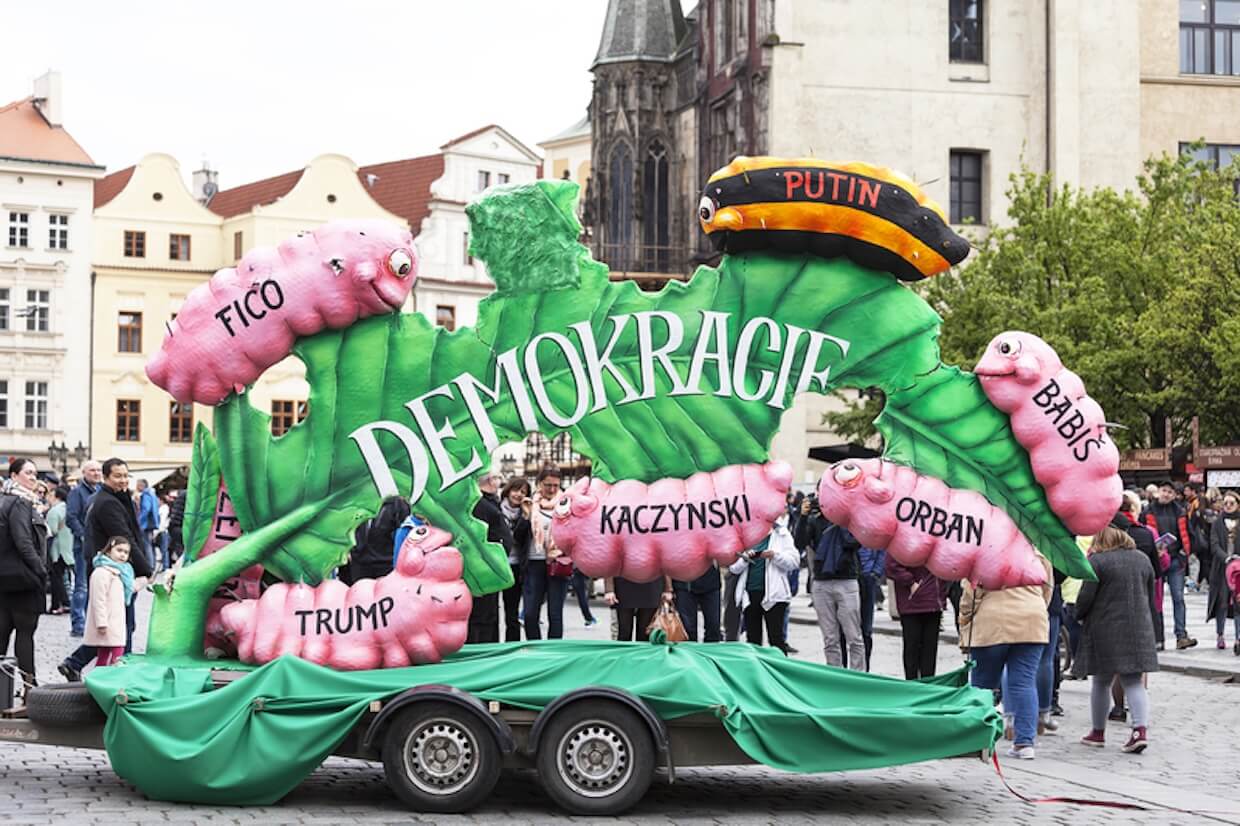
Illustration: Dreamstime.
Professor Elin Bjarnegård, thank you so much for joining our interview series. Let me start right away with the first question: In your scholarship, you argue that authoritarian leaders treat gender not primarily as ideology but as a strategic resource for regime survival. How does this perspective revise dominant interpretations of populism’s relationship to gender politics beyond the conventional “backlash against feminism” thesis?
Professor Elin Bjarnegård: Thank you for that question. I would say that what this perspective really adds is a strategic dimension. It is not that we want to suggest there is no ideology involved—of course ideology plays a role. The relationship between populism and gender politics, and the backlash narrative in particular, still has analytical value. However, what is often overlooked is the presence of a very important strategic component. That is what we seek to foreground by adding this strategic dimension to the equation.
So we are not arguing that ideology is irrelevant, but rather that strategy deserves more attention. In this sense, gender becomes a useful, malleable concept for authoritarian leaders—a powerful symbol that can be mobilized for regime purposes.
From an ideological perspective, one must focus on policy positions and attempts to persuade opponents. A strategic perspective, by contrast, emphasizes negotiation and maneuvering. This is why I believe it is an important lens to introduce. It opens possibilities for collaboration in a polarized world and encourages us to see political opponents as actors with whom dialogue remains possible, particularly when we recognize the strategic component of their actions.
Gender Equality as Both Shield and Weapon in Global Politics
Your work distinguishes between “genderbashing” and “genderwashing” as complementary authoritarian strategies. Under what structural and international conditions do regimes oscillate between these tactics, and how does the global bundling of democracy and gender equality norms enable such strategic manipulation?
Professor Elin Bjarnegård: We see this oscillation, as you say, more clearly now and in recent years because we have had a fairly strong global norm of gender equality for the past three decades or so. That norm is now evaporating, or at least stagnating, and we also see alternative norms emerging. As the global order itself is increasingly questioned, the norm of gender equality is likewise being challenged. In a multipolar world, actors may view gender mainstreaming—as promoted by the UN or the EU—as no longer the only legitimate path. This creates space, particularly for authoritarian actors, to use gender equality as an instrument to portray themselves as modern, progressive, or even democratic, especially since gender equality and democracy have long been bundled together in major democracy-promotion efforts.
At the same time, however, this shift opens the door to a different interpretation, in which gender is used to distance regimes from global institutions such as the UN and the EU by rejecting what they frame as the foreign imposition of values in favor of traditional family norms. What was once a relatively stable landscape—where countries knew their allies, audiences, and signaling targets—has become more fluid. States now communicate simultaneously with multiple audiences. As a result, the same country may present itself as supportive of gender equality and committed to combating violence against women on the one hand, while simultaneously promoting homophobic narratives to justify, for example, military engagement with other countries.
Feminationalism Turns Inclusion Into a Weapon
Photo: Dreamstime.
Many populist actors claim to defend women’s rights selectively — for instance, against migrants or minorities — while undermining broader gender equality. How does this selective emancipation differ from classical authoritarian gender politics, and what dilemmas does it pose for liberal and intersectional feminism?
Professor Elin Bjarnegård: This type of politics—sometimes called feminationalism, or homonationalism, depending on the target group—is also part of the broader package I mentioned earlier about bringing strategy into gender politics and into authoritarian politics. It is a clear illustration of how highly strategic these dynamics can be, because in these narratives, inclusion is deployed, as you say, only selectively or strategically—and ultimately for the purpose of excluding certain groups.
If the intersectional perspective, as originally conceived, aimed to ensure that we identify the most vulnerable groups and recognize multiple systems of oppression so that people do not fall between the cracks but instead benefit from policies designed to protect them, this type of feminationalism—or the selective defense of women’s rights deployed against minorities, for instance—does the opposite: it pits these systems of oppression against each other.
In a way, it draws on our knowledge about intersectional layers of oppression but turns them against one another, claiming, for example, that gender equality and women’s rights are under threat from migration. The dilemma it poses is quite similar to that of genderbashing and genderwashing. Insofar as there is a solution, it requires caution. We need to scrutinize these narratives carefully and be specific—not simply respond to symbolism or easy answers, but examine what is actually being claimed and who is being favored—in order to look beyond the strategy.
Your research on militarized masculinity suggests that patriarchal norms can coexist with formal democratic institutions and fuel political violence. How does the persistence of such masculinist political cultures help explain the gendered appeal of authoritarian populism across diverse contexts?
Professor Elin Bjarnegård: I think masculinist cultures are both persistent, as you say, and increasingly revealing themselves and being strengthened in many places. We can begin with the fact that they coexist with, and also exist within, democratic settings. Democratic institutions were originally built by men, for men, and are imbued with male norms; studies of feminist institutionalism, for instance, have made this argument for a long time. Patriarchal norms have therefore always coexisted, to some extent, with formal democratic institutions. However, they have been challenged in recent decades, and they certainly vary and take different forms across contexts.
Many of us associate the political with masculinity to such an extent that it becomes difficult to pinpoint. While there has been significant focus on women in politics, there has been far less attention to men and masculinity in politics. Several research projects in Europe are now examining political science questions from a masculinity perspective, reflecting the rise of new forms of hegemonic and militarized masculinities that make clear the need for deeper understanding. “Men4Them” is one such project, examining radicalized young men as well as leadership and the spillover effects between the two. As part of this project, we seek both to understand the masculine ideals that politicians and leaders attempt to embody and, importantly, how these ideals can be transformed. We know change is possible: not long ago, in my country, Sweden, party leaders competed to present themselves as feminists, which is no longer the case.
This shift is likely related to the broader global order. We see geopolitical tensions and increasing militarization, alongside a reversal of the movement from soft power toward hard power. Narratives emphasizing traditionally masculine traits—such as strength over cooperation—are returning. Research shows these cultures have always existed, but what is striking today is that they are once again becoming, if not hegemonic, at least highly prominent.
Protection Narratives and the Return of Strongman Politics
Women rally in Istanbul to protest proposed anti-abortion legislation by then–Prime Minister Recep Tayyip Erdoğan, June 18, 2012. Photo: Sadık Güleç.
Relatedly, how do hypermasculine narratives and honor ideologies shape the emotional and symbolic appeal of strongman leadership, particularly among male constituencies experiencing status anxiety in periods of social transformation?
Professor Elin Bjarnegård: This goes back again to the question we have just discussed, because, of course, it is about leadership and about what an ideal leader is supposed to be in a specific context at a particular point in time. But as I mentioned, it is really important to consider the spillover and interaction between leaders and their constituents. There is a constant interplay between the two.
In this context of status anxiety and social transformation, there is a great deal of fear and uncertainty, which tends to favor the presentation of easy solutions to complex problems. I think one of the easiest sentiments to mobilize is a sense of lost entitlement, and looking back at traditional gender roles can provide a feeling of security.
These honor ideologies often build on an idea of protection, which speaks to a basic need for security. At the same time, we need to scrutinize this and critically examine strongman ideology. Protection may be necessary, but the key question becomes who is positioned to protect whom. It also relies on a separation between genders and assigns different values to them. This reflects a return to hard-power narratives that signal traditional strongman characteristics—protection achieved not through collaboration, but through the display of force, coercion, and strength.
You have shown that violence against women in politics often operates along a continuum that includes psychological intimidation and reputational attacks. How does this less visible violence function as an informal mechanism of democratic backsliding even in electoral regimes?
Professor Elin Bjarnegård: Violence against women, as well as violence against political actors in general, operates along this continuum. But we do see that violence against political actors has gendered components.
Specifically, if we look at those gendered components and include the continuum you mentioned, it becomes important to recognize violations that occur not only physically but also psychologically and online, because the types of reputation-damaging slander that women and men encounter are fundamentally different in character. It is not that men are protected online—that is not the case—but if we examine the types of slander campaigns deployed against men and women politicians, we see that, to a much larger extent, women politicians face narratives targeting them as persons, often highly sexualized and directed at their family members, whereas men are more often, sometimes harshly and unfairly, criticized for their policy stances or political positions.
I, therefore, think it is important to demonstrate this continuum and to include psychological intimidation and reputational attacks, because they can be equally damaging to democratic procedures. They reflect a similar readiness to violate democratic integrity as physical forms of violence. Although such actions may not violate bodily integrity to the same extent as physical violence, they certainly violate personal integrity just as much. If we are concerned with threats to democracy and with disrespect for democratic procedures and institutions, I believe that violations occurring online must also be included in that continuum.
Homosocial Recruitment Sustains Male Dominance in Populist Parties
Your feminist institutionalist research highlights how informal party networks and homosocial recruitment reproduce male dominance. To what extent do populist radical right parties intensify these exclusionary mechanisms compared to mainstream parties?
Professor Elin Bjarnegård: It is a difference in degree rather than in kind. In general, what we see in parties and organizations alike is that if you only or primarily network with like-minded people who tend to think, act, and behave like you, and if you mainly recognize competence in those you perceive as similar to yourself, you may be able to shape a very strong and coherent message. Collaboration may be smooth in that group, and you will be surrounded by people who agree with you.
But you will not have broad representation, you will not hear other perspectives, and you will not be challenged by—or learn from—others. Insofar as populist radical right parties tend to build more on loyalties than on representational claims, and more on personal relationships than on bureaucratic recruitment procedures, we can certainly see this type of homosocial recruitment producing male dominance there as well. It becomes a kind of celebration of like-mindedness rather than a reflection of a diversity of ideas. This plays a significant role in the masculine dominance we observe both among constituents and within these parties themselves.
Gender Equality as a Tool of Authoritarian Legitimacy
Giorgia Meloni, Prime Minister of Italy and leader of the Fratelli d’Italia party, speaks at an electoral rally ahead of the national elections in Turin, Italy, September 13, 2022. Photo: Antonello Marangi / Dreamstime.
Authoritarian regimes sometimes increase women’s descriptive representation through quotas while simultaneously restricting civil liberties. Does such symbolic inclusion risk legitimizing illiberal rule by projecting an image of progress without substantive empowerment?
Professor Elin Bjarnegård: That is exactly the risk of what my colleague Per Setterberg and I have come to call autocratic genderwashing, especially when this descriptive representation does not lead to substantive representation, or when it is limited and includes only women affiliated with the government, for instance.
In many places, with Rwanda perhaps as one of the clearest examples, we do see that the introduction of gender quotas really boosts the representation of women. But if we take a closer look, we see that it mainly boosts the representation of government-affiliated women. This then leads to an even stronger electoral dominance of an already dominant authoritarian party, at the same time as it generates goodwill and international prestige, because the country is seen as favoring and promoting gender equality and women’s representation. It can present itself as modern and progressive and, interestingly enough, because of this bundling of democracy and gender, even as a democratic country.
All the while, if we look more closely at what happens behind the scenes, we also know that this is a country that keeps jailing opponents, restricting civil liberties, and remains authoritarian. So it is about taking a closer look and considering what kinds of signals they are able to send and who this reform actually favors. It can be that it favors both. We can end up in tricky situations where a gender equality reform improves conditions for women—perhaps for a select group of women, but nevertheless for women—while at the same time strengthening the hold on power of an autocratic regime.
That is, in a way, an impossible conundrum we are faced with, but we nevertheless have to recognize it. That is really what we hope to spur discussion on: not to see it as one thing or the other, or simply accept the image these regimes want to portray, but to recognize these value clashes, these conundrums, and discuss what we should do in such cases.
Democratization Does Not Automatically Deliver Gender Equality
Your work suggests democratization does not automatically produce gender equality and may even coexist with patriarchal power structures. How should scholars rethink linear assumptions linking democratic transitions to women’s rights advancements?
Professor Elin Bjarnegård: In principle, if you ask most scholars, my guess would be that this linear assumption has been rethought. At the same time, it remains a very relevant question, because versions of it still persist in people’s minds. Even when asked explicitly, people may not believe in a strictly linear progression where one development automatically produces the other. As I have often noted, in democracy promotion and in discussions about how to advance democracy, the inclusion of women has become a core component.
While many would define democracy as something that cannot exist without the proper inclusion of all groups—and the inclusion of women is, of course, necessary and important for a genuine democracy—it does not follow that inclusion can compensate for a lack of competition. This is where we have often gone wrong, allowing inclusion to substitute for the absence of political competition in the eyes of the international community, for instance.
Looking back historically, if we examine the issue more closely, some cosmetic gender-equality reforms—for example, in many communist countries where equality was a prominent ideological principle and women were relatively well represented in parliament—did not make those systems democratic. We have also seen in many contexts that women played crucial roles in democratic transition movements, only to be marginalized once parties and institutions were established. The relationship is therefore far more complex than the linear assumption suggests. At the same time, the connection is not entirely absent, because inclusion remains an important principle of democracy; it is simply not the only one.
Sexual Corruption Is a Systemic, Not Isolated, Problem
Float featuring a caricature of Jeffrey Epstein and the slogan “Everyone protected the criminals and ignored the victims” at the Rosenmontag carnival parade in Düsseldorf, North Rhine-Westphalia. Photo: Elena Frolova / Dreamstime.
Your concept of “sexual corruption” reframes gendered abuses of authority as governance failures rather than isolated misconduct. Do such practices proliferate under populist or authoritarian rule where institutional accountability mechanisms are weakened?
Professor Elin Bjarnegård: Yes, such practices proliferate anywhere institutional accountability mechanisms are weak. But then again, as the recent release of the Epstein files, for instance, has clearly demonstrated, these gendered abuses of authority have also proliferated in the corridors of power in predominantly democratic contexts in Europe and the United States. So it is not as simple as a matter of them and us when it comes to sexual corruption and this kind of gendered abuse of power. The problem exists everywhere.
Interestingly, it has perhaps received the most attention in areas like Sub-Saharan Africa, where there have been significant campaigns against practices such as teachers handing out grades in exchange for sex. But we have to look at different contexts and recognize that they carry different types of risks in different areas.
Insofar as your question concerns populist and authoritarian rule, these systems generally have a greater propensity to overlook institutional accountability mechanisms in favor of, as we discussed earlier, more personalistic loyalties. They are therefore certainly more at risk both of experiencing these gendered abuses and, perhaps especially, of the impunity surrounding them—of people not reporting them, of them remaining unseen, and of not being addressed.
Digital Harassment as a Tool to Exclude Women from Politics
How are online harassment, disinformation, and gendered hate speech transforming the authoritarian toolkit, particularly as methods for discouraging women’s political participation without overt repression?
Professor Elin Bjarnegård: Yes, we talked a bit about this earlier when we discussed the continuum of violence, which of course includes psychological forms of violence, intimidation, and hate speech that increasingly take place online. The use of technology in this type of harassment, disinformation, and hate speech is making an already effective and efficient authoritarian toolkit even more efficient, because it gives it wider reach, causes more harm than before, and can project images and ideas that are simply not true.
The fact that these violations have increasingly moved online, or are also spread online, means that technology is now used both to spread fear and to disseminate propaganda in new ways. It also represents a move away from ideological discussion, because it often disregards ideological stances entirely, relying instead on targeted messaging and algorithms to influence different groups in a particular direction, making it more like marketing than politics in a sense. It is not about convincing people; it is about moving them in a specific direction, even if it means misinforming them. This is an area where the authoritarian toolkit is clearly expanding. For women’s political participation, as well as participation in general, we see a number of new methods emerging here.
Trumpism Normalized Anti-Gender Rhetoric Globally
Woman wearing a red “Make America Great Again” hat prays at a “Stop the Steal” rally in Helena, Montana, on November 7, 2020, in support of Donald Trump and claims that the election was stolen by Joe Biden. Photo: Dreamstime.
From a comparative perspective, how do you evaluate the global impact of Donald Trump’s presidency on gender politics? Did Trumpism normalize gender-based rhetoric and policy rollbacks that other populist leaders subsequently emulated?
Professor Elin Bjarnegård: It is almost hard to overestimate the impact, but nevertheless I think that what we see happening in the US did not come from nowhere. There was already a platform for this kind of discussion. Political leaders like Putin, Orbán, and Erdoğan had already drawn media attention for both sexist remarks and derogatory statements about what they called “gender ideology,” a broad concept often deployed to describe perceived threats to gender equality against traditional family values. So I think that during Donald Trump’s second term in office, he could simply follow these already existing international narratives, and he did so even in his inaugural address. He vowed to dismantle gender mainstreaming and announced an executive order for government agencies to remove statements, policies, and regulations that promote or otherwise incorporate gender ideology.
This is certainly rhetoric he could build on, and we could say that sometimes it functions mainly as a strategy to align himself with certain parts of the population while distancing himself from others. But the potential danger with these narratives, and with genderbashing in general, is that to be a credible leader, one sometimes also has to follow through. We see that in the US: it has not just stopped at rhetoric. We have also seen the dismantling of diversity, equity, and inclusion initiatives across various sectors.
This shows that he had a platform to build on and could follow suit, but when both this rhetoric and these policy rollbacks occur in the US, they also normalize these types of discussions and narratives, portraying gender not necessarily as something positive but as something potentially dangerous and harmful.
The Rise and Fall of Sweden’s Feminist Foreign Policy
Sweden’s feminist foreign policy was widely seen as a pioneering normative project yet was later discontinued. What does this reversal reveal about the resilience — or fragility — of gender-progressive policies amid shifting political coalitions and populist radical right pressures?
Professor Elin Bjarnegård: Sweden’s feminist foreign policy is an interesting case in point because it vividly illustrates how much the world has changed in just a few years. When the feminist foreign policy was first adopted and launched in Sweden in 2014, it was the first of its kind. It was, as you said, seen as pioneering. We were in a world where being feminist was seen as a good thing and where this was something people competed over in Sweden and elsewhere, and we could also see that a lot of countries followed suit. It is a bit difficult to know exactly what constitutes a feminist foreign policy, but at least 15 or 16 other countries declared, in one way or another, that they also wanted to pursue a feminist foreign policy.
But then, just a few years later, in 2022, when we had a new government, the very first thing they did was to withdraw the feminist foreign policy, claiming that they were not against gender equality but against these labels, which were more about showcasing and using the word feminist than about actually doing things. It is interesting that the first country in the world to adopt a feminist foreign policy was also the first country in the world to withdraw it, and it is very symptomatic of the development we are seeing.
I think it goes back to many of the issues we discussed, particularly the potential danger that gender as a word, and gender equality as a norm, has been so all-encompassing. In gender mainstreaming, for instance, it has been something said to apply to all sectors, all policies, and all genders. In the success story of gender equality over the past few decades, we may have run the risk of not being specific enough, of not saying what matters and why it matters. That leaves the door open for interpretations, misinterpretations, and adaptations of what gender as this big concept actually is and could be.
That is what we are seeing now, and it explains why leaders can juxtapose using gender equality as a good thing with using gender ideology as a bad thing, oscillating between the two, because it is not necessarily clear what it is supposed to mean. That is also why it has been difficult, to some extent, to evaluate policies like the feminist foreign policy. But what we did see is that it was, at least, more than a label. It did change the way things were carried out in Swedish foreign policy, even though it was in place for only a few years.
Gender Rights as the Next Global Fault Line
And lastly, Professor Bjarnegård, looking ahead, do you anticipate that gender rights will become an increasingly central fault line in the global contest between liberal democracy and authoritarian populism — and what forms might meaningful resistance and democratic renewal take?
Professor Elin Bjarnegård: That is the million-dollar question. I do, unfortunately, anticipate that gender rights, or perhaps the strategic use of gender, will become an increasingly central fault line. But I also think that this is why the strategic component we are trying to remind people of is important, because it means that we can find areas where it may not be all about sexism, misogyny, and ideological differences, but also about how gender has become a useful, easy, and simplistic narrative to deploy strategically.
If we try to resist not by increasing polarization but rather by finding spaces for negotiation and discussion, it helps—at least it does for me—to think that part of this is strategy, not only ideological conviction. I really think the first step is to be a bit more cautious whenever we see people speaking about gender, either in the form of potential genderbashing—building this large phantasm of so-called gender ideology—or genderwashing, emphasizing all the good things a country or regime has done for gender equality. We should be careful not to fall into the trap of letting gender become a single, overarching symbol, but instead try to be specific: where and how does it matter in a particular policy area?
Sometimes we also have to be clear about the trade-offs and value clashes that are part of politics. We cannot always have everything that is good, and not everything that is good is compatible. At least for me, looking back at the past decades, it has been an unprecedentedly positive era for women’s rights, and it is in many ways remarkable that gender equality achieved such status as a global norm. But that also means we now need to take a second look in this different era and ask where we need to be more careful and more specific about why it matters, focusing on concrete issues rather than treating gender merely as a symbol, because it is important for many other reasons as well.
Session 12 of the ECPS Virtual Workshop Series explored how “decolonizing democracy” requires attention to the material and symbolic structures shaping participation, legitimacy, and representation. The presentations framed democracy not as a settled institutional model but as a contested field shaped by colonial legacies, extractive political economies, and identity-based struggles over inclusion and authority. Dr. Oludele Mayowa Solaja’s comparative study of Nigeria and the United Kingdom showed how environmental governance can produce “participation without power,” where formal inclusion coexists with persistent injustice. Dr. Salomon Essaga Eteme’s analysis of Cameroon highlighted how pluralism has intensified communal claims to state ownership, complicating political alternation. Supported by Dr. Gabriel Cyril Nguijoi’s feedback, the session underscored the value of concepts such as biocultural sovereignty and communocratic populism and emphasized the need for context-sensitive, interdisciplinary approaches to democratic renewal in the Global South.
Reported by ECPS Staff
On Thursday, February 19, 2026, the European Center for Populism Studies (ECPS) convened Session 12 of its Virtual Workshop Series, “We, the People” and the Future of Democracy: Interdisciplinary Approaches, under the theme “Decolonizing Democracy: Governance, Identity, and Resistance in the Global South.” The session foregrounded a core problem in contemporary democratic theory and practice: how democratic institutions—often inherited, transplanted, or externally modeled—are reshaped, contested, and resisted in postcolonial contexts marked by extractive political economies, unequal state–society relations, and enduring struggles over recognition and voice.
Moderated by Neo Sithole (University of Szeged), the workshop approached “the people” not as a stable category but as a contested political project—produced through governance arrangements, mobilized through identity, and asserted through resistance. Across the session, democracy emerged less as an institutional endpoint than as a field of struggle in which colonial legacies, state power, and community agency intersect. Rather than treating decolonization as a symbolic discourse, contributors examined its concrete implications for how participation is structured, how resources are governed, and how legitimacy is claimed in environments where the state’s democratic form may coexist with exclusionary or coercive practices.
The session brought together two presentations that, while distinct in focus, converged on a shared concern with democratic deficit: the gap between formal mechanisms of participation and the effective capacity of communities to shape political and material outcomes. First, Dr. Oludele Mayowa Solaja (Olabisi Onabanjo University) examined environmental governance as a critical site of democratic contestation in a paper jointly authored with Busayo Olakitan Badmos (Olabisi Onabanjo University), titled “Decolonial Environmentalism and Democracy: A Comparative Study of Resource Governance in Nigeria and the United Kingdom.” Positioning environmental politics within the broader architecture of power, he explored how colonial histories and technocratic governance models marginalize local knowledge and produce “participation without power,” while proposing biocultural sovereignty as a pathway toward more inclusive ecological governance.
Second, Dr. Salomon Essaga Eteme (University of Ngaoundéré) analyzed electoral politics and identity mobilization in Cameroon in “Africa at the Test of Populism: Identity Mobilisations, Crises of Political Alternation, and the Trial of Democracy,” jointly authored with Dr. Yves Valéry Obame (University of Bertoua / Global Studies Institute & Geneva Africa Lab). His contribution interrogated how multiparty competition can intensify communal claims to representation, framing elections not as programmatic contests but as struggles over inclusion, alternation, and the symbolic ownership of the state.
The discussion was anchored by Dr. Gabriel Cyril Nguijoi (National Institute of Cartography; ICEDIS), whose role as discussant helped connect the papers’ empirical insights to broader debates on coloniality, accountability, and democratic substance. His interventions highlighted how both contributions disrupt common analytical shortcuts—whether the assumption that environmental injustice is confined to the Global South, or the notion that repeated elections necessarily constitute democratic consolidation.
Taken together, Session 12 offered a layered and comparative exploration of how democracy is challenged—and potentially renewed—through the politics of governance, identity, and resistance in postcolonial settings.
Please cite as: ECPS Staff (2026). “Virtual Workshop Series / Session 12 — Decolonizing Democracy: Governance, Identity, and Resistance in the Global South.” European Center for Populism Studies (ECPS). February 23, 2026. https://doi.org/10.55271/rp00143
Session 12 of the ECPS Virtual Workshop Series explored how “decolonizing democracy” requires attention to the material and symbolic structures shaping participation, legitimacy, and representation. The presentations framed democracy not as a settled institutional model but as a contested field shaped by colonial legacies, extractive political economies, and identity-based struggles over inclusion and authority. Dr. Oludele Mayowa Solaja’s comparative study of Nigeria and the United Kingdom showed how environmental governance can produce “participation without power,” where formal inclusion coexists with persistent injustice. Dr. Salomon Essaga Eteme’s analysis of Cameroon highlighted how pluralism has intensified communal claims to state ownership, complicating political alternation. Supported by Dr. Gabriel Cyril Nguijoi’s feedback, the session underscored the value of concepts such as biocultural sovereignty and communocratic populism and emphasized the need for context-sensitive, interdisciplinary approaches to democratic renewal in the Global South.
Reported by ECPS Staff
On Thursday, February 19, 2026, the European Center for Populism Studies (ECPS) convened Session 12 of its Virtual Workshop Series, “We, the People” and the Future of Democracy: Interdisciplinary Approaches, under the theme “Decolonizing Democracy: Governance, Identity, and Resistance in the Global South.” The session foregrounded a core problem in contemporary democratic theory and practice: how democratic institutions—often inherited, transplanted, or externally modeled—are reshaped, contested, and resisted in postcolonial contexts marked by extractive political economies, unequal state–society relations, and enduring struggles over recognition and voice.
Moderated by Neo Sithole (University of Szeged), the workshop approached “the people” not as a stable category but as a contested political project—produced through governance arrangements, mobilized through identity, and asserted through resistance. Across the session, democracy emerged less as an institutional endpoint than as a field of struggle in which colonial legacies, state power, and community agency intersect. Rather than treating decolonization as a symbolic discourse, contributors examined its concrete implications for how participation is structured, how resources are governed, and how legitimacy is claimed in environments where the state’s democratic form may coexist with exclusionary or coercive practices.
The session brought together two presentations that, while distinct in focus, converged on a shared concern with democratic deficit: the gap between formal mechanisms of participation and the effective capacity of communities to shape political and material outcomes. First, Dr. Oludele Mayowa Solaja (Olabisi Onabanjo University) examined environmental governance as a critical site of democratic contestation in a paper jointly authored with Busayo Olakitan Badmos (Olabisi Onabanjo University), titled “Decolonial Environmentalism and Democracy: A Comparative Study of Resource Governance in Nigeria and the United Kingdom.” Positioning environmental politics within the broader architecture of power, he explored how colonial histories and technocratic governance models marginalize local knowledge and produce “participation without power,” while proposing biocultural sovereignty as a pathway toward more inclusive ecological governance.
Second, Dr. Salomon Essaga Eteme (University of Ngaoundéré) analyzed electoral politics and identity mobilization in Cameroon in “Africa at the Test of Populism: Identity Mobilisations, Crises of Political Alternation, and the Trial of Democracy,” jointly authored with Dr. Yves Valéry Obame (University of Bertoua / Global Studies Institute & Geneva Africa Lab). His contribution interrogated how multiparty competition can intensify communal claims to representation, framing elections not as programmatic contests but as struggles over inclusion, alternation, and the symbolic ownership of the state.
The discussion was anchored by Dr. Gabriel Cyril Nguijoi (National Institute of Cartography; ICEDIS), whose role as discussant helped connect the papers’ empirical insights to broader debates on coloniality, accountability, and democratic substance. His interventions highlighted how both contributions disrupt common analytical shortcuts—whether the assumption that environmental injustice is confined to the Global South, or the notion that repeated elections necessarily constitute democratic consolidation.
Taken together, Session 12 offered a layered and comparative exploration of how democracy is challenged—and potentially renewed—through the politics of governance, identity, and resistance in postcolonial settings.
Dr. Oludele Mayowa Solaja:“Decolonial Environmentalism and Democracy: A Comparative Study of Resource Governance in Nigeria and the United Kingdom”
Dr. Oludele Mayowa Solaja is a faculty member in the Department of Sociology at Olabisi Onabanjo University.
Dr. Oludele Mayowa Solaja of Olabisi Onabanjo University delivered a thought-provoking presentation examining the entanglement of environmental governance, colonial legacies, and democratic practice. Speaking from a comparative Nigeria–United Kingdom framework, he advanced the central claim that environmental governance should be understood not merely as a technical or administrative domain but as a site of democratic struggle shaped by historical power asymmetries and contemporary political economies.
Positioning his research within ongoing debates on participation and sustainability, Dr. Solaja noted that mainstream environmental governance literature often assumes that stakeholder inclusion naturally enhances democratic legitimacy and ecological outcomes. However, he argued that such frameworks frequently overlook how colonial histories and extractive economic structures continue to shape decision-making processes. In many contexts, governance systems privilege capital accumulation over community well-being, thereby reproducing ecological inequality across regions. From this perspective, environmental governance cannot be treated as politically neutral; rather, it reflects contested struggles over resources, voice, and knowledge.
The study was guided by three principal research questions: i) how colonial legacies continue to shape environmental governance in both Nigeria and the United Kingdom; ii) how distributive, procedural, and recognitional injustices manifest across the two cases; and iii) how Indigenous and decolonial approaches might offer alternative pathways toward sustainable governance.
By placing a Global South extractive economy alongside a Global North post-industrial democracy, the project sought to challenge the assumption that environmental injustice is primarily a Southern phenomenon and instead reveal its structural character across diverse political systems.
Dr. Solaja explained that the comparison was deliberately constructed. Nigeria’s Niger Delta represents a post-colonial, resource-dependent region marked by centralized control, oil extraction, and militarized environmental conflict. In contrast, the United Kingdom’s post-industrial regions—particularly South Wales and Northern England—illustrate an advanced industrial democracy navigating decarbonization and energy transition. Despite these differences in institutional capacity and policy development, both contexts exhibit what he termed a “democratic deficit” embedded within environmental governance arrangements.
The presentation’s theoretical foundation drew on decolonial environmentalism, particularly the work of Walter Mignoloand related scholars. Dr. Solaja argued that dominant environmental governance models are shaped by Eurocentric and technocratic assumptions that privilege market-oriented and state-centric solutions while marginalizing relational, place-based, and Indigenous ecological knowledge systems. Decoloniality, in this sense, involves challenging the presumed universality of Western sustainability paradigms and embracing what he described as “epistemic disobedience”—the refusal to accept a single authoritative model of environmental knowledge. Environmental conflicts, therefore, emerge not only from competition over resources but also from struggles over recognition and authority.
Methodologically, the study employed a cooperative qualitative case-study design grounded in critical interpretivism. The research team analyzed legislative archives, reports from NGOs and international organizations, media coverage, environmental indices, and data from the Environmental Justice Atlas. Through thematic coding, they identified patterns related to governance models, justice dimensions, and underlying power relations shaped by colonial continuities.
Turning to the findings, Dr. Solaja highlighted stark contrasts and parallels. In the Niger Delta, thousands of oil spill incidents in recent years have produced severe ecological damage, including heavy-metal contamination and concentrated environmental risk zones near pipeline infrastructure. While official narratives often attribute spills to sabotage, the research emphasized the role of weak regulation and aging infrastructure. The result is pronounced distributive injustice, with local communities bearing disproportionate environmental burdens.
The United Kingdom, by contrast, has achieved measurable progress in decarbonization, including the phase-out of coal and expansion of renewable energy. Yet structural tensions remain: fossil fuels continue to dominate overall energy consumption, new oil projects are still approved, and community influence over environmental decision-making is often limited. Thus, although distributive injustice may appear less severe in absolute terms, procedural and recognitional deficits persist.
Across both cases, environmental injustice manifested along three dimensions. Distributive injustice concerned the unequal allocation of environmental harms and benefits. Procedural injustice involved exclusion from meaningful decision-making processes, whether through repression in Nigeria or limited consultation mechanisms in the United Kingdom. Recognitional injustice referred to the marginalization of local knowledge, identities, and historical experiences. Dr. Solaja summarized this dynamic as “participation without power”: communities may be consulted, yet they rarely possess the authority to shape outcomes.
The presentation also underscored the role of resistance movements. In the Niger Delta, environmental activism is intertwined with ethnic identity, territorial sovereignty, and cultural survival, exemplified by movements such as the Ogoni struggle. In the United Kingdom, climate justice activism often reflects class, regional, and generational concerns. Despite contextual differences, movements in both regions increasingly share strategies, including civil disobedience, digital mobilization, and transnational solidarity networks—suggesting the emergence of a broader planetary justice framework.
In concluding, Dr. Solaja proposed alternative pathways centered on “biocultural sovereignty” and plural ecological governance. In Nigeria, this could involve ethical extractivism grounded in free, prior, and informed consent, equitable benefit sharing, and stronger accountability mechanisms. In the United Kingdom, community-owned renewable energy initiatives and locally driven transitions could advance energy democracy. Ultimately, he argued that democracy must extend beyond electoral institutions to encompass ecological sovereignty, epistemic plurality, and intergenerational justice. Only through such transformations, he concluded, can environmental governance become genuinely democratic.
Dr. Salomon Essaga Eteme:“Cameroon at the Trial of Democracy: Presidential Elections, Communaucratic Populism, and the Crisis of Political Transition”
Dr. Salomon Essaga Eteme is from the University of Ngaoundéré, Laboratoire camerounais d’études et de recherches sur les sociétés contemporaines (Ceresc).
In his presentation, Dr. Salomon Essaga Eteme offered a sociologically grounded analysis of electoral politics in Cameroon, advancing the concept of “communocratic populism” to explain the enduring tensions between democratic pluralism and community-based political mobilization. The presentation situated Cameroon’s contemporary political trajectory within the broader challenges of democratic transition in postcolonial African states, where formal multiparty systems coexist with deeply rooted communal identities.
Dr. Essaga Eteme began by framing the study within Cameroon’s transition to political pluralism in 1990, a watershed moment that introduced multiparty competition after decades of single-party dominance. While this transition generated widespread optimism about democratic reform, he argued that it also revealed structural constraints. Cameroon is composed of more than 250 ethnic communities, each with distinct historical and political aspirations. In such a context, electoral competition has increasingly become a mechanism for negotiating communal representation rather than contesting ideological programs. Presidential, legislative, and municipal elections alike are thus shaped by the imperative to secure community backing, transforming democratic participation into what Dr. Essaga Eteme conceptualized as communocratic populism—political mobilization grounded in communal identity claims rather than policy platforms.
The presentation traced the historical roots of this phenomenon to Cameroon’s post-independence political consolidation. From 1972 until the early 1990s, the country operated under a highly centralized system characterized by limited political freedoms and restricted avenues for dissent. The transition to multiparty democracy raised hopes for political alternation and broader participation. However, Dr. Essaga Eteme noted that the persistence of long-term incumbency—particularly the extended tenure of President Paul Biya—has generated both expectations and frustrations. While some citizens initially viewed democratic reforms as an opportunity for renewal, others increasingly perceived them as insufficient to produce meaningful change, thereby fueling community-based demands for political inclusion.
Central to the analysis was the observation that presidential elections have become focal points for communal competition. The announcement of President Biya’s candidacy in the 2025 election, after decades in power, intensified perceptions among various groups that political authority had been monopolized by a particular regional or ethnic constituency. This perception, Dr. Essaga Eteme argued, reinvigorated communocratic narratives asserting that leadership should rotate among communities. Such narratives do not necessarily reject democracy but reinterpret it as a mechanism for redistributing access to state power among identity groups.
The research was guided by three principal questions: i) identifying the forms and manifestations of communocratic populism during presidential elections; ii) examining how community affiliation shapes voter alignment; and iii) analyzing how political actors exploit communal sentiments either to legitimize incumbency or to challenge it. To address these questions, Dr. Essaga Eteme employed a mixed-methods approach combining field observations, social media analysis, and electoral data from recent presidential contests, particularly those of 2025. This methodology enabled a multi-layered understanding of both elite strategies and grassroots perceptions.
Empirical findings highlighted patterns of continuity across successive elections. Electoral outcomes revealed the sustained dominance of the incumbent leadership, accompanied by accusations of fraud and declining trust in electoral institutions. At the same time, opposition candidates frequently mobilized support by appealing to communal solidarity. For example, challengers from northern, western, or Anglophone regions framed their campaigns around the notion that their respective communities deserved access to national leadership after prolonged exclusion. Such appeals resonated strongly with voters who interpreted political power as a collective resource to be shared among groups.
Dr. Essaga Eteme illustrated how these dynamics have evolved over time. Earlier opposition figures, including prominent Anglophone leaders in the 1990s and 2000s, mobilized regional grievances against perceived Francophone dominance, contributing to tensions that later fed into the Anglophone crisis. More recent challengers have similarly invoked regional identity, arguing that the concentration of power within one community undermines national cohesion. Even post-electoral disputes often reflect communal narratives, with defeated candidates attributing outcomes to structural favoritism toward the incumbent’s group rather than to programmatic differences.
The presentation emphasized that communocratic populism shifts the focus of democratic competition from ideological debate to identity-based claims. Elections become symbolic contests over which community will control the state apparatus rather than deliberations over policy direction. This dynamic, Dr. Essaga Eteme suggested, contributes to a broader crisis of political transition, as democratic institutions struggle to mediate between national integration and communal representation. Instead of fostering a shared civic identity, electoral politics may reinforce divisions by encouraging leaders to frame political demands in communal terms.
At the same time, the analysis acknowledged the ambivalent character of communocratic mobilization. On one hand, it can serve as a vehicle for marginalized groups to articulate grievances and demand inclusion. On the other hand, it risks entrenching zero-sum perceptions of power, where one group’s gain is viewed as another’s loss. This tension complicates efforts to build stable democratic institutions capable of transcending identity politics.
Dr. Essaga Eteme concluded that Cameroon’s experience demonstrates the limits of procedural democratization in deeply plural societies. The introduction of multiparty elections does not automatically produce programmatic competition or institutional trust; instead, it may activate preexisting communal cleavages. Addressing the crisis of political transition therefore requires reimagining democracy beyond electoral mechanics, fostering inclusive governance structures that balance communal recognition with national cohesion. Without such reforms, communocratic populism is likely to remain a defining feature of Cameroon’s political landscape, continuing to shape both the aspirations and anxieties of its democratic experiment.
Discussant Dr. Gabriel Cyrille Nguijoi’s Feedback
Dr. Gabriel Cyrille Nguijoi is a researcher at the National Institute of Cartography (NIC), and lecturer at the Cameroonian Institute of Diplomatic and Strategic Studies (ICEDIS).
Dr. Gabriel Cyrille Nguijoi offered substantive and analytically rich feedback on the presentations delivered by Dr. Oludele Mayowa Solaja and Dr. Salomon Essaga Eteme, highlighting their contributions to contemporary debates on populism, governance, and democratic transformation from African perspectives. His remarks underscored both the conceptual significance and the empirical originality of the two studies while posing clarifying questions aimed at strengthening their theoretical implications.
Regarding Dr. Solaja’s presentation on decolonial environmentalism and democratic deficit, Dr. Nguijoi characterized the paper as a stimulating and timely contribution to populism and governance studies. He was particularly struck by the comparative framework linking environmental governance in Nigeria and the United Kingdom, which juxtaposed a Global South extractive context with a developed post-industrial democracy. This transnational comparison, he emphasized, offered a compelling analytical lens that challenged conventional assumptions that environmental injustice is primarily a problem of the Global South. Instead, the paper demonstrated that tensions between resource governance and democratic accountability transcend regional boundaries and manifest across different political systems.
Dr. Nguijoi highlighted the presentation’s central argument that environmental governance is not politically neutral but historically embedded in colonial legacies and extractive political economies. He noted that this insight implicitly raised a profound normative question: whether democracy can genuinely flourish within development models that reproduce forms of colonial extractivism. In his view, this question extended beyond environmental politics to the broader relationship between governance structures and historical power asymmetries.
He further praised the paper for introducing environmental issues into populism discourse, an area often dominated by identity, economic, or institutional analyses. By situating environmental governance within debates on decolonization, identity, and resistance in the Global South, the presentation expanded the conceptual terrain of populism studies. At the same time, Dr. Nguijoi invited further clarification on the concept of decolonial environmentalism. Specifically, he asked whether the approach implied epistemic recognition of Indigenous knowledge systems alone, or whether it also entailed deeper institutional transformation involving ownership, participation, accountability, and governance restructuring. He also questioned whether environmental resistance movements, while democratizing public discourse, were capable of transforming governance architectures in practice. Overall, he expressed strong appreciation for the paper’s innovative integration of environmental governance into analyses of populism and democratic transformation.
Turning to Dr. Salomon Essaga Eteme’s presentation on communocratic populism and the crisis of political alternation in Cameroon, Dr. Nguijoi described the case as particularly significant given the country’s long-standing presidential incumbency and its implications for democratic renewal. He framed the study as addressing a structurally sensitive question: whether identity-based mobilization in electoral politics represents democratic participation or contributes to democratic erosion.
Dr. Nguijoi identified two principal analytical strengths in the presentation. The first concerned the centrality of identity mobilization in Cameroonian politics. He observed that political competition in this context appears structured less around ideological programs than around communal belonging, regional solidarity, historical grievances, and narratives of stability and protection advanced by political elites. In his interpretation, this dynamic captured the essence of communocratic populism, whereby electoral alignment becomes embedded in community affiliation, particularly during presidential elections. He noted empirical examples illustrating how opposition candidates mobilized regional and communal support bases in recent electoral contests, reinforcing the salience of identity in political mobilization.
The second strength he highlighted was the analysis of political alternation as a test of democratic substance. Although elections have been regularly held since the country’s transition to pluralism, executive turnover has not occurred, raising questions about whether democracy can be reduced to procedural repetition or must include a credible possibility of leadership change. Dr. Nguijoi suggested that Cameroon exhibits a pattern of electoral persistence without alternation, where communal rhetoric frames political competition as a struggle for survival, regional balance, or national stability. This dynamic, he argued, renders alternation structurally improbable and complicates assessments of democratic consolidation.
In concluding his feedback, Dr. Nguijoi emphasized that both presentations addressed crucial themes linking populism, identity, governance, and democratic transformation. He commended their focus on historically embedded structures — colonial legacies in the Nigerian case and identity-based mobilization in Cameroon — while encouraging further theoretical clarification. His remarks framed the two studies as important contributions to understanding how democratic processes are shaped, constrained, and contested in diverse political contexts.
Responses to Discussant’s Feedback
Dr. Oludele Mayowa Solaja
In his response to Dr. Nguijoi’s feedback, Dr. Oludele Mayowa Solaja expressed appreciation for the questions and comments, clarifying key aspects of his comparative framework on environmental governance in Nigeria and the United Kingdom. Speaking from a reflective standpoint, he emphasized that the contrast between the two cases was deliberate and methodological rather than evaluative. The study, he explained, did not seek to measure or compare the degree of environmental injustice across the two countries. Instead, its primary objective was to identify and illuminate democratic deficits present in both contexts despite their differing levels of development.
Solaja underscored that the United Kingdom, as a developed country with robust institutional structures, regulatory frameworks, and environmental governance mechanisms, nonetheless exhibits forms of democratic deficit. He noted that certain communities and groups remain marginalized in decision-making processes, particularly regarding environmental policy formulation and implementation. Even within a system characterized by strong democratic representation, unequal participation and limited voice for affected communities persist, revealing that institutional strength alone does not eliminate governance shortcomings.
Turning to the Nigerian case, Dr. Solaja highlighted the enduring influence of colonial legacies on environmental management. He argued that Nigeria inherited centralized, state-centric governance structures from colonial administrations, which continue to shape contemporary environmental policies. In this framework, the state retains dominant control over natural resources and extraction activities, often without meaningful consultation with indigenous populations or local communities. As a result, those who bear the ecological consequences of extraction are frequently excluded from decision-making processes, creating a pronounced democratic deficit.
He reiterated that the comparative analysis aimed to demonstrate that environmental governance challenges are not exclusive to the Global South. By juxtaposing Nigeria with the United Kingdom, the study sought to challenge the assumption that democratic deficits in environmental management are primarily a Southern phenomenon. Instead, Dr. Solaja argued, such deficits manifest in different forms across both the Global South and Global North, shaped by distinct historical and institutional trajectories.
Dr. Salomon Essaga Eteme
In his response to Dr. Nguijoi’s feedback, Dr. Salomon Essaga Eteme expressed gratitude for the discussant’s observations and used the opportunity to clarify key dynamics underlying his concept of communocratic populism in Cameroon. He focused particularly on the role of alliance formation among opposition forces and communities during presidential elections, presenting it as empirical evidence reinforcing his analytical framework.
Dr. Essaga Eteme explained that the persistent contestation of electoral procedures since the country’s transition to pluralism in 1990 has created a political environment marked by distrust and accusations of fraud. While acknowledging that post-electoral disputes are not uncommon in many democracies, he emphasized that in Cameroon such contestation often takes on a communal dimension. Opposition parties and communities excluded from power tend to interpret electoral outcomes as illegitimate, prompting efforts to build cross-community alliances against the incumbent’s support base.
He highlighted the 2025 presidential election as a revealing example. According to his account, when a prominent opposition figure was deemed ineligible to run by electoral authorities, segments of his regional support base redirected their backing to another candidate from a different community. This strategic convergence of voters across communal lines, he argued, illustrates how alliance-building operates within a communocratic logic: electoral behavior becomes driven less by ideological affinity than by the shared objective of displacing the community perceived to monopolize power.
Dr. Essaga Eteme concluded that these alliance dynamics demonstrate the adaptive nature of communocratic populism. Faced with a dominant ruling party and entrenched incumbency, opposition actors mobilize communal solidarities and forge temporary coalitions to challenge the status quo. In his view, such practices further substantiate his argument that identity-based mobilization remains central to understanding Cameroon’s electoral politics.
Q&A Session
The Q&A session developed into a wide-ranging and intellectually engaged dialogue that deepened the themes raised in the presentations, particularly the intersections between populism, environmental governance, democratic legitimacy, and identity-based political mobilization. Moderated by Neo Sithole, the discussion brought together conceptual reflections, empirical clarifications, and comparative insights, revealing the broader implications of the research beyond the specific case studies of Nigeria and Cameroon.
Opening the session, Sithole offered strong praise for Dr. Oludele Mayowa Solaja’s paper, emphasizing its methodological rigor and its successful integration of theory with empirical evidence. He noted that the study provided not only a clear conceptual framework but also concrete proof, particularly through environmental data from the Niger Delta demonstrating the presence of harmful chemicals and minerals in topsoil affecting local populations. Sithole framed the discussion within a broader critique of minimalist understandings of democracy, arguing that governance should not be confined to electoral processes but must extend to everyday conditions of life, including environmental quality and access to clean resources. In his view, the paper effectively illustrated how democratic governance—or its absence—directly shapes environmental outcomes.
Sithole also situated the Niger Delta within a wider global political economy, highlighting how multinational corporations often relocate environmentally harmful extraction activities to regions in Africa, Latin America, and Asia where regulatory frameworks are weaker. He characterized the Niger Delta as both one of the longest-running cases of environmental degradation and one of the most sustained examples of environmental resistance, noting that such resistance has become embedded in local identity. Extending the argument, he suggested that dissatisfaction with democratic governance across Africa stems from unmet expectations following the democratic transitions of the 1990s and 2000s, when many citizens assumed political liberalization would lead to improved living conditions. Instead, he observed, many postcolonial states continue to operate within institutional frameworks inherited from colonial administrations that were not designed to address local needs.
Drawing on examples from Kenya and South Africa, Sithole highlighted ongoing disputes over land rights and resource ownership, illustrating how colonial-era patterns of dispossession persist in contemporary governance. He posed a forward-looking question about whether environmental resistance movements across the continent could serve as catalysts for democratic renewal at a broader scale.
In response, Dr. Solaja clarified the intent of his research. He stressed that the study did not advocate dismantling existing environmental governance frameworks but rather reforming them through the integration of indigenous ecological knowledge systems. According to Dr. Solaja, contemporary democratic institutions in many postcolonial societies were externally derived and insufficiently adapted to local realities. The proposed solution, which he described as a biocultural approach, involves incorporating indigenous practices and knowledge into formal governance structures to create more inclusive and effective systems. This approach, he argued, would address democratic deficits while strengthening environmental stewardship by recognizing the long-standing expertise of local communities.
The discussion then shifted toward the question of accountability and reporting mechanisms. Sithole raised concerns about the effectiveness of multinational institutions and international organizations in contexts where domestic environmental reporting systems are weak or unreliable. He asked whether reliance on external actors was sufficient to ensure environmental justice or whether strengthening state capacity should be prioritized.
Dr. Solaja responded by emphasizing the importance of community participation in monitoring environmental conditions. He proposed bottom-up reporting mechanisms that would enable local populations to communicate environmental challenges directly to authorities, potentially using technological tools such as mobile applications. While acknowledging the necessity of formal institutional frameworks, he argued that they must be complemented by indigenous knowledge and grassroots engagement to achieve meaningful environmental democracy.
Dr. Bülent Kenes expanded the discussion by introducing a geopolitical perspective that connected environmental governance in Africa to the rise of contemporary populist movements in Western countries. He framed his question around the potential global implications of political ideologies associated with figures such as Donald Trump and the MAGA movement, which he characterized as challenging postcolonial frameworks and signaling a form of renewed imperial assertiveness. Dr. Kenes invited the speakers to reflect on whether African states and societies should be concerned about the broader consequences of these developments, particularly in relation to historical patterns of external domination. He specifically asked whether such political trends could generate new forms of re-colonization or intensified exploitation of African resources, labor, and environmental assets. His intervention underscored the possibility that shifting power dynamics in the Global North might place renewed pressure on Africa’s ecological systems and resource governance, thereby linking domestic environmental issues to wider geopolitical transformations.
In his response, Dr. Solaja addressed the geopolitical concerns surrounding potential renewed exploitation of African resources by situating them within a longer historical continuum of extractivism. He emphasized that African communities have endured the adverse consequences of intensive resource extraction both during colonial rule and in the post-independence period, often with limited benefits for local populations. According to Dr. Solaja, the well-being of affected communities has frequently been compromised, while state interventions have tended to be delayed, insufficient, or absent altogether. In many cases, assistance has been mediated through international donors or multinational corporations rather than delivered directly by national governments, creating complex arrangements that do not always serve the interests of local beneficiaries.
Dr. Solaja noted that although most African countries have been politically independent for decades, the persistence of asymmetrical global economic relationships continues to shape environmental governance and resource management. He argued that while no country can operate in isolation, interactions between the Global North and Global South should evolve toward more equitable and mutually beneficial partnerships rather than exploitative ones.
Returning to the conceptual framework of his paper, Dr. Solaja reiterated the importance of biocultural sovereignty, which advocates integrating indigenous knowledge systems into formal environmental governance structures. He suggested that empowering local communities to participate in decision-making over resource control, distribution, and management could reduce conflict and resistance movements. By drawing on longstanding indigenous ecological practices, he concluded, marginalized communities could gain greater democratic voice and contribute to more sustainable and inclusive resource governance.
The session also addressed conceptual issues arising from Dr. Salomon Essaga Eteme’s presentation on communocratic populism. Dr. Kenes noted the novelty of the concept and requested clarification of its meaning and applicability beyond the Cameroonian context. Dr. Eteme explained that communocratic populism refers to a form of political mobilization grounded in community identity rather than ideological programs. In this framework, electoral competition becomes a contest among communal groups seeking access to state power, often leading to alliances between communities aiming to displace incumbents.
He elaborated that political discourse frequently attributes governmental actions to entire communities rather than to individual leaders, reinforcing identity-based interpretations of power. As a result, electoral campaigns focus less on policy proposals and more on demonstrating communal strength, intelligence, or entitlement to rule. Dr. Eteme further explained that communocratic alliances emerge when communities perceive the existing power structure as monopolized by a particular group. These alliances are pragmatic and strategic, formed not around shared ideological visions but around the collective objective of redistributing political power.
Throughout the discussion, participants acknowledged that such dynamics complicate conventional democratic theory, which assumes competition based on policy alternatives and public interest. Instead, identity-based mobilization can transform elections into zero-sum contests among communities, challenging the ideal of governance oriented toward the common good.
The Q&A session concluded with a recognition of the originality and relevance of the concepts introduced by the presenters, particularly the integration of environmental governance into populism studies and the articulation of communocratic populism as a framework for understanding identity-driven electoral politics. The exchange underscored the importance of interdisciplinary approaches that consider historical legacies, institutional structures, and socio-cultural dynamics in analyzing contemporary democracy.
Overall, the session demonstrated how localized case studies—whether environmental conflicts in the Niger Delta or identity politics in Cameroon—can illuminate broader structural challenges facing democratic governance in the Global South and beyond. By fostering dialogue between empirical research and theoretical reflection, the discussion highlighted the value of comparative and context-sensitive analyses for advancing the study of populism, governance, and democratic transformation.
Concluding Remarks
ECPS Early Career Research Network (ECRN) member Neo Sithole. Photo: Umit Vurel.
In his concluding remarks, moderator Neo Sithole reflected on the thematic contributions of the presentations and highlighted their broader significance for understanding populism and democracy in African contexts. He began by acknowledging his limited familiarity with the politics of Central Francophone Africa but noted that the presentations resonated with patterns he had observed elsewhere, particularly the role of geographical and historical divides in shaping populist mobilization. Drawing on comparative examples, he emphasized how north–south disparities rooted in colonial infrastructure development have produced enduring political imbalances in several postcolonial states. He commended the presenters for illuminating these structural divides and their implications for democratic governance. Sithole also encouraged further scholarly development of the concept of communocratic populism.
Offering brief feedback on the presentations, Sithole observed that both papers revealed understudied dimensions of populist expression in Africa. He noted that Dr. Solaja’s research demonstrated how environmental resistance can become central to local identity while exposing the persistence of colonial-era governance practices that continue to marginalize affected communities. In contrast, Dr. Essaga Eteme’s work shed light on identity-based mobilization and the enduring dominance of strong leadership patterns in certain Francophone states, where communal affiliation shapes political competition.
Conclusion
Session 12 of the ECPS Virtual Workshop Series underscored the urgency of rethinking democracy through the lenses of decolonization, governance, and identity in the Global South. By juxtaposing environmental struggles in Nigeria and the United Kingdom with identity-driven electoral politics in Cameroon, the session demonstrated that democratic deficit is neither geographically confined nor institutionally uniform. Rather, it manifests in diverse forms shaped by colonial legacies, political economies of extraction, and enduring contestations over representation and authority. The discussions revealed that formal democratic procedures—whether participatory environmental frameworks or multiparty elections—do not automatically translate into substantive inclusion or equitable outcomes. Instead, communities often confront structures that allow consultation without empowerment and participation without transformative capacity.
A key takeaway was the necessity of expanding democratic theory beyond procedural benchmarks toward a more substantive understanding that incorporates ecological justice, epistemic plurality, and communal recognition. The concept of biocultural sovereignty advanced in the environmental context, alongside the notion of communocratic populism in electoral politics, illustrated how locally grounded analytical frameworks can illuminate dynamics that conventional models overlook. Both contributions highlighted the ambivalence of resistance movements and identity mobilization, which may simultaneously articulate legitimate grievances and risk reinforcing new forms of exclusion.
Ultimately, the session emphasized that decolonizing democracy requires confronting the historical and structural conditions that shape contemporary governance, rather than merely adapting existing institutional templates. By bringing empirical case studies into dialogue with broader theoretical debates, Session 12 contributed to a more nuanced understanding of how democracy is negotiated, contested, and reimagined in postcolonial settings. It thus reinforced the importance of interdisciplinary and context-sensitive approaches for advancing scholarship on populism, governance, and democratic transformation in an increasingly interconnected world.
In this interview with the ECPS, Associate Professor Andrés Mejía Acosta (University of Notre Dame, Keough School of Global Affairs) explains why populist leaders often weaken state capacity strategically rather than accidentally. For populists, he argues, “state institutions and agencies get in the way of a more unilateral, discretionary, non-democratic type of governance,” prompting efforts to “ignore, dismantle, bypass, or merge” oversight bodies that constrain executive power. Assoc. Prof. Acosta underscores the asymmetry between construction and destruction: “state building… takes decades and even centuries,” yet “state dismantling… can be done very quickly,” with lasting effects on democratic recovery. He links institutional erosion to patronage politics, discretionary spending, and the weakening of accountability networks—dynamics that make reversals of democratic backsliding harder when “state mechanisms are no longer functioning.”
In this wide-ranging interview with the European Center for Populism Studies (ECPS), Andrés Mejía Acosta, Associate Professor at the University of Notre Dame’s Keough School of Global Affairs, offers a sobering analytical framework for understanding how contemporary populist governance erodes state capacity and, in turn, weakens democratic resilience. Anchored in his influential research on “state hollowing,” Assoc. Prof. Mejía Acosta argues that the weakening of bureaucratic institutions is not an accidental byproduct of populist rule but a deliberate governing strategy. For populist leaders, he explains, “state institutions and agencies get in the way of a more unilateral, discretionary, non-democratic type of governance,” making their dismantling instrumental to consolidating power.
Highlighting the core theme captured in the interview’s title, Assoc. Prof. Mejía Acosta stresses the asymmetry between the slow construction and rapid destruction of state institutions. While comparative politics has long recognized the difficulty of building capable states, he warns that their erosion can occur with alarming speed and lasting consequences: “In the case of state building, we have long understood that it takes decades and even centuries to build and strengthen states, but we are now learning that state dismantling apparently does not take long; it can be done very quickly.” This accelerated dismantling, he argues, produces durable institutional damage that outlives the populist incumbents themselves, making democratic recovery far more difficult. Once oversight agencies, regulatory bodies, and accountability mechanisms are weakened or eliminated, the very infrastructure required for democratic renewal may no longer function.
Throughout the conversation, Assoc. Prof. Mejía Acosta situates state erosion within the broader literature on democratic backsliding while distinguishing it from classical authoritarian consolidation. Whereas backsliding targets elections, mediafreedom, and political competition, state hollowing undermines the administrative and fiscal capacities that sustain governance itself. The result is a mutually reinforcing cycle: weakening representative institutions enables further bureaucratic dismantling, while eroding state capacity deactivates democratic safeguards. As he notes, this dynamic creates long-term structural damage: “This phenomenon of state erosion will have long-term consequences that make reversals of democratic backsliding more difficult. It will be harder to recover democratic practices when state mechanisms are no longer functioning.”
Drawing on empirical examples from Latin America and beyond, Assoc. Prof. Mejía Acosta also emphasizes how populist regimes selectively weaken oversight institutions while expanding discretionary spending, coercive apparatuses, and patronage networks. Agencies responsible for environmental regulation, poverty evaluation, or fiscal monitoring become targets precisely because they constrain executive discretion. In their place emerges a governance model characterized by informality, opacity, and clientelistic redistribution—conditions that entrench incumbents while undermining public accountability.
Yet the interview is not solely diagnostic. Assoc. Prof. Mejía Acosta concludes with cautious optimism about democratic resilience, underscoring the need for cross-sectoral coalitions, institutional reforms, and sustained civic mobilization. As authoritarian tendencies penetrate deeper into governance structures—“as if the authoritarian illness is spreading through the body”—he calls for a global effort to rebuild the institutional foundations of democracy.
Taken together, this interview provides a theoretically rich and empirically grounded account of how populist leaders hollow out states from within—and why the consequences for democracy may endure long after the political moment has passed.
In an interview with the ECPS, Dr. Taro Tsuda of Meiji University argues that Prime Minister Sanae Takaichi’s landslide victory and supermajority mandate signify continuity within Japan’s dominant-party system rather than a populist break. Despite her historic status as Japan’s first female prime minister and her “diligent and tough-speaking” leadership style, Dr. Tsuda stresses that her agenda and career remain rooted in the Liberal Democratic Party’s mainstream. He interprets her electoral success as part of the LDP’s strategy to reclaim drifting conservative voters and preempt challenger movements, with Takaichi herself becoming the party’s central electoral asset. Her rise, he concludes, demonstrates how leadership personalization and institutional resilience can reinforce—rather than disrupt—established structures of governance.
In a wide-ranging interview with the European Center for Populism Studies (ECPS), Dr. Taro Tsuda—Assistant Professor at the School of Political Science and Economics at Meiji University, Tokyo, and a scholar of Japanese political institutions, party dynamics, and leadership—offers a nuanced interpretation of Prime Minister Sanae Takaichi’s dramatic rise and governing trajectory. His analysis comes at a pivotal moment: PM Takaichi’s landslide electoral victory delivered a two-thirds supermajority for the Liberal Democratic Party (LDP) and its coalition partner, dramatically consolidating executive authority and granting her administration an exceptional legislative cushion. As Japan’s first female prime minister, combining a programmatic conservative agenda with a leadership style widely perceived as both “diligent and tough-speaking,” Takaichi has reshaped the political landscape—strengthening conservative forces while advancing an ambitious policy program that includes fiscal stimulus, proposed consumption-tax cuts, technological and AI-driven industrial strategy, and a more assertive regional security posture. Yet, as Dr. Tsuda emphasizes, these developments should not be misread as evidence of a populist rupture.
Contrary to narratives portraying her ascent as a transformative break, Dr. Tsuda argues that Takaichi’s premiership represents continuity within Japan’s historically institutionalized dominant-party system. “It is definitely the former rather than the latter,” he explains when asked whether the so-called “Takaichi boom” constitutes personalized leadership rather than populism, noting that she emerges from the LDP, “which has been the dominant party in Japan since 1955.”Because populism typically involves an anti-establishment appeal “pitting the population against a harmful elite,” her leadership—rooted firmly within the ruling party’s mainstream—does not fit that model. Indeed, he stresses that her ideas and career path have remained “very much within the mainstream of the LDP,” making it “very hard…to say that her becoming Prime Minister would constitute a populist rupture.” In this reading, even her decisive electoral mandate and willingness to adopt politically risky positions on issues such as Taiwan and China reflect programmatic assertiveness rather than anti-system mobilization.
Dr. Tsuda further contends that Takaichi’s electoral success should be understood as part of the LDP’s adaptive strategy to reabsorb drifting conservative voters and preempt challenger movements. Faced with defections to newer right-leaning parties, the party leadership sought to reconstruct its electoral “big tent,” successfully drawing many of those voters back. This, he argues, forms “a sort of short-term and perhaps longer-term strategy…to prevent that kind of populist challenge to its incumbency.” Her personal popularity proved central to this effort: Takaichi “became the face of the LDP for this election,” attracting independents and younger voters who had previously been skeptical of the party.
By situating Takaichi’s premiership within longer trajectories of LDP dominance, Shinzo Abe’s legacy, and Japan’s evolving security and economic priorities, Dr. Tsuda’s interview highlights how leadership personalization, ideological clarity, and institutional continuity can coexist. The result, he suggests, is not a populist upheaval but a powerful example of how dominant parties renew authority through strategic adaptation—demonstrating that even historic milestones, such as Japan’s first female premiership and a sweeping supermajority victory, may ultimately reinforce rather than disrupt established structures of governance.
In an interview with the ECPS, Dr. Taro Tsuda of Meiji University argues that Prime Minister Sanae Takaichi’s landslide victory and supermajority mandate signify continuity within Japan’s dominant-party system rather than a populist break. Despite her historic status as Japan’s first female prime minister and her “diligent and tough-speaking” leadership style, Dr. Tsuda stresses that her agenda and career remain rooted in the Liberal Democratic Party’s mainstream. He interprets her electoral success as part of the LDP’s strategy to reclaim drifting conservative voters and preempt challenger movements, with Takaichi herself becoming the party’s central electoral asset. Her rise, he concludes, demonstrates how leadership personalization and institutional resilience can reinforce—rather than disrupt—established structures of governance.
In a wide-ranging interview with the European Center for Populism Studies (ECPS), Dr. Taro Tsuda—Assistant Professor at the School of Political Science and Economics at Meiji University, Tokyo, and a scholar of Japanese political institutions, party dynamics, and leadership—offers a nuanced interpretation of Prime Minister Sanae Takaichi’s dramatic rise and governing trajectory. His analysis comes at a pivotal moment: PM Takaichi’s landslide electoral victory delivered a two-thirds supermajority for the Liberal Democratic Party (LDP) and its coalition partner, dramatically consolidating executive authority and granting her administration an exceptional legislative cushion. As Japan’s first female prime minister, combining a programmatic conservative agenda with a leadership style widely perceived as both “diligent and tough-speaking,” Takaichi has reshaped the political landscape—strengthening conservative forces while advancing an ambitious policy program that includes fiscal stimulus, proposed consumption-tax cuts, technological and AI-driven industrial strategy, and a more assertive regional security posture. Yet, as Dr. Tsuda emphasizes, these developments should not be misread as evidence of a populist rupture.
Contrary to narratives portraying her ascent as a transformative break, Dr. Tsuda argues that Takaichi’s premiership represents continuity within Japan’s historically institutionalized dominant-party system. “It is definitely the former rather than the latter,” he explains when asked whether the so-called “Takaichi boom” constitutes personalized leadership rather than populism, noting that she emerges from the LDP, “which has been the dominant party in Japan since 1955.”Because populism typically involves an anti-establishment appeal “pitting the population against a harmful elite,” her leadership—rooted firmly within the ruling party’s mainstream—does not fit that model. Indeed, he stresses that her ideas and career path have remained “very much within the mainstream of the LDP,” making it “very hard…to say that her becoming Prime Minister would constitute a populist rupture.” In this reading, even her decisive electoral mandate and willingness to adopt politically risky positions on issues such as Taiwan and China reflect programmatic assertiveness rather than anti-system mobilization.
Dr. Tsuda further contends that Takaichi’s electoral success should be understood as part of the LDP’s adaptive strategy to reabsorb drifting conservative voters and preempt challenger movements. Faced with defections to newer right-leaning parties, the party leadership sought to reconstruct its electoral “big tent,” successfully drawing many of those voters back. This, he argues, forms “a sort of short-term and perhaps longer-term strategy…to prevent that kind of populist challenge to its incumbency.” Her personal popularity proved central to this effort: Takaichi “became the face of the LDP for this election,” attracting independents and younger voters who had previously been skeptical of the party.
By situating Takaichi’s premiership within longer trajectories of LDP dominance, Shinzo Abe’s legacy, and Japan’s evolving security and economic priorities, Dr. Tsuda’s interview highlights how leadership personalization, ideological clarity, and institutional continuity can coexist. The result, he suggests, is not a populist upheaval but a powerful example of how dominant parties renew authority through strategic adaptation—demonstrating that even historic milestones, such as Japan’s first female premiership and a sweeping supermajority victory, may ultimately reinforce rather than disrupt established structures of governance.
Here is the edited version of our interview with Dr. Taro Tsuda, revised slightly to improve clarity and flow.
Rebuilding the LDP’s Big Tent to Preempt Populist Challengers
Election candidate campaigning with local residents at Yanaka Ginza, Taito City, Tokyo, on March 13, 2019. Photo: Dreamstime.
Dr. Taro Tsuda, thank you very much for joining our interview series. Let me start right away with the first question: You characterize the current moment as potentially a “Takaichi boom.” To what extent might this be conceptualized as a form of personalized plebiscitary leadership within a historically institutionalized dominant-party system, rather than a classic populist rupture?
Dr. Taro Tsuda: I would say it is definitely the former rather than the latter. Prime Minister Takaichi is from the LDP, the Liberal Democratic Party, which has been the dominant party in Japan since 1955. There have been several moments when it has lost power, but throughout this whole period—about 70 years—it has remained the dominant or most powerful party. And she comes from that party, so it is difficult , in my definition of populism, that it implies a sort of anti-establishment or anti-elite stance, pitting the population against a harmful elite or establishment, and that is definitely not what Takaichi is doing. So it is very hard for me to say that her becoming Prime Minister would constitute a populist rupture. All her ideas, policy proposals, and her career path have been very much within the mainstream of the LDP, even if one might say they are on the more right-wing or conservative side of the party. So, I would not characterize it as a populist rupture.
In light of your argument that the LDP must reconstruct its “big tent,” can we interpret PM Sanea Takaichi’s strategy as a mode of preventive populism—absorbing and neutralizing anti-system demands before they crystallize into durable challenger movements such as Sanseito?
Dr. Taro Tsuda: I would say, to some extent, that is part of her strategy, or what the LDP’s strategy as a whole was, especially in this past election, the lower house election that took place on February 8. For the past few years, there has been a group of more right-leaning or more conservative voters who have been drifting away from the LDP because of what they perceive as the past few leaders’ more liberal or more centrist approach. Many of them went to new parties like Sanseito. A major goal of the past election was to bring many of those more right-leaning voters back into the LDP, and the results show that, in many ways, they were successful in doing so. Many of the people who were conservative or who had supported Sanseito in previous elections supported the LDP this time.
So I think that this is a sort of short-term and perhaps longer-term strategy of the LDP leadership to prevent that kind of populist challenge to its incumbency.
Downplaying Gender While Subtly Leveraging It
Takaichi’s leadership style appears to combine the novelty of being a prominent female conservative leader with a strong emphasis on themes such as strength, discipline, and national security. Based on your observations, to what extent does she highlight or downplay her gender in shaping her political image and appeal?
Dr. Taro Tsuda: That’s a very interesting and complicated question. From what I’ve seen so far of her leadership since she became LDP party leader and then Prime Minister, it seems that her approach is a delicate balance between downplaying or not explicitly mentioning the gender aspect and, more subtly, sometimes using her gender to gain a favorable impression or to connect with people in Japan. One interesting example is that after becoming Prime Minister, she was asked by an opposition lawmaker to focus on dressing well and wearing Japan’s best materials or textiles, and that as Prime Minister she should not wear rather drab clothes or something like that. In response, she talked about how she is in a difficult position because she has to wear something good so that people take her seriously as a female leader on the international stage, and that she has to think carefully about what she wears.
That was an episode where she usually does not touch upon gender at all, but by talking about things like that—without really focusing on gender itself—she was still using the gender aspect to connect with people. I think that aspect of her leadership is something many of the people who supported her in the recent election appreciate, especially independent or younger voters. They like this personality-based and relatively ordinary style that she often emphasizes, which at times includes a subtle gender aspect. So, I think it is a very subtle approach, not one that explicitly focuses on gender.
Do you think Takaichi’s rise shows that gender matters less in leadership today, or that she succeeds by adopting traditionally masculine leadership traits?
Dr. Taro Tsuda: I would say that it is neither that gender does not matter nor that she is consciously trying to adopt masculine traits. Her example is simply exceptional. On the first point about gender not mattering, I think it still matters a great deal, since Japan, on many measures of gender parity and gender equality, still ranks lower than other advanced industrial countries. There are many barriers for women to achieve leadership positions in Japan, including in politics. She was able to overcome those, and that is part of her appeal to many people.
At the same time, as I mentioned in relation to the previous question, she is not completely denying her gender. She sometimes subtly appeals to people in ways related to it. So I would say it is neither; the fact that she has been able to break some of those barriers is what appeals to many voters in Japan.
Abe’s Legacy as the Informal Architecture of Takaichi’s Rise
Japan’s former Prime Minister Shinzo Abe. Photo: Dreamstime.
Your work on Satō Eisaku highlights the stabilizing function of informal authority and elder statesmanship in moments of systemic uncertainty. To what extent does Abe Shinzo’s enduring legacy function as a form of posthumous informal governance structuring Takaichi’s political maneuverability?
Dr. Taro Tsuda: From your question, I think you’re referring to the extent to which Shinzo Abe’s legacy is significant for Takaichi and her politics. I would say that, in many ways, Abe’s legacy and his career contributed to her rise to the leadership of the LDP and to the Prime Ministership. Because Takaichi is a protégé of Abe, while he was alive he supported her past attempts— the first attempt was while he was still alive, before she was assigned to become leader of the LDP and potentially Prime Minister. She wasn’t successful at that time, but his support helped her get relatively close to reaching that position then. In the most recent leadership contest, when she was able to secure the leadership of the party and then become Prime Minister, the support of Abe’s former faction members was very important. Even though she was not officially a member of his faction, she was his protégé, and many people around him are also supportive of her politically and ideologically, so in that sense it is very important.
Many of her policy ideas are also continuations of Abe’s policy agenda, such as building a more assertive Japan on the international stage and maintaining close relations with the US, including Donald Trump, who had a close relationship with Abe while he was alive. So in many ways, that legacy is very important.
We also have to point out, however, that Abe’s legacy contributed to those factors that have caused recent difficulties for the LDP, such as the political scandals relating to the party’s ties with the Unification Church and the slush fund scandal that focused on the former Abe faction. In those ways, these issues created difficulties for the LDP that Takaichi had to overcome in order to succeed in this past election. So in many different and complex ways, Abe’s legacy continues to be important for Japan’s politics.
Executive Dominance Rising Amid Residual Factional Power
Are we witnessing a transition from factional oligarchy to leader-centered executive dominance, or do factional networks remain the latent institutional infrastructure of LDP governance?
Dr. Taro Tsuda: That’s also quite a complicated question. We can definitely say that the influence of factions is much less in Japanese politics than previously thought. In the sort of golden age of LDP rule during the Cold War, especially during the 1960s, 70s, and 80s, factions were involved in many different aspects of LDP politics and Japanese politics: election strategy, fundraising, and choosing the leader of the LDP, who, because the LDP was the leading party, almost automatically became prime minister. Thus, many aspects of factions were the central units of the LDP’s rule.
But that later diminished because of electoral reform in the 1990s, which, as the election system changed, reduced the factions’ influence in election strategy. Further on, with the scandals I mentioned earlier relating to the Unification Church and ties with the LDP, and especially the slush fund scandal, former Prime Minister Fumiyo Kishida led an effort to dissolve the factions. Almost all of the LDP factions stopped existing, at least on paper, in 2024. One major faction of former Prime Minister Aso Taro still exists, but most of the others have dissolved, which has very much reduced the role of factions.
However, there has been a long history of people in the LDP talking about the need to get rid of factions as a source of corruption and division in the party. There have been earlier efforts to weaken the factions, but what has often happened is that the factions are weakened and then able to come back and become stronger again. So this could happen again in the future, and even if the formal factions are mostly no longer existing, there are still strong informal groupings within the LDP. So, for the moment, factions are much reduced in their influence, but it is still hard to say that they are irrelevant or that they will not become stronger again in the future. At the moment, much less.
Managing Scandal Through Leadership Appeal
Given the LDP’s recent decline due to scandals and erosion of public trust, do you think a strategy of proactively addressing these issues could help restore its credibility, or are patronage-based practices too deeply entrenched for meaningful reform?
Dr. Taro Tsuda: That’s also a very interesting question. A few months ago, I wrote an opinion piece in the Japan Times that addressed this very issue. I wrote it very soon after Takaichi became Prime Minister of Japan, and I argued that this was an opportune moment for her, because she was popular, not only to consolidate support among more conservative voters but also to address the political scandals that had damaged the LDP. I thought her position and her closeness to Abe and Abe’s faction put her in a good position to do this, and that it could also stabilize the LDP’s rule. However, what has happened in the subsequent months is not really what I suggested.
Instead, she has focused more on other policy issues and on her personal appeal with the Japanese public, so the issue of political reform has been put to the side to some extent. She has agreed with the coalition partner—or the coalition partner, the Japan Innovation Party, has emphasized this issue as well—but it is no longer at the forefront. At the moment, it seems she has been successful in turning the page on this issue without directly addressing it.
It remains to be seen whether that can continue. There is always a possibility that a similar scandal could emerge again, although I think the likelihood in the near future may be lower because of the lessons some members learned from these past scandals and because the faction system is now, for the moment, defunct. Still, since she has not addressed it directly, it could return in the future. In the long term, this is something that should be addressed for the country itself and for the stability of the LDP’s rule.
Balancing China Through Alliances and Supply-Chain Resilience
Photo: Dreamstime.
Japan’s security posture is evolving amid intensifying US–China rivalry. Would you characterize Takaichi’s foreign policy orientation as a continuation of post–Cold War embeddedness, or as a move toward strategic autonomy within a multipolar order?
Dr. Taro Tsuda: I think that because of the recent dispute between Japan and China, sparked in part by some of Takaichi’s comments about Japan’s response in a hypothetical contingency relating to Taiwan, many assume that she is departing on a very different path in terms of foreign policy. But as I see it, her policy is, at least at the moment, very much a continuation of the path of some of her predecessors, especially starting with Prime Minister Abe. Abe is known for pioneering the idea of the Free and Open Indo-Pacific, bringing together not only the US and Japan in their alliance but also like-minded countries in the Indo-Pacific to work on a range of economic and security issues, in a form of implicit balancing against China. Some of his successors, such as former Prime Minister Kishida, also committed to boosting defense spending and capabilities in light of the Ukraine war.
I think she is continuing along that path, so I would not say there is a major departure from her predecessors. It is still very much reliant on the US–Japan security alliance, but it also involves reaching out to other countries in the region that share interests and values with Japan, such as India, Australia, and South Korea. She has, perhaps more than her predecessors, forged constructive relations with South Korea, which until recently were quite tense. That is generally the path she is following in terms of foreign policy.
How do you see Japan’s recent focus on economic security and supply-chain resilience — mainly as a response to new global risks, or as part of a broader shift in its economic and industrial strategy?
Dr. Taro Tsuda: In terms of economic security, Japan has always had an interest in it because it is a resource-poor island nation that relies heavily on global trade. Securing vital raw materials and natural resources has therefore always been a major concern and an important factor in its foreign policy.
However, there has been a recent and even greater emphasis on this issue because of developments such as the pandemic, the war in Ukraine, and now tensions with China. These events have highlighted Japan’s vulnerability and its reliance on sea lanes and supply chains. There has been an even stronger focus on economic security since the 2020s. The position of Minister of State for Economic Security, now one of the important Cabinet posts, was officially created in recent years; it did not exist before. The creation of this position demonstrates the stronger emphasis on economic security.
Leadership Image as the Engine of Electoral Revival
And finally, Dr. Tsuda, to what degree has Takaichi’s electoral success been mediated through narrative construction—her image as a disciplined, uncompromising, and reformist leader—and how central is this symbolic dimension to sustaining the LDP’s renewed legitimacy in the medium term?
Dr. Taro Tsuda: If you’re referring to the electoral success of this past election in the lower house, that it was very much based on Takaichi herself. Her own brand of leadership and her image were a central part of that election and the success of the LDP. If you compare the support rate of Takaichi with the support rate of the LDP before the election, there was quite a big gap. Even today, there is a gap between the actual support of the LDP and Takaichi’s very high approval rating. So basically, she became the face of the LDP for this election, and many people who liked her and approved of her leadership, but who may have had more skepticism toward the LDP itself, were persuaded to vote for the LDP. This included not only the conservative voters that I talked about earlier, but also many non-party-affiliated voters—people who are not strongly aligned with one party and who can shift their support from election to election—as well as a large number of younger voters, who historically did not support the LDP that strongly. This shows that her image and leadership were very important to the success.
For the medium or longer term, I think that depends on whether she can deliver on some of the things she promised in the election, such as improving the economic situation of the Japanese people and addressing other important issues, including concerns relating to immigration or foreigners in Japan, to mention a few issues that were very prominent in that election. If she can address those issues, I think that will help the LDP in the near future. But if she has trouble addressing them, or if some kind of scandal or other problem emerges, then it may be difficult, even if she herself remains popular, to sustain support for the government as a whole.
In this interview with the ECPS, Associate Professor Andrés Mejía Acosta (University of Notre Dame, Keough School of Global Affairs) explains why populist leaders often weaken state capacity strategically rather than accidentally. For populists, he argues, “state institutions and agencies get in the way of a more unilateral, discretionary, non-democratic type of governance,” prompting efforts to “ignore, dismantle, bypass, or merge” oversight bodies that constrain executive power. Assoc. Prof. Acosta underscores the asymmetry between construction and destruction: “state building… takes decades and even centuries,” yet “state dismantling… can be done very quickly,” with lasting effects on democratic recovery. He links institutional erosion to patronage politics, discretionary spending, and the weakening of accountability networks—dynamics that make reversals of democratic backsliding harder when “state mechanisms are no longer functioning.”
In this wide-ranging interview with the European Center for Populism Studies (ECPS), Andrés Mejía Acosta, Associate Professor at the University of Notre Dame’s Keough School of Global Affairs, offers a sobering analytical framework for understanding how contemporary populist governance erodes state capacity and, in turn, weakens democratic resilience. Anchored in his influential research on “state hollowing,” Assoc. Prof. Mejía Acosta argues that the weakening of bureaucratic institutions is not an accidental byproduct of populist rule but a deliberate governing strategy. For populist leaders, he explains, “state institutions and agencies get in the way of a more unilateral, discretionary, non-democratic type of governance,” making their dismantling instrumental to consolidating power.
Highlighting the core theme captured in the interview’s title, Assoc. Prof. Mejía Acosta stresses the asymmetry between the slow construction and rapid destruction of state institutions. While comparative politics has long recognized the difficulty of building capable states, he warns that their erosion can occur with alarming speed and lasting consequences: “In the case of state building, we have long understood that it takes decades and even centuries to build and strengthen states, but we are now learning that state dismantling apparently does not take long; it can be done very quickly.” This accelerated dismantling, he argues, produces durable institutional damage that outlives the populist incumbents themselves, making democratic recovery far more difficult. Once oversight agencies, regulatory bodies, and accountability mechanisms are weakened or eliminated, the very infrastructure required for democratic renewal may no longer function.
Throughout the conversation, Assoc. Prof. Mejía Acosta situates state erosion within the broader literature on democratic backsliding while distinguishing it from classical authoritarian consolidation. Whereas backsliding targets elections, media freedom, and political competition, state hollowing undermines the administrative and fiscal capacities that sustain governance itself. The result is a mutually reinforcing cycle: weakening representative institutions enables further bureaucratic dismantling, while eroding state capacity deactivates democratic safeguards. As he notes, this dynamic creates long-term structural damage: “This phenomenon of state erosion will have long-term consequences that make reversals of democratic backsliding more difficult. It will be harder to recover democratic practices when state mechanisms are no longer functioning.”
Drawing on empirical examples from Latin America and beyond, Assoc. Prof. Mejía Acosta also emphasizes how populist regimes selectively weaken oversight institutions while expanding discretionary spending, coercive apparatuses, and patronage networks. Agencies responsible for environmental regulation, poverty evaluation, or fiscal monitoring become targets precisely because they constrain executive discretion. In their place emerges a governance model characterized by informality, opacity, and clientelistic redistribution—conditions that entrench incumbents while undermining public accountability.
Yet the interview is not solely diagnostic. Assoc. Prof. Mejía Acosta concludes with cautious optimism about democratic resilience, underscoring the need for cross-sectoral coalitions, institutional reforms, and sustained civic mobilization. As authoritarian tendencies penetrate deeper into governance structures—“as if the authoritarian illness is spreading through the body”—he calls for a global effort to rebuild the institutional foundations of democracy.
Taken together, this interview provides a theoretically rich and empirically grounded account of how populist leaders hollow out states from within—and why the consequences for democracy may endure long after the political moment has passed.
Here is the edited version of our interview with Associate ProfessorAndrés Mejía Acosta, revised slightly to improve clarity and flow.
Populists Dismantle State Capacity to Enable Unilateral Rule
Labour Day celebrations at Old Town Square in Prague on May 1, 2017, featuring a banner depicting democracy as a leaf eaten by caterpillars labeled Putin, Kaczyński, Orbán, Babiš, Trump, and Fico. Photo: Jolanta Wojcicka.
Professor Mejía Acosta, thank you very much for joining our interview series. Let me start right away with the first question: In your article “Why populists hollow out their states?”, you argue that populist leaders often weaken state capacity not accidentally but strategically. Could you elaborate on the causal mechanisms through which populist governance transforms capable bureaucracies into politicized instruments of rule?
Assoc. Prof. Andrés Mejía Acosta: Thank you, Selcuk. I welcome this opportunity to speak more about our article, and I am pleased to share this space with you. With regard to your question, the starting premise is that for populists, state institutions and agencies get in the way of a more unilateral, discretionary, non-democratic type of governance. So, the dismantling or weakening of state capacities is, we argue, a strategy to accomplish these goals.
If you think of different examples of state functions, such as environmental regulation or poverty alleviation programs—their implementation and evaluation—or the role that labor health statistics play in the running of government operations, these would be relatively inconvenient if what populist leaders want is to maximize the extractive sector, use poverty alleviation programs for clientelistic purposes, or misreport what labor health statistics indicate. The strategy, therefore, is to ignore, dismantle, bypass, or merge the institutions in charge of these functions.
For example, we cite the case of Mexico, where one of the most renowned and influential agencies evaluating poverty and deprivation programs, CONEVAL, was first weakened, its funding conditioned, and eventually dismantled. This aligns with the goal of delivering poverty reduction programs that are not accountable, measurable, or verifiable. It is consistent with the logic of removing institutions that stand in the way of achieving other objectives.
States Take Decades, Centuries to Build, and Can Be Dismantled in Years
Your work suggests that state erosion under populism involves both institutional capture and the reconfiguration of accountability networks. How do these processes differ from classic forms of authoritarian consolidation studied in comparative politics?
Assoc. Prof. Andrés Mejía Acosta: Yes, one clarification we make from the beginning is that our work is different from, and we are not trying to understand, full forms of autocratic regimes such as those in Russia or China, but rather the dismantling of the democratic state. These are parallel but distinct processes, and it is probably more useful to follow the line of work on democratic backsliding. Both state dismantling and democratic backsliding aim to capture representative institutions and undermine accountability.
The key difference, we argue, is that state erosion is a much more long-term and hard-to-reverse trend. For example, I could elaborate on whether state erosion is a cause or an effect of democratic backsliding, but one thing we can see is that there is extensive literature discussing whether democratic erosion can in fact be reversed and what kinds of institutional reforms or changes are necessary. In the case of state building, we have long understood that it takes decades and even centuries to build and strengthen states, but we are now learning that state dismantling apparently does not take long; it can be done very quickly.
To what extent is the hollowing-out of the state driven by populists’ need to sustain patronage-based coalitions rather than by ideological hostility to liberal institutions?
Assoc. Prof. Andrés Mejía Acosta: They are complementary, I would say. On the one hand, there is ideological hostility to liberal institutions, and we see the discourse of populists going against these liberal—or what they call “woke”—institutions that preserve individual rights, minority representation, etc.
With that in mind, they build clientelistic coalitions to use or manipulate the state for their own private purposes. One example could be the dismantling of aid agencies, where it is argued that it is not a priority for a country to aid others, thereby undermining the rules-based institutional order, whether in democratic promotion, sustainable energy, or the maintenance of democratic practices. Instead, they shift the discourse and government energy toward arming and strengthening defense budgets.
It becomes problematic when this shift toward securitization, defense, or intelligence is built around sustaining patronage-based coalitions. This reflects a move away from the liberal order in order to justify a turn toward patronage-based politics.
State Erosion and Democratic Backsliding Reinforce Each Other
Israelis protest in Tel Aviv against Netanyahu’s Judicial Coup in Israel. Photo: Avivi Aharon.
How does populist state erosion interact with democratic backsliding? Is institutional weakening a precondition for autocratization, or can it emerge as a consequence of already declining democratic norms?
Assoc. Prof. Andrés Mejía Acosta: This is a very good question, and they are interactive but distinct. We have reflected on this, and more empirical work needs to be developed to demonstrate it. But what we are saying is that undermining representative institutions—so, in the democratic backsliding literature, when you weaken elections, intimidate political parties, or undermine freedom of expression—these are democratic attacks that open the way for further state erosion in the manner I described earlier: merging state agencies, ignoring state agencies, dismantling budgets, the bureaucracy, etc.
This is possible when there is less popular freedom or citizens’ freedom to contest, protest, defend, and demand accountability for why these agencies are being undermined. So, certainly, weakening democratic institutions facilitates the dismantling of the state.
But the arrow also goes in the opposite direction: when state institutions erode, such as through compromising the tenure or funding of the judiciary, democratic safeguards are deactivated. If the courts and the judicial system are compromised, accused of corruption, or lack the necessary funding or technocratic expertise, how can they uphold basic democratic values? So, it is a two-way street, in a sense, and one of the issues we are examining more closely is the extent to which there is irreversible damage—how far state erosion produces longer-term harm to the future defense of democracy.
What we argue, therefore, is that this phenomenon of state erosion will have long-term consequences that make reversals of democratic backsliding more difficult. It will be harder to recover democratic practices when state mechanisms are no longer functioning.
Purges in the Name of Efficiency Can Undermine Governance
In several Latin American cases, populist leaders have used anti-corruption rhetoric to justifypurges of bureaucratic and judicial institutions. How should scholars distinguish between genuine institutional reform and strategic institutional capture disguised as reform?
Assoc. Prof. Andrés Mejía Acosta: This is a good and difficult question. Reforms are usually justified by these populist leaders who intend to hollow out the state. In the name of government efficiency, you hear these leaders accuse bloated bureaucracy or stress the need to impose austerity regimes and save millions of dollars. You can think of President Javier Milei in Argentina, who began his campaign with a chainsaw in hand, signaling what he intended to do to the state—to institutions he viewed as nonfunctional and unhelpful—and that he wanted to cut bureaucracy and save money.
To determine whether these are genuine institutional reforms, we need to look at the goals and outcomes. Are effective goals achieved, for example, in terms of environmental protections, delivering effective justice, or respecting the rights of minorities? We do not yet have a clear answer, but the state’s capacity to govern, because it is so heavily undermined, will sooner or later affect people when they see that the bureaucracy is not functioning effectively to process their payments, or that judicial institutions are not working properly to hear cases and issue fair sentences.
So, it is in the outcomes and the goals that we will see whether these reforms aimed to enhance government efficiency or were instead a decoy to strengthen, as you said at the beginning, patronage-based networks.
Voters Must Distinguish Performance from Performative Power
Donald Trump’s first presidential campaign rally at the Phoenix Convention Center, where thousands gathered to hear him speak as protesters demonstrated outside. Photo: Danny Raustadt.
Your research highlights the importance of fiscal and administrative capacity. Do populists hollow out states uniformly across sectors, or do they selectively weaken institutions that constrain executive power while strengthening coercive or extractive apparatuses?
Assoc. Prof. Andrés Mejía Acosta: This is one of the questions that deserves more attention. In the article, we discuss the difference between performative and performance-driven reforms and changes. For example, performative actions could include putting hundreds of immigration enforcement agents on the streets to go after so-called illegal immigrants or deploying the military to patrol the streets and target criminals and drug-dealing networks. This obviously has a very strong performative aspect, because public opinion suddenly says, “Oh, wow, the government is doing something.” But what we need to know is whether these measures actually work and what their performance aspect is.
So, yes, there is a paradox in terms of whether the display of force, the display of state strength to address a problem, is in fact effective or merely theatrical. We argue that these truths will become self-evident when midterm elections, local elections, or the next executive election take place and people assess whether those reforms were justified and needed—whether there are, in fact, fewer illegal immigrants or whether crime rates have dropped. What we are seeing so far is that these major displays of force and state strength are not necessarily moving the needle on actual policy outcomes. In Ecuador, over the past two years, under a government with very strong tendencies to use the military and armed forces to combat crime, this has not only failed to move the needle, but crime and homicide rates have actually increased.
It is at this moment, when the performative does not match actual performance, that I would hope voters become aware of this self-evident truth and become less impressed by theatrics and more interested in actual indicators of performance.
Even Consolidated Democracies Can See Institutions Erode Quickly
Many of your empirical insights come from Latin America. How transferable is the “state hollowing” framework to Western democracies, where bureaucratic autonomy and legal constraints are historically stronger?
Assoc. Prof. Andrés Mejía Acosta: I would love to agree with you, and that is my hope—that certainly Western, more consolidated, older democracies have developed stronger bureaucracies, stronger judicial traditions, and stronger financial safeguards to protect against this dismantling or hollowing of the state. I can tell you two diverging stories. In one case, well-established democracies have suddenly seen foreign aid agencies dismantled within months, if not weeks, while budgetary allocations for independent institutions have been either questioned, frozen, or withdrawn. So that believed resilience of state institutions may turn out to be much weaker than assumed. But I think here an important caveat is the role of, coming back again to the democratic level of analysis, the extent to which elections and parties can provide a meaningful counterweight to prevent the executive from dismantling these institutions.
An interesting transitional example—though I am less familiar with continental Europe—is Britain. It has been the case that Britain’s Reform Party (Reform UK), or variations of it, the populist Farage-type movements, have been trying for a long time, at least 10 years, to take over a much broader policy agenda. Partly, institutions, citizens, and democratic practices have contained this drive of a more extreme populist party from gaining much power in Britain. So, we are seeing a level of state resilience and institutional strength by which voters can make this distinction between performative politics and performance and have put back a more moderate Labour government about two years ago.
So, the fact that we observe some state resilience to these populist temptations is good news, but it is not an assurance. It is not a long-term guarantee, particularly if governments come to power and do not deliver the basic minimal governance reforms that people need. There could again be a backlash. This is something we will see over the coming year—whether Labour or another conventional party is able to maintain and safeguard democratic institutions, or whether Reform UK is going to take over and initiate a process that we anticipate would attempt to dismantle essential state institutions and functions in Britain.
Polarization and Legal Manipulation as Gateways to State Erosion
Photo: Dreamstime.
Are contemporary populist movements in Europe and North America reproducing Latin American patterns of institutional erosion, or are they generating a distinct model of democratic decay rooted in polarization and legal manipulation rather than outright state weakening?
Assoc. Prof. Andrés Mejía Acosta: I think there is a similar logic and line of thinking as in the question and in my previous answer. Certainly, this strategy of polarization and legal manipulation serves as an entry point to justify and open the way for further state weakening. So, what we see in Europe and North America is also the temptation to polarize, manipulate legal institutions, weaponize the judiciary, and criticize the media and freedom of expression as a way to entrench power. Whether this leads to outright state weakening will depend on long-standing traditions and on political actors willing to step up and defend the sanctity of the judiciary, the tax bureaucracy, or the defense apparatus.
How do differences in party systems, federalism, and welfare regimes mediate the capacity of populists to capture or erode the state across regions?
Assoc. Prof. Andrés Mejía Acosta: It’s a fantastic question, and it illustrates how much more we need to understand about how, where, and when state erosion works. Certainly, one aspect that we know from the existing literature is that in federal systems, institutional architectures become more resilient than others to state or executive encroachment. State governments, depending on the constitution and their prerogatives and attributions, would have more autonomy to resist. We already saw these dynamics with COVID, when different studies showed how, if the executive had strong policies to prevent the spread of COVID, such as lockdowns and mandatory masks, states would take a different position or opposition. This is different from unitary states, where the reforms and policies adopted by the center ought to be implemented at every step of the way at the local level, and so on.
So, my hope is that strong federalist institutions would be able to withstand and sustain resistance to these temptations of the executive to encroach and further dismantle the state. That is my ideal hope. One thing that we could start observing—and this is an empirical question—is whether we begin to see the formation of vertical coalitions, whereby a populist executive at the federal level combines with a populist executive at the state level. Then you have pillars of state erosion that do not necessarily preserve democracy but rather align with this idea of dismantling state checks and balances and preserving the proliferation of patronage and clientelistic regimes.
Weakened Institutions Enable the Rise of Informal Power Networks
Your broader scholarship emphasizes informal institutions and clientelist linkages. How does the hollowing of formal state institutions reshape the balance between formal governance and informal political networks?
Assoc. Prof. Andrés Mejía Acosta: We argue that state dismantling enhances informality, discretionality, and opacity. So, all the checks, balances, and capacities to oversee, regulate, and ensure representation, etc., are being placed under attack. What we observe with this process of state dismantling is that these trends—dismantling state capacity—further intensify informality, discretionality, and opacity. This has a direct impact on the proliferation of informal political networks. For example, in some countries we can see how tech barons and the owners of the most important technological and media companies have tremendous potential to disrupt and capture any form of regulation in order to maximize profit. So, what I am saying is that when you enhance informality, discretionality, and opacity, the state essentially paves the way for these informal political networks to accomplish their goals and maximize their individual profit, rather than looking out for the common good.
Is there a paradox whereby populist leaders weaken bureaucratic capacity while simultaneously expanding discretionary spending and targeted benefits to maintain political loyalty? What are the long-term developmental consequences of this model?
Assoc. Prof. Andrés Mejía Acosta: Certainly. This is a critical dimension of state capacity that has not received much attention. The literature on democratic backsliding focuses on the dismantling of checks and balances, freedom of expression, and the fairness of political competition, and so forth. But we do not pay enough attention to the fiscal aspect, and one of the instruments used by populists in dismantling state capacity is creating greater discretion in state funding or justifying significant changes in it. For example, I mentioned at the beginning how monies allocated to poverty reduction programs are accounted for and managed. The moment you remove the monitoring and evaluation aspects of that spending; you create a vacuum of discretion where state leaders can allocate those funds for other purposes.
There is a growing trend—one that can be empirically documented—when you look at how much funding for, say, the judiciary has been reduced over time, or how much the state defense apparatus or special police units have discretionary budgets directly connected to the whims of the executive. This is another, less understood mechanism through which spending or targeted benefits can undermine capacity while maintaining political loyalty. Tax exemptions are another case; tax evasion is another. In the book, we mention the case of the current President Daniel Noboa in Ecuador, who not only undermines the capacity of the state collection agency but also creates mechanisms and reforms to secure tax amnesty for his own business group, so that the state revenue-collecting agency forgives the debts of his business groups, and then he appoints one of the top accountants of his business firm to lead the agency.
By the time the executive is handling state collection agencies as if they were the accounting department of his firm, we have come full circle, illustrating how the executive can mismanage spending and benefits to ensure not just political loyalty but the survival of his own coalition.
Performance Failures Can Undermine Hollowed-Out Regimes
Once populist regimes have hollowed out institutional checks, how resilient do these systems become to democratic backlash—whether through elections, protests, or elite defection? Are weakened states paradoxically more durable for incumbents?
Assoc. Prof. Andrés Mejía Acosta: That is certainly the hope—that by weakening the mechanisms for political and democratic participation, state incumbents will become stronger, more embedded, more entrenched, etc. The relevant test here is whether there are scope conditions for stable and durable governance. I go back to the point I mentioned about the performative versus performance-driven type of governance: if the performative outweighs the performance, sooner or later people will feel that their social security checks are not arriving, that they are paying higher prices for the same kinds of goods, or that they feel more insecure on the streets, etc., and this will make incumbent stability much harder to achieve.
So, either populists will need to reconcile this weakening of institutional checks with effective governance, or they will probably go fully autocratic in order to stay in office. But I do not see how this could immediately be a stable equilibrium if leaders continue hollowing out the state and expect to remain in office, unless further action is taken.
Elite Fractures Can Trigger Sudden Regime Collapse
Historical cases show that authoritarian-leaning regimes can collapse suddenly when elite coalitions fracture. What conditions make hollowed-out states vulnerable to reversal versus entrenched in competitive authoritarianism?
Assoc. Prof. Andrés Mejía Acosta: Yes, elite implosion is certainly a possibility, and in a few instances, we have seen countries where top state elites enter into conflict, dispute territories, and dispute alternative versions of budget funding, for example. This would directly undermine the state elite’s ability to survive in office.
My sense is that this has not happened because, collectively, elites have more to gain by sticking together and maintaining the coalition rather than elaborating on their differences. If anything, what could contain this tendency to hollow out states could be outside pressure, as we have seen in the case of Brazilian courts when they issued prison terms for former President Bolsonaro, who aimed to undermine the state, and the courts put a straightforward stop and said this was not feasible. There are also examples from courts in some parts of India, where bureaucracies can offer a containment strategy so that executives find it much harder to encroach on, dismantle, and change institutions.
Another avenue is plebiscites, such as in Ecuador in recent months, where a series of further state reforms to weaken the state were pushed back by voters, who said no in popular consultations, so that these populists could not continue further weakening the state. Internal implosion would be one scenario, but we have to bet on and count on organized pressure from outside to contain this trend.
A rear view of people with placards and posters on global strike for climate change. Photo: Dreamstime.
And lastly, Professor Acosta, looking ahead, what institutional reforms or societal coalitions offer the most promising pathways to rebuild state capacity and democratic accountability after periods of populist erosion? Do you see reasons for optimism regarding democratic resilience globally?
Assoc. Prof. Andrés Mejía Acosta: I do want to remain optimistic. I do want to see the glass half full in the different events of resistance, rebellion, and reconstruction of democratic capacities. I think this is a much-needed condition for development, for political coexistence, for peace, and respect for human dignity and basic values, etc.
I think, in terms of the specifics of your question—what kinds of societal coalitions or institutional reforms—that this is going to take a much more concerted long-term effort. The challenge now, compared to five or ten years ago, when we were talking about the conditions for democratic resilience and how to contain backsliding, is that we are now talking about the next layer down, as if the authoritarian illness is spreading through the body. It is no longer at the skin or organ level but getting into the bloodstream of how our systems are governed. This requires a much more rapid response on the part of academics to produce more understanding, more nuanced knowledge, and a stronger empirical basis.
But also, activism, non-governmental organizations, educational institutions, the teaching of our students, and the development of broader coalitions around basic rights—of ill people, or unfairly treated people in the court systems, or environmental protections. For that, we need to create cross-cutting coalitions so that, for example, a state attempt to undermine the rights of Indigenous people to preserve their lands from further extraction and exploitation is not just a matter for environmentalists or Indigenous communities, but a cross-societal matter. If we do not collectively defend their rights, sooner or later those attacks from the executive will reach each and every one of us.
So, it is both about developing a cross-sectoral, much broader coalition of different actors—some directly affected, others standing in solidarity with them—and this needs to be long-term. How to do that is a very difficult question that will require most of our innovation, creativity, and commitment. The playing field is also tilted against citizens when social media is controlled by fewer and fewer hands, with dominant discourses prevailing and alternative narratives consistently blocked.
The challenge is much bigger, of course, but the need is also much higher for a sustained, global, broad coalition of interests so that democratic resilience—global democratic resilience—is not just a cause for optimism, but a cause for mobilization and sustained action over time.
In this interview with the ECPS, Professor Nandini Sundar (Delhi School of Economics, Delhi University) delivers a stark assessment of India’s institutional trajectory under the BJP and its ideological parent, the RSS. Her central claim is unequivocal: “Almost every institution in this country has now collapsed, or has been subverted, in order to further the supremacist agenda.” She situates current developments within the longer history of Hindutva ideology, emphasizing the RSS’s founding goal of a Hindu supremacist state. Professor Sundar argues that a narrative of majoritarian victimhood underpins historical revisionism, institutional capture, and restrictions on academic freedom. She also highlights transnational pressures, noting that a “very active Hindutva diaspora” has targeted scholars abroad, constraining research and debate globally.
In this wide-ranging interview with the European Center for Populism Studies (ECPS), Professor Nandini Sundar— Professor of Sociology at the Delhi School of Economics, Delhi University, and one of India’s most prominent sociologists and a leading voice on democracy, violence, and state power—offers a stark assessment of the trajectory of Indian institutions under the rule of the Bharatiya Janata Party (BJP) and its ideological parent, the Rashtriya Swayamsevak Sangh (RSS). Her central claim is unequivocal: “Almost every institution in this country has now collapsed, or has been subverted, in order to further the supremacist agenda.” Situating contemporary developments within the longer history of Hindutva ideology, Professor Sundar argues that the BJP cannot be understood apart from the RSS, “an unregistered, secretive organization” founded in 1925 “to establish a Hindu supremacist state in which all others would be second-class citizens.”
At the heart of this project, she explains, lies a powerful narrative of majoritarian victimhood. RSS discourse portrays Hindus as historical victims of “800 years of colonialism,” conflating Muslim rule with British imperialism and mobilizing a sense of lost civilizational pride. This paradox—an overwhelming majority imagining itself as dispossessed—underpins a wide array of policies, from historical revisionism to institutional capture. According to Professor Sundar, the claim to represent a wronged majority translates into concrete restrictions on academic freedom through ideological appointments, funding pressures, surveillance, and curricular transformation. Universities, in particular, have been reshaped to ensure that “only our narrative, only our voice, should count,” transforming spaces once associated with pluralism into arenas of political conformity and patronage.
The interview highlights how Hindutva governance operates not only through formal state mechanisms but also through diffuse networks of affiliated organizations and vigilante actors. Student groups such as the ABVP (the Akhil Bharatiya Vidyarthi Parishad) and other RSS-linked formations function simultaneously as political mobilizers and instruments of intimidation, embedding campuses within what Professor Sundar calls a broader “ecosystem of vigilantism.” Meanwhile, democratic institutions—from courts to electoral bodies and media regulators—are portrayed as formally intact yet substantively hollowed out, enabling what she describes as the preservation of democratic form alongside the erosion of democratic substance.
Professor Sundar also draws attention to the transnational dimension of these dynamics. A “very active Hindutva diaspora,” she notes, has targeted scholars abroad, orchestrating harassment campaigns and reputational attacks that restrict academic inquiry on India globally. As a result, she warns, it has become “very difficult for anyone working on India to be able to research, write, and think freely, whether inside the country or outside the country.”
Taken together, her analysis presents Hindutva not merely as a domestic political ideology but as a comprehensive project of institutional transformation, cultural redefinition, and epistemic control. By foregrounding the links between majoritarian resentment, institutional subversion, and the policing of knowledge, this interview offers a sobering account of how democratic systems can be repurposed to sustain exclusionary rule while maintaining the appearance of constitutional continuity.
In this interview with the ECPS, Professor Nandini Sundar (Delhi School of Economics, Delhi University) delivers a stark assessment of India’s institutional trajectory under the BJP and its ideological parent, the RSS. Her central claim is unequivocal: “Almost every institution in this country has now collapsed, or has been subverted, in order to further the supremacist agenda.” She situates current developments within the longer history of Hindutva ideology, emphasizing the RSS’s founding goal of a Hindu supremacist state. Professor Sundar argues that a narrative of majoritarian victimhood underpins historical revisionism, institutional capture, and restrictions on academic freedom. She also highlights transnational pressures, noting that a “very active Hindutva diaspora” has targeted scholars abroad, constraining research and debate globally.
In this wide-ranging interview with the European Center for Populism Studies (ECPS), Professor Nandini Sundar— Professor of Sociology at the Delhi School of Economics, Delhi University, and one of India’s most prominent sociologists and a leading voice on democracy, violence, and state power—offers a stark assessment of the trajectory of Indian institutions under the rule of the Bharatiya Janata Party (BJP) and its ideological parent, the Rashtriya Swayamsevak Sangh (RSS). Her central claim is unequivocal: “Almost every institution in this country has now collapsed, or has been subverted, in order to further the supremacist agenda.” Situating contemporary developments within the longer history of Hindutva ideology, Professor Sundar argues that the BJP cannot be understood apart from the RSS, “an unregistered, secretive organization” founded in 1925 “to establish a Hindu supremacist state in which all others would be second-class citizens.”
At the heart of this project, she explains, lies a powerful narrative of majoritarian victimhood. RSS discourse portrays Hindus as historical victims of “800 years of colonialism,” conflating Muslim rule with British imperialism and mobilizing a sense of lost civilizational pride. This paradox—an overwhelming majority imagining itself as dispossessed—underpins a wide array of policies, from historical revisionism to institutional capture. According to Professor Sundar, the claim to represent a wronged majority translates into concrete restrictions on academic freedom through ideological appointments, funding pressures, surveillance, and curricular transformation. Universities, in particular, have been reshaped to ensure that “only our narrative, only our voice, should count,” transforming spaces once associated with pluralism into arenas of political conformity and patronage.
The interview highlights how Hindutva governance operates not only through formal state mechanisms but also through diffuse networks of affiliated organizations and vigilante actors. Student groups such as the ABVP (the Akhil Bharatiya Vidyarthi Parishad) and other RSS-linked formations function simultaneously as political mobilizers and instruments of intimidation, embedding campuses within what Professor Sundar calls a broader “ecosystem of vigilantism.” Meanwhile, democratic institutions—from courts to electoral bodies and media regulators—are portrayed as formally intact yet substantively hollowed out, enabling what she describes as the preservation of democratic form alongside the erosion of democratic substance.
Professor Sundar also draws attention to the transnational dimension of these dynamics. A “very active Hindutva diaspora,” she notes, has targeted scholars abroad, orchestrating harassment campaigns and reputational attacks that restrict academic inquiry on India globally. As a result, she warns, it has become “very difficult for anyone working on India to be able to research, write, and think freely, whether inside the country or outside the country.”
Taken together, her analysis presents Hindutva not merely as a domestic political ideology but as a comprehensive project of institutional transformation, cultural redefinition, and epistemic control. By foregrounding the links between majoritarian resentment, institutional subversion, and the policing of knowledge, this interview offers a sobering account of how democratic systems can be repurposed to sustain exclusionary rule while maintaining the appearance of constitutional continuity.
Here is the edited version of our interview with Professor Nandini Sundar, revised slightly to improve clarity and flow.
The BJP Cannot Be Understood Apart from the RSS and Its Supremacist Project
A man chanting songs with a dummy cow in the background during the Golden Jubilee celebration of VHP – a Hindu nationalist organization on December 20, 2014 in Kolkata, India. Photo: Arindam Banerjee.
Professor Nandini Sundar, thank you very much for joining our interview series. Let me start right away with the first question: In your recent work on majoritarian resentment and the inversion of victimhood, how do you conceptualize the BJP’s claim to represent a historically wronged “majority,” and how does that claim translate into concrete restrictions on academic freedom (appointments, funding, policing, curricula)?
Professor Nandini Sundar: The BJP was founded by the Rashtriya Swayamsevak Sangh (RSS), an unregistered, secretive organization that has proliferated into many different fronts—education, labor, and virtually every sector, each with its own affiliated bodies. The BJP is the political wing of the RSS, which was founded exactly 100 years ago, in 1925, to establish a Hindu supremacist state in which all others would be second-class citizens.
If you look at RSS literature, it consistently portrays Hindus as victims suffering from what they call 800 years of colonialism, because they conflate periods of Muslim rule with British colonialism. This reflects a deep sense that India was ruled by Muslim rulers for many centuries and that a lost Hindu pride must now be regained. The past they invoke—often framed as a glorious Vedic age—overlooks the fact that ancient India consisted of many different communities practicing a variety of religions, rather than a unified “Hindu” civilization.
This constructed sense of victimhood, despite Hindus being the overwhelming majority—over 80 percent of the population—translates into efforts to rewrite history, for example by erasing the Mughal period. Yet it is impossible to understand India without considering the Mughal era or the various sultanates that existed from the 12th to the 18th centuries.
It also manifests in demographic anxieties, such as claims that Hindus are being overtaken by Muslims due to allegedly higher Muslim fertility rates—claims that are not supported by empirical evidence, since fertility rates among Muslims have declined sharply and vary across regions. In short, historical narratives, demographic fears, and broader perceptions of victimhood are mobilized together.
As noted, this translates first into historical revisionism. Second, in universities, vacancies have been systematically filled with individuals aligned with their ideology. This is not simply a matter of feeling victimized, because in the past, although the system was not always perfect, there was at least a perception that appointments were based on merit. If their candidates were not selected, it was often due to a lack of scholarly expertise rather than ideological exclusion.
Now, victimhood is invoked to claim that “our people” were neglected while positions were monopolized by the left. In reality, universities have been systematically reshaped to reflect their ideological preferences, and this has also become a source of patronage for their cadre.
Taken together, these developments reveal not only a discourse of victimhood but also a broader assertion of dominance—the belief that they are now the only legitimate force, and that only their narrative and voice should prevail.
Democratic Institutions Have Been Hollowed Out from Within
Indian Prime Minister, Shri Narendra Modi addressing the Nation on the occasion of 75th Independence Day from the ramparts of Red Fort, in Delhi on August 15, 2021.
In “Inside Modi’s Assault on Academic Freedom,” you trace how formally democratic institutions can be repurposed to discipline dissent. What are the key mechanisms—legal, bureaucratic, and vigilante—through which democratic form is preserved while democratic substance is hollowed out?
Professor Nandini Sundar: Almost every institution in this country has now collapsed, or has been subverted, in order to further the supremacist agenda. If you look at the judiciary—take the Supreme Court, for instance—we have had several BJP chief ministers issuing hate speeches. There was a recent incident involving the chief minister of Assam, which has quite a sizable Muslim minority, putting out a video of him shooting Muslims with a gun, targeting them so that you could see Muslims in the viewfinder being shot at. People took this to the Supreme Court, and the Court refused to intervene, saying that you are only targeting BJP chief ministers, and has basically refused to do anything about hate speech coming from the highest constitutional authorities. If you look at any number of judicial pronouncements in the last decade and a half, they have consistently favored the BJP.
If you look at the Election Commission, which again has been packed with chosen bureaucrats, right now they are conducting a massive exercise across the country to register voters. Historically, everybody who has been living here has been considered a voter, apart from immigrants or others. The onus used to be on the state to find and register voters. Now the onus is on voters to prove that they are citizens of this country and produce birth certificates of their parents, grandparents, their own exam mark sheets, and a whole range of certificates to show that they are indeed genuine citizens. That has led to the disenfranchisement of large numbers—hundreds of thousands of people in each state. For example, about 600,000 in one state. It is just ridiculous, because these are all actual, genuine voters who have not been able to produce the right certificates, often because they are poor, or especially women who migrate. So, you can see that elections, too, are completely controlled by the BJP.
When it comes to the media, if you look at the Modi government’s spending on advertisements, the amount that goes to favored media, and the way that media critical of the government has repeatedly had court cases slapped on them, with independent journalists arrested—every field is under attack. Universities are one major field—higher education in particular, but education more generally—where the BJP and the RSS have been attacking all conventions, all democratic procedures, and installing their own people.
Precarity in Universities Is Undermining Academic Freedom
How do budget cuts, contractualization, and precaritization in higher education function as governance tools—producing compliance not only through ideology, but also through material dependence and career risk?
Professor Nandini Sundar: There’s been a change in the way universities are funded. Many university colleges are being asked to go autonomous, which means that they will be responsible for raising their own funding. This increases fees for students, and at the same time, minority students—say Muslims and Christians who were receiving fellowships—have seen those fellowships cut down. So, there has been a general reduction in student fellowships.
In terms of faculty recruitment, we see that even earlier there were a number of precarious positions—contractual teachers—and that still continues quite widely across private colleges. Precarious teachers, those without fixed contracts, obviously find it hard to be critical of anything that is going on and hard to teach freely. But you also see that now, whenever the precarity issue among teachers has been addressed, those positions have been filled with their own people.
So, in either situation, both among students and among faculty, contractualization and the reduction of fellowships are making it difficult for there to be a strong autonomous voice from students and faculty.
Terror Laws Are Weaponized Against Democratic Protest
Protest against the CAA and NRC at Dr. Babasaheb Ambedkar Marathwada University (BAMU), Aurangabad, Maharashtra, India, as students and citizens demonstrate in defense of constitutional rights. Photo: Imran Shaikh.
Many accounts emphasize arrests, sedition/terror charges, and prolonged pre-trial detention. Analytically, how should we understand “process as punishment” as a populist-authoritarian technique of rule in India?
Professor Nandini Sundar: Absolutely. The whole judicial system is designed for process without punishment. If you take the case of Sharjeel Imam and Umar Khalid, two student leaders who have been arrested for over five years now without the case even coming to trial. The charges relate to their involvement in a movement for equal citizenship. In 2019, the government passed an act that would grant citizenship to refugees from every other country except Pakistan and Bangladesh, and to every other religion except Islam. This was also seen as the first step toward disenfranchising Indian Muslims, and there was a massive protest against it—a huge, peaceful, democratic protest, predominantly led by women in many parts of the country, but especially in Delhi.
These students, both from JNU (Jawaharlal Nehru University) and from Jamia (Jamia Millia Islamia), were involved in this democratic protest, and it was actually a very powerful democratic moment in this country’s history. But many students—predominantly Muslim students—were arrested. There were many people who took part in that protest, Muslims and Hindus, but only the Muslim students were arrested, and they have been in jail for the last five years. We have recorded speeches from them talking about the need for unity, upholding the Constitution, and love, yet they have been accused under the Unlawful Activities Prevention Act, which deals with terror.
They have been accused of terror conspiracies, which is completely ludicrous. The case has not even come to trial, and the evidence against them is completely flimsy. But everyone knows that they are being kept in jail because they are articulate student leaders who had a democratic vision for this country.
Campuses Are Embedded in a Wider Ecosystem of Vigilantism
How do you interpret the role of affiliated organizations (student wings, vigilante groups, informal “sentiment” enforcers) in expanding state capacity to intimidate universities while maintaining deniable distance?
Professor Nandini Sundar: The RSS has the biggest student wing in the whole country, the ABVP, the Akhil Bharatiya Vidyarthi Parishad, which has been engaged in a number of attacks on other student organizations. It has also attacked various seminars that have gone against BJP ideology. It functions both as a student wing—providing the kind of membership and mobilization for ordinary student activities that any student organization does—and as a vigilante force.
There are also a number of other fronts of the RSS—the Bajrang Dal, the Vishwa Hindu Parishad, and various other wings—which intimidate students and faculty on campuses. This is part of a more generalized surge in vigilantism, as vigilantes have been attacking Muslim traders, Muslims transporting cattle across state boundaries, Muslim shopkeepers, and Christian pastors. There is a whole range of vigilante forces that the RSS tacitly supports and grants immunity and impunity. So, the university is not free of this; it is completely embedded in that wider ecosystem of vigilantism.
Universities Modeling Diversity Became Central Adversaries
Jawaharlal Nehru University (JNU), a public central university in New Delhi, India. Photo: Mrinal Pal.
Why do institutions like JNU become such central targets in majoritarian projects? Is it their historical role in mass politics, their social composition, their epistemic authority—or the way they model pluralism?
Professor Nandini Sundar: All of the above, I should say. Many universities in India were set up as part of a nationalist project. For instance, Jamia, which was established before independence, was founded by nationalist leaders to provide an alternative form of education to the British colonial model, and it has had a very long, rich tradition of scholarship and student mobilization.
JNU was set up in the 1970s on a very distinct model of higher education, where the effort was to bring in students from all across the country, especially from underserved regions. It had an extremely interesting system of deprivation points, whereby students from backward regions would receive extra marks in addition to whatever they obtained in the entrance test. In this way, it managed to achieve a real plurality of students from across the country. They also had excellent faculty, and some departments were truly the best in the country, known for their academic excellence. Even today, it remains one of the strongest universities academically in India.
Partly because of this academic excellence and the pluralism of its students, JNU also developed a very strong left tradition. It is one place where left student unions have consistently won student elections, and it has had a distinctive style of politics in which debates on a wide range of national issues would continue late into the night, alongside campus concerns such as hostel bills, food, accommodation, and fees. So, it has been a very unusual kind of university, an iconic institution for liberal-left education, and that was something the BJP felt it had to attack and destroy.
Rewriting the Past to Control the Nation’s Narrative
How do textbook “rationalization” and selective historical erasure operate as a struggle over national temporality—who gets to narrate the past, and who is authorized to speak for the nation?
Professor Nandini Sundar: The RSS thinks that it is authorized to speak for the nation, and since it has control over the government and textbooks—because under the Indian system education is a matter both for the central (federal) government and for the states—there are also some boards that operate nationally, in addition to the state boards. So, the major producer of textbooks in India is the NCERT, the National Council of Educational Research and Training, which produces textbooks that are then used by these different boards or even used by state boards as models.
What the BJP has been doing is systematically changing these NCERT textbooks. For instance, removing references to caste, removing all traces of Mughal history from middle school textbooks, and giving more space to certain false narratives that promote Hindu rulers at the expense of others. So, it has huge power. I mean, the central government has enormous power to rewrite historical narratives. It is also, if you look at other fields—archaeology, for instance—it underplays the contributions of the South in historical research.
I don’t know how to put it, but it is enormously powerful in rewriting history and rewriting sociology, rewriting politics—everything, really.
National Security as a Catch-All Tool of Suppression
The state’s framing of “internal affairs,” “sensitive issues,” and “national security” often appears deliberately expansive. What does this elasticity reveal about authoritarian boundary-making in the knowledge sphere?
Professor Nandini Sundar: It also reveals something about authoritarian fragility. Just to give you a very recent example.The Wire, which is a news portal, ran a 52-second clip showing Prime Minister Modi running away from Parliament. This was during a debate in Parliament about how he had not taken a resolute stand when the Chinese were coming into India in 2020, and then he claimed that women MPs were threatening to bite him, and that’s why he didn’t attend Parliament. So, this was just a somewhat humorous video about how Modi was supposedly scared of being bitten by women MPs. The Wire’s Instagram page was shut down, there was a privilege motion against them from Parliament, and it was described as a national security issue. Now, there was nothing remotely related to national security about a small cartoon of Modi running away from women MPs.
But anything and everything can be described as a national security issue. People are being arrested, especially journalists in Kashmir, or students in Kashmir, who are really living under a state of terror. It is such a loosely applied concept, and the problem is that the law puts the onus squarely on the person who is accused under such laws. It is very hard to get bail under UAPA (Unlawful Activities (Prevention) Act), which is why people like Umar and Sharjeel and other human rights activists in what is called the BK16 case (the 16 individuals locked up without a trial in the Bhima Koregaon case. S.G.), or across the country more generally, are finding it very difficult to get out of this, because they are accused under national security acts.
So, it is a very expansive definition. It is very, very open to abuse, and these laws should have no place in any democracy.
Food, Caste, and Control under Hindutva Governance
Volunteers of Rashtriya Swayamsevak Sangh (RSS) on Vijyadashmi festival, a large gathering or annual meeting during Ramanavami a Hindu festival in Ghaziabad, Uttar Pradesh on October 19, 2018. Photo: Pradeep Gaurs.
Beyond overt ideological control, what is the relationship between Hindutva governance and everyday disciplinary practices (food regimes, hostel rules, policing intimacy), and how do these practices intersect with gendered and caste-based hierarchies?
Professor Nandini Sundar: One of the things that the RSS, the Hindutva regime, has been trying to promote is the idea that India is a vegetarian country, and that people who eat meat are in some way inferior or should not be eating meat. They have been trying to associate that with Muslims and use it to target Muslims or Dalits, who were formerly called untouchables and who are still treated very badly and exploited by the system.
In fact, about 80% of India is non-vegetarian. But this has become a big issue in certain hostels. For instance, some of the Indian Institutes of Technology have had separate messes in hostels for vegetarians and non-vegetarians. In the past, people were free to eat whatever they wanted, and they could sit together and eat, but this kind of segregation creates a hierarchical divide in which those who eat pure vegetarian food are seen as somehow superior, because historically it has also been a caste issue.
There have been student movements against this segregation and hierarchy, but they have again been suppressed by the administration. A lot of what the Hindutva regime is doing is feeding into existing caste and religious prejudices, aggravating them, and creating a hierarchy in which Hindu upper-caste voices are seen as representing the whole nation.
Just another example: for some strange reason—because it is inconceivable that this government would do anything that progressive—the University Grants Commission (UGC), which governs the higher education space, issued rules mandating equity for students from historically discriminated backgrounds, such as Scheduled Castes, Scheduled Tribes, minorities, and OBCs (The Other Backward Classes). There was a huge protest against this by upper-caste students, who have been coming out on the streets saying that they are under threat and in danger from this equity movement. The Supreme Court has stayed the equity regulations, and the BJP government is really happy, because it has got the Supreme Court to do so. On the one hand, they put out these UGC equity regulations, but they actually did not want to implement them; their constituency of upper-caste people is against it, and fortunately for them, it has been stayed by the Supreme Court.
So, there is a very neat dovetailing between Hindutva upper-caste ideology and the various practices of this government.
Masculinist Power and the Politics of ‘Teaching a Lesson’
How do masculinist styles of leadership and majoritarian “strength” narratives shape state behavior toward universities—especially in the public performance of punishment, humiliation, and “teaching a lesson”?
Professor Nandini Sundar: It is a very masculinist ideology, and historically the RSS did not have room for women as part of its cadre; there was a separate women’s wing.
If you look at the state of Kashmir, for instance, and education in Kashmir—higher education in particular—the entire process has been about this. In 2019, the state of Jammu and Kashmir was stripped of its constitutional autonomy and reduced from a state to a union territory. The whole thing was couched in terms of teaching them a lesson, because it was seen as a source of terrorism, since it is the only Muslim-majority state in India, and there was a conscious effort to show them their place.
When it comes to universities, Kashmiri students in different parts of the country have been especially targeted and victimized, and again this is very much part of showing Muslims their place, showing Kashmiris their place in India. When it comes to women, there are many more subtle ways in which women have been affected. If you look at the entrance exams, thanks to a new system of multiple-choice entrance exams, the number of women entering colleges has dramatically declined. Even if the government officially says that its policy is inclusive of women studying, in fact many of its practical policies discriminate against women.
People wait in queues to cast votes at a polling station during the 3rd phase of Lok Sabha polls, in Guwahati, India on May 7, 2024. Photo: Hafiz Ahmed.
Targeting Scholars Abroad: Hindutva’s Reach Beyond India
To what extent do you see an externalization of repression—through harassment campaigns, institutional pressure, and reputational attacks—aimed at shaping scholarship on India outside India?
Professor Nandini Sundar: There’s a very active Hindutva diaspora that has been targeting academics who work on India in the US, the UK, and Europe. There was this conference called Dismantling Hindutva some years ago, where the active Hindutva diaspora went after the organizers of the conference. They flooded universities with so much hate mail against faculty members who were part of this conference that some of their servers collapsed.
It is really an organized, very virulent Hindutva diaspora, especially in the US, which has links with Zionists and follows the same sorts of procedures as some of the American far right. Unfortunately for them, the American far right, because they are Christian fundamentalists, has no regard for Hindu fundamentalists, so they are not really sure where they stand now. But they are just a very vicious, virulent lot when it comes to attacking people who are working on India.
For instance, there is an American historian called Audrey Truschke, who writes on Aurangzeb, the last Mughal emperor, and she has been relentlessly attacked. One could name various other people who have been singled out and attacked. The Indian government has also denied visas to a lot of academics working on India. This is really kind of inexplicable, because some of these academics have hugely contributed to the understanding of subjects the government itself promotes. For instance, there is a historian who works on Hindi. Now, the BJP government is insistent that everybody in the country should speak Hindi, that everybody should replace their own languages and know Hindi, yet this historian, who has contributed greatly to the understanding and study of Hindi, was denied a visa. There is absolutely no sense in this, even from their own perspective, because it is not like she was studying anything they would consider anti-national; she was studying Hindi literature.
So, it has become very difficult for anyone working on India to be able to research, write, and think freely, whether inside the country or outside the country.
Recasting the Past for Power
How has the language of decolonization and cultural authenticity been retooled to delegitimate critique—both within India and in global academia—while recoding censorship as civilizational self-defense?
Professor Nandini Sundar: That’s a really good question, because if you look at some of these Hindutva ideologues, they’ve adopted the language of decoloniality to claim that whatever has been done in Indian history, for instance, is colonial because it does not go back to ancient Hindu roots or does not adopt an Indic perspective.
In fact, the BJP or the RSS version of history is itself following a completely colonial template. They have adopted a periodization of Indian history based on Hindu, Muslim, and British India, which is a colonial construct, and that is what they have been following in the name of decolonization.
If you look at one major thrust of their programs, it has been to develop what they call Indic knowledge systems. By Indic knowledge systems, they basically mean Hindu and Vedic knowledge systems. This is something they have been pushing in every syllabus revision process, along with organizing a wide variety of seminars on Indic or Indigenous knowledge systems.
They have actually ignored all the work that has been done over the years, because scholars have already been working on different versions of Indian history and Indian society from a variety of perspectives, many of them indigenous. So, to say that they are coming up with some new framework is actually reinventing the colonial wheel while at the same time claiming that they are adopting some kind of great decolonial epistemology.
A Global Crisis of Academic Freedom Requires Collective Resistance
And lastly, Professor Sundar, given the risks of speaking, organizing, and even researching “sensitive” themes, what forms of collective strategy (professional associations, transnational solidarity, union politics, legal defense infrastructures) do you see as most effective—and what ethical obligations do scholars outside India have in confronting these dynamics without reproducing paternalistic frames?
Professor Nandini Sundar: I don’t think it is about scholars outside India or inside India. I think that scholars across the world are now facing similar threats, whether in Turkey, the US, or Europe. We are all being censored. We are all facing the Palestinian exception—nobody can talk about Palestine or teach about Palestine, not just in the US but in Germany and everywhere.
So, I don’t think there are any easy answers as to what can be done. We are all facing similar kinds of issues, so we need to share across countries how people have dealt with this, and work out ways in which we can collectively keep the university going as a space for research and critical thinking, and above all for teaching freely.
And I have hope that students—not the ABVP type, but ordinary students—are keen and curious about what is actually happening in the world, and I have great hope that students will be the ones who keep the university going. That is something that I think we will all have to face collectively, together across the world.