DOWNLOAD ARTICLE
Please cite as:
Zlosilo, Miguel & Benedikter, Roland. (2026). “The OutKast: Can José Antonio Kast Lead Chile into 2030 – And Thereby Revive Transatlanticism?” Populism & Politics (P&P). European Center for Populism Studies (ECPS). May 19, 2026. https://doi.org/10.55271/pp0053
Abstract
José Antonio Kast’s 2026–30 presidency in Chile, which began in March 2026, is destined to mark a sensitive political transition phase that will lead the nation to 2030 and set the country’s conditions for the post-2030 agenda. The start of the presidency has been characterized by moderate public expectations, favorable economic conditions, and a fragmented legislature, offering Chilean democracy the potential for pragmatic governance and a revitalized transatlantic relationship with Europe, i.e. for a coming of age of democracy after decades of adolescence since the 1990s. The risks for this phase stem from Kast’s clear populist and right-wing reputation, ideological and geopolitical pressures from Trump’s “Shield of the Americas,” internal coalition tensions, fiscal austerity challenges, and US-China rivalry as a source of lasting global instability. Kast’s success in this phase of Chilean democracy hinges on his ability to balance these factors with the surrounding re-globalization process while choosing a decisively post-populist course by steering Chile toward the political center, i.e. toward sustainable development, systemic futures competency, and strengthened international cooperation with Europe and UNESCO. This means that while, geopolitically, cooperation with the MAGA-US will be unavoidable during Trump’s term, with regard to social and societal futures Kast should move in a more pro-European and UNESCO-oriented direction in his own interest. Reviving the political center through Transatlanticism and educational, scientific, and cultural ties is not an option, but a necessity in the current international environment. It is a basic prerequisite for Kast to overcome his populist and right-wing perception internationally and domestically in order to stabilize his standing. Implementing post-populism not in one, but in multiple social, economic, and political facets of society through a pragmatic and down-to-earth step-by-step policy will be decisive for Kast in achieving a successful presidency. In this sense, this article offers some condensed advice for Kast’s administration.
Keywords: Populism in Latin America, Chile, Presidents of Chile, Right-Wing Politics, Transition toward Post-Populism, Politics of Reputation, Imaginal Politics, Latin America Foreign Relations, Transatlantic Relations, UNESCO System, Re-Globalization, Anticipatory Innovation Governance, José Antonio Kast.
By Miguel Zlosilo* & Roland Benedikter**
Introduction
Transatlanticism, which since the Obama era of 2009–2017 had slumped into a minor role, has experienced a partial yet remarkable resurgence in international relations since the start of the 2020s. This is due first to the increasing competition for Latin American markets and resources among the rival powers of China (Ellis, 2025), the US, Europe, and Russia (Berg et al., 2025) (the latter especially since the Ukraine war began in February 2022 and as a substitute for international sanctions). The revival of Transatlanticism as a serious political option (Aliende & Romero-Tarin, 2026) also has to do with Donald Trump’s sudden and rather unilateral launch of the “Shield of the Americas” in February 2026 (US Department of State, 2026), which has intensified the neo-colonial debate attributed to the MAGA administration and the “Trump corollary” outside the US, and has brought many estranged Latin American nations indirectly and directly closer to Europe. The return of Transatlanticism also involves the eventual signing of the MERCOSUR free trade agreement on January 17, 2026, after decades of negotiations, thereby impacting views on society in Latin America and triggering the request currently brought forward throughout the continent for a more comprehensive societal development concept aimed at being less ideological and more pragmatic than in the past (Levin, 2026).
The question, in the view of many Latin American citizens nowadays, is this: Should a Latin America that is seeking its own viability amid Trump’s expansionist MAGA frenzy become more China-like or more Europe-like over the coming decades, particularly when it comes to improving participatory civil involvement, the need for intelligent sustainability, the broadest possible social application of new technologies, and the equality-based enhancement of health provision and social cohesion? And should it isolate itself or strengthen its ties with international educational, scientific, and cultural trends and developments, as represented, in its global “medium” form, by the United Nations’ specialized unit UNESCO, which has traditionally been strongly present in the Andean nation?
These questions are increasingly shaping the future not only of Chile, but of the continent; and some governments branded as conservative to populist may now consider orienting themselves toward a surprisingly moderate pragmatism of neo-Transatlantic traits if they try to see the bigger picture. In turn, an increasing number of Latin American decision-makers “from below” seem to be willing to be less oriented toward class struggle than their predecessors and instead undertake a more sober, practical, and problem-solving cooperation strategy in the interest of their societies. The prerequisite for such a newly ratio-oriented policy is that all sides move toward the political center, instead of fighting at the wings, by relying on best social practices and by actively embracing educational, scientific, and cultural strategies which are a balancing factor per se.
José Antonio Kast’s Presidency
Chile’s administration under President José Antonio Kast, who began his term in March 2026, could be one of those Latin American governments clinging to a new pragmatism and, to this end, considering a shift from populism toward significantly more moderate and balanced strategies (Villegas & Cambero, 2026). Due to both domestic and international framework pressures, Kast’s presidency, over its four years from March 11, 2026 until March 10, 2030, could mark a revival of Transatlantic and UN relations in order to stabilize itself by de facto gradually shifting toward pragmatic centrist policies. The main reason is that Kast’s time in office will be judged less in terms of ideology or grand visions, which in the past have proven to be mostly illusory for the population, and more in terms of political decision-making aimed at affecting daily life. Based on the existing strategic conditions, a stronger Transatlantic inclination during his tenure could be a successful strategy, since renewed ties with Europe and its current leadership present many options for Kast to reach a post-populist stage not to be found anywhere else.
To understand the role, conditions, and outlook of Kast’s presidency, it makes sense, first, to compare it with Sebastián Piñera’s second government from 2018 to 2022, whose conservative administration preceded his. Second, the president’s starting environment in 2026 reveals the momentum Kast could have to further evolve due to moderated expectations, positive economic trends, and a fragmented legislature. At the same time, there are risks, such as the continuation of his populist-rightist reputation and dubious friendships, internal coalition tensions, and practical governance challenges. Third, and perhaps most importantly, Chile’s social and economic conditions during Kast’s presidency are what, in the eyes of many among his voters, should favor an exemplary new relationship with Europe. This is because the EU presents the best offer to satisfy Chile’s popular demand for concrete day-to-day improvements with regard to civic policies, sustainability, and fair, equal, and just regulation. In essence, it will be the implementation of European experiences and strengths in “mature democracy,” or the failure to do so, that will co-determine the fate of Kast. This could, in the ideal case, trigger a new, less ideological and strictly pragmatic win-win cooperation through a new Transatlantic bridge to which the Kast presidency should actively contribute to its own interest.
Be that as it may, during Kast’s era and until the start of the 2030s, Chile could become a pathmaker and perhaps even an innovative laboratory for a new Latin America-Europe pact on social, economic, and political matters, closely observed by its Latin American neighbors and partners. It could thus create the conditions for an original, balanced, and more moderate Latin American conservatism based on broader consensus and greater long-term stability.
The Conditions Surrounding Kast’s Term of Office
The political and strategic conditions surrounding the beginning of the José Antonio Kast administration in Santiago in March 2026 presented an ambiguous picture full of potentials and risks, which to some extent remain exemplary of the global reorientation in which most of Latin America’s ANA (actively non-aligned) nations are embedded in the second half of the 2020s. Kast has been regarded as a pronounced populist, or at least a “strong” conservative, a self-positioning that plays into the notorious pendulum politics of Latin America, which have to some extent been part of its “adolescent democracy” for decades, creating a constant undermining factor for stable and evolving domestic and international relations (Heine, 2025).
“Adolescent democracy” consists of the recurring, cyclical replacement of “strong” leftist governments by “strong” rightist governments, and vice versa, both constantly tempted by populist simplification for voter gains and tending to nullify the programs and achievements of their predecessors due to strict ideological considerations, thereby leading public policy toward paralysis, stagnation, and constant public dissatisfaction. This has all too often led Latin American nations into unwanted, contraction-ridden patterns, and it has forced parties on both the left and the right too often to assume “strong” or even extremist positions and rhetoric. The question is whether this can change and, if so, whether a more balanced and continuous path can emerge through the introduction of learning steps based on the comparison of Transatlantic best practices.
The answers to these questions depend on a spectrum of variables, which can be exemplarily demonstrated by analysing the case of contemporary Chile, whose governmental evolution in the 21st century we have covered for more than a decade, both in its structural proximity to and distance from international organizations, such as UNESCO, and from Europe (Benedikter & Siepmann, 2015). To assess the chances of success of the era of Chile’s president José Antonio Kast (2026–2030), a comparative framework with the second government of Sebastián Piñera (2018–2022) is suggested. Through the lens of the two artificially created, opposed buzzwords, 1) “humble momentum” (Kast) versus 2) “the illusion of oasis” (Piñera), we examine how the moderation of public expectations, a favorable economic cycle, and a fragmented legislative branch have created a unique window of opportunity for the president-elect. This could open up a new historical cycle for reviving Transatlantic relations, yet it is a window that will not remain open indefinitely.
We argue that, unlike previous right-wing mandates, Kast’s options for political viability are bolstered by a weakened opposition and a general societal aversion to social unrest following Chile’s 2019 crisis (Toni et al., 2026). The demand for better participation, citizen involvement, social equality, and normative justice makes closer ties with Europe, and thus a new Transatlanticism, attractive, as they make a self-moderation of populism, its retreat into more centrist positions, and a rhetoric of reconciliation unavoidable for stable government and citizen acceptance.
However, our analysis also identifies significant internal structural risks, including Kast’s reputation as a “strong” populist rightist, which de facto distances him from large parts of the public, who, like in any democracy, at the end of the day cling to the center because of their desire for calm, stability, and continuity as the basic conditions for thriving. Further elements of risk to consider for Kast are internal tensions within the governing coalition, potential governance challenges arising from fiscal austerity measures, and the fragility of “borrowed” electoral trust, given that large parts of his voters chose him mainly because of the lack of an alternative.
Our reflection concludes by questioning whether Kast’s administration can effectively discipline its inner circle, gradually distance itself from populism, and integrate the perceptions of moderate sectors of society to ensure long-term stability leading into the 2030s, and to what extent the intensification of Transatlantic connectivity, with special regard to social integration and futures competency, may be a factor in his success or failure. Our following analysis is articulated across two fundamental dimensions, the domestic and the foreign policy trajectory, each of which comprises sub-dimensions that act either as catalysts for or impediments to the administration’s strategic success.
The First Dimension: Domestic Key Drivers and Structural Constraints
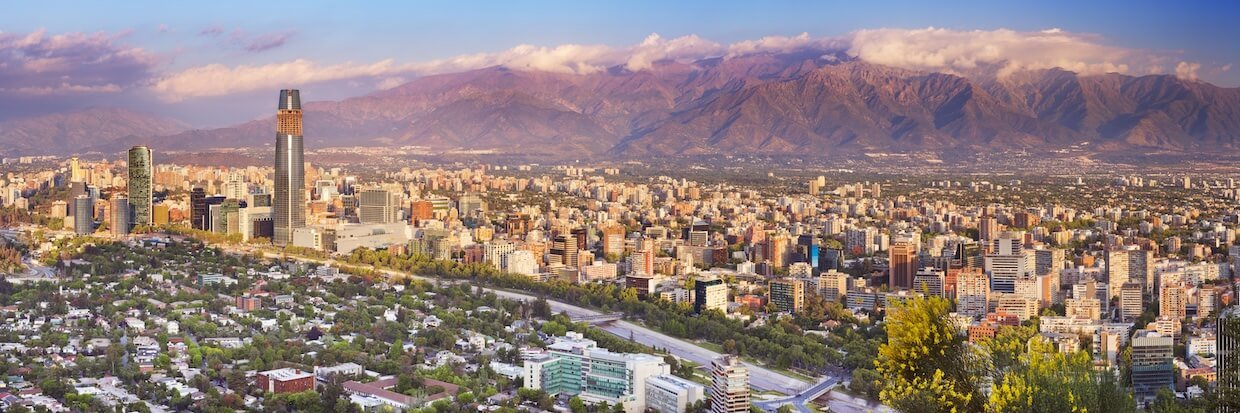
Within the domestic sphere, the favorable sub-dimensions include the strong leadership figure of Kast, the positive macroeconomic trajectory, parliamentary consent, the cohesion of the governing party, the fragmentation of the opposition, and low citizen expectations. Conversely, the primary challenges are:
– The temptation of “fast money,” or presenting immediate success, by falling back in traditional patterns.
– Mal de Altura, or “Altitude Sickness” – the risk of institutional hubris and detachment of Kast’s team from political reality.
– The “internal enemy” – the danger of fracturing within the governing coalition.
– Fiscal tightness – the narrow margin for maneuver in public spending.
– Sustainability versus resilience: the volatile capacity to integrate structural reforms to prevent systemic shocks with a normative long-term program of systemic change.
Humble Momentum or A Calculated Reset
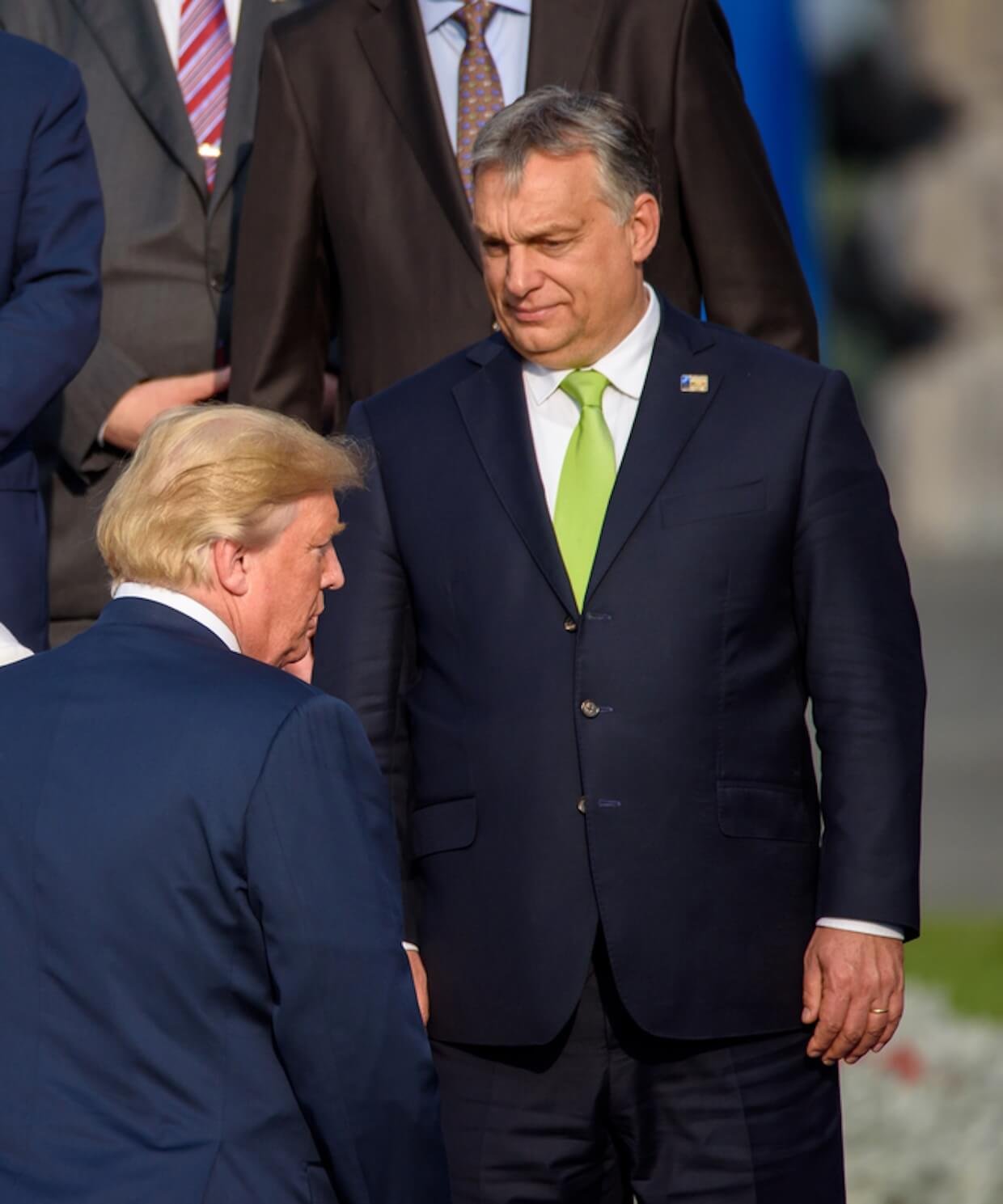
Before his victory, many regarded Chile’s new President José Antonio Kast as “the OutKast Candidate.” During the 2025 election campaign, substantial parts of the population said they could never vote for him (Molina, 2021) due to Kast’s “strong” and often populist rightist stance on an array of public matters and his much-disputed mediatic and personal proximity to right-wing leaders in Latin America (Navia, 2026). Since his election in November 2025, Kast has immediately started doing everything to change this perception in his favor.
The signal term “momentum” has been widely used in Chilean media to refer to the specific set of conditions that, together with his change of course regarding his affiliations, ideological fervor, and ability to compromise, could facilitate a successful mandate. Conversely, the buzzword “oasis illusion” has been used effectively in the Chilean public debate to allude to the possibility that these favorable conditions are merely a mirage, echoing the late President Sebastián Piñera’s famous assertion that Chile was an “oasis of progress” in Latin America, a statement that vanished immediately with the social unrest of October 18, 2019 and, by turning into its opposite, badly damaged Piñera by making him an easy-to-target laughing stock, and with him Chile, for the rest of his term (Cooperativo, 2019).
Candidate Kast: Scaling Back Promises and Lowering Expectations
While a biographical analysis of Kast is beyond the scope of this article, it is essential to acknowledge the initial governing conditions of the president-elect versus those of the preceding right-wing administration in Chile. The implementation of Kast’s strategic campaign during the presidential runoff pointed to the design of a moderate strategy that aimed at lowering expectations and was reflected in his straightforward, modest, and consciously humble victory speech (Guzmán, 2025). The challenge for Kast lies in the disciplined execution of this reserved and downplaying attitude in practice. Restraining his verbal and behavioral impulses will be a critical variable throughout his presidency, something that was not always sufficiently considered, as the case of Sebastián Piñera (1949–2024) showed.
Indeed, high expectations were placed on Piñera, president of Chile from 2010 to 2014 and for a second time from 2018 to 2022, due to his perceived intellectual and managerial capacities. However, his slogan-promise of tiempos mejores(“Better Times”) created a burden of expectations that ultimately hindered his administration to succeed (DF, 2010). Furthermore, an adverse international economic cycle and deep-seated public issues of uncertainty and insecurity—which were unlikely to be resolved through the superficial measures typical of his mandate characterized by big but unrealistic visions—eroded his credibility as an economic engine and political reformer not only one time, but twice.
In contrast, intellectual expectations regarding José Antonio Kast are more modest, and his executive capacity remains untested (Gómez, 2025). Consequently, his public focus on a streamlined “emergency government” targeted at specific issues rather than a broad spectrum of national problems appears strategically sound. His focus on practically restoring security and economic growth step by step and without grand narratives places him in a favorable position compared to Piñera, as the threshold for success is lower.
Chile’s Economy: Upward Trends and Positive External Factors
The economic cycle supports the hypothesis of a favorable momentum. Chile’s Central Bank projects growth of up to 3% for Kast’s first year (Troncoso R., 2025), and the financial and trade tailwinds typically generated by right-wing administrations in public psychology could allow the government to exceed these targets without the need for structural reforms, thereby claiming economic success to carry on. Unlike Piñera, Kast’s lack of private business ties reduces political friction within certain sectors of the nation’s business elite, potentially also fostering bigger private investment (Emol, 2024).
Furthermore, favorable copper prices, improved terms of regional trade, and the finalization of the Codelco-SQM agreement – alongside other public-private partnerships initially rejected by Kast’s advisors but initiated by the current administration – may provide leverage for his economic management (Nogales, 2025). Paradoxically, with all this just as Piñera’s actions paved the way for Boric, the Boric administration 2022-2026 has been establishing socio-economic conditions that may benefit Kast.
In addition, the positive momentum that characterizes the onset of the José Antonio Kast administration consists in the fact that Chile presents a scenario of monetary stabilization unprecedented in the last five years. At the end of 2025, inflation reached its lowest level in half a decade, dropping below the 3% threshold for the first time since 2021. This phenomenon positions Chile as a regional benchmark for price control within Latin America, validating the Central Bank’s projections that anticipated a consolidated convergence toward the 3% target during the first half of 2026 and beyond (Vega & Alonso, 2026). This environment of low inflationary pressure acts as a catalyst for Kast’s “emergency government,” allowing for an initial margin of maneuver that favors private investment and reduces doubts in domestic consumption.
However, from the prism of economic realism this “oasis” of apparent internal stability faces a threat from exogenous factors derived from the geopolitical volatility in the Middle East which is probably not going to end soon. The outbreak of military conflict in Iran and the resulting instability in the Strait of Hormuz emerge as primary systemic risks that could dismantle the new administration’s fiscal planning well beyond its end (Laborde, 2026). The rise in international oil prices not only pressures Chile’s logistical cost structure but also acts as an “imported tax” that could rapidly erode the inflationary gains achieved in 2025. For Kast’s economic team led by Jorge Quiroz, the ability to contain this spiral of external costs without compromising the US$6 billion fiscal austerity pillar gained by the government’s replenishment into its sovereign wealth funds destined to strengthen its fiscal buffers will define whether the economic cycle of Kast’s starting phase will result as a sustainable impulse or merely a transitory reprieve in the face of a more difficult global supply system, ridden by the uncertainties of re-globalization (Benedikter, 2021) and its “levelling out” of structured differences in favor of a more complex and chaotic multipolarity (O’Sullivan, 2019).
Chile’s Political Perspective: Congressional Fragmentation and Project Alignment
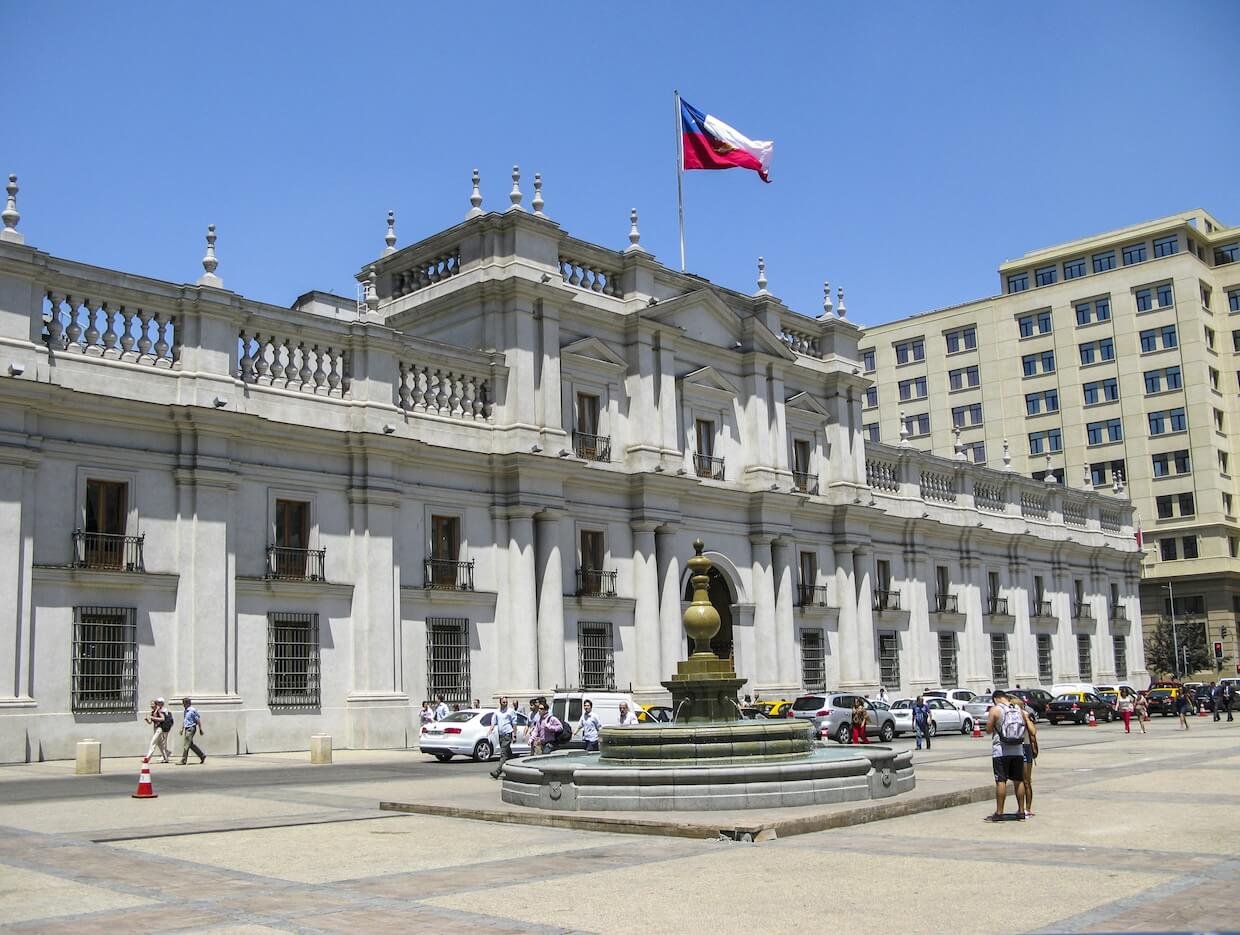
With regard to Chile’s internal political balance of power between the camps President Kast faces a fragmented Congress without a clear majority in either the Senate or the Chamber of Deputies (Ex-Ante, 2025). The lower house exhibits atomization combined with individualized “caudillismo,” which erodes party discipline and heightens tensions within coalitions.
Against this backdrop generally favorable for “strong government,” if Kast’s administration achieves economic growth and reduces crime it will likely align legislators around its basic projects stably until the next elections. However, there is no institutional mandate for this government to pass major reforms rapidly. Unlike the second Bachelet administration 2014-2018 (Emol, 2013), where a clear and unified parliamentary majority created high expectations for structural change, Kast faces no such pressure because of internal political “individualization” (Benedikter & Zlosilo, 2017). His “grounded” impulse for step-by-step reform and development responds to this situation and is, as a consequence, closely tied to his personal profile, which helps to diminish general expectations regarding his government even among parlamentarians.
At the same time, Kast’s administration commences its mandate with a significant institutional advantage, having secured the presidencies of both the Chamber of Deputies and the Senate. This achievement was a result of exceptionally narrow voting margins, particularly in the lower house, where the government coalition managed a last-minute victory over the leftist candidate. The strategic control of the legislative leadership provides the executive with a critical starting advantage, potentially mitigating the risks of parliamentary obstructionism and allowing for a more streamlined management of the “emergency government” legislative agenda. The more important it will be for Kast to try to maintain this advantage throughout his full four-year charge.
Seen from the lens of institutional realism, the election of Paulina Núñez (RN) as President of the Senate and Jorge Alessandri (UDI) as President of the Chamber of Deputies represents a strategic consolidation of parliamentary power for the governing coalition (Olguín, 2026). These victories, secured through cross-party negotiations that displaced opposition candidates, grant Kast’s executive unprecedented control over the political processes in both chambers. This mitigates the risk of repeating the usual Chilean parliamentary dispersion of energies, if the situation is wisely administrated over time.
The Governing Republican Party: The Advantage of Inexperience?
A notable difference from Piñera’s second term is that Kast’s power stems not from the old avant-gardes, but from newly formed parties. This reduces the immediate pressure to display a pre-established, highly qualified bureaucratic corps. While Piñera’s “Government of the Best” slogan created counterproductive expectations, Kast’s status as a newcomer to power provides a relative advantage in terms of initial performance pressure, a luxury his predecessor Gabriel Boric did not have. This allows for a strategic blend of new faces with a vocation for public service with experienced former officials from the Piñera administration. Furthermore, Kast possesses greater maneuvering room in appointments compared to Piñera, who was constrained by the “cuoteo” (political quota system) within the Chile Vamos coalition. The inclusion of political outsiders willing to contribute to Kast’s overall performance could lead to more efficient and more broadly backed state management, which was a core campaign promise of the Kast team (Stevenson Flaño, 2025).
The Opposition: Post-defeat Debilitation
During the first half of Kast’s mandate, the opposition needs time to recover from its severe electoral defeat, which further favors the government’s prospects. Opposition party leaders, particularly within the Frente Amplio, have shown limited self-criticism following the Chilean left’s most significant electoral setback since the transition to democracy. This lack of introspection increases the likelihood of repeating the error of “maximalist” visions and “refoundational” dreams, thus potentially opening a path for the political right to secure two consecutive terms (Fuentes, 2025). The opposition presents itself as a bloc devoid of a common narrative or leadership capable of articulating a coherent alternative, thereby facilitating the consolidation of the Republican Party administration. Its disarticulation, exacerbated by the exceptional magnitude of the previous electoral defeat, allows Kast’s executive to advance its structural reforms with diminished parliamentary resistance. Consequently, the inherent inexperience of the new governing coalition is transformed into a tactical advantage against an adversary whose elites are still present and have yet to process their departure from power.
In sum, while the opposition lacks individual and programmatic strength, Kast’s success will hinge on his ability to avoid offering it “easy targets” through unforced errors or incendiary rhetoric that could serve as catalysts for a new leftist unity. In this sense, the challenge for the ruling coalition lies in capitalizing on this parliamentary “grace period” to institutionalize its changes before the opposition manages to reconfigure with new faces, preventing the risk that the current power vacuum on the left devolves into a false sense of security of La Moneda. Nevertheless, the emergence of a potent and charismatic opposition leader capable of unifying the opposition remains unlikely in a context of eroded leadership and repeated corruption scandals which have undermined public trust in the established leftist political actors.
Social Mobilization: The Public’s Aversion to Chaos
A final element of momentum for Kast is the still lingering societal impact of the 2019 unrest. Public opinion regarding “Octubrismo,” i.e. the systemic disruption caused by the Estallido Social (Social Outburst) that began in October 2019 and represented a massive protest movement against inequality and the established political order, is largely negative (T13, 2025); citizens remember the disruption of daily life, such as the destruction of metro stations and increased commuting times. This collective memory of excess and violence may isolate the continuing protest calls against Kast from communist sectors (Cooperativa, 2025), especially given the leftist’s Frente Amplio’s unproven capacity for territorial mobilization.
Instead of mass mobilization against an acting government, sociologist Roberto Méndez, founder of the UC Bicentennial Survey, describes a Chilean society marked by a profound structural pessimism that challenges the stability of any new political cycle (Mascaro, 2026). Méndez argues that citizen’s expectations regarding social mobility signal the perception of a stalled “social elevator” which not only erodes fundamental trust in institutions but also distorts the perception of the very foundation of the social contract, casting doubt on the concept of meritocracy. Méndez’ diagnosis aligns with our “the illusion of oasis” risk perception, since he warns that while an electoral momentum for Kast exists, it coexists with a long accumulated frustration that could devolve into chronic disaffection if the Kast administration fails to restore a sense of tangible progress in people’s daily lives.
Taken together, this means that the social mobility crisis acts as a factor of fragility that requires extremely precise management of expectations to prevent public pessimism from translating into a new wave of social unrest. For Méndez, the success of the Kast administration will not depend solely on favorable macroeconomic indicators, but on its ability to offer a narrative of resilience and security that resonates with a population that feels stagnant (Mascaro, 2026). Thus, Kast’s governability is predicated on his capacity to reactivate expectations of individual development within a social environment that, following the 2019 crisis, remains skeptical of promises of “better times.”
Psychological Risks: “Altitude Sickness” or Governing Hubris
A psychological risk which has taken many victims in the past of Chilean politics potentially involving Kast’s inner circle is suffering from “altitude sickness.” There is a chronic potential of Latin American seconds in command for verbal or behavioral gaffes following their ascent to power. Given that many of Kast’s votes are fragile, any such expletives could have a disproportionately negative impact. Viral symbolic phrases like “wake up earlier” or “buy flowers” (Jara, 2019), which wantedly or unwantedly plagued the Piñera administration, remain a latent threat.
In fact, some of such easy-to-exploit phrases have already been issued by members of the new government and have generated tensions. For example, the Minister of Housing and Urbanism, Iván Poduje, was the protagonist of a tense public exchange during a seminar titled “In times of resilience and reconstruction.” In this instance he addressed the progress of the reconstruction works in the city of Viña del Mar following the devastating 2024 fires. In his speech, the architect stated that there were paralyzed works in the region caused by environmental activism. In his presentation, the minister literally stated: “The works are paralyzed by environmental activism, environmental fanatics in the government who have stopped housing reconstruction because they found a tree. We have a Cancer Hospital which was stopped for 18 months because they found a nest of field mice,” (PubliMetro, 2026).
Furthermore, he announced that the government led by José Antonio Kast will promote a substantive reform of the National Monuments Council, an institution that, as he indicated, keeps projects halted due to archaeological findings. Poduje’s aggressive remarks alienated large parts of the – already not many – young voters of the Kast administration and set an example of negative discourse about long-term progressive issues like sustainability and climate change, which Kast aimed to avoid at any cost by concentrating on a decisively positive discourse of progression and balanced vision.
Good Governance versus the Rhetoric of An “Internal Enemy”
Significant risks also emerge from potential allies. Chile Vamos, as the center-right coalition accustomed to lead since 2015, may perceive a successful “new” Kast government as a threat to its own survival. Simultaneously, “libertarian” sectors in Kast’s environment might engage in rhetorical excesses that increase social tension and jeopardize governability. The hypothetical appointment of figures such as Johannes Kaiser illustrates the risk of communication errors that could alienate centrist voters (Rosas & Latorre, 2025). To mitigate this, Kast could avoid Piñera’s hyper-presidentialism and instead utilize cabinet members as “fuses” to absorb political fallout.
The fact that right-wing deputy Johannes Kaiser ruled out joining the cabinet or the group of undersecretaries of the Kast administration because his party, the National Libertarian Party (PNL), was not to be treated as a “third category force,” pointed to the dangers of a fragile executive (T13, 2026). By opting to remain a simple deputy, Kaiser positioned himself as a facilitator for the advancement of Kast’s agenda within a highly fragmented and atomized Congress, where the management of “caudillismo” will remain critical. Kaiser’s decision mitigates the risk of introducing controversial figures directly into the state apparatus—something that could intensify “internal enemy” rhetoric—and ultimately worked in favor of Kast’s political stability.
Fiscal Expenditure Challenges

On the financial front, Kast’s promises to reduce public spending could generate conflict both within the civil service and on the streets (Pardo, 2025). Although public employees possess limited capacity for large-scale self-mobilization, they may nonetheless undermine service delivery, thereby negatively affecting citizens’ perceptions of the government’s administrative competence. To mitigate such risks, Kast’s administration will need to moderate its anti-public servant rhetoric (Laborde, 2025), which could otherwise become a catalyst for broader mobilization against his government.
Intervention-wise, Kast began his term with a package of economic shock measures centered on austerity and the mitigation of external risks, most notably reflected in Finance Minister Jorge Quiroz’s announcement of an official directive to cut public spending by US$4 billion (San Juan, 2026). This cut, which represents approximately 3% of the budget across all ministries, is intended to achieve the fiscal savings target of US$6 billion within an 18-month period—a central pillar of Kast’s state-efficiency strategy aimed at substantially reducing the waste of public funds.
Simultaneously, the executive has convened emergency meetings to address the international rise in oil prices derived from the 2026 Iran conflict, attempting to contain an imported inflation that threatens the purchasing power of the middle class and the viability of medium-term financial planning. Chile is hit hard by any fluctuation of oil prices since it imports most of its fuel, and has therefore created its Mecanismo de Estabilización de Precios de los Combustibles (Fuel Price Stabilization Mechanism, MEPCO) as a government-run instrument in 2014 (Law Nº 20.765) to reduce the volatility of domestic fuel prices caused by fluctuations in international oil markets. Yet, given Kast’s austerity measures, opposition senators have raised concerns about the continuity of the MEPCO mechanism, questioning whether the government’s liberal orthodoxy will permit rising fuel costs to be passed on to consumers or whether more pragmatic interventions will be adopted to avoid social unrest (Cisternas, 2026).
Sustainability and Related Public Policy Communication
One often underestimated or even forgotten, yet crucial, aspect of the overall picture is that Kast’s and Chile’s prospects are closely tied to the UN’s Sustainability Agenda 2030, which is scheduled to be formally completed in 2030, when Kast’s mandate will end. Chile faces environmental degradation and water-related problems due to climate change, posing a threat to agriculture, mining, energy production, and social cohesion. Therefore, intelligent and well-communicated sustainability measures will play an important role in shaping public perceptions of Kast’s government. Chile’s progress regarding the SDGs has been steady but uneven since 2015 (Sustainable Development Report, n.d.). Although the inclusion of systemic sustainability in the reform of the national constitution failed, international data indicate that since 2015 there has been notable progress particularly in SDGs 1 (poverty reduction), 7 and 9 (access to energy and infrastructure), and 16 (institutional effectiveness) (Benedikter & Zlosilo, 2022).
On the other hand, the—particularly from the perspective of the middle class, even more pressing—need to tackle SDGs 10 (inequality), 13 (climate adaptation and water security), 15 (biodiversity and land use), and 11 (urban sustainability) has partly or largely failed or stagnated. There is a risk that further delays will aggravate these problems and negatively affect the country’s overall resilience outlook. There is a risk that further delays will aggravate these problems and undermine the country’s overall resilience outlook. At the same time, this situation offers considerable room for progress in sustainability and resilience, which Kast could use to his advantage by presenting himself as a rational and “green” “conservative-progressive” where it truly matters—somewhat akin to Arnold Schwarzenegger during his tenure as Governor of California (2003–2011).
So far, Kast does not seem to have understood the full importance and political potential of progressive signals in this field. On the contrary, the administration’s commitment to dismantling “permisología” (alleged overregulation) is poised to generate significant friction regarding sustainability among social camps, potentially triggering protracted conflicts with local communities, NGOs, and conservationist associations opposed to developmental projects connected with significant environmental degradation (Troncoso R., 2026). In contrast, Kast’s economic leadership argues that regulatory overreach and permit-related bureaucracy have become primary inhibitors of investment in Chile—a diagnosis shared by large segments of the country’s business elite.
Consequently, Kast’s government intends to implement a coordinated strategy between the Ministries of Finance and Economy to streamline these processes. A pivotal element of this rhetoric has been President Kast’s viral mantra: “Chao guías ambientales, chao ideología” (“Goodbye environmental guidelines, goodbye ideology”). According to regional environmental organizations such as Terram, this phrase encapsulates a campaign narrative that unjustly frames environmental protection as an “extreme ideology” obstructing national economic progress (Terram, 2026). This ideological framing of sustainability policies constitutes a negative cornerstone of the administration’s internal analysis of growth and represents one of its most regressive aspects, since it threatens Chile’s natural environment and runs counter to the logic of balance promised by the president’s “humble momentum” approach.
The designated Minister of Finance, Jorge Quiroz, announced an expedited timeline, summoning the Council of Ministers within the first 45 days of government to resolve investment projects totaling US$12 billion (Pivotes, 2026). These initiatives already possess approved Environmental Qualification Resolutions (RCA) but remain stalled while awaiting executive clearance. To mitigate the risk of judicial paralysis, Quiroz introduced a legislative proposal inspired by the Brazilian model: a system in which judicial appeals in the name of sustainability and nature protection do not inherently halt project development, provided the investor holds a valid RCA.
On his first day in office, President Kast issued a direct mandate to resolve delays within the Environmental Impact Assessment System (SEIA). The administration identified 51 pending procedures linked to investments (Guzmán, 2026). Under the premise that “Chile’s progress requires putting the person at the center,” Kast tasked the Minister of the Environment, Francisca Toledo, with delivering a diagnosis and formal proposal to address unresolved environmental claims. This strategy represents a high-stakes gamble: prioritizing immediate job creation and individual initiative through attracting investment, while navigating the complex waters of environmental resilience and related social legitimacy.
In sum, falling back into outdated habits with regard to sustainability and nature is the exact opposite of what will help Kast over time. As an effect of Kast’s early measures, Chile’s most important green hydrogen-related project, HNH Energy – comprising AustriaEnergy, among others – is paralyzed. If Kast’s government prioritizes traditional extractive projects, such as mining, salmon farming, pulp, and forestry, in order to generate money and visible job creation quickly after taking office, then we might be in for a rude awakening.
“Futures Resilience” Between Chances and Pitfalls
Partly as a result of backward-oriented strategies, the state of the art of global future reports and future projections regarding Chile until 2030 indicates another serious yet underestimated meta-problem of the country. It consists of the lack of specialized futures studies and their proper institutionalization. On the international level, there is broad consensus that national institutes of statistics and planning are increasingly unable to work with “the future” properly since futures—in the plural, not the singular anymore—are accelerating and becoming more complex (UNESCO, 2025). At the same time, futures are playing an increasingly crucial role in “Imaginal Politics” (Bottici, 2014), i.e., those “contextual” politics which are an ever more impactful element within the attention economy (Goldhaber, 1997) that dominates elections in the 21st century.
Therefore, futures thinking is becoming a priority for all globalized (and globalizing) societies (Benedikter, 2025), with Chile lagging dangerously behind. The prospects of the country foreseen by national scientific research (government advisors, think tanks) are still mostly tied to traditional approaches to the future, i.e., planning and forecasting, but lack proper modernization, which consists of foresight and anticipation, i.e., working with futures in the present and the systematic inclusion of AI in public affairs (Benedikter & Cruz-Infante, 2026). For being one of the most advanced economies in the world, Chile is particularly weak with regard to theorizing and institutionalizing contemporary applied futures thinking (Benedikter, 2025), futures science, and transformation design for specific governmental purposes (Benedikter, 2025a).
Therefore, Kast’s innovation task is to systematically embed futures resilience into macroeconomic and sectoral planning, not least by founding and installing respective specialized institutions, which could be, for example, a national “Institute for the Future” of a multi-, inter-, and trans-disciplinary character, including risk prevention studies and futures opportunities reports (Dubai Future Foundation, 2025). A bold modernization of public administration towards anticipation and transformation design could become a beacon of application-oriented progress and a substitute for the half-hearted constitutional reform attempt. Globally integrated anticipation studies in science and education, including the introduction of futures literacy in schools and universities, could produce a strong fallout on national enterprises and governmental research and innovation capacities (UNESCO, nd). If well implemented, they would shine as an example for the rest of Latin America and thereby also attract international excellence. Kast should not underestimate the reputation gain of being perceived as a rational moderate who, originally and as a pioneer in his country’s history, stands for the combination of “futures,” transformation, sustainable development, and applied science. Measuring the impact of this combination after four years could help Kast draw a positive conclusion regarding his tenure, because just the fact of the implementation and practical start of such a combination could be easily sold as a success.
The Second Dimension — Foreign Policy Trajectories and Multipolar Interfaces: Kast’s Options within the Foreseeable Global System Dynamics

The second grand dimension is the foreign policy front. Kast’s foreign policy must consider Chile’s geopolitical positioning, with particular regard to the crucial trajectory of transatlantic relations. Chile’s integration into a re-globalizing international order (Benedikter, 2025b) over the coming years must pass through four critical sub-dimensions:
- The relationship with the United States: focused on economic and security cooperation and the “Shield of the Americas” doctrine.
- The relationship with China: navigating the tensions between trade dependency, resource exploitation and technological decoupling.
- The relationship with Europe as a balancing counterweight to the US and China: leveraging the EU-Chile Advanced Framework Agreement and the EU’s Global Gateway approach which is the European Union’s strategic initiative to mobilize up to €400 billion by 2027 for infrastructure development worldwide, focusing on digital, energy, transport, health, and education sectors.
- Diplomacy with Latin American Presidents: The formation of a regional meta-ideological axis, particularly with the Cono Sur (Latin America’s Southern Cone).
The Task: Seizing the Geopolitical Momentum and Relating It to the Domestic Momentum
Just as with our domestic assessment, the foreign policy landscape presents elements associated with a specific momentum that could catalyze the success of José Antonio Kast’s administration. This momentum is primarily anchored in his proximity to Donald Trump, who, in the view of many Latin American politicians, has emerged as a preeminent global leader, particularly when it comes to concrete action. The relationship with him bolsters a fundamental pillar of Kast’s “emergency government”: the reduction of perceived insecurity through the “Shield of the Americas” initiative launched in March 2026 (Gonzalez, 2026). This regional framework aims to combat narcotrafficking by aligning right-leaning regional presidents as strategic allies of the White House.
The Shield and the Hegemon: Hard Power and Resource Security
The inauguration of José Antonio Kast as Chile’s president marked a strategic shift of the Andean nation toward defensive realism and a preferential alignment with the Trump administration, configuring a new axis for security and resource procurement. Within this sphere, Chile’s integration into the “Anti-Cartel Coalition of the Americas” – a 17-nation alliance authorizing the use of lethal military force against transnational criminal organizations – positions the country as a pivotal operational hub for the “Shield of the Americas” (Castro, 2026).
This commitment not only seeks the neutralization of criminal networks through tactical and technological cooperation with Washington but also restores the relevance of an updated Monroe Doctrine, now called Trump’s Donroe Doctrine, wherein Chile acts as a regional guardian of hemispheric stability against extra-regional influences. Simultaneously, Kast capitalizes on the US imperative for nearshoring and friend-shoring of critical minerals. By signing bilateral agreements on copper, lithium, and rare earths with the US, the administration seeks to displace Chinese hegemony in high-tech supply chains, transforming Chile’s geological comparative advantages into national security assets for the Western bloc. This “active alignment” is further evidenced by the rejection of sensitive Chinese-led infrastructure projects, such as the Hong Kong fiber optic cable project in 2026, following political disputes since 2020.
The Milei Factor: Conservative Libertarian Realism versus the “Chainsaw”
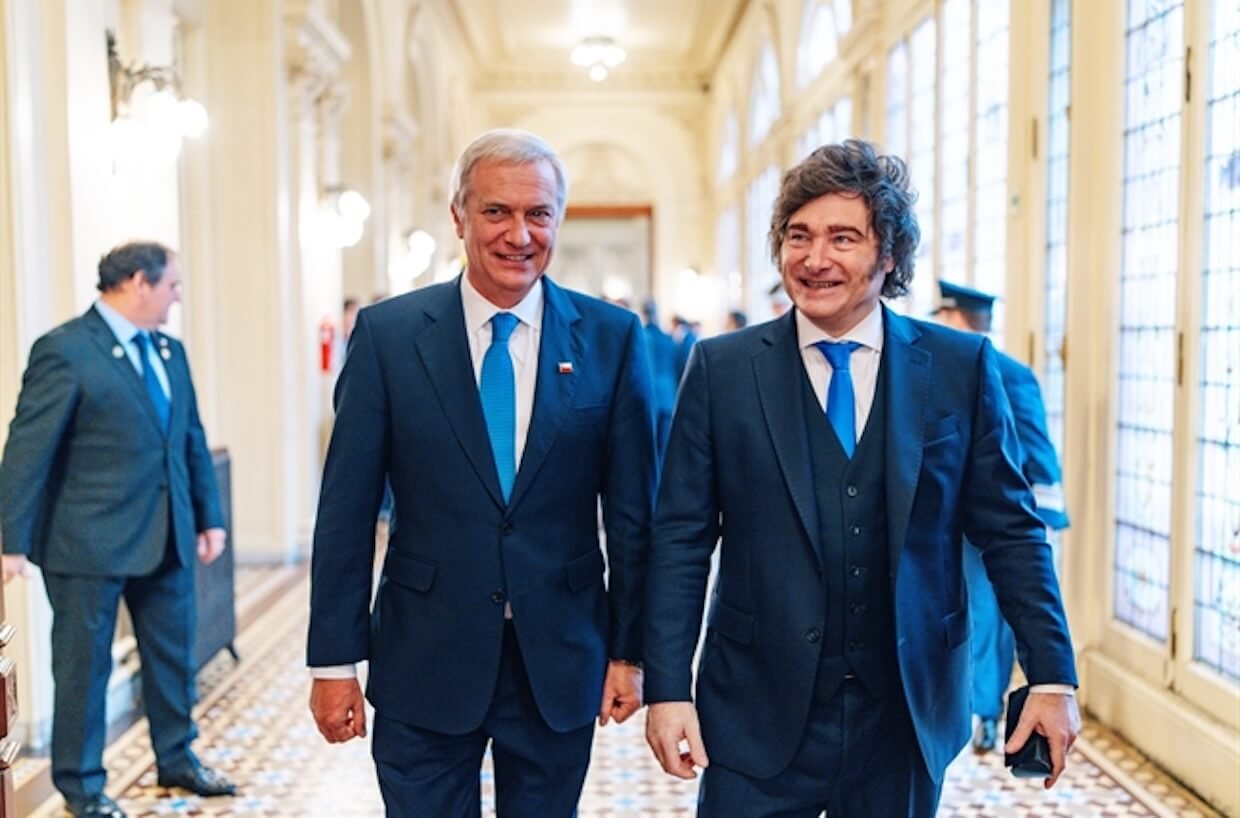
Continentally speaking, the consolidation of an ideological and pragmatic axis between Kast and Javier Milei represents a tectonic shift in Southern Cone geopolitics, moving from fragmented regionalism toward an alliance of “libertarian realism.” This relationship transcends rhetorical affinity by establishing a bilateral roadmap for economic deregulation and transborder security.
However, a critical analytical distinction exists between the two with regard to the method of structural reform. While the Argentine model is defined by the “chainsaw,” an accelerated and disruptive dismantling of the state, Kast has opted for “executive gradualism” or institutional realism. As Kast stated at the ICARE summit, “We do not use chainsaws,” marking a tactical distance that prioritizes fiscal efficiency over organic demolition (Laborde, 2026a). Instead of the chainsaw, under the guidance of Jorge Quiroz, the administration seeks, as mentioned, a US$6 billion spending cut over 18 months while safeguarding social transfers and public service stability. Thus, Chile positions itself as the institutionalized, austere version of the regional right-wing shift, trying to mitigate the risks of social destabilization inherent in extreme shock therapies.
Meloni’s “Third Way”: A Bridge to a New Transatlantic Pact?
Kast’s relationship with Giorgia Meloni represents the consolidation of a “new conservative contract” that seeks to transcend reactive populism in favor of institutional order and identity-based sovereignty. This “tactical shift” toward the Meloni model defines a right-wing policy that is firm on border control and security yet operates with fiscal responsibility and pragmatism within multilateral frameworks.
During their meeting in Rome, collaboration opportunities crystallized around a “hard power” agenda focused on the migratory crisis and prison reform, where Chile seeks to emulate Italian management of external perimeters and high-security penitentiary architecture (Villaseñor, 2026). This alignment also serves as a critical differentiator: the strategy is “less Trump and more Meloni.” It prioritizes a state-based conservatism that recovers institutional authority rather than dismantling it. Furthermore, Meloni acts as a vital bridge to Europe, providing Kast with a platform for international validation and potentially softening the friction between China and the US by presenting a pragmatic, transatlantic alternative for global economic cooperation.
The China Tension: Digital Infrastructure as a Battleground
Among the geopolitical frictions and systemic vulnerabilities is Chile’s strategic decision to tender a subsea fiber optic cable connecting South America to Asia. This has emerged as a critical friction point in the global competition for technological hegemony. Originally intended to link Valparaíso with Hong Kong, the project faced fierce opposition from the Donald Trump administration (Caro, 2026). Washington articulated its rejection based on national security and cyber espionage risks, asserting that the integration of Chinese technology into critical infrastructure compromised data integrity within the Western Hemisphere, which would ultimately also affect the “Shield of the Americas.”
Diplomatic pressure—documented by international outlets such as El País (Sanhueza, 2026) and The Japan Times (Garip & Attwood, 2026)—escalated into direct coercive measures, including the revocation of US visas for high-ranking Chilean officials following the signing of decrees favoring the Asian route. This scenario forced Santiago into a complex exercise of geopolitical balancing. Ultimately, the Chilean government opted for the alternative “Humboldt” project via Australia. This was a move interpreted by Chinese analysts as a strategic concession to US security demands at the expense of a more direct route to China. This episode illustrates the “strategic autonomy dilemma”: the difficulty for middle-income nations like Chile to maintain commercial neutrality with Beijing while preserving security alignments with the US, setting a precedent for how digital infrastructure redefines 21st-century spheres of influence, thus playing into the “Donroe Doctrine.”
Oil Price Increase and the Fundamental Paradox of Neo-Conservatism
The outbreak of military conflict in Iran has precipitated a supply crisis that presents José Antonio Kast’s administration with a premature “trial by fire,” threatening the viability of his austerity-based social contract. The sustained rise in oil prices, exacerbated by instability in the Strait of Hormuz, has forced Finance Minister Jorge Quiroz into anticipated “crisis mode” even before completing his first quarter in office (Laborde, 2026). The upward pressure on fuel prices not only erodes the purchasing power of the middle class, the key electoral base for the Republican Party, but also disrupts the fiscal planning of the government.
For Chile, this risk transcends accounting to become a fundamental challenge to governance and internal security. The lack of robust financial stabilization mechanisms, following the depletion of fiscal buffers by previous administrations, places Kast at a crossroads between libertarian orthodoxy and the pragmatic necessity of state intervention to prevent social unrest (Guzmán, 2026a). Implementing emergency subsidies would require postponing tax reforms and spending reductions, thereby weakening the self-reliance and entrepreneurial pillar that defines Kast’s political identity. Consequently, the war in the Middle East acts as an amplifier of fragility, exposing Chile’s foreign energy dependency as the Achilles’ heel of a project that aspires to sovereignty but remains highly exposed to global resource disruptions – which is one of the fundamental paradoxes that the new libertarian conservatism around the world faces in the era of re-globalization (Benedikter, 2022). It is the paradox that, in the 21st century, autonomy needs interdependence, and connectivity needs sovereignty – an equation which most right-wing governments have not yet properly understood, including the Trump administration, while the European conservative faction around Meloni in this regard seems to be a step further.
In reality, the highly dynamic paradox of autonomy-interconnectivity and sovereignty-interdependency constitutes the central founding challenge for every progression toward “balanced conservatism” in the first half of the century. Given the geopolitical situation, it is one of the most important arguments for why a new Atlanticism is necessary for countries like Chile: because the US under Trump is incapable of integrating both parts of the equation, while European leaders seem to be paving the way for it, although in imperfect ways that must be adapted by Latin American nations, as always in international relations.
Connecting the Dots: The Importance of Post-Populist Ideological Balance and the Need for a New Transatlanticism
In all these regards, in the coming years the EU-MERCOSUR Agreement might play a role, perhaps an even more significant one than expected (Bonini, 2025). Chile is not a full member of the Mercado Común del Sur, or MERCOSUR (the Southern Common Market), i.e. the South American free trade zone established in 1991, but only an associate member (estado asociado). This means that it has free trade agreements with the MERCOSUR bloc and participates in meetings, but it is not a full member of the bloc like Argentina, Brazil, Paraguay, Uruguay, or Bolivia. So, will the long-disputed (Infante & Benedikter, 2023), but eventually epochal, EU-MERCOSUR agreement affect Chile, and if so, how?
Yes, indirectly – economically, and even more so politically. Transatlanticism, put into economic terms, may become the most significant moderating factor for Chile in the coming years, irrespective of whether the Kast administration actively promotes it or not. Since 2024, Chile has had a fresh, modern free trade agreement with the EU, the Advanced Framework Agreement, which is already a strong tie. Almost all tariffs have been eliminated, and there are strong incentives for sustainability and investment. Once the full effects of the EU-MERCOSUR agreement, signed on January 17, 2026, in Paraguay, come to the fore, the MERCOSUR countries will have similar access to the EU as Chile already has.
This means tougher competition for Chilean exports in the EU (e.g. wine, fruit, copper, salmon), because particularly Brazil and Argentina could offer cheaper prices. But Chile remains at a clear advantage in trade within South America, and as an associate member of MERCOSUR it continues to enjoy free trade with the bloc, which in toto will strengthen its ties with Europe. This will inevitably trigger a growing impact of EU ways of government and social development all over the geopolitical area, which could be a positive signal for the regional populations.
In short: Chile will face a bit more competition in Europe, but the Kast government could benefit from the popular perception of a more European-leaning and thus more rule-based, greener, and more participatory-oriented administration. Many even see the “European connection” as an incentive for the region as a whole to become more attractive – exactly at a time when expansive Trumpism is sweeping in from the North.
Therefore, reviving Transatlanticism can be key to new forms of more enduring government in Chile amidst the ongoing process of global reorientation – during the Kast term, and beyond. It is here that Kast’s need to credibly overcome his rightist and populist reputation returns to the fore. Europe is historically and socially adverse to “strong” rightist positions. Kast’s “natural” affinity with Argentinian far-right president Javier Milei (Castro, 2025), to whom he symbolically traveled on his first foreign visit after his election, stands in contrast to his distance from Brazilian leftist president Luiz Inácio Lula da Silva. Instead, Kast has participated in activities with former rightist president of Brazil Jair Bolsonaro and has criticized his legal conviction (Fuentes, S., 2025). Therefore, to the extent that the Argentine president acts as the promoter of Kast’s integration into what is perceived as the middle ground of contemporary Latin American state leadership, Kast will have to ponder his new proximity to a more European flavor of Latin American policymaking with caution and intelligence.
Reforging Ties with the UN System
In all this, reforging ties with the United Nations system can be a welcome asset, since the UN and Europe have probably the closest ties when it comes to envision a sustainable and balanced societal future in today’s rapidly changing world. This is valid especially for the UN’s educational, scientific and cultural organization UNESCO. Kast should not forget that Chile has been one of the few countries which has actively incorporated elements related to UNESCO conventions and mandates into its legal framework, primarily through the ratification of treaties that hold high authority, often interpreted in conjunction with the nation’s 1980 Constitution (revised 2021). Key UNESCO-related elements included in Chile’s legal framework are the
- Protection of Cultural Property (1970 UNESCO Convention): Chile ratified this convention in 2014, assuming a commitment to implement legislative measures to prevent illicit import, export, and transfer of cultural property. This includes specific commitments to protect cultural heritage and prevent looting, as evidenced by agreements on archaeological materials.
- Intangible Cultural Heritage: Chile actively works on safeguarding its living heritage, with elements such as the “Baile Chino” (2014) inscribed on the UNESCO Representative List.
- Right to Education: The 1980 Constitution (revised in 2021) guarantees the right to education, which is a core principle mandated by UNESCO.
- Human Rights Treaties Hierarchy: The Supreme Court of Chile has interpreted that, under Article 5(2) of the Constitution, international human rights treaties ratified by Chile (which can include education and cultural rights promoted by UNESCO) have the same hierarchy as the constitution itself.
- Cultural and Creative Initiatives: Chile participates in the UNESCO Creative Cities network, with Valparaíso recognized in the Music category.
- These elements are often integrated into national legislation through decrees from the Ministry of Foreign Affairs or the Ministry of Cultures, Arts and Heritage.
Summary and Outlook
For Kast, as for any president in his first term, the questions to address are many. Kast has been associated with Latin American rightist and populist leaders but needs integration into and support from the moderate international community, especially Europe and UNESCO, to find the “right balance” both domestically and in foreign policy. As a consequence, one of his crucial challenges is to credibly overcome his populist reputation by positioning himself in the middle ground of rational center-conservative politics, integrating progressive elements such as offensives in sustainability and futures, located at the interface of the global and the local, and strengthening relations with Europe and UNESCO – both of which have already been present in Chile’s public debate for a long time – while not neglecting the pressure from its Northern companion, Trump. The step-by-step realization of Kast’s strategy of “humble momentum” will be crucial to avoid the temptations of the “illusion of oasis.” Kast’s destiny will depend on the respective learning capacity of his team, which requires a conscious revival of Atlanticism for the reasons of ideological balancing and the practical use of the EU’s new instruments of transcontinental cooperation.
In all this, three key questions will define the future of Kast’s administration:
- Which version of Kast will govern: the hard-core or the moderate one?
- Will he be able to discipline his inner circle and integrate non-ideological outsiders into key positions, which could help to get rid of populism both reputation-wise and in practice?
- To which extent can Kast mobilize the Transatlantic and the UNESCO bridge to put more moderate, participatory and sustainable policies in place and increment a balanced futurism in institutionalized ways, for example by making Chile a global beacon of “Sustainable Futures Science” (Benedikter, 2025a) and “Futures Literacy” (Miller, 2018), thus making the process of shaping the future a social movement (Baumgartner and Hechensteiner, 2022) and leaving his mark beyond his charge and satisfying the moderate center-part of his votership?
If so, Kast’s opportunity lies in self-restraint in order to overcome his reputation as the “OutKast” right-wing populist. By integrating sustainability and futures into his arsenal, he could reshape the “Imaginal Politics” that surround him. Governing quietly, avoiding provocation, and delivering modest but tangible improvements could allow Kast to leave office in 2030, i.e. at the formal end of the UN Agenda for Sustainability, having stabilized Chile, even without pretending to have solved its most fundamental long-term issues.
The Italian administration of Giorgia Meloni, in charge since October 22, 2022, the third longest-serving government in post-war Italy, was initially considered, like Kast, as clinging to “strong” rightist and populist positions (Bruno, 2025). Yet it has shown that publicly decoupling ideology from pragmatic day-to-day problem-solving and continuity, while remaining silent on divisive matters and overly grand visions, can work to publicly mainstream former rightists toward the center.
The key is to choose moderate policies without much rhetoric while pursuing practical goals with continuity, constantly seeking balance. Most probably, this is not the ideal or explicit, but rather a manageable and implicit model for Kast to follow. On the exact ways of making it his own, and thereby ultimately overcoming populism for a more serious conservatism that can last, a good part of the future of democracy in Chile will rely (Benedikter et al., 2021). Perhaps even the recent evolution of the rapidly declining relationship between Meloni and Trump, against the backdrop of their serious dispute over the Catholic Pope in April 2026, might hold some lessons for the Catholic Kast for the years to come.
(*) Miguel Zlosilo, MA, is the former director of communication of public policies for the President of Chile (Sebastián Piñera Echenique) at the presidential residence La Moneda. He is the Co-Founder of Artool, a market and data strategy communication enterprise in Santiago de Chile.
(**) Roland Benedikter, UNESCO Chair, Dr. phil., Dr. rer. pol, is Co-Head of the Center for Advanced Studies of The European Academy of Bolzano / Eurac Research, Italy, UNESCO Chair in Interdisciplinary Anticipation & Global-Local Transformation, former advisor of the German Federal and US Governments and full member of the European Academy of Sciences and Arts. Linkedin: www.linkedin.com/in/roland-benedikter-8341922a9, Google Scholar: https://scholar.google.it/citations?user=mOee1ZcAAAAJ&hl=en, ORCID: https://orcid.org/0000-0002-7977-7052, Research Gate: https://www.researchgate.net/profile/Roland-Benedikter.
Corresponding author: Roland Benedikter. Email: roland.benedikter@eurac.edu.
Statements
There were and are no ethically relevant aspects in the making of this article to be considered. No human or animal studies were carried out, and there is no informed consent needed. There are no conflicts of interests or incompatibilities to report. This research received no funding, and the authors have no financial or non-financial interests.
References
Aliende, José & Romero-Tarin, Adela. (2026). “The New International Political Context and the Relationship Between the European Union and Latin America.” In: Public Policy and Research in Latin America, (pp.115-125) 10.1007/978-3-031-90649-7_6.
Baumgartner, Barbara and Hechensteiner, Sigrid. (2022). “Shaping the future must be a social movement.” Eurac. 24 October 2022. https://www.eurac.edu/en/magazine/zukunft-zu-gestalten-muss-eine-gesellschaftliche-bewegung-sein
Benedikter, Roland and Siepmann, Katja. (2015). Chile in Transition: Prospects and Challenges for Latin America’s Forerunner of Development. Springer.
Benedikter, Roland and Zlosilo, Miguel. (2017). “Chile’s 2017 presidential election: evaluating the second Bachelet government.” LSE Blogs. November 18, 2017 https://blogs.lse.ac.uk/latamcaribbean/2017/11/18/chiles-2017-presidential-election-evaluating-the-second-bachelet-government/
Benedikter, Roland. (2021). “What is Re-Globalization?” New Global Studies, 2021-04, Vol.15 (1), p.73-84. DOI: 10.1515/ngs-2020-0051
Benedikter, Roland; Infante, Carlos Cruz & Zlosilo, Miguel. (2021): “The Future of
Democracy in Chile.” Challenge, DOI: 10.1080/05775132.2021.1881294
Benedikter, Roland. (2022). “Re-Globalization – Aspects of a Heuristic Umbrella Term Trying to Encompass Contemporary Change – An Introductory Overview.” In: Re-Globalization. Routledge
Benedikter, Roland & Zlosilo, Miguel. (2022). “The Chilean Pendulum: Perspectives after Chile’s Constitutional Referendum.” 13 September 2022. https://blogs.eui.eu/latin-american-working-group/the-chilean-pendulum-perspectives-after-chiles-constitutional-referendum
Benedikter, R. (2025). “Futures thinking becomes a priority for all globalized societies.” Discov glob soc 3, 7 https://doi.org/10.1007/s44282-024-00128-7
Benedikter, R. (2025a). “What is transformation design? Applying transdisciplinarity to govern change.” Humanit Soc Sci Commun. 12, 1869. https://doi.org/10.1057/s41599-025-05640-y
Benedikter, Roland. (2025b). “Re-Globalization, Whereto? A Summary and Outlook of Six Years of Reglobalization, 2019–2025.” December 2025. https://globalejournal.org/global-e/december-2025/reglobalization-whereto-summary-and-outlook-six-years-reglobalization-2019
Benedikter, R. & Cruz-Infante, C. (2026). “AI in Latin America: Attempts of regulating Artificial Intelligence within the geopolitical paradigm of Active Non-Alignment (ANA). A critical review.” J Transatl Stud, 24, 11. https://doi.org/10.1057/s42738-026-00156-y
Berg, Ryan C.; Hernandez-Roy, Christopher; Hu Jessie and Ziemer, Henry. (2025).
“Hearts, Minds, and Uniforms: New Data Reveals China and Russia’s Growing Military Diplomacy Footprint in Latin America and the Caribbean.” CSIS. September 22, 2025. https://www.csis.org/analysis/hearts-minds-and-uniforms#:~:text=Russia’s%20sponsorship%20of%20the%20International,of%20Pichincha%20earlier%20this%20year.
Bonini, Emanuele. (2025). “Signing of the Mercosur trade agreement slips to January; Meloni also on board.” EU News.19 December 2025. https://www.eunews.it/en/2025/12/19/signing-of-the-mercosur-trade-agreement-slips-to-january-meloni-also-on-board/
Bottici, Chiara. (2014). Imaginal Politics – Images Beyond Imagination and the Imaginary. Columbia University Press.
Bruno, V. A. (2025). “Meloni government’s strategic narratives vis-à-vis global financial markets: on the path of economic sovereignism?” European Politics and Society, 26(3), 661–679. https://doi.org/10.1080/23745118.2024.2389938
Caro, Isabel. (2026). “El cable chino de fibra óptica que rompió la transición de gobierno entre Boric y Kast en Chile (y por el que EE.UU. sancionó a funcionarios del país).” BBC News Mundo. 4 marzo 2026. https://www.bbc.com/mundo/articles/c8d554v943lo
Castro, Maolis. (2026). “Kast estrecha lazos con Trump y apoya su política exterior.” El Pais. March 8, 2026. https://elpais.com/chile/2026-03-08/kast-estrecha-lazos-con-trump-y-apoya-su-politica-exterior.html
Castro, Manuela. (2025). “Kast visita a Milei en Argentina en su primer viaje tras ser elegido presidente de Chile. ¿Qué significa?” CNN en Español. 16 de diciembre de 2025. https://cnnespanol.cnn.com/2025/12/16/latinoamerica/chile-argentina-kast-milei-orix
Cisternas, María Luisa. (2026). “Senadores de oposición acusan que Gobierno ‘insinúa’ eliminar el Mepco y Quiroz responde: ‘Todavía no hay ningún proyecto’.” Emol. 16 de Marzo de 2026. https://www.emol.com/noticias/Nacional/2026/03/16/1194466/senadores-oposicion-mepco-quiroz.html
Cooperativo. (2019) “Presidente Piñera: Chile es un verdadero oasis en una América Latina convulsionada.” 9 de Octubre de 2019. https://cooperativa.cl/noticias/pais/sebastian-pinera/presidente-pinera-chile-es-un-verdadero-oasis-en-una-america-latina/2019-10-09/063956.html
Cooperativa. (2025). “PC defiende su anuncio de movilización de masas y PS llama a la cautela. 26 de Diciembre de 2025. https://cooperativa.cl/noticias/pais/politica/partido-comunista/pc-defiende-su-anuncio-de-movilizacion-de-masas-y-ps-llama-a-la-cautela/2025-12-26/153933.html
DF. (2010). “Sebastián Piñera: Arriba los corazones, porque vienen tiempos mejores para Chile.” https://www.df.cl/economia-y-politica/sebastian-pinera-arriba-los-corazones-porque-vienen-tiempos-mejores
Dubai Future Foundation. (2025). “THE GLOBAL 50.” https://www.dubaifuture.ae/the-global-50/
Ellis, R. Evan (2025). “China’s 2025 White Paper on Latin America Sets the Stage for Renewed Competition With the US.” The Diplomat. December 16, 2025. https://thediplomat.com/2025/12/chinas-2025-white-paper-on-latin-america-sets-the-stage-for-renewed-competition-with-the-us/#:~:text=Diplomacy%20%7C%20East%20Asia-,China’s%202025%20White%20Paper%20on%20Latin%20America%20Sets%20the%20Stage,focus%20to%20the%20Western%20Hemisphere.
Emol. (2013). Elecciones 2013. https://www.emol.com/especiales/2013/actualidad/nacional/carrera-presidencial/hemiciclo-diputados.asp
Emol. (2024) “Claro y Ponce Lerou: Los cruces de Sebastián Piñera con sus adversarios en el mundo Empresarial.” Febrero 09, 2024 https://www.emol.com/noticias/Economia/2024/02/09/1121201/sebastian-pinera-adversarios-mundo-empresarial.html
Ex-Ante. (2025). “Lo que hay que saber de los resultados de la presidencial y la parlamentaria.” Noviembre 17, 2025. https://www.ex-ante.cl/lo-que-hay-que-saber-de-los-resultados-de-la-presidencial-y-la-parlamentaria/
Fuentes, Samuel. (2025). “Kast tras condena a Jair Bolsonaro: ‘Hay jueces ahí que tienen una ideología muy marcada’.” Biobiochile. September 12, 2025. https://www.biobiochile.cl/noticias/nacional/chile/2025/09/12/kast-tras-condena-a-jair-bolsonaro-hay-jueces-ahi-que-tienen-una-ideologia-muy-marcada.shtml
Fuentes, Cristóbal. (2025). “Poca autocrítica y reproches al gobierno: el primer análisis del PS de la derrota de la izquierda.” La Tercera. 29 DICIEMBRE 2025. https://www.latercera.com/politica/noticia/poca-autocritica-y-reproches-al-gobierno-el-primer-analisis-del-ps-de-la-derrota-de-la-izquierda/#google_vignette
Garip, Patricia and Attwood, James. (2026). “Chile’s new president to signal swift alignment with Trump.” Japan Times.March 12, 2026. https://www.japantimes.co.jp/news/2026/03/12/world/politics/chile-president-alignment-trump/
Gómez, Andrés. (2025). “Carlos Peña, ensayista: “Kast me parece una personalidad modesta en ideas, pero con sentido práctico.” La Tercera. 15 DICIEMBRE 2025. https://www.latercera.com/politica/noticia/carlos-pena-ensayista-kast-me-parece-una-personalidad-modesta-en-ideas-pero-con-sentido-practico/#google_vignette
Goldhaber, M. H. (1997). “The attention economy and the Net.” First Monday, 2(4). https://doi.org/10.5210/fm.v2i4.519
Gonzalez, Jenipher Camino. (2026). “’Shield of the Americas’: Trump launches regional coalition.” DW. 03/07/2026. https://www.dw.com/en/shield-of-the-americas-trump-launches-regional-coalition/a-76262744
Guzmán, José Tomás. (2025). “Un discurso ‘moderado’ en que ‘comenzó a administrar expectativas’: Análisis a la primera alocución de Kast.” Emol. December 15, 2025. https://www.emol.com/noticias/Nacional/2025/12/15/1185882/discurso-kast-presidente.html
Guzmán, José Tomás. (2026). “Hasta 90 días de plazo: El instructivo que firmó Kast para destrabar proyectos por más de US$16 mil millones.” Emol. 12 de Marzo de 2026. https://www.emol.com/noticias/Economia/2026/03/12/1194064/kast-decreto-inversion.html
Guzmán, José Tomás. (2026a). “Ajuste fiscal, inversiones y Mepco: Los temas con los que Quiroz marcó el pulso de la agenda seminal.” Emol. 21 de Marzo de 2026.
Heine, Jorge. (2025). “Not Picking Sides and the “New Neutrals”: Active Nonalignment, Great Power Competition, and the Global South.” Journal of World Affairs: Voice of the Global South. March 16, 2025. Volume 1, Issue 1.
Infante, Carlos Cruz and Benedikter, Roland. (2023). “Can the EU-Mercosur trade agreement be saved?” LSE Blogs. November 20th, 2023.
Jara, Alejandra. (2019). “Fontaine y su llamado a ‘madrugar’ para ahorrar en el metro: ‘Preferiría haberlo dicho de una manera distinta’.” La Tercera. 18 OCTUBRE 2019. https://www.latercera.com/politica/noticia/fontaine-llamado-madrugar-ahorrar-metro-preferiria-haberlo-dicho-una-manera-distinta/866433/#google_vignette
Laborde, Antonia. (2025). “‘Parásitos’: la pluma del principal asesor de Kast genera tensión en la derecha chilena a un mes de la elección.” El Pais. 14 Oct. 2025. https://elpais.com/chile/2025-10-14/los-parasitos-del-estado-se-enquistan-en-la-campana-presidencial-chilena-y-complican-a-kast.html
Laborde, Antonia. (2026). “El aumento del precio de los combustibles, primera prueba de fuego de Kast.” El Pais. 19 MAR 2026. https://elpais.com/chile/2026-03-18/el-aumento-del-precio-de-los-combustibles-primera-prueba-de-fuego-del-kast.html
Laborde, Antonia. (2026a). “Kast se diferencia de Milei en lo económico: ‘Nosotros no usamos motosierra’.” El Pais. 08 ENE 2026. https://elpais.com/chile/2026-01-08/kast-se-diferencia-de-milei-en-lo-economico-nosotros-no-usamos-motosierra.html
Levin, Henrietta. (2026). “China’s strategy for Latin America and the ’Trump Corollary’.” Brookings. February 13, 2026. https://www.brookings.edu/articles/chinas-strategy-for-latin-america-and-the-trump-corollary/
Mascaro, Micaela Galarce. (2026). “Roberto Méndez: una sociedad más pesimista y una movilidad social en crisis.” Radio Pauta. 23 DE ENERO 2026. https://www.pauta.cl/actualidad/2026/01/23/roberto-mendez-una-sociedad-mas-pesimista-y-una-movilidad-social-en-crisis.html
Miller, Riel. (2018). Transforming the Future – Anticipation in the 21st Century. Routledge
Molina, Paula. (2021). “’No middle ground’: Chile voters face tough choice as run-off looms.” BBC. December 2, 2021. https://www.bbc.com/news/world-latin-america-59489045
Navia, Patricio. (2026). “The Question Facing José Antonio Kast.” Americas Quarterly. March 11, 2026. https://americasquarterly.org/article/jose-antonio-kast-presidency-chile/
Nogales, David (2025). “El Banco Central se suma a la tendencia y eleva el cálculo para el precio del cobre 2026 y 2027.” La Tercera. 17 DICIEMBRE 2025. https://www.latercera.com/pulso/noticia/el-banco-central-se-suma-a-la-tendencia-y-eleva-el-calculo-para-el-precio-del-cobre/#google_vignette
Olguín, Gonzalo. (2026). “Alessandri derrota a Jiles y asegura para el futuro gobierno de Kast control de la Cámara de Diputados.” Biobiochile. 11 marzo de 2026. https://www.biobiochile.cl/noticias/nacional/chile/2026/03/11/primera-victoria-del-gobierno-de-kast-diputado-alessandri-es-elegido-presidente-de-la-camara.shtml
Pardo, Javier. (2025). “Expertos advierten posible ’shock’ por el recorte fiscal de Kast: ‘Hacerlo en 18 meses es un riesgo’.” Biobiochile. 29 diciembre de 2025. https://www.biobiochile.cl/noticias/economia/actualidad-economica/2025/12/29/expertos-advierten-posible-shock-por-el-recorte-fiscal-de-kast-hacerlo-en-18-meses-es-un-riesgo.shtml
Pivotes. (2026). “EL DINEMO – DE 1.500 A 11 CIRCULARES y revisión de US$ 12 mil millones en 45 días: la promesa de Quiroz en evaluación ambiental y construcción.”
15 ENERO, 2026. |https://www.pivotes.cl/contenidos/articulos/de-1-500-a-11-circulares-y-revision-de-us-12-mil-millones-en-45-dias-la-promesa-de-quiroz-en-evaluacion-ambiental-y-construccion/
PubliMetro. (2026). “Iván Poduje protagoniza tenso cruce por reconstrucción en Viña del Mar y activismo ambiental.” January 30, 2026. https://www.publimetro.cl/noticias/2026/01/30/ivan-poduje-protagoniza-tenso-cruce-por-reconstruccion-en-vina-del-mar-y-activismo-ambiental/
Rosas, Pedro & Latorre, Rocío. (2025). “Temas valóricos, ideas programáticas y factor Bachelet: las condiciones de Kaiser para integrarse al gobierno de Kast.” La Tercera. 29 Diciembre, 2025. https://www.latercera.com/politica/noticia/temas-valoricos-ideas-programaticas-y-factor-bachelet-las-condiciones-de-kaiser-para-integrarse-al-gobierno-de-kast/
Sanhueza, Ana Maria. (2026). “El cable submarino chino marca el final del Gobierno de Boric y condiciona a la Administración de Kast.” El Pais. 28 FEB. 2026. https://elpais.com/chile/2026-02-28/el-cable-submarino-chino-marca-el-final-del-gobierno-de-boric-y-condiciona-a-la-administracion-de-kast.html
San Juan, Patricia. (2026). “Quiroz anuncia oficio para reducción de gasto en ministerios por US$4.000 millones.” La tercera. 15 MARZO 2026. https://www.latercera.com/pulso/noticia/quiroz-anuncia-oficio-para-reduccion-de-gasto-en-ministerios-por-us4000-millones/#google_vignette
Stevenson Flaño, Nicolás. (2025). “Para sub 35 y con vocación pública: El programa que recluta jóvenes para trabajar en gobierno de Kast.” Emol. 16 de Diciembre de 2025. https://www.emol.com/noticias/Nacional/2025/12/16/1186068/futuro-publico-convocatoria-postulaciones-publico.html
Sustainable Development Report. (nd). Chile. https://dashboards.sdgindex.org/profiles/chile/
T13: (2025). “A seis años del 18 de octubre: cómo cambió la percepción del Estallido Social, según Criteria.” October 19, 2025. https://www.t13.cl/noticia/politica/a-seis-anos-18-octubre-como-cambio-percepcion-estallido-social-criteria-19-10-2025
T13. (2026). “Kaiser descarta formar parte del gobierno de Kast con subsecretarías: ‘El PNL no es un partido de tercera categoría’.” 21 de Enero de 2026. https://www.t13.cl/noticia/politica/kaiser-descarta-formar-parte-del-gobierno-kast-subsecretarias-21-1-2026
Terram. (2026). “Desafíos ambientales de Chile en 2026: riesgos y amenazas ante la llegada del gobierno de Kast.” 08/01/2026. https://www.terram.cl/desafios-ambientales-de-chile-en-2026-riesgos-y-amenazas-ante-la-llegada-del-gobierno-de-kast/
Toni, E.; Paniagua, P. & Órdenes, P. (2026). “Policy changes and growth slowdown: assessing Chile’s lost decade.” Public Choice 206, 425–454 (2026). https://doi.org/10.1007/s11127-025-01318-w
Troncoso R., Jaime. (2025). “Banco Central: Economía verá un mejor crecimiento en el primer año de José Antonio Kast.” Ex-Ante. Diciembre 17, 2025. https://www.ex-ante.cl/ipom-banco-central-proyecta-inflacion-en-descenso-y-crecimiento-al-alza-en-primer-ano-de-kast/
Troncoso R., Jaime. (2026). “Quiroz anuncia profunda desregulación y ejemplifica con reducción de 1.500 circulares a 11 en la construcción.” Ex-Ante. Enero 8, 2026. https://www.ex-ante.cl/quiroz-anuncia-profunda-desregulacion-y-ejemplifica-con-reduccion-de-1-500-circulares-a-11-en-la-construccion/
UNESCO. (nd). “Futures Literacy & Foresight.” https://www.unesco.org/en/futures-literacy
UNESCO. (2025). “Anticipating Change: How Will AI Shape the Future of Public Service?” 19 December 2025. https://www.unesco.org/en/articles/anticipating-change-how-will-ai-shape-future-public-service
US Department of State (2026, March 6) “The United States to Host the Shield of the Americas Summit.” https://www.state.gov/releases/office-of-the-spokesperson/2026/03/the-united-states-to-host-the-shield-of-the-americas-summit
Vega, Valeria & Alonso, Carlos. (2026). “Inflación cierra 2025 en su menor nivel en cinco años y expertos reafirman perspectiva de que estará en 3% en primer trimester.” La Tercera. 9 ENERO 2026. https://www.latercera.com/pulso/noticia/inflacion-cierra-2025-en-su-menor-nivel-en-cinco-anos-y-expertos-reafirman-perspectiva-de-que-estara-en-3-en-primer-trimestre/
Villaseñor, Paula. (2026). “Kast se reunió con Giorgia Meloni en Roma: conversación se centró en fronteras y sistema penitenciario.” Biobiochile. 05 febrero de 2026. https://www.biobiochile.cl/noticias/nacional/chile/2026/02/05/kast-se-reunio-con-giorgia-meloni-en-roma-conversacion-se-centro-en-fronteras-y-sistema-penitenciario.shtml
Villegas, Alexander and Cambero, Fabian. (2026, Marc 10). Elected in an economic upswing, Chile’s Kast takes office as global turmoil rattles markets.” Reuters. https://www.reuters.com/world/americas/elected-an-economic-upswing-chiles-kast-takes-office-global-turmoil-rattles-2026-03-10/