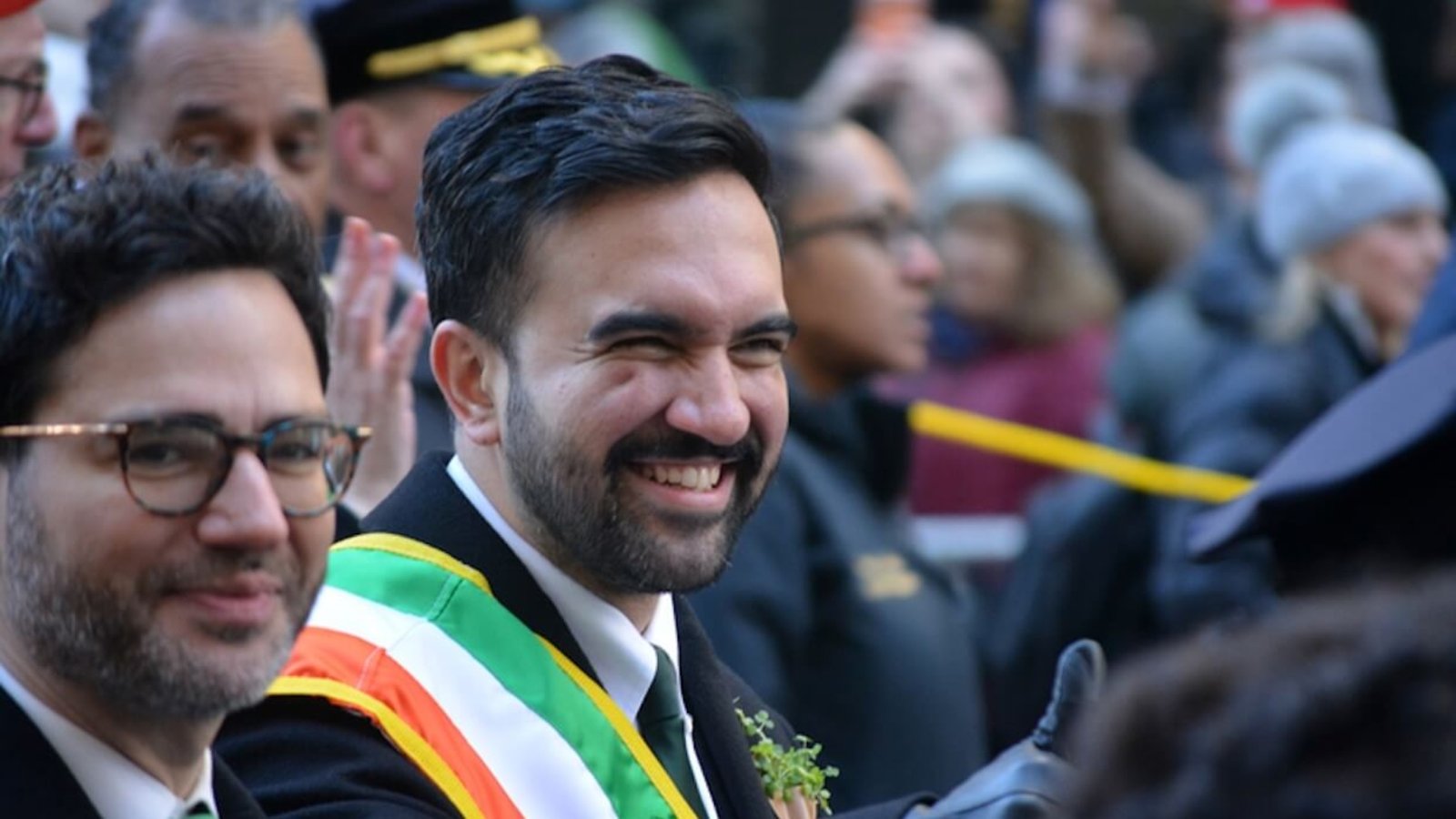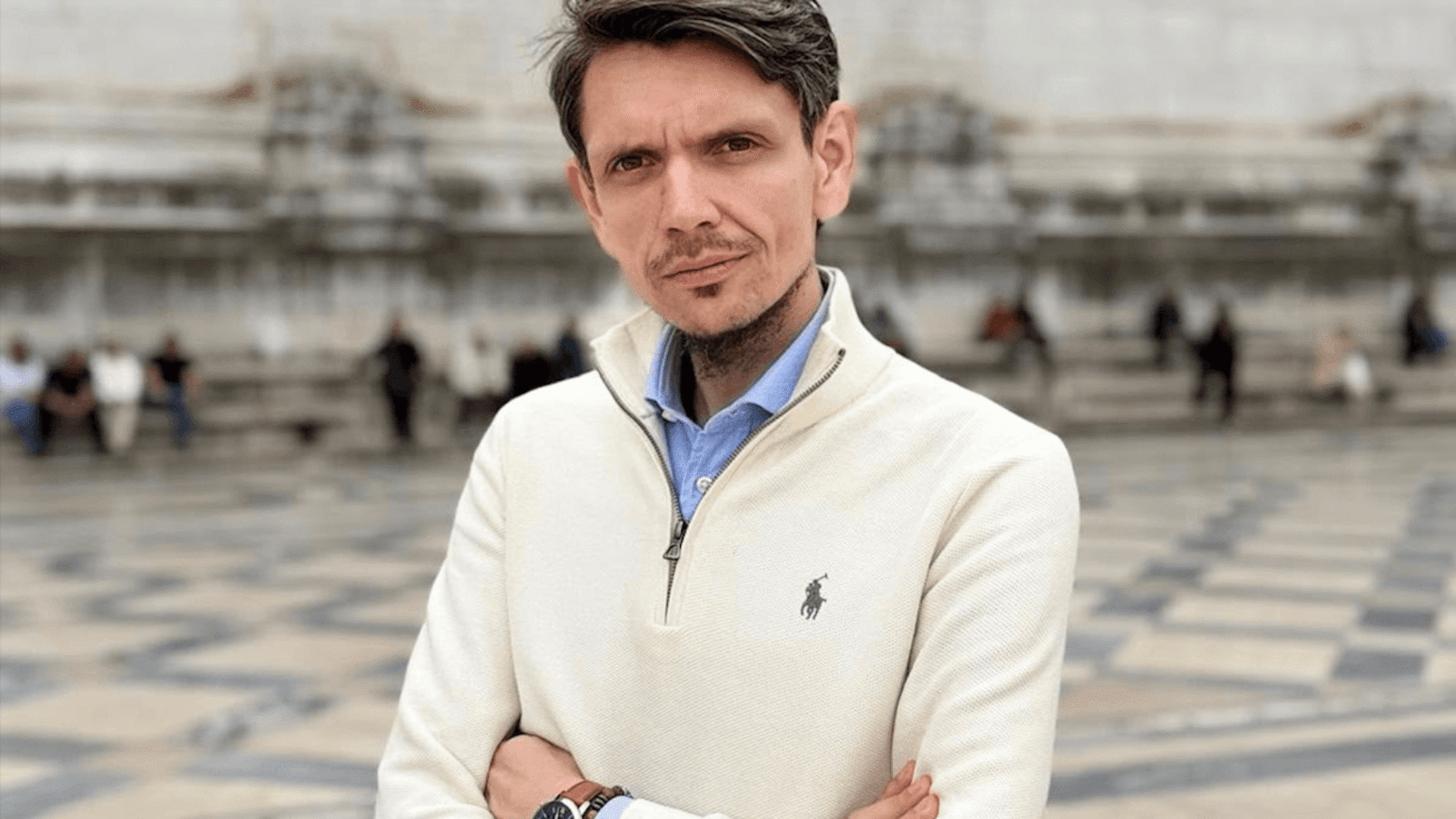
Peter Magyar.

Péter Magyar’s Two Early Signals: Migration, Mitteleuropa, and the Rearticulation of Hungarian Nationalism

In this ECPS European Observatory commentary, Dr. João Ferreira Dias offers a theoretically rich analysis of Péter Magyar’s electoral breakthrough, arguing that it should not be read as a simple liberal shift but as a reconfiguration of Hungarian nationalism. Focusing on migration and Mitteleuropa, he shows how Magyar preserves a moderated nationalist grammar while repositioning Hungary within a more plural, regionally grounded Europe. Rather than abandoning sovereignty or identity, this emerging project seeks to detach them from illiberal statecraft and reintegrate them into a European framework. The piece introduces the idea of a national Europeanism beyond Orbánism, highlighting the central question facing Hungary: whether nationalism can be rearticulated within democratic institutions without reproducing authoritarian dynamics.

By João Ferreira Dias

Péter Magyar’s victory in Hungary should not be read as the sudden liberalization of Hungarian politics. Such a reading would be analytically tempting, but politically misleading. A society shaped by post-socialist dislocation, imperial memories, border anxieties, regional asymmetries, and sixteen years of illiberal statecraft is unlikely to move overnight from national-conservative politics to post-national liberalism. The defeat of Viktor Orbán’s Fidesz marks a profound political rupture, but not necessarily an ideological tabula rasa. Yes, Magyar’s Tisza party won Hungary’s April 2026 election, ending Orbán’s sixteen-year rule and paving the way for the formation of a new government. Yet the more interesting question is not simply whether Hungary is “returning to Europe.” It is what kind of Europe, and what kind of nationalism, Magyar is now attempting to articulate.

The first signals suggest that Magyar’s emerging political project is not built against Hungarian nationalism, but through its reconfiguration. Its novelty lies less in abandoning the national grammar that Orbán radicalized than in relocating it within a more institutionally acceptable, pro-European, and strategically autonomous framework. Two discursive axes are particularly revealing. The first is migration, where Magyar preserves a nationalist concern with cultural cohesion, border control, and the limits of multicultural integration. The second is Mitteleuropa, where he appears to reimagine Hungary not as an isolated sovereigntist fortress, but as part of a Central European space capable of giving Europe greater internal plurality and strategic depth.

Taken together, these axes point towards a possible post-Orbán synthesis: nationalism without Orbán’s full illiberal infrastructure; Europeanism without unconditional deference to Brussels; and Central European regionalism without geopolitical ambiguity towards Moscow.

Migration and the Continuity of Nationalist Grammar

Migration remains the clearest field of continuity between Orbánism and the emerging Magyar project. Across Europe and the United States, immigration has become one of the privileged arenas through which contemporary nationalist politics articulates anxieties over identity, sovereignty, cultural continuity, and social trust. The populist radical right has been especially effective in transforming migration from a policy question into a symbolic frontier: between the nation and the outsider, order and disorder, cultural continuity and multicultural dissolution. In Cas Mudde’s terms, the radical right often combines nativism, authoritarianism, and populism, and migration is the issue through which these elements are most visibly condensed (Mudde, 2007). In the broader literature on cultural backlash, hostility to immigration is also interpreted as a reaction against cosmopolitanism, rapid value change, and perceived threats to national identity (Norris & Inglehart, 2019).

Orbán’s political genius was to radicalize this grammar and convert it into state ideology. Under his rule, migration was not merely a matter of border management. It became a civilizational drama: Christian Hungary against multicultural Europe; national sovereignty against Brussels; the border fence against liberal universalism. Migration offered Orbán a language through which economic insecurity, demographic anxiety, anti-EU resentment, and cultural conservatism could be fused into a single political narrative. 

Magyar’s position appears less incendiary, but not simply opposite. According to The Guardian, he argued that Europe had “mismanaged” the migration crisis and that the issue should have been addressed primarily in countries of origin, rather than by bringing populations into Europe. This is not the language of liberal multiculturalism. Nor is it the apocalyptic rhetoric of Orbán’s civilizational border politics. It is something more subtle: a moderated, humanitarianized, and administratively respectable version of migration skepticism.

That ambiguity is politically important. On the surface, the emphasis on addressing migration in countries of origin can seem pragmatic and humane. It recognizes that migration has causes — war, poverty, instability, state failure, climate pressures — and that durable solutions cannot be reduced to reception policies in Europe. Yet the same formula may also operate as a politically acceptable form of closure: solidarity without settlement, assistance without multicultural transformation, responsibility without internal absorption.

This is where Magyar’s discourse preserves a nationalist grammar while softening its tone. Migration remains framed not only as a humanitarian issue, but as a question of cultural cohesion and governability. The political community is still imagined as something whose boundaries must be protected, whose identity cannot be indefinitely diluted, and whose social trust depends on controlled membership. In that sense, Magyar does not fully break with Orbán’s migration politics. He changes its register.

The distinction is therefore not between nationalism and liberalism. It is between two uses of nationalism. Orbán embedded nationalist discourse within an illiberal regime marked by institutional capture, constitutional engineering, media domination, and clientelist power consolidation; features widely discussed in the literature on Hungary’s hybrid and illiberal transformation (Bozóki & Hegedűs, 2018; Krekó & Enyedi, 2018; Scheppele, 2018). Magyar, by contrast, seems to be attempting to detach national-conservative discourse from that authoritarian infrastructure. His wager is that Hungarian voters did not reject nationalism as such; they rejected corruption, exhaustion, state capture, deteriorating public services, and Russia-friendly isolation.

This is a crucial insight. Orbán did not fall because nationalism disappeared from Hungarian society. He fell because his nationalism became inseparable from regime fatigue. Magyar’s challenge is therefore not to erase the national vocabulary, but to make it governable again.

Mitteleuropa and the Reinvention of European Agency

If migration reveals the continuity of Hungarian nationalist grammar, Mitteleuropa reveals its attempted transformation. Magyar’s Europeanism should not be read simply as a return to Brussels after the long Orbán years. It seems better understood as an effort to recover Central Europe as a strategic, historical, and political space within a more multidimensional Europe.

This distinction matters. A merely Brussels-centered interpretation would reduce Magyar’s project to normalization: Hungary returns to the European mainstream, restores its institutional credibility, unlocks EU funds, and abandons Orbán’s obstructive diplomacy. 

There is truth in this reading. The new government’s early economic and ministerial signals suggest an emphasis on policy stability, EU funds, and economic recovery. But this is not the whole story. Magyar’s rhetoric points not only to reintegration, but to repositioning.

Mitteleuropa is not a neutral geographical term. It carries historical density. It evokes empires, shifting borders, multilingual societies, imperial collapse, Soviet domination, peripheralization, and the recurring experience of being located between larger powers. In Milan Kundera’s famous formulation, Central Europe was a kidnapped West: culturally Western, politically displaced eastwards by history (Kundera, 1984). Later interpretations of post-1989 Central Europe have stressed another dimension: the ambivalent relationship between liberal imitation, Western tutelage, and the resentment generated by the feeling of being permanently evaluated from outside (Krastev & Holmes, 2019).

Orbán exploited this historical repertoire through a politics of resentment. Hungary was presented as a besieged nation: pressured by Brussels, misunderstood by liberal elites, threatened by migration, and entitled to defend its own civilizational path. Sovereignty became trench warfare. Europe was not a plural home, but a disciplinary center. Central Europe became less a region of European agency than a rhetorical shield against liberal-democratic constraints.

Magyar appears to be proposing a different use of the same historical memory. His Mitteleuropa is not necessarily a retreat from Europe, but a way of making Europe more internally plural. It suggests that Hungary need not choose between two poor alternatives: Orbán’s nationalist isolation or passive obedience to a Brussels-centered technocratic order. Instead, Central Europe can be imagined as a third space: European but not submissive; nationally rooted but not authoritarian; historically conscious but not paranoid.

This is the deeper meaning of the “return of Mitteleuropa.” It is not nostalgia for empire. Nor is it a romantic escape from the European Union. It is a proposal for a Europe made of historical regions with their own memories, vulnerabilities, and strategic vocabularies. In this vision, Hungary is not a void between Germany and Russia, nor a problematic periphery to which Brussels grants certificates of good behavior. It is part of a Central European constellation capable of shaping Europe from within.

The contrast with Orbán is again instructive. Orbán’s Europe was vertical: Brussels above, Hungary below, sovereignty as resistance. Magyar’s Europe appears potentially horizontal: Paris, Berlin, Vienna, Prague, Bratislava, Warsaw, Zagreb, Ljubljana, Rome, Copenhagen, Brussels, and Budapest as parts of a plural continental architecture. Such a Europe is not merely a union of institutions; it is a field of regions, memories, and strategic positions.

This does not make Magyar a liberal cosmopolitan. Rather, it suggests a form of national Europeanism. The nation remains the primary symbolic community, but Europe becomes the necessary arena of agency. Mitteleuropa provides the bridge between the two. It allows Magyar to say that Hungary can be proudly national without being anti-European, and European without becoming politically weightless.

A Post-Illiberal National Europeanism?

Magyar’s two early signals therefore reveal a more complex ideological architecture than the language of “liberal victory” allows. Migration preserves the nationalist grammar. Mitteleuropa gives that grammar a new European geography.

The first axis is defensive: it protects the boundaries of the political community, insists on cultural cohesion, and keeps alive a skepticism towards large-scale multicultural integration. The second is expansive: it seeks to recover agency for Hungary and Central Europe within a more plural, multidimensional Europe. One axis looks inward, towards identity and membership. The other looks outward, towards regional strategy and European architecture.

The tension between them may define the coming Magyar period. If the nationalist grammar of migration hardens, it may reproduce exclusionary assumptions under a more polished vocabulary. If Mitteleuropa becomes another language of exceptionalism, it may simply replace Orbán’s resentment with a more elegant form of regional self-importance. But if the two axes are held in democratic balance, they may allow Hungary to move beyond Orbán without demanding that Hungarian society abandon the national vocabulary through which it still understands itself.

That is why Magyar’s project should not be understood as post-national liberalism. It is better described as an attempt at post-illiberal national Europeanism: a politics that preserves sovereignty, identity, and Central European memory, while seeking to detach them from authoritarianism, corruption, and Russian dependency.

The real test of post-Orbán Hungary will therefore not be whether nationalism disappears. It will not. The test is whether nationalism can be rearticulated within democratic institutions, European pluralism, and a regional imagination capable of enriching Europe rather than fragmenting it.

Magyar’s early discourse suggests that this is precisely the wager: to keep the nation but change its political grammar; to return to Europe, but not as a pupil; to recover Mitteleuropa, not as nostalgia, but as strategy.


References

Bozóki, A. & Hegedűs, D. (2018). “An externally constrained hybrid regime: Hungary in the European Union.” Democratization, 25(7), 1173-1189. https://doi.org/10.1080/13510347.2018.1455664

Krastev, I. & Holmes, S. (2019). The light that failed: A reckoning. Allen Lane.

Krekó, P. & Enyedi, Z. (2018). “Explaining Eastern Europe: Orbán’s laboratory of illiberalism.” Journal of Democracy, 29(3), 39–51. https://doi.org/10.1353/jod.2018.0043

Kundera, M. (1984). “The tragedy of Central Europe.” The New York Review of Books, 31(7), 33–38.

Mudde, C. (2007). Populist radical right parties in Europe. Cambridge University Press. https://doi.org/10.1017/CBO9780511492037

Norris, P., & Inglehart, R. (2019). Cultural backlash: Trump, Brexit, and authoritarian populism. Cambridge University Press. https://doi.org/10.1017/9781108595841

Scheppele, K. L. (2018). “Autocratic legalism.” The University of Chicago Law Review, 85(2), 545–584.

Associate Professor Petar Stankov.

Assoc. Prof. Stankov: Too Early to Say Bulgaria’s Radev Will Act as an Orbán 2.0, He Looks More Like Fico 

In an interview with the ECPS, Associate Professor Petar Stankov offers a nuanced assessment of Bulgaria’s post-election trajectory under Rumen Radev. Challenging alarmist comparisons, he argues that “it is too early to tell” whether Radev will become an Orbán-style leader, suggesting instead that he “looks more like Fico,” pursuing a pragmatic balancing strategy. Assoc. Prof. Stankov interprets the electoral outcome as “a demand for stabilization after prolonged institutional volatility,” rather than a clear ideological shift. While economic constraints limit disruptive policymaking, he warns that the greater risk lies in institutional capture, particularly if opportunities for judicial reform are missed. Ultimately, Bulgaria’s trajectory will depend on whether reformist or rent-seeking dynamics prevail.

Interview by Selcuk Gultasli

In the aftermath of Bulgaria’s April 2026 parliamentary elections, the country finds itself at a critical juncture shaped by the tension between political stabilization and the risk of democratic erosion. Following years of fragmentation, repeated elections, and institutional fatigue, Rumen Radev’s newly established Progressive Bulgaria party secured a decisive majority, capitalizing on anti-corruption sentiment, voter exhaustion, and socioeconomic anxieties linked to eurozone integration. While this outcome has brought a measure of political clarity, it has also intensified debates over Bulgaria’s democratic trajectory and its positioning between the European Union and Russia.

In a written interview with the European Center for Populism Studies (ECPS), Associate Professor Petar Stankov, Senior Lecturer in Economics at Royal Holloway, University of London, offers a nuanced and analytically grounded interpretation of these developments. Challenging alarmist comparisons, Assoc. Prof. Stankov argues that “it is too early to tell” whether Radev will evolve into an Orbán-style leader, suggesting instead that he “looks more like Fico,” pursuing a pragmatic balancing strategy rather than an overtly confrontational illiberal project.

At the core of Assoc. Prof. Stankov’s analysis is the argument that Radev’s victory reflects “a demand for stabilization after prolonged institutional volatility,” rather than a coherent ideological realignment. The electoral coalition that brought him to power, he notes, was “mobilized against discredited incumbents, not a coherent positive ideology,” drawing support from both left- and right-leaning constituencies. This heterogeneity, in turn, underscores the enduring salience of identity politics in Bulgaria, where Radev’s “balanced position” on Russia’s war in Ukraine resonated deeply “on identity grounds.”

Situating these dynamics within his broader framework of populist cycles, Assoc. Prof. Stankov characterizes Radev as “a short-term manifestation of populist demand,” rooted less in economic distress than in identity and fairness concerns, particularly dissatisfaction with the judicial system. In this sense, Bulgaria’s political landscape reflects structural patterns rather than exceptional rupture.

The interview also addresses the central question of whether Radev’s anti-corruption mandate will lead to institutional renewal or facilitate a new phase of power concentration. Here, Assoc. Prof. Stankov highlights a fundamental tension between reformist impulses and entrenched interests, warning that outcomes will depend on whether political actors pursue “institutional repair” or the redistribution of “political rents.”

On foreign policy, Assoc. Prof. Stankov underscores the importance of strategic ambiguity. While Radev may be “a natural candidate to do the Kremlin’s bidding,” he is unlikely to pursue a confrontational course vis-à-vis the EU, instead maintaining a careful balancing act shaped by Bulgaria’s structural constraints. Economically, these constraints significantly limit his room for maneuver, but Assoc. Prof. Stankov cautions that “politically, he may do more damage” if opportunities for judicial reform are squandered.

Ultimately, this interview with ECPS presents a measured yet critical assessment of Bulgaria’s evolving political order. By rejecting simplistic analogies and foregrounding structural dynamics, Assoc. Prof. Stankov highlights both the constraints and the risks inherent in Radev’s ascent—capturing a moment in which the promise of stability coexists uneasily with the possibility of democratic backsliding. 

Here is the edited version of our interview with Associate Professor Petar Stankov, revised slightly to improve clarity and flow.

A Vote for Stability, Not Ideology

Bulgarian President Rumen Radev.
Then-Bulgarian President Rumen Radev speaks to the media following his meeting with European Commission President Jean-Claude Juncker at EU headquarters in Brussels, Belgium, on January 30, 2017. Photo: Dreamstime.

Professor Stankov, what does Rumen Radev’s landslide victory tell us about Bulgaria’s current political position after eight elections in five years? Should this outcome be interpreted primarily as a demand for stability and anti-corruption reform, or as evidence of a deeper ideological realignment?

Assoc. Prof. Petar Stankov: Radev’s victory is best read as a demand for stabilization after prolonged institutional volatility, rather than a clear ideological departure from underlying voter preferences. It mobilized a coalition against discredited incumbents, not a coherent positive ideology. What earned Radev support from the electorate was also his balanced position on the war that Russia started in Ukraine. As Russia has, justifiably or not, a special place in the hearts and minds of many Bulgarians, this stance resonated deeply on identity grounds.

How should we situate Radev’s victory within your broader theory of populist cycles? Does his rise reflect a classic populist moment in which economic anxiety, elite discredit, and identity-based grievances converge into a new electoral coalition?

Assoc. Prof. Petar Stankov: Populist cycles are a long-term phenomenon. Radev is a short-term manifestation of populist demand, which is consistently strong in Bulgaria. The theory of populist cycles rests on identity, fairness, and economic pillars. If it offers the appropriate lens through which to view Bulgarian politics at the moment, then identity and fairness certainly played a role, though less so the state of the economy. Identity mattered because voters appear to have stopped associating themselves with previous pro-Western populists, finding insufficient representation in them. Fairness also played a role, as the condition of the judicial system is no longer tolerable.

Identity Over Economics, Structure Over Cycles

In your earlier work on Bulgaria and Germany, you identify unemployment, inequality, trade openness, and migration as factors associated with stronger right-wing populist support. To what extent do these structural pressures help explain Radev’s success in 2026, even if he does not fit neatly into a conventional far-right mold?

Assoc. Prof. Petar Stankov: Yes, but only imperfectly. Cyclical pressures such as inflation and emigration may have been relevant. However, Radev’s support draws from both left- and right-leaning constituencies. This is consistent with identity factors and deeper structural issues shaping Bulgarian voters, rather than the cyclical factors that typically underpin a populist rise.

Radev won on an anti-corruption platform, but anti-corruption discourse in Central and Eastern Europe often serves as a bridge between democratic renewal and populist concentration of power. In your view, does his mandate open a path toward institutional repair, or does it risk legitimizing a new phase of executive centralization in the name of cleansing the system?

Assoc. Prof. Petar Stankov: This will depend on two opposing forces. On the one hand, there are new faces in politics under Radev who would like to start from scratch. This would be consistent with the institutional repair hypothesis. On the other hand, there are also some older figures among the incoming cohort of politicians who have not yet had the chance to secure a share of “political rents.” This would be consistent with the hypothesis that consolidation of power serves the redistribution of political rents rather than the renewal of democracy in Bulgaria. Whichever force prevails will determine whether Bulgaria moves toward rebuilding or redistributing. I sincerely hope that idealism will prevail, but history suggests that, in poorer countries, political rents often outweigh ideals.

Closer to Fico Than Orbán in Europe’s Fault Lines

Slovak Prime Minister Robert Fico
Slovak Prime Minister Robert Fico speaks at a press conference following a Visegrad Group (V4) meeting in Prague, Czech Republic, on February 15, 2016. Photo: Dreamstime.

A central question for European observers is whether Radev represents the emergence of a new Orban-type actor inside the EU. Do you see him as a potential ideological successor to Orban in the nexus of EU-Russia tensions, or is that analogy too blunt for the Bulgarian case?

Assoc. Prof. Petar Stankov: On the surface, Radev and Orban appear more aligned with the interests of the Kremlin than with those of the EU. However, I think Radev strikes a more balanced tone, at least for now. Whether he will act as an Orban 2.0 is too early to tell, but I do not expect him to go as far as Orban did in his last term in office in terms of aligning with the Kremlin. At the same time, we should not be naive about Radev’s background: he is a military officer from a period when the Bulgarian army perceived NATO as an adversary and Russia as a source of public and ideological goods. It would be unnatural for him to suddenly change his identity.

If not Orban, is Radev better understood as closer to Robert Fico: rhetorically skeptical of Brussels and supportive of “pragmatic” relations with Moscow, yet constrained by economic dependence on the EU and by Bulgaria’s embeddedness in NATO and European institutions?

Assoc. Prof. Petar Stankov: I believe Radev fits that description. I expect him to pursue a balancing act without creating major disruptions for NATO or the EU.

How should we interpret Radev’s position on Ukraine? He has opposed military support and criticized parts of the EU’s approach, yet analysts suggest he may avoid outright vetoes while preserving Bulgaria’s role in the broader European defense ecosystem. Does this amount to strategic ambiguity, domestic balancing, or a more systematic geopolitical repositioning?

Assoc. Prof. Petar Stankov: It is not natural for Radev to oppose the interests of the Kremlin; doing so would run against who he is and how he has developed as an individual and as a politician. However, I do not think he is inherently confrontational. He projects confidence and a desire for dialogue, which may serve his strategy of ambiguity. Given his current level of electoral support, I do not think he needs to balance domestically—he holds the strongest political mandate in recent memory.

Pragmatism or Russophilia? A Shifting Political Language

What do Radev’s statements about renewing ties with Russia and rethinking Europe’s security architecture tell us about the evolving vocabulary of pro-Russian politics inside the EU? Are we seeing old-style Russophilia, or a newer populist language of “pragmatism,” sovereignty, and anti-moralism designed to be more electorally acceptable?

Assoc. Prof. Petar Stankov: Because of who Radev is, he is a natural candidate to do the Kremlin’s bidding in Europe, to re-legitimize the economic and political relationships between Europe and the Kremlin, and, why not, to do their dirty laundry. Let us not forget, however, that Radev represents a small and declining nation among many others. In that sense, although Radev is a valuable asset—the Kremlin will take any asset that comes its way at this stage—he is not its prime candidate. The Kremlin’s prime European asset is not even in Europe.

Your work argues that populists weaponize identity conflicts and economic hardships for political gain. In the Bulgarian case, which mattered more in this election: material grievances such as inflation, euro adoption, and living costs, or identity and geopolitical divisions over Russia, Europe, and national sovereignty?

Assoc. Prof. Petar Stankov: I believe the latter mattered more. Russian propaganda in Bulgaria is very strong, while the economy is not performing poorly enough for cyclical factors to outweigh identity conflicts.

Balancing Brussels and Moscow While Eyeing Judicial Reform

Radev is not a newcomer; he governed for years from the presidency before stepping down to seek executive power. Looking back at his presidential record, what patterns in his political style, institutional behavior, and crisis communication most help us anticipate how he may govern now as prime minister?

Assoc. Prof. Petar Stankov: It is hard for me to predict his moves as prime minister. Although he came to power with one of the most remarkable electoral victories in Bulgarian democratic history, he will probably not rush to disrupt what has worked well so far for the Bulgarian economy. For example, he attempted to launch a referendum on joining the Eurozone in his final year as president, but he would not take Bulgaria out of the Eurozone. He may be inclined to cozy up to the Kremlin, but he would not forgo the benefits of EU membership. What he could attempt—and history may credit him for—is to secure a constitutional majority for large-scale judicial reform. Whatever his rhetoric abroad, if he manages to fix that system, which has long hindered the development of a level playing field in Bulgaria, he will be remembered for his domestic achievements rather than his external balancing act.

Do you see Progressive Bulgaria as a durable governing project, or as a typical new-party vehicle built around a single leader and a temporary coalition of discontented voters? In other words, does this victory mark the stabilization of a new political order, or simply the latest phase in Bulgaria’s volatile anti-establishment cycle?

Assoc. Prof. Petar Stankov: Like any party built around a single leader rather than a consensual political platform, Progressive Bulgaria will likely fizzle out once Radev is no longer at its helm.

Reform Window or Lost Generation?

One of the themes in your research is that not all populists are equally damaging in economic governance, especially in Europe, where institutional constraints can mute the worst forms of macroeconomic populism. Given Bulgaria’s EU obligations, eurozone membership, and fiscal constraints, how much room does Radev actually have to behave as a disruptive populist in office? Yet your work also stresses that the economic moderation of populists does not necessarily prevent damage to the rule of law, democratic accountability, or civil society. If Radev is constrained economically, should the greater concern be institutional capture rather than macroeconomic irresponsibility?

Assoc. Prof. Petar Stankov: Economically, Radev has little room to do significant damage. His external constraints are substantial, and he would therefore be unable to pursue the kind of macroeconomic populism that has plagued Latin American economies in the past.

Politically, however, he may do more damage if he squanders his opportunity to build a majority for constitutional reforms that are vital for the country’s long-term development. If he does squander it, Bulgarians may need to wait another generation—or even two—before a similarly strong political figure emerges with a popular mandate for reform. 

This broader concern, that European populists may do more damage politically than economically, raises an important question: if economic constraints limit their capacity for harm, should political constraints also be strengthened? There has recently been a proposal for EU institutional reform to limit the consensus principle in certain areas, particularly foreign policy. Proposals of this kind may bring the European project closer to its original vision of uniting European nations under shared values. However, the trade-off is that many smaller states could become less influential in decision-making. To protect itself from malign external influence, the EU may need to reconsider some of its foundational principles—evolve, or else…

Looking ahead, what is your medium-term forecast for Bulgaria under Radev? Do you expect a pragmatic, nationally framed but still fundamentally European government; a creeping illiberal turn marked by pressure on the judiciary and media; or a shorter-lived experiment in which governing responsibilities quickly erode the broad electoral coalition that brought him to power?

Assoc. Prof. Petar Stankov: That depends on how quickly he starts forming a coalition for constitutional change. If this part of his agenda starts finding excuses to be pushed further back in time while mundane issues take centre stage, the medium-term forecast for Bulgaria would not be great. If a majority for constitutional changes takes centre stage in the political narrative coming from Radev, then I would be more optimistic. In general, I would be an optimist until proven wrong, which, given the Bulgarian experience of the last few decades, has never been a hard theorem to prove.

Bulgarian President Rumen Radev.

Assoc. Prof. Otova: Under Radev, the Path to Autocracy in Bulgaria Becomes All Too Easy

Associate Professor Ildiko Otova, in an interview with the ECPS, offers a compelling analysis of Bulgaria’s post-election trajectory under Rumen Radev. Following a landslide victory driven by anti-corruption sentiment and political fatigue, Radev has consolidated power in a system marked by institutional fragility. Assoc. Prof. Otova argues that his success reflects not a new geopolitical shift, but a strategic exploitation of existing cleavages, enabled by a “specific discursive situation” of empty rhetoric and symbolic politics. While his ambiguity has mobilized a broad electorate, it also masks deeper risks. As populism transitions from protest to governance, Assoc. Prof. Otova warns that, under conditions of concentrated power and weak safeguards, “the path to autocracy becomes all too easy.”

Interview by Selcuk Gultasli

In the aftermath of Bulgaria’s April 2026 parliamentary elections, the country has entered a new and uncertain political phase marked by both the promise of stability and the risk of accelerated democratic erosion. Rumen Radev’s newly formed Progressive Bulgaria party secured a decisive majority after years of political fragmentation, capitalizing on widespread anti-corruption sentiment, voter fatigue with repeated elections, and growing socioeconomic anxieties following eurozone accession. While his victory ended a prolonged cycle of unstable coalition governments, it also raised urgent questions about the future trajectory of Bulgarian democracy, particularly given Radev’s ambivalent positioning between the European Union and Russia.

Giving an interview to the European Center for Populism Studies (ECPS), Associate Professor Ildiko Otova, Head of Political Science Department at New Bulgarian University, offers a nuanced and analytically rigorous assessment of the structural and discursive dynamics underpinning Radev’s rise. As she argues, his victory “should not be attributed solely to Russia or to the broader Europe-Russia divide”; rather, it reflects a more complex political environment in which he has “skillfully exploited” existing cleavages, often “using minimal words and gestures to convey what different audiences want to hear.” This strategic ambiguity has allowed him to mobilize a remarkably heterogeneous electorate, ranging from pro-European reformists to nationalist and pro-Russian constituencies.

Assoc. Prof. Otova situates this development within a broader pattern of normalized populism in Bulgaria, where “what was once an episodic phenomenon has become a structural feature of the system.” In such a context, Radev’s success appears less as an anomaly than as the predictable result of a political order shaped by institutional distrust, party-system exhaustion, and what she terms a “specific discursive situation” characterized by cycles of “empty rhetoric” and symbolic politics. His campaign slogan, “We are ready, we can do it, and we will succeed,” captured this dynamic, offering not policy substance but an affective promise of exit from political stagnation.

At the same time, Assoc. Prof. Otova underscores the deeper identity tensions that continue to shape Bulgarian politics. Euroscepticism, she notes, is structured by enduring paradoxes, including the perception of the EU as an external imposition, contrasted with the framing of Russia as culturally “internal.” This ambivalence has enabled Radev to navigate competing geopolitical imaginaries while maintaining what she describes as a dual discourse, one directed at domestic audiences, another at Brussels.

Yet the central concern animating Assoc. Prof. Otova’s analysis is the transformation of populism from oppositional rhetoric into governing practice. With a consolidated parliamentary majority and limited institutional constraints, “concrete actions and policies are required,” and it is precisely under these conditions, she warns, that “the path to autocracy becomes all too easy.” In a system already marked by weak institutional safeguards and vulnerability to state capture, the concentration of executive power risks reproducing, rather than dismantling, entrenched oligarchic networks.

This interview with ECPS situates Bulgaria at a critical juncture. While Radev’s rise reflects broader global trends of democratic backsliding and populist normalization, Assoc. Prof. Otova’s insights highlight the contingent nature of political outcomes, shaped not only by leadership, but by institutional resilience, societal mobilization, and the unresolved tensions at the heart of Bulgaria’s democratic and European identity.

Ildiko Otova, an Associate Professor of Political Science and the Head of Political Science Department at New Bulgarian University.

Here is the edited version of our interview with Associate Professor Ildiko Otova, revised slightly to improve clarity and flow.

Not a New Cleavage, but a Strategic Exploitation of Old Divides

Professor Otova, given your argument that Bulgarian Euroscepticism must be read through the historically embedded Europe–Russia axis, does Rumen Radev’s victory mark a new phase in this cleavage, or merely its latest institutional expression?

Assoc. Prof. Ildiko Otova: Relations with Russia have long been central to Bulgarian politics, shaped by shared history, culture, personal connections, economic ties, and geopolitical factors. A widely circulated photo of Radev with Putin drew significant attention, prompting international media to describe him as “Russia’s new Trojan horse in Europe.” Experts have rightly pointed to Russia’s involvement in Radev’s political rise and raised concerns about campaign interference, online influence operations, and opaque funding sources suggesting substantial investment.

However, Radev’s victory should not be attributed solely to Russia or to the broader Europe–Russia divide. His win does not mark a new phase in this cleavage; rather, he has skillfully exploited it, using minimal words and gestures to convey what different audiences want to hear. In a campaign—and a political environment—often full of empty rhetoric, Radev has become adept at using silence, paradoxically communicating exactly what various constituencies seek.

In practice, little is known about the figures in his party, but among those who have become visible, we observe both openly provocative pro-Russian positions and the exact opposite. This is not to downplay Russia’s role; instead, it underscores the need for more comprehensive explanations.

Euroscepticism Built on Cultural Paradoxes and Identity Tensions

To what extent does Radev’s rise reflect not only geopolitical ambivalence but also a deeper identity crisis in post-communist Bulgaria, where competing civilizational imaginaries—Europeanization, Slavic-Orthodox affinity, and post-socialist nostalgia—intersect? In your framework, how does this identity fragmentation reshape the nature of Bulgarian Euroscepticism?

Assoc. Prof. Ildiko Otova: Bulgarian Euroscepticism rests on several paradoxes. The first is that the EU and “Europe” are frequently depicted as external to Bulgaria and Bulgarians—as actors that impose unacceptable values and adopt a lecturing posture. Yet this hostility toward external influence does not extend to all external actors. Russia, for example, is often not perceived as foreign in the same way; rather, it is framed as culturally “internal” due to a presumed Slavic-Orthodox affinity.

The second paradox is temporal. Resistance to the EU did not precede Bulgaria’s accession but developed alongside it. Until the early 2000s, Bulgaria was characterized by a broad pro-European consensus. 

Third, although Bulgaria has been an EU member state for years, European issues remain weakly embedded in its domestic political agenda. This does not mean that anti-EU narratives are absent. On the contrary, they are visible in discourses about massive migration allegedly changing the national gene pool, “stealing” the pensions of the elderly because EU policies and values are too liberal, and attacks on so-called “gender ideology,” among other themes.

Fourth, the deeper Bulgaria’s European integration becomes, the more its political elites tend to adopt anti-European positions. This shift occurs primarily through the normalization of populism. In this sense, within the Bulgarian context, the relationship between Euroscepticism and populism is particularly important—though not predetermined. There are also examples of populist, anti-establishment projects that remain pro-European. Among voters, too, there are those who are anti-establishment and anti-corruption yet remain pro-European. Notably, Radev has managed to mobilize them as well, including a significant portion of the so-called Generation Z.

There is also one more factor that should not be overlooked: his flirtation with the idea of a potential referendum on the euro. People do not necessarily need a rational explanation for why food is expensive; they need someone or something to blame. Prices do not even have to rise in reality—it is enough to sustain a narrative of rising costs. In this sense, the timing and the overall situation played perfectly into Radev’s hands.

Exhaustion, Silence, and the Power of Narrative Control

Bulgaria protests.
Protesters chant anti-government slogans during a demonstration in central Sofia, Bulgaria on July 26, 2013. Photo: Anton Chalakov / Dreamstime.

Should Radev’s success be understood primarily as anti-establishment populism, geopolitical revisionism, or a hybrid formation in which anti-corruption discourse masks a deeper pro-Russian reorientation?

Assoc. Prof. Ildiko Otova: Any of these three explanations is valid, yet even taken together, they remain too simplistic. As a citizen, I find it increasingly difficult to remain silent about the pervasive corruption in Bulgaria and the broader condition of the country, or to withhold my solidarity with the despair my fellow citizens feel toward the political elite. After the events of recent years, and the evident futility of going to the polls for an eighth time, there is a sense of collective exhaustion. Nevertheless, I will attempt an answer within an academic framework.

In my view, the main reason for his victory lies in what I would describe as a specific discursive situation. Since 2020, Bulgaria has been caught not only in a cycle of repeated elections but also in a cycle of empty rhetoric. Radev has managed to control the narrative so effectively that he appears to tell everyone what they want to hear—largely through silence. This is neither classic anti-elitist rhetoric built on the populist trope of the corrupt elite versus the honest, long-suffering people nor a standard expression of movements grounded in a thin-centred ideology.

“We are ready, we can do it, and we will succeed”—the words with which he announced his departure from the presidency, later adopted as his campaign slogan—projected a sense of purpose. They offered not concrete details, but hope for an exit from a cycle of meaningless repetition. In a political environment where emotions and symbolic gestures carry greater weight than rational argument, and where both traditional and digital media amplify urgency and a pervasive sense of crisis, this has proven sufficient. For citizens who are exhausted and perceive threats as omnipresent, such messaging resonates deeply.

Populism as the New Normal in Bulgarian Politics

In your work with Evelina Staykova, you argue that populism in Bulgaria has become normalized through party-system exhaustion, state–economy fusion, institutional distrust, and the digital turn. Does the 2026 election represent the culmination of this normalization?

Assoc. Prof. Ildiko Otova: Since 2001, Bulgaria has experienced several so-called waves of populism: the return of Simeon Saxe-Coburg-Gotha, the rise of GERB, and the emergence of post-2020, protest-driven, short-lived “pop-up” political projects. Taken together, these developments illustrate how what was once an episodic phenomenon has become a structural feature of the system. Paradoxically, the populist wave has itself become a constant.

Populism is now the defining characteristic of Bulgaria’s political order—the norm rather than the exception—making it unrealistic to expect fundamentally different outcomes. Radev fits squarely within this pattern: his victory represents not an unexpected populist surge, but the predictable result of a persistently populist political environment, shaped by the specific discursive situation I mentioned.

If this moment does represent a culmination, one might expect either a subsequent decline in populism or a reversion to pre-populist politics. However, such a scenario currently appears unlikely.

Radev has long combined anti-corruption, nationalist, and anti-establishment rhetoric from within one of the state’s highest institutions. Does his transition from the presidency to executive power illustrate the transformation of populism from protest discourse into governing logic?

Assoc. Prof. Ildiko Otova: This is the greatest challenge he faces. The presidency, even though he ultimately governed alone through caretaker governments and later during the pre-election period, gave him the opportunity to craft narratives. However, when one commands such a majority and holds executive power, concrete actions and policies are required.

We have had populists in power before—the GERB administration is one such example—but the dynamics were different. The coalition nature of those governments, especially the most recent one, created room to maneuver. Under Radev, there will be no such leeway. And that is the greatest challenge we face. Under these conditions, the path to autocracy becomes all too easy.

Limits of the Orbán Analogy

Editorial illustration: Rumen Radev and Viktor Orbán depicted against national flags, symbolizing political tensions between Bulgaria and Hungary. Photo: Dreamstime.

How should we assess the analogy between Radev and Orbán? Does Radev possess the ideological coherence and institutional ambition required for Orbán-style illiberal state-building, or is Bulgaria’s EU dependency likely to constrain him?

Assoc. Prof. Ildiko Otova: Let us begin with the obvious: Orbán is an experienced politician with a long, well-documented, and easily traceable career. Radev, by contrast, was effectively parachuted from the military into the presidency—a role he has never fully mastered. He entered politics without a solid ideological, political, or broader conceptual foundation, essentially as an empty vessel into which almost anything could be poured.

Another obvious point is that Bulgaria is not Hungary. Radev lacks ideological consistency and has no substantial political background or prior experience; he is, to a large extent, a product of the circumstances that enabled his rise—a product of the status quo, the absence of alternatives, and the prevailing populist momentum. Looking back, we also cannot entirely rule out the possibility that his ascent was shaped by external forces. What is beyond doubt, however, is the presence of clear ambition.

In this sense, the emergence of a non-liberal form of democracy in Bulgaria cannot be ruled out. The European Union, having learned from its experience with Hungary, is likely to be far more cautious. Against this backdrop, Radev’s first major test will be the so-called judicial reform.

Is Radev better understood as an Orbán-type system builder, a Fico-type pragmatic Eurosceptic, or a specifically Bulgarian figure shaped by Russophile memory, anti-corruption politics, and institutional volatility?

Assoc. Prof. Ildiko Otova: I do not think these comparisons meaningfully deepen our understanding of Radev or improve our ability to predict future developments. There are simply too many specific factors at play, and the international landscape is in constant flux. What existed elsewhere yesterday may not necessarily apply here tomorrow.

The Politics of Dual Discourse

Your research suggests that Bulgarian populism often blurs ideological distinctions. How should we classify Progressive Bulgaria: left-conservative, national-populist, technocratic-populist, or post-ideological?

Assoc. Prof. Ildiko Otova: Yes, populism undoubtedly blurs ideological distinctions; this is intrinsic to its nature. Consider Progressive Bulgaria’s program: despite the label “progressive,” its economic agenda is largely far right, even though some members of its expert economic team previously worked on more left-leaning projects. This example alone illustrates the extent to which ideological lines are being blurred.

For this reason, I see the party as best fitting within a post-ideological framework. Populism can be understood as a de-ideologized ideology. It incorporates elements from other ideologies, yet remains neither left nor right, and this is precisely one of the greatest dangers it poses—the de-ideologization, and consequently the depoliticization, of the political. Progressive Bulgaria, at least for now, aligns well with this understanding.

Does Radev’s discourse of “pragmatism” toward Russia and “critical thinking” toward Europe signal a strategic foreign policy stance, or does it reveal a more profound ontological insecurity in Bulgaria’s self-understanding as both a European and historically Russia-linked polity? How does identity anxiety translate into political legitimacy for such leaders?

Assoc. Prof. Ildiko Otova: I believe these statements by Radev are part of a broader strategy to tell each audience what it wants to hear. It is highly likely that he will continue to use one discourse in Bulgaria and another in Brussels. This is nothing new; Bulgarian politicians have long maintained such a dual discourse. In Radev’s case, however, it will be especially evident, likely conveyed through various spokespersons as well.

At the same time, Radev will have to speak not only to pro-Russian citizens at home. The EU still enjoys the support of more than half of Bulgarians, and some of those who backed Radev did so not because of his pro-Russian stance, but because of his anti-corruption declarations. He will have to meet their expectations with tangible actions, as narrative alone will no longer suffice.

Strategic Ambiguity Between Brussels and Moscow

Radev’s Ukraine stance appears to combine opposition to military aid with reluctance to openly block EU decisions. Is this strategic ambiguity a governing necessity, or a sign of deeper tension between his electorate’s geopolitical pluralism and his own Russophile instincts?

Assoc. Prof. Ildiko Otova: I cannot say whether Radev holds Russophile instincts. If he does, it would be rather ironic given his background in American military academies. Joking aside, there is a Russian saying: “We will live and we will see”—time will tell. However, I would assume that Radev will not openly oppose EU decisions.

To what extent did Radev absorb the political space of openly pro-Russian and nationalist parties such as Revival, and does this suggest moderation of the far right or mainstreaming of its core themes?

Assoc. Prof. Ildiko Otova: The myth of moderation is remarkably persistent, but I do not find it convincing. For years, analysts have claimed that once the far right gains power, it will be tamed. The opposite has happened: instead, far-right views have steadily become the norm. One need only look across the EU to observe this trend.

When it comes to Revival, Radev succeeded in attracting a significant portion of its electorate. As I have already noted, he now faces the difficult task of continuing to speak to multiple constituencies at once—and to do so convincingly through his actions. This will determine whether he fully absorbs the Revival electorate or, conversely, whether that electorate becomes further radicalized and shifts into opposition. I would not underestimate the leader of Revival, who is a seasoned political actor.

Given Bulgaria’s captured institutions, weak trust, and repeated anti-corruption mobilizations, can Radev realistically dismantle oligarchic networks, or does his concentration of power risk reproducing the same state-capture logic under a new banner?

Assoc. Prof. Ildiko Otova: This issue is extremely important. The resignation of the acting chief prosecutor, coming just days after Radev’s victory, was among the first signs of a new arrangement and already signals a realignment within oligarchic networks. I would also return to the question of how Radev’s seemingly expensive campaign was funded. Where did that money come from? Even these few points leave little room for optimism.

Radev’s regime is likely to reconstitute a state-capture model—perhaps initially in a more covert and less overtly assertive form—but such a configuration is unlikely to remain restrained over time.

From Anti-Elite Narrative to Elite Reality

Anti-government protests against corruption intensified across Sofia, Bulgaria on July 15, 2020. Photo: Dreamstime.

You have argued that anti-establishment populists in power may themselves become the new elite. How quickly might this paradox confront Radev once he assumes responsibility for inflation, eurozone adjustment, corruption reform, and EU funding?

Assoc. Prof. Ildiko Otova: Radev has long belonged to the elite. After all, he has been the sitting president for nearly nine years. His seemingly modest gestures—driving his own car, grumbling about the lack of parking spaces in Sofia, and publicly paying his parking tickets—are mostly for show, part of the narrative drafting.  

That said, I understand the core of the question. Given the international environment and the many urgent issues awaiting resolution, the risk that mounting challenges will overwhelm the new status quo is very real. Radev’s victory will ultimately need to be substantiated through concrete actions. Let us return to the notion of a “de-ideologized ideology” and the broader process of depoliticizing politics. How can genuinely sustainable policies be designed when they are no longer anchored in a clear and coherent vision?

My concern is that the emerging political reality is stripping politics of its very essence: not only the capacity to deliver immediate solutions, but also the obligation to develop policies grounded in a substantive vision of the world and its internal order. Returning to Radev, it is entirely possible that the failure of the new elite could trigger a fresh wave of protests. The key questions are whether such protests would be strong enough and, more importantly, what kind of new political configuration they might produce.

A new, powerful actor—a new master of the narrative who can and will succeed—will not emerge overnight. The possibility that, if Radev fails, Bulgaria could enter yet another cycle of instability cannot be ruled out. Even so, I am inclined to believe that Radev and those around him will, at least for a while, remain in power.

Diaspora Divides and the Limits of Democratic Agency

In your work on contestatory citizenship, you highlight the transformative potential of civic agency. In the current context, can civic mobilization and diaspora engagement mitigate what appears to be an emerging crisis of democratic and European identity, or are these forms of participation themselves being reshaped by populist narratives of belonging and exclusion?

Assoc. Prof. Ildiko Otova: Let me begin by noting that the diaspora is not necessarily pro-European—quite the contrary. While some are pro-European, others are anti-European, including Bulgarian emigrants in other EU member states. I continue to believe in the power of contestatory citizenship. However, as I have already noted, the key question is what exactly a new wave of protests might bring about.

Looking ahead, do you expect Radev’s Bulgaria to become a pragmatic EU-anchored government with Russophile rhetoric, a soft illiberal regime inside the EU, or an unstable populist experiment likely to fracture under the burdens of governance?

Assoc. Prof. Ildiko Otova: I do not think these three options are mutually exclusive.

Jordan Bardella and Princess Maria Carolina of Bourbon-Two Sicilies captured in a staged, paparazzi-style moment—where romance, image, and political branding converge on the cover of Paris Match.

‘Ugly, Badly Groomed, and Bitter’: Gendered Delegitimation and Aesthetic Politics 

In this incisive analysis, Dr. Gwenaëlle Bauvois interrogates how contemporary far-right discourse mobilizes gendered and aesthetic hierarchies to structure political legitimacy. Focusing on the controversy surrounding Rassemblement National (RN) leader Jordan Bardella’s relationship with Princess Maria Carolina of Bourbon-Two Sicilies, Dr. Bauvois demonstrates how misogynistic rhetoric operates through a dual mechanism of delegitimation and idealization. The stigmatized figure of the female sociologist—constructed as intellectually suspect and aesthetically deficient—is juxtaposed with the idealized “princess” archetype, embodying socially sanctioned femininity. This contrast reveals how populist communication instrumentalizes gendered imagery, transforming private relationships into symbolic resources that reinforce political narratives, hierarchies of visibility, and claims to cultural legitimacy.


By Gwenaëlle Bauvois

Controversy Around a Romance 

The relationship between Jordan Bardella, president of the National Rally / Rassemblement National (RN), and Princess Maria Carolina of Bourbon-Two Sicilies has recently attracted significant media attention in France and abroad, particularly after their romance was featured on the cover of a gossip magazine and circulated widely across both political and lifestyle media outlets. 

During a televised exchange on this subject, Sébastien Chenu, a leading figure of the Rassemblement National, stated: “I am delighted that [Bardella] is in love, I am delighted that his partner, who could possibly become First Lady, is a young lady who speaks six languages.” Interpelled by the journalist who noted that Maria Carolina is a “luxury influencer,” he responded: “Why not!” He then added: “Not everyone is destined to be a sociology lecturer,” “ugly, badly groomed, and bitter,” (Chenu, n.d.).

Chenu’s remarks triggered significant backlash across political, media, and academic circles.As a national spokesperson for the Rassemblement National, Chenu is already recognized for his provocative communication style, which was especially apparent in this instance. The French National Union of Researchers, for instance, stated that these comments reflect the Rassemblement National’s anti-feminist positioning, which regularly targets women’s rights and reproduces outdated gender stereotypes. 

The Sociologist: Failed Femininity

At the center of Chenu’s remark lies the figure of the Sociologist, a familiar symbolic target in far-right discourse. In France, sociology occupies a particularly visible position within broader “culture wars” dynamics, where academic disciplines become entangled in political and ideological conflicts over questions of identity, inequality, and gender. Within this context, sociology is often framed by some right-wing and far-right political actors as emblematic of a politicized or ideologically biased academia. 

Crucially, however, the figure used by Chenu is here implicitly gendered: it is not a neutral academic subject that is evoked, but specifically the female sociology lecturer, whose presence is central to the rhetorical effect of the statement rather than incidental to it. The emphasis on a woman in an academic position is significant because it enables the statement to operate simultaneously through professional and gendered delegitimation, thereby amplifying its symbolic effect. 

This framing reflects three intersecting discursive logics. First, populist anti-intellectualism constructs experts and academics, more often in social science, as ideologically driven rather than legitimate producers of knowledge. Second, it specifically frames female academics as socially deviant and suspect. Third, misogynistic aesthetic stereotyping delegitimizes women through appearance and affect, casting them as Chenu describes as “ugly” and “bitter.” Together, these patterns construct the figure of the female social sciences academic as a rhetorically productive figure within far-right discourse, whose authority is simultaneously undermined along epistemic, social, and gendered lines. 

Female academics and public intellectuals are disproportionately targeted through appearance-based insults and narratives of emotional instability, particularly when they are associated with feminist or progressive positions. Within this frame, the figure of the female sociology lecturer mobilized by Chenu is used as an instance of failed femininity, insofar as she is represented as failing to conform to normative expectations of feminine appearance, emotional disposition, respectability and desirability. 

The Princess: Worthy Femininity

In contrast to the representation of the female sociologist as ugly and bitter, Maria Carolina of Bourbon-Two Sicilies is implicitly constructed through a combination of aristocratic lineage and conventional markers of attractiveness—youth, blonde hair, and normative beauty—alongside her prestige and glamour. The opposition between these stereotypes reflects two radically different regimes of femininity within far-right populist discourse, structured around processes of delegitimation and idealization.  

Within this configuration, the figure of the Princess does not merely function as an aesthetic ideal, but also as a form of symbolic validation. It produces a culturally legible ideal of femininity in which aesthetic conformity and social status reinforce one another. It illustrates how visibility and worth are distributed unevenly, rendering certain bodies desirable and socially legitimate, while others are marked as deviant or unworthy —an opposition explicitly echoed in Chenu’s references to ugliness and bodily neglect. 

More than a static ideal, the Princess figure operates as a normative reference point for acceptable and desirable femininity, where beauty, refinement, and social legitimacy are tightly aligned. Taken together, these contrasting constructions of femininity serve a broader populist logic of image-making, in which gendered archetypes are mobilized to organize hierarchies of legitimacy, visibility, and credibility. In this sense, the Princess archetype embodies the “right” kind of femininity and womanhood within this symbolic economy—one that is aesthetically intelligible, socially valorized, and politically functional. 

The Princess figure also works particularly well in the context of Bardella’s electoral positioning ahead of the 2027 presidential race, especially given the timing and circulation of the orchestrated, paparazzi-style photographs of the couple. The Princess figure is highly media-friendly and easily integrated into simplified narrative formats, including “fairy-tale” framings that translate personal relationships into emotionally resonant political stories. In this sense, rather than functioning as a private individual, the Princess operates as a branding resource.

The Populist Leader and the Princess: Romance as Political Resource?

This romance between the young, ambitious populist leader of the French far right and the glamorous jet-setter princess can indeed be seen as part of a wider strategy of political communication and personal branding, contributing to the construction of Bardella’s profile as a prospective presidential candidate.

It also reinforces a narrative of upward social mobility, in which Bardella’s self-presentation as emerging from a modest, working-class background is juxtaposed with his growing proximity to aristocratic lineage and inherited forms of cultural and social capital. 

However, this construction is also potentially ambivalent. Bardella has long cultivated an image as a politician who speaks for ordinary people against the elites, a figure of social ascent from below. Yet his relationship with a luxury influencer, jetsetter and heir to a fortune worth several hundred million euros—risks complicating that populist narrative of proximity to these “ordinary people” he claims to represent.

References

Chenu, S. [@sebchenu]. (n.d.). “Je suis ravi de voir @J_Bardella amoureux et que tous les deux soient épanouis ! N’en déplaise à certains, tout le monde n’a pas vocation à finir comme une prof de sociologie à Nanterre, moche, mal coiffée et aigrie ! @franceinfo” [Post]. X. https://x.com/sebchenu/status/2045028471185821837

La Provence. (2026, April 17). “Une prof à Nanterre, moche et aigrie” : Chenu défend la vie amoureuse de Bardella et s’attire les foudres de la gauche. https://www.laprovence.com/article/politique/1346683888928215/une-prof-a-nanterre-moche-et-aigrie-chenu-defend-la-vie-amoureuse-de-bardella-et-sattire-les-foudres-de-la-gauche

Caulcutt, Clea. (2026, April 9). “Jordan Bardella: France romance with Italian royal heiress goes public.” Politico. https://www.politico.eu/article/jordan-bardella-france-romance-italian-royal-heiress-goes-public/

SNCS-FSU. (2026, April 20). “Le SNCS-FSU dénonce les propos diffamatoires et misogynes de Sébastien Chenu.”https://sncs.fr/2026/04/21/le-sncs-fsu-denonce-les-propos-diffamatoires-et-misogynes-de-sebastien-chenu/

Symposium2026-Panel2

ECPS Symposium 2026 / Panel 2: Institutions Under Pressure — Rule of Law, Executive Power, and Democratic Defense

Second panel of ECPS Fifth Annual International Symposium examined how democracies confront coordinated pressures on courts, bureaucracies, electoral systems, and constitutional safeguards. Moderated by Yavuz Baydar, the session brought together Professor Susan C. Stokes, Dr. Robert Benson, Professor Barry Sullivan, and Professor Stephen E. Hanson to analyze both democratic erosion and possibilities for recovery. The panel moved from comparative evidence on how backsliding leaders leave office, to the transnational coordination of illiberal actors, the expansion of executive power under Trump’s second administration, and the patrimonial assault on rational-legal state institutions. Together, the speakers underscored that democratic defense requires coordinated resilience, institutional renewal, civic mobilization, and a renewed commitment to rule-bound governance.

Reported by ECPS Staff

Panel 2 of the ECPS Fifth Annual International Symposium, Reforming and Safeguarding Liberal Democracy: Systemic Crises, Populism, and Democratic Resilience,” convened under the title “Institutions Under Pressure: Rule of Law, Executive Power, and Democratic Defense.” Moderated by Yavuz Baydar, blogger with Mediapart and columnist with Svenska Dagbladet, the panel examined how liberal democratic institutions respond when the rule of law, bureaucratic autonomy, constitutional safeguards, and electoral accountability come under sustained pressure.

Baydar framed the discussion around the urgent question of whether democratic systems possess the institutional and civic resources necessary to resist coordinated attacks from within. His moderation emphasized that contemporary democratic backsliding rarely takes the form of a single rupture. Rather, it unfolds through cumulative pressure on courts, civil services, electoral institutions, media systems, and oversight mechanisms. This framing gave the panel a coherent analytical direction: to understand not only how democracies erode, but also how they may recover, defend themselves, and rebuild resilience.

The first speaker, Professor Susan C. Stokes, Tiffany and Margaret Blake Distinguished Service Professor and Director of the Chicago Center on Democracy at the University of Chicago, shifted attention from the causes of democratic erosion to the question of how backsliding leaders leave power. Drawing on comparative evidence, she explored elections, term limits, party dynamics, protests, and impeachment as mechanisms of accountability and democratic recovery.

The second speaker, Dr. Robert Benson, Associate Director for National Security and International Policy at the Center for American Progress (CAP), widened the discussion to the transnational level. His presentation argued that attacks on liberal democracy are increasingly coordinated across borders through far-right networks, ideological circulation, institutional repurposing, and strategic inversion, requiring an equally coordinated democratic defense.

The third speaker, Professor Barry Sullivan, Raymond and Mary Simon Chair in Constitutional Law and George Anastaplo Professor of Constitutional Law and History at Loyola University, examined executive power in the United States under Trump’s second administration. His analysis focused principally on the erosion of separation of powers, the weakening of institutional guardrails, and the expansion of presidential authority through legal, political, and judicial developments during the first year of the second Trump administration.

The final speaker, Professor Stephen E. Hanson, Lettie Pate Evans Professor of Government at William & Mary, offered a broader theoretical reflection on democracy, state power, and regime change. Moving beyond the concept of populism, he argued that patrimonialism and the assault on rational-legal state institutions provide a more precise lens for understanding contemporary authoritarian drift.

Together, the panel offered a rich interdisciplinary account of institutional vulnerability and democratic defense. It showed that safeguarding liberal democracy requires not only electoral resistance, but also coordinated institutional renewal, civic mobilization, and a renewed commitment to the rule-bound democratic state.

Read the Full Report of Panel 2 from the ECPS Symposium 2026

Symposium2026-Panel1

ECPS Symposium 2026 / Panel 1: From Grievance to Radicalization — Rhetoric, Ideology, and the International Politics of Populism

This panel offered a concise yet conceptually rich account of how contemporary populism transforms diffuse grievances into structured political radicalization. Bridging discourse analysis, religious studies, international political economy, and historical sociology, the discussion illuminated the multi-layered processes through which democratic erosion unfolds. Rather than locating the problem solely within institutional decline, the panel foregrounded the interplay of rhetoric, identity, and emotional mobilization—particularly the roles of humiliation, status anxiety, and perceived loss of recognition. Contributions by Professors Ruth Wodak, Julie Ingersoll, Stephan Klingebiel, and Benjamin Carter Hett collectively demonstrated that populist dynamics are sustained by both narrative construction and structural change. The session thus advanced a nuanced analytical framework for understanding how anti-pluralist politics emerge, normalize, and gain legitimacy across diverse contexts.

Reported by ECPS Staff

Panel 1 of the ECPS Fifth Annual International Symposium, titled “From Grievance to Radicalization: Rhetoric, Ideology, and the International Politics of Populism,” offered a rich and interdisciplinary examination of how discontent is translated into exclusionary politics, institutional erosion, and authoritarian opportunity. Bringing together perspectives from discourse studies, religious studies, development policy, and modern history, the panel explored the pathways through which grievance is narrated, organized, and mobilized across national and transnational contexts. Although the presentations addressed distinct empirical terrains—from far-right rhetoric in Europe and Christian nationalism in the United States to multilateral institutions and the lessons of Weimar Germany—they converged around a shared concern: democratic decline rarely emerges suddenly, but is prepared through the cumulative interaction of ideas, identities, institutions, and political strategies.

Moderated by Professor Ibrahim Ozturk, the session unfolded as a tightly connected conversation on the mechanisms through which populist and far-right forces gain traction in moments of social unease and political dislocation. A central strength of the panel lay in its refusal to treat populism as a singular or self-explanatory phenomenon. Instead, the speakers unpacked the rhetorical, ideological, emotional, and institutional infrastructures that enable anti-pluralist politics to flourish. 

Professor Ruth Wodak showed how democratic norms are eroded through discourse, provocation, and the normalization of exclusionary language. Professor Julie Ingersoll demonstrated how theocratic and anti-democratic religious movements, though internally diverse, have strategically converged to influence contemporary American politics. Professor Stephan Klingebiel widened the frame to the international level, showing how populist governance affects not only domestic politics but also the normative foundations of multilateral cooperation. Professor Benjamin Carter Hett, drawing on the history of late Weimar Germany, highlighted humiliation and status anxiety as powerful emotional drivers of anti-system politics, offering a historically grounded lens for understanding present-day grievance mobilization.

Taken together, the panel made clear that contemporary democratic crises cannot be understood through institutional analysis alone. What emerged instead was a layered account in which fear, humiliation, identity, ideology, and strategic communication are inseparable from formal political change. The subsequent discussion deepened these insights further, linking personal experience, comparative reflection, and normative concerns in ways that reinforced the panel’s interdisciplinary value.

In this sense, Panel 1 did more than diagnose the current moment. It established an intellectual framework for thinking about how democratic erosion is prepared, legitimized, and accelerated across multiple arenas. By tracing the movement from grievance to radicalization, the session illuminated not only the fragility of democratic norms, but also the urgency of confronting the political, cultural, and institutional conditions that allow authoritarian and exclusionary projects to take root.

Read the Full Report of Panel 1 from the ECPS Symposium 2026


Symposium2026-OpeningSession

Symposium 2026 / Opening Session — Professor Staffan I. Lindberg: “The Chicken-and-Egg Dilemma: Systemic Crises and the Rise of Populism”

The opening session of the ECPS Fifth Annual International Symposium offered a timely and intellectually rigorous entry point into one of the central dilemmas of contemporary politics: how liberal democracy can be defended, renewed, and reimagined amid systemic crisis and accelerating autocratization. Moderated by Professor Ibrahim Ozturk, the session combined normative urgency with empirical depth. In her opening remarks, Irina von Wiese underscored the geopolitical immediacy of democratic strain, while Professor Staffan I. Lindberg’s keynote, grounded in V-Dem data, traced the global scale of democratic erosion and challenged simplistic readings of populism by foregrounding anti-pluralism as a more precise analytical category. The discussion that followed further enriched the session, probing the measurement, lived experience, and reversibility of democratic decline across contexts.

Reported by ECPS Staff

The opening session of ECPS Fifth Annual International Symposium opened on April 21, 2026 within a carefully structured intellectual framework that brought together empirical rigor, normative urgency, and interdisciplinary reflection. Moderated by Professor Ibrahim Ozturk, the opening segment of the symposium set out to interrogate one of the defining challenges of contemporary politics: how liberal democracies can be reformed and safeguarded in an era marked by systemic crises, populist mobilization, and intensifying pressures on institutional resilience.

From the outset, the session positioned itself at the intersection of scholarly analysis and real-world political developments. The framing emphasized that democratic backsliding is no longer a peripheral or regionally confined phenomenon, but a global trend with profound implications for governance, legitimacy, and international order. In this context, the symposium’s thematic focus—linking systemic crises to populism and democratic resilience—provided a coherent lens through which to examine both structural drivers and political responses.

The opening remarks by ECPS Honorary President Irina von Wiese underscored the urgency of the moment, situating the symposium within a rapidly evolving geopolitical landscape. Her reflections highlighted the accelerating pace of political change, particularly in transatlantic relations, and the difficulty of keeping analytical frameworks aligned with unfolding realities. This sense of temporal compression—where events outpace interpretation—reinforced the need for sustained, collective intellectual engagement.

The keynote address by Staffan I. Lindberg, Professor of Political Science, University of Gothenburg, Founding Director (2012–2025) of V-Dem Institute, further anchored the session in empirical analysis, offering a data-driven diagnosis of global democratic decline. By questioning conventional interpretations of populism and emphasizing the role of anti-pluralism, the keynote set the stage for a deeper exploration of the mechanisms underlying democratic erosion.

The discussion segment that followed extended the analytical depth of the opening session by bringing empirical findings, methodological concerns, and lived political experience into direct dialogue. Participants engaged critically with the keynote’s claims, probing the interpretation of data, the pace and nature of democratic decline, and the conditions under which institutional resilience may still operate. The exchange moved fluidly between macro-level indicators and context-specific realities, revealing both the strengths and limits of comparative measurement in capturing complex political transformations. In doing so, the discussion underscored a central theme of the symposium: that understanding democratic backsliding requires not only robust data, but also careful attention to institutional nuance, temporal dynamics, and the contested nature of political change.

Taken together, the opening session established both the analytical foundations and the normative stakes of the symposium. It framed the subsequent discussions around a central tension: while the challenges facing liberal democracy are systemic and far-reaching, the possibilities for resilience and renewal remain contingent on timely, informed, and collective responses.

Read the Full Report of Opening Session of ECPS Symposium 2026


Disposal site in Lagos.

From Waste to Political Weapon: Informal Recycling and Survivalist Populism in Urban Nigeria

Urban waste governance in Nigeria reveals a critical yet overlooked nexus between environmental management, informality, and political legitimacy. This policy brief introduces the concept of survivalist populism to capture how structural exclusion within the informal waste economy generates distinct political subjectivities rooted in precarity, distrust, and disengagement. Despite underpinning material recovery and urban sustainability, informal waste workers remain marginalized, stigmatized, and criminalized—exposing a contradiction at the heart of state governance. The analysis demonstrates that exclusionary environmental regimes not only produce inefficiencies but also erode democratic legitimacy and risk fostering grievance-driven political mobilization. By advocating inclusive, circular governance frameworks, the brief positions environmental policy as a key site for democratic renewal, social inclusion, and the mitigation of emerging populist discontent.

By Dr. Oludele Solaja*

Policy Problem

In Nigeria, urban waste governance has remained an under-researched domain where the intersection of political contention, social marginalization, and emerging populist subjectivities can be observed. It is estimated that more than 32 million tons of solid waste are produced annually across the country, with approximately 13,000–15,000 tons generated daily by metropolitan Lagos alone, of which less than 40% is managed by formal waste collection systems (World Bank, 2020). This structural deficit has given rise to a vast informal waste sector, including scavengers, mobile waste traders, and community-based collectors, who constitute the backbone of material recovery systems—particularly for plastics and metals—thereby contributing to urban environmental sustainability.

Despite their indispensability for material recovery, the sector remains largely institutionally marginalized, socially stigmatized, and increasingly criminalized. This apparent contradiction—the necessity of these informal actors for material recovery alongside their political exclusion—points to a broader challenge in environmental governance at the nexus of urban informality and state legitimacy. Building on an urban political sociology perspective, alongside environmental governance scholarship, this policy brief argues that waste governance in Nigeria is fundamentally an issue of political legitimacy and citizenship at the urban level (Migdal, 2001; Davis, 2006).

Survivalist Populism and Urban Exclusion

This policy brief proposes the term survivalist populism to capture the emergence of political consciousness driven by structural exclusion in the informal economy. Survivalist populism describes a political orientation shaped by a lack of material security, institutional exclusion, and the daily struggle for urban survival. Distinct from programmatically oriented ideological populism and electorally driven populism, survivalist populism is affective, experience-driven, and rooted in the everyday conditions of survival.

In the informal waste economy, this type of political consciousness typically manifests through: (1) deep and entrenched distrust in state institutions; (2) narratives of neglect and exclusion; and (3) pragmatic avoidance of formal politics. This orientation signals a weakening of state legitimacy, as governance is often perceived as coercive rather than as a mechanism for welfare delivery. 

As Norris and Inglehart (2019) argue, such dynamics often reflect a sustained political backlash rooted in prolonged social insecurity and inequality affecting marginalized populations. Phrases such as “we are unseen by government,” commonly used by actors in the informal waste sector, convey a sense of injustice and represent a redefinition of political identity beyond formal politics. This aligns with studies of informality demonstrating how marginalized groups often construct their own systems of governance in the absence of adequate state engagement (Hart, 1973; Migdal, 2001).

Informality, Labor and Urban Survival

Nigeria’s informal waste sector provides employment for millions and is a cornerstone of the wider informal economy, which supports more than 60 percent of national employment. The sector comprises a diverse group of predominantly young, often vulnerable and economically deprived individuals excluded from the formal economy. Their employment conditions are characterized by extreme income volatility, with earnings frequently falling below minimum wage benchmarks. At the same time, work is marked by precarious health and safety conditions, as it is typically carried out without personal protective equipment and often involves encounters with state agents, leading to harassment, evictions, and displacement.

Paradoxically, these informal workers are integral to urban environmental governance processes, recovering well over 50 percent of plastics across several Nigerian cities, reducing pressure on landfills, and supporting local manufacturing value chains. This situation exemplifies what Davis (2006) describes as the “structural indispensability of the urban poor within systems that simultaneously exclude them,” reflecting a persistent, state-induced failure to integrate informal labor, even as it continues to be tolerated and relied upon.

Governance Failures and Democratic Risks

The systemic exclusion of informal waste workers results in significant governance and democratic risks. 

First, it reinforces the state’s dominant reliance on punitive, rather than inclusive, approaches to environmental governance by criminalizing participation in the sector. Informal waste picking is often banned or tightly regulated at the state level without providing viable livelihood alternatives. 

Second, enforcement-led approaches to environmental regulation erode state legitimacy, as interventions are primarily experienced as coercive rather than enabling, particularly among excluded groups (Migdal, 2001). 

Third, there are emerging signs of the political instrumentalization of exclusion and grievance, whereby marginalized groups are invoked in electoral rhetoric but excluded from substantive policymaking—a pattern that may transform social and environmental exclusion into a tool for political leverage. 

Finally, these dynamics generate environmental inefficiencies, as the marginalization of recyclers weakens waste sorting and recovery systems, thereby increasing pressure on landfills. Collectively, these processes risk fostering long-term political disillusionment and undermining stability in urban governance.

Policy Recommendations: Toward Inclusive Circular Governance

Achieving effective environmental governance requires a critical shift toward inclusive, circular economy frameworks that recognize informal labor as essential to urban environmental sustainability.

Formal Integration and Recognition: Relevant environmental agencies at both state and national levels should take measures to formally recognize and register workers in the informal waste economy and ensure their inclusion in urban waste management systems through collaborative arrangements and partnerships among the state, the formal sector, and informal waste actors.

Circular Economy Integration: Circular economy strategies at both subnational and national levels must clearly identify and define informal waste workers as central participants in sustainable waste management, with targeted incentive packages to support small recycling enterprises and strengthen informal material recovery value chains.

Social Protection Measures: Support for these workers should be complemented by a targeted system of social protection that provides access to essential services such as microcredit and health insurance, as well as structured livelihood development and transition support programs.

Participatory Governance Structures: Urban waste management authorities should develop and operationalize structured participatory mechanisms that provide informal waste workers with a platform for engagement and a voice in decision-making processes affecting their livelihoods and the environment.

Narrative Reframing and Public Recognition: The persistent social stigmatization of informal waste workers should be actively challenged through reframing their roles as valuable contributors to urban environmental sustainability, rather than as nuisances within the cityscape, by both state institutions and the media.

Policy Implications for Europe and the Global South

The findings from Nigeria’s informal waste sector offer important lessons for European policymakers transitioning toward a circular economy, as well as for cities in the Global South undergoing rapid urbanization, where informality remains integral to urban service provision, but policy responses often oscillate between marginalization and criminalization. In Nigeria, neglecting informal environmental actors not only undermines the efficiency of environmental systems but can also lead to significant political consequences, including alienation, disengagement, and the emergence of populist responses.

This case underscores for European actors—particularly in contexts of increasing migration, urban informalization, and the shift toward circular economy models—the imperative of designing inclusive governance mechanisms that integrate vulnerable labor into formal systems rather than pushing it to the margins. More broadly, the findings highlight the need to conceptualize environmental governance as a tool of social inclusion and political consolidation, not merely technical efficiency. Failure to implement such reforms is likely to deepen urban political disaffection and accelerate the rise of grievance-driven populist mobilization.

Conclusion

The crisis of waste management in Nigeria is a manifestation of the structural tension between environmental governance and democratic inclusion. The persistence of exclusionary waste regimes reinforces a survivalist populist orientation grounded in precarity and institutional marginality, which may contribute to political instability. Conversely, the inclusion of marginalized informal waste collectors in formal policymaking processes offers mutually beneficial outcomes in terms of environmental efficiency and democratic legitimacy, thereby repositioning waste governance beyond a purely environmental imperative toward a nexus for inclusive urban democracy.


(*) Dr. Oludele Solaja is a faculty member in the Department of Sociology, Olabisi Onabanjo University, Ago-Iwoye, Nigeria and Nonresident Research Fellow at the ECPS. 


References 

Davis, M. (2006). Planet of slums. Verso. London

Hart, K. (1973). “Informal income opportunities and urban employment in Ghana.” The Journal of Modern African Studies, 11(1), 61–89. 

Migdal, J. S. (2001). State in society: Studying how states and societies transform and constitute one another. Cambridge University Press. 

Mudde, C. (2004). “The populist zeitgeist.” Government and Opposition, 39(4), 541–563. 

Norris, P., & Inglehart, R. (2019). Cultural backlash: Trump, Brexit, and authoritarian populism. Cambridge University Press. 

World Bank. (2020). Nigeria: Enhancing solid waste management for sustainable urban development.

Iran & US.

The Ongoing War Between Iran, the US, and Israel: A Brief Analytical Assessment

This commentary by Professor Majid Bozorgmehri situates the 2026 confrontation within a broader matrix of regional rivalry, nuclear deterrence, and asymmetric warfare. He argues that the conflict reflects not an isolated escalation but the deepening of a long-standing security dilemma, driven by both material power asymmetries and ideational forces. Drawing on a synthesis of realism and constructivism, Professor Bozorgmehri demonstrates how strategic calculation, identity, and normative commitments interact in shaping state behavior. As the war expands across multiple domains—from proxy networks to maritime chokepoints—it highlights the limits of conventional military superiority and points toward a likely trajectory of managed escalation, coercive diplomacy, and negotiated equilibrium.

By Majid Bozorgmehri*

The ongoing war involving Iran, the United States, and Israel in 2026 can be interpreted as a complex interstate conflict situated within a broader matrix of regional rivalry, nuclear deterrence concerns, and asymmetric warfare dynamics. Rather than constituting an isolated confrontation, the war reflects an intensification of long-standing geopolitical tensions in the Middle East, generating wide-ranging humanitarian, economic, infrastructural, political, and environmental consequences. For Iran, which has already experienced prolonged exposure to international sanctions, economic stagnation, and domestic socio-political pressures, the war has exacerbated existing structural vulnerabilities while introducing new dimensions of humanitarian strain and systemic instability (Akhigbodemhe & Azubuike, 2025: 300). At the same time, this confrontation appears to be entering a qualitatively new phase with the potential to reshape the regional geopolitical order (Alobeid, 2025: 8).

From the standpoint of international relations theory, and particularly within the framework of structural realism, the conflict can be conceptualized as a manifestation of the security dilemma, whereby defensive measures undertaken by one actor are interpreted as offensive threats by others, thereby producing a self-reinforcing cycle of escalation (Waltz, 1979; Jervis, 1978; Baltaci, 2022: 2241). However, a single theoretical lens is insufficient to fully explain the dynamics of this war. A more comprehensive analytical framework emerges from the integration of realism and constructivism, as proposed in the concept of “realist constructivism” (Barkin, 2003: 338). Within this hybrid framework, the policies of the United States and Israel can be interpreted primarily through realist assumptions emphasizing power, security, and strategic calculation, whereas Iran’s behavior reflects a stronger influence of ideational factors, including identity, revolutionary ideology, and normative commitments. This theoretical synthesis enables a more nuanced understanding of how material power and normative structures interact in shaping state behavior.

Historically, the strategic rivalry between Israel and Iran has evolved over several decades, particularly since the late 1990s, into a multidimensional confrontation encompassing direct and indirect forms of conflict. Iran has consistently supported a network of non-state actors positioned along Israel’s periphery, while Israel has responded through a combination of military deterrence, intelligence operations, and targeted strikes aimed at constraining Iran’s regional influence (Dryden, 2023: 84; Tanios, 2020). The escalation observed in 2026, including coordinated military actions by the United States and Israel against Iranian nuclear and military infrastructure, represents the culmination of these long-term antagonisms. Such actions have been interpreted by analysts as preventive or preemptive strategies designed to limit Iran’s nuclear capabilities and weaken its deterrence posture.

The military balance within this conflict is characterized by a pronounced asymmetry. The United States and Israel possess significant advantages in terms of conventional military capabilities, including advanced airpower, intelligence systems, and precision-strike technologies. In contrast, Iran has developed an asymmetric warfare doctrine intended to mitigate these disadvantages. This doctrine relies on ballistic missile systems, unmanned aerial vehicles, and decentralized proxy networks capable of operating across multiple theaters (Cordesman, 2007). Furthermore, Israel has intensified its military activities in Syria and expanded covert security cooperation with several Arab states, particularly in response to perceived Iranian entrenchment in the region (Furlan, 2022: 178). Consequently, the conflict cannot be reduced to a simple balance-of-power equation but should instead be understood as a confrontation between divergent strategic paradigms.

The persistence of Iran’s retaliatory capabilities despite sustained military pressure underscores a central finding in strategic studies: the superiority of conventional force does not necessarily guarantee decisive political outcomes when confronting a resilient and adaptive adversary (Arreguín-Toft, 2005). In this regard, the conflict demonstrates key features of hybrid warfare, combining direct interstate confrontation with proxy engagements, cyber operations, and economic coercion. Iranian-aligned groups operating across the Middle East and extending in some cases toward the Red Sea and parts of Eastern Africa, have contributed to broadening the geographical scope of the conflict (Bazoobandi & Talebian, 2023). This expansion complicates the strategic environment for both the United States and Israel, increasing the likelihood of miscalculation and unintended escalation (Byman, 2018).

One of the most critical dimensions of this escalation concerns maritime security, particularly in relation to the Strait of Hormuz, through which approximately one-fifth (20.9 %) of global oil supply transits (U.S. Energy Information Administration, 2026). Any disruption in this chokepoint would have profound implications for the global economy, potentially triggering inflationary shocks, financial instability, and broader systemic risks (World Bank, 2025: 81–82). Additionally, the strategic positioning of external powers such as Russia and China suggests that their policies toward the conflict are likely to be shaped by broader geopolitical calculations, which may not fully align with Iranian expectations (Rasanah, 2024: 4).

Despite the scale and intensity of military operations, several structural constraints limit the likelihood of a decisive outcome. Iran’s territorial size, population base, and institutional resilience render the prospect of externally imposed regime change highly uncertain without large-scale ground operations. Historical precedents, including the interventions in Iraq and Libya, have demonstrated the risks associated with state collapse and regional fragmentation. In the Iranian context, such a scenario could invite intervention by neighboring powers—including Turkey, Pakistan, and Gulf states—while also potentially intensifying subnational movements, such as Kurdish aspirations for autonomy or independence. These risks significantly raise the potential costs of escalation for external actors.

At the same time, the United States faces considerable constraints related to resource allocation, domestic political considerations, and strategic prioritization, all of which reduce its willingness to engage in a prolonged and large-scale military campaign. Israel, despite its advanced military capabilities, remains constrained by its limited strategic depth and exposure to missile and drone attacks. These factors collectively suggest that the conflict is unlikely to culminate in a decisive military victory and is instead evolving toward a phase characterized by coercive diplomacy and strategic bargaining.

Recent developments in the diplomatic arena reinforce this interpretation. Indirect negotiations, temporary ceasefire arrangements, and discussions concerning limitations on Iran’s nuclear program indicate a gradual shift toward a mixed strategy that combines military pressure with diplomatic engagement (International Crisis Group, 2026). From a theoretical perspective, this transition is consistent with game-theoretic models in which rational actors seek to optimize outcomes under conditions of uncertainty while avoiding mutually destructive escalation.

A scenario-based assessment of the conflict suggests that the most probable outcome, with an estimated likelihood of approximately 45–55 percent, is a negotiated settlement involving partial de-escalation, limited restrictions on Iran’s nuclear activities, and some degree of sanctions relief. A second scenario, with a probability of approximately 25–30 percent, envisions the continuation of a low-intensity conflict characterized by intermittent military engagements and persistent proxy activity. Less probable scenarios include broader regional escalation (10–15 percent) and internal regime collapse in Iran (5–10 percent), the latter being constrained by the resilience of existing political and security structures.

Overall, the available evidence indicates that the conflict is unlikely to produce a decisive military resolution. Instead, it is more likely to evolve into a managed confrontation or a negotiated equilibrium shaped by structural constraints, strategic interdependence, and the limits of military power. Within this context, some analysts argue that the survival of a contained but adversarial Iranian posture may serve the strategic interests of the United States and its regional allies by reinforcing security dependencies among Persian Gulf states and facilitating incremental normalization between Israel and certain Arab countries. While this interpretation remains subject to debate, it highlights the broader geopolitical implications of the conflict and its potential to reshape regional alignments over the long term.


(*) Majid Bozorgmehri is a Professor at Imam Khomeini International University, Iran, and a Visiting Scholar at York University, Toronto, Canada.


References

Akhigbodemhe, E.J. & Azubuike, G.I. (2025). “A 12-day war with long-term collateral consequences: A multi-dimensional analysis of the Israel-Iran war.” IJPSG 2025; 7(9): 300-309, E-ISSN: 2664-603X DOI: https://www.doi.org/10.33545/26646021.2025.v7.i9d.694

Alobeid, A. (2025) “The Israeli Strikes on Iranian Targets and Its Geopolitical Repercussions.” Center of Strategic Studies:1-41:8 June 2025, https://www.researchgate.net/publication/393122276_ISRAEL_IRAN_WAR_AND_ITS_GLOBAL_IMPLICATIONS

Arreguín-T. I.  (2005). How the Weak Win Wars: A Theory of Asymmetric Conflict. Cambridge University Press. https://archive.org/details/howweakwinwarsth0000arre/page/n9/mode/2up

Baltacı, A. (2022). “Iran Israel Conflict: An Overview of The Situation After the Iran Islamic Revolution from The Framework of Security Theories.” International Social Sciences Studies Journal, (e-ISSN:2587- 1587) Vol:8, Issue:100; pp:2239-2245. https://www.researchgate.net/publication/362270158_Iran_Israel_Conflict_An_Overview_of_the_Situation_after_the_Iran_Islamic_Revolution_from_the_Framework_of_Security_Theories

Barkin, J. S. (2003, Sep.) “Realist Constructivism.” International Studies Review, Vol. 5, No. 3, Wiley on behalf of The International Studies Association: 325-342. https://www.jstor.org/stable/3186573

Bazoobandi, S. & Talebian, H. (2023). “The Evolvement of Iran–Israel’s Rivalry in the Red Sea and Eastern Africa,” Asian Journal of Middle Eastern and Islamic Studies,
17:4, 341-355. DOI: 10.1080/25765949.2023.2299076, https://doi.org/10.1080/25765949.2023.2299076

Byman, D. L. (2018, Jan.03). “Iran’s foreign policy weaknesses, and opportunities to exploit them.” https://www.brookings.edu/articles/irans-foreign-policy-weaknesses-and-opportunities-to-exploit-them/

Campa, K.; Rezaei, B.; Moorman ,C.; Wells, K.; Morrison N.; Grace M. & Annika G. (2026). “Iran Update Special Report, March 27, 2026. “ Analyst Notes: Data Cutoff: 2:00 PM ET, The Institute for the Study of War (ISW) and The Critical Threats Project (CTP),

Cordesman, A. H. & Kleiber, M. (2007, January). “Iran’s Military Forces and Warfighting Capabilities: The Threat in the Northern Gulf.” DOI: 10.5040/9798400672521 ISBN: 9780313346125 https://www.researchgate.net/publication/381088434_Iran’s_Military_Forces_and_Warfighting_Capabilities_The_Threat_in_the_Northern_Gulf

DryDen, J. (2023, Spring). “IRAN, ISRAEL, AND THE STRUGGLE FOR THE SKIES OVER THE MIDDLE EAST” ÆTHER: A JOURNAL OF STRATEGIC AIRPOWER & SPACEPOWER, VOL. 2, NO. 1, :84-95

Furlan, M. (2022). “Israeli Iranian relations: past friendship, current hostility.” Israel Affairs, 28:2, 170-183, DOI: 10.1080/13537121.2022.2041304 https://doi.org/10.1080/13537121.2022.2041304

International Crisis Group (2026). “With a Fragile Ceasefire under Threat, What Future for the Strait of Hormuz?”https://www.crisisgroup.org/qna/global/iran-israelpalestine-united-states/fragile-ceasefire-under-threat-what-future-strait-hormuz

Jervis, R. (1978) “Cooperation Under the Security Dilemma.” World Politics, Vol. 30, No. 2 (Jan., 1978), pp. 167-214, The Johns Hopkins University. https://www.jstor.org/stable/2009958

Rasanah.  (2024). “IRAN, ISRAEL, AND STRATEGIC CHOICES: NAVIGATING A NEW ERA OF CONFLICT.” International Institute for Iranian Studies. October 29, 2024,  www.Rasanah.iiis.org :1-7, https://rasanah-iiis.org/english/wp-content/uploads/sites/2/2024/10/Iran-Israel-and-Strategic-Choices-Navigating-a-New-Era-of-Conflict.pdf

Tanios,  S. (2020, January). “Iran, Israel, the Persian Gulf, and the United States: A Conflict Resolution Perspective.” https://www.researchgate.net/publication/352546074_Iran_Israel_the_Persian_Gulf_and_the_United_States_A_Conflict_Resolution_Perspective

The U.S. Energy Information Administration (EIA). (2026). “World Oil Transit Chokepoints.” March 3, 202 https://www.eia.gov/international/analysis/special-topics/World_Oil_Transit_Chokepoints

Waltz, K. (1979). Theory of international politics. McGraw-Hill., Addison-Wesly Publishing Company. ISBN : J-201-08349-3 https://www.academia.edu/28686609/_WALTZ_KENNETH_Theory_of_International_Politics

World Bank Group. (2025, June). “Global Economic Prospect.” International Bank for Reconstruction and Development.Doi: 10.1596/978-1-4648-2193-6).025  https://documents1.worldbank.org/curated/en/099108406102514189/pdf/IDU-b105e4ed-305f-421f-aa25-861e41a4ab44.pdf

VirtualWorkshops-Session16

ECPS Virtual Workshop Series / Session 16 — Voices of Democracy: Art, Law, and Leadership in the Era of Polarization

The final session of the ECPS Virtual Workshop Series offered a rich interdisciplinary reflection on democracy under conditions of deepening polarization. Bringing together legal, historical, and political perspectives, the panel illuminated how “the people” is constructed, contested, and mobilized across different contexts—from defamation law in the United States to institutional legitimacy in Israel, classical rhetoric in Athens, and emotional narratives in contemporary European populism. A central insight concerned the interplay of law, emotion, and symbolic representation in shaping democratic resilience and vulnerability. By foregrounding the cultural and affective dimensions of politics, the session underscored that democracy is not only institutional but deeply interpretive—sustained, challenged, and reimagined through competing narratives of identity, legitimacy, and belonging.

Reported by ECPS Staff

On Thursday, April 16, 2026, the European Center for Populism Studies (ECPS) convened the sixteenth and final session of its Virtual Workshop Series, “We, the People” and the Future of Democracy: Interdisciplinary Approaches, under the title “Voices of Democracy: Art, Law, and Leadership in the Era of Polarization.” Bringing together perspectives from legal studies, political science, history, and discourse analysis, the session examined how democratic life is shaped—and at times distorted—through struggles over representation, institutional legitimacy, collective identity, and the symbolic construction of “the people” in contexts marked by deepening polarization.

The participants of the session were introduced by ECPS intern Daniela Puggia, whose introductory remarks on behalf of ECPS set the stage for the discussion and helped situate the panel within the wider aims of the workshop series. Chaired by Dr. Joni Doherty (Kettering Foundation), the session was organized around a broad but urgent set of questions: how are democratic norms defended when truth itself becomes contested? In what ways do institutional arrangements persist under conditions of deep social division? How do political leaders transform grief, fear, or resentment into collective identity and consent? And what role do art, speech, and symbolic representation play in either sustaining or undermining democratic life?

The panel featured four intellectually rich and conceptually complementary presentations. Professor Ciara Torres-Spelliscy (Stetson University) examined the role of defamation law in defending democracy in the United States, focusing on the legal and political significance of the Freeman and Moss case in the aftermath of the 2020 election. Dr. Niva Golan-Nadir (Reichman University), co-authoring with Dr. Michael Freedman (Hebrew University of Jerusalem), explored how religious policy and balanced dissatisfaction shape institutional legitimacy within the Israeli military. Professor Elizabeth Kosmetatou (University of Illinois Springfield) offered a historically grounded reinterpretation of Pericles’ Funeral Oration as a rhetorically sophisticated form of populist mobilization in wartime Athens. Dr. Cristiano Gianolla (University of Coimbra), together with Lisete S. M. Mónico and Manuel João Cruz, analyzed the exclusionary identity of “the people” in radical right populism through a comparative study of emotional narratives in Portugal and Italy.

The session was further enriched by the interventions of its discussantsDr. Justin Patch (Vassar College) and Dr. Amedeo Varriale (University of East London), whose comments drew connections across the presentations and raised broader questions concerning aesthetics, institutional resilience, populist rhetoric, and democratic contestation. Together, the contributions of chair, speakers, discussants, and moderator produced a wide-ranging interdisciplinary dialogue on the fragility, adaptability, and symbolic politics of democracy in an age of polarization.

Read the Full Report.