Maria Christofidis is a master’s student in Philosophy at the University of Oxford. She also holds a first-class joint honours MSci in Physics and Philosophy from King’s College London. Her primary research is in political philosophy, with a particular focus on states’ moral obligations towards refugees and undocumented migrants. Currently, she is working on her Master’s thesis, entitled Why Prospective Migrants aren’t Morally Obliged to Comply with Immigration Law,in which she explores the moral relationship between states and prospective immigrants.
Amna Ben Amara is a researcher and consultant in intercultural management. She holds two master’s degrees: one in Intercultural Management from Slovenia and another in Cultural Studies from the Faculty of Arts and Humanities in Sousse, Tunisia, her home country. Currently, she is pursuing a Ph.D. at the University of Tours, France, focusing on the geopolitical construction of the Middle East in American foreign policy discourse. Amna has authored several journal articles and presented her work at numerous national and international conferences. She has also completed various training programs through Erasmus+ and DAAD. Most recently, she served as a visiting researcher at the University of Paris-Est Créteil, France.
In a mutually reinforcing context, the rise of multipolarity and the decline of the rules-based liberal multilateral world order have transformed populism from a national phenomenon into one with global dimensions, characterized by transborder transgressiveness. Rooted in nationalist rhetoric that emphasizes independence and sovereignty, this dynamic challenges the norms and values of multilateralism, fuels a vicious cycle of sharp power politics (SPP), and opens new fronts in the competition for national interests. China’s recent political and economic trajectory under President Xi Jinping provides a compelling case for examining the interplay between these factors. Drawing on the evolving theoretical framework of populism and an analysis of the Belt and Road Initiative (BRI), this article argues that Xi Jinping’s strategic framing of SPPs within an appealing populist narrative does not qualify him as a transnational populist leader. Notably, Chinese rhetoric lacks a cohesive ideology, a clearly defined transnational citizenry with shared interests, and a corresponding mechanism for the participatory representation of global citizens.
Keywords:Populism, sharp-power politics, multipolarity, multilateralism, China, governance, development, (in)dependence, global public goods, cooperation.
testtt
Keywords:Populism, sharp-power politics, multipolarity, multilateralism, China, governance, development, (in)dependence, global public goods, cooperation.
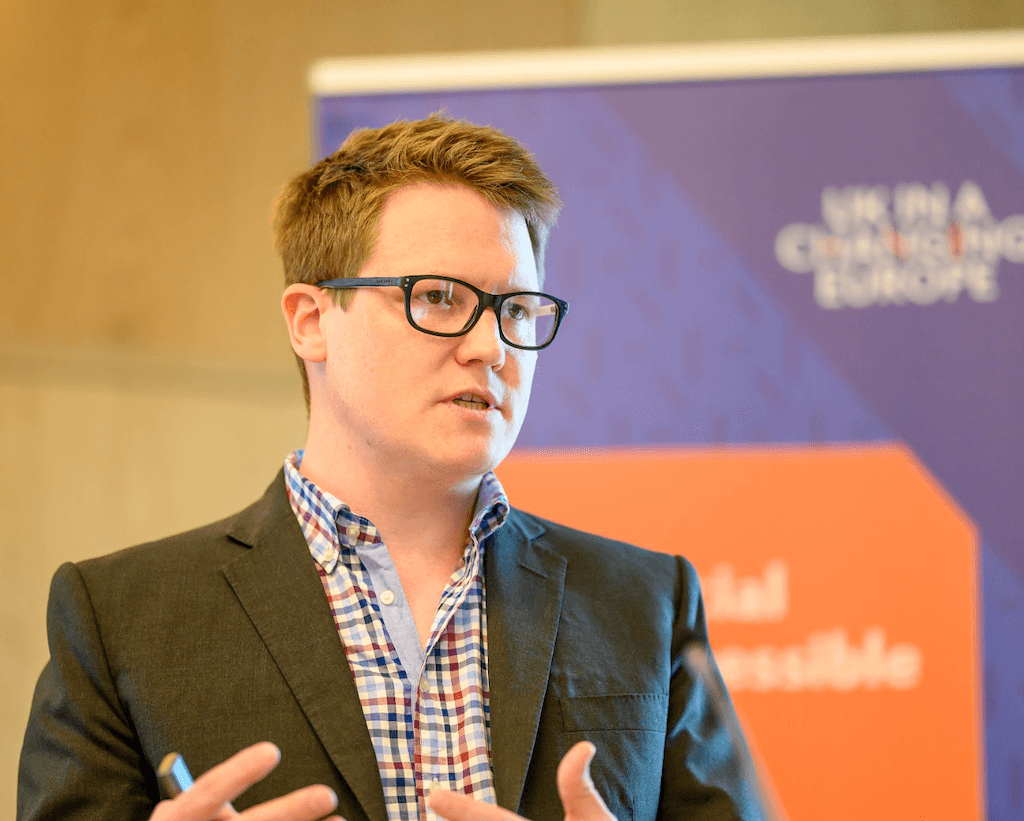
Professor Dan Hough, a leading expert on corruption and populist politics from the University of Sussex.
The transformation of global power dynamics, particularly in the post-Cold War era, has exposed vulnerabilities in the Western-dominated liberal multilateral order, leading to a multipolar world (dis)order. This shift has also curtailed the dominance of any single superpower, intensifying competition for influence and resources. This complex landscape has witnessed two notable political phenomena: the global rise of right- and left-wing populism and the adoption of Sharp Power Politics (SPP) by rising powers like Russia and China to enhance their global influence.
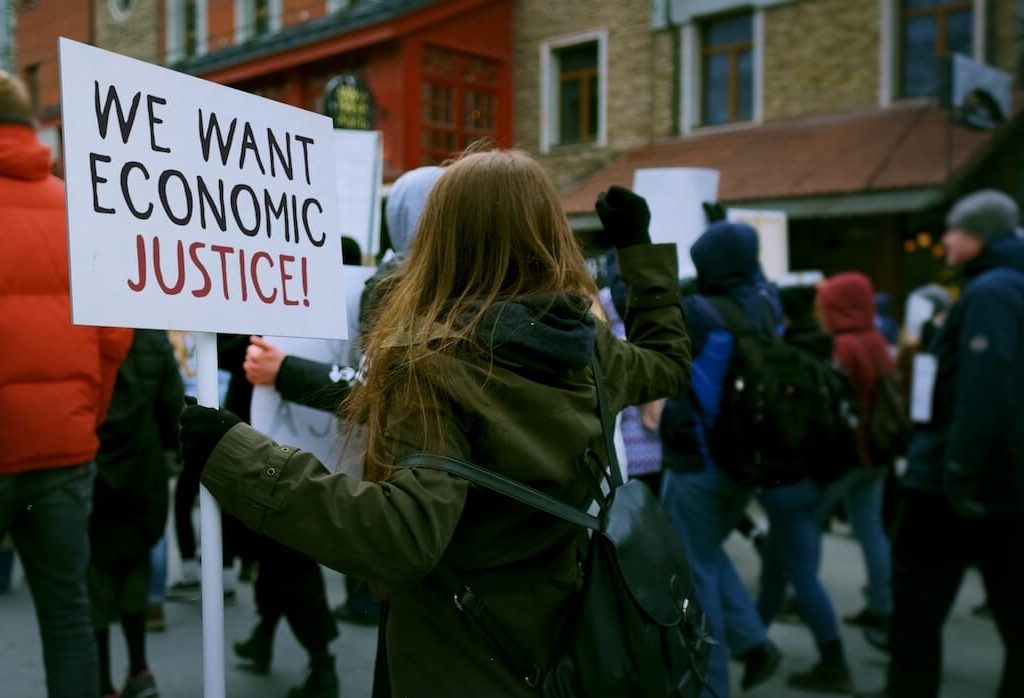
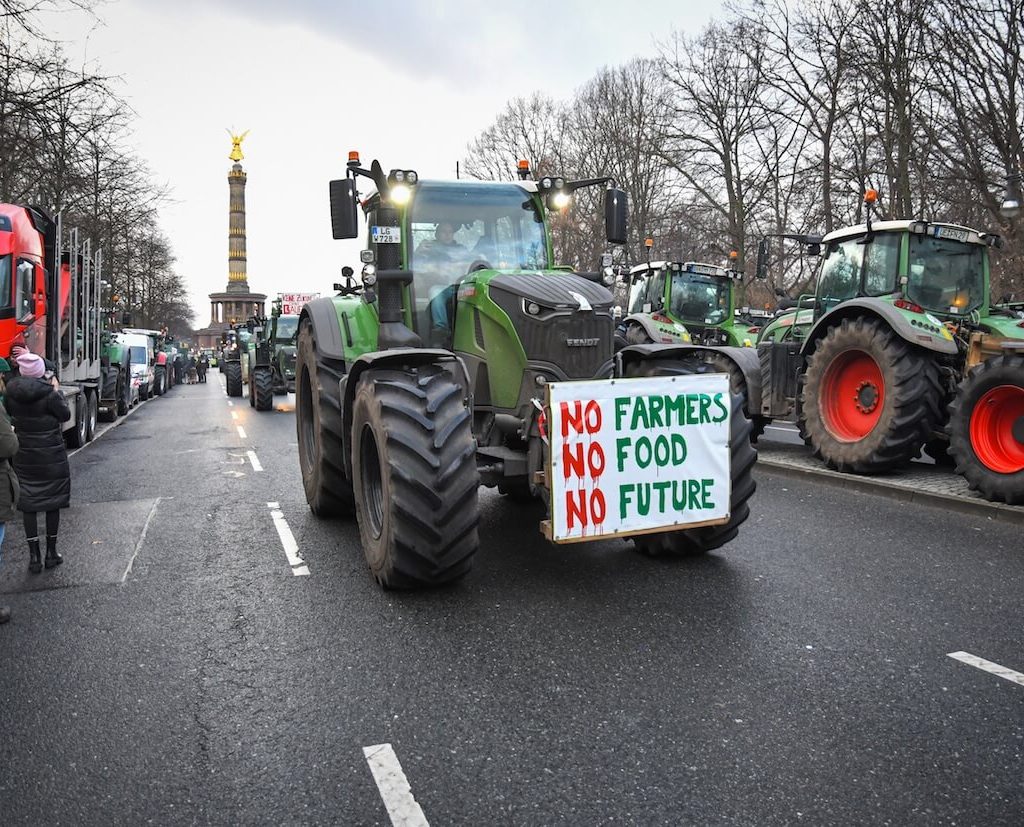
A protester holds a banner demanding economic justice. Photo: Shutterstock.Aerial drone view of a hybrid solar and wind farm in Bannister, NSW, Australia, featuring large wind turbines in the background generating renewable clean energy on a sunny day. Photo: Steve Tritton.Professor Thiemo Fetzer, an economist at the University of Warwick and the University of Bonn.Professor Dan Hough, a leading expert on corruption and populist politics from the University of Sussex.Farmers and truckers protest against subsidy cuts at the Brandenburg Gate in Berlin, Germany, on January 14, 2024. Photo: Shutterstock.
The emergence of this geopolitical landscape significantly limits the global cooperation necessary for collective action to effectively secure global public goods. Increasingly characterized by a “negative-sum game,” this environment poses deeply troubling implications for the future. It fosters the development of a causal chain in which populism, typically addressed at the national level, transcends borders and amplifies the influence of sharp-power politics.
While populists often portray themselves as champions of the people, challenging the established order on behalf of the masses, SPP co-opts populist rhetoric to serve the interests of authoritarian regimes, ultimately consolidating their power. A plausible transmission mechanism involves the gradual co-option of a functioning, though flawed, rule-based democracy by exclusionary, interest-driven coalitions of established elites. These elites prioritize their class interests at the expense of long-term efficiency, leading to stagnation. Over time, populist leaders exploit systemic vulnerabilities, using their rhetoric to gain power. If they maintain power long enough, they eventually transform the system into a form of authoritarianism, reinforcing this new status quo through sharp-power tactics both domestically and internationally to expand their influence and national interests.
Within this framework, the central aim of this article is to explore the extent to which the concept of “transnational populism” (TNP) can be considered an intermediate stage linking the progression from national-level populism to authoritarianism and, subsequently, to SPP beyond national borders. Following these theoretical discussions, the article also seeks to examine whether the notion of TNP can be inferred from the extensive use of populist rhetoric within China’s SPP framework, specifically in the context of the Belt and Road Initiative (BRI).
Please cite as: Yogo, Edouard Epiphane. (2025). “The Role of Populism in Redefining Citizenship and Social Inclusion for Migrants in Europe.” Populism & Politics (P&P). European Center for Populism Studies (ECPS). March 4, 2025. Doi: https://doi.org/10.55271/pp0048
Abstract This research examines the influence of populism on the redefinition of citizenship and social inclusion for migrants in Europe. It explores how populist movements leverage anti-immigrant sentiments to shape political discourse, laws, and societal attitudes. The study combines qualitative interviews with policymakers, activists, and migrants, and quantitative data from national surveys to analyze changes in citizenship laws and social inclusion challenges. Through case studies, it highlights variations in populist influence across European countries. The research concludes with policy recommendations aimed at fostering a more inclusive European society amidst rising populism.
Keywords: Populism, citizenship, social inclusion, migration dynamics, European societies
By Edouard Epiphane Yogo*
Introduction
The rise of populism in Europe has become one of the most significant political phenomena of the 21st century, fundamentally altering the political landscape and reshaping discussions surrounding citizenship and social inclusion for migrants. According to Arzheimer & Carter (2006), populist movements have emerged across various European countries, characterized by their anti-elite sentiments and a rhetoric that often scapegoats immigrants and minorities for societal issues (Arzheimer & Carter, 2006). As these movements gain traction, they exploit and amplify anti-immigrant sentiments, influencing political discourse, legislation, and societal attitudes toward migrants. This dynamic presents a critical need to explore how populism is redefining citizenship and the concept of social inclusion within the broader context of migration (Muis & Immerzeel, 2017).
At the heart of this inquiry lies a fundamental question: How does populism redefine the essence of citizenship? This question invites us to consider the shifts in legal frameworks, societal norms, and public perceptions surrounding the rights and identities of migrants in Europe (Mudde & Rovira Kaltwasser, 2018). The changing landscape of citizenship laws particularly the principles of jus soli (right of the soil) and jus sanguinis (right of blood) illustrates how populist narratives can reshape notions of national belonging (Varga & Buzogany, 2020). Moreover, the impact of these changes on the social integration of migrants poses significant implications for the cohesiveness of European societies.
To investigate these pressing issues, this research adopts a mixed-methods approach, combining qualitative interviews with policymakers, activists, and migrants with quantitative data derived from national surveys. This comprehensive analysis aims to uncover not only the changes in citizenship laws but also the challenges to social inclusion faced by migrants in various European contexts. By examining the intersection of populism and migration, the study seeks to illuminate how populist movements influence citizenship policies and shape societal attitudes toward migrants.
One of the central themes of this research is the influence of populist narratives on public perceptions of migrants. In today’s polarized political climate, media representations play a crucial role in shaping these perceptions (Giugni & Grasso, 2021). Populist leaders and parties often utilize rhetoric that stigmatizes migrants, framing them as threats to national security, cultural identity, and economic stability (Talani, 2021). Such narratives contribute to the development of negative stereotypes and social divisions, making it increasingly difficult for migrants to achieve social integration in education, employment, and healthcare (Scheiring et al., 2024).
The first section of the study will examine how populist narratives reinforce exclusive notions of citizenship. By analyzing the rhetoric employed by populist movements, the research will highlight the ways in which these narratives seek to define and limit national belonging. Furthermore, it will explore case studies of citizenship policy adjustments in select European countries, illustrating how populism has influenced legislative reforms aimed at restricting migrants’ rights and opportunities.
The second section will focus on the challenges to social inclusion for migrants under the influence of populism. By investigating the critical role of media in shaping public perceptions, the study will analyze the stigmatization of migrants and the resulting impacts on their ability to integrate into society. The research will delve into how negative portrayals in the media can lead to societal attitudes that hinder access to essential services, such as education, employment, and healthcare, ultimately affecting migrants’ social standing and quality of life.
In exploring the consequences of populist policies on social inclusion, the research will address the restrictive measures that impact integration efforts. These policies often prioritize the needs and rights of native citizens over those of migrants, resulting in systemic barriers that prevent meaningful social inclusion. The study will also incorporate case studies that illustrate the differentiated effects of populist policies based on varying economic and historical contexts across European countries. This analysis aims to demonstrate how local conditions shape the outcomes of populist approaches to social inclusion and migration dynamics.
To interpret these dynamics effectively, this research will utilize the phenomenological constructivism framework proposed by Peter Berger and Thomas Luckmann (Berger & Luckmann, 2011). According to Berger and Luckmann (2011), this theoretical approach posits that social reality is constructed through human interactions and is deeply influenced by the contexts in which these interactions occur. By applying this framework, the study will explore how populist narratives and policies are socially constructed and how they influence perceptions of citizenship and social inclusion (Mudde, 2014). This perspective will allow us to examine the processes through which migrants are categorized, marginalized, and included or excluded from the social fabric of European societies.
Using Berger and Luckmann’s insights, the research, based on phenomenological constructivism, will analyze how societal constructs surrounding nationality and belonging are negotiated and redefined in the context of populism (Rannikmäe et al., 2021). It will facilitate a deeper understanding of the ways in which individual and collective identities are shaped by populist discourse, as well as the implications of these construct s for migrants’ experiences of citizenship and social integration. By situating our analysis within this theoretical framework, we aim to highlight the significance of social constructions in shaping the realities of migrants in Europe. In addition to phenomenological constructivism, this research will also employ François Thual’s geopolitical method to provide a comprehensive understanding of the interplay between populism, citizenship, and social inclusion (Rannikmäe et al., 2021). Thual’s approach emphasizes the importance of contextual factors such as geography, history, and socio-political dynamics in shaping political behavior and policy decisions. This method allows us to analyze how populist movements are not only a response to immediate political conditions but are also deeply rooted in historical and geographical contexts that influence their evolution and impact (Thual, 1996).
Thual’s geopolitical method will guide the exploration of how different European countries experience and respond to populism in distinct ways (Loyer, 2019). By examining the geographical and historical backgrounds of specific case studies, we can uncover the localized factors that drive populist sentiments and how these sentiments manifest in citizenship laws and social inclusion policies (Zajec, 2018). This analytical lens will enhance our understanding of why certain countries adopt more restrictive policies while others may strive for inclusivity in the face of populism.
As the research unfolds, it will emphasize the need for inclusive policies that can counteract the negative effects of populism on citizenship and social inclusion. By synthesizing the findings, the study will conclude with policy recommendations aimed at fostering a more inclusive European society in the face of rising populism. These recommendations will focus on strategies that promote equitable access to rights and opportunities for migrants, thereby enhancing social cohesion and countering the divisive narratives propagated by populist movements.
In summary, this research seeks to illuminate the complex interplay between populism, citizenship, and social inclusion for migrants in Europe. By examining the influence of populist narratives on public perceptions and legislative reforms, the study will provide valuable insights into the challenges migrants face in achieving social integration. Ultimately, the findings will underscore the importance of developing inclusive policies that address the needs and rights of all members of society, fostering a more equitable and cohesive European community amidst the challenges posed by populism.
The Impact of Populism on the Redefinition of Citizenship
In the current global landscape shaped by the rise of populism, discussions around citizenship and national identity have gained renewed significance. Recent changes in citizenship laws reflect the increasing influence of populist movements that seek to redefine national belonging. This document will examine two key aspects: Changes in citizenship laws and principles under populist influence (A) and the relationship between populism and the concept of national identity (B), highlighting the tensions and redefinitions that arise.
Changes in Citizenship Laws and Principles Under Populist Influence
Discussing on changes in citizenship laws and principles leads us to examine two key areas. Firstly, the shifts in jus soliand jus sanguinis citizenship principles (1) and secondly, the influence of populist discourse on recent legislative reforms (2).
Analysis of Shifts in Jus Soli and Jus Sanguinis under Populist Influence
The principles of jus soli (right of the soil) and jus sanguinis (right of blood) are long-established frameworks that define how individuals acquire nationality (Retailleau, 2024). Jus soli grants citizenship to those born within a country’s territory, promoting inclusion and diversity, while jus sanguinis bases citizenship on parentage, linking it to lineage and heritage. Many countries have historically blended both principles to accommodate social and political contexts. However, the rise of populist movements has altered how these principles are applied, with significant implications for citizenship laws (El País, 2024).
Populism, characterized by its anti-immigration and nationalist rhetoric, has shifted the conversation toward more restrictive definitions of citizenship, often challenging jus soli by framing it as too inclusive (Giugni & Grasso, 2021; Le Monde, 2024). Populist leaders argue that automatic birthright citizenship allows individuals with no cultural or historical ties to the nation to gain full membership. For example, in the United States, under the Trump administration, jus solicame under scrutiny, with arguments about “anchor babies” used to portray birthright citizenship as a loophole exploited by immigrants (Schmidt, 2019).
Similarly, in Europe, populist movements have pushed for limiting or abolishing jus soli to preserve national identity. Germany, for instance, had integrated jus soli to respond to globalization, but recent populist pressures aim to reverse these changes.
While jus soli face restrictions, populist leaders have embraced jus sanguinis. This principle aligns with their focus on ethnicity, heritage, and national purity, promoting a more exclusionary form of citizenship based on ancestral ties (Le Monde, 2024). In Hungary, for instance, Prime Minister Viktor Orbán’s policies prioritize ethnic Hungarian identity, offering citizenship to ethnic Hungarians abroad while maintaining a rigid stance against immigrants and refugees. Likewise, Italy emphasizes jus sanguinis, granting citizenship to individuals of Italian descent but placing increasing scrutiny on migrants and refugees (Le Monde, 2024; Kymlicka, 2001).
The preference for jus sanguinis reflects a broader trend of ethno-nationalism under populist regimes. By favoring bloodline-based citizenship, populists create a narrower definition of national identity, excluding individuals without ancestral ties to the country (Joppke, 2010). This shift has serious consequences for social cohesion, as it marginalizes immigrants and minorities, potentially deepening societal divides.
The erosion of jus soli particularly affects children born to immigrant families, who may face statelessness or legal obstacles to full integration. Meanwhile, the reinforcement of jus sanguinis perpetuates exclusionary notions of citizenship, creating a tiered system where only those with ethnic or cultural ties to the state are considered full citizens (Le Monde, 2024). This dynamic threatens to alienate large segments of the population, especially in multicultural societies, contributing to increased social tensions.
The changes to jus soli and jus sanguinis driven by populist movements illustrate a shift toward restrictive and exclusionary citizenship policies. These alterations not only affect individuals directly impacted by more rigid laws but also have broader implications for the social and political stability of nations grappling with diversity and globalization (Giugni & Grasso, 2021). As populist ideologies continue to shape political discourse, the future of citizenship laws remains a contentious issue.
Influence of Populist Discourse on Legislative Reforms
Populism has significantly impacted global politics, shaping discourse and driving legislative reforms. Defined by its appeal to “the people” against perceived elites, populism thrives on nationalism, anti-globalization, anti-immigration, and protectionism (Destradi & Plagemann, 2019). Populist leaders push simplified solutions to complex issues, leaving lasting effects on policies related to immigration, citizenship, labor laws, and the judiciary.
Populism views politics as a battle between the “pure” people and the “corrupt” elites, positioning populist leaders as defenders of the common citizen against established institutions. Exploiting grievances over economic inequality, cultural alienation, or fears of losing national identity, populists advocate for radical reforms (Olivas Osuna, 2020). Their emotionally charged rhetoric resonates with voters who feel marginalized, fostering a political environment that supports swift, often divisive, legislative changes.
One of the most significant areas of populist influence is immigration and citizenship policy. Populists frame immigration as a threat to national identity and economic security, pushing for stricter controls. In the US, Donald Trump’s administration implemented controversial policies such as the Muslim Ban and attempted to end birthright citizenship (Inglehart, 2016). These moves, rooted in populist rhetoric, sought to restrict immigration and tighten borders, casting immigrants as burdens on the system. Similarly, in Europe, populist leaders like Hungary’s Viktor Orbán have championed anti-immigration laws, presenting migrants as threats to national security and Christian identity (Dahlgren, 2006). These legislative changes, shaped by populism, have led to a more hostile environment for migrants and refugees, contributing to growing xenophobia.
Economic protectionism is another key area influenced by populism. Populist leaders, responding to fears of globalization and job displacement, advocate for policies that protect domestic industries. Trump’s “America First” rhetoric resulted in tariffs aimed at protecting American jobs, leading to trade wars with countries like China (Jones, 2019). While these policies offered short-term relief to certain industries, they also raised consumer prices and strained international trade relations. In Europe, populist figures like Marine Le Pen in France and Matteo Salvini in Italy have similarly pushed for economic protectionism, though such policies often hinder long-term growth and international cooperation (Destradi & Plagemann, 2019).
Populists also target the judiciary, portraying it as an elitist institution disconnected from the people. This view justifies legislative reforms that increase executive control over the judiciary, undermining democratic checks and balances (Bauer & Becker, 2020). In Poland, the populist Law and Justice Party (PiS) introduced reforms giving the government greater control over judicial appointments, weakening judicial independence. Turkey’s Recep Tayyip Erdogan similarly used populist discourse to justify constitutional changes that consolidated executive power and diminished the judiciary’s role (Blokker, 2019). These reforms, driven by populist ideals, threaten democratic governance by reducing the separation of powers and weakening the rule of law.
Cultural nationalism is another area where populist discourse drives legislative changes. Populist leaders often promote national culture while resisting multiculturalism. In India, Prime Minister Narendra Modi’s government enacted the Citizenship Amendment Act (CAA) of 2019, which grants citizenship to non-Muslim refugees, marginalizing Muslims and promoting Hindu nationalism (Adamidis, 2021). This, along with the National Register of Citizens (NRC), exemplifies how populist rhetoric can shape exclusionary legislative reforms, reshaping national identity along religious lines (Tushnet, 2020).
Populism’s influence on legislative reforms is profound, particularly in immigration, economics, judiciary control, and national identity. Although populists claim to represent the will of the people, their policies often lead to restrictive, exclusionary measures that challenge democratic principles (Löfflmann, 2022). As populism continues to grow, its influence on legislative processes will likely persist, raising concerns about the future of democratic governance and civil liberties worldwide.
Populism and the Concept of National Identity
This section delves into the relationship between populism and national identity, focusing on two critical aspects: The use of anti-immigrant rhetoric to reinforce exclusive notions of citizenship, highlighting how such discourse seeks to define and limit national belonging (1) and Case studies of citizenship policy adjustments in select European countries (2).
The Use of Anti-immigrant Rhetoric to Reinforce Exclusive Citizenship
Populist leaders frequently employ anti-immigrant rhetoric to portray immigrants as existential threats to a nation’s cultural, economic, and social fabric. This rhetoric becomes a powerful tool to shape national identity in exclusionary terms, typically casting immigrants as outsiders based on racial, ethnic, or religious differences (Muis & Immerzeel, 2017). Through this discourse, populist movements argue that immigrants dilute national culture, displace native workers, and strain public resources, all while posing threats to national security. By framing immigration in such stark terms, populist rhetoric fosters fear and division, creating a political climate in which restrictive and exclusionary citizenship policies can be justified (Mudde, 2014).
At the core of populist anti-immigrant rhetoric lies the concept of an “authentic” national identity one that is rooted in historical, cultural, and sometimes religious heritage. This identity is portrayed as under siege by foreign influences, particularly immigrants who are seen as incapable of integrating into the national fabric (Rannikmäe et al., 2021). Populist leaders often evoke a sense of nostalgia for a perceived golden age when national culture was more “pure” or homogeneous, untainted by external influences. This idealized past is contrasted with the present, where immigration is depicted as eroding the cultural unity and social cohesion of the nation (Talani, 2021). By appealing to this notion of cultural purity, populist leaders can present themselves as defenders of the nation’s true identity, rallying support from those who feel alienated or threatened by globalization and multiculturalism.
Immigrants, particularly those from non-Western or non-Christian backgrounds, are often depicted as fundamentally different from and incompatible with the values, traditions, and way of life of the host country (Giugni & Grasso, 2021). This portrayal not only amplifies existing prejudices but also legitimizes exclusionary policies. In many populist narratives, immigrants are scapegoated for a range of societal problems from unemployment and housing shortages to crime and the perceived decline of national values. This scapegoating simplifies complex socio-economic issues, presenting immigration as the primary cause of these challenges and offering a convenient target for public anger and frustration (Varga & Buzogany, 2020).
The distinction between “us” (native citizens) and “them” (immigrants) is a central feature of populist rhetoric. This binary division serves to reinforce a sense of national unity among the “native” population while casting immigrants as a threatening “other” (National Academies of Sciences, Engineering & Medicine, 2015). This division is often racialized, with immigrants from non-European or non-Christian backgrounds portrayed as more dangerous or culturally alien. In some cases, populists draw on religious differences, framing Muslim immigrants, for example, as a threat to secular or Christian values (National Academies of Sciences, Engineering & Medicine, 2015).
These distinctions are used to justify policies that restrict immigrants’ access to citizenship, limit their rights, and reduce their opportunities for social and economic integration (Manatschal et al., 2020). One of the most prominent ways in which this rhetoric translates into policy is through reforms aimed at restricting immigration and tightening citizenship requirements. Populist leaders often advocate for measures that make it more difficult for immigrants to acquire legal status, obtain work permits, or access public services (Varga & Buzogany, 2020). In some cases, they push for the revocation of citizenship for naturalized immigrants who are deemed to have violated national norms or values. These policies are framed as necessary steps to protect the nation’s identity and security, resonating with voters who feel that their cultural heritage and economic opportunities are being undermined by immigration.
This anti-immigrant rhetoric also extends to asylum seekers and refugees, who are often portrayed as economic migrants in disguise, seeking to exploit the nation’s welfare system rather than fleeing genuine persecution (Talani, 2021). By blurring the lines between refugees and economic migrants, populist leaders erode public sympathy for those seeking asylum and create a narrative in which all forms of immigration are seen as illegitimate or dangerous. This narrative provides political cover for policies that deny refugees access to asylum processes, push them back at borders, or place them in detention centers with limited legal rights (Hammar, 1990).
Beyond shaping immigration and asylum policies, populist rhetoric also influences broader social attitudes. By constantly framing immigrants as threats to national security and culture, populist leaders normalize xenophobic and exclusionary attitudes (Löfflmann, 2022). This not only stokes fear and resentment among the native population but also creates an environment in which discrimination against immigrants and minorities is more likely to be tolerated or even encouraged. In some cases, this rhetoric has been linked to increases in hate crimes and other forms of violence against immigrant communities (Varga & Buzogany, 2020).
Moreover, populist anti-immigrant rhetoric undermines the principles of equality and inclusion that are foundational to democratic citizenship. By advocating for policies that exclude certain groups based on their race, religion, or ethnicity, populist leaders challenge the idea of universal citizenship and equal rights for all individuals within a nation (Giugni & Grasso, 2021). Instead, they promote a hierarchical vision of citizenship, where some individuals are deemed more deserving of rights and protections than others based on their cultural or ethnic background.
Anti-immigrant rhetoric serves as a key tool for populist leaders to shape national identity in exclusionary terms. By portraying immigrants as threats to culture, economy, and security, populists legitimize policies that restrict immigration, deny citizenship, and limit the rights of minorities (Talani, 2021). This rhetoric not only fuels fear and division but also reshapes public policy in ways that undermine the principles of equality and inclusion, leading to a more fragmented and polarized society. As populist movements continue to gain traction globally, the challenge of balancing national identity with inclusivity and tolerance remains a pressing issue for modern democracies (Muis & Immerzeel, 2017).
Case Studies of Citizenship Policy Adjustments in Select European Countries
Across Europe, populist movements have played a pivotal role in shaping national identity and citizenship policies, often pushing for more restrictive laws that make it harder for immigrants to gain citizenship or legal residency. This shift reflects the growing influence of populist rhetoric, which frames immigration as a threat to national culture and security. By examining the cases of Hungary, Italy, and France, it becomes evident how populist leaders have redefined national identity and driven legislative reforms that reflect exclusionary views of citizenship.
In Hungary, under Prime Minister Viktor Orbán, the government has adopted a strongly anti-immigrant stance, particularly targeting Muslim-majority countries. Orbán’s administration has positioned itself as the defender of Hungary’s Christian identity, presenting immigration as an existential threat to the nation’s cultural and religious fabric (Varga & Buzogany, 2020). The construction of border fences to block refugees, along with Hungary’s refusal to participate in EU refugee resettlement programs, demonstrates the government’s commitment to preventing the settlement of immigrants (Palonen, 2018). This emphasis on exclusion is further reflected in the tightening of citizenship laws, which aim to maintain a homogenous national identity, rooted in ethnic and religious purity.
A key piece of legislation that encapsulates Hungary’s approach to immigration is the “Stop Soros” law, named after Hungarian-American philanthropist George Soros, who has supported pro-migrant policies (Hutter & Kriesi, 2019). The law criminalizes aid to asylum seekers and organizations working with immigrants, reinforcing the idea that immigrants are unwelcome in Hungary. Orbán’s government has used this law to portray immigrants as threats to the nation, while redefining Hungarian national identity along ethnically and religiously exclusionary lines. By positioning itself as the protector of a pure, Christian Hungary, the government has marginalized anyone perceived as foreign or different, particularly those from Muslim backgrounds (Pappas, 2019).
Italy, another example of populist influence on citizenship policies, has seen significant changes under the leadership of Matteo Salvini, head of the right-wing League party. Salvini, who served as Deputy Prime Minister and Interior Minister, built his political platform around the idea of protecting Italy’s national identity from the perceived dangers of immigration (Varshney, 2021). His “Italians First” campaign emphasized limiting immigration, particularly from Africa and the Middle East, as a way to safeguard Italy’s cultural and economic interests.
Salvini’s government enacted several legislative changes that made it harder for immigrants to gain legal residency and citizenship. For example, the “security decree” introduced during his tenure tightened residency requirements and made it easier for the government to revoke asylum status. These policies were framed as necessary for maintaining public safety and reducing the immigrant population (Mudde & Kaltwasser, 2017). By casting immigrants as criminals or economic burdens, Salvini tapped into public anxieties about national identity and security, securing popular support for more restrictive immigration and citizenship laws. His efforts also extended to children born to foreign parents in Italy, for whom gaining citizenship became increasingly difficult under the new regulations.
France, under the influence of Marine Le Pen and her National Rally party, has similarly witnessed a rise in populist-driven immigration policies. Le Pen has long advocated for a reduction in immigration and the protection of French identity, positioning herself as a defender of the nation’s cultural heritage (Mayer, 2013). Her party has pushed for laws that would end birthright citizenship, making it harder for children born in France to immigrant parents to acquire citizenship (Soffer, 2022). This approach reflects a broader desire to redefine French citizenship in exclusive terms, prioritizing the interests of native-born citizens over those of immigrants.
Le Pen’s framing of national identity is closely tied to the preservation of France’s cultural and historical legacy, often in opposition to immigration from Muslim-majority countries. During her 2017 and 2022 presidential campaigns, Le Pen emphasized the need to protect French values from external influences, linking immigration to issues of national security, cultural erosion, and economic instability (Bonikowski et al., 2018). While she has not won the presidency, her influence has pushed mainstream political parties in France to adopt stricter stances on immigration and citizenship, showing the broader impact of her populist rhetoric.
In all three countries, populist leaders have successfully reshaped public discourse around immigration and citizenship, using anti-immigrant rhetoric to justify more restrictive policies. By framing immigrants as threats to national identity and security, they have fostered a climate of fear and division, where exclusionary measures are seen as necessary to protect the cultural and social fabric of the nation (Mudde & Kaltwasser, 2017). This dynamic not only makes it more difficult for immigrants to integrate and gain citizenship but also redefines what it means to be a member of the nation, often in ways that marginalize racial, ethnic, and religious minorities.
Clearly, populist movements across Europe have significantly influenced citizenship policies by promoting exclusionary definitions of national identity. Whether in Hungary, Italy, or France, populist leaders have used anti-immigrant rhetoric to push for legislative reforms that limit immigration, restrict access to citizenship, and reinforce a narrow conception of national belonging. These changes reflect broader concerns about preserving cultural homogeneity in an increasingly globalized world, where immigration is often framed as a threat rather than a source of enrichment.
Challenges to Social Inclusion for Migrants Under Populism
In today’s polarized political climate, media representations play a crucial role in shaping public perceptions of migrants. These portrayals can significantly influence societal attitudes and policies. This study will explore two key areas: Media representations and public perceptions of migrants (A) and the consequences of populist policies on social inclusion (B), examining how these narratives and policies interact and impact marginalized communities.
Media Representations and Public Perceptions of Migrants
In this section, we investigate the critical role of media in shaping public perceptions of migrants. We focus on two key aspects: first, the influence of populist narratives on the stigmatization of migrants, examining how these narratives contribute to negative stereotypes and social divisions; and second, the impacts of these perceptions on social integration in education, employment, and healthcare, highlighting the challenges migrants face in accessing essential services and opportunities in society.
Influence of Populist Narratives on Migrant Stigmatization
Populist narratives have a powerful influence on the stigmatization of migrants, shaping public perceptions in ways that often fuel fear, division, and hostility. These narratives simplify complex social issues by framing migrants as threats to national identity, economic stability, and security, which amplifies existing societal tensions. In many countries, populist leaders use anti-immigrant rhetoric to galvanize political support, constructing migrants as scapegoats for various social and economic challenges (Abrajano & Hajnal, 2015). This stigmatization has far-reaching consequences, reinforcing negative stereotypes and shaping public policy in exclusionary ways.
At the heart of populist narratives is the concept of “otherness,” where migrants are depicted as fundamentally different from the native population. This otherness is often framed along ethnic, racial, or religious lines, with migrants presented as a homogeneous group that poses a threat to the nation’s cultural identity. In Europe, for instance, populist parties frequently depict Muslim migrants as unwilling or unable to assimilate into Western societies, associating them with extremism or radicalism (Hawley, 2016). This portrayal suggests that migrants are not merely different but incompatible with the nation’s values and way of life. Populist leaders, such as Marine Le Pen in France or Viktor Orbán in Hungary, leverage these fears of cultural erosion to rally support, positioning themselves as protectors of the nation’s authentic identity (Wojczewski, 2019).
Populist rhetoric often goes beyond cultural concerns to frame migrants as economic threats, claiming that they steal jobs, exploit social services, and drain public resources. This portrayal is particularly prevalent during economic downturns, when populist leaders can channel public anxieties about unemployment and financial insecurity into anti-immigrant sentiment (Steele & Homolar, 2019). Migrants are depicted as competitors for scarce resources, pitting them against native citizens in a zero-sum game where the prosperity of one group is seen as coming at the expense of the other. The media plays a significant role in perpetuating this narrative by sensationalizing stories of migrants benefiting from welfare or engaging in criminal activities, often without providing context or balance (Betz, 1994). This selective reporting reinforces the perception that migrants are a burden on society, even when evidence shows their positive contributions to the economy.
In addition to cultural and economic threats, populist narratives often link migrants to security risks, portraying them as potential criminals or terrorists. This is particularly pronounced in countries that have experienced terrorist attacks, where populist leaders frequently draw direct connections between immigration and security (Kubin & von Sikorski, 2021). By framing migrants as dangerous outsiders who pose a threat to national safety, populist leaders can justify restrictive immigration policies and securitization measures. In the United States, for example, President Donald Trump used rhetoric that depicted migrants (Becker, 2019), especially those from Latin America, as criminals and rapists, capitalizing on fears of crime to promote his anti-immigration agenda (Norris & Inglehart, 2019). This rhetoric resonates with portions of the electorate who are already concerned about safety and security, amplifying support for exclusionary policies.
Populist leaders skillfully use media platforms to spread these narratives, particularly in today’s highly polarized media landscape. Traditional news outlets, social media, and even political advertisements become conduits for anti-immigrant rhetoric, allowing populist leaders to reach broad audiences with messages that vilify migrants. In this environment, misinformation and sensationalism thrive (Kubin & von Sikorski, 2021). False or exaggerated stories about migrant crime rates, welfare fraud, or cultural clashes circulate widely, reinforcing negative perceptions of migrants. Social media, in particular, has proven to be a fertile ground for these narratives, where algorithms amplify divisive content and create echo chambers that reinforce preexisting biases (Gidron & Bonikowski, 2013).
The consequences of this stigmatization are profound and far-reaching. As populist narratives gain traction, public opinion shifts toward greater hostility and mistrust of migrants, making it easier for populist leaders to enact exclusionary policies. This shift in public sentiment often leads to increased support for policies that restrict immigration, limit access to citizenship, and curtail the rights of refugees and asylum seekers (Mudde, 2019). For example, in Hungary, Viktor Orbán’s government has passed a series of laws that severely limit immigration and criminalize activities that support asylum seekers, framing these measures as necessary to protect Hungary’s Christian identity. In Italy, Matteo Salvini’s anti-immigrant rhetoric helped fuel the passage of laws that tightened residency requirements and made it easier to revoke asylum statuses, reflecting a broader European trend of hardening immigration policies.
Beyond policy, the stigmatization of migrants has deep social consequences. It fosters an environment where xenophobia and discrimination become normalized, affecting the daily lives of migrants and their ability to integrate into society (Wodak, 2015). Migrants face prejudice in the workplace, in schools, and in public spaces, often experiencing social exclusion and hostility based on their perceived status as outsiders. This stigmatization also fuels tensions between native populations and migrant communities, deepening social divisions and undermining efforts toward inclusion and cohesion.
Impacts on Social Integration in Education, Employment, and Healthcare
The stigmatization of migrants, fueled by populist narratives, significantly impacts their social integration in key areas such as education, employment, and healthcare. These effects not only hinder the ability of migrants to contribute to society but also exacerbate social divisions, perpetuating cycles of marginalization and exclusion (Varga & Buzogany, 2020). By examining these three critical sectors, we can better understand how negative perceptions of migrants shape their experiences and opportunities in host countries.
In the realm of education, migrant children often face significant challenges that hinder their ability to integrate successfully. Populist rhetoric can create an environment of hostility in schools, where migrant students may be perceived as outsiders or even blamed for the struggles faced by the local population (Palonen, 2018). This stigma can lead to bullying, discrimination, and social isolation, significantly impacting the emotional and psychological well-being of these children (Hutter & Kriesi, 2019). Additionally, language barriers and differences in educational backgrounds can further complicate their integration. Schools may lack the necessary resources and training to support non-native speakers, resulting in disparities in academic achievement and engagement (Mayer, 2013). Consequently, many migrant children may fall behind their peers, limiting their educational opportunities and long-term prospects.
Furthermore, the negative perceptions of migrants can influence the attitudes of teachers and school administrators, leading to biased expectations and treatment. In environments where populist sentiments prevail, educators may unconsciously lower their expectations for migrant students, perpetuating a cycle of disadvantage (Soffer, 2022). This systemic bias can result in fewer opportunities for advanced coursework or extracurricular activities, limiting the social networks that are crucial for future success. As a result, the educational system, instead of serving as a vehicle for social mobility, can reinforce existing inequalities, ultimately affecting the broader societal fabric.
In the employment sector, stigmatization often manifests in barriers to job opportunities and professional advancement for migrants. Populist narratives typically portray migrants as competitors for jobs, leading to negative stereotypes that they are less qualified or less committed than native workers (Mudde & Kaltwasser, 2017). This perception can result in discriminatory hiring practices, where employers may favor native candidates over equally qualified migrants. Studies have shown that migrants, particularly those from non-Western backgrounds, often face significant hurdles in securing employment, despite possessing relevant skills and qualifications (Pappas, 2019). They may be relegated to low-wage jobs or sectors characterized by high turnover and job insecurity, limiting their economic mobility and integration.
Moreover, even after securing employment, migrants may encounter challenges in the workplace stemming from stigma. They might face harassment, exclusion from social networks, or limited access to professional development opportunities (Giugni & Grasso, 2021). This can create a hostile work environment that not only affects job satisfaction but also impacts overall mental health and well-being. The lack of upward mobility can lead to a sense of disillusionment and alienation, reinforcing feelings of being an outsider in their host society (Kymlicka, 2001).
In terms of healthcare, the stigma surrounding migrants can create significant barriers to accessing essential services. Fear of discrimination or negative treatment can deter migrants from seeking medical care, even when needed (Goodman, 2010). Populist narratives often frame migrants as burdens on public health systems, perpetuating the idea that they are undeserving of resources and services. This perception can lead to healthcare providers exhibiting implicit biases, resulting in inadequate treatment or care (Joppke, 2010). Migrants may experience delays in receiving necessary medical attention, contributing to poorer health outcomes.
Additionally, cultural differences and language barriers can further complicate healthcare access for migrants. Many may struggle to navigate complex healthcare systems or communicate their needs effectively, leading to misunderstandings and misdiagnoses. In some cases, these barriers can prevent migrants from receiving preventive care, increasing their vulnerability to chronic health conditions and exacerbating existing health disparities.
The impact of these challenges extends beyond individual migrants; it affects families and communities as well. When migrants struggle to integrate into education, employment, and healthcare systems, it creates a cycle of disadvantage that can perpetuate intergenerational poverty and marginalization (Bauer & Becker, 2020). Children of migrants may inherit these challenges, facing compounded obstacles in their own efforts to integrate and succeed. This can lead to a lack of social cohesion, where communities become polarized along lines of nationality, ethnicity, or immigration status.
To end, the stigmatization of migrants, largely driven by populist narratives, has profound impacts on their social integration across education, employment, and healthcare sectors. These negative perceptions hinder the ability of migrants to access opportunities, contribute to society, and achieve their full potential. The consequences of this marginalization are far-reaching, not only affecting the lives of migrants but also undermining the social fabric of host communities. To foster greater social integration, it is essential to combat harmful stereotypes and promote inclusive policies that recognize and value the contributions of migrants. By addressing these barriers, societies can work towards a more equitable and cohesive future, benefiting everyone involved.
Consequences of Populist Policies on Social Inclusion
Exploring the consequences of populist policies on social inclusion compels us to understand the restrictive measures that impact inclusion and integration. Additionally, it invites us to examine case studies that illustrate the differentiated effects of these policies based on varying economic and historical contexts.
Restrictive Policies on Inclusion and Integration
The rise of populist movements across various countries has led to the implementation of restrictive policies that significantly impact social inclusion and integration, particularly for migrants and marginalized communities (Varshney, 2021). These policies are often framed as necessary measures to protect national identity, security, and the interests of the native population, but they frequently create barriers that hinder the full participation of individuals from diverse backgrounds in society.
One of the most significant aspects of restrictive policies is the tightening of immigration laws, which can result in limited pathways for legal residency and citizenship for migrants. Many populist governments have introduced measures that require higher income thresholds, extensive documentation, or language proficiency tests that disproportionately disadvantage less affluent or non-native speakers (Blokker, 2019). Such requirements not only exclude potential immigrants but also create an environment of uncertainty and fear among those already residing in the country (Adamidis, 2021). The fear of deportation or legal repercussions can deter migrants from seeking essential services, including healthcare, education, and employment, thereby exacerbating their marginalization.
Moreover, these policies often reinforce negative stereotypes about migrants, portraying them as potential threats to public safety or as burdens on social services. Populist rhetoric frequently capitalizes on economic anxieties by suggesting that migrants take jobs from locals or strain public resources (Tushnet, 2020). This narrative is particularly powerful during times of economic downturn, where competition for jobs and services is heightened. As a result, policies that restrict access to social benefits for migrants can lead to a situation where these individuals are excluded not only from economic opportunities but also from social protections that are essential for integration (Hammar, 1990).
In many countries, populist leaders have also targeted specific groups of migrants, often based on their nationality, ethnicity, or religion. For example, anti-immigrant laws may specifically affect those from predominantly Muslim countries or refugees fleeing conflict (Schmidt, 2019). This targeted exclusion fosters a climate of division, where certain communities are systematically marginalized. In schools, workplaces, and neighborhoods, this can lead to increased tension and hostility, making it challenging for migrants to form connections with the broader community and hindering their ability to integrate socially (Ruhs & Vargas-Silva, 2015).
Furthermore, restrictive policies on inclusion are often accompanied by a lack of investment in programs that promote social cohesion and integration. For instance, funding for language classes, job training, and cultural exchange initiatives may be cut or deprioritized in favor of enforcement mechanisms aimed at controlling immigration (Giugni & Grasso, 2021). This lack of support means that even those migrants who wish to integrate and contribute to their new communities face significant obstacles (Rannikmäe et al., 2021). The absence of inclusive policies sends a clear message that diversity is not welcomed, further entrenching social divisions.
In addition to impacting migrants, these restrictive policies can have broader societal implications. By promoting exclusion rather than inclusion, populist policies undermine the social contract that binds communities together (Bonikowski et al., 2018). This erosion of trust can lead to increased polarization within society, where divisions based on nationality, ethnicity, and class are exacerbated. The resultant societal fragmentation can hinder collective action and diminish the capacity for communities to address common challenges, ultimately impacting national cohesion and stability.
To counteract the negative impacts of these policies, it is crucial for governments and civil society to advocate for more inclusive approaches to social integration. This involves not only reforming immigration laws to create fair and accessible pathways to residency and citizenship but also investing in programs that promote understanding and collaboration among diverse communities (Manby, 2018). By fostering an environment of inclusivity, societies can harness the potential contributions of migrants and build resilient communities that thrive on diversity rather than fear.
Case Studies on Differentiated Effects Based on Economic and Historical Contexts
The consequences of populist policies on social inclusion are not uniform; they vary significantly based on the economic and historical contexts of different countries (Mudde & Rovira Kaltwasser, 2017). Examining case studies from diverse regions provides valuable insights into how populism shapes social inclusion and reveals the complexities of these dynamics.
One notable example is the case of Hungary under PM Orbán. Hungary’s historical context, shaped by its post-communist transition and ongoing struggles with national identity, has made it particularly susceptible to populist rhetoric (Norris & Inglehart, 2019). Orbán’s government has employed a narrative that frames immigration as a threat to Hungary’s Christian identity and cultural homogeneity (Becker, 2019). As a result, restrictive policies have been implemented, including the construction of border barriers and the introduction of laws aimed at criminalizing support for asylum seekers.
These measures have had profound effects on social inclusion in Hungary. The narrative of an “us versus them” mentality has resulted in a climate of fear among migrants and refugees, many of whom have faced violence and discrimination (Győrffy, 2018). The historical context of Hungary’s tumultuous past has contributed to a national discourse that prioritizes ethnic homogeneity, leading to the marginalization of diverse groups. Consequently, the restrictive policies have not only limited the rights and opportunities of migrants but have also created a polarized society where fear and hostility thrive (Bugaric & Kuhelj, 2018).
In contrast, the case of Canada illustrates a different approach to populism and social inclusion. While Canada has experienced populist movements, its historical context of multiculturalism and immigration has shaped a more inclusive national identity (Triandafyllidou, 2015). Policies that promote diversity and integration, such as the Multiculturalism Act, have fostered an environment where immigrants are seen as valuable contributors to society (Kymlicka & Banting, 2006). While populist rhetoric has attempted to challenge this narrative, the overall economic and historical framework has led to a more resilient approach to social inclusion.
Canada’s commitment to welcoming refugees and immigrants has resulted in positive economic outcomes, as diverse groups bring varied skills and perspectives that enrich the workforce. However, challenges remain, particularly in addressing the needs of marginalized communities and combating discrimination (Granovetter, 1973). The contrasting experiences of Hungary and Canada underscore how historical narratives and economic conditions influence the outcomes of populist policies on social inclusion.
Another significant case study is Italy, where the rise of populism under leaders like Matteo Salvini has led to restrictive immigration policies that have profoundly affected social integration. Italy’s historical context, marked by economic challenges and high unemployment rates, has fueled a perception of migrants as competitors for scarce resources (UNHCR, 2012). Salvini’s “Italians First” campaign sought to capitalize on these anxieties, leading to policies that restrict access to social services and legal residency for migrants.
The effects of these policies have been particularly pronounced in regions where economic struggles are most acute. Migrants in Italy often face discrimination in the job market, and many are relegated to precarious employment (OECD, 2020). Additionally, populist rhetoric has fostered an environment where xenophobia is normalized, leading to increased violence against migrant communities (ECRI, 2024). This case illustrates how economic conditions, combined with populist narratives, can exacerbate the challenges faced by marginalized groups, resulting in significant barriers to social inclusion.
In summary, the consequences of populist policies on social inclusion are shaped by a complex interplay of economic and historical factors. Case studies from Hungary, Canada, and Italy reveal how these dynamics can lead to divergent outcomes in terms of social integration. Understanding these contexts is crucial for addressing the challenges posed by populism and developing strategies that promote inclusivity and social cohesion in increasingly diverse societies. By recognizing the differentiated effects of these policies, stakeholders can work towards creating environments that foster belonging and participation for all members of society.
Conclusion
In conclusion, the role of populism in redefining citizenship and social inclusion for migrants in Europe reveals a complex and often troubling landscape. The emergence of populist movements has significantly influenced citizenship laws and principles, shifting the focus toward more exclusionary practices that prioritize ethnonational identity over inclusive citizenship. Through an analysis of changes in jus soli and jus sanguinis, it is evident that populist rhetoric has led to legislative reforms that reinforce a narrow definition of national belonging, marginalizing migrant communities and reshaping the fabric of European societies.
The implications of these changes extend beyond legal frameworks to the societal level, where public perceptions of migrants are increasingly shaped by populist narratives. These narratives often stigmatize migrants, portraying them as threats to national identity and social cohesion. As a result, migrants face considerable challenges in accessing essential services, such as education, employment, and healthcare, hindering their social integration and reinforcing systemic inequalities.
Furthermore, the consequences of populist policies on social inclusion are not uniform across Europe; they vary significantly based on historical and economic contexts. Case studies from countries like Hungary, Italy, and Canada illustrate the divergent effects of populism on social inclusion, revealing how economic anxieties and historical narratives shape the experiences of migrants. While some nations adopt restrictive measures that foster division and exclusion, others maintain more inclusive approaches that recognize the contributions of migrants to society.
Ultimately, this exploration underscores the pressing need for a reevaluation of citizenship and social inclusion policies in the face of rising populism. Addressing the challenges posed by exclusionary practices and fostering a more inclusive understanding of citizenship can enhance social cohesion and resilience in diverse societies. To achieve this, it is essential for policymakers, civil society, and communities to work collaboratively in promoting narratives that celebrate diversity, combat discrimination, and advocate for equitable access to rights and opportunities for all individuals, regardless of their background. In doing so, Europe can navigate the complexities of globalization while ensuring that its commitment to fundamental human rights and social justice remains unwavering.
(*) Dr. Edouard Epiphane Yogo is a lecturer of political science and Executive Director of the Bureau of Strategic Studies (BESTRAT). He teaches at the University of Yaoundé II and has over 20 years of experience as a leading consultant in peace, security, and defense. With 11 books and more than 30 academic articles, his research focuses on security dynamics in Central Africa and the Lake Chad Basin, addressing issues like terrorism and conflict management. His expertise has contributed to numerous international peacebuilding efforts, and he regularly consults for organizations such as the United Nations System. Email: edouardyogo@yahoo.fr
References
Books
Adamidis, V. (2021). Democracy, populism, and the rule of law: A reconsideration of their interconnectedness. Res Publica, 44(3).
Gidron, N., & Bonikowski, B. (2013). Varieties of populism: Literature review and research agenda. Harvard University Press.
Giugni, M., & Grasso, M. (Eds.). (2021). Handbook of Citizenship and Migration. Edward Elgar Publishing.
Győrffy, D. (2018). Trust and crisis management in the European Union: An institutionalist account of success and failure in program countries. Palgrave Macmillan.
Kymlicka, W., & Banting, K. (2006). Immigration, multiculturalism, and the welfare state. Ethics & International Affairs, Wiley Online Library.
Mudde, C. (2019). The far right today. Polity.
Mudde, C., & Rovira Kaltwasser, C. (2017). Populism: A very short introduction. Oxford University Press.
Norris, P., & Inglehart, R. (2019). Cultural backlash: Trump, Brexit, and authoritarian populism. Cambridge University Press.
Pappas, T. S. (2019). Populism and liberal democracy: A comparative and theoretical analysis. Oxford Academic.
Talani, L. S. (2021). Populism and migration. In The International Political Economy of Migration in the Globalization Era (pp. 325–357). Springer.
Triandafyllidou, A. (Ed.). (2015). Routledge handbook of immigration and refugee studies. Routledge.
Wodak, R. (2015). The politics of fear: What right-wing populist discourses mean. SAGE Publications Ltd.
Articles
Becker, J. (2019). Review of Cultural backlash: Trump, Brexit, and authoritarian populism, by P. Norris & R. Inglehart. International Affairs, 95(5), 1168–1169.
Bonikowski, B., Halikiopoulou, D., Kaufmann, E., & Rooduijn, M. (2018). Populism and nationalism in a comparative perspective: A scholarly exchange. Nations and Nationalism, 25(1), 58-81.
Bugaric, B., & Kuhelj, A. (2018). Varieties of populism in Europe: Is the rule of law in danger? Hague Journal on the Rule of Law, 10, 21–33.
El País. (2024). El populismo xenófobo marca el paso en Occidente.
Hawley, G. (2016). Review of White backlash: Immigration, race, and American politics, by M. Abrajano & Z. L. Hajnal. Political Science Quarterly, 131(1), 173–175.
Hutter, S., & Kriesi, H. (2019). Politicizing Europe in times of crisis. Journal of European Public Policy, 26(7), 996-1017.
Le Monde. (2024). “Parce que notre démocratie repose sur la vitalité d’institutions républicaines solides, instaurons les garde-fous nécessaires à sa protection”.
Le Monde. (2024). Comment la gauche peut-elle combattre l’extrême droite ? Les pistes de deux philosophes pour contrer l’essor des nationalismes.
Le Monde. (2024). En Italie, la réforme de la citoyenneté au cœur des débats de la coalition de droite.
Le Monde. (2024). Présidentielle américaine 2024 : “Trump joue de cette peur ancienne de l’altérité raciale dont le suprémacisme blanc est le débouché”.
Mayer, N. (2013). From Jean-Marie to Marine Le Pen: Electoral change on the far right. Parliamentary Affairs, 66(1), 160–178.
Mudde, C., & Rovira Kaltwasser, C. (2018). Studying populism in comparative perspective: Reflections on the contemporary and future research agenda. Comparative Political Studies, 51(13), 2027–2051.
Muis, J., & Immerzeel, T. (2017). Causes and consequences of the rise of populist radical right parties and movements in Europe. Current Sociology, 65(6), 933–949.
Retailleau, B. (2024). Sur l’immigration, Bruno Retailleau se pose en pourfendeur d’une société multiculturelle. Le Monde.
Soffer, D. (2022). The use of collective memory in the populist messaging of Marine Le Pen. Journal of European Studies, 52(1).
Steele, B. J., & Homolar, A. (2019). Ontological insecurities and the politics of contemporary populism. Cambridge Review of International Affairs, 32(3), 1-24.
Varga, E., & Buzogany, A. (2020). Populism and anti-immigrant sentiment in Central and Eastern Europe: The case of Hungary and Poland. East European Politics, 36(2), 161-178.
Varga, M., & Buzogany, A. (2020). The foreign policy of populists in power: Contesting liberalism in Poland and Hungary. Geopolitics, 26(1), 1-22.
Wojczewski, T. (2019). ‘Enemies of the people’: Populism and the politics of (in)security. European Journal of International Security, 5(1), 1-24.
Reports and Institutional Publications
European Commission against Racism and Intolerance (ECRI). (2024). Annual report on ECRI’s activities, covering the period from 1 January to 31 December 2023. Council of Europe.
Manatschal, A., Wisthaler, V., & Zuber, C. I. (2020). Making regional citizens? The political drivers and effects of subnational immigrant integration policies in Europe and North America. Regional Studies, 54(11), 1475-1485.
National Academies of Sciences, Engineering, and Medicine. (2015). Sociocultural dimensions of immigrant integration. In The integration of immigrants into American society. Washington, DC: The National Academies Press.
Organisation for Economic Co-operation and Development (OECD). (2020). International migration outlook 2020.
United Nations High Commissioner for Refugees (UNHCR). (2012). Hungary as a country of asylum: Observations on the situation of asylum-seekers and refugees in Hungary. UNHCR.
Theses and Other Publications
Dahlgren, P. (2006). The Internet, public spheres, and political communication: Dispersion and deliberation. Political Communication, 22(2), 147–162.
Destradi, S., & Plagemann, J. (2019). Populism and international relations: (Un)predictability, personalization, and the reinforcement of existing trends in world politics. Review of International Studies, 45(5), 1–20.
Inglehart, R. F. (2016). Trump, Brexit, and the rise of populism: Economic have-nots and cultural backlash. HKS Working Paper No. RWP16-026.
Jones, E. (2019). Testing liberal democracy: Populism in Europe: What scholarship tells us. Survival, 61(4), 7–30.
Löfflmann, G. (2022). Introduction to special issue: The study of populism in international relations. The British Journal of Politics and International Relations, 24(3).
Methods and Tools
Loyer, B. (2019). Géopolitique : Méthodes et concepts. Armand Colin.
Rannikmäe, M.; Holbrook, J. & Soobard, R. (2021). Social constructivism: A new paradigm in teaching and learning environment. In Science education in theory and practice (pp. 259–275). Perennial journal of history, 2(2).
Thual, F. (1996). Méthodes de la géopolitique : Apprendre à déchiffrer l’actualité. Relations internationales et stratégiques.
Zajec, O. (2018). Introduction à l’analyse géopolitique : Histoire, outils, méthodes. Éditions du Rocher.
In an interview with the ECPS, Professor Thiemo Fetzer argues that populist grievances are largely shaped by perception rather than lived experience. “Populism is a phenomenon of information overload,” Fetzer explains. “Many grievances amplified by populists are not grounded in demographic or economic realities but are shaped by narratives, particularly those spread through modern media.” Discussing global trade, economic inequality, and the rise of far-right movements, he warns that misinformation fuels discontent, making societies more vulnerable to populist rhetoric. From the future of the liberal order to the geopolitics of energy, Fetzer offers a data-driven perspective on the forces reshaping today’s world.
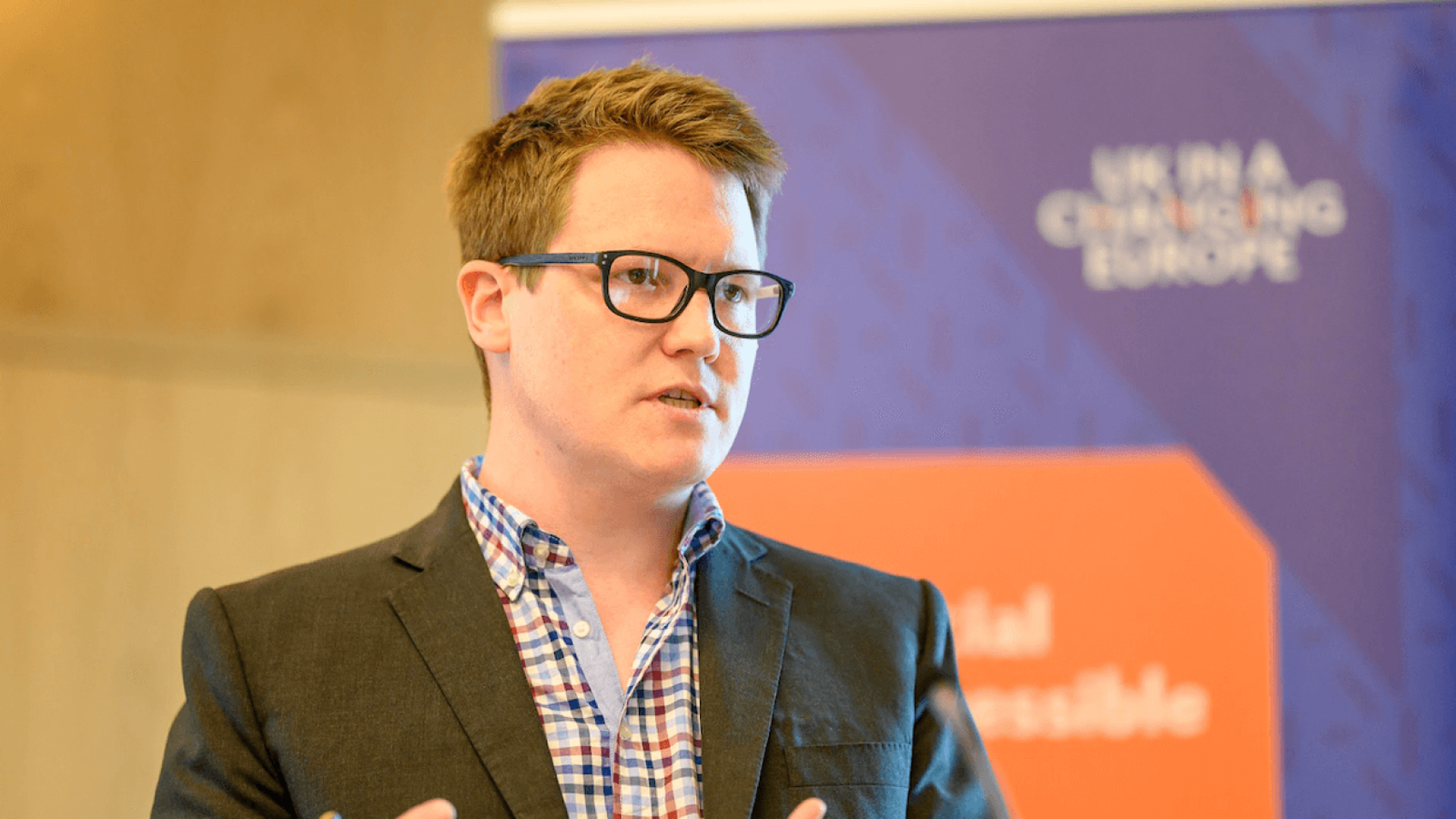
In an interview with the European Center for Populism Studies (ECPS), Professor Thiemo Fetzer, an economist at the University of Warwick and the University of Bonn, argues that populist grievances are largely rooted in perception rather than actual lived experiences. However, as he warns, populists are particularly adept at exploiting these narratives for political gain.
“Populism is a phenomenon of information overload,” Professor Fetzer explains. “Many grievances that populists amplify are not based on actual demographic or economic realities but are shaped by narratives, particularly those spread through modern media.” He highlights how, in many cases, communities most resistant to immigration often have little to no firsthand experience with immigrants—a paradox that underscores the role of perception over reality.
Professor Fetzer’s research delves into the economic, political, and social forces driving contemporary populism. In this interview, he explores the dynamics of global trade, industrial policy, economic inequality, and geopolitical shifts, particularly in the wake of a second Trump presidency.
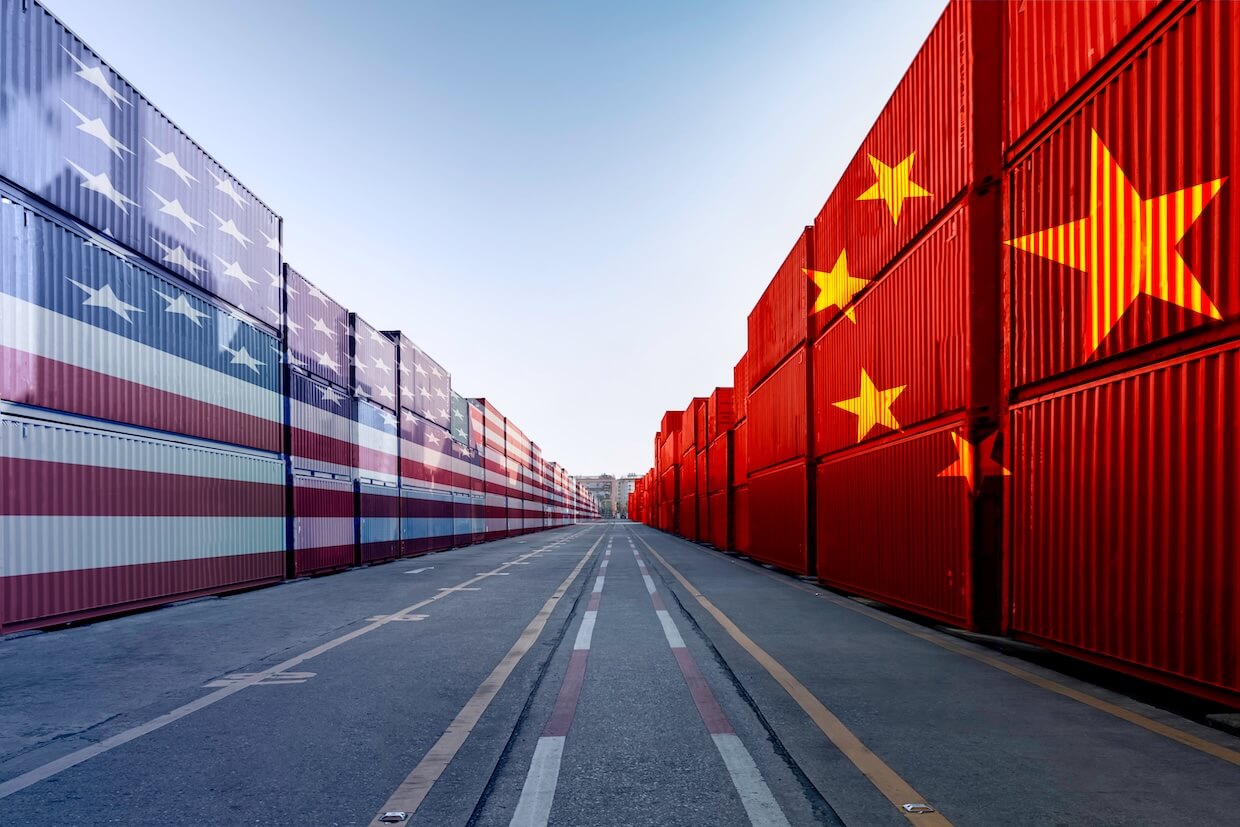
Discussing global trade realignments, he explains that while China has aggressively localized production and built dominance over key supply chains, the US has primarily specialized in financialization, service-sector trade, and digital technology. This has led to geopolitical tensions, as China’s strategic control over minerals and industrial supply chains threatens US economic leadership.
Regarding the rise of far-right movements like the AfD in Germany, Professor Fetzer stresses that economic grievances alone do not fully explain their appeal. Instead, he argues, populist movements often thrive on a combination of perceived cultural shifts, economic anxieties, and declining trust in institutions.
He also critiques the role of digital media in fueling discontent, stating that “the collapse of traditional media landscapes has created an environment where misinformation and sensationalized narratives shape public perception more than facts.”
Finally, addressing the decline of the liberal world order, he challenges the idea that neo-mercantilism and protectionism signal its end. Instead, he suggests that a shift toward industrial policy—particularly in the energy sector—has long been in motion.
With economic nationalism, trade wars, and geopolitical realignments defining today’s global landscape, Professor Fetzer provides a data-driven perspective on the forces shaping modern populism.
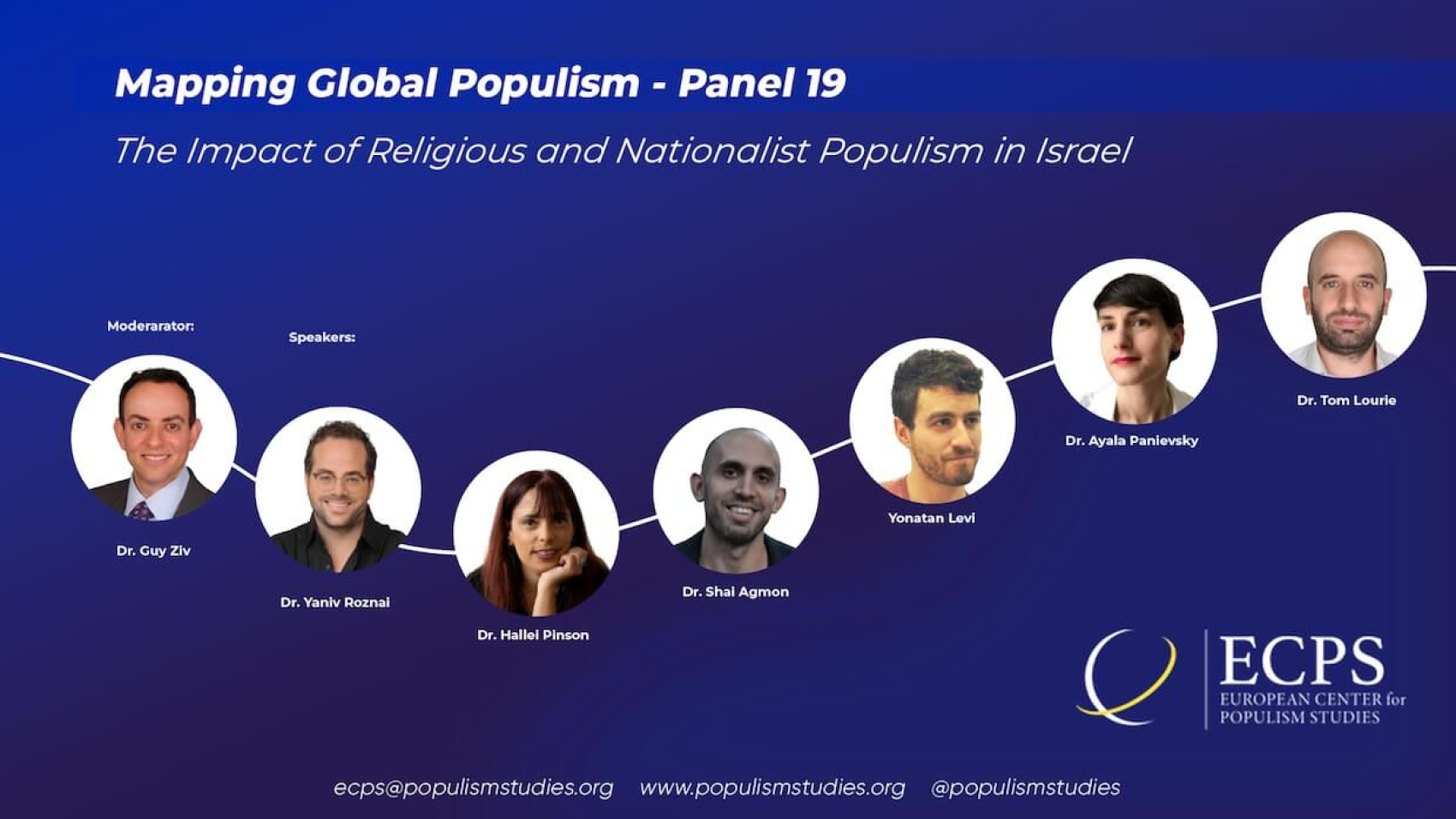
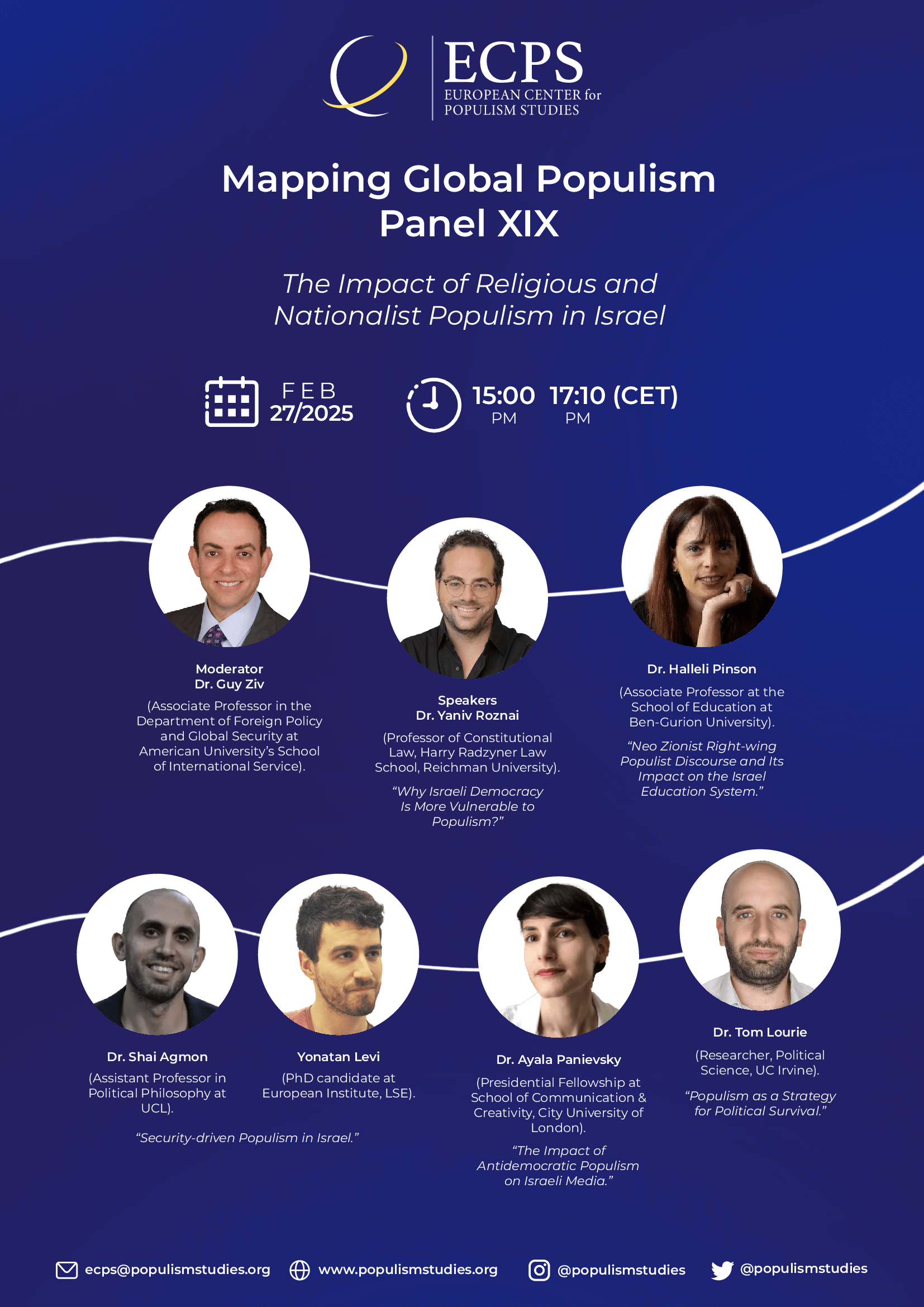
Dr. Guy Ziv (Associate Professor in the Department of Foreign Policy and Global Security at American University’s School of International Service (SIS)).
Speakers
“Why Israeli Democracy Is More Vulnerable to Populism?” byDr. Yaniv Roznai (Professor of Constitutional Law, Harry Radzyner Law School, Reichman University).
“Neo Zionist Right-wing Populist Discourse and Its Impact on the Israel Education System” byDr. Halleli Pinson(Associate Professor at the School of Education at Ben-Gurion University).
“Security-driven Populism in Israel,” by Dr. Shai Agmon (Assistant Professor in Political Philosophy at UCL) & Yonatan Levi (PhD candidate at European Institute, LSE).
“The Impact of Antidemocratic Populism on Israeli Media,” by Dr. Ayala Panievsky (Presidential Fellowship at School of Communication & Creativity, City University of London).
“Populism as a Strategy for Political Survival,” by Dr. Tom Lourie (Researcher, Political Science, UC Irvine).
In an interview with the ECPS, Professor Thiemo Fetzer argues that populist grievances are largely shaped by perception rather than lived experience. “Populism is a phenomenon of information overload,” Fetzer explains. “Many grievances amplified by populists are not grounded in demographic or economic realities but are shaped by narratives, particularly those spread through modern media.” Discussing global trade, economic inequality, and the rise of far-right movements, he warns that misinformation fuels discontent, making societies more vulnerable to populist rhetoric. From the future of the liberal order to the geopolitics of energy, Fetzer offers a data-driven perspective on the forces reshaping today’s world.
In an interview with the European Center for Populism Studies (ECPS), Professor Thiemo Fetzer, an economist at the University of Warwick and the University of Bonn, argues that populist grievances are largely rooted in perception rather than actual lived experiences. However, as he warns, populists are particularly adept at exploiting these narratives for political gain.
“Populism is a phenomenon of information overload,” Professor Fetzer explains. “Many grievances that populists amplify are not based on actual demographic or economic realities but are shaped by narratives, particularly those spread through modern media.” He highlights how, in many cases, communities most resistant to immigration often have little to no firsthand experience with immigrants—a paradox that underscores the role of perception over reality.
Professor Fetzer’s research delves into the economic, political, and social forces driving contemporary populism. In this interview, he explores the dynamics of global trade, industrial policy, economic inequality, and geopolitical shifts, particularly in the wake of a second Trump presidency.
Discussing global trade realignments, he explains that while China has aggressively localized production and built dominance over key supply chains, the US has primarily specialized in financialization, service-sector trade, and digital technology. This has led to geopolitical tensions, as China’s strategic control over minerals and industrial supply chains threatens US economic leadership.
Regarding the rise of far-right movements like the AfD in Germany, Professor Fetzer stresses that economic grievances alone do not fully explain their appeal. Instead, he argues, populist movements often thrive on a combination of perceived cultural shifts, economic anxieties, and declining trust in institutions.
He also critiques the role of digital media in fueling discontent, stating that “the collapse of traditional media landscapes has created an environment where misinformation and sensationalized narratives shape public perception more than facts.”
Finally, addressing the decline of the liberal world order, he challenges the idea that neo-mercantilism and protectionism signal its end. Instead, he suggests that a shift toward industrial policy—particularly in the energy sector—has long been in motion.
With economic nationalism, trade wars, and geopolitical realignments defining today’s global landscape, Professor Fetzer provides a data-driven perspective on the forces shaping modern populism.
Here is the transcription of the interview with Professor Thiemo Fetzer with some edits.
Global Trade and the US-China Rivalry
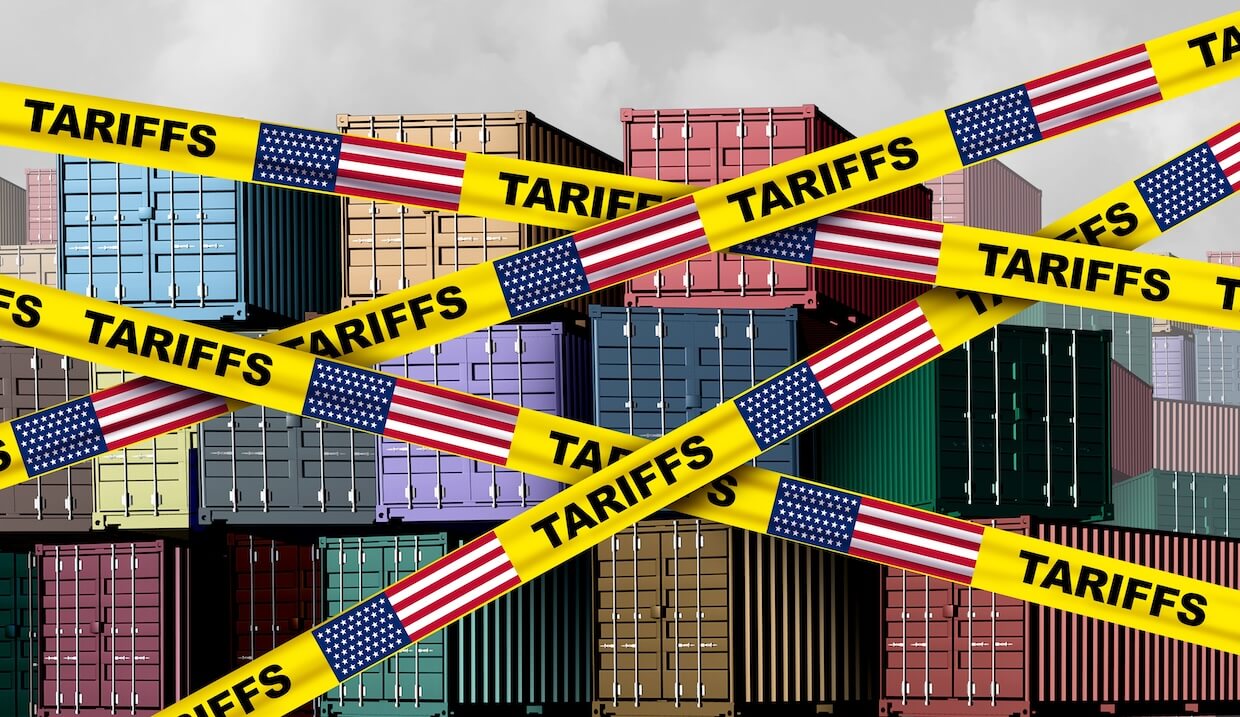
A metaphorical image depicting the US-China trade war, economic tensions and tariff disputes on imports and exports. Photo: Shutterstock.
Thank you very much, Professor Fetzer, for joining our interview series. Let me start right away with the first question: How would a second Trump presidency reshape global trade dynamics? Given his previous and current tariff policies and confrontational trade stance, which sectors and economies are most vulnerable to renewed trade wars?
Professor Thiemo Fetzer: That is an incredibly complex and intriguing question. One important aspect to consider is the evolution of the international division of labor over the past 10–15 years, which provides context for the US trade policy maneuvers. Of course, this is my interpretation of the data and evidence, and I acknowledge that it may not be entirely accurate.
Over the last 20, or even 30 years, a global division of labor has emerged. The US has largely specialized in financialization, focusing on service sector trade, particularly through its digital tech companies, as well as its expertise in knowledge production and innovation. Meanwhile, China has aggressively localized production and strategically established dominance over key supply chains, particularly in industries that are crucial for global priorities such as climate action.
China is undoubtedly a leading player in decarbonization technologies, including renewable energy, photovoltaics, wind power, and electric vehicles. While the US has specialized in service sector trade, China has strategically developed control over value chains in industries that are not only considered the future of global economies but also essential for addressing climate challenges.
This context is key to understanding the confrontational dynamics and geopolitical rivalry between the US and China. While Europe is also engaged in this contest, it has not deindustrialized to the same extent as the US and has pursued a different specialization path.
A crucial element of this geopolitical contest is control over strategic minerals and supply chains. China holds significant leverage due to its dominance in mineral processing and access to raw materials. In response, the US is now aggressively shifting toward industrial policy, making efforts to secure access to critical minerals and supply chains through a mix of policy initiatives and strategic trade measures.
This is happening alongside increasing disputes over trade governance. Countries that specialize in service sector trade—particularly in knowledge production and innovation—rely heavily on intellectual property protections. However, a key point of contention between the US and China is that not all countries adhere to the same intellectual property governance standards. This discrepancy plays a major role in the US’s more aggressive stance in trade policy.
From a strategic perspective, the US has been outmaneuvered in certain areas by other geopolitical players—one of the most prominent examples being critical minerals. Both the US and Europe have been making efforts to develop alternative supply chains for rare earth elements and other crucial materials needed for technologies such as semiconductors and renewable energy infrastructure.
However, China has weaponized its control over these resources, particularly through its dominance in mineral processing and reserves. One interpretation is that China has deliberately disrupted competitors’ efforts to establish alternative supply chains by strategically releasing mineral reserves to drive down prices, thereby making it economically unviable for private enterprises in market-based economies to compete.
This dynamic mirrors what we observed in the early 2010s, when US shale oil and gas production disrupted global energy markets. Historically, energy-exporting countries—such as Saudi Arabia and the UAE—played a dominant role in setting crude oil prices through export relationships with the US. However, the rise of US shale production significantly weakened their influence by creating a new source of swing production capability.
There is a clear parallel here, highlighting the broader clash between economic and social systems. The primary challenge for the US and Western players is the short-term policymaking horizon within democratic systems, where leaders operate within fixed electoral cycles. In contrast, non-democratic regimes—as we define them within representative democracy frameworks—can pursue long-term strategic planning without the same political constraints.
These tensions are now coming to the forefront, and the US is responding aggressively, using trade policy as a key instrument to counterbalance these structural disadvantages.
The Rise of Protectionism and Economic Realignment
3D illustration: Lightspring.
What are the long-term risks of Trump’s trade policies for global economic stability? With the US not only decoupling from China but also distancing itself from the EU and shifting alliances, how might geopolitical fragmentation and economic realignment unfold?
Professor Thiemo Fetzer: Again, there are ways of trying to think about the future path. And I mean, on average, I would like to think that the US’s specialization in service sector trade, which is actually something that the UK, in particular the Brexiteers, strongly advocated, has made both the UK and the US quite vulnerable.
Service sector trade, particularly in the digital economy, digital goods, and so on, has a relatively high degree of localization potential. At the end of the day, many of the digital services we consume are controlled by global tech platforms like Google, Microsoft, and others. However, we have seen, for example, in Latin America, where language was a barrier, strong and competitive local players emerging and capturing parts of these value chains, preventing them from falling entirely under the control of major US brands. A key example is Mercado Libre in Latin America. Similarly, in China, a big tech ecosystem developed independently because the market never fully opened to major US tech players.
This has been a longstanding political tension, particularly between the EU and the US, well before the first Trump administration. Big tech companies generate enormous revenues from highly scalable products, where a single innovation can reach an infinitely large market. However, global governance frameworks around service sector trade have struggled to adapt to this reality, as tax and regulatory systems were originally designed with goods trade in mind.
This has created a wedge issue in Europe, where big tech firms access large markets but transfer profits to offshore tax havens, leading to disputes over digital taxation. Under Trump’s first presidency, both the UK and France attempted to impose digital service taxes, which challenged the US advantage in service sector trade. Currently, the US exports services, knowledge, and innovation while protecting them through intellectual property agreements and benefiting from transfer pricing mechanisms. Meanwhile, the US also absorbs excess global production, leading to imbalances in both goods and services trade.
Trump challenged this structure in 2016, particularly through aggressive tax cuts. As European countries sought to impose digital service taxes, the US responded with tax incentives that enabled American tech firms to repatriate profits from offshore havens. This disrupted the traditional global division of labor, where Europe and China produced goods while the US dominated services. While US tech firms never gained the same market access in China that they had in Europe, these shifts threatened the existing equilibrium.
With a second Trump presidency, I expect a continuation of Trump-era policies, with service sector trade pitted against goods trade. On average, the US economy could become more balanced by leaning into industrial policy and shifting slightly away from services, which has become somewhat excessive. However, the US may struggle to accept that this rebalancing could also prompt other countries to localize their own tech sectors, leading to the regionalization of digital trade.
We have already seen this trend in Latin America and China, where local tech champions have emerged. This could further encourage tech companies with more geographic focus or even explicit localization mandates, potentially driven by differing regulatory frameworks on private data governance. The regulatory landscape itself could create further friction in global trade.
In addition, the tense security situation in Europe, with Russia’s aggressive actions, could accelerate these trends, particularly if the US is no longer seen as a reliable partner but rather as a potential adversary in certain domains.
Three years ago, I warned that a second Trump presidency could end the NATO alliance, a scenario that would pose serious challenges for Europe given its dependence on the US for security. This shift could also disrupt the international division of labor, as Europe has historically granted US big tech firms market access while simultaneously struggling with taxation issues related to these firms’ profits being transferred offshore.
If this equilibrium is disrupted, I expect significant policy shifts in Europe. However, Europe may struggle with its own contradictions, as it lacks a unified tech ecosystem that could compete with US or Chinese tech giants. Unlike the US, where service sector trade is deeply integrated across states, Europe remains a collection of nations with high trade barriers in services.
This contradiction has been highlighted by figures like Enrico Letta and Mario Draghi, as well as in Brexiteer arguments, which claimed that service sector trade is the future and that Europe struggles with integration in this area. This situation is inherently risky, but at some level, perhaps necessary, if global trade is no longer governed by common standards.
Since 2016, we have seen a clear deterioration in global trade governance, accompanied by escalating trade conflicts. The situation today is highly dangerous and challenging.
All of this unfolds amid climate crises, rapid population movements, the weaponization of illicit migration, and demographic challenges. We are navigating an exceptionally fraught and difficult global landscape.
Populism, Economic Discontent, and the Role of Media
A protester holds a banner demanding economic justice. Photo: Shutterstock.
Your research highlights economic discontent as a driver of populism. How might Trump’s policies—such as protectionism or tax reforms—exacerbate or mitigate this trend globally?
Professor Thiemo Fetzer: When we look at discontent, oftentimes it can be attributed not necessarily to people being materially worse off. I mean, if we zoom out, we are actually in a situation where the world has never been richer than before. People are well-off, and we no longer experience the type of abject poverty that existed in the past. Even in Europe, despite the rise of populism, we have seen a gradual but consistent rise in living standards.
The big challenge with populism is that it is very successful in channeling narratives around discontent. This connects to my past research on austerity in the UK, where we saw the withdrawal of the state from many public functions. There was a wave of technological optimism, similar to what we see now with AI, suggesting that automation could make public services more efficient and reduce the financial burden on the economy.
However, all of this happened amid structural changes in consumption patterns due to the rise of the Internet, which accelerated economic transformation. Many people perceived these changes as a decline in their lived environment and a disruption of the status quo.
Across people’s life cycles, older individuals tend to feel more insecure with rapid change. In the UK, for instance, two key pro-populist voting blocs—particularly strong supporters of Brexit—were older people and those expressing dissatisfaction with the status quo. Populism often unites an unlikely coalition of voters, including those who oppose any type of change.
For example, when the high street declines visibly, when shops disappear, or when routine habits are disrupted, older individuals may struggle to adapt to these changes. We lack strong lifelong learning institutions to help older people adjust to a rapidly evolving world. In this context, simplistic populist messages that blame outsiders—such as immigrants, foreign competitors, or geopolitical rivals like China—become an easy and appealing narrative.
However, we know from hard data that in the communities where populism thrives, there are often no significant immigrant populations. This highlights a disconnect between actual demographic data and perceptions, showing that populist narratives shape public opinion more than lived experiences.
A major missing link in this discussion is the role of the media. I studied this in the context of what I call the media multiplier—a phenomenon that has intensified with the rise of social media and the decline of traditional media. Many older populations, who may not be digitally literate, struggle to differentiate between reliable information and disinformation.
This changing media landscape has been weaponized by geopolitical adversaries to influence public sentiment. As a result, populist grievances are more rooted in perception than in actual lived experiences, yet populists excel at exploiting these narratives.
Looking back at austerity, we can see its role in hollowing out state functions. In the UK, for instance, we saw cuts to youth programs, a visible decline in police presence, and reductions in public services. While these changes may have been made rationally, their perceived impact was significant.
Even if crime rates did not rise dramatically, people felt less safe because they were told they were less safe. Isolated violent incidents—such as terror attacks—further reinforce perceptions of chaos and loss of control, which populists exploit to advocate for border closures and nationalistic policies.
If this trend escalates, we are not far from restricting the flow of information, similar to what we see with China’s Great Firewall. This would directly contradict the foundational principles of Western liberal democracy.
It is crucial to recognize that accelerated structural change has visible and tangible consequences, particularly in societies unaccustomed to rapid transformation. In many developing countries, social and economic shifts happen much faster than in Europe.
Our political and governance institutions, however, have not adapted to this new pace of change. While some nations have moved from extreme poverty to relative wealth in a single generation, Western institutions have struggled to keep up with global transformations. This creates a major point of friction that populists exploit.
We have people who resist any type of change because it happens so quickly that they struggle to process it. At the same time, our political systems—particularly democratic ones—face the constant challenge of power struggles and the difficulty of explaining complex relationships to the average person. As a result, these complexities are often oversimplified into digestible narratives. This is precisely where populists excel—by reducing intricate issues into simplistic, emotionally charged messages. This, I believe, is one of the major challenges we face today. In many ways, populism is a phenomenon driven by information overload—a reaction to the overwhelming complexity of the modern world.
The AfD’s Success and the Geopolitical Fragmentation of Europe
Co-chairpersons of the populist right-wing Alternative for Germany (AfD) Alice Weidel and Tino Chrupalla at a meeting in Berlin, Germany on July 4, 2023. Photo: Shutterstock.
How much role did economic grievances play in the strong showing of AfD in German elections last Sunday?
Professor Thiemo Fetzer: The country has been in recession for the last two or three years. However, if we consider the scale of the economic challenge and the shock caused by Russia’s invasion of Ukraine, the country has actually performed quite well in the grand scheme of things. It has cushioned these shocks reasonably well, though in a manner that might be irritating to global partners. This is why I suggest that Putin has weaponized a potential hypocrisy—because with the invasion, Europe, while championing global climate action and striving to build coalitions for sustainability, simultaneously expanded energy subsidies for hydrocarbons to help households and businesses absorb the shock.
Setting that aside, both the country and the continent have managed remarkably well in handling this multi-dimensional crisis. From a comparative advantage perspective, there has been a loss of access to cheap energy, which poses a major challenge for the industrial sector. On the other hand, the security shock and the broader disruption of the international security order have further complicated the situation.
To me, it was entirely predictable that a second Trump presidency could begin to question the foundational pillars of Europe’s security and the international division of labor. That’s why I highlighted this more than three years ago. However, in light of and despite that shock, Europe has, on average, managed quite well. That said, the AfD has been highly effective in channeling this narrative, questioning why Europe should position itself as a global leader in climate action and why the EU should advocate for a rules-based free trade system governed by law rather than force. In the broader context, Europe has performed well, and individual member states have managed to navigate these challenges effectively.
The major contradiction and risk at this moment is that individual European countries are being systematically picked apart, one by one, by geopolitical adversaries. It even appears that, in some ways, the US may be playing a role in this dynamic.
However, given the broader context, I remain cautiously optimistic, as this is truly a make-or-break moment for Germany within Europe and for Europe as a whole. To me, it has never made sense—though these numbers are hypothetical, they are probably not far from reality—for Portugal to maintain an independent air force with just four F-35s and a handful of tanks, when in reality, landing troops on the coast would already be a major challenge.
Now, there is a unique opportunity arising from the geopolitical pressure Europe is facing, both from the war in Ukraine and the uncertainty surrounding its security partnerships. This pressure could serve as a catalyst for Europe to build a common, integrated defense capability, something that has been attempted in the past but never fully realized. In this sense, we could be witnessing the emergence of a stronger European statehood.
Since this is happening within a highly challenging security landscape, it will inevitably drive shifts in industrial policy, sovereignty debates, and strategic planning. Europe must not only develop its defense capabilities with international partners beyond the EU, but also focus on building efficient and sustainable supply chains within Europe itself to ensure long-term resilience.
I am beginning to see emerging partnerships in this context, particularly in the Middle East, which holds strategic significance for Europe. The recent Suez Canal blockade, even though accidental, underscored the region’s critical role. Additionally, Turkey could become a key partner in this evolving dynamic. I also believe this shift could potentially bring the UK closer to Europe again, as it has a vested interest in participating in the expanding European defense cooperation. However, the US appears to be actively trying to pull the UK away from deeper European integration in this regard.
This, to me, defines the broader geopolitical context in which the AfD has been able to thrive. The party has successfully tapped into simplistic narratives that resonate with public sentiment, yet the solutions it proposes are entirely incompatible with the actual challenges that Europe faces. And for that, it’s really important.
Again, populist parties tend to make a country seem bigger than it is. The UK experienced this with populism, attempting to reinvigorate the idea of the old empire. However, when the UK then tries to reestablish ties with its former empire—whether with India or Pakistan—these are now emerging powers and significant players in the global division of labor. The Indians respond, “Well, UK, okay, that’s interesting, but you’re a tiny, tiny country in the grand scheme of things.” This reality applies to each individual EU member state. That is why it is crucial for the broader public to reflect on this: if Germany wants to chart a path that is optimal and beneficial for itself within Europe and the world, it is entirely dependent on working in conjunction and in very close partnership with others.
But again, this is a make-or-break moment, a make-or-break situation. Geopolitical adversaries—whether China, Russia, the UK, or even the US—all have an interest in a divided Europe, and to some extent, we are already seeing this play out. This is where Europe must step up and build a form of sovereignty. To me, this begins with establishing a European fiscal capacity, which is a necessary condition to ensure that many of the founding pillars of the European Union, originally intended to drive European integration, are no longer exploited as tools by adversaries. Key areas that require urgent reform include privacy regulation, the incompleteness of tax frameworks, the lack of integration in national tax systems, and information sharing—all of which must be addressed.
I do think that figures like Enrico Letta and the Draghi report have made it clear that the solutions are obvious. The real question now is whether a pan-European movement or a pan-European critical mass can be built to actually implement these solutions. However, this remains extremely challenging and difficult because economic interest groups within each individual nation-state benefit from maintaining exclusive contracting relationships within their own national jurisdictions. This has been the biggest obstacle to service sector integration and, ultimately, could become the very mechanism of its own downfall. If this continues, it could lead to countries becoming increasingly inward-looking, which in turn could result in the unraveling of the European project itself.
Cultural Backlash vs. Economic Factors in Populism
For right-wing populists in the Western world, “the others” primarily include immigrants but also extend to “welfare scroungers,” regional minorities, individuals with “non-traditional” lifestyles, communists, and others. Photo: Shutterstock.
Many scholars argue that cultural backlash, rather than economic factors, drives populism. How does your research challenge or complement this perspective?
Professor Thiemo Fetzer: Culture is a tricky thing. If we look at the data, the immigration topic is a salient and important one to consider here. Societies in Europe—the whole idea of European freedom of movement—is built on creating an integrated European labor market, fostering the emergence of a European identity and a European culture. This is particularly relevant for smaller countries because, geopolitically and globally, they are relatively insignificant in terms of projecting force or influence. It is much more difficult for them to do so, which makes this context particularly important.
To me, the cultural dimension is a very vague concept—it often serves as a catch-all excuse when the underlying economic or societal mechanisms cannot be precisely identified. Earlier, I alluded to this challenge in the context of immigration. The biggest backlash to immigration comes from communities that have no actual experience with immigration. This highlights how perceptions of different social groups—such as immigrants—are often entirely detached from real lived experience. That, to me, is the big challenge. If one wants to call that culture, so be it.
But consider the food system. One of the biggest successes in terms of food is what is commonly known as the Turkish kebab. My sister lives in a small town in the Swabian Alps in southern Germany, and one of the most successful businesses in her town is the local kebab shop. However, the type of kebab you find in Germany does not actually exist in Turkey. It is a product of cultural integration, a fusion that emerged through the blending of different influences.
This illustrates why perceptions, lived experiences, and the extent to which they are grounded in hard evidence are the most critical battlegrounds of all. I believe that media systems, which facilitate the spread of narratives and stories about “the other” or the unknown, play a crucial role here. This is where we, as societies, must take responsibility for investing in the absorptive capacity of our communities—engaging with different cultures, reaching out, and ensuring that the shaping of stereotypes is not left solely in the hands of those who control media reach and influence.
This is one of the major dividing lines emerging between the US under Trump and Europe, particularly in discussions about how to regulate social media and make it function more effectively. Of course, this is a highly complex and controversial topic.
To put it simply, what we often call culture is largely built on stereotypes, rather than lived experience. The vast majority of individuals who advocate for re-migration or the separation of communities do so based on narratives rather than firsthand interactions. This is a key battleground, but it requires investment in a society’s absorptive capacity and clear mandates for those who migrate—to share and participate in the evolving way of life. Culture is not static; it evolves over time and requires investment from both the receiving and the sending sides.
Germany, in particular, has made significant historical mistakes in this context. Turkish guest workers were regarded merely as temporary guests, with the expectation that they would eventually return home. Similarly, in the early 1990s, many Bosnian refugees arrived, yet little effort was made to facilitate their integration. The same applied to ethnic Germans from the former Soviet Union—despite having been entirely socialized in Russia or the Soviet Union, they were presumed to require no language or cultural integration, solely because they possessed German lineage or passports. This was a fundamental fallacy. In more recent years, Germany has invested significantly in improving integration and absorptive capacity, but this primarily benefits medium and large cities, while rural areas remain largely untouched by these efforts.
The same mechanisms that apply to immigration also apply to economic migration trends—entrepreneurial, risk-taking individuals are typically the ones who migrate, while those who prefer stability and familiarity tend to remain in their communities. For individuals in rural areas with limited direct exposure to migrants, the lack of firsthand contact can reinforce perceptions shaped entirely by media narratives rather than real-life experiences.
This is the generational challenge facing every European country. That is why, to me, the term culture is not particularly helpful in these discussions. It often serves as a placeholder for a lack of understanding, when, in reality, there are concrete ways to foster economic integration and investment in assimilation.
Big cities provide excellent examples of how successful integration can work. The real challenge is how to extend these benefits to smaller communities. One potential solution is remote work, which allows individuals to experience the advantages of cultural and economic agglomeration—typically found in diverse urban environments—without the need for physical relocation.
Ultimately, this could help shape a shared future. After all, what we consider German culture today did not exist 200 years ago. Germany was a collection of hundreds of small states and communities, yet over time, a German identity emerged. The same process is now unfolding at the European level, and some even argue that this mechanism should extend to a global level, fostering shared prosperity and understanding in an increasingly interconnected world.
And lastly, Professor Fetzer, the liberal world order, founded on interdependence after the collapse of communism, was once seen as the inevitable future, with Francis Fukuyama declaring the “end of history” and the triumph of liberalism. With the resurgence of neo-mercantilist and protectionist policies, can we now say that history is reasserting itself and that the liberal order has become a relic of the past?
Professor Thiemo Fetzer: What’s implicit in this question is a consideration of the role of the state. Mercantilism, in one interpretation, is based on the idea that the state has a mandate to shape economic development in one way or another. In contrast, the extreme form of liberalism—libertarianism—argues that the state should not exist at all, with everything being guided solely by market forces.
A lot of the tensions we see today, at least from my perspective, revolve around charting a more sustainable future for the planet. We are now realizing that our way of life, particularly in the Global North, imposes negative externalities on communities elsewhere—through global warming, environmental degradation, and the resulting instability. Climate change is already inducing population movements, particularly in Africa, where nomadic communities are struggling to find water for their herds. As they are forced into cities, this disrupts existing societal equilibria, often leading to conflict and instability. Unfortunately, these changes are happening very fast, making adaptation even more difficult.
If we accept this premise, then we must reconfigure how our economies function. This requires a role for the state or supranational institutions to shape incentives and engineer a systemic transition toward a more sustainable equilibrium. Achieving this demands the deployment of a broad economic policy toolkit, often referred to as industrial policy.
Energy Transitions and the Battle Over Industrial Policy
Aerial drone view of a hybrid solar and wind farm in Bannister, NSW, Australia, featuring large wind turbines in the background generating renewable clean energy on a sunny day. Photo: Steve Tritton.
Germany actually pioneered aspects of this transition in the early 2000s, introducing high subsidies for solar and wind energy production. Crucially, these subsidies were designed in a non-discriminatory way, making them compatible with global rules-based trade under WTO regulations. As a result, German subsidies played a key role in creating today’s renewable energy giants in China.
At some level, I find it difficult to view this as a negative development, because it offers a realistic pathway for systemic transition. It presents the possibility of maintaining, or even improving, high living standards, while socializing the benefits of natural resources—such as renewable energy. In the long run, the cost of energy could converge toward the cost of capital, since solar panels and wind farms require minimal ongoing expenses once installed. The world has vast amounts of barren land that could be used for energy production, allowing us to harvest the abundance of the planet. But achieving this required a shift in policy, which, unsurprisingly, faced resistance from economic interest groups.
Traditionally, many would blame oil-rich countries in the Middle East—such as Saudi Arabia or the UAE—for opposing energy transitions. However, in reality, some of the strongest resistance came from hydrocarbon producers with much higher production costs, particularly in the US and other regions.
In the Middle East, the cost of producing a barrel of crude oil is around $10, allowing these countries to continue profiting massively even as global energy markets shift. However, in the US shale industry, production is far more expensive and comes with major externalities, such as methane leakage, which are not properly priced into the system.
For these higher-cost producers, the energy transition poses a major financial threat. The biggest opponents of the transition—originally driven by forward-looking industrial policies in Europe (particularly Germany) and later seized upon by China—were actually mid-tier hydrocarbon producers in Africa, Latin America, and especially the US, where high capital costs create risks of stranded assets.
In contrast, producers in the Middle East are likely to be the last oil suppliers standing, as their low production costs allow them to outcompete higher-cost producers. To me, this transition in the energy system was strategically initiated through industrial policy. However, it was repeatedly disrupted, largely by hydrocarbon interests from mid-cost producers—most notably, those in the US.
This is not an unreasonable conclusion, given the structural nature of the US energy sector. In most countries, oil extraction is a public revenue source or controlled by a state monopoly. However, in the US, landowners hold subsurface mineral rights, a unique legal framework that allows private individuals to profit from oil production. As a result, many small landholders have deeply invested in non-renewable energy and have a strong financial interest in maintaining the status quo. This explains why hydrocarbon interests wield such strong political influence in the US. Meanwhile, oil-rich nations in the Middle East are likely content to let American hydrocarbon interests do the lobbying for them, ensuring continued hydrocarbon production and market stability.
The Future of the Liberal World Order
Stepping back to the broader question—is this the end of history? If we compare liberal economic orders to industrial policy-driven models, we must recognize that hydrocarbon-based industrial policy has always existed. It has simply functioned through market-based mechanisms, where economic interests buy political influence within democratic systems. For this reason, I find it difficult to frame the debate as a binary choice between liberal and non-liberal orders. The key issue is how to engineer a global energy transition in a way that is mutually beneficial, rather than disruptive. This requires strategic global institutional design to create a coalition for action. The goal should be to phase out hydrocarbons in a controlled manner, avoiding economic collapse while simultaneously scaling up renewable alternatives.
To me, industrial policy has always been present in one form or another. The real question is whether this policy should be led by individual nation-states, by regional blocs with shared objectives, or by a truly global framework. What worries me most today is that some key global players are turning their backs on multilateral cooperation, largely because their democratic systems have been captured by powerful special interest groups—particularly hydrocarbon lobbies. This is not merely a debate about liberal versus non-liberal governance. Rather, it underscores the critical need for public intervention to counterbalance vested interests and ensure that policy decisions serve the long-term global good.
In an interview with the ECPS, Professor Dan Hough warns that mainstream parties must engage with voters’ real concerns or risk further legitimizing the far-right Alternative for Germany (AfD). “Ignoring the AfD hasn’t worked, and simply adopting their rhetoric hasn’t either,” Professor Hough explains. Instead, he urges democratic parties to develop credible policies that address the economic and social anxieties fueling AfD support. He highlights how discontent—particularly in Eastern Germany—extends beyond migration, with deeper dissatisfaction driving voters toward populist alternatives. As the AfD continues to shape public debate, Professor Hough argues that mainstream parties must lead with solutions rather than reactionary responses. “The discourse must be smart, and the outcomes must be meaningful.”
In an in-depth interview with the European Center for Populism Studies (ECPS), Professor Dan Hough, a leading expert on corruption and populist politics from the University of Sussex, offers critical insights into the Alternative for Germany (AfD)’s electoral gains and the broader implications for German democracy. As the AfD nearly doubled its vote share in Sunday elections compared to the 2021 elections, mainstream parties now face urgent questions about how to respond to the party’s growing appeal. Professor Hough warns that ignoring the AfD has not weakened it—nor has engagement through policy imitation. Instead, he argues that mainstream parties must confront the real grievances driving voter discontent. “The challenge is to find a language that acknowledges the problems the AfD highlights while offering solutions,” he says. “If they fail to do so, the AfD will continue to benefit, pointing to government inadequacies in dealing with these issues on its own terms.”
While the AfD has thrived on anti-elite and anti-immigration rhetoric, Professor Hough emphasizes that its rise is rooted in broader dissatisfaction with Germany’s political establishment. He points to Eastern Germany, where frustration over decades of economic disparity, social change, and political disillusionment has fueled the party’s success. “Migration is an important issue, but the deeper wells of dissatisfaction run much deeper,” Professor Hough explains. He highlights how, in many cases, AfD voters are not driven purely by far-right ideology but rather by a sense of being ignored by the political mainstream. This is why simply branding AfD supporters as anti-democratic is counterproductive—it alienates them further and pushes them deeper into the party’s ranks.
Professor Hough warns that if mainstream parties continue to avoid these tough discussions—or adopt reactionary rhetoric to compete with the far-right—they risk further legitimizing the AfD. Drawing comparisons to Austria’s Freedom Party (FPÖ), he notes how engaging with populist forces without a clear alternative vision can backfire, as seen in Austria, where the FPÖ has outperformed the AfD. “Ignoring the AfD has not worked. Engaging with them, as Austria has done with the FPÖ, has also not worked. So what do we do?” he asks. Instead of reactive politics, he argues, mainstream parties must lead the debate and provide credible policy responses that resonate with voters before the AfD defines the terms of the discourse.
As the interview unfolds, Hough delves into the role of corruption narratives in populist movements, the paradox of “anti-corruption populism,” and the risks of democratic backsliding if far-right parties continue to reshape public debate. Ultimately, he underscores that Germany’s best defense against the AfD is not exclusion, but better governance and tangible solutions to the concerns that fuel its rise.
Professor Hough stresses that mainstream parties must acknowledge the grievances the AfD exploits while providing meaningful solutions. “The discourse has to be smart, and the policy outcomes have to be meaningful. If that happens, the AfD’s rise does not have to be unstoppable.” His analysis offers a crucial perspective on the evolving landscape of German and European politics.
Dr. Guy Ziv (Associate Professor in the Department of Foreign Policy and Global Security at American University’s School of International Service (SIS)).
Speakers
“Why Israeli Democracy Is More Vulnerable to Populism?” byDr. Yaniv Roznai (Professor of Constitutional Law, Harry Radzyner Law School, Reichman University).
“Neo Zionist Right-wing Populist Discourse and Its Impact on the Israel Education System” byDr. Halleli Pinson(Associate Professor at the School of Education at Ben-Gurion University).
“Security-driven Populism in Israel,” by Dr. Shai Agmon (Assistant Professor in Political Philosophy at UCL) & Yonatan Levi (PhD candidate at European Institute, LSE).
“The Impact of Antidemocratic Populism on Israeli Media,” by Dr. Ayala Panievsky (Presidential Fellowship at School of Communication & Creativity, City University of London).
“Populism as a Strategy for Political Survival,” by Dr. Tom Lourie (Researcher, Political Science, UC Irvine).
Dr. Guy Ziv is an Associate Professor in the Department of Foreign Policy and Global Security at American University’s School of International Service (SIS). He also serves as the associate director of AU’s Meltzer Schwartzberg Center for Israel Studies. He teaches courses on U.S. foreign policy, international negotiations, U.S.-Israel relations, and Israeli-Palestinian peacemaking. His latest book is titled “Netanyahu vs The Generals: The Battle for Israel’s Future,” published by Cambridge University Press (2024). His first book, “Why Hawks Become Doves: Shimon Peres and Foreign Policy Change in Israel,” was published by SUNY Press in 2014. Dr. Ziv has a background in policy, having worked on Capitol Hill and for not-for-profit organizations that promote Israeli-Palestinian peacemaking.
Why Israeli Democracy Is More Vulnerable to Populism?
Dr. Yaniv Roznai is an Associate Professor and Vice-Dean at the Harry Radzyner Law School, and Co-director at the Rubinstein Center for Constitutional Challenges, Reichman University. He holds a PhD and LL.M (Distinction) from The London School of Economics (LSE). He is the Co-Founder of the Israeli Association of Legislation and was a Co-Chair between 2017-2020. He is an elected board member and former secretary general of the Israeli Association of Public Law. Dr. Roznai’s scholarship focuses on comparative constitutional law, constitutional theory, legisprudence, and public international law.
Abstract: I will explain that compared with other systems, Israeli democracy is especially vulnerable to populism, because of its unique institutional design factors coupled with social factors. Only with understanding these factors can one grasp the risks that the judicial overhaul – a populist project – poses to Israeli democracy.
Neo Zionist Right-wing Populist Discourse and Its Impact on the Israel Education System
Dr. Halleli Pinson (BA, TAU; MPhil, PhD, Cambridge University) is an Associate Professor at the School of Education at Ben-Gurion University. Pinson is a political sociologist of education, and her main interest is with the changing role of schooling in the age of globalization. She has three main research areas: gender patterns of participation in STEM fields; citizenship education and the impact of political populism on education policy; and state education responses to global migration. She is the co-author of Education, Asylum and the ‘Non-Citizen’ Child, and a co-editor of the Edward Elgar Handbook on Education and Migration and the Routledge’s book series on Education and Migration. She is also a member of the editorial boards of the British Journal of Sociology of Education and Race Ethnicity and Education. She is also the former president of the Israeli Comparative Education Research Association and currently serves as the chair of the Global Migration SIG at the CIES.
Abstract: Over the past decades, and particularly since 2009, neo-Zionist discourse has gain prominence in Israel. This approach, which gives preference to the definition of Israel as a Jewish state over and above its definition as a democracy, should be seen as a specific version of religious-nationalism and an expression of authoritarian populism. This paper explores how educational discourses and policies changes in Israel are being shaped by right-wing populist organization and politicians. This presentation focuses on three examples from recent years. The first example, the campaign to ban the activist groups ‘Breaking the Silence’ – a group of army veteran who collect testimonies on Israel’s misconducts in the occupied territories – from entering schools. The second example is the case of ‘Im Tirtzu’, a right-wing organization, and their campaign against left-wing influences in the academy by employing practices, such as online anonymous reports on ‘left-wing biased teaching’. A third example is the recent attempts to change the Council of Higher Education bill, what is referred to as ‘the silencing bill’, aimed at silencing critical voices in academia under the face of the ‘fight against terrorism.’ In examining these cases I will demonstrate how right-wing organizations and politicians employ different populist strategies and how they impact education institutions and policies.
Dr. Shai Agmon is the Rank-Manning Junior Research Fellow at New College, University of Oxford. His research lies primarily in political and legal philosophy, on topics ranging from the philosophy of competition to political authority and the moral limits of markets. additionally, he writes on issues in contemporary Israeli politics – mostly focusing on the relation between the illegal settlements project and Israel’s national security, and the rise of Israeli right-wing populism. His academic work has appeared in Ethics; Politics, Philosophy & Economics; The Journal of Ethics and Social Philosophy and Contemporary Politics. He also writes for Haartez, Ynet, Telem Magazine and more. Shai also has a rich experience in politics and public policy. Amongst other things, he was a Campaign Manager in the 2019 primaries for the Israeli Labour Party leadership; lead negotiator of the Green Party during the establishment of the Democratic union Party; policy advisor at the ‘first 100 days’ team of Blue and White Party; Political Officer for the British Ambassador in Tel-Aviv; and an Articled Clerk at Israel’s Attorney General Office in the Department of Fiscal and Economic Matters.
Yonatan Levi is a PhD candidate specialising in millennial politics. His doctoral project is a comparative analysis of the generational politics of millennials in the United States and Israel over the last decade. He is particularly interested in the ways in which his generation understands and approaches power, politics and organisation. Prior to his doctoral studies, Yonatan worked as a journalist for Israel’s leading daily newspaper, an investigative researcher for a Jerusalem-based progressive think tank, and a political campaigner. In 2011 he was one of the leaders of the Israeli social justice protest movement – the largest civic mobilisation in the country’s history. In 2016 he worked in the UK Parliament. Yonatan is a recipient of the British Foreign Office’s Chevening Scholarship for students with outstanding leadership qualities, as well as NYU’s Paths to Peace Scholarship. He is a research fellow at Molad – the Centre for the Renewal of Israeli Democracy, and at the Israeli Labour Movement’s Berl Katznelson Centre. His writing has appeared in various media outlets, including The Guardian, Ha’aretz and Contemporary Politics. Yonatan holds an MSc in Political Theory from LSE and a BA in History and Literature from Tel-Aviv University.
The Impact of Antidemocratic Populism on Israeli Media
Dr. Ayala Panievsky is currently a Presidential Fellow in the Journalism Department at the City University of London, a Research Associate at the Sociology Department at the University of Cambridge, and a Research Fellow at the Centre for the Renewal of Israeli Democracy. She is a researcher specialising in media under attack, right-wing populism, and democratic backsliding. Her research appeared in journals such as The International Journal of Press/Politics and Digital Journalism, and featured in media outlets like the BBC, The News Agents, LBC and ABC.
She holds a PhD (no corrections) from Cambridge University, an MPhil in Political Communication (with distinction) from Goldsmiths College, and a BA in Journalism and Communication (with distinction) from the Honours Programme at the Hebrew University of Jerusalem. Her work received the ICA Outstanding Dissertation for 2024, the 2023 IJPP Best Article of the Year Award, and an honourable mention by the 2023 ICA Wolfgang Donsbach Outstanding Article of the Year Award, among others.
As a former journalist, she works with journalists worldwide to improve the future of news in times of sophisticated threats to democracy, equality, freedom, and justice. Her first book, The New Censorship, will be out next year with Footnote Press.
Populism As a Strategy of Political Survival
Dr. Tom Lourie holds a PhD in political science and is a research fellow at the Ethics Center at the University of California, Irvine.
Abstract: Conventional wisdom suggests that populism in Israeli politics dates back to the 1970s, portraying Likud as a populist party and its founder, Menachem Begin, as Israel’s first populist prime minister. However, evidence indicates that populism at the executive level is a relatively new phenomenon in Israel. Content analysis and case studies of Israeli prime ministers from 1977 to 2023 suggest that Benjamin Netanyahu was the first to adopt a populism, doing so during the 2015 election campaign. Process tracing further reveals that Netanyahu employed populism as a strategy for political survival in response to his legal troubles. As part of this approach, he systematically targeted institutions involved in his legal proceedings, raising concerns about its implications for Israeli democracy.