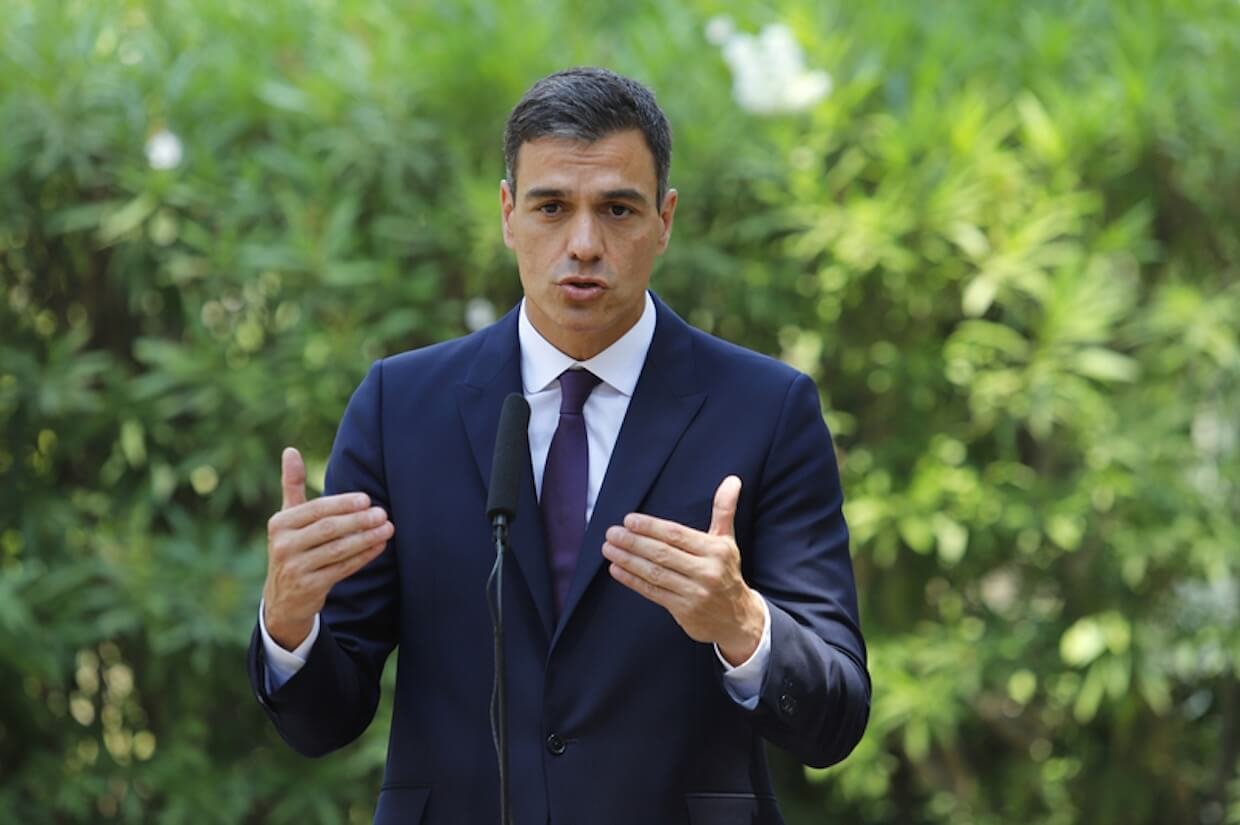

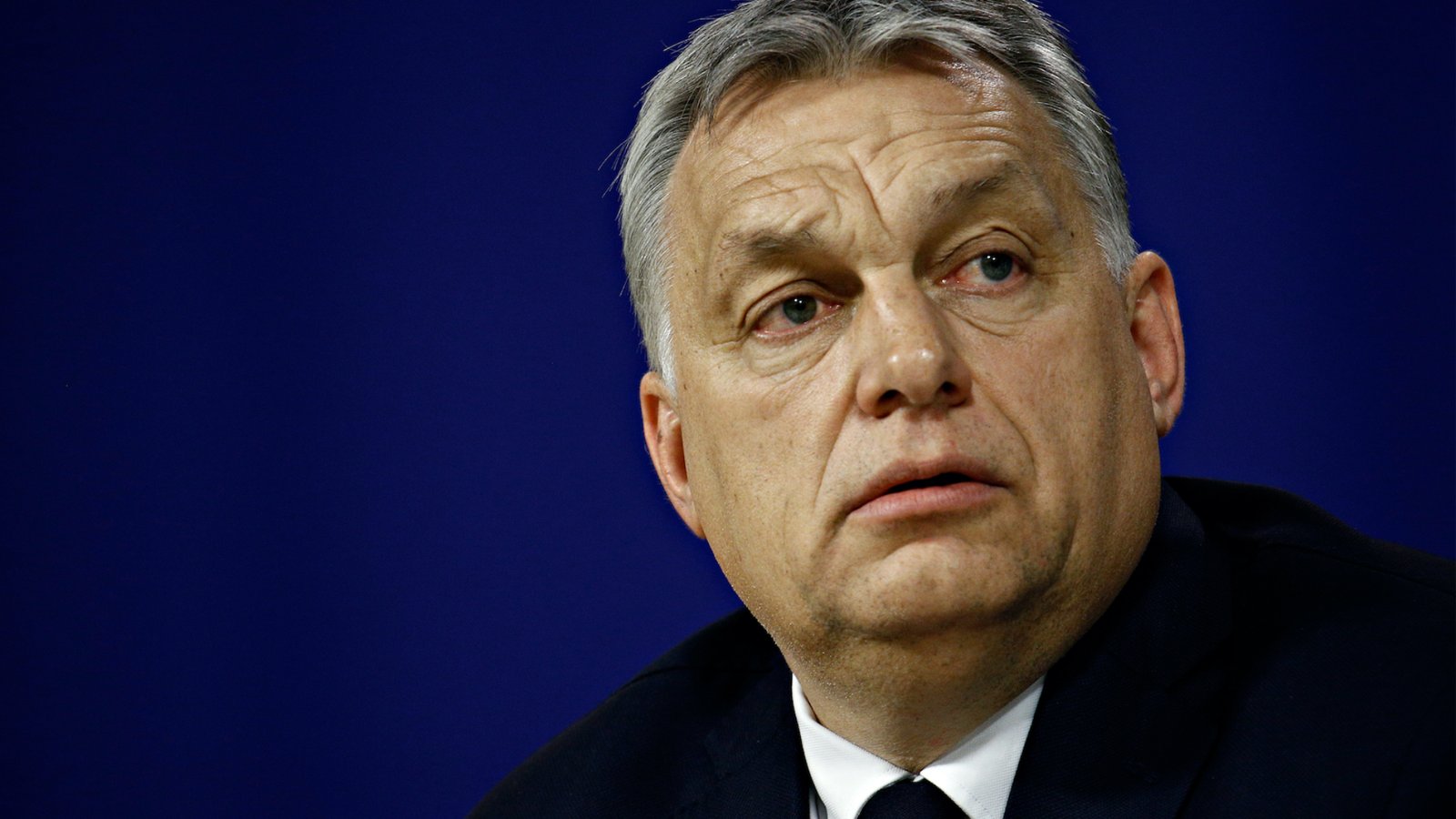
Hungarian Prime Minister Viktor Orban.

Viktor Orbán: Past to Present

Kenes, Bulent. (2020). “Viktor Orbán: Past to Present.” ECPS Leader Profiles. European Center for Populism Studies (ECPS). August 2, 2020. https://doi.org/10.55271/lp0001


Today, Hungary could be defined as, at best, an “illiberal democracy.” Some even argue that the country is now a crude autocracy. Prime Minister Viktor Orbán is personally described as “irredentist,” “right-wing populist,” “authoritarian,” “autocratic,” and “Putinist.” He’s also been called a “strongman” and a “dictator.” Orbán has outmaneuvered his opponents and tightened his clutch on power. He makes no secret of his plans to rule Hungary for the foreseeable future.

By Bulent Kenes

On June 16, 1989, over 200,000 Hungarians filled Heroes’ Square in Budapest. They gathered for a memorial observance leading to the reburial of Imre Nagy, the leader of the failed 1956 Revolution. Nagy was a staunch Communist, but he had not lost his national pride; Hungarians had looked to him as a reformer capable of freeing them from the Stalinist grip of Matyas Rakosi. Nagy had been tried in secret, hanged on June 16, 1958, and buried in an unmarked grave (Congdon, 2018). 

The mass gathering, which was a mix of ceremony and demonstration, was broadcast live on Hungarian television and ended with six speeches. The final speech was delivered by Viktor Mihály Orbán, a little-known 26-year old activist sporting a scruffy beard. He spoke for only seven minutes but electrified the crowd and the people watching at home (Lendvai, 2019). At the time, there were still 70,000 Soviet troops occupying Hungary; despite their presence, Orbán gave the most courageous speech of the gathering:

“Today, 33 years after the Hungarian Revolution and 31 years after the execution of the last responsible Hungarian prime minister, we have a chance to achieve by peaceful means everything that the ’56 revolutionaries gained in a bloody battle, if only for a few days. If we believe in our own strength, we are capable of bringing the communist dictatorship to an end. If we are determined enough, we can compel the ruling party to submit to free elections. If we have not lost sight of the ideas of ’56, we can vote for a government that will immediately enter into negotiations leading to the immediate beginning of Russian troop withdrawals,” (Magyar Nemzet, 2014). 

An Idealist or a Budding Opportunist?

According to Paul Lendvai, Orbán, whose rhetoric so stirred Hungarians in 1989, was no idealist; he was, rather, a budding opportunist getting an early taste of power. Gabor Fodor, an Orbán rival who was once his close friend, observed that even as a young man, Viktor Orbán “was already possessed of those domineering, intolerant ways of thinking and behaving that are all too evident in him today.” But, Fodor noted, “he was, in addition to all of this, sincere and likable.” It is a combination of traits that suggests a certain ambivalence in Orbán’s character, which perhaps helps explain the ease with which he transformed his political persona later in life (Lendvai, 2019).

Viktor Orbán was born in Szekesfehervar, in Hungary’s Transdanubia region, but he grew up in the nearby villages of Alcsutdoboz and the somewhat larger Felcsut (Congdon, 2018). Initially, his family lived in the cramped house of his paternal grandparents. When Orbán was ten, as a consequence of arguments between his mother and grandmother, the family moved to a dilapidated house at the end of Felcsut’s main street. The circumstances in which he grew up were orderly but very poor. Orbán has recalled how hard he and his siblings worked in the fields as young children: pulling beets, sorting potatoes, feeding the pigs and chickens. The house had no running water. Years later, Orbán described the “unforgettable experience” of using a bathroom for the first time, at age 15 and getting hot water by simply turning on a faucet (Lendvai, 2019).

According to Paul Lendvai, Viktor Orbán, whose rhetoric so stirred Hungarians in 1989, was no idealist; he was, rather, a budding opportunist getting an early taste of power. Gabor Fodor, an Orbán rival who was once his close friend, observed that even as a young man, Viktor Orbán “was already possessed of those domineering, intolerant ways of thinking and behaving that are all too evident in him today.”

The Orbán family’s fortunes improved in the 1970s and 1980s, as his father earned a university degree and climbed the ranks of the ruling Socialist Workers’ Party. Orbán was a bright student, and his parents sent him to a selective grammar school. But years later, he described himself in an interview as an “unbelievably bad child. Badly misbehaved, cheeky, violent. Not at all likable.” He added: “At home, I had constant problems with discipline; my father beat me once or twice a year.” Throughout his youth, his brief compulsory stint in the military, and his university years, his maxim remained unaltered: “If I’m hit once, then I hit back twice” (Lendvai, 2019).

After completing gymnasium studies in Szekesfehervar in 1981, he performed one year of military duty before enrolling as a law student at Eotvos Lorand (Budapest) University. He was among those who founded the Istvan Bibo Special College in 1983, where young scholars studied law and politics. One of the college’s patrons was the Hungarian-born American investor and philanthropist Gyorgy (George) Soros, who also generously subsidized a student-run journal, language courses, and trips overseas. At the college, Orbán became part of a tightly knit group of liberals. He even found a part-time job in Soros’s organization, which later became the Open Society Foundations (Lendvai, 2019 & Congdon, 2018).

Orbán began to work for the Ministry of Food and Agriculture after completing his degree in 1987. On March 30, 1988, he and thirty-six other Bibo College fellows founded Fidesz (Fiatal Demokratak Szovetsege — Alliance of Young Democrats) as an independent organization aimed at regime change. In 1989, three months after his famous speech at Nagy’s reburial, Soros’s foundation awarded Orbán a scholarship to study politics and conduct research on the idea of civil society in European political philosophy at Pembroke College, Oxford. At the time of his arrival in England, Margaret Thatcher, the uncompromising “Iron Lady,” was prime minister – and a role model for the young Hungarian (Lendvai, 2019 & Congdon, 2018).

A Long and Bumpy Political Journey Begins

In October 1989, Orbán took part in the Fidesz congress that voted to transform the youth organization into a political party, allowing it to participate in the free elections scheduled for the following spring. Although his scholarship was good for nine months, he, his wife Aniko Levai, and their four-month-old daughter permanently returned to Budapest in January 1990. In the April elections, Fidesz won 22 of 386 seats in parliament, while the Magyar Szocialista Part (the Socialist Party, the successor to the Communist Party) took 33. The conservative Magyar Demokrata Forum captured 165 seats and formed Hungary’s first freely elected government under Jozsef Antall, a man of character who had eked out a living as a librarian and editor after playing an active role in the 1956 Revolution (Congdon, 2018).

In opposition, Fidesz remained true to its youthful image: Orbán and other politicians in the party kept their beards, long hair, jeans, and open-neck shirts. They advocated liberal reforms and were quick to condemn nationalist and antisemitic undercurrents in the governing coalition. Orbán himself scoffed at the populist rhetoric of the ruling parties, whose leaders “reject criticism of government policy by suggesting the opposition or media are undermining the standing of Hungary, are attacking the Hungarian nation itself,” he said. This was a fair description of some elements in the Antall government and a prescient foreshadowing of the populist style that Orbán himself would later adopt (Lendvai, 2019).

Lendvai wrote that despite their avowed liberalism, Orbán and his Fidesz circle had an uneasy relationship with an older generation of liberals, especially those of the Alliance of Free Democrats, many of whom were academics from bourgeois (and often Jewish) families. They were well-read, open to the world, and fluent in foreign languages – a stark contrast to the Fidesz leaders, who were mostly lawyers from rural areas or small towns. Orbán and his friends initially admired the older liberals but soon came to see them as overweening. 

Eleven years after his marriage by simple registry, Viktor Orbán and his wife consecrated their union in a church ceremony. There is ample evidence that Orbán’s religious conversion was genuine, but it is also true that his contacts with his countrymen had convinced him of the national importance of Christianity.

In 1991, a poll showed that Orbán, who was not yet 30, was the third most popular politician in Hungary. Two years later, he became the president of Fidesz. However, in the 1994 elections, the party suffered a crushing defeat. The former communists of the Hungarian Socialist Party quintupled the number of votes they had received in the prior election and formed a coalition with the Free Democrats; together, the two parties held over 72 percent of the seats in Parliament. In contrast, Fidesz had become the smallest party in Parliament, with only 20 seats. Seeing no other path to political survival, Orbán committed himself and the party to a rightward political shift. The erstwhile rebels of Fidesz began dressing conservatively and styling their hair neatly. Their speeches were now peppered with professions of faith in the nation, in Magyar tradition, in the homeland, in national interests, in respectability, in middle-class values, in the family, and in the love of the mother country (Lendvai, 2019).

“This was the first major step in Orbán’s decades-long transformation into an autocratic right-wing populist. There seemed to be no deep ideological soul-searching involved – just clear-eyed calculations about what it would require to win power,” wrote Lendvai (Lendvai, 2019). Orbán even changed his party’s name to Fidesz – Magyar Polgari Part, or “Fidesz, the Hungarian Civic Party,” in April 1995. Furthermore, two years later, and eleven years after his marriage by a simple registry, he and his wife consecrated their union in a church ceremony. There is ample evidence that Orbán’s religious conversion was genuine, but it is also true that his contacts with his countrymen had convinced him of the national importance of Christianity (Congdon, 2018).

Meanwhile, the Socialist-Free Democrat government struggled under the weight of an unpopular package of economic reforms and a corruption scandal. In the elections of 1998, Fidesz triumphed with 29.48 percent of the vote, which assured the party 148 seats in Parliament. Orbán became prime minister. As the youngest prime minister in Hungarian history, Orbán led Hungary into NATO (1999) and moved Fidesz from the Liberal International bloc in European politics to the center-right European People’s Party (EPP), founded in 1976 by several Christian Democratic parties. For the next four years, the Hungarian economy performed reasonably well, and Orbán remained extremely popular. In 2000, the European Union (EU) agreed to admit Hungary on January 1, 2004. Despite the improving economy and EU accession, Fidesz, to the surprise of many, lost the 2002 elections. Partly, the upset followed from Orbán’s failure to clearly distance the party from extreme right-wing groups, which openly trafficked in antisemitic rhetoric and even celebrated the Nazi-allied regime that had ruled Hungary in the 1940s. The Socialist-Free Democrat coalition returned to power (Lendvai, 2019 & Congdon, 2018).

During both the 2002 and 2006 campaigns, exorbitant social promises took center stage. The Medgyessy-cabinet (2002-2004) propagated its fiscal expansion under the slogan of a “welfare transition,” hinting at the end of hardships and promising that Hungary’s economic fortunes would quickly catch up to Western Europe after EU-accession (Deák, 2013). Orbán and his party spent the next four years in opposition and failed to win back power in the 2006 elections. Hungary had joined the EU with relative ease in 2004; within Europe, the country’s social and economic standing was improving. However, among the populace, there was a growing distrust of the government (Timmer, Sery, Connable, & Billinson, 2018).

“Lie Speech,” Image-Making, and Viktor’s Victory

A few months later after the elections, a political bombshell exploded in Hungary. An audio recording emerged in September 2006, on which the Socialist prime minister, Ferenc Gyurcsány, could be heard delivering an internal, obscenity-laced tirade to fellow party members. He described the country and his political party in negative terms, hoping to convince party members that some painful economic reforms had been unavoidable (Lendvai, 2019 & Buzogány, 2017). In this rant, Gyurcsány even admitted to lying to the public. 

This leaked speech became the spark that ignited the powder keg of social, economic, and political tensions that had been primed and ready to explode throughout Hungary. Protestors from all over the country flooded into Budapest. Wall-to-wall media coverage of what became known as Gyurcsány’s “lie speech” fueled a massive and passionate attack by the opposition, with Orbán leading the charge against what he called an “illegitimate” government (Lendvai, 2019). Fidesz and the right-wing party Jobbik capitalized upon the protests and unrest, moving their platform further to the radical right. Fidesz especially rhetorically aligned themselves with the will of “the people” – the protestors (Timmer, Sery, Connable, & Billinson, 2018).

Despite public outcry and increasingly radical, violent protests on the streets of Budapest, Gyurcsány managed to stay in power for several years. However, the domestic political crisis was aggravated by the consequences of the 2008 global economic crisis and pressure from the EU to end deficit spending. Moreover, the population had had enough of technocratic reforms and permanent austerity without any context or end in sight. The 2008 crisis ushered in an era when an already disgruntled population was wary of reforms. Orbán became the last hope of a populace seeking change. Fidesz successfully combined social paternalism with the promise of large-scale tax reductions and a pro-market orientation. Thus, Orbán strengthened his claim on power, calling for an overhaul of the political system (Deák, 2013 & Buzogány, 2017).

Poster from political party Fidesz showing the opponents of Hungarian PM Viktor Orban surrounding billionaire philanthropist George Soros, Budapest, April 8, 2017.

In 2008, Orbán also hired American-Republican strategist Arthur Finkelstein to re-create the flailing Fidesz’s image. Finkelstein made a simple suggestion: exploit the ugliest legacies of Hungary’s past. Orbán gleefully took up the charge, embracing the blood-and-soil rhetoric of Hungarian nationalism and laying into Jewish philanthropist George Soros as the symbol of all things globalized and sinister – even though he had worked for Soros’s Open Society Foundations in the 1980s, back when he still had long hair, claimed he didn’t believe in God and spoke out against nationalist bigotries (Sammon, 2019). They were well-positioned to easily sweep the parliamentary elections in 2010 (Timmer, Sery, Connable, & Billinson, 2018).

Following the change in citizens’ party preferences, the Hungarian party system, formerly composed of two poles of nearly equal strength, collapsed. In the 2010 elections, Fidesz and its partner won 57 percent of the popular vote and gained an unprecedented two-thirds majority in Parliament (263 seats) (Illés, Körösényi & Metz, 2018). This was a first in the history of democratic Hungary. In the nearly decade since, Orbán has used this supermajority to transform Hungary’s constitution, institutions, economy, foreign policy, and society. After what he deemed a “revolution at the ballot box,” Orbán proudly announced the drafting of an entirely new constitution, called the Fundamental Law of Hungary, despite never mentioning constitutional reform during the electoral campaign (Lendvai, 2019) and despite opinion polls showing that less than one-third of the Hungarian population saw the need for a new constitution (Illés, Körösényi & Metz, 2018).

According to a joint article by Illés, Körösényi, and Metz, Orbán’s aims with constitution-making were multiple. First, the new constitution became a symbolic expression of revolutionary change and the founding moment of a new regime. In addition to representing a dramatic break with the post-communist regime, the new constitution also incorporated such potent symbols as the Hungarian “Holy Crown.” Second, it represented a break with the “legal constitutionalist” (Bellamy, 2007) approach which had characterized the previous regime and supported the supremacy of judicial review over politics. Third, constitution-making became Orbán’s means of weakening and de-legitimizing authorities which were interwoven with the status quo, such as the constitutional court, the “ombudsman,” media authorities, and the central bank (Illés, Körösényi & Metz, 2018).

In 2011, the new constitution was rushed through parliament in nine days without any input from the public, much less a referendum. The main victim of the new constitution was the judiciary, especially the Constitutional Court. Previously, the powers of the executive branch were limited by a high number of constitutional laws and their extensive interpretation; this meant giving the opposition a check on the majority’s power (Deák, 2013). Now, the justices of the Constitutional Court would be selected not as they had been before, through an all-party parliamentary committee, but directly by Parliament. With Fidesz holding a supermajority in parliament, Orbán could pack the court with sympathetic judges.

The chamber of the Lower House of the Hungarian Parliament in Budapest.

Legislative Tsunami & Invasion of Party Apparatchiks

According to some observers, Orbán’s constitution-building efforts were designed to re-affirm some of the common values and constitutional traditions shared by the community in the past or which he sought to create anew through the new constitution. First, the constitutional discourse of Orbán’s party recalled the Christian and national traditions that were prevalent in Hungary prior to the communist era. Second, the Hungarian nation is defined in an ethnocentric way in the Fundamental Law, which not only symbolically embraces the ethnic Hungarians of neighboring countries in the constitution, but enfranchises them to participate in Hungarian general elections through a newly introduced dual-citizenship scheme (Illés, Körösényi & Metz, 2018).

Furthermore, Parliament also legislated 365 new laws (an average of one every 1.5 working days) through early 2012, among others the new constitution and all 25 constitutional laws. This was an unprecedented legislative tsunami, not comparable even to the transition from communism (Deák, 2013). Orbán also chipped away at the top court’s authority: among other assaults, in 2013, the Fidesz-dominated Parliament voted to strip the Constitutional Court of the ability to review laws concerning state finances and wrote directly into the constitution a number of Fidesz-backed laws that the court had previously overturned (Lendvai, 2019). Orbán also handed personal friends and loyal party apparatchiks long-term posts in the corridors of power, including the President of the State, the State Audit Office, and the Constitutional Court, as well as top positions in cultural institutions such as the state media, the film industry, and state universities (Fabry, A., & Sandbeck, S. 2019).

A number of post-2010 laws and policies went against European political standards. Therefore, Hungary confronted fierce criticism from the EU governing bodies as well as Western constitutional experts. Observers assessed that Hungary made a “sharp U-turn” in its political development and is “retreating from democracy” towards “a one-party state” under the rule of Orbán.

The process lasted from 2010 to 2015 and became an essential part of the political struggle between Orbán’s legislative majority and the constitutional forces representing the status quo, including the Parliamentary opposition, the Constitutional Court, non-governmental organizations (NGOs) and prominent constitutional lawyers. Clashes with international actors such as the EU Commission, the European Parliament, the Venice Commission, and the US government, who all expressed concern about certain changes in the constitution, were perceived and framed in Orbán’s political discourse as part of his cabinet’s “freedom fight” – an effort to regain Hungarian national sovereignty (Illés, Körösényi & Metz, 2018).

A number of post-2010 laws and policies went against European political standards (Batory, 2015). Hungary confronted fierce criticism from the EU governing bodies as well as Western constitutional experts. According to some vocal opponents of the post-2010 developments, the Orbán government “have downgraded or done away with the checks and balances that are widely considered essential for the rule of law” (Rupnik, 2012) and departed from the norms of democratic pluralism (Kovacs and Toth, 2011 & Bayer, 2013). Other observers are even more pessimistic, arguing that Hungary made a “sharp U-turn” in its political development and is “retreating from democracy” (Kornai, 2015) towards “a one-party state” (Scheppele, 2014) under the rule of Orbán (Shevchenko, 2018).

The European Parliament’s Hungary Rapporteur Judith Sargentini (Sargentini, 2018), a Dutch MEP, also noted in a detailed report, released on Sept. 11, 2018, numerous problematic institutional changes in Hungary. According to the report, the freedom and independence of the judicial system are threatened. The first constitution written on an iPad has curtailed the role of the Constitutional Court. Meanwhile, a new and less independent court system is being introduced which will deal with legal cases brought against the government. The government has also limited the people’s right to strike and to protest, and media freedom is under pressure as the government advertises exclusively in loyal media outlets (Zsuzsanna, 2019).

Sargentini also documents Orbán’s other transgressions, from widespread corruption to the forced sterilization of Roma women. She took to the floor of the European Parliament and called on her colleagues to choose: “Will you ensure the value of this union is more than just words written on a piece of paper?” Supporters of the Hungarian populist, including Nigel Farage, the chief cheerleader for Brexit, came to Orbán’s aid (The Economist, 2018). However, in September 2018, the European Parliament responded to the report that condemned the regime’s anti-democratic policies by voting 448-197 (with 48 abstentions) to invoke seldom-used Article 7, also called the “nuclear option,” against Hungary, launching proceedings that could lead to sanctions against the country, including suspension of its voting rights in the European Council (Encyclopædia Britannica, 2020).

In doing so they collectively stated that Orbán’s government posed a “systemic threat” to democracy and the rule of law. However, Orbán did not care all that much about the vote. His primary audience in Strasbourg was not MEPs but domestic voters, and the defeat will only serve to boost his popularity, as he presents himself as a valiant defender of the beleaguered Hungarian nation against hostile external forces. “These debates help him to mobilize his own camp and will work much more at a domestic level,” said Andras Biro-Nagy of Policy Solutions, a Budapest think-tank. Fidesz’s lead in the polls is unassailable. More than 50 percent of Hungarians back it against a fractured opposition (The Economist, 2018).

Newsstand with newspapers in Hungarian in the center of Gyor, Hungary on November 3, 2017.

Hungarian Media Monopolized and Silenced

The media have always been in Orbán’s sights. He blamed his party’s defeat in 2002 on the publicly funded media networks and had long dreamed of hobbling them. With his majority support in Parliament, he brought together all the government-funded television and radio networks under a new conglomerate run by Fidesz supporters. Later, he also established a centralized media authority – the National Media and Info-communications Authority – with the responsibility to regulate the media industry and media content. Its five-member council is elected with a two-thirds supermajority by the Fidesz-dominated Parliament. The organization, which has received widespread criticism for jeopardizing the freedom of the press, has the right to deny media outlets their licenses and impose heavy fines of up to 200 million forints ($860,000) on journalists and media outlets for publishing articles with “improper content.” As a result, the public networks are more tightly supervised by Fidesz today than they were in the final period of the communist regime. Such control is made possible because the majority of Hungarians get their news from television (Lendvai, 2019; Fabry & Sandbeck, 2019 & Timmer, Sery, Connable, Billinson, 2018). Thus, Hungary’s position on the World Press Freedom Index, compiled by Reporters Without Borders (RSF), has plummeted from 23rd in 2010, when Orbán took power, to 89th in 2020 (RSF, 2020).

Further erosion of press freedom occurred in 2018 when all pro-Fidesz media owners “donated” their holdings to a new structure run by three of Orbán’s most trusted lieutenants. Dubbed the Central European Press and Media Foundation, the organization now consists of 476 media outlets. The government has exempted it from legal scrutiny and from regulations governing the concentration of media holdings (Lendvai, 2019). Today, Orbán has a far greater ability to control the Hungarian mediascape, and justifies his control of media outlets, claiming that unchecked they become “enemies of the state” (Timmer, Sery, Connable & Billinson, 2018). Except for one television station owned by a German company (RTL), a small radio station heard only in Budapest, and a few culture-focused weeklies, every single media outlet in the country is now controlled by people close to the regime. So, the government’s introduction of the latest tax on advertising revenue appeared to have been specifically targeted at handcuffing the commercial broadcaster RTL (Encyclopædia Britannica, 2020).

Media researcher Péter Bajomi-Lazar has explained that in a plural landscape, media doesn’t have much of an impact, but in Hungary, media have been put in the service of a majoritarian government dedicated to establishing ideological hegemony in an attempt to change long-term public opinion and voting behavior, thus cementing its power (Howden 2016). According to Hungarian media observers, the government control of the media is successful because the mediascape is small, limited in scope, and relatively homogenous. Furthermore, Orbán is able to manipulate media messages to create the illusion of openness. There are only three broadcasting services in Hungary. The national station, MTVA, is essentially the mouthpiece of the government. Of the other two commercial stations, TV2 is now basically turning into another governmental channel. As mentioned previously, RTL is still standing but is under constant pressure (Timmer, Sery, Connable & Billinson, 2018).

Control of the media, however, is not limited to control of broadcast television. Print and online journalists also have found themselves under attack. In an article for the Web site Refugees Deeply, Daniel Howden provided examples of journalists from origo.hu (a well-known left-leaning online news source) and the Budapest Business Journal, who felt pressured to alter their stories or resign (Howden 2016). In both cases, the journalists resigned rather than compromise their ethics. In 2011, Klubrádió, news and talk radio station, known to be the voice of left/liberal opposition, was denied renewal of their license; they’d begun broadcasting in 1999. This led to a fairly long legal battle which Klubrádió eventually won in 2013 (Timmer, Sery, Connable & Billinson, 2018). As Tamás Bodoky of Átlátszó (Transparent), a civil watchdog organization asserted, “there are fewer and fewer workplaces for journalists willing to expose corruption and they mostly exist on the internet” (Bienvenu 2016).

Perhaps the most notable example of the government’s overreach is the sudden closure of the country’s long-standing newspaper, Népszabadság. On September 30, 2015, the paper, one of the premier leftist national newspapers, was suddenly shut down. The owner cited loss of readership and loss of revenue, but employees saw the closing as Orbán’s doing. Journalists showed up to work only to find they were out of a job. Online readers logged on that morning to find a letter explaining the closure. Even the archives were removed. The closure of Népszabadság is seen as highly symbolic. The word ‘népszabadság’ means the people’s liberty. The paper was founded during the 1956 Revolution and is associated with the spirit of the people’s rebellion (Timmer, Sery, Connable & Billinson, 2018).

Hungarian policemen watching the Serbian Hungarian border fence in Kelebija, Serbia on September 10, 2016. This wall was built in 2015 to stop the refugees passing through Serbia and the Balkans Route.

Immigrants: An Opportunity to Create a New Enemy

In 2015, when the European migrant crisis erupted, Orbán saw an opportunity to create a new enemy. Illegal immigrants hoping to transit to western Europe flooded from the Balkans to Hungary. More than 200,000 refugees and economic migrants besieged the external border of the EU (Rydliński, 2018). At one point, about a thousand migrants were trying to board trains for Germany. The sight of the chaos frightened Hungarians, and Orbán’s government has done everything in its power to keep this fear alive (Zsuzsanna, 2019). Dysfunctional European crisis management and a series of terrorist attacks and other related incidents provided space for Orbán to create a narrative of fear around immigration (Huysmans, 2000 & Szalai A., Gőbl G. 2015). In response, his government offered the Hungarian people security.  

Through populist rhetoric, Orbán raised the stakes of the crisis, making a clear connection between illegal immigration, organized crime, and terrorism. Initially, his crisis narrative (Metz, 2017) focused on the impact of immigration on the economy, culture, and public safety; then, over time, he focused more on the lack of confidence, leadership, and democracy in the EU, and the collapse of a European Christian identity. In addition, he strongly opposed the European liberal and left-wing political elite, namely “Brusselian bureaucrats” and civil activists. To support this narrative, Orbán, with support from Slovakia, initiated legal action against the EU’s plan for migrant re-settlement at the European Court of Justice in December 2015. His government claimed that the decision infringed upon established EU law (Illés, Körösényi & Metz, 2018). However, Prime Minister Orbán was not satisfied with his diplomatic, political, and legal efforts. He ordered the erection of a metal fence on Hungary’s southern border. 

At present, the average number of migrants or refugees trying to enter the country in a week is only 10, but the propaganda against migration continues. There is a designated border patrol police unit, taking its name “határvadászok” or “border hunters” from a WWII military unit deployed to chase Serbian insurgents. This was meant to appeal to the followers of Jobbik, which long promised to bring back the Border Guards dismissed 25 years ago, with the fall of the Communist regime (Haraszti, 2015). The government also declared a state of emergency in 2015, which has been extended to the present. The public media, influenced by Fidesz, still broadcasts unfavorable news about immigrants and refugees. (Zsuzsanna, 2019).

The division into “us” and “them” used by Orbán has a quasi-religious character: Christianity has become one of the key state-building elements in Hungary, along with culture and language. In this context, the influx of immigrants – largely Muslim – is unequivocally interpreted as a threat to the existence of the state.

German Chancellor Angela Merkel’s “policy of open doors” has been met with heavy criticism within Central European countries, with Orbán as the undisputed leader of the backlash. Initially, Orbán used two main arguments. First, a legal one, concerning the Dublin Convention stating that the asylum motion should be decided on in the first EU country the refugee reaches. The second argument was political, and it concerned the threats to Hungary’s identity and security from Muslim migrants. From the legal perspective, Orbán’s point of view fits into the norms of abiding by international law. However, the use of language generating fear of Islam – or the use of outright Islamophobia – has a strictly illiberal character. As Dominik Héjj pointed out, the division into “us” and “them” used by Orbán also has a quasi-religious character: “Christianity has become one of the key state-building elements in Hungary, along with culture and language. In this context, the influx of immigrants – largely Muslim – is unequivocally interpreted as a threat to the existence of the state” (Illés, Körösényi & Metz, 2018).

Orbán utilized the well-known symbol of Central Europe as the “Bulwark of Christianity,” an important element of Central Europe’s regional identity. He wanted to prove that in the refugee crisis, Hungary was once again taking part in a historical “clash of civilizations,” and that as a special nation, it had to withstand not only attacks from outside of Europe but also from within (Illés, Körösényi & Metz, 2018). However, Orbán has had to walk a fine line. While he loudly campaigns against immigration, Hungary is in desperate need of additional labor. Hungarian companies offer work visas to Ukrainians and various Latin American nationals. Thus, the anti-immigration campaign in Hungary has become narrow in scope, and it has strong Islamophobic and racist undertones (Zsuzsanna, 2019).

This cynical attitude was not a secret. Orbán has time and again presented himself and his government as “the last defenders of a Europe based on the nation, family, and Christianity” (Lendvai, 2019). Orbán interpreted the migration crisis as an enormous threat, not just against the welfare state and public security, but also against Christian civilization, European values, and nation-states. One of the messages posted on a government billboard during a period of campaigning made this standpoint explicit: If you come to Hungary, respect our culture! Orbán provided a strong vision of a Christian Europe, contrasting this vision with Islamic culture and consciously promoting his own role as defender of the Schengen-area borders and of “old Europe” and “real” European values. According to Orbán’s vision, there is no need for the further integration of immigration policy, because only nation-states can manage the crisis effectively. He not only challenged the EU’s role in the country but also created broad public support for his policies. Orbán used the migration crisis to redefine and revitalize the role of nation-states (Illés, Körösényi & Metz, 2018).

It’s easy to understand Orbán’s intended audience by studying the billboards: they were written in Hungarian, a language that most asylum seekers from the Middle East and Northern Africa do not speak. Like the fence, these billboards sent a message to Hungarians: that they were under threat but that their government could protect them (Timmer, Sery, Connable & Billinson, 2018). Accordingly, the Hungarian Parliament tightened the legal framework for asylum seekers and illegal immigrants. On June 7, 2016, the governing alliance of Fidesz-KDNP and the right-wing opposition Jobbik approved the Sixth Amendment to the Fundamental Law, which widened the government’s emergency powers in the case of significant and direct risk of a terrorist attack (Illés, Körösényi & Metz, 2018). 

Orbán’s government has made a life for migrants in Hungary extremely difficult. But this was not sufficient for Orbán. In 2017, Parliament passed another law forcing all asylum seekers into detention camps, with some of them housed in converted shipping containers. Amnesty International condemned the measures as “illegal and deeply inhuman” and “a flagrant violation of international law” (Amnesty International, 2017). A report issued by the Council of Europe (CoE) in 2019 charged that refugees in Hungary were being deprived of food and denied legal representation. The CoE’s Human Rights Commissioner, Dunja Mijatovic, said that the Orbán government’s anti-immigration stance was “fueling xenophobic attitudes, fear, and hatred among the population.” She reiterated that many asylum seekers held in transit zones had been deprived of food (BBC, 2019).

Anti Immigration poster from Viktor Orban government in the streets of Budapest during the 2018 general elections campaign.

Orbán’s anti-immigrant campaign took another turn when the EU tried to introduce a Common European Asylum System under which Hungary would have had to evaluate the asylum claims of a limited number of migrants who entered the EU from another country (Zsuzsanna, 2019). Orbán did not hesitate to cast the migrant influx as the product of a conspiracy among hostile foreigners and corrupt elites: “The most bizarre coalition in world history has arisen,” he declared, “one concluded among human smugglers, human rights activists, and Europe’s top politicians in order to deliver here many millions of migrants. Brussels must be stopped!” (Lendvai, 2019). Orbán started a countrywide “Stop Brussels” campaign, in which the government insinuated that the EU wanted to settle migrants in Hungary. However, this campaign was still somewhat vague. To personalize the enemy, he added his former sponsor George Soros as the mastermind behind the asylum plan. The billboards changed from the message “Stop Brussels” to “Stop Soros” with a picture of the Hungarian-born American billionaire (Zsuzsanna, 2019). Orbán also passed a “Stop Soros” law making it illegal to help migrants (Beauchamp, 2018).

In the domestic arena, Orbán put great emphasis on dominating public discourse and applied a plebiscitary strategy to support his messages. In April 2015, the government launched a so-called “national consultation” regarding the migrant crisis. This suggestive political questionnaire, mailed out to citizens, involved issues such as terrorism, the economic impacts of immigration, and the incompetent politics of the EU and resulted in the government raising the terror-threat level (Spike, 2017). To legitimize its anti-immigration policy, the government also initiated a referendum about the EU’s compulsory migrant resettlement quotas, which was held on October 2, 2016. The low turnout resulted in the invalidation of the referendum, although the overwhelming majority of voters rejected the EU proposal for a migrant quota (BBC, 2016). The turnout was only 44.04 percent, which did not reach the threshold for validity, 50 percent. In all, 98.36 percent of the participants rejected the EU’s quota proposal (National Election Office, 2016). Since Orbán’s migration narrative lacked a “brüte” ground – very few refugees desired to remain in Hungary – the “migration threat” emphasized by the government appeared imaginary to major segments of the population. This absence of migrants was probably one of the main factors which contributed to low voter turnout for the referendum (Haraszti, 2015; Illés, Körösényi & Metz, 2018). 

Orbán did not stop his campaign. He continued to rage against both the “mostly Muslim” refugees and “Europe” that was “mentoring them.” He cast the refugees as profiteering pseudo-victims, many of them actual lawbreakers and some potential terrorists; at best, they were tools invited to Hungary by multinational capital and left-wingers in an effort to ruin Hungary through liberalism and multiculturalism. To Orbán’s supporters, the narrative was straightforward: “The EU and liberals hate us because we Hungarians are building an illiberal state and have never adopted multiculturalism, which has already ruined the West. And while we show the world how to remain migrant-free, culturally separate, and homogenous, we nevertheless also do this while defending European Christianity.” Orbán has weaponized latent xenophobia, one that had its roots in Hungary’s territorial losses after the 1918 collapse of the Habsburg commonwealth. To this day, he continues to generate new domestic and international conflicts, posturing as the defender of national interest (Haraszti, 2015).

Orbán’s focus on nationalism and his anti-immigrant rhetoric only escalated in the run-up to general elections in April 2018. He cast himself as the protector not only of Hungary but also of Christian Europe against a supposed invasion of “nefarious Islamic immigrants,” despite the reality that the wall on the country’s southern border virtually eliminated ingress into Hungary, for both migrants and refugees. Orbán has continued to claim that the opposition, Soros, the EU, and the United Nations (UN) are conspiring to transform Hungary into a country of immigrants. Fidesz and Orbán have used their dominance of the media to drive home this message with xenophobic fearmongering. As one political analyst claimed, “as long as migration is top of the agenda, Orbán’s and Fidesz’s popularity goes up. They have to keep up the momentum” (Howden 2016). 

Viktor Orban was in Brussels for a meeting with European Union leaders on June 22, 2017.

A Prototype of a Populist Eurosceptic

Since coming to power in 2010, Orbán has consistently disdained judicial independence, academic and media freedoms, and the rights of migrants. He has, in the view of many people, run roughshod over some of the EU’s core values. So far, however, the EU has done nothing solid to rein him or his government in (The Economist, 2018). Orbán’s authoritarian tendencies and hostility to liberalism are ironic, considering he came to power as part of Hungary’s dissident, anti-authoritarian movement. Even more ironic is his closeness to Russia and Vladimir Putin. Putin’s autocratic ethnic nationalism has become a model for the politics of Orbán and the Hungarian Right. Thus, a “greater Hungary” rhetoric that champions the rights of Hungarians outside the country’s borders and whips them into a fury has become an inseparable part of Orbán’s populist nationalism. This ethnic nationalism, which recalls the days of the Austro-Hungarian Empire, is essential for creating a political consensus to underpin Orbán’s authoritarian ambitions (New Internationalist, 2014).

While ethnonationalism has rallied support at home, the migrant crisis has eroded support for the EU. Since Orbán came to power, Hungarian trust in the EU has decreased significantly; and by 2016, levels of xenophobia in Hungary had reached a record high (Illés, Körösényi & Metz, 2018). Although Orbán’s populist ethnic nationalism has taken a huge toll on people’s trust in the EU, things started to change even before he came to power: the share of respondents who think that the EU-accession proved useful fell from 71 percent to below 40 percent between 2001 and 2009. Those who perceive the EU as a negative entity rose from 7 percent to 22 percent during the same period. Today, skepticism has turned into open hostility, and national and European interests tend to be more and more differentiated (Deák, 2013).

Was this split inevitable

Although the EU has criticized the Orbán regime for dismantling liberal democratic institutions and state-sponsored corruption, it continues to provide much-needed financial assistance to Budapest in the form of EU Cohesion funds.

The situation cannot be understood without analyzing the historical context. The dissolution of the Hungarian Kingdom after WWI and the loss of two-thirds of the country’s territory are often cited as reasons for why Hungarians are skeptical of the West. Indeed, the Trianon Peace Treaty of June 4, 1920, is still perceived as unjustified and unfair by the overwhelming majority of the population (Deák, 2013). The mainstream historical narrative, believed especially by conservatives, is that much of the guilt lies with the Western powers’ realpolitik. For Hungary, the years after WWI were full of despair and anti-Western sentiments. Few Hungarians, liberal or conservative, have positive memories of the role of the Western powers, especially as far as the twentieth century is concerned. Thus, measures applied by the Orbán government, such as closing the southern borders and tightening immigration laws, had broad cross-party support. Meanwhile, constant criticism of his regime-building strengthened Orbán’s Eurosceptic position. 

Although the EU has criticized the Orbán regime for dismantling liberal democratic institutions and state-sponsored corruption, it continues to provide much-needed financial assistance to Budapest in the form of EU Cohesion funds. Brussels has also looked on haplessly at the Orbán regime’s has orchestrated closer ties with authoritarian regimes, such as Erdogan’s Turkey or Putin’s Russia, and pursued increasingly explicit overtures to the far-right in Hungary and abroad, including the Austrian Freedom Party (FPÖ) and the Polish Law and Justice Party (PiS) (Buckley and Foy, 2016). There has been relentless speculation in the media about German Chancellor Angela Merkel losing patience with Orbán’s authoritarian policies and his open criticism of the German government’s “open-door” refugee policy (Werkhäuser, 2015), but up to present she has continued to support his party in the European Parliament where Fidesz sits together with the CDU-CSU in the European People’s Party, EPP (Fabry & Sandbeck, 2019).

On this fertile ground for nationalist populism, Orbán went a step further by calling for an illiberal society based on radical cuts in social services. He has also taken to celebrating “the wind from the east” blowing from “success stories” like Putin’s Russia and Erdogan’s Turkey, as well as China. This has been accompanied by the usual moral rhetoric of the populist Right: homophobia, restrictions on abortions, calls for social discipline, and scapegoating of ethnic and religious minorities. Meanwhile, the neo-fascist party Jobbik has organized paramilitary thugs who increasingly push Fidesz to the right, exacerbating the threat to Hungary’s Roma and Jews (New Internationalist, 2014).

Despite Orbán’s massive illiberal moves, Hungary is by default still a democracy due to its membership in the EU. In order to be considered for admission, prospective countries must demonstrate an adherence to EU values such as freedom of speech, religion, press, and movement. However, Prime Minister Orbán is miles away from these ideals, has unabashedly decried liberal democracy, and instead favors an illiberal nation. In a 2014 speech given in Băile Tuşnad, Romania, he proclaimed, “The Hungarian nation is not a simple sum of individuals, but a community that needs to be organized, strengthened and developed, and in this sense, the new state that we are building is an illiberal state, a non-liberal state” (Orbán, 2014).

A “Russian Trojan Horse” inside the EU and NATO?

In this speech, Orbán openly attacked liberal democracy, and he mentioned Singapore, China, India, Turkey, and, above all, Russia as examples to be followed. Subsequently, he has spoken of illiberal or Christian democracy. “Liberal democracy,” he has observed, “is no longer able to protect people’s dignity, provide freedom, guarantee physical security, or maintain Christian culture” (Congdon, 2018). Orbán recognizes that his policies are unaligned with democratic ideals but makes the argument he is acting in accord with the Hungarian community. In the same speech, Orbán explained, “systems that are not Western, not liberal, not liberal democracies and perhaps not even democracies, can nevertheless make their nations successful” (Timmer, Sery, Connable & Billinson, 2018). He continued, “Societies that are built on principles of liberal democracy will probably be incapable of maintaining their global competitiveness in the upcoming decades and will instead probably be scaled down unless they are capable of changing themselves significantly” (Orbán, 2014).

Orbán’s July 2014 speech garnered substantial attention both domestically and internationally. The Western political establishment was further shocked by his embracing the idea of an “illiberal state.” Fareed Zakaria, the author of a much-cited piece coining the term “illiberal democracy,” opined that Orbán was establishing a Hungarian-version of “Putinism” (Zakaria, 2014). Others saw the Hungarian government as a “Russian Trojan Horse” inside the EU and NATO. Academics wondered:” How can you sleep under your NATO Article 5 blanket at night while pushing ‘illiberal democracy’ by day; whipping up nationalism; restricting free press; or demonizing civil society?” charged Victoria Nuland, a US Assistant Secretary of State for European and Eurasian Affairs, in her keynote address to the October 2014 US-Central Europe Strategy Forum (Rettman, 2015). 

Despite the massive reactions he drew, Orbán reiterated his illiberal views during his State of the Nation address in February 2015 and spoke about the decline of the liberal Western model of political and economic development underscored by the 2008 financial crisis. He called for “breaking away from dogmas and ideologies recognized in Western Europe” and basing the Hungarian statehood on “national foundations.” Orbán argued that the goal of creating an efficient state capable of making a nation successful and globally competitive requires adopting political and economic institutions that might not conform to Western liberal democratic standards, and once again he cited the examples of Singapore, China, India, Turkey and Russia (Rydliński, B. 2018).

These words were not just political rhetoric. In an attempt to reduce Hungary’s excessive dependence on the EU and the US, he has steadily reoriented Hungary’s foreign policy, pulling the country away from the liberal democracies of western Europe and making common cause with other strongmen and populist parties. Indeed, there is barely a dictator in the world for whom Orbán does not have praise (Lendvai, 2019). He started to promote an “Eastern Opening,” a policy aimed at amplifying economic ties with Russia and the Asia-Pacific. Orbán, one of Russia’s harshest critics in Central Europe in the past, expanded bilateral ties and encouraged Russia to invest in the Hungarian economy. In 2014, just as the EU and the US were preparing to sanction Russia for its annexation of Crimea, and at a time when Brussels was urging EU member states to reduce their dependence on Russian energy (Lendvai, 2019), the Orbán government signed a number of long-term partnership agreements with Russia’s Gazprom. Hungary also opted for several large-scale investments involving major Russian companies; these include the public tender to modernize the Budapest metro, which was won by the Russian Metrovagonmash (Buzogány, 2017). 

Orbán went on pursuing profitable deals with Moscow while avoiding strategic commitments and preserving both security ties with NATO and the economic benefits of the EU membership. Hungary also signed a long-term agreement with Russia’s Rosatom to expand Hungary’s single Soviet-era nuclear Paks plant, with the construction financed by $13.33 bn., a 30-year loan from Moscow (Rydliński, B. 2018). The contract was announced without any feasibility study or public tender, and the exact details remain hidden from the public. In sum, this suggests “that the Hungarian government’s desire to create domestic economic benefits takes precedence over its Euro-Atlantic orientation” (Buzogány, 2017).

Orbán has taken a step further and institutionalized his new orientation by establishing the “Ministry of Foreign Affairs and Trade” which was led by one of his young followers, Péter Szijjártó. He declared attracting investments and foreign trade to be the main priority of Hungarian diplomacy. Szijjártó was also assigned responsibility for the new “Eastern opening.” At the same time, the restructuring of the ministry, which was marked by establishing a department dealing exclusively with Chinese and Russian affairs, was paralleled by excessive purges in the diplomatic corps. Around 400 seasoned diplomats with strong Euro-Atlantic credentials were dismissed from the ministry and replaced by young professionals from Szijjártó’s entourage, most of them lacking a background in foreign policy.

Fidesz’s own foreign policy experts, most of them Atlanticists, lost influence, too. The Eastern opening has also brought back to the forefront sidelined pro-Russian diplomats, many of them Soviet-trained alumni of the elite diplomatic academy Moscow State Institute of International Relations (MGIMO). Among the newcomers designing the policy were some Russia “experts” with dubious credentials and alleged ties to the Russian criminal underworld. In any case, the influx of new personnel without a deep understanding of diplomatic practices made Hungarian diplomacy largely unable to assess the situation into which the country had maneuvered itself within the EU (Buzogány, 2017).

Hungary’s “Eastern turn” also becomes apparent when looking at statistics of Orbán’s foreign visits; Mideastern and far Eastern destinations gradually replaced meetings with Western or Central and Eastern European leaders. In July 2018, Orbán traveled to Turkey to attend the inauguration ceremony of re-elected Turkish President Recep Tayyip Erdogan (About Hungary, 2018). In April 2019, Orbán attended China’s “Belt and Road” forum in Beijing, where he met the Chinese President Xi Jinping (China Daily, 2019). Traveling to Central Asia in 2014 and 2015, Orbán was repeatedly cited praising political stability and the economic development in countries such as Kazakhstan, highlighting the common ethnic kin and genealogical differences between Hungarians and Western Europeans and making vague references to the “Turanian tradition” of interbellum fascist Hungarian political thought, which emphasizes Turkic and Asian elements in Hungary’s cultural heritage and is promoted excessively by the Hungarian radical right-wing (Buzogány, 2017).

Orbán’s opposition to immigration has further distanced him from Western Europe. He claims that his anti-immigrant stance is the only right and moral one. For example, in a March 15, 2016 speech, Orbán decried European policies of integration and tolerance (Timmer, Sery, Connable & Billinson, 2018). “Europe is not free,” he asserted, “Because freedom begins with speaking the truth. Today in Europe it is forbidden to speak the truth… It is forbidden to say that those arriving are not refugees, but that Europe is threatened by migration. It is forbidden to say that tens of millions are ready to set out in our direction. It is forbidden to say that that immigration brings crime and terror to our countries. It is forbidden to point out that the masses arriving from other civilizations endanger our way of life, our culture, our customs, and our Christian traditions” (Orbán, 2016). 

This issue may effectively tear Europe apart along an East-West divide. Orbán’s opposition to refugee quotas and his rhetoric about accepting only Christians has resonated also among the other three members of the Visegrad-4 (the V4 includes Hungary, the Czech Republic, Poland, and Slovakia). Meanwhile, Hungary’s relations with the EU and various member states are victims of Orbán’s nationalistic approach. Orbán, from the beginning, has been criticized by EU institutions, which have pointed out the undemocratic aspects of his policy changes and accused him of undermining the fundamental principles of the rule of law.

Humanitarians have faced threats from the Orbán administration. On June 13, 2017, a bill passed the Hungarian Parliament that requires additional measures for foreign backed NGOs, a move that has been called an “intimidation of civil society.

Central European University building or CEU in Budapest on 27 July 2018.

Orbán has, from his very first day in office, opposed Brussels’ interference in Hungary’s internal affairs. He claimed that his country had not opted for feudal relations between Brussels and Budapest when entering the EU. Orbán, however, has made a number of concessions and compromises in his relations with the EU and the European People’s Party (Fidesz is a member of the EPP). Ironically, Orbán is a member of the EPP, the EU’s center-right bloc. The EPP represents mostly Christian Democrats, whose ancestors were the architects of European integration in the 1950s. According to Jan-Werner Müller, not only are they now tolerating a far-right populist such as Orbán in their midst, but they are also blind to the fact that the Hungarian leader is making a bid for European leadership that could destroy Christian Democracy, and the EU, from the inside (Müller, 2017).

Humanitarians have faced threats from the Orbán administration. On June 13, 2017, a bill passed the Hungarian Parliament that requires additional measures for foreign-backed NGOs, a move that has been called an “intimidation of civil society.” NGO workers, humanitarians, and volunteers are also seen as being on the wrong side of public opinion (Timmer, Sery, Connable & Billinson, 2018). As part of this effort, Orbán and Fidesz have blitzed the Hungarian public with antisemitic attacks on George Soros in recent years, painting him as a behind-the-scenes manipulator bent on seeing his homeland overrun by migrants and refugees. In 2017, Parliament passed a law intended to force the closure of the Central European University, which was founded in 1991 with an endowment from Soros. CEU is technically an American institution. But it was by far Hungary’s most prestigious institute of higher education, led by Canadian human rights scholar Michael Ignatieff and boasting a distinguished faculty and 1,440 students from over 100 countries (including 400 students from Hungary). Despite the condemnation of academics around the world and a series of protests, the government went ahead with the plan, and in 2018, CEU announced that it was moving to Vienna (Lendvai, 2019).“It’s a warning,” Ignatieff told The Washington Post. “Once the rule of law is tampered with, no institution is safe. You can’t have academic freedom without the rule of law, and we’re in a lawless environment” (Witte, 2018).

Orbán has tried to interpret and present conflicts with internal and foreign actors as part of a pragmatic pattern, as conflicts of interest rather than values. He has portrayed his attacks on the EU as an extension of liberal and socialist complaints, including multinational corporations hurt by EU regulations and taxes. This strategy has been relatively efficient; the Hungarian public did not have clear expectations in regards to the EU. The population perceived the EU not so much as a union of values, i.e. a guarantee of democratic and civil rights, but rather as a source of welfare or, even more simply, as a source of subsidies. This made sense: successive governments had rooted their pro-European attitudes in economic arguments (Deák, 2013).

In his State of the Nation address, delivered in Budapest on February 19, 2018, Orbán did not avoid making clear that Hungary’s principal danger came from the political leaders of the West: “They want us to adopt their policies: the policies that made them immigrant countries and that opened the way for the decline of Christian culture and the expansion of Islam. They want us to also accept migrants and to also become countries with mixed populations… The true European, they say, ‘does not defend such obsolete medieval concepts as homeland and religion.’ … We shall never express solidarity with those European leaders who want to take Europe into a post-Christian and post-national era” (Visegrad Post, Feb. 20, 2018).

In the run-up to the May 2019 elections for the European Parliament, Fidesz undertook a media campaign featuring posters depicting Soros and European Commission President Jean-Claude Juncker that intimated that they had conspired on the EU’s migrant policy to threaten Hungarian security. In March, members of the EPP voted overwhelmingly to suspend (but not expel) Fidesz from the EPP. The group established a three-member panel to consider Fidesz’s future in the EPP and to evaluate its “respect for the rule of law” (Zalan, 2019). By distancing Hungary from EU values, Orbán also distanced it from liberal democracy itself. Rightfully, in 2015 Freedom House downgraded the country from a “consolidated democracy” to a “semi consolidated democracy” and in 2020 described Hungary as “partly free.” Freedom House’s Nations in Transit 2020 report reclassified Hungary from a democracy to a transitional or hybrid regime (Freedom House, 2020).  

Hungarian people living in Bristol, England marched silently through the streets on December 16, 2018 in a show of solidarity with protesters in Hungary against corruption and a new so-called “slave law”.

From “Crony Capitalism” to “Mafia State”

Viktor Orbán began his political career in the late 1980s, as an outspoken anti-communist and pro-market reformer (Fabry & Sandbeck, 2019). Following Fidesz’s landslide victory in the 2010 general elections, the UK’s Financial Times expressed cautious optimism regarding Hungary’s prospects, noting that “investors had favored a decisive Fidesz victory in the belief that a strong mandate would allow it to institute sweeping reforms including tackling the country’s unwieldy bureaucracy” (Bryant, 2010). However, less than three months later, cautious optimism had given way to the astonishment and stern criticism as the same newspaper scolded Orbán’s decision to walk out from negotiations with the IMF, labeling him a “maverick” and “populist” (Financial Times, July 20, 2010).

Orbán, who described the election victory as a “revolution in the polling booths,” has changed the “old Republic” dramatically. Not only have fundamental laws been rewritten, including the Constitution itself, but a new, “unorthodox” economic policy has been launched, with milestones like the forced nationalization of private pension funds and the excessive taxation of multinational companies in some selected sectors (Fabry & Sandbeck, 2019). An economically activist state has been a cornerstone of Orbán’s political discourse since at least 2010. In his opinion, only such a state can enforce the public interest against private interests and guarantee the primacy of the national interest against the “supranational elite” (Illés, Körösényi & Metz, 2018).

Still, in many ways, the basic pattern of Orbán’s economic mindset has been obviously neoconservative: the introduction of a new income tax, the liberalization of the labor market, and tightening the eligibility for social benefits (Deák, 2020). Such moves have led many commentators to describe the Orbán regime’s economic policies as “Orbánonomics,” which represents a Hungarian form of “economic patriotism” (Johnson and Barnes, 2015). Paradoxically, such views echo official propaganda in Budapest. 

In the light of “gulash capitalist” attitudes in the previous decades under sui generis communism, Hungarians’ main expectations from the transition under the Orbán administration were economic rather than political. Hungarians wanted welfare much more than freedom (Deák, 2020). Despite Hungary being hit hard by the Great Recession, with economic output contracting by 6.7 percent in 2009 (worse than the EU average of -4.4 percent), many people did not expect their lives to be personally impacted. The impact of the crisis was aggravated by the Hungarian economy’s dependence on Western markets (Fabry & Sandbeck, 2019), which were also in a deep crisis.

As the economy hit the wall, many borrowers were forced to sell their homes or cars, while others faced hefty hikes in mortgage payments. Nevertheless, the belief in upcoming economic growth was strong; thus, Orbán refrained from further cooperation with the International Monetary Fund (IMF) in July 2010 because of the EU’s demands for austerity measures as a condition for a $25.1 bn. bailout package. This package was designed to save the country from defaulting on the massive debt accumulated by the Orbán government’s predecessors (Rydliński, 2018). The move led to a depreciation of the forint and eventually resulted in Hungarian bonds being downgraded to “junk” status. Despite these setbacks, Orbán stood firm, proclaiming that Hungary “would not accept diktats” from the IMF and the EU in the future, claiming that they are “not our bosses” (Than, 2010).

However, the second round of the economic crisis in the autumn of 2011 dried up Hungary’s financial markets. Orbán had to suffer the humiliation of asking for the IMF’s help again. Hungary slipped back into recession in 2012. The level of investments remained at a historical low, while the interest rates were almost at 2009 levels. Orbán’s rhetoric about “war against the debt” also failed to bring any concrete results (Deák, 2020). When Hungary paid off its remaining bailout debt ahead of schedule, the government called for the IMF to close its Budapest office in August 2013 (Rydliński, 2018).

The Orbán regime has been criticized for its decision to re-nationalize the country’s private pension system, which is worth more than $14 billion, as well as parts of the energy sector. It has also been criticized for its attempts to reorient the Hungarian economy towards China, Russia, India, and the Middle East. According to former Bulgarian Finance Minister Simeon Djankov, Orbán’s economic policies are moving Hungary towards “centrally planned capitalism, like the economic development model pursued in Russia and Turkey” (Djankov, 2015). To achieve this framework, virtually all segments of state-society relations underwent sweeping changes. Declaring Western liberalism and individualism alien to a country with an authoritarian history and collectivist political culture, Orbán called for a strong centralized and paternalist state and emphasized that the new Hungarian state should be “labor-based” (Buzogány, 2017).

In the field of state-market relations, this meant a strong orientation towards state-led economic nationalism, with Orbán declaring his intent to “build a country in which foreign banks and bureaucrats are not telling us what to do.” The Hungarian government also made efforts to re-acquire shares lost during the excessive privatization rounds of the 1990s in the sensitive banking, telecommunication, public utilities, and energy sectors and introduced “crisis-taxes” on mostly foreign-owned retailers and financial services. The government’s self-termed “unorthodox” economic policy has often evoked the term “freedom fight” (szabadságharc), as it is aimed at reducing external involvement and strengthening the middle class (Buzogány, 2017).

His goal has always been to build an economic coalition that supports the new regime. The Orbán government has redistributed resources to political loyalists not through property but through licenses and public procurements. The beneficiaries may be loyal oligarchs or minor players.

According to Orbán and his supporters, the aim of these measures is to “boost the competitiveness” of the Hungarian economy, strengthen the national bourgeoisie, and promote a “work-based society” that is supposed to create one million new jobs by 2020. However, as detailed by numerous studies, the Orbán regime’s economic policies have been characterized by systematic “cronyism” and have relentlessly benefitted the top sections of the national bourgeoisie (increasingly a synonym for loyal Fidesz politicians and oligarchs), while failing to improve financial conditions for ordinary Hungarians (Magyar, 2016). This is not surprising: such cronyism has always been part of Orbán’s strategy to create a socioeconomic elite that prospers from ties to Fidesz. Under his watch, the process of awarding government contracts has been corrupted to an astonishing degree, almost exclusively to the benefit of Fidesz-connected businesses (Lendvai, 2019).

The goal has always been to build an economic coalition that supports the new regime (Orbán, 2017). The Orbán government has redistributed resources to political loyalists not through the property but through licenses and public procurements. The beneficiaries may be loyal oligarchs (for instance, in the media), or minor players (for instance, in the case of the introduction of a state monopoly and the distribution of new licenses for tobacco sales) (Illés, Körösényi & Metz, 2018). In early December 2016, the Hungarian government withdrew from the Open Government Partnership (OGP), a multilateral initiative to promote transparency, empower citizens, fight corruption, and harness new technologies to strengthen governance (Novak, 2017). Meanwhile, Transparency International has reported that in 2018, about 40 percent of public procurements in Hungary featured only one bidder (The Brussels Times, 2020).

Balint Magyar has called Orbán’s Hungary “a post-communist mafia state, led not by a party, but by Prime Minister Viktor Orbán’s political-economic clan” in which Orbán acts as a modern-day Padrino, who uses his personal authority to promote his own economic interests and those of his actual and “adopted” family members, i.e. “oligarchs” who use their connections with the regime to accumulate their own wealth (Magyar, 2016; Fabry & Sandbeck, 2019). A sense of impunity has fueled this crony capitalism, as Fidesz has hollowed out law enforcement and judicial bodies that would normally investigate and prosecute such misconduct (Lendvai, 2019).

In 2016, the Hungarian opposition claimed that Orbán had a $750 million fortune (the Orbán government categorically denies these charges) (Sammon, 2019). However, there are many highly visible signs that “friends” of Orbán thrive under his governance. For instance, a football stadium with 3,800 seats was built in Orbán’s birth village, which has a total population of 1,700; a toy train runs between the two parts of the village, transporting tourists to the stadium. As another example, Orbán’s neighbor, Lorinc Meszaros, went from being a humble gas plumber to the second wealthiest man in Hungary in the span of 12 years. While some say Meszaros is a straw man for the Prime Minister, Orbán claims that his neighbor is simply a very good businessman. Recently, Orbán’s son-in-law, Istvan Tiborcz, also became involved in the business. He started off installing street bulbs in municipalities led by mayors from Orbán’s party, and at present, he is rapidly extending his business to hospitality (Zsuzsanna, 2019).

According to an article by David Csik, Laszlo Gulyas, and George Kampis, discussion of corruption in the Hungarian media seems to be endless. Most press articles attempt to track the movements of public funds by tracing the connections between oligarchs and politicians. The authors identified Peter Kiss, Zoltan Varga, Antal Nagy, Marton Szabo, Janos Bertalan, Zsolt Nyerges, Lajos Simicska, and Istvan Töröcskei as the eight most influential businessmen of the Fidesz/Orbán business network (Csik, Gulyas, & Kampis 2015).

Despite all the claims and accusations, Viktor Orbán asserts that he has been a good steward of the Hungarian economy. And, according to Paul Lendavi, it is true that under his government, some Hungarians have done very well. Economist Janos Kornai estimates that tens of thousands of Hungarians have enriched themselves by directly or indirectly exploiting ties to the Orbán regime. But despite Orbán’s claims to have revived Hungary’s economy, the economist Istvan Csillag has shown that without the funds Hungary receives from the EU, which amount to between 2.5 billion and 5 billion euros a year (the equivalent of 2.5 to 5 percent of GDP), the Hungarian economy would collapse. The irony is that even though his country and his political survival depend on EU funds, Orbán delights in thumbing his nose at Brussels, where handwringing over his autocratic abuses of power has not been accompanied by meaningful efforts to rein him in (Lendvai, 2019).

Some worried that Orbán’s corruption and nationalist economic policies would lead to massive capital flight, perhaps necessitating an economic Armageddon; this has not materialized. On the contrary, since 2010, the government has signed a number of high-profile “strategic co-operation agreements” with Audi, Coca-Cola, General Electric, Microsoft, Samsung, and Suzuki, amongst others (Magyar, 2016: 172); and in 2016, German car giant Mercedes announced its intention to invest 1 billion euros in order to build a new manufacturing factory in the south-eastern city of Kecskemet (Fabry & Sandbeck, 2019).

Conclusion

Since the end of Soviet dominance in 1989, never has the future for the norms and values of liberal democracy seemed so bleak: for tolerance, respect for the importance of fair debate, checked and balanced government, and objectivity and impartiality in media. In the 30 years that have passed since his speech at Imre Nagy’s reburial ceremony in 1989, a staggering reversal has taken place, as Viktor Orbán has transformed from one of the most promising defenders of Hungarian democracy into the chief author of its demise. 

Orbán and his acolytes disparage those who disagree with them as unpatriotic fearmongers and traitors to their country; government-controlled media outlets play on historical prejudices and ignorance, and the regime continues to blame the EU for its failings and mistakes. Even if the opposition develops more credible leadership in Hungary, it faces a long, hard road ahead. Because Orbán’s popularity seems to be stable despite all his missteps: in the election of April 8, 2018, his party received 47.4 percent of the popular vote, and for the third consecutive election managed to grab two-thirds of the legislative seats (Zsuzsanna, 2019).

Viktor Orbán has managed to keep his base by mobilizing them against a series of “enemies.” After losing the 2002 election, Orbán organized a solid base of supporters that he could always turn out to rally for him. First, the base protested the Socialist government. There was a strong sense of “us” and “them” in these rallies, where the “them” was the ruling (Socialist) elite with its neoliberal economic and liberal social ideals. The 2008 economic crisis and the leadership crisis in the Socialist Party led to Orbán’s supermajority win in 2010. The stage was set for populism. During the economic crisis, the enemy became a mixture of neoliberal economic ideals, global capital, and banks, all of them personified by Ferenc Gyurcsany. Orbán has not stopped finding new foes. The latest enemies are liberal values, liberal education, and liberal arts. Orbán even blames liberal values for Hungary’s declining fertility rate (Zsuzsanna, 2019).

One tool that Orbán uses to further his populist ends is the so-called “national consultation.” Since 2010, when the government wants to highlight a topic, it sends out to its citizens a questionnaire with a set of loaded questions. To date, there have been six national consultations and they correspond to the phases of Orbán’s populism: 2010, on pensions; 2011, on the constitution; 2011, again, on government spending (including the utility problem); 2012, on the economy; 2015, on immigration and terrorism; and 2017, on “Stop Brussels.” As these consultations are not official referendums, it is unclear how to interpret the results, but it seems to be a good tool for mobilizing the right-wing base around a topic while also conveying the government’s ideas. In each of these consultations, about 700,000 people sent in answers, which shows a rough approximation of the size of Orbán’s most dedicated base (Zsuzsanna, 2019).

Orbán’s discursive strategy of raising specific policy problems to a more general level, while also dramatizing them and making them more easily comprehensible, is a central part of his strategy to hold onto power. Specific technical policy problems thereby become attached to general normative concepts such as “independence,” “liberty,” and “sovereignty.” One method of legitimization Orbán often uses is to connect a government action to the Hungarian freedom fights of 1848–1849 (against the Habsburgs) and 1956 (against the Soviets). The foreign power in the current scenario is most often “Brussels,” which is sometimes explicitly compared to “Vienna and Moscow.” A second ploy is to appeal directly to individuals’ “sense of justice.” Orbán speaks a “neoconservative political language,” which employs easily understandable formulations and references to unchanging moral values and which contrasts strikingly with the rather technocratic discourse of the Hungarian Left (Illés, Körösényi & Metz, 2018).

As Lendvai noted in his article, Orbán has spent his decade in power systematically dismantling the country’s democratic institutions, undermining the rule of law, eliminating constitutional checks and balances, hobbling independent media, and building a kleptocratic system that rewards cronies while sidelining critics. His government does not depend on naked oppression. Rather, through the distribution of sinecures, he has assembled an army of devotees, one that extends far beyond the administration, the police, the secret services, and the military. 

In late March 2020, as the deadly coronavirus pandemic began to claim lives in Hungary, Parliament passed a bill that gave Orbán the emergency power to rule by decree, ostensibly to better address the health crisis confronting the country. The law, passed by the Fidesz-controlled Parliament over the strenuous objections of the opposition, suspended elections, mandated stringent penalties for spreading false news, and contained no end for Orbán’s expanded powers. “When this emergency ends, we will give back all powers, without exception,” Orbán promised the legislators (Kakissis, 2020); but critics argued that he was simply using the crisis as an excuse to extend his authoritarian reach. “This bill would create an indefinite and uncontrolled state of emergency and give Viktor Orbán and his government carte blanche to restrict human rights,” said Dávid Vig, Amnesty International’s Hungary director. “This is not the way to address the very real crisis that has been caused by the Covid-19 pandemic” (Walker & Rankin, 2020).

While racist, nationalist, and authoritarian ideas are on the rise throughout Europe and in other parts of the world (Leplat, 2015), for many, the Orbán regime represents a qualitative shift from these examples in that its drift towards the far-right is not merely rhetorical, but also includes a highly conscientious strengthening of state power and the ideological apparatuses of the state; this consolidation of power has happened along the lines that Nicos Poulantzas (1978: 203-250, 2008: 294-322) identified with “authoritarian statism.” According to Poulantzas, authoritarian statism is characterized by the decline of parliamentary democracy, increased power of the executive branch and the state bureaucracy, and the insulation of decision-making from democratic oversight (Fabry & Sandbeck, 2019). However, the damage Orbán has inflicted on Hungary is not limited to its government institutions and economy. He has also degraded the country’s political culture by infusing it with forms of xenophobia, racism, and nationalism that could once be found only on the margins of society. Orbán has long toyed with such themes, and since the 2015 refugee crisis, they have become central parts of his political identity (Lendvai, 2019).

Today, Hungary could be defined as, at best, an “illiberal democracy” – a term Orbán has used numerous times to describe his vision for the country. Others argue that the country has left democratic governance behind altogether and is now a crude autocracy. Orbán is also personally described by his critics as “irredentist,” “right-wing populist,” “authoritarian,” “autocratic,” and “Putinist.” He’s also been called a “strongman” and a “dictator.” American senator John McCain even called Orbán “a neofascist dictator.” (Sammon, 2019). However, as Philip Stephens wrote, Orbán seems to imagine himself a pocket-sized version of Russia’s President Vladimir Putin (Stephens, 2017). We should accept that Orbán has played his hand with great skill, outmaneuvering his opponents and tightening his clutch on power. He makes no secret of his plans to rule the country for the foreseeable future. “I will remain in politics for the coming 15 to 20 years,” he told a German magazine in 2016. “Maybe in the front row, maybe in the third. Exactly where will be decided by the voters” (Lendvai, 2017).

References

___ (1994). Parliamentary election results in Hungary. Hungary Parliamentary Chamber: Orszaggyules. 1994. http://archive.ipu.org/parline-e/reports/arc/2141_94.htm (accessed on May 14, 2020).

___ (1998). Parliamentary election results in Hungary. Hungary Parliamentary Chamber: Orszaggyules. 1998.http://archive.ipu.org/parline-e/reports/arc/2141_98.htm (accessed on May 14, 2020).

___. (2010). Hungary blunders (2010) Financial Times, July 20, 2010,  https://www.ft.com/content/65b9bf9e-9363-11df-bb9a-00144feab49a (accessed on May 19, 2020).

___. (2014). Speech at Băile Tuşnad. Budapest Beacon, July 26. http://budapestbeacon.com/public-policy/full-text-of-viktor-orbans- speech-at-baile-tusnad-tusnadfurdo-of-26-july-2014/10592. 

___. (2014). “Viktor Orban.” New Internationalist, (477), 41.

___. (2016). “Hungary PM claims EU migrant quota referendum victory,” BBC, Oct. 3, 2016. https://www.bbc.com/news/world-europe-37528325 (accessed on May 16, 2020).

___. (2016). Speech by Prime Minister Viktor Orbán on 15 March. http://www.kormany.hu/en/the-prime-minister/the-prime-minister-s- speeches/speech-by-prime-minister-viktor-orban-on-15-march  

___. (2017). “Hungary: container camp bill is flagrant violation of international law,” Amnesty International, March 7, 2017, https://www.amnesty.org/en/latest/news/2017/03/hungary-container-camp-bill-is-flagrant-violation-of-international-law/ (accessed on May 19, 2020).

___. (2017). Prime Minister Viktor Orbán’s speech at the 28th Bálványos summer free university and student camp, 22July. Available at: http://www.kormany.hu/en/the-prime-minister/the-prime-minister-s-speeches/viktor-orban-s-speech-at-the-28th-balvanyos-summer-open-university-and-student-camp (accessed on May 21, 2020).

___. (2018). “The West will fall, as Europe is occupied without realising it,” said Viktor Orbán. “Christianity is the last hope” – FULL SPEECH (Viktor Orbán’s “State of the Nation” address, 18 February 2018, Budapest), Visegrad Post, Feb. 20, 2018, https://visegradpost.com/en/2018/02/20/the-west-will-fall-as-europe-is-occupied-without-realising-it-said-viktor-orban-christianity-is-the-last-hope-full-speech/ (accessed on May 19, 2020).

___. (2018). “Orban sceptics; Hungary.” The Economist, vol. 428, no. 9109, 15 Sept. 2018, p. 61 (US).

___. (2018). “PM Orbán attends Turkish President Recep Tayyip Erdogan’s inauguration ceremony in Ankara,” About Hungary, July 10, 2018, http://abouthungary.hu/news-in-brief/pm-orban-attends-turkish-president-recep-tayyip-erdogans-inauguration-ceremony-in-ankara/  (accessed on May 20, 2020).

___. (2019). “Hungary depriving asylum seekers of food – Council of Europe,” BBC, May 21, 2019, https://www.bbc.com/news/world-europe-48336590 (accessed on May 21, 2019).

___. (2019). “Xi meets individually with leaders at forum,” China Daily, April 26, 2019.http://www.chinadaily.com.cn/a/201904/26/WS5cc17376a3104842260b8605_8.html (accessed on May 20, 2020).

___. (2020). World Press Freedom Index, Reporters Without Borders (RSF), https://rsf.org/en/ranking_table (accessed on May 17, 2020).

___. (2020). Global Freedom Status, Freedom House, https://freedomhouse.org/explore-the-map?type=fiw&year=2020(accessed on May 18, 2020).

___. (2020). “Transparency International clashes with Hungary on corruption index,” The Brussels Times, Jan. 28, 2020. https://www.brusselstimes.com/all-news/eu-affairs/92292/transparency-international-clashes-with-hungary-on-corruption-index/ (accessed on May 18, 2020).

___. (2020). “Viktor Orbán,” Britannica Online Academic Edition, (2020). Encyclopædia Britannica Inc.

Batory A. (2015). “Populists in Government? Hungary’s ‘system of national cooperation’.” Democratization, 23(2): 283–303.

Bayer, J., 2013. “Emerging anti-pluralism in new democraciesdthe case of Hungary.” Osterreichische Zeitschrift fur Politikwissenschaft, 42 (1), 95-110.

Bellamy R. (2007). Political Constitutionalism: A Republican Defence of the Constitutionality of Democracy. Cambridge: Cambridge University Press.

Beauchamp, Zack. (2018). “Hungary just passed a ‘Stop Soros’ law that makes it illegal to help undocumented migrants,” Vox, Jun. 22, 2018, https://www.vox.com/policy-and-politics/2018/6/22/17493070/hungary-stop-soros-orban (accessed on May 19, 2020).

Bienvenu, Helene. 2016. “Newspaper closes in Hungary, and Hungarians see government’s hand.” The New York Times, October 11, 2016. https://www.nytimes.com/2016/10/12/world/europe/hungary-newspaper-nepszabadsag.html (accessed on May 19, 2020).

Buckley, N. & Foy, H. (2016). “Orban and Kaczynski vow ‘cultural counter-revolution’ to reform EU.” Financial Times,7 September 2016.

Buzogány, A. (2017). “Illiberal democracy in Hungary: Authoritarian diffusion or domestic causation?” in: Democratization: Clusters of Authoritarian Diffusion and Cooperation: The Role of Interests vs. Ideology? Guest Editors: André Bank and Kurt Weyland, 24(7), 1307-1325.

Bryant, C. (2010). “Hungary’s center-right in landslide victory.” Financial Times, 25 April 2010. 

Congdon, Lee. (2018). “Viktor Orban and the Hungarian Resistance: The rise of a populist government in Hungary terrifies the EU and all enemies of national sovereignty.” Modern Age, 60(4), 15.

Csik, D., Gulyás, L., & Kampis, G. (2015). Business Networks. An Analysis of Influential Businessmen within the Network of the FIDESZ Party in Hungary. Procedia Computer Science, 66(C), 247-256.

Csillag T., Szelenyi I. (2015). “Drifting from liberal democracy: Neo-conservative ideology of managed illiberal democratic capitalism in post-communist Europe.” Intersections. (1): 18-48.

Deák, András. “Hungarian Dances — the Origins and the Future of Viktor Orban’s Revolution.” Lithuanian Annual Strategic Review 11.1 (2013). 145-68. 

Djankov, S. (2015). Hungary Under Orbán: Can Central Planning Revive Its Economy? (Policy Brief No. PB15-11). Washington, DC: Peterson Institute for International Economics.

Fabry, A., & Sandbeck, S. (2019). “Neoliberalism, crisis and authoritarian–ethnicist reaction: The ascendancy of the Orbán regime.” Competition & Change, 23(2), 165-191.

Haraszti, M. (2015). “Behind Viktor Orbán’s War on Refugees in Hungary.” New Perspectives Quarterly, 32(4), 37-40.

Howden, Daniel. 2016. “The manufacture of hatred: Scapegoating refugees in central Europe.” Refugees Deeply, December 14, 2016, https://www.newsdeeply.com/refugees/articles/2016/12/14/the-manufacture-of-hatred-scapegoating-refugees-in-central-europe (accessed on May 17, 2020).

Huysmans J. (2000). The European Union and the securitization of migration. JCMS: Journal of Common Market Studies38(5): 751–777.

Illés, G., Körösényi, A., & Metz, R. (2018). “Broadening the limits of reconstructive leadership: Constructivist elements of Viktor Orbán’s regime-building politics.” The British Journal of Politics and International Relations, 20(4), 790-808.

Johnson, J. & Barnes, A. (2015). “Financial nationalism and its international enablers: the Hungarian experience,” Review of International Political Economy, 22(3): 535-569.

Kakissis, Joanna. (2020). “New Law Gives Sweeping Powers To Hungary’s Orban, Alarming Rights Advocates,” NPR,March 30, 2020, https://www.npr.org/sections/coronavirus-live-updates/2020/03/30/823778208/new-law-gives-sweeping-powers-to-hungarys-orban-alarming-rights-advocates (accessed on May 18, 2020).

Kornai, J., (2015). “Hungary’s U-Turn: retreating from democracy.” Journal of Democracy. 26 (3), 34-48.

Kovacs, K. & Toth, G.A., (2011). “Hungary’s constitutional transformation.” European Consititutonal Law Review. 7, 183-203.

Lendvai, Paul. (2019). “The Transformer: Orban’s Evolution and Hungary’s Demise”, Foreign Affairs, 98(5), pp. 44-54.

Lendvai, Paul. (2017). Orbán: Hungary’s Strongman, Oxford University Press, s. 230.

Leplat, F. (ed). (2015). The Far Right in Europe. London: Resistance Books.

Lyman, R. (2015). “Hungary seals border with Croatia in migrant crackdown.” The New York Times, 16 October 2015.

Magyar, B. (2016). Post-Communist Mafia State: The Case of Hungary. Budapest: CEU Press.

Metz R. (2017). Határok nélkül? Orbán Viktor és a migrációs válság. In: Körösényi A (ed.) Viharban Kormányozni. Politikai Vezetők Válsághelyzetekben. Budapest: MTA TK PTI, pp.240–264. Available at: http://politologia.tk.mta.hu/hu/viharban-kormanyozni (accessed on December 5, 2017).

Jan-Werner Müller. (2017). “Viktor Orban is Europe’s enemy within.” FT.com, Apr 10, 2017.

Novak, Benjamin. (2017). “Over 40% of public procurements in Hungary may involve single bidder, says TI’s Gabriella Nagy,” The Budapest Beacon, January 5, 2017, https://budapestbeacon.com/over-40-of-public-procurements-in-hungary-may-involve-single-bidder-says-tis-gabriella-nagy/ (accessed on May 19, 2020).

“Orban Viktor beszede Nagy Imre es martirtarsai ujratemetesen,” Magyar Nemzet, June 16, 2014.

Poulantzas, N. (1978). State, Power, Socialism. London: Verso. 

Poulantzas, N. (2008). The Poulantzas Reader: Marxism, Law, and the State. London: Verso.

Rettman, Andrew, (2014). “US diplomat lashes out at Hungary’s Orban,” Euobserver, 3 Oct. 2014, https://euobserver.com/foreign/125881 (accessed on May 17, 2020).

Rupnik, J., 2012. “How things went wrong.” Journal of Democracy. 23 (3), 132-137.

Rydliński, B. (2018). “Viktor Orban – First Among Illiberals? Hungarian and Polish Steps Towards Populist Democracy,”OnLine Journal Modelling the New Europe, (26), 95-107.

Sargentini, Judith. (2018). “Report on a proposal calling on the Council to determine, pursuant to Article 7(1) of the Treaty on European Union, the existence of a clear risk of a serious breach by Hungary of the values on which the Union is founded.” Committee on Civil Liberties, Justice and Home Affairs, 4.7.2018. https://www.europarl.europa.eu/doceo/document/A-8-2018-0250_EN.html (accessed on May 17, 2020).

Sammon, A. (2019). “Viktor Orbán,” New Republic, 250(7/8), p. 5. 

Scheppele, K.L., 2014. “Hungary and the End of Politics. How Victor Orban Launched a Constitutional Coup and Created a One-Party State.” The Nation. May 6.

Shevchenko, A. (2018). “From a follower to a trendsetter: Hungary’s post-Cold War identity and the West.” Communist and Post-Communist Studies, 51(1), 63-72.

Spike, Justin. (2017).  “’Let’s Stop Brussels!’: Here is the new National Consultation,” The Budapest Beacon, April 3, 2017, https://budapestbeacon.com/lets-stop-brussels-new-national-consultation/ (accessed on May 20, 2020).

Stephens, P. (2017). “Viktor Orban’s Hungary crosses to Europe’s dark side.” FT.com, p. FT.com, Jul 13, 2017.

Szalai, A., Gőbl, G. (2016). Securitizing migration in contemporary Hungary: From discourse to practice. Working Paper CEU Center for EU Enlargement Studies, October 20, 2016, https://pds.ceu.edu/events/2016-10-20/securitizing-migration-contemporary-hungary-discourse-practice (accessed on May 15, 2020).

Than, Krisztina. (2010). “Analysis: Hungary risks markets’ goodwill with IMF/EU failure,” Reuters, July 22,  2010, www.reuters.com/article/us-hungary-imf-analysis-idUSTRE66H0UE20100722 (accessed on May 19, 2020).

Timmer, Andria; Sery, Joseph; Connable, Sean & Billinson, Jennifer. (2018). “A Tale of Two Paranoids: A Critical Analysis of the Use of the Paranoid Style and Public Secrecy by Donald Trump and Viktor Orbán.” Secrecy and Society, February 1, 2018, Vol.1(2).

Walker, Shaun & Rankin, Jennifer. (2020). “Hungary passes law that will let Orbán rule by decree,” The Guardian, March 30, 2020, https://www.theguardian.com/world/2020/mar/30/hungary-jail-for-coronavirus-misinformation-viktor-orban (accessed on May 19, 2020).

Werkhäuser, N. (2015). “Hungary’s Orban criticizes Merkel’s ‘moral imperialism.’” Deutsche Welle, 23 September 2015. www.dw.com/en/hungarys-orban-criticizes-merkels-moral-imperialism/a-18736240 (accessed on 19 May 2020).

Witte, Griff. (2018) “The Trump administration tried to save a U.S. university by playing nice with an autocrat. It failed.” The Washington Post, November 30, 2018, https://www.washingtonpost.com/world/europe/the-trump-administration-tried-to-save-a-us-university-by-playing-nice-with-an-autocrat-it-failed/2018/11/30/f028718a-e831-11e8-8449-1ff263609a31_story.html (accessed on May 19, 2020).

Zalan, Ester. (2019). “EPP suspends Orban’s Fidesz party,” Euobserver, March 21, 2019. https://euobserver.com/eu-election/144459 (accessed on May 19, 2020).

Zakaria, Fareed. (2014). “The rise of Putinism,” The Washington Post, July 31, 2014, https://www.washingtonpost.com/opinions/fareed-zakaria-the-rise-of-putinism/2014/07/31/2c9711d6-18e7-11e4-9e3b-7f2f110c6265_story.html (accessed on May 19, 2020).

Zsuzsanna, B. (2019). Hungary’s Viktor Orban: Populist message, machine methods. Inroads: A Journal of Opinion, (44), 50.
Associate Professor Hugo Marcos-Marné.

Assoc. Prof. Marcos-Marné: Spain’s Radical Right Is Eroding Some of the Pillars of Liberal Democracy

In a timely interview with the ECPS ahead of Spain’s November 29 snap general election, Associate Professor Hugo Marcos-Marné of the University of Salamanca examines the interplay between political distrust, socioeconomic grievances, affective polarization, and democratic erosion. Warning that Spain’s radical right is “eroding some of the pillars of liberal democracy,” he identifies the delegitimization of political opponents and criticism of institutions of democratic accountability as early warning signs of backsliding. Assoc. Prof. Marcos-Marné argues that the normalization of radical-right issues precedes electoral breakthroughs, while Vox capitalizes on authoritarian nostalgia, housing insecurity, and anti-immigration sentiment. He further cautions that Vox’s anti-elitism could complicate governance rather than coalition formation, exposing tensions between electoral competition and liberal democratic resilience.

Interview by Selcuk Gultasli*

As Spain approaches Sunday’s (November 29, 2026) snap general election, its political landscape reflects mounting socioeconomic grievances, institutional distrust, and intensifying ideological polarization. Despite comparatively robust economic growth, Prime Minister Pedro Sánchez’s Socialist government faces widespread housing protests, controversies over railway safety, and questions of political accountability. Meanwhile, Alberto Núñez Feijóo’s conservative People’s Party (PP) faces growing competition from Vox, while Podemos and other left-wing formations challenge the governing left’s capacity to deliver meaningful social change. These developments raise fundamental questions about populist mobilization, the fragmentation of political representation, and Spain’s democratic resilience.

In an interview with the European Center for Populism Studies (ECPS), Associate Professor Hugo Marcos-Marné, a political scientist at the University of Salamanca whose research examines populism, electoral behavior, political polarization, and democratic institutions, offers a nuanced assessment of these dynamics. While electoral democracy retains considerable legitimacy, Assoc. Prof. Marcos-Marné warns that “the radical right, in particular, is eroding some of the pillars of liberal democracy.” He identifies the delegitimization of political opponents and criticism of accountability institutions, including the media and judiciary, as early warning signs of democratic erosion.

Situating contemporary electoral competition within longer-term structural transformations, Assoc. Prof. Marcos-Marné emphasizes Spain’s unresolved crisis of political representation. “We have yet to recover from that crisis of trust,” he observes, linking persistent political distrust to party-system fragmentation and the emergence of new cultural cleavages.

His analysis of the normalization of radical-right politics challenges conventional assumptions about media visibility. Drawing on comparative research on Vox and Portugal’s Chega, he argues that “the issues most important to the radical right were already present in the media before these parties’ electoral breakthroughs.” Normalization, therefore, “concerns the issues rather than the political actors themselves.”

Assoc. Prof. Marcos-Marné also highlights Vox’s ideological evolution toward increasingly explicit nativism and anti-immigration rhetoric. Its electoral appeal extends to authoritarian nostalgia: While Francoism is not central to its campaigns, Vox uses “dog whistles—specific discussions and references to the past that resonate differently with people who harbor authoritarian nostalgia.”

Economic insecurity likewise provides opportunities for radical-right mobilization. Discussing Spain’s housing crisis, Assoc. Prof. Marcos-Marné underscores the ideological flexibility of radical-right parties, which “benefit from both rising and declining housing prices,” capitalizing on housing unaffordability and grievances in left-behind communities.

Regarding potential post-election alliances, he distinguishes coalition formation from governability. Given Vox’s strongly anti-elitist discourse, he cautions that “coexistence between the two parties will not be particularly easy if they form a government together.”

Professor Marcos-Marné’s assessment invites the wider public, scholars, and policymakers to look beyond electoral competition and formal democratic procedures and pay particular attention to the normalization of exclusionary narratives, growing affective polarization, the delegitimization of political opponents, and the erosion of institutional checks and balances as early warning signs of democratic vulnerability.

Here is our interview with Associate Professor Hugo Marcos-Marné, edited lightly to enhance clarity, readability, and overall flow for publication.

Professor Rahul Mukherji.

Prof. Mukherji: Without Opposition Unity, India Risks Sliding from Competitive Authoritarianism into Closed Autocracy

In an interview with the ECPS, Professor Rahul Mukherji, Chair of Modern Politics of South Asia at Heidelberg University, warns that India risks sliding from competitive authoritarianism into closed autocracy unless opposition forces achieve meaningful unity. Examining Narendra Modi’s Hindu majoritarian project, institutional erosion, electoral manipulation, and restrictions on civil society, Professor Mukherji argues that democratic resilience remains possible despite intensifying authoritarian tendencies. Drawing on Karnataka’s electoral experience and emerging youth-led protests, he identifies four priorities for democratic recovery: ideological differentiation from Hindu nationalism, effective factional management, electoral coalition-building, and sustained cooperation between political parties and grassroots movements. Without such coordination, he cautions, India’s transition toward closed autocracy could make democratic restoration considerably more difficult.

Interview by Selcuk Gultasli*

India is confronting intensifying tensions between Prime Minister Narendra Modi’s majoritarian political project and growing demands for democratic accountability. Hindutva-driven polarization, executive centralization, and restrictions on civil society continue to raise concerns about authoritarian consolidation. Meanwhile, youth-led Cockroach Janta Party (CJP) protests over examination irregularities, unemployment, and controversial electoral-roll revisions have brought institutional legitimacy and political exclusion into sharper focus. These developments raise fundamental questions about the resilience of Indian democracy and the possibilities for organized resistance.

In this wide-ranging interview with the European Center for Populism Studies (ECPS), Professor Rahul Mukherji, Chair of Modern Politics of South Asia at Heidelberg University and former Managing Director of its South Asia Institute, examines India’s democratic trajectory under Modi, highlighting both the institutional mechanisms of authoritarian consolidation and the political conditions necessary for democratic recovery.

Professor Mukherji characterizes India as a competitive authoritarian regime whose defining feature is its “Janus-faced nature,” in which “Competitive characteristics of liberal democracy coexist with autocratizing tendencies.” Although the Bharatiya Janata Party’s (BJP) failure to secure an outright parliamentary majority in 2024 demonstrated the continuing possibility of democratic resistance, he warns that authoritarian tendencies have subsequently intensified, particularly through controversial electoral-roll revisions and growing political influence over electoral administration.

Beyond institutional erosion, Professor Mukherji identifies a deeper ideological transformation underway. Modi’s political project, he argues, represents “an effort to institutionalize Hindu majoritarian dominance,” potentially paving the way for a fundamental redefinition of India’s secular constitutional identity. Religious polarization, restrictions on minority rights, and the disciplining of independent civil society organizations illustrate how majoritarian politics increasingly penetrates state institutions and society.

Yet democratic resilience remains possible. Drawing on Karnataka’s electoral experience and emerging youth-led mobilization, Professor Mukherji emphasizes the importance of cooperation between opposition parties and autonomous social movements. He identifies four indispensable priorities: ideological differentiation from Hindu nationalism, effective factional management, strategic electoral coalition-building, and the integration of progressive political parties with grassroots civic mobilization.

The fourth priority is particularly significant: “How effectively can powerful, progressive political parties—parties that are counter-majoritarian—become embedded in social movements on the ground?” For Professor Mukherji, opposition coordination must extend beyond electoral arithmetic to sustained societal engagement.

His concluding warning captures the stakes of India’s democratic struggle: “The alternative is that India moves from being a competitive authoritarian regime to becoming a closed autocracy.” Once that threshold is crossed, he cautions, “bouncing back becomes far more difficult.”

In sum, the interview presents India’s democratic future as an open but increasingly consequential contest between authoritarian institutionalization and the capacity of opposition forces to construct a credible, coordinated, and socially rooted democratic alternative.

Here is our interview with Professor Rahul Mukherji, edited lightly to enhance clarity, readability, and overall flow for publication.

Professor Payam Akhavan.

Prof. Akhavan: The ICJ’s Historic Rohingya Judgment Exposes Both the Potential and Limits of International Justice

In an interview with the ECPS, Professor Payam Akhavan, Professor of International Law at the University of Toronto and Special Advisor on Genocide to the ICC Prosecutor, examines the historic ICJ judgment holding Myanmar responsible for genocide against the Rohingya. While acknowledging its unprecedented significance, he warns that “the judgment will largely remain symbolic for the foreseeable future.” Professor Akhavan explores the legal complexities of genocidal intent, the destructive convergence of ethnic populism and military authoritarianism, and the geopolitical obstacles undermining international accountability. Emphasizing that “the answer to Myanmar lies in a political solution, not a legal judgment,” he advocates multiethnic democratic transformation, constitutional reform, and universal human rights, insisting that “Despair is not an option.”

Interview by Selcuk Gultasli*

The International Court of Justice’s (ICJ) November 19, 2026, judgment holding Myanmar responsible for genocide against the Rohingya marks a historic moment in international justice. Yet the divided ruling exposes profound legal and political challenges surrounding genocidal intent, state accountability, and enforcement. Decades of authoritarian rule, ethnoreligious exclusion, and institutionalized discrimination have left the Rohingya largely stateless and displaced, raising fundamental questions about justice beyond judicial recognition.

In an interview with the European Center for Populism Studies (ECPS), Professor Payam Akhavan, Professor of International Law, Senior Fellow, and inaugural Chair in Human Rights at Massey College, University of Toronto, offers a critical assessment of this landmark judgment. An Associate Member of the Institut de droit international and Special Advisor on Genocide to the ICC Prosecutor, Professor Akhavan previously served as counsel to The Gambia in the ICJ proceedings and to Bangladesh in proceedings before the International Criminal Court (ICC).

Professor Akhavan argues that the judgment represents an unprecedented achievement while illustrating the structural limitations of international justice. Although the Court’s decision establishes historic state accountability, he cautions that “the judgment will largely remain symbolic for the foreseeable future.” Drawing on his experiences in Bangladesh’s Kutupalong refugee camp, he emphasizes the profound distance between judicial recognition in The Hague and the continuing suffering of displaced Rohingya communities. Their prospects for safe and dignified return, he warns, remain remote.

The interview also examines the jurisprudential controversy surrounding genocidal intent. Professor Akhavan maintains that “even very terrible atrocities are not necessarily genocide,” emphasizing the distinction between genocide, crimes against humanity, and ethnic cleansing. His analysis highlights the tension between strict legal interpretation and victims’ demands for accountability, alongside the possibility of establishing localized genocide.

Beyond jurisprudence, Professor Akhavan situates the Rohingya tragedy within a broader historical trajectory of discriminatory nationalism, statelessness, and authoritarian violence. He warns that when ethnic populism and military authoritarianism coincide, “the consequences become particularly destructive.” Myanmar’s failed democratic liberalization further demonstrates how weak institutions and the political mobilization of imaginary enemies can facilitate mass atrocities.

Addressing geopolitical obstacles, including the UN Security Council veto powers and declining commitment to multilateralism, Professor Akhavan advocates sustained international pressure, sanctions, and complementary judicial proceedings. Nevertheless, he insists that “the answer to Myanmar lies in a political solution, not a legal judgment.” His prescription calls for multiethnic democratic transformation, a new constitution, and a government committed to the rule of law and equal human rights. Ultimately, his message combines institutional realism with moral determination: “Despair is not an option.”

Here is our interview with Professor Payam Akhavan, edited lightly to enhance clarity, readability, and overall flow for publication.

Associate Professor Hugo Marcos-Marné is a political scientist at the University of Salamanca.

Assoc. Prof. Marcos-Marné: Spain’s Radical Right Is Eroding Some of the Pillars of Liberal Democracy

In a timely interview with the ECPS ahead of Spain’s November 29 snap general election, Associate Professor Hugo Marcos-Marné of the University of Salamanca examines the interplay between political distrust, socioeconomic grievances, affective polarization, and democratic erosion. Warning that Spain’s radical right is “eroding some of the pillars of liberal democracy,” he identifies the delegitimization of political opponents and criticism of institutions of democratic accountability as early warning signs of backsliding. Assoc. Prof. Marcos-Marné argues that the normalization of radical-right issues precedes electoral breakthroughs, while Vox capitalizes on authoritarian nostalgia, housing insecurity, and anti-immigration sentiment. He further cautions that Vox’s anti-elitism could complicate governance rather than coalition formation, exposing tensions between electoral competition and liberal democratic resilience.

Interview by Selcuk Gultasli*

As Spain approaches Sunday’s (November 29, 2026) snap general election, its political landscape reflects mounting socioeconomic grievances, institutional distrust, and intensifying ideological polarization. Despite comparatively robust economic growth, Prime Minister Pedro Sánchez’s Socialist government faces widespread housing protests, controversies over railway safety, and questions of political accountability. Meanwhile, Alberto Núñez Feijóo’s conservative People’s Party (PP) faces growing competition from Vox, while Podemos and other left-wing formations challenge the governing left’s capacity to deliver meaningful social change. These developments raise fundamental questions about populist mobilization, the fragmentation of political representation, and Spain’s democratic resilience.

In an interview with the European Center for Populism Studies (ECPS), Associate Professor Hugo Marcos-Marné, a political scientist at the University of Salamanca whose research examines populism, electoral behavior, political polarization, and democratic institutions, offers a nuanced assessment of these dynamics. While electoral democracy retains considerable legitimacy, Assoc. Prof. Marcos-Marné warns that “the radical right, in particular, is eroding some of the pillars of liberal democracy.” He identifies the delegitimization of political opponents and criticism of accountability institutions, including the media and judiciary, as early warning signs of democratic erosion.

Situating contemporary electoral competition within longer-term structural transformations, Assoc. Prof. Marcos-Marné emphasizes Spain’s unresolved crisis of political representation. “We have yet to recover from that crisis of trust,” he observes, linking persistent political distrust to party-system fragmentation and the emergence of new cultural cleavages.

His analysis of the normalization of radical-right politics challenges conventional assumptions about media visibility. Drawing on comparative research on Vox and Portugal’s Chega, he argues that “the issues most important to the radical right were already present in the media before these parties’ electoral breakthroughs.” Normalization, therefore, “concerns the issues rather than the political actors themselves.”

Assoc. Prof. Marcos-Marné also highlights Vox’s ideological evolution toward increasingly explicit nativism and anti-immigration rhetoric. Its electoral appeal extends to authoritarian nostalgia: While Francoism is not central to its campaigns, Vox uses “dog whistles—specific discussions and references to the past that resonate differently with people who harbor authoritarian nostalgia.”

Economic insecurity likewise provides opportunities for radical-right mobilization. Discussing Spain’s housing crisis, Assoc. Prof. Marcos-Marné underscores the ideological flexibility of radical-right parties, which “benefit from both rising and declining housing prices,” capitalizing on housing unaffordability and grievances in left-behind communities.

Regarding potential post-election alliances, he distinguishes coalition formation from governability. Given Vox’s strongly anti-elitist discourse, he cautions that “coexistence between the two parties will not be particularly easy if they form a government together.”

Professor Marcos-Marné’s assessment invites the wider public, scholars, and policymakers to look beyond electoral competition and formal democratic procedures and pay particular attention to the normalization of exclusionary narratives, growing affective polarization, the delegitimization of political opponents, and the erosion of institutional checks and balances as early warning signs of democratic vulnerability.

Here is our interview with Associate Professor Hugo Marcos-Marné, edited lightly to enhance clarity, readability, and overall flow for publication.

New Cultural Cleavages Are Reshaping Spain’s Political Competition

Protest in Spain.
Demonstrators carrying signs, banners, and flags march through the streets of Madrid, Spain, in support of public education on October 14, 2026. Photo: Dreamstime.

Professor Marcos-Marné, thank you for joining us. As Spain approaches Sunday’s snap election, how do you interpret the evolving structure of political competition amid socioeconomic discontent, declining institutional trust, and growing ideological polarization? Drawing on your research into populist attitudes and party-system transformation, does the fragmentation of the traditional PSOE–PP duopoly signal a crisis of democratic representation, the consolidation of multidimensional political competition, or a more fundamental realignment of Spain’s electoral cleavages?

Assoc. Prof. Hugo Marcos-Marné: As is often the case in the social sciences, there is a combination of elements and different trends running in parallel. The key message of what we are witnessing at the moment is probably that the economic situation does not directly translate into electoral support in a predetermined manner. Rather, it depends on personal experiences, perceptions of what is happening in society as a whole, and preexisting ideologies and values. Therefore, the economic situation, which is generally positive at the macroeconomic level, is not necessarily perceived as such by everyone living in the country, thereby partly explaining economic voting against the incumbent government.

There is certainly also an ongoing crisis of political representation, which can easily be seen in overall levels of political trust. One of the most obvious consequences of the financial crisis that began in Europe in 2008-2010 and unfolded in Spain after 2011 has been increasing political distrust, especially toward political parties. We have yet to recover from that crisis of trust, and we are still seeing rather low levels of political trust, particularly toward political parties.

There is also the third element you mentioned: the emergence of new cleavages in electoral competition, related primarily to the so-called cultural dimension, with a green-alternative-libertarian pole on one side and a traditional-authoritarian-nationalist pole on the other. In line with cleavage theory, this is often reflected in the formation of new political parties because traditional political parties are sometimes unwilling, but mostly unable, to incorporate this new axis of competition into their existing platforms.

Persistent Political Distrust Is Reshaping Spain’s Party System

Despite relatively strong economic performance, Pedro Sánchez’s PSOE faces mounting dissatisfaction, while Alberto Núñez Feijóo’s PP confronts competition from Vox. What explains the simultaneous difficulties of mainstream left- and right-wing parties in retaining political trust?

Assoc. Prof. Hugo Marcos-Marné: Unlike in other European countries, the traditional parties of the mainstream left and right still retain a large proportion of the vote. Together, they can theoretically account for around 60% of the vote, which constitutes a clear majority. However, they have experienced a relative decline. In the 1990s and the early years of the 21st century, these two parties accounted for a much larger percentage of the vote.

Political distrust is certainly connected to this decline, especially if we go back to the early fragmentation of the Spanish party system around 2015. Political distrust and populist attitudes were, to a large extent, behind voting for new parties. However, as mentioned in my previous response, there is also the emergence of a new axis of competition. Thus, we have political distrust—not necessarily increasing distrust at the moment, but persistently low levels of political trust—combined with a new axis of electoral competition.

The Popular Party seems to be struggling the most at the moment to consolidate the right-wing vote. On the left side of the ideological spectrum, Pedro Sánchez’s Socialist Party appears likely to secure a clear majority of left-wing votes in this election at the expense of both radical left parties, Frente Amplio and Podemos.

Spanish Prime Minister Pedro Sánchez.
Spanish Prime Minister Pedro Sánchez gestures during a press conference in the gardens of Marivent Palace. Photo: Dreamstime.

The Radical Right Can Capitalize on Both Rising and Declining Housing Prices

Mass housing protests have exposed a striking disconnect between macroeconomic growth and everyday insecurity. Can housing grievances generate a new wave of left-wing populist mobilization, or are they equally susceptible to Vox’s nationalist framing of economic scarcity?

Assoc. Prof. Hugo Marcos-Marné: Housing has been the issue most frequently identified by Spanish respondents in recent months, which was not the case in the past. People increasingly perceive buying or affording a house as the main issue they face today. This situation is clearly new. However, not everybody agrees on what can be done about it, and this has consequences for electoral support. Some people think that liberalizing the sector might be useful, while others believe that social housing or subsidies can be part of the solution. We know that this issue is now politicized and will be central to the elections, just as it has been to the electoral campaign.

There is, however, room for different parties to benefit from this. Radical left parties generally advocate more decisive state intervention in the economy, but polls tell us that these parties are not going to be the main winners of the elections. The Socialist Party is also campaigning more actively for intervention in this sector of the economy. Although this does not represent a major departure from its previous positions, the party has embraced intervention more decisively since September. It had previously maintained a more moderate position in this regard but changed its strategy partly in response to the snap elections.

Then we have the mainstream right, which tends to favor facilitating people’s ability to buy a house. This is a different strategy, involving state intervention but focusing more on mortgages. The radical right, meanwhile, is incredibly flexible on this issue.

From a comparative perspective, we have radical right parties that benefit from both rising and declining housing prices, which is particularly interesting because they seem able to capitalize on both situations. On the one hand, the argument is: “You can no longer afford a house; therefore, you should vote for us because we defend the people.” On the other hand, when prices decline, the argument is: “You are living in a left-behind place, and the elites no longer care about the situation in your neighborhood or village.” Radical right parties seem equally able to capitalize on this situation.

So far, given its strong neoliberal platform, Vox has not advocated state intervention in the economy. The party acknowledges the existence of the housing crisis but, particularly in recent months, has been exploiting the alleged competition between natives and migrants over access to housing in Spain.

Railway Accidents Have Deepened Distrust Without Significantly Altering Voting Intentions

The deadly railway accidents and controversies surrounding infrastructure management have intensified scrutiny of the Sánchez government. How might such failures of public administration translate into anti-establishment sentiment, political distrust, and electoral support for challenger parties?

Assoc. Prof. Hugo Marcos-Marné: There are two different things here. When it comes to political trust and perceptions of efficient infrastructure management, these accidents certainly contribute to greater distrust and reinforce the perception that something is going wrong with infrastructure maintenance and investment. However, the polls do not indicate that this translates into greater electoral support for challenger parties. Many analysts, including myself, expected to see a more pronounced effect of these accidents on voting intentions, but the polls showed little or no such effect.

There is, of course, the counterfactual argument that the PSOE might have gained more votes in the early stages of the campaign had these accidents not occurred. Nevertheless, what we see is that there has been no significant shift in voting intentions, which was unexpected, at least from my perspective.

Vox Has Reinforced Its Nativist and Nationalist Discourse

Santiago Abascal, leader of Spain’s far-right party Vox.
Santiago Abascal, leader of Spain’s far-right party Vox, delivers a speech at a rally in Plaza de San Jorge in Cáceres, Extremadura, Spain, on May 18, 2019. Photo: Esteban Martinena Guerrero / Dreamstime.

In your study “Populism and New Radical-Right Parties: The Case of VOX,” you find nationalist and traditionalist elements more central than populism itself. Does Vox’s contemporary appeal still confirm this distinction, or has its anti-elite discourse become more politically consequential?

Assoc. Prof. Hugo Marcos-Marné: If anything, Vox has reinforced the nationalist component of its discourse, particularly its anti-immigration dimension. In its early stages, Vox was, comparatively speaking, less anti-immigrant than other radical right parties in Europe, primarily because its enemy was an internal one. The party emerged in the heat of the Catalan crisis, and its nationalist discourse was directed primarily against peripheral nationalisms and the parties, mostly on the left, that supported them. Vox has since moved away from this focus.

Over the past year or two, the party has more explicitly embraced an anti-immigrant discourse. This can be seen, for example, in its rhetoric concerning unaccompanied migrant minors living in Spain, as well as in its responses to border crossings in Ceuta and the arrival of cayucos in the Canary Islands. Vox is increasingly portraying immigrants as the enemy in its political discourse.

Regarding the last part of your question, Vox remains anti-elitist. The party has always been strongly opposed to certain political elites, particularly those in government, as well as certain cultural elites, including some media outlets and scientific institutions. This has not changed. While its anti-elitism remains strong, the party has further reinforced its nativist and nationalist discourse.

Radical-Right Parties Benefit from the Prior Normalization of Their Political Agenda

Your recent research on Vox and Portugal’s Chega challenges assumptions about media attention automatically normalizing radical-right parties. How have mainstream media coverage, parliamentary visibility, and the PP’s engagement with Vox shaped the boundaries of legitimate political discourse in Spain?

Assoc. Prof. Hugo Marcos-Marné: What we found in this article is that the media pay attention to the emergence of new radical right parties. However, at least in Spain, these parties received more or less the same amount of attention as any other new party. Thus, it seems that the newness of the party, rather than its radical right character, explained the media attention. The situation was somewhat different in Portugal, where greater attention was paid, particularly to Ventura, the party’s leader.

The interesting finding—and we think this is where we can see the role of the media in normalizing the radical right—is that the issues most important to the radical right were already present in the media before these parties’ electoral breakthroughs. We think that normalization occurs primarily when the issues central to the radical right become widespread and normalized in political debates and public discourse. Subsequently, these parties can successfully compete and make electoral gains.

Therefore, we argue that normalization does occur, but it concerns the issues rather than the political actors themselves, who certainly receive media coverage, though not disproportionately more than other new parties.

Vox Uses Dog Whistles to Appeal to Voters with Authoritarian Nostalgia

Spanish postage stamps depicting General Francisco Franco.
Spanish postage stamps depicting General Francisco Franco, who ruled Spain as a military dictator from 1939 until his death in 1975. Photo: Dreamstime.

Your 2026 research links media narratives about authoritarianism to nostalgia and radical-right voting. How significant is the legacy of Francoism in Vox’s contemporary appeal, particularly amid disputes over historical memory, national identity, and democratic values?

Assoc. Prof. Hugo Marcos-Marné: In Spain, around 20% of the population do not always consider democracy the best system, and 17–20%, depending on the survey, believe that Franco’s dictatorship had some positive aspects. This issue is present in both the electoral campaign and public opinion. Vox has been the most successful party in capitalizing on these feelings. The data show that these percentages are much higher among Vox voters than among voters of the Popular Party, let alone those of the Socialist Party or Podemos.

I would say this is not an issue on which Vox actively campaigns. Its members do not go to rallies or meetings saying that Franco’s dictatorship was great. However, they use dog whistles—specific discussions and references to the past that resonate differently with people who harbor authoritarian nostalgia—and benefit electorally from them. In general, electoral campaigns on the right do not primarily focus on this issue, but parties take advantage of it on certain occasions.

On the left side of the ideological spectrum, parties engage more actively with this issue from a different perspective. They criticize parties on the right, particularly the radical right, for their connections to the authoritarian past and, more specifically, for failing to openly condemn that past. Some Vox members have been more explicit in their positive assessments of Franco’s dictatorship, but this is generally not the central message of the party’s electoral campaigns.

Personal Rivalries Undermine Electoral Cooperation on Spain’s Radical Left

Your research demonstrates that populist attitudes can motivate support for ideologically different challenger parties. How do you interpret the rivalry between Irene Montero’s Podemos and Ada Colau’s Frente Amplio? Does left-wing fragmentation reflect ideological divergence, organizational competition, or the institutionalization of anti-establishment politics?

Assoc. Prof. Hugo Marcos-Marné: At the moment, this is more about organizational competition. Many of the topics covered in the early discussions, when they were deciding whether to run together in the elections, revealed a high degree of ideological affinity, and many of their public policy proposals were closely aligned. Yet they still decided not to compete together in the elections. My reading of the situation is that this has much more to do with personal rivalries and organizational competition.

I would not say that the main difference lies in populist discourse or ideological positioning, although Podemos adopts more radical left positions on certain issues. The main fracture between them stems from organizational competition: Who will be the main actor on the radical left in the future?

Broad Support for Palestine Limits Its Potential for Anti-Elite Mobilization

Sánchez’s support for Palestinian statehood has distinguished Spain internationally, yet Podemos and other left-wing actors demand stronger measures against Israel. Can Palestine mobilize a distinct anti-establishment constituency, or does it primarily deepen competition within Spain’s progressive electorate?

Assoc. Prof. Hugo Marcos-Marné: There is widespread support in Spanish public opinion for Palestine and Palestinian statehood, as well as for the interpretation that Israel is committing genocide in Palestine. Somewhere between 70% and 80% of the population agree with these claims. This means that, unlike in other countries, support for Palestine is confined neither to the radical left nor to the left in general. It is not entirely orthogonal to political ideology, as levels of support are somewhat lower on the right and radical right. However, support is generally quite high, and I don’t think this issue can be used for anti-elite mobilization because a large part of the elite is broadly supportive of Palestine.

When it comes to specific measures, there is political debate, and there will continue to be discussion, but the political mainstream is generally comfortable with this interpretation of the situation. Therefore, I don’t think this issue will play a significant role in mobilizing anti-mainstream discourse, particularly because the incumbent government is strongly supportive of Palestine.

Podemos is using this issue, which makes sense because it offers a potential way to distinguish itself from other political parties. However, I don’t see how this will mobilize a substantial percentage of voters. Vox is the party closest to Israel’s position, and neither the Socialist Party nor Frente Amplio or Podemos is competing with Vox for its electorate. They appeal to a different cluster of voters.

Vox’s Anti-Elitism Could Complicate Governance Rather Than Coalition Formation

Several people during a rally calling for the contra la amnistía resignation of Pedro Sanchez, at Plaza de Cibeles, on March 9, 2024, in Madrid, Spain. Photo: Oscar Gonzales Fuentes.

In “Is Populism the Third Dimension?” you demonstrate that populism can shape political alliances beyond left–right and center–periphery divisions. How might these three dimensions influence post-election coalition negotiations, particularly relations between PP and Vox and the role of Catalan and Basque parties?

Assoc. Prof. Hugo Marcos-Marné: This is largely speculation, but if I had to guess, I would say that coalitions in this case will follow the traditional left–right axis of competition much more closely. Therefore, unless there is a major surprise, any government formed after the elections will receive support from ideologically closer allies. According to the polls, this will most likely involve the right and the radical right, either governing together or with one providing external support to the other. That, however, is a different discussion.

Regarding government formation, political alliances will be shaped primarily by positions on state intervention in the economy and the cultural dimension. However, given Vox’s strongly anti-elitist discourse, coexistence between the two parties will not be particularly easy if they form a government together. To be clear, I do not think this will affect government formation itself. Rather, its consequences will become apparent afterward, particularly in the ability of the two potential governing parties to coexist peacefully within the executive.

Growing Political Animosity Threatens Social Coexistence in Spain

Your research connects populist attitudes with lower generalized social trust and examines how politically homogeneous social-media networks reinforce anger. Are Spain’s increasingly polarized information environments transforming legitimate political grievances into entrenched hostility toward democratic opponents?

Assoc. Prof. Hugo Marcos-Marné: Recent research on this topic shows that affective polarization has increased in Spain and generally remains at high levels—not the highest in the world, but above average. Much of this seems to be explained by competition between political parties. The way political leaders and parties speak both to and about each other in the media appears to have a considerable effect, contributing to higher levels of affective polarization. Some of these interactions also take place on social media, which constitutes another dimension of affective polarization.

There are two components to affective polarization: affinity toward the in-group and animosity toward the out-group. Recent research by Mariano Torcal shows that affinity toward the in-group is stronger in Spain than animosity toward the out-group. Nevertheless, animosity toward the out-group has increased, which can create problems for social coexistence and everyday interactions.

The only nuance at the moment is that affective polarization is stronger toward political party leaders and parties themselves, while polarization toward their voters appears to be somewhat lower. Thus, the situation is not as bad as it might appear, even though it is certainly bad news for social coexistence.

Attacks on Institutions of Accountability Signal the Erosion of Liberal Democracy

Professor Marcos-Marné, as we come to our final question, I would like to turn to the broader implications for Spanish democracy. In “Tracing Illiberal Talk,” you and Lisa Zanotti argue that democratic erosion can begin rhetorically, long before institutional changes occur. What early warning signs of democratic backsliding should scholars watch for in Spain, and how might a future government involving Vox affect judicial independence, minority rights, media pluralism, and democratic accountability?

Assoc. Prof. Hugo Marcos-Marné: Different researchers have shown that people have different understandings of democracy and have different dimensions in mind when responding to questions about their support for democracy. The general consensus is that free elections are the most valued element. In Spain, we do not see successful political parties questioning this dimension of democracy or the principle that rulers should be elected in free and fair elections.

However, we have empirical evidence showing that the radical right, in particular, is eroding some of the pillars of liberal democracy. This occurs primarily through the delegitimization of political opponents and criticism of key institutions that ensure democratic accountability and maintain checks and balances, including, at times, the media and the judiciary. Based on our data, I would say that these are the dimensions to which people should pay particular attention as early warning signs of democratic erosion.


(*) This interview was academically curated and edited by Dr. Bulent Kenes.

Professor Rahul Mukherji.

Prof. Mukherji: Without Opposition Unity, India Risks Sliding from Competitive Authoritarianism into Closed Autocracy

In an interview with the ECPS, Professor Rahul Mukherji, Chair of Modern Politics of South Asia at Heidelberg University, warns that India risks sliding from competitive authoritarianism into closed autocracy unless opposition forces achieve meaningful unity. Examining Narendra Modi’s Hindu majoritarian project, institutional erosion, electoral manipulation, and restrictions on civil society, Professor Mukherji argues that democratic resilience remains possible despite intensifying authoritarian tendencies. Drawing on Karnataka’s electoral experience and emerging youth-led protests, he identifies four priorities for democratic recovery: ideological differentiation from Hindu nationalism, effective factional management, electoral coalition-building, and sustained cooperation between political parties and grassroots movements. Without such coordination, he cautions, India’s transition toward closed autocracy could make democratic restoration considerably more difficult.

Interview by Selcuk Gultasli*

India is confronting intensifying tensions between Prime Minister Narendra Modi’s majoritarian political project and growing demands for democratic accountability. Hindutva-driven polarization, executive centralization, and restrictions on civil society continue to raise concerns about authoritarian consolidation. Meanwhile, youth-led Cockroach Janta Party (CJP) protests over examination irregularities, unemployment, and controversial electoral-roll revisions have brought institutional legitimacy and political exclusion into sharper focus. These developments raise fundamental questions about the resilience of Indian democracy and the possibilities for organized resistance.

In this wide-ranging interview with the European Center for Populism Studies (ECPS), Professor Rahul Mukherji, Chair of Modern Politics of South Asia at Heidelberg University and former Managing Director of its South Asia Institute, examines India’s democratic trajectory under Modi, highlighting both the institutional mechanisms of authoritarian consolidation and the political conditions necessary for democratic recovery.

Professor Mukherji characterizes India as a competitive authoritarian regime whose defining feature is its “Janus-faced nature,” in which “Competitive characteristics of liberal democracy coexist with autocratizing tendencies.” Although the Bharatiya Janata Party’s (BJP) failure to secure an outright parliamentary majority in 2024 demonstrated the continuing possibility of democratic resistance, he warns that authoritarian tendencies have subsequently intensified, particularly through controversial electoral-roll revisions and growing political influence over electoral administration.

Beyond institutional erosion, Professor Mukherji identifies a deeper ideological transformation underway. Modi’s political project, he argues, represents “an effort to institutionalize Hindu majoritarian dominance,” potentially paving the way for a fundamental redefinition of India’s secular constitutional identity. Religious polarization, restrictions on minority rights, and the disciplining of independent civil society organizations illustrate how majoritarian politics increasingly penetrates state institutions and society.

Yet democratic resilience remains possible. Drawing on Karnataka’s electoral experience and emerging youth-led mobilization, Professor Mukherji emphasizes the importance of cooperation between opposition parties and autonomous social movements. He identifies four indispensable priorities: ideological differentiation from Hindu nationalism, effective factional management, strategic electoral coalition-building, and the integration of progressive political parties with grassroots civic mobilization.

The fourth priority is particularly significant: “How effectively can powerful, progressive political parties—parties that are counter-majoritarian—become embedded in social movements on the ground?” For Professor Mukherji, opposition coordination must extend beyond electoral arithmetic to sustained societal engagement.

His concluding warning captures the stakes of India’s democratic struggle: “The alternative is that India moves from being a competitive authoritarian regime to becoming a closed autocracy.” Once that threshold is crossed, he cautions, “bouncing back becomes far more difficult.”

In sum, the interview presents India’s democratic future as an open but increasingly consequential contest between authoritarian institutionalization and the capacity of opposition forces to construct a credible, coordinated, and socially rooted democratic alternative.

Here is our interview with Professor Rahul Mukherji, edited lightly to enhance clarity, readability, and overall flow for publication.

India’s Competitive Authoritarianism and Democratic Resilience

Prime Minister Narendra Modi is showing victory sign with both hand to supporters at Bharatiya Janata Party office amid the results of the Indian General Elections 2024 in New Delhi, India on June 4 2024. Photo: PradeepGaurs.

Professor Mukherji, thank you for joining us. In your influential article, “How to Stop India’s Authoritarian Slide” (2024), you document the systematic erosion of democratic institutions under Narendra Modi. Following the BJP’s loss of its parliamentary majority in 2024, how would you characterize India’s political regime today? Has Modi’s authoritarian trajectory weakened, adapted, or intensified?

Professor Rahul Mukherji: I would still characterize India as a competitive authoritarian regime, which has certain salient characteristics. V-Dem uses the term electoral autocracy. Competitive authoritarianism is a term first used by Stephen Levitsky at Harvard. I was the first to apply that term to India in a 2020 article in the Journal of Democracy examining the management of COVID. Subsequently, we have written more about it.

What characterizes a competitive authoritarian regime is its Janus-faced nature. Competitive characteristics of liberal democracy coexist with autocratizing tendencies. In such regimes, incumbents enjoy greater power than the political opposition. However, because the competitive aspects of politics have not been completely subdued, the political opposition still has the possibility of rising. In fact, some scholars argue—and I agree—that competitive authoritarian regimes also have an incentive to bounce back. The autocratizing elements can take over the competitive elements that exist in civil society and political parties. Yet the adjustments required to manage factions and coalitions, make ideological corrections, and connect with civil society involve substantial costs. Competitive authoritarian regimes can often perform these tasks.

In my view, the 2024 elections illustrated this possibility. Despite fairly oppressive conditions, in which the political opposition had limited financial resources and media access, the right-wing Hindu nationalist Bharatiya Janata Party (BJP) could not secure even a simple majority in Parliament. It fell about 32 seats short of a simple majority and had to rely on coalition partners to return to power. This differed from the situation in 2019, when the BJP enjoyed a parliamentary majority. The 2024 election demonstrates that competitive authoritarian regimes can experience a democratic bounce-back. This does not completely reverse the erosion of what scholars call horizontal accountability—the checks and balances within institutions of governance—but it does provide a corrective.

Democratic Resistance Is Still Possible

I wrote a paper in the Journal of Democracy examining the 2023 elections in Karnataka, a significant and wealthy southern Indian state often described as the Silicon Valley of India, which remains governed by the Congress Party. I demonstrated how some of these variables contributed to the BJP’s electoral defeat in 2023. These empirical findings suggest that although competitive authoritarian regimes make life difficult for the political opposition, there are still incentives and opportunities for a democratic bounce-back. However, over time, particularly since the coalition returned to power in 2024, the autocratizing elements have become increasingly evident. This may also be because the government is losing some popularity.

For example, the manner in which state-level elections were conducted in Bihar, a significant heartland state, raised many questions. There are numerous electoral problems one could discuss. But the most significant recent developments in West Bengal suggest that the Election Commission, which has historically enjoyed a very respectable reputation, appears to have made compromises of a kind not seen before. Voter rolls were revised, and more than 9 million voters were removed. Of these, 2.7 million registered protests and sought to have their names restored. Yet the government proceeded with the elections and won without their legal claims being addressed. Now, 2.7 million represents approximately 4.3% of voters, while the margin of victory was something like 4.5% or 6%. I cannot say that the BJP would not have won the elections, but clearly, voters were removed from the rolls despite having made legal claims to their inclusion. Approximately 1,700 or 1,800 of these claims were assessed, and more than 90% were found to be valid.

Something like this creates enormous problems for the government. I could also discuss more recent developments involving the Election Commission and the manner in which these decisions were taken. They led to what is known as the Special Intensive Revision of the Voter Rolls, which has become a major controversy and is constantly debated in Indian politics today. The government has offered no firm or clear defense. The Supreme Court, meanwhile, seems to be dilly-dallying. It allowed certain developments to proceed and is now making observations suggesting that some of those actions should not have occurred.

So, to answer your question, I would certainly say that the autocratizing elements have become more prominent, particularly when we examine how the voter rolls were handled. However, I would not say that India has become a purely autocratic regime. Civil society and the political opposition remain important, and much will depend on how the opposition navigates these challenges and contests future elections.

Modi Is Seeking to Institutionalize Hindu Majoritarian Dominance

India’s Prime Minister, Shri Narendra Modi visits Gurdwara Rakabganj Sahib to pay tribute to Guru Teg Bahadur, in New Delhi on December 20, 2020. Photo: Shutterstuck.

How should we conceptualize Modism at the intersection of populist personalism, Hindutva, and majoritarian nationalism? Does Modi’s political project primarily represent electoral populism, an ideological transformation of the Indian state, or an effort to institutionalize Hindu majoritarian dominance?

Professor Rahul Mukherji: My view is that it is an effort to institutionalize Hindu majoritarian dominance, which could then lead to an ideological transformation of the Indian state. At present, India still has a constitution that includes the term secular. However, minorities, especially the Muslim minority, face many problems. As you know, Jammu and Kashmir, which previously enjoyed special status, was converted into a union territory. This means it is no longer a regular state but a union territory under direct central control. It was the only Muslim-majority state in India.

One can therefore argue that the Indian Constitution, especially its commitment to secularism, is being seriously challenged. There is no question about that. But I am not suggesting that this has already led to an ideological transformation of the Indian state. Rather, the causal mechanism involves institutionalizing Hindu majoritarian dominance so that such an ideological transformation can eventually be achieved. That project is ongoing, and the effort to institutionalize Hindu majoritarian dominance is clearly underway.

The abrogation of Article 370 is one example. Just before Article 370 was abrogated, all the consequential leaders of Jammu and Kashmir, particularly those living in Srinagar, were incarcerated and deprived of regular communication facilities. Under such horrendous conditions, the state was transitioning from special status, not to regular statehood, but to union territory status.

Another example is the demolition of the Babri Masjid. When this 400- or 500-year-old mosque was desecrated in 1992, the Supreme Court took a very critical position regarding its desecration and held that many of those involved were criminals. More recently, however, the Supreme Court overturned that decision, and those who should have been tried were exonerated. It was determined that a temple could be constructed on the site of the mosque. To offer some consolation, a separate location was designated for the construction of a mosque.

Modi’s Political Project Seeks an Ideological Transformation of the Indian State

This whole idea that you can take an existing structure, completely desecrate it on the pretext that it has some connection to Hindu mythology, and replace it with another structure associated not only with religion but also with the great Indian god Ram is significant. Even Mohandas Gandhi invoked Ram’s name, but with a very different purpose. There is an understanding of Ram that is all-inclusive, and then there is this militant Ram who is anti-Muslim. The two Rams are very different. There is a famous song that was sung in Gandhi’s ashrams, Raghupati Raghava Raja Ram. This was one of Gandhiji’s famous bhajans, a form of devotional music. 

The syncretic tradition is therefore also embedded in the understanding of Ram and among many of his followers. In India, Islam and Hinduism lived side by side, respecting each other in a way that is very unusual in world history. Now, they are trying to create a kind of Hinduism that portrays Islam as an aggressive Other and a foreign religion. The construction of this temple, therefore, seeks to institutionalize Hindu majoritarianism by emphasizing that Muslims are minorities. So, I have given you two examples.

If you turn Kashmir into a union territory, destroy a mosque, construct a temple in its place, and have that temple inaugurated by the Prime Minister of India with great fanfare, then you are clearly attempting to do exactly what your question suggests: institutionalize Hindu majoritarian dominance.

It is not as though previous governments have not made mistakes. We can discuss those. But the mistakes previous governments may have made were primarily aimed at staying in power. I do not think they were so much about institutionalizing Hindu majoritarian dominance. Sometimes governments appeased Muslims, and at other times, they appeased Hindus. Those kinds of things have happened. Today, however, what we are witnessing is a clear effort to institutionalize Hindu majoritarian dominance as the dominant and authentic idea of India.

Authoritarian Consolidation Has Advanced Through Gradual Institutional Change

Your research on policy paradigms and institutional change emphasizes gradual institutional drift and ideational tipping points. How does this framework illuminate Modi’s consolidation of executive authority through the judiciary, electoral institutions, bureaucracy, and federal structures without formally dismantling India’s constitutional democracy?

Professor Rahul Mukherji: This is a very important question. When Mr. Modi came to power in 2014, he did not make many legal changes. Many of the substantial legal changes came after 2019, when he secured a simple majority in Parliament on his own, unlike the current situation, in which he leads a coalition government.

Let me give you one example. The Foreign Contributions Regulation Act (FCRA) is an act of Parliament that regulates foreign funding of Indian civil society organizations. In 2010, the Congress government, which was part of the United Progressive Alliance coalition, amended the act and increased the government’s powers to regulate foreign funding of Indian NGOs. In effect, it gave the state substantial tools to control such funding. But if you look at the number of NGOs that lost this facility between 2010 and 2014, it was about 4,000. Under the same act, between 2014 and 2020, when it was amended again, between 17,000 and 18,000 NGOs lost this facility.

This is something we call drift. The law remains the same, but it can be applied far more aggressively than in the past. In 2020, however, the act was amended, introducing further changes. For example, previously, organizations could use 50% of their funds for administrative purposes, including advocacy and other activities. That proportion has now been reduced to 20%. In the past, a large civil society organization like Oxfam could work with numerous NGOs that also had FCRA authorization. Now, the transfer of funds from one civil society organization with this authorization to another is prohibited.

It was also decided that all FCRA-related activities would be conducted and regulated through the Reserve Bank of India, located on Parliament Street in New Delhi. This makes things very difficult for civil society organizations. India is like a subcontinent. If all your dealings must take place through a single bank branch, it becomes difficult, and regulatory oversight obviously becomes more substantial. This illustrates how a legal framework can drift toward a different interpretation and then, through what we call layered change, lead to increased regulatory oversight through legislative amendments.

I would say the same about the tax laws governing NGOs. Similar developments occurred when the Money Laundering Act was amended to target civil society members as well as opposition politicians. There were many such measures that did not produce enormous changes individually but certainly resulted in substantial legal changes. After all, there is still some political opposition.

Then there were two major changes the government attempted. It succeeded in one case and failed in the other. The first concerned Jammu and Kashmir, where the government was able to deal with political opposition. The second involved an effort to encourage farmers who sold their produce in local markets to reduce their reliance on those markets and instead sell to larger corporations, both national and international. This led to significant protests because the farmers’ lobby in India is very powerful. Within about a year, the government had to withdraw the farm laws. This happened despite the government’s simple majority in Parliament. The government itself had to decide to withdraw its own legislation.

This illustrates how legal changes take place in relation to the political opposition that the government in power either calculates or miscalculates. There are, of course, many other examples, but these provide some understanding of how legal changes take place.

Hindu Majoritarianism Is Making India’s Muslim Minority Increasingly Insecure

India-Muslims.
Muslims celebrate Eid al-Fitr at Jama Masjid in Ahmedabad, Gujarat, marking the end of Ramadan and the beginning of the Islamic month of Shawwal, August 29, 2014. Photo: Nisarg Lakhmani / Dreamstime.

You have warned that Hindu majoritarianism threatens India’s constitutional commitment to pluralism. How have Hindutva politics reshaped Hindu–Muslim relations, minority citizenship, and equal protection under the law? Has religious polarization become an indispensable mechanism of Modi’s political legitimacy?

Professor Rahul Mukherji: One of the reasons Mr. Modi wants to institutionalize this idea of majoritarian dominance is, of course, partly ideological. It is not just a populist slogan; polarization is also a very powerful political force. This is most evident during election campaigns.

There are certain restrictions under the Representation of the People Act that bar politicians from using certain words, and we have found that leading BJP politicians have crossed the line without being chastised by the Election Commission of India. For example, on one occasion when the line was crossed, the Election Commission said that party leaders should discipline their own members. Essentially, it was saying that the BJP leadership should discipline the BJP, and the Congress leadership should discipline the Congress, even when the BJP leadership itself was using hate speech and intimidating minorities.

This is not limited to speeches. Voter repression is also a huge problem. In many places, it is made difficult for Muslims to vote. I was a member of a monitoring panel called the Independent Panel for Monitoring Indian Elections during the 2024 elections. If you look at our reports, you will find that substantial voter repression occurred, especially in places like Sambhal in Uttar Pradesh.

Then, of course, there are lynchings taking place in rural areas. If a Muslim is found carrying a cow, a murder may occur, and that murder may lead to a conviction. But those convicted are then released on bail. This has become a very regularized practice. In the past, there were riots involving Hindu–Muslim violence, and scholars have studied those riots. Now, you find that riots have declined, but Muslims are made to feel insecure through these smaller acts of violence. A killing takes place, convictions follow, but those convicted are released on bail. And the people released on bail then seem to be having a good time. So, in a way, this is being carried out both from the top down and from the bottom up.

The BJP has a very powerful social cadre-based organization called the RSS, which secular opposition forces in civil society find difficult to match in terms of their ability to organize and come together. Often, much of this work takes place not necessarily within the party itself but through its social arms, which operate in society to generate this kind of hatred toward Muslims because the ideology of the RSS is based on the othering of Muslims. The ideology of the RSS also draws inspiration from fascist thinking. So, there are these bottom-up attempts, which gain legitimacy because the courts behave differently when the BJP is in power. All of this contributes to polarization.

Then, of course, there is the Citizenship Amendment Act and the National Register of Citizens, through which they are trying to define citizens and citizenship in ways that would exclude the minority population. The most recent example is the Special Intensive Revision, which has now created something of a scandal. As I mentioned, its latest implementation in West Bengal produced large-scale deletions from the voter rolls. We still do not have data on who was deleted. We are trying to conduct research on that. But it is very clear that the number of deletions was huge, and even the claims of those who protested or challenged their removal were not considered.

All of this points to the politics of polarization. Through this approach, the BJP has come to power in West Bengal, which had been governed for many years by the Communist Party of India (Marxist) and then the Trinamool Congress. But today, no sooner has the BJP come to power in West Bengal, which borders Bangladesh, than the politics of hate has suddenly become overpowering.

India is a federal country. When the BJP was in power in Karnataka, the politics of hate was being promoted, but it was resisted, and then Congress came to power. Now, in West Bengal, exactly the opposite has happened. So, certainly, polarization can fail, but it is being used instrumentally.

Organizations Defending Muslim Minority Rights Face the Greatest State Repression

In “Seeking to Destroy India’s Civil Society,” you examine the deployment of the Foreign Contribution Regulation Act (FCRA), Prevention of Money Laundering Act (PMLA), and other legal instruments against independent organizations. How has the shrinking civic space transformed relations between the state and society, and what institutional resources for democratic resistance remain?

Professor Rahul Mukherji: We have conducted research on significant civil society organizations in India, examining 13 organizations across 14 cases. We found that organizations fighting for Muslim minority rights have been subjected to the greatest extent of attacks. A similar level of attack has occurred against organizations defending the rights of the poor in opposition to powerful corporate interests.

However, many organizations working on progressive issues, including caste-based and sometimes class-based issues, have not faced the same level of attack, provided they are not challenging significant corporate interests or working intensively on Muslim minority issues. I am simplifying the story considerably. The paper has not yet been published, but I have written an opinion piece.

So, if you are working to protect the rights of the Muslim minority, you face the greatest danger and are likely to be hit very hard. This illustrates how the state is trying to shape civil society. On the one hand, organizations defending minority rights face considerable pressure. On the other hand, civil society organizations closer to the RSS are being promoted.

This kind of disciplining has led many civil society organizations to become more restrained, partly because of changes to the Foreign Contribution Regulation Act, but also because of the more severe penalties that can result from actions by the Central Bureau of Investigation, the application of the Prevention of Money Laundering Act, or excesses by the Tax Department. That does not mean everybody has become disciplined. People like Dr. Harsh Mander of the Center for Equity Studies, Teesta Setalvad of the Center for Justice and Peace, and Aakar Patel of Amnesty International, whose office has been shut down, continue working despite having been hit quite hard. I am not suggesting that there is no resistance, but a large number of organizations have been affected. Even those that continue resisting face constraints, while the less constrained organizations also remain under pressure.

We are examining several organizations that have lost their authorization to receive foreign contributions but have not faced more severe attacks. These organizations can still work on progressive issues using funds from within India. Nevertheless, these developments have clearly made registered civil society organizations fearful of what might happen to them. However, there are social movements, like the Cockroach Janta Party you mentioned, which I can discuss. There are also other spaces beyond civil society organizations, as we define them in terms of registered NGOs, where the opposition space is actually quite exciting. But certainly, the civil society space has been deeply constrained.

Federalism as a Counterweight to Authoritarian Centralization

Your research on India’s federalism and COVID-19 governance highlights the dangers of executive centralization. Has Modi’s concentration of fiscal and administrative power fundamentally weakened India’s federal democracy, or can opposition-governed states still serve as meaningful institutional counterweights?

Professor Rahul Mukherji: Prime Minister Modi is trying to undermine India’s federal structure. However, the country’s federal system remains very strong and has not been fundamentally weakened. For example, when it comes to investment in deregulated India, you have to deal much more with state governments than with the central government because much of India’s administration operates at the state level. This is different from Turkey. I was working on a Turkey–India comparison with my friend Berk Esen from Sabancı University, and I found that India has a more decentralized federal structure.

Now, there are attacks on this structure. There are attempts to reduce the revenues allocated to the states, as well as efforts to reduce the central government’s financial contributions to state governments, for example, through the National Rural Employment Guarantee Scheme and similar programs. So, my short answer is that a clear attempt is being made to dilute the federal structure. However, Indian states remain quite powerful. When a government wins power at the state level, it can still make a significant difference to governance.

India Has Entered an Era of Competitive Populism

Your studies of welfare politics distinguish programmatic redistribution from clientelism and political patronage. How has Modi’s government transformed welfare provision into a source of personalized political legitimacy? Can redistributive policies coexist with democratic erosion while reinforcing populist electoral support?

Professor Rahul Mukherji: This is an era of competitive populism. Recently, in the Bihar elections, very late in the campaign, 10,000 rupees—a substantial amount of money in India, equivalent to about 100 euros—was transferred to 7.5 million women. This decision was taken just before the elections. I am also told that women associated with self-help groups were privately informed that they could receive approximately 2,000 euros as an investment in their work.

Now, I am told that the 10,000 rupees, or approximately 100 euros, were transferred, but the additional 2,000 euros that were supposed to follow did not materialize. Nevertheless, this would have encouraged many voters, especially women, to support the coalition that came to power, led by the BJP and a significant political party in Bihar. But this is not a strategy used exclusively by the BJP. The Congress Party also offered five welfare guarantees in the 2023 elections, and Mamata Banerjee in West Bengal has employed a similar approach. This kind of politics has become very popular in India. Mr. Modi enjoys the greatest advantage because the BJP governs the largest number of states. The BJP’s central programs deliver benefits directly to the poor, accompanied by a particular picture and name, encouraging people to feel that they are beneficiaries of a certain kind of largesse.

This is a very different kind of politics from welfare programs such as the National Rural Employment Guarantee Scheme, where people must work to receive wages. Here, money or food is simply put into people’s pockets, or they are told that their electricity bills will be covered up to a certain amount. This is certainly a very significant problem, from which the right-wing Hindu nationalist BJP benefits the most. However, it is also something that every political party is using competitively in India.

Examination Scandals Reveal the Failures of Overcentralization

Students march toward Parliament in New Delhi, India, on July 20, 2026.
Students march toward Parliament in New Delhi, India, on July 20, 2026, protesting alleged repeated examination paper leaks and demanding the resignation of the Education Minister. Photo: Kamlesh Kumar / Dreamstime

Recent protests over examination irregularities and employment opportunities have exposed growing frustrations among Indian youth. How do these grievances reflect deeper failures of state capacity, meritocratic governance, and socioeconomic inclusion under Modi’s development model?

Professor Rahul Mukherji: There are two aspects to this. The first is the trend toward centralization, which you just asked about. I taught at Jawaharlal Nehru University, which is India’s premier university. It had its own entrance examination, conducted throughout the country for admission to a single university. The faculty would set the examination papers and grade them. Such arrangements were possible for many elite institutions in the country, including the All India Institute of Medical Sciences and Jawaharlal Nehru University. In the past, schools also conducted board examinations, and the results allowed students to enter colleges. Now, many of these arrangements have been replaced by centralized examinations, including one recently affected by corruption, which led to the massive protests we have seen in the streets of Delhi.

So, there are two things happening here. First, there is a tendency for the state to exercise control through centralization. The second issue is that India is an enormous country, with 1.4 or 1.5 billion people, yet the number of institutions available to serve this population is very small. Those who gain admission to these elite institutions are therefore privileged. Alongside centralization, the state lacks the capacity to conduct these examinations with integrity. This was not a problem in the past. It is not that centralized examinations were never conducted before, but the examination system has now become overcentralized for purposes of control, accompanied by a lack of state capacity and investment. And state capacity does not come from investment alone. It also requires coherence, integrity, and technical ability. So, there is an unusual lack of competence in all these areas, which is obviously linked to vested interests seeking to benefit from this centralization.

Youth Protests Reveal Deep Disillusionment Even Among BJP Supporters

The youth-led Cockroach Janta Party (CJP) emerged from digital satire before organizing protests over examination scandals and political accountability. Does this movement represent democratic counter-populism, a new form of anti-establishment mobilization, or the emergence of a potentially transformative generational political identity?

Professor Rahul Mukherji: It doesn’t seem to me that this is populism, because the movement was essentially demanding a more secure examination system. It led to the resignation of the education minister. However, the minister was replaced by someone who, judging by the appointment, is unlikely to make much difference to the system. Nevertheless, the government’s decision to replace its education minister was no small matter. This is not a government that wants to appear as though it has been forced to reverse its own decisions, and it certainly did not do so willingly.

What the CJP protests demonstrated was that there is considerable anguish. Many participants were middle-class people who had also supported the BJP. Perhaps the appeal of Hindu nationalism does not carry as much weight as one might assume. It may also be somewhat artificial in the Indian context, since many Hindus do not actually believe that Muslims are their enemies.

But when you believe there is widespread corruption and that certain political leaders are going to do a lot of good things for you, you vote for them. Then you realize that they are simply using Hindu nationalism without delivering anything.

In this particular case, the movement became powerful because it took place in Delhi and brought together middle-class participants and many Hindus. So, when the BJP was confronted with these protesters, it faced people who were not necessarily fighting for secularism but were not opposed to it either. One of the leaders, Neha Bora, is a left-wing leader. She is a communist and deeply secular. Even the other leaders who had connections with the Aam Aadmi Party, whose secular credentials had been questioned in the past, were not saying anything that contradicted the secular credo. All of them seemed committed, and despite substantial ideological differences, they came together to protest.

The protest was very spontaneous, which partly explains why it could not be controlled. Nobody expected a protest that began with a hunger strike to become so significant. The political consequences will depend on how effectively political parties can connect with young people. I think there is potential, and I can say more about how I view these connections. But for me, how politics will connect with this movement remains an unsettled question. I have a view about how that needs to happen for political outcomes to materialize.

The Cockroach Janta Party (CJP) protest.
Students participate in a peaceful nighttime protest organized by the Cockroach Janta Party (CJP) in New Delhi, India. Demonstrators sit together on the road, holding placards and posters, chanting slogans, and expressing their demands. Photo: Kamlesh Kumar / Dreamstime.

Electoral-Roll Revisions Represent a Serious Step Toward Authoritarianism

The Election Commission’s Special Intensive Revision (SIR) has generated controversy over large-scale voter exclusions and their possible disproportionate effects on marginalized communities. How should these developments be assessed within the framework of competitive authoritarianism? Where does electoral administration become a mechanism of political exclusion?

Professor Rahul Mukherji: From the perspective of gradual institutional change, there has been a change in the law governing the selection of election commissioners. The new law stipulates that the selection committee consists of the Prime Minister, a Cabinet minister, and the Leader of the Opposition.

There was no such law in the past. Decisions were largely made by the ruling party, but there was a long tradition of distinguished election commissioners who had performed very well, and the Election Commission was considered an excellent institution. Now, a law has been passed under which the political opposition effectively has no say in the selection process. So, when election commissioners are selected in this way and something like the Special Intensive Revision takes place, it clearly represents very serious democratic backsliding in an autocratizing direction.

Now, whether this democratic backsliding will inspire the competitive elements of politics to rise up is another question. In a sense, it also serves as a call to action and a source of inspiration for the political opposition. After all of this happened, all the parties in the INDIA coalition—the Indian National Developmental and Inclusive Alliance, led by the Indian National Congress—came together. Many of these leaders had not met face-to-face in the past. But it is difficult to judge how effectively the political opposition will come together. For me, the problem does not lie solely with the Hindu nationalist BJP. There are also many problems within the political opposition. And it will not help the political opposition if its parties simply continue blaming the ruling party without coming together.

Opposition Unity and Youth Mobilization Are Essential to Challenging the BJP

The crackdown on recent CJP-led demonstrations raises questions about the state’s tolerance of dissent. Building on your arguments about opposition coordination and nonviolent resistance, can youth movements and the INDIA alliance construct a credible democratic alternative without sacrificing their organizational autonomy?

Professor Rahul Mukherji: It is possible, but it is not easy. In my 2023 paper in the Journal of Democracy, where I discussed the Karnataka elections, I argued that a social movement called Wake Up Karnataka, which included Muslims, Scheduled Castes, lower-caste people, farmers, and various other groups, including upper-caste Hindus, came together with the Indian National Congress.

Many of those involved in this movement did not become members of the Congress Party. They remained progressive civil society activists, some working more closely with Congress and others deciding that this was what they needed to do for the BJP to lose. Nonetheless, they came together. There was a civic space and a political party, and in a more recent piece, I describe this as embedding the civic space within the political party. Now, whether this kind of embeddedness will develop between the CJP and the Congress Party is a million-dollar question because Mr. Rahul Gandhi, the Leader of the Opposition, did not really give much importance to the CJP protests.

For a long time, the Congress Party largely ignored the protests. The first person who actually took action was Rahul Gandhi’s mother, Sonia Gandhi, a veteran leader and, in many ways, the real leader of the Congress Party. She said that the people who were fasting should be respected, and she expressed respect for Sonam Wangchuk. A newspaper article clearly mentioned that his father had been recognized by her mother-in-law, who had served as Prime Minister, and that Scheduled Tribe status had been granted to Ladakh by her husband, Prime Minister Rajiv Gandhi. Therefore, his fast deserved recognition.

So, there are elements within Congress who perhaps believe that the CJP is too independent an organization and that the party should work with young people who are more closely aligned with Congress. Others within the party believe there should be a greater degree of embeddedness. The CJP itself has been very mature. Nobody in the CJP has criticized the Congress Party or Rahul Gandhi. Many media outlets have tried to draw them into making critical comments, but none of them have done so. Their motivations seem to be aligned.

At the same time, these young people would like to maintain their independence and autonomy. How well Congress works with them, and to what extent the political party becomes embedded in this social movement, will be important in determining what happens.

So, there are two things. First, how well will coalition management work? This is very important because parties within the INDIA coalition should avoid splitting their votes. Second, how effectively will political parties become embedded in these protests? That is something politicians on the ground will have to accomplish. I don’t think a prophet can decide this.

Reversing Authoritarianism Will Become Far Harder if India Turns into a Closed Autocracy 

Volunteers of Rashtriya Swayamsevak Sangh (RSS) on Vijyadashmi festival, a large gathering or annual meeting during Ramanavami a Hindu festival in Ghaziabad, Uttar Pradesh on October 19, 2018. Photo: Pradeep Gaurs.

Finally, Professor Mukherji, your work emphasizes India’s historically resilient democratic institutions and the importance of opposition unity, federalism, and programmatic welfare. What concrete political, constitutional, and societal reforms are indispensable for reversing authoritarian consolidation and restoring India’s pluralist democracy?

Professor Rahul Mukherji: Following up on all the points I have made, there are four things that the political opposition needs to do but often fails to accomplish. I recently wrote a paper in The India Forum outlining these four priorities. It is freely available on the website.

The first is to have an ideological commitment to an idea that differs from the BJP’s Hindu nationalist worldview. The Congress Party, along with many other opposition parties, often makes the mistake of assuming that because Hindu nationalism is very popular, it should copy and mimic it. I have shown in this paper that this approach does not work.

The second is factional management. India is a country of 1.4 billion people, and the state of Uttar Pradesh alone has 180 or 190 million inhabitants. A single state is the size of a large country. So, whether you are a state-level party or a national-level party, there are inevitably many factions. The question is how effectively you manage those factions. We often find that the Congress Party is fighting itself in many states. I don’t know whether this happens to the same extent in many other countries.

The third is coalition management. In the Karnataka elections, there was a Muslim party called the AIMIM. Civil society persuaded the AIMIM to withdraw more than 40 candidates. Otherwise, the Congress could never have won, because without the consolidated Muslim vote going to the Congress Party, there would have been no Congress victory. So, the withdrawal of those candidates was crucial. These kinds of seat adjustments are extremely important.

The fourth, and most important, is the issue we were just discussing, which is largely missing from the political science literature: How effectively can powerful, progressive political parties—parties that are counter-majoritarian—become embedded in social movements on the ground? Now, the right-wing BJP does a great job of this because it has the RSS. I find that, even though civil society organizations have been attacked, there is still considerable social movement activity on the ground challenging majoritarianism. The BJP and the RSS operate under a disciplined umbrella. If the INDIA coalition or the Indian National Congress and this civic space cannot come together under an umbrella that enables them to work cooperatively, then there is a serious problem.

So, addressing these issues is a tall order. But what is the alternative? The alternative is that India moves from being a competitive authoritarian regime to becoming a closed autocracy. Once that happens, bouncing back becomes far more difficult. Statistics and global experience show that reversing such a transformation is much more difficult.


(*) This interview was academically curated and edited by Dr. Bulent Kenes.

Professor Payam Akhavan and a group of Rohingya genocide survivors.

Prof. Akhavan: The ICJ’s Historic Rohingya Judgment Exposes Both the Potential and Limits of International Justice

In an interview with the ECPS, Professor Payam Akhavan, Professor of International Law at the University of Toronto and Special Advisor on Genocide to the ICC Prosecutor, examines the historic ICJ judgment holding Myanmar responsible for genocide against the Rohingya. While acknowledging its unprecedented significance, he warns that “the judgment will largely remain symbolic for the foreseeable future.” Professor Akhavan explores the legal complexities of genocidal intent, the destructive convergence of ethnic populism and military authoritarianism, and the geopolitical obstacles undermining international accountability. Emphasizing that “the answer to Myanmar lies in a political solution, not a legal judgment,” he advocates multiethnic democratic transformation, constitutional reform, and universal human rights, insisting that “Despair is not an option.”

Interview by Selcuk Gultasli*

The International Court of Justice’s (ICJ) November 19, 2026, judgment holding Myanmar responsible for genocide against the Rohingya marks a historic moment in international justice. Yet the divided ruling exposes profound legal and political challenges surrounding genocidal intent, state accountability, and enforcement. Decades of authoritarian rule, ethnoreligious exclusion, and institutionalized discrimination have left the Rohingya largely stateless and displaced, raising fundamental questions about justice beyond judicial recognition.

In an interview with the European Center for Populism Studies (ECPS), Professor Payam Akhavan, Professor of International Law, Senior Fellow, and inaugural Chair in Human Rights at Massey College, University of Toronto, offers a critical assessment of this landmark judgment. An Associate Member of the Institut de droit international and Special Advisor on Genocide to the ICC Prosecutor, Professor Akhavan previously served as counsel to The Gambia in the ICJ proceedings and to Bangladesh in proceedings before the International Criminal Court (ICC).

Professor Akhavan argues that the judgment represents an unprecedented achievement while illustrating the structural limitations of international justice. Although the Court’s decision establishes historic state accountability, he cautions that “the judgment will largely remain symbolic for the foreseeable future.” Drawing on his experiences in Bangladesh’s Kutupalong refugee camp, he emphasizes the profound distance between judicial recognition in The Hague and the continuing suffering of displaced Rohingya communities. Their prospects for safe and dignified return, he warns, remain remote.

The interview also examines the jurisprudential controversy surrounding genocidal intent. Professor Akhavan maintains that “even very terrible atrocities are not necessarily genocide,” emphasizing the distinction between genocide, crimes against humanity, and ethnic cleansing. His analysis highlights the tension between strict legal interpretation and victims’ demands for accountability, alongside the possibility of establishing localized genocide.

Beyond jurisprudence, Professor Akhavan situates the Rohingya tragedy within a broader historical trajectory of discriminatory nationalism, statelessness, and authoritarian violence. He warns that when ethnic populism and military authoritarianism coincide, “the consequences become particularly destructive.” Myanmar’s failed democratic liberalization further demonstrates how weak institutions and the political mobilization of imaginary enemies can facilitate mass atrocities.

Addressing geopolitical obstacles, including the UN Security Council veto powers and declining commitment to multilateralism, Professor Akhavan advocates sustained international pressure, sanctions, and complementary judicial proceedings. Nevertheless, he insists that “the answer to Myanmar lies in a political solution, not a legal judgment.” His prescription calls for multiethnic democratic transformation, a new constitution, and a government committed to the rule of law and equal human rights. Ultimately, his message combines institutional realism with moral determination: “Despair is not an option.”

Here is our interview with Professor Payam Akhavan, edited lightly to enhance clarity, readability, and overall flow for publication.

The ICJ’s Genocide Judgment Will Remain Largely Symbolic for the Foreseeable Future

The International Court of Justice (ICJ).
A defense lawyer addresses a panel of judges in the courtroom of the International Court of Justice (ICJ) in The Hague, Netherlands, surrounded by journalists and legal professionals. Photo: Dreamstime.

Professor Akhavan, welcome! As counsel for The Gambia in its genocide case against Myanmar, how do you assess the historical and jurisprudential significance of the ICJ’s November 19, 2026, Rohingya judgment? Does it represent a turning point in state accountability under the Genocide Convention, or is its significance primarily declaratory?

Professor Payam Akhavan: Thank you for that question. I should clarify that I had the privilege of serving as counsel to The Gambia during the provisional measures stage, the initial phase of the ICJ proceedings, and also as counsel to Bangladesh in proceedings before the International Criminal Court (ICC), which I think is important to consider in parallel with the ICJ proceedings.

The ICJ judgment is most certainly historic. It is the first time that a state has been held responsible for genocide. The vote was split 9 to 6, demonstrating significant disagreement among the judges. But I also think this historic moment exposes both the potential and the limits of international justice.

I have spent considerable time in the Kutupalong refugee camp in Bangladesh, where there are currently 1.2 million Rohingya refugees. The conditions are utterly miserable. There is poverty and profound trauma from the violence. The world in the refugee camps is therefore a world away from the so-called Hague bubble. While we must use all means at our disposal to pressure the Myanmar government and hold it accountable for these heinous crimes, the judgment will largely remain symbolic for the foreseeable future.

It is a symbolic judgment, in part because the Myanmar government, as it currently stands, is unlikely to be persuaded by international legitimacy. Even if the matter were raised before the Security Council, China and Russia would surely veto any resolution. Even the United States today is sanctioning the International Criminal Court and is not pleased with either the International Court of Justice or the idea of the rule of law.

But the more important point, which is not really considered in this euphoric moment, is that today, unlike in 2019, when the case began, the Myanmar military controls perhaps 10–20% of Rakhine State. The remaining 80–90% is in the hands of the Arakan Army, an insurgent group. In fact, of approximately 14 townships, only three are under government control; the others are in the hands of the Arakan Army.

The safe and dignified return of the Rohingya therefore depends not so much on the Myanmar government that displaced them, but on the Arakan Army. The problem is that, despite our hopes to the contrary, the Arakan Army has not been treating the Rohingya particularly well, even though it is engaged in an armed struggle against the military junta.

Since 2023, armed conflict between the Arakan Army and the Myanmar military has escalated, and an additional 150,000 to 200,000 Rohingya have been displaced over the past two or three years. The Arakan Army has also subjected the Rohingya to widespread and systematic human rights abuses, including forced displacement and the confiscation of their lands, which is, in effect, ethnic cleansing. These abuses have also involved forced labor, extrajudicial killings, and torture.

So, although it is heartwarming to see refugees in the Kutupalong camp celebrating this judgment because the world has finally recognized, through an official judgment of the UN’s principal judicial organ, what happened to the Rohingya people almost 10 years ago, the prospect of their safe and dignified return, sadly, remains remote.

The Judgment Adopts a More Expansive Interpretation of Genocide

The ICJ found Myanmar responsible for genocide by nine votes to six, with dissenting judges questioning whether the evidence established specific genocidal intent (dolus specialis). Why did the Court divide so sharply despite extensive documentation of atrocities? Does this disagreement reflect legitimate evidentiary concerns or deeper tensions between judicial restraint and accountability?

Professor Payam Akhavan: It’s a very good question, and we should begin from the premise that not all atrocities are genocide. There are other categories. For example, the statute of the International Criminal Court distinguishes among war crimes, crimes against humanity, and genocide. Even very terrible atrocities are not necessarily genocide. When the Genocide Convention was adopted by the UN General Assembly, genocide was intended to be a very narrowly defined crime.

Now, the problem is that the ICJ is not a human rights court. In this instance, it does not have general jurisdiction, so the only basis for the Court’s jurisdiction is Article 9 of the Genocide Convention. This means that the claim has to be shoehorned into the crime of genocide. It is not enough to say that extensive war crimes or crimes against humanity have been committed. There must be a finding that those atrocities qualify as genocide.

This creates a very difficult situation because you have these appalling crimes against the Rohingya, however you characterize them. They have no recourse and look to the ICJ, at least for symbolic recognition of what has happened to them. On the other hand, the crimes must qualify under this very narrow category of genocide. That’s part of the tension one sees between the majority and the dissent.

More specifically, genocide is defined by the requirement of a special intention to destroy a group. It is a crime of collective homicide, and that special intention must be to destroy the group in whole or in significant part. Now, what constitutes a significant part of a group? There is no exact mathematical formula. You cannot say that anything beyond 10,000 killings becomes genocide and anything below that does not. You must also take into account that crimes of sexual violence, deliberately inflicting conditions such as starvation, and preventing measures within the group are also genocidal acts.

So, how is it possible, based on the totality of the evidence, to determine whether that threshold of scale, involving a significant part of the group, has been established? The International Criminal Tribunal for the former Yugoslavia, where I served as a prosecutor, made clear in its jurisprudence that ethnic cleansing, as such, is not genocide. Ethnic cleansing, meaning the forced removal of a population from a territory on discriminatory grounds, is not genocide. There has to be something more, approximating the physical or biological destruction of a significant part of the group.

The bench of the International Court of Justice (ICJ).
The bench of the International Court of Justice (ICJ), the principal judicial organ of the United Nations, prepares to deliver its decision in the Great Hall of Justice at the Peace Palace in The Hague, Netherlands. Photo: Dreamstime.

Ethnic Cleansing Is Not Necessarily Genocide, but Localized Genocide Is Possible

Bearing that in mind, the intention cannot simply be to displace, let’s say, a million Rohingya. The intention must be to physically or biologically destroy them. This is why reasonable judges can reach different conclusions based on their appreciation of the evidence. And it’s difficult not to think that at least some of the judges might have had, at the back of their minds, the concern that we cannot leave these victims empty-handed.

However, there is one other possibility that perhaps was not considered: finding that genocidal acts were committed in specific locations. There does not need to be a global genocide. An example of genocide on a global scale, other than the Holocaust, would be Rwanda, where some 800,000 members of the Tutsi minority were exterminated in three months.

We don’t have that sort of scale here, but we do have specific locations—villages where almost everyone was either exterminated or subjected to horrific sexual violence. It may therefore have been possible to conclude that genocidal acts were committed in specific locations and were attributable to Myanmar. I should add that one of the cases before the Yugoslav tribunal was the Jelisic case. The jurisprudence from its trial and appeal judgments clearly indicates that a localized genocide is possible.

In that sense, the judgment is historic, but it also adopts a more expansive rather than restrictive interpretation of the scope of this crime, certainly compared with the existing jurisprudence, which focuses on Rwanda, the mass murder of 8,000 Bosnian Muslims in Srebrenica over a 20-day period, and the arrest warrant issued against President Omar Bashir and other Sudanese officials in respect of Darfur, where more than half a million people were killed.

The Principle of Legality and the Limits of Progressive Jurisprudence

In “The Perils of Progressive Jurisprudence,” you caution against expansive interpretations that undermine nullum crimen sine lege—no crime without law. How should international courts reconcile strict legal standards with the need to recognize genocidal intent inferred from systematic killings, sexual violence, destruction, and forced displacement?

Professor Payam Akhavan: One of the principles of human rights is the principle of legality, enshrined in Article 15 of the International Covenant on Civil and Political Rights. The nullum crimen sine lege principle not only prohibits the retroactive application of criminal law but also requires its strict interpretation.

Criminal justice has a different sensibility from human rights advocacy. Human rights advocacy is victim-centered, whereas criminal justice is, in fact, defendant-centered. The question is one of the guilt or innocence of the accused. The ICJ is not conducting a criminal trial; it is examining questions of state responsibility. However, its jurisprudence overlaps with that of international criminal tribunals, and vice versa. There is inevitably some degree of mutual influence and harmonization between these bodies of jurisprudence. In that context, there is a requirement to interpret crimes narrowly rather than expansively. That is, in fact, a human rights principle that collides with our instincts as human rights activists to expand the law to provide victims with some form of redress.

The problem here is that nobody could possibly question that what has happened to the Rohingya in Myanmar constitutes, at the very least, a widespread or systematic attack directed against the civilian population. These are plainly crimes against humanity. If this were a trial before the ICC rather than an ICJ case in which the sole basis for jurisdiction is the crime of genocide, perhaps the outcome would have been different. There would have been less pressure to specifically qualify these acts as genocide because, in this case, it’s either genocide or nothing. There is no alternative to genocide because of the basis for jurisdiction.

But that’s also why it was open to the Court, perhaps by an even larger majority, to find that localized genocide had been committed—that genocidal acts attributable to Myanmar had occurred in specific locations. That, too, would have resulted in a finding in favor of The Gambia.

Genocide Lies at the Intersection of Discriminatory Intention and Extreme Violence

Members of Myanmar’s Muslim Rohingya minority walk through a broken road at Shah Porir Deep, at Teknaf in Cox’s Bazer, Bangladesh on September 11, 2017. Photo: Sk Hasan Ali.

In “The Radically Routine Rohingya Case,” you trace decades of institutionalized discrimination against the Rohingya. How did Myanmar’s 1982 citizenship law, ethno-religious exclusion, and successive military dictatorships create the conditions for genocide? What does this trajectory reveal about the relationship between statelessness, authoritarianism, and mass atrocities?

Professor Payam Akhavan: Genocide is a crime that, at its core, lies at the intersection of discriminatory intention and extreme violence. If you look at the Nuremberg Tribunal, for example, genocide was not yet a crime in 1945, when the Charter was adopted. The Genocide Convention was adopted three years later, in 1948, but there was already a crime against humanity of persecution, which was based on discriminatory intention. The crime against humanity of persecution involves the denial of fundamental human rights on discriminatory grounds. Genocide, in fact, falls on the same spectrum as the crime of persecution. It is an extreme and aggravated form of persecution. In that sense, discriminatory policies can escalate into genocidal violence.

At a more sociological level, one can also speak about the necessity of hate propaganda and the demonization of the target group to justify its mass murder. One aspect of the anatomy of genocide is the tremendous effort that goes into demonizing and dehumanizing a group, followed by the mobilization of thousands of soldiers, police officers, and even an entire bureaucracy to carry out a mass atrocity. This cannot simply be characterized as a spontaneous hate crime. It is systematic and widespread; it is state policy. It requires resources, planning, and strategy.

In that sense, it should come as no surprise that the escalation of anti-Rohingya sentiments and hate propaganda into genocidal acts was a long time in the making. That is where one has to situate the question of statelessness. Statelessness is not just a legal category; it is an expression of the idea that the Rohingya don’t belong to Myanmar. The rhetoric and propaganda have consistently portrayed the Rohingya as not being nationals of Myanmar, but rather as so-called Bengali illegal immigrants.

It is very unfortunate that this hatred does not come solely from the central government. We have also seen atrocities committed by the Arakan Army, which is itself an ethnic movement that shares the Buddhist tradition of the Bamar majority. It has not been especially kind to the Rohingya either. So, in a state with such a profoundly multiethnic character as Myanmar, the temptation to incite ethnic hatred and violence as an instrument of power becomes quite compelling for ruthless and unprincipled leaders, whether they lead the central government or insurgencies and militias fighting against it.

Myanmar Demonstrates the Destructive Convergence of Ethnic Populism and Military Rule

Myanmar’s military and Buddhist-nationalist actors portrayed the Rohingya as illegal immigrants, religious outsiders, and security threats. To what extent does this reflect exclusionary populism’s construction of an authentic national community against a threatening Other? How should scholars distinguish such populist narratives from military authoritarianism and institutionalized ethnic persecution?

Professor Payam Akhavan: Populism, particularly ethnic hatemongering, can be distinguished from military authoritarianism. It is possible to have an authoritarian state ruled by a military junta that, in fact, eschews exclusive nationalism and keeps a multiethnic state together by repressing dissent or ethnic-based movements. In that sense, military authoritarianism and ethnic populism or hate-mongering are obviously not the same thing. But when the two coincide, the consequences become particularly destructive, as we have seen in the case of Myanmar.

Creating Imaginary Enemies Is One of Authoritarian Leaders’ Oldest Instruments of Power

The Rohingya atrocities intensified during Myanmar’s partial political liberalization, while Aung San Suu Kyi later defended Myanmar before the ICJ. What does this reveal about the limitations of electoral democratization without minority protections? Can majoritarian nationalism and democratic backsliding reinforce one another when military institutions remain largely unaccountable?

Professor Payam Akhavan: One must always consider that the rise of National Socialism, particularly the rise of the Nazi Party in Germany, was a result of a democratic process. So, when we look at populism, we can understand it not only as rule by the people, for the people, but also in terms of mob violence. The mobilization of the masses through the creation of imaginary enemies and hatemongering is one of the oldest instruments in the toolbox of authoritarian leaders.

In Myanmar, sadly, liberalization was not accompanied by robust institutions that could allow democracy to take root. Moreover, the military had sufficiently strong interests in sabotaging that liberalization, as well as sufficient power to derail it.

In fact, there is a link between the destabilization or derailment of democratic institutions or a democratization process and war and concerted violence against an imaginary enemy. Every authoritarian political system has some enemy that it uses to justify repression and the consolidation of power. Sadly, that is what has happened in Myanmar. Unfortunately, we have now moved from ruthless violence by the Myanmar military to the disintegration of the state amid a prolonged civil war with uncertain results.

The ICC and ICJ Hold Different Pieces of the Puzzle of Accountability for Myanmar

Entrance sign at the International Criminal Court (ICC).
Entrance sign at the International Criminal Court (ICC) building in The Hague, Netherlands, on February 14, 2018. Photo: Robert Paul Van Beets / Dreamstime.

In “The Radically Routine Rohingya Case,” you defended the ICC’s jurisdiction over deportation because the crime was completed in Bangladesh. Following the ICJ’s finding of Myanmar’s state responsibility, how can these judicial processes reinforce individual accountability? Does the ICC’s limited territorial jurisdiction leave a fundamental accountability gap?

Professor Payam Akhavan: The ICC and ICJ have different functions, although they are also mutually reinforcing. First, the ICJ had jurisdiction based on the crime of genocide, whereas the ICC has no jurisdiction over Myanmar because it is not a state party. The prospect of a Security Council referral under Chapter VII, which would vest the ICC with jurisdiction, is unlikely because of opposition from some permanent members with veto power.

The creative theory put forward at the time was that the crime of deportation is inherently transboundary, in the sense that it is completed when victims are pushed across an international border. The crime of deportation began on the territory of Myanmar but was consummated on the territory of Bangladesh. On that basis, the ICC had jurisdiction, and a pretrial chamber accepted that argument in 2019.

In 2024—and this is something very significant that has been forgotten amid the media frenzy surrounding The Gambia–Myanmar judgment—the ICC prosecutor requested an arrest warrant against General Min Aung Hlaing, the most senior member of the Myanmar military. He was also named among six officials responsible for crimes against humanity and genocide in the 2018 report of the UN fact-finding mission. We have not heard anything further since 2024, but it would appear that an arrest warrant may have been issued for General Min Aung Hlaing under seal and therefore not made public.

In that sense, we have a situation in which both the ICC and the ICJ hold a piece of the puzzle. The ICJ has jurisdiction only over genocide, while the ICC has jurisdiction over the crime against humanity of deportation. Neither has full jurisdiction, but that is part of what we need to do as human rights advocates to achieve at least some measure of accountability rather than none at all.

Despair Is Not an Option in the Painfully Slow Struggle for International Justice

Rohingya refugees.
Rohingya refugees cross into Bangladesh after fleeing Buthidaung, Myanmar, and crossing the Naf River in Teknaf, Bangladesh, on September 9, 2017. According to the United Nations High Commissioner for Refugees (UNHCR), hundreds of thousands of Rohingya fled violence in Myanmar and sought refuge in Bangladesh. Photo: Mamunur Rashid / Dreamstime.

You have emphasized how geopolitical interests and Security Council veto powers obstruct accountability for atrocities. Given Myanmar’s relationships with China and Russia, what mechanisms could translate the ICJ judgment into meaningful pressure on its military leadership? Does selective enforcement undermine the legitimacy and universality of international justice?

Professor Payam Akhavan: The Security Council has a number of tools at its disposal. It can impose sanctions and use other means to pressure the government of Myanmar to comply with the Court’s judgment. Of course, a number of governments have very close military, economic, and diplomatic ties with Myanmar, and they are under an obligation under international law not to engage in any act that contributes to or recognizes these acts of genocide.

The problem is not simply that Russia and China have interests in supporting Myanmar and would therefore veto any resolution. Even the United States today is no longer the partial champion of the international rule of law that it once was. There is hostility toward multilateralism and the idea of universal human rights principles, so this is a difficult time to be fighting for the rule of law.

But The Gambia–Myanmar case is a step forward. It provides one of the building blocks that can be used over time to advance the painfully slow cause of international criminal justice. I would conclude by saying that we should be mindful that this has been a work in progress since the Nuremberg Charter was adopted in 1945. Over some 80 years, we have witnessed endless mass atrocities in Ethiopia, Uganda, Sudan, Rwanda, and Bosnia. One could go on and on.

We should be humble and realistic about how many people have to suffer before we can make even a symbolic advancement through a sensational ICJ judgment in The Hague. But we have no choice but to persist. Despair is not an option, so we must use the tools at our disposal. In the long run, however, the answer to Myanmar lies in a political solution, not a legal judgment, as important as that may be.

There must be a multiethnic democratic transformation, a new constitution, and a new government that respects the rule of law and the human rights of all citizens of Myanmar without discrimination. This is ultimately a struggle for the people of Myanmar, but the international community can play an important role in supporting that cause.


(*) This interview was academically curated and edited by Dr. Bulent Kenes.

US Border Patrol agents during a demonstration against expanded Immigration and Customs Enforcement (ICE) operations and in support of immigrant rights in downtown Los Angeles, California, USA, on June 8, 2025.

ECPS Panel — The Expanding ‘Enemy Within’: Punitive Populism, the Rule of Law, and the Criminalization of Dissent

Date/Time: Tuesday, December 8, 2026 / 16:00-17:45 (CET)


Click here to register


Moderator

Emilio José Hernández (PhD Candidate in Law, Universitat Pompeu Fabra; ECPS Intern).

Speakers

“The Concept of ‘Punitive Populism’ and Its Changing Referents in the US,” by Prof. David Garland (Arthur T. Vanderbilt Professor of Law and Professor of Sociology, New York University).

“Rights Retrenchment: How Liberal Democracies Bend, Not Break?” by Prof. Vanessa Barker (Professor of Sociology, Stockholm University). 

“Penal Populism and Criminal Justice in Latin America,”
 by Prof. Máximo Sozzo (Ramón y Cajal Researcher, University of A Coruña; Full Professor of Sociology of Law and Criminology, National University of the Littoral).

“Security Policies and Punitive Narratives in Latin America,” by Prof. Lucía Dammert (Full Professor in the Department of Political Studies at the Universidad de Santiago de Chile (USACH)). 


Click here to register


Overview

This panel examines how punitive populist narratives increasingly extend the category of perceived threats beyond conventional forms of criminality. Populist political actors frequently invoke national security, public order, and states of emergency to construct new categories of “internal enemies,” legitimizing exceptional measures and expanded state coercion.

The discussion will explore how penal reforms and anti-crime policies, often justified in response to real or perceived crises, can be instrumentalized to restrict civic space, suppress protest, undermine press freedom, and criminalize political dissent. Particular attention will be paid to the tensions between punitive populist agendas and the institutional safeguards of liberal democracy.

By examining how populist actors portray judicial independence, due process, and human rights protections as obstacles to effective law enforcement, the panel seeks to illuminate the relationship between the criminalization of civil society, the erosion of the rule of law, and contemporary processes of democratic backsliding.


Outlines and Brief Biographies

Moderator

Emilio Hernández is an Ecuadorian lawyer and PhD candidate in Criminology at Universitat Pompeu Fabra (Barcelona). His research focuses on punitive populism, criminal policy, and the relationship between security crises, political narratives, and justice systems. His doctoral work examines how “tough on crime” approaches and punitive political discourse shape criminal justice systems, particularly in Ecuador and across Latin America. He is especially interested in how insecurity is politically mobilized to justify the expansion of punitive state power, the militarization of security, and changes in legal and institutional frameworks. Emilio combines academic research with professional experience as a criminal lawyer, bringing both analytical and practical perspectives to the study of justice systems. His broader research interests include the legitimacy of punishment, the impact of political discourse on criminal policy, and the tensions between security, fundamental rights, and democratic governance. He is currently an ECPS intern, a member of the Research Group in Criminology and Penal System at Universitat Pompeu Fabra and has presented his work at international academic forums, including the Stockholm Criminology Symposium and the Europaeum Winter School at Central European University.

Speakers

The Concept of ‘Punitive Populism’ and Its Changing Referents in the US

Outline: Beginning with introductory remarks on the concept of punitive populism and the normative attitudes surrounding it, Dr. Garland will examine recent shifts in the targeting of populist penal policies in the United States. Specifically, his intervention will highlight the role of penal populist discourse in framing and representing the Trump administration’s mass deportation policies.

David Garland is Arthur T. Vanderbilt Professor of Law and Professor of Sociology at New York University and an Honorary Professor at the University of Edinburgh. He is the author of several books, including The Culture of Control(2001), Peculiar Institution: America’s Death Penalty in an Age of Abolition (2010), and The Welfare State: A Very Brief Introduction (2016). His most recent book is Law and Order Leviathan: America’s Extraordinary Regime of Policing and Punishment (2025).

Rights Retrenchment: How Liberal Democracies Bend, Not Break?

Outline: Focusing on the rise of penal nationalism, Dr. Barker examines how punitive policies in Sweden have reshaped the conditions of citizenship and justice, generating a carceral archipelago that disproportionately targets noncitizens and minorities. Her intervention explores how rights retrenchment succeeds through an institutional duality that preserves democratic forms while reinforcing social and legal hierarchies.

Vanessa Barker is Professor of Sociology at Stockholm University. As a historical sociologist researching political and legal orders, her work examines questions of democracy, the penal state, and citizenship. She is the author of The Politics of Punishing: Building a State Governance Theory of American Imprisonment Variation (2009) and Nordic Nationalism and Penal Order: Walling the Welfare State (2018), and is a member of the Border Criminologies research network.

Penal Populism and Criminal Justice in Latin America

Outline: Drawing on his comparative research in criminology and the sociology of punishment, Dr. Sozzo will offer a broad perspective on how penal populism operates across Latin America. His remarks will explore the political uses of punitive rhetoric and their implications for criminal justice policies, democratic institutions, and the rule of law.

Máximo Sozzo is a Ramón y Cajal Researcher at the University of A Coruña and Full Professor of Sociology of Law and Criminology at the National University of the Littoral. He is the author or editor of 25 books on crime control, penal policy, and criminological theory, including Punição e Sociedade Contemporânea, and serves as Editor-in-Chief of Punishment & Society.

Security Policies and Punitive Narratives in Latin America

Outline: Drawing on her research on citizen security and justice reform in Latin America, Dr. Dammert will examine how public perceptions of insecurity and political narratives shape contemporary penal responses in the region. Her intervention will reflect on the appeal of punitive agendas and the challenges they pose for democratic governance and the rule of law.

Lucía Dammert is Full Professor in the Department of Political Studies at the Universidad de Santiago de Chile (USACH). She holds a PhD in Political Science from Leiden University and specializes in citizen security, organized crime, police reform, and criminal justice policy in Latin America. She has served as an advisor to governments and international organizations across the region and is the author of numerous books and articles, including Fear and Crime in Latin America: Redefining State-Society Relations.

Assoc. Prof. Sharan Grewal.

Assoc. Prof. Grewal: Tunisia’s Politics of Consensus Ultimately Paved the Way for Authoritarianism

In an in-depth interview with the ECPS, Associate Professor Sharan Grewal of American University and Nonresident Senior Fellow at the Brookings Institution examines the paradox of Tunisia’s democratic collapse. Drawing on his new book, The Rise and Fall of Tunisian Democracy, Assoc. Prof. Grewal argues that prolonged grand coalitions, initially designed to safeguard democratic transition, instead fueled populism, intensified polarization, and facilitated Kais Saied’s authoritarian takeover. His comparative research suggests that democracies governed through such coalitions are approximately three times more likely to collapse. Challenging conventional assumptions, Assoc. Prof. Grewal warns that too little polarization can be as dangerous as too much. He also discusses military complicity, international support for authoritarianism, emerging opposition, and the constitutional reforms necessary for democratic restoration.

Interview by Selcuk Gultasli*

Tunisia’s democratic collapse presents one of the most consequential paradoxes of the Arab Spring: How could the region’s most celebrated democratic transition, built upon elite compromise and inclusive power-sharing, ultimately facilitate an authoritarian takeover supported by much of the population? Fifteen years after Tunisia’s revolution, President Kais Saied has consolidated executive power, weakened judicial independence, and restricted political opposition. Yet renewed protests amid economic hardship suggest persistent demands for political change.

In this wide-ranging interview with the European Center for Populism Studies (ECPS), Associate Professor Sharan Grewal of American University and Nonresident Senior Fellow at the Brookings Institution examines how Tunisia’s celebrated consensus politics inadvertently undermined democratic consolidation. His award-winning Soldiers of Democracy? explores military legacies and democratic transitions following the Arab Spring, while his latest book, The Rise and Fall of Tunisian Democracy, challenges conventional assumptions about the stabilizing effects of political compromise.

Assoc. Prof. Grewal argues that Tunisia’s prolonged grand coalitions between secular and Islamist parties eroded mainstream political identities, weakened electoral representation, and fueled populist resentment. As he explains, “If you continue pursuing grand coalitions, your democracy can begin to unravel. That’s what happened in Tunisia.” His comparative analysis further reveals that democracies governed through prolonged grand coalitions are “about three times more likely to die,” particularly during the critical years between democratic transition and consolidation.

Central to Assoc. Prof. Grewal’s interpretation is the paradox that consensus intended to prevent polarization instead intensified it. By bringing competing political forces into the same governing establishment, grand coalitions created opportunities for anti-system mobilization. This dynamic helped Kais Saied portray himself as an outsider confronting corrupt political elites. Assoc. Prof. Grewal identifies frustration with political parties and hostility toward the Islamist Ennahda as the strongest predictors of popular support for Saied’s 2021 power grab.

Challenging conventional democratic theory, Assoc. Prof. Grewal maintains that “while too much polarization is dangerous for democracy, too little polarization is also dangerous.” His proposed alternative is the “Goldilocks level of polarization”: consensus over constitutional rules combined with meaningful competition over government policy.

The interview also explores the military’s paradoxical complicity in authoritarian consolidation, European migration cooperation, Saied’s expanding international partnerships, and the potential resurgence of democratic opposition. Assoc. Prof. Grewal observes that “the sands are finally shifting,” although he warns that another revolution would face greater obstacles than Tunisia’s 2011 uprising.

Looking toward democratic restoration, Assoc. Prof. Grewal advocates constitutional reform, an independent constitutional court, economic recovery, accountability, and transitional justice. Above all, he cautions against repeating the elite bargains that undermined Tunisia’s first transition. As he concludes, “you want consensus initially on the rules of the game, but then you need to move toward competition.”

His analysis offers important lessons extending beyond Tunisia: democratic survival requires not merely political compromise, but accountable governance, meaningful representation, and institutionalized competition.

Here is our interview with Associate Professor Sharan Grewal, edited lightly to enhance clarity, readability, and overall flow for publication.