In this commentary, Niccolò Capozzi examines how populist leaders respond to electoral defeat, comparing Flávio Bolsonaro’s reaction to Brazil’s October 2026 presidential election with Donald Trump’s response to the November US midterms. Drawing on theories of populist representation and democratic legitimacy, Capozzi explores why Bolsonaro immediately alleged electoral fraud while Trump initially blamed Republican candidates before questioning the results. He argues that these contrasting strategies reflect a common populist logic: electoral defeat is attributed to manipulation, disloyal allies, or institutional failures rather than voters’ rejection. Highlighting the importance of transparent electoral institutions and parties’ acceptance of results, Capozzi warns that delegitimizing elections can undermine public trust and democratic stability.
By Niccolò Capozzi*
Within the span of two weeks, two populist forces suffered electoral defeats in Brazil and the United States: Flávio Bolsonaro in Brazil’s presidential election and Donald Trump’s Republicans in the US midterm elections. Both lost votes and political power, but their reactions differed. In Brazil, incumbent President Lula da Silva won a narrowly contested election on October 25, prompting Bolsonaro to claim that the vote had been rigged. He subsequently flew to Miami, leaving behind legal troubles in Brazil and relying on Trump’s political protection.
Meanwhile, Republicans lost control of Congress on November 3. Before the vote, Trump had declared that Democrats could win only through electoral fraud. Following the defeat, however, he initially distanced himself from the outcome, arguing that he had not been on the ballot, before questioning the election results a week later. These contrasting reactions raise an important question: Why do populist leaders contest some electoral defeats immediately but challenge others only after a delay?
Political scientist Adam Przeworski argues that democracy depends on losing parties accepting electoral outcomes. For populist leaders who claim to represent the “real people,” however, acknowledging defeat presents a fundamental dilemma. As Jan-Werner Müller observes, such leaders struggle to recognize electoral defeat as legitimate and instead seek alternative explanations. They may allege fraud, claiming that corrupt elites have stolen the people’s vote, or attribute the loss to the failures of candidates, political allies, or their own party.
In Brazil, Lula won with around 51.8 percent of the vote, defeating Flávio Bolsonaro by a margin of 4.4 million votes. Initially, the defeated candidate criticized the extension of polling hours ordered by Supreme Court Justice Cristiano Zanin and implemented by the Superior Electoral Court (TSE). However, his campaign had itself requested the extension because of heavy rainfall, flooding, and road closures in several municipalities across São Paulo, Paraná, Minas Gerais, Rio Grande do Sul, and Santa Catarina. Moreover, votes cast after 5:00 p.m. accounted for less than 1 percent of Lula’s victory margin.
Shortly after the vote, the Brazilian Supreme Court ordered him to hand over his passports; nevertheless, he flew to Argentina, then to Ecuador, and finally ended up in Miami, where he enjoys Trump’s political protection. From the American city, he proclaimed himself ‘the true elected president of Brazil,’ called the result fraudulent without providing evidence, and thanked Trump. This story can be traced back to the Bolsonaro family, as his father, Jair Bolsonaro, also heavily criticised the reliability of electronic voting machines in 2022 and then left for Florida. He was eventually sentenced in 2025 to 27 years’ imprisonment for an attempted coup d’état. Thanks to his visa and Trump’s warm welcome for the family, it is easier to voice dissent from afar, with the full support of a powerful foreign ally.
The dynamics of the US midterm elections were different. Before the elections, Trump had already announced that the only way the Democrats could win would be by rigging the elections. He also claimed that Michele Tafoya, the Republican Senate candidate in Minnesota, could only lose if the Democrats cheated. This line of argument is a way of justifying a possible defeat in advance. After the election, the candidate lost. The Democrats took control of both the House and the Senate, dealing a major blow to the Republicans. Furthermore, even in a state like Texas, which is usually Republican, the Democrats won. Immediately after the result, there were no allegations of fraud from Trump; on the contrary, he first claimed that he was not among the candidates and that, had he been, the Republicans would have won, and subsequently attacked the Republican candidates.
In 2020, he lost the presidential election and, in that instance, as the defeat was his own, he spoke of a ‘stolen election.’ Research shows that these accusatory statements have eroded his voters’ confidence in the electoral process, and some Republican voters might believe that elections are rigged and therefore be less motivated to vote. The paradox is that, by attempting to dismiss defeats as invalid, he also risks discouraging his own voters from taking part. However, on November 9, Trump asked on Truth Social: ‘Does anybody really believe that this “election” was honest?’, without presenting any evidence. These provocative statements fell flat and stood alone, as the Republican candidates had already conceded defeat.
The choice between alleging electoral fraud and blaming internal party issues is a tactical one and depends on various factors. In the Brazilian case, Bolsonaro was able to allege electoral fraud because the margin was narrow. Trump, on the other hand, did not initially claim that the election had been rigged, and when he later did, he did not contest the figures but asked how the polls could have been so wrong.
In Brazil, the TSE certified the result within a few hours, and the Supreme Court ordered the withdrawal of his passports. Therefore, there was no time for a fraud narrative to take hold. In the US, experts noted that the results were consistent across the country, regardless of the voting machine or method used, and that there was nothing anomalous about the way they were reported.
Flávio’s own party acknowledged Lula’s victory, whilst he remained isolated in Miami. The Republican candidates accepted defeat and some blamed Trump. Even a commentator close to him, such as Megyn Kelly, told him, ‘Just stop.’ In short, if one’s own party does not support its leader, the challenge remains fruitless and without any concrete consequences, such as legal challenges or a refusal to recognise the winner.
Flávio Bolsonaro lost personally, so he decided to act by mounting an immediate and total challenge. Trump, not being a candidate, initially sought to defend his image as a winner, but shortly afterwards reverted to clinging to the myth of a rigged vote.
The tactic of claiming to have been wronged or blaming others may change, but the logic remains the same: defeat never comes from the people. It is always the fault of others – such as the corrupt elite, weak candidates or inaccurate opinion polls. This is because, if the populist represents the true people, the people themselves cannot have defeated him.
Europe, too, can learn lessons from these events. A related case occurred in Romania in December 2024, when the Constitutional Court annulled the first round of the presidential election following allegations of Russian interference in favour of the far-right candidate Calin Georgescu. He called the decision a ‘coup.’ Therefore, the narrative of a ‘stolen election’ can also take hold in Europe, and the decisions of the institutions can be exploited by populists. Europe could make its electoral institutions more transparent and efficient to leave less room for allegations of vote-rigging.
Furthermore, the established parties should acknowledge the result immediately. These two conditions are essential if the election is closely contested. From their point of view, populists never lose elections; rather, the votes are stolen from them. When the defeat is too great, they first blame others and then cast doubt on the result.
(*) Niccolò Capozzi graduated with a degree in Political Science and International Relations from the University of Florence and obtained a master’s degree in European Studies from Maastricht University, with a thesis on populist communication during crises. He is currently studying for the Joint Master’s in Global Economic Governance and Public Affairs at the LUISS School of Government and CIFE, based in Rome, Berlin, and Nice, and has interests in European politics, populism, political communication, and geopolitics.
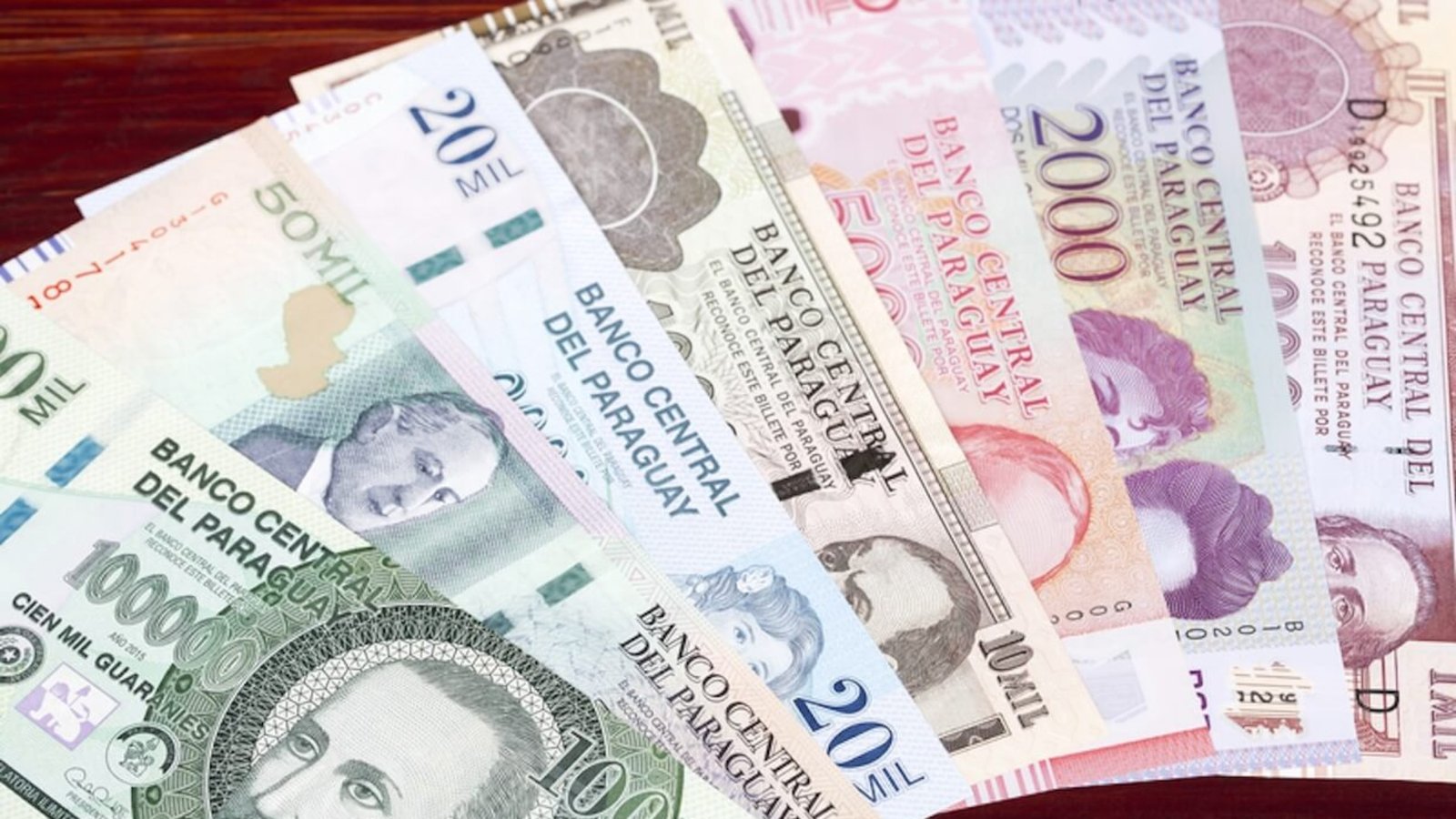
In an analysis for the European Center for Populism Studies (ECPS), Dr. Prerna Chahar examines the financial, political, and institutional ramifications of Paraguay’s Ueno Bank collapse in November 2026. Moving beyond the immediate banking crisis, she explores how rapid digital financial expansion, regulatory shortcomings, alleged political-business entanglements, and institutional vulnerabilities have undermined public confidence. Dr. Chahar analyzes the political fallout surrounding President Santiago Peña’s removal, the challenges of restoring regulatory independence, and the potential consequences for Paraguay’s investment credibility. Situating the crisis within broader Latin American debates on financial inclusion and institutional accountability, she argues that sustainable banking modernization requires transparent governance, robust depositor protection, effective regulatory oversight, and institutional safeguards capable of preventing political influence over financial supervision.
By Prerna Chahar*
The collapse of Paraguay’s Ueno Bank in November 2026 represents far more than a banking crisis. It has exposed the vulnerabilities of rapidly evolving digital banking, shortcomings in financial regulation, the risks associated with political-business linkages and, more broadly, the challenges of maintaining financial, political, and institutional credibility across Latin America. The primary concern is not necessarily the threat of banking contagion per se, but rather the potential erosion of confidence in an already fragile regional financial system as a consequence of institutional turmoil in Paraguay.
From Digital Banking Success to Institutional Crisis
Founded in 2021, Ueno rapidly evolved from a fledgling financial technology start-up into one of Paraguay’s largest commercial banks. Its digital-first approach attracted nearly three million customers in a country with a population of approximately 6.5 million. This demonstrated how financial technology could expand access to banking services, simplify transactions, and integrate underbanked populations into the formal financial system.
However, its rapid expansion also masked underlying vulnerabilities that became increasingly apparent as the bank overextended its operations. Concerns emerged regarding Grupo Vázquez-affiliated companies, large-scale lending, asset quality, and regulatory oversight. On November 3, 2026, the Central Bank of Paraguay initiated a resolution process after the bank revised its financial statements, revealing a deteriorating solvency position.
The intervention disrupted access to deposits held by households, businesses, pensioners, and public institutions. The failure carried considerable systemic significance, as Ueno accounted for approximately 9 percent of Paraguay’s banking deposits and 8 percent of its loans.
From Banking Resolution to Political Fallout
The crisis soon extended beyond the financial sector, acquiring significant political and institutional dimensions. Following the bank’s collapse, President Santiago Peña faced questions regarding his previous associations with Grupo Vázquez and the appointment of former Ueno executive Carlos Carvallo as president of the Central Bank. Prosecutors also accused Peña of using his office to direct public funds towards the bank while insider lending practices were taking place. On November 6, Congress removed Peña from office following impeachment proceedings, and former Vice-President Pedro Alliana was sworn in as president. This political transition has placed the new administration under considerable pressure to ensure that investigations proceed transparently and without political interference.
These developments have transformed the Ueno crisis into a test of institutional accountability as much as financial supervision. The central question is no longer limited to whether depositors can recover their savings. It also concerns whether investigators can establish responsibility for the bank’s lending and governance failures, whether regulators can demonstrate institutional independence, and whether the new administration can restore public confidence without further deepening political polarization.
Implications for Financial Investment Credibility
Paraguay has sought to position itself as an attractive destination for investment in South America. It has strengthened its economic profile through investment-grade sovereign ratings, relative macroeconomic stability, and opportunities in agriculture, energy, and infrastructure. However, the Ueno crisis could undermine this narrative. Financial markets assess economies not only on the basis of inflation, fiscal indicators, and GDP growth, but also on the transparency and independence of regulatory institutions, the enforcement of contracts, and the reliability of governance structures.
If Paraguay’s financial oversight is perceived by investors as vulnerable to political or commercial influence, the country could face higher risk premiums, increased borrowing costs, and delays in investment decisions. This is particularly significant for an economy that will continue to depend on foreign investment to develop its infrastructure, energy, logistics, and industrial sectors.
The crisis also offers a broader lesson for Latin America, where digital banking has emerged as an important instrument of financial inclusion. Digital platforms can reduce transaction costs, overcome geographical barriers, and extend formal financial services to populations traditionally excluded from conventional banking.
Ueno initially exemplified this potential. However, its collapse highlighted the risks of regulatory institutions failing to keep pace with technological innovation and the rapid expansion of digital financial services. Digital banks can attract customers and deposits at considerable speed, but their failure can simultaneously disrupt payments, salaries, pensions, and the operations of small businesses.
The crisis therefore underscores the need for stronger regulatory supervision of related-party lending, liquidity management, capital adequacy, and concentrated financial exposures. Deposit insurance frameworks also require greater attention. While existing guarantee mechanisms may provide protection to a substantial proportion of small depositors, larger corporate and institutional depositors remain particularly exposed. Consequently, financial inclusion initiatives must be accompanied by credible depositor protection mechanisms and effective prudential oversight.
Restoring Confidence: A Test of Institutional Resilience
The collapse of Ueno Bank represents a crucial test of Paraguay’s political institutions and the governance of its financial system. Its regional significance lies not merely in the possibility of financial contagion, but also in the broader implications for political accountability, regulatory independence, and institutional credibility.
The larger message for Latin America is that banking systems must not only be modernized but also strengthened institutionally. Digital banking and expanding credit markets can contribute to economic development, but their sustainability depends on transparent governance, effective supervision, and public trust. Paraguay’s experience illustrates the importance of independent regulatory institutions and robust democratic oversight, particularly where financial interests intersect with political power.
The crisis will test Paraguay’s ability to establish stronger safeguards for depositors, rebuild confidence, and demonstrate to regional governments and the international investment community that political connections cannot compromise regulatory integrity.
The central question now is not simply whether Paraguay can contain the immediate financial fallout. With advance compensation payments reaching more than 1.8 million eligible depositors and the removal of Santiago Peña, the crisis has entered a new phase. The challenge is to translate these immediate responses into meaningful institutional reforms.
To restore confidence among citizens, international investors, and regional partners, Paraguay must ensure transparent investigations, establish accountability for alleged related-party lending and regulatory failures, strengthen the independence of financial oversight institutions, and address the long-term financial position of depositors and the sustainability of the deposit guarantee framework.
More broadly, regulators across Latin America should strengthen their supervision of related-party lending, liquidity management, capital adequacy, and concentrated financial exposures. Deposit insurance frameworks also warrant greater attention, particularly in protecting larger corporate and institutional depositors who may remain exposed beyond existing guaranteed limits. Ultimately, efforts to expand financial inclusion must be complemented by credible depositor protection, institutional accountability, and effective regulatory safeguards.
The Ueno Bank collapse is therefore a reminder that the credibility of modern banking rests as much on the strength of institutions and the integrity of governance as it does on technological innovation and financial expansion.
(*) Dr. Prerna Chahar is a Research Consultant at the Chintan Research Foundation, New Delhi, India. Her research interests focus on US foreign policy, Latin America and the Caribbean, inter-American relations, and regional cooperation in East Asia.
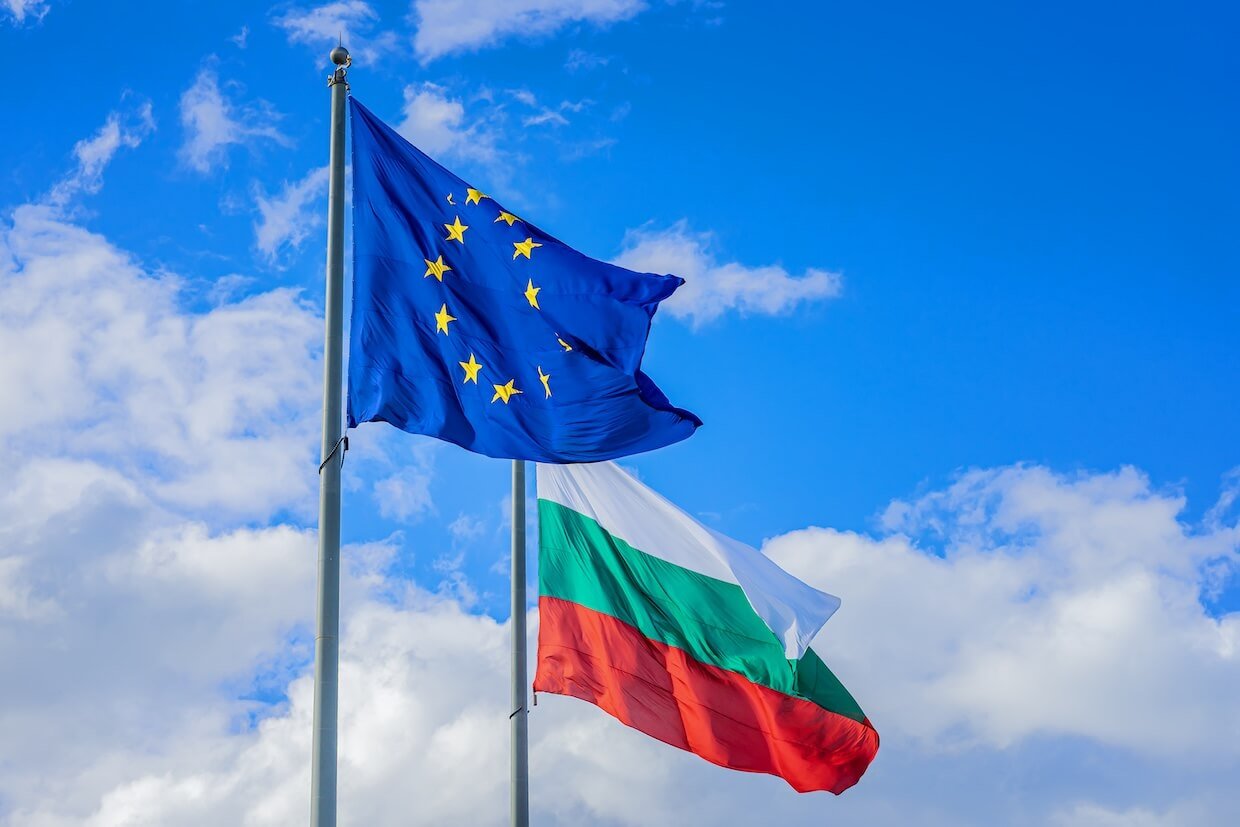
In an interview with the ECPS, Professor Venelin I. Ganev, Professor of Political Science at Miami University in Oxford, Ohio, examines Bulgaria’s political transformation following the 2026 elections. Warning that “the Bulgarian political system is showing a tendency to become less liberal,” he distinguishes electoral stability from the erosion of liberal-democratic institutions. Drawing on his scholarship on state predation and soft decisionism, Professor Ganev argues that Prime Minister Rumen Radev is consolidating power while taking over entrenched corrupt networks rather than dismantling them. He also explores mainstream populism, Russian influence, and the diminishing leverage of European integration. Despite these concerns, he emphasizes civil society’s resilience as a democratic counterweight and warns against Eastern Europe’s persistent preference for strong leadership over constitutional checks and balances.
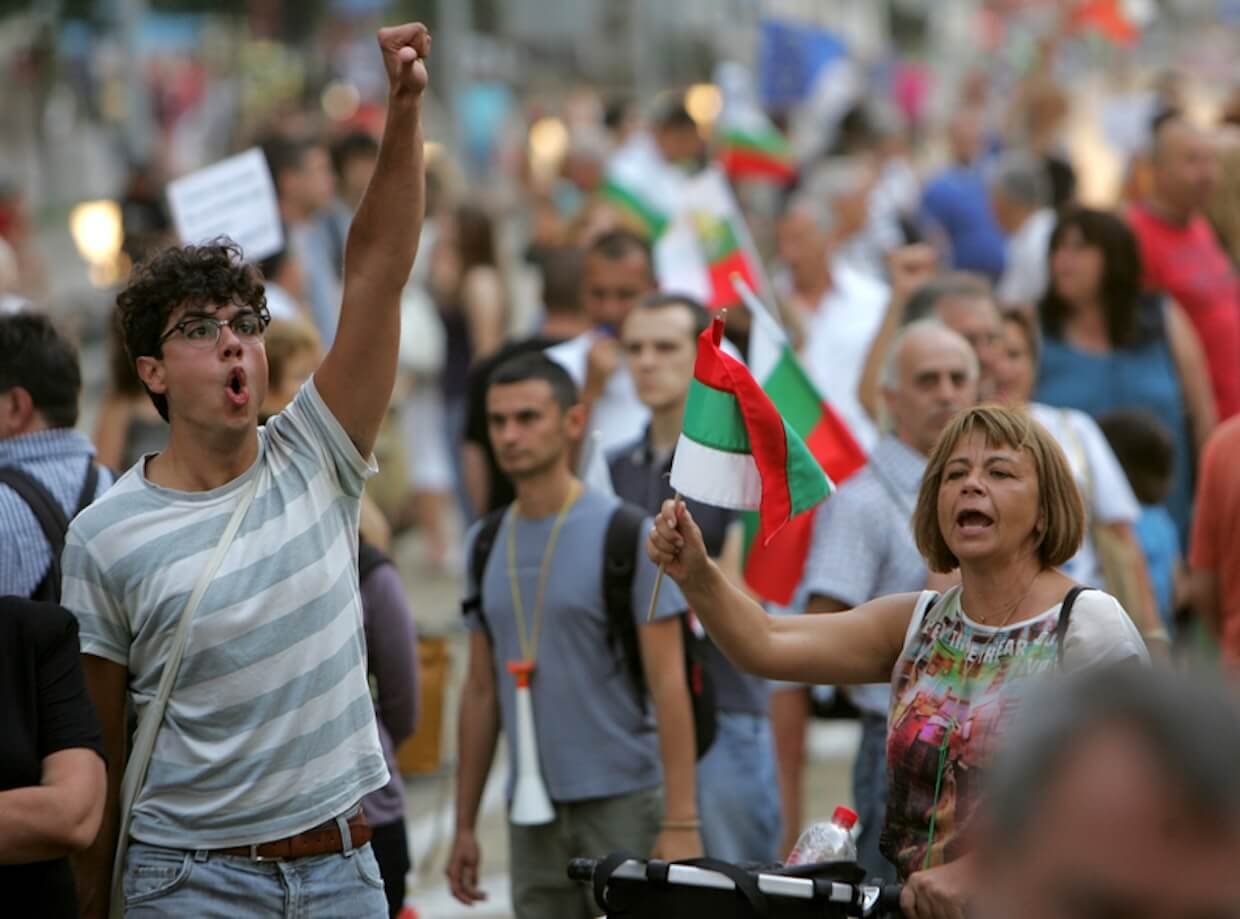
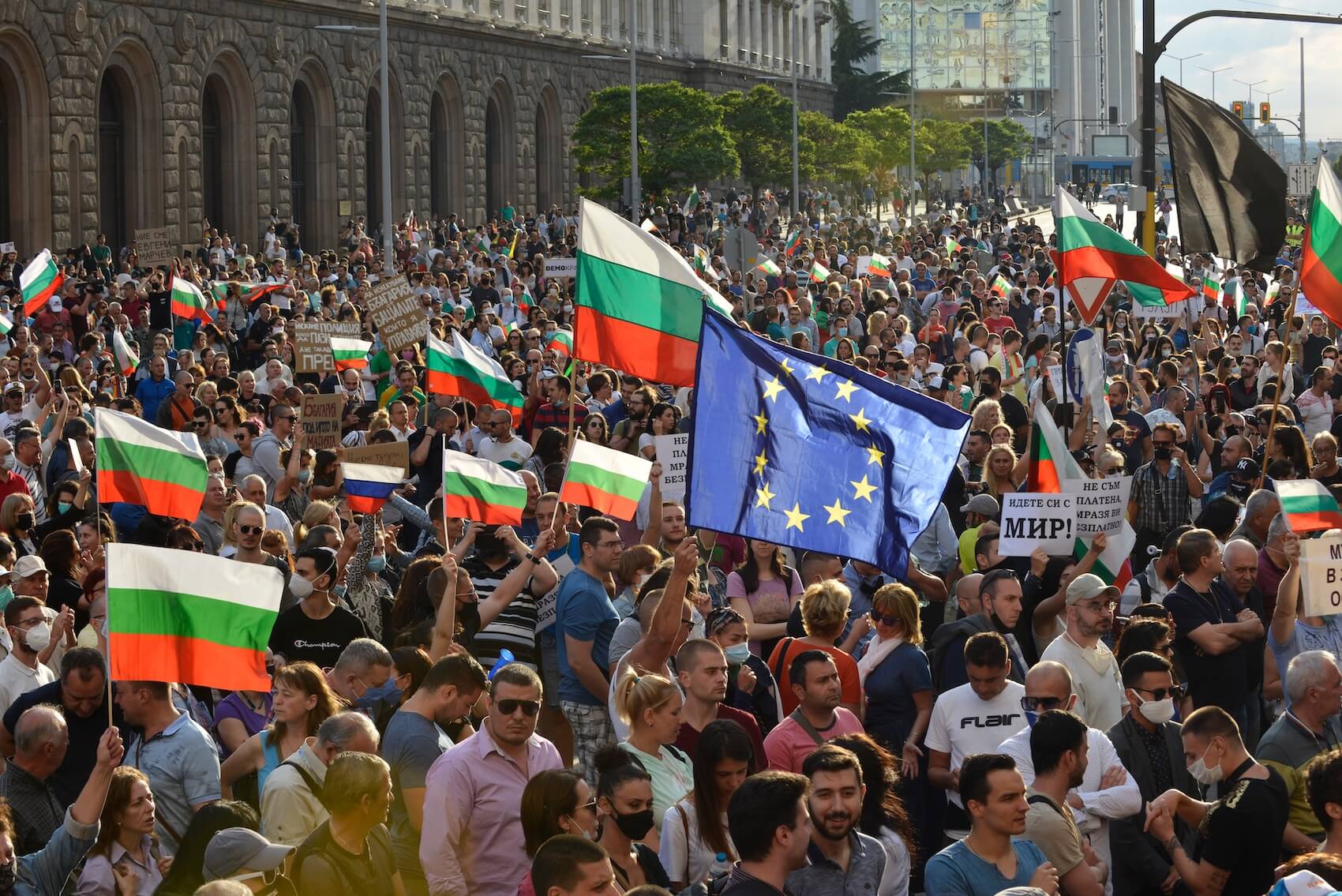
Bulgaria is experiencing a significant political realignment following years of electoral instability, corruption controversies, and declining institutional trust. Iliana Iotova’s presidential victory on November 1, 2026, reinforces Prime Minister Rumen Radev’s parliamentary dominance, raising important questions about democratic consolidation, populism, institutional accountability, and Bulgaria’s geopolitical orientation. Yet exceptionally low electoral turnout suggests persistent problems of political representation and legitimacy.
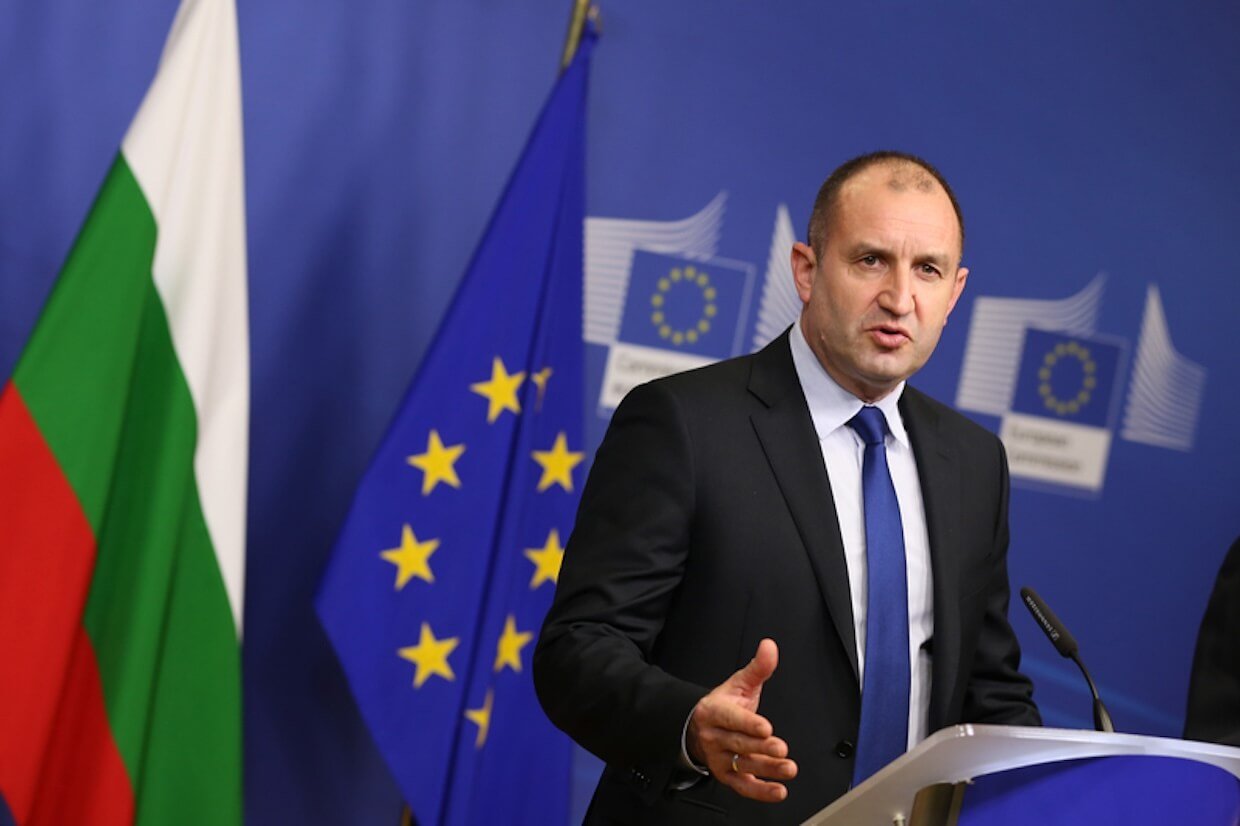
In an interview with the European Center for Populism Studies (ECPS), Professor Venelin I. Ganev, Professor of Political Science at Miami University in Oxford, Ohio, offers a critical assessment of Bulgaria’s evolving political landscape, warning that electoral stabilization may coexist with the erosion of liberal-democratic institutions. Drawing on his influential scholarship on state predation, soft decisionism, and post-communist democratization, Professor Ganev argues that “the Bulgarian political system is showing a tendency to become less liberal.”
Distinguishing electoral democracy from its liberal foundations, Professor Ganev identifies democratic backsliding as Bulgaria’s central institutional challenge. “It’s not so much democracy itself—I don’t think democracy is endangered in Bulgaria—but rather the liberal component of liberal democracy that’s being assaulted,” he observes. Pointing to declining judicial independence, diminishing media freedom, and legislative efforts to restrict civil society, he expresses particular concern about proposals targeting nongovernmental organizations and narrowing public debate.
Professor Ganev also questions whether Radev’s anti-corruption agenda represents genuine institutional renewal. Rather than dismantling entrenched oligarchic structures, he argues, the new leadership is consolidating control over them. “What we are seeing right now is simply a takeover,” he states, suggesting that contemporary state predation increasingly depends on controlling public institutions and redistributing state-held resources rather than weakening the state itself.
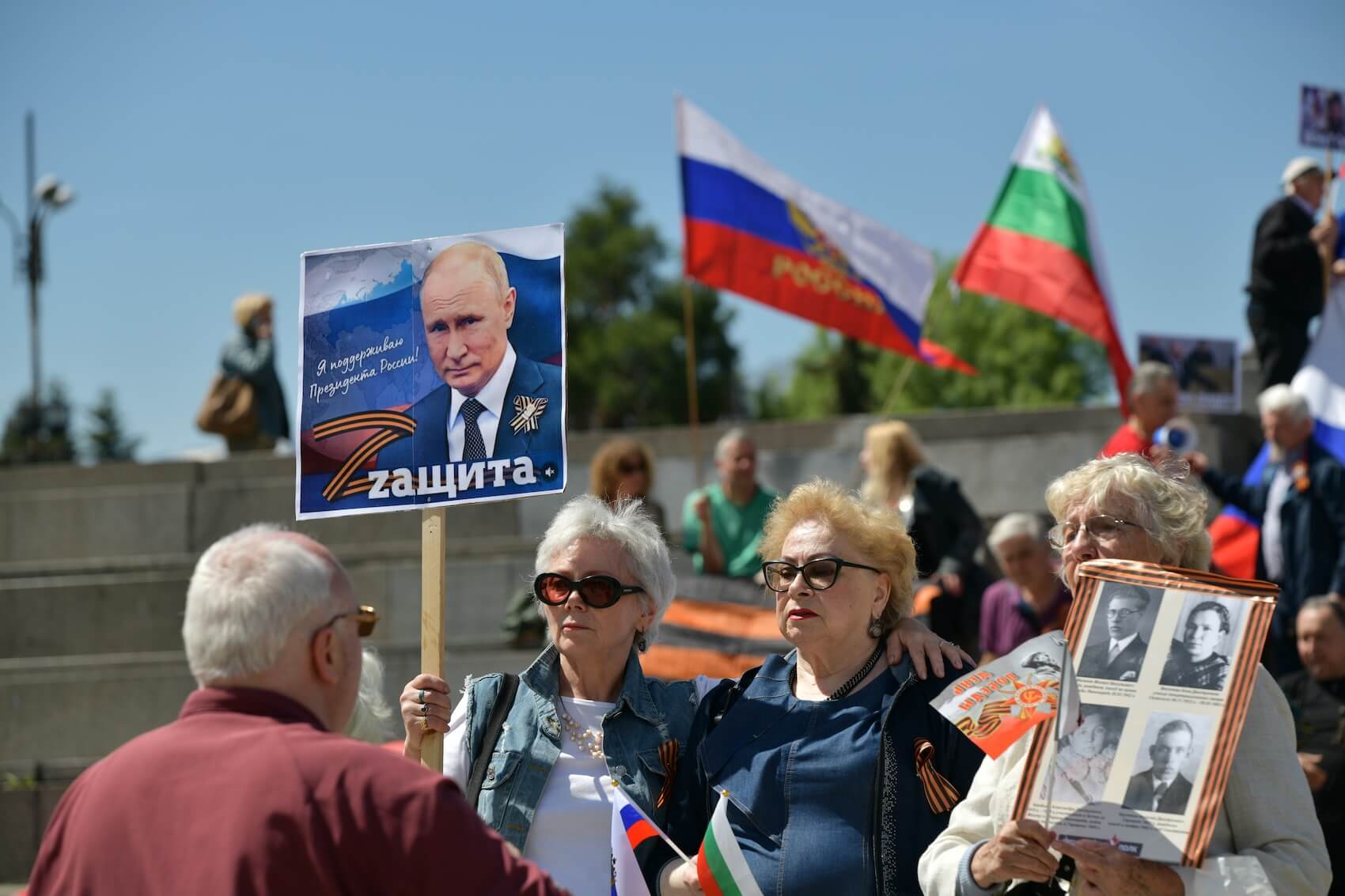
Situating these developments within the broader resurgence of populism in Eastern Europe, Professor Ganev characterizes Radev’s political appeal as mainstream rather than radical populism. Nevertheless, he identifies troubling indications of centralized decision-making and the persistence of personalistic governance. His analysis also explores Bulgaria’s ambiguous relationship with Russia, emphasizing the distinction between pro-Kremlin rhetoric and concrete departures from Euro-Atlantic commitments.
Despite these concerns, Professor Ganev underscores the resilience of Bulgarian civil society, which he describes as a durable institutional counterweight capable of challenging governing elites through grassroots mobilization. He also maintains that European integration continues to impose meaningful, although diminished, constraints on domestic powerholders.
In sum, the interview exposes a fundamental tension between democratic consolidation and persistent popular expectations of strong leadership. As Professor Ganev concludes, “The cycle seems to be that we elect a strong leader, he disappoints us, and then we elect another strong leader.” This recurring pattern offers broader insights into the vulnerabilities and resilience of post-communist democracies across Eastern Europe.
In an exclusive interview with the ECPS, Professor Maya Tudor, Professor of Politics and Public Policy at the University of Oxford, examines democratic backsliding, authoritarian resilience, and the challenges of democratic restoration across India, Hungary, Serbia, Brazil, the United States, and Pakistan. Challenging electoral-minimalist conceptions of democracy, Professor Tudor argues that “if you do not have substantial liberal rights, you don’t have a democracy.” She explains how elections can survive while political freedoms erode and warns that defeating authoritarian incumbents does not necessarily dismantle the systems sustaining their power. Emphasizing independent media, political equality, opposition coordination, and institutional safeguards, she concludes that democracy’s ultimate test is whether future opposition forces can compete freely.
As democratic institutions confront intensifying pressures worldwide, a fundamental question has returned to the center of scholarly debate: Can a political system remain democratic when elections survive but the liberal rights that make political competition meaningful are systematically undermined? In an in-depth interview with the European Center for Populism Studies (ECPS), Professor Maya Tudor, Professor of Politics and Public Policy at the Blavatnik School of Government and Fellow at St. Hilda’s College, University of Oxford, offers a compelling comparative assessment of democratic erosion, authoritarian resilience, and the conditions necessary for genuine democratic restoration.
The discussion unfolds against a paradoxical global backdrop. Recent electoral developments in Hungary, Serbia, Brazil, and the United States demonstrate the continuing potential for democratic resistance, even as authoritarian populism, institutional capture, and majoritarian nationalism remain formidable challenges. India’s democratic decline under Narendra Modi and Pakistan’s enduring military dominance further expose the fragility of democratic institutions. Together, these developments raise fundamental questions about the boundaries between democracy and autocracyand the prospects for reversing democratic backsliding.
Drawing on her research with Andrea Vaccaro, Professor Tudor challenges electoral-minimalist conceptions of democracy. Her central argument is unequivocal: “If you do not have substantial liberal rights, you don’t have a democracy.” As she explains, democracy concerns not merely elections but what citizens are entitled to do between them. India illustrates this distinction particularly clearly: “Democracy can be hollowed out without elections ever being abolished or becoming meaningless.” Restrictions on opposition mobilization, media independence, and minority rights can fundamentally undermine electoral competition without formally eliminating it.
Turning to Hungary, Professor Tudor cautions against conflating electoral victory with institutional transformation: “Defeating an authoritarian government is not the same as dismantling the authoritarian system the incumbent constructed.” Similar dilemmas emerge in Serbia and Brazil, where civic mobilization and opposition coordination must develop into durable political organization. As she emphasizes, “Power has to be organized before it can be used.”
The United States presents another critical test. Reflecting on Trump’s second presidency and the 2026 midterm elections, Professor Tudor warns that “Elections will certainly interrupt that process, but they cannot, by themselves, repair the institutions and norms weakened by democratic erosion.” Institutional checks, political pluralism, and the recovery of loyal opposition therefore remain indispensable.
Her policy recommendations emphasize independent media, freedom of association, political equality, transparent electoral procedures, and meaningful alternation in power. Ultimately, she argues, democratic restoration must be measured against a demanding standard: “The ultimate test is also whether tomorrow’s opposition will be allowed to compete freely.” Across these cases, Professor Tudor advances a central proposition: democracy’s resilience depends not simply on removing authoritarian incumbents, but on ensuring that their successors cannot monopolize power.
In an ECPS interview following the November 3, 2026, US midterm elections, Assoc. Prof. Sam Rosenfeld, political scientist at Colgate University and author of The Polarizers and coauthor of The Hollow Parties, examines the implications of Democratic congressional victories for American democracy. Arguing that electoral backlash against Republicans should not be mistaken for democratic restoration, Assoc. Prof. Rosenfeld warns that “democracy is never fully safeguarded.” He explores the potential weakening of Donald Trump’s personalist control over the Republican Party while emphasizing the enduring influence of the populist Long New Right. Assoc. Prof. Rosenfeld also addresses political polarization, congressional oversight, democratic-socialist organizing, and the institutional hollowness of American parties. He concludes that rebuilding civic organizations, strengthening party accountability, and restoring democratic fair play remain essential long-term challenges.
The November 3, 2026, midterm elections have reshaped American politics, delivering Democratic majorities in both chambers of Congress while President Donald Trump remains in office. Yet this electoral reversal raises fundamental questions about democratic resilience, institutional checks, and the enduring appeal of Trumpism. As Republicans confront potential internal divisions and Democrats face the challenge of translating electoral victory into effective governance, the future of American democracy remains uncertain.
In an in-depth interview with the European Center for Populism Studies (ECPS), Dr. Sam Rosenfeld, Associate Professor of Political Science at Colgate University, specializing in party politics and American political development, examines these developments through the analytical frameworks developed in The Polarizers and The Hollow Parties, coauthored with Daniel Schlozman. His central argument challenges the assumption that electoral victories necessarily translate into democratic restoration or meaningful party renewal.
“Democracy is never fully safeguarded,” Assoc. Prof. Rosenfeld cautions, emphasizing that electoral outcomes should not be confused with structural democratic resilience. He argues that Americans’ commitment to democracy remains relatively fragile, particularly when compared with their immediate economic concerns. The Democratic victory, he contends, primarily reflects a backlash against Republican governance and cost-of-living pressures rather than a fundamental transformation of American political attitudes.
Turning to Republican politics, Assoc. Prof. Rosenfeld identifies a potentially consequential development: the erosion of Trump’s personalist control over the party. He argues that Trump’s declining electoral reputation and the approaching post-Trump succession could weaken his longstanding dominance. “That, at least, is now changing,” he observes, suggesting that renewed factional competition might restore internal checks on personalized leadership.
Nevertheless, Assoc. Prof. Rosenfeld distinguishes Trump’s personalism from the deeper ideological currents of the “Long New Right,” a confrontational political tradition that predates Trump and, he argues, will survive his departure. The weakening of personalist domination therefore does not necessarily imply the disappearance of radical-right populism or the restoration of traditional Reaganite conservatism.
Assoc. Prof. Rosenfeld also emphasizes the institutional consequences of party hollowness. He advocates stronger party gatekeeping, more accountable organizational structures, revitalized local party networks, and renewed connections with organized labor and civic associations. As he explains, “we believe parties are essential to democracy.” Their revival as “stewards of democratic contestation and fair play” is indispensable to strengthening democratic institutions.
His assessment ultimately combines cautious optimism about renewed political competition with skepticism toward any definitive democratic restoration. Formal reforms, electoral defeats, and institutional safeguards remain important, but none can permanently eliminate democratic vulnerabilities.
Looking toward 2028 and beyond, Assoc. Prof. Rosenfeld’s analysis underscores a central challenge confronting American democracy: whether the weakening of Trump’s personalist dominance and the rebuilding of hollow political parties can generate durable institutional accountability, meaningful political representation, and a renewed commitment to democratic fair play.
Here is our interview with Associate ProfessorSam Rosenfeld, edited lightly to enhance clarity, readability, and overall flow for publication.
The 2026 Midterms Were About Living Costs, Not Democratic Resilience
Anti-Trump protesters gather across from Trump Tower on Fifth Avenue during the annual Labor Day Parade in Midtown Manhattan, New York City, on September 6, 2025. Photo: Dreamstime.
The November 3 midterms handed Democrats control of both chambers of Congress, reversing Republican dominance. Does this electoral upheaval signal renewed democratic resilience, a temporary backlash against Trump, or a deeper transformation of American party politics?
Assoc. Prof. Sam Rosenfeld: This is a big and difficult question. I think the scale of the electoral backlash against the governing party shouldn’t be confused with a qualitative, transformational realignment of American party politics or with a genuine referendum on the health of democracy and Americans’ commitment to upholding democratic institutions.
Midterm elections in the United States are essentially referenda on governing parties. Over the last two years, Americans have conveyed a very clear message in public opinion polls: Donald Trump won the 2024 election largely because of dissatisfaction with the state of the economy, particularly the lingering effects of post-COVID inflation and the rising cost of living. Trump ran on promises to address those concerns. Yet, over the last two years, he conspicuously failed to address those issues and, in fact, made cost-of-living problems worse.
This election was primarily determined by differences in voter turnout. Many Republicans simply stayed home rather than turn out to support their party. But there was also some conversion among voters who had supported Trump two years earlier but turned out this time to vote for Democrats.
The election unmistakably sent a message about basic bread-and-butter cost-of-living issues, which Democrats consistently emphasized in their campaigns, much more than they emphasized Trump himself, the state of democracy, or democratic resilience. That’s what produced a remarkably massive turnover of congressional seats by American standards.
The results present possibilities and implications for the future of American democracy that are quite profound, even though the underlying electoral motivations were much more pragmatic and less concerned with questions of democracy and democratic resilience.
The Erosion of Democratic Norms Predates Trump but Escalated Under Him
InThe Polarizers, you trace the deliberate construction of ideological polarization. Has polarization now moved beyond legitimate partisan competition to become a structural driver of democratic backsliding, particularly through the Republican Party’s embrace of Trumpism?
Assoc. Prof. Sam Rosenfeld: Absolutely. I think stark party polarization has its benefits, but it also poses a potential danger to the norms of democratic fair play and adherence to the rules of the game. Even before Trump, the 21st century had witnessed an escalation of political hardball, what legal scholar Mark Tushnet referred to as “constitutional hardball” in the American context.
This was particularly evident among Republicans, though Democrats responded to some extent as well. As the stakes of electoral competition came to be perceived as increasingly high, with parties becoming ever more ideologically sorted and polarized, more and more norms were rolled back, and efforts to tweak the rules of the game to advantage one side or the other intensified.
All of this preceded Trump. Republicans had already pursued a revival of voting wars, including fights over procedures governing access to voting and efforts to make voting more inconvenient and difficult in many states. Trump’s innovation was to move beyond political hardball, voter suppression, and electoral gamesmanship toward outright efforts to subvert democratic outcomes, including attempts to influence who would count the votes and to politicize the process of counting votes and declaring winners.
That was a real quantum leap into dangerous territory that we’ve seen in other places. But these developments preceded Trump, and at least part of this trajectory follows the logic of political polarization itself. If your opponents systematically stand for so many things that you consider profoundly dangerous for the country, that gives your side ever greater self-justification to bend or subvert the rules to ensure that these dangerous people don’t take power.
US left- and right-wing politics and the American electoral divide, symbolized by the Democratic donkey and Republican elephant. Photo: Dreamstime.
Democratic Party Organizations Remain Hollow Despite Electoral Success
InThe Hollow Parties, coauthored with Daniel Schlozman, you argue that intense partisanship coexists with weak party organizations. Does the Democratic victory challenge your diagnosis, or does it confirm that electoral success can occur without genuine organizational renewal?
Assoc. Prof. Sam Rosenfeld: I think the second alternative is well put: You can win big victories as the out-party when the in-party—the party in power during a midterm election—screws up as badly as the Republican Party has in managing its own electoral fortunes. Democrats are not popular among Americans, including Democratic voters. This is not a story of the Democratic Party reviving its image or renewing its presence in Americans’ lives. Rather, Democrats are the beneficiaries of a referendum on the Republicans.
That said, I don’t want to discount the organizational skills of national party leadership, particularly when it comes to candidate recruitment and efforts to maximize the potential gains of a wave election by ensuring that credible, decent candidates are running in all the House districts that might come into play.
This became such a big wave that many unexpected candidates found themselves winning congressional seats that nobody thought they could win. But candidate recruitment is definitely one area in which Democratic national party leadership has proven pretty effective over multiple election cycles. There were a couple of very messy and contested primary nomination fights, but by and large, impressive candidates, well-tailored to the states and districts in which they were running, were present across the field. That is, in part, the work of national party organizations, including the campaign committees in the House and Senate, as well as Hakeem Jeffries in the House, now the majority leader and soon to be Speaker, and Chuck Schumer in the Senate.
This stands in contrast to the experience of Republicans in the age of Trump. Among other things, Donald Trump himself has become a central player in contested Republican primaries. He has a proven track record of effectively deciding who the nominee will be, often picking candidates who prove to be electoral losers compared with others who might have won had he not intervened.
Reviving American Political Parties Requires Rebuilding Civic Life
In your April 2026 New York Times article, you and Schlozman called for Democrats to become an actual political party again. What organizational reforms—especially involving unions, grassroots networks, and working-class constituencies—are now essential to turn electoral victory into durable political power?
Assoc. Prof. Sam Rosenfeld: That’s a big question. As scholars who have articulated this notion of party hollowness, we see the changes necessary for party renewal as long-term transformations that I don’t think are realistic to expect in the next two years, as Democrats are in opposition and preparing for the 2028 presidential election.
We see a broader decline in civic life in the United States and other Western societies, dating back many decades, as underlying much of this party hollowness. That decline encompasses organized labor, state and local party organizations, voluntary civil society organizations, and civic and community groups that once had a much more rooted presence in people’s day-to-day lives and face-to-face interactions. Over many decades, technological, social, and spatial changes in where people live and how they interact have caused these organizations to wither on the vine.
This is something people have paid attention to for a long time. We think this long-term hollowing out of civic and civil life has real implications for the political system. For a party to revive, there are various things it can do in the here and now to strengthen its formal organizations. Particularly on the Democratic side, this means channeling more talent, expertise, and activists out of broad, much murkier para-party networks of organizations, super PACs, consulting firms, and think tanks and into more visible and accountable organizations within the formal party structure. Parties can also build up and invest in local organizations with a stronger presence in their communities. There’s no time like the present to start doing that, but the broad-based social changes needed to create the foundation for a revival of civic life will take a long time.
The same applies to organized labor. Anything that can be done now to facilitate new organizing and reverse the very long decline in union density in the United States would be of obvious importance to the Democratic Party programmatically. But it would also be vital to restoring one of the main organizational pillars that once channeled ordinary people without college degrees, professional credentials, or particular engagement in politics into political participation, habituating them to support the Democratic Party. That revival is essential, but it’s also a long-term project.
Congress Must Ensure the Executive Branch Obeys the Law
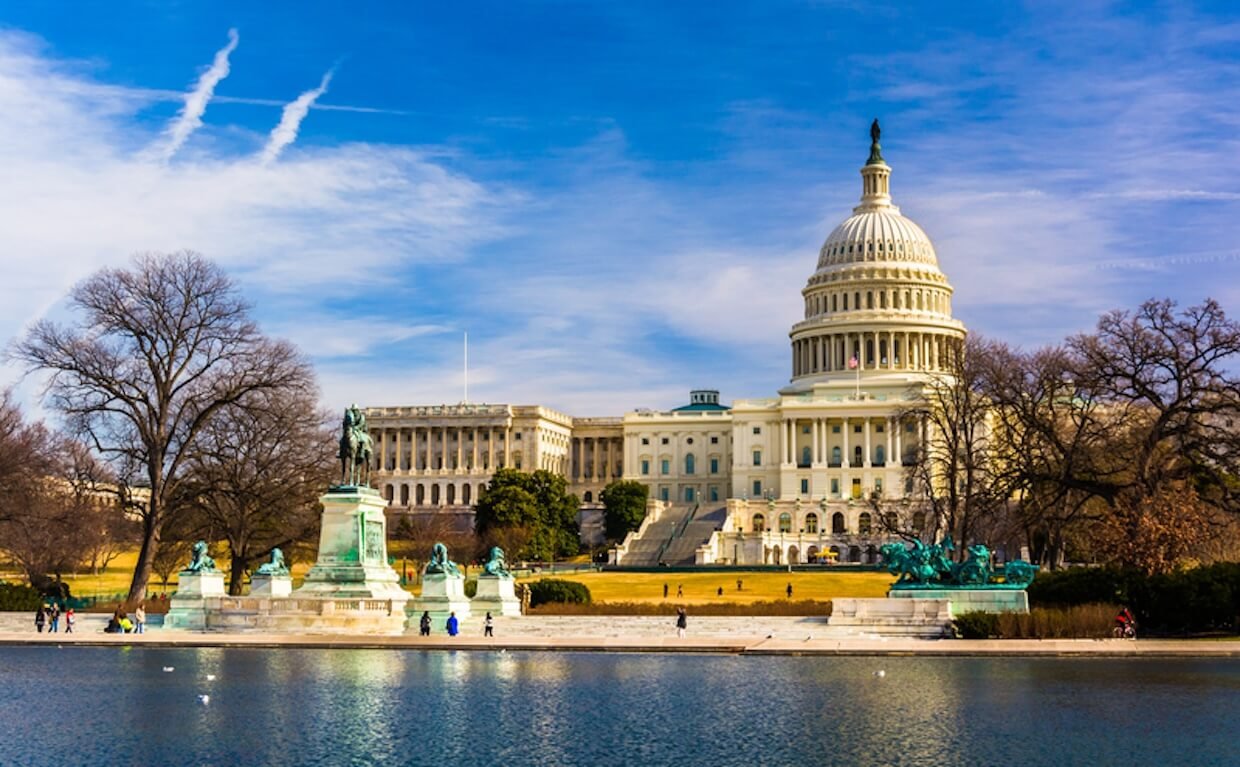
The Capitol and Reflecting Pool in Washington, DC. Photo: Jon Bilous / Dreamstime.
With Democrats preparing to control Congress while Trump remains president, what should their central institutional mission be? Can congressional oversight, investigations, budgetary authority, and legislative initiatives effectively reverse executive overreach and strengthen democratic checks and balances?
Assoc. Prof. Sam Rosenfeld: That’s the $64,000 question for the next two years. What should Democrats prioritize with surprisingly large, robust majorities, a lame-duck president, and a presidential party ripe for considerable internal division and fissuring in the run-up to the first post-Trump election we’ve had in multiple cycles in 2028? What can and should the opposition party focus on?
Congress is now in a position to exercise meaningful checks on presidential power. One of the most alarming developments of the first two years, particularly regarding democratic backsliding and the functioning of the system, has been the degree to which the executive branch has illegally departed from its obligations to spend money and enforce laws passed by Congress, while Congress, under Republican control, has done nothing about it.
Congress will now be much more interested in ensuring that the laws it passes and that the president signs are actually carried out by an executive branch bound by the letter of the law. Congress will be in a position to ensure that happens and can generally expect the courts—which will no longer be filling new vacancies with Trump appointments over the next two years—to be on its side in tethering executive action to what Congress mandates.
Then there’s oversight. Congress faces an embarrassment of riches when deciding what to focus on in its investigations and efforts to uncover scandals. For political reasons, it’s important to prioritize where attention is directed. With House and Senate Democratic caucuses larger than expected and representing many strongly Republican districts and states for the first time in a while, their common ground will be an interest in investigating corruption, self-dealing, looting of the Treasury, selling pardons, and the personal enrichment of the president and his family through various foreign deals, crypto investments, and so forth.
This extends beyond his family to those around the administration who are engaging in enormous amounts of economic corruption through the use of public office. Investigating these activities would be a shared priority across the party. It would also allow Democrats to connect whatever scandals they uncover to an economic message that, broadly speaking, represents common ideological ground among members whose constituencies now range from very liberal to very conservative. That’s where I would expect them to focus their energy in exercising oversight.
Legislation is typically a dead letter during periods of divided government in a polarized era. No legislation can pass without Donald Trump’s signature. Then again, we’re currently in a lame-duck session considering a substantial bill that is likely to pass and would modify the process through which new infrastructure and development projects get off the ground and undergo environmental review. A bipartisan coalition is working together on this legislation, contrary to expectations of polarization, and it looks like the president will sign it.
We might end up with a lame-duck Donald Trump who’s bored with partisan conflict and willing to make some deals, potentially allowing some bipartisan legislation to move forward. But when it comes to a major party project, being in opposition is usually not the time when such initiatives gain significant traction.
Great Policies Alone Cannot Guarantee Democrats Lasting Political Success
Your writings criticize Democrats’ dependence on proceduralism, technocratic policymaking, and opposition to Republicans. How can the new congressional majority articulate a coherent governing project that addresses economic insecurity while rebuilding public confidence in democratic institutions?
Assoc. Prof. Sam Rosenfeld: That follows directly from what we were just saying. I’m skeptical that an opposition party will be in a position to put forward a clear programmatic vision. This is where parliamentary systems differ. You have a shadow government, and the party puts out a manifesto or articulates a critique of the government.
In the American case, congressional Democrats will be in a position to exercise considerable restraint on what the president can do and conduct extensive oversight, both for good governance and political purposes, to expose scandals and wrongdoing within the administration. However, I’m skeptical that congressional Democrats in the House and Senate will be able to articulate a clear programmatic vision of what they would do if they had full control of the government. That’s typically not what congressional parties in opposition manage to do.
For better or worse, that’s what the 2028 presidential nomination contest will generate. You’re going to see factional debates among candidates representing the left and moderates. Policy intellectuals, who play such a prominent role in Democratic political strategy these days, will put forward their white papers and articulate their agendas. That’s where the debate over what a positive agenda should look like will take place.
At that point, the message Daniel Schlozman and I have been trying to articulate is that Democrats should not place all their political and strategic bets on devising great policies and assuming those policies will automatically translate into political benefits. They should heed our advice when that time comes.
Democrats Across Ideological Lines Can Learn from DSA’s Grassroots Organizing
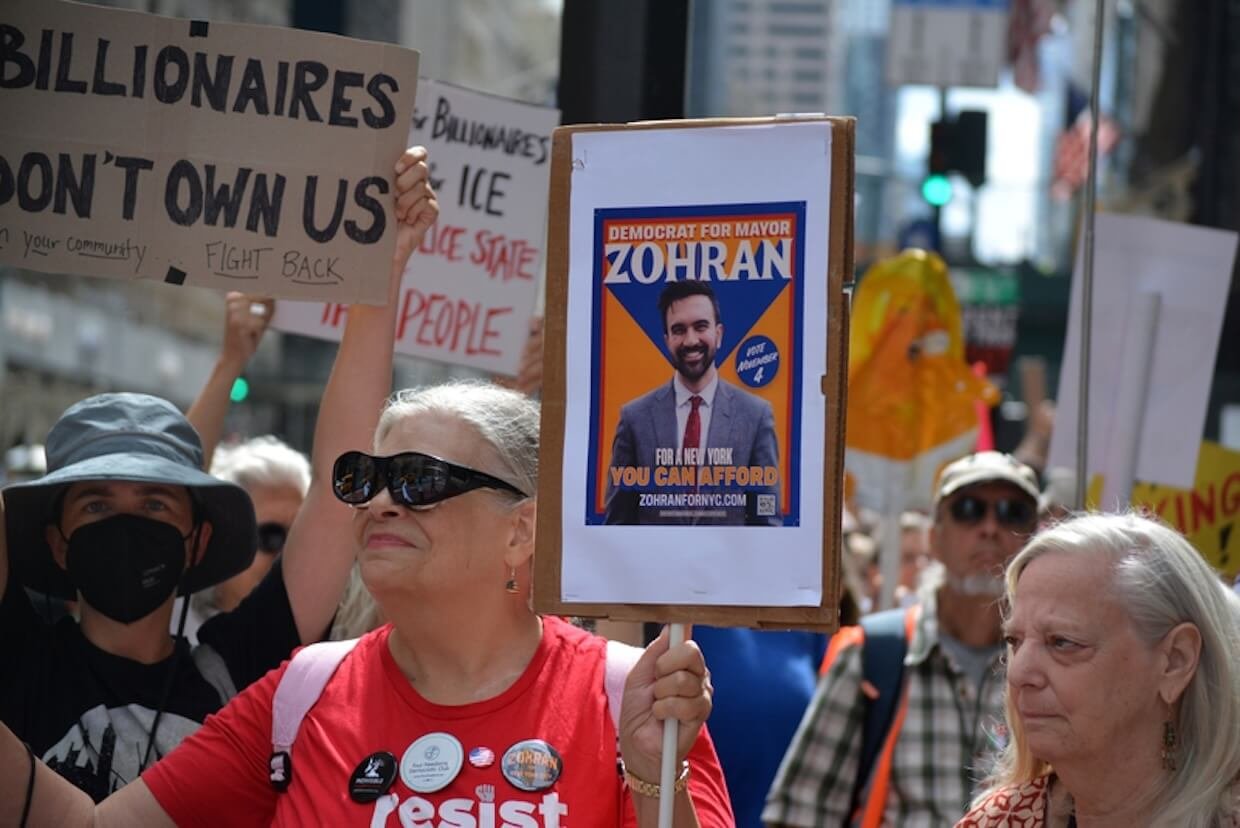
Labor Day protest outside Trump Tower on Fifth Avenue, Midtown Manhattan, September 1, 2025, where demonstrators demanded better wages and working conditions. Photo: Dreamstime.
The 2026 elections expanded the congressional presence of Democratic Socialists of America-endorsed candidates. Does the DSA represent a promising model of grassroots party renewal, or could its growing influence deepen ideological and organizational divisions within the Democratic coalition?
Assoc. Prof. Sam Rosenfeld: The answer is yes to both. The second part is definitely true: The DSA and other left-wing factions within the Democratic Party have a more contestable argument to make that their vision is one the party as a whole should pursue to grow its majority. That’s going to remain a subject of continued factional debate within the party.
Many of the lessons from the DSA, particularly its local chapters and especially the New York City chapter, as demonstrated by Zohran Mamdani’s rise to the mayoralty, could be adopted by all sorts of actors within the party. Doing so doesn’t require embracing socialism or pursuing left-wing ideological goals.
What the New York DSA has done over the last several years is build a real organization with real members who are engaged and committed to electoral and political activity at the local level. They have made participation in that organization fun, increasing what political scientists call the “solidary benefits” of interacting with others in a shared endeavor. In his mayoral campaign, Mamdani made participation both highly engaging and enjoyable, extending well beyond the DSA’s rank-and-file membership.
Building organizations rooted in people’s day-to-day lives that make participation enjoyable, even for those who aren’t necessarily politically engaged on a regular basis, is something political organizations of all stripes and factional orientations should pursue, looking to the DSA as a model. In its own right, this is a very unhollow party.
Mamdani is also a great example of someone who has come to power with a serious set of ideological commitments. So far, he has succeeded in sustaining a successful mayoralty by paying close attention to what ordinary people want from government. This approach goes back to a tradition known as “sewer socialism,” associated with the socialists who governed Milwaukee in the early 20th century.
Pay attention to public services, demonstrate that government can function effectively, and seek to deliver tangible benefits in people’s day-to-day lives. By doing so, you build political support and political power that allow you to continue pursuing broader ideological aims. But you start by solving people’s everyday problems and frustrations. That’s something the Democratic Party in Congress, having just won this huge election on practical cost-of-living, economic, and pocketbook issues, should take to heart. Whatever Democrats do, they need to address people’s actual concerns.
Challenging Concentrated Economic Power Unites the Democratic Party
As Trump’s populist radical right confronts a more assertive democratic-socialist left, can economic left populism offer a credible response to working-class alienation and oligarchic power? What distinguishes its democratic potential from the exclusionary tendencies of right-wing populism?
Assoc. Prof. Sam Rosenfeld: Left populism, by definition, distinguishes itself from the right precisely through its commitment to an egalitarian economic project that encompasses everybody, rather than a circumscribed in-group that excludes an out-group. This is why issues like immigration and, historically, global trade have posed challenges to left-wing egalitarian politics and inclusivity.
In contemporary American politics, there is broad agreement across the center-left party. In this sense, moderates agree with left-wing factions, even if they disagree on the particulars. They share the view that the party’s strength lies in making economic issues salient and centering elections on challenging the concentrated economic power of elites, building a robust social safety net and welfare state, and redistributing power and resources in more egalitarian ways.
This represents shared ideological terrain for a large, heterogeneous party, even if left-wingers believe neoliberal moderates wouldn’t go far enough. It is also more electorally potent ground for the party of the left than questions of culture, identity, and other sociocultural issues. That’s where the whole party is orienting itself.
What this means for the particulars of economic policy remains a big open question. I’ve criticized technocracy, but I’m sympathetic enough to technocratic policymaking that I worry about the phenomenon we’re seeing in both parties, including Democrats, which some people call economic “sloppilism.” Ever since Donald Trump promised to eliminate taxes on tips for waiters and waitresses, there’s been a real vogue for tax cuts targeted at particular popular constituencies. Democrats have gotten into the business of doing this as well.
But for a left-wing or center-left political project, you need tax revenue to fund a welfare state and maintain a government with the capacity to accomplish what you want it to do. Right now, there’s a pervasive tendency to address people’s cost-of-living concerns with policies that, from a technocratic perspective, are pretty dubious and undermine the long-term project of progressive economic policy in the United States. That’s something to be mindful of.
Trump’s Personalist Control of the Republican Party Is Beginning to Break
Donald Trump delivers a victory speech after his big win in the Nevada caucus at Treasure Island Hotel & Casino, flanked by his sons Eric (right) and Donald Jr. (left) in Las Vegas, NV. Photo: Joe Sohm.
Your research on the Long New Right traces the organizational and ideological foundations of contemporary Republican radicalization. Does the 2026 Republican defeat threaten Trumpism’s structural dominance, or can MAGA survive repeated electoral setbacks through its control of party institutions and conservative networks?
Assoc. Prof. Sam Rosenfeld: I think the future of the Republican Party is more up for grabs than anything else after this election. We identify a tradition in postwar American conservative politics, dating back to the mid-20th century, characterized by a highly pugilistic political tendency defined by confrontation with perceived political enemies. This tendency undermines norms of democratic fair play and erodes the durability of collective organizations and institutions, including political parties. We call this tradition the Long New Right. It has a populist character and long predates Trump, but it laid the groundwork for the political template he adopted, and that’s not going away.
What distinguishes the Trump era, however, is personalism: the extent to which Republican Party politics became organized, over several years, around Donald Trump’s personal whims, wants, desires, and leadership. This represents a political tradition foreign to the United States, either imported by Trump or emerging around him.
It rested on the perception that Trump had a real hammerlock on the Republican Party’s mass base and that anyone within the party who crossed him would face the wrath of Republican voters, who would turn against them for defying Trump. That reputation was fairly well earned and plausible, giving him an unprecedented degree of power within the party. He became a genuine populist leader whose movement captured and cowed many Republican Party actors who had been around long before him.
But that reputation only lasts as long as it lasts. Trump is now sufficiently unpopular and has suffered such a resounding electoral defeat in these midterms that his hammerlock of personalist control over the Republican Party, which he has maintained for the past decade, is going to break. That’s partly because of the defeat, but also because he’s old and cannot run for reelection. He’s a genuine lame duck and is unlikely to remain a central figure in American political life for much longer.
The breaking of that personalist control is, in itself, a healthy development. Although the populist tendencies of the Long New Right long predate Trump and will persist well beyond him, it will be healthy for the party to engage in more open internal debates about its direction, with different factions lining up and ambitious politicians seeking the presidency beginning to jockey for position and articulate their disagreements.
That kind of internal competition has helped keep American party politics stable by providing internal checks on the actions of any particular leader or movement. Part of what has been so destabilizing about having one of America’s two major parties under Trump’s personalist leadership is precisely the erosion of those internal competitive checks. That, at least, is now changing.
MAGA Has Not Institutionalized Its Control Over the Republican Party
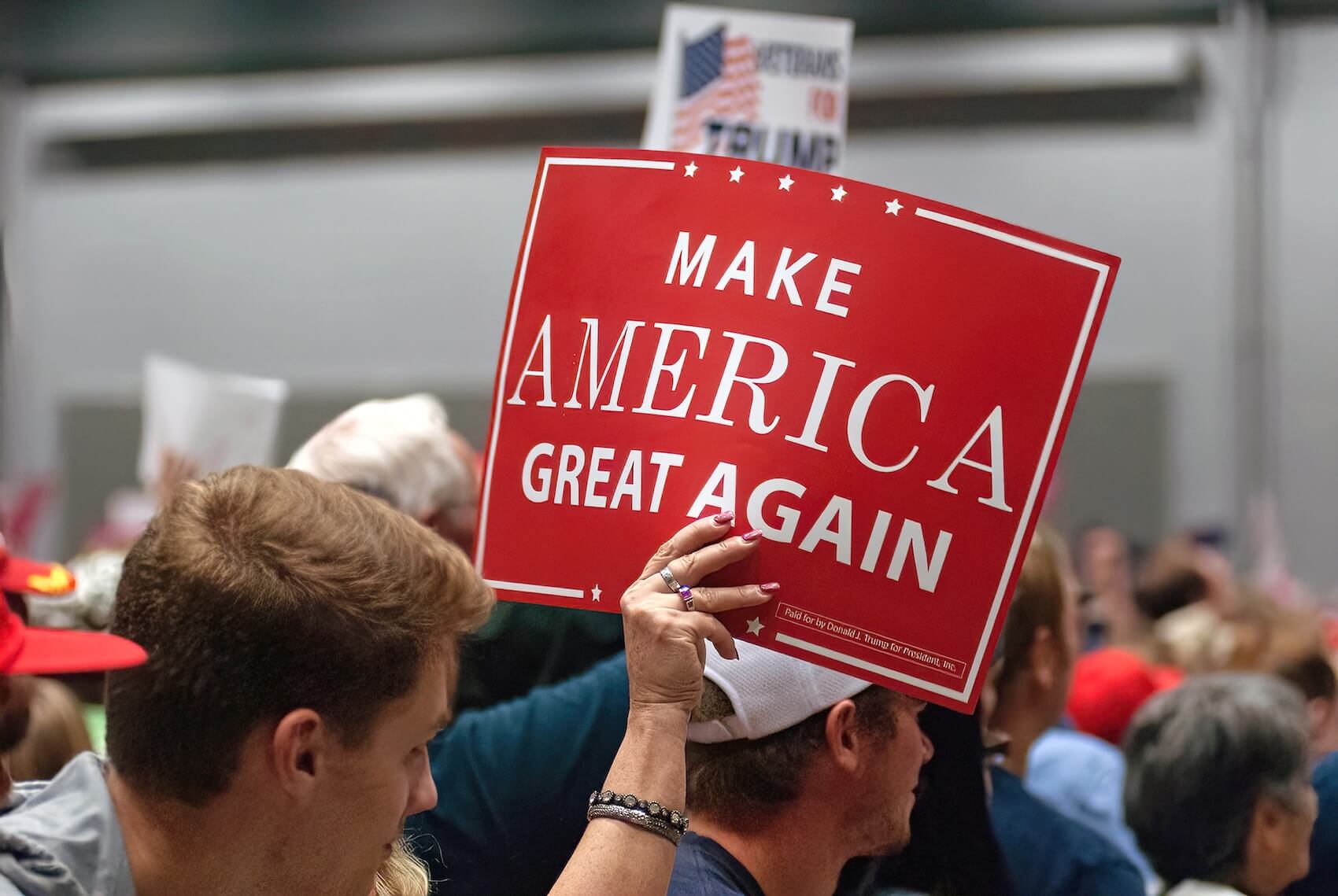
A Trump supporter holds up a “Make America Great Again” sign at presidential candidate Donald Trump’s rally in the convention center in Sioux City, Iowa, on November 6, 2016. Photo: Mark Reinstein.
Could the Republican defeat trigger an internal struggle among MAGA loyalists, traditional conservatives, business elites, and emerging presidential contenders? Or has Trumpism become so deeply institutionalized that the post-Trump succession will primarily involve competing versions of the same movement?
Assoc. Prof. Sam Rosenfeld: Following on from what we were saying, the Republican Party, as a hollow party, remains relatively uninstitutionalized in many ways. It’s certainly true that Trump installed loyalists in various leadership positions. But the Republican National Committee, some outside super PACs, and other such entities are themselves fairly thin organizations whose leadership will come and go. So, the future of Republican politics remains relatively open and is not necessarily constrained by what MAGA has done to the party’s organizational structure over the last decade.
What that means for American democracy is a great question. Trump initially identified a significant gap between the priorities of conservative and Republican elites and what ordinary Republican voters—the party’s mass base—actually cared about in 2016. Trump was uniquely positioned to recognize and exploit that gap, allowing him to take over the party and remake it in his own image. In government, however, Trump has not addressed or satisfied the commitments and priorities of the Republican base, which partly explains why so many of those voters stayed home earlier this month. But whatever factional debates emerge within the Republican Party, I don’t think we’re going to see a return to traditional Reaganite conservatism or the coalition of interests that dominated Republican politics for several decades.
Among younger conservatives and the Tucker Carlson–J. D. Vance faction on the right, there is a pretty wild and woolly collection of ideas that depart from traditional Reaganite conservatism. These include a strong current of blatant anti-Semitism and, in some circles, openly anti-democratic orientations. These factions now have a voice within a much more open, though still organizationally hollow, party structure, and they’re going to influence what the future of the Republican Party looks like.
Ambition Checking Ambition Prevents Parties from Becoming Personal Tools
InLate to the Party, you and Schlozman emphasized the importance of parties exercising institutional authority over individual leaders. What would genuine Republican Party reform require, and can a party organized around personalized leadership recover the capacity to constrain extremism and defend constitutional rules?
Assoc. Prof. Sam Rosenfeld: Great questions. As a political scientist, there are formal reforms I’d like to see parties undertake that run counter to the direction of internal party reform over the past half-century. It would be good to reestablish certain gatekeeping functions, such as at-large delegates to party conventions—what were called superdelegates on the Democratic side—who could vote as they wished without being pledged to any particular primary winner in a given state. That kind of peer review and formal party input into the selection of nominees would be valuable, but instituting those reforms will be a tall order in an era when people perceive them as undemocratic.
Trump’s discrediting of himself, his loss of a reputation for infallibility among the Republican base, and the erosion of his reputation as a special electoral figure will, in themselves, open things up within the Republican Party again. Even without the formal gatekeeping capacity I’d like parties to have, we’re going to see Marco Rubio, Ted Cruz, J. D. Vance, and who knows who else competing to become the nominee in 2028. Trump won’t be in a position simply to designate a successor. That kind of internal competition, with ambition checking ambition, is part of what prevents American parties—which are generally too oriented around the presidency—from becoming the tools of any one person. Competition among different aspirants and ambitious political entrepreneurs within parties helps prevent that concentration of control.
As for the Republican Party, a more open party, no longer shackled to the whims of an authoritarian personality like Trump, will be a little safer for democracy and less of an agent of further democratic backsliding. But the story we tell is a long one, and conservative politics in the United States will continue to exhibit tendencies that corrode norms of political fair play and democratic stability. The road back from that is a long one.
Democracy Is Never Fully Safeguarded, Even After Major Electoral Victories
Looking toward 2028 and beyond, what would distinguish temporary Democratic electoral gains from genuine democratic restoration? Which changes in party organization, political representation, institutional accountability, and democratic norms would be necessary to prevent renewed authoritarian backsliding?
Assoc. Prof. Sam Rosenfeld: Looking at the Trump era and then at developments elsewhere—particularly in Hungary, Poland, and Brazil, which are obviously central to your center’s work—I come away chastened. There is no set of formal reforms, new laws, or new organizational practices that would leave me feeling that democracy has been restored and is safe from here on out. I now think much more about how Trump has demonstrated, in the American context, the ever-present danger to democratic self-government when elites choose, for their own incentives and reasons, to go along with leadership and activities that undermine democracy.
The public, meanwhile, is committed to democracy in the abstract, but that commitment is very thin. Such considerations don’t actually move people electorally in the same way that pragmatic pocketbook issues do. That’s simply the reality we live in: Democracy is never fully safeguarded. A major, definitive electoral defeat in a midterm election is great. But if the Republican Party were to suffer another major defeat in 2028 as a consequence of Trump’s leadership and the party’s association with Trump and MAGA, that, in itself, would represent a major step toward restabilizing the democratic system.
In terms of formal organizational changes, we believe parties are essential to democracy. In the long term, it would be vital to have parties more deeply rooted in people’s everyday lives, less top-heavy at the national level, and supported by more robust and heterogeneous local organizations, with their eyes and ears attuned to what local communities care about. We therefore see the revival of parties as stewards of democratic contestation and fair play as an important part of shoring up the system.
(*) This interview was academically curated and edited by Dr. Bulent Kenes.
In this Voices of Youth (VoY) Commentary for the ECPS, Emmanouela Papapavlou examines how populist narratives reshape Greece’s collective memory of the 1967–1974 military dictatorship. Focusing on the November 1973 Athens Polytechnic uprising, she explores the political implications of historical revisionism, authoritarian nostalgia, and selective national remembrance. By revisiting the dictatorship’s repression and its role in the Cyprus crisis, Papapavlou demonstrates how nationalist narratives can minimize authoritarian crimes while selectively invoking patriotism and national betrayal. Drawing on contemporary theories of populism, she argues that historical memory becomes a political weapon when documented facts are subordinated to ideological loyalties. Her commentary underscores the importance of historical accountability, critical remembrance, and democratic vigilance in confronting authoritarian revisionism.
By Emmanouela Papapavlou*
There is something deeply unsettling about the way a nation remembers its past. We celebrate certain moments, commemorate certain struggles and build our national identity around stories of resistance and courage. Yet, sometimes, the same history becomes uncomfortable when it challenges the image we have constructed of ourselves. And when that happens, remembering can become selective.
In Greece, few historical events carry the symbolic weight of the Athens Polytechnic uprising of November 1973. More than five decades later, it remains a defining moment in the country’s transition towards democracy. Yet, the meaning of the uprising, the crimes of the military dictatorship and even the historical record itself continue to be questioned. The issue is no longer simply how Greece remembers its past, but how that past is used in contemporary political discourse.
To understand this, we must first return to what happened.
Three Days That Challenged a Dictatorship
On November 14, 1973, students from different faculties gathered at the National Technical University of Athens and began occupying the Polytechnic. What initially developed as a student protest soon grew into a broader uprising against the military dictatorship, which had ruled Greece since the coup of April 21, 1967. The regime, led by Georgios Papadopoulos, Stylianos Pattakos and Nikolaos Makarezos, had suspended democratic institutions, restricted political freedoms, imposed censorship and persecuted those who opposed it.
The occupation quickly became more than a protest over university affairs. Students organized themselves through a coordinating committee, while anti-dictatorship slogans began to fill the building and surrounding streets. Their demands were increasingly political: freedom, democracy and an end to authoritarian rule.
By November 15, the movement had acquired a voice of its own. An improvised radio station began broadcasting messages from inside the Polytechnic, calling on Athenians to support the students. Its broadcasts carried beyond the university walls, turning the occupation into a focal point of resistance. People began gathering outside, bringing food and medical supplies and expressing their solidarity. The Polytechnic was no longer an isolated student movement. It had become a public challenge to the regime.
On November 16, demonstrations spread across central Athens. Students were joined by workers and ordinary citizens, transforming the protest into a mass mobilization. The response of the authorities was violent. Police forces confronted demonstrators, tear gas was used, and gunfire was reported as clashes intensified throughout the city. The situation escalated rapidly, and the military was called in.
During the night of November 16 and the early hours of November 17, tanks surrounded the Polytechnic. Shortly after 2 a.m., an armored vehicle advanced towards the central gate. At approximately 3 a.m., a tank broke through it, while students and other people remained inside the grounds. Military forces entered the university and brought the occupation to an end. The violence, however, did not remain confined to the Polytechnic. Clashes and shootings continued in the streets of Athens, leaving people dead and injured.
Historical research by Leonidas Kallivretakis at the National Hellenic Research Foundation has documented 24 deaths connected to the November 1973 events. It is important to distinguish between the location of those deaths and the events themselves: no death has been conclusively documented within the Polytechnic grounds, but this does not mean that nobody was killed during the uprising and its violent suppression. The victims were part of a wider crackdown across Athens.
The distinction matters because historical accuracy should clarify the past, not provide an excuse to diminish it. The absence of a confirmed death inside the university does not erase the deaths outside it, the wounded, the arrests or the violence inflicted by the dictatorship.
Nor did the uprising immediately bring the regime down. On November 25, 1973, Papadopoulos was overthrown in an internal coup led by Ioannidis, and the dictatorship continued. It eventually collapsed in July 1974, following the catastrophic events in Cyprus. The Polytechnic, however, had exposed the regime’s vulnerability and become a lasting symbol of resistance.
The Contradiction of Authoritarian Nostalgia
Today, the historical record exists alongside a different narrative: that life under the dictatorship was orderly, that the economy was better, that the leaders were patriots, or that, at least, people had enough to eat. Such statements are often presented as harmless nostalgia or as an alternative interpretation of history.
But what exactly is being remembered when the repression is left out?
The dictatorship was not simply a different political administration with a different economic approach. It was a regime that abolished democratic government, censored the press, imprisoned and tortured opponents, and denied citizens fundamental political freedoms. Economic performance, even where particular indicators may be debated, cannot be used to cancel these realities.
This is where historical revisionism becomes politically significant. It does not always require denying every documented event. Sometimes, it works by changing the emphasis: repression becomes an unfortunate detail, resistance becomes exaggeration, and authoritarian rule is recast as a period of national discipline. The contradiction becomes even clearer when we consider Cyprus.
Patriotism, Cyprus and Selective National Memory
The Greek military regime repeatedly invoked patriotism and national unity. Yet, on July 15, 1974, the junta backed a coup against the elected government of Cyprus, carried out by the Cypriot National Guard under the direction of Greek officers. Five days later, Turkey launched its military operation on the island. The subsequent Turkish offensives resulted in the occupation of a substantial part of Cyprus, mass displacement and the division of the island. Greece’s dictatorship collapsed amid the crisis.
The coup and the Turkish invasion must be understood as distinct actions, with distinct responsibilities. Turkey bears responsibility for its military intervention and the occupation that followed. But the Greek junta’s role in overthrowing the legitimate government of Cyprus remains an essential part of the historical record. This raises an uncomfortable question: how can a regime that claimed to defend the nation be remembered without confronting its role in the Cyprus catastrophe?
A similar selectivity can be observed in debates surrounding the 2018 Prespa Agreement. The agreement with what is now North Macedonia remains a legitimate subject of political criticism and public debate. Yet, in some nationalist narratives, it was presented as an unforgivable surrender of national interests, while the junta’s responsibility for the events that led to the Cyprus disaster receives far less attention. The point is not that the two events are equivalent, or that criticism of the Prespa Agreement is illegitimate. It is that national sensitivity appears to be applied selectively. Some political narratives treat certain compromises as historical betrayals while allowing other, far more consequential failures to fade from collective memory.
When History Becomes a Political Weapon
This selective approach to the past connects to a broader feature of contemporary politics: populism. Political scientist Cas Mudde defines populism as a “thin-centered ideology” that divides society into two supposedly homogeneous and antagonistic groups: the “pure people” and the “corrupt elite.” Populist movements claim to represent the authentic will of the people, often portraying their opponents as illegitimate or disconnected from the nation.
Populism can emerge on both the left and the right. However, its radical-right manifestation often combines this division with nationalism and an exclusionary understanding of national identity. In such narratives, patriotism becomes something that one political camp can claim to own, while opponents are portrayed as insufficiently loyal, dangerous or even hostile to the nation.
History becomes particularly useful in this process. Evidence that challenges the preferred national narrative can be dismissed as political propaganda. Accounts of repression become ideological exaggerations. Historical debate is reduced to a confrontation between those who supposedly defend the nation and those accused of undermining it.
The danger is not that people disagree about history. Disagreement is necessary for historical inquiry and democratic debate. The danger emerges when documented facts are treated as matters of political preference, and when acknowledging the crimes of an authoritarian regime is presented as an act of disloyalty. A democracy cannot afford to remember only the parts of its history that make it proud. It must also confront the parts that expose its failures, contradictions and responsibilities.
The Polytechnic is not merely a date in the Greek calendar, nor is its significance dependent on the political identity of those who commemorate it. It is a historical event, with documented victims, a clear context of authoritarian repression and a lasting place in Greece’s democratic history. Perhaps the most dangerous thing a society can do is not forget its past entirely but remember it selectively. Because once history becomes whatever serves the politics of the present, the line between remembering and rewriting begins to disappear.
(*) Emmanouela Papapavlou is a student from Thessaloniki, Greece, deeply passionate about social and political issues. She has actively participated in Model United Nations and other youth forums, serving as a chairperson in multiple conferences and winning awards in Greek debate competitions. Writing is her greatest passion, and she loves using it to explore democracy, civic engagement, and human rights. Her dream is to share her ideas, inspire action, and amplify the voices of young people who want to make a difference. Email: emmanpapapavlou@gmail.com
In an interview with the ECPS, Professor Venelin I. Ganev, Professor of Political Science at Miami University in Oxford, Ohio, examines Bulgaria’s political transformation following the 2026 elections. Warning that “the Bulgarian political system is showing a tendency to become less liberal,” he distinguishes electoral stability from the erosion of liberal-democratic institutions. Drawing on his scholarship on state predation and soft decisionism, Professor Ganev argues that Prime Minister Rumen Radev is consolidating power while taking over entrenched corrupt networks rather than dismantling them. He also explores mainstream populism, Russian influence, and the diminishing leverage of European integration. Despite these concerns, he emphasizes civil society’s resilience as a democratic counterweight and warns against Eastern Europe’s persistent preference for strong leadership over constitutional checks and balances.
Bulgaria is experiencing a significant political realignment following years of electoral instability, corruption controversies, and declining institutional trust. Iliana Iotova’s presidential victory on November 1, 2026, reinforces Prime Minister Rumen Radev’s parliamentary dominance, raising important questions about democratic consolidation, populism, institutional accountability, and Bulgaria’s geopolitical orientation. Yet exceptionally low electoral turnout suggests persistent problems of political representation and legitimacy.
In an interview with the European Center for Populism Studies (ECPS), Professor Venelin I. Ganev, Professor of Political Science at Miami University in Oxford, Ohio, offers a critical assessment of Bulgaria’s evolving political landscape, warning that electoral stabilization may coexist with the erosion of liberal-democratic institutions. Drawing on his influential scholarship on state predation, soft decisionism, and post-communist democratization, Professor Ganev argues that “the Bulgarian political system is showing a tendency to become less liberal.”
Distinguishing electoral democracy from its liberal foundations, Professor Ganev identifies democratic backsliding as Bulgaria’s central institutional challenge. “It’s not so much democracy itself—I don’t think democracy is endangered in Bulgaria—but rather the liberal component of liberal democracy that’s being assaulted,” he observes. Pointing to declining judicial independence, diminishing media freedom, and legislative efforts to restrict civil society, he expresses particular concern about proposals targeting nongovernmental organizations and narrowing public debate.
Professor Ganev also questions whether Radev’s anti-corruption agenda represents genuine institutional renewal. Rather than dismantling entrenched oligarchic structures, he argues, the new leadership is consolidating control over them. “What we are seeing right now is simply a takeover,” he states, suggesting that contemporary state predation increasingly depends on controlling public institutions and redistributing state-held resources rather than weakening the state itself.
Situating these developments within the broader resurgence of populism in Eastern Europe, Professor Ganev characterizes Radev’s political appeal as mainstream rather than radical populism. Nevertheless, he identifies troubling indications of centralized decision-making and the persistence of personalistic governance. His analysis also explores Bulgaria’s ambiguous relationship with Russia, emphasizing the distinction between pro-Kremlin rhetoric and concrete departures from Euro-Atlantic commitments.
Despite these concerns, Professor Ganev underscores the resilience of Bulgarian civil society, which he describes as a durable institutional counterweight capable of challenging governing elites through grassroots mobilization. He also maintains that European integration continues to impose meaningful, although diminished, constraints on domestic powerholders.
In sum, the interview exposes a fundamental tension between democratic consolidation and persistent popular expectations of strong leadership. As Professor Ganev concludes, “The cycle seems to be that we elect a strong leader, he disappoints us, and then we elect another strong leader.” This recurring pattern offers broader insights into the vulnerabilities and resilience of post-communist democracies across Eastern Europe.
Here is our interview with Professor Venelin I. Ganev, edited lightly to enhance clarity, readability, and overall flow for publication.
Bulgaria Will Finally Have a Stable Government and Clear Political Leadership
Then-Bulgarian President Rumen Radev speaks to the media following his meeting with European Commission President Jean-Claude Juncker at EU headquarters in Brussels, Belgium, on January 30, 2017. Photo: Dreamstime.
Professor Ganev, welcome! Drawing on your influential scholarship on state predation, democratic backsliding, and soft decisionism, let me begin with the election itself: Iliana Iotova won Bulgaria’s November 1 presidential runoff with 57.57% of the vote, reinforcing Prime Minister Rumen Radev’s political dominance. Yet turnout was only 28.67%. Does this outcome signify democratic stabilization after years of political fragmentation, or does it reveal a deeper crisis of political representation and legitimacy?
Professor Venelin I. Ganev: In the case of the Bulgarian presidential elections, a major factor contributing to the low turnout was the refusal of some of the major parties to endorse a candidate. Specifically, the party representing the ethnic Turkish minority did not endorse anyone, which is why electoral activity in Bulgaria’s ethnically mixed regions was very low, sometimes in the single digits.
In my view, the outcome of the elections will result in stability. Over the last five or six years, Bulgaria has undergone various electoral cycles marked by fragmented parliaments and unstable governments. Now, however, at least this will be accomplished: There will be a stable government, and it will be fairly clear who is in charge.
Radev’s Consolidation of Power Signals the Persistence of Personalistic Rule
In your influentialJournal of Democracyarticle,“Soft Decisionism” in Bulgaria(2018), you describe how personalistic rule can undermine democratic institutions without dismantling competitive elections. Does Radev’s consolidation of parliamentary power, alongside an allied presidency, suggest the emergence of a new form of soft decisionism?
Professor Venelin I. Ganev: I think it’s too soon to tell, in a sense, because the consolidation of Radev’s influence took place only several weeks ago. However, there are indications that he’s centralizing decision-making power in his own hands and is unwilling to delegate or share power. So, some form of soft decisionism will persist in Bulgarian politics.
Radev Is Taking Over Corrupt Networks Rather Than Dismantling Them
In your bookPreying on the State: The Transformation of Bulgaria After 1989(2007), you examine how powerful elites weakened state institutions to advance their interests. Can Radev’s anti-corruption agenda dismantle these entrenched networks, or might the replacement of established elites reproduce familiar patterns of state predation?
Professor Venelin I. Ganev: The situation, not just in Bulgaria but across Eastern Europe, has changed significantly since the 1990s. My book focused on the 1990s, the early stages of post-communism. Today, rather than assaulting and weakening the state, predatory elites use it; they need it. Prevalent forms of corruption now focus on the redistribution of state-held resources, making the state essential to their activities.
As far as Radev’s policies are concerned, it’s clear that he has no interest in dismantling these corrupt networks. He hasn’t done anything meaningful in that regard. What we are seeing right now is simply a takeover. Radev is using his executive power to take over the existing corrupt networks from which he was previously, by and large, excluded.
I mean, it’s all under the label of combating corruption, but I haven’t really seen anything suggesting that he’s serious about it. Quite the opposite: many of his specific appointments clearly imply that he’s not interested in dismantling corruption. Instead, he will simply take over the pre-existing corrupt networks and use them for his own purposes.
Bulgaria’s Liberal Foundations Are Under Assault
Protesters chant anti-government slogans during a demonstration in central Sofia, Bulgaria on July 26, 2013. Photo: Anton Chalakov / Dreamstime.
Your scholarship distinguishes competitive elections from the broader institutional quality of democracy. Given Bulgaria’s persistent problems with judicial independence, prosecutorial accountability, and oligarchic influence, should the country’s current trajectory be understood as democratic backsliding, institutional stagnation, or an opportunity for democratic renewal?
Professor Venelin I. Ganev: I would go with democratic backsliding. That’s what’s happening. It’s not so much democracy itself—I don’t think democracy is endangered in Bulgaria—but rather the liberal component of liberal democracy that’s being assaulted.
By backsliding, I mean that the judiciary was more independent 15 years ago, publicly owned media were freer, and legislative measures were rarely used to intimidate the opposition. This was one of the positive characteristics of Bulgarian democracy: legislation was not used to intimidate political rivals.
What we see right now, however, are attempts to do exactly that. For example, there is currently a discussion in the Bulgarian parliament about foreign agents. I’m sure you have heard about this law, which was introduced in Russia a decade ago. Clearly, it is a measure that targets civil society and nongovernmental organizations and is intended to restrict the scope of public debate in Bulgaria.
I find this effort very worrisome. We don’t know whether the law will pass. The legislative draft was actually introduced by a different party, not Radev’s party, and so far, he has remained silent about whether he intends to support or reject it. But clearly, there is an effort to restrict public discussion, and the Bulgarian political system is showing a tendency to become less liberal.
Radev Represents Mainstream Populism Rather Than Radical Populism
Radev’s Progressive Bulgaria achieved a remarkable parliamentary breakthrough by mobilizing anti-establishment sentiment across ideological divisions. How would you characterize its political appeal? Does it represent a distinctive form of sovereignty-oriented populism, or does its ideological heterogeneity challenge conventional definitions of populism?
Professor Venelin I. Ganev: I don’t think Radev’s rise should prompt us to challenge conventional definitions of populism. Clearly, what we have in the case of Progressive Bulgaria is a populist phenomenon. But in the Bulgarian context, it’s more a form of mainstream populism than radical populism.
Radev is a politician who avoids extremes. He’s not a risk-taker, an ideologue, or a crusader for any particular cause. There are parties like that, however, such as Revival. This is the dangerous populist party in Bulgaria, which, by the way, lost votes and may therefore be in decline. It would be safe to say that its influence is declining.
Overall, the rise of Radev and his party, along with the subsequent election of Iotova as president, can easily be understood within the broader phenomenon of rising populism in Eastern Europe.
Eastern Europe’s Radical Populists Are Economically Left-Wing
In“Neoliberalism Is Fascism and Should Be Criminalized”(2017), you controversially interpret Ataka’s populism as a form of left-wing radicalism rather than conventional radical-right politics. How does this framework help explain today’s Revival party and the ideological relationship between nationalism, anti-Western sentiment, and economic radicalism?
Professor Venelin I. Ganev: I wrote this piece about neoliberalism and populism in response to the conventional wisdom that populists in Eastern Europe are right-wing. Of course, it depends on how you look at it. But from my perspective—and I think members of my generation would agree—the distinction between left and right is ultimately an economic one. I mean, what is your economic agenda? What economic policies do you champion? If you approach the issue from that angle, these populists are clearly very left-wing. They’re interventionists who seek to undermine property rights and call for the radical redistribution of resources.
That was the reason for my argument. If we apply strictly economic criteria to this phenomenon, which I think is the correct analytical approach, then these are obviously left-wing parties. There’s simply no doubt about it.
Now, when it comes to nationalism and foreign policy, perhaps we can debate that classification. But if you look at the economic policies they favor and campaign on, they’re undoubtedly quite radically left-wing. For example, Ataka, which has now practically ceased to exist but has its successors, called for the nationalization of all foreign companies in Bulgaria, placing them under state control. This is clearly a radical left-wing measure.
With regard to anti-Western sentiment, I think this is a difficult issue to analyze. Certainly, anti-Western sentiments exist and are clearly and aggressively expressed. On the other hand, it’s really hard to identify specific measures or steps that would substantiate the argument that Bulgarian politics is governed or dominated by anti-Western sentiment.
As for economic radicalism, I don’t see such a thing. With regard to the economy, the policies, rhetoric, and discourse are all very mainstream. I don’t see discussions of radical privatization, measures intended to boost markets, or radical redistribution. So, when it comes to the economy, the policies remain mainstream.
Radev Condemns Corrupt Elites Despite Being Part of the Political Elite
In your 2024 book chapter,“From Populist Emplotment to Populist Deeds,”you examine populism through the relationship between political narratives and action. How can we distinguish Radev’s anti-elite rhetoric from genuinely populist governing practices, and what institutional developments would demonstrate that populism is reshaping Bulgarian democracy?
Professor Venelin I. Ganev: The institutional developments I mentioned concern policies toward nongovernmental organizations and civil society. If efforts to restrict the scope of public discussion and to marginalize and assault nongovernmental organizations persist, that would clearly indicate that populism is reshaping Bulgarian politics in a negative way. But I think it’s too soon to tell. So far, I haven’t really seen any radical measures in that regard.
If you consider the two major components of populism, the first is elite-versus-the-people rhetoric and the condemnation of corrupt elites. The second is the rejection of pluralism and the understanding of the people as one homogeneous whole.
From this perspective, Radev clearly talks a lot about corrupt elites, which, of course, is ironic because he’s been president since 2016. In other words, he’s a member of the elite. He cannot plausibly portray himself as an outsider because he’s an insider. Nevertheless, he uses that language: the elites versus the people, the corrupt elites versus the suffering people.
But when it comes to the other component—homogeneity, the radical rejection of pluralism, and the willingness to condemn opponents as traitors or alien elements—I really don’t see much of that. So, as I mentioned, this is a form of mainstream populism.
The European Union’s Democratic Leverage Has Diminished
Photo: Dreamstime.
Your concept of“post-accession hooliganism”describes how political elites weakened democratic governance once EU accession conditionality diminished. With Bulgaria now fully integrated into Schengen and the eurozone, does European integration still provide meaningful constraints on domestic powerholders, or has its democratizing leverage been exhausted?
Professor Venelin I. Ganev: That’s a great question, and a difficult one to answer because the picture is very mixed. Immediately after accession, when East European countries finally gained full membership in the European Union, there was this hooliganism. By hooliganism, I mean knowing what the rules are but disregarding them. This behavior was rampant, and it seemed, as you put it, that the European Union’s leverage had been exhausted.
However, what subsequently became clear is that East European elites, including those in Bulgaria, who openly disregarded the European Union, flouted its rules, and behaved as if there were no constraints on their actions, began to lose elections. The electorate doesn’t like that, or at least it becomes disillusioned fairly quickly with this form of politics, in which the person at the top disregards all the rules.
Now, as the second decade of Bulgaria’s membership in the European Union draws to a close, some of these constraints still matter. The leverage, to use your language, has not been completely exhausted, although it has diminished because of the European Union’s structure, which gives every member state veto power.
I also think decisionmakers in Brussels were caught by surprise by democratic backsliding and this hooliganism. They didn’t really know how to react to Orbán in Hungary or Kaczyński in Poland. But they have figured that out now. Misbehavior leads to negative consequences, and East European leaders understand that.
Radev and Iotova Are Russophiles, but Their Policies Remain Ambiguous
Radev and Iotova reaffirm Bulgaria’s EU and NATO membership while questioning sanctions against Russia and advocating diplomatic engagement over Ukraine. Should this orientation be understood as pragmatic national-interest politics, a continuation of post-communist Russian influence, or a form of sovereignty-centered populism challenging Euro-Atlantic solidarity?
Professor Venelin I. Ganev: Yes, there’s definitely very strong Russian influence in Bulgarian politics. It would be fair to say that both Radev and Iotova are Russophiles in their instincts, sentiments, and mentality. There’s no doubt about it.
But what we’ve seen so far is ambiguity. They make statements that clearly indicate sympathy for Russia, the Kremlin, and Putin, as well as a desire to distance themselves from Ukraine and the Ukrainian cause. That’s on the one hand. On the other hand, they haven’t really done anything to undermine European unity, veto policies against Putin, or sabotage assistance to Ukraine. So, in my view, they talk the pro-Russian talk.
The reason for that is electoral. There is a sizable minority of Bulgarians who are Russophiles, so if you want to win their votes, you have to praise Russia somehow. But Radev and Iotova haven’t really walked the pro-Putin walk. So far, they haven’t taken any concrete steps in that direction. That remains to be seen, particularly with Iotova, who will now try to exert her power in international relations as president. She wants to be an international player whom everybody has to reckon with.
She campaigned on this issue, arguing that the war in Ukraine should stop and that there must be peace. This is a form of soft pro-Kremlin policy that does not necessarily involve supporting Putin directly but rather emphasizes peace. That was actually her main argument: If elected president, she would never allow Bulgarian troops to be stationed in Ukraine. Of course, this is an irrelevant point because no one has ever suggested that Bulgarian troops should be stationed in Ukraine. Nevertheless, that was her campaign strategy.
It’s a really interesting question, and we have to defer judgment until we see what happens. But so far, that’s what I would say: Yes, there is Russian influence; yes, there is a Russian presence; and yes, there is a very aggressive Russian ambassador in Sofia who constantly meddles in Bulgarian affairs. On the other hand, I really cannot think of a single policy, step, or measure indicating that Bulgaria is willing to break with the West and openly support Putin.
Demonstration commemorating May 9, Russia’s Victory Day over Nazi Germany, with participants expressing their emotions and displaying slogans in Sofia, Bulgaria, on May 9, 2022. Photo: Yulian Staykov.
The Oligarchic Takeover of the Turkish Minority’s Party Could Create Long-Term Problems
In“History, Politics, and the Constitution”(2004), you examine the constitutional protection of minority political representation in post-communist Bulgaria. How resilient is this pluralistic framework today, particularly amid the radical right’s nationalist mobilization and changing political dynamics surrounding the Turkish minority and the Movement for Rights and Freedoms?
Professor Venelin I. Ganev: The model is resilient. I wouldn’t call it ethnic harmony exactly, because that would be too much, but rather ethnic peace and a sort of consensus among elites not to play the ethnic card. That consensus persists, and I don’t think it’s under any serious threat.
Quite the contrary, actually. One phenomenon observable across Eastern Europe is that, with the arrival of immigrants from Syria, North Africa, and elsewhere, the status and standing of traditional historical minorities have improved. The perception now is that we don’t have to fear these minorities because there are other people coming to our countries, and the minorities we already know are actually fine. In Slovakia, we know the Hungarians; in Romania, we know the Hungarians; and in Bulgaria, we know the Turks. So that’s okay. The perceived danger now comes from refugees and immigrants.
The problem in Bulgaria is the split within the Movement for Rights and Freedoms, which used to be a very cohesive and functional mechanism for representing the Turkish minority. The Turkish minority had this party, which was welcomed in Bulgarian politics, was influential, and could promote their rights. Now, the party has split and lost its leader. It was taken over by an oligarch who doesn’t really care much about Turkish issues, unlike his predecessor, who was an ethnic Turk and genuinely cared about the rights of Turks. Ahmed Dogan was very corrupt, and I can say all kinds of negative things about him. But there’s no doubt that he defended the rights of ethnic Turks in Bulgaria, whereas the new leader, Delyan Peevski, does not.
This could become a problem if the mechanism for representing the Turkish minority becomes dysfunctional, leaving them without full integration or a meaningful voice in Parliament. That might create problems in the long run. I’m very much concerned about this development, in which a functional minority party was practically taken over by an oligarch. I don’t really know what the long-term consequences will be. Right now, the situation appears to be fine. This new oligarch, who is ethnic Bulgarian, has at least surrounded himself with ethnic Turks. But we’ll have to see. If the Turkish minority becomes disillusioned with Bulgarian politics, that may cause problems.
Civic Vigilance Is Restraining Radev from Pursuing Radical Pro-Russian Policies
People protesting on the main streets of the capital, demanding the Prime Minister’s resignation, in Sofia, Bulgaria, on July 14, 2020. Photo: Shutterstock.
In“Bulgaria’s Year of Civic Anger”(2014), you emphasize the importance of nonelectoral democratic accountability through grassroots mobilization. Considering the protests that preceded Radev’s electoral breakthrough, has Bulgarian civil society become a durable institutional counterweight, or does its mobilization remain dependent on episodic dissatisfaction with governing elites?
Professor Venelin I. Ganev: That’s another great question. I think civil society has become a durable institutional counterweight. This pattern, in which corrupt actions or unacceptable behavior by elites are countered by grassroots mobilization, began in 2013. My article is devoted to that episode, when an effort to hand over the national security apparatus to the oligarch Peevski, whom I mentioned earlier, triggered mass protests. Eventually, the government had to resign. That was the beginning.
Subsequently, this pattern was repeated on several occasions. When the government does something unacceptable, protests and demonstrations follow, and eventually the government resigns. This is how the political career of Boyko Borisov, the previous prime minister, ended—as a result of mass protests.
So, returning to your question, civil society has become an institutional counterweight. It’s a very active player, and its mobilization is not merely episodic. There is a sort of civic vigilance in Bulgaria. Of course, civic vigilance and civic commitment are scarce resources, and they can disappear. Perhaps passivity or apathy will eventually take over. But right now, Radev understands very well that if he goes too far with his pro-Russian policies or further antagonizes the West and NATO, he’ll have to face mass protests. That’s one reason why he’s avoiding radical behavior.
“We Elect a Strong Leader, He Disappoints Us, and Then We Elect Another”
And finally, Professor Ganev, looking ahead, can Bulgaria escape the recurring cycle of electoral upheaval, elite replacement, and institutional weakness that has characterized much of its post-communist development? What would constitute convincing evidence of genuine democratic consolidation, and what broader lessons does Bulgaria offer for understanding populism and democratic resilience in Eastern Europe?
Professor Venelin I. Ganev: The answer to the question of democratic consolidation in Bulgaria depends on how we define democratic consolidation. There are more expansive definitions and more minimalist ones. I personally prefer minimalist definitions, which revolve around a fundamental question: How do we know that a democracy is consolidated?
First, the electoral process must be clean and fair, and those who lose must step down. Second, there must be respect for human and political rights. That’s really all. Obviously, consolidated democracies can still be corrupt and inefficient. But if we apply these two criteria—elections and rights—Bulgaria has been a consolidated democracy since the late 1990s.
I don’t really expect any deterioration in that regard. I don’t think anyone wants to destroy the electoral process, and I don’t see any indications that human, civil, or constitutional rights will come under assault. Of course, you never know.
As for the broader lessons about populism, I don’t really think there is a specifically Bulgarian lesson. What’s happening in Bulgaria is more or less similar to what’s been happening across the region. The lesson is that popular belief in strong leadership persists. It’s not going away.
The cycle seems to be that we elect a strong leader, he disappoints us, and then we elect another strong leader. So, the broader lesson is that popular attitudes in Eastern Europe still favor strong leadership over constitutional concerns and a system of checks and balances.
(*) This interview was academically curated and edited by Dr. Bulent Kenes.
In an exclusive interview with the ECPS, Professor Maya Tudor, Professor of Politics and Public Policy at the University of Oxford, examines democratic backsliding, authoritarian resilience, and the challenges of democratic restoration across India, Hungary, Serbia, Brazil, the United States, and Pakistan. Challenging electoral-minimalist conceptions of democracy, Professor Tudor argues that “if you do not have substantial liberal rights, you don’t have a democracy.” She explains how elections can survive while political freedoms erode and warns that defeating authoritarian incumbents does not necessarily dismantle the systems sustaining their power. Emphasizing independent media, political equality, opposition coordination, and institutional safeguards, she concludes that democracy’s ultimate test is whether future opposition forces can compete freely.
As democratic institutions confront intensifying pressures worldwide, a fundamental question has returned to the center of scholarly debate: Can a political system remain democratic when elections survive but the liberal rights that make political competition meaningful are systematically undermined? In an in-depth interview with the European Center for Populism Studies (ECPS), Professor Maya Tudor, Professor of Politics and Public Policy at the Blavatnik School of Government and Fellow at St. Hilda’s College, University of Oxford, offers a compelling comparative assessment of democratic erosion, authoritarian resilience, and the conditions necessary for genuine democratic restoration.
The discussion unfolds against a paradoxical global backdrop. Recent electoral developments in Hungary, Serbia, Brazil, and the United States demonstrate the continuing potential for democratic resistance, even as authoritarian populism, institutional capture, and majoritarian nationalism remain formidable challenges. India’s democratic decline under Narendra Modi and Pakistan’s enduring military dominance further expose the fragility of democratic institutions. Together, these developments raise fundamental questions about the boundaries between democracy and autocracy and the prospects for reversing democratic backsliding.
Drawing on her research with Andrea Vaccaro, Professor Tudor challenges electoral-minimalist conceptions of democracy. Her central argument is unequivocal: “If you do not have substantial liberal rights, you don’t have a democracy.” As she explains, democracy concerns not merely elections but what citizens are entitled to do between them. India illustrates this distinction particularly clearly: “Democracy can be hollowed out without elections ever being abolished or becoming meaningless.” Restrictions on opposition mobilization, media independence, and minority rights can fundamentally undermine electoral competition without formally eliminating it.
Turning to Hungary, Professor Tudor cautions against conflating electoral victory with institutional transformation: “Defeating an authoritarian government is not the same as dismantling the authoritarian system the incumbent constructed.” Similar dilemmas emerge in Serbia and Brazil, where civic mobilization and opposition coordination must develop into durable political organization. As she emphasizes, “Power has to be organized before it can be used.”
The United States presents another critical test. Reflecting on Trump’s second presidency and the 2026 midterm elections, Professor Tudor warns that “Elections will certainly interrupt that process, but they cannot, by themselves, repair the institutions and norms weakened by democratic erosion.” Institutional checks, political pluralism, and the recovery of loyal opposition therefore remain indispensable.
Her policy recommendations emphasize independent media, freedom of association, political equality, transparent electoral procedures, and meaningful alternation in power. Ultimately, she argues, democratic restoration must be measured against a demanding standard: “The ultimate test is also whether tomorrow’s opposition will be allowed to compete freely.” Across these cases, Professor Tudor advances a central proposition: democracy’s resilience depends not simply on removing authoritarian incumbents, but on ensuring that their successors cannot monopolize power.
Here is our interview with Professor Maya Tudor, edited lightly to enhance clarity, readability, and overall flow for publication.
Elections Alone Cannot Distinguish Democracy from Electoral Autocracy
Voter education volunteer instructs residents on using a sample ballot in Ward No. 4, Inaruwa, Nepal, February 17, 2026, as part of a local election awareness program led by the Sunsari Election Office. Photo: Nabin Gadtaula / Dreamstime.
Professor Tudor, thank you for joining us. Let me begin with your recent Democratization article, coauthored with Andrea Vaccaro, “Why Liberal Rights Define Democracy.” In this article, you argue that substantial liberal rights are constitutive of democracy. Does this make “illiberal democracy” a conceptual contradiction, and where should we draw the boundary between electoral democracy and electoral autocracy?
Professor Maya Tudor: It’s an important question. We should start with the fundamental insight that many people equate democracy with elections, although many of us know that democracy is much more than just what happens on election day. It also involves what citizens have a right to do between elections.
When you’re able to cast a ballot, but the opposition isn’t on the ballot because it hasn’t been able to organize, key opposition figures have been intimidated, or the media doesn’t give airtime to their stories, that affects democracy. And that’s not a marginal issue; it’s a really core issue for democracy. The core argument of our paper is that if you do not have substantial liberal rights, you don’t have a democracy.
The reason this is an important issue to raise is that research and scholarship increasingly use the term “illiberal democracy” to describe regimes that have elections but substantially lack civil rights.
You asked the really interesting question of how we should think about the difference between electoral democracy and electoral autocracy. Those are labels that democracy watchdog organizations use. Notice that both have elections, but there’s a distinction—and a gray area—between regimes that have substantial civil rights and those that don’t.
It is a gray area, and you’re going to have to make some judgment calls. Many of these democracy watchdogs do a very good job of making those calls. I just think we’re misleading people when we call something an electoral democracy when it actually substantially lacks civil liberties. And that was the point of the paper.
Democracy’s Benefits Are Cumulative, but Its Shortcomings Are Immediately Visible
In“What Democracy Does… And Does Not Do,”you find that democracies generally outperform autocracies in health, education, economic growth, and security. Why, then, is public confidence in democracy declining while authoritarian alternatives are gaining legitimacy?
Professor Maya Tudor: Democracy is no guarantee of good government, but neither is autocracy. The fastest-growing regimes in the world are disproportionately likely to be autocracies, but so too are the worst-performing regimes. That’s what the article discusses: on average, democracies provide a kind of insurance against the absolutely worst outcomes.But many democracies around the world have been declining in quality. We know this from the democratic backsliding literature: they’re becoming less democratic, even while remaining democracies. This links to your previous question because civil rights are often eroding, the independence of non-executive institutions is weakening, and the quality of democracy is declining.
What we’ve been seeing in recent events around the globe, whether in Serbia, Bangladesh, Nepal, or Sri Lanka, are youth-led movements pushing back against institutions that are often captured by older generations. When the opportunities available to younger generations are found wanting, people become dissatisfied with the system that produced that lack of opportunities.
Democracy’s benefits are cumulative, while its shortcomings are immediately visible. One of those shortcomings is that democracies govern, by definition, on electoral timelines. This makes it harder for democratic governments to develop longer-term plans that they can implement over multiple electoral cycles. But that doesn’t mean they perform worse, and this is why I wrote the article. I wrote it because I teach in a very international environment. This year, we have 59 countries represented in the cohort I teach. Many of those students say, “Well, why should we? Democracy doesn’t deliver.” I wrote this article to say that, actually, yes, it does. It delivers on average, and in many ways, it delivers better than you might think.
Autocracies Can Project Decisiveness While Concealing Their Failures
The Indian Prime Minister, Shri Narendra Modi, is pictured with the President of the Russian Federation, Vladimir Putin, and the President of the People’s Republic of China, Xi Jinping, in Goa, India on May 25, 2019. Photo: Shutterstock.
The analogy I use in the article concerns COVID. In 2020, autocratic regimes looked remarkable in their capacity to deal with COVID. Take China, for example. It shut down, traced people very effectively, built hospitals and infrastructure in a matter of weeks, and sequenced the genome. It seemed to demonstrate what capable authoritarian regimes were able to do. Fast-forward to 2022, though, and the picture looks very different. Interestingly, in 2021, a slew of articles appeared asking, “Do autocracies do better in times of crisis?”
By 2022—and most people around the world would agree that COVID, on and off, lasted from 2020 to 2022—if you look across those three years, what democracies generally did better than autocracies were adapted to changing circumstances on the ground. As it became clear that children who were out of school were suffering in terms of their learning, and that lockdowns were having negative mental health effects, for example, authoritarian governments generally pivoted. Now, that’s a different story. If you look, for example, at how China performed during COVID in terms of deaths per capita, independently verified estimates vary, but within that range, China doesn’t look better than neighboring democracies such as Japan and South Korea.
So, I would ask your audience, students, and others thinking about this to be consistent in how they approach the question: How should we judge whether democracies are better or worse? That doesn’t mean democracies will always deliver, and we need to be careful here. Autocracies can often present a very compelling narrative of decisiveness and quick action. They can also censor, so their failures are often hidden. One of the studies I cite in the article shows that authoritarian governments tend to overstate their GDP per capita by around one percentage point. One percentage point! It’s extraordinary. So, we need to carefully distinguish between the narrative and what we know to be true on the ground.
The final thing I’ll say is something I think is relatively obvious: there is now a growing number of powerful countries around the globe whose own legitimation depends on delegitimizing democratic forms of government. That is another reason why we’re seeing this narrative. It’s also worth adding that democratic governments, such as the United States, have often used democracy as a cudgel while turning a blind eye to authoritarian governments’ misbehavior when doing so serves their interests. That has undermined the legitimacy of the democratic norm.
Exclusionary Nationalism Creates Second-Class Citizens by Definition
Your research with Dan Slater and Harris Mylonas emphasizes how inclusive and exclusionary national narratives shape political regimes. Under what conditions does nationalism strengthen democratic solidarity, and when does it become an instrument of authoritarian majoritarianism, as seen in Modi’s India, Erdogan’s Turkey, Orbán’s Hungary, or Trump’s America?
Professor Maya Tudor: Nationalism is a narrative of “we the people.” But what building blocks do we use to define this group we call “we the people”? That’s not inherently democratic or autocratic. It depends on how the nation is defined and who’s included in it.
One of the things I argue, both in my work with Dan Slater and in my work with Harris Mylonas, is that all national narratives draw boundaries between “we the people” and everybody else. That’s the boundary of the nation. But many countries also draw internal hierarchies of belonging. Take the United States, for example. For most of American history, if you were a Black American, you were a second-class citizen. You were not fully included in this narrative of belonging, either at the founding or during the Civil War.
Exclusionary nationalism, as we argue—and as I argue in some of my earlier work as well—is a nationalism that creates those internal hierarchies by fusing a fixed narrative of the nation with religion, race, ethnicity, or other social categories that we can’t choose. When those social categories become the basis for belonging to the nation, you create second-class citizens by definition.
The argument we make is that majoritarian nationalism—nationalism that governs in the name of a majority—is particularly dangerous when it becomes fused with exclusionary nationalism. You always have majorities, but those majorities are electorally fluid when they’re not fixed to a social category. But when you say that to be Malaysian is to be Malay, with its ethnic and religious markers, or that in Myanmar, to be Burmese is to be Buddhist and of Bamar ethnicity, you’re creating second-class citizens. And that creates ideological resources for political entrepreneurs who come to power to exclude those second-class citizens.
My theory of politics is that politicians, including would-be politicians in democracies, are always trying to come to power with new narratives. When the history we all share and our sense of who we are become fused with a fixed category, it becomes very easy—even incentivized—for politicians to “other” the group that is not core to the definition of the nation.
India Shows How Elections Can Remain Meaningful but Deeply Unfair
Prime Minister Narendra Modi is showing victory sign with both hand to supporters at Bharatiya Janata Party office amid the results of the Indian General Elections 2024 in New Delhi, India on June 4 2024. Photo: PradeepGaurs.
In“Why India’s Democracy Is Dying,”you explain how democratic institutions can survive formally while their underlying norms deteriorate. Has Modi’s India now crossed the threshold from democratic backsliding into consolidated electoral autocracy, or does meaningful democratic competition remain?
Professor Maya Tudor: I think meaningful democratic competition still remains, but India is an example that reminds us that democracy can be hollowed out without elections ever being abolished or becoming meaningless. In all competitive authoritarian regimes, elections are still meaningful, and incumbents sweat them because, as long as the act of voting is protected, it’s always possible for incumbents to be voted out.
But many of the liberal rights that define a democracy have been substantially eroded. That erosion has occurred through restrictions on the opposition’s ability to mobilize on the streets, as we’ve seen in recent protests; pressure on the media; the acquisition of independent media houses such as NDTV by businessmen close to the government; attacks on minorities, especially when it’s electorally fruitful ahead of state elections; and the use of state institutions, such as the Enforcement Directorate, to target and investigate political opponents through tax proceedings and the like.
However, the existence of competition doesn’t necessarily mean that the process is entirely fair. The analogy I like to use is a football match. Imagine a football match where no one is saying that the players can’t go out and play, but the referee calls all the fouls on only one team. Maybe he’s not allowing one team to practice in advance, while the other team is allowed to practice. Maybe there are penalties called. There are all kinds of ways to tilt the playing field in favor of one side while still respecting the rules of the game.
That’s really important, but it’s hard for people who aren’t paying close attention to see because this is a gray and foggy area. It’s difficult to tell exactly what’s going on because the media itself is captured to a large degree. So, these labels—electoral autocracy versus electoral democracy—are less important because what they have in common is that both have elections and civil liberties have been substantially diminished. Where exactly that boundary lies is less important than the fact that this is a regime in which democracy as a system of government is struggling to survive.
India’s Electoral Rolls and the Manipulation of Political Equality
India’s controversial Special Intensive Revision (SIR) of electoral rolls has generated accusations of mass voter exclusion and politicization of the Election Commission. Does this illustrate a broader authoritarian strategy of manipulating electoral competition through formally legal procedures rather than openly abolishing elections?
Professor Maya Tudor: This is a tricky one. There is absolutely no clarity on this question. For people who may not be familiar with the Indian context, the Special Intensive Revision (SIR) of electoral rolls removed 130 million voters in a country of 1.4 billion. That’s almost 10% of the population.
India is a young country, and those electoral rolls certainly needed some attention and updating. No one is doubting that. But if this had been done properly, you would expect openness and transparency about the process. There would also be a means of redress for citizens who had been removed from the electoral rolls, and that is missing.
The state of Bengal held an election earlier this year. The key question people are asking about that election concerns the deletion of voters, which occurred to a greater degree in Muslim-majority districts. According to national voting patterns, one could infer that Muslim-majority districts were less likely to vote for the BJP. Did those deletions swing the state election in favor of the ruling party? This is a state that the Modi government’s party, the BJP, had never ruled. It won for the first time in Bengal’s history.
So, there’s at least prima facie reason to believe that something nefarious might be going on here. And then there’s the situation within India’s Election Commission, which historically had a very different role. India was a country with high levels of illiteracy when the Election Commission came into being, and its job was to go out and register every voter. It wasn’t to say, “Show me your documents.”
The move toward a system that asks voters to show documents, when large proportions of the population are still illiterate and documentation is scarce, changes the situation. Asking people to prove their eligibility to vote changes the function of the Election Commission and the way it operates.
The key issues here are transparency, independent oversight, and appeals. The reason this became such a major issue in India this year is that the Indian Express reported 14 instances in which commissioners within the Election Commission, which led the Special Intensive Revision, had raised objections. These were not outsiders; they were insiders whose objections were overruled by the chief election commissioner. That’s why many of the recent protests called for the chief election commissioner’s resignation.
This is absolutely an ongoing process, and it highlights, in many ways, why modern democratic erosion often operates through the law rather than outside it. The question is whether legal procedures protect political equality or undermine it.
Social Media Can Launch a Movement, but Organization Sustains It
Students participate in a peaceful nighttime protest organized by the Cockroach Janta Party (CJP) in New Delhi, India. Demonstrators sit together on the road, holding placards and posters, chanting slogans, and expressing their demands. Photo: Kamlesh Kumar / Dreamstime.
The emerging Cockroach Janta Party (CJP) movement has mobilized young Indians against alleged electoral manipulation and institutional capture. Drawing on your work on political organization and democratic resilience, can such movements generate lasting democratic renewal without coordinated opposition parties, durable grassroots networks, and clearly defined political demands?
Professor Maya Tudor: That is the million-dollar question. Social media can launch a movement, but organization is what allows it to survive and change politics at the ballot box. What we don’t yet know is whether the CJP can produce that kind of lasting democratic renewal.
Look, we’re seeing this play out in Serbia right now as well. Can a movement that brought people together and threw out an autocratic incumbent actually govern instead? That is very difficult. One reason it’s difficult is that there’s a different logic of politics when you’re banding together to overthrow an existing government or regime. You have all these different groups of people coming together, and what they share is the belief that the government is a problem. So, the governing logic is unity: let’s come together, let’s mobilize, and let’s throw that government out.
Imagine that the government is actually thrown out, as it was in Serbia, and this group of very disparate people then has to govern. Unless they’ve spent some of that time while they were united trying to hammer out what they’ll do when they come to power, governing becomes very difficult because the groups start pulling apart. Some say, “Well, let’s do this policy,” while others say, “No, let’s do that policy.”
When agreement on matters of policy hasn’t been worked out under a logic of unity, it’s much harder to reach that agreement once the logic of unity has given way to people tussling for political power. So, one of the things I teach my students is that power has to be organized before it can be used. Online mobilization is not the same as durable political organization.
Independent Media Are the Connective Tissue of Democratic Resistance
In your recentJournal of Democracyarticle, “How to Protect the Media in Eroding Democracies” (2026), you characterize independent media as the connective tissue of democratic resistance. How can opposition movements challenge authoritarian dominance over digital platforms, advertising revenues, and information networks, particularly in countries such as India, Turkey, and Hungary?
Professor Maya Tudor: This article examined four countries: India, Sri Lanka, Poland, and Hungary. Two of them have experienced much more severe democratic backsliding in the media space, while the other two have experienced more moderate backsliding. I was trying to compare these two sets of countries, with two countries in each region, to understand the differences between those that experienced much more complete media capture and those that experienced more moderate capture.
I identified five strategies that made a difference. The first was effective digital distribution; the second was diversified funding sources; the third was legal defense; and the fourth was a networked media ecosystem, with journalists and editors well connected across the media space. The fifth was connecting democratic erosion to everyday life, as Peter Magyar had done in Hungary. For example, he connected the decline in EU funding to a lack of investment in hospitals, thereby linking democratic erosion to citizens’ everyday concerns.
One of the things I highlight in that article is that media plays an even more important role in protecting democracies today than it did a generation or two ago. And here’s why. I think of public opinion formation as taking place 100 years ago in physical public squares. People would pass through a public square in the center of a town, where speakers in different corners expressed different views on the politics of the time. We all had a sense of what was being said in one corner or another. We might have gravitated toward one corner more than another, but these conversations were generally in dialogue with one another.
That’s what it looked like when a country had a couple of newspapers and everyone read that handful of newspapers. But now, younger generations are getting all their content online. Even when they follow national media sources, they do so through online platforms. Those platforms have different algorithmic structures that funnel them into smaller and smaller communities. That means we no longer have this public square where people are connected to one another, even if only loosely. Now, you can have very small subcultures that never speak to each other. As I put it, it’s like a mansion with a thousand rooms, and nobody knows what the conversation is like in the next room.
These communities are really siloed, which means our ability as a public to have conversations about what is in the public interest is also much more siloed. That’s a real problem because independent journalism is critical infrastructure for holding governments accountable and providing independent evaluations of what’s actually happening out there that we can trust. So, the core point of that article was to make clear that independent media is like the connective tissue—the highway upon which citizens must travel to discover their mutual interests.
Defeating an Authoritarian Government Is Not Dismantling Its System
Viktor Orban, Hungary’s prime minister arrives to attend in an informal meeting of Heads of State or Government in Prague, Czechia on October 7, 2022. Photo: Alexandros Michailidis.
Viktor Orbán’s defeat by Péter Magyar in April 2026 demonstrated that even deeply entrenched illiberal governments can lose elections. What explains the limits of Fidesz’s authoritarian resilience, and how can Hungary restore liberal-democratic institutions without reproducing the executive concentration of power that enabled democratic erosion?
Professor Maya Tudor: It’s a great question, and it’s one we all need to think much more about. I don’t have a silver-bullet answer here. One thing this makes very clear is that defeating an authoritarian government is not the same as dismantling the authoritarian system the incumbent constructed. Orbán achieved extensive media and institutional capture, and Péter Magyar showed us the importance of opposition coordination, bringing together disaffected ruling-party supporters, and providing credible alternatives.
But winning an election is only the beginning of this process, which is very difficult. Some of the events in Poland have shown just how difficult it can be. The danger is often that the new government uses its electoral mandate to concentrate power in precisely the manner it previously condemned.
Here’s where being clear about what you were elected to do—what the people elected you to do—is very important, because you cannot achieve everything in one term of government. But if you could choose just a couple of things that you promise to deliver on, then, presumably, that would be enough to win you an electoral mandate to continue doing what you were elected to do in the next term.
Opposition Coordination Converts Protest into Power at the Ballot Box
Serbia’s October 2026 elections delivered a parliamentary majority to the student-backed movement, challenging Vučić’s personalized authoritarianism. What can Serbia and Hungary teach us about the relative importance of opposition coordination, civic mobilization, elite defections, and institutional safeguards in reversing democratic backsliding?
Professor Maya Tudor: The central lesson here is that authoritarian governments can lose when social mobilization connects discontent with credible electoral alternatives. That connection is essential. There’s always discontent bubbling up in any society at any given time.
One of the Achilles’ heels of authoritarian governments is that they don’t actually understand how much disaffection there is. By definition, there is a cost to speaking the truth in an electoral regime where people’s rights and civil liberties are not protected. People are not going to speak truth to power because there’s a cost to doing so. That means authoritarian governments don’t understand what people are frustrated by as well as the opposition coordinating on the ground does.
So, protests generate pressure on the government, but it’s opposition coordination that converts that pressure into political power at the ballot box. I think that’s what Serbia and Hungary teach us.
Democratic Restoration Cannot Depend on the Continued Success of One Leader
Brazilia’s Luiz Inácio Lula is seen during the 2022 election campaign in Rio de Janeiro, Brazil on October 20, 2022. Photo: Aline Alcantara.
Lula’s narrow October 2026 reelection victory over Flávio Bolsonaro demonstrated both the resilience of electoral competition and the enduring strength of radical-right populism. Does Brazil suggest that defeating authoritarian-populist candidates at the ballot box is insufficient to reverse the social polarization and institutional vulnerabilities sustaining their movements?
Professor Maya Tudor: You can defeat an authoritarian populist at the ballot box without defeating the political conditions that made that candidate appealing. Brazil was lucky to have Lula around, but who is Lula’s successor? Lula’s 81, isn’t he?
I think polarization isn’t necessarily a problem for democracy in the way the average person might assume when they say, “Oh, it’s a problem; we’re deeply polarized as a society.” One of our key theorists of democracy, Robert Dahl, argued that democracy can resemble a heated family feud. People can disagree deeply about policies, but they need to agree on the boundaries of the nation and recognize that we’re all part of the same political community. Once that shared understanding disappears, polarization really becomes a problem.
When I look at Lula and his victory, I think having these older statesmen who’ve been around for a while is great because it has helped protect some of the core democratic institutions, as illustrated by the court’s decision to send Bolsonaro Sr. to prison. But democratic restoration cannot simply depend on the continued success of one leader.
That’s not a party. So, what is the party beyond Lula? This is true of many opposition parties. The same applies to India’s opposition party, the Indian National Congress. Rahul Gandhi is at the helm, and he’s done some work to bring in opposition voices. He’s also coordinating with the Cockroach Janta Party that we discussed earlier. But ultimately, he needs to make space for young people to reinvigorate the ranks of opposition movements.
Elections Alone Cannot Repair Institutions Weakened by Democratic Erosion
Trump’s second presidency has intensified concerns over executive power, institutional independence, and liberal rights. The November 3, 2026, midterm elections delivered Democratic majorities in both chambers of Congress. Does this electoral setback constrain authoritarian tendencies, or can democratic erosion continue despite renewed institutional checks?
Professor Maya Tudor: Elections will certainly interrupt that process, but they cannot, by themselves, repair the institutions and norms weakened by democratic erosion.
It looks like the latest count is that, if Alaska goes Democratic, there will be 56 Democratic senators in the US Senate.That still means there are over 40 Republican senators, and during these first two years of Trump’s second presidential term, they have served as no check whatsoever on his power. That represents real institutional erosion because these systems work only if checks and balances continue to hold, and they haven’t held during the first half of Trump’s second term.
So, the deeper test going forward is whether political actors across party lines defend their opponents’ right to disagree. To me, the very concept of loyal opposition needs to be recovered. You can be a Trump supporter and vote for Trump, or a supporter of the Democratic Party and vote for the Democratic Party. But are these groups of people loyal citizens to one another? That is something that needs to be recovered.
Pakistan’s Military Can Lose Legitimacy Without Losing Power
T.J.P members are holding Jinnah Rally on the occasion of Birthday Anniversary of Father of Nation Quaid-e-Azam Muhammad Ali Jinnah in Karachi on December 25, 2017. Photo: Asianet-Pakistan
InThe Promise of Power and your research with Adeel Malik, you examine Pakistan’s historical authoritarian foundations and emerging challenges to military dominance. Can generational change, an aspirational middle class, and digitally mobilized opposition weaken the military establishment without fundamental institutional transformation?
Professor Maya Tudor: Unlikely. The military can lose legitimacy without losing power, and that’s certainly what happened in the last election. The real question is whether societal change can be translated into changes in civilian institutions. As I wrote in The Promise of Power, Pakistan’s military dominance is rooted in an early historical pattern of state formation, when there was considerable political instability and the military stepped into power.
What we know from research is that once the military steps into power and governs, especially for a prolonged period, it’s very difficult to reverse that pattern. The conditional probability of another coup is much higher once you’ve had a first coup. The military often develops very strong economic interests. This is not just true of Pakistan, but also of Myanmar, Egypt, and Thailand. It was also true of Indonesia, and probably still is, even though the military has left power there, at least for the foreseeable future. These vested interests in particular patterns of the economy make it even harder to undertake electoral reforms. If you had a regime that was somewhat independent of those vested interests, such reforms might be easier to undertake.
In my piece with Adeel Malik, I talked about the emergence of a new aspirational middle class, the weakening of traditional authority structures, and mounting economic pressures, particularly those related to climate, as future sources of crises in Pakistan. But that doesn’t mean the military is going to step out of power. The past is not always the best indication of the future, but you have to see something really change. Right now, I don’t see any incentive for the military to relinquish any of its power.
The Ultimate Test of Democracy Is Whether Tomorrow’s Opposition Can Compete Freely
Looking across India, Hungary, Serbia, Brazil, the United States, and Pakistan, what distinguishes temporary electoral setbacks for authoritarian-populist forces from genuine democratic restoration? Which institutional and societal conditions are most essential for sustaining democratic resilience?
Professor Maya Tudor: The process of democratic restoration begins with the removal from office of an incumbent who has eroded democracy. But the ultimate test is not simply whether the opposition can win. That is an important step—a critical step. The ultimate test is also whether tomorrow’s opposition will be allowed to compete freely. That is something we have to watch for whenever there is a turnover in power. There’s a great deal of attention—a glare of attention—focused on electoral moments in any country. But what happens after the election?
An election may represent a setback for an authoritarian-populist movement, but genuine restoration requires protecting the political equality of all citizens. It requires independent media that, by definition, are able to criticize the government. It also requires freedom of association, especially when groups assemble to protest against the government. If they’re simply supporting the government, then those freedoms aren’t, in a sense, really needed.
Genuine restoration requires the possibility of alternation in power and recovering the idea that you can oppose the government while still being a loyal citizen. Democracy is strongest when electoral losers retain their rights and winners accept constraints on their power in future electoral cycles. Democratic restoration should therefore be judged not just by whether an incumbent loses, but by whether the next government makes it harder for any future leader to monopolize power.
(*) This interview was academically curated and edited by Dr. Bulent Kenes.
In this commentary, Dr. Gabriel Bayarri Toscano examines Brazil’s 2026 presidential election through the interplay of digital populism, social inequalities, and political mobilization. Drawing on ethnographic fieldwork and campaign observations, he explores how Lula’s remarkable electoral comeback was supported by André Janones’s Exército do Lula, a digitally coordinated network that mobilized millions of supporters. Moving beyond conventional distinctions between online and offline politics, Dr. Bayarri Toscano analyzes how economic precarity, political identities, and social relationships shape contemporary populist movements. While highlighting the effectiveness of digital campaigning, he questions whether hierarchical online mobilization can evolve into sustainable democratic participation. He argues that Brazil’s central challenge lies in transforming electoral mobilization into enduring collective organization, democratic literacy, and meaningful participation beyond election day.
The Material and Ideological Terrain of the Contest
Brazil’s 2026 presidential election cannot be understood without first considering the country’s social complexity. The election took place in a Brazil where the figure of the formal, industrial, unionized worker no longer captured the experience of large segments of the population. As in many countries where informal work is widespread, the growth of digital platforms and the “Uberization” of the economy had expanded self-employment and insecurity: many people pieced together jobs, small businesses, and other activities to make ends meet. In this fragmented labor market, demands for equality and rights coexisted with aspirations for individual prosperity, religious fulfillment, family life, and consumption, without necessarily finding a common political expression.
Nor was Brazilian society divided into two homogeneous blocs. Working classes in urban and peripheral areas, along with large informal sectors, had demands that did not automatically coalesce into a shared political project. Brazil’s bourgeoisie brought together financial, industrial, and commercial interests, as well as those tied to agribusiness, and formed shifting alliances with the urban middle classes. In the countryside, agribusiness and conservative forces held sway alongside rural workers, peasant movements, and Indigenous peoples. Understanding this social composition helps explain why the electoral contest was not simply a confrontation between rich and poor or a competition between online messages. It was also a struggle over what prosperity meant, who could claim to represent working people, and how political actors addressed precarity and insecurity.
We can understand Bolsonarism only in light of this complexity. It did not coalesce around a single social group or rely solely on spreading reactionary messages online; instead, it brought together, often uneasily, experiences of precarity, aspirations for autonomy, conservative values, and promises of prosperity. This coalition did not erase the differences among its supporters, but it gave them a shared language and political identity. For the Workers’ Party (PT), the challenge is not only to oppose Bolsonarism but also to understand why it attracts support and what material future the PT can offer people who do not see their own concerns reflected in the popular demands the party has historically championed.
Theoretical and Methodological Challenges in the Study of Digital Populism
The social complexity outlined in the previous section also became visible during my fieldwork. Over the past several months, I conducted interviews and carried out participant observation at Bolsonarist campaign events. The day before the election, I attended the campaign’s closing rally in Barra da Tijuca, an area where the right enjoys strong support in Rio de Janeiro. The crowd spanned different ages, backgrounds, and life experiences. Attendees wore Brazilian national team jerseys, sang the national anthem, and displayed flags of Israel and the United States. This diversity did not form a uniform social identity, but it showed Bolsonarism’s capacity to bring different symbols and experiences together. The interviews suggested a similar pattern: people connected WhatsApp messages with family conversations, social gatherings, and their experiences of work, religion, insecurity, and the pursuit of prosperity. The digital and the in-person did not appear as separate spheres, but as dimensions of the same political life.
This connection poses a methodological challenge: the tools we use to study politics can also separate the digital from the in-person, metrics from meaning, and content circulation from the relationships that sustain it. Metrics can show a message’s reach, interactions, and speed of circulation, but they cannot explain what it means to those who receive it or why they trust the person sharing it. Interviews help reconstruct these meanings, but on their own they cannot show how many people share them or whether a message influenced their vote. Digital ethnography lets us trace how messages move across platforms and in-person relationships, and how people interpret them in specific situations, but it cannot establish causality on its own either. That is why we need to break down the barriers between quantitative and qualitative approaches, and between studying online networks and observing in-person life. The goal is not to find a method that explains everything, but to combine approaches to understand how circulation, meaning, and political relationships work together.
The theoretical challenge is just as important. A central question in populism theory is how political actors articulate heterogeneous demands into a collective will and define it against an adversary. Studying digital populism means keeping that question in view while developing our own tools to explain what changes when this process unfolds across platforms and in-person relationships. We cannot simply transpose concepts developed for other settings onto social media, as if the digital were just another channel. Platforms reshape the pace and form of political struggle: users repeat and edit political signifiers, linking them to different experiences, while demands come together around shared ideas of work, faith, security, prosperity, and fairness. These moral economies are diverse and sometimes in conflict; they meet and clash through increasingly rapid cycles of circulation.
Hybridity, then, means more than combining online activity with a presence on the street; it is essential to understanding how populist politics works today. Studying it means tracing both the circulation of content and the relationships, interpretations, and experiences that give it meaning. Lula’s comeback offers a concrete case for examining this relationship: the role Janones and the Exército do Lula (“Lula’s Army”) played raises the question of how digital mobilization connects messages and participants, and whether it can build a social base capable of acting beyond election day.
Lula’s Army, Janones, and the Comeback
Brazil elects its president through a two-round system. If no candidate wins more than half of the valid votes in the first round, the top two candidates advance to a runoff. On October 4, 2026, Flávio Bolsonaro received 47.03 percent of the vote, while Lula received 45.16 percent. Three weeks later, Lula won the runoff with 51.79 percent, compared with 48.21 percent for his opponent. The result was truly unexpected and unprecedented in Brazil’s democratic history: Lula had trailed by more than two million votes and ended up with 10,379,615 more votes than in the first round.
Several factors contributed to the comeback, but we cannot understand it without looking at the mobilization led by André Janones, a federal deputy from Minas Gerais. Through the WhatsApp channel Exército do Lula (“Lula’s Army”), Janones coordinated campaign materials and urged supporters to take part on other platforms. The channel amassed 10.8 million followers. On Flávio Bolsonaro’s side, Tropa do Flávio (“Flávio’s Troop”) reached around 2.1 million. A study of the campaign found a substantial difference in response times: some tasks issued through Lula’s channel reached other platforms within seconds, while the fastest responses recorded in the rival channel took several minutes. This comparison covers specific actions and does not, by itself, measure the campaigns as a whole, but it illustrates the scale, speed, and effectiveness of Lula’s operation.
Janones’s channel did more than amass a large audience. Participants followed instructions on how to edit and cut videos, repost them on other platforms, promote hashtags, and share content with their contacts. This coordinated strategy turned followers into active distributors of messages. It helped Lula’s camp regain the initiative after the first round had left many supporters with little hope. The comeback, however, was not the work of a single channel or leader. Individuals and groups outside the PT’s official campaign structure also took part; supporters spoke with people face-to-face; and the campaign drew on social and political networks that were already in place.
From Digital Mobilization to Democratic Participation
Despite the PT’s presidential victory, the Liberal Party, the main Bolsonarist force, and other right-wing parties will hold majorities in both houses of Congress (the Chamber of Deputies and the Senate) and retain control of key municipalities and states, including São Paulo and Rio de Janeiro. Lula will need to build legislative coalitions to advance his agenda in a Congress where the opposition can block reforms, raise the cost of negotiations, and sustain polarization. These disputes will involve budget priorities and policies that directly affect everyday life, from social protection to working conditions. The government’s ability to act will depend on its parliamentary alliances, as well as on the social support it can sustain beyond Congress. The presidential defeat does not mean that Bolsonarism has disappeared. It may instead adapt by putting forward more moderate-looking figures who retain the movement’s original violent rhetoric but use it with less force and brutality than the Bolsonaro family has so far.
The different trajectories of these political camps raise a central question about the recent success of Lula’s Army: how can digital mobilization become a social base capable of acting after the election? The Exército do Lula showed that rapid coordination could change the mood of a campaign and help mobilize millions of people. It also revealed some of the model’s built-in limitations. Its military language (a “general” summoning “soldiers”) allowed organizers to assign tasks and respond quickly, but it also concentrated decision-making. The model’s ability to circulate messages does not guarantee that those sharing them can discuss the organization’s goals, set its priorities, or sustain it once the campaign is over.
The operation provided participants with primarily technical skills: they learned to edit, cut, and repost videos, distribute them across platforms, and drive engagement. During the campaign, many felt they were “breaking the algorithm” and opening new possibilities for digital sovereignty. That feeling did not mean they controlled the platforms or had changed their rules. This hierarchical, binary logic can help campaigns compete for online visibility, but it is not the same as democratic literacy. Democratic literacy requires participants to help shape messages, disagree, make proposals, and make decisions collectively. Janones’s recommendation not to debate Bolsonarist opponents could work as a short-term tactic; for example, when responding to a provocation would only amplify misleading content. But if avoiding opponents becomes a general rule, the strategy reinforces isolation between groups. A democratic base must be able to mobilize while also creating spaces for disagreement.
Building a democratic digital politics also means going beyond learning how to game the algorithm or calling for its regulation. Digital sovereignty means asking who controls the infrastructure, the data, and the conditions under which content circulates, and who gets to make those decisions.
Some Indigenous epistemologies offer a valuable perspective because they understand knowledge as rooted in relationships among community, territory, memory, and responsibility, rather than as a resource detached from the people who produce it. Alongside community networks, independent media, and collective decision-making about communication, these perspectives help us imagine digital infrastructures that communities govern. The Exército do Lulashowed that popular mobilization could, at least temporarily, change who had visibility. The task now is to turn that possibility into spaces where participation means more than sharing messages: it must also mean having a say in decisions.
Lula begins his new term with a presidential victory and a Congress dominated by the right. Legislative negotiations will be difficult, and the Bolsonarist opposition remains strong enough to obstruct, polarize, and pressure institutions. The central challenge is to connect governing and mobilizing without subordinating mobilization to the government or reducing democracy to a permanent campaign. The Exército do Lula showed how digital coordination could help secure an electoral victory. The political challenge is to ensure that those who made it possible can keep organizing, take part in decisions, and sustain shared demands after the election.
(*) Dr. Gabriel Bayarri Toscano is a lecturer in the Department of Audiovisual Communication at Rey Juan Carlos University. He is an interdisciplinary researcher working at the intersection of communication and the social sciences. His research focuses on the “far right” and contemporary polarized discourses in the public sphere. In recent years, Dr. Bayarri Toscano has conducted research in European and Latin American contexts. He has also delivered regular courses and guest lectures at various international academic institutions. Email: gabriel.bayarri@urjc.es
Please cite as: Ben Abdallah, Chahira. (2026). “Conspiracy Narratives and the Discursive Identity of ‘the Other’ in Tunisian Political Populism.” Journal of Populism Studies (JPS). November 16, 2026. https://doi.org/10.55271/JPS000133
Abstract
This research focuses on political conspiracy communication and relies on the key theoretical components of Laclau and Mouffe’s theory of populism in order to demonstrate the performative power and the persuasive appeal of conspiracy narratives in Kais Saied’s political communication. We extracted the six conspiratorial narratives that were frequently repeated in Saied’s speeches and statements covering the period from the so-called July 25 coup in 2021 to the 2024 presidential election campaign. To examine these narratives, we focus on the mechanisms of constructing the identity of the other/conspirators from three aspects: signifying practices, definitional frontiers, and the employment of passions. Our three-level analysis led us to a number of conclusions revealing that Saied’s conspiracy narratives represent a logic of simplification of political spaces. These narratives play on ambiguity, floating signifiers, and nationalist biases to create a common enemy and to make it the scapegoat responsible for the crisis. Therefore, these narratives are polarizing, divisive, and thus antagonistic. The power of conspiracy in Saied’s narratives stems from its ability to produce new meanings from existing facts and from not being locked into a fixed meaning. This is what Laclau and Mouffe call “articulation.” These narratives, loaded with moral stigmatization, have two functions: conspiratorial demonization, used to attack and delegitimize opponents, and conspiratorial mobilization, used to mobilize a more tangible “mass” of supporters through the formation of a collective identity.
Keywords:Political Conspiracy Communication, conspiracy theories, discursive identity, populism, political discourse analysis, Laclau and Mouffe’s approach
By Chahira Ben Abdallah*
Introduction
In the last decade, the return to conspiracy theory has coincided with nationalist and identity reversals driven by racism and hate. At the same time, there has been a steady increase in the diffusion of conspiracy theories in political communication. Consequently, there has been a surge in the number of studies tackling the use of conspiracy theories by political actors as a communication strategy. These studies have highlighted the fact that beliefs in conspiracy theories are very often associated with populism (Van Prooijen, 2018; Oliver & Rahn, 2016; Merkley, 2020). In fact, the hypothesis of an “elective affinity” between populism and conspiratorial ideas is old and can be traced back to the American literature on populism in the mid-1950s (Ivaldi, 2021). However, the adoption of conspiracy theories by populists in the twenty-first century is attributed to Donald Trump’s populism in the United States, which has relied heavily on conspiratorial ideas and the dissemination of fake news.
Conspiracy theories, such as those surrounding the origin of the COVID-19 virus and vaccines, as well as those related to immigration, such as the “Great Replacement” theory, have become an integral part of the ideological framework of both right-wing populist and non-populist politicians. In Italy, conspiracy theories were at the heart of the populist campaigns of the Lega as well as the M5S (Maccaferri, 2022). In France, Marine Le Pen’s party did not hesitate, during the coronavirus pandemic, to denounce the “incompetence” and “lies” of the executive authority. Likewise, in Brazil, Jair Bolsonaro’s management of the COVID-19 epidemic was very strongly marked by “scientific denialism” (Kaltwasser & Taggart, 2022).
These examples show the growing political relevance of conspiracy theories and the close connection between populism and conspiracy beliefs, “especially due to their common dichotomic nature” (Markou, 2022: 161) and “Manichean and antagonistic societal outlook” (Hameleers, 2020: 107). On that basis, our research aims to focus on the Tunisian political context in order to study “the specific case of the presidency of Kais Saied in Tunisia, which has been labelled as a form of constitutional populism integrating conspiracy theories” (Annovi, 2024: 43). We estimate that the conspiracy logic that Kais Saied frequently adopts is strategically exploited as a kind of “alternative reality” and a defense mechanism that he resorts to for strategic and pragmatic reasons.
Our analysis is based on the theory and methodological tools of the Essex School of Discourse Analysis, which examines populism as a reason/logic and considers the political opponent (other) as a central element in the analysis because it acquires a formative character in the formation of political discourse. We will rely on the key theoretical components of Laclau and Mouffe’s theory of populism: antagonism, chain of equivalence, empty signifier, and the role of passions. This discursive approach, with the aim of showing the performative power and the persuasive appeal of conspiracy narratives in Kais Saied’s political communication, enables us to understand his “conspiracy rhetoric” (Goldzwig, 2002) or “conspiratorial imagination” (Jasmin, 2009).
Despite growing academic interest in the relationship between populism and conspiracy theories, and even though some studies have touched upon “conspiratorial populism” in the case of Kais Saied (Annovi, 2024; Kahlaoui, 2024; Sayfo & Kmeczko, 2026), there are, to the best of my knowledge, no studies that have examined Kais Saied’s discourse from the perspective of Laclau and Mouffe’s method. Thus, this study wants to fill this gap by using this well-known method to look at populism (discourse theory), thereby adding to the growing number of studies about the link between populism and conspiracy stories while offering a way to use discourse theory in the study of modern political communication in the Tunisian situation.
Thus, the questions that this study deals with are the following: What are the functions of conspiracy theory rhetoric used by the populist leader Kais Saied? Did Saied succeed in giving sense to the empty signifiers associated with the concept of conspiracy and linking them to a nodal point revolving around collective identity? What are the determinants of similarity and difference that Saied’s conspiracy discourse has formulated to construct the discursive identity of the other/conspirators? How did Saied’s conspiracy discourse employ emotions to motivate feelings of hostility and resentment?
(*) Chahira Ben Abdallahis an Assistant Professor and researcher in media and communication at the Institute of Press and Information Sciences, University of Manouba, Tunisia.