In an interview with the ECPS, Dr. Ana Paula Pellegrino, Assistant Professor at the Pontifical Catholic University of Chile, examines how fear of Bolsonarism fueled Lula’s extraordinary electoral comeback by transforming political anxiety into democratic mobilization. Drawing on her recent Journal of Democracy essay, she explores how decentralized progressive networks, digital activism, and grassroots engagement converted fear into electoral participation. As she argues, Lula’s campaign succeeded because “they were able to transform despair into hope.” Yet she cautions against the authoritarian risks of militarized political communication. Beyond the election, Dr. Pellegrino assesses Bolsonarism’s resilience, organized crime’s influence on democratic citizenship, and the institutional challenges facing Lula’s fourth presidency, emphasizing social media regulation, judicial reform, and coordinated public security policies.
Brazil’s October 25 presidential runoff delivered a historic comeback for Luiz Inácio Lula da Silva, whose victory over Flávio Bolsonaro demonstrated the mobilizing power of progressive networks and the resilience of electoral competition. Yet Bolsonarism’s enduring strength, a conservative-dominated Congress, deep polarization, and organized crime continue to challenge democratic governance. Beyond the electoral outcome, Lula’s victory raises fundamental questions about the relationship between political emotions, digital mobilization, populism, and democratic resilience.
In an interview with the European Center for Populism Studies (ECPS), Dr. Ana Paula Pellegrino, Assistant Professor at the School of Government at the Pontifical Catholic University of Chile in Santiago, examines these tensions through her research on political mobilization, organized crime, public security, and democratic institutions. Her recent Journal of Democracy essay, “How Did Lula Pull Off the Biggest Political Upset in Modern Brazilian History?”, provides important insights into the decentralized digital and grassroots mobilization behind Lula’s electoral comeback.
Central to Dr. Pellegrino’s analysis is the political significance of fear. Reflecting on the campaign, she emphasizes that “Fear was what drove the mobilization, or what the mobilization was able to tap into and turn into decisive action.” Yet fear does not necessarily produce authoritarian outcomes. Drawing on social psychology and her research on crime and public security, she argues that political emotions can generate either disengagement or democratic participation. In Lula’s case, “they were able to transform despair into hope.”
This transformation was facilitated by decentralized progressive networks that connected digital activism with interpersonal persuasion and electoral participation. Dr. Pellegrino examines André Janones’s militarized communication strategies while acknowledging their democratic risks. She nevertheless emphasizes the enduring value of the “ladder of engagement,” through which digital mobilization becomes sustained political participation.
Beyond Lula’s victory, the interview explores Bolsonarism’s institutional resilience, the weakening of Brazil’s political center, and tensions between the executive and a conservative Congress. Dr. Pellegrino also examines how armed militias convert territorial domination into electoral influence and how punitive security policies can inadvertently reinforce criminal governance. As she warns, expanding imprisonment risks strengthening organizations that already use prisons as recruitment and operational bases.
Looking toward Lula’s fourth presidency, Dr. Pellegrino identifies social media regulation, Supreme Court and broader judicial reforms, and coordinated public security policies as priorities for democratic renewal. She argues that such reforms can help address polarization, institutional distrust, and organized crime’s influence over ordinary citizens. In sum, the interview illuminates a central paradox of contemporary democracy: fear can sustain authoritarian political projects, yet, when transformed into hope and collective action, it can also become a powerful resource for democratic engagement.
In an in-depth interview with the ECPS, Associate Professor Sharan Grewal of American University and Nonresident Senior Fellow at the Brookings Institution examines the paradox of Tunisia’s democratic collapse. Drawing on his new book, The Rise and Fall of Tunisian Democracy, Assoc. Prof. Grewal argues that prolonged grand coalitions, initially designed to safeguard democratic transition, instead fueled populism, intensified polarization, and facilitated Kais Saied’s authoritarian takeover. His comparative research suggests that democracies governed through such coalitions are approximately three times more likely to collapse. Challenging conventional assumptions, Assoc. Prof. Grewal warns that too little polarization can be as dangerous as too much. He also discusses military complicity, international support for authoritarianism, emerging opposition, and the constitutional reforms necessary for democratic restoration.
Tunisia’s democratic collapse presents one of the most consequential paradoxes of the Arab Spring: How could the region’s most celebrated democratic transition, built upon elite compromise and inclusive power-sharing, ultimately facilitate an authoritarian takeover supported by much of the population? Fifteen years after Tunisia’s revolution, President Kais Saied has consolidated executive power, weakened judicial independence, and restricted political opposition. Yet renewed protests amid economic hardship suggest persistent demands for political change.
In this wide-ranging interview with the European Center for Populism Studies (ECPS), Associate Professor Sharan Grewal of American University and Nonresident Senior Fellow at the Brookings Institution examines how Tunisia’s celebrated consensus politics inadvertently undermined democratic consolidation. His award-winning Soldiers of Democracy? explores military legacies and democratic transitions following the Arab Spring, while his latest book, The Rise and Fall of Tunisian Democracy, challenges conventional assumptions about the stabilizing effects of political compromise.
Assoc. Prof. Grewal argues that Tunisia’s prolonged grand coalitions between secular and Islamist parties eroded mainstream political identities, weakened electoral representation, and fueled populist resentment. As he explains, “If you continue pursuing grand coalitions, your democracy can begin to unravel. That’s what happened in Tunisia.” His comparative analysis further reveals that democracies governed through prolonged grand coalitions are “about three times more likely to die,” particularly during the critical years between democratic transition and consolidation.
Central to Assoc. Prof. Grewal’s interpretation is the paradox that consensus intended to prevent polarization instead intensified it. By bringing competing political forces into the same governing establishment, grand coalitions created opportunities for anti-system mobilization. This dynamic helped Kais Saied portray himself as an outsider confronting corrupt political elites. Assoc. Prof. Grewal identifies frustration with political parties and hostility toward the Islamist Ennahda as the strongest predictors of popular support for Saied’s 2021 power grab.
Challenging conventional democratic theory, Assoc. Prof. Grewal maintains that “while too much polarization is dangerous for democracy, too little polarization is also dangerous.” His proposed alternative is the “Goldilocks level of polarization”: consensus over constitutional rules combined with meaningful competition over government policy.
The interview also explores the military’s paradoxical complicity in authoritarian consolidation, European migration cooperation, Saied’s expanding international partnerships, and the potential resurgence of democratic opposition. Assoc. Prof. Grewal observes that “the sands are finally shifting,” although he warns that another revolution would face greater obstacles than Tunisia’s 2011 uprising.
Looking toward democratic restoration, Assoc. Prof. Grewal advocates constitutional reform, an independent constitutional court, economic recovery, accountability, and transitional justice. Above all, he cautions against repeating the elite bargains that undermined Tunisia’s first transition. As he concludes, “you want consensus initially on the rules of the game, but then you need to move toward competition.”
His analysis offers important lessons extending beyond Tunisia: democratic survival requires not merely political compromise, but accountable governance, meaningful representation, and institutionalized competition.
Here is our interview with Associate ProfessorSharan Grewal, edited lightly to enhance clarity, readability, and overall flow for publication.
Grand Coalitions Can Fuel Populism, Deepen Polarization, and Destroy Democracy
Professor Grewal, thank you for joining us. Let me begin with your book’s central paradox: In your new book,The Rise and Fall of Tunisian Democracy, you argue that power-sharing can facilitate democratic transitions but undermine their long-term survival. How did Tunisia’s celebrated consensus politics and prolonged grand coalition fuel populism, deepen polarization, and ultimately facilitate Kais Saied’s authoritarian takeover?
Assoc. Prof. Sharan Grewal: Tunisia had been the one success story of the Arab Spring. It had managed to transition to democracy and sustain it for 10 years. But in 2021, democracy collapsed through an incumbent takeover, as the elected president seized all power for himself. Surprisingly, Tunisians cheered, and public opinion polls reported 80–90% approval for his power grab. So, the central questions of the book are: What went wrong in Tunisia? Why was the democratic breakdown so popular? And what broader lessons can we draw about managing transitions to democracy?
Tunisia’s democratic collapse was especially surprising because, up until that point, the country had been doing everything right. The academic literature tells us that the way to achieve democracy is through power-sharing, ensuring that all major political actors have a stake in the system, so they do not become spoilers.
Arend Lijphart, for instance, advocates grand coalitions involving all major parties, arguing that this keeps them invested in the democratic transition rather than encouraging them to undermine it. That’s exactly what Tunisians did throughout their transition. The defining feature of Tunisian democracy was consensus, or tawafuq, among the major political actors, most notably reflected in grand coalition governments that brought together the secular and Islamist sides of the political spectrum.
The argument I make in the book is that this may have been the right strategy at the beginning of a democratic transition. You want all political actors at the table when drafting a new constitution and establishing the rules of the game. In that respect, the literature is right about the initial phase of a transition. But once the rules of the game have been established, you need to move toward normal, competitive democratic politics, with a government and an opposition. If you continue pursuing grand coalitions, your democracy can begin to unravel. That’s what happened in Tunisia.
The major secular and Islamist parties formed another grand coalition in 2015, which led to the collapse of both mainstream moderate parties by the next elections. Nidaa Tounes, the major secular, old-regime party, fell from 38% of the vote to just 2% in the following elections. Ennahda, the major Islamist and revolutionary party, likewise lost approximately one-third of its voters between 2014 and 2019.
This happened because voters were frustrated with the grand coalition and the politics of consensus. They had voted for Nidaa Tounes and Ennahda because these parties stood for something. One represented the secular old regime, while the other represented revolutionary and Islamist politics. When the two parties came together, their respective bases felt frustrated and unrepresented by this unexpected coalition.
Voters were also upset by what the grand coalition entailed: essentially, a pacted transition between the secular old regime and the Islamist revolutionaries, involving immunity for both sides for crimes that voters believed the other side had committed. People wanted the old regime punished for torture and corruption under the dictatorship, but that was swept aside as part of the pact and grand coalition. Likewise, secular voters wanted the Islamists investigated for any role in sending foreign fighters to ISIS and possible involvement in domestic political assassinations. Those concerns were also swept under the rug as part of the consensus.
The Grand Coalition That Was Supposed to Save Tunisian Democracy Helped Destroy It
This led to the collapse of the political center. The grand coalition caused the moderate mainstream parties to lose much of their support by the next elections while fueling the rise of populists and extremists. When the two major parties move toward the center in a grand coalition, they create space for hardliners at either end of the political spectrum. Thus, bringing the two major parties together actually worsened polarization.
We subsequently witnessed the rise of hardliners on both sides, making polarization even more intense. The hardline secularists and Islamists who entered Parliament in 2019 engaged in fistfights, tarnishing the reputation of the new Parliament and democracy more generally while further intensifying polarization. That was one dark side of the grand coalition: it actually worsened polarization.
The second dark side was that the grand coalition sparked the rise of populism. With all the major parties governing together, they became tainted as part of the establishment, creating an opportunity for political realignment around a system-versus-anti-system cleavage. This is where the populist president, Kais Saied, emerged. He ran in 2019 on an anti-party platform, arguing that all the parties involved in the grand coalition were corrupt and were granting one another amnesty. He promised instead to clean up the political system and subject the parties to the rule of law.
So, we witnessed both the rise of populism, represented by Kais Saied’s election in 2019, and worsening polarization as consequences of the grand coalition. Ultimately, these two dynamics generated massive public support for Saied’s seizure of power in 2021.
In surveys I conducted, the two strongest predictors of support for Saied’s decision to shut down Parliament and seize all power were, first, frustration with political parties—a desire to dissolve all parties, reflecting the populist element—and, second, polarization, particularly the desire to dissolve one specific party: Ennahda, the Islamist party. In short, the book argues that grand coalitions may be useful at the beginning of a democratic transition. But if they continue over the long term, they can fuel populism, worsen polarization, and thereby make democratic breakdown more likely.
Tunisians Supported Saied’s Power Grab While Still Believing in Democracy
The President of Tunisia, Kais Saied at the press conference with new Libyan Presidential Council head, Mohamed MenfiTripoli, Libya 17 March 2021
Your research identifies anti-party sentiment and polarization as major drivers of support for Saied’s 2021 self-coup. Why did Tunisians embrace authoritarian presidentialism despite their experience of democratic freedoms?
Assoc. Prof. Sharan Grewal: Tunisians had democratic freedoms, and one argument we often hear is that 10 years of democracy was simply too short a period for them to truly embrace those freedoms and incorporate them into their democratic culture. But I think it’s less about the brevity of that period and more about how those 10 years didn’t really seem like genuine democratic politics to them.
Instead, the political system appeared to be a collusive elite cartel of parties that weren’t representing their voters but were governing together. This perception became particularly powerful as populist sentiment began to take root, suggesting that these parties were governing together primarily to secure their share of the spoils. The major parties simply wanted ministerial positions, their share of the budget, and positions for their people in the bureaucracy.
Once that populist sentiment took hold, Tunisians no longer viewed the system as a genuine democracy. Instead, it appeared to represent elite capture of the political system. That, in turn, helps explain why surveys conducted during and after the coup showed that Tunisians still liked democracy and considered it the best form of government, while simultaneously supporting Kais Saied’s imprisonment of political party members and his seizure of all power for himself.
It was this populist element that, in some ways, made Kais Saied appear to be the true democrat. Having been elected in a landslide with 73% of the vote, he was seen as having a mandate to clean up the system. His supporters viewed him as the true democrat who was doing precisely that. They had embraced the populist rhetoric that corrupt political parties and elite capture were responsible for the poor economy and the failures of the democratic transition more generally.
Prolonged Power-Sharing Can Fuel Populism Even During Economic Growth
Your book demonstrates, both qualitatively and quantitatively, that the destabilizing consequences of prolonged grand coalitions extend beyond Tunisia. Under what conditions does democratic consensus become a catalyst for populist backlash and democratic breakdown?
Assoc. Prof. Sharan Grewal: In the final chapter of the book, I conduct a cross-national analysis to determine whether this phenomenon is specific to Tunisia or whether the finding that grand coalitions can be dangerous for democracies can be generalized. I find strong evidence that if you continue governing through grand coalitions, your democracy is about three times more likely to die. Grand coalitions can actually pose a danger to democracies, even though the literature suggests that power-sharing is the way to make democracy work.
This suggests that Tunisia’s experience can be generalized. At the same time, there are a few scope conditions, both empirical and theoretical. As I’ve described, there is a temporal dimension. Grand coalitions may be helpful at the beginning of a democratic transition because they facilitate the establishment of a new constitution and the rules of the game.
During the first five years of a democratic transition, we don’t observe this negative effect of grand coalitions. They may even be beneficial at the outset. But once the rules of the game have been established, roughly between years five and 20 in my quantitative analysis of democracies, grand coalitions become especially dangerous. You don’t want to continue governing through grand coalitions. Instead, you want to keep voters invested in mainstream parties by allowing those parties to maintain their distinct brands and retain their electoral bases, rather than diluting their identities and losing supporters by governing together.
Grand coalitions are therefore particularly dangerous between years five and 20. After 20 years, once democracy has consolidated, we rarely see grand coalitions leading to democratic breakdown. However, I would argue that we still observe the same dynamics, with prolonged grand coalitions fueling populism and worsening polarization.
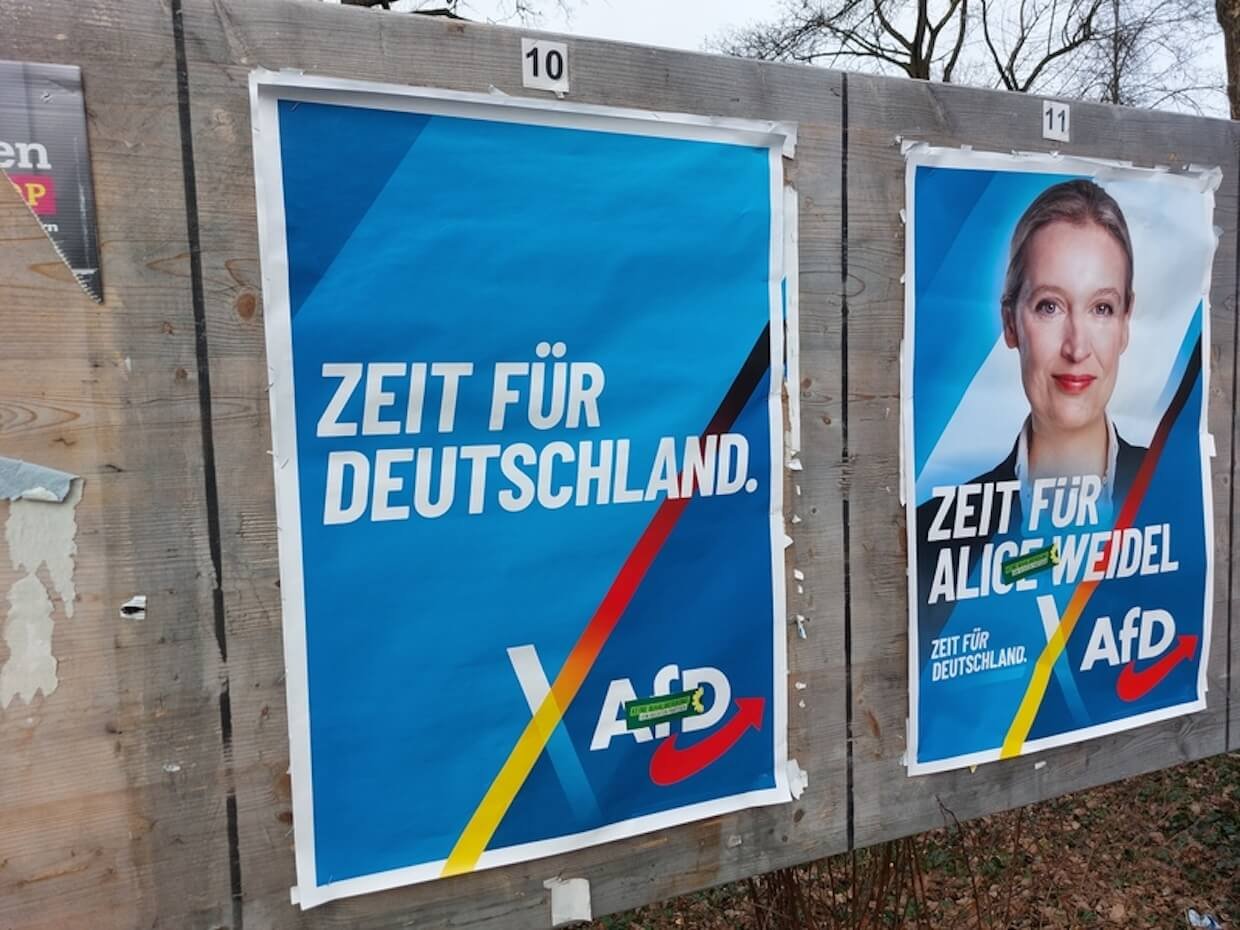
If we look at European democracies today, for instance, we see grand coalitions in Germany and Austria having the paradoxical effect of increasing the vote share of the populist AfD or other excluded parties in successive electoral cycles. The rationale behind these grand coalitions is to keep populists out of politics. And yes, that works in the short term while the coalition remains in place. But in subsequent elections, populist parties tend to perform better as voters become frustrated with this politics of compromise, particularly the dilution of party identities when the center-left and center-right govern together.
These parties would be better off maintaining their distinct brands and their distance from one another, thereby keeping voters within the mainstream parties rather than frustrating them into supporting populist outsiders.
The main scope condition I identify, therefore, is this temporal dimension: the stage in the democratic life cycle at which a grand coalition is pursued. The other scope condition I expected to find concerned economic crises. Certainly, in Tunisia, the situation was exacerbated by the economy’s failure to improve. As a result, all the mainstream parties became tainted by the economic crisis, and voters turned to populist outsiders because all the major parties were governing together and were associated with the crisis.
We see a parallel in Weimar Germany, where a grand coalition governed from 1928 to 1930. Those mainstream parties became tainted by the Great Depression, and voters turned to the Nazis and Communists in subsequent elections. At the same time, I found no quantitative interaction between economic conditions and grand coalitions. The negative effect of grand coalitions did not appear to be any stronger during economic crises.
Indeed, there were also cases in which the economy was growing, yet grand coalitions still contributed to democratic collapse. Thailand, in the late 1980s, experienced a brief democratic period during which the major parties governed together and the economy boomed. At one point, economic growth reached 13% during this brief democratic transition. Yet voters remained frustrated by perceptions that the grand coalition was corrupt and that the major parties were simply lining their pockets with public funds. This fueled perceptions of corruption despite economic growth, which, in turn, contributed to public support for a coup in Thailand that ended its democratic experiment.
So, theoretically, I had expected some interaction with economic conditions, but I didn’t find it empirically. I think there is some logic to that. Even when economies are growing, perceptions are often relative. If it appears that the grand coalition and these elite parties are doing even better than the populists, perceptions of inequality and corruption may still emerge, fueling populist frustration with the system.
Democracies Need Consensus on the Rules but Competition over Policies
Your comparative findings suggest that grand coalitions can undermine young democracies. How can democratic transitions reconcile the need for initial elite compromise with subsequent political competition without fueling destructive polarization?
Assoc. Prof. Sharan Grewal: We need to remember the literature from the 1980s and 1990s that described two transitions to democracy. There’s the first transition, when you establish the rules of the game, establish the constitution, and create the new system. Then there’s the second transition, when you consolidate this new system and democracy itself. Power-sharing and grand coalitions are useful in the first stage but dangerous in the second. This provides a clear lesson: You may want grand coalitions at the start, but you need to move on after that.
South Africa is the most emblematic case of what you’re supposed to do. At the start of the transition, you had a grand coalition between Nelson Mandela’s party, the ANC, and the party that had implemented apartheid. That helped them agree on a new constitution for South Africa. But once they agreed on the constitution, they parted ways. The grand coalition ended, the ANC led the government for the next 25 years, and the major party representing white South Africans led the opposition for the next 25 years. It was the distance between these two parties that allowed both to retain their bases, avoid diluting their brands, and therefore stem the rise of populists and extremists.
Notably, today, 25 years later, they’ve recreated a grand coalition for the first time, and it’s certainly hurting the ANC’s popularity. This might further demonstrate that even 25 years into democracy, you still see the dangerous effects of grand coalitions. But South Africa initially shows what you’re supposed to do: move on to competitive politics. You want differentiation among mainstream parties, competition between them, and even a bit of polarization. That’s how you keep voters invested in those parties and in the system, rather than turning to populists and hardliners.
The danger, of course, is finding the right level of polarization. What I’m arguing is that while too much polarization is dangerous for democracy, too little polarization is also dangerous. That’s the new argument I’m trying to make here. If the mainstream parties govern together without showing any differentiation, you get this populist backlash. So, striking the right balance and finding the Goldilocks level of polarization is the key dilemma or challenge for democracy.
It may be a cliché, but a helpful way to think about it is that you want consensus over the rules of the game. If you’re trying to change the constitution, the electoral system, etc., you want all the parties to agree on those changes. If it’s not about the rules of the game, but instead about policy, you actually want differentiation, polarization, and contestation. You want clear positions from the government and the opposition on policy. That’s what keeps voters aware that there are options and that different parties represent different constituents. But you want consensus when making major changes to the rules of the game. That’s how you strike a balance between a dangerous, pernicious level of polarization and too little polarization, on the other hand.
Tunisia’s Military Leaders Have Vested Interests in Saied’s Authoritarian Rule
Military armored vehicle on a city street in Tunisia. Photo: Dreamstime.
InSoldiers of Democracy and subsequent research, you examine military complicity in presidential self-coups. How has Saied’s politicization of Tunisia’s military transformed the prospects for resisting authoritarian consolidation?
Assoc. Prof. Sharan Grewal: Tunisia’s military had been unique in the region. Unlike other militaries in the Middle East, it had never been involved in politics, staged a successful coup, or governed the country. It was a very professional force, but also a very small and counterbalanced one. Historically, Tunisia’s dictators were fearful of the military, and their strategy was to counterbalance it with the police, the National Guard, and the Presidential Guard while keeping the military small and far from politics.
That was unique in the region and initially facilitated Tunisia’s democratic transition. The military didn’t have a culture of staging coups, so it didn’t stage one when the opportunity arose in 2013, following Egypt’s coup. There were calls for Tunisia’s military to do the same and overthrow the Arab Spring transition, but it refused. This was both because it was a very professional, apolitical force and because it was benefiting from the transition. Having been so small and neglected, the military was finally seeing its budget and weapons increase under democracy to levels that could match the security threats it needed to address.
So, as I argue in my first book, the military facilitated the transition and didn’t initially stage a coup. But Kais Saied was also able to co-opt it into his incumbent takeover. The argument I make in my first book is that the type of military Tunisia had was one that doesn’t stage coups itself but is paradoxically more easily co-opted into presidential or incumbent takeovers.
This is for both of those same reasons. First, you can more easily co-opt the military through its budget and weapons, given how neglected it had been historically. Kais Saied was able to further increase its budget and weapons and even expand its ministerial positions, appointing military officers, for instance, as Minister of Health and Minister of Agriculture, thus enhancing the military’s corporate interests.
But there’s also this paradox of professionalism, whereby military officers don’t want to challenge their commander-in-chief. When President Kais Saied ordered them to close Parliament in 2021, they instinctively obeyed, believing they weren’t supposed to question the commander-in-chief but were always supposed to obey and follow his commands. That’s what civilian control entailed for them. They told me that, in their minds, saying, “No, this is unconstitutional for us to close Parliament,” would have meant wading into politics. That would have been the political option. It was better for them simply to obey orders. Paradoxically, I argue that this type of military—an apolitical, professional military—is actually more likely to go along with incumbent takeovers, whereas more politicized militaries more readily tell the president, “No, we’re not following your orders.”
Today, it’s not so clear that this military will facilitate a return to democracy as easily as it did back in 2011 during the Arab Spring. The military today is somewhat less neglected and marginalized. In that sense, it has more vested interests in sticking with Kais Saied than it ever did under the previous dictators, Bourguiba and Ben Ali. Today, at least the top officers have these vested interests: higher budgets, more weapons, and ministerial positions. The very top officers, especially, continue to be promoted year after year and remain in their positions well beyond retirement age. So, they also have personal interests in sticking with Kais Saied in a way they never did under the previous dictators.
You also have to wonder to what extent the military’s apolitical, professional culture is changing as a result of these ministerial positions and greater political influence. It may be too short a period—only five years so far under Kais Saied—to really shift the military’s political culture. But it’s possible that Tunisia now has a somewhat more politicized military than it did, certainly, in 2011 and 2013. It’s therefore possible that a return to democracy will become a little harder now that the military has changed in this way.
At the same time, we should recognize that, structurally, many aspects of the military remain the same. You still have a conscripted military, so the soldiers on the ground who would actually need to repress protests, for instance, are more likely to side with the population because they’re randomly selected from it. So, while the top officers may have more interest in sticking with Kais Saied, the lower-level soldiers are likely to side with the population.
European Migration Priorities Have Helped Kais Saied Consolidate Authoritarian Power
Your research traces Saied’s growing engagement with China, Russia, and Iran. How do these relationships, alongside European migration priorities and Western security cooperation, affect the durability of his authoritarian rule?
Assoc. Prof. Sharan Grewal: It has certainly helped that Kais Saied had these foreign partners during the initial years of his consolidation of power. Neighboring Algeria has perhaps been his strongest ally. But European powers, as you mentioned, have also been very concerned about migration into Europe and have likewise helped Saied consolidate power, providing him with economic and even security assistance to keep migrants in Tunisia and prevent them from reaching Europe. Italy, in particular, has perhaps been the most supportive of Kais Saied.
In more recent years, we have seen Kais Saied try to branch out and engage more with Russia, China, and Iran, particularly through high-level visits to Iran and China. These visits were unprecedented in many ways in Tunisian history, given that Tunisia had historically been aligned with the US and Europe rather than China and Iran.
That said, Kais Saied doesn’t have strong allies abroad in the same way that Tunisia’s former dictators, Bourguiba and Ben Ali, did in France, the US, and elsewhere. France, for instance, was still offering Ben Ali additional tear gas in the final hours of the Arab Spring revolution.
I don’t think we’re going to see that if mass protests emerge against Kais Saied today. He doesn’t have strong alliances abroad that are as invested in his survival as France was in Ben Ali’s survival back then. In that sense, although he has some new partners, both rhetorically and economically, I don’t think they would support him in a way that would allow him to survive a mass uprising. So, if and when the sands shift, Saied loses his popularity, and protests start to gain momentum and strength, I do think he is a relatively weaker dictator than Tunisia’s previous ones.
Groups of migrants from Tunisia and Libya are transferred from Lampedusa Island aboard an Italian Coast Guard vessel. Lampedusa, Sicily, Italy, August 2022. Photo: Alessio Tricani / Dreamstime.
The Sands Are Finally Shifting as Kais Saied Begins to Lose Popular Support
In your January 2026 analysis, you describe a weakened Tunisian General Labour Union (UGTT, Union Générale Tunisienne du Travail), fragmented opposition, and an increasingly politicized military. Can Tunisia rebuild the societal and institutional foundations that enabled its 2011 democratic transition?
Assoc. Prof. Sharan Grewal: For five years, Kais Saied was able to benefit from each of those factors. The opposition was highly polarized, as we saw in the final years of the transition, when polarization had worsened. That inhibited the opposition’s ability to unite against Saied.
Likewise, the labor union, a powerful, Nobel Peace Prize-winning organization in Tunisia, has strong legitimacy stemming from its role in the independence movement. It, too, was unable and unwilling to challenge Kais Saied. It understood that, given the 80–90% support Saied enjoyed, many workers also supported him and wouldn’t protest or go on strike against him. So, the labor union, the UGTT, likewise capitulated and allowed the power grab to take place.
But finally, this year, we’re starting to see some shifts in both the divided opposition and the weakened labor union. After maintaining that popularity for five years, Kais Saied is finally beginning to face criticism from Tunisians. This summer, there were water and electricity cuts as summers continued to get hotter every year in Tunisia and the infrastructure was unable to keep up. During the hottest hours of the day, there were power cuts, air conditioning couldn’t run, and water wasn’t available.
Those failures in service provision are finally catching up with Kais Saied and hurting his popularity. There’s nobody else to blame at this point, given that Saied rewrote the constitution to grant himself hyper-presidential powers. He is where the buck stops at this point. So, finally, this summer, we started to see Saied being blamed. As that happened, the opposition began to unite, realizing that perhaps they could mobilize their bases against him.
Perhaps even more importantly, the labor union finally started to challenge Saied this past year. In August and October, just these past few months, we began to see larger protests against Saied than in the past, led by the labor union, with all the political parties quietly uniting behind it. That is a new and welcome development in terms of a potential return to democracy. It’s still very early, and these protests remain quite small, numbering only in the thousands, not yet reaching the 20,000 or 30,000 participants we saw during the Arab Spring revolution. But the sands are finally shifting, and Kais Saied is beginning to lose some of his popularity. So that’s potentially a good sign for the return of democracy.
Restoring Tunisian Democracy Will Be More Difficult Than It Was in 2011
You suggest that another Tunisian uprising would face considerably greater obstacles than in 2011. Is democratic restoration more plausible through renewed popular mobilization, negotiated transition, or gradual institutional openings?
Assoc. Prof. Sharan Grewal: The current president, Kais Saied, is not willing to negotiate. If these past five years have taught us anything, it’s that he is not open to compromise or dialogue. He rewrote the constitution with minimal input from others. He had assembled what he called a dialogue, in which participants had a few weeks to provide input on the new constitution. But in the end, Kais Saied ignored what they said and wrote the constitution on his own.
More generally, you don’t see Kais Saied trying to negotiate, compromise, or make concessions to the opposition. So a negotiated transition is unlikely. Even if these protests grow and gain momentum—which remains uncertain, since we’re starting to see the sands shift but we’re certainly not there yet—I’m not sure Kais Saied would be willing to come to the table and permit a negotiated transition.
As a result, the more likely scenario is another revolution. A revolution, though, would be more difficult than it was in 2011, when you had a military that was neglected and apolitical and didn’t want to save the dictators. Today, that may be slightly different.
Likewise, although the political parties have started to unite and the labor union is beginning to challenge Kais Saied, both are less popular than they were in 2011. The political parties have been delegitimized as a result of the last 10 years of grand coalitions.
The labor union has also lost much of its popularity, partly because it staged a number of general strikes during the democratic transition that inhibited economic reforms. So, the parties of the grand coalition have certainly been upset with the labor union. More generally, perhaps its inability to defend democracy has likewise tarnished its reputation.
So, it’s a little more difficult for these intermediary institutions—the labor union and the political parties—to capitalize on another revolution today. The situation is likely to be a little more chaotic in terms of which actors would actually be able to rise to power if a revolution occurred today. They’re unlikely to be the same institutions we saw the first time around.
A New Democratic Transition Must Deliver Economic Gains and Transitional Justice
Finally, Professor Grewal, what five concrete political, constitutional, and international priorities would you recommend dismantling Saied’s authoritarian system, restore pluralist democracy, and prevent Tunisia from repeating the mistakes of its post-2011 transition?
Assoc. Prof. Sharan Grewal: On the one hand, I don’t think it’s my place to tell Tunisians what to do. If there were to be a revolution, it would need to come from within, with Tunisians determining their own priorities and policies. That said, we can learn some lessons from the previous transition about what went wrong and, therefore, what we might do differently next time.
A major priority would certainly be to revise the current constitution, which grants the president hyper-presidential powers. Relatedly, a second priority would be to finally establish a constitutional court, which was missing during the democratic transition. They could never agree on its members, the justices who would serve on the court, so it was never established during the transition. Kais Saied has had no interest in creating it either. Such a court would provide checks and balances on Parliament and, certainly, the president.
The economy also needs to be a greater priority than it was during the initial transition. At the beginning of the Arab Spring transition, three or four years were devoted to drafting the new constitution, and it was healthy and normal for the process to take so long. Given the grievances, especially among Islamists who had been repressed, it was normal for these debates about the role of religion in the constitution and related issues to finally take place. Those debates were polarizing, but they were necessary at the beginning of the transition.
As a result, however, the Arab Spring transition perhaps put the economy on the back burner. That would need to change this time around. Alongside rewriting the constitution, there would need to be a much greater focus on the economy, demonstrating to the population that democracy can deliver tangible gains.
Fourth, transparency is an important part of what went wrong the first time around. People want accountability on all sides for crimes, as well as for the broader neglect and mismanagement that occurred.
Under the old regime, there was torture and corruption. Regarding the democratic era, people want investigations into what actually happened concerning foreign fighters and the assassinations. Certainly, given what has happened under Kais Saied, people will also want transitional justice.
All of this needs to happen. It cannot be swept under the rug again through some type of pact or elite cartel that grants immunity to all sides. I think the lesson from the first transition is that you actually need accountability and transitional justice to keep people invested in the system.
The final point is, of course, the central argument of the book: If you have a new opening, a new transition to democracy, you want consensus initially on the rules of the game, but then you need to move toward competition. You want a little bit of polarization to keep people invested in the new system you create.
(*) This interview was academically curated and edited by Dr. Bulent Kenes.
In an interview with the ECPS, Dr. Ana Paula Pellegrino, Assistant Professor at the Pontifical Catholic University of Chile, examines how fear of Bolsonarism fueled Lula’s extraordinary electoral comeback by transforming political anxiety into democratic mobilization. Drawing on her recent Journal of Democracy essay, she explores how decentralized progressive networks, digital activism, and grassroots engagement converted fear into electoral participation. As she argues, Lula’s campaign succeeded because “they were able to transform despair into hope.” Yet she cautions against the authoritarian risks of militarized political communication. Beyond the election, Dr. Pellegrino assesses Bolsonarism’s resilience, organized crime’s influence on democratic citizenship, and the institutional challenges facing Lula’s fourth presidency, emphasizing social media regulation, judicial reform, and coordinated public security policies.
Brazil’s October 25 presidential runoff delivered a historic comeback for Luiz Inácio Lula da Silva, whose victory over Flávio Bolsonaro demonstrated the mobilizing power of progressive networks and the resilience of electoral competition. Yet Bolsonarism’s enduring strength, a conservative-dominated Congress, deep polarization, and organized crime continue to challenge democratic governance. Beyond the electoral outcome, Lula’s victory raises fundamental questions about the relationship between political emotions, digital mobilization, populism, and democratic resilience.
In an interview with the European Center for Populism Studies (ECPS), Dr. Ana Paula Pellegrino, Assistant Professor at the School of Government at the Pontifical Catholic University of Chile in Santiago, examines these tensions through her research on political mobilization, organized crime, public security, and democratic institutions. Her recent Journal of Democracy essay, “How Did Lula Pull Off the Biggest Political Upset in Modern Brazilian History?”, provides important insights into the decentralized digital and grassroots mobilization behind Lula’s electoral comeback.
Central to Dr. Pellegrino’s analysis is the political significance of fear. Reflecting on the campaign, she emphasizes that “Fear was what drove the mobilization, or what the mobilization was able to tap into and turn into decisive action.” Yet fear does not necessarily produce authoritarian outcomes. Drawing on social psychology and her research on crime and public security, she argues that political emotions can generate either disengagement or democratic participation. In Lula’s case, “they were able to transform despair into hope.”
This transformation was facilitated by decentralized progressive networks that connected digital activism with interpersonal persuasion and electoral participation. Dr. Pellegrino examines André Janones’s militarized communication strategies while acknowledging their democratic risks. She nevertheless emphasizes the enduring value of the “ladder of engagement,” through which digital mobilization becomes sustained political participation.
Beyond Lula’s victory, the interview explores Bolsonarism’s institutional resilience, the weakening of Brazil’s political center, and tensions between the executive and a conservative Congress. Dr. Pellegrino also examines how armed militias convert territorial domination into electoral influence and how punitive security policies can inadvertently reinforce criminal governance. As she warns, expanding imprisonment risks strengthening organizations that already use prisons as recruitment and operational bases.
Looking toward Lula’s fourth presidency, Dr. Pellegrino identifies social media regulation, Supreme Court and broader judicial reforms, and coordinated public security policies as priorities for democratic renewal. She argues that such reforms can help address polarization, institutional distrust, and organized crime’s influence over ordinary citizens. In sum, the interview illuminates a central paradox of contemporary democracy: fear can sustain authoritarian political projects, yet, when transformed into hope and collective action, it can also become a powerful resource for democratic engagement.
Here is our interview with Dr. Ana Paula Pellegrino, edited lightly to enhance clarity, readability, and overall flow for publication.
Fear Was the Driving Force Behind Lula’s Extraordinary Electoral Comeback
Luiz Inacio Lula da Silva walks among supporters on Augusta Street at São Paulo on the eve of the brazillian election on October 1, 2022. Photo: Yuri Murakami.
Dr. Pellegrino, welcome! Let me begin with your essay. In your Journal of Democracy essay, “How Did Lula Pull Off the Biggest Political Upset in Modern Brazilian History?” you describe his extraordinary runoff comeback. Does this victory demonstrate the resilience of Brazilian democracy or primarily the effectiveness of an exceptional electoral mobilization?
Dr. Ana Paula Pellegrino: That’s a great question, and one that we’re going to try to answer over the next couple of years. Brazil had already been in the process of recovering from a series of attempts to weaken our democracy. We had the 2022 attempt to prevent Lula from taking office following his election. A significant process was already underway, led by institutions. This was largely in the hands of the Supreme Court, which conducted investigations and prosecutions that ultimately led to the imprisonment of several participants in the attempt to prevent Lula from taking office.
When we compare the effectiveness of that process with what we see now in the mobilization around Lula, I don’t think this is simply a one-off event. It’s important to contextualize how this mobilization happened. I particularly want to emphasize the sentiment that was present in the crowd and served as the underlying force behind this mobilization: fear.
This fear comes not just from looking at Flavio Bolsonaro, but from knowing his family and where they come from, having lived through his father’s government from 2018 to 2022, and having witnessed the mobilization since they lost power. Fear was what drove the mobilization, or what the mobilization was able to tap into and turn into decisive action.
Was this a one-off event? It’s hard to say. Could similar circumstances mobilize this level of fear again? Yes, but I hope we don’t need to. I hope we don’t have to experience that level of fear once more.
But again, this wasn’t the process as it normally unfolds, as we saw, for example, with the investigations and prosecutions surrounding the January 2023 insurrection. Rather, it was the underlying sentiment behind a concerted effort focused on one specific event: the elections.
Brazil’s Progressive Movement Turned Social Media into Streets and Votes
You argue that Lula’s decentralized progressive base converted online participation into interpersonal persuasion, street mobilization, and voter turnout. Which mechanisms proved most decisive, and can this strategy generate durable political organization beyond the electoral cycle?
Dr. Ana Paula Pellegrino: In my essay, I made a point of explaining how the strategy was decentralized. There was no clear direction from the Lula campaign or anyone else to the different actors involved in this decentralized, multi-actor concert of actions. This ultimately led to the digital-to-in-person, social-media-to-streets-and-polling-stations strategy that we saw in the last three weeks of October.
Was this something that had been thought out beforehand? I think much of it was developed on the ground. If we look, for example, at interviews with Janones, the federal deputy who created what I consider the most relevant popular mobilization around this, did he have the full plan from the outset? He himself has said in interviews, “I knew I could get there,” but he was testing things out, and as they worked, he developed the next steps of the strategy.
That’s important. But yes, some elements had been planned beforehand. Many communication strategies had already been developed by the progressive base—not just those connected to the Workers’ Party, but the progressive base in Brazil more generally. They had been organizing, thinking about, and studying which segments of the electorate were less mobilized but could potentially be mobilized. They had been discussing how to get older generations out to vote for some time.
They had been developing that campaign and working on materials, identifying different messages that could be used to reach this particular audience. How do you target the people who will help older members of the electorate get out to vote? You needed different messages to mobilize different actors in this effort, and the same applied to a series of other smaller groups and audiences.
But what really took this to another level was when it became organic. There was only so much that the progressive base, these organized institutions, could do. Brazil has a very strong meme culture, and people began creating these things themselves. That really amplified what was already happening, because in the digital sphere, speed and volume are key.
During the first two weeks, Janones hadn’t yet reached the impressive mark of 10 million people in a single WhatsApp channel. That happened in the final week. In those first two weeks, there weren’t nearly as many people “following orders,” as he would say at the time. But those who were already in this space and mobilized were producing and engaging on their own.
It was a festival of different things. I even had difficulty translating some of this for the essay, but there were short telenovelas featuring fruit characters discussing the perils of a Bolsonaro government. They appealed, for example, to a very traditional type of Brazilian who wants to enter the civil service. So, the mother strawberry might be interested in supporting Bolsonaro, and the young strawberry would say, “Mom, you know, I’ve been studying for the civil service exam for the past five years, and if Bolsonaro is elected, there won’t be any civil service exams anymore, and I won’t be able to get this stable job.” It’s two strawberries talking on the internet. It’s a little unconventional, but that’s what people were creating.
There were also many memes of Lula dancing or appearing on TV shows, including AI-generated TV shows. These caught people’s attention. The sheer volume of this content occupied people’s feeds and created a kind of digital barrier against more pro-Bolsonaro, authoritarian, and right-wing content that would otherwise have been bombarding these middle-of-the-road feeds.
These were the crucial votes that both sides were trying to win. As the mobilization expanded, it increasingly took the form of content circulating in the digital space. Is this replicable outside the electoral cycle? That’s difficult, because it required a great deal of people’s time and effort. Could it be used differently? Probably, and that’s what Janones and Lula have been trying to do.
Lula has now adopted a strategy of producing live videos in which he talks with Janones and speaks directly to the Brazilian people. He’s done basically one livestream per week since being reelected. We’ve seen other presidents and heads of government around the world adopt this strategy. Bolsonaro himself used to do this. He had that direct channel. It’s completely new for Lula, who notoriously didn’t even have a cell phone. You could see the difference even in the aesthetic. The distortion produced by the selfie camera was something completely new. Suddenly, we started seeing his face with that distinctive selfie-camera distortion on social media feeds.
That aspect of having a direct, personalized channel, where someone sends you a message directly, was important. During the campaign, it was Janones speaking. Toward the end, he would also send messages from Lula or something similar. But initially, the communication was very much personalized around Janones. Now we’re seeing Lula enter this sphere much more actively and establish a direct channel with his supporters. Again, this is a very committed, supportive base that is already mobilized, which is another interesting factor. How sustainable this can be is something we’ll be watching closely in the coming months, which should be promising.
Lula’s Digital Army Adopted Right-Wing Mobilization Strategies
Supporters of Brazilian President and Workers’ Party (PT) presidential candidate Luiz Inácio Lula da Silva attend a campaign rally on Avenida Paulista in São Paulo, Brazil, on October 11, 2026, ahead of the presidential runoff election. Photo: Dreamstime.
Your essay highlights André Janones’sExército do Lula (Lula’s Army), which reportedly mobilized over ten million WhatsApp participants. Does this militarized, leader-centered digital strategy represent a distinct form of left-wing populism, and how does it differ from Bolsonarism’s communication practices?
Dr. Ana Paula Pellegrino: There are some similarities with Bolsonaro’s right-wing communication strategy, or that of Bolsonarism. You can identify a figure on the right comparable to Janones on the left. But they operate on fundamentally different ideas. Janones is very aware that the way he mobilized people on the left for this election is both a product of and dependent on the current structure of social media, its algorithms, and its broader architecture. He has commented on this in more recent interviews. Since both sides operate in the same environment, the strategies that work within that environment are likely to be similar.
During the runoff campaign, it became clear, even through the exercises they conducted to make people aware of what was happening, that social media, including the use of AI to generate videos, involved certain imbalances. These tended to favor right-wing messaging over left-wing messages, which had a harder time spreading organically through the algorithms. I’m not a specialist in that area, but researchers have been trying to map the networks and the spread of these materials.
In this context, Janones adopted many right-wing strategies, including their language. In a certain sense, his language was very authoritarian. He was giving orders, saying things like, “I need you guys to do this right now,” or “You have a mission. You need to do this thing.” There was a balance, though. He would also say, “I trust that you’re going to be able to invite people to join this channel.” But there was also an element of threat. For example: “The channel is closed. You won’t get any more information from me until you reach a certain number of members.” At a moment of high anxiety among a specific group, people described entering a sort of political mania and following his orders. The way he communicated those orders was very militaristic.
Now, can this approach survive? As Janones himself has asked, is this the strategy we want to pursue in the longer term? In his speech after winning reelection, Lula said that one of his government’s goals was to introduce legislation regulating social media. Hopefully, that will mean this type of mobilization and strategy will no longer be necessary and may no longer work because of changes in the digital environment.
Such changes would completely reposition the strategies on both sides. But there are enduring lessons that will remain applicable beyond changes in the social media environment. For example, there’s the idea of the ladder of engagement. This involves taking a long-term view of how to move from digital mobilization to in-person persuasion and support for getting people to turn out to vote.
That type of strategy is not necessarily authoritarian. On the contrary, it’s very democratic, and it can survive changes in algorithms and the regulation of the digital space. It’s something these actors have definitely kept in mind since the election. There have been smaller mobilizations here and there since the reelection, particularly around issues in Congress. For example: “Oh, there’s going to be a vote. Please be aware, because I might need you guys to mobilize something.” But the tone has become much less intense. It’s definitely being adjusted to the different environment we’re in right now.
Fear Can Fuel Authoritarianism, but It Can Also Inspire Democratic Engagement
You raise concerns about the militarized language and hierarchical dynamics of Lula’s digital campaign. Can progressive movements appropriate the organizational techniques of radical-right populism without reproducing its authoritarian tendencies or undermining democratic participation?
Dr. Ana Paula Pellegrino: That’s the key question. I’m not aware of the answer, but there is a lot of research to be done. Does it increase or decrease democratic sentiment and values? This is something that can be tested and investigated. A series of papers I’ve been reading, both while writing this essay and thinking about my own work on crime, public safety, and security, deals with the different emotions that are mobilized, particularly the role of fear. As I mentioned earlier, militarized, authoritarian language and orders, along with the certainty conveyed by this type of language, feed on fear and are closely connected to both right- and left-wing authoritarian politics.
Now, what the Lula campaign did was different. Sometimes fear can be connected to despair. In social psychology, that connection is where we see more room for authoritarian-type action and a greater appetite for, or openness to, authoritarian attitudes. On the other hand, and this is how I interpret what the Lula campaign did, they were able to transform despair into hope. That was how they managed to tap into fear while mobilizing a different type of action.
In crime studies, fear can be mobilized in different ways, and sometimes it leads to disengagement. People stop leaving their homes. When you experience a crime, become a victim of crime, or have someone in your family who has been victimized, you can react by saying, “Oh, I’m disengaging. I’m not going to be part of this community anymore. I’m not going to hang out in the square. I’m not going to go out at night anymore because I’m afraid.” But other people have the opposite reaction: “A family member was victimized. I’m going to go out and engage. I’m going to reform the square. I’m going to ask for and run campaigns so that we can have better public lighting, reform the park, and do these things. I’m going to organize as civil society to pressure the government to take action, and I’m going to participate even more.”
We have examples of the Mothers of the Plaza de Mayo in Argentina and other major movements involving families of people who were disappeared or killed by regimes. These families mobilized, providing a specific example of this type of mobilization. Here, we’re not talking about the extreme experience of violence or having someone in your family victimized, but there is the same emotional substrate of fear and the possibility that it can lead either to engagement or disengagement.
Again, both pro-democratic and authoritarian regimes can tap into fear in different ways, generating mobilization on the one hand, when it’s useful and needed, and high levels of demobilization on the other. Now, does doubling down on militaristic language present a risk to democracy? In Brazil, I already see a change in some of the language. Based on interviews Janones has given, I think there is a long-term intention on his part to change and modulate this language in the future. It’s hard to say because we haven’t yet seen how it plays out. But it is a concern. I would keep an eye on that type of language moving forward.
Brazil’s Left Faces a Major Challenge in Finding a Successor to Lula
Supporters of Brazilian President and Workers’ Party (PT) presidential candidate Luiz Inácio Lula da Silva attend a reelection campaign rally on Avenida Paulista in São Paulo, Brazil, on October 24, 2026, ahead of the presidential runoff election. Photo: Dreamstime.
Lula’s comeback relied heavily on his personal authority and extraordinary mobilizing capacity. Can Lulism develop into a sustainable democratic project beyond Lula himself, or does its personalization expose the Brazilian left to long-term organizational vulnerabilities?
Dr. Ana Paula Pellegrino: These questions have been on many of our minds since before this reelection, particularly how much of the left is organized around Lula and the current lack of a clear successor. If we look at potential candidates on the left for the next elections, I think that’s a major concern. There isn’t a clear list of people who could carry forward the strategy—or rather, the legacy—of the Workers’ Party.
Keeping this in mind, though, it’s not just a matter of thinking about the left and the legacy of Lulism. What we’ve also been seeing in Brazil is a real weakening of the center, including the more patrimonialistic, traditional center and its politicians. Parties like the Party of the Brazilian Democratic Movement (PMDB), which used to be a heavyweight in Congress, have also lost significant numbers.
So I see a shift that goes beyond the restructuring of the left. Moving forward, political analysts have started asking: How will things reorganize? We currently have a very right-leaning Congress. In the coming years, the left will probably need to reorganize and reinvest in a legislative strategy, developing and testing potential candidates for Congress, not just for the executive branch in the next presidential elections.
This is also happening at the governorship level. We had a record number of governorships in Brazil decided in the first round, without going to runoffs, and many right-wing governors were elected. This used to be a space where more centrist politicians were often elected. This realignment of political parties in Brazil has been underway for the past 10 years and is far from over. It’s a change that will probably keep political analysts busy and watching closely for at least another 10 years.
Bolsonarism Is Bigger Than Bolsonaros
Despite Flávio Bolsonaro’s defeat, nearly half the electorate supported his candidacy, while the right retained substantial congressional and regional influence. What explains Bolsonarism’s resilience, and has it evolved beyond Jair Bolsonaro into an institutionalized radical-right movement?
Dr. Ana Paula Pellegrino: I hinted at this in my previous response. It’s bigger than Flávio. For those who haven’t been following Brazilian politics, until very late in the game, people weren’t sure whether Flávio would be the candidate or, for that matter, the best candidate. The right has different choices and different names. The list is deep, with several potential heirs to Bolsonarism.
Is Bolsonarism bigger than Flávio Bolsonaro? Yes. Is it bigger than Jair Bolsonaro, and has it become an institutionalized radical-right movement? I would say that’s still up for grabs. We’re going to see a repositioning, and we’ve already started to see it following Flávio’s loss. It was a narrow but still substantial defeat. The reaction to that loss, including his flight to the US and the different statements that followed, is also important.
These shifts in alliances on the right will play out in the coming years and will really shape whether this movement remains resilient, whether it becomes institutionalized, and around which institutions. The right currently holds considerable institutional power and has the ability to capitalize on it to create something that could endure beyond Flávio Bolsonaro and the Bolsonaro family as well.
Supporters of Flávio Bolsonaro gather on Avenida Paulista in São Paulo for an Independence Day rally under the slogan “Brazil Will Win.” Photo: Dreamstime.
Executive–Legislative Confrontation Remains a Challenge for Brazilian Democracy
Lula secured the presidency, but Brazil’s increasingly conservative Congress constrains his governing agenda. Can democratic institutions withstand persistent executive-legislative confrontation, or might institutional deadlock strengthen authoritarian-populist narratives?
Dr. Ana Paula Pellegrino: This is the big question moving forward, particularly given what we’ve experienced in Brazil since Dilma Rousseff’s second government. At that time, there were highly combative relationships, significant constraints, and persistent confrontations between the executive and the legislature. We saw these tensions culminate in her ouster through impeachment in 2016. This ultimately contributed to the political shift that led to Bolsonaro’s election as president in 2018.
What we witnessed was a shift in which the opposition, previously represented by the Social Democratic Party, weakened and lost power. It continued to operate alongside the traditional center, which eventually threw its weight behind Bolsonaro. He was able to tap into a popular movement—or, more precisely, widespread popular disenchantment with what was happening. Corruption was a major theme. This was the period of the Lava Jato (Car Wash) investigation, which uncovered a series of corruption schemes across different industries in the country and led to the imprisonment of numerous politicians from across the political spectrum. So we had a specific conjuncture in which executive-legislative confrontation ultimately culminated in impeachment.
Could we see something similar happen again? I think that’s still an open question. Lula is not Dilma. The lack of support for Dilma’s government, its declining popularity, and the scale of the corruption scandals, along with the information surrounding them, mobilized people to withdraw their support for the Workers’ Party government at the time. I don’t see those conditions being present now. We’ve recently had the Banco Master corruption trials, which could have provided a focal point for mobilization. But that remains to be seen.
Why do I raise the risk of impeachment? Comparatively speaking, having such an unfavorable legislature, combined with a potential breakdown in popular support for the government, could reproduce conditions similar to those we witnessed before. It’s something worth considering, but it’s not on the radar to the same extent it was around the 2014 election.
So yes, the relationship is combative. Or, more precisely, there is the prospect of confrontation, but not at that level. We’re not entering this government under the same circumstances we witnessed in 2016, when people in Brazil were preparing for such a scenario from the outset. This is not currently on the agenda. It’s not a conversation people are having this time around.
Armed Militias in Rio Have Turned Territorial Control into Electoral Power
Your essay discusses Bolsonaro’s connections to Rio de Janeiro’s militias. Drawing on your research into organized crime, how do criminal organizations, territorial coercion, and informal governance distort electoral competition and undermine democratic citizenship in Brazil?
Dr. Ana Paula Pellegrino: For those who aren’t familiar, in the city of Rio de Janeiro and the wider metropolitan area, we have several armed illicit groups operating in irregular and illegal markets, some of which are called militias. Historically, these groups were created and led by police officers and other public agents. Unlike members of other groups, these individuals did not leave their public positions to form militias. Instead, they maintained their positions as civil or military police officers, firefighters, or other public agents while creating groups that sold protection, extorted businesses and residents, and controlled services such as internet access. So, if you live in an area controlled by these groups, you can only access certain internet services or purchase water or cooking gas from specific providers.
These groups exert territorial control, just like other armed groups in the city. But beyond territorial control, although other groups are now replicating some of these practices, the nature of the markets they established required them to develop relationships with individual residents to charge for protection and collect monthly payments from each household. Through these connections and practices, they realized they had considerable power and the capacity to control people’s behavior. They were then able to leverage these relationships into electoral power.
Starting in the 2000s, they began preventing other candidates from entering these areas to campaign. We know that in-person connections with candidates and the ability to campaign directly are particularly decisive in local elections. So they restricted access while also threatening residents and using their extensive presence throughout these communities to direct people’s votes. They would tell people, “You need to vote for this candidate.”
But voting is secret in Brazil, so how did they do this? According to research conducted at the time, they would ask residents to show their voter registration documents. They would then calculate how many votes they expected at specific polling stations and check the results afterward. These polling stations typically have between 100 and 300 registered voters, sometimes up to 400. By comparing the expected number of votes for their preferred candidate with the actual results, they were able to issue credible threats to residents under their control.
These are armed groups that, once they take power, expel people supposedly connected to drug gangs, including gang members’ families. They use considerable violence and threaten those who don’t pay or adhere to their moral code. They also remove people they consider disorderly. So threats from these groups tend to be extremely credible.
These practices originated with the militias in Rio and are now being replicated elsewhere. They also demonstrate a type of politics in which people occupy public office and use their positions to enrich themselves. These were civil servants and public officials who took advantage of their public authority, connections, skills, and resources—including firearms and professional training—not for the public good but for personal benefit. That’s what my research has shown.
Others have made similar arguments. Bruno Paes Manso, a Brazilian political scientist, for example, argues that the Bolsonaro family has replicated this type of strategy and attitude toward the state and the occupation of public office. This would explain much of the connection beyond personal ties, such as having hired the mother and former wife of a known police officer involved in some of these groups, having given this individual awards, and so on. Beyond these personal connections, it’s also a matter of political style: how public office is used to advance personal interests. This is the approach that Paes Manso argues he sees in the Bolsonaro family.
In your El País interview, you describe how organizations such as the PCC (Primeiro Comando da Capital / First Capital Command) establish parallel systems of rules, discipline, and territorial control. How does criminal governance interact with populist security narratives, and can punitive authoritarian policies inadvertently strengthen these organizations?
Dr. Ana Paula Pellegrino: When we look at the rise of these criminal organizations in Brazil, many of them began as prison gangs and invested heavily in internal governance, developing mechanisms to control their members’ behavior. While many prison gangs failed to expand because of internal conflicts, the two major examples—the PCC (First Capital Command) in São Paulo and the Red Command in Rio—were able to establish internal governance systems and practices. Once they began operating beyond prison walls, they introduced these systems into the territories they entered, initially to control markets and subsequently to control territories and populations.
To illustrate these rules, disciplinary mechanisms, and practices for readers, if someone commits a crime in an area under PCC control in São Paulo, someone from the PCC is normally informed before the police. If there’s an established code to follow or they know what to do, they resolve the matter themselves. But if the situation is serious enough, it can escalate to the point where a meeting of the organization’s leaders is called to decide how to handle that specific case.
Graham Denyer Willis has meticulously documented these dynamics in São Paulo for a long time. Similar practices also exist, although in different forms, in Rio and other parts of Brazil. These systems have been developing over the past 20 years and have been associated, for example, with declining homicide rates, crime, and violence in São Paulo.
How does this interact with populist security narratives? In São Paulo, the establishment of this parallel regime has coincided with a reduction in violence. In Rio, however, there are more criminal groups, and they constantly compete for territorial control. Consequently, violence remains high. We see similar dynamics in Belém do Pará, Salvador, Fortaleza, and many other metropolitan areas across Brazil.
Just because criminal groups exercise governance doesn’t mean they can control violence. In these circumstances, we begin to see growing demands for more mano dura-type policies. The current regional model is what Bukele has done in El Salvador. Mano dura strategies rely heavily on violence on the ground, as well as prisons and imprisonment. But we already have a system in which much of the recruitment into these organizations, and even the organization of their economic activities, takes place inside prisons. Is investing even more in these strategies really how we dismantle a system that already sustains these organizations by providing recruitment grounds and a safe space from which they can run their businesses? No.
Yes, there is a risk of strengthening the organizations themselves, even though the popular demand for action is legitimate. Depending on how you conceptualize and map areas under criminal control, approximately one-third of Rio’s population lives under such control. These residents face the constant risk of gunfights and shootings on their streets and exposure to gunfire. So it’s entirely legitimate for people to demand that something be done. What we need, however, are solutions that actually intervene and reduce the problem rather than contribute to it.
Bolsonarism’s Connections to Transnational Right-Wing Networks Predate Trumpism’s Rise
Supporters of Brazil’s former President (2019–2022) Jair Bolsonaro hold signs during a demonstration in São Paulo, Brazil, on September 7, 2025. Photo: Dreamstime.
Your recent research on international conflict demonstrates how external crises reshape nationalist political discourse. How have Trumpism, transnational radical-right networks, and geopolitical polarization influenced Bolsonarism, and what implications do these connections have for Brazil’s democratic institutions?
Dr. Ana Paula Pellegrino: There’s been a lot of discussion about the connections between Trumpism, its references, and what Bolsonarism has started to do in Brazil. This isn’t something new. Bolsonaro was already a congressman, holding office and organizing around issues such as the disarmament campaign in Brazil, with which he had strong connections. He was a pro-gun legislator at the time and already had connections to both this discourse and transnational networks such as the National Rifle Association (NRA). So, in a certain sense, these connections have been two-way streets for some time. As Bolsonaro gained popularity and eventually took office, he and his supporters tapped into these networks and the broader geopolitical polarization extending beyond Brazil.
When we consider Brazil and its democratic institutions, several concerns arise. For example, we have stringent campaign-financing rules, yet there have been reports of money regularly coming in to fund presidential campaigns. There have also been reports of various attempts to influence—not necessarily to tamper with elections themselves, but to shape public perceptions of the institutional integrity of free and fair elections in Brazil.
I think a significant vulnerability lies in these networks: how they produce content, where that content circulates, and how people’s opinions are influenced by the different messages being created. When we see certain messaging strategies working with particular audiences in the US, we naturally pay attention. Just as everyone became very interested in the Janones phenomenon and how he was able to mobilize people through messaging, the same process works in the other direction. We look at what is working elsewhere in the world to mobilize political bases, then import and learn from those strategies. So there has been a two-way exchange. People are now very energized by what Brazilians have accomplished, but different political movements in Brazil have also looked abroad for strategies and inspiration.
Lula’s Fourth Presidency: Reforms and Democratic Resilience
And lastly, Professor Pellegrino, looking toward Lula’s fourth presidency, what institutional, social, and political reforms are essential to transform his electoral comeback into lasting democratic resilience? Can Brazil overcome entrenched polarization, criminal influence, and authoritarian legacies without rebuilding the relationship between political institutions and ordinary citizens?
Dr. Ana Paula Pellegrino: In his speech following his reelection, Lula placed considerable emphasis on regulating social media. I’ve already mentioned this, but I think it’s worth emphasizing because it’s one area that will receive significant attention during his presidency.
The second point concerns reform of the Brazilian judiciary. The Supreme Court and the crisis surrounding it were central to much of the debate during the first round of the elections. Many of the congressmen and congresswomen elected this time campaigned on this issue. There was considerable right-wing mobilization around both impeaching sitting justices and expanding the number of justices on the Court.
Lula now has the opportunity to take up this agenda and address the crisis during his presidency. Since he was elected to do so, he will also have to work with Congress on these reforms. But he has time, and he has recognized and accepted responsibility for moving forward on this front.
Can we overcome entrenched polarization through these two major changes? We can take meaningful steps in that direction, especially through social media reform. Supreme Court and broader judicial reforms, however, are higher-level institutional changes. Their effects will be felt in democratic politics over the long term, but they will be less immediately noticeable to the electorate and ordinary citizens.
When we consider criminal influence and how ordinary citizens in Brazil’s large metropolitan areas experience politics, particularly local politics, addressing these challenges requires a range of different strategies. Lula has also signaled that this will be an important priority for his government. A bill reforming several laws has already been approved by Congress. Lula has also promised to establish a Ministry of Public Security to organize what should become a national public security system. The idea is to coordinate the federal government, state governments, and municipalities so they can support one another in developing strategies better suited to controlling organized crime and reducing armed influence in the everyday lives of ordinary Brazilians.
This is one of the biggest challenges, given Brazil’s size, the extent of its borders, and potential disagreements over the strategies that more right-wing governors might favor compared with those of the federal government and municipalities. Policing is organized at the state level in Brazil, but many municipalities, particularly larger ones, also have their own guards. So this is another development we will be watching unfold with great interest in the coming years.
(*) This interview was academically curated and edited by Dr. Bulent Kenes.
In this commentary, Hasnan Bachtiar examines the intensifying rivalry between President Prabowo Subianto and former President Joko Widodo (Jokowi), arguing that their competing populisms are accelerating Indonesia’s democratic decline. Against the backdrop of Vice President Gibran Rakabuming Raka’s resignation, Bachtiar explores Prabowo’s consolidation of presidential power, the restructuring of oligarchic alliances, and the political marginalization of Jokowi’s networks. He also scrutinizes costly populist welfare programmes, mounting economic pressures, and the erosion of civil liberties. Drawing on the concept of “populists without the people,” Bachtiar argues that Indonesia’s political elites increasingly invoke popular sovereignty while neglecting citizens’ material needs, democratic participation, and fundamental freedoms, raising concerns about the country’s democratic future.
The explanation for why Indonesia’s Vice President, Gibran Rakabuming Raka, stepped down from office is relatively simple. Two populist forces are competing against each other. And neither wants two suns shining in the same sky. Prabowo Subianto, a former senior special forces officer, appears to have won this political battle. He was confronting Gibran’s father, Joko Widodo (Jokowi), a former carpenter who served as President of the Republic for two consecutive terms (2014-2024).
We are trying to simplify this case, but not oversimplify it, although the competition is not merely between Prabowo and Jokowi. It involves various actors, with multiple layers of complex political struggles. Whatever the case, what seems most apparent, at least as a preliminary conclusion, is that the political competition is fierce, while the people seem to be absent from it. The turmoil resulting from these struggles has led to growing public distrust of populist figures, making them increasingly unpopular (Nuraniyah, 2026). This is particularly because public grievances continue to mount amid an economic crisis, the loss of some freedoms, and a process of democratization that seems to have lost its direction and is struggling to move forward.
Victory After Repeated Defeats
President-elect Prabowo Subianto with the 7th President of Indonesia, Joko Widodo, at the 79th Indonesian National Armed Forces Anniversary in Jakarta, Indonesia, on October 5, 2024. Photo: Donny Hery.
Prabowo finally won the presidential election in 2024 after joining Jokowi’s cabinet and subsequently securing his support. Jokowi’s support came with a condition: Prabowo had to choose Gibran, Jokowi’s son, as his running mate. In addition, Prabowo was expected to commit to completing Jokowi’s dream project of relocating Indonesia’s capital from Jakarta to Nusantara (IKN), the new capital in Kalimantan.
During the 2024 election, Jokowi, as the incumbent president, made possible an uneven and unfair political contest. He was suspected of influencing changes to the legal rules so that the age requirement would accommodate Gibran’s candidacy (Butt & Lindsey, 2025). At the time, the Chief Justice of the Constitutional Court was Anwar Usman, who was married to Jokowi’s younger sister, Idayati.
His political opponents accused him of mobilizing state resources and social assistance programmes for political purposes (Sumarto & McCarthy, 2026). Indeed, his position as president allowed him to distribute social assistance in ways that seemed to blur the line between government assistance and his personal generosity, potentially attracting voters’ sympathy (Ambardi et al., 2026). As his critics pointed out, he was also accused of mobilizing state officials, ministers, and even regional leaders to support his political maneuvers. He stated, “The president is allowed to campaign and take sides”(Gayati, 2024).
Given Jokowi’s highly advantageous political position, it seems that Prabowo-Gibran’s electoral victory was strongly influenced by his support. Prabowo was even awarded the honorary rank of four-star general on February 28, 2024, apparently to give him a more fitting political standing, as his previous rank had been lieutenant general (three-star general).
Before receiving Jokowi’s political support, Prabowo had repeatedly lost elections. In 2004, even before entering a presidential election, he had already lost Golkar’s presidential candidate convention, particularly to his former military senior, Wiranto. In 2009, he ran as vice-presidential candidate alongside Megawati Soekarnoputri, but they were defeated by Susilo Bambang Yudhoyono and Boediono.
He then lost to Jokowi in two consecutive presidential elections, in 2014 and 2019, when Jokowi ran alongside Jusuf Kalla and Ma’ruf Amin, respectively. It is perhaps unsurprising, then, that in one of his political speeches after becoming president, Prabowo loudly shouted, “Long live Jokowi!” (Hidup Jokowi!), apparently to dispel rumors of growing tensions between them (Amar, 2025).
Super-Expensive Populist Projects
Prabowo had promised to continue the good policies introduced by Jokowi’s previous administration. He even approved Rp48.8 trillion in funding for the development of Indonesia’s new capital, Ibu Kota Nusantara (IKN), for the period 2025-2029. However, the project was later given a lower priority, partly because of concerns about its heavy investment costs and uncertain economic benefits, but possibly also because of the growing political rivalry between Prabowo and Jokowi.
In 2025, Prabowo announced eleven priority programmes with a combined funding allocation of Rp446.24 trillion. However, the development of Indonesia’s new capital, Nusantara (IKN), was not included in the list (Silfia, 2025). These programmes included the Red and White Village Cooperatives (KDMP), Free Nutritious Meals (MBG), the Three Million Homes Programme through the Housing Financing Liquidity Facility (FLPP), food estates, dams and irrigation projects, school rehabilitation, People’s Schools, Free Health Check-ups, Garuda Excellence Schools, the construction of quality hospitals, and tuberculosis elimination.
Among these programmes, the two largest were the Red and White Village Cooperatives (KDMP) and Free Nutritious Meals (MBG), with announced funding of Rp200 trillion and Rp121 trillion, respectively, in 2025. For 2026, the corresponding initial funding figures were Rp83 trillion and Rp335 trillion, respectively (Bank Indonesia 2026; Kementerian Keuangan Republik Indonesia 2025; Badan Gizi Nasional 2026).
These expensive programmes have also raised concerns about increasing pressure on Indonesia’s state budget (Adhinegara, 2026). By October 2026, the budget deficit had reached Rp379.3 trillion, or 1.47% of GDP, and was projected to reach 2.85% of GDP by the end of the year (Reuters, 2026). But the growing fiscal pressure was also pushed by rising energy subsidies and other government expenditures (Sulaiman, 2026).
However, public complaints, particularly about KDMP, have focused more on the reduction in village funds, the fact that the programme was imposed by the central government rather than emerging from the grassroots, threats to small shops and micro, small and medium-sized enterprises (MSMEs), the use of public land, inadequate management capacity, concerns about transparency and potential misuse of funds, and the involvement of the military in civilian affairs (Nuraniyah, 2026).
Examples of KDMP facilities being built in the middle of forests, in locations that are difficult to access, and even on public burial grounds have gone viral on social media. Meanwhile, public complaints about MBG have focused on the growing number of food poisoning cases, poor food quality, weak oversight of food providers, allegations of corruption and conflicts of interest, and the additional burden placed on schools, where most meals are distributed.
Those who openly criticize KDMP or MBG have to face repression from state authorities. Criticism on social media is almost always met with attacks from pro-government buzzers. Worse still, criticism of public officials often leads to threats, intimidation, attempts at criminalization, and violence. Amid the growing pressure of rising living costs, public freedoms are being seriously eroded.
Despite these public complaints, Prabowo sees these costly programmes as concrete expressions of his commitment to the good and virtuous people, as well as his opposition to corrupt elites and those he portrays as dangerous threats. In his populist rhetoric, his main enemies are oligarchs and foreign neoliberal forces.
Control over Oligarchic Forces
Several of Indonesia’s wealthiest business tycoons, including prominent Chinese Indonesian conglomerates, supported Jokowi politically and financially (Suryadinata, 2019; Syechbubakr, 2023; Warburton, 2024). In turn, during his presidency, Jokowi pursued development policies that provided them with major business opportunities.
Robert Budi Hartono (Djarum and Bank Central Asia/BCA) supported Prabowo-Gibran in the 2024 presidential election. Mochtar, James, and John Riady (Lippo Group) visited Jokowi at his residence in Solo in late 2024. Sugianto Kusuma (Aguan) of Agung Sedayu Group continued to lead a consortium of private investors involved in developing Indonesia’s new capital, Nusantara (IKN). Franky Widjaja (Sinar Mas) and Prajogo Pangestu (Barito Pacific Group) were also involved in investment partnerships for the IKN project. Similarly, Anthoni Salim (Salim Group) maintained investment ties to several development projects initiated during Jokowi’s presidency.
Ary Hermawan (2026), writing in Indonesia at Melbourne on November 12, 2026, offers a noteworthy interpretation. He draws connections between three developments: Jokowi’s close relations with major business tycoons, the reported links between some wealthy business figures and the financing of the Indonesian Solidarity Party (PSI), and the growing political tensions between Jokowi and Prabowo. Hermawan suggests that Jokowi could serve as a political representative for some business tycoons seeking to limit Prabowo’s influence. However, he also acknowledges that this possibility remains uncertain following the political developments of November 2026.
Leo Suryadinata and Siwage Dharma Negara (2026), writing for ISEAS in April 2026, offer a different perspective. They argue that Indonesia’s major conglomerates tend to maintain access to successive governments by adjusting their political and economic relationships. Their reported participation in Danantara’s Patriot Bond scheme suggests that this pattern continues. One development that illustrates this complexity was James Riady’s public praise of Prabowo’s leadership in July and October 2026. The Riady Family’s personal connections with Jokowi, therefore, cannot simply be taken as evidence of an anti-Prabowo political stance. Both Leo and Hermawan may be right. Yet the position and influence of these conglomerates seem to depend on which sun ultimately shines brightest. There is also a third view, suggesting that Prabowo has begun to rein in certain oligarchic forces.
In October 2026, Low Tuck Kwong and his daughter Elaine Low sold a 30.25% stake in Bayan Resources, worth Rp26.09 trillion, to PT Jhonlin Baratama, a company controlled by Haji Isam, a businessman with close ties to Prabowo (Fikri, 2026; Binekasri, 2026). The transaction followed difficulties Bayan had faced in securing approval for its coal production quotas. Low denied allegations that he had been under political pressure to sell his shares, however (Nangoy, 2026; Hidayah, 2026).
Meanwhile, Prabowo’s government reclaimed control of around 1,601 hectares of protected forest land previously managed by PT Mutiara Intan Permai, a subsidiary of Aguan’s Agung Sedayu Group, in connection with the PIK 2 Tropical Coastland project in March 2026. This followed the removal of the project’s National Strategic Project status in September 2025 (Ikbal, 2026; Pakpahan, 2026; Raissa, 2026).
Similar enforcement measures were also taken in the palm oil plantation sector. Under Prabowo, the government continued to deal with assets belonging to Surya Darmadi’s Duta Palma Group, which was involved in a corruption case. On March 10, 2025, the management of around 221,868 hectares of seized plantations was handed over to the state-owned company Agrinas Palma Nusantara (Mulya, 2025; PT Agrinas Palma Nusantara, 2026).
Anthoni Salim’s business group also faced challenging financial pressure. Salim Ivomas Pratama and its subsidiaries were charged forestry-related administrative fines totaling approximately Rp2.49 trillion in 2025-2026. The company paid the fines but challenged them through an administrative objection process (PT Salim Ivomas Pratama Tbk., 2026).
These developments show increasing state intervention in the businesses of major conglomerates under Prabowo. Politically, this means cutting back some of their support for his rival, Jokowi. However, whatever control the political elites exercise over these conglomerates, it seems to have done little to reduce public complaints about commodity prices, which have been further aggravated by soaring fuel prices amid the energy crisis caused by the conflict in the Middle East.
The Crackdown on Jokowi’s Allies in Government
Indonesia’s President Joko Widodo campaigned in Banjarmasin Banjarmasin, South Kalimantan on March 27, 2019. Photo: Iman Satria
In early November 2026, a major scandal emerged within the Indonesian National Police. Former National Police Chief General Listyo Sigit Prabowo was arrested alongside two senior police officers, Inspector General Ahrie Sonta Nasution and Inspector General Eko Hadi Santoso, over allegations of illegal wiretapping (Muliawati, 2026; Karmini and Rising, 2026). Another senior officer, Inspector General Slamet Uliandi, was also named a suspect and placed under house arrest on health grounds
They allegedly intercepted the communications of Prabowo, several state officials, politicians, journalists, and activists between 2025 and 2026 without following proper legal procedures. Listyo is suspected of ordering the wiretapping, while the other officers were involved in carrying it out. The case has also prompted further investigations into possible political motives behind the surveillance.
Listyo was known to have longstanding ties with Jokowi. Their close relationship began in 2011, when Listyo served as Surakarta Police Chief while Jokowi was still the city’s mayor. After becoming president, Jokowi appointed him as his personal aide in 2014 and later as National Police Chief in 2021.
Listyo’s arrest, amid growing political tensions between Prabowo and Jokowi, has raised speculation about competing political influences within the police. Despite the fact that there is so far no evidence that Jokowi ordered or knew about the wiretapping, Listyo’s arrest can also be understood as Prabowo’s attempt to purge the police of Jokowi’s influence through the newly appointed National Police Chief, General Suyudi Ario Seto.
As the police scandal unfolded, several figures previously close to Jokowi appeared to have chosen to adapt to the new administration rather than oppose it. Bahlil Lahadalia, for example, was promoted to a higher position as Coordinating Minister for Downstreaming and Energy Transition in October 2026. Tito Karnavian remained trusted to lead the Ministry of Home Affairs. Meanwhile, Erick Thohir was retained in the cabinet, although he was moved from Minister of State-Owned Enterprises to Minister of Youth and Sports. All three remained in Prabowo’s government, although with different positions and degrees of influence.
It is worth noting that Prabowo significantly expanded his cabinet from 34 to 48 ministers, bringing the total to 109 officials, including 56 deputy ministers and five heads of ministerial-level agencies. This expansion allowed him to accommodate representatives of coalition parties, the military, mainstream Muslim organizations, and political networks previously associated with Jokowi (RSIS, 2024; The Jakarta Post, 2024). His initial cabinet included 17 ministers who had worked under Jokowi, including Bahlil Lahadalia, Tito Karnavian, and Erick Thohir, as mentioned earlier (The Jakarta Post, 2024).
Another story emerged from the Indonesian Solidarity Party (PSI), led by Kaesang Pangarep, Jokowi’s second son. Three prominent party figures, Raja Juli Antoni (Minister of Forestry), Giring Ganesha (Deputy Minister of Culture), and Isyana Bagoes Oka (Deputy Minister of Population and Family Development), announced their resignations on November 9, 2026 (CNA, 2026). They left only PSI, not their positions in Prabowo’s cabinet. Their decision raised speculation that the three were distancing themselves from Jokowi’s family to maintain their political ties with Prabowo (CNN Indonesia, 2026).
Two figures close to Jokowi faced a different fate. Budi Arie Setiadi, chairman of Projo, who had been one of Jokowi’s loyal supporters for years, lost his position as Minister of Cooperatives in September 2025. Pratikno, who had served as Jokowi’s Minister of State Secretary for ten years, also had to leave his position as Coordinating Minister for Human Development and Cultural Affairs in October 2026. He was subsequently appointed Chairman of the Presidential Advisory Council.
Amid the rivalry for political influence between Prabowo and Jokowi, these changes in their positions show how the old power networks have undergone a drastic restructuring, although the reasons behind each decision are often difficult to establish clearly.
The culmination of this political shake-up came with Gibran’s resignation as vice-president (Swanston et al., 2026). It began when the validity of his educational credentials was challenged through legal proceedings. The lawsuit questioned whether Gibran’s education abroad met Indonesia’s requirement of having completed senior high school or its equivalent. On October 30, 2026, the Supreme Court annulled his educational equivalency certificate issued in 2019 (detikNews, 2026). The ruling increased political pressure on Gibran, although it did not automatically remove him from the vice-presidency (Kompas, 2026).
The issue then reached the House of Representatives (DPR). On November 11, 2026, 120 members of parliament from eight political factions signed a proposal to exercise the Right to Express an Opinion (Hak Menyatakan Pendapat), which could pave the way for Gibran’s impeachment. The lawmakers questioned his legal eligibility to remain in office following the annulment of his educational equivalency certificate.
Amid this pressure, Gibran eventually chose to resign. He first met Prabowo on November 10, 2026, to convey his intention. Two days later, on November 12, Gibran submitted his resignation letter to the Speaker of the People’s Consultative Assembly (MPR), Ahmad Muzani, after meeting Prabowo again at the Presidential Palace. Prabowo accepted his decision and expressed appreciation for Gibran’s service. The DPR plenary session scheduled to discuss the impeachment proposal was subsequently cancelled.
Gibran’s resignation represents the most significant development in the decline of the Jokowi family’s political influence within the government. More than that, it marks a further step towards Prabowo’s presidential hegemony (Gammon, 2025), which has created the conditions for, and even encouraged, a political shift from “competitive authoritarianism” (where elections are still held) (Nuraniyah, 2026) towards the gradual concentration of political power in Prabowo’s hands alone. The people, in this context, seem to be absent. The political turmoil among the elites has little to do with rising prices, worsening economic conditions, or the protection of freedom of speech, including the right to criticize the government, which is essential to democracy.
If the 2029 election takes place on a heavily tilted and manifestly unfair playing field, where political competition can be manipulated to favor Prabowo, who already enjoys a significant advantage, ordinary citizens will find themselves in an even more difficult position, as their political participation may appear increasingly meaningless. Indonesia’s democratization agenda is faltering, struggling to make meaningful progress. It faces persistent resistance from a would-be autocrat who has been in power for just over two years and who portrays democratization as excessively costly and an undue burden on the people.
Conclusion
Indonesian President Prabowo Subianto addresses a massive crowd of supporters during his presidential election campaign in Indonesia. Photo: Arief Rahman / Dreamstime.
In the context of political contestation among populists, the people are constantly invoked, their name loudly proclaimed and used as a powerful source of legitimacy to affirm that the populists are the rightful holders of the people’s mandate. If we understand populism as a discourse or set of ideas that divides society into two antagonistic groups, “the pure people” and “the corrupt elite” (Mudde, 2004), then, as embodied by Jokowi or Prabowo (Mietzner, 2015, 2020), populism may remain a collection of ideas scattered across their narratives and rhetoric. But where are “the pure people” if they exist merely as discourse and ideas, rather than being recognized as real human beings with material lives?
Perhaps their populism is just a strategy for gaining and maintaining power, seeking to win favor with the majority, particularly those who are largely unorganized (Weyland, 2024: 154). Yet their performance in office has disappointed voters, as their promises to improve people’s lives have, in practice, brought hardship to the very people they claimed to serve (Nuraniyah, 2026).
If these leaders are described as “unpopular populists” (Nuraniyah, 2026), we would go further and call them “populists without the people.” The people are constantly invoked to legitimize their power, but their real lives, material conditions, and everyday struggles unfortunately seem to matter very little. The people remain central to their political rhetoric but increasingly absent from their political priorities. And then, what remains is a populism that claims to speak for the people while exercising power with little regard for the people themselves.
(*) Hasnan Bachtiar is a graduate researcher at Deakin University, Australia, and a lecturer at Universitas Muhammadiyah Malang, Indonesia. His research focuses on religion, law, society, and politics. At Deakin, he worked with Professor Ihsan Yilmaz on an Australian Research Council-funded project on religious populism (2022-2025). Previously, he was research director at the RBC Institute Abdul Malik Fadjar and contributed to the European Commission-funded GREASE project. He co-authored Populism after Prohibition: Islamist Mobilisation and Informal Religious Law in Indonesia (2026) and co-edited Competing Populist Communications, Digital Technologies and Elections (2026).
Ambardi, K.; Widyanta, A. B.; Wibawanto, G. R. & Yudha, A. (2026). “Populism on Display: Understanding the Role of Social Assistance Programs in the 2024 Indonesian Presidential Election.” In: W. Triwibowo; F. Itriyati & H. Bachtiar (Eds.), Competing Populist Communications, Digital Technologies and Elections: The Case of Indonesia (pp. 99-118). Springer Nature Singapore. https://doi.org/10.1007/978-981-92-1800-4_7
Arifianto, Alexander R. and Aisah Putri Budiarti. (2024). “Prabowo’s Inclusive Cabinet: Accommodating Indonesia’s Islamic Factions for Political Cohesion.” IDSS Paper, no. 089/2024. S. Rajaratnam School of International Studies, October 30. https://rsis.edu.sg/wp-content/uploads/2024/10/IP24089.pdf
Butt, S. & Lindsey, T. (2025). “Jokowi, the DPR and the dismantling of the Constitutional Court.” In: S. Jaffrey & E. Warburton (Eds.), The Jokowi presidency: Indonesia’s decade of authoritarian revival (pp. 151-169). ISEAS-Yusof Ishak Institute.
Mietzner, M. (2020). “Rival Populisms and the Democratic Crisis in Indonesia: Chauvinists, Islamists and Technocrats.” Australian Journal of International Affairs, 74 (4): 420-438. https://doi.org/10.1080/10357718.2020.1725426
Nuraniyah, N. N. (2026). “The Unpopular Populist: Prabowo’s Unconsolidated Authoritarianism.” Bulletin of Indonesian Economic Studies, 1-26. https://doi.org/10.1080/00074918.2026.2757876
PT Salim Ivomas Pratama Tbk. (2026, September 30). Interim Consolidated Financial Statements as of September 30, 2026, and for the Nine-Month Period Then Ended. Jakarta:
Sumarto, M. & McCarthy, J. F. (2026). “Welfare and democratisation: how electoral politics shape Indonesian social policy and citizen’s social rights.” Contemporary Politics, 32(1), 129-149. https://doi.org/10.1080/13569775.2025.2502637
Warburton, Eve. (2024). “Private Power and Public Office: The Rise of Business Politicians in Indonesia.” Critical Asian Studies, 56 (2): 184-206. https://doi.org/10.1080/14672715.2024.2334069
Weyland, Kurt. (2024). “Populism as a Political Strategy.” In: Research Handbook on Populism, edited by Yannis Stavrakakis and Giorgos Katsambekis, 154-165. Cheltenham: Edward Elgar Publishing. https://doi.org/10.4337/9781800379695.00023
In this commentary, Dr. Oludele Mayowa Solaja examines the tensions between global climate commitments and the geopolitical interests sustaining fossil-fuel dependence. Drawing on COP31’s failure to secure a final agreement and the Shenzhen Declaration involving the United States, China, and Russia, he explores how populism, authoritarianism, and democratic backsliding intersect with climate governance. From a Global South perspective, Dr. Solaja highlights the inequalities embedded in climate finance, technological dependence, and critical mineral extraction, particularly across Africa. Advocating developmental sovereignty and a just energy transition, he argues that climate justice requires democratic accountability, equitable resource governance, and meaningful community participation. He identifies COP32 in Addis Ababa as an opportunity to advance these priorities.
Global climate governance is confronting an increasingly visible contradiction. Governments meet to discuss common solutions to climate change, while powerful states stand up for the economic and geopolitical goals that support fossil-fuel use. This tension is especially manifested in the contrast between the COP31 negotiations in Antalya, Turkey and the reports of a meeting on November 19, 2026, between Donald Trump, Xi Jinping and Vladimir Putin in Shenzhen. The question of who will drive the energy transition, who will reap its rewards and who will pay its price is not just an issue for countries in the Global South—it is a fundamental one.
The document reportedly did not include a clear signal to phase out fossil fuels at COP31 and the earlier demand for US$120 billion a year for adaptation funding by 2035 was also dropped. The talks were extended past the agreed deadline of November 20 due to differences on pledges to fossil fuels and financing for developing countries. In the interim, the Shenzhen declaration pledged a shared approach by the United States, China and Russia to scaling up the production and supply of refined petroleum products, with no mention of targets or a timetable for implementation (Reuters, 2026a, 2026b; The White House, 2026).
Taken together, they indicate a reshaping of the world’s climate deal. Carbon-intensive energy systems remain under the strategic control of the powerful states, whilst the developing world is increasingly burdened with the pressure to develop low-carbon. The pressure to develop low-carbon in a way which is unequal in terms of financial and technological resources is growing on the developing world side, whereas carbon-intensive energy systems remain under strategic control of the powerful states. This imbalance is likely to perpetuate inequalities historically observed in the current incumbent economy, thanks to populist nationalism and fossil fuel vested interests that support authoritarianism.
COP31 and the Limits of Climate Justice
The challenges of COP31 illustrate the fragility of climate justice commitments to political negotiation. In Africa, Asia and Latin America, floods, drought and coastal erosion are exacerbating already existing developmental issues. Climate finance must be both accessible and predictable for countries under the debt burden, with limited fiscal capacity and poor infrastructure, to enable livelihood protection and development sustainability.
The proposal to remove the US$120 billion adaptation finance target from the new negotiating text is a sign of the fragility of financial targets. UNEP (2025) projects the developing world will need between US$310 billion and US$365 billion a year for adaptation by 2035, while in 2023 there was international public adaptation finance of US$26 billion. The difference has real-world implications for flood resilience, crop insurance, public facilities and the ability of climate-vulnerable communities to rebound from climate-related disasters.
The terms of climate finance matter as much as its volume. Relying on debt-based financing is a risk that will put the cost of adaptation on countries with relatively low emissions in the past. Climate justice thus calls for predictable funding, extremely concessional financing and accountable systems that ensure that money reaches communities and local governments facing the latest environmental challenges.
Shenzhen and the Geopolitics of Petroleum
The Shenzhen declaration sheds a light on the geopolitical forces that underpin these paradoxes. Although the US and China have opposing political systems and conflicting strategic agendas, they shared a desire to boost supplies of refined petroleum products and ensure energy supply stability. This convergence is more about the continued strategic importance of petroleum than synergy of ideas, and it is striking that multilateral climate talks are having trouble finding viable routes to post-fossil fuels (The White House, 2026).
Security of energy remains a real problem with energy poverty and fluctuating world energy markets. However, advertising the benefits of petroleum expansion as universal hides a lack of equality within the control of energy production, refining, financing and distribution. The capable states, who have much more financial, technological and geostrategic capital, dominate the global energy landscape. In developing countries, the situation is often different, with energy transition negotiated in context shaped by external markets, investment priorities and technological dependencies.
Although the declaration does not guarantee an increase in petroleum production, it signals the continuing diplomatic importance of fossil fuels. When put in parallel with COP31, it showcases the potential to be the complexity of collective climate commitments when faced with national energy-security priorities. Understanding this contradiction requires closer attention to the domestic political arrangements through which fossil-fuel interests acquire legitimacy and institutional protection.
Populism, Democratic Backsliding and Fossil-Fuel Interests
These contradictions go beyond diplomatic disagreements. Climate policies are often presented by populist radical right movements as schemes imposed on the common people and the security of national industries and households by distant elites. The fossil-fuel dependency associated with jobs, wealth and national sovereignty can make opposition to environmental regulation a political mobilizing issue. The governance of climate change is then caught up in broader national identity, economic insecurity and political authority struggles.
Authoritarianism can enable fossil fuel dependency in various ways. Resource revenues can help pay the bills for public spending, support political patronage and political stability, and incentivize opposition to environmental reforms that jeopardize the interests of existing economic groups. According to Kakenmaster (2025), key factors influencing climate inaction in authoritarian regimes are fossil-fuel wealth and weak institutional restrictions. However, there is no one-to-one relationship between climate policy and authoritarianism or populism. Petroleum interests can unite multiple political systems behind a shared goal, while other political systems take opposing paths in implementing renewable energy development.
Democratic backsliding raises a related concern. As institutions become less effective at holding governments accountable, scientific independence, civic participation, and environmental oversight are weakened, leaving governments with fewer constraints on their support for carbon-intensive industries and interests. The implications extend beyond emissions policy to fundamental questions of environmental justice: whose voices are represented in environmental decision-making, who bears the ecological costs of these decisions, and whose interests receive political recognition and protection.
More complexity comes in geopolitical fragmentation. Unequal power relations and multiple interests limit the effectiveness of multilateral climate diplomacy, as Hafezi and Wood (2026) note. Sovereignty then becomes more or less asymmetrical: Powerful states have considerable autonomy with respect to their energy systems. Meanwhile, developing countries have to engage in negotiating their own development agendas in global institutions and markets in which their influence is relatively low.
Africa and the Struggle for Developmental Sovereignty
It is in Africa that these tensions are more consequential as energy transitions have to cater to deficits in access to electricity, job creation, industrialization and fiscal pressures. The plight of Nigeria is an example of such a dilemma. It pledges to reach net zero emissions by 2060 alongside ongoing energy poverty and reliance on petroleum income, and the continued significance of fossil fuel consumption in domestic energy supply. The challenge is not just decarbonization, but balancing environmental protection with inclusive developmental transformation.
Acknowledging these constraints on development does not excuse the continued expansion of fossil fuels. Capital investments in carbon-intensive infrastructure can lead to future financial obligations and costs, as these investments have a long lifespan. These decisions should be made in the context of methane emissions as well as stranded-asset risks and the allocation of costs and benefits among social groups and generations with respect to natural gas and other transitional fuels.
It is not an automatic solution to these inequalities if renewable energy is being developed. The future of the continent’s critical mineral resources will place Africa as a key element in the emerging low-carbon supply chains. However, a transition based on raw mineral exports, external technological control, and small-scale local production has the potential to repeat the patterns of extractive dependence. The environmental aspect of the green economy can’t cover issues of resource ownership, industrial value creation and the environmental effects experienced by the community of those who are mineral producers.
These tensions underscore the importance of developmental sovereignty—the ability of states and communities to determine their own development pathways, establish the conditions governing resource use and technological change, and ensure an equitable distribution of the resulting benefits. A just energy transition in Africa must strengthen this capacity while ensuring that national development priorities remain responsive to citizens’ needs and the concerns of environmentally vulnerable communities.
Reclaiming the Climate Bargain
The global climate bargain must be recovered, and more than just putting more money into the pot is required. Adaptation finance should be predictable, accessible and largely grants-based, and energy transition partnerships make sure to transfer technologies, enable home production of renewables, and promote responsible mineral processing. These are essential measures for developing countries not to be viewed only as raw material suppliers, but as providers of knowledge, technology and value in the low-carbon economy.
African nations could strengthen their collective negotiating power by coordinating investments in electricity infrastructure, renewable energy industries, critical mineral value chains, and climate adaptation projects. Regional institutions, particularly the African Union and the African Continental Free Trade Area (AfCFTA), could play a pivotal role in advancing these objectives. Moreover, COP32, scheduled to take place in Addis Ababa, Ethiopia, in November 2027, presents a renewed opportunity to amplify the concerns of Africa and the broader Global South and ensure that their priorities receive greater recognition in global climate negotiations. However, developmental sovereignty must also address inequalities within African societies. Empowering domestic elites without ensuring meaningful participation, accountability, and safeguards for affected communities would risk reproducing existing patterns of exclusion and perpetuating environmental injustice.
COP31, despite its failure to secure a final agreement, and the Shenzhen Declaration are significant because they illuminate the distribution of power in global climate governance. For the Global South, the central challenge is whether the transition to a low-carbon economy will address existing inequalities or reinforce them through new forms of technological dependence and resource extraction. Climate justice must therefore encompass not only emissions reductions and climate adaptation finance but also democratic accountability, developmental sovereignty, and the capacity to collectively shape alternative energy futures.
Hafezi, R. & Wood, D. A. (2026). “Reframing climate diplomacy: Power asymmetries, civil society, and the limits of multilateral environmental agreements.” Frontiers in Political Science, 8, Article 1665610. https://doi.org/10.3389/fpos.2026.1665610
Kakenmaster, W. (2025). “The fossil-fueled roots of climate inaction in authoritarian regimes.” Perspectives on Politics, 23(2), 415–433.
Lockwood, M. (2018). “Right-wing populism and the climate change agenda: Exploring the linkages.” Environmental Politics, 27(4), 712–732. https://doi.org/10.1080/09644016.2018.1458411
In this ECPS Voice of Youth (VoY) interview, Dr. Fizza Batool, Assistant Professor of Social Sciences at SZABIST University in Pakistan, discusses the evolution of populism studies, the methodological challenges of researching populism in diverse political contexts, and the importance of incorporating perspectives from the Global South into comparative political research. Emphasizing that “you need to understand a society in order to understand its populism,” she advocates combining qualitative interpretation with computational methods and moving beyond Western-centered frameworks. Reflecting on her research into Pakistan’s populist politics, academic mentorship, and international scholarly networks, Dr. Batool also explores the relationship between religious nationalism and populism, including her forthcoming comparative research on Pakistan and Israel, while calling for greater attention to the public demand sustaining populist movements.
As populism continues to reshape political landscapes across the world, understanding its diverse manifestations requires moving beyond Western-centered theoretical frameworks and engaging more deeply with the historical, cultural, and political contexts of individual societies. In an insightful interview for the European Center for PopulismStudies (ECPS) Voice of Youth (VoY) series, Dr. Fizza Batool, Assistant Professor of Social Sciences at the Shaheed Zulfikar Ali Bhutto Institute of Science and Technology (SZABIST) University in Pakistan, reflects on the intellectual, methodological, and institutional challenges confronting contemporary populism research.
Specializing in comparative politics, democratization, peace studies, and populism, Dr. Batool brings an interdisciplinary perspective shaped by more than a decade of experience in research and development. Her academic journey began unexpectedly in the natural sciences, where she studied physics, mathematics, and astronomy before transitioning to political science. Her interest in populism subsequently emerged through research on political participation and Pakistan’s evolving political landscape.
Drawing on Ernesto Laclau’s discursive approach and Francisco Panizza’s understanding of populism as a mode of identification, Dr. Batool challenges the assumption that competing theoretical traditions must be mutually exclusive. Instead, she argues that ideational, stylistic, strategic, and discursive approaches illuminate different dimensions of the same political phenomenon. Her comparative research on Zulfikar Ali Bhutto and Imran Khan further demonstrates how conventional distinctions between inclusionary and exclusionary populism can obscure the complex intersections of nationalism, religion, and socioeconomic discourse.
Central to her scholarly perspective is the conviction that “you need to understand a society in order to understand its populism.” She emphasizes that computational techniques and quantitative analysis must be complemented by qualitative interpretation and contextual knowledge. Populism in Pakistan, she explains, cannot necessarily be understood through analytical assumptions developed in Europe or the United States.
Looking ahead, Dr. Batool discusses her forthcoming research fellowship at the German Institute for Global and Area Studies (GIGA), beginning in February 2027, where she intends to investigate the relationship between religious populism and religious nationalism. Her proposed comparison of Pakistan and Israel highlights both the intellectual possibilities of cross-regional research and the mobility restrictions confronting scholars from the Global South.
She also advocates greater attention to the demand side of populism, asking why ordinary citizens develop and maintain populist attitudes rather than focusing exclusively on political leaders and their strategies.
Beyond theoretical debates, the interview addresses academic mentorship, international research networks, methodological innovation, and the obstacles facing early-career scholars. Dr. Batool stresses that research collaboration represents a “two-way learning process” through which younger scholars contribute perspectives that established researchers may overlook.
Dr. Batool’s reflections offer a compelling argument for a more globally inclusive, context-sensitive, and methodologically pluralistic study of populism—one that recognizes the distinctive experiences of societies beyond established Western democracies.
In an interview with the ECPS, Associate Professor Hugo Drochon, a political theorist at the University of Nottingham and author of Elites and Democracy, examines the relationship between populism, elite circulation, and democratic renewal. Reflecting on Trump’s second presidency and the November 3 midterms, Assoc. Prof. Drochon argues that established American institutions retain significant resilience despite efforts to transform governance. He also explores the concentration of oligarchic power surrounding Trump and Silicon Valley, suggesting that emerging fractures may restore competition among elites. Examining Europe’s radical-right resurgence, Assoc. Prof. Drochon emphasizes that democracy depends on continuous political contestation. Crucially, he warns that populism becomes anti-democratic when it restricts future challenges, undermining the pluralism necessary for democratic renewal.
As Trumpism reshapes American governance and radical-right populism challenges established elites across Europe, the relationship between popular sovereignty and elite power has become increasingly contested. Can anti-establishment movements genuinely democratize political power, or do they merely replace one ruling minority with another? And when does populist insurgency become a threat to the very political competition that makes democratic renewal possible?
In an interview with the European Center for Populism Studies (ECPS), Associate Professor Hugo Drochon, a political theorist at the University of Nottingham and historian of modern political thought, addresses these questions through his research on democratic theory, liberalism, and conspiracy theories. In his recent book, Elites and Democracy, Assoc. Prof. Drochon revisits classical elite theory to develop a conception of dynamic democracy, emphasizing elite circulation, political contestation, and social mobilization.
Central to Assoc. Prof. Drochon’s argument is that democracy cannot eliminate elites but can institutionalize competition between them. As he explains, “even in modern democracies, the people as such don’t rule.” The democratic question, therefore, concerns which elites govern, how they relate to citizens, and whether political challenges generate greater participation, redistribution, and equality.
Reflecting on Trump’s second presidency and the November 3 midterm elections, Assoc. Prof. Drochon questions whether the administration has fundamentally transformed American governance. Despite Trump’s recruitment of political outsiders and efforts to strengthen executive authority, he observes that “the midterms suggest that the older American institutions still have some strength left in them.” This institutional resilience complicates narratives of irreversible political transformation.
Assoc. Prof. Drochon also examines the convergence of Silicon Valley wealth and executive power, particularly Elon Musk’s alignment with Trump. Acknowledging an element of “oligarchic financial consolidation,” he suggests that this alliance may now be weakening. More fundamentally, he maintains that political, economic, and social elites must remain competitive: “it’s through that contestation that democracy remains possible.”
Extending his analysis to Europe, Assoc. Prof. Drochon explores the National Rally’s alliances with established economic elites, Germany’s political firewall against the AfD, and the increasingly prominent struggle between the center and the extremes. He argues that defending the political center requires substantive alternatives rather than institutional resistance alone: “A purely defensive position is not enough.”
Perhaps most importantly, Assoc. Prof. Drochon identifies the democratic limits of populism’s anti-pluralist tendencies. While populist challenges may expand participation and facilitate elite renewal, they become anti-democratic when they restrict subsequent political competition. The decisive question is whether emerging elites make future challenges easier or harder.
Drawing on cases ranging from MAGA and progressive movements to Serbia and Hungary, the interview ultimately advances a conception of democracy as an unfinished process. For Assoc. Prof. Drochon, meaningful democratic renewal requires not simply electoral turnover but institutions that preserve contestation, enable elite circulation, and continually expand opportunities for political participation.
In an ECPS interview following the November 3, 2026, US midterm elections, Assoc. Prof. Sam Rosenfeld, political scientist at Colgate University and author of The Polarizers and coauthor of The Hollow Parties, examines the implications of Democratic congressional victories for American democracy. Arguing that electoral backlash against Republicans should not be mistaken for democratic restoration, Assoc. Prof. Rosenfeld warns that “democracy is never fully safeguarded.” He explores the potential weakening of Donald Trump’s personalist control over the Republican Party while emphasizing the enduring influence of the populist Long New Right. Assoc. Prof. Rosenfeld also addresses political polarization, congressional oversight, democratic-socialist organizing, and the institutional hollowness of American parties. He concludes that rebuilding civic organizations, strengthening party accountability, and restoring democratic fair play remain essential long-term challenges.
The November 3, 2026, midterm elections have reshaped American politics, delivering Democratic majorities in both chambers of Congress while President Donald Trump remains in office. Yet this electoral reversal raises fundamental questions about democratic resilience, institutional checks, and the enduring appeal of Trumpism. As Republicans confront potential internal divisions and Democrats face the challenge of translating electoral victory into effective governance, the future of American democracy remains uncertain.
In an in-depth interview with the European Center for Populism Studies (ECPS), Dr. Sam Rosenfeld, Associate Professor of Political Science at Colgate University, specializing in party politics and American political development, examines these developments through the analytical frameworks developed in The Polarizers and The Hollow Parties, coauthored with Daniel Schlozman. His central argument challenges the assumption that electoral victories necessarily translate into democratic restoration or meaningful party renewal.
“Democracy is never fully safeguarded,” Assoc. Prof. Rosenfeld cautions, emphasizing that electoral outcomes should not be confused with structural democratic resilience. He argues that Americans’ commitment to democracy remains relatively fragile, particularly when compared with their immediate economic concerns. The Democratic victory, he contends, primarily reflects a backlash against Republican governance and cost-of-living pressures rather than a fundamental transformation of American political attitudes.
Turning to Republican politics, Assoc. Prof. Rosenfeld identifies a potentially consequential development: the erosion of Trump’s personalist control over the party. He argues that Trump’s declining electoral reputation and the approaching post-Trump succession could weaken his longstanding dominance. “That, at least, is now changing,” he observes, suggesting that renewed factional competition might restore internal checks on personalized leadership.
Nevertheless, Assoc. Prof. Rosenfeld distinguishes Trump’s personalism from the deeper ideological currents of the “Long New Right,” a confrontational political tradition that predates Trump and, he argues, will survive his departure. The weakening of personalist domination therefore does not necessarily imply the disappearance of radical-right populism or the restoration of traditional Reaganite conservatism.
Assoc. Prof. Rosenfeld also emphasizes the institutional consequences of party hollowness. He advocates stronger party gatekeeping, more accountable organizational structures, revitalized local party networks, and renewed connections with organized labor and civic associations. As he explains, “we believe parties are essential to democracy.” Their revival as “stewards of democratic contestation and fair play” is indispensable to strengthening democratic institutions.
His assessment ultimately combines cautious optimism about renewed political competition with skepticism toward any definitive democratic restoration. Formal reforms, electoral defeats, and institutional safeguards remain important, but none can permanently eliminate democratic vulnerabilities.
Looking toward 2028 and beyond, Assoc. Prof. Rosenfeld’s analysis underscores a central challenge confronting American democracy: whether the weakening of Trump’s personalist dominance and the rebuilding of hollow political parties can generate durable institutional accountability, meaningful political representation, and a renewed commitment to democratic fair play.
In an interview with the ECPS, Associate Professor Hugo Drochon, a political theorist at the University of Nottingham and author of Elites and Democracy, examines the relationship between populism, elite circulation, and democratic renewal. Reflecting on Trump’s second presidency and the November 3 midterms, Assoc. Prof. Drochon argues that established American institutions retain significant resilience despite efforts to transform governance. He also explores the concentration of oligarchic power surrounding Trump and Silicon Valley, suggesting that emerging fractures may restore competition among elites. Examining Europe’s radical-right resurgence, Assoc. Prof. Drochon emphasizes that democracy depends on continuous political contestation. Crucially, he warns that populism becomes anti-democratic when it restricts future challenges, undermining the pluralism necessary for democratic renewal.
As Trumpism reshapes American governance and radical-right populism challenges established elites across Europe, the relationship between popular sovereignty and elite power has become increasingly contested. Can anti-establishment movements genuinely democratize political power, or do they merely replace one ruling minority with another? And when does populist insurgency become a threat to the very political competition that makes democratic renewal possible?
In an interview with the European Center for Populism Studies (ECPS), Associate Professor Hugo Drochon, a political theorist at the University of Nottingham and historian of modern political thought, addresses these questions through his research on democratic theory, liberalism, and conspiracy theories. In his recent book, Elites and Democracy, Assoc. Prof. Drochon revisits classical elite theory to develop a conception of dynamic democracy, emphasizing elite circulation, political contestation, and social mobilization.
Central to Assoc. Prof. Drochon’s argument is that democracy cannot eliminate elites but can institutionalize competition between them. As he explains, “even in modern democracies, the people as such don’t rule.” The democratic question, therefore, concerns which elites govern, how they relate to citizens, and whether political challenges generate greater participation, redistribution, and equality.
Reflecting on Trump’s second presidency and the November 3 midterm elections, Assoc. Prof. Drochon questions whether the administration has fundamentally transformed American governance. Despite Trump’s recruitment of political outsiders and efforts to strengthen executive authority, he observes that “the midterms suggest that the older American institutions still have some strength left in them.” This institutional resilience complicates narratives of irreversible political transformation.
Assoc. Prof. Drochon also examines the convergence of Silicon Valley wealth and executive power, particularly Elon Musk’s alignment with Trump. Acknowledging an element of “oligarchic financial consolidation,” he suggests that this alliance may now be weakening. More fundamentally, he maintains that political, economic, and social elites must remain competitive: “it’s through that contestation that democracy remains possible.”
Extending his analysis to Europe, Assoc. Prof. Drochon explores the National Rally’s alliances with established economic elites, Germany’s political firewall against the AfD, and the increasingly prominent struggle between the center and the extremes. He argues that defending the political center requires substantive alternatives rather than institutional resistance alone: “A purely defensive position is not enough.”
Perhaps most importantly, Assoc. Prof. Drochon identifies the democratic limits of populism’s anti-pluralist tendencies. While populist challenges may expand participation and facilitate elite renewal, they become anti-democratic when they restrict subsequent political competition. The decisive question is whether emerging elites make future challenges easier or harder.
Drawing on cases ranging from MAGA and progressive movements to Serbia and Hungary, the interview ultimately advances a conception of democracy as an unfinished process. For Assoc. Prof. Drochon, meaningful democratic renewal requires not simply electoral turnover but institutions that preserve contestation, enable elite circulation, and continually expand opportunities for political participation.
Here is our interview with Associate ProfessorHugo Drochon, edited lightly to enhance clarity, readability, and overall flow for publication.
Populist Leaders and the Paradox of Elite Rule
Donald Trump delivers a victory speech after his big win in the Nevada caucus at Treasure Island Hotel & Casino, flanked by his sons Eric (right) and Donald Jr. (left) in Las Vegas, NV. Photo: Joe Sohm.
Professor Drochon, thank you for joining us. InElites and Democracy, you argue that democracy cannot eliminate elites but can enable their continuous contestation and renewal. How does this framework explain the contemporary paradox of populist leaders claiming to represent ordinary people while themselves belonging to powerful political or economic elites?
Assoc. Prof. Hugo Drochon: It’s only a paradox if you think that the people can actually rule. If you don’t think modern democracy works in that way and recognize that there are always elites, there’s no paradox as such. The question becomes the relationship between the two. This is what I was trying to point out. There’s been a lot of discussion, especially since 2016, about populism being the right way to understand what’s going on in our politics, particularly after Trump in the US and Brexit in the UK—not to be too Anglo-centric about it.
But I wanted to point out that all these so-called populist leaders who claim to speak in the name of the people, as you rightly point out, are themselves elites of some description. Trump was part of the 1% economic elite, a media personality with The Apprentice, and used Twitter. In the UK, Boris Johnson was as establishment as they come.
So, it was about putting the emphasis back on the fact that, even in modern democracies, the people as such don’t rule. They’re always led by elites to a certain degree. Therefore, it may seem like a paradox, but it isn’t if you look at the reality of our modern democratic systems.
The question then becomes: What type of elites come to power? What is their relationship with the people? I wanted to keep those two things in mind. There are elites, and there are people, and we have to think about the relationship between the two.
Trumpism and the Transformation of American Elites
In your recent New York Times conversation, you describe Trumpism as the rise of a new elite challenging the Washington establishment. Has Trump’s second presidency fundamentally transformed the American governing elite, or merely replaced established political elites with a different coalition of economic, technological, and ideological power holders?
Assoc. Prof. Hugo Drochon: Very good question. I think the recent midterms perhaps give us a slightly different answer than if you’d asked me before the elections. Before the midterms, it seemed that there was a true transformation of American politics. The types of people Trump brought into Washington, D.C., were very different. Many of them were outsiders. Obviously, some, like Marco Rubio, had been around, while others, like J.D. Vance, had come in. But a whole generation of both Democrats and Republicans seemed to have been replaced, and Trump brought in new people, most notably somebody like Elon Musk.
So, it looked like a very different group of people, with a very different approach to ruling, including the idea of a very strong executive and Congress being put aside. But the midterms suggest that perhaps they haven’t been able to capture and completely change the system in the way they would have liked. Trump seems to have lost quite a bit of power in both the House and the Senate.
Now, perhaps it looks more like a type of circulation, with new and different elites coming in and replacing the old guard of both the Republicans and the Democrats. There’s certainly been a circulation of elites. But whether this has fundamentally changed American government is another question. The midterms suggest that the older American institutions still have some strength left in them. I think we’ll know more in the next couple of years. There’s obviously been some change, but perhaps the institutions haven’t changed as completely as we might have expected when Trump came to power.
Silicon Valley, Trump, and Oligarchic Power
Caricature: Shutterstock.
You distinguish governing from non-governing elites, highlighting Elon Musk and other technology billionaires entering Trump’s political orbit. Does the growing convergence of Silicon Valley wealth and executive authority represent democratic elite circulation or a new concentration of oligarchic power?
Assoc. Prof. Hugo Drochon: Both, because there is circulation, with new elites coming in. Interestingly, I saw recently that Elon Musk said he wasn’t MAGA anymore, so there seems to be a break from that, too. Normally, the idea behind this kind of elite circulation is elite competition: different forms of elite power—political, economic, and social—compete with one another. There’s always a degree of competition.
Here, specifically, it seems that a certain type of economic power associated with Silicon Valley—and there are other types of economic power that we haven’t discussed—aligned itself with Trump. This seems to have brought about a degree of oligarchic financial consolidation, which may now be starting to break apart.
So, in that specific convergence, yes, there was an element of oligarchic power. But that seems to be breaking up. More generally, the conventional understanding of elite circulation is that these different forms of power compete with one another. You might have social elites, other economic elites, or different types of political elites, all competing with one another. And it’s through that contestation that democracy remains possible.
The People May Never Rule, but Elite Circulation Can Make Them Better Off
Drawing on Pareto’s theory of elite circulation, you explain how rising elites mobilize ordinary citizens to displace established elites. Yet the people rarely govern directly. Under what conditions can populist elite replacement produce substantive democratization rather than simply reproduce existing hierarchies of power?
Assoc. Prof. Hugo Drochon: Pareto has a very simplistic but useful formula. He talks about A, B, and C: A represents the established elite, while B represents the rising elite challenging A and bringing C, the people, over to its side by saying, “Look, A is not representing you. If you come over with us, we’ll overthrow them, and we’ll give you more opportunities.” Of course, B then comes to power, while C never rules. Eventually, D emerges as the new challenging power, and the circulation continues.
But I do want to emphasize that, at that moment of change, in the moment of circulation, there is a possibility of political change and democratization, depending on what you mean by that. If we think of democratization as a movement toward equality, we can judge whether the challenge from the new elite to the established elite increases participation, diversity, and redistribution.
If it does, then you might say that there has been an increase in democratization, though not necessarily in democracy altogether, and that this has benefited the people more generally. C will never rule, but C can be better off with a different type of elite, or even with the existing elite. That is the real question of elite circulation.
Trump’s Takeover of the Republican Party Was Facilitated by Establishment Elites
Your concept of ‘dynamic democracy’ emphasizes three elements: social mobilization, defecting or “rebel” elites, and institutions capable of translating their alliance into political change. How does this framework illuminate MAGA’s success, particularly the decision of establishment Republicans to accommodate Trump rather than resist his takeover of the party?
Assoc. Prof. Hugo Drochon: As you say, you need rebel elites. For me, the key question in 2016, when Trump first launched his political campaign and tried to take over the Republican primaries, was whether he would succeed. I think that was the more interesting moment. He was able to bring in new people, but if the old establishment Republicans had closed ranks and supported more established figures, such as Jeb Bush, would Trump have been able to succeed? That remains an open question.
It was people like Paul Ryan and Senator McConnell who helped facilitate his rise. That process is particularly interesting. There’s accommodation, bit by bit, until eventually there’s a complete takeover. That’s how insurgents come to power.
Without drawing a direct comparison, we often say that Hitler would never have come to power if Germany’s conservative elites at the time hadn’t made concession after concession until it was too late. I don’t want to draw an analogy between the two, but this illustrates how insurgents can come to power.
So, the rebel elites were key. Perhaps that also raises a question about what’s happening today with the Democratic Socialists of America (DSA). They seem to be capturing a particular moment, especially with Alexandria Ocasio-Cortez (AOC). Could something similar be said about the Democratic Party today? Yes or no.
Why MAGA Succeeded Where Black Lives Matter Struggled
Black Lives Matter protesters march around Marion Square during an organized demonstration in Charleston, South Carolina, USA, on July 13, 2016. Photo: Gerald T. Coli / Dreamstime.
In your New York Times discussion, you contrast MAGA’s institutional success with Black Lives Matter’s limited transformation into an enduring political vehicle. Why did BLM struggle to secure comparable support from established Democratic elites? Does this reveal a structural weakness in progressive movement politics?
Assoc. Prof. Hugo Drochon: That’s a nice contrast. You could say MAGA was building on institutions that were already there, namely the Tea Party movement. It had the movement, one of the three elements I talked about, Trump as its leader, rebel elites like Paul Ryan and Mitch McConnell, as we’ve just discussed, and an institution, namely the primaries. So, it had the three elements of dynamic democracy that I talk about.
Why didn’t BLM succeed in the same way? Partly because the Democratic establishment didn’t want to take it on board. There may be two reasons for that. First, some of BLM’s campaign slogans, such as “defund the police,” were not well received, at least by the Democratic establishment. Second, BLM was much more decentralized than the Tea Party, which made it harder to build alliances.
But there’s a real, ongoing question today concerning the Democratic Socialists of America: whether they’re able to bring over some of the more established Democratic Party members and whether somebody like AOC could bring sufficient people over to their side. I think you could say there is a movement behind the Democratic Socialists of America, and they obviously have their leaders.
The question is whether they have rebel elites from the Democratic establishment willing to come over to their side. Secondly, through which institution would this happen? Perhaps through certain primaries. Some Democratic Socialists of America candidates have already gone through the primaries and succeeded. But those two elements are still missing: the rebel elites and the institutions needed for that change to really happen. There are still a couple of years to go, and it could potentially happen.
AOC Needs Rebel Elites from the Democratic Establishment to Succeed
After the November 3 midterms in the US, democratic socialists and other progressive challengers gained significant victories contesting established Democratic leadership. What would constitute genuine elite renewal within the Democratic Party? Could figures such as Alexandria Ocasio-Cortez generate transformative change without a significant defection from the party establishment?
Assoc. Prof. Hugo Drochon: Yes, I was just trying to address that. For AOC to succeed, if she is serious about it—and this applies not just to AOC but to a number of other progressive candidates as well—she would need, at least according to my theory, a substantial number of rebel elites from the Democratic establishment.
Whether that happens depends on how successful the progressives are considered to be. There’s a debate in America right now about which candidates were more successful: the moderates or the progressives. There’s an argument that moderate candidates actually outperformed progressive candidates.
So, it’s not a given that the Democratic establishment would join them. But for AOC to be successful, she would indeed need those two elements, including members of the Democratic establishment willing to come over to her side. So far, nobody has really done that, although Barack Obama campaigned for El-Sayed. That was an example of a connection between the two, with Obama, an established Democratic politician who is now retired, coming over to help the campaign. You would need more examples of that, with established Democratic politicians actively joining AOC. That’s what you would really need. The institutional question also needs to be thought through: What’s the institution? Will it be the primaries? How will that happen? Those are the two questions that remain open.
Without a Durable Coalition, Serbia’s Student Movement Could Face Serious Difficulties
Students gather in Gornji Milanovac, Serbia, ahead of a major protest march to Belgrade on October 18, 2026. Photo: Dejan Krsmanovic / Dreamstime.
Serbia’s student-led movement has secured a parliamentary majority after nearly two years of protests against Aleksandar Vučić’s government. Does this represent an exceptional example of social movements generating their own governing elites, rather than depending on defections from established political elites? How does it challenge your model of dynamic democracy?
Assoc. Prof. Hugo Drochon: That’s a great challenge, so I’m glad you brought it up. There are a few things to consider. First, some of the movement’s leaders are themselves elites, even if they’re not established political elites. There are lawyers, judges, media figures, university leaders, and others involved. So, it’s not purely a student movement. There are already elites involved, but they come from outside the political establishment.
The one element they’re still missing is rebel elites from the establishment willing to come over to their side. They already have an institution, namely elections, but we’ll have to see how the situation develops. If they don’t attract enough defectors from the establishment—not necessarily politicians, but perhaps people from institutions such as the civil service or the judiciary—I worry about whether the movement will be able to establish itself firmly and continue. It needs a form of institutionalization that it doesn’t yet have.
There’s also a skeptical, perhaps cynical, interpretation of what the leader in Serbia might be thinking: “I’ll step aside and let the students come in. They’ll eventually implode, and then I’ll be able to come back.” So, there’s a real question about the movement’s future.
They need to institutionalize themselves. They’ve won the election, so they clearly have two elements: the movement and the institution. For them to succeed, they now need people to break away from the establishment—not just from politics but more broadly—and come over to their side to build a durable coalition. Otherwise, I fear they’re going to be in trouble.
Europe’s Radical Right and the Politics of Elite Defection
Across Europe, parties such as Germany’s AfD, France’s National Rally, and Reform UK have challenged established political elites. How do their trajectories illustrate the interaction between rising populist elites and traditional conservative establishments? Are elite defections more consequential than mass anti-establishment sentiment in explaining their political influence?
Assoc. Prof. Hugo Drochon: I think you could say anti-establishment sentiment is always present. That’s the nature of modern representative democracy, in a way, because there are always elites, and there’s always a gap between what the people truly want or express—if that can ever be fully identified—and the reality that representative democracy is a form of elite rule.
What my theory tries to emphasize is that we need to be realistic about what’s possible, because the desire to close that gap between elites and the people can be quite dangerous. That gap is a feature of our democracy, and we should resist trying to eliminate it because attempts to do so have led to many disasters throughout the 20th century.
So, anti-establishment populist sentiment is always there, although its intensity increases and decreases. This brings us back to what we discussed earlier about how rising elites may be better equipped to respond to the demands of the people.
I know the French case a bit better, and we’ve seen figures like Le Pen and Bardella courting business leaders. I’ve come across reports of lunches involving Bernard Arnault, the richest man in France. So, they’re trying to bring these defectors over to their side. There’s also been a break within the traditional center-right party, Les Républicains, with Éric Ciotti aligning himself with Le Pen’s campaign.
We’ve also seen developments in the media, with Bolloré, the billionaire who has been buying up media companies, including CNews, the 24-hour television news channel, as well as some publishing houses, in an effort to legitimize the far right. So, there is an emerging alliance, although the political boundaries have largely held so far. In Germany, too, that kind of firewall hasn’t broken down yet. France is heading toward a very challenging presidential election but maintaining that firewall remains one of the hopes for preventing an extremist takeover of the European political center.
Election posters featuring Alice Weidel, co-leader of Germany’s far-right Alternative for Germany (AfD), displayed during the 2025 German federal election campaign. Such posters are reportedly often torn down or vandalized. Photo: Dreamstime.
A Defensive Political Center Cannot Survive Without Offering Something New
In your work on Norberto Bobbio, you suggest that contemporary political struggles frequently pit the center against the extremes rather than simply left against right. How does this perspective illuminate Macronism, Le Pen’s National Rally, and Germany’s efforts to maintain aBrandmaueragainst the AfD? Can centrist elite resistance preserve democracy while inadvertently reinforcing populist grievances?
Assoc. Prof. Hugo Drochon: That’s the central question, isn’t it? I think we’re at a moment when the left-right divide may no longer adequately capture the dynamics of our politics. Take Donald Trump’s rise to power. In many ways, Trump wasn’t simply a left-right phenomenon because he wanted to get rid of not only the Democrats but also the established Republicans. His entire campaign revolved around “drain the swamp.” He wanted to remove the whole Washington, D.C., establishment, left and right, and fundamentally change how American politics operated. That was his program, and when he was most recently elected, it looked as though he might succeed. The midterms have called that into question.
Brexit was similar. In 2016, most of the main political parties—Labour, the Liberal Democrats, and the Conservatives—were, at least officially, campaigning in favor of Remain. Meanwhile, marginal parties such as UKIP, along with rebel elites like Boris Johnson and Michael Gove, broke away and joined these official and semi-official movements. Again, that doesn’t look like a conventional left-right divide but something closer to a center-extremes dynamic. In both cases, Trump and Brexit, something previously considered marginal or extreme became the new center.
The Left-Right Divide No Longer Adequately Explains Today’s Political Realignment
France offers another example. In 2017, Macron embodied the traditional center. But the confrontation with Marine Le Pen illustrates what I think is an important distinction between left-right and center-extremes dynamics. Left-right politics normally involves mutual recognition: you’re a socialist, I’m a conservative, and that’s fine. In center-extremes politics, however, there’s a denunciation of the other, with labels that the other side would reject.
In 2017, Emmanuel Macron argued that the divide was no longer between left and right. He was effectively saying, “I’m left and right at the same time. The divide is between progressives and reactionaries.” In other words, “I, Emmanuel Macron, am a progressive. You, Marine Le Pen, are a reactionary.” Marine Le Pen, meanwhile, was saying, “No, no, no. I’m a true patriot, and you’re a neoliberal globalist.” These are labels that each side rejects. They no longer see themselves simply as opponents or rivals competing for the same political power. This is why the language becomes much more pronounced in center-extremes politics. The struggle is really about defining the true center ground of politics.
Marine Le Pen claims to represent the true French center ground, the patriotic center, whereas Emmanuel Macron represents a globalist European center ground. Both claim to occupy the center. It’s not a question of one claiming to be in the center and the other on the right. In center-extremes dynamics, the question is which side represents the true center ground. In conventional left-right politics, by contrast, there tends to be agreement about what the center is, with each side offering a right-wing or left-wing version of it.
We’re currently experiencing a period of significant political realignment. These dynamics are not adequately captured by the left-right divide but rather by center-extremes competition: a previously marginal position attempting to become the new center ground, around which a new left and right might eventually reestablish themselves, while the conventional center struggles to hold its position.
But whether that conventional center can succeed remains the question. Can the center ground hold? Bobbio raises this issue, as do many others. In the American context, Arthur Schlesinger spoke about the “vital center,” which represented a defense of liberal democracy, and the “dead center,” which amounted to little more than combining left and right without proposing anything genuinely new.
When the center simply combines elements of left and right without offering a new political vision, it invites the extremes to advance further. For the conventional center ground to hold today, it needs to offer something new—a third position, a new political program, or policies capable of bringing people together. A purely defensive position is not enough, and we’re seeing that across European politics today.
Marine Le Pen and Jordan Bardella are seen at the end of a political meeting in Marseille for Rassemblement National party on March 3, 2024. Photo: Obatala-photography.
The Democratic Test of Populism Is Whether It Allows Further Political Contestation
Jan-Werner Müller defines populism through anti-elitism and anti-pluralism, while your framework emphasizes elite competition and renewal. Can populism be democratically productive when it opens political institutions to excluded constituencies, or does its claim to exclusively represent “the people” inevitably threaten the pluralism on which meaningful elite competition depends?
Assoc. Prof. Hugo Drochon: Thank you for bringing up Müller, who was actually one of my reference points at the beginning of this work. From 2016 onward, particularly in the Western world, there was a strong focus on using populism to describe the political events of the time.
I understood my book not as a corrective to that work but as a complement to it. There’s a great deal to learn from the populism literature, as you’ve just pointed out, particularly the division of politics into a kind of “us versus them”: a corrupt elite versus a pure people. What I wanted to bring into that discussion was the recognition that the relationship between democracy and elites is not new. We’ve been discussing it for a long time, including through Pareto’s work at the beginning of the 20th century. I wanted to bring the elite perspective back into the discussion, particularly the fact that populist leaders are themselves elites.
But I think the point about anti-pluralism is particularly interesting. What I want to emphasize is that there’s always a process of circulation, with rising elites challenging established elites. This is part of politics more generally, but it’s also part of democratic politics. We can judge these challenges by whether they’re democratizing or not. Do they contribute to democratization, understood as greater participation, more redistribution, or perhaps more diversity? We can assess different challenges, whether populist or not, according to those criteria.
There’s another important question concerning anti-pluralism: When these challenges occur, do they make it easier or harder for the next challenge to emerge? If the system becomes more closed and subsequent challenges become more difficult, then we can also regard that as an anti-democratic challenge because it restricts the possibility of further contestation. Perhaps this is one of the defining features of populism’s anti-pluralism. Because populism claims to speak in the name of the people, there’s a tendency to prevent subsequent challenges from emerging. That may be one of the anti-democratic elements associated with populism.
You Cannot Build Democratic Politics on Conspiracy Theories
Your comparative research with Annemarie Walter finds that conspiracy thinking is associated with political distrust and rejection of the political system. How do conspiracy narratives about hidden elites or the “deep state” affect democratic accountability? Can they empower challenges to entrenched authority while simultaneously legitimizing authoritarian leadership?
Assoc. Prof. Hugo Drochon: It’s a big question. What’s important to emphasize is that Christopher Hitchens had this great line about conspiracy theories being the exhaust fumes of democracy. What we need in a democracy is a critical public. We need people to hold their leaders accountable. That’s part of the essence of democracy. Within that critical public sphere, there will always be conspiracy theories and conspiracy theorists.
The difference between a critical public sphere, or even a cynical one, and a conspiracy theorist public sphere is that the critical or cynical public is willing to keep elites in check and hold them accountable while remaining open to new facts, information, and arguments. Conspiracy theories, by contrast, often have a kind of self-sealing capacity. They’re more like belief systems in which no amount of new information, data, or argument can challenge the fundamental core belief.
Both elements exist within democratic discourse. It would be authoritarian and counterproductive to try to repress conspiracy theories or conspiracy beliefs. That’s not what we’re looking for. But we do want the critical element to prevail over the conspiracy theory element because you cannot build democratic politics on conspiracy theories. They’re a form of belief that resists change, whereas critical engagement is precisely what democracy needs.
There’s also an important distinction between a conspiracy theory account of democracy and the elite-centered account of democracy that I’m trying to offer. In my account, there are always elites, but those elites compete with one another. They’re not a homogeneous, unified group exercising power in the same way. It’s precisely through that competition that democratic renewal becomes possible, along with the potential for democracy understood in terms of redistribution and equality, as I’ve just mentioned.
Conspiracy theories, by contrast, portray political elites as a unified group operating according to a predetermined plan, controlling not only politics but also the economy and the environment. That’s why we encounter conspiracy theories portraying climate change as a hoax. That’s not a conception of politics with which you can meaningfully engage. So, we need to distinguish these two perspectives, both intellectually and conceptually, to develop a realistic and clear-eyed understanding of politics without falling into conspiracy theories or counter-politics.
Democracy Depends on the Continuous Challenge of Established Elites by Rising Elites
Peter Magyar, a popular opposition politician of celebrity status meeting the press at the site of a soccer arena and miniature train station in Viktor Orban’s village in Felcsut, Hungary on May 24, 2024. Photo: Blue Corner Studio.
And finally, Professor Drochon, in your discussion ofElites and Democracy, you suggest that democracy is never fully achieved but must continually be pursued through political contestation. Looking at Trumpism, Europe’s populist resurgence, and Serbia’s recent political transition, what would constitute meaningful democratic renewal beyond electoral turnover? Can your model of dynamic democracy reconcile the permanence of elites with the ideal of popular sovereignty?
Assoc. Prof. Hugo Drochon: There’s a nice Aesop’s fable of a dying peasant who, on his deathbed, tells his children that there’s a buried treasure in the field. He dies, and we would hope the children are sad, but they’re also very excited because they’ve heard there’s a buried treasure in the field. So, they go out and dig, dig, dig, looking for the treasure. Of course, there’s no treasure, but by tilling the land, they’ve made themselves richer.
Those are the two images I want to keep in mind. True democracy, in which the people really rule, is like the buried treasure in the field that you never find. But by striving toward it, which is the essence of my account of dynamic democracy, you may achieve democratic benefits.
To answer your question, I think there’s a broader point: politics can generally be understood as a continuous challenge to established elites by rising elites. This is a historical reality that persists across political systems, not just democracies. What distinguishes democracy is that it institutionalizes this challenge through elections.
Elections make that process clearer, but the challenge itself is always present. It’s a prerequisite for the possibility of positive democratic change. You need the challenge for change to occur, although it doesn’t guarantee that change will happen. It’s only through the possibility of that challenge that positive outcomes can emerge, just as it’s only by tilling the land that you might become richer.
We’ve seen examples of this throughout the world today. I hope I’ve offered at least a yardstick for judging whether these challenges contribute to democratization—whether they involve tilling the land and making people richer, so to speak. We can judge them by whether they increase participation, redistribution, and perhaps diversity, and whether they allow further challenges to emerge afterward. Will they permit continued contestation, or will they try to block it?
One particularly interesting example we haven’t discussed is Hungary. One of the first institutional changes Magyar wanted to introduce was to prevent certain offices, notably that of the prime minister, from being held continuously. In other words, those holding such offices would need to change. That’s an institutional way of putting dynamic democracy into practice: institutionalizing renewal and making it possible.
So, if we take as our starting point this idea of dynamism in politics—the continuous challenge by rising elites to established elites—we have a democratic yardstick for assessing whether such challenges are democratizing or moving toward greater equality. We can then use that yardstick to understand and evaluate what’s happening in the world today.
(*) This interview was academically curated and edited by Dr. Bulent Kenes.
In this ECPS Voice of Youth (VoY) interview, Dr. Fizza Batool, Assistant Professor of Social Sciences at SZABIST University in Pakistan, discusses the evolution of populism studies, the methodological challenges of researching populism in diverse political contexts, and the importance of incorporating perspectives from the Global South into comparative political research. Emphasizing that “you need to understand a society in order to understand its populism,” she advocates combining qualitative interpretation with computational methods and moving beyond Western-centered frameworks. Reflecting on her research into Pakistan’s populist politics, academic mentorship, and international scholarly networks, Dr. Batool also explores the relationship between religious nationalism and populism, including her forthcoming comparative research on Pakistan and Israel, while calling for greater attention to the public demand sustaining populist movements.
As populism continues to reshape political landscapes across the world, understanding its diverse manifestations requires moving beyond Western-centered theoretical frameworks and engaging more deeply with the historical, cultural, and political contexts of individual societies. In an insightful interview for the European Center for Populism Studies (ECPS) Voice of Youth (VoY) series, Dr. Fizza Batool, Assistant Professor of Social Sciences at the Shaheed Zulfikar Ali Bhutto Institute of Science and Technology (SZABIST) University in Pakistan, reflects on the intellectual, methodological, and institutional challenges confronting contemporary populism research.
Specializing in comparative politics, democratization, peace studies, and populism, Dr. Batool brings an interdisciplinary perspective shaped by more than a decade of experience in research and development. Her academic journey began unexpectedly in the natural sciences, where she studied physics, mathematics, and astronomy before transitioning to political science. Her interest in populism subsequently emerged through research on political participation and Pakistan’s evolving political landscape.
Drawing on Ernesto Laclau’s discursive approach and Francisco Panizza’s understanding of populism as a mode of identification, Dr. Batool challenges the assumption that competing theoretical traditions must be mutually exclusive. Instead, she argues that ideational, stylistic, strategic, and discursive approaches illuminate different dimensions of the same political phenomenon. Her comparative research on Zulfikar Ali Bhutto and Imran Khan further demonstrates how conventional distinctions between inclusionary and exclusionary populism can obscure the complex intersections of nationalism, religion, and socioeconomic discourse.
Central to her scholarly perspective is the conviction that “you need to understand a society in order to understand its populism.” She emphasizes that computational techniques and quantitative analysis must be complemented by qualitative interpretation and contextual knowledge. Populism in Pakistan, she explains, cannot necessarily be understood through analytical assumptions developed in Europe or the United States.
Looking ahead, Dr. Batool discusses her forthcoming research fellowship at the German Institute for Global and Area Studies (GIGA), beginning in February 2027, where she intends to investigate the relationship between religious populism and religious nationalism. Her proposed comparison of Pakistan and Israel highlights both the intellectual possibilities of cross-regional research and the mobility restrictions confronting scholars from the Global South.
She also advocates greater attention to the demand side of populism, asking why ordinary citizens develop and maintain populist attitudes rather than focusing exclusively on political leaders and their strategies.
Beyond theoretical debates, the interview addresses academic mentorship, international research networks, methodological innovation, and the obstacles facing early-career scholars. Dr. Batool stresses that research collaboration represents a “two-way learning process” through which younger scholars contribute perspectives that established researchers may overlook.
Dr. Batool’s reflections offer a compelling argument for a more globally inclusive, context-sensitive, and methodologically pluralistic study of populism—one that recognizes the distinctive experiences of societies beyond established Western democracies.
Interview with Dr. Fizza Batool lightly edited for clarity and flow.
An Unconventional Academic Journey
PTI supporter at Jinnah Cricket Stadium during a political rally of cricketer turned politician Imran Khan on March 23, 2012 in Sialkot, Pakistan. Photo: Jahanzaib Naiyyer.
To begin, could you introduce yourself, outline your academic and professional journey, and explain how your research interests developed? What initially drew you to comparative politics, democratization, peace studies, and populism?
Dr. Fizza Batool: Thank you, Natalia, and thank you to ECPS for inviting me. I’m currently an Assistant Professor at SZABIST University in Pakistan, although from February 2027 I will be moving to Europe to take up a research fellowship at GIGA. My academic journey might be relatable to students from the Global South, but it was not a particularly conventional one. I initially graduated in the natural sciences, studying physics, mathematics, and astronomy—subjects that seem to have very little to do with populism or political science.
In many parts of the Global South, when students perform well academically, their parents do not necessarily encourage them to pursue the social sciences. It was difficult for me to make that transition, and I probably lost one or two years of my academic life trying to convince my parents that I wanted to study social sciences. Eventually, I was able to make that change, and looking at where I am today, I believe I made the right decision. I would encourage students who are considering popular or demanding fields of study to choose something they genuinely enjoy. In the long run, that will be much more rewarding.
My interest in populism developed almost by coincidence. When I began my PhD in International Relations, I was primarily interested in democracy and democratization. My doctoral research focused on political participation and voting behaviour across liberal and illiberal democracies. It was a comparative project that also incorporated quantitative and computational methods, with Pakistan as one of its case studies.
At the time, populism was not my main focus. However, Pakistan experienced a successful populist movement, and I became interested in understanding it. I kept encountering the term populism in journalistic discussions of the Pakistan Tehreek-e-Insaf (PTI) movement, and I decided that I needed to study the concept more closely. I eventually wrote a paper on the subject. The findings were quite different from what I had initially expected, and that experience encouraged me to explore populism further. That is how my research journey in this field began.
How do you define populism in your own research, and why have you adopted that particular conceptual approach? Has your understanding of populism evolved throughout your academic journey, particularly as you have explored its manifestations in Pakistan?
Dr. Fizza Batool: I began with Ernesto Laclau’s definition of populism as a discursive logic, and I still use it. I consider it one of the most useful definitions we have. I also draw on Francisco Panizza’s work on populism as a mode of identification, applying this perspective to both political leaders and citizens. However, my conceptual understanding has evolved. When I first started researching populism, I treated the different approaches—the ideational, discursive, stylistic, and strategic schools—as separate categories that were competing with one another.
After working on populism for several years and particularly following discussions with Kenneth Roberts during my postdoctoral fellowship, I began to understand these approaches differently. I now see that the differences between Laclau’s understanding of populism and the ideational approach, particularly the definition developed by Cas Mudde, are largely about the questions they seek to answer.
Laclau is more concerned with the process of populist construction: how political actors construct the people as a collective identity. The ideational, stylistic, and strategic approaches, meanwhile, tend to focus more on the outcomes of that process.
I therefore don’t necessarily see these approaches as contradictory. They have different emphases. The process Laclau describes can produce outcomes that are then examined through other approaches. For example, Benjamin Moffitt’s work on populism as a political style helps us understand how the distinction between high and low politics is communicated, while Mudde’s approach highlights the antagonistic division between the people and the elite.
I continue to use Laclau’s definition, but I don’t disagree with the other schools. I see them as offering different ways of understanding the same broader phenomenon.
Theoretical Debates and Misconceptions in Populism Studies
Photo: Dreamstime.
Populism remains one of the most contested concepts in political science. Which theoretical debates do you consider most consequential for the future of the field? And what misconceptions about populism do you encounter most frequently, both inside and outside academia?
Dr. Fizza Batool: I think we have reached a point where the debate about what populism is has become relatively settled. One misconception I frequently encounter in academic writing is the claim that populism has no clear definition. I disagree with that. I believe populism is as well-defined as other concepts in the social sciences. Most concepts begin as relatively general terms used in everyday language, newspapers, and public discussions. Eventually, social scientists begin to develop more precise definitions. This happened with democracy, nationalism, and many other concepts, and the same process occurred with populism.
A lack of complete consensus is therefore not something unique to populism. Most social science concepts have boundaries that are debated, but that does not mean we do not understand what they refer to. In populism studies, we now have a sufficiently developed understanding of the concept and how it differs from other discursive frameworks. I expect future debates to focus increasingly on how populism relates to other phenomena, particularly nationalism and authoritarianism, as well as its impact on democracy.
Outside academia, one common misconception—particularly in Pakistan—is that populism simply means being popular. The term is also frequently used as a negative or insulting label. This can make discussions difficult when engaging with audiences who are unfamiliar with its academic meaning.
There is another misconception that I encounter among people who already study populism. When I explain that I follow Laclau’s definition, some assume that everyone who uses his approach must also be a post-Marxist or must consider populism something inherently positive. I don’t think that is necessarily true. Following Laclau’s conceptualization does not mean that you automatically endorse a particular political position or view populism positively.
Methodological Challenges: Combining Discourse and Computational Analysis
How do you operationalize and measure populism in your own work, particularly when examining different political systems and contexts? What methodological challenges arise when studying populism in Pakistan, and how do you balance qualitative and quantitative approaches?
Dr. Fizza Batool: Since I started with Laclau’s definition, I was initially more interested in the process through which the people are constructed as an identity group. Empirically analyzing populism through Laclau’s approach can be challenging. Studying a process is much more difficult than examining a specific event or outcome. Applying an ideational definition, for example, can be easier because there are already established scales and methods for analyzing political speeches and populist attitudes. The same resources were not as readily available for applying Laclau’s approach.
Nevertheless, this approach also allowed me to develop a broader and more comprehensive analysis. Discourse remains my main source of data because I believe language and discourse are central to the construction of political identities. However, I have combined computational methods, including text analysis, with qualitative approaches such as discourse-historical analysis.
I don’t think computational methods alone are sufficient, particularly when applying Laclau’s framework. You always need qualitative interpretation because populism in Pakistan might mean something quite different from populism in Europe, Turkey, or the United States. Understanding these differences requires contextual knowledge, and that is where qualitative research becomes essential.
The study of populism increasingly relies on digital data, social media, and computational methods. How have these tools influenced your research, and how have they transformed the study of populist movements, particularly in South Asia?
Dr. Fizza Batool: One positive development is that social media has made large amounts of political data much more accessible. Politicians are constantly publishing statements, commenting on events, and communicating with their audiences. Even when a political event is not originally digital, a recording or written transcript of a speech can often be found online. The problem of accessing data has therefore been reduced considerably. However, the growing volume of available information also means that researchers need to enhance their analytical skills.
I began with qualitative research, which requires a great deal of in-depth analysis. I developed my computational research skills much later in my academic journey. This is something I often recommend to my students: build your quantitative and computational skills much earlier in your academic career. We are now dealing with so much information that it is no longer possible for an individual researcher to analyze everything manually. We need computational techniques, but we also need to combine computational analysis with our own understanding of the subject.
Unexpected Findings in Pakistan’s Populist Politics
Tehreek-e-Insaf (PTI) Chairman Imran Khan addresses to his supporters during public gathering held on December 11, 2012 in Lodheran, Pakistan.
In your work examining populism in Pakistan, what has been the most surprising finding? Have you encountered evidence that fundamentally challenged your original assumptions?
Dr. Fizza Batool: My first research project on populism began when I was still relatively unfamiliar with the concept. I selected a theoretical framework that was particularly popular at the time: the distinction between inclusionary and exclusionary populism.
I chose two cases from Pakistan’s political history. I expected Zulfikar Ali Bhutto, who was a left-wing populist in the 1970s, to represent inclusionary populism. Imran Khan, whom I understood as a right-wing nationalist and populist, seemed likely to represent an exclusionary form. However, when I began analyzing their speeches, I realized that the distinction was not so straightforward. Both leaders drew on religion and religious nationalism. Both used narratives that constructed divisions between Muslims and non-Muslims, including in relation to India. Nationalist discourse was very prominent in Bhutto’s speeches, despite his association with left-wing politics.
At the same time, I found considerable socialist discourse in Imran Khan’s speeches, particularly around social justice and equality. This was surprising because it challenged the categories I had initially expected to find. It also encouraged me to develop a different analytical framework, which I later applied in my first book. In many ways, my involvement in populism studies began with a finding that contradicted my original assumptions.
Researching Politically Sensitive Topics and Maintaining Objectivity
Populism frequently operates in politically polarized environments characterized by disinformation and contested narratives. Have these dynamics affected your ability to collect data and conduct research? How do you approach politically sensitive topics while maintaining scholarly rigor?
Dr. Fizza Batool: This is a particularly important question given the level of polarization we are currently witnessing. Data access, disinformation, and the wider political environment are all concerns. I come from a society where certain subjects are difficult to research. You can face discouragement, obstacles to accessing data, criticism, and even social media campaigns directed against you. However, these pressures were not my greatest concern. What I found more challenging was recognizing my own political opinions and making sure they did not influence my research.
Imran Khan was the main populist case I was studying, but I did not support him or agree with his policies. I was concerned that my personal disapproval of his politics might affect how I analyzed his movement. I, therefore, had to remind myself repeatedly that my responsibility as a researcher was to remain objective. This is a challenge that many scholars face. You might dislike Donald Trump as a person or disagree with his politics, for example, but when researching his political movement, you still need to approach the subject analytically.
There are several tools that can help. Computational analysis can be useful because it allows researchers to examine data systematically before interpreting the results. A clearly defined theoretical framework is equally important, even when conducting qualitative research. You need to operationalize every concept you use. If you are studying democratic backsliding or political polarization, for example, you need to explain precisely what you mean by those terms and how you intend to identify them in your research. You cannot be completely neutral, but you can take steps to make your research more objective.
Academia, Public Debate, and the Role of the Classroom
Given your experience in academic research, policy research, and contributing to English-language newspapers and international publications, do you believe scholars have a responsibility to intervene in public discussions? How do you communicate complex academic findings to broader audiences?
Dr. Fizza Batool: I entered academia after spending several years working in policy research. My first professional engagement was, therefore, with policymakers and public institutions. Later, I began writing academic papers and books.
When I initially moved into an academic career, I thought that policy commentary and newspaper articles would remain my main ways of engaging with the public. However, I have come to believe that the classroom is one of the most important places where scholars can initiate these discussions.
With technological developments and the availability of large language models, access to information is no longer the main problem. Students can find information relatively easily. Therefore, we should not treat the classroom simply as a place where lecturers transfer information. Instead, it should be a space where we initiate debates and inspire students. I try to use my classroom to teach students how to be tolerant of different perspectives and how to engage constructively with disagreement.
Of course, students represent only a relatively small and often highly educated section of society. But they will eventually enter different professions and areas of public life. The discussions they experience in the classroom can therefore influence how they approach disagreements and political debates in the future. I believe this is one of the most important tools available to academics.
Looking Beyond Populism as a Challenge to Democracy
Labour Day celebrations at Old Town Square in Prague on May 1, 2017, featuring a banner depicting democracy as a leaf eaten by caterpillars labeled Putin, Kaczyński, Orbán, Babiš, Trump, and Fico. Photo: Jolanta Wojcicka.
Beyond academic publications, what impact would you ideally like your research to have? How can scholarly work contribute to addressing democratic challenges associated with populism, political polarization, and institutional instability, particularly in developing democracies?
Dr. Fizza Batool: One impact I would really like to have is to encourage people to look beyond the idea that populism is the only challenge facing democracy. There is currently considerable attention devoted to populism, but I believe several other forces are working together and contributing to the challenges facing democratic systems. We also need to examine the problems that emerge from within democracy itself.
We need to be critical and progressive in the sense that we should look for practical solutions—not only for established democracies, but also for hybrid regimes and autocracies. How can these societies be transformed? Questions of social justice, economic equality, and other structural factors are important to this discussion.
I also believe scholars should be careful not to become advocates who simply decide what is good or bad. Earlier in my career, I was more inclined to approach research in that way, but I now try to position myself as an analyst. My responsibility is to present the findings of my research rather than provide moral judgements. I want to give readers the results of my analysis and allow them to decide what they make of them.
International Collaboration and Opportunities for Global South Scholars
How has cooperation with other scholars, academic networks, and initiatives such as the ECPS Early Career Researchers Network influenced your research and professional development?
Dr. Fizza Batool: I consider myself fortunate to have been among the scholars in Pakistan who began working on populism and were introduced to international researchers relatively early in their careers. When I submitted my first research paper on populism, I had no idea that one of the reviewers was Ihsan Yilmaz. Because the paper underwent blind peer review, he did not know who had written it either.
Later, when I was looking for a supervisor for my postdoctoral research, I contacted him and shared the paper. He told me that he had been one of its reviewers and that he considered it an excellent piece of research. That was how I was introduced to him, and subsequently to ECPS.
I attended the ECPS Summer School and was able to meet many other scholars working on populism. This was the beginning of a much wider academic network.
I strongly believe that these networks play a very important role, particularly for scholars from the Global South. Researchers in these countries often have limited access to academic databases and research funding, and they may also lack the guidance and institutional support available elsewhere. I would therefore encourage scholars from the Global South to join international networks and become part of the wider academic community working on their research topics.
I have also been fortunate to work with senior scholars such as Kirk Hawkins and Ihsan Yilmaz. During my postdoctoral fellowship at Central European University, I worked with senior academics who became important role models for me. Beyond the knowledge they shared, they showed me how to support early-career researchers. They taught me that mentorship is not only about transferring knowledge, but also about encouraging younger scholars and helping them develop professionally. That is something I now try to do with my own students. I believe this connection between generations of scholars needs to continue and should never be broken.
Professional Challenges and the Importance of Academic Mobility
Having worked for more than a decade in the research and development sector, including in managerial positions, before and alongside your academic career, what have been your greatest personal and professional challenges? How has moving between policy-oriented work and academia influenced your approach?
Dr. Fizza Batool: As someone based in Pakistan, one of the greatest challenges is mobility. Pakistani citizens face significant difficulties in obtaining visas and attending international conferences. Travel grants are not always available, and universities do not necessarily provide financial support for international academic participation. Researchers therefore often depend on grants offered by external organizations and must repeatedly apply for funding to attend conferences and academic events.
This connects to the importance of international collaboration. Academic exchange is always a two-way learning process. It is not simply about providing students with access to international networks; younger researchers also bring perspectives and knowledge that more established scholars may not have considered. A younger student might see something differently, and that perspective can be valuable. This is why academic mobility is particularly important for early-career researchers, even though it remains difficult for many of them.
As scholars progress in their careers, they also face the challenge of balancing research with teaching and administrative responsibilities. These are common difficulties for academics everywhere.
On a personal level, I have been fortunate to have a very supportive family. My first postdoctoral fellowship took place only a few months after my wedding, and my husband was extremely encouraging. He supported my decision to spend eight months away for the fellowship, even though it was at the beginning of our life together.
I therefore experienced fewer personal obstacles, although professional challenges have certainly been present. Ultimately, I believe persistence is essential when navigating these challenges.
The Rewards of Academic Research
Photo: Matej Kastelic.
Looking back at your academic and professional journey, what has been the most rewarding aspect of your research? Is there anything you would approach differently if you were beginning your academic career today?
Dr. Fizza Batool: One of the most rewarding experiences has been seeing my books published. Holding them in print was a particularly meaningful moment.
Another important experience was receiving my first postdoctoral fellowship. I had spent almost a year contacting scholars, applying for different opportunities, and receiving rejections. When the fellowship finally came through, it was an extremely rewarding moment. Rejection is never easy, and it can be discouraging. However, you need to be prepared for it. With persistence, you can eventually find opportunities.
I also find it very rewarding to see my students develop. When you supervise and teach students and later see them grow in their careers, it is a particularly fulfilling experience.
If I could go back and change something, I would develop my computational skills much earlier and begin publishing sooner. Because I entered academia after working in policy research, I started publishing relatively late. My advice to students would be to begin developing the skills they want to use in their careers as early as possible. It is important to balance learning information with building practical research skills.
Intellectual Influences and Academic Mentorship
Who or what has most profoundly influenced your intellectual development? Are there particular scholars, books, political experiences, or academic traditions that have shaped your thinking about populism, comparative democratization, and peace studies?
Dr. Fizza Batool: When it comes to academic literature, Francisco Panizza’s work has been particularly influential. I sometimes wish he had written more on populism because his application of Laclau’s definition to understand populism at the level of the public was, for me, a very different and valuable approach. I don’t think it has received as much attention as it deserves.
I am also currently working with Kirk Hawkins on a paper, and he has been another important intellectual influence. I have written two books with Ihsan Yilmaz, who has influenced me not only as a scholar but also through his personal qualities. He is an excellent person, and that has been a positive influence on me.
Beyond individual scholars, I also learn from the regions I research. Every region has its own particularities, and my experiences working in different academic, political, and social environments have influenced how I approach my work.
Advice for the Next Generation of Political Scientists
As universities become increasingly internationalized and research more competitive, what skills do young political scientists need most in order to thrive? What advice would you offer to the next generation of scholars entering the field?
Dr. Fizza Batool: I have already mentioned the importance of developing computational and data-analysis skills, as well as understanding that rejection is part of the academic process.
Another thing I would encourage students to do is focus more on theoretical reading. Empirical research is important and rewarding, but young scholars should also learn to question existing theories rather than simply apply them.
Try to think differently and be critical of the theoretical frameworks you encounter. If you begin working on theoretical development early in your academic career, it can help you establish a stronger foundation as a researcher and support your future development.
The Future of Populism Studies: A More Global Perspective
Where do you see populism studies evolving over the next decade? Should greater attention be given to populism beyond Western democracies, particularly in South Asia and other developing political contexts? Which neglected research areas deserve more attention?
Dr. Fizza Batool: I certainly believe that populism studies need to become more global. We need to understand more cases because each one contributes something different to the field.
I also expect to see more debate about the relationship between populism and other political phenomena, including nationalism, securitization, and other ideological and discursive frameworks. I don’t see populism studies losing relevance. On the contrary, I believe it will become increasingly important.
There are, however, several areas that remain under-researched.
One is the demand side of populism. Apart from the populist attitude scales that already exist, we have not explored enough alternative methods for measuring populism among the public. I have tried to address this in one of my books, but I believe we need to develop further qualitative and quantitative techniques to understand and empirically analyze populist demand.
Another area is the relationship between populist leaders in power and the foreign policies they develop. Although foreign policy has received more attention in recent years, there is still considerable room for research.
I am also currently interested in the relationship between religious nationalism and religious populism. There is already a substantial body of work on both subjects individually, but I want to understand how religious nationalism contributes to religious populism, and whether the relationship also works in the opposite direction.
I expect these connections to become increasingly important in future research.
Religious Populism, Nationalism, and the Case of Israel
Election billboards of religious political parties Shas and Otzma Yehudit before Israel’s fourth election in two years in a street of Jerusalem on March 22, 2021. Photo: Gali Estrange.
If resources, time, and institutional constraints were no obstacle, what research project would you most like to pursue? More broadly, what do you hope will be the lasting contribution of your work to scholarship and public understanding?
Dr. Fizza Batool: For the postdoctoral fellowship I will begin in February 2027, I will be working on the relationship between religious populism and religious nationalism. One of my case studies will be Israel, and I would really like to visit the country and study it in person.
I believe Israel shares several important characteristics with Pakistan. Both countries were founded with religion playing a central role in their national projects, and religious nationalism was present from the beginning of their political histories. I would therefore like to compare Pakistan and Israel.
However, as a Pakistani citizen, I cannot currently visit Israel because travel there is not permitted under my passport arrangements. This presents an important practical obstacle, so I will have to rely on publicly available data. If these barriers were ever removed, I would love to spend time in Israel and study its society directly. I have always believed that you need to understand a society in order to understand its populism.
Another important contribution I would like to make is to develop research on the demand side of populism. We already know from existing populist attitude scales that populist attitudes are widespread, but the question of why people develop and maintain these attitudes remains important.
There is considerable research on how populist leaders operate within society, but I think we need to understand more about the public demand that sustains populism. That is an area I would really like to explore further.







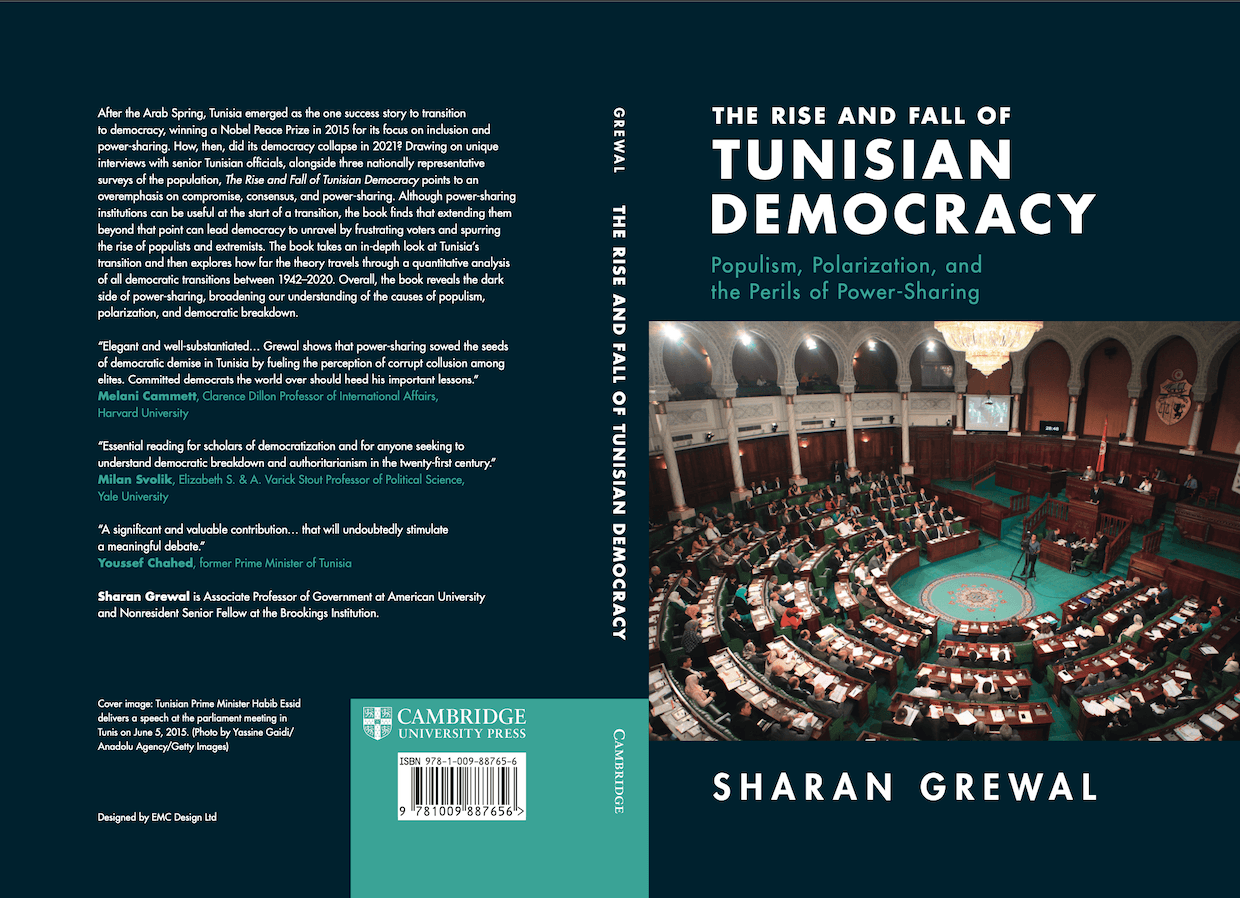
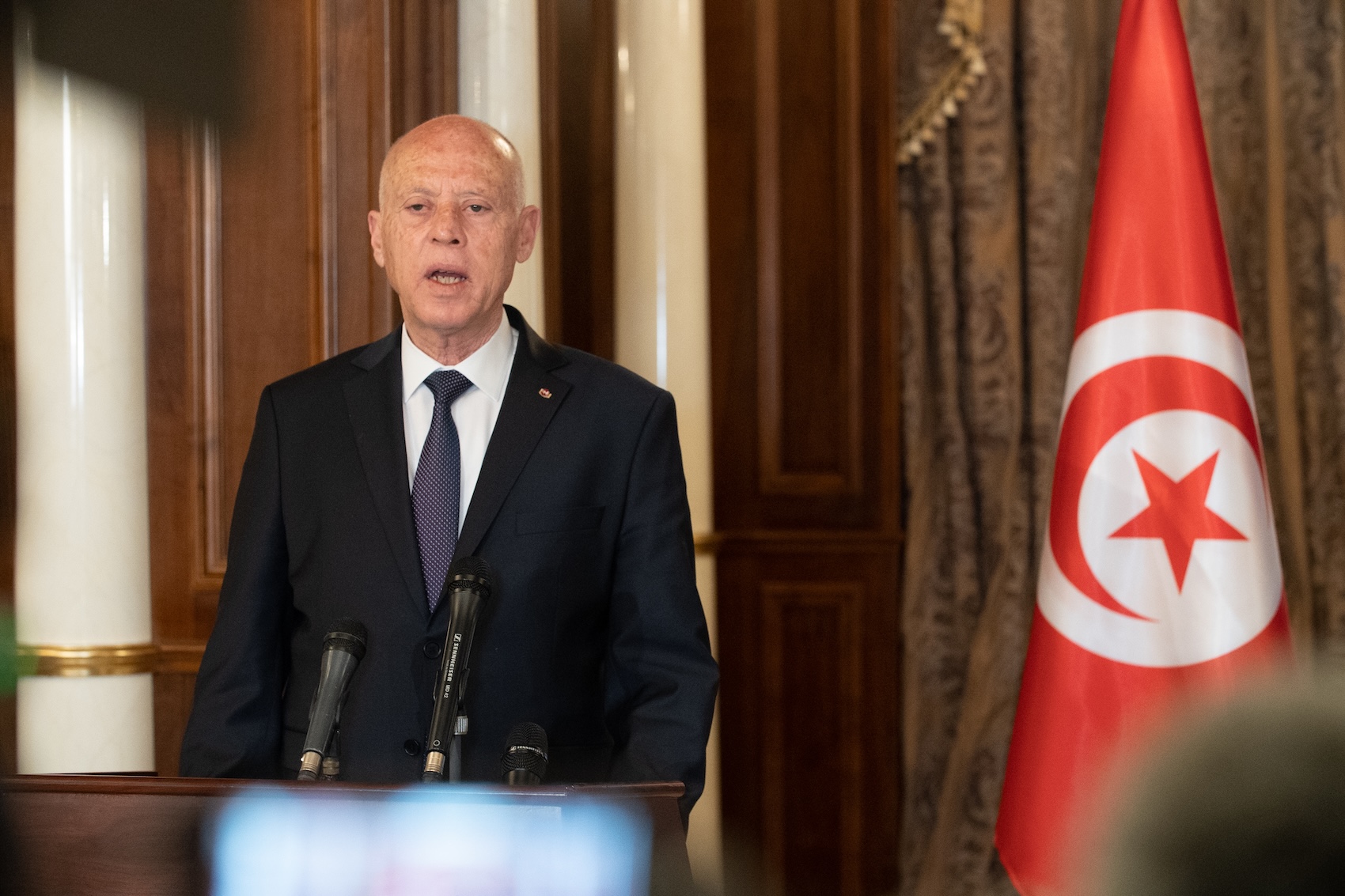
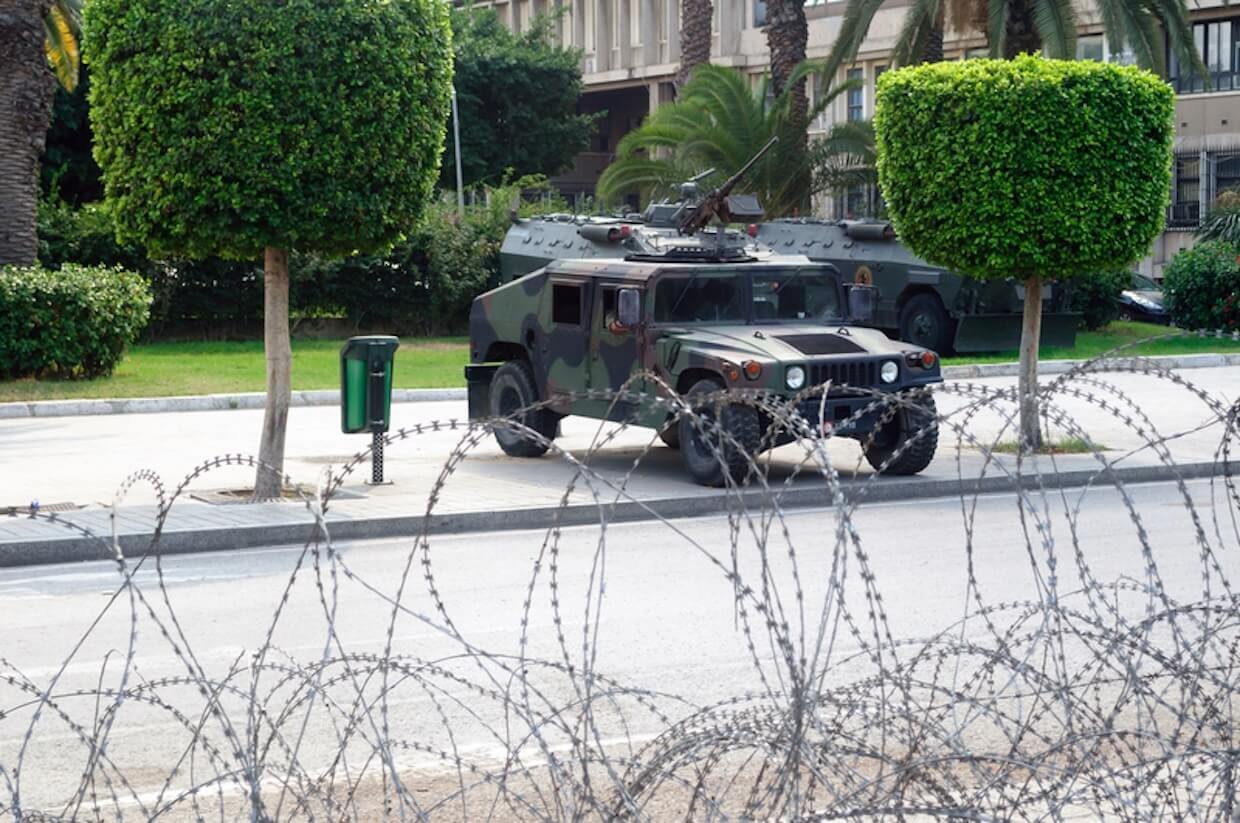
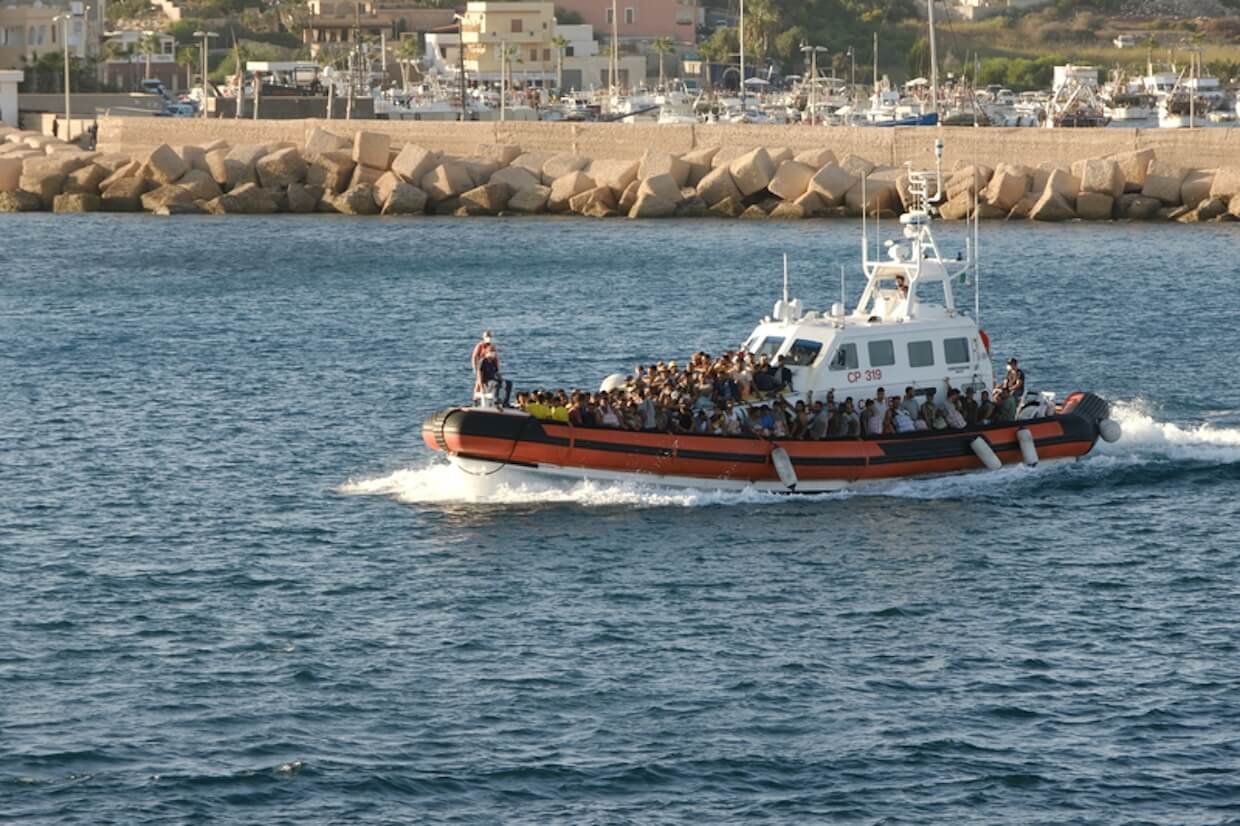


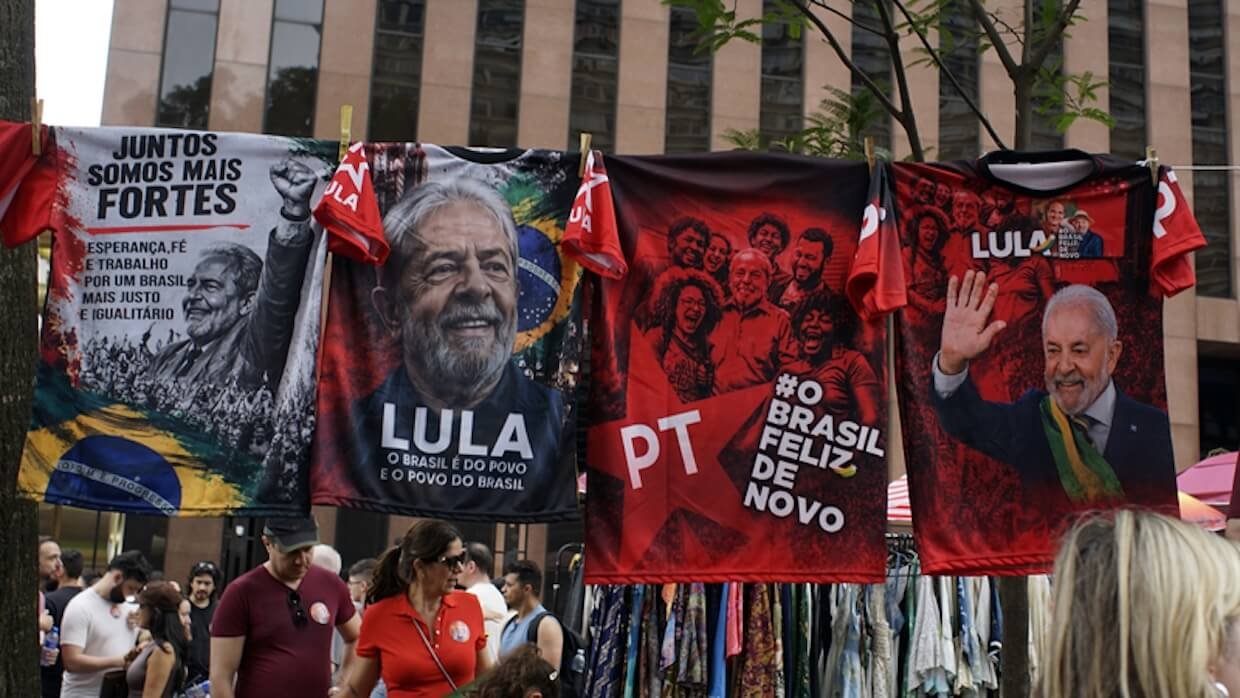
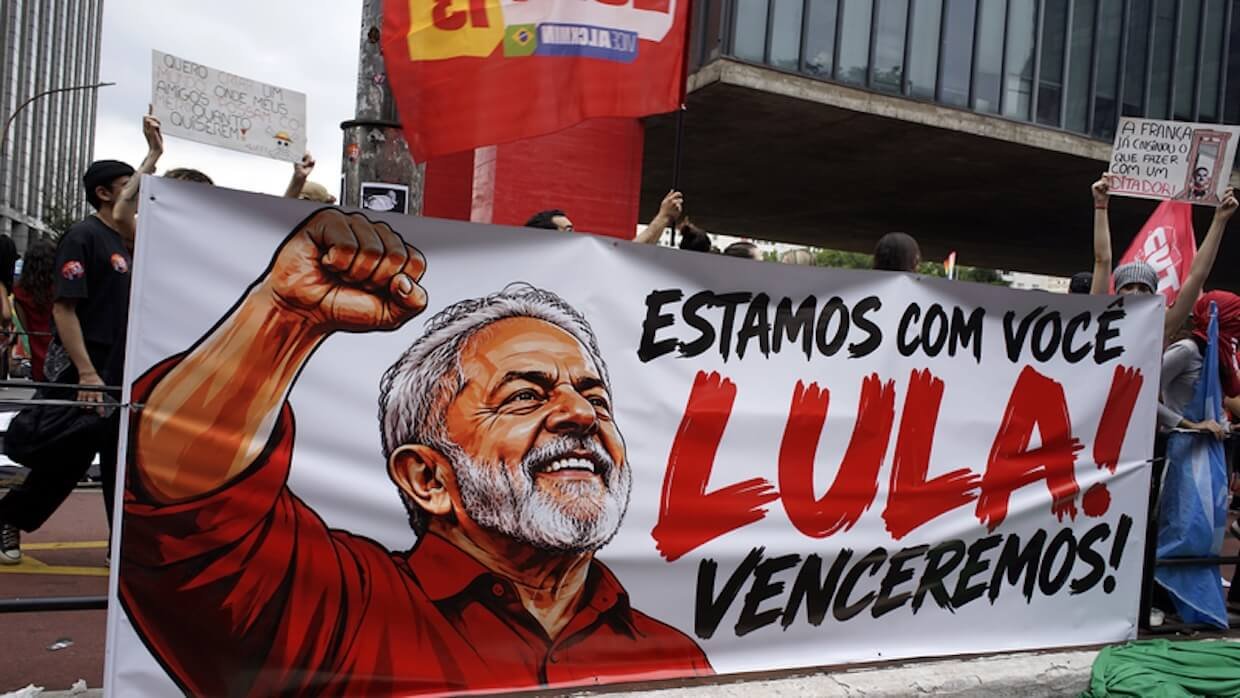
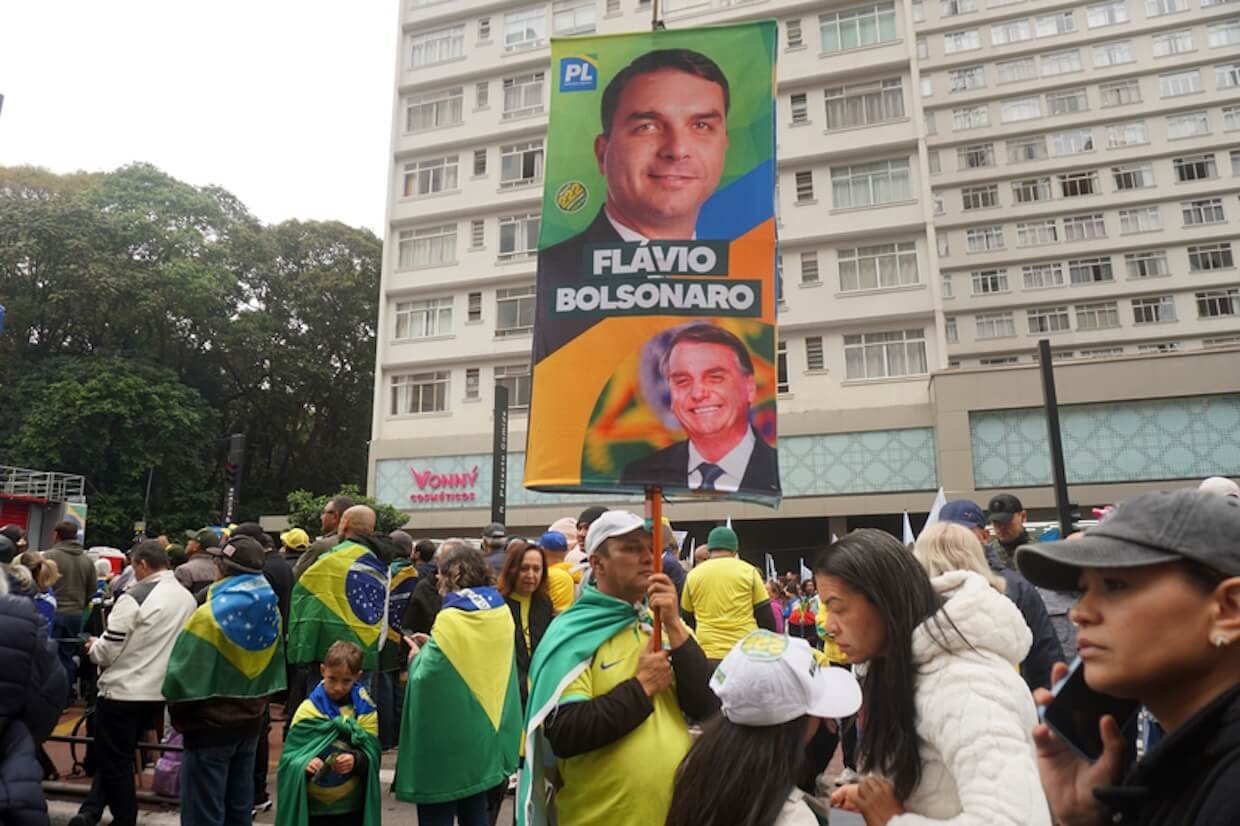
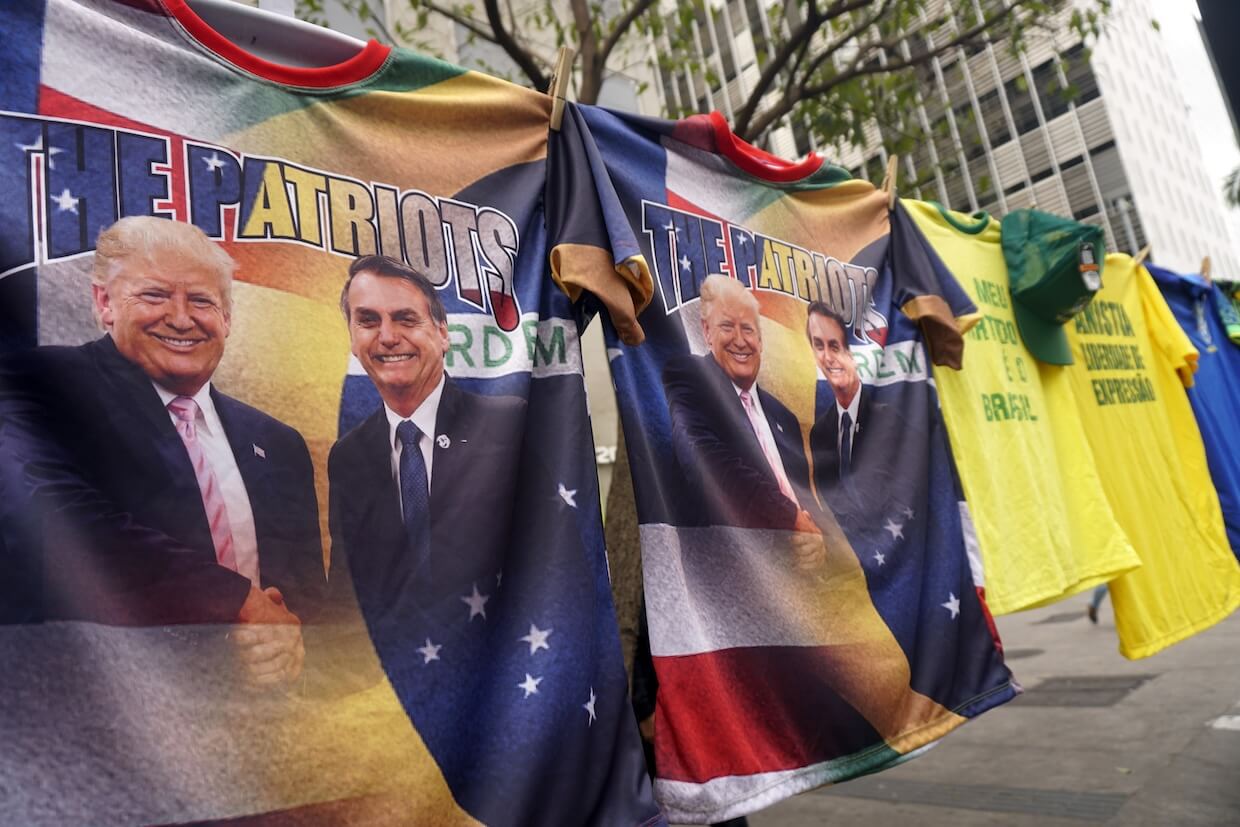

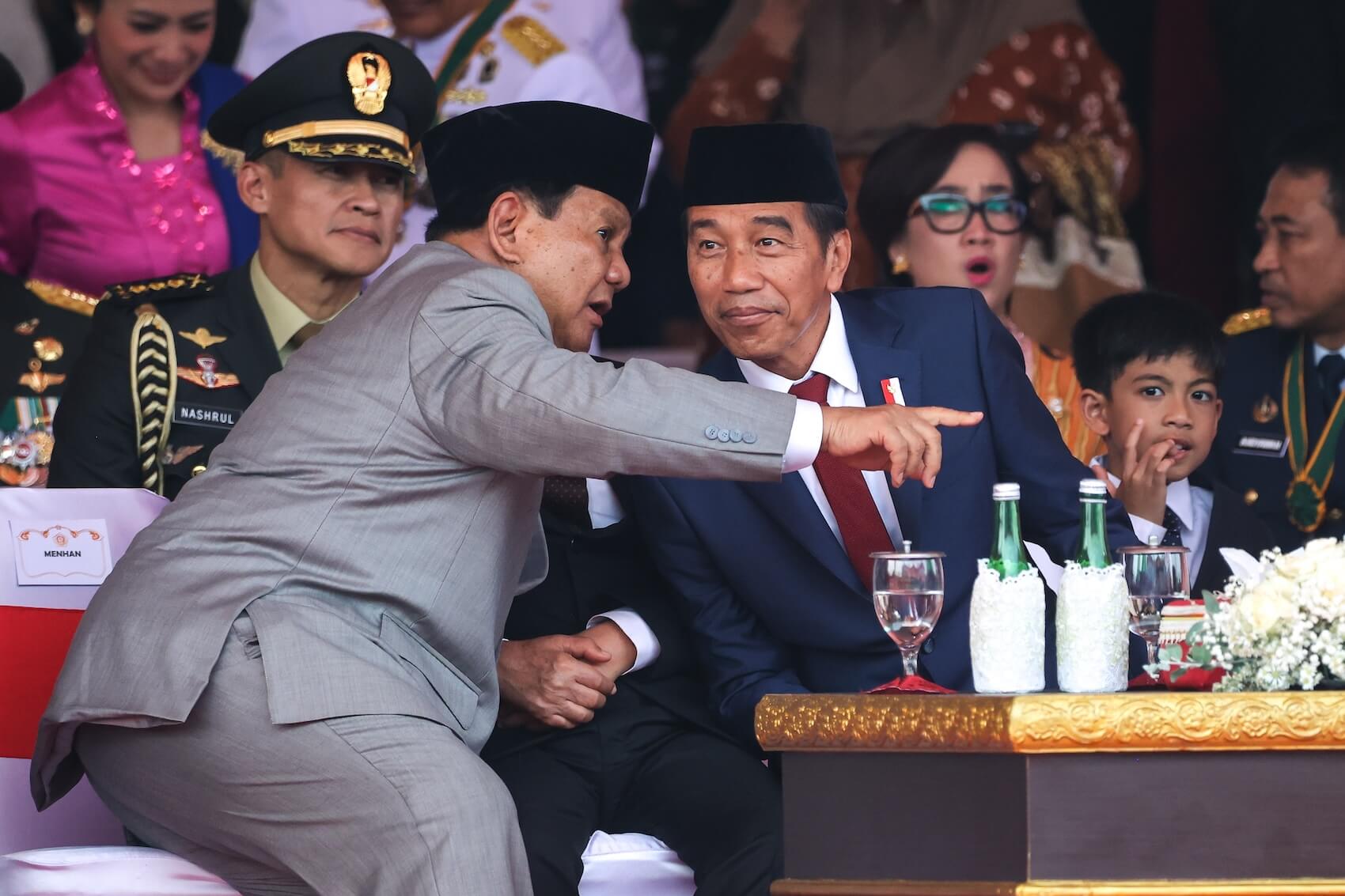
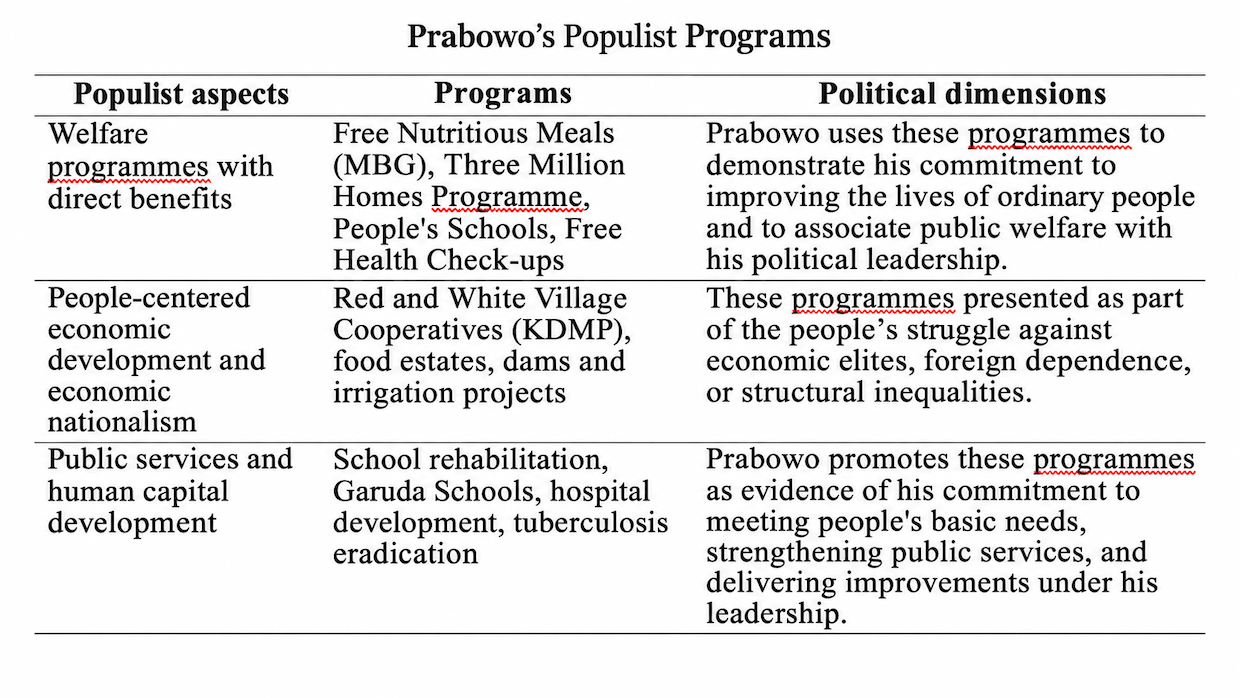 These expensive programmes have also raised concerns about increasing pressure on Indonesia’s state budget (Adhinegara, 2026). By October 2026, the budget deficit had reached Rp379.3 trillion, or 1.47% of GDP, and was projected to reach 2.85% of GDP by the end of the year (Reuters, 2026). But the growing fiscal pressure was also pushed by rising energy subsidies and other government expenditures (Sulaiman, 2026).