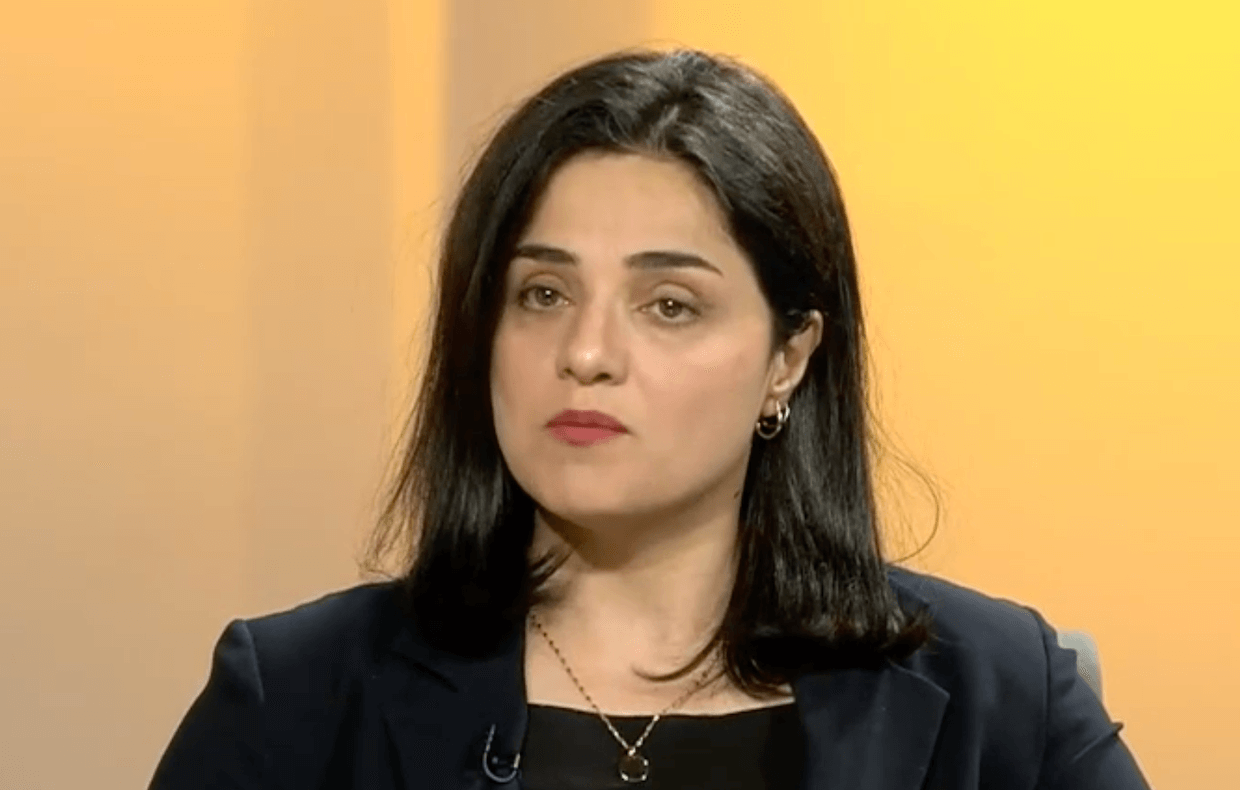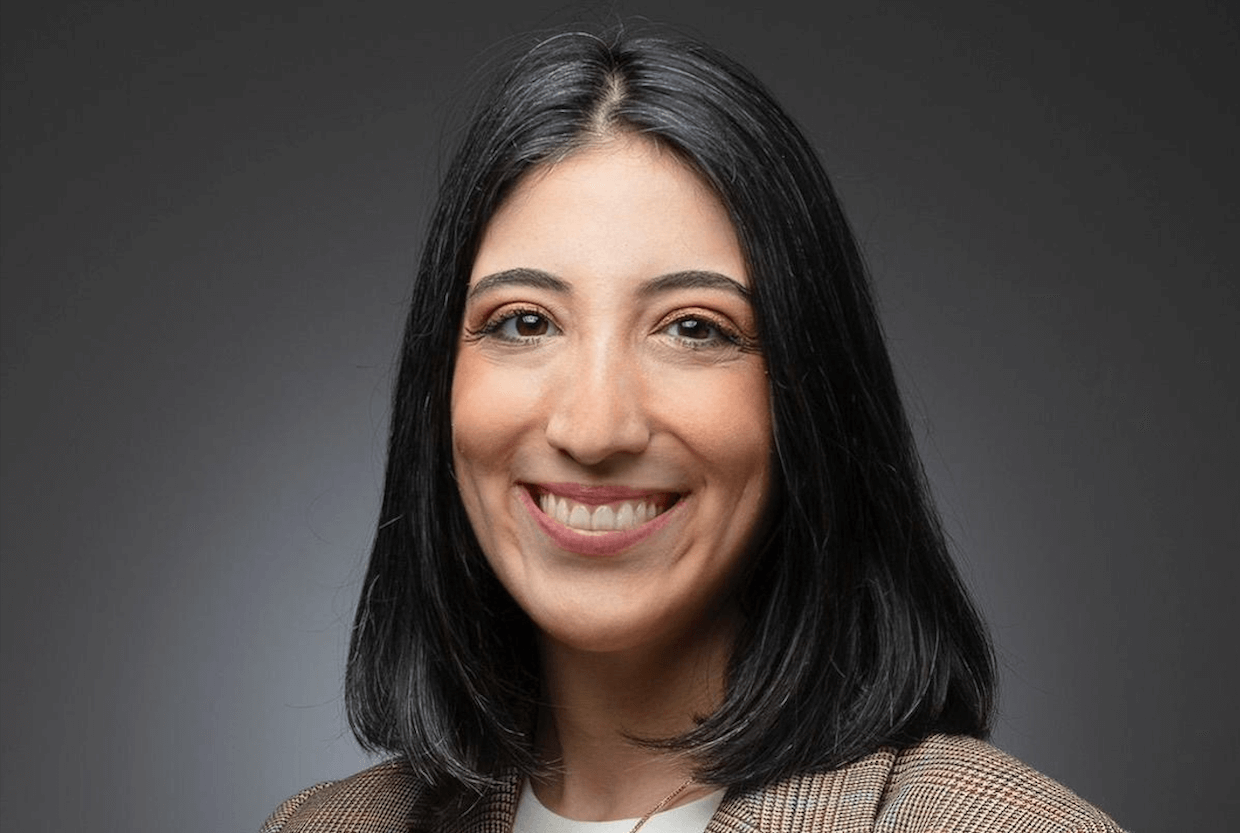
Dr. Mariana Sendra is a  Postdoctoral Researcher in Social and Human Sciences at the University of Deusto.

Dr. Sendra: Milei May See His Victory as a Blank Check to Override Institutions

In a wide-ranging interview with the ECPS, Dr. Mariana Sendra, Postdoctoral Researcher at the University of Deusto, examines the endurance and contradictions of Javier Milei’s populist-neoliberal experiment in Argentina. She interprets Milei’s strong midterm showing as “an endorsement of his government—but not a blank check,” warning that he and his followers “might interpret this electoral support as a green light to override institutional constraints.” Dr. Sendra highlights the exhaustion of Peronism, the influence of US backing, and Milei’s alignment with transnational far-right networks. While his administration remains formally democratic, she cautions that Argentina’s “democratic coexistence” is under pressure from rising intolerance and exclusion, calling on observers to “remain vigilant.”

Interview by Selcuk Gultasli

In the wake of Argentina’s pivotal midterm elections—widely regarded as a referendum on President Javier Milei’s two years in office—Dr. Mariana Sendra, Postdoctoral Researcher in Social and Human Sciences at the University of Deusto, offers a penetrating analysis of Argentina’s evolving political landscape in her interview with the European Center for Populism Studies (ECPS).

Dr. Sendra explains that Milei’s strong electoral performance, with La Libertad Avanza securing over 40 percent of the national vote, can be seen as “an endorsement of Milei’s government and of the future reforms that at least part of society considers necessary.” Yet, she cautions, “this is not, of course, a blank check for Milei.” According to her, many voters sought to avert economic instability following US Treasury Secretary Scott Bessent’s suggestion that Washington’s financial support might be withdrawn if Milei performed poorly.

In assessing the opposition’s weakness, Dr. Sendra highlights the exhaustion of Peronism and its credibility crisis. After years of alternating rule and recurring scandals, “the movement does not have the legitimacy to point out Milei’s own mistakes,” she notes, arguing that “people simply do not see them as a credible alternative.”

The interview delves into Milei’s fusion of radical market liberalism and populist rhetoric, a dynamic Dr. Sendra explored in her co-authored study “Is Milei a Populist?” She calls this a conceptual “puzzle,” since neoliberalism “dismantles the idea of ‘the people’ as a collective subject,” whereas populism depends on it. Milei, she observes, reframes the shrinking of the state “not as a loss, but as a way to make room for individual initiative.”

Addressing Milei’s international alignments, Dr. Sendra underscores the significance of “the Trump factor” and US financial intervention, which she describes as “a form of foreign interference.” However, she distinguishes Milei from nativist far-right leaders, arguing that “his ideology is not nativist” but rooted in a nostalgic vision of Argentina’s 19th-century prosperity.

At the institutional level, Dr. Sendra warns that Milei’s growing concentration of power and confrontational leadership style could erode democratic safeguards. “Milei and his followers might interpret this electoral support as a green light—or a kind of blank check—to override institutional constraints,” she cautions. Still, she notes that Argentinian civil society and political elites retain “the institutional resources to push back if he crosses certain lines.”

Looking ahead, Dr. Sendra predicts that Milei’s model could endure if inflation continues to decline and middle-class sectors remain shielded from austerity. Yet she foresees long-term risks: “His policies will produce inequality and exclusion,” she concludes, “but we will see that in the long term.”

Here is the edited transcript of our interview with Dr. Mariana Sendra, revised for clarity and flow.

Milei’s Victory Is an Endorsement—but Not a Blank Check

Ultra-right-wing Argentine politician Javier Milei during the PASO elections in Buenos Aires, Argentina on August 13, 2023. Photo: Facundo Florit.

Dr. Mariana Sendra, thank you very much for joining our interview series. Let me start right away with the first question: In Sunday’s midterm elections, widely viewed as a de facto referendum on Javier Milei’s two years in power, La Libertad Avanza secured over 40% of the national vote — defying expectations amid deep economic hardship, rising unemployment, and corruption scandals involving top officials, including Milei’s sister. How do you interpret this surprisingly strong performance? Does it reflect an enduring popular mandate for Milei’s shock-therapy reforms, or a more complex realignment within Argentina’s populist political culture?

Dr. Mariana Sendra: I think these results could indeed be interpreted as an endorsement of Milei’s government and of the future reforms that at least part of society considers necessary. But this is not, of course, a blank check for Milei. I believe there is support for certain reforms that people feel are needed, but it was also partly a response to the US government’s support and an attempt by society to prevent economic chaos after election day. There was considerable fear generated both by the government itself and by public statements from US Treasury Secretary Scott Bessent, suggesting that if Milei failed to achieve a strong electoral performance, that support could be withdrawn.

As in every election in Argentina, when the incumbent fails to secure the necessary performance to maintain a solid majority in Congress, market indicators — such as interest rates and the dollar exchange rate — tend to rise, which can trigger economic turmoil. So, yes, I think society voted to prevent that scenario and to give Milei a mandate for the second half of his term, though certainly not a blank check.

Peronism No Longer Seen as a Credible Alternative to Milei’s Rule

Despite economic hardship and declining living standards, the Peronist opposition under Fuerza Patria failed to convert public discontent into electoral gains, securing barely a third of the national vote. How do you explain the opposition’s limited capacity to mobilize against Milei’s populist-neoliberal project? Does this signal an ideological exhaustion within traditional Peronism, or a broader crisis of progressive representation in Argentina?

Dr. Mariana Sendra: The poor results of Peronism — around 30% of the vote — can be explained by the fact that, even though they are now in opposition, there is a certain exhaustion among the people. Peronism governed for 12 years under the Kirchners’ administrations, then there was a short alternation with Macri in 2015, and they returned to power in 2019.

The memory of that last administration is still very fresh. It’s important to remember that they were the ones managing the pandemic, and that period left a very negative mark. There were serious mistakes. Even though they did well in some aspects of pandemic management, there were symbolic failures that deeply affected public perception — for example, the VIP vaccination scandal and the president himself breaking lockdown rules within the official residence.

Additionally, by the end of that government, Argentina was on the verge of hyperinflation. In this election, moreover, Peronism did not present new faces, new candidates, or new ideas.

We should also not forget that the movement is still burdened by corruption scandals. Cristina Fernández de Kirchner was recently sentenced to house arrest because of such allegations. So, right now, Peronism as a party and as a movement lacks the credibility to point out Milei’s own mistakes and corruption scandals, because people simply do not see them as a credible alternative. So, yes, that would be the explanation for Peronism’s weakness in opposition.

Washington’s $40 Billion Bailout Gave Milei a Crucial Boost

Argentine peso banknotes in various denominations. Photo: Tetiana Chernykova.

To what extent did Donald Trump’s $40 billion bailout and open endorsement shape the electoral outcome? Do you see this as a case of foreign populist interference or a new model of transnational illiberal collaboration?

Dr. Mariana Sendra: The Trump factor and the bailout were definitely significant. It can certainly be seen as a form of foreign interference. It’s worth noting that this kind of US involvement in Argentina’s domestic politics has only one precedent in the country’s history — in 1945, during Perón’s re-election campaign. But never before had Washington shown such explicit support for a candidate.

By mid-October, the mood within the government was rather pessimistic because of the corruption scandals, the economic recession, and growing public discontent. But everything shifted — or at least partially shifted — after Milei’s visit to the White House, when Trump openly announced a $20 billion financial assistance package, which was, of course, conditional on Milei winning the election.

As I mentioned earlier, the message of “Milei or economic chaos” really resonated with parts of society. Washington’s support also had a tangible impact: it helped stabilize the currency and prevented the dollar from skyrocketing in the final days before the vote. So yes, it had a significant effect and was indeed perceived as a form of foreign interference in Argentina’s domestic politics.

Reconciling Neoliberalism and Populism Remains a Conceptual Puzzle

In your recent work on “Is Milei a Populist?”, you explore the hybridization between libertarian economics and populist discourse. How does Milei reconcile anti-statist neoliberalism with the populist logic of representing “the people” against “the elite”?

Dr. Mariana Sendra: This is a puzzle in my research, which I co-authored with Hugo Marco Marne, and one that we have not yet fully solved, because we need to conduct further research incorporating other cases like Milei. But of course, if we conceive populism as a unique set of ideas where the homogeneity of “the people” is a crucial element, this makes us wonder to what extent neoliberalism and populism can actually be compatible.

Neoliberalism, as we know, is committed to dismantling the idea of “the people,” understood as a form of collective subjectivity that interferes with the natural order created by the market. So, when Milei was a challenger, during his presidential campaign, he occasionally referred to the will of the majority and romanticized the idea of “good Argentinians.” For him, “good Argentinians” are those who are earnest, hardworking, and have been harmed by la casta — the political elites.

However, the key point is that Milei doesn’t try to speak to “the people” as a single or homogeneous group. Even when he romanticizes “good Argentinians,” he does not consistently apply this strategy. In the Argentinian context, addressing “the people” would mean engaging especially with the low-income sectors and explaining why public services are being cut and why they are not benefiting from his policies — which is very difficult.

So, how does he resolve this tension? He tries to frame the reduction of public services not as a loss, but as a way to make room for individual initiative — for people’s effort, their own income, and their personal tools and abilities. His argument is that the state has mismanaged scarcity, and therefore it should be reduced in order to return power and resources to individuals rather than to inefficient bureaucracies.

Each Country Is Now Pursuing Its Own Survival Strategy

Can Milei’s “chainsaw” policies—mass privatization, deregulation, and fiscal shock therapy—be understood as a continuation of the neoliberal wave in Latin America, or do they constitute a qualitatively new populist-neoliberal synthesis?

Dr. Mariana Sendra: Honestly, I wouldn’t say that these policies, even if they are fully implemented, can be understood as a new neoliberal wave in Latin America. In my view, the regional context today doesn’t work like that — it no longer operates in waves or cycles as it once did. For example, in the 1990s there was a clear regional turn toward neoliberalism, and in the 2000s we saw the so-called pink tide. Back then, there was a certain degree of coordination among governments across the region, but that is no longer the case.

Today, each country is more or less trying to survive on its own, pursuing its own domestic strategy. Political systems or governments swing to the left or to the right, but not in a coordinated pattern. Some countries seek to maintain alignment with the United States, while others deepen their trade and economic ties with China.

In Milei’s case, yes, there is a clear ideological alignment with the US and, of course, with the broader global far-right current. But I would be cautious about calling this a neoliberal wave. We’ll have to see what happens in places like Chile and Colombia, where the far right is also gaining ground. Still, I don’t see this as part of a regional trend — rather, it reflects the increasingly fragmented and uncoordinated nature of Latin American politics today.

Milei as a Reloaded Version of Menemism

What similarities and divergences do you see between Milei’s governance and earlier populist experiments in the country and region, such as Menem’s market populism or Bolsonaro’s hybrid of neoliberalism and moral authoritarianism?

Dr. Mariana Sendra: Of course, this combination of neoliberalism and populism is not new. In Latin America, we have several examples from the 1990s, such as Fujimori in Peru, Collor de Mello in Brazil, and Menem in Argentina — and of course, more contemporary examples like Bolsonaro in Brazil.

The thing with those populist leaders in the 1990s was that there was also a deep economic crisis at the end of the 1980s. These leaders managed to win elections by blaming the elite for the country’s dire situation and by claiming that the people were being robbed — though each framed that narrative differently.

However, the main divergence I see between Milei and Menem — because Milei is, in a sense, a reloaded version of Menemism — is that Menem, at the time, did not develop clear programmatic stances on how to confront the economic crisis. He never really said what he was going to do; in fact, he promised some highly redistributive policies and then completely reversed course once in office.

That, for me, as an observer of Argentinian politics, is very striking. This is the first time that a politician openly announces massive cuts and austerity measures during a campaign, wins the election, implements exactly what he promised, displays even a certain cruelty toward those suffering from these cuts — and still manages to retain popular support, at least among part of the electorate.

Of course, the electorate is quite heterogeneous, and we should carefully analyze the distribution of votes by sector, since not all groups are being equally affected by the cuts. Some sectors are actually benefiting from Milei’s policies. But there are still many people willing to endorse him because they have been promised change. Unlike many leaders in the 1990s, this form of populism does not conceal the magnitude of the sacrifice that society will need to make to achieve those changes — and that, for me, is truly remarkable.

Milei’s Neoliberalism Sets Him Apart from Protectionist Peers

The American flag and the Argentinian flag are both made from textures. Photo: Dreamstime.

The ideological and financial linkages between Milei, Trump, Elon Musk, and European far-right actors like Giorgia Meloni or Nigel Farage suggest a coordinated illiberal front. How should scholars conceptualize these transnational populist networks?

Dr. Mariana Sendra: What really connects all these leaders you’ve mentioned is their discursive irreverence — this deliberate rejection, at the rhetorical level, of what is considered, in their terms, politically correct. They employ highly extreme rhetoric when talking about minorities, for example, or when addressing the major challenges the world is facing today.

We are living globally through a time of enormous change — demographic, technological, productive, and environmental. What these leaders do is to offer citizens a sense of orientation in this changing and uncertain world, where it increasingly feels like future generations will have fewer opportunities compared to their parents, in terms of stability or prosperity. They position themselves against those they portray as decision-makers — those they identify as responsible for these transformations — although who is held responsible varies depending on each national context.

At the same time, Milei’s case is quite particular within the Argentinian economic context, which is extremely fragile, marked by economic crisis and chronic inflation. So, his situation is very specific. Ideologically speaking, in the economic realm, he is almost the opposite of what we see in Trump or Brexit. While those movements lean toward economic protectionism, Milei represents the opposite — he embodies an open economy and proposes an uncompromising neoliberalism.

‘Make Argentina Great Again’ Evokes a 19th-Century Nostalgia

Do you see the US bailout and Milei’s pro-Washington orientation as a reconfiguration of dependency—what some have called “illiberal neoliberalism”—in which populist regimes rely on global capital while claiming nationalist sovereignty? How do Milei’s symbolic gestures—such as echoing “Make Argentina Great Again”—fit into the global grammar of far-right populist performativity?

Dr. Mariana Sendra: This is actually a very good question, because Milei’s ideology is not nativist, unlike the radical right in Europe or the US. This means that he’s not trying to embody the idea of sovereignty or defend a national community against an external threat—whether that threat comes from immigration or from the influence of supranational institutions like the European Union over nation-states.

So, when Milei speaks of “Make Argentina Great Again,” I think he’s invoking a nostalgic vision of Argentina that we can trace back to the 19th century, when the country was in the early stages of nation-building. At that time, Argentina was seen as a land of opportunity, welcoming thousands of migrants seeking economic advancement. That was a long time ago, and Milei evokes that period—but not in the nativist way or with the nationalist vision of sovereignty that defines much of the radical right in Europe or the US.

We can identify this nostalgic tone, which is characteristic of right-wing populism, but it’s not the same—it’s not expressed in the same way.

Despite His Style, Milei Still Operates Within Democratic Boundaries

Inauguration ceremony of President Javier Milei at the National Congress in Buenos Aires, Argentina, on December 10, 2023. Photo: Fabian Alberto De Ciria.

Given the concentration of power around Milei and his sister Karina, how do you interpret the institutional dynamics of his presidency? Are we witnessing a shift from populist mobilization toward personalized authoritarianism?

Dr. Mariana Sendra: So far in his administration, Milei has shown some tendencies that push against the rule of law. For instance, there have been attempts to censor the media by prohibiting the publication of material related to the corruption scandal involving his sister, or through the excessive use of presidential vetoes after Parliament approved certain laws to assist people suffering from the financial and fiscal cuts.

That said, Milei is still operating within the boundaries of democratic rule. And now, with these results—having increased his representation from 37 seats to 80 or 82 in the Chamber of Deputies, and from about 8 seats in the Senate to 16 or 18—and with the additional seats that could come from other center-right parties, such as PRO, which holds 24 seats, he could potentially reach a quorum and build a majority in Parliament to advance key reforms.

In that sense, I would say the government is not necessarily moving toward personalized authoritarianism, because now he has the institutional numbers to pursue reforms through the legislative process. However, because of his eccentric and confrontational leadership style, there is reason for concern. Milei and his followers might interpret this electoral support as a green light—or a kind of blank check—to override institutional constraints. So yes, we should remain vigilant.

Argentina’s Institutions and Elites Still Have the Power to Push Back

The judiciary, media, and opposition have faced increasing pressure under Milei. What risks does this pose to Argentina’s democratic resilience compared with other Latin American cases, such as El Salvador under Bukele or Brazil under Bolsonaro?

Dr. Mariana Sendra: On this point, I would say Milei’s influence over the judiciary or the media is much smaller than many people think. It’s true that now, in his cabinet, there are people linked to economic interests, and he’s aligned with Trump, who in many ways represents corporate interests and global financial elites. But in Milei’s case, given his background, I see him more as an outsider who is being used as a vehicle for these interests rather than a political actor with the capacity to influence major power structures.

It’s true that he has recently adopted a very aggressive discourse toward the press whenever he’s criticized. But we can see that even in the past few days, as Argentina has begun facing several economic problems, such as unemployment and new corruption scandals around his party, the main media outlets in the country—the more hegemonic ones—that once treated him favorably have now started to openly criticize Milei.

So, I don’t think his attacks on the media or the opposition will go much further than rhetoric, in my opinion. And of course, this is connected to the fact that Argentinian society and traditional political elites are deeply empowered when it comes to rights and institutional resources to push back if Milei were to cross certain lines.

Economic Faith Turns Into Political Intolerance Among Milei’s Base

In your co-authored work on “Presidential Approval, Tolerant Attitudes and Economic Performance,” you examine how tolerance mediates citizens’ evaluation of executives. How might this framework help explain Milei’s endurance amid economic hardship?

Dr. Mariana Sendra: Indeed, what we are seeing with these results is that those who rate the president’s performance positively—who approve of his leadership and feel he’s doing a good job—continue to support him even when the economic indicators are not particularly strong in areas such as unemployment, consumption levels, or purchasing power. Inflation is coming down, that is true, but objectively speaking, the government’s overall economic performance is far from solid.

That said, this group of people continues to support him. But even beyond their support, they are also starting to show, even before the election, certain intolerant attitudes toward those who disagree with Milei or who do not approve of the government’s performance. This is very dangerous and is highly visible on social media, but also in the streets and daily interactions.

There is a growing tendency among his supporters to delegitimize or discredit anyone who thinks differently. For example, anyone who suggests that the state should take some responsibility in certain key areas is immediately labeled a communist or a collectivist, and their views are dismissed. Even more dangerous is the notion that such ideas should not belong in the country or should be eliminated. That kind of reaction reflects an increasingly intolerant attitude, and it endangers what we call Argentina’s democratic coexistence.

The Social Costs of Milei’s Model Will Become Visible Over Time

And finally, Dr. Sendra, looking ahead, do you foresee Milei’s Argentina as a durable model for the global far right—or as another short-lived experiment in authoritarian neoliberal populism destined for crisis and collapse?

Dr. Mariana Sendra: That’s a difficult question to answer. My view is that if, over the next two years—until 2027—the government manages to bring inflation under control to the point where it is no longer perceived as the major problem, and if the sectors currently benefiting from its policies, or at least those with stable employment who are not being severely affected, remain a majority compared to those who are losing out, it is quite possible that Milei could be re-elected for another term.

However, I also think that the consequences of his policies will become more visible in the long run. Perhaps over the next five years or so, we are likely to start seeing their structural weaknesses—particularly the social costs for segments of the population that are now being excluded from Milei’s model. That could eventually trigger social unrest, manifested in protests and mobilizations. And that, of course, will have an impact. I think Milei’s policies will produce inequality and exclusion, but we will see that in the long term.

Untold

UNTOLD Europe: Uncovering Neglected Truths and Outlining Legacies of Decolonization

The European Center for Populism Studies (ECPS) is proud to be part of UNTOLD Europe – Uncovering Neglected Truths and Outlining Legacies of Decolonization, an ambitious EU-funded project coordinated by Oxfam Intermón under the CERV European Remembrance Programme. The initiative brings together a dynamic consortium of European partners– including EquinoxInnovatoAspichiQualia, and ECPS – to examine how the legacies of colonialism continue to shape contemporary European societies, policies, and digital environments.

Rethinking Europe through a Decolonial Lens

At its core, UNTOLD Europe seeks to analyse and raise awareness of how Europe’s colonial past continues to influence its present through public policy, dominant narratives, and the digital sphere. The project recognises that colonialism, slavery, and imperialism have left deep marks on global and European histories, entrenching intersecting forms of discrimination that persist in structures of governance, social hierarchies, and cultural representations.

Through this lens, UNTOLD Europe aligns with the European Commission’s priority to foster remembrance, inclusion, and understanding by exploring the relationship between migration, decolonization, and multicultural European societies. It encourages European citizens to engage critically with their shared past, reflect on the historical roots of inequality, and imagine more just and inclusive futures.

The 2RB Model: Recognizing, Retelling, Balancing

The project is structured around a unique Recognizing–Retelling–Balancing (2RB) model, designed to connect historical awareness with present-day transformation:

  1. Recognizing Colonial Public Policies: Developing tools and spaces to identify the colonial legacies embedded in European public policies and practices, especially in fields such as migration, international cooperation, and development.
  2. Retelling Narratives of Europe: Promoting decolonial, anti-racist, gendered, and transformative narratives—particularly concerning migration and belonging—to challenge existing stereotypes and foster inclusive public debates.
  3. Balancing the Digital World: Generating critical insights into how digital technologies and algorithms reproduce racial and gendered inequalities, and how Europe can pursue a more just, equitable, and non-discriminatory digital future.

Across these three dimensions, the consortium will engage diverse groups—activists, scholars, artists, journalists, and young people—to co-create knowledge and drive change through research, artistic practices, and civic dialogue.

Innovative Methodologies and Participatory Approaches

UNTOLD Europe employs participatory and creative methodologies to bridge the gap between academic research and social action. These include action research, theatre and artistic residencies, cine-forums, courageous conversations, virtual reality storytelling, and critical community-building workshops. Such approaches invite participants not only to reflect on Europe’s colonial past but also to collaboratively envision decolonial futures.

These formats are deliberately designed to connect the local with the regional, fostering transnational learning across Spain, Belgium, Greece, Ukraine, and Slovenia. Each country offers distinct historical experiences and contemporary challenges, enriching the project’s comparative and inclusive European perspective.

ECPS’s Role in the Project

As part of the consortium, the European Center for Populism Studies contributes its analytical expertise on populism, migration, and identity politics. ECPS plays a key role in linking decolonial and anti-racist narratives with contemporary populist discourse, exploring how colonial legacies continue to inform political rhetoric and public sentiment around migration and belonging in Europe.

Through its scholarly network, ECPS will facilitate dialogues among academics, policymakers, and civil society actors, and will contribute to several work packages focused on narrative transformation, digital coloniality, and policy reflection. ECPS’s involvement also underscores its commitment to democratic pluralism, human rights, and evidence-based policymaking—values that are central to the UNTOLD Europe mission.

Building Awareness and Lasting Impact

The project aims to reach and benefit more than 180,000 European residents across its participating countries. By engaging artists, activists, scholars, and young citizens, UNTOLD Europe strives to cultivate a more reflective and inclusive European public sphere—one that acknowledges the continent’s complex histories and reimagines its role in a globalized, postcolonial world.

Ultimately, UNTOLD Europe is not only a remembrance project but also a transformative process: it seeks to recognize historical injustices, retell collective stories from new perspectives, and balance the inequalities embedded in our digital and political systems. By combining research, art, and activism, it aspires to build bridges between past and present, memory and policy, and between the ideals and realities of Europe.

Gijs Schumacher1

Professor Schumacher: The Netherlands Is Moving into a Post-Populist Era 

In an interview with the ECPS, Professor Gijs Schumacher of the University of Amsterdam argues that Dutch politics may be entering a “post-populist era.” As the Netherlands approaches yet another general election, Professor Schumacher highlights growing fragmentation across left, right, and radical-right blocs, noting that “many voters no longer perceive meaningful differences between centrist parties.” While populism’s anti-establishment appeal remains psychologically powerful, he observes that this sentiment is now spreading “more evenly across the political spectrum.” According to Professor Schumacher, the Netherlands’ long tradition of elite cooperation could allow a shift toward “pragmatic governance,” provided that “the mainstream left and right tone down their toxic rhetoric.” The post-populist phase, he suggests, reflects not decline but recalibration.

Interview by Selcuk Gultasli

As the Netherlands heads toward its third general election in just five years, the country’s political landscape appears more fragmented and volatile than ever. To understand the deeper psychological and structural undercurrents behind this instability, the European Center for Populism Studies (ECPS) spoke with Professor Gijs Schumacher, Professor of Political Psychology in the Department of Political Science at the University of Amsterdam and founding co-director of the Hot Politics Lab. In this wide-ranging conversation, Professor Schumacher reflects on the fragmentation of Dutch politics, the endurance of populist discourse, and what he calls the emergence of a “post-populist era.”

According to Professor Schumacher, the defining feature of contemporary Dutch politics is fragmentation across three major blocs — the left, the right, and the radical right. Yet despite the proliferation of parties, he notes that “people don’t travel much between blocs … the only real possibility for governments is through the middle.” This narrowing of viable coalitional options, he argues, leaves voters disillusioned and searching for alternatives: “Many voters no longer perceive meaningful differences between these centrist parties … and they often end up supporting either other parties within the same bloc or more radical alternatives.”

Populism, Professor Schumacher emphasizes, remains central to understanding this dynamic — particularly its anti-establishment appeal. He observes that this instinct is deeply rooted in human psychology: “It’s a powerful psychological tendency to be skeptical of leadership — to doubt whether those in power are there for your good or their own fortune.” However, Professor Schumacher points out that the Dutch left has largely abandoned its own anti-establishment roots, creating a political vacuum that figures like Geert Wilders have exploited: “Historically, the left had a strong anti-establishment agenda … but in opposing the populist radical right, they’ve completely muted that stance.”

Despite this, Professor Schumacher does not foresee a permanent populist capture of Dutch democracy. Instead, he suggests the country may be entering what he calls a “post-populist era” — a phase in which anti-establishment politics no longer belongs exclusively to the radical right but becomes “more evenly distributed across the political spectrum.” In his words: “The Netherlands has a long history of deep affective polarization — even though we didn’t use that term at the time — but it was never a major problem because, at the elite level, there was greater cooperation. The mainstream left and right don’t need to fight each other; there’s little to gain from it. If their rhetoric were less toxic, there would be no real barrier to a return to pragmatic governance.”

For Professor Schumacher, this shift signals neither a triumph of populism nor its total eclipse but rather a recalibration — a search for equilibrium in a political system that remains both fragmented and remarkably resilient.

Here is the edited transcript of our interview with Professor Gijs Schumacher, revised for clarity and flow.

RichardPildes

Professor Pildes: Effective Government Is the Forgotten Pillar of Democracy

In an interview with the ECPS, Professor Richard H. Pildes, one of America’s leading constitutional scholars, warns that democracy’s survival depends not only on equality and participation but also on its capacity to deliver effective governance. “Democracy,” he says, “rests on two simple promises: equal voice and better lives. When governments fail in that second task, it profoundly undermines democracy itself.” Professor Pildes argues that excessive focus on participation, coupled with digital fragmentation and weakened political parties, have eroded governments’ ability to act decisively. The rise of “free-agent politicians,” algorithmic outrage, and social media-driven polarization, he cautions, threaten to make democracy less capable of solving problems. “Effective government,” Professor Pildes insists, “is the forgotten pillar of democracy.”

Interview by Selcuk Gultasli

In a wide-ranging interview with the European Center for Populism Studies (ECPS), Professor Richard H. Pildes, the Sudler Family Professor of Constitutional Law at New York University School of Law and one of the foremost scholars of constitutional and democratic theory, reflects on one of the most neglected yet urgent dimensions of democratic life: the capacity to govern effectively.

Professor Pildes argues that modern democracies have grown dangerously unbalanced by emphasizing participation and representation—the “inputs” of democracy—while neglecting its “outputs,” namely the ability of governments to deliver results that improve citizens’ lives. As he puts it, “I often think of democracy, and what justifies it, as resting on two simple promises. First, democracy promises to treat citizens as equals—with equal standing, equal voice, and equal moral worth. Second, it promises to make their lives better.” When democratic governments fail at that second task, he warns, “it profoundly undermines the justification and purpose of democracy itself.”

Throughout the interview, Professor Pildes develops this theme of effective government as democracy’s forgotten pillar, linking it to rising polarization, social media dynamics, and the fragmentation of political authority. “Neglecting the value of effective government,” he observes, “is one of the greatest challenges of our time. Perhaps the fundamental challenge for contemporary democracies is to demonstrate that they can once again deliver for their citizens.”

Professor Pildes identifies digital fragmentation as one of the defining forces reshaping democratic governance. The communications revolution, he explains, has made it “incredibly easy to mobilize opposition to whatever government is doing,” eroding the stability of political institutions and making compromise more elusive. Social media and algorithmic amplification have “flattened political authority,” giving rise to spontaneous, leaderless movements but also fueling paralysis in democratic decision-making.

He also traces how the decline of strong political parties has weakened democracy’s capacity to build coalitions and sustain coherent governance. Whereas parties once mediated between citizens and the state, today’s hyper-pluralist media ecosystems and privatized campaign finance systems have encouraged the rise of “free-agent politicians”—performative figures who bypass party structures to cultivate online followings and raise funds directly from polarized small donors.

Looking ahead, Professor Pildes cautions that the structural fragmentation produced by digital media cannot be easily reversed: “The genie is out; you can’t really go back.” Yet, he insists that democracies must learn to manage these forces more effectively if they are to regain public trust and legitimacy. “Democracy,” he concludes, “must prove that it can still deliver—by governing effectively, addressing citizens’ needs, and meeting the great challenges of our time.”

Here is the edited transcript of our interview with Professor Richard H. Pildes, revised for clarity and flow.

Professor Gijs Schumacher is a Professor of Political Psychology in the Department of Political Science at the University of Amsterdam and founding co-director of the Hot Politics Lab.

Professor Schumacher: The Netherlands Is Moving into a Post-Populist Era 

In an interview with the ECPS, Professor Gijs Schumacher of the University of Amsterdam argues that Dutch politics may be entering a “post-populist era.” As the Netherlands approaches yet another general election, Professor Schumacher highlights growing fragmentation across left, right, and radical-right blocs, noting that “many voters no longer perceive meaningful differences between centrist parties.” While populism’s anti-establishment appeal remains psychologically powerful, he observes that this sentiment is now spreading “more evenly across the political spectrum.” According to Professor Schumacher, the Netherlands’ long tradition of elite cooperation could allow a shift toward “pragmatic governance,” provided that “the mainstream left and right tone down their toxic rhetoric.” The post-populist phase, he suggests, reflects not decline but recalibration.

Interview by Selcuk Gultasli

As the Netherlands heads toward its third general election in just five years, the country’s political landscape appears more fragmented and volatile than ever. To understand the deeper psychological and structural undercurrents behind this instability, the European Center for Populism Studies (ECPS) spoke with Professor Gijs Schumacher, Professor of Political Psychology in the Department of Political Science at the University of Amsterdam and founding co-director of the Hot Politics Lab. In this wide-ranging conversation, Professor Schumacher reflects on the fragmentation of Dutch politics, the endurance of populist discourse, and what he calls the emergence of a “post-populist era.”

According to Professor Schumacher, the defining feature of contemporary Dutch politics is fragmentation across three major blocs — the left, the right, and the radical right. Yet despite the proliferation of parties, he notes that “people don’t travel much between blocs … the only real possibility for governments is through the middle.” This narrowing of viable coalitional options, he argues, leaves voters disillusioned and searching for alternatives: “Many voters no longer perceive meaningful differences between these centrist parties … and they often end up supporting either other parties within the same bloc or more radical alternatives.”

Populism, Professor Schumacher emphasizes, remains central to understanding this dynamic — particularly its anti-establishment appeal. He observes that this instinct is deeply rooted in human psychology: “It’s a powerful psychological tendency to be skeptical of leadership — to doubt whether those in power are there for your good or their own fortune.” However, Professor Schumacher points out that the Dutch left has largely abandoned its own anti-establishment roots, creating a political vacuum that figures like Geert Wilders have exploited: “Historically, the left had a strong anti-establishment agenda … but in opposing the populist radical right, they’ve completely muted that stance.”

Despite this, Professor Schumacher does not foresee a permanent populist capture of Dutch democracy. Instead, he suggests the country may be entering what he calls a “post-populist era” — a phase in which anti-establishment politics no longer belongs exclusively to the radical right but becomes “more evenly distributed across the political spectrum.” In his words: “The Netherlands has a long history of deep affective polarization — even though we didn’t use that term at the time — but it was never a major problem because, at the elite level, there was greater cooperation. The mainstream left and right don’t need to fight each other; there’s little to gain from it. If their rhetoric were less toxic, there would be no real barrier to a return to pragmatic governance.”

For Professor Schumacher, this shift signals neither a triumph of populism nor its total eclipse but rather a recalibration — a search for equilibrium in a political system that remains both fragmented and remarkably resilient.

Here is the edited transcript of our interview with Professor Gijs Schumacher, revised for clarity and flow.

Non-Policy Issues Now Matter Much More

Geert Wilders (PVV) in House of Representatives during a debating at the Tweede Kamer on April 5, 2023 in Den Haag, Netherlands. Photo: Jeroen Meuwsen.

Professor Gijs Schumacherthank you very much for joining our interview series. Let me start right away with the first question: As the Netherlands approaches its third general election in just five years, how would you characterize the current political landscape? What structural and psychological factors — fragmentation, voter volatility, or declining partisan loyalty — best explain this ongoing electoral instability?

Professor Gijs Schumacher: The best characterization is indeed fragmentation. If you look at the party system, there are, roughly speaking, three different blocs of parties: the left bloc, the right bloc, and the radical right bloc. The last bloc has grown the most over the past 10 to 20 years, but there’s also a great deal of fluctuation within it.

In fact, there’s a lot of fluctuation across all the blocs. However, on average, people don’t move much between them. In that sense, voters tend to shift from one right-wing party to another, or from one left-wing party to another. Ultimately, the only real possibility for forming governments lies in the middle — between the left and the right.

The problem with that is that many voters no longer perceive meaningful differences between these centrist parties. This frustrates them, and they often end up supporting either other parties within the same bloc or more radical alternatives. Of course, the last government was an exception to this, as it was a right–radical right coalition, but it was so short-lived that, in a sense, it only demonstrated how difficult such a government would be.

If you ask about the psychological characteristics — that’s a very complex question. One key factor is that voter loyalty is very low. In contrast to the 1980s, people identify far less with a particular party and therefore move more easily between them. Voters today are less loyal, which is not necessarily a bad thing; you could also say they’re more critical.

Because there are multiple parties that are ideologically close to each other within each bloc, and because there is competition within blocs, non-policy issues start to matter much more — things like how a particular leader performs in election debates or in the media. Do we like this party because they were in government, or not? These considerations are becoming increasingly important compared to policy-based reasons.

Overall, this calls for a research agenda focused on political psychology — one that specifically studies these non-policy-related factors. I think the leader of D66 put it quite aptly — although I’m not entirely sure whether he meant it ironically — when he said: “Policy is less important; it’s more about the vibe you’re getting with a party.”  That’s exactly the point. But what is this vibe? How can we study it? How can we analyze it?

The PVV Leads a Parade of Dwarfs

Despite Geert Wilders’ authoritarian leadership style and his role in repeated government collapses, the PVV continues to lead in the polls — how do you interpret this enduring voter support, and what does it reveal about Dutch citizens’ tolerance for personalist populism and their affective attachment to strong, anti-establishment leadership?

Professor Gijs Schumacher: Yes, they are the party leading the polls, but it’s basically leading a parade of dwarfs. All the parties are small now. So, the size that the PVV has in the polls — about 30 seats, or 20% of the vote — is actually a very low number for the largest party. I sometimes like to turn it around. I don’t think the question is why the radical right is so large, but why the middle is so small. Because in the middle, the centrist parts of the left-wing and right-wing blocs — there are parties that are very similar. If you added their votes together, they would be much larger than the Freedom Party. It’s just that they choose not to join hands in these elections, and that’s why they end up as the second, third, or fourth party. Now, there’s one footnote to make: for the second time, they are running with a joint list, and also, formally, these parties are on track to merge with each other. Still, there are many other parties they could potentially merge that are ideologically quite close.

Then, more specifically about Wilders. There’s something about populism that is extremely powerful psychologically, and that’s the anti-establishment aspect. There are other things that are also psychologically very powerful about populism, but I want to focus on this one because I think it’s important. An anti-establishment stance is one of the defining features of populism, and this is very firmly rooted in human psychology — to be critical of leadership, skeptical even, doubtful whether the people in power are actually there for your good or for the general good, as opposed to their own personal fortune. That’s a very powerful human psychological tendency, and it’s actually a very good one. It has been an extremely important feature of the survival of humans as groups.

The Left Has Abandoned Its Own Anti-Establishment Agenda

So, the question I want to raise is this: one of the problems of the left and the right blocs — particularly the left-wing bloc — is why they have dropped their own anti-establishment agenda. They have adopted the position of being the power. In the Netherlands, the media continuously speak of the “left-wing media” or the “left-wing church,” as they call it. This “left-wing church” is supposedly so influential, but it doesn’t make any sense — the left barely has a third of the votes. They don’t get more airtime or anything. And the left adopts this narrative, accepting its role as being elitist. That makes for a very strange political dynamic because they’re not the elite, they’re not in government, and they haven’t been in government for a while. They’re not particularly politically powerful. Historically, the left has always had a very strong anti-establishment agenda — for example, critiques of capitalism — and this now seems so muted. In their opposition to populist radical right parties, they have completely abandoned their own anti-establishment stance, and that’s really a pity because it’s a powerful psychological force that really sways voters. Therefore, part of this group of people is really moved by this anti-establishment approach to politics.

Election sign of the Leefbaar Party and statue of its murdered founder, Pim Fortuyn, in Rotterdam, the Netherlands. Photo: André Muller.

Now, the other reason why they face large support is through another mechanism — that’s the more authoritarian, anti-immigrant type of agenda. There’s always been strong support for anti-immigration policies in the Netherlands. In that sense, there’s been absolutely no change since the 1990s. The difference is that political parties are now doing something with it. This already started in 2001 with the rise of Pim Fortuyn, so it’s not new at all. The only new thing is the degree to which mainstream parties are also adopting anti-immigration stances. By doing so, they legitimize the radical right and make it more normal, which also affects voters. The party becomes less tainted, and people become more likely to vote for it.

So, it’s really this mix — on the one hand, the anti-establishment stance, and on the other, authoritarianism — that makes the party popular. But it’s not necessarily the same type of people. It’s the combination of one group that finds the authoritarian route appealing and another group that is in the anti-establishment camp. If you want to think about how we can systematically change the distribution of votes across these three blocs, then my suggestion would be to look in the anti-establishment direction.

Affective Contagion Works Differently in Politics

We have seen the normalization of populist rhetoric across the political spectrum — from immigration and national identity to housing and cost of living. To what extent do you think populist narratives now define the terms of political competition in the Netherlands? Are mainstream parties engaging in what you’ve described as “affective contagion” from populist discourse?

Professor Gijs Schumacher: That’s a good question. So, starting with how pervasive populist narratives are in politics — I think they’ve always been there, and they’ve been present on both the left and the right. I’m particularly referring to anti-establishment stances. I mean, D66, one of the most centrist parties in the Netherlands, emerged from a populist agenda — a very strong anti-establishment position. Some of that critique is still there, but much of it has been watered down or disappeared from their platform. Populist narratives are always pervasive, and sometimes also very useful, because they can bring about innovation in the party system — which is a good thing. When we talk about representation, sometimes old ideas need to go, and new ideas need to enter. It also means, of course, that sometimes bad ideas enter the political system — that’s also true.

If we talk about anti-immigration policies, as I already mentioned earlier, the party system has shifted toward a much more critical stance than before. People are associating problems with housing and immigration. But that’s really just the radical right; I don’t see other parties making that argument. It’s interesting in this election that the Farmers’ Party, which started a few years ago really trying to represent agricultural interests, has now completely adopted radical-right rhetoric as well. But, they were already in the radical-right camp, so that’s not surprising. For a while, they looked like a more centrist alternative, but they turned out not to be.

To put it differently, I do think a lot of politicians believe it’s necessary to talk about immigration because there’s a strong idea that it’s the most important topic in the elections. The thing is, though, that this idea is not true. If you ask Dutch citizens what the most important issues are in Dutch politics, you get a whole list of issues — and they are all equally important. The problem is that there’s a lot of fragmentation in the answers. Lots of people find different issues important: cost of living, housing, climate change, the international situation, and immigration, of course. In that sense, the populist narrative around immigration has been extremely successful — in the sense that media and politicians believe they need to talk about it so much.

Now, whether there’s affective contagion — it’s funny that you use this term in this context, because the word affective contagion comes more from interpersonal psychology. It’s about whether the emotion of person A is adopted by person B, who is listening to person A. In politics, the model of affective contagion is very complex because whether I take over the emotion that person A has depends very much on what my beliefs are about person A. So, if person A is a politician from a party I like, I will probably listen more carefully. If person A is a politician from an out-party, I will be incensed, angry, or upset. I will actively try to think about arguments for why this person is talking nonsense.

But there’s also another, slightly different, and older use of the word — one that comes from earlier work on political parties in sociology: “contagion from the left.” The idea was that right-wing parties adopted all kinds of ideas from left-wing parties in the early 20th century. For example, the mass organization of left-wing parties was adopted by right-wing parties as a way to counter the electoral threat of the left.

So, if you interpret contagion in this sense, then without a doubt, the Dutch political system has been very much influenced by the success of different radical-right parties in the Netherlands — LPF, PVV, initially also the so-called Leefbaar parties, and, of course, the latest ones like Forum for Democracy and JA21.

The Debate Fixates on Asylum Seekers Instead of Real Solutions

People on the street near the National Monument in Amsterdam, the Netherlands, on April 14, 2018. Undocumented migrants selling shoes. Photo: Elena Rostunova.

Housing shortages, migration management, and rising living costs dominate the campaign. In your view, how do these issues interact with emotional and identity-based appeals in shaping voter preferences? Are material concerns or cultural grievances more decisive in the current moment?

Professor Gijs Schumacher: Yes — that’s the short answer. In the Netherlands, the traditional left–right economic dimension has effectively collapsed into a largely cultural one.

When it comes to housing, the problem with the immigration debate is that there are many different forms of immigration. Typically, the type that is politically sensitive involves asylum seekers — and that’s what all the fuss is about. People don’t want to have a center in their municipality where asylum seekers are housed.

That’s what the PVV rallies behind: reducing asylum seekers. But this group represents a very small share of total immigration — I think only a few percent. So even if we somehow magically got rid of asylum seekers, we would still have massive immigration.

The point is that other forms of immigration — for example, seasonal immigration — make up a large share. There are many seasonal immigrants in the Netherlands; in fact, the entire agricultural sector essentially depends on them. They’re not politically problematic because the right doesn’t want to make an issue out of them — the companies that support these parties need these workers and can’t do without them. How would our apple farms function — how would those apples be picked — if there were no people from Eastern Europe coming here? The same goes for asparagus and other high-value vegetables.

And then there’s, of course, the more “expat” type — high-profile professionals with high salaries coming in, particularly to Amsterdam for well-paid jobs. Nobody’s complaining about them in any cultural sense, although their impact on the labor market is much greater than that of asylum seekers. Here in Amsterdam, housing prices are also extremely high because of people coming from abroad — people who receive relocation allowances from their companies and can therefore outbid Dutch buyers. But that’s not how the discussion is framed. The focus is on asylum seekers. So, it’s a really strange — or rather, a really striking — discussion in the sense that the way it is shaped isn’t meaningfully directed toward the real solution.

Voters Now Choose Parties Like Beers in a Bar

Given the widespread refusal of other parties to enter a coalition with Wilders, yet his continued dominance in the polls, what does this suggest about the representational capacity of the Dutch party system? Are we witnessing a deepening crisis of coalition politics — or an evolution toward a new equilibrium shaped by populist pressure from the margins?

Professor Gijs Schumacher: There are two things. About 20% — or maybe a bit more — goes to Wilders. But also, something like 20% goes to about eight political parties that each have just a few seats. And then you’re left with 60% of large dwarfs, let’s call them that. That’s where the coalition mostly needs to come from. So that makes it super complicated. It basically means the traditional large Dutch political parties — the Christian Democrats, Labour (now merged with the Green Party), and the Liberal Party, VVD — essentially need to cooperate. So, you get these governments that are well known in Germany as “Grand Coalitions.” But we also know from those experiences that these governments are always very unpopular because people don’t really see differences between the parties anymore. Then again, this gives rise to splinters — or not-so-small parties now, actually — on both the left and the right.

But the question is: what is the representational capacity of the Dutch party system? If we define that as the distance between the party you vote for and what that party stands for, then with so many parties, you actually have excellent representational capacity. In terms of government policy, you would just have something in the middle, which would always be relatively close to a large group of people. The problem lies in the manageability of such large coalitions — large both in terms of the number of parties and the range of policy differences between them.

Secondly — coming back to the point about the “vibes” that I mentioned earlier — Jock Robiette, the leader of D66, once said that vibes are the reason people vote for parties. I agree with him. Vibes are very important, but they’re a distraction from representational capacity because they have little to do with policy, to some extent. In the Netherlands, it sometimes feels like voters are in a supermarket or a bar, handed a list of 25 different kinds of beer. They spend a long time thinking about which specific type to choose — a New England IPA or a double IPA? That’s the kind of choice Dutch voters are making now. But, of course, politics isn’t a bar. You need to combine beers to get a majority. That’s where the real problem lies.

The Party Landscape Has Changed Too Much to Compare Over Time

Election posters of all Dutch political parties displayed at the Binnenhof in The Hague, the Netherlands, in March 2017. Photo: Dreamstime.

Based on your work on affective polarization, do you observe rising emotional hostility between Dutch party blocs — or is the Netherlands still characterized by pragmatic, cross-partisan attitudes?

Professor Gijs Schumacher: I’m not sure whether this is increasing or stable over time. It’s actually a pretty tricky research question because the parties themselves change over time. For example, if you go back to 2010, there was no Forum for Democracy, no JA21, and the PVV had basically just started — it was a very minor party. So, if we had asked in 2010 what people felt about different political parties and compared it to now, when we have all these parties that are much more radical, you can’t really compare the two periods.

That makes it difficult to know for sure whether affective polarization is actually increasing. In general, I don’t think the Netherlands is all that dramatic in this regard. Everybody hates the radical right — that’s almost the uniting factor. What has been more problematic is that the right —mainly the Liberal Party — has been polarizing by labeling Labour–Green as a radical extremist party, which, by any standards, it’s not. By introducing this kind of language — and of course, what politicians say has an effect on people — they may cause voters to become more polarized and more hostile toward the left.

The PVV Relies So Heavily on One Person That It Can’t Grow Strong

Wilders’ one-man party structure is unique in Western Europe. How does this extreme centralization of authority affect voter perceptions of accountability, competence, and representation?

Professor Gijs Schumacher: I think the real problem with the PVV is that, since it relies so heavily on a single person, it struggles to become a genuinely strong and influential party. Essentially, its only way to influence politics is by shouting bizarre things — and, in fact, that works quite well for them. But the party lacks the capacity to effectively propose or implement policies that could actually address the issues it highlights.

This weakness stems from the fact that the PVV is structurally too weak. It has no detailed policy proposals beyond slogans like “all foreigners out.” When they are in government, they basically have to rely on civil servants to come up with plans to execute this — which, of course, is complicated and slow. Then they end up blaming the civil servants for blocking their ideas. But a good political party would not only have a slogan but also a set of coherent policies to realize it. The PVV simply doesn’t have this to any meaningful extent.

The second problem is the training of talent. Traditionally, political parties were expected to develop policy ideas through their connections to civil society, but the PVV doesn’t do that either. When they had ministers for the first time, almost none of them had any executive experience — perhaps none at all — and it was evident. The Minister for Immigration, for instance, had real difficulty even hiring a spokesperson. They couldn’t manage the most basic tasks.

That was really problematic. If you look at Wilders’ list, you’d expect his ministers or vice ministers — the most recognizable figures after him — to be ranked high. They’re not. The most prominent one, Ahmed, isn’t even on the list. De Vries is placed somewhat lower, and Madlener is also very low. This was hardly a vote of confidence in them. We’ve seen many times in the PVV that whenever someone begins to stand out, their head immediately comes off — and that person ultimately leaves the party. So, yes, this is a real problem. The PVV does represent a segment of the Dutch population, but if it cannot effectively formulate and implement policy, then the issues its voters care about will never truly be addressed.

If Rhetoric Were Less Toxic, Pragmatic Governance Could Return

And finally, Professor Schumacher, do you see the Netherlands as entering a post-populist phase where affective polarization stabilizes and institutional pragmatism returns, or are we witnessing a longer-term transformation in the emotional foundations of Dutch democracy?

Professor Gijs Schumacher: I think we’re moving into a post-populist era. If anything, we might be entering a phase where anti-establishment politics becomes more evenly distributed across the entire political spectrum, rather than being concentrated mainly on the radical right.

The Netherlands has a long history of deep affective polarization — even though we didn’t use that term at the time — but it was never a major problem because, at the elite level, there was a greater degree of cooperation. And that’s ultimately where the goal should lie.

The mainstream left and right don’t need to fight each other; there’s little to gain from it. They’re not going to win many more votes that way. If their rhetoric were less toxic toward one another, there would be no real barrier to a return to pragmatic governance.

Chairman of Pakistan Tehreek-e-Insaf (PTI) Imran Khan addresses a press conference in Islamabad on April 20, 2016. Photo: Jahanzaib Naiyyer.

Popular, Not Populist? Imran Khan and the Civil–Military Grammar of Populism in Pakistan

In this incisive commentary, feminist scholar Afiya S. Zia dissects the myth that Imran Khan is “popular, not populist.” Drawing on theorists such as Laclau, Mudde, and Moffitt, Zia argues that Khan’s politics exemplify moral populism: a performative style that fuses piety, masculinity, and nationalism while eroding democratic substance. His rhetoric of virtue and victimhood, she shows, mirrors the Pakistani military’s own moral lexicon of sacrifice and honor, blurring the line between civilian populism and authoritarianism. From symbolic austerity to digital disinformation, Khan’s rule delivered moral spectacle but little structural reform. Zia concludes that his populism—like its global counterparts—offers redemption without reform, transforming faith into a tool of power and consuming democracy in the process.

By Afiya S. Zia*

Recently, the official X account of Pakistan’s emergent third party, Pakistan Tehreek-e-Insaf (PTI), retweeted a supporter’s claim that its leader, “Imran Khan is popular, not populist – his leadership is based on merit, service, and people’s trust, not division or demagoguery.” The statement came amid a charged political atmosphere following Pakistan’s 2024 general elections, marred by allegations of manipulation, the disqualification and imprisonment of Khan, and the reversal of several victories claimed by PTI-backed independents.

Both domestic and international observers noted that the elections were neither free nor fair. In this context of curtailed democracy and contested legitimacy, PTI’s distinction between popularity and populism must be read not as analytical precision but as political self-defense – a claim to moral authenticity and victimhood.

The denial is itself revealing. Theorists such as Ernesto LaclauCas Mudde and Benjamin Moffitt have shown that populism is not a coherent ideology but a moralized style of politics. It divides the world into the virtuous “people” and a corrupt “elite” and performs rather than governs. By this definition, Khan’s rhetoric and political persona are unmistakably populist, even as his followers insist otherwise.

The Populist Grammar of Authenticity

From his entry into politics in the 1990s, Khan crafted an image of moral exceptionalism: a national athlete and hero who transcended Pakistan’s dynastic, corrupt politics but never actually politicked, at either constituency or national legislative levels. His signature slogan of naya Pakistan (a “new Pakistan”) offered a redemptive promise of national purification but based on his self-admitted personal turn from a lifestyle of westernized decadence to pious moral virtue, rather than institutional reform.

Khan’s supporters often cite his philanthropic project of the cancer hospital he founded in 1994, as proof that his politics are altruistic rather than populist. Yet, as Jan-Werner Müller observes, populists do not simply appeal to “the people”; they claim exclusive moral representation of them. Of course, there are many altruistic philanthropists in Pakistan, but Khan’s own rhetoric claims that only he is incorruptible enough to save the country.

The 2018 election that brought PTI to power was no popular revolution. It was shaped by judicial disqualification of a PM, backroom military support, the defection of ‘electable’ politicians from rival parties and, newly propped ones. The same military that Khan would later denounce as tyrannical helped secure his ascent to power. Once in office, he engaged in the same symbolic austerities that typify global populism: auctioning state-owned luxury cars, selling buffaloes from the Prime Minister’s House, and promising to turn colonial-era governor mansions into public parks.

Like Donald Trump’s televised reconstruction of the White House, or Narendra Modi’s ascetic imagery of revivalist Hinduism, or Erdogan’s mosque-conversion paternalism, Khan’s performances were not economic policy but moral theatre – staged to show distance from the ‘corrupt elite,’ ‘legacy media,’ or khooni (bloodthirsty) liberals. In Moffitt’s terms, Khan governed through performative crisis: each political setback became proof of his own virtue and of the system’s moral decay.

The Homo Islamicus Persona

Khan’s charisma models itself on the figure of homo Islamicus – the morally regenerated Muslim leader who derives authority not from democratic process but divine virtue and nationalist purity. Vedi R. Hadiz argues that the rise of the new Islamic populism in the Muslim world is but a mirror image of the rise of populist tendencies in the West. I track how Khan’s moralized masculinity fuses religiosity, nationalism, and populist virtue —a model of leadership also visible in Turkey’s Recep Tayyip Erdogan, who combines piety with patriarchy—but Khan’s version lacks a coherent alternative policy or economic vision.

Khan’s rejection of “Western feminism,” his warnings about “vulgarity” and “sex, drugs, and rock and roll,” and his invocation of an abstract ghairat (honour) are not incidental conservatisms. They are central to a moral populism that imagines the nation as a family, with the leader as its patriarch. Women in this framework are symbols of purity and faith rather than political subjects, an ideal he often upholds in his current fully veiled and pious wife, Bushra Imran.

Like other populists, Khan cultivated a large, devoted, and cross-generational female following, rooted in the intertwining of his athletic masculine charisma and paternalistic image. Many women view him as a moral guide capable of protecting their dignity and rights, often leading to family tensions and highly visible political polarization, especially on social media and within military households. This admiration motivated female supporters to participate in daring street protests, such as the May 2023 Lahore rally, where women boldly confronted police, mocked military generals, and faced repeated arrests with unwavering commitment. They demonstrated political courage even as senior PTI leaders distanced themselves. 

Khan’s transformation from celebrity cricketer to spiritual-political leader exemplifies what Dani Filc describes as the “inclusionary–exclusionary” spectrum of populism: while appealing to urban middle-class women and educated elites, he marginalizes groups like Ahmadis, Hazaras, opposition politicians/constituent holders, critical journalists, and feminists. Critics denounce his patriarchal rhetoric, majoritarian bias, and victim-blaming statements on sexual violence, yet supporters defend him for his moral simplicity and protection of women at political events.

This gendered populism both empowers and constrains women’s political engagement. While it inspires unprecedented acts of defiance against the military establishment, it simultaneously reinforces conservative gender norms, framing governance in terms of Islamic virtue rather than liberal democracy. Urban, middle to upper-middle-class female PTI activists often interpret Khan’s patriotism, piety, and defiance of Western powers as moral leadership, seeing him as a surrogate father or protector. Their allegiance centers more on his persona than policy innovations. 

Unlike Benazir Bhutto’s empathetic, liberal-rights-based appeal, Khan commands female support while reinforcing patriarchal norms – a pattern consistent with male populists globally. Ultimately, Khan’s piety-driven populism reshapes Pakistan’s discourse on women and democracy, combining the empowerment of select women with the reinforcement of traditional, conservative gender hierarchies, marking a post-feminist turn not unlike the Trump supporting, TradWives movement.

Rebranding as Moral Renewal

A central populist tactic is to rebrand existing institutions as moral innovations. Khan’s renaming of Pakistan’s flagship social protection initiative, the Benazir Income Support Programme (BISP) as Ehsaas, exemplifies this pattern. The rebranding erased the legacy of a female predecessor, taking credit for a recast state policy as a personal act of virtue.

Similar strategies appear elsewhere; Nayib Bukele in El Salvador folded earlier social welfare programs into his “New Ideas” brand; Andrés Manuel López Obrador reframed Mexico’s anti-poverty programs as part of his “Fourth Transformation.” These moves transform bureaucratic continuity into revelation and give the illusion that old policies are purified through the filter of the leader’s sincerity.

In Pakistan, this moralization of governance is amplified through religion. Poverty alleviation becomes an act of zakat (almsgiving), not redistribution; social policy is sanctified through Islamic ethics. In this sense, piety populism does not replace the state, it sacralizes it, for which there is no stable measure nor standard of accountability. 

Populism as Civil–Military Mirror

Khan’s populism has often been cast as the antidote to Pakistan’s entrenched military dominance. Yet the two are not opposites; they are mirror images. Both draw legitimacy from moral spectacle and claims of masculine benevolence and sacrifice. Both substitute masculine charisma for institutional accountability or the deepening of democratic collaboration and norms.

After Khan’s ouster in 2022 through a parliamentary vote of no-confidence, he recast himself as the moral redeemer betrayed by a corrupt establishment and ‘treacherous’ generals who retracted their initial support. This shift turned the civil–military conflict into a populist morality play, complete with pejorative references to traitors in Islamic historical tradition, a contest between rival saviors.

His falling out with Army Chief General Javed Bajwa dramatized this contest for moral and political supremacy, later extending to a confrontation with Justice Qazi Faez Isa, poised to become the next Chief Justice, and then with the ascetic and pietist General Asim Munir, who adopted a “zero-tolerance” stance toward PTI protests. Khan’s political ego, shaped by a messianic sense of virtue, left little room for institutional peers/equals. General Munir’s clampdown after Khan’s ouster in 2022 was rationalized as a defense of order, national dignity, and morale, echoing Khan’s own rhetoric of honor, self-belief, and betrayal. The rivalry has persisted after the 2024 elections and ongoing protests by PTI. This tension reached its symbolic peak in May 2025 when India launched a stealth “Operation Sindhoor,” against Pakistan, named after the Hindu symbol of marital devotion as nationalist metaphor. Pakistan’s military response, led by Munir, was saturated in the usual masculine imagery: shaheed (martyr), izzat (honor), and ghazi (holy warrior) and his televised pledge that ‘the sons of Pakistan will defend the honor of our mothers and sisters’ epitomized how both militarism and populism mobilize gendered virtue as political currency.

Social media in Pakistan, dominated by Gen Z users, mocked India’s media frenzy and celebrated Pakistan’s ‘calm victory’ with younger women enamored by the officers who led the Air Force in downing several Indian planes. Yet, as ever, the outcome was an uneasy one: the military emerged re-legitimized, Khan remained imprisoned, and populism simply migrated from civilian to khaki uniform.

Myths of Popular Not Populist

Consider the PTI’s retweet, which encapsulates five claims central to Imran Khan’s carefully cultivated mythos—portraying him as “popular, not populist.” First, it insisted that Khan is genuinely popular rather than populist. However, his rhetoric consistently divides society into “the pure” versus “the corrupt,” mobilizing moral legitimacy over institutional authority – a hallmark of populism. 

Second, the tweet claimed that Khan was not a creation of the army. In reality, his rise in 2018 was facilitated by judicial manipulation, military engineering, and rogue officers. Even if he later distanced himself from these institutions, this is no different from what rival political leaders have done historically. Rather than erasing such inconvenient histories, civilian leaders who take refuge behind military intervention must be monitored in the future.

Third, Khan is presented as anti-West, yet his critique existed alongside ongoing IMF negotiations and deep engagement with elite global networks, reflecting a selective post-colonial posture. 

Fourth, he is framed as selfless rather than narcissistic, though his populist appeal is replete with iconography, self-aggrandizement, and personal branding (‘I am Democracy,’ ‘I know xxx better than anyone else…’). He also remains guilty of relying on electable elites and the same familial involvement in party matters that are criticized in other parties. There is little tolerance for PTI members who may disagree with Khan or offer any competitive stance which reveals authoritarian tendencies. 

Finally, the unproven claim that he is open to compromise masks the fact that his politics thrive on intransigence—treating all dissent as betrayal (except his own) and viewing negotiation with the opposition or the establishment as weakness (except when dealing with the Taliban, even as it attacks Pakistan and inflicts injustices on the Afghan people). PTI’s mastery of trolling opponents, manufacturing fake news, and leading misinformation campaigns as a new form of politics in Pakistan is also overlooked in such sanitized analyses.

Far from disproving populism, these claims actually reinforce it. As Nadia Urbinati observes in Me the People, populism thrives on contradiction, converting apparent inconsistencies into signs of authenticity. Each denial, each assertion of moral exceptionality strengthens Khan’s narrative, reinforcing the image of a leader whose legitimacy rests less on institutions than on his constructed persona. Ironically, the validity of such claims is often on how he is internationally well-known or accepted by the West.

Populism on Empty

From prison, Khan continues to embody what Moffitt calls the performative style of populism—governing through crisis, redemption, claims of torture, and demands for exceptional treatment, even in the absence of office. His courtroom appearances in a supposed bulletproof bucket over his head, viral statements, and ritualized piety function as forms of affective governance from afar.

Yet his tenure in power offered no structural reform: economic stagnation persisted, media freedoms eroded, and minority persecution continued unchecked. His government extended the Army Chief’s tenure, criminalized dissent, and reinforced the surveillance state. The result is what might be called populism on empty and a politics of moral feeling without material change. It mobilizes faith but not reform and it personalizes virtue but not justice.

Imran Khan’s populism was not the negation of military rule but its civilian extension. Both rely on the same moral lexicon of piety, sacrifice, and masculine honor to assert legitimacy in a fractured polity. His electoral legitimacy in 2024 cannot be denied; he was a democratically elected leader who mobilized genuine discontent. Yet his politics squandered democratic energy because he is driven by claims of individual glory, empty rhetoric and not delivery. Claims of refusing to host US bases with an emphatic ‘Absolutely Not’ to a hypothetical question by a journalist and not as an actual matter of policy reality, exemplifies the kind of mythologizing that only a populist can maneuver. 

In Pakistan, as across the world, populism has become the grammar of both power and resistance. It is not a rupture from authoritarianism but its reinvention through the idioms of faith and virtue. The contest between Khan and Munir is less about democracy than about rival masculinities with each claiming to embody divine authenticity.

In the end, the PTI’s insistence that Khan is “popular, not populist” collapses under its own logic. Popularity is contingent and plural; populism claims moral monopoly. Khan’s “merit” was moral, not technocratic; his “service” symbolic, not structural; his defiance was personal not a questioning of power.

Imran Khan’s populism, like its global counterparts, offers moral redemption without reform—a politics of virtue that feeds on crisis and ultimately consumes democracy itself. At the very least, it recalibrates and compels all politics to thrust towards the Right end of the political spectrum.

For civilian democracy to prevail in Pakistan, all sides must abandon the language of contempt (libtardspatwarisyouthias, and cultists) that sustains populist polarization. A new politics demands both the recognition of PTI’s electoral legitimacy and respect for shifting electoral demographics, and for the ruling coalition to relinquish its reliance on military brokerage. In turn, the PTI needs to temper its cultic populism with constitutional humility, pluralism, and respect for critical media and civil society – starting with more honest political introspection rather than social media driven slurs and insults.


(*) Afiya S. Zia (PhD) is a feminist scholar and author of Faith and Feminism in Pakistan (Liverpool University Press, 2018). She has written extensively on gender, religion, democracy, and populism in South Asia. 

Professor Richard H. Pildes is the Sudler Family Professor of Constitutional Law at New York University School of Law and one of the foremost scholars of constitutional and democratic theory.

Professor Pildes: Effective Government Is the Forgotten Pillar of Democracy

In an interview with the ECPS, Professor Richard H. Pildes, one of America’s leading constitutional scholars, warns that democracy’s survival depends not only on equality and participation but also on its capacity to deliver effective governance. “Democracy,” he says, “rests on two simple promises: equal voice and better lives. When governments fail in that second task, it profoundly undermines democracy itself.” Professor Pildes argues that excessive focus on participation, coupled with digital fragmentation and weakened political parties, have eroded governments’ ability to act decisively. The rise of “free-agent politicians,” algorithmic outrage, and social media-driven polarization, he cautions, threaten to make democracy less capable of solving problems. “Effective government,” Professor Pildes insists, “is the forgotten pillar of democracy.”

Interview by Selcuk Gultasli

In a wide-ranging interview with the European Center for Populism Studies (ECPS), Professor Richard H. Pildes, the Sudler Family Professor of Constitutional Law at New York University School of Law and one of the foremost scholars of constitutional and democratic theory, reflects on one of the most neglected yet urgent dimensions of democratic life: the capacity to govern effectively.

Professor Pildes argues that modern democracies have grown dangerously unbalanced by emphasizing participation and representation—the “inputs” of democracy—while neglecting its “outputs,” namely the ability of governments to deliver results that improve citizens’ lives. As he puts it, “I often think of democracy, and what justifies it, as resting on two simple promises. First, democracy promises to treat citizens as equals—with equal standing, equal voice, and equal moral worth. Second, it promises to make their lives better.” When democratic governments fail at that second task, he warns, “it profoundly undermines the justification and purpose of democracy itself.”

Throughout the interview, Professor Pildes develops this theme of effective government as democracy’s forgotten pillar, linking it to rising polarization, social media dynamics, and the fragmentation of political authority. “Neglecting the value of effective government,” he observes, “is one of the greatest challenges of our time. Perhaps the fundamental challenge for contemporary democracies is to demonstrate that they can once again deliver for their citizens.”

Professor Pildes identifies digital fragmentation as one of the defining forces reshaping democratic governance. The communications revolution, he explains, has made it “incredibly easy to mobilize opposition to whatever government is doing,” eroding the stability of political institutions and making compromise more elusive. Social media and algorithmic amplification have “flattened political authority,” giving rise to spontaneous, leaderless movements but also fueling paralysis in democratic decision-making.

He also traces how the decline of strong political parties has weakened democracy’s capacity to build coalitions and sustain coherent governance. Whereas parties once mediated between citizens and the state, today’s hyper-pluralist media ecosystems and privatized campaign finance systems have encouraged the rise of “free-agent politicians”—performative figures who bypass party structures to cultivate online followings and raise funds directly from polarized small donors.

Looking ahead, Professor Pildes cautions that the structural fragmentation produced by digital media cannot be easily reversed: “The genie is out; you can’t really go back.” Yet, he insists that democracies must learn to manage these forces more effectively if they are to regain public trust and legitimacy. “Democracy,” he concludes, “must prove that it can still deliver—by governing effectively, addressing citizens’ needs, and meeting the great challenges of our time.”

Here is the edited transcript of our interview with Professor Richard H. Pildes, revised for clarity and flow.

Democracy Must Deliver

Photo: Iryna Kushnarova.

Professor Richard H. Pildesthank you very much for joining our interview series. Let me start right away with the first question: In your recent work, you highlight the “neglected value of effective government” as central to democratic stability. How do disinformation and fragmented information ecosystems undermine the capacity of democratic institutions to deliver effective governance, and how should legal theory integrate these challenges?

Professor Richard H. Pildes: First of all, thank you very much for having me. Let me begin with the first part of your question, which concerns my writings on what I call the neglected value of effective government. The challenge many democracies across the West have been facing over the last 10 to 15 years is that a large portion of their citizens have become increasingly dissatisfied with what government is producing—with its ability to deliver on the major economic and cultural issues that people care most about.

When democratic systems fail to deliver over sustained periods of time on the issues their citizens value most, that creates a very dangerous situation. It breeds anger, alienation, frustration, and withdrawal. Worse still, it can lead people to yearn for strongman figures who promise to cut through paralysis and dysfunction and to deliver what democratic institutions appear incapable of achieving.

In my view, much of legal and political theory focuses on issues like political equality, deliberation, or participation, but pays too little attention to the outputs of democracy—to whether democracy is actually delivering for people. Neglecting the value of effective government is, in fact, one of the greatest challenges of our time. Perhaps the fundamental challenge for contemporary democracies is to demonstrate that they can once again deliver for their citizens.

I often think of democracy, and what justifies it, as resting on two simple promises. First, democracy promises to treat citizens as equals—with equal standing, equal voice, and equal moral worth. Second, it promises to make their lives better. When democratic governments are perceived by many of their citizens as failing in that second task, it profoundly undermines the justification and purpose of democracy itself.

That’s why I believe those of us who work on democratic and legal theory must focus more on how governments can become effective again—just as they were for many decades after World War II—at delivering meaningful results on the issues that matter most to their citizens.

Democracy’s Dilemma: Openness vs. Effectiveness

Your scholarship has long examined how democratic values can come into tension—such as openness versus effectiveness. In the digital era, how do these tensions manifest between free expression online and the state’s ability to govern effectively in an environment saturated with disinformation?

Professor Richard H. Pildes: As an initial matter, one of the points I try to make in emphasizing the importance of effective government as a democratic value is that it helps us recognize the trade-offs between various things we want democracy to achieve—between competing democratic values. For example, some of the reforms introduced over the past 20 or 30 years around political accountability or transparency are, of course, important democratic values. So are participation and voice for citizens. All of these are valuable goals.

But if we push too far along those dimensions, we can make it much harder for democratic governments to deliver. To make this concrete, consider the clean energy transition. There are many things governments need to do to enable a shift to cleaner forms of energy production. In the United States, for instance, we must build many more transmission lines to carry electricity from where there’s abundant sun or wind across multiple states. Yet, that’s extremely difficult because so many local communities and local governments have the ability to veto the passage of power lines through their territory.

What I mean to emphasize by highlighting the value of effective government is that democracy inevitably involves trade-offs. Not all democratic values can always be realized simultaneously. Sometimes, we must balance them, and we’ve given too little weight over the last few decades to the importance of effectiveness in government.

Turning to the second part of your question—how social media has made effective governance more difficult—one of the most striking developments of the last 10 or 15 years, particularly visible in Europe, is the increasing fragmentation of political systems. In many European countries, the traditionally dominant center-right and center-left parties have collapsed. They’ve lost voters in dramatic numbers to new parties—especially those of the far right—which have proliferated across the continent.

This reflects public dissatisfaction with democratic governments, a search for alternatives, and a growing willingness to consider more extreme options. But it also makes it much harder for parliamentary systems to deliver on core issues. Take France, for example. France has become almost ungovernable because its political system is so fragmented. With such a wide range of parties and interests represented in the National Assembly, it’s extremely difficult to form stable majorities to act on major issues.

So one of the perverse dynamics democracies face today is that ongoing dissatisfaction leads people to seek new, often more extreme, alternatives. That breaks down major parties and fragments parliaments, which, ironically, makes it even harder for governments to deliver what citizens demand.

Social media amplifies all of this. The communications and technology revolution—apart from issues like disinformation or hate speech—has made it incredibly easy to generate and sustain opposition to whatever the government is doing. Sometimes that opposition is legitimate; sometimes it’s not. But we now live in a world where groups can be mobilized instantly, new parties can be organized rapidly, and even individuals can wield enormous influence.

Some of that is positive—it encourages engagement and participation—but in a political environment where power can be constantly undermined and opposition endlessly mobilized, it becomes increasingly difficult for democratic governments to deliver on the economic and cultural issues people care most about.

Democracy’s Input-Output Imbalance

You have argued that modern democracies often focus excessively on input legitimacy (participation, representation) at the expense of output legitimacy (governing effectively). To what extent has the rise of social media deepened this imbalance by privileging participatory noise over institutional capacity?

Professor Richard H. Pildes: That’s a very good question. This goes back to our earlier discussion about how democratic theory and political theory tend to focus heavily on values associated with the process of democracy—what we might call its inputs—such as political equality, participation, and representation.

What often receives far less attention is whether democratic governments are actually able to deliver on the issues people care most intensely about, or that large segments of society care most deeply about. As I’ve said before, this imbalance poses a real risk for democracies, and we’re experiencing that risk now. When democratic systems are repeatedly perceived by citizens as unable to address the major challenges of the era—whether economic or cultural—that perception corrodes confidence in the system itself.

Social media, in many ways, has intensified this problem. In the United States, for instance, it has enabled what I call the rise of “free-agent politicians.” Lawmakers today can reach a national audience in a way that was unthinkable even a generation ago. Previously, new members of Congress were virtually invisible; they had to build expertise and move up gradually through the political hierarchy. Now, through social media, even first-year members can cultivate a national following almost instantly.

Because of this, and because campaigns in the US are privately financed, these politicians can raise significant sums of money online without relying on their political parties. The result is that many of them have become independent actors—no longer beholden to party discipline or structure. Unless political parties can assemble enough strength in the legislature to move legislation forward, you end up with hundreds of atomized individuals who are difficult to organize and coordinate.

This dynamic contributes to the paralysis and dysfunction we see in many legislatures today. As a result, more power shifts to chief executives—presidents or prime ministers—because the legislative or parliamentary process has become so gridlocked.

This is a major danger we need to confront. It requires serious reflection on how we can structure democratic processes and institutions in ways that make it more likely they can actually deliver the outcomes that large numbers of citizens are demanding.

The Leveling of Political Authority

French President Emmanuel Macron at the Cotroceni Palace in Bucharest, Romania on August 24, 2017. Photo: Carol Robert.

Scholars like Fukuyama argue that digital technologies have fundamentally reshaped political fragmentation across Western democracies. How do you see algorithmic amplification and social media platforms interacting with existing institutional fragmentation to exacerbate polarization and weaken democratic mediation?

Professor Richard H. Pildes: Francis Fukuyama’s point is very nicely captured by a phrase Emmanuel Macron used a while back. Macron, who is more philosophically inclined than most political leaders, said—translated into English—that there has been a “leveling of political authority.” I think that description captures well what the technological revolution and social media have done.

In both good and bad ways, these changes have made it much harder for political authority to be legitimate, to be marshaled, and to be organized in a way that allows for effective governance. As I mentioned earlier, it is now incredibly easy to mobilize opposition to whatever government is doing. The mobilizations that social media enables are often composed of large groups that are not formally organized, and the demonstrations are frequently spontaneous.

If you look at recent examples—the Canadian Truckers Movement opposing COVID policies, the Yellow Vests in France, the Indignados in Spain, or the Occupy movement in the US—these movements have no clear leaders and are not hierarchically structured. This makes it very difficult for governments to know who to negotiate with, who to engage in dialogue with, or even what some of these movements specifically want.

There are both positive and negative aspects to this. On the positive side, more people are able to express themselves and make their voices heard. But the downside, as I’ve been emphasizing, is that it makes it increasingly difficult for governments to function effectively.

We have to pay close attention to this dynamic because when people begin to feel alienated from democracy itself—when they perceive it as failing to deliver for them—that becomes a very risky situation.

Moreover, in this era, we also have, looming in the background, the example of authoritarian China, which many people believe is delivering more—whether they are right or wrong about that. Things can be built faster in China; they have high-speed rail, massive infrastructure growth, and so forth. President Biden has spoken frequently about this, saying that his goal is to demonstrate that democracies can work again in the face of the challenges posed by China’s rise.

That’s why I keep emphasizing the need to focus not just on whether democracies can deliver, but on how we can structure—or, if necessary, restructure—their institutions and processes to make it more likely that democratic governments will actually be able to do so.

The Economics of Outrage

The rise of digital platforms has dramatically expanded the reach and speed of small-donor mobilization, often through emotionally charged and polarizing content. How do you see the interaction between algorithmic amplification and small-donor dynamics shaping candidate incentives, campaign rhetoric, and party polarization in the medium term?

Professor Richard H. Pildes: This is particularly an issue in the United States because we finance our elections through private funding. That means individual donors—or sometimes very large billionaires who now spend vast amounts of money in elections. It can also be small donors, whom the internet now enables campaigns to reach very cheaply, and who can make donations with almost no transaction costs—very easily.

We went through an era in which the internet was celebrated as the democratization of information—a wonderful new age. But we have since come to recognize the darker side of that transformation: social media rewards outrage. The algorithms, as you mentioned, amplify outrage. The content that gets the most attention is often the most extreme. We’ve learned that lesson well.

The same dynamic applies to political fundraising online, especially from small donors. How do you get attention as a politician—again, this is a particularly American problem—in the attention economy we now live in? The more extreme or outrageous you are, the more likely you are to attract attention. In the United States, that attention translates directly into small-donor contributions.

So, the rise of online fundraising mirrors what we’ve come to understand about the internet more generally: it rewards those who take more extreme positions. This dynamic fuels polarization in the United States. Donations flow in response to viral moments on social media—moments that often depend on outrage or confrontation.

One small example illustrates this point. A number of years ago, when President Obama was delivering his State of the Union address to Congress—which is supposed to be a very dignified, if partisan, occasion—a congressman shouted, “You lie!” It was an extraordinary breach of decorum, and he was rightly criticized by major newspapers and commentators. Yet, in the days that followed, he raised a tremendous amount of money from small donors online.

That episode shows how the amplification and cultivation of outrage can turn on the flow of money. The result is that we get politicians who are more performative—more focused on attracting attention than on governing—and who are encouraged by these dynamics to be more extreme. I do think this has significantly contributed to polarization in the United States.

The Collapse of Democratic Mediation: The Disappearance of Gatekeepers

In this photo illustration, a smartphone screen displays an image of US President Donald Trump’s Truth Social app on July 8, 2024, in Washington, D.C., United States. Photo: Charles McClintock Wilson.

In your broader work on political fragmentation and effective governance, you emphasize the importance of institutions that mediate between citizens and the state. To what extent do current campaign-finance reforms and unregulated social media ecosystems undermine these mediating structures, and what kinds of institutional or legal interventions might restore equilibrium without unduly restricting participation or speech?

Professor Richard H. Pildes: That’s a very hard question. I’ll give you an example of probably the most dramatic change we’ve made to the structures of American democracy in the last 50 years—one that most people in the United States have long forgotten.

For 170 years, presidential nominees for the major parties were chosen primarily by elected party figures from across the country during political conventions. In the 1970s, that system was abandoned in favor of the current one, in which voters, through presidential primaries, effectively decide who each party will nominate for the presidency. 

So, for 170 years, we had this mediating device—call it the political convention—in which elected party figures from throughout the country would choose the nominee. These were often people with direct experience working with the potential candidates; they knew them much better than those without that experience. They sought to find candidates who would best represent the range of factions and interests within the party. 

All of that was eliminated when we shifted to using primary elections to select presidential nominees. That was the removal of a mediating institution—the political convention—and of certain gatekeepers, namely, the elected political figures.

At the time we made this change, some political scientists warned that it would make it easier for demagogic figures—those able to gain popular attention by stirring up hatreds and divisions—to rise to prominence. They cautioned that the new system would reward such candidates. I’ll let people decide for themselves how true that prediction has turned out to be in the United States, but it certainly marked the dismantling of an important mediating structure.

As you know, many democracies in Europe still retain these mediating roles. For example, in the Conservative Party in the UK, members of Parliament first winnow down the possible party leaders to two candidates. Then, it’s those two individuals whom the party’s broader membership votes between to choose the leader. That’s a gatekeeping role—a mediating institution.

We eliminated mechanisms like that, which is why I believe we’ve seen more populist-type figures rise to the presidency in the years since we abandoned the political convention as a meaningful device.

And this is precisely what social media does as well. The main thing social media does is eliminate gatekeepers. It dismantles mediating institutions and bypasses the structures that have long been part of democracy—at least in the US—for more than 200 years. That’s what Macron is referring to when he says the technological revolution is creating a “leveling of authority.” Some of that is good, and some of it is very bad. But that’s the nature of the democracy we are living in today.

When Parties Lose Power, Democracies Lose Direction

In your analysis of political fragmentation, how do decentralized, hyper-pluralist media ecosystems affect coalition-building and compromise, which are traditionally central to democratic governance?

Professor Richard H. Pildes: These are very challenging questions. When you have strong political parties—parties that have real authority in the sense that they can develop policy agendas and communicate those clearly to voters—they can then implement those agendas once in office. If they have a majority, or if they form a governing coalition, they can steer that coalition in a coherent direction. All of that depends on having strong political parties.

A big part of what’s happened across many democracies is that political parties have become much weaker than they used to be. And that’s for a variety of reasons. The parties used to be anchored in institutions—like labor unions on the left or churches on the right—that themselves have lost power over time. As those institutions have weakened, so have the parties.

And although we love to complain about political parties—and we love to hate political parties—strong parties are actually essential to making democracy work effectively. They organize the legislative agenda, craft the messages to voters, structure what people campaign on, and, when they gain political power, they have the cohesion needed to push policies through.

When political parties are weak, it becomes much harder for them to perform all of these functions. That, in turn, makes it harder to build coalitions, harder to sustain compromise, and harder to form stable governing majorities in parliaments. I think this is very much part of the situation we face today.

The Genie Is Out: Social Media and the Future of Democracy

Illustration by Ulker Design.

Given your emphasis on institutional design, do you view the structural fragmentation induced by online media as something that can be mitigated through legal or regulatory reform, or is it now a constitutive feature of contemporary democracies?

Professor Richard H. Pildes: The short answer is that it’s the latter. We’ve had a lot of discussion about social media’s effects on democracy that focus on issues like disinformation or misinformation, as we talked about earlier. But my view is that the challenges social media poses to democracy are much deeper than that.

Even if we could somehow fix those problems—through legal reforms, or if the platforms were to self-regulate—I still don’t think we would have addressed the major ways social media is transforming democracy. The real impact lies in how it contributes to the fragmentation of political power and authority more broadly: the greater ease of creating new political groups and parties, the greater ease of mobilizing opposition to what government is doing, and the greater ease of spreading—not necessarily disinformation—but very different interpretations of what to do with accurate information.

This is constitutive, to use the term you raised, of democracy today. There’s no way to put social media back in the bottle—the genie is out, and we can’t go back. The real question is whether democracies, political parties, and political leaders can learn to manage these forces in a way that still enables government to deliver effectively—so that democracy continues to do what it promises to do: respond to citizens’ needs and address the major challenges they face, as they understand them.

Defending Democracy in the Age of Global Disinformation

And finally, Professor Pildes, given the globalized nature of disinformation operations (e.g., Russia, China, Iran), how do existing US constitutional and regulatory frameworks—designed for domestic actors—struggle to address transnational information threats?

Professor Richard H. Pildes: This is a very big challenge. It’s not, of course, the first era in which foreign actors have tried to influence elections in other countries. The United States did this after World War II when it was trying to prevent countries like Italy or France from electing communist governments.

But in the social media age, all of this can now be done much more cheaply and at a far greater scale. One positive feature in the US is that we have a highly decentralized system for our national elections. That makes it more difficult for a hostile foreign actor to capture control of the election system because it is so dispersed across states and localities.

Still, when it comes to foreign influence and efforts to manipulate public opinion, this is a very difficult challenge. Legally speaking, even with our strong First Amendment, the US government does have significant authority—if Congress chooses to act—to address some of these issues. We already ban foreign contributions in our campaigns because of the fear of foreign influence.

So, I think there is legal authority to do more. The harder question is whether it’s possible, as a practical matter, to implement effective measures in the digital age. That remains a very open question.

VirtualWorkshops-Session4

Virtual Workshop Series — Session 4: “Performing the People: Populism, Nativism, and the Politics of Belonging”

On October 16, 2025, the ECPS held the fourth session of its Virtual Workshop Series “We, the People” and the Future of Democracy: Interdisciplinary Approaches.” The session examined how political actors construct and mobilize “the people” to legitimize both inclusive and exclusionary political projects. Chaired by Professor Oscar Mazzoleni, the session featured presentations by Samuel Ngozi Agu, Shiveshwar Kundu, and Mouli Bentman & Michael Dahan, each exploring different regional and theoretical perspectives. Abdelaaziz El Bakkali and Azize Sargın provided incisive discussant feedback, followed by a lively Q&A. Concluding reflections by Prof. Mazzoleni emphasized populism’s dual nature as both a political strategy and a symptom of structural democratic crises, setting the stage for future interdisciplinary debate.

Reported by ECPS Staff

On October 16, 2025, the European Center for Populism Studies (ECPS), in collaboration with Oxford University, convened the fourth session of its ongoing Virtual Workshop Series, titled “We, the People” and the Future of Democracy: Interdisciplinary Approaches. This series (September 2025 – April 2026) provides a structured forum for interdisciplinary dialogue on the contemporary challenges of democratic backsliding, populism, and the future of liberal democracy across different regions.

The fourth session, titled “Performing the PeoplePopulismNativism, and the Politics of Belonging,” focused on how political actors construct and mobilize the idea of “the people” to reshape democratic imaginaries, often in ways that blur the line between inclusion and exclusion. Against a backdrop in which one-fifth of the world’s democracies disappeared between 2012 and 2024, the session explored the dual role of “the people” as both a democratic resource and a political instrument used to legitimize exclusionary, often authoritarian projects. The event brought together a diverse group of scholars and practitioners from India, Nigeria, Israel, Morocco, Switzerland, and beyond, reflecting the comparative and interdisciplinary scope of the series.

The session was chaired by Professor Oscar Mazzoleni (University of Lausanne). Following a welcome by Reka Koletzer on behalf of ECPS, Prof. Mazzoleni opened with a conceptual framing that situated the panel within broader debates on populism and democratic legitimacy. He emphasized that there is “no populism without the people,” tracing the notion’s roots to ancient Greece and its evolution as a key source of political legitimation. 

Historically, he noted, when “the people” were not central, politics drew on divine authority. Today, however, democratic politics is increasingly intertwined with religion and sacralized notions of a homogeneous people—developments that pose serious challenges to the rule of law and democratic sustainability. Prof. Mazzoleni highlighted how populist leaders exploit these dynamics to consolidate power and reshape belonging, stressing the importance of contextual, cross-regional reflection—linking contributions from Africa, Asia, and the Middle East to global debates.

Three scholarly presentations followed, each addressing the theme from a distinct geographical and theoretical perspective: Dr. Samuel Ngozi Agu (Abia State University, Nigeria) presented “We, the People: Rethinking Governance Through Bottom-Up Approaches,” arguing for decentralization and participatory governance as democratic correctives to elite-dominated political systems. Dr. Shiveshwar Kundu (Jangipur College, University of Kalyani, India) delivered “The Idea of ‘People’ Within the Domain of Authoritarian Populism in India,” offering a psychoanalytic and structuralist interpretation of the rise of Hindu nationalist populism. Dr. Mouli Bentman and Dr. Mike Dahan (Sapir College, Israel) presented “We, the People: The Populist Subversion of a Universal Ideal,” examining how populist movements appropriate the universalist language of liberal democracy to undermine its institutions from within.

The presentations were followed by discussant feedback from Associate Professor Abdelaaziz Elbakkali (SMBA University, Morocco; Fulbright Postdoctoral Scholar, Arizona State University) and Dr. Azize Sargın (Director for External Affairs, ECPS). Their interventions offered comparative perspectives, theoretical reflections, and methodological suggestions, deepening the debate and encouraging the presenters to refine their arguments. A Q&A session allowed for interactive exchanges between the speakers and participants, further probing the conceptual, empirical, and normative implications of the presentations. Finally, Prof. Mazzoleni provided a general assessment, synthesizing the key insights of the session.

This report documents the presentations, discussants’ feedback, Q&A exchanges, and concluding reflections, offering a comprehensive overview of a rich and interdisciplinary scholarly discussion on how “the people” is performed, politicized, and contested in contemporary democratic politics.

Read the Full Report

JackGoldstone1

Professor Goldstone: The World’s Descent into Authoritarianism May Trigger a Revolutionary Movement

In this insightful interview, world-renowned revolution scholar Professor Jack A. Goldstone warns that we are witnessing both “a descent into an authoritarian pattern across much of the world” and “the beginning of a revolutionary movement.” Professor Goldstone argues that today’s global instability—rising inequality, elite overproduction, populist anger, and democratic decay—signals the breakdown of the post–World War II liberal order. “The global and national institutions of the last 50 years,” he notes, “are falling apart.” Yet he remains cautiously hopeful: while “the next ten years will be very difficult,” he foresees that by the late 2030s, a new generation will “demand more accountability, more freedom, and use new technologies to build a better world.”

Interview by Selcuk Gultasli

In a wide-ranging and thought-provoking interview with the European Center for Populism Studies (ECPS), Professor Jack A. Goldstone—one of the world’s foremost scholars of revolutions and social change—offers a sobering yet ultimately hopeful assessment of the current global order. As the Virginia E. and John T. Hazel, Jr. Chair Professor of Public Policy at George Mason University, senior fellow at the Mercatus Center, and director of Schar’s Center for the Study of Social Change, Institutions and Policy (SCIP), Professor Goldstone brings decades of comparative historical insight to bear on today’s crises of democracy, capitalism, and governance. His diagnosis is clear and unsettling: “We are in a kind of descent into an authoritarian pattern across much of the world. That’s also the beginning of a revolutionary movement.”

According to Professor Goldstone, the present era is marked by the unraveling of the political and institutional order that defined the last half-century. “The global and national institutions of the last 50 years,” he explains, “are falling apart—they’ve come under strain for decades and are now being picked apart by both elite groups seeking advantage and populations deeply dissatisfied with financial crises, cultural clashes, and stagnant mobility.” This confluence of forces, he argues, signals not simply democratic backsliding but the early stirrings of a new revolutionary epoch.

Professor Goldstone situates these developments within the long cycles of political upheaval he has mapped throughout his career. His structural-demographic theory identifies three recurring stressors that produce revolutionary moments: rising government debt, the overproduction of elites, and mass grievances rooted in inequality and declining opportunity. Today, all three are present—governments are overextended, elites are multiplying faster than elite positions, and younger generations across the world are losing faith in social mobility. As he observes, “Failure of mobility is becoming the expectation… and that has huge effects on people’s optimism for the future and confidence in government. It creates the kind of anger that fuels a revolutionary moment.”

Yet, Professor Goldstone warns, the contemporary landscape also differs profoundly from past revolutionary ages. New technologies—from algorithmic media to artificial intelligence—are reshaping how truth, mobilization, and resistance operate. “The internet,” he notes, “was once seen as a tool of democracy, but governments have learned to weaponize it. They don’t shut down dissent; they drown it in misinformation.” In this digital ecosystem, both democratic discourse and authoritarian control are being transformed, deepening uncertainty about the trajectory of change.

Still, Professor Goldstone’s long-view perspective tempers despair with cautious optimism. While he predicts that “the next ten years will be very difficult,” he insists that revolutionary renewal remains possible: “From the late 2030s onward, we will see the next generation demanding more accountability, more freedom, and using new technologies to build a better world for themselves.” For Professor Goldstone, the world’s descent into authoritarianism may, paradoxically, set the stage for its next great democratic transformation.

Here is the edited transcript of our interview with Professor Jack Goldstone, revised for clarity and flow.

Sri Lankan protesters storm the prime minister's office in Colombo on July 13, 2022, demanding the resignation of President Gotabaya Rajapaksa and Prime Minister Ranil Wickremesinghe. Photo: Ruwan Walpola.

Professor Goldstone: The World’s Descent into Authoritarianism May Trigger a Revolutionary Movement

In this insightful interview, world-renowned revolution scholar Professor Jack A. Goldstone warns that we are witnessing both “a descent into an authoritarian pattern across much of the world” and “the beginning of a revolutionary movement.” Professor Goldstone argues that today’s global instability—rising inequality, elite overproduction, populist anger, and democratic decay—signals the breakdown of the post–World War II liberal order. “The global and national institutions of the last 50 years,” he notes, “are falling apart.” Yet he remains cautiously hopeful: while “the next ten years will be very difficult,” he foresees that by the late 2030s, a new generation will “demand more accountability, more freedom, and use new technologies to build a better world.”

Interview by Selcuk Gultasli

In a wide-ranging and thought-provoking interview with the European Center for Populism Studies (ECPS), Professor Jack A. Goldstone—one of the world’s foremost scholars of revolutions and social change—offers a sobering yet ultimately hopeful assessment of the current global order. As the Virginia E. and John T. Hazel, Jr. Chair Professor of Public Policy at George Mason University, senior fellow at the Mercatus Center, and director of Schar’s Center for the Study of Social Change, Institutions and Policy (SCIP), Professor Goldstone brings decades of comparative historical insight to bear on today’s crises of democracy, capitalism, and governance. His diagnosis is clear and unsettling: “We are in a kind of descent into an authoritarian pattern across much of the world. That’s also the beginning of a revolutionary movement.”

According to Professor Goldstone, the present era is marked by the unraveling of the political and institutional order that defined the last half-century. “The global and national institutions of the last 50 years,” he explains, “are falling apart—they’ve come under strain for decades and are now being picked apart by both elite groups seeking advantage and populations deeply dissatisfied with financial crises, cultural clashes, and stagnant mobility.” This confluence of forces, he argues, signals not simply democratic backsliding but the early stirrings of a new revolutionary epoch.

Professor Goldstone situates these developments within the long cycles of political upheaval he has mapped throughout his career. His structural-demographic theory identifies three recurring stressors that produce revolutionary moments: rising government debt, the overproduction of elites, and mass grievances rooted in inequality and declining opportunity. Today, all three are present—governments are overextended, elites are multiplying faster than elite positions, and younger generations across the world are losing faith in social mobility. As he observes, “Failure of mobility is becoming the expectation… and that has huge effects on people’s optimism for the future and confidence in government. It creates the kind of anger that fuels a revolutionary moment.”

Yet, Professor Goldstone warns, the contemporary landscape also differs profoundly from past revolutionary ages. New technologies—from algorithmic media to artificial intelligence—are reshaping how truth, mobilization, and resistance operate. “The internet,” he notes, “was once seen as a tool of democracy, but governments have learned to weaponize it. They don’t shut down dissent; they drown it in misinformation.” In this digital ecosystem, both democratic discourse and authoritarian control are being transformed, deepening uncertainty about the trajectory of change.

Still, Professor Goldstone’s long-view perspective tempers despair with cautious optimism. While he predicts that “the next ten years will be very difficult,” he insists that revolutionary renewal remains possible: “From the late 2030s onward, we will see the next generation demanding more accountability, more freedom, and using new technologies to build a better world for themselves.” For Professor Goldstone, the world’s descent into authoritarianism may, paradoxically, set the stage for its next great democratic transformation.

Professor Jack A. Goldstone, one of the world’s leading scholars of revolutions and social change, holds the Virginia E. and John T. Hazel, Jr. Chair in Public Policy at George Mason University. He is also a Senior Fellow at the Mercatus Center and Director of the Center for the Study of Social Change, Institutions and Policy (SCIP).

Here is the edited transcript of our interview with Professor Jack Goldstone, revised for clarity and flow.

The World Is Entering an Authoritarian Phase—but Also the Dawn of a New Revolution

Professor Jack Goldstone, thank you very much for joining our interview series. Let me start right away with the first question: Throughout your career, you’ve explored how demographic pressures, elite fragmentation, and structural crises shape political transformation. In today’s world—marked by democratic erosion, rising authoritarianism, populist polarization, and a weakening rules-based order—how would you define this historical moment? Are we in a phase of democratic recalibration, a descent into authoritarian consolidation, or the early stirrings of a new revolutionary epoch? And what do these trajectories mean for the future of human rights, freedom, and global democracy?

Professor Jack Goldstone: Well, as a theme I will come back to during several of your questions, I’d say the answer is both—not either/or. That is, yes, we are in a kind of descent into an authoritarian pattern across much of the world. But that’s also the beginning of a revolutionary movement.

Revolutions are long processes. What we are seeing is a situation in which the global and national political institutions of the last 50 years are falling apart. They’ve come under strain for decades and are now being picked apart by both elite groups seeking advantage and by populations deeply dissatisfied with what has happened in terms of global financial crises, economic growth, social mobility, cultural clashes, and global migration.

All these pressures have overwhelmed both mainstream political parties and even the post–World War II liberal consensus institutions. So, yes, it’s the beginning of a revolutionary movement. It’s taking the form of a rejection of democracies increasingly seen as corrupt, self-serving, and ineffective for ordinary citizens.

Where that ends remains to be seen. Revolutions are long processes. We may go through a decade of authoritarian consolidation, but then that may turn around. In the long term, the world is going to move toward democracy—that’s the outcome consistent with growing education and increasing demands for autonomy.

But before we get there, we may experience a period of authoritarian distress, not unlike the 1930s. I hope we avoid wars on the scale of the 1940s, but we’re already seeing conflicts larger than any since that time. So, I do fear we’re entering a phase of authoritarianism and war. Yet, on the other side of that, there’s a good chance the world will emerge on a new path toward greater democracy and prosperity—much as it did after World War II.

Dictatorships Always Appear Stronger Than They Really Are

Turkish President Recep Tayyip Erdogan in Ankara, Turkey on August 30, 2014. Photo: Mustafa Kirazlı.

In some of your recent articles, you argue that democratic breakdowns and the re-emergence of dictatorships have reignited revolutionary cycles. How do you interpret this paradox in an era where regimes such as those in Russia, Turkey, and China appear to have mastered new techniques—digital surveillance, managed populism, and algorithmic governance—to pre-empt revolt and consolidate authoritarian rule?

Professor Jack Goldstone: I’d simply say that regimes have always appeared stronger than they really are. Before the Arab Spring, there was a widespread conviction among Middle East specialists that the region’s autocracies were stable, entrenched, and inherently suited to authoritarian rule. People forgot that the Middle East had been convulsed by revolutions in the 1950s and 1960s. But because from the 1980s to the early 2000s there were stable dictatorships that lasted for decades, many observers thought these regimes had found some key to survival. It wasn’t true. 

The same was said of the communist regimes in Eastern Europe and the Soviet Union. They had crushed multiple uprisings in Hungary, Poland, and Czechoslovakia during the 1950s and 1960s. And yet, in the 1970s, when Gorbachev admitted that the Soviet Union was struggling economically—that the consumer sector was terrible, industries were falling behind, and reforms were needed—nobody imagined that would lead to the total collapse of communism within a decade.

Again, many autocratic regimes appear stronger than they are. They may be strong, but they’re also brittle. And that’s because politics, at the end of the day, is driven by one of two emotions: fear or anger. If people are fearful that the government will come after them if they protest, then protest will be suppressed. That’s how authoritarian regimes survive for decades. But if people become sufficiently angry—if they sense that the government is showing signs of weakness and that collective action might succeed—they can be remarkably courageous. The crowds that filled the streets in Moscow and Leipzig had no assurance they wouldn’t face violence, but they sensed widespread discontent and believed that acting together could bring change. The same thing happened in Cairo’s Tahrir Square.

So yes, there is new digital surveillance, and yes, regimes look tough. But if people truly feel compelled to challenge their government, they will. Digital surveillance is only an incremental advantage. Regimes have been targeting, imprisoning, and torturing dissidents for decades. China was just as harsh on opposition leaders after Tiananmen Square as it is today.

So, I don’t think we can say we’ve entered a fundamentally new era that makes dictators far more powerful. They do have new technologies at their disposal, but those don’t change the game entirely. They’re simply the latest tools in the ongoing struggle between governments and the people—a contest that has been unfolding for centuries.

Populism as a Prelude to Revolution?

Building on your structural-demographic theory, could the surge of populist movements across both developing and advanced democracies be viewed as pre-revolutionary signals of systemic stress? How does elite overproduction and the manipulation of anti-elite sentiment by insiders fit within your model of cyclical instability and regime decay?

Professor Jack Goldstone: The structural-demographic theory points to three major weaknesses or vulnerabilities that precipitate a revolutionary situation. One is government debt. That is, when government is unable to raise revenues because of resistance to taxation or economic difficulties, but expenses keep growing. And in the West, the aging of the population and the demand for retirement and healthcare and so on has kept expenses rising as the population’s gotten older. Meanwhile, the population is not growing as fast as it used to. So, the labor force is stagnating, and tax revenues are stagnating. So, we’ve seen Britain, France, Germany, the United States, China—all of these countries are dealing with problems of financing their government and growing government debt. So that’s one major element that no one seems able to escape, because they can’t find the rapid growth that would be necessary to balance the books against the growth in government spending that the populations demand. Plus, the rich are seeking more tax cuts for themselves wherever they can. That’s one element. 

Second element, what you mentioned, the overproduction of elites. This is something that’s a little hard to understand, because it’s not just that more people are becoming qualified for elite positions. During times of economic growth and population expansion, that can be a good thing. As long as there’s a growing demand for more doctors, lawyers, accountants, financiers, engineers—after all, China blew its economy up four or five-fold increases—part of that was growing population, growing number of college graduates, growing number of engineers.

Overproduction of elites occurs when you have a growth in the number of people who consider themselves entitled to elite positions, but the number of elite positions that society is providing starts to stagnate or decline. And that leads to kind of a pileup, with more and more people hoping to obtain elite positions and unable to do so. So the visible sign of this is a sharp decline in social mobility—the number of people who are able to move from middle or working or lower class into upper-class positions that declines, because the number of upper-class positions starts to stagnate, and those who are already in those positions try and protect that status for themselves and their families.

For example, universities throughout the 1950s, 1960s, and even the 1970s were engines of social mobility. People went to college, earned degrees, secured white-collar jobs in government, finance, or the private sector, and contributed to sustained economic growth. But from the 1980s and 1990s onward, we began to see wealth becoming more concentrated. The elite universities gradually turned into what I call “the elites’ universities.” It became increasingly difficult for ordinary people to gain admission, as applicants were required to navigate meritocratic hoops that were increasingly dominated by families already entrenched in the upper echelons of the elite.

Declining Mobility, Rising Fury

Many Nepali citizens join Gen Z–led protests in Bhojpur, Nepal on September 9, 2025, showing solidarity with nationwide demonstrations. Photo: Dipesh Rai.

It’s the decline of social mobility that’s really the marker of overproduction of elites. And we see this everywhere. Japan, China—you have the hikikomori in Japan, you have the lie-flat phenomenon in China. In Western Europe and in the United States, you have young people who are increasingly frustrated and angry that they’re not seeing the kind of expected gains in quality of life and lifestyle that their parents enjoyed.

We have data for the United States that shows for cohorts that were born in the 1940s and 50s, their rate of social mobility was almost 85% plus. Whereas for the cohorts that were born in the 1990s, early 2000s, their rate of social mobility—that is, earning a higher income in their 20s than their parents did—has dropped below 50%. Now, failure of mobility is becoming the expectation, and that has huge effects on people’s sense of optimism for the future and confidence in government. It creates the kind of anger that fuels a revolutionary moment. With the government continually burdened by excessive finance, financial debt, there’s not much the government can do to expand employment or provide alternatives. Governments are in debt, elites are getting stacked up, and social mobility is declining.

Then the third element is that the labor force grew with the baby boom. That was amplified by a big surge of immigration in the 1960s and 70s, and then again in the 2000s. The result of all of that is that the wage structure has stratified. That is to say, at the high end, professionals have continued to enjoy rising wages, but for the non-college-educated worker, especially non-college-educated men, real wages have stagnated or even declined over the last 30 years. That creates the sense of popular grievances among a majority of the population that is taking their anger out on those dominant elites who are pulling up the ladder and reducing social mobility.

Structural-demographic theory, in a word: government debt, elite overproduction and excess competition, and popular grievances about declining living standards and loss of opportunity. You put those three together, you have a collapse of faith in the existing government and institutions. That creates a revolutionary situation that can be exploited by leaders who want to lead a group of people who are interested in blowing everything up. People who are angry, frustrated, feel the government is not working in their interests, hasn’t done so for a while, and if they don’t create a dramatic change, they see their situation as only getting worse. That’s a revolutionary moment.

AI, Algorithms, and the Erosion of Reality

3D render of an AI processor chip on a circuit board. Photo: Dreamstime.

You have warned that unregulated social media “floods the zone” with disinformation, eroding democratic consensus. How do emerging technologies—especially artificial intelligence and algorithmic content curation—reshape the conditions for mobilization and revolution? Do these tools empower new forms of collective agency or primarily strengthen authoritarian regimes’ capacity for control and pre-emption?

Professor Jack Goldstone: Any new communications method—whether it was the printing press, radio, television, or now the internet—sets off a struggle between popular groups and governments to see who can control that medium more effectively to create and empower communities. In the beginning, radio and TV were hailed as great opportunities for popular education and strengthening democracy. But of course, whether it was in Germany with radio or in the Soviet Union with television, governments quickly figured out how to use those media and turn them into tools of propaganda. This, of course, happened even earlier with print censorship and government control of public publications. Wherever you see governments controlling media—whether newspapers, radio, or television—it inevitably becomes an outlet for propaganda.

Now, the idea behind the internet was that everyone could publish—that there was no way for the government to take it over. Bill Clinton famously said that if China wanted to run the internet, it would be like trying to nail Jell-O to the wall. The Chinese figured out how to use staples and glue guns. They managed to take control of the internet by creating their own workforce and bots so that if something appears online that Chinese authorities dislike, they don’t try to shut it down—since that would trigger backlash. Instead, they flood social media with contradictory or countering stories. Whatever the original truth or complaint was gets buried under waves of conflicting information, making it nearly impossible for the truth to emerge if there’s no trusted source that people believe.

Instead of having one or two major networks or print publications, we now have thousands. Everyone has their own podcast or internet channel, and people can say whatever they like. It’s completely unregulated. Anyone can lie—and have those lies widely distributed. The President of the United States can spread falsehoods on his own platform, Truth Social—ironically named. It’s reminiscent of how the Soviet Union had Pravda (“Truth”) as its flagship publication, and now the United States has Truth Social as the flagship for whatever stories a president wishes to tell.

The fact that AI can now fabricate visuals and stories at zero marginal cost—and spread them instantly—adds to the problem. But even without AI, the internet itself provides countless channels for misinformation. Originally, people thought the internet would be a great tool for mobilizing citizens against governments, a tool for democracy, because you couldn’t stop people from communicating with each other.

Yet communication for mobilization can also be undermined by a flood of false information. Even if the internet can build communities of resistance, it doesn’t provide the flesh-and-blood courage and solidarity that emerge from physical bonds of community, neighborhood, or religion. If you want to see effective resistance to authoritarian regimes, it still comes from those real-world ties, not just online chat groups.

Where the internet is truly dangerous, in my view, is in its distortion of reality. It makes it difficult for people to be certain of what is true and what is not, which in turn undermines the shared foundation needed to say: This is the truth we must defend. This is the goal we all want to work toward. When that shared reality fractures, complacency, passivity, and anxiety take hold. That’s the greatest danger I see in the social media world.

Still, people will overcome it—just as we’re beginning to rebuild real human bonds in schools, for example, with policies that require students to leave their cell phones in lockers during the school day. For eight hours, they must engage with friends, play real sports, read real books, and talk to one another. That’s a big improvement, and people will increasingly hunger for that kind of genuine connection. But over the last 10 or 15 years, we’ve seen real personal connections, genuine bonds, and confidence in truth significantly eroded by the easy access and superficial engagement fostered by social media. Still, I don’t think that’s permanent.

When Winning Becomes Losing

Protest against Bidzina Ivanishvili on Rustaveli Avenue, Tbilisi, Georgia — November 8, 2020. Demonstrators gather to voice opposition to the ruling party and its leader. Photo: Koba Samurkasov.

In “The Paradox of Victory” (with Bert Useem), you describe how movements that achieve short-term success often fail to institutionalize durable change. Could the Arab Spring, Occupy, and various anti-establishment populist movements exemplify this paradox—where mobilization triumphs are followed by democratic regression or authoritarian backlash? What determines whether such moments yield reform or re-entrenchment?

Professor Jack Goldstone: We’ve seen wild swings back and forth in many policy domains, largely because we’ve become so polarized. And by “we,” I mean the West—the United States, Europe, even Japan. When you look at governments today, instead of opposing parties working to hammer out compromises that could serve as the basis for broad, lasting agreement, you have factions trying to win narrow victories—ramming their views down the throats of the opposition and declaring, “We’re in power now, so we’re going to pass this law or push this policy.” The problem is that as soon as power shifts and the other faction takes control, they respond, “We’re going to repeal everything our opponents did and push our own agenda.” But that doesn’t endure either, because there’s no broad consensus to sustain it.

If we look back at the transformative actions of the 1960s in the United States—building the Great Society, advancing the Civil Rights Movement—leaders then tried to bring on board a broad coalition of different actors. For example, Social Security was not presented as a socialist-style welfare state. In the US, Social Security—pension payments to seniors—was framed as something individuals earned through their contributions.

What other countries saw as a welfare state, American politicians presented as a fair return on an individual’s labor. That framing created broad public consent, so much so that people now consider Social Security payments a basic right of American citizenship. Yet those same people will say, “We reject socialism, but Social Security is something I earned.” It was all in the presentation—a deliberate effort to build compromise and a shared foundation.

If you look at other policies, healthcare—Obamacare, for instance—was a narrow Democratic victory, and Republicans have been trying to dismantle it ever since. Affirmative action once had broader support for a few decades, especially in areas like housing, where people agreed that discrimination was wrong. But school integration—especially when it involved busing students far from home—was never widely accepted. Affirmative action, in general, has always been marginal. America never fully embraced the idea of creating broad-based justice for minorities. It was always piecemeal — “a little bit here for this group, a little bit there for that one.” And now, it has become deeply unpopular, to the point that most affirmative action policies have been or are being rolled back.

This kind of policy instability is damaging. It’s hard for people to plan for the future if policy changes radically every four, six, or eight years. It’s hard for businesses, it’s hard for families, and it erodes public confidence in government when governance itself becomes a football kicked back and forth between two opposing teams. It makes it look like each party is just in it for itself. People start asking, “Who’s looking out for me? Who’s watching out for the ordinary citizen?”

If government doesn’t have a widely accepted set of goals to lift everyone up, then what’s the purpose of it? It just becomes my faction versus your faction. So, when I talk about “the paradox of victory,” what I mean is that you can win something by a narrow margin in the short term—but those narrow, short-term victories often turn into long-term failures for society as a whole. Because without stability, consensus, or shared values, each side’s win just breeds more polarization, more backlash, and more chaos. Each victory overturns what came before, creating insecurity and uncertainty. It might feel good in the moment to say, “We won this year,” but that’s not a victory for society.

Capitalism: From Engine of Progress to Source of Revolt

In “The Handbook of Revolutions in the 21st Century,” you identify global capitalism and corrupt elites as key drivers of revolutionary pressure. How do you interpret the global resurgence of state capitalism—from China’s digital authoritarianism to Western neo-industrialism—as both a mechanism for managing inequality and a source of renewed instability within the international political economy?

Professor Jack Goldstone: In general, I am an enthusiastic supporter of capitalism. By that, I mean there’s no better way than free market competition and the price mechanism for encouraging enterprise and rewarding effort. That is to say, as long as the rules of the game encourage competition, fair dealing, open information, and open opportunity, capitalism can be effective in promoting social mobility, economic growth, higher productivity, and innovation. But, as we all know, capitalism is also prone to control by monopolies and oligopolies.

When oligopolies and monopolies start to dominate, when elites monopolize the key positions in society, you no longer get those benefits for the average person. Instead, you see growing inequality, less social mobility, more difficulties for the average worker, and greater political and economic influence for those who control the largest corporations and main financial institutions. So, while I’m in favor of capitalism, if it becomes too unregulated and allows excessive concentration of wealth and power, it tends to produce revolutionary pressures—fueled by the anger and frustration of those left behind.

During the Cold War, capitalist countries were on the defensive, and capitalist elites tolerated higher taxation on the rich. They accepted stronger unions. All of that was seen as necessary to respond to the challenge of communism, which promised a worker’s paradise and claimed to put workers first. The response to communism since the 19th century has always been to give workers better wages, greater benefits, and more opportunities.

But after the Cold War, when communism seemed defeated and gone, capitalism was unleashed. It was like, “We’ve won this fight—capitalism is clearly the better system—so let it rip.” Globalization accelerated. The market was left to “do its thing.” Profits were good. Greed was good. Unions and regulations were portrayed as obstacles. And what did that bring us? The speculative bubble of the dot-com boom, followed by the unrestrained credit excesses that led to the Great Recession of 2007–2008, which devastated small homeowners.

Those two crises showed that letting capitalism run unchecked leads to instability, wealth concentration, and periodic crises. Look at the United States today: the economy seems to be doing well, but more than half of all private consumption comes from just the top 20% of earners. We’re seeing taller penthouses, bigger yachts, and greater private art collections—but not more investment in public parks, schools, or health systems. Public goods that help ordinary citizens gain security are being weakened, while systems that help the very rich accumulate even more wealth are being strengthened.

At that point, capitalism shifts from being a powerful engine of progress to something that actually undermines the social bonds, confidence, optimism, and shared values that sustain social cohesion and a well-functioning democracy. That’s why I think so many of today’s democracies are in a revolutionary situation that’s opening the way for authoritarian leaders. We’ve allowed capitalism to go too far in the direction of wealth concentration. That’s a normal cycle, but I believe it always has to be regulated to some degree.

From Liberal Order to Ethno-Nationalist Empire

“No Kings” protest against the Trump administration, New York City, USA — June 14, 2025. Demonstrators march down Fifth Avenue as part of the nationwide “No Kings” movement opposing President Donald Trump and his administration. Photo: Dreamstime.

And lastly, Professor Goldstone, your comparative work on historical state crises suggests that revolutionary waves accompany periods of hegemonic decline. Does the erosion of the liberal, rule-based order—through geopolitical fragmentation, trade nationalism, and elite polarization—mark the onset of a new world-systemic revolutionary cycle comparable to those surrounding 1789, 1848, or 1917?

Professor Jack Goldstone: Yes, I think they do. There’s no question that today we are in a worldwide pattern of ethno-nationalist populism. It has already triumphed in Russia and China, where there’s a very strong emphasis on national and ethnic identity as the basis for national cohesion, and that identity is embodied by a strong leader—whether it’s Putin or Xi Jinping. That pattern was once seen as the antithesis of Western democratic values but has actually turned out to be the leading edge of a global ethno-nationalist authoritarian movement.

We see this with the rise of anti-immigration parties. They’ve taken power in Hungary, briefly in Poland, and they’re becoming a larger part of coalitions across European countries. And clearly, in the United States, we now have a government willing to enact authoritarian measures against foreigners—against immigrants if they are suspected of being illegal. We’re bombing fishing boats on the high seas in an act of war to protect our borders from drugs.

The motivating idea now behind the American government is “America First.” “America for Americans”. There’s even a movement to end birthright citizenship and say that you can’t just be born on American territory—you have to be born of American citizens. I don’t know if that will become law or not—it has never been the case—but the fact that we now have a government pursuing that goal, restricting citizenship, becoming more hostile to foreigners, and becoming harshly militarized against suspected illegal immigrants, shows we’re in a worldwide wave of ethno-nationalist populism that has gained power because of the ineffectiveness, turmoil, and collapse of trust in democratic institutions.

Now, you ask, is this like other waves of revolution? Yes—and all waves of revolution are eventually succeeded by a period of consolidation, but then often change. The French Revolution went through phases of republican, authoritarian, and Napoleonic empire—even the restoration of the monarchy. But then, a couple of decades later, there was another revolution to promote constitutional rule. And after several cycles, the French government eventually settled into democracy after 1870.

Across Europe in the 1930s, you had ethno-nationalist authoritarian leaders. This was true of Eastern European states, Germany, of course, and the countries Germany conquered. There were a few exceptions, but for the most part, Europe was given over to dictatorship and ethno-nationalist ideology. After World War II, that reversed.

Hope Beyond the Authoritarian Tide

Now we’re in another wave that reminds me very much of the 1930s—weak democracies accused of being corrupt, elites under attack, and popular strongman authoritarian leaders rising while mainstream parties are cast aside. The mainstream parties have failed in France. Right now, Labour looks very weak in Britain—even after winning a huge majority, they seem ineffective. The ethno-nationalist British Reform Party looks like it’s gaining strength. In France, it looks like the National Rally will be effective.

So, we have a global populist authoritarian movement—and they’re aware of it. These authoritarian leaders meet at The Conservative Political Action Conference (CPAC), share notes, encourage one another, and actively support each other in their quest to create ethno-nationalist authoritarian states.

I’m worried that the 2020s will look like the 1930s in that regard. And, as I say, there may be wars as a result. I don’t rule out the possibility that America and China may go to war over Taiwan. We already see this endless war in Ukraine. I don’t know where others may break out, but ethno-nationalism tends to breed conflict because, by its nature, it’s exclusionary and often hostile.

So, I expect the next ten years to be very difficult. But I’m hopeful that from the late 2030s onward, we will see the next generation of young people demanding more accountability, more freedom, and wanting to use new technologies to build a better world for themselves. So, I remain optimistic in the long run, even though pessimistic, unfortunately, for the next five to ten years.